Possible Destinations For An Intercity Tri-Mode Battery Train
Currently, the following routes are run or are planned to be run by Hitachi’s Class 800, 802, 805 and 810 trains, where most of the route is electrified and sections do not have any electrification.
- Avanti West Coast – Euston and Chester – 21 miles
- Avanti West Coast – Euston and Shewsbury – 29.6 miles
- Avanti West Coast – Euston and Wrexham General – 33 miles
- Grand Central – Kings Cross and Sunderland – 47 miles
- GWR – Paddington and Bedwyn – 13.3 miles
- GWR – Paddington and Bristol Temple Meads- 24.5 miles
- GWR – Paddington and Cheltenham – 43.3 miles
- GWR – Paddington and Great Malvern – 76 miles
- GWR – Paddington and Oxford – 10.4 miles
- GWR – Paddington and Penzance – 252 miles
- GWR – Paddington and Swansea – 45.7 miles
- Hull Trains – Kings Cross and Hull – 36 miles
- LNER – Kings Cross and Harrogate – 18.5 miles
- LNER – Kings Cross and Huddersfield – 17 miles
- LNER – Kings Cross and Hull – 36 miles
- LNER – Kings Cross and Lincoln – 16.5 miles
- LNER – Kings Cross and Middlesbrough – 21 miles
- LNER – Kings Cross and Sunderland – 47 miles
Note.
- The distance is the length of line on the route without electrification.
- Five of these routes are under twenty miles
- Many of these routes have very few stops on the section without electrification.
I suspect that Avanti West Coast, Grand Central, GWR and LNER have plans for other destinations.
A Battery Electric Train With A Range of 56 Miles
Hitachi’s Regional Battery Train is deescribed in this infographic.

The battery range is given as 90 kilometres or 56 miles.
This battery range would mean that of the fifteen destinations I proposed, the following could could be achieved on a full battery.
- Chester
- Shewsbury
- Wrexham General
- Bedwyn
- Bristol Temple Meads
- Cheltenham
- Oxford
- Swansea
- Hull
- Harrogate
- Huddersfield
- Lincoln
- Middlesbrough
Of these a return trip could probably be achieved without charging to Chester, Shrewsbury, Bedwyn, Bristol Temple Meads, Oxford, Harrogate, Huddersfield, Lincoln and Middlesbrough.
- 86.7 % of destinations could be reached, if the train started with a full battery
- 60 % of destinations could be reached on an out and back basis, without charging at the destination.
Only just over a quarter of the routes would need, the trains to be charged at the destination.
Conclusion
It looks to me, that Hitachi have done some analysis to determine the best battery size. But that is obviously to be expected.
High Speed Two And Scotland
In this post, I will only look at services and capacity.
I will leave the economics to others with the appropriate data.
Current Anglo-Scottish Services
Currently, these services run between England and Edinburgh Waverley and Glasgow Central stations.
- 1 train per hour (tph) – Avanti West Coast – London Euston and Glasgow Central via Warrington Bank Quay, Wigan North Western, Preston, Lancaster, Carlisle.
- 1 train per two hours (tp2h) – Avanti West Coast – London Euston and Glasgow Central via Milton Keynes Central, Coventry, Birmingham International, Birmingham New Street, Sandwell and Dudley, Wolverhampton, Crewe, Warrington Bank Quay, Wigan North Western, Preston, Lancaster, Carlisle.
- 1 tp2h – CrossCountry – South-West England and Edinburgh Waverley via Bristol Temple Meads, Birmingham New Street, Derby, Chesterfield, Sheffield, Wakefield Westgate, Leeds, York and Newcastle.
- 1 tp2h – CrossCountry – South-West England and Glasgow Central via Bristol Temple Meads, Birmingham New Street, Derby, Chesterfield, Sheffield, Wakefield Westgate, Leeds, York, Newcastle and Edinburgh Waverley.
- 1 tph – LNER – London Kings Cross and Edinburgh Waverley via York, Darlington, Newcastle and Berwick-upon-Tweed
- 1 tph – LNER – London Kings Cross and Edinburgh Waverley via Peterborough, Newark North Gate, Doncaster, York, Northallerton, Darlington, Durham and Newcastle
- 1 tph – TransPennine Express – Liverpool Lime Street and Edinburgh Waverley via Newton-le-Willows, Manchester Victoria, Huddersfield, Leeds, York, Darlington, Durham, Newcastle and Morpeth
- 1 tp2h – TransPennine Express – Manchester Airport and Edinburgh Waverley via Manchester Piccadilly, Manchester Oxford Road, Bolton, Preston, Lancaster and Carlisle.
- 3 trains per day (tpd) – TransPennine Express – Liverpool Lime Street and Glasgow Central via St. Helen’s Central, Wigan North Western, Preston, Lancaster and Carlisle.
- 1 tp2h – TransPennine Express – Manchester Airport and Glasgow Central via Manchester Piccadilly, Manchester Oxford Road, Bolton, Preston, Lancaster and Carlisle.
Note.
- I’ve not included service extensions to Aberdeen and Inverness.
- I’ve cut out a few smaller stations
- Some services call at both Edinburgh and Glasgow.
- Because of signalling and track improvements it is likely that London Kings Cross and Edinburgh timings will come down to four hours.
The services can be roughly summarised as follows.
- Birmingham and Edinburgh – 0.5 tph
- Birmingham and Glasgow – 1 tph
- London and Edinburgh – 2 tph
- London and Glasgow – 1.5 tph
- Leeds and Edinburgh – 1.5 tph
- Leeds and Glasgow – 0.5 tph
- Liverpool and Edinburgh – 1 tph
- Liverpool and Glasgow – 3 tpd
- Manchester and Edinburgh – 1.5 tph
- Manchester and Glasgow – 0.5 tph
- Manchester Airport and Edinburgh – 0.5 tph
- Manchester Airport and Glasgow – 0.5 tph
Note.
- I have ignored the five tpd London Kings Cross and Edinburgh service, that starts next year, which will be run by East Coast Trains.
- 0.5 tph is equivalent to one tp2h.
It looks a fairly well-balanced and comprehensive service.
High Speed Two Anglo-Scottish Services
According to a table in the June 2020 Edition of Modern Railways, these High Speed Two services will run between England and Edinburgh Waverley and Glasgow Central.
- 1 tph – London Euston and Edinburgh Waverley via Old Oak Common, Preston, Carlisle and Edinburgh Haymarket
- 1 tph – London Euston and Edinburgh Waverley via Old Oak Common, Birmingham Interchange, Preston, Carlisle and Edinburgh Haymarket
- 1 tph – London Euston and Glasgow Central via Old Oak Common, Preston and Carlisle
- 1 tph – London Euston and Glasgow Central via Old Oak Common, Birmingham Interchange, Preston and Carlisle
- 1 tp2h – Birmingham Curzon Street and Edinburgh Waverley via Warrington Bank Quay, Wigan North Western, Preston, Lancaster, Oxenholme or Penrith, Carlisle and Edinburgh Haymarket.
- 1 tp2h – Birmingham Curzon Street and Glasgow Central via Warrington Bank Quay, Wigan North Western, Preston, Lancaster, Oxenholme or Penrith, Carlisle, Lockerbie and Motherwell.
Note.
- All trains will be High Speed Two’s 200 metre long Classic-Compatible trains.
- The four one tph services will run as two pairs of trains and split and join at Carlisle.
The services can be roughly summarised as follows.
- Birmingham and Edinburgh – 1.5 tph
- Birmingham and Glasgow – 1.5 tph
- London and Edinburgh – 2 tph
- London and Glasgow – 2 tph
Note.
- Passengers between Liverpool or Manchester and Scotland will have to change at Preston.
- There is no connection between the Eastern Leg of High Speed Two and Edinburgh.
- London and Edinburgh Waverley will take three hours and forty minutes, which saves twenty minutes on the likely four hours on the East Coast Main Line.
- London and Glasgow Central will take three hours and forty minutes, which saves fifty minutes on the current time.
High Speed Two certainly provides good services between London, Birmingham and Scotland, but it leaves out travelling between the cities of the North and North of the Border.
High Speed Two Classic-Conventional Trains
In Thoughts On Class 807 Trains And High Speed Two’s Classic-Compatible Trains, I discussed a design of Classic-Compatible High Speed Two train based on the recently-ordered Class 807 trains for Avanti West Coast.
Except for the required speeds, the specifications of the trains are similar and this was my conclusion.
I wouldn’t be surprised that Hitachi’s offering for more trains on the West Coast Main Line and the Classic-Compatible trains for High Speed Two are very similar to the Class 807 trains.
-
- The Classic-Compatible trains for High Speed Two could be eight-car trains with twenty-five metre cars.
- The replacements for the eleven-car Class 390 trains could be nine-car trains with twenty-six metre cars.
Both would be based on the Class 807 train.
A common design would surely ease operation of the combined West Coast Partnership.
TransPennine Express Between Liverpool Lime Street And Edinburgh
Will this TransPennine Express service still be the primary connection between the North of England and Edinburgh?
- It has a frequency of one tph.
- It takes about four hours and fifty minutes.
- It connects Liverpool, Manchester, Huddersfield, Leeds, York, Darlington, Durham and Newcastle to the Scottish capital.
- According to Real Time Trains, it runs as far as York on diesel and then using the electrification.
Current plans envisage Northern Powerhouse Rail will create an electrified route across the Pennines.
This report on the Transport for the North web site, is entitled At A Glance – Northern Powerhouse Rail.
It gives these times and frequencies for the various legs of the route.
- Liverpool and Manchester via Manchester Airport – 26 minutes – 6 tph
- Manchester and Leeds – 25 minutes – 6 tph
- Leeds and Newcastle – 58 minutes – 4 tph
- Newcastle and Edinburgh – 90 minutes
This totals to three hours and nineteen minutes.
Note.
- The Newcastle and Edinburgh time is that currently achievable today by Class 801 trains.
- Liverpool and Manchester city centres have a six tph high speed service via Manchester Airport.
- Manchester and Edinburgh will be under three hours.
- Leeds and Edinburgh will be under two-and-a-half hours.
- The Manchester and Manchester Airport leg could be shared with High Speed Two.
Most of this will be achievable with the current TransPennine Express Class 802 trains, which are capable of 140 mph.
In addition, I think that it is likely that the East Coast Main Line will be upgraded between York and Newcastle for High Speed Two.
Liverpool Lime Street and Edinburgh will unlikely be to High Speed Two standards, but it could match the standards of the East Coast Main Line.
Improvements To The East Coast Main Line Between Newcastle and Edinburgh
Consider
- There have been reports that the power supply on the route is not very robust and Class 800 and Class 802 trains have to use diesel power.
- The route is fairly straight and could probably be partially-upgraded for 140 mph running with appropriate signalling.
- The route carries about five tph in both directions. Modern digital signalling could probably double this frequency.
- The Scottish Government has suggested adding new stations at East Linton and Reston.
- Edinburgh and Newcastle are 124.5 miles apart and trains typically take ninety minutes.
In addition, High Speed Two might like to extend some or all of their three Newcastle services to Edinburgh.
- 1 tph – Birmingham Curzon Street and Newcastle via East Midlands Hub, York, Darlington and Durham
- 1 tph – London Euston and Newcastle via Old Oak Common and York
- 1 tph – London Euston and Newcastle via Old Oak Common, York and Darlington.
High Speed Two will run between London Euston and Newcastle in two hours and seventeen minutes.
I think it could be possible, that an upgraded Newcastle and Edinburgh route could be covered in seventy minutes by either one of High Speed Two’s Classic Compatible trains or a Class 80x train.
This could mean these timings.
- Under four hours for classic services between London Kings Cross and Edinburgh.
- Around three hours for classic services between Liverpool and Edinburgh.
- Under three-and-a-half hours for High Speed Two services between London Euston and Edinburgh.
This shows the importance of improving the East Coast Main Line to the North of Newcastle.
Improvements To The West Coast Main Line Between Carlisle and Glasgow/Edinburgh
If the frequency and speed of trains on the East Coast Main Line can be increased, what can be done on the West Coast Main Line?
Consider.
- High Speed Two are showing Carlisle and Glasgow Central as a one hour and nineteen minute journey. Avanti West Coast do the journey in one hour and eleven minutes.
- High Speed Two are showing Carlisle and Edinburgh as a one hour and eleven minute journey. Avanti West Coast do the journey in one hour and fifteen minutes.
- Could the route be fully upgraded for 140 mph running with appropriate signalling?
- In a typical hour, there are two Avanti West Coast trains and one TransPennine Express passing along all or part of the West Coast Main Line North of Carlisle.
- The route carries a total of about four tph in both directions. Modern digital signalling could probably increase this frequency.
- Hitachi and Avanti West Coast seem to be saying that their new Class 807 trains have similar performance to the Class 390 trains, but without using tilting technology.
There doesn’t appear to be the scope for such dramatic improvement in the West, as in the East, but I can still see a succession of 140 mph trains running between Carlisle and Glasgow or Edinburgh in no more than an hour and eleven minutes.
These passenger services could be running North of Carlisle, when High Speed Two is fully open.
- 2 tph – High Speed Two – London Euston and Edinburgh – High Speed Two Classic-Compatible train
- 2 tph – High Speed Two – London Euston and Glasgow Central – High Speed Two Classic-Compatible train
- 0.5 tph – High Speed Two – Birmingham Curzon Street and Edinburgh – High Speed Two Classic-Compatible train
- 0.5 tph – High Speed Two – Birmingham Curzon Street and Glasgow Central – High Speed Two Classic-Compatible train
- 0.5 tph – TransPennine Express – Manchester Airport and Edinburgh – Class 397 train
- 0.5 tph – TransPennine Express – Manchester Airport and Glasgow Central – Class 397 train
- 3 tpd – TransPennine Express – Liverpool and Glasgow Central – Class 397 train
Note.
- I am assuming that Avanti West Coast’s services will be replaced by the High Speed Two services.
- As the TransPennine Express services share a path, it would appear that six tph will be running between Carlisle and Edinburgh or Glasgow.
There would appear to be space for more trains on the West Coast Main Line, to the North of Carlisle.
A Few Random Thoughts
These are a few random thoughts and ideas.
Avanti West Coast And High Speed Two Classic-Compatible Trains
Avanti West Coast will have these fleets of high-speed trains.
- 11-car Class 390 electric trains, which are 265.3 metres long
- 9-car Class 390 electric trains, which are 217.5 metres long.
- 7-car Class 807 electric trains, which will be 182 metres long
- 5-car Class 805 bi-mode trains, which will be 130 metres long
- High Speed Two Classic-Compatible trains, which will be 200 metres long
- Full-size High Speed Two trains, which will be 400 metres long.
It would appear that there could be some fleet simplification.
All Passenger Trains Between Newcastle Or Carlisle and Glasgow Central Or Edinburgh Should Be Capable Of Operating At 140 mph
Both the East and West Coast Main Lines between Carlisle and Newcastle in England and Edinburgh and Glasgow in Scotland are not far off being capable of running trains at 140 mph. Modern digital in-cab signalling and some track works will be needed.
Once 140 mph running is achieved, then all trains will need to be capable of making use of the speed, to maximise the capacity of the routes.
Freight Trains Between Newcastle Or Carlisle and Glasgow Central Or Edinburgh Should Be Capable Of Operating As Fast As Possible
Freight trains will need to be hauled by electric locomotives, at as high a speed as possible, to avoid slowing the express passenger trains.
More well-positioned freight loops may be needed.
Will TransPennine’s Manchester And Scotland Service Transfer To High Speed Two?
I think, that this is highly likely.
- The service would be run by High Speed Two Classic-Compatible trains.
- Depending on track layout, the Liverpool and Scotland service on the West Coast Main Line could be upgraded to the High Speed Two Classic-Compatible trains or discontinued.
This would mean, that all passenger trains on the West Coast Main Line North of Lancaster would be High Speed Two Classic-Compatible trains.
- 2 tph – High Speed Two – London Euston and Edinburgh – High Speed Two Classic-Compatible train
- 2 tph – High Speed Two – London Euston and Glasgow Central – High Speed Two Classic-Compatible train
- 0.5 tph – High Speed Two – Birmingham Curzon Street and Edinburgh – High Speed Two Classic-Compatible train
- 0.5 tph – High Speed Two – Birmingham Curzon Street and Glasgow Central – High Speed Two Classic-Compatible train
- 0.5 tph – High Speed Two – Manchester Airport and Edinburgh – High Speed Two Classic-Compatible train
- 0.5 tph – High Speed Two – Manchester Airport and Glasgow Central – High Speed Two Classic-Compatible train
- 3 tpd – High Speed Two – Liverpool and Glasgow Central – High Speed Two Classic-Compatible train
This must mean that if the operating speed on the West Coast Main Line were to be increased, all passenger services could take advantage, which would surely improve timings.
What About CrossCountry?
CrossCountry run a single hourly service between Plymouth and Edinburgh.
- The route goes via Bristol Temple Meads, Birmingham New Street, Derby, Chesterfield, Sheffield, Wakefield Westgate, Leeds, York, Newcastle.
- Some services are extended to Glasgow Central and Aberdeen.
Currently, this service is run by a diesel train, which surely will need to be replaced with a zero-carbon train.
Consider.
- Scotland is keen to electrify or allow electric trains to run between Edinburgh and Aberdeen.
- High Speed Two will provide an electrified route between Birmingham and York via East Midlands Hub for Derby, Chesterfield, Sheffield and Leeds.
- The likes of Hitachi and Adrian Shooter of Vivarail are very bullish about battery electric trains.
- Great Western Railway, Hitachi and Network Rail have probably hired Baldrick for a cunning plan to run battery electric trains between Bristol and Penzance.
Could it be possible for Hitachi or another manufacturer to design a High Speed Two Classic-Compatible train, with a battery capability?
A train with this specification, could be ideal for the Plymouth and Edinburgh service.
It might also be useful for these CrossCountry services.
- Southampton and Newcastle
- Bournemouth and Manchester Piccadilly
- Exeter St. Davids/Bristol and Manchester Piccadilly
- Cardiff Central and Nottingham
- Birmingham and Nottingham
- Birmingham and Stansted Airport
Note.
- All could run on High Speed Two fpr part of the route.
- Birmingham and Nottingham has already been proposed for running using High Speed Two Classic-Compatible train, by Midlands Engine Rail, as I wrote about in Classic-Compatible High Speed Two Trains At East Midlands Hub Station.
- I proposed a Birmingham and Cambridge service using High Speed Two Classic-Compatible trains in A Trip To Grantham Station – 4th November 2020.
High Speed Two could have a big positive effect on CrossCountry services.
Future Anglo-Scottish Services After High Speed Two Opens Fully
It is possible, that when High Speed Two fully opens, these services will run between England and Edinburgh Waverley and Glasgow Central stations.
- 1 tp2h – CrossCountry – South-West England and Edinburgh Waverley via Bristol Temple Meads, Birmingham New Street, Derby, Chesterfield, Sheffield, Wakefield Westgate, Leeds, York and Newcastle.
- 1 tp2h – CrossCountry – South-West England and Glasgow Central via Bristol Temple Meads, Birmingham New Street, Derby, Chesterfield, Sheffield, Wakefield Westgate, Leeds, York, Newcastle and Edinburgh Waverley.
- 1 tph – LNER – London Kings Cross and Edinburgh Waverley via York, Darlington, Newcastle and Berwick-upon-Tweed
- 1 tph – LNER – London Kings Cross and Edinburgh Waverley via Peterborough, Newark North Gate, Doncaster, York, Northallerton, Darlington, Durham and Newcastle
- 1 tph – High Speed Two – London Euston and Edinburgh Waverley via Old Oak Common, Preston, Carlisle and Edinburgh Haymarket
- 1 tph – High Speed Two – London Euston and Edinburgh Waverley via Old Oak Common, Birmingham Interchange, Preston, Carlisle and Edinburgh Haymarket
- 1 tph – High Speed Two – London Euston and Glasgow Central via Old Oak Common, Preston and Carlisle
- 1 tph – High Speed Two – London Euston and Glasgow Central via Old Oak Common, Birmingham Interchange, Preston and Carlisle
- 1 tp2h – High Speed Two – Birmingham Curzon Street and Edinburgh Waverley via Warrington Bank Quay, Wigan North Western, Preston, Lancaster, Oxenholme or Penrith, Carlisle and Edinburgh Haymarket.
- 1 tp2h – High Speed Two – Birmingham Curzon Street and Glasgow Central via Warrington Bank Quay, Wigan North Western, Preston, Lancaster, Oxenholme or Penrith, Carlisle, Lockerbie and Motherwell.
- 1 tph – TransPennine Express – Liverpool Lime Street and Edinburgh Waverley via Newton-le-Willows, Manchester Victoria, Huddersfield, Leeds, York, Darlington, Durham, Newcastle and Morpeth
- 1 tp2h – High Speed Two – Manchester Airport and Edinburgh Waverley via Manchester Piccadilly, Manchester Oxford Road, Bolton, Preston, Lancaster and Carlisle.
- 3 trains per day (tpd) – High Speed Two – Liverpool Lime Street and Glasgow Central via St. Helen’s Central, Wigan North Western, Preston, Lancaster and Carlisle.
- 1 tp2h – High Speed Two – Manchester Airport and Glasgow Central via Manchester Piccadilly, Manchester Oxford Road, Bolton, Preston, Lancaster and Carlisle.
Note.
- I have assumed that the Liverpool/Manchester services to Scotland via the West Coast Main Line have transferred to High Speed Two.
- All trains would be run by High Speed Two Classic-Compatible trains.
The services can be roughly summarised as follows.
- Birmingham and Edinburgh – 1.5 tph (0.5 tph)
- Birmingham and Glasgow – 1.5 tph (1 tph)
- London and Edinburgh – 4 tph (2 tph)
- London and Glasgow – 2 tph (1.5 tph)
- Leeds and Edinburgh – 1.5 tph (1.5 tph)
- Leeds and Glasgow – 0.5 tph (0.5 tph)
- Liverpool and Edinburgh – 1 tph (1 tph)
- Liverpool and Glasgow – 3 tpd (3 tpd)
- Manchester and Edinburgh – 1.5 tph (1.5 tph)
- Manchester and Glasgow – 0.5 tph (0.5 tph)
- Manchester Airport and Edinburgh – 0.5 tph (0.5 tph)
- Manchester Airport and Glasgow – 0.5 tph (0.5 tph)
Note.
- My estimates for the number of trains in the future, are probably best described as minimum figures.
- The figures in brackets are the current frequencies.
- Currently, there are eleven express trains between England and Scotland and after High Speed Two is fully open there could be at least fifteen express trains.
I have a few final thoughts.
Capacity Between England And Scotland
Capacity of the current and future Anglo-Scottish trains is as follows.
- High Speed Two Classic-Compatible train – 500-600
- Eleven-car Class 390 train – 589
- Nine-car Class 800 train – 611
It appears that the all the longer trains have roughly the same capacity.
As there are now eleven Anglo-Scottish long trains and these will be increased to fifteen, that indicates an minimum 36 % increase in capacity.
Will High Speed Two And Northern Powerhouse Rail Share A Route Across The Pennines?
Northern Powerhouse Rail have talked about extending High Speed Two services from Manchester to Huddersfield, Leeds, Hull, York and Newcastle.
I wrote about this in Changes Signalled For HS2 Route In North.
I like this plan for the following reasons.
It gives more places like Huddersfield and Hull access to High Speed Two.
It increases frequencies across the North.
But most importantly, as infrastructure is shared, it saves a lot of money.
It also opens up possibilities for services.
- The Liverpool and Edinburgh service could be run on the High Speed Two route across the Pennines and up the East Coast Main Line.
- London and Manchester services could be extends to Leeds, York, Newcastle and Scotland.
If Northern Powerhouse Rail were to be cleared for High Speed Two’s Full-Size trains, it opens up the possibility of running them further North.
Conclusion
High Speed Two will increase Anglo-Scottish capacity by more than a third.
GWR Buys Vehicles Outright In HST Fleet Expansion
The title of this post is the same as that of this article on Railway Gazette.
This is the introductory paragraph.
Despite concerns over future passenger numbers, the Department for Transport has given permission for Great Western Railway to procure three more shortened HST diesel trainsets, branded as the Castle Class by the franchisee.
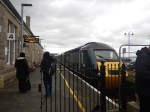
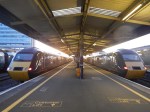
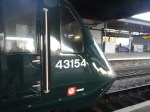
These pictures show some of the Castle Class trains.



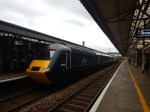
They must be profitable and/or popular with passengers.
If I have a problem with these trains, it is with the Class 43 diesel power cars.
- Each train has two power cars.
- It would appear that there are about 150 of the Class 43 power cars in regular service.
- Each is powered by a modern MTU 16V4000 R41R diesel engine, that is rated at 1678 kW.
- The engines are generally less than a dozen years old.
- They will be emitting a lot of carbon dioxide.
As the trains are now only half as long as they used to be, I would suspect, that the engines won’t be working as hard, as they can.
Hopefully, this will mean less emissions.
The article says this about use of the fleet.
With its fleet now increasing to 14, GWR expects to use 12 each day on services across the west of England. Currently the fleet is deployed on the Cardiff – Bristol – Penzance corridor, but the company is still evaluating how the additional sets will be used.
It also says, that they are acquiring rolling stock from other sources. Some of which will be cannibalised for spares.
Are First Rail Holdings Cutting Carbon Emissions?
First Rail Holdings, who are GWR’s parent, have announced in recent months three innovative and lower-carbon fleets from Hitachi, for their subsidiary companies.
- The Class 807 trains for Avanti West Coast will not have any diesel engines.
- The Class 805 trains for Avanti West Coast will initially have diesel engines, but these may be changedin a few years for battery power packs.
- The Class 803 trains for East Coast Trains will not have any diesel engines.
Hitachi have also announced a collaboration with Hyperdrive Innovation to provide battery packs to replace diesel engines, that could be used on Class 800 and Class 802 trains.
First Rail Holdings have these Class 800/802 fleets.
- GWR – 36 x five-car Class 800 trains
- GWR – 21 x nine-car Class 800 trains
- GWR – 22 x five-car Class 802 trains
- GWR – 14 x nine-car Class 802 trains
- TransPennine Express – 19 x five-car Class 802 trains
- Hull Trains – 5 x five-car Class 802 trains
Note.
- That is a total of 117 trains.
- As five-car trains have three diesel engines and nine-car trains have five diesel engines, that is a total of 357 engines.
- In Could Battery-Electric Hitachi Trains Work Hull Trains’s Services?, I showed that Hull Trains could run their services with a Fast Charging system in Hull station.
- In Could Battery-Electric Hitachi Trains Work TransPennine Express’s Services?, I concluded that Class 802 trains equipped with batteries could handle all their routes without diesel and some strategically-placed charging stations.
In the Wikipedia entry for the Class 800 train, there is a section called Powertrain, where this is said.
According to Modern Railways magazine, the limited space available for the GUs has made them prone to overheating. It claims that, on one day in summer 2018, “half the diagrammed units were out of action as engines shut down through overheating.
So would replacing some diesel engines with battery packs, also reduce this problem, in addition to cutting carbon emissions?
It does appear to me, that First Rail Holdings could be cutting carbon emissions in their large fleet of Hitachi Class 800 and Class 802 trains.
The Class 43 power cars could become a marketing nightmare for the company?
Could Class 43 Power Cars Be Decarbonised?
Consider.
- Class 43 power cars are forty-five years old.
- They have been rebuilt with new MTU engines in the last dozen years or so.
- I suspect MTU and GWR know everything there is to know about the traction system of a Class 43 power car.
- There is bags of space in the rear section of the power car.
- MTU are part of Rolls-Royce, who because of the downturn in aviation aren’t performing very well!
But perhaps more importantly, the power cars are iconic, so anybody, who decarbonises these fabulous beasts, gets the right sort of high-class publicity.
I would also feel, if you could decarbonise these power cars, the hundreds of diesel locomotives around the world powered by similar diesel engines could be a useful market.
What methods could be used?
Biodiesel
Running the trains on biodiesel would be a simple solution.
- It could be used short-term or long-term.
- MTU has probably run the engines on biodiesel to see how they perform.
- Biodiesel could also be used in GWR’s smaller diesel multiple units, like Class 150, 158, 165 and 166 trains.
Some environmentalists think biodiesel is cheating as it isn’t zero-carbon.
But it’s my view, that for a lot of applications it is a good interim solution, especially, as companies like Altalto, will be making biodiesel and aviation biofuel from household and industrial waste, which would otherwise be incinerated or go to landfill.
The Addition Of Batteries
This page on the Hitachi Rail Ltd web site shows this image of the V-Train 2.
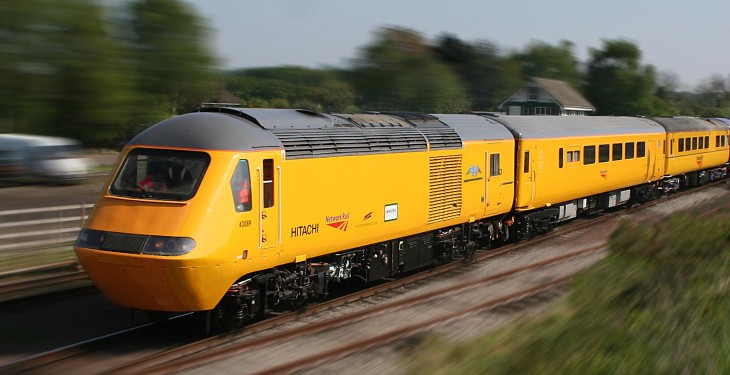
This is the introduction to the research program, which was based on a High Speed Train, fotmed of two Class 43 power cars and four Mark 3 carriages.
The V-Train 2 was a demonstration train designed in order to demonstrate our skills and expertise while bidding for the Intercity Express Programme project.
The page is claiming, that a 20 % fuel saving could be possible.
This paragraph talks about performance.
The V-Train 2 looked to power the train away from the platform using batteries – which would in turn be topped up by regenerative braking when a train slowed down to stop at a station. Acceleration would be quicker and diesel saved for the cruising part of the journey.
A similar arrangement to that Hitachi produced in 2005 could be ideal.
- Technology has moved on significantly in the intervening years.
- The performance would be adequate for a train that just trundles around the West Country at 90 mph.
- The space in the rear of the power car could hold a lot of batteries.
- The power car would be quiet and emission-free in stations.
- There would be nothing to stop the diesel engine running on biodiesel.
This might be the sort of project, that Hitachi’s partner in the Regional Battery Train; Hyperdrive Innovation. would probably be capable of undertaking.
MTU Hybrid PowerPack
I wouldn’t be surprised to find, that MTU have a drop-in solution for the current 6V4000 R41R diesel engine, that includes a significant amount of batteries.
This must be a serious possibility.
Rolls-Royce’s 2.5 MW Generator
In Our Sustainability Journey, I talk about rail applications of Rolls-Royce’s 2.5 MW generator, that has been developed to provide power for electric flight.
In the post, I discuss fitting the generator into a Class 43 power car and running it on aviation biofuel.
I conclude the section with this.
It should also be noted, that more-efficient and less-polluting MTU engines were fitted in Class 43s from 2005, so as MTU is now part of Rolls-Royce, I suspect that Rolls-Royce have access to all the drawings and engineers notes, if not the engineers themselves
But it would be more about publicity for future sales around the world, with headlines like.
Iconic UK Diesel Passenger Trains To Receive Green Roll-Royce Jet Power!
COVID-19 has given Rolls-Royce’s aviation business a real hammering, so perhaps they can open up a new revenue stream by replacing the engines of diesel locomotives,
I find this an intriguing possibility. Especially, if it were to be fitted with a battery pack.
Answering My Original Question
In answering my original question, I feel that there could be several ways to reduce the carbon footprint of a Class 43 power car.
It should also be noted that other operators are users of Class 43 power cars.
- ScotRail – 56
- CrossCountry – 12
- East Midlands Railway – 39
- Network Rail – 3
Note.
- ScotRail’s use of the power cars, is very similar to that of GWR.
- CrossCountry’s routes would need a lot of reorganisation to be run by say Hitachi’s Regional Battery Train.
- East Midlands Railway are replacing their Inter-City 125s with new Class 810 trains.
The picture shows the power car of Network Rail’s New Measurement Train.

These may well be the most difficult to decarbonise, as I suspect they need to run at 125 mph on some routes, which do not have electrification and there are no 125 mph self-powered locomotives. After the Stonehaven crash, there may be more tests to do and a second train may be needed by Network Rail.
Why Are GWR Increasing Their Castle Class Fleet?
These are possible reasons.
GWR Want To Increase Services
This is the obvious explanation, as more services will need more trains.
GWR Want To Update The Fleet
There may be something that they need to do to all the fleet, so having a few extra trains would enable them to update the trains without cutting services.
GWR Want To Partially Or Fully Decarbonise The Power Cars
As with updating the fleet, extra power cars would help, as they could be modified first and then given a thorough testing before entering passenger service.
GWR Have Been Made An Offer They Can’t Refuse
Suppose Rolls-Royce, MTU or another locomotive power plant manufacturer has a novel idea, they want to test.
Over the years, train operating companies have often tested modified trains and locomotives for manufacturers.
So has a manufacturer, asked GWR to test something in main line service?
Are Other Train Operators Thinking Of Using Introducing More Short-Formed InterCity 125 Trains?
This question has to be asked, as I feel there could be routes, that would be suitable for a net-zero carbon version of a train, like a GWR Castle or a ScotRail Inter7City.
Northern Trains
Northern Trains is now run by the Department for Transport and has surely the most suitable route in the UK for a shorted-formed InterCity 125 train – Leeds and Carlisle via the Settle and Carlisle Line.
Northern Trains may have other routes.
Transport for Wales Rail Services
Transport for Wales Rail Services already run services between Cardiff Central and Holyhead using diesel locomotive hauled services and long distance services between South Wales and Manchester using diesel multiple units.
Would an iconic lower-carbon train be a better way of providing some services and attract more visitors to the Principality?
Conclusion
GWR must have a plan, but there are few clues to what it is.
The fact that the trains have been purchased rather than leased could be significant and suggests to me that because there is no leasing company involved to consult, GWR are going to do major experimental modifications to the trains.
They may be being paid, by someone like an established or new locomotive engine manufacturer.
It could also be part of a large government innovation and decarbonisation project.
My hunch says that as First Rail Holdings appear to be going for a lower-carbon fleet, that it is about decarbonising the Class 43 power cars.
The plan would be something like this.
- Update the three new trains to the new specification.
- Give them a good testing, before certifying them for service.
- Check them out in passenger service.
- Update all the trains.
The three extra trains would give flexibility and mean that there would always be enough trains for a full service.
Which Methods Could Be Used To Reduce The Carbon Footprint Of The Class 43 Power Cars?
These must be the front runners.
- A Hitachi/Hyperdrive Innovation specialist battery pack.
- An MTU Hybrid PowerPack.
- A Rolls-Royce MTU solution based on the Rolls-Royce 2.5 MW generator with batteries.
All would appear to be viable solutions.
Birmingham-Black Country-Shrewsbury
On the Midlands Connect web site, they have a page, which is entitled Birmingham-Black Country-Shrewsbury.
This is the introductory paragraph.
We’re examining the case to increase services from three to four per hour, made possible by capacity released post-HS2.
They then give the outline of their plans, which can be summed up as follows.
- Services on the corridor are slow and unreliable.
- Network Rail say the service is in danger of acute overcrowding.
- Services will be increased from three trains per hour (tph) to four.
- A direct hourly service from Shrewsbury, Wellington and Telford to London will be introduced.
- Services to Birmingham International will be doubled.
- The economic case will be examined for speeding up services between Shrewsbury and Birmingham from 56 to 45 minutes, via track upgrades and possible electrification.
It seems a safe, and not overly ambitious plan.
These are my thoughts.
Shrewsbury’s Unique Position
These are distances and times from important stations.
- Birmingham International – 51 miles and 83 minutes
- Birmingham New Street – 42.5 miles and 71 minutes
- Chester – 42.5 miles and 53 minutes
- Crewe – 33 miles and 53 minutes
- Hereford – 51 miles and 59 minutes
- Telford – 14 miles and 21 minutes
- Wellington – 10 miles and 13 minutes
- Welshpool – 20 miles and 25 minutes
- Wolverhampton – 30 miles and 50 minutes
In Sparking A Revolution, I quoted this Hitachi-specification for a battery-electric train.
- Range – 55-65 miles
- Performance – 90-100 mph
- Recharge – 10 minutes when static
- Routes – Suburban near electrified lines
- Battery Life – 8-10 years
I can’t see any problem, for a train with this specification being able to reach Shrewsbury from Birmingham International, Birmingham New Street and Crewe on battery power.
In Hitachi Trains For Avanti, I quote an article with the same title in the January 2020 Edition of Modern Railways as saying this.
Hitachi told Modern Railways it was unable to confirm the rating of the diesel engines on the bi-modes, but said these would be replaceable by batteries in future if specified.
I wouldn’t be surprised to see Shrewsbury served from Birmingham and Crewe by fast electric trains, that used battery power. Avanti West Coast certainly seem to have that thought in mind.
Zero Carbon Trains Between Shrewsbury And Wales
It will be a formidable challenge to run battery trains from Shrewsbury to the Welsh destinations.
- Aberystwyth – 81.5 miles
- Cardiff – 107 miles
- Carmarthen – 185 miles
- Holyhead – 133 miles
- Milford Haven – 225 miles
- Swansea – 121.5 miles
Note.
- These are challenging distances for battery-electric trains.
- South Wales destinations served via Newport and Cardiff could use the electrification on the South Wales Main Line.
- Many of these services start from East of Shrewsbury and can use the electrified lines that connects to Birmingham New Street and Manchester Piccadilly.
Unless someone like Riding Sunbeams, makes a breakthrough, I can’t see battery-electric trains running to Welsh destinations from Shrewsbury.
Transport for Wales New Trains
Transport for Wales have ordered seventy-seven new Class 197 trains, and these diesel trains will be used for services through Shrewsbury, mainly on services to Birmingham New Street and Birmingham International stations.
- If these trains are similar to Northern’s Class 195 trains, they will be diesel multiple units with a noisy mechanical transmission.
- I was surprised in these days of global warming that Transport for Wales didn’t buy something more eco-friendly, as they have for South Wales and the services around Chester.
- The transmission of the Class 197 trains has not been disclosed.
Perhaps, CAF are going to do something innovative.
- The CAF Civity is a modular train, with either electric or diesel power options.
- The diesel-powered options use MTU engines.
- A logical development would be to use an MTU Hybrid PowerPack to reduce diesel consumption and emissions.
- This PowerPack would also reduce noise, as it has an electric transmission.
- I wonder, if CAF can raid their parts bin and fit a pantograph, so where 25 KVAC overhead electrification is available, it can be used.
- If CAF can convert a bog standard diesel multiple unit into a hybrid diesel-electric-battery multiple unit, by performing a heart transplant, it is a neat way of keeping new diesel Civities running until a later date.
- Remember that Northern and West Modlands Trains have another seventy-four similar new diesel Civities in operation or on order. With trains having a forty year life, they don’t fit with an early phasing out of diesel.
I have no idea, what is actually happening, but my engineer’s nose tells me to expect a surprise from CAF.
Increasing Birmingham And Shrewsbury Services From Three Trains Per Hour To Four
Four trains per hour or one train every fifteen minutes seems to be a preferred frequency on several UK suburban lines.
These services seem to provide four tph or better on most, if not all of their routes.
- Birmingham Cross-City Line
- London Overground
- Merseyrail
- Tyne and Wear Metro
Four tph seems to be a very handy Turn-Up-And-Go frequency that encourages people to use rail services.
So I am not surprised to see Midlands Connect wanting four tph between Birmingham and Shrewsbury.
Currently, the following services seem to operate between Shrewsbury and Birmingham.
- Avanti West Coast – 2 trains per day (tpd) – Shrewsbury and London Euston via Birmingham New Street and Birmingham International.
- Trains for Wales – 1 train per two hours (tp2h) – Holyhead and Birmingham International via Birmingham New Street.
- Trains for Wales 1 tph – Aberystwyth/Pwllheli and Birmingham International via Birmingham New Street
- West Midlands Trains – 2 tph – Shrewsbury and Birmingham New Street – One semi-fast and one stopper.
Note.
- All services call at Wolverhampton, Telford and Wellington.
- Shrewsbury and Birmingham New Street is a 3.5 tph service.
- Shrewsbury and Birmingham International is a 1.5 tph service.
It relies heavily on services from Trains for Wales, who probably don’t put Shrewsbury and Birmingham services at the top of their priorities.
I remember, when local services in the North-East of London were run by Greater Anglia from Norwich. Moving some services to Transport for London, brought about a large improvement
Quite frankly, the current service is best described as pathetic.
Should Trains for Wales Services Terminate As Shrewsbury?
I suspect some local politicians in Shrewsbury and Birmingham, think it would be best to adopt this sort of strategy.
- All Welsh services terminate at Shrewsbury.
- Birmingham and Shrewsbury mandate West Midlands Trains and Avanti West Coast to provide a frequent service between Shrewsbury and Birmingham.
It might be the way to go, but many travellers from the Marches, would probably want direct connections to Birmingham, Birmingham Airport and in the future High Speed Two.
Introducing A Direct Hourly Service From Shrewsbury, Wellington And Telford To London
On the face of it, it looks like a much needed service to and from Shrewsbury.
- It will be hourly.
- Initially it will use Class 221 diesel multiple units, but these will be replaced with bi-mode Class 805 trains.
- The current infrequent service calls at Watford Junction, Rugby, Coventry, Birmingham International, Birmingham New Street, Sandwell and Dudley, Wolverhampton, Telford Central and Wellington.
- There are also six other stations between Shrewsbury and Wolverhampton, which might like an improved service.
- The service will be run by Avanti West Coast.
There might also be the possibility of using battery power between Wolverhampton and Shrewsbury, which is only thirty miles each way.
But there are other collateral benefits.
- The service increases the frequency between Shrewsbury and Birmingham New Street stations by one tph to 4.5 tph
- The service increases the frequency between Shrewsbury and Birmingham International by one tph to 2.5 tph.
- The service increases the frequency between Wolverhampton and London Euston by one tph.
- The service increases the frequency between Sandwell and Dudley and London Euston by one tph
- The service increases the frequency between Birmingham New Street and London Euston by one tph.
- The service increases the frequency between Birmingham International and London Euston by one tph.
- The new service will provide an hourly quality connection to High Speed Two at Birmingham International for stations between Shrewsbury and Coventry.
- It appears that the Class 390 trains to Birmingham New Street and being replaced by new Class 807 trains, so Birmingham will have three out of four tph, run by new trains.
- The new Shrewsbury service , has a similar calling pattern to that of the current Scottish service through Birmingham. Will it replace that service, when High Speed Two opens?
Note.
- Midlands Connect’s objective of four tph between Shrewsbury and Birmingham has been met.
- Several stations get a better direct service to London.
- Connectivity to High Speed Two is improved.
- Birmingham New Street and London is now a Turn-Up-And-Go frequency of four tph.
- The Class 805 train will also mean that Avanti West Coast could be zero-carbon in Birmingham. Especially, if it used battery power between Wolverhampton and Shrewsbury stations.
The hourly direct service between Shrewsbury and London will make a lot of difference to train services between Shrewsbury and Birmingham.
Avanti’s London Euston and Birmingham New Street Service
Consider.
- There are two tph that terminate in Birmingham New Street station, that take 88-89 minutes, from London Euston
- There is one tph that goes through Birmingham New Street station to Edinburgh, Glasgow, Preston, or Shrewsbury, that takes 82-84 minutes, from London Euston.
- Currently, the two terminating trains are Class 390 trains, whereas the through train can be a Class 221 train as well.
- Through trains are allowed 5-10 minutes to pass through Birmingham New Street.
- Trains that terminate at Birmingham New Street station are allowed 20-30 minutes to arrive and leave.
- Avanti West Coast have said, that they will be running Class 807 trains between London and Birmingham New Street.
It doesn’t seem to be the best use of scarce platform resources in a busy station to park a train there for half-an-hour.
In Will Avanti West Coast’s New Trains Be Able To Achieve London Euston and Liverpool Lime Street In Two Hours?, I came to the conclusion that the Class 807 trains have been designed as simple, fast, lightweight all-electric trains with no heavy batteries, diesel engines or tilt mechanism.
- I think they’ll be able to shave a few minutes on the timings between London Euston and Birmingham New Street station.
- I would suspect that they will match the 82-84 minutes of the through trains
- The ultimate would be if they could do a round trip between London Euston and Birmingham New Street in three hours.
- Two tph run by what would effectively be a London-Birmingham shuttle would need just six trains.
It might mean new methods of manning the trains, to reduce turnround times.
Doubling Of Services Between Shrewsbury And Birmingham International
The hourly direct London and Shrewsbury Avanti West Coast service will raise the current 1.5 tph service between Shrewsbury and Birmingham International to 2.5 tph, so will be a good start.
- Perhaps Trains for Wales could find the missing 0.5 tph.
- West Midlands Trains might be able to squeeze in another train.
But I suspect that the crowded line between Birmingham New Street and Birmingham International is the problem.
Shrewsbury And Birmingham In Forty-Five Minutes
This is the last objective and saving eleven minutes on this route would suggest that the best way would surely be to fully electrify the route.
- Between Wolverhampton and Birmingham International stations is fully electrified.
- Electric trains have faster acceleration and deceleration, so would probably achieve the required savings if they stopped more than five times.
- From my virtual helicopter it doesn’t appear to be the most challenging of routes to electrify.
- Only about thirty miles of double track would need to be electrified between Wolverhampton and Shrewsbury stations.
- Both Trains for Wales and West Midlands Trains would have to obtain new electric trains.
- Avanti West Coast have already got bi-mode Class 805 trains, that could use the electrification.
But will Trains for Wales go along with Midlands Connect, when they tell them to get electric or bi-mode trains to work between Shrewsbury and Birmingham International stations?
It is because of dilemmas like this, that I feel that electric trains using battery or hydrogen power, when away from electrification can be a very good alternative.
- There is no major disruption raising bridges for the electrification.
- Stations don’t need to be closed for electrification.
- The trains have all the comfort and performance of electric trains.
- Costs and timescales can be reduced.
- When running on battery or hydrogen power, these trains are very quiet, as there is no pantograph noise.
To run battery-electric trains between Shrewsbury and Wolverhampton, the only infrastructure needed would be a method of charging the train at Shrewsbury station.
This Google Map shows the Southern end of Shrewsbury station.

Note.
- The platforms are built over the River Severn.
- The five-car Class 221 train in Virgin livery sitting in Platform 5.
- When this train leaves it will turn left or to the East for Wolverhampton and Birmingham.
- Trains can turn right for Wales.
It is a very unusual station layout.
- Platform 5 is one of a pair of bay platforms; 5 & 6, that can access either Wales or Birmingham.
- Outside of the bay platforms are a pair of through platforms; 4 & 7, that can also access Wales or Birmingham, but they can also access Chester by going through the station.
- The 115 metre long Class 221 train fits easily in the bay platform 5.
- The 130 metre long Class 805 train would probably need to use Platform 4 or 7.
But with well-planned electrification, it would be ideal for charging electric trains as they pass through or turned back!
Once the train reaches Wolverhampton, it will connect to electrification again.
Shrewsbury And High Speed Two
Currently, Shrewsbury has three connections to stations, where it would be convenient to take a High Speed Two train.
- Birmingham International, which is 51 miles and 83 minutes away. Plus a ride on a people mover for High Speed Two.
- Birmingham New Street, which is 42.5 miles and 71 minutes away. Plus a walk to Birmingham Curzon Street for High Speed Two.
- Crewe, which is 33 miles and 55 minutes away.
Passengers will make their own choice.
Could Shrewsbury Have A Classic-Compatible High Speed Two Service To Manchester Piccadilly?
London To Shrewsbury, Now And Post-High Speed Two
Travel On Monday
If I want to go to Shrewsbury next Monday, one fast journey is taking the 09:10 from Euston and changing at Crewe, which gives a journey time of two hours and thirty-two minutes.
I can also get a train with a change at Birmingham International that takes seven minutes longer.
Travel On High Speed Two
After High Speed Two opens to Birmingham Curzon Street and Interchange in Phase 1 what sort of times to Shrewsbury can be expected?
I estimate the following.
- Travelling via Birmingham Curzon Street could produce a time of around one hour and fifty minutes, if you’re lucky with the trains.
- Travelling via Crewe could produce a time of one hour and thirty minutes, if you’re lucky with the trains.
- Travelling via Interchange could produce a time of around one hour and fifty-five minutes. or forty-four minutes faster.
If I was going to Shrewsbury after High Speed Two has opened, I would probably change at Birmingham Curzon Street, if the walk to New Street station was still within my capabilities, as there will be a Turn-Up-And-Go frequency of four tph between Birmingham New Street and Shrewsbury stations.
Looking at the Midlands Connect objectives, these help with linking Shrewsbury with London.
- Increasing services between Birmingham and Shrewsbury to four tph, as it’s Turn-Up-And-Go!
- The direct hourly service to London from Shrewsbury, Wellington and Telford might be the quickest way to London by changing at Birmingham New Street/Curzon Street or Interchange.
- Doubling the service between Shrewsbury and Birmingham International, may be a good move, as Interchange, which will be connected to Birmingham International by a high capacity people mover, will have five tph between London Euston and Old Oak Common stations.
- Saving eleven minutes between Shrewsbury and Birmingham will certainly help.
Travelling between London and Telford, Wellington and Shrewsbury will be much improved.
Could High Speed Two Trains Serve Chester And North Wales?
This may seem a slightly outrageous proposal to run High Speed Two trains to Chester.
- The city is a major tourist destination.
- Despite its closeness to Crewe it is a major rail hub, with services across Wales to Cardiff, Holyhead and Llandudno and along the border between England and Wales to Shrewsbury and Newport.
- Merseyrail serves the city and the station can be considered to be part of Liverpool’s extensive commuting area. This service is likely to be more reliable and faster with the delivery of new Class 777 trains.
- For parts of Merseyside, travelling to London or Manchester Airport, is easier via Chester than Liverpool Lime Street or Liverpool South Parkway.
If the promoters of High Speed Two are serious about creating a railway for the whole country, then I feel that running trains direct to and from Chester could be very beneficial for the towns and cities, that can be served by the current network at Chester.
Current And Possible Timings
Currently, trains take two minutes over two hours between Euston and Chester.
When Avanti West Coast introduces the new Hitachi AT-300 trains on the route, the following times will be possible.
- Euston and Crewe via West Coast Main Line – 90 minutes – Fastest Pendelino
- Crewe and Chester – 24 minutes – Current timing
This would give a time of one hour and 54 minutes, which is a saving of 8 minutes. But a lot of carbon would not be emitted between Euston and Crewe.
I estimate, that with High Speed Two Phase 2a completed, the following timings will be possible.
- Euston to Crewe via HS2 – 55 minutes – HS2 website
- Crewe and Chester – 24 minutes – Current timing
This would give a time of one hour and 19 minutes, which is a saving of 43 minutes.
Infrastructure Needed
There will need to be some infrastructure changes.
Platform Lengthening At Chester Station
The station would probably be served by two-hundred metre long High Speed Two Classic-Compatible trains, which might need some platform lengthening.
This Google Map shows the station.
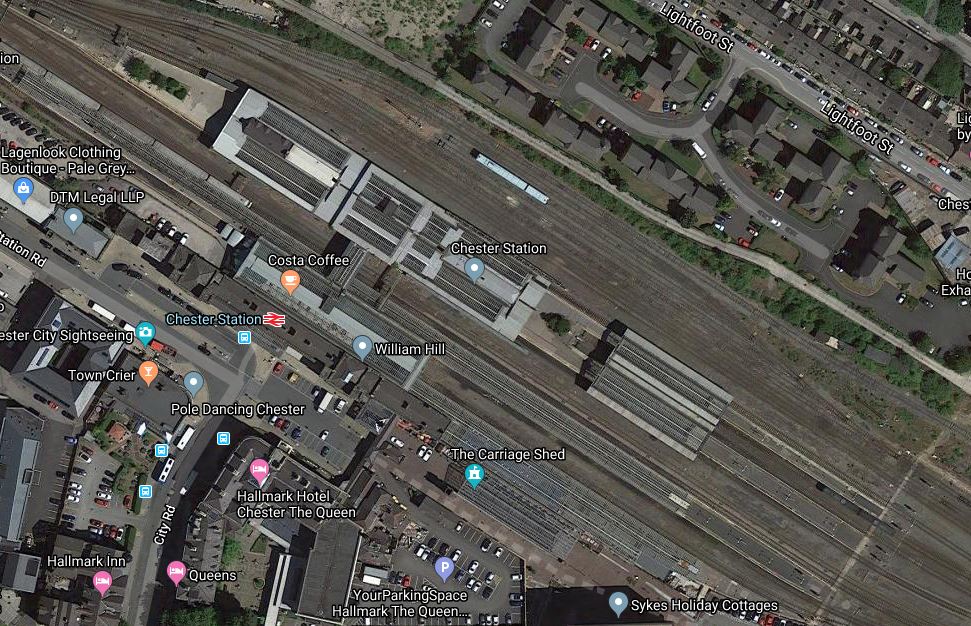
It looks to me, that there is plenty of space.
Will Chester And Crewe Be Electrified?
We know little about the capabilities of the trains proposed by the various manufacturers.
But, I wouldn’t be surprised that one or more of the proposals use batteries for one of the following purposes.
- Regenerate braking.
- Emergency power.
- Range extension for up to perhaps sixty miles.
As Chester and Crewe stations are only twenty-one miles apart with no intermediate stations, which will be run at an average speed of only 52 mph I don’t think it will be impossible to extend the service to Chester on battery power.
If electrification is required I wrote about it in Hitachi Trains For Avanti.
As it is only just over twenty miles, I don’t think it will be the most challenging of projects, although there does seem to be a lot of bridges.
Electrification would also allow Avanti West Coast’s Hitachi trains to run on electricity to Chester.
What About Holyhead?
Holyhead could become a more important destination in the next few years.
It is probably the best alternative to avoid flying and driving between Great Britain and the Island of Ireland.
And who can accurately predict, what effect Brexit and thinking about global warming will have?
I have a feeling that after electrification to Chester, using on-board energy storage could be used West of Chester.
It is very difficult to predict battery ranges in the future, but I can see a two hundred metre long High Speed Two Classic-Compatible train being able to reach Holyhead on battery power, with or without some limited extra electrification.
Alternatively, the UK and Welsh governments, might bite the bullet and just electrify the whole route between Crewe and Holyhead.
I have found a train on Real Time Trains, that covered the 105.5 miles between Holyhead and Crewe in two hours and 11 minutes at an average speed of 48 mph. The train took then a total of three hours and forty-five minutes to get to Euston
I estimate that with electrification and some track improvements, that it will be possible to travel between Euston and Holyhead in under three hours before High Speed Two.
Conclusion
It looks to me, that when High Speed Two, think about adding extra destinations, Chester and Holyhead could be on the list.
I also suspect that even without electrification and High Speed Two services, but with the new Class 805 trains, the route could be a valuable one for Avanti West Coast.
Reopening The Anglesey Central Railway
Note that this post was updated in October 2021.
The Anglesey Central Railway is a disused branch railway, where the track-bed is intact although overgrown, that runs across the Island of Anglesey from the North Wales Coast Line to the port town of Amlwch.
It carried freight until 1993 and is one of those remote lines, where a case can be made for reopening., using simple station designs and affordable trains.
On its route it serves the County Town of Llangefni and these stations are proposed, either on the branch or the island
With the existing stations on the North Wales Coast Line, a useful local railway could be created.
But would it be value for money?
These are a few of my thoughts.
Bangor Station
Bangor station looks like the ideal place to terminate the service from the Anglesey Central Railway.
This Google Map shows Bangor station.
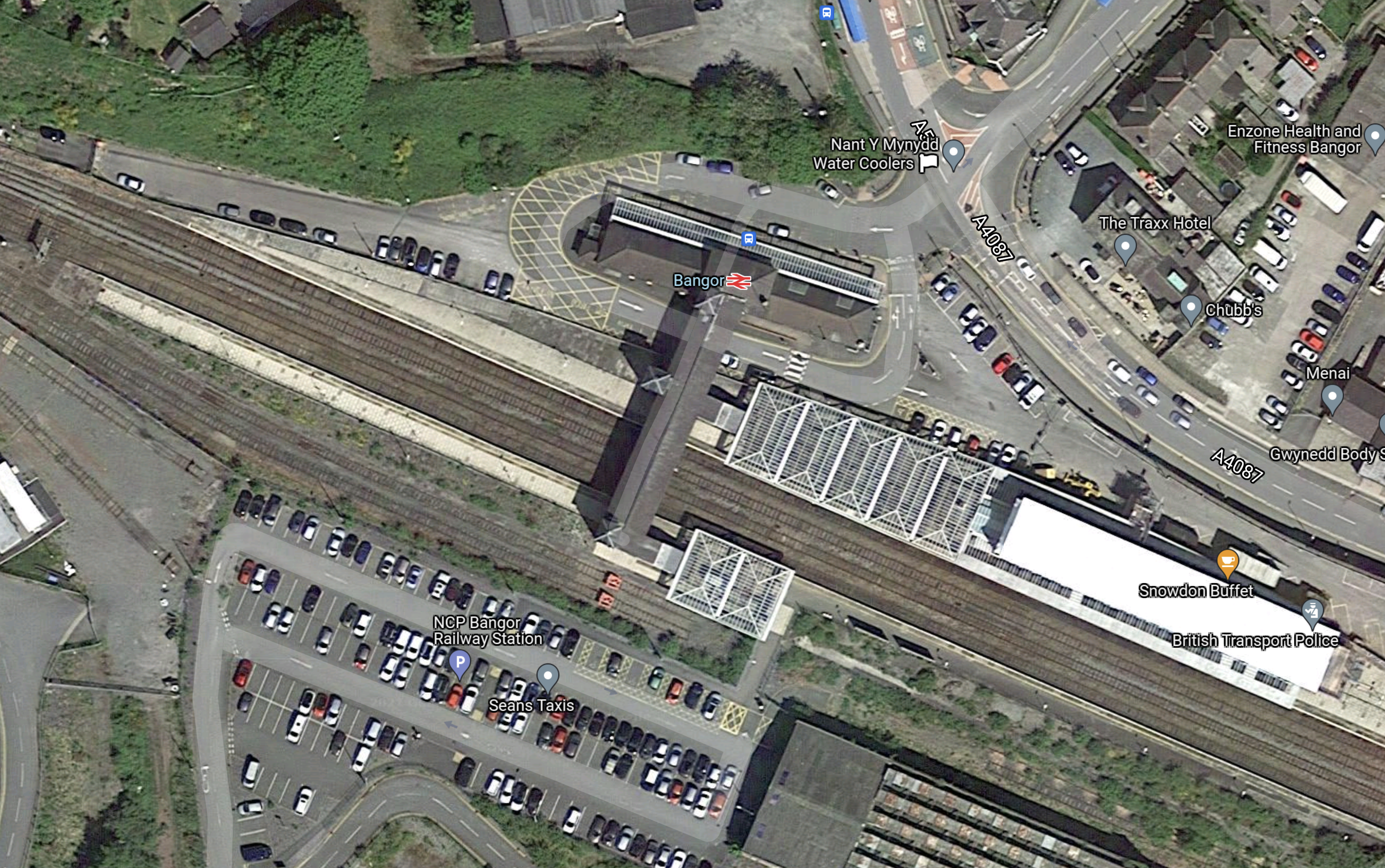
Note.
- Anglesey is to the West.
- There are four tracks through the station. This will allow trains to overtake.
- Only the outside two tracks have platforms.
- The platforms are long enough to handle at least a two-hundred metre long train. They could even be long enough to handle a pair of Aventi West Coast’s new Class 805 trains, which would be 260 metres long.
- There are a couple of Anglesey-facing sidings, which probably could be converted into at least one bay platform.
- I suspect in a city like Bangor, there is probably enough electric power to provide charging facilities in an Anglesey-facing bay platform.
I can’t see any problems with terminating Anglesey Central Railway services at Bangor.
Battery-Electric Trains Between Bangor And Amlwch
Consider.
- Bangor and Amlwch would be around 25 miles.
- Modern battery-electric trains have a range of up to 80 miles.
- Battery-electric trains can fully recharge in 15 minutes.
This means that with charging facilities at Bangor, modern battery-electric trains could handle a return journey between Bangor and Amlwch.
I suspect that a very acceptable two trains per hour (tph) should be possible.
Hydrogen Trains Between Bangor And Amlwch
These would also be possible, once a refuelling strategy has been decided.
 The Anonymous Widower