Why The East Of England Can Be An Offshore Hydrogen Leader
The title of this post, is the same as that of this article on the Eastern Daily Press.
This is the sub-heading.
The East of England’s connected energy system puts it in prime position to be a key player in the offshore hydrogen economy, says Anne Haase, chair of the Hydrogen East Industry Advisory Group.
These two paragraphs add a level of detail.
The East of England’s energy story is increasingly being written onshore. The region is re-writing the playbook for how a sustainable, connected energy system could take shape and deliver. The region isn’t just about tourism – we have a whole industrial ecosystem dwarfing that sector.
We are a net energy exporter to the rest of the UK. We transmit more than 30% of gas, and our infrastructure offers supply security and sustainable energy to not just our region, but to London and the South East.
This is very much a must-read article.
Great Yarmouth Terminal Set For Redevelopment Under Port Of East Anglia Name
The title of this post, is the same as that of this article on offshoreWIND.biz.
This is the sub-heading.
The UK’s Peel Ports Group has decided to invest a further GBP 10 million (approximately EUR 11.3 million) into its Great Yarmouth site, which is being rebranded as the Port of East Anglia.
These four paragraphs add details to the story.
The newly announced GBP 10 million brings this year’s total investment to GBP 70 million across the site and will be used to redevelop the port’s Northern Terminal, helping to accommodate the next generation of offshore wind projects across the region, according to Peel Ports.
Earlier this year, a substantial investment into its Southern Terminal was announced by the port, which has earmarked GBP 60 million to transform capacity and improve efficiencies.
This involves ensuring the port can support multiple hydrogen, carbon capture, offshore wind, and nuclear projects for decades to come.
Its existing terminals service a variety of construction customers, including infrastructure projects such as Sizewell C and offshore energy projects based in the southern North Sea.
Note.
- In Yarmouth Harbour To Be ‘Completed’ In £60m Project, I talk about the work to be done on the Southern Terminal.
- The work on the Southern Terminal includes a roll-on roll-off (RORO) lift ramp and a large storage area.
- Start on the work on the Southern Terminal will start in 2026.
With all the construction work mentioned in the last two paragraphs, I suspect that the Port of Great Yarmouth will be busy?
These are some further thoughts.
Why Is The Port Of Great Yarmouth Being Renamed?
The article says this.
The new name, which will come into effect in early 2026, also aligns with the creation of a new combined authority for Suffolk and Norfolk, according to Peel Ports.
Peel Ports name change is fairly sensible, but as I was conceived in Suffolk and I’m an Ipswich Town supporter, I don’t feel that the two counties should be merged.
Does The Mention Of Hydrogen Mean That The Port Of Great Yarmouth Will Be Hosting A Hydrogen Electrolyser, To Fuel Trucks And Ships?
I asked Google AI, “If A Hydrogen Electrolyser is To Be Built In The Port Of Great Yarmouth?”, and received this answer.
While there are no current public plans for an immediate construction of a large-scale hydrogen electrolyser within the Port of Great Yarmouth, significant port expansion and infrastructure upgrades are underway to ensure it can support future hydrogen projects and related clean energy initiatives.
Note.
- If technology to handle hydrogen, is copied from North Sea gas, there is certainly a lot of proven technology that can be used again.
- There may even be depleted gas fields, where captured carbon dioxide, hydrogen or North Sea gas can be stored.
I find the most exciting thing, would be to send hydrogen to Germany.
Why Would Anybody Export Hydrogen To Germany?
I asked Google AI, the question in the title of this section and received this answer.
Countries would export hydrogen to Germany because Germany has a large, growing demand for hydrogen to power its heavily industrialised economy and achieve its decarbonisation goals, but lacks sufficient domestic renewable energy capacity to produce the required amounts.
Germany also, uses a lot of bloodstained Russian gas and indigenous polluting coal.
How Could Anybody Export Hydrogen To Germany?
- Wilhelmshaven is one of the main import ports for hydrogen in North West Germany.
- Great Yarmouth is probably the closest larger port to Germany.
- Great Yarmouth and Wilhelmshaven are probably about 300 miles apart, by the shortest route.
- Great Yarmouth would need to build infrastructure to export hydrogen.
The easiest way to transport the hydrogen from Great Yarmouth to Wilhelmshaven, is probably to use a gas tanker built especially for the route.
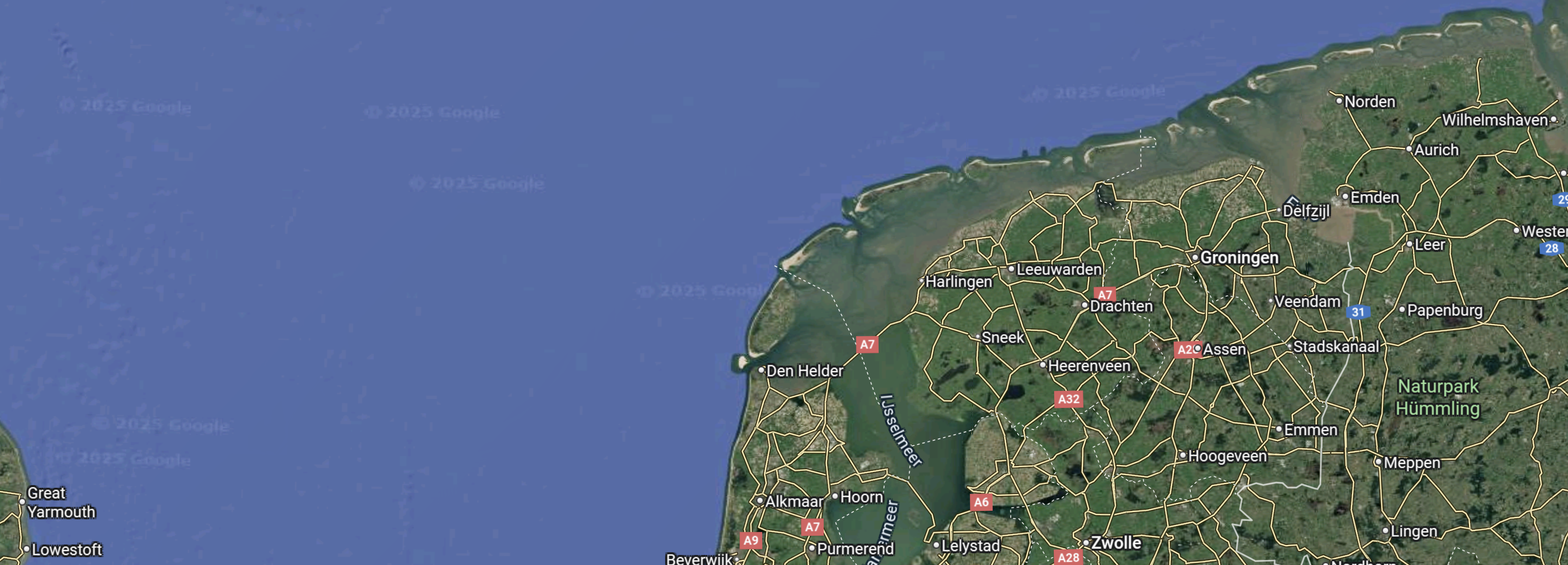
This Google Map shows the route between Great Yarmouth and Wilhelmshaven.
Note.
- The North-East corner of East Anglia with Great Yarmouth to the North of Lowestoft, is in the bottom-left corner of the map.
- Wilhelmshaven is a few miles inland in the top-right corner of the map.
- Could a coastal tanker go along the Dutch and German coasts to Wilhelmshaven?
I have no skills in boats, but would Great Yarmouth to Wilhelmshaven to take hydrogen to Germany?
RWE Are Developing Three Wind Farms To The North-East of Great Yarmouth
RWE are a large German Electricity company and the UK’s largest generator of electricity.
The company is developing three wind farms to the North-East of Great Yarmouth.
- Norfolk Boreas – 1.2 GW – 45 miles offshore
- Norfolk Vanguard West – 1.2 GW – 29 miles offshore
- Norfolk Vanguard East – 1.2 GW – 28 miles offshore
Note.
- The electricity for all three wind farms is to be brought ashore at Happisburgh South, which is about 22 miles North of Great Yarmouth.
- The original plan was to take the electricity halfway across Norfolk to the Necton substation to connect to the grid.
- The natives will not be happy about a 4.2 GW overhead line between Happisburgh and Necton.
- RWE have built offshore electrolysers before in German waters.
- Could an electrical cable or a hydrogen pipe be laid in the sea between Happisburgh South and the Port of Great Yarmouth?
- The electrolyser could either be offshore at Happisburgh or onshore in the Port of Great Yarmouth.
As I don’t suspect these three wind farms will be the last connected to the Port of Great Yarmouth, I would expect that RWE will put the electrolyser offshore at Happisburgh and connect it by a hydrogen pipeline to the Port of Great Yarmouth.
Could There Be A Connection To The Bacton Gas Terminal?
Consider.
The Bacton Gas Terminal, which feeds gas into the UK Gas Network, is only 4.2 miles up the coast from Happisburgh South.
Some climate scientists advocate blending hydrogen into the gas supply to reduce carbon emissions.
In Better Than A Kick In The Teeth – As C Would Say!, I disclosed that I now have a new hydrogen-ready boiler, so I’m not bothered, if I get changed to a hydrogen blend.
So could hydrogen from the Norfolk wind farms be fed into the grid to reduce carbon emissions?
Could The Port Of Great Yarmouth Become A Hydrogen Distribution Centre?
Thinking about it, the port could also become a distribution centre for green hydrogen.
Consider.
- Hydrogen-powered ships, tugs and workboats could be refuelled.
- Hydrogen-powered trucks could also be refuelled.
- Tanker-trucks could distribute hydrogen, to truck and bus operators, farms and factories, that need it for their transport and operations.
- I believe, that construction equipment will be increasingly hydrogen-powered.
In my life, I have lived at times in two country houses, that were heated by propane and there are about 200,000 off-grid houses in the UK, that are heated this way.
The two houses, where I lived would have been a nightmare to convert to heat pumps, but it would have been very easy to convert them to a hydrogen boiler and power it from a tank in the garden.
It should be noted, that the new boiler in my house in London is hydrogen-ready.
So the Port of Great Yarmouth could be the major centre for hydrogen distribution in Norfolk.
In the 1960s, I used to work in ICI’s hydrogen plant at Runcorn. If you ride in a hydrogen bus in England, it is likely that the hydrogen came from the same plant. Handled correctly, hydrogen is no less safe and reliable than natural gas or propane.
Ørsted Raises EUR 7.98 Billion In Oversubscribed Rights Issue
The title of this post, is the same as that of this article on offshoreWIND.biz.
This is the sub-heading.
Ørsted has completed its rights issue, raising DKK 59.56 billion (approximately EUR 7.98 billion) with a subscription rate of approximately 99.3 per cent, the company said on 6 October.
These two introductory paragraphs add more details.
Existing shareholders were offered new shares at DKK 66.60 (EUR 8.92) each. The demand for shares not taken up via the rights issue was “extraordinarily high,” according to the developer’s announcement of the Rights Issue results, and allocations were capped per application, meaning no subscriptions were required under the underwriting bank syndicate.
As reported in August, the company appointed a syndicate of BNP PARIBAS, Danske Bank A/S and J.P. Morgan SE as Joint Global Coordinators, next to Morgan Stanley & Co International, to jointly underwrite the rights issue for the approximately 49.9 per cent that would not be subscribed to by Ørsted’s majority shareholder, the Danish state (50.1 per cent).
I dread to think what spiteful punishment that Trumpkopf will inflict on Ørsted.
But the oversubscribed Rights Issue may be good news for the UK.
Ørsted has only one major project under development or construction in the UK.
But it is the large Hornsea Three wind farm, which has this opening paragraph on its web site.
Hornsea 3 Offshore Wind Farm will deliver enough green energy to power more than 3 million UK homes. An £8.5 billion infrastructure project, Hornsea 3 will make a significant contribution toward UK energy security, as well as the local and national economy.
Note.
- Ørsted are raising £7.98 billion and spending £8.5 billion, which must do something for the UK’s economy.
- Hornsea 3 will have a generating capacity of 2.9 GW.
- Ørsted are now delivering the world’s single largest offshore wind farm.
- Hornsea 3 will connect to the National Grid at Swardestone in Norfolk.
In Grid Powers Up With One Of Europe’s Biggest Battery Storage Sites, I describe how the 300 MW/600 MWh Swardestone BESS will be built, where Hornsea 3 connects to the grid.
As Swardestone will have 2.9 GW from Hornsea 3 and a powerful battery, I would expect someone will be looking to site a data centre or something with a need for a lot of stable electricity at or near Swardestone.
In Opportunity For Communities To Have Their Say On National Grid Proposals For Norwich To Tilbury Project, I talk about a line of pylons between Swardestone and Tilbury and show this map of the route.
This page on the National Grid web site has an interactive version of this map.

Note.
- The mauve line indicates the route of the Norwich to Tilbury project.
- Swardestone is at the Northern end of the project a few miles South of Norwich.
- Tilbury is at the Southern end of the project on the Thames estuary.
- The project connects Norwich, Ipswich, Colchester and Chelmsford to Hornsea 3 at Swardestone.
- I suspect the project will connect to Ipswich at the Bramford substation.
- The Sizewell nuclear site is to the North-East of Woodbridge and connects to the grid at the Bramford substation.
I know East Anglia well and I would suspect that Norwich, Ipswich, Colchester, Chelmsford and Southend-on-Sea could support one or more data centres.
Conclusion
I asked Google AI, who owns Hornsea 1 and received this reply.
Hornsea 1 is owned by a partnership including Ørsted, Equitix, TRIG, GLIL, Octopus, and Brookfield, with Ørsted also providing the operational management. A 2018 agreement between Ørsted and Global Infrastructure Partners (GIP) originally established the 50/50 joint venture for the project.
I then asked Google AI, who owns Hornsea 2 and received this reply.
The ownership of the Hornsea 2 wind farm is shared between several entities, including a 37.55% stake held by Ørsted, a 25% stake each by AXA IM Alts and Crédit Agricole Assurances, and a 12.45% stake held by Brookfield. The wind farm is located offshore in the UK’s North Sea, approximately 89 km off the Yorkshire coast.
In November 2019, I also wrote World’s Largest Wind Farm Attracts Huge Backing From Insurance Giant.
It does seem to me that Ørsted are past masters of developing a wind farm, then selling it on and using that money to develop the next wind farm.
The Rights Issue just makes that process easier.
National Grid Invites Local Community To Comment On Proposals For Green Electricity Projects Needed To Boost Home-Grown Energy Supplies And Progress Towards Net Zero
The title of this post, is the same as that of this press release from National Grid.
These are the four main bullet points.
- New interconnector with Netherlands and subsea cable between Suffolk and Kent will strengthen electricity supplies and transport low carbon power to homes and businesses.
- 8-week public consultations will introduce the plans and ask for views of local communities.
- The proposals include possible co-location of infrastructure (buildings and underground cables.) to reduce the impact on local communities.
- Projects form part of the electricity network upgrades identified across the UK to help deliver the government’s energy security strategy and net zero targets.
Note.
- Eurolink is a subsea electricity cable between Great Britain and the Netherlands.
- Sea Link is a subsea electricity cable between Suffolk and Kent.
- The consultations will start on October the 24th.
This paragraph from the press release describes Eurolink.
Developed by National Grid Ventures, the Eurolink multi-purpose interconnector (MPI) is designed to harness the increasing volumes of offshore wind power in the North Sea and has the potential to power approximately 1.8 million homes. It will enable the connection of offshore wind farms to both the British and Dutch electricity grids via an interconnector, enabling the transport of clean electricity from where it’s produced to where it’s needed most.
And this paragraph describes Sea Link.
Developed by National Grid Electricity Transmission, Sea Link will add additional capacity to the electricity network in Suffolk and Kent, enabling low carbon and green energy to power local homes and businesses and be transported around the country. The proposals outline a preferred route of 10km of onshore and 140km of undersea cables, together with potential landfall and converter station locations at the proposed Friston substation in Suffolk and in Richborough in Kent.
These two new interconnectors would appear to open up the delivery of green electricity to the South-East of England and the Continent.
As I’ve said before, there doesn’t be any shortage of money to build wind farms and interconnectors between Great Britain, Belgium and The Netherlands.
How Much Wind Capacity Is Lined Up Around The South-East Of England?
Wind farms listed in the area include.
- Operation – Dudgeon – 402 MW
- Operation – East Anglia One – 714 MW
- Operation – Greater Gabbard – 504 MW
- Operation – Gunfleet Sands – 184 MW
- Operation -Kentish Flats – 140 MW
- Operation – London Array – 630 MW
- Operation – Rampion – 400 MW
- Operation – Scoby Sands – 60 MW
- Operation – Sheringham Shoal – 317 MW
- Operation – Thanet – 300 MW
- Proposed – East Anglia Three – 1372 MW
- Proposed – Norfolk Boreas – 1386 MW
- Exploratory – East Anglia One North – 800 MW
- Exploratory – East Anglia Two – 900 MW
- Exploratory – Rampion 2 Extension – 1200 MW
- Exploratory – Norfolk Vanguard – 1800 MW
- Exploratory – North Falls – 504 MW
- Exploratory – Sheringham Shoal and Dudgeon Extensions – 719 MW
Note.
- These wind farms total to 12.3 GW.
- As the UK needs about 23 GW, these wind farms can power about half the UK.
- But no matter, as the East Anglian Array is planned to go to 7.2 GW and only 4.7 GW is so far operational or planned.
- So there could be up to another 2.5 GW to come.
This is not bad news for Rishi Sunak’s first days in office.
There’s More To Come
The National Grid press release finishes with these two paragraphs.
Last year, National Grid Ventures also ran a non-statutory consultation on Nautilus, a proposed MPI linking Britain and Belgium, which proposed a connection at Friston. National Grid Ventures is now investigating the potential to move the Nautilus MPI project to the Isle of Grain in Kent.
Much of the UK’s electricity network was built in the 1960s when the country was more reliant on fossil fuels. Today, we need to connect huge volumes of renewable power, such as offshore wind, to the network, to help deliver the government’s energy security strategy and net zero targets and to transition to a cleaner, more affordable, and more independent energy system. New infrastructure, and network upgrades are necessary to get the new clean energy from where it’s generated to where it’s needed.In addition to these proposals in Suffolk and Kent (and the East Anglia GREEN proposals which are currently being consulted on) the need for new network infrastructure has also been identified in North and South Wales, the Scottish Islands and West Coast, the East Coast of Scotland and Aberdeenshire, Lancashire, North-East England, and Yorkshire & Humber.
National Grid have numerous plans to connect up all the renewable energy being developed.
Is There A Need For A Norfolk-Suffolk Interconnector?
The coast of East Anglia from the Wash to the Haven Ports of Felixstowe, Harwich and Ipswich is becoming the Energy Coast of England.
Starting at the Wash and going East and then South, the following energy-related sites or large energy users are passed.
Bicker Fen Substation
Bicker may only be a small hamlet in Lincolnshire, but it is becoming increasingly important in supplying energy to the UK.
Nearby is Bicker Fen substation, which connects or will connect the following to the National Grid.
- The 26 MW Bicker Fen onshore windfarm.
- The 1,400 MW interconnector from Denmark called Viking Link.
- The proposed 857 MW offshore wind farm Triton Knoll.
This Google Map shows the location of Bicker Fen with respect to The Wash.
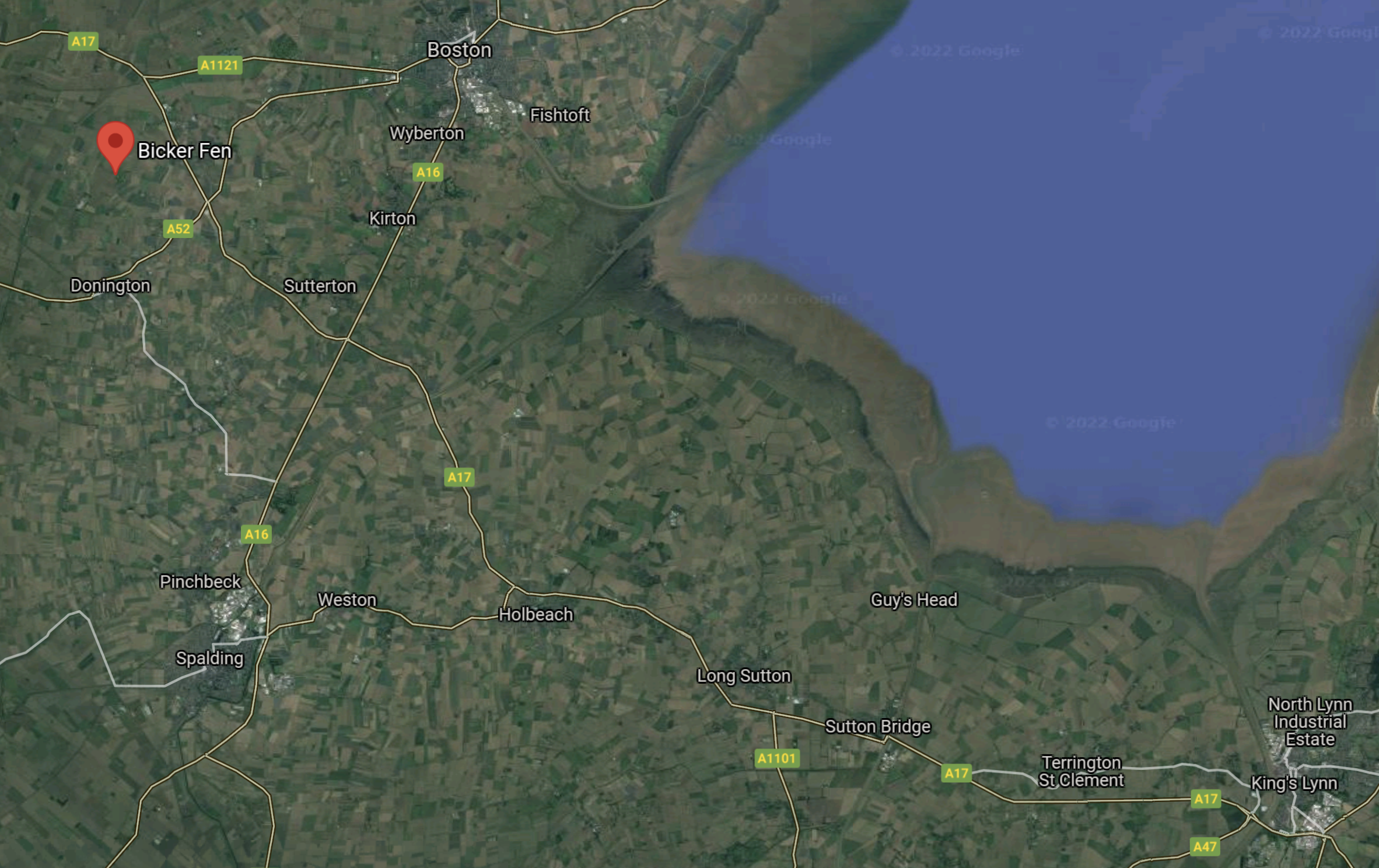
Bicker Fen is marked by the red arrow.
The Google Map shows the substation.
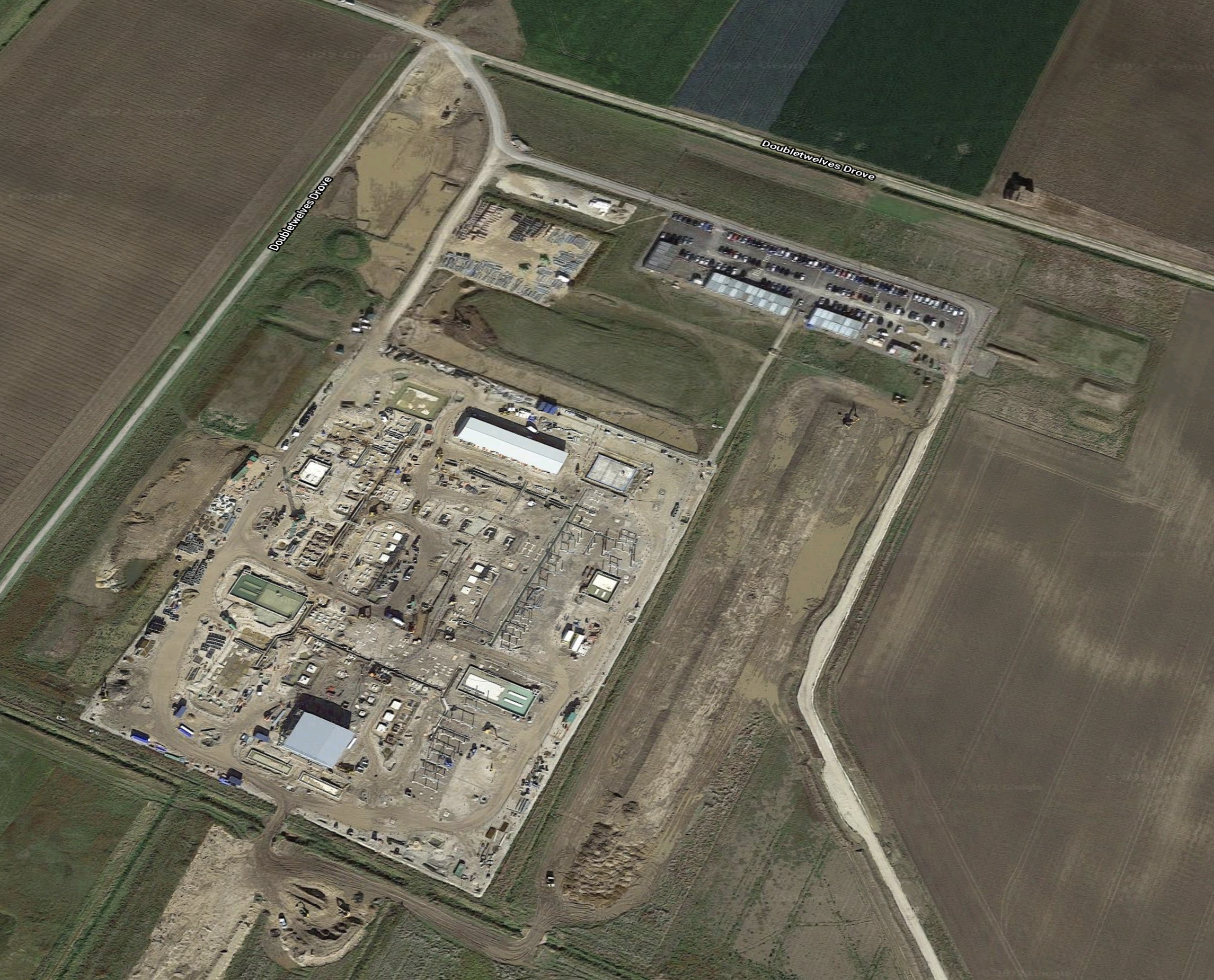
It must be sized to handle over 2 GW, but is it large enough?
Dudgeon Offshore Wind Farm
The Dudgeon offshore wind farm is a 402 MW wind farm, which is twenty miles off the North Norfolk coast.
- It has 67 turbines and an offshore substation.
- It is connected to the shore at Weybourne on the coast from where an underground cable is connected to the National Grid at Necton.
- It became operational in Oct 2017.
- Equinor and Statkraft are part owners of the windfarm and this is the home page of the wind farm’s web site.
- Equinor is the operator of the wind farm.
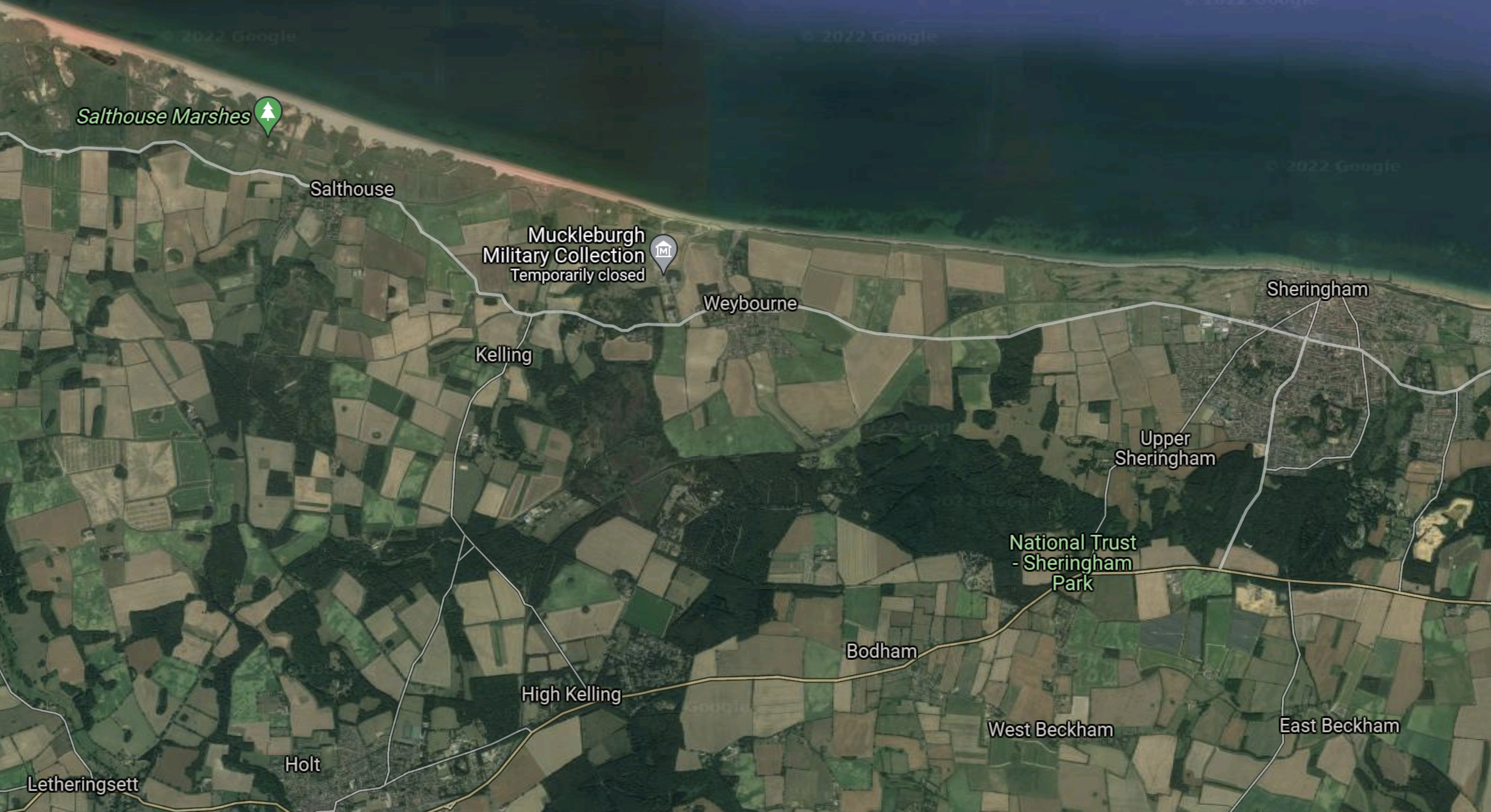
This Google Map shows the location of Weybourne on the coast.
Note.
- Weybourne is in the middle on the coast.
- Sheringham is on the coast in the East.
- Holt is on the Southern edge of the map almost South of Weybourne.
This second map shows the location of the onshore substation at Necton, with respect to the coast.
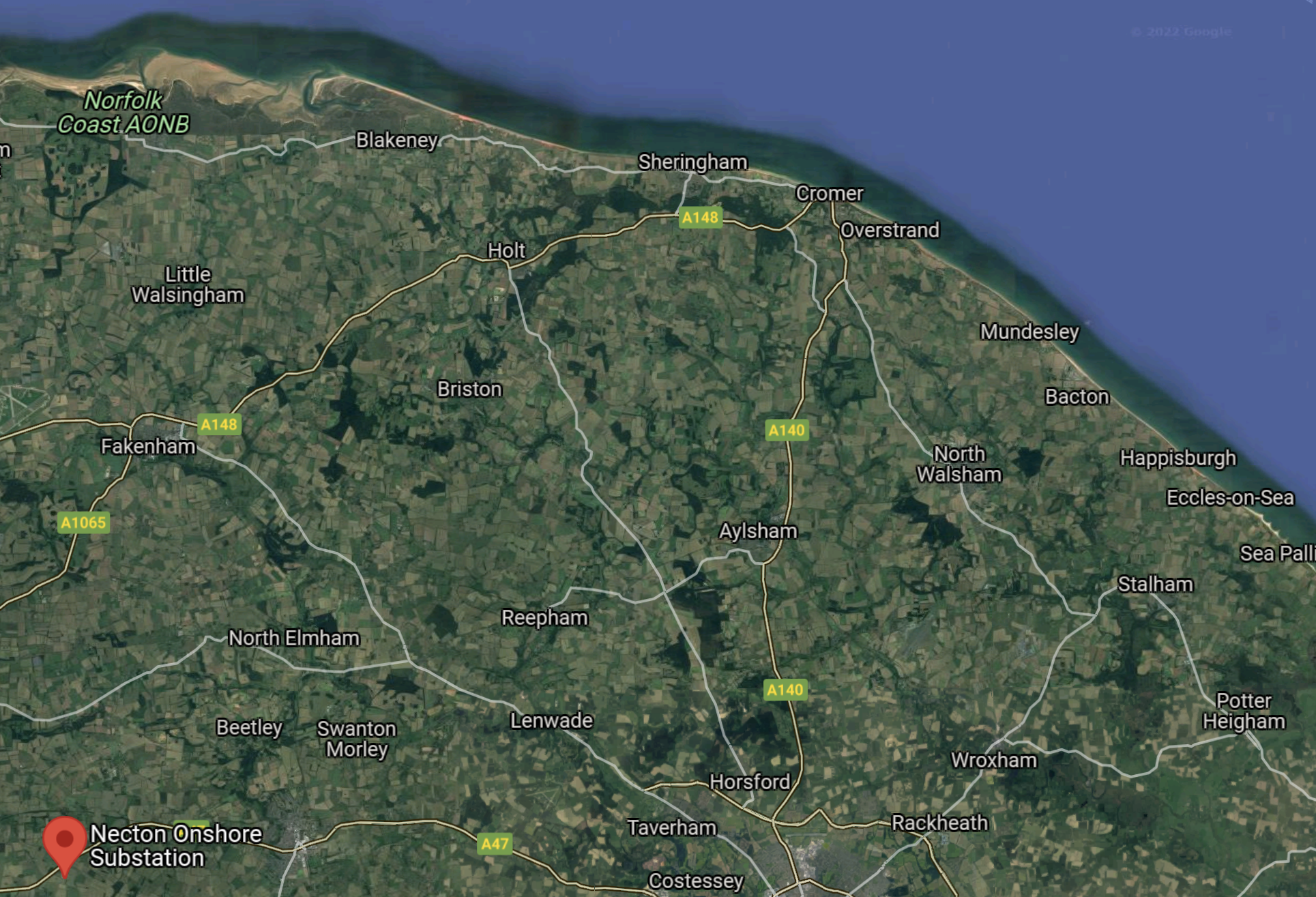
Note.
- The Necton substation is marked by a red arrow.
- Holt and Sheringham can be picked out by the coast in the middle.
- Weybourne is to the West of Sheringham.
- Necton and Weybourne are 35 miles apart.
Digging in the underground cable between Necton and Weybourne might have caused some disruption.
Looking at Weybourne in detail, I can’t find anything that looks like a substation. So is the Necton substation connected directly to Dudgeon’s offshore substation?
Sheringham Shoal Offshore Wind Farm
The Sheringham Shoal offshore wind farm is a 316.8 MW wind farm, which is eleven miles off the North Norfolk coast.
- It has 88 turbines and two offshore substations.
- As with Dudgeon, it is connected to the shore at Weybourne on the coast.
- But the underground cable is connected to an onshore substation at Salle and that is connected to the National Grid at Norwich.
- It became operational in Sept 2012.
- Equinor and Statkraft are part owners of the windfarm and this is the home page of the wind farm’s web site.
- Equinor is the operator of the wind farm.
This second map shows the location of the onshore substation at Salle, with respect to the coast.

Note.
- The Salle substation is marked by a red arrow.
- Holt, Weybourne and Sheringham can be picked out by the coast in the middle.
- Weybourne is to the West of Sheringham.
- Salle and Weybourne are 13.5 miles apart.
Could the following two statements be true?
- As the Sheringham Shoal wind farm was built first, that wind farm was able to use the shorter route.
- It wasn’t built large enough to be able to handle the Dudgeon wind farm.
The statements would certainly explain, why Dudgeon used a second cable.
Extending The Dudgeon And Sheringham Shoal Wind Farms
Both the Dudgeon And Sheringham Shoal web sites have details of the proposed join extension of both wind farms.
This is the main statement on the Overview page.
Equinor has been awarded an Agreement for Lease by the Crown Estate, the intention being to seek consents to increase the generating capacity of both the Sheringham Shoal Offshore Wind Farm and the Dudgeon Offshore Wind Farm.
They then make three points about the development.
- Equinor is proposing a joint development of the two projects with a common transmission infrastructure.
- As part of the common DCO application, the Extension Projects have a shared point of connection at the National Grid Norwich Main substation.
- These extension projects will have a combined generating capacity of 719MW which will make an important contribution to the UK’s target of 30GW of electricity generated by offshore wind by 2030.
This statement on the Offshore Location page, describes the layout of the wind farms.
The Sheringham Shoal Offshore Wind Farm extension is to the north and the east of the existing wind farm, while its Dudgeon counterpart is to the north and south east of the existing Dudgeon Offshore Wind Farm site. The proposed extension areas share the boundaries with its existing wind farm site.
They then make these two important points about the development.
- Equinor is seeking to develop the extension project with a joint transmission infrastructure. A common offshore substation infrastructure is planned to be located in the Sheringham Shoal wind farm site.
- The seabed export cable which will transmit the power generated by both wind farm extensions will make landfall at Weybourne.
There is also this map.

Note.
- The purple line appears to be the UK’s ten mile limit.
- The Sheringham Shoal Extension is outlined in red.
- The Dudgeon Extension is outlined in blue.
- The black lines appear to be the power cables.
I suspect the dotted blue lines are shipping routes sneaking their way through the turbines.
This statement on the Onshore Location page, describes the layout of the offshore and onshore cables.
A new seabed export cable will bring the electricity generated by both the Sheringham Shoal and Dudgeon Offshore Wind Farm extensions to shore at Weybourne, on the coast of Norfolk.
They then make these two important points about the development.
- From there a new underground cable will be installed to transmit that power to a new purpose built onshore substation, which will be located within a 3km radius of the existing Norwich main substation, south of Norwich. This will be the National Grid network connection point for the electricity from both wind farm extensions.
- The power will be transmitted from landfall to the substation using an HVAC system which eliminates the need for any relay stations along the onshore cable route.
There is also this map.
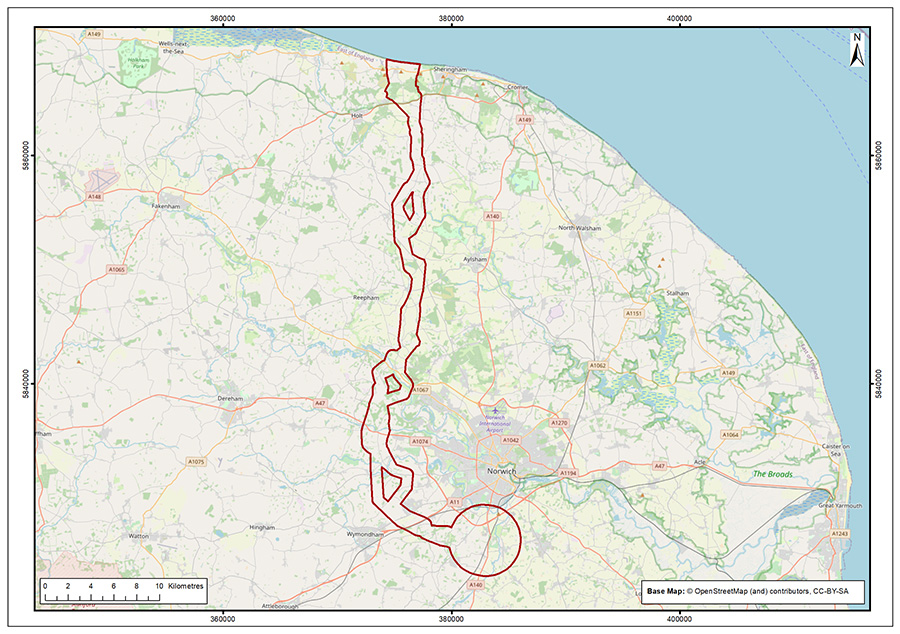
It will be a substantial undertaking to build the underground cable between Weybourne and South of Norwich.
Bacton Gas Terminal
The Bacton gas terminal is a complex of six gas terminals about ten miles East of Cromer.
- It lands and processes gas from a number of fields in the North Sea.
- It hosts the UK end of the BBL pipeline to The Netherlands.
- It hosts the UK end of the Interconnector to Zeebrugge in Belgium.
- The Baird and Deborah fields, which have been developed as gas storage, are connected to the gas terminal. They are both mothballed.
This Google Map shows the location of the terminal.
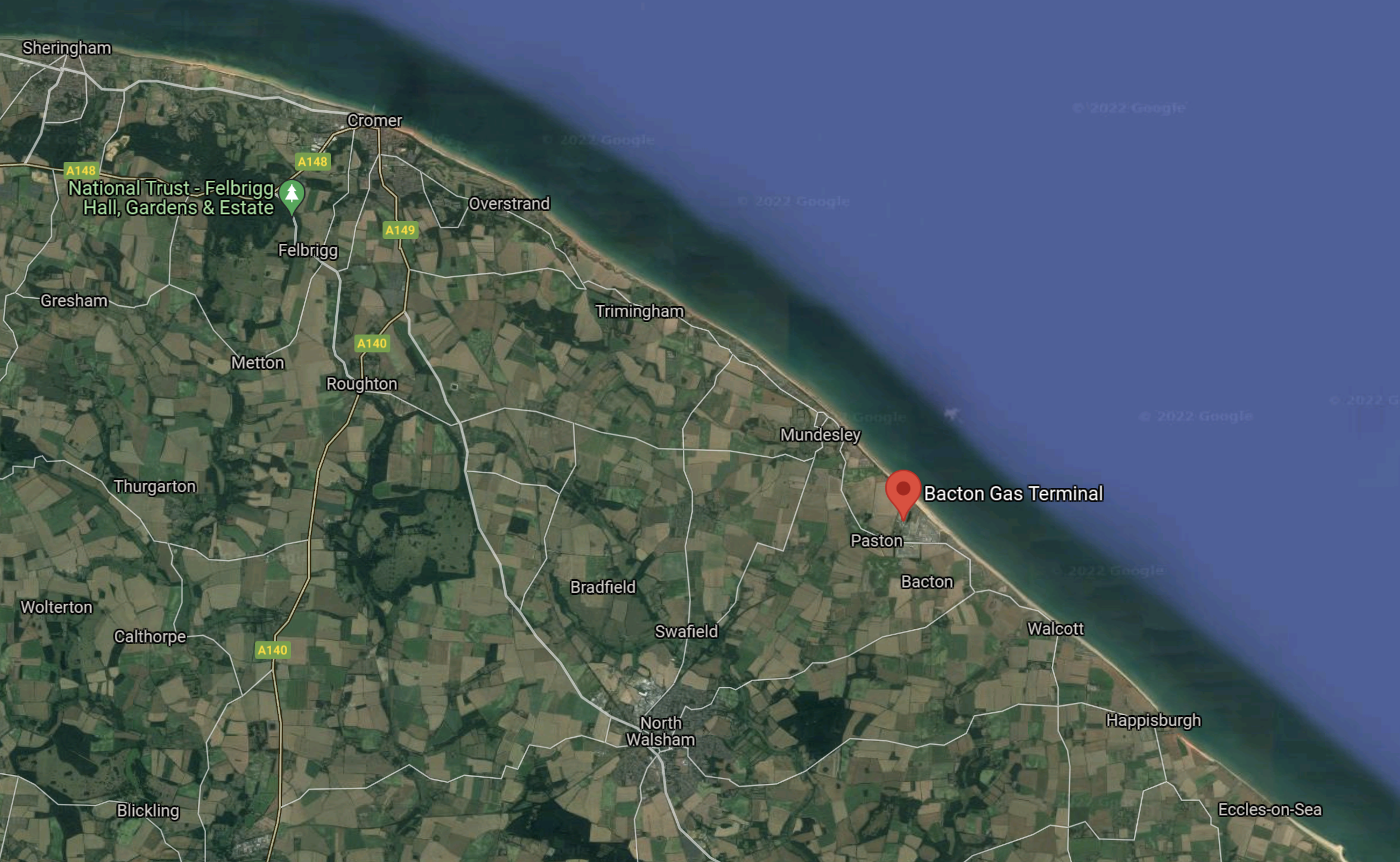
Note.
- The Bacton gas terminal is marked by a red arrow.
- Sheringham is in the North West corner of the map.
- Cromer, Overstrand, Trimingham and Mundesley are resort towns and villages along the coast North of Bacton.
This second map shows the Bacton gas terminal in more detail.
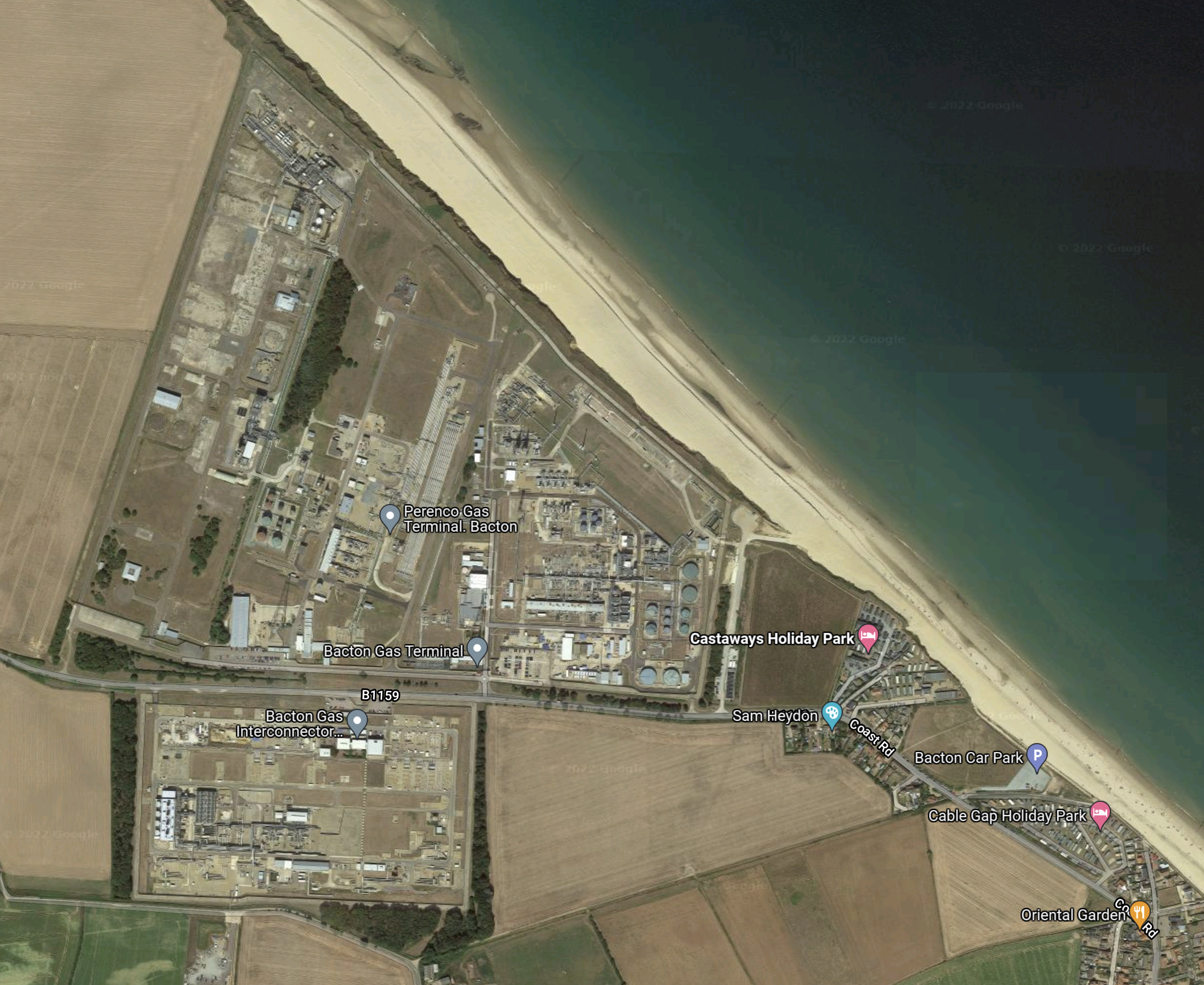
Would you want to have a seaside holiday, by a gas terminal?
Norfolk Boreas And Norfolk Vanguard
Norfolk Boreas and Norfolk Vanguard are two wind farms under development by Vattenfall.
- Norfolk Boreas is a proposed 1.8 GW wind farm, that will be 45 miles offshore.
- Norfolk Vanguard is a proposed 1.8 GW wind farm, that will be 29 miles offshore.
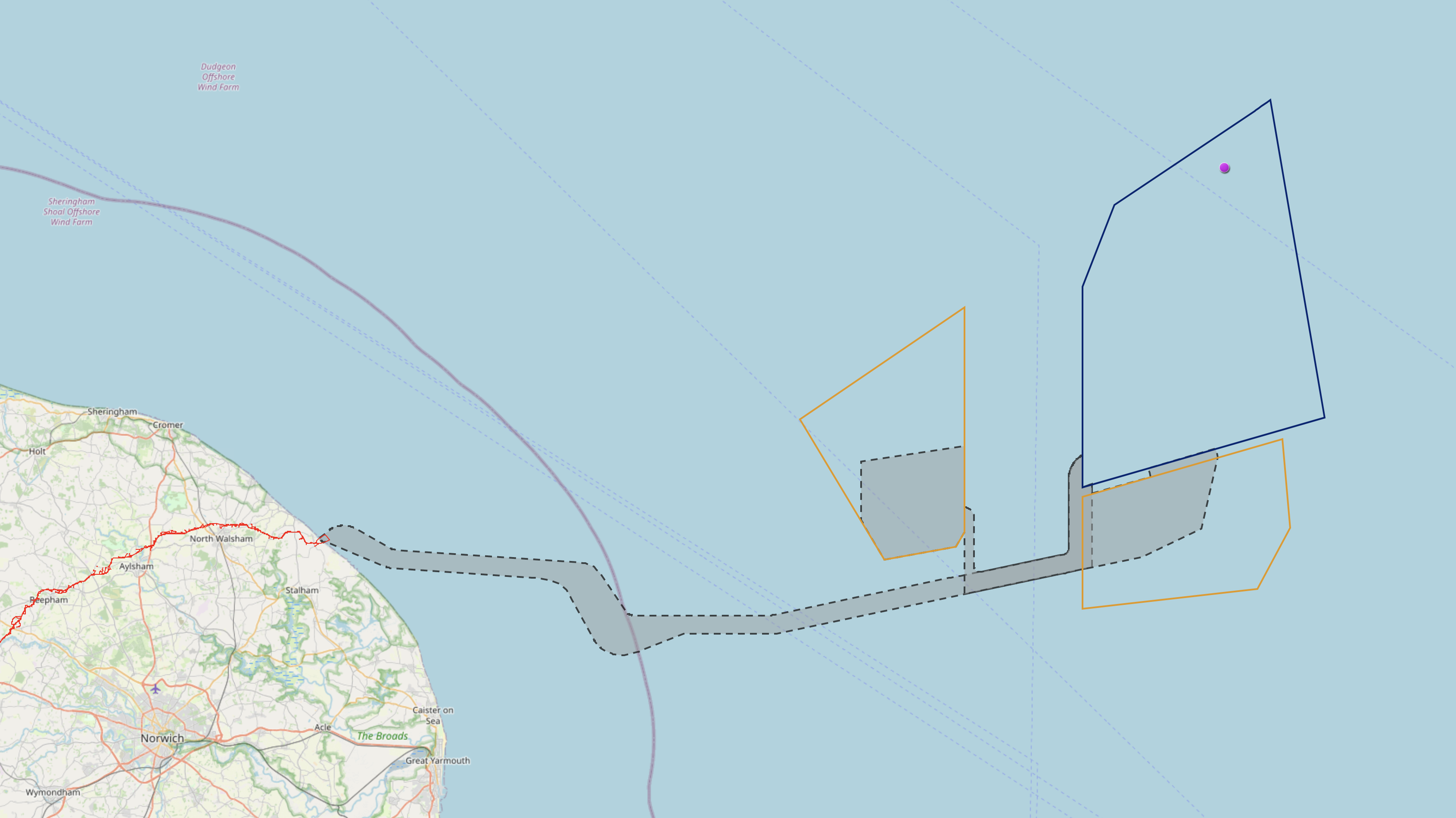
This map shows the two fields in relation to the coast.
Note.
- The purple line appears to be the UK’s ten mile limit.
- Norfolk Boreas is outlined in blue.
- Norfolk Vsnguard is outlined in orange.
- Cables will be run in the grey areas.
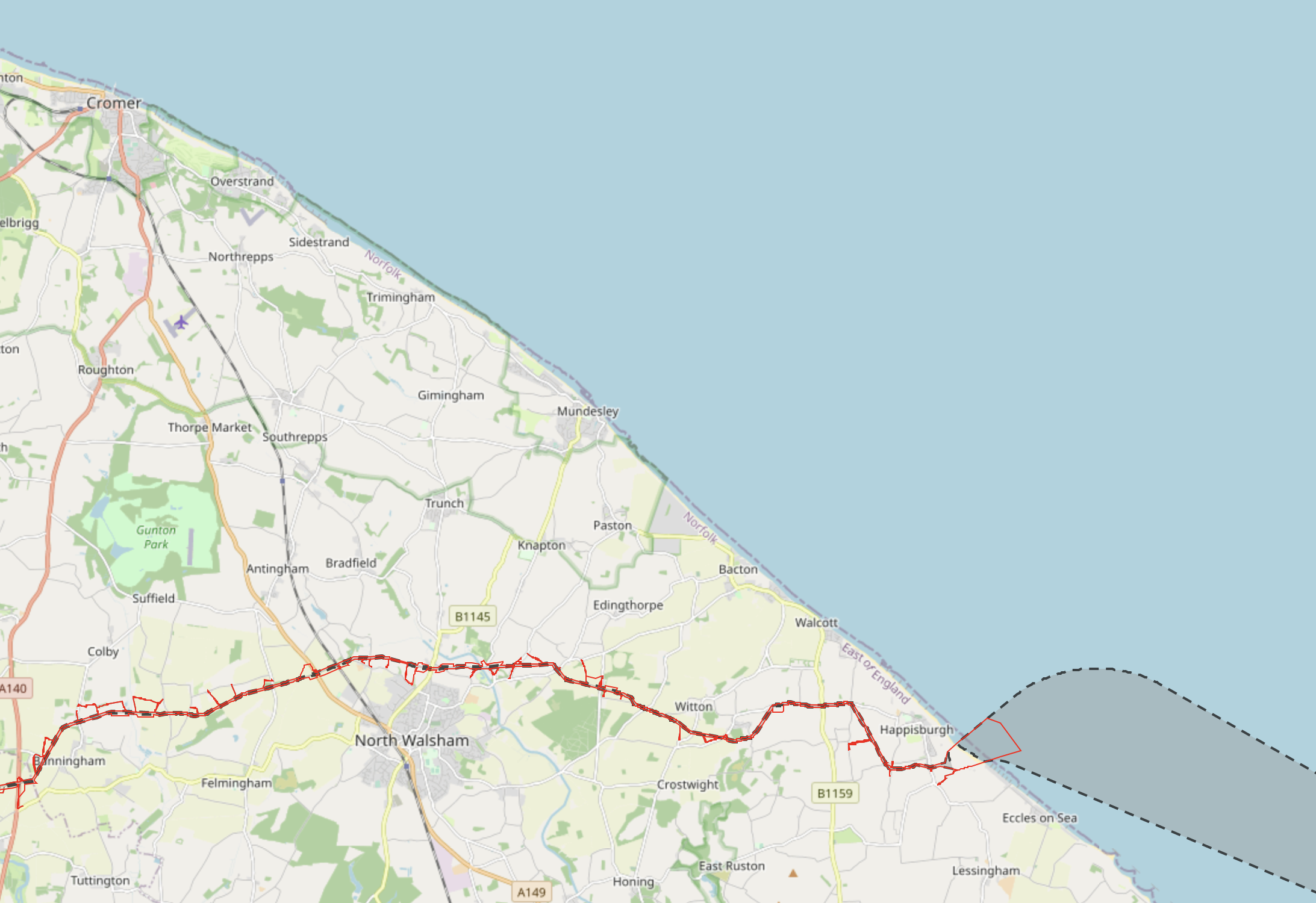
This second map shows the onshore cable.
Note.
- The cables are planned to come ashore between Happisburgh and Eccles-on-Sea.
- Bacton gas terminal is only a short distance up the coast.
- The onshore cable is planned to go from here across Norfolk to the Necton substation.
But all of this has been overturned by a legal ruling.
This article on the BBC is entitled Norfolk Vanguard: Ministers Wrong Over Wind Farm Go-Ahead, Says Judge.
These are the first four paragraphs.
A High Court judge has quashed permission for one of the world’s largest offshore wind farms to be built off the east coast of England.
The Norfolk Vanguard Offshore Wind Farm was granted development consent in July by the Secretary of State for Business, Energy and Industrial Strategy (BEIS).
But Mr Justice Holgate overturned the decision following legal action from a man living near a planned cable route.
A Department for BEIS spokeswoman said it was “disappointed by the outcome”.
I bet the spokeswoman was disappointed.
Vattenfall and the BEIS will go back to the drawing board.
But seriously, is it a good idea to dig an underground cable all the way across Norfolk or in these times build a massive overhead cable either?
Perhaps the solution is to connect the Norfolk Boreas And Norfolk Vanguard wind farms to a giant electrolyser at Bacton, which creates hydrogen.
- The underground electricity cable across Norfolk would not be needed.
- Bacton gas terminal is only a few miles up the coast from the cable’s landfall.
- The UK gets another supply of gas.
- The hydrogen is blended with natural gas for consumption in the UK or Europe.
- A pure hydrogen feed can be used to supply hydrogen buses, trucks and other vehicles, either by tanker or pipeline.
- Excess hydrogen could be stored in depleted gas fields.
The main benefit though, would be that it would transform Bacton gas terminal from a declining asset into Norfolk’s Hydrogen Powerhouse.
Great Yarmouth And Lowestoft
Great Yarmouth Outer Harbour and the Port of Lowestoft have not been the most successful of ports in recent years, but with the building of large numbers of wind farms, they are both likely to receive collateral benefits.
I wouldn’t be surprised to see the support ships for the wind farms switching to zero-carbon power, which would require good electrical connections to the ports to either charge batteries or power electrolysers to generate hydrogen.
Sizewell
Sizewell has only one nuclear power station at present; Sizewell B, but it could be joined by Sizewell C or a fleet of Small Modular Reactors (SMR).
The Sizewell Overhead Transmission Line
Sizewell also has a very high capacity overhead power line to Ipswich and the West.





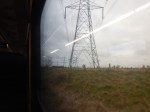
I doubt, it would be possible to build an overhead transmission line like this today.
Sizewell And Hydrogen
EdF, who own the site are involved with Freeport East and may choose to build a large electrolyser in the area to create hydrogen for the Freeport.
East Anglia Array
The East Anglia Array will be an enormous wind farm., comprising up to six separate projects.
It will be thirty miles offshore.
It could generate up to 7.2 GW.
The first project East Anglia One is in operation and delivers 714 MW to a substation in the Deben Estuary, which connects to the Sizewell high-capacity overhead power line.
Most projects will be in operation by 2026.
Freeport East
As the Freeport develops, it will surely be a massive user of both electricity and hydrogen.
Problems With The Current Electricity Network
I don’t believe that the current electricity network, that serves the wind farms and the large energy users has been designed with the number of wind farms we are seeing in the North Sea in mind.
Every new windfarm seems to need a new connection across Norfolk or Suffolk and in Norfolk, where no high-capacity cables exist, this is stirring up the locals.
There is also no energy storage in the current electricity network, so at times, the network must be less than efficient and wind turbines have to be shut down.
Objections To The Current Policies
It is not difficult to find stories on the Internet about objections to the current policies of building large numbers of wind farms and the Sizewell C nuclear power station.
This article on the East Anglia Daily Times, which is entitled Campaigners Unite In Calling For A Pause Before ‘Onslaught’ Of Energy Projects ‘Devastates’ Region is typical.
This is the first paragraph.
Campaigners and politicians have called on the Government to pause the expansion of the energy industry in Suffolk, which they fear will turn the countryside into an “industrial wasteland” and hit tourism.
The group also appear to be against the construction of Sizewell C.
I feel they have a point about too much development onshore, but I feel that if the UK is to thrive in the future we need an independent zero carbon energy source.
I also believe that thousands of wind farms in the seas around the UK and Ireland are the best way to obtain that energy.
Blending Hydrogen With Natural Gas
Blending green hydrogen produced in an electrolyser with natural gas is an interesting possibility.
- HyDeploy is a project to investigate blending up to 20 % of green hydrogen in the natural gas supply to industrial and domestic users.
- Partners include Cadent, ITM Power, Keele University and the Health and Safety Executive.
- Natural gas naturally contains a small amount of hydrogen anyway.
- The hydrogen gas would be distributed to users in the existing gas delivery network.
I wrote about HyDeploy in a post called HyDeploy.
Thje only loser, if hydrogen were to be blended with natural gas would be Vlad the Poisoner, as he’d sell less of his tainted gas.
An Interconnector Between Bicker Fen And Freeport East
I believe that an electricity interconnector between at least Bicker Fen and Freeport East could solve some of the problems.
My objectives would be.
- Avoid as much disruption on the land as possible.
- Create the capacity to deliver all the energy generated to customers, either as electricity or hydrogen.
- Create an expandable framework, that would support all the wind farms that could be built in the future.
The interconnector would be a few miles offshore and run along the sea-bed.
- This method of construction is well proven.
- It was used for the Western HVDC Link between Hunterston in Scotland and Connah’s Quay in Wales.
- Most wind farms seem to have existing substations and these would be upgraded to host the interconnector.
Connections en route would include.
Dudgeon Offshore Wind Farm
The interconnector would connect to the existing offshore substation.
Sheringham Shoal Wind Farm
The interconnector would connect to the existing offshore substation.
Dudgeon and Sheringham Shoal Extension Offshore Wind Farms
These two wind farms could be connected directly to the interconnector, if as planned, they shared an offshore substation in the Sheringham Shoal Extension offshore wind farm.
Bacton Gas Terminal
I would connect to the Bacton Gas Terminal, so that a large electrolyser could be installed at the terminal.
The hydrogen produced could be.
- Stored in depleted gas fields connected to the terminal.
- Blended with natural gas.
- Exported to Europe through an interconnector.
- Supplied to local users by truck or pipeline.
After all, the terminal has been handling gas for over fifty years, so they have a lot of experience of safe gas handling.
Norfolk Boreas And Norfolk Vanguard
These two wind farms could be connected directly to the interconnector, if they shared an offshore substation.
It would also help to appease and silence the objectors, if there was no need to dig up half of Norfolk.
Great Yarmouth And Lowestoft
It might be better, if these ports were supplied from the interconnector.
- Either port could have its own electrolyser to generate hydrogen, which could be.
- Used to power ships, trucks and port equipment.
- Liquefied and exported in tankers.
- Used to supply local gas users.
- Hydrogen could be supplied to a converted Great Yarmouth power station.
Both Great Yarmouth and Lowestoft could become hydrogen hub towns.
Sizewell
This site has a high-capacity connection to the National Grid. This connection is a big eyesore, but it needs to run at full capacity to take electricity from the Energy Coast to the interior of England.
That electricity can come from Sizewell B and/or Sizewell C nuclear power stations or the offshore wind farms.
East Anglia Array
There would probably need to be a joint offshore substation to control the massive amounts of electricity generated by the array.
Currently, the only wind farm in operation of this group is East Anglia One, which uses an underground cable connection to the Sizewell high-capacity connection to the Bullen Lane substation at Bramford.
Freeport East, Ipswich And Bullen Lane Substation
This Google Map shows the area between Ipswich and the coast.
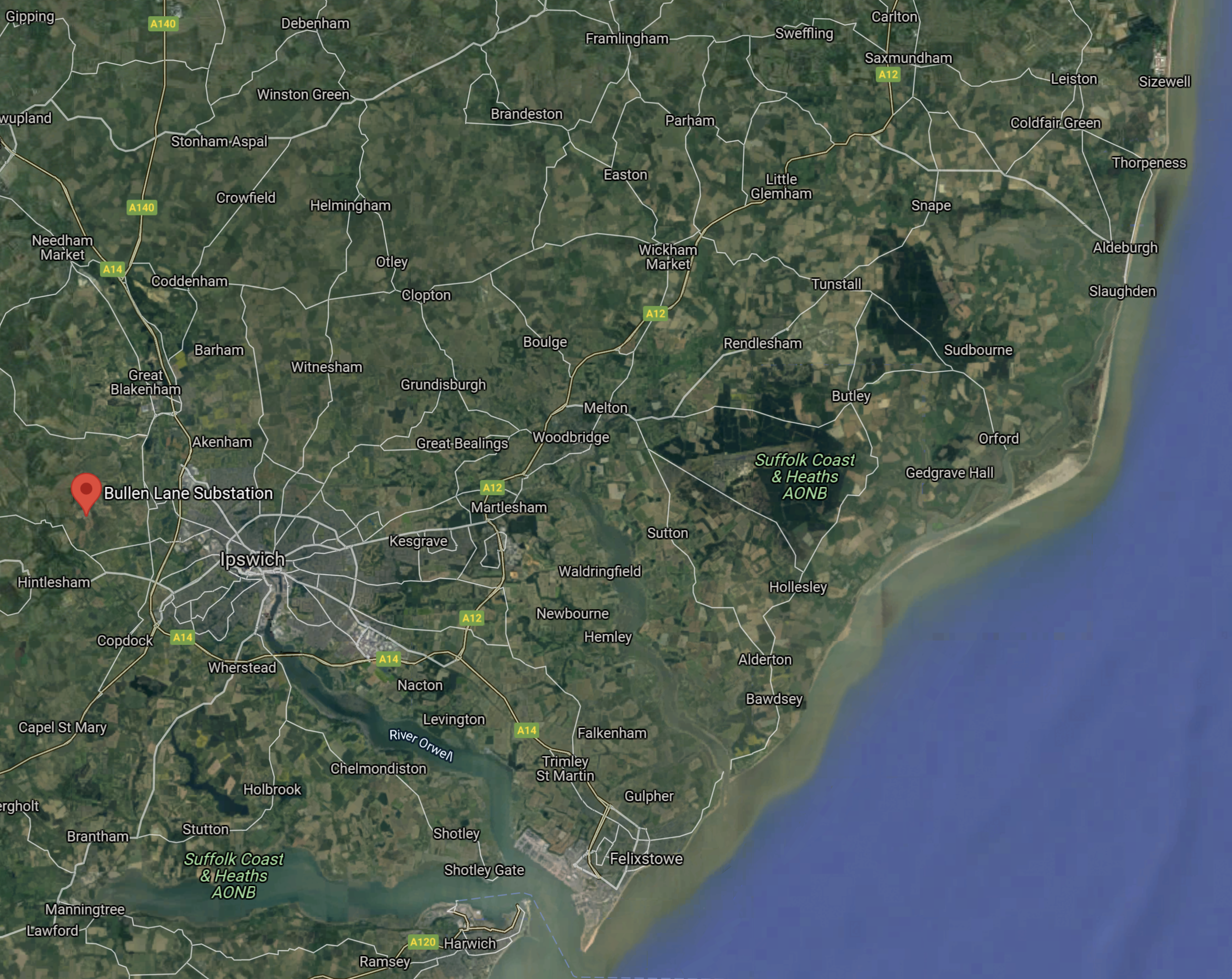
Note.
- Sizewell is in the North-East corner of the map.
- Felixstowe, Harwich and Freeport East are at the mouth of the rivers Orwell and Stour.
- The Bullen Lane substation is to the West of Ipswich and shown by the red arrow.
I would certainly investigate the possibility of running an underwater cable up the River Orwell to connect the Southern end of the interconnector Between Bicker Fen And Freeport East.
This Google Map shows the Bullen Lane Substation.
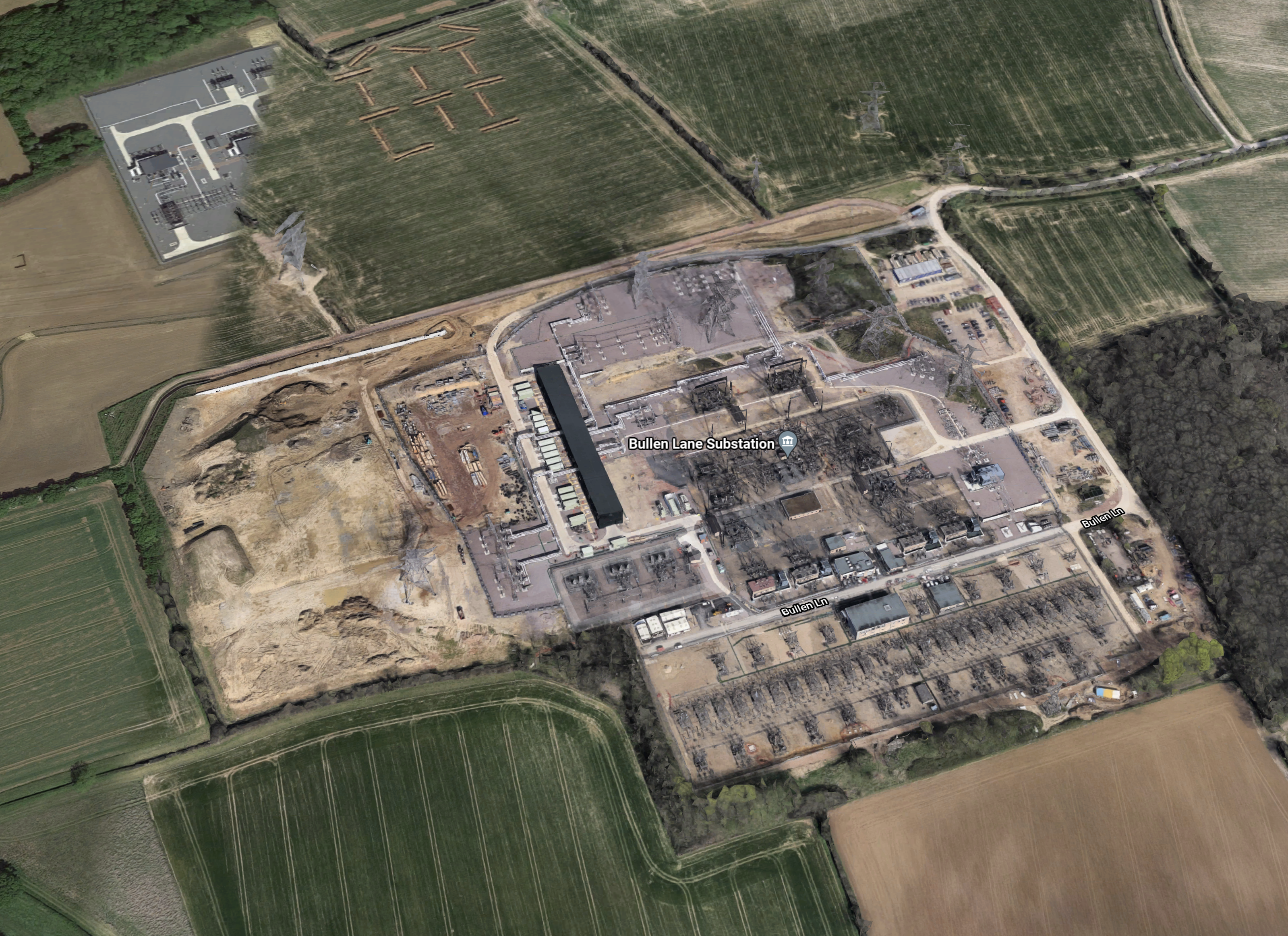
It looks impressive, but is it big enough to handle all the electricity coming ashore from the offshore wind farms to the East of Suffolk and the electricity from the power stations at Sizewell?
Conclusion
I believe there are a lot of possibilities, that would meet the threeobjectives, I stated earlier.
- Avoid as much disruption on the land as possible.
- Create the capacity to deliver all the energy generated to customers, either as electricity or hydrogen.
- Create an expandable framework, that would support all the wind farms that could be built in the future.
In addition, simple mathematics says to me, that either there will need to be extra capacity at both Bicker Fen and Bullen Lane substations and onward to the rest of the country, or a large electrolyser to convert several gigawatts of electricity into hydrogen for distribution, through the gas network.
Could Norfolk And Suffolk Be Powered By Offshore Wind?
This week this article on the BBC was published, which had a title of Government Pledges £100m For Sizewell Nuclear Site.
These are the first three paragraphs.
The government is putting up £100m to support the planned Sizewell C nuclear plant in Suffolk, Business and Energy Secretary Kwasi Kwarteng has announced.
The investment marks the latest stage in efforts to build the £20bn reactor on the east coast of England.
However, it does not commit the government to approving the project, which is still subject to negotiations.
My view of the proposed Sizewell C nuclear plant is that of an engineer, who used to live within thirty minutes of the Sizewell site.
- Hinckley Point C power station, which is currently being constructed, will have a nameplate capacity of 3.26 GW.
- Sizewell C would probably be to a similar design and capacity to Hinckley Point C.
- Sizewell C would likely be completed between 2033-2036.
- Sizewell B is a 1250 MW station, which has a current closing date of 2035, that could be extended to 2055.
- East Anglia and particularly the mega Freeport East, that will develop to the South at the Ports of Felixstowe and Harwich will need more electricity.
- One of the needs of Freeport East will be a large supply of electricity to create hydrogen for the trains, trucks, ships and cargo handling equipment.
- Sizewell is a large site, with an excellent connection to the National Grid, that marches as a giant pair of overhead cables across the Suffolk countryside to Ipswich.
But.
- We still haven’t developed a comprehensive strategy for the management of nuclear waste in the UK. Like paying for the care of the elderly and road pricing, it is one of those problems, that successive governments have kept kicking down the road, as it is a big vote loser.
- I was involved writing project management software for forty years and the building of large nuclear power plants is littered with time and cost overruns.
- There wasn’t a labour problem with the building of Sizewell B, as engineers and workers were readily available. But with the development of Freeport East, I would be very surprised if Suffolk could provide enough labour for two mega-projects after Brexit.
- Nuclear power plants use a lot of steel and concrete. The production of these currently create a lot of carbon dioxide.
- There is also a large number of those objecting to the building of Sizewell C. It saddened me twenty-five years ago, that most of the most strident objectors, that I met, were second home owners, with no other connection to Suffolk.
The older I get, the more my experience says, that large nuclear power plants aren’t always a good idea.
Small Modular Nuclear Reactors
In Is Sizewell The Ideal Site For A Fleet Of Small Modular Nuclear Reactors?, I looked at building a fleet of small modular nuclear reactors at Sizewell, instead of Sizewell C.
I believe eight units would be needed in the fleet to produce the proposed 3.26 GW and advantages would include.
- Less land use.
- Less cost.
- Less need for scarce labour.
- Easier to finance.
- Manufacturing modules in a factory should improve quality.
- Electricity from the time of completion of unit 1.
But it would still be nuclear.
Wind In The Pipeline
Currently, these offshore wind farms around the East Anglian Coast are under construction, proposed or are in an exploratory phase.
- East Anglia One – 714 MW – 2021 – Finishing Construction
- East Anglia One North 800 MW – 2026 – Exploratory
- East Anglia Two – 900 MW – 2026 – Exploratory
- East Anglia Three – 1400 MW – 2026 – Exploratory
- Norfolk Vanguard – 1800 MW – Exploratory
- Norfolk Boreas – 1800 MW – Exploratory
- Sheringham Shoal/Dudgeon Extension – 719 MW – Exploratory
Note.
- The date is the possible final commissioning date.
- I have no commissioning dates for the last three wind farms.
- The East Anglia wind farms are all part of the East Anglia Array.
These total up to 8.13 GW, which is in excess of the combined capacity of Sizewell B and the proposed Sizewell C, which is only 4.51 GW.
As it is likely, that by 2033, which is the earliest date, that Sizewell C will be completed, that the East Anglia Array will be substantially completed, I suspect that East Anglia will not run out of electricity.
But I do feel that to be sure, EdF should try hard to get the twenty year extension to Sizewell B.
The East Anglia Hub
ScottishPower Renewables are developing the East Anglia Array and this page on their web site, describes the East Anglia Hub.
This is the opening paragraph.
ScottishPower Renewables is proposing to construct its future offshore windfarms, East Anglia THREE, East Anglia TWO and East Anglia ONE North, as a new ‘East Anglia Hub’.
Note.
- These three wind farms will have a total capacity of 3.1 GW.
- East Anglia ONE is already in operation.
- Power is brought ashore at Bawdsey between Felixstowe and Sizewell.
I would assume that East Anglia Hub and East Anglia ONE will use the same connection.
Norfolk Boreas and Norfolk Vanguard
These two wind farms will be to the East of Great Yarmouth.
This map from Vattenfall web site, shows the position of the two wind farms.
Note.
- Norfolk Boreas is outlined in blue.
- Norfolk Vanguard is outlined in orange.
- I assume the grey areas are where the cables will be laid.
- I estimate that the two farms are about fifty miles offshore.
This second map shows the landfall between Eccles-on-Sea and Happisburgh.
Note the underground cable goes half-way across Norfolk to Necton.
Electricity And Norfolk And Suffolk
This Google Map shows Norfolk and Suffolk.
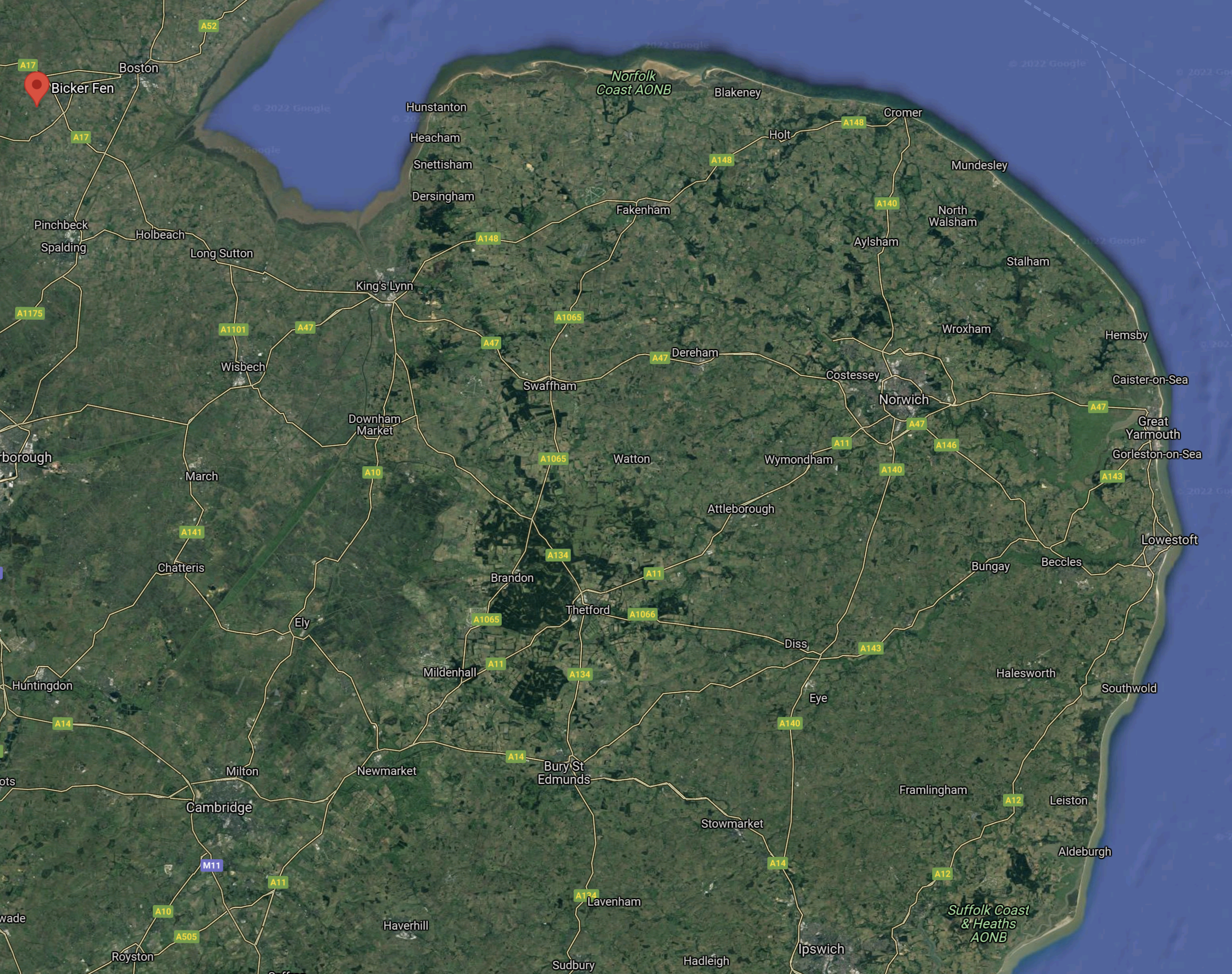
Note.
- The red arrow in the North-West corner marks the Bicker Fen substation that connects to the Viking Link to Denmark.
- The East Anglia Array connects to the grid at Bawdsey in the South-East corner of the map.
- Sizewell is South of Aldeburgh in the South-East corner of the map.
- The only ports are Lowestoft and Yarmouth in the East and Kings Lynn in the North-West.
There are few large towns or cities and little heavy industry.
- Electricity usage could be lower than the UK average.
- There are three small onshore wind farms in Norfolk and none in Suffolk.
- There is virtually no high ground suitable for pumped storage.
- There are lots of areas, where there are very few buildings to the square mile.
As I write this at around midday on a Saturday at the end of January, 49 % of electricity in Eastern England comes from wind, 20 % from nuclear and 8 % from solar. That last figure surprised me.
I believe that the wind developments I listed earlier could provide Norfolk and Suffolk with all the electricity they need.
The Use Of Batteries
Earlier, I talked of a maximum of over 7 GW of offshore wind around the cost of Norfolk and Suffolk, but there is still clear water in the sea to be filled between the existing and planned wind farms.
Batteries will become inevitable to smooth the gaps between the electricity produced and the electricity used.
Here are a few numbers.
- East Anglian Offshore Wind Capacity – 8 GW
- Off-Peak Hours – Midnight to 0700.
- Typical Capacity Factor Of A Windfarm – 20 % but improving.
- Overnight Electricity Produced at 20 % Capacity Factor – 11.2 GWh
- Sizewell B Output – 1.25 GW
- Proposed Sizewell C Output – 3.26 GW
- Largest Electrolyser – 24 MW
- World’s Largest Lithium-Ion Battery at Moss Landing – 3 GWh
- Storage at Electric Mountain – 9.1 GWh
- Storage at Cruachan Power Station – 7.1 GWh
Just putting these large numbers in a table tells me that some serious mathematical modelling will need to be performed to size the batteries that will probably be needed in East Anglia.
In the 1970s, I was involved in three calculations of a similar nature.
- In one, I sized the vessels for a proposed polypropylene plant for ICI.
- In another for ICI, I sized an effluent treatment system for a chemical plant, using an analogue computer.
- I also helped program an analysis of water resources in the South of England. So if you have a water shortage in your area caused by a wrong-sized reservoir, it could be my fault.
My rough estimate is that the East Anglian battery would need to be at least a few GWh and capable of supplying up to the output of Sizewell B.
It also doesn’t have to be a single battery. One solution would probably be to calculate what size battery is needed in the various towns and cities of East Anglia, to give everyone a stable and reliable power supply.
I could see a large battery built at Sizewell and smaller batteries all over Norfolk and Suffolk.
But why stop there? We probably need appropriately-sized batteries all over the UK, with very sophisticated control systems using artificial intelligent working out, where the electricity is best stored.
Note that in this post, by batteries, I’m using that in the loosest possible way. So the smaller ones could be lithium-ion and largest ones could be based on some of the more promising technologies that are under development.
- Highview Power have an order for a 50 MW/500 MWh battery for Chile, that I wrote about in The Power Of Solar With A Large Battery.
- East Anglia is an area, where digging deep holes is easy and some of Gravitricity’s ideas might suit.
- I also think that eventually someone will come up with a method of storing energy using sea cliffs.
All these developments don’t require large amounts of land.
East Anglia Needs More Heavy Consumers Of Electricity
I am certainly coming to this conclusion.
Probably, the biggest use of electricity in East Anglia is the Port of Felixstowe, which will be expanding as it becomes Freeport East in partnership with the Port of Harwich.
One other obvious use could be in large data centres.
But East Anglia has never been known for industries that use a lot of electricity, like aluminium smelting.
Conversion To Hydrogen
Although the largest current electrolyser is only 24 MW, the UK’s major electrolyser builder; ITM Power, is talking of a manufacturing capacity of 5 GW per year, so don’t rule out conversion of excess electricity into hydrogen.
Conclusion
Who needs Sizewell C?
Perhaps as a replacement for Sizewell B, but it would appear there is no pressing urgency.
Birth Of The East West Main Line
Today, the East West Rail Consortium has changed its name to the East West Main Line Partnership.
The home page on the new web site, is emblazoned with this headline.
Championing The Ambition For East West Rail
This mission statement is then given.
The East West Main Line Partnership (previously the East West Rail Consortium) is led by local authorities and works closely with sub-national transport bodies, LEPs, government and its agencies to realise the vision for an East West Main Line.
It is followed by six main areas of interest.
Delivery Of Oxford-Cambridge
The Partnership will continue to work with government and the East West Railway Company to support delivery of Oxford-Cambridge (including Aylesbury-Milton Keynes) at the earliest opportunity.
Coast-To-Coast Connectivity
For East West Rail to realise its full potential, direct services must extend beyond Oxford-Cambridge. Its potential should truly be ‘coast to coast’ – from Norfolk and Suffolk to Bristol and South Wales.
North-South Connectivity
It is important to recognise that East West Rail is not just about improving east-west connectivity: it is integral to improving connectivity across the country.
Interchange And Strategic Transport Hubs
The East West Main Line’s potential to connect to services on other main lines is significant. Frictionless interchange is required for onward rail journeys and to other modes.
A 21st Century Main Line
The East West Main Line should reflect the 21st century communities it serves. It must be an exemplar for its high-quality standards of design, construction and operation.
Freight
Greater use of rail for freight and logistics provides additional resilience for the business community, while also supporting the need to achieve net zero.
Conclusion
It has to be remembered that the original driving force for the East West Rail Consortium was Ipswich Borough Council.
This new direction is a bold vision and it has the spirit of East Anglia written all over it.
Related Posts
Transport Secretary Urged Not To Derail Aylesbury Spur Plans
The title of this post, is the same as that of this article on The Bucks Herald.
This is the sub-heading of the article.
Leader of Buckinghamshire Council, Martin Tett has written to Transport Secretary Grant Shapps urging him to confirm Government support and funding for the much needed Aylesbury link section of East-West rail.
I think this Aylesbury link needs very careful thinking.
There are certainly a lot of issues to consider.
The Aylesbury Link
The Great Central Main Line used to run from London Marylebone station to the East Midlands and North.
Much of the route closed in the 1960s and the only section with a regular passenger service is that that run by Chiltern Railways, between Marylebone and Aylesbury Vale Parkway station.
North of Aylesbury Vale Parkway this rail link connects to the East-West Rail Link.
It was originally proposed to run a service between Aylesbury and Milton Keynes.
High Speed Two
High Speed Two is the herd of elephants in the room and it could have multiple effects all over the country.
Is High Speed Two For London, The Midlands, The North And Scotland Or For The Whole UK?
The answer surely, is that High Speed Two is for the whole UK.
Train Services Between Wales and the West Of England And The North Of England And Scotland
Consider.
- North Wales is well served by a change at Crewe for passengers from the North and Scotland.
- Mid Wales is served by a change at Crewe or in Birmingham.
- South Wales, Bristol and the West and South-West of England are well-served by high speed trains from London Paddington and Reading.
Could South Wales, Bristol and the West and South-West of England, be better connected to the North and Scotland?
One of the ways to improve these services could be with a connection between High Speed Two and East-West Rail Link to allow trains to connect to the Great Western Railway at Didcot Junction.
Train Services Between East Anglia And The North Of England And Scotland
One of the ways to improve these services could be with a connection between High Speed Two and East-West Rail Link to allow trains to connect to and from Cambridge and East Anglia.
A High Speed Two Station At Calvert
Calvert is a village surrounded by landfill and wildlife sites to the South of where High Speed Two and East-West Rail Link cross to the North of Aylesbury.
This Google Map shows the area.
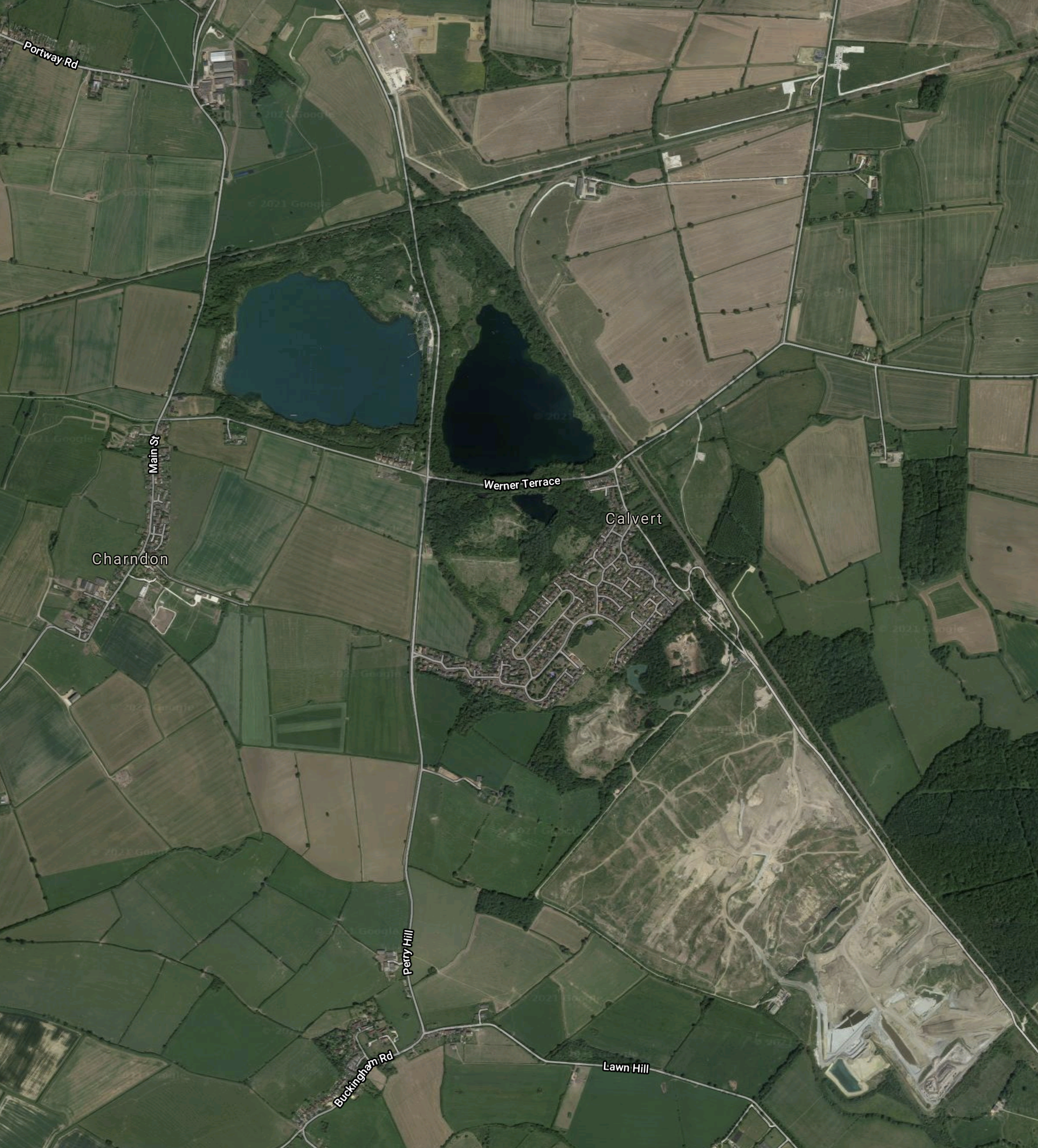
Note.
- Calvert is the village in the middle of the map.
- The light-coloured area to the South-East of the village is one of London’s biggest landfill sites.
- The single-track railway to Aylesbury runs along the North-East side of the landfill.
- To the North of the village, this railway connects to the East-West Rail Link.
This Google Map shows the junction between the two railways in greater detail.
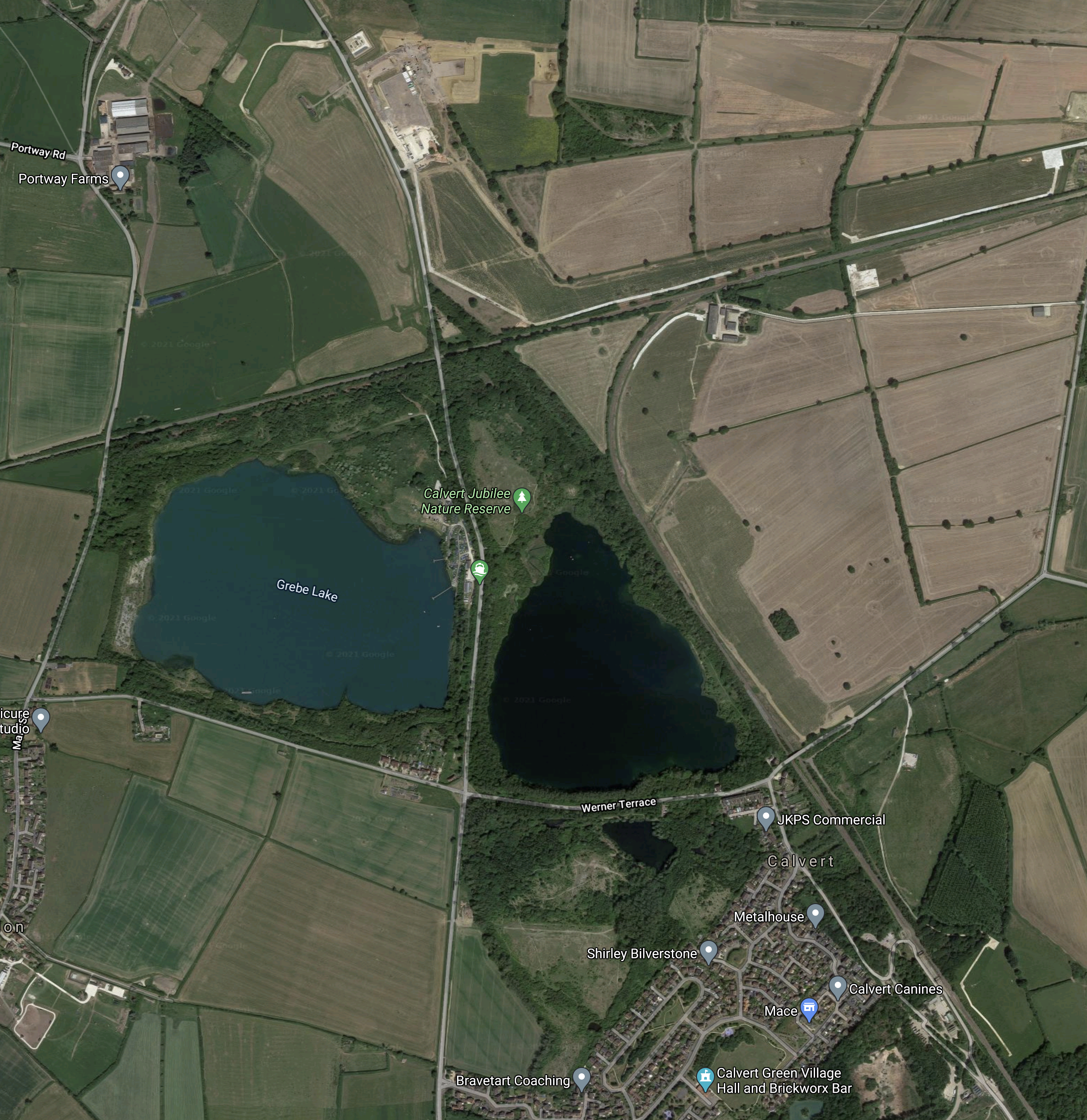
Note.
- The Northern part of Calvert is in the South-East corner of the map.
- The East-West Rail Link crossing across the North of the map
- The railway to Aylesbury running SE-NW across the map, to the East of the village of Calvert.
- The chord connecting the two railways, which allows trains to and from the South to connect to the East.
This map from High Speed Two shows the route of the new railway through the area.
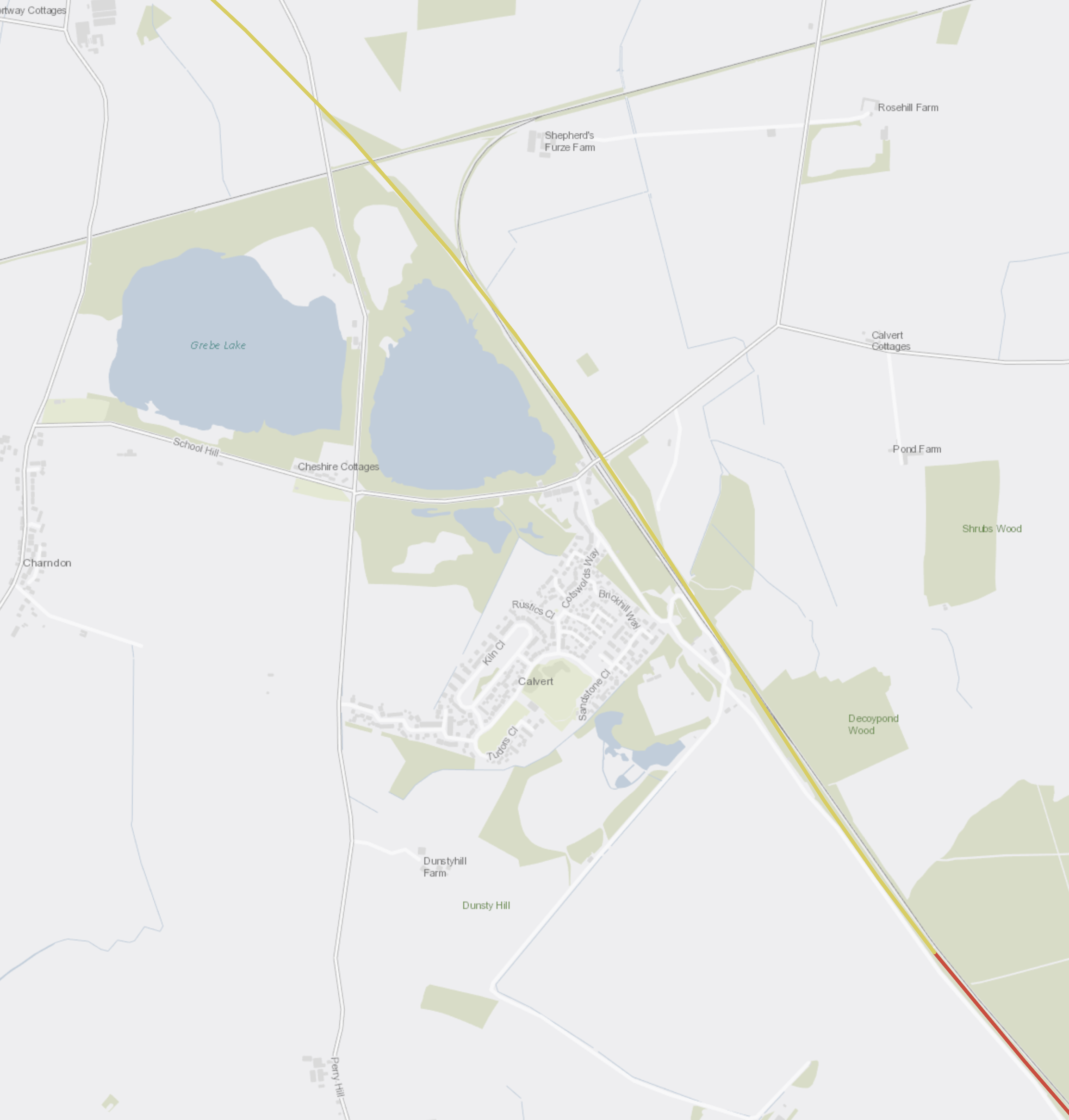
Note.
- High Speed Two is shown in yellow (cutting) and embankment (red).
- High Speed Two appears to run either on the same route or alongside the route to Aylesbury.
The Oakervee Review into High Speed Two, says this on Page 53, about a new station at Calvert in Buckinghamshire.
The Review also heard evidence from a number of informed stakeholders suggesting there should be a new station near Calvert, where HS2 would cross East-West Rail proposals to improve connectivity along the OxfordCambridge corridor. Previously, due to the impact on speed, no interim station had been planned between London and Birmingham Interchange.
The Review concluded that the DfT should consider making passive provision for a future HS2 station near to Calvert. If it is decided that a HS2 station should be built near to Calvert, passive provision will help prevent any disruption to HS2 services. There could be merit in developing an HS2 station in the future here if local plans support a significant residential and commercial development in this region, and if there is passenger demand to justify the cost of developing a station here. Without this coordinated planning, the experience of HS1 stations risks being repeated. The Review notes that the cost of developing a future station near Calvert could be shared with others including potentially the East West Rail Company.
I must admit, that I like the concept of a new station at Calvert.
- The double-track High Speed Two and the single-track Aylesbury Link run alongside each other and a station wouldn’t be a very expensive one.
- High Speed Two Trains will be very powerful and should be able to do a quick stop perhaps losing about two minutes.
- The important Milton Keynes Central station would get a good High Speed Two service, with a change at Calvert.
- Trains between Oxford and Cambridge could serve Calvert station.
It might also be possible for one of High Speed Two’s Classic Compatible trains to join High Speed Two at the station with a reverse.
This could enable a service between say Cardiff and Edinburgh.
- Intermediate stops could be Newport, Bristol Parkway, Swindon, Oxford, Bicester Village, Calvert, Birmingham Interchange, Crewe, Preston and Carlisle.
- It might even join and split at Swindon and Carlisle, with a second Classic Compatible train going between Penzance and Glasgow, which stopped at Plymouth, Exeter, Bristol Temple Meads, Bath, Swindon, Oxford, Bicester Village, Calvert, Birmingham Interchange, Crewe, Preston and Carlisle.
- It would need extra two-hundred metre long platforms at Swindon, Oxford, Bicester Village and Calvert.
If this train ran hourly, there would certainly be a need for an hourly feeder train between Aylesbury and Milton Keynes.
But as yet, it hasn’t been decided to provide provision at Calvert for a possible High Speed Two station.
Rolling Stock For The East-West Rail Link
In July 2019, I wrote Tender Set To Be Issued For East West Rail Rolling Stock.
I analysed if battery electric trains could run services on the East West Rail Link.
I said this.
Consider.
-
- All the major stations except Oxford have electrification.
- Sections of the route are electrified.
- The route is not very challenging.
- The longest section without electrification is around forty miles.
All this leads me to believe that a battery-electric train with a range of forty miles could handle the route, if there was the means to charge the train at Oxford.
Possibly the easiest way to achieve the charging station at Oxford station, would be to electrify between Didcot Junction and Oxford stations.
Since then Hitachi have released the Hitachi Regional Battery Train, whose specification is shown in this infographic.

I believe this train could work the East-West Rail Link and also between Aylesbury and Milton Keynes.
I also believe, that other manufacturers could provide battery electric trains for the route.
These or similar trains would also be suitable for the decarbonisation of Chiltern’s diesel multiple units, that run the suburban services.
Conclusion
High Speed Two could have a station at Calvert.
If it does, there will certainly be a need between Aylesbury and Milton Keynes.
To be continued…
Nothing Changes
The Americans never change, when it comes to the crimes and misdemeanours of their diplomats, forces personnel and their families in the United Kingdom.
Over the last few days, the case of the death of Harry Dunn, by a stupid driver reportedly on the wrong side of the road, has come to attention on the news.
Perhaps, twenty-five years ago, C and myself were at a dinner party given by a Chinese friend and we got talking to a retired Chief Constable from East Anglia, who C knew through various legal connections.
At the time, there had just been a fatal road crash involving a United States serviceman, near one of the many bases and there was a row going on, as the suspect had been whisked back home.
I remember the retired Policeman saying that it was always happening and justice was rarely seen to be done.
Coastal Communities Among Worst Off In UK, Report Finds
The title of this post is the same as an article on the BBC web site, which they are covering on BBC Breakfast.
When I was fifteen my parents partially-retired to Felixstowe and I remember a very boring couple of summers in the town. In summer 1963, I spent most of it reading Nelkon and Parker in preparation for my A Level Physics course.
In those days, public transport to Ipswich was dire with nothing back after working hours and I can remember that I only ever went to the cinema in Felixstowe once!
Today, the last train from Ipswich is 22:28, but in those days it was about 19:00.
So one factor that applied, was you needed a car to have any social life outside of the dreary town. The few people of my age, I knew in the town couldn’t wait to leave school, so they could earn money to buy a car.
If you look around the country, the coastal areas that are vibrant and successful like say Bournemouth, Brighton, Liverpool, Southend and Swansea, tend to be larger, with excellent external and internal public transport links.
Other non-successful coastal towns like Felixstowe, Hastings, Hull, Lowestoft, Redcar, Skegness and Ysrmouth don’t have the same quality of external transport links, although some like Hull have good bus networks.
I may be being selective, but I believe it would make a big difference to a lot of coastal towns, if they had a first class rail service to the nearby inland larger towns and cities.
If there is no rail route, then a first class bus connection is needed.
Felixstowe
I’ll take Felixstowe as an example.
- The train service is one train per hour and it finishes around ten in the evening.
- The length of the line is such, that one train can do the return trip in an hour.
- Most of the rolling stock used on the line are past it, although I’ve done the trip in a passenger-friendly Class 170 train.
- If it is a sunny Saturday or Sunday, the train can get overloaded at times.
Hopefully, the train service will get better.
- Greater Anglia have ordered new three-car Class 755 bi-mode trains.
- Network Rail are improving the Felixstowe Branch Line.
- Ipswich station is to be upgraded with an extra bay platform for Felixstowe and Lowestoft services.
Point 1 would probably attract more passengers and points 2 and 3 would allow a half-hourly service at selected times of the day.
The increase in capacity and quality, should be enough, so that on a glorious day if people in Ipswich decide to go to the coast, the trains can make it a good experience.
It will be interesting to see how the number of rail passengers to Felixstowe change in the next few years.
Incidentally, Felixstowe station shows how you can create a quality station for a town of 24,000 people.
- The Grade II Listed station buildings have become a Shopping Centre with a cafe and bar.
- There is just a single platform that can take a four-car train.
- There is a ticket machine and a basic shelter.
- The station is on the High Street.
- The car park is shared with the local Co-op supermarket.
- The station is unstaffed, but the trains are double-manned.
How many coastal stations could be Felixstowed?
Felixstowe used to have a second station at Felixstowe Beach, which is near to the Port of Felixstowe and Landguard Fort.
Some might argue that reopening the station would be a good idea, especially as it could be a modern single platform station.
But surely, it would be better to improve the bus services in the town or provide quality bike hire at the station.
Greater Anglia’s Class 755 Trains
Greater Anglia have ordered 24 x four-car and 14 x three-car Class 755 trains.
- The trains are bi-mode.
- In terms of carriages, the new bi-mode fleet will be at more than twice the size of the current diesel fleet.
- Greater Anglia have said, that they will use electric power from overhead wires, even if it’s only available for short distances.
- The trains are probably large enough for an on-board full function ticket machine and lots of buggies, bicycles and wheel-chairs.
- They will probably carry their own wheelchair ramp, as I saw in What Train Is This?
This article in RailNews is entitled Greater Anglia unveils the future with Stadler mock-up and says this.
The bi-mode Class 755s will offer three or four passenger vehicles, but will also include a short ‘power pack’ car to generate electricity when the trains are not under the wires. This vehicle will include a central aisle so that the cars on either side are not isolated. Greater Anglia said there are no plans to include batteries as a secondary back-up.
So Stadler are using their well-proven design, which I saw in Germany.
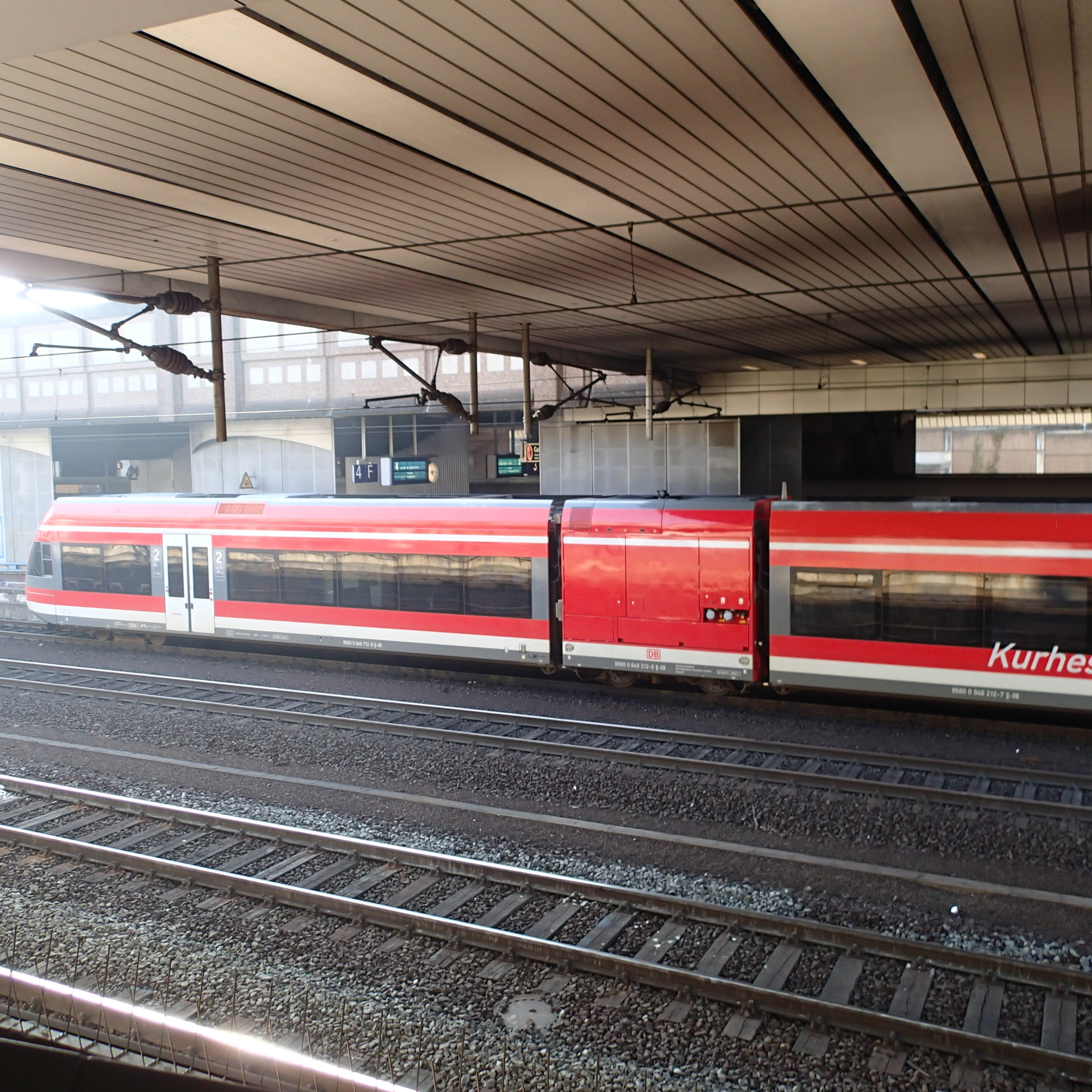
What surprises me is the ruling out of batteries by Greater Anglia.
The central powercar would surely be the ideal place to put energy storage, for the following reasons.
- It could be easily integrated with the diesel power-pack.
- The weight of the battery is probably in the best place.
- It could be part of an energy saving regenerative braking system, which would work under electric or diesel power.
- In Battery EMUs For Merseyrail, I wrote how Stadler were fitting batteries in Merseyrail’s new fleet.
When the trains arrive, it’ll all be explained. Perhaps, Greater Anglia’s words were carefully chosen.
How will these trains change the coastal towns of Cromer, Felixstowe, Lowestoft, Sheringham and Yarmouth?
If it’s positive, Greater Anglia will be setting a strong precedent.
What Needs To Be Done To Railways To And Along The Coast
In no particular order, there are various topics.
A Coastal-Friendly Train Fleet
From personal experience on East Anglian trains, I feel that the passenger profile is different with always several bicycles on a train. Greater Anglia will have researched their passengers’ journeys and this has resulted in their choice of three- and four-car bi-mode Class 755 trains.
- One- and two-car diesel multiple units are being replaced with three-car bi-modes
- The Class 170 trains appear to be being replaced by four-car bi-modes.
So it would appear that Greater Anglia are expecting more passengers on the coastal routes to Cromer, Felixstowe, Lowestoft and Yarmouth, as they are always running at least three-car trains.
I also suspect they will be allowing for more bicycles and buggies, with higher traffic at weekends with good weather.
Their fleet choice will also allow them to use a four-car train instead of a three-car.
Looking at the fleet choices of other train operators like Northern working over a wide area with a large proportion of leisure traffic, they seem to have a degree of flexibility.
Stations In Coastal Towns
Many stations in coastal towns were built in the grand manner. This is St. Leonard’s Warrior Square station.
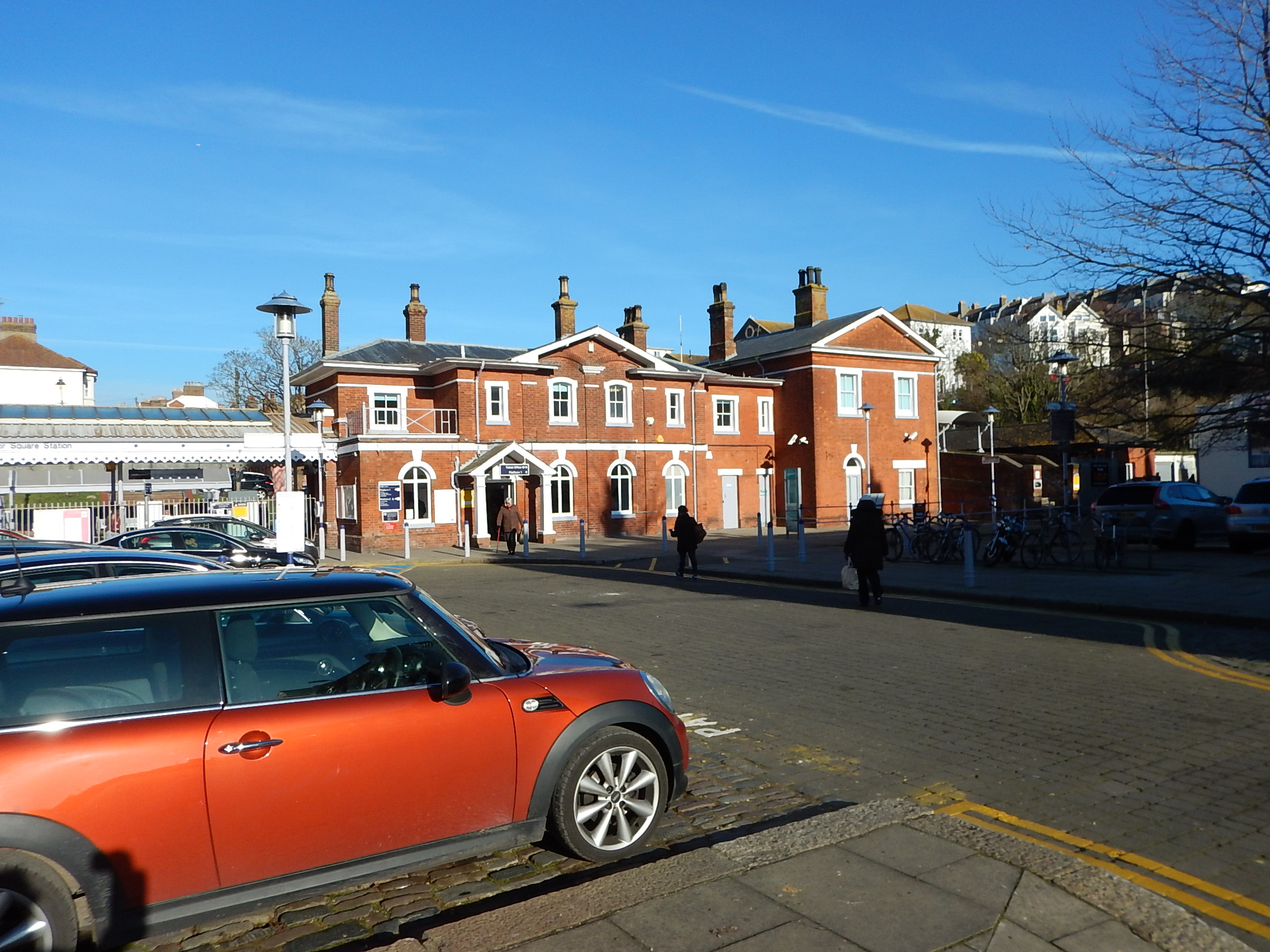
Felixstowe station was built in this way and the station buildings are Grade II Listed. This is the single platform.
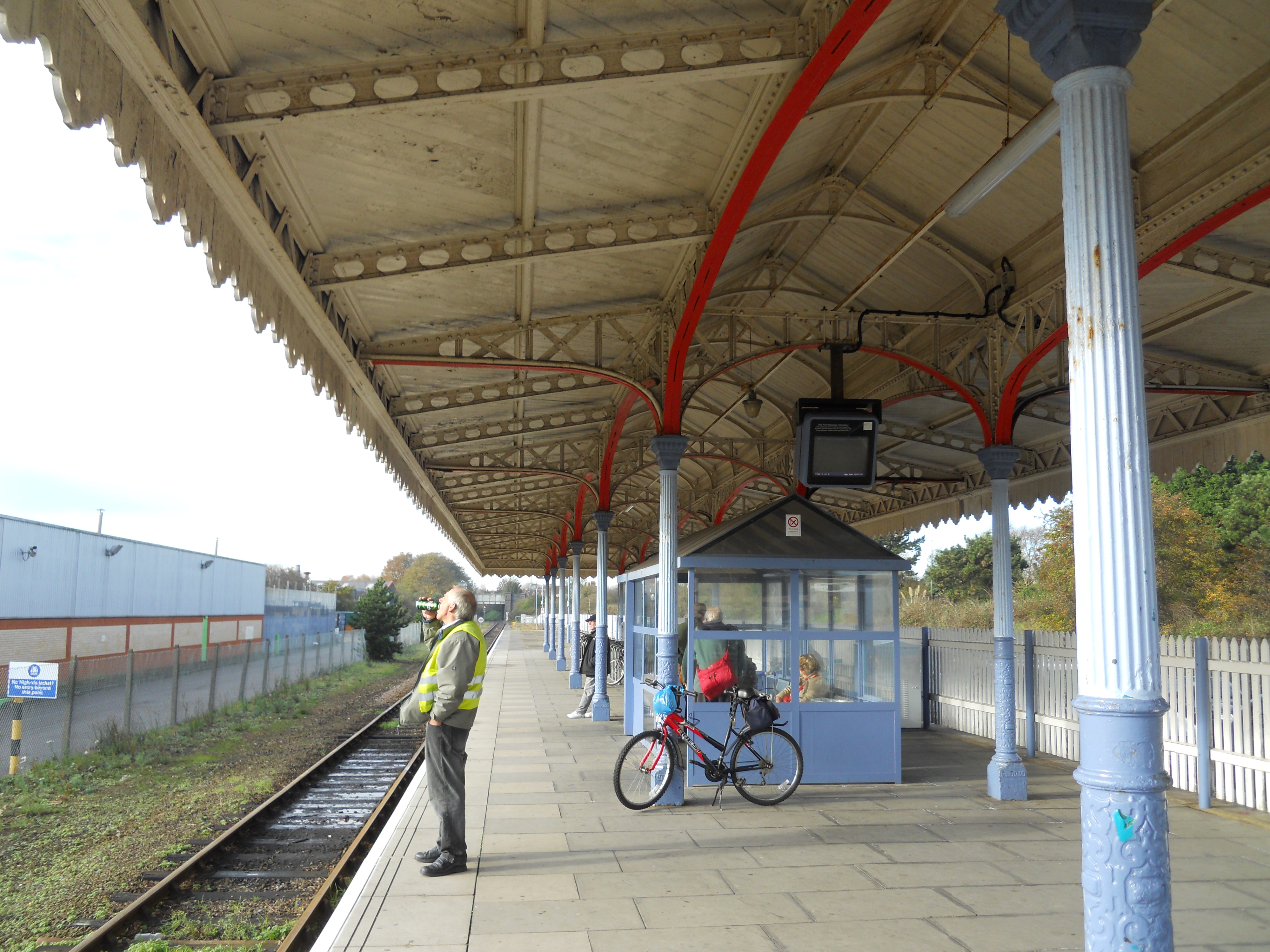
But it also shows how you can create a quality station for a town of 24,000 people.
- The station buildings have become a Shopping Centre with a cafe and bar.
- There is just a single platform that can take a six-car train.
- There is a ticket machine and a basic shelter, underneath an ornate 1898 canopy.
- The station is on the High Street.
- The car park is shared with the local Co-op supermarket.
- The station is unstaffed, but the trains are double-manned.
How many coastal stations could be Felixstowed?
These are a few pictures of other stations in coastal towns.














Some are grand, some are simple and some need a lot of improvement.
But if you want to improve the fortunes of a coastal town, or any town for that matter, you must give it a decent station, which will be one of main entry points for visitors.
The larger stations must have the following characteristics.
- A certain style.
- Good understandable information and perhaps a proper Tourist Office.
- A cafe or a bar.
- Decent bus connections to the rest of the town.
- Bicycle hire
- A shop for a paper and some chocolate.
- A cash machine with no extra charges.
Hopefully, the station needs a central location in the town.
But Felixstowe station shows what can be created, with its Victorian canopy and a single platform, tucked away behind a shopping centre, built around the original Listed station building.
These days with modern signalling and double-ended multiple units, single-platform stations like Felixstowe, could probably handle four trains per hour.
New Stations
In DfT Names Five Winners Of Fresh £16m Stations Fund, I talked about new stations funded by the Government’s New Stations Fund. Two of the five stations are near the coast; Bow Street and Horden Peterlee.
So does the Government realise the value of good rail links to coastal areas?
The Walkers’ Halt
Some of the coastal lines go along some of the most spectacular coast-lines in the UK.
This Google Map shows the Durham Coast Line just South of Seaham station.
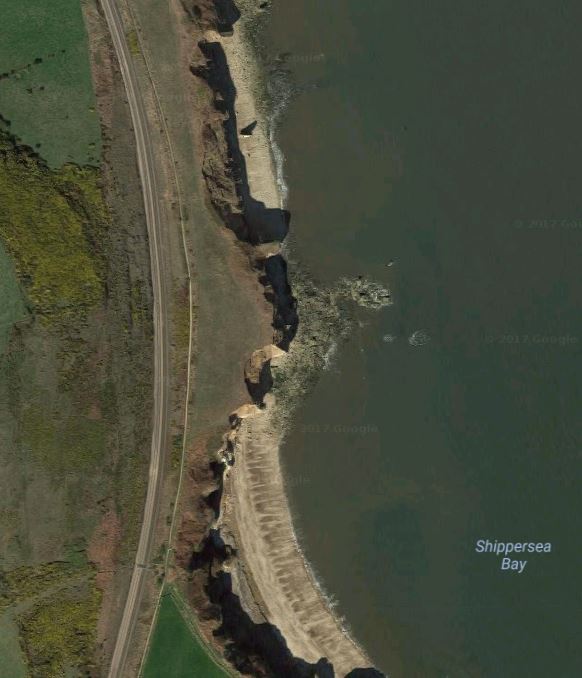
A modern train like a bi-mode Class 755 train could have the following characteristics.
- The ability to execute station stops with a short dwell time.
- In-cab radio signalling.
- CCTV to aid the driver at a station stop.
- On-board ticketing machine.
- On-board wheelchair ramp.
- Two crew members.
So would it be able to stop to pick up and set down at an old-fashioned halt with perhaps a single platform?
The England Coast Path
The England Coast Path will be 4,500 kilometres long and go round the whole coast of England.
In places, it must go near to railway lines, so will we see simple walkers’ halts, as I described in the previous section?
It strikes me, that we need a large helping of careful design to make sure that the England Coast Path and our costal rail routes would well together.
I used England as an example, but I suspect, the same logic applies in the rest of the UK.
Conclusion
This post isn’t complete yet!
I do feel though based on my East Anglian experience, that improving the train service to coastal towns could be the first step in improving their prosperity.
Too often going to the coast by train is a second-rate experience. Greater Anglia with its train fleet renewal seem to be creating a new era of getting to the coast in Norfolk and Suffolk.
Other companies should be made to follow.
 The Anonymous Widower