London And Edinburgh By Lumo Using the Joint Line Diversion
This press release on the First Group web site is entitled FirstGroup Applies To Run Rochdale To London Rail Service With New British-Built Trains.
These are the first two paragraphs.
FirstGroup plc, the leading private sector transport operator, has submitted the first phase of an application for a new open access rail service between Rochdale and London to the Office of Rail and Road (ORR), restoring this direct link for the first time in almost a quarter of a century.
FirstGroup plans to expand its open access rail operations as part of its successful Lumo business, building on Lumo’s existing service which has transformed long-distance connectivity between London and Edinburgh and helped support a growth in passenger numbers for all operators on the East Coast Mainline. All of the trains on this new route will be electric and battery powered, and the service will be operated by brand new trains built in the UK.
Note.
- This service will be run under the Lumo brand.
- Battery-electric trains will be used.
- Stops will include Manchester Victoria, Eccles, Newton-le-Willows and Warrington Bank Quay.
- Only 15 km. of the route, between Miles Platting and Rochdale is not electrified.
Allowing for out and back trips between Platting and Rochdale, a sensible reserve and I suspect a battery-electric train with a range of 40-50 kilometres, would allow the train to be able to do a round trip to Rochdale from London Euston.
Hitachi have now published this page on their web site, which is entitled Intercity Battery Trains.
These are the first two paragraphs.
A quick and easy application of battery technology is to install it on existing or future Hitachi intercity trains. Hitachi Rail’s modular design means this can be done without the need to re-engineer or rebuild the train and return them to service as quickly as possible for passengers.
Replacing one diesel engine with just one battery reduces emissions by more than 20% and offers cost savings of 20-30%. Our intercity battery powered trains can cover 70km on non-electrified routes, operating at intercity speeds at the same or increased performance.
It would appear that Hitachi’s standard Intercity Battery Train will have a range of 70 km.
- A 70 km. range would be more than enough to handle Lumo’s Euston and Rochdale service.
- Lumo’s Class 803 trains don’t have a diesel generator to replace.
- One car does have a smaller battery for emergency hotel power, should the electrification fail.
As an Electrical Engineer, I wouldn’t be surprised to find out that the traction batteries of Hitachi’s standard Intercity Battery Train and the emergency batteries of Lumo’s Class 803 trains are of a similar design. The batteries could even be interchangeable, which would enable both Lumo’s routes to Scotland and Rochdale to use identical Class 803 trains.
Lumo’s Class 803 trains would have this specification.
- All-electric.
- Emergency battery to provide back-up hotel power.
- A range on battery of 70 km or 43 miles away from electrification.
The off-electrification range could be very useful in getting round incidents or overhead wiring problems.
An extended range of 70 km. would allow the following destinations to have all-electric services from London.
- Beverley #
- Bristol Temple Meads #
- Cheltenham #
- Chester
- Harrogate
- Huddersfield
- Hull
- Lincoln
- Middlesbrough
- Swansea #
Destinations marked with a hash (#), would need charging at the final destination.
A more detailed analysis will probably show other possible routes.
It looks to me, that Hitachi have got the specification of their Intercity Battery Train about right.
Bridging The Joint Line Diversion
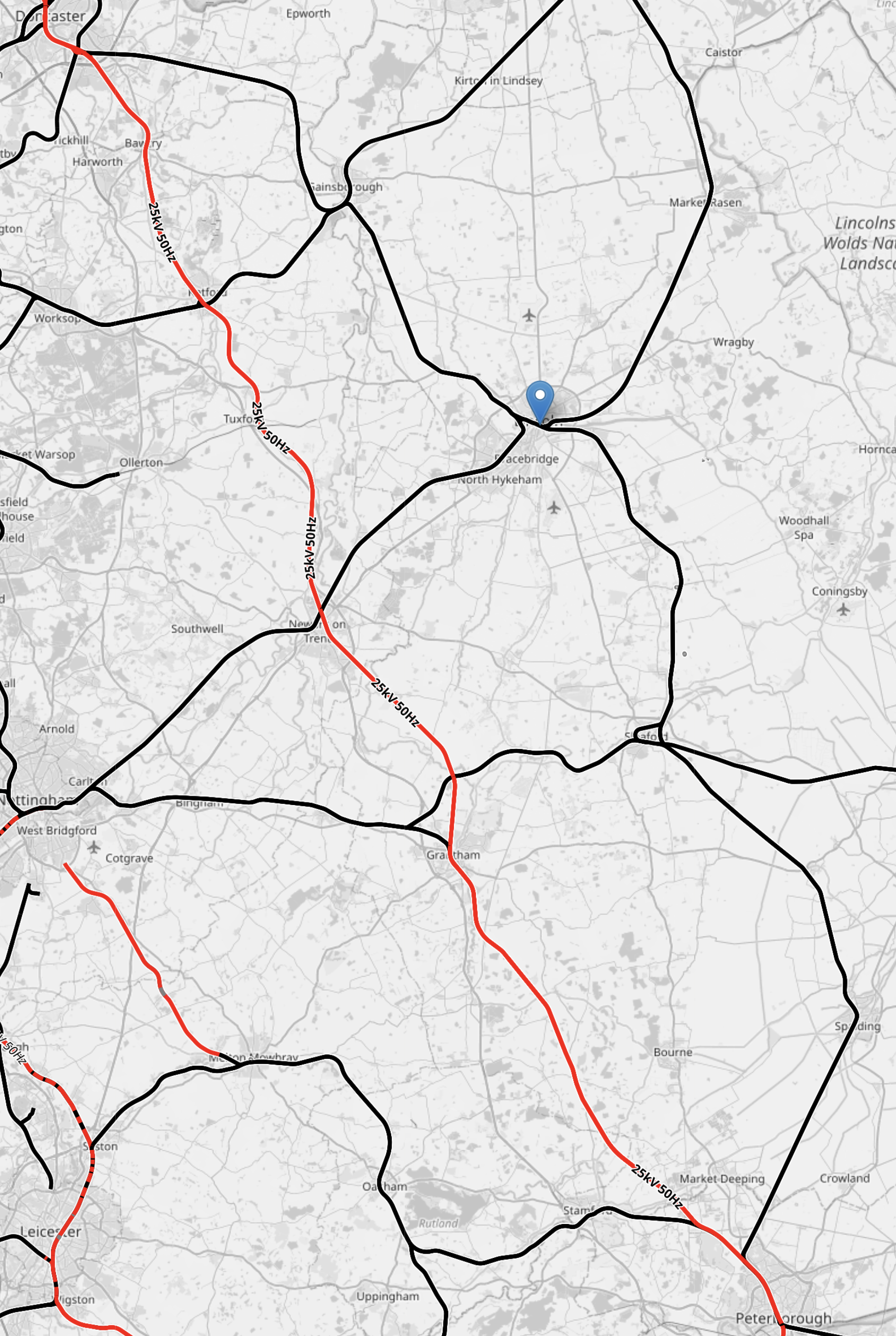
This OpenRailwayMap shows the Great Northern and Great Eastern Joint Line (GNGE) or Joint Line.
Note.
- Doncaster is in the North-West corner of the map.
- Peterborough is in the South-East corner of the map.
- The red line connecting them is the East Coast Main Line.
- Lincoln station is marked by the blue arrow.
Great Northern and Great Eastern Joint Line (GNGE) is described like this by its Wikipedia entry.
The Great Northern and Great Eastern Joint Railway, colloquially referred to as “the Joint Line” was a railway line connecting Doncaster and Lincoln with March and Huntingdon in the eastern counties of England. It was owned jointly by the Great Northern Railway (GNR) and the Great Eastern Railway (GER).
Over the last decades of the Twentieth Century, the Joint Line declined and British Rail did their worst to simplify the route.
But in the 2010s, Network Rail developed the route into a by-pass for the East Coast Main Line between Werrington and Black Carr junctions via Lincoln.
- Trains are routed via Spalding, Sleaford, Lincoln, Saxilby and Gainsborough.
- There is no electrification.
- The route can handle two freight trains per hour.
- The route can handle 9 ft. 6 in containers.
- There is a passenger service between Doncaster and Peterborough via Lincoln.
- Self-powered trains like InterCity125s, Class 800 trains and Class 802 trains can use their diesel power to use the diversion.
- All-electric trains, like LNER’s Class 801 trains and Lumo’s Class 803 trains have no self-power, so can’t use the diversion.
- Black Carr junction and Lincoln is 35 miles.
- Werrington junction and Lincoln is 51.7 miles.
The January 2024 Edition of Modern Railways says that the diversion is approximately 90 miles or 145 kilometers.
It would appear that there are two simple solutions.
- Electrify a section through Lincoln, so that Lincoln is within 70 kilometres of the electrification at both Werrington and Black Carr junctions.
- Fit bigger batteries to the trains.
A combination of both solutions might be possible.
LNER Names Train ‘The Flying Swiftie’ Ahead Of Tonight’s Opening Gig
The title of this post, is the same as that of this press release from LNER.
This is the sub-heading,
Forget “The Flying Scotsman”, LNER is today naming the 1000 London-Edinburgh train “The Flying Swiftie” – as thousands of Taylor Swift fans take the train to her first UK gig in the Scottish capital.
These are the first three paragraphs, which give a few more details.
The rail firm famous for having Red seats knows All Too Well that its passengers love a named train – from The Flying Scotsman to the Highland Chieftan and the recently introduced Carolean Express.
As passengers travel in Style and say So Long, London they will be reminded with on-train and station announcements that Everything Has Changed and that they’re on The Flying Swiftie, while screens around the station and along the route will refer to the train’s name too.
Taylor Swift fans will be able to get refreshments onboard cheaper than their Wildest Dreams thanks to a special Flying Swiftie discount.
Recently, Lumo did a similar promotion for Gateshead fans going to Wembley for the FA Trophy final, which I wrote about in Excitement Brewing for Gateshead FC Away At Wembley.
Last Train Home
In the past, I’ve had difficulty with getting a return train after some matches and it is a complaint of the fans of many sides.
- Taylor Swift’s concert seems to finish shortly before midnight.
- I’ve never had trouble from Greater Anglia, as they always run a late train back to London.
- In one case at Ipswich, there were track problems in the Colchester area, so Greater Anglia returned fans to Sudbury by taxi.
- Lumo ran an extra return train to make sure everybody got home after the match.
It certainly looks to me, that if you are going to put on a package for an event, you must make sure, that it is possible for those attending the event to get home.
What Is Possible
Lumo and LNER have shown what is possible on the East Coast Main Line and I would hope that they will develop these two experiences to cover, events like these.
- London football teams playing matches in Newcastle.
- Newcastle United playing matches in London.
- England and Scotland rugby matches.
I hopr to see more services like these in the future.
250,000 Seats A Day On The WCML?
The title of this post, is the same as that of this article on Rail Engineer.
These are the first three paragraphs.
In the Parliamentary debate on the cancellation of HS2 phase 2, Transport Minister Mark Harper claimed that what remains of HS2 will deliver “a massive increase in capacity to the West Coast Main Line (WCML)” by providing 250,000 seats a day. This figure was subsequently repeated by the Prime Minister and Rail Minister who advised that it applies “across the primary long-distance operator on the West Coast.”
Yet without HS2 phase 2a, there is to be no WCML capacity increase north of Lichfield. Furthermore, with no HS2 station in Manchester it will not be possible to run the planned two-unit 400-metre HS2 trains to the city. Instead, there can only be single 200-metre unit HS2 trains which are shorter than the current 265-metre Pendolino trains.
Furthermore, 250,000 seats a day is equivalent to running 17 x 605-seat Pendolinos an hour, 24 hours a day. This is clearly not credible.
Note.
- The writer’s assumptions about Manchester are correct.
- Liverpool Lime Street is already is already HS2-ready for trains between Crewe and London, after the recent upgrade.
- Liverpool Lime Street will certainly be able to take two London trains per hour (tph), which can only be single 200-metre unit HS2 trains.
- Liverpool Lime Street may be able to take a third London train per hour.
These are my thoughts.
Current Services
Current services include.
- Avanti West Coast – London Euston and Blackpool North via Birmingham New Street – 2 trains per day (tpd)
- Avanti West Coast – London Euston and Glasgow Central via Birmingham New Street – 5 tpd
- Avanti West Coast – London Euston and Edinburgh Waverley via Birmingham New Street – 7 tpd
- Avanti West Coast – London Euston and Birmingham New Street – 1 tph
- Avanti West Coast – London Euston and Holyhead – 10 tpd
- Avanti West Coast – London Euston and Liverpool Lime Street – 1 tph – Increasing to 2 tph.
- Avanti West Coast – London Euston and Manchester Piccadilly via Stoke-on-Trent, Macclesfield and Stockport – 1 tph
- Avanti West Coast – London Euston and Manchester Piccadilly via Stoke-on-Trent and Stockport – 1 tph
- Avanti West Coast – London Euston and Manchester Piccadilly via Crewe, Wilmslow and Stockport – 1 tph
- Avanti West Coast – London Euston and Glasgow Central – 1 tph.
- West Midlands Trains – London and Birmingham New Street – 2 tph
- West Midlands Trains – London and Crewe – 1 tph
- West Midlands Trains – Birmingham New Street and Liverpool Lime Street – 1 tph
It looks like there are eight Avanti West Coast tph and two West Midlands Trains tph between Stafford and Crewe.
High Speed Two Services
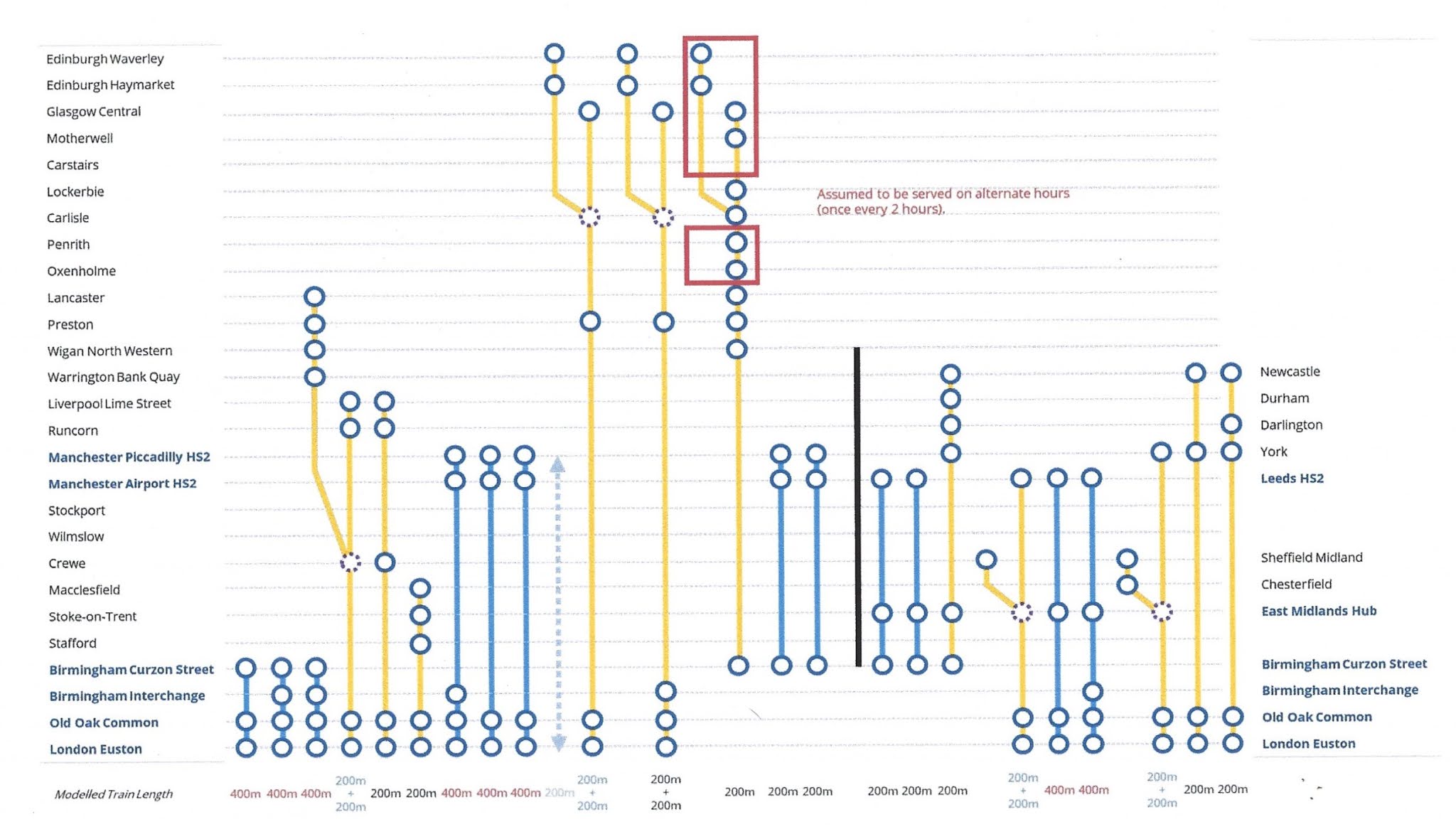
This diagram shows High Speed Two services, as they were originally envisaged before Phase 2 was discontinued.
Note.
- Trains to the left of the vertical black line are Phase 1 and those to the right are Phase 2.
- Full-Size trains are shown in blue.
- Classic-Compatible trains are shown in yellow.
- The dotted circles are where trains split and join.
- In the red boxes routes alternate every hour.
- Was Lancaster chosen as it’s close to the new Eden Project Morecambe?
Click on the diagram to enlarge it.
The Author’s Assumption
The author has made these assumptions.
- Current West Coast Main Line capacity North of Lichfield; Avanti West Coast – 8 tph, West Midlands – 1 tph and freight trains – 4 tph
- HS2 offers no extra capacity North of Lichfield.
- Max capacity ; Old Oak Common – 8 tph and London Euston – 10 tph.
- 400-metre long trains North of Birmingham ; Min – 1 tph to Edinburgh/Glasgow
- 400-metre long trains North of Birmingham ; Max – plus 3 tph to Liverpool/Manchester
- Trains operate a maximum of 14 hours per day.
I would add.
- All pairs of 200-metre long trains split and join at Crewe.
- Birmingham Curzon Street has seven platforms.
- Lancaster and Macclesfield have long bay platforms, that can handle 200-metre trains
- Liverpool Lime Street and Manchester Piccadilly have two platforms, that can handle 200-metre trains.
- I suspect
- Liverpool Lime Street and Manchester Piccadilly could both handle four 200-metre trains tph hour – Three for London and one for Birmingham.
There is a surprising amount of capacity in the North.
The Author’s Minimum Plan For HS1 – Phase 1
I think his minimum plan is as follows.
- Old Oak Common and Birmingham Curzon Street – 400-metre long trains – 3 tph
- Old Oak Common and Liverpool Lime Street/Lancaster – 400-metre long trains – 1 tph – Splits at Crewe.
- Old Oak Common and Liverpool Lime Street – 200-metre long trains – 1 tph
- Old Oak Common and Macclesfield via Stafford and Stoke-on-Trent – 200-metre long trains – 1 tph
- Old Oak Common and Manchester Piccadilly – 200-metre long trains – 2 tph
- Old Oak Common and Edinburgh Waverley/Glasgow Central – 400-metre long trains – 1 tph – Splits at Crewe.
Note.
- 400-metre long trains are a pair of 200-metre long trains, that can split and join.
- This fulfils all the requirements of the original HS2 timetable for Phase 1.
- The total is nine tph and Old Oak Common can only handle 8 tph.
- Perhaps, the Liverpool Lime Street service could be a Liverpool Lime Street/Manchester Piccadilly service, that splits at Crewe?
I think it could work with London having the following services.
- Birmingham Curzon Street – 400-metre long trains – 3 tph
- Birmingham International – 400-metre long trains – 4 tph
- Carlisle – 200-metre long trains – 1 tph
- Crewe – 400-metre long trains – 3 tph
- Edinburgh Waverley – 200-metre long trains – 1 tph
- Glasgow Central – 200-metre long trains – 1 tph
- Lancaster – 200 metre long trains – 1 tph
- Liverpool Lime Street – 200-metre long trains – 2 tph
- Macclesfield – 200-metre long trains – 1 tph
- Manchester Piccadilly – 200-metre long trains – 2/3 tph
- Preston – 200-metre long trains – 2 tph
- Stafford – 200-metre long trains – 1 tph
- Stoke-on-Trent – 200-metre long trains – 1 tph
- Warrington Bank Quay – 200-metre long trains – 1 tph
- Wigan North Western – 200-metre long trains – 1 tph
Services care as good or better than the current services.
The Author’s Maximum Plan For HS1 – Phase 1
I think his maximum plan is as follows.
- London Euston and Birmingham Curzon Street – 400-metre long trains – 3 tph
- London Euston and Liverpool Lime Street/Lancaster – 400-metre long trains – 1 tph – Splits at Crewe.
- London Euston and Liverpool Lime Street/Manchester Piccadilly – 400-metre long trains – 1 tph – Splits at Crewe.
- London Euston and Macclesfield via Stafford and Stoke-on-Trent – 200-metre long trains – 1 tph
- London Euston and Manchester Piccadilly – 200-metre long trains – 2 tph
- London Euston and Edinburgh Waverley/Glasgow Central – 400-metre long trains – 1 tph – Splits at Crewe.
Note.
- 400-metre long trains are a pair of 200-metre long trains, that can split and join.
- This fulfils all the requirements of the original HS2 timetable for Phase 1.
- That is nine tph and London Euston can handle 10 tph.
- Perhaps, a tenth train could serve Edinburgh Waverley/Glasgow Central with a split at Crewe.
It should work.
Could High Speed Birmingham Curzon Street and Liverpool Lime Street And Manchester Piccadilly Services Be Provided With A Reverse At Birmingham Curzon Street?
A train would take this route.
- A 400 metre long train would leave London and go to Birmingham Curzon Street.
- At Birmingham Curzon Street the train would reverse and travel to Crewe.
- At Crewe the train would split with separate trains going to Liverpool Lime Street and Manchester Piccadilly.
Note.
- Automation could be used extensively to do the joining and splitting.
- The train would have an onboard team of drivers, so all joins, reverses and splits are performed as fast as possible.
- A local service could be paired with each train, so that intermediate stations on the Liverpool and Manchester branches had excellent connections to Birmingham and the South.
Suppose the maximum plan is now as follows.
- London Euston and Liverpool Lime Street/Manchester Piccadilly via Birmingham Curzon Street – 400 metre long trains – 3 tph – Reverses at Birmingham Curzon Street – Splits at Crewe.
- London Euston and Birmingham Curzon Street – 400 metre long trains – 1 tph
- London Euston and Lancaster – 200 metre long trains – 1 tph
- London Euston and Liverpool Lime Street – 200 metre long trains – 1 tph
- London Euston and Macclesfield via Stafford and Stoke-on-Trent – 200 metre long trains – 1 tph
- London Euston and Manchester Piccadilly – 200 metre long trains – 1 tph
- London Euston and Edinburgh Waverley/Glasgow Central – 400 metre long trains – 2 tph – Splits at Crewe.
Note.
- Birmingham Curzon Street, Liverpool Lime Street and Manchester Piccadilly would all get four tph to and from London.
- Birmingham Curzon Street, Liverpool Lime Street and Manchester Piccadilly would all get one tph to and from London, that could be non-stop and didn’t join, reverse or split.
- Birmingham Curzon Street and Liverpool Lime Street would have a three tph service.
- Birmingham Curzon Street and Manchester Piccadilly would have a three tph service.
- Lancaster, Edinburgh Waverley, Glasgow Central and other stations would get the originally-promised service to and from London.
- That is ten tph to and from London Euston and the station can handle that number of trains.
It should work.
Could High Speed Birmingham Curzon Street and Edinburgh Waverley and Glasgow Central Services Be Provided With A Reverse At Birmingham Curzon Street?
In the previous section, I showed how, three tph between London Euston and Liverpool Lime Street/Manchester Piccadilly could be provided with a reverse at Birmingham Curzon Street.
So could the fourth train between London and Birmingham Curzon Street take this route?
- A 400 metre long train would leave London and go to Birmingham Curzon Street.
- At Birmingham Curzon Street the train would reverse and travel to Crewe, or another station, where the split can be performed.
- The train would split with separate trains going to Edinburgh Waverley and Glasgow Central.
Note.
- They would use the current paths used by Avanti West Coast Birmingham and Scotland services along the West Coast Main Line.
- This would give a third train to both Edinburgh Waverley and Glasgow Central.
It certainly appears that by using a reverse at Birmingham Curzon Street, more capacity can be created on the West Coast Main Line/HS2 route.
Could High Speed Two Serve North Wales?
It finally looks like the North Wales Coast Lines will finally be electrified.
- Would this allow a 200 metre long train to run all the way to Holyhead for the boats to Ireland?
- There could be a join and split at Crewe with another train.
- Chester would also be served by HS2.
It would create a zero-carbon route to Ireland.
What Would Be The Daily Number Of Passengers Carried?
The maximum plan could now be as follows.
- London Euston and Liverpool Lime Street/Manchester Piccadilly via Birmingham Curzon Street – 400 metre long trains – 3 tph – Splits at Crewe.
- London Euston and Edinburgh Waverley/Glasgow Central via Birmingham Curzon Street – 400 metre long trains – 1 tph – Splits at Crewe.
- London Euston and Liverpool Lime Street/Lancaster – 400 metre long trains – 1 tph – Splits at Crewe.
- London Euston and Macclesfield via Stafford and Stoke-on-Trent – 200 metre long trains – 1 tph
- London Euston and Manchester Piccadilly/Holyhead – 400 metre long trains – 1 tph – Splits at Crewe.
- London Euston and Edinburgh Waverley/Glasgow Central – 400 metre long trains – 2 tph – Splits at Crewe.
Note.
- There are eight 400 metre long trains and one 200 metre long trains in both directions.
- A 200 metre long train hold 550 passengers.
- There are seventeen 200 metre long tph in both directions.
- Trains operate a maximum of 14 hours per day.
The number of passengers per day is 261,800.
Mayors Propose New Staffordshire To Manchester Rail Line
The title of this post, is the same as that of this article on Greater Birmingham Chambers of Commerce.
These five paragraphs introduce the article.
The mayors of the West Midlands and Greater Manchester have set out proposals for a new railway line between Staffordshire and Manchester Airport in a bid to improve connections to the north.
Work commission by West Midlands mayor Andy Street and Greater Manchester mayor Andy Burnham has concluded the new line is the preferred option to tackle congestion on the West Coast Mainline, following the government’s decision to curtail HS2 beyond Birmingham.
A private sector group – chaired by infrastructure expert Sir David Higgins – had been looking at three potential options to improve connectivity between Birmingham and Manchester.
The options included undertaking significant engineering upgrades to the West Coast Main Line, building bypasses at the pinch points on the line and building a new railway between Handsacre and Manchester Airport.
The group, convened by the mayors, is led by global engineering firm Arup with input from over 60 partners from six other firms – Arcadis, Addleshaw Goddard, EY, Dragados, Mace and Skanska.
This paragraph gives the conclusion.
The group has provisionally concluded that a new line – running approximately 70 miles between HS2 at Handsacre and Northern Powerhouse Rail at High Legh – is likely to offer the best combination of costs and benefits.
It looks to me, that this professional approach has led to a sensible answer.
I will now look at the route.
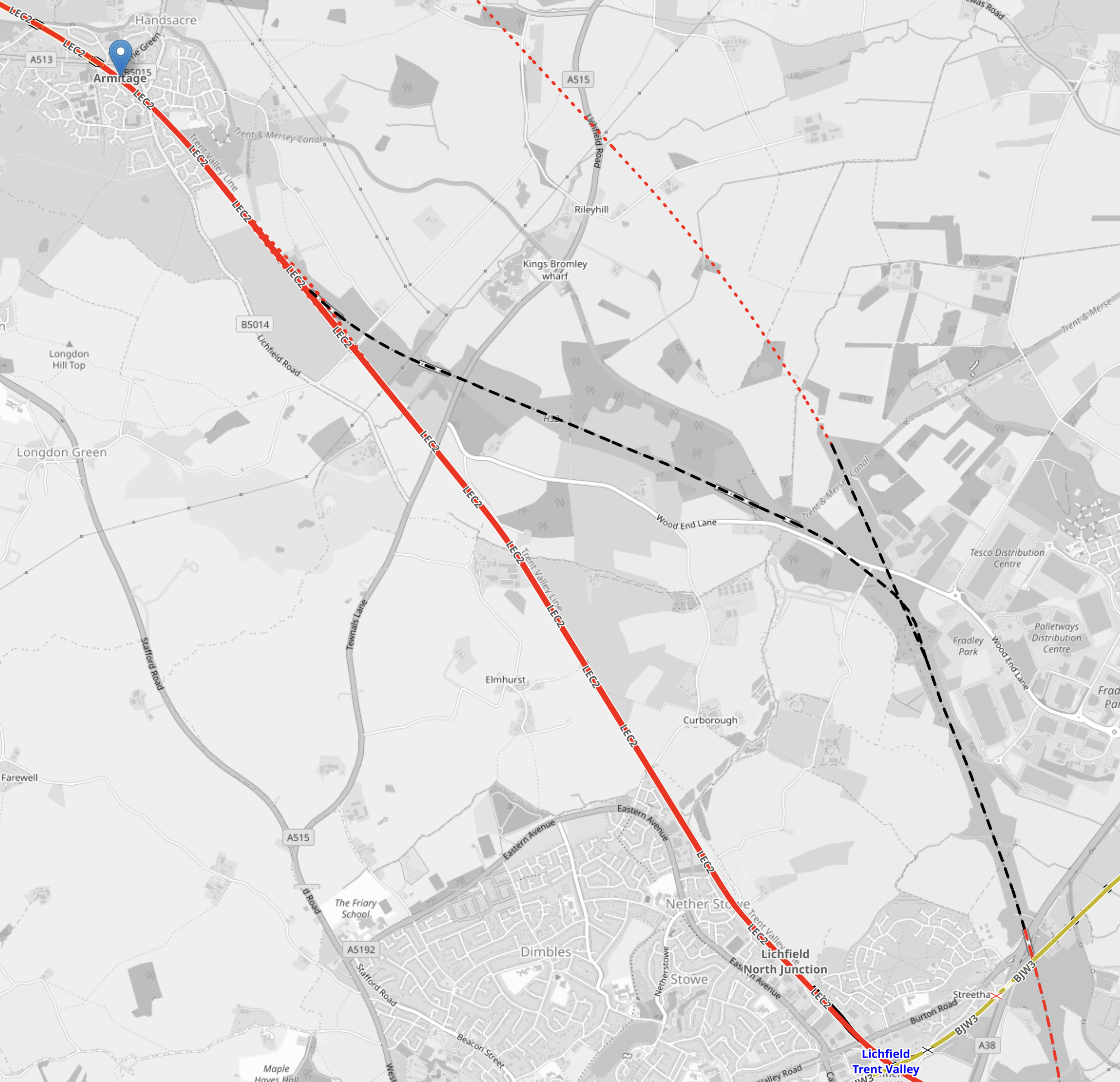
This Open Railway Map shows the tracks to the South of Handsacre.
Note.
- The blue arrow in the North-West corner of the map, indicates the location of the former Armitage station, which had the village of Handsacre to its North-East.
- The red line through Armitage station is the Trent Valley Line.
- Lichfield Trent Valley station is at the bottom of the map.
- The line drawn with large dashes from the South-East corner of the map is the proposed line of High Speed Two. Red indicates under construction and black indicates proposed.
High Speed Two splits into two.
One branch goes North-West to join the Trent Valley Line, whilst the other just stops after about a kilometre.
- All trains for Liverpool, Manchester, North Wales, The North and Scotland will take the Trent Valley Line, when High Speed Two opens.
- Trains for Stoke-on-Trent, Macclesfield and some to Manchester will leave the Trent Valley Line at Colwich Junction.
- All other trains, will take the same route as now and proceed to Crewe via Stafford.
The red dotted line leading from the cancelled branch of High Speed Two shows where the original fast line to Crewe was planned to go.
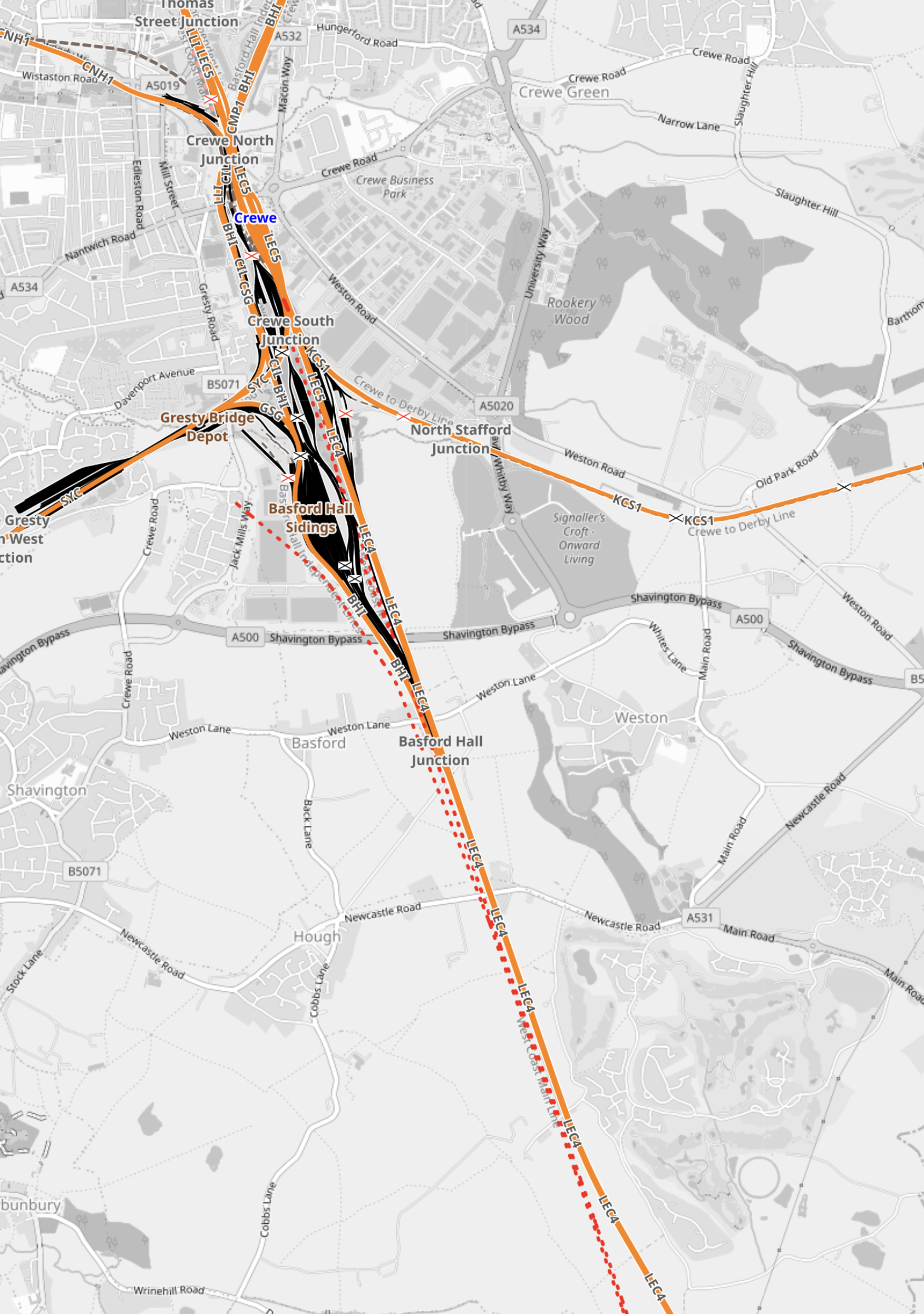
This Open Railway Map shows the tracks around Crewe.
Note.
- Crewe is the important junction station towards the North-West corner of the map.
- The orange line going South is the West Coast Main Line to The South and London.
- The red dotted line running along the West side of the West Coast Main Line was the proposed route of High Speed Two from Birmingham, London and the South.
This Open Railway Map shows the originally proposed direct route of High Speed Two between Crewe and Handsacre.
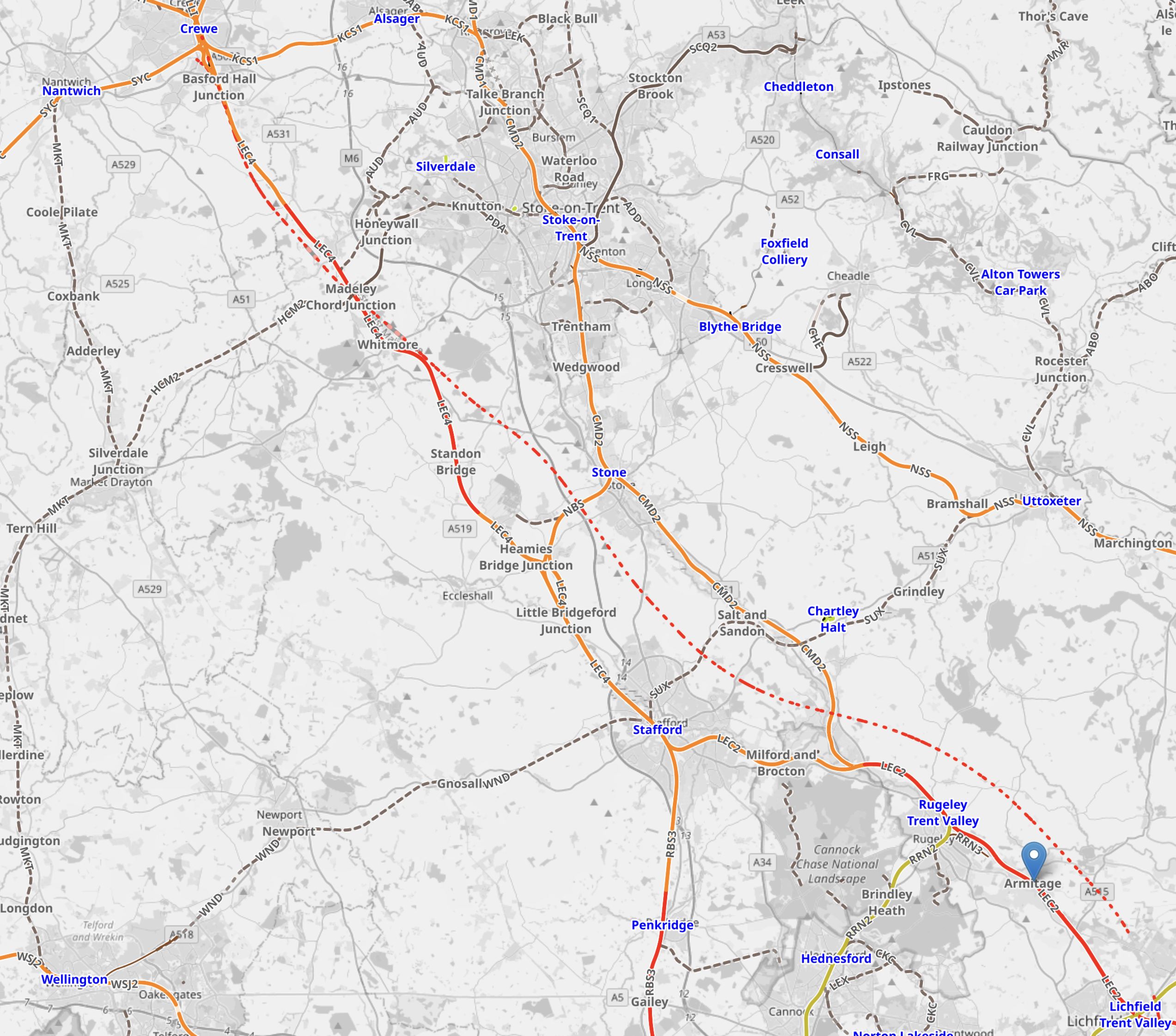
Note.
- Crewe is in the North-West corner of the map.
- The blue arrow in the South-East corner of the map, indicates the location of the former Armitage station, which had the village of Handsacre to its North-East.
- The dotted red line was the originally proposed route of High Speed Two.
I feel that this route between Handsacre and Crewe has advantages if it were to be chosen as part of a route between Handsacre and Northern Powerhouse Rail, as recommended by the Mayors and their consultants.
- The route seems to stay well clear of large conurbations.
- A lot of the design work has been at least started and major problems will be known.
- Crewe is the only station on the route, which will need to be upgraded.
- Services to Liverpool, Manchester, North Wales, The North and Scotland will be speeded up.
- With Crewe, Liverpool and North Wales, times could be as High Speed Two promised in the first place.
I feel that building the Handsacre and Crewe section, as originally envisaged, will score high in a benefit/cost analysis
This OpenRailwayMap shows the originally proposed route of High Speed Two between Crewe and Manchester Airport.
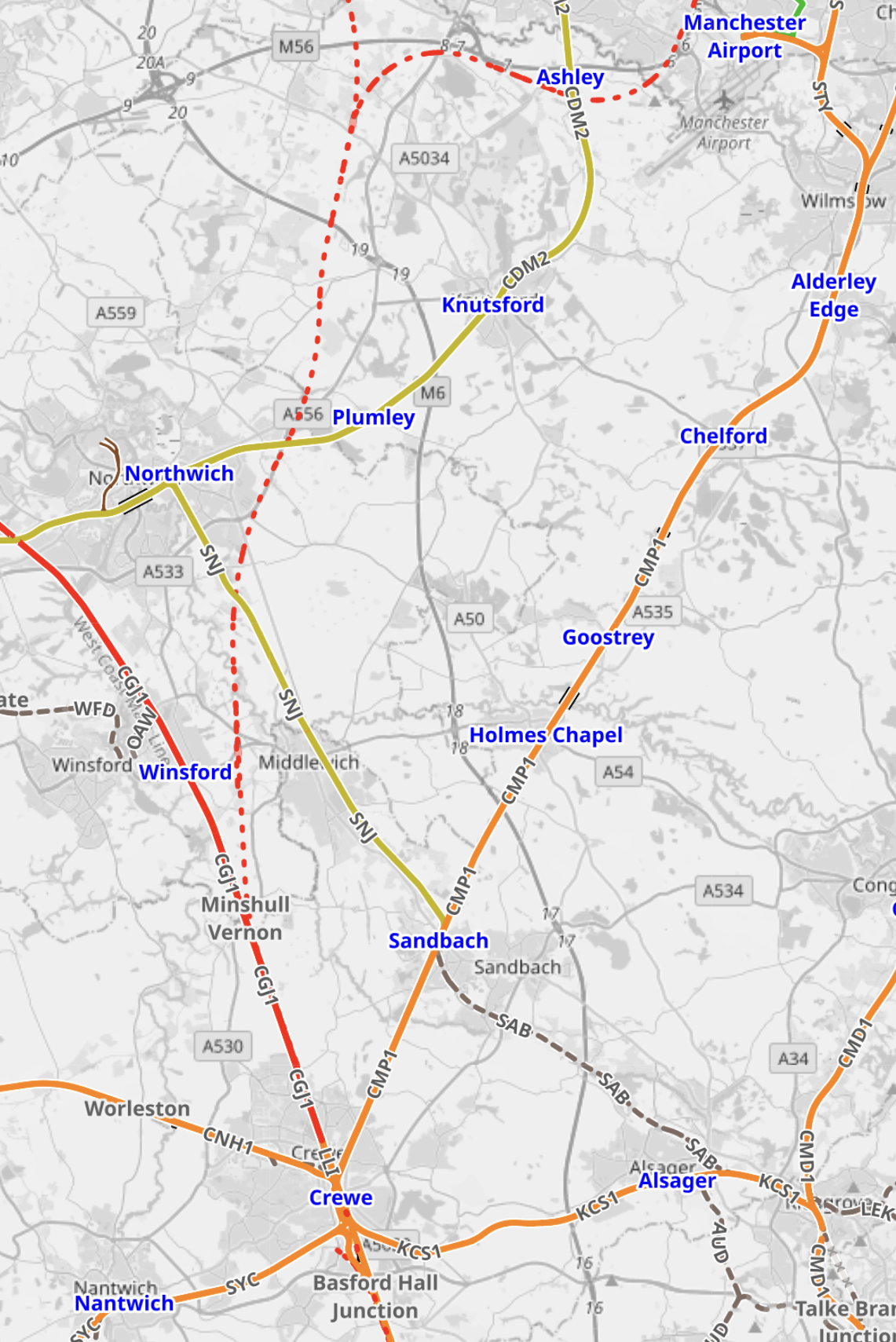
Note.
- Crewe is towards the South-West corner of the map.
- Manchester Airport is in the North-East corner of the map.
- The red line going North from Crewe is the West Coast Main Line.
- The dotted red line was the originally proposed route of High Speed Two, between the West Coast Main Line and Manchester Airport.
Northern Powerhouse Rail will go West from Manchester Airport towards Warrington and Liverpool and will join with High Speed Two at a junction at High Legh.
Northern Powerhouse Rail is currently being planned, but surely, if High Speed Two and Northern Powerhouse Rail share a line from High Legh to Manchester Airport and Manchester Piccadilly, this will be a more affordable project.
Services To Crewe
In Could The High Speed Two Link Between Lichfield And Crewe Still Be Built?, which I wrote after much of High Speed Two was chopped in 2023, I said this.
Currently, Avanti West Coast trains take around one hour and thirty minutes between London and Crewe.
The Wikipedia entry for High Speed Two gives these times between London and Crewe.
- Fastest time before High Speed Two – one hour and thirty minutes.
- Time after Phase 2a of High Speed Two opens – fifty-six minutes.
Note.
- That is a time saving of thirty-four minutes.
- High Speed Two Trains will use the direct line between Lichfield and Crewe.
- High Speed Two will also add eighteen tph to the capacity between London and Crewe.
This would seem to mean that any trains going to or through Crewe will be thirty-four minutes faster, if they use High Speed Two between London and Crewe.
If the Handsacre and Crewe direct line is built, it looks like London and Crewe will be the full High Speed Two time of 56 minutes.
Services To Liverpool
Consider.
- Liverpool Lime Street was originally planned to get two trains per hour (tph) to and from London using High Speed Two.
- The approaches into Liverpool were improved a few years ago.
- No more improvements are planned between Crewe and Liverpool Lime Street stations.
- Between Crewe and Liverpool Lime Street stations currently takes 38 minutes.
- There could be time savings on the 16.3 miles between Crewe and Weaver Junction, which currently takes 21 minutes.
It looks like a time of one hour and 34 minutes could be possible, with under one hour and 30 minutes not being impossible.
Services To Manchester
Consider.
- Manchester was originally planned to get three tph to and from London using High Speed Two.
- No improvements are planned between Crewe and the Manchester stations.
- Between Crewe and Manchester Piccadilly stations currently takes 34 minutes.
It looks like a time of one hour and 30 minutes could be possible.
But there is still the option of building a new line between Crewe and Northern Powerhouse Rail at High Legh.
I showed this OpenRailwayMap earlier and it shows the originally proposed route of High Speed Two between Crewe and Manchester Airport.
Note.
- Crewe is towards the South-West corner of the map.
- Manchester Airport is in the North-East corner of the map.
- The red line going North from Crewe is the West Coast Main Line.
- The dotted red line was the originally proposed route of High Speed Two, between the West Coast Main Line and Manchester Airport.
Northern Powerhouse Rail is currently being planned. and will go West from Manchester Airport towards Warrington and Liverpool and will be built first.
A junction at High Legh will be built to link the West Coast Main Line to Northern Powerhouse Rail.
Services To North Wales
Why Not? With the cancellation of the Eastern Leg of High Speed Two, there must be a path available for North Wales.
Consider.
- The North Wales Main Line has been promised electrification.
- As Holyhead and Crewe is only 105.5 miles, it could even be in battery high speed train range in a few years.
- All times to and from Crewe are assumed to be as Avanti West Coast achieve now.
- As Crewe and Chester currently takes 23 minutes, London and Chester would take 1 hour and 19 minutes.
- As Crewe and Llandudno Junction currently takes 1 hour and 22 minutes, London and Llandudno Junction would take 2 hours and 18 minutes.
- As Crewe and Holyhead currently takes 2 hours and 7 minutes, London and Holyhead would take 3 hours and 3 minutes.
Could this open up a fast zero-carbon route between London and Dublin?
Services To Blackpool, Lancaster, Preston, Warrington And Wigan
Why Not, Blackpool? With the cancellation of the Eastern Leg of High Speed Two, there must be an extra path available, if it is needed.
Cpnsider.
- All routes are electrified.
- All times to and from Crewe are assumed to be as Avanti West Coast achieve now.
- As Crewe and Blackpool currently takes 1 hour and 20 minutes, London and Blackpool would take 2 hour and 16 minutes.
- As Crewe and Lancaster currently takes 60 minutes, London and Lancaster would take 1 hour and 56 minutes.
- As Crewe and Preston currently takes 40 minutes, London and Preston would take 1 hour and 36 minutes.
- As Crewe and Warrington Bank Quay currently takes 22 minutes, London and Warrington Bank Quay would take 1 hour and 18 minutes.
- As Crewe and Wigan North Western currently takes 33 minutes, London and Wigan North Western would take 1 hour and 29 minutes.
Note.
- Lancaster in under two hours will help the Eden Project Morecambe.
- For some areas of the North West, it might be more convenient to change at Crewe, Warrington Bank Quay, Wigan North Western or Preston.
Improvements to track and signalling could probably bring benefits.
Services To Carlisle And Central Scotland
Cpnsider.
- All routes are electrified.
- All times to and from Crewe are assumed to be as Avanti West Coast achieve now.
- As Crewe and Carlisle currently takes 1 hour and 55 minutes, London and Carlisle would take 2 hours and 51 minutes.
- As Crewe and Lockerbie currently takes 2 hours and 6 minutes, London and Lockerbie would take 3 hours and 1 minute.
- As Crewe and Motherwell currently takes 2 hours and 45 minutes, London and Motherwell would take 3 hours and 41 minutes.
- As Crewe and Edinburgh currently takes 3 hours and 9 minutes, London and Edinburgh would take 4 hours and 5 minutes.
- As Crewe and Glasgow Central currently takes 3 hours and 3 minutes, London and Glasgow Central would take 3 hours and 59 minutes.
Note.
- Just under four hours to Glasgow Central would please the Marketing Department.
- Selective splitting and joining could increase the number of destinations.
Improvements to track and signalling could probably bring benefits.
Services To Stirling
In ORR: Open Access Services Given Green Light Between London And Stirling, I wrote about Grand Union Trains’s new open access service to Stirling.
There has been good feedback on this service, so perhaps one of the spare paths on High Speed Two could be allocated to Open Access Operators, so that more of the country could have a high speed service to London Euston and Birmingham Curzon Street stations.
In the related post, I showed that London Euston and Stirling takes forty five minutes longer than a London Euston and Motherwell service.
This would mean that a London Euston and Stirling service via High Speed Two would take four hours and 26 minutes.
Services Between Birmingham Curzon Street and the North West
Under the plans for High Speed Two, the following services would have run North from Birmingham Curzon Street.
- One tph to Edinburgh or Motherwell and Glasgow via Wigan North Western, Preston, Lancaster, Oxenholme, Penrith, Carlisle, Lockerbie and Carstairs.
- Two tph to Manchester Airport and Manchester Piccadilly.
But there are now spare paths South of Crewe, so Could a one tph Birmingham Curzon Street and Liverpool Lime Street service be squeezed in?
Could The Line Be Privately Financed?
I suspect that building the section between Handsacre and Crewe could be financed in perhaps a similar way, to the Chiltern improvements or the M6 Toll Road were financed.
- The Handsacre and Crewe section is just a simple stretch of rail, with a number of trains passing along it.
- The number of trains passing through, is likely to increase.
- Every train passing through would pay a track charge, just as they do to Network Rail.
- Those with lots of money to lend, like simple projects like wind farms or road tunnels, but think very hard about anything complicated like nuclear power stations or High Speed Two’s station at Euston.
Certainly, my late and very good friend, David, who dealt with the finance of some of London’s largest projects and was on the top table of London’s bankers, would have found a way. It might though have been unorthodox.
But then David was a rogue. But a rogue on the side of the angels.
Conclusion
I have come to these conclusions.
- Building the direct route between Handsacre and Crewe could be good value as it improves all routes that will pass through Crewe.
- Combining High Speed Two and Northern Powerhouse Rail could substantially cut the costs of both routes to the centre of Manchester.
- London and Crewe times should be 56 minutes.
- London and Liverpool Lime Street times could be under one hour and thirty minutes.
- London and Manchester Piccadilly times could start at one hour and thirty minutes and reduce when Northern Powerhouse Rail is built and linked to the West Coast Main Line.
- London and Holyhead could be just over three hours and could open up a fast zero-carbon route between London and Dublin.
- London and Lancaster in under two hours could help the Eden Project Morecambe.
It’s certainly not a bad plan and it should be looked at in more detail.
Lumo In Discussions To Operate Glasgow Services
The title of this post, is the same as that of this press release from FirstGroup.
These four paragraphs give more details.
FirstGroup, the leading private sector transport operator, today announces that its popular open access rail service Lumo is in discussions with Transport Scotland and Network Rail to extend some of its London-Edinburgh trains to and from Glasgow.
Having identified opportunities to extend a number of daily journeys to and from Glasgow in the timetables for 2025 and beyond, work will now continue with Transport Scotland and track infrastructure manager Network Rail to agree final route options and timings ahead of an application for access rights to the Office of Rail and Road (‘ORR’), the industry regulator.
If successful, the new services could be in operation from next summer.
Lumo’s proposed new offering will improve links for customers travelling between Newcastle and Glasgow, giving people a choice of services without needing to change trains. In addition, a significant number of users of Lumo’s current London-Edinburgh trains go on to travel through to Glasgow via other connections, and through this move, Lumo aims to offer a direct through service for these customers.
I have a few thoughts.
There Appears To Be A Need For An Affordable London And Glasgow Service
This is the last sentence of my extract from the press release.
In addition, a significant number of users of Lumo’s current London-Edinburgh trains go on to travel through to Glasgow via other connections, and through this move, Lumo aims to offer a direct through service for these customers.
This looks to be a service, that has been suggested by an analysis of passengers’ tickets.
Which Station Will Lumo Use In Glasgow?
Consider.
- The current LNER service between London King’s Cross and Glasgow, uses Glasgow Central station and it takes 66 minutes between Edinburgh and Glasgow Central stations.
- LNER’s service also calls at Haymarket and Motherwell.
- ScotRail services between Edinburgh and Glasgow Queen Street take about 49-50 minutes.
I suspect, that Lumo will take the faster route.
Newcastle And Glasgow Is A New Route
Currently, all passengers between Glasgow and Newcastle have to change at Edinburgh.
This will be the first direct train in my memory, except for LNER’s single daily service between London and Glasgow Central, which stops at Newcastle.
What About The Football?
Glasgow is very much about football.
Would it be possible to use Lumo to see a match starting at 15:00 on a Saturday afternoon, if you lived in London?
- The 05:48 train from King’s Cross on a Saturday arrives in Edinburgh at 10:07.
- Trains between Edinburgh and Glasgow take fifty minutes, so I feel it would be reasonable to be able to get to Glasgow by 10:57.
This time would be more than early enough to have a few swift halves and see the match if it started at 15:00.
But would it be possible to get back to London after the match?
- The last train leaves Edinburgh at 17:55 and arrives in King’s Cross at 22:26.
- Applying the fifty minute journey time between Edinburgh and Glasgow means it will leave at 17:05.
- It appears that from Ibrox and Celtic Park to Glasgow Central or Glasgow Queen Street station is about twenty minutes.
On the current timetable, it would appear to be possible, but tight.
One alternative would be to take the Caledonian Sleeper back to London. But it doesn’t appear to run on a Saturday night.
Coaches do run and an overnight coach costs around twenty pounds.
It looks like if Lumo ran a service about 18:00 on a Saturday to London, it wouldn’t run empty.
Will Lumo Need More Trains?
In the press release, FirstGroup plc Chief Executive Officer Graham Sutherland, is quoted as saying.
Once preferred route options and timings have been agreed, discussions will continue with Network Rail and the ORR to secure the required approvals. The journeys would be operated within the existing Lumo fleet of all-electric trains and it is anticipated that the additional services could begin in summer 2025.
That looks to me, that they will not be obtaining more trains before next summer.
In Ten-Car Hull Trains, I noted that some of Hull Trains services were now running as ten-car trains.
If the passenger demand is there for ten-car trains to Hull, which is almost exactly half the distance of Edinburgh, I would expect that in the future, Lumo will be running some services as ten-car trains.
In Extra Luggage Racks For Lumo, which is based on an article in the November 2023 Edition of Modern Railways, an alternative view on more trains is taken.
The Modern Railways article finishes with this paragraph.
Lumo celebrated its second birthday in late October and was also set to mark the carriage of its two-millionth passenger. It is understood Lumo is interested in augmenting its fleet, such has been the success of the service; while many operators favour bi-mode units, Lumo is proud of its all-electric credentials so straight EMUs are still preferred, although the possibilities of including batteries which could power the trains may be pursued (the ‘803s’ have on-board batteries, but only to provide power to on-board systems if the electricity supply fails).
I find this development very interesting.
As London King’s Cross and Edinburgh and Glasgow are all electric routes, in normal service batteries should not be needed, but sometimes trains have to use the diversion via Lincoln, which I have estimated is 86.5 miles.
As an electrical engineer, I’ve always believed that the emergency batteries in the Class 803 trains are very similar to the traction batteries that Hitachi are developing for the Class 802 trains.
A traction battery, that was capable of handling the diversion would stop Lumo having to cancel occasional services.
Conclusion
An extension to Glasgow looks like it could be a simple and profitable way to extend the current Lumo service.
But it might need some extra trains in the future.
A Lumo service to Glasgow, might be helped by a seven-day service on the Caledonian Sleeper, so passenger could go North on Lumo and South on the Sleeper to get a full day in Glasgow.
Cardiff – Edinburgh Open Access Train Service Proposal Under Development
The title of this post, is the same as that of this article on Railway Gazette.
This is the first paragraph.
Grand Union has begun industry consultation over a proposal to operate five open access services a day between Cardiff and Edinburgh, and separately is looking at rolling stock options for its planned London – Carmarthen and London – Stirling services.
These are my thoughts.
Current Train Services Between Cardiff and Edinburgh
I have chosen Monday, the 4th of December and find, that the basic fare is £120.40 with changes at Birmingham New Street and Preston, for a journey of six hours and 52 minutes.
There would appear to be three other sensible trains on that day and the others take around seven hours and cost over £230.
Cardiff and Edinburgh, is one of those routes, where the one-third saving of a railcard will pay for the card on the first trip.
Current Flights Between Cardiff and Edinburgh
I have again chosen Monday, the 4th of December and there is one direct flight that takes one hour and 15 minutes and costs £130.
There are flights under forty pounds, via Dublin or Belfast City airports, which take 4½ and 9 hours.
What About The Sleeper?
If you live in Cardiff and want to get to Edinburgh, early on the 4th, it’s probably better to take an evening train to London on the day before and then get the Caledonian Sleeper to Scotland.
An ideal train could be a sleeper between Plymouth and Edinburgh, that could be picked up at Bristol Parkway, that I wrote about in Would A North-East And South West Sleeper Service Be A Good Idea?.
But that train is only a proposal.
Although, there could be a luxury coach or conveniently-timed direct train to link Swansea, Cardiff Central and Cardiff Bay to Bristol Parkway for the sleeper.
I Feel That A Cardiff and Edinburgh Service May Have Possibilities
Grand Union are proposing to operate five open access services a day between Cardiff and Edinburgh, which seems about right.
I estimate that the service would take around seven hours. But that time is based on the fastest journeys to Birmingham New Street from both ends of the route.
Breaking it down further into three legs via Birmingham New Street and Doncaster, following times could be possible.
- Cardiff and Birmingham New Street – two hours and five minutes
- Birmingham New Street and Doncaster – two hours and five minutes
- Doncaster and Edinburgh – three hours and ten minutes
Note.
- These times are based on average of the better times of the day.
- They could probably be improved by more electrification and a bi-mode train like a Class 802 or Class 755 train.
They total up to seven hours and twenty minutes.
Intermediate Stops
These are listed as Cardiff, Newport, Severn Tunnel Junction, Gloucester, Birmingham New Street, Derby, Sheffield, Doncaster, York, Newcastle and Edinburgh.
Times and distances for the various legs are as follows.
- Cardiff and Severn Tunnel Junction – 21.6 miles – Electrified – 26 mins
- Severn Tunnel Junction and Bromsgrove – 72.5 miles – Not Electrified – One hour and thirteen mins
- Bromsgrove and Birmingham New Street – 14.3 miles – Electrified – 21 mins
- Birmingham New Street and Derby – 41.2 miles – Not Electrified – 33 mins
- Derby and Sheffield – 36.4 miles – Being Electrified – 30 mins
- Sheffield and Doncaster – 16.8 miles – Not Electrified – 24 mins
- Doncaster and Edinburgh – 237.1 miles – Electrified – two hours and 54 mins
These add up to six hours and 21 minutes.
Is Cardiff and Edinburgh An Ideal Route For A Battery-Electric Train?
The route has three unelectrified sections
- Severn Tunnel Junction and Bromsgrove – 72.5 miles
- Birmingham New Street and Derby – 41.2 miles
- Sheffield and Doncaster – 16.8 miles
Note.
- I am assuming Derby and Sheffield is electrified, under the Midland Main Line Electrification.
- The longest unelectrified section is the 72.5 miles between Severn Tunnel Junction and Bromsgrove.
- All three unelectrified sections are sandwiched between two electrified sections, that are long enough to charge the trains.
A battery-electric train with a range of 80-90 miles should be able to handle the route.
As Cardiff and Swansea is only 45.7 miles, with a range of 100 miles, the service could be extended to Swansea.
Competition
This article on Rail Advent is entitled New Cardiff – Scotland Train Service Announced As Part Of New CrossCountry Contract.
This is the relevant paragraph.
Building on the changes made to the timetables in May this year, further enhancements will include a new direct service daily between Cardiff and Edinburgh to strengthen connections across Great Britain.
Will this bang a hole in Grand Union’s plans or is there room in the market for two operators?
On the other hand LNER and Hull Trains run a 1/5 split on the King’s Cross and Hull route.
Tourism
In the past ten years, I’ve travelled regularly between London and Edinburgh by train.
- On those trips, I’ve met a large number of tourists from countries like Canada, Germany, Italy and the United States.
- Many were also visiting Paris using the Eurostar.
- Cardiff, Edinburgh and King’s Cross all have excellent hotels nearby.
- There are other historic and/or large cities on the route, who might like to get in on the act, like Bath, Birmingham, Bristol, Durham, Glasgow, Newcastle, Sheffield and York.
- Cities, hotels, museums and the train companies could form a marketing group.
Cardiff and Edinburgh would complete a very useful triangular route for anoraks, business travellers and tourists.
Conclusion
Cardiff and Edinburgh could be a new route that would work well!
A First Trip To Headbolt Lane Station – 13th October 2023
Headbolt Lane station opened a week ago and I went to take a look today, where I took these pictures.

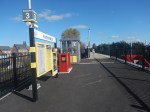
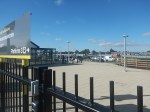
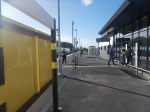
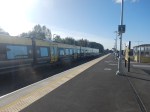
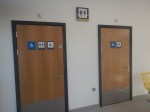

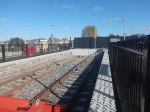

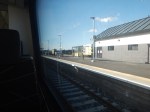
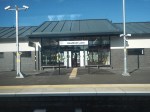

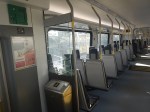



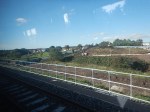
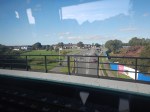

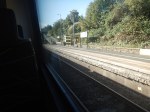


Note.
- It is a three-platform station, with two platforms pointing towards Liverpool and one towards Wigan Wallgate station.
- Changing trains is about a fifty metre walk.
- The toilets are trans-ready. But the toilets at Peterborough station, that I wrote about in A Pair Of Toilets At Peterborough Station were too.
I have a few thoughts.
Could There Be Through Running Between Headbolt Lane and Wigan Wallgate Stations?
This picture shows the walkway between Platform 2 on the South side of the tracks and Platforms 1 and 3 on the North side.
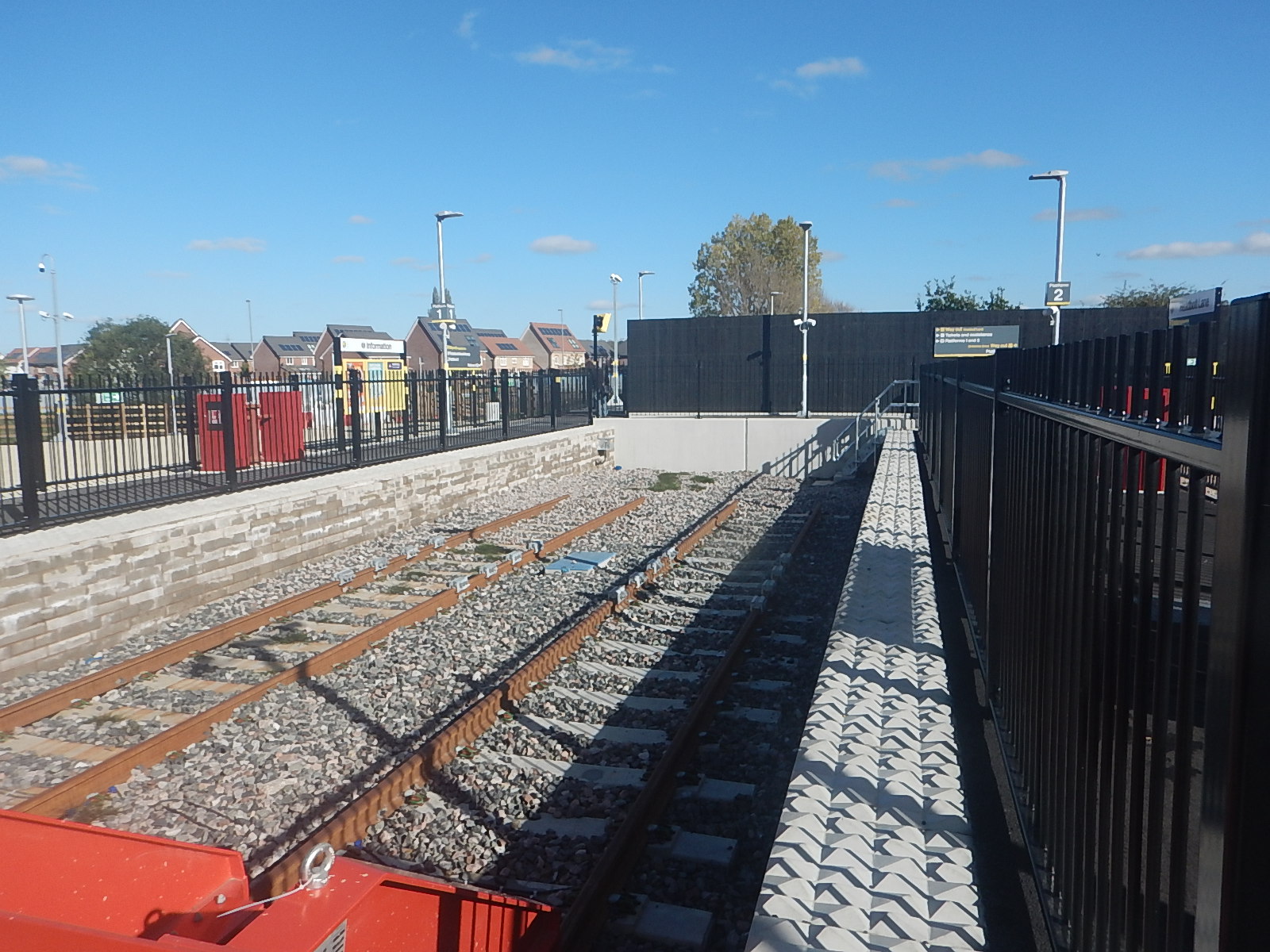
Note.
- Platform 1 is the platform on the left and Platform 2 is on the right.
- Platform 3 is in line with Platform 1 behind the fence at the far end of Platforms 1 and 2.
- The tracks don’t go straight through.
- There are two concrete blocks forming the walkway between platforms.
I suspect the answer is no at the moment.
But I wouldn’t be surprised to find, that the blocks have been designed to be lifted out and there is space to put a footbridge over the tracks, so that if in the future, through running were to be required, it is possible.
How Would A Station To Skelmersdale Be Connected?
In New Express Bus Improves Links Between Skelmersdale And Liverpool, I talked about a new express bus service between Kirkby and Skelmersdale.
This page on Bus Times gives details of the service.
The 319 Trainlink service will surely give useful information on possible passenger numbers.
In Would A Lower Cost Rail Link To Skelmersdale Be Possible?, I looked at options for the rail line.
Wigan’s Comprehensive Local Connections
Wigan North Western and Wigan Wallgate station have services to all these stations.
- Accrington
- Appley Bridge
- Ashton-under-Lyne
- Atherton
- Bescar Lane
- Blackburn
- Blackpool North
- Bolton
- Broad Green
- Bryn
- Burnley Manchester Road
- Burscough Bridge
- Clifton
- Daisy Hill
- Deansgate
- Eccleston Park
- Edge Hill
- Euxton Balshaw Lane
- Farnworth
- Garswood
- Gathurst
- Hag Fold
- Headbolt Lane
- Hindley
- Hoscar
- Huyton
- Ince
- Kearsley
- Leyland
- Littleborough
- Manchester Oxford Road
- Manchester Victoria
- Meols Cop
- Moorside
- Moses Gate
- New Lane
- Orrell
- Parbold
- Pemberton
- Poulton-le-Fylde
- Prescot
- Rainford
- Toby
- Rochdale
- Rose Grove
- Salford Central
- Salford Crescent
- Smithy Bridge
- Southport
- Stalybridge
- St Helens Central
- Swinton
- Todmorden
- Thatto Heath
- Upholland
- Walkden
- Wavertree Technology Park
- Westhoughton
Fifty-eight stations is certainly comprehensively connected.
The Connection To High Speed Two At Wigan North Western
This map from OpenRailwayMap shows the two Wigan stations; North Western and Wallgate.
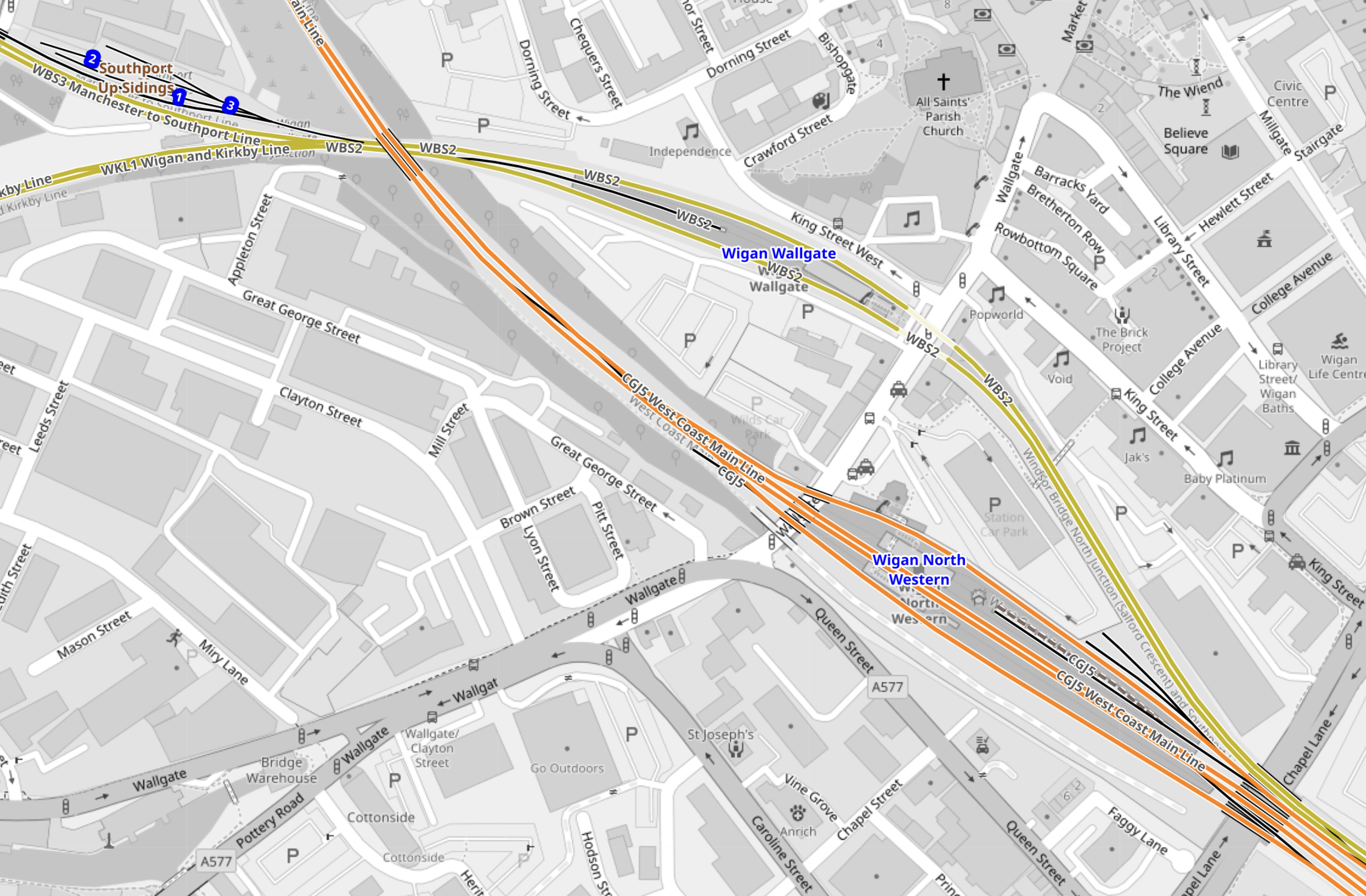
Note.
- The orange tracks are the West Coast Main Line, which in the future, will carry High Speed Two services to and from Preston, Lancaster, Carlisle and Scotland.
- The yellow tracks are the local lines between Manchester in the East and Kirkby and Southport in the West.
- The local lines split after they pass under the West Coast Main Line, with the North-Western branch going to Southport and the Western branch going to Headbolt Lane, Kirkby and Liverpool.
- Wigan North Western is on the West Coast Main Line.
- Wigan Wallgate is on the local lines.
The stations are close enough to be converted into a superb combined station, where local passengers can join high speed services.
This picture shows the platforms of Wigan North Western station.
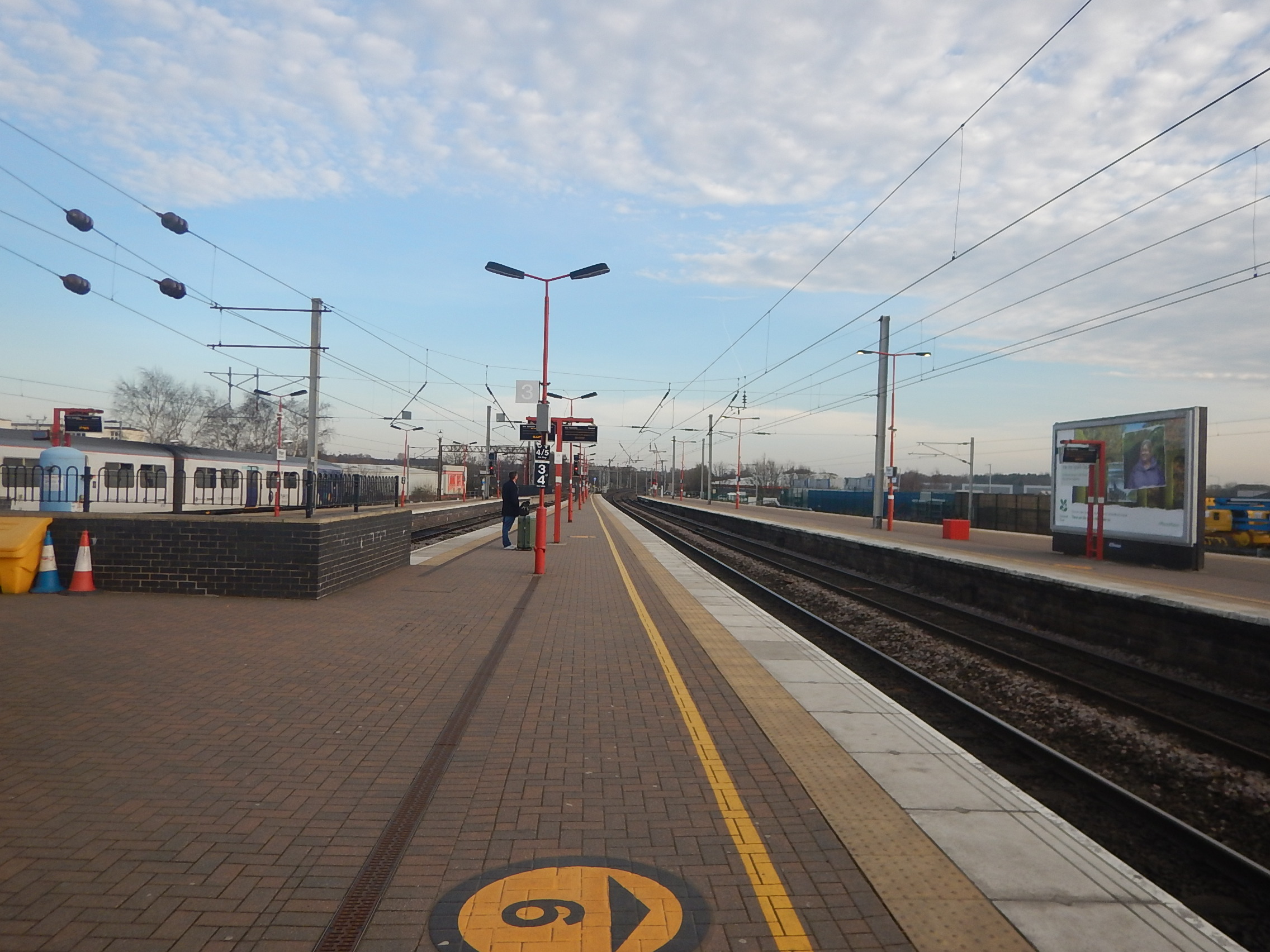
Wigan North Western station can’t be far off being able to accept pairs of High Speed Two Classic Compatible trains, that will be 400 metres long.
This graphic shows High Speed Two services after Phase 2b is completed.
Only two High Speed Two services stop at Wigan North Western.
- The London and Lancaster service, which splits and joins with a London and Liverpool service at Crewe.
- The Birmingham and Scotland service.
As Wigan North Western has comprehensive local connections to the Northern areas of Liverpool and Manchester, it surely needs more services.
North West To Benefit From £19.8 billion Transport Investment
This is the title of this government document, which has this sub-heading.
Multibillion-pound plan to link major cities in the North via bus, rail and new and improved roads.
It says this about Greater Manchester and Liverpool City Region.
- Greater Manchester will also receive around £1.5 billion from the CRSTS2 budget and around £900 million additional funding – funded from HS2 – which is an unprecedented investment in local transport networks. That is more than double their allocation under the previous programme
- Liverpool City Region will also receive c.£1 billion from the CRSTS2 budget, plus a further £600 million on top – funded from HS2. That is more than double their allocation under the last round
Some of that amount of money could go a long way to improve Liverpool and Manchester connections through Wigan and create a link to High Speed Two.
TransPennine Services Between Liverpool/Manchester And Scotland
Currently, the following services run between Liverpool and Manchester, and Scotland.
- Manchester Airport and Glasgow Central – 1 tp2h – via Manchester Piccadilly, Manchester Oxford Road, Preston, Lancaster, Oxenholme Lake District, Penrith North Lakes, Carlisle, Lockerbie and Motherwell
- Manchester Airport and Edinburgh Waverley – 1 tp2h – via Manchester Piccadilly, Manchester Oxford Road, Preston, Lancaster, Oxenholme Lake District and Haymarket Penrith North Lakes, Carlisle and Lockerbie and Haymarket
- Liverpool Lime Street and Glasgow Central – 2 tpd – via St Helens Central, Wigan North Western, Preston, Lancaster, Oxenholme Lake District, Carlisle, Lockerbie and Motherwell
Note.
- tp2h is trains per two hours.
- tpd is trains per day.
- Only the Liverpool services go through Wigan.
- North of Preston all trains will use the same route.
- All three services are run by Class 397 trains.
- When High Speed Two Classic-Compatible trains start running to Glasgow and Edinburgh, they will use the same route North of Preston.
Point 5 surely means that High Speed Two’s trains will be limited to the same speed as the current Class 397 trains, which is 125 mph. Although, this might be increased to up to 140 mph, by the use of in-cab digital signalling.
Consider.
- Edinburgh to Preston is 191.4 miles.
- The current TransPennine express service from Edinburgh to Preston is scheduled for two hours and 34 minutes, with five stops, at an average speed of 74.6 mph.
- The Wikipedia entry for High Speed Two says that the London-Edinburgh service from Edinburgh to Preston is scheduled for two hours and 30 minutes, with two stops and a split/join at Carlisle, at an average speed of 76.6 mph.
- The Wikipedia entry for High Speed Two says that the Birmingham-Edinburgh service from Edinburgh to Preston is scheduled for two hours and 24 minutes, with four stops, at an average speed of 79.8 mph.
Note.
- The first timing is based on a Class 397 train and the others will be High Speed Two Classic Compatible trains.
- The times would appear to be vaguely in line with each other.
- The removal of the split/join could explain why the Birmingham service is six minutes faster.
The following would appear to be true.
- Both the Class 397 and High Speed Two Classic Compatible trains can run at similar speeds North of Preston.
- The High Speed Two Classic Compatible train may have faster acceleration and deceleration, which could save a few minutes.
- Nothing substantial has been done to improve the tracks between Edinburgh and Preston.
- As the current times are run without digital signalling and the Class 397 train, is within ten minutes of that, I would be very surprised if digital signalling will be installed before High Speed Two services reach Edinburgh.
I also suspect that if digital signalling and a few other improvements were made to the North of Preston, a few extra minutes could be saved.
The Future Of TransPennine Services Between Liverpool/Manchester And Scotland
Will the TransPennine services between Liverpool/Manchester and Scotland continue after High Speed Two services start running to North of the border?
Consider.
- I have never seen any plans from High Speed Two for services between Liverpool/Manchester and Scotland.
- If the TransPennine services, aren’t kept, travelling between Liverpool/Manchester and Scotland will need a change at Wigan North Western or Preston.
- The TransPennine services will probably need only a single train per hour (tph) on the West Coast Main Line to the North of Preston.
I can see them continuing. But possibly in a different form.
In 1967, I went from Glasgow to Manchester on a train.
- The Glasgow and Edinburgh trains joined at Carstairs.
- They then split again at Preston.
- One half went to Manchester and the other half went to Liverpool.
I remember that the train was late, because of late arrival of the Edinburgh train at Carstairs.
I needed to take a taxi. But I wrote my first complaint letter and got a cheque from British Rail.
Could similar joining and splitting be used again, as it uses only one train path between Preston and Scotland?
Would it also be better, if the service were to be under the Management of High Speed Two?
There are several possibilities, but I feel the TransPennine services will continue.
Derby Alstom Train Factory Jobs Fear As Orders Dry Up
The title of this post, is the same as that of this article on the BBC.
This is the sub-heading.
Derby City Council is seeking talks with train builder Alstom over reports it could be about to lay off workers.
These two paragraphs introduce the story.
The firm’s Litchurch Lane site is the only UK train factory able to design, build, engineer and test trains for domestic and export markets.
About 2,000 people work at the factory but the firm says its current order book only runs until early 2024.
This could be another serious problem for High Speed Two.
Could LNER Use High Speed Two Classic-Compatible Trains?
In LNER Seeks 10 More Bi-Modes, I discuss how LNER are needing ten more bi-mode trains to expand their services.
Consider.
- One of LNER’s predecessors used to run Eurostar trains between Kings Cross and Leeds
- A High Speed Two Classic-Compatible trains are 200 metres long, as against the 233.7 metres of a nine-car Class 801 train.
- High Speed Two Classic-Compatible trains will run on the East Coast Main Line, when High Speed Two fully opens.
- London to Doncaster, Edinburgh, Leeds, Newcastle and York are all fully electrified routes.
So if all these fully-electric routes, were to be run using High Speed Two Classic-Compatible trains, this would release a number of Class 800 and Class 801 trains, which could be converted to bi-modes or battery-electric variants.
London and Edinburgh In Three-And-A-Half Hours
This is a paragraph from the Wikipedia entry for the InterCity 225 train.
The InterCity 225 was designed to achieve a peak service speed of 140 mph (225 km/h); during a test run in 1989 on Stoke Bank between Peterborough and Grantham, an InterCity 225 was recorded at a speed of 162 mph (260.7 km/h). Its high speed capabilities were again demonstrated via a 3hr 29mins non-stop run between London and Edinburgh on 26 September 1991. British regulations have since required in-cab signalling on any train running at speeds above 125 mph (201 km/h) preventing such speeds from being legally attained in regular service. Thus, except on High Speed 1, which is equipped with cab signalling, British signalling does not allow any train, including the InterCity 225, to exceed 125 mph (201 km/h) in regular service, due to the impracticality of correctly observing lineside signals at high speed.
If in-cab digital signalling were to be installed between London and Edinburgh, I believe that the three-and-a-half hour timing can be regularly achieved by a High Speed Two Classic-Compatible train.
I also believe that at least one train per hour (tph) between London and Edinburgh could achieve the three-and-a-half hour timing.
High Speed Two are promising a 3:48 time between London and Edinburgh.
It could be a Lumo-squasher!
A one tph service would need eight trains, but would release eight nine-car Class 801 trains.
Euston and Glasgow
This might be another route, where High Speed Two Classic-Compatible trains could be used.
Conclusion
LNER gets some more trains and Derby gets more work.
But the biggest benefits would be that, the trains would get a thorough testing before High Speed Two opens and passengers would get a view of the shape of things to come.
A Long Journey Home
A friend had booked between London and Edinburgh today on the 13:00 LNER train from King’s Cross. She was also travelling with her miniature Schnauzer.
.We had arranged to meet at Marylebone, so I could help them across London to King’s Cross and have a much-needed hot chocolate in King’s Cross before they caught the train North and I went to a meeting organised by my cardiologist.
I had checked out King’s Cross earlier and there was trouble with srveral delayed and cancelled trains.
It wasn’t strikes or bad management from LNER and the problem is explained in this article from the Yorkshire Evening Post, which is entitled Trains From Leeds To London Cancelled Or Delayed After Thieves Steal Signalling Cables From Railway Tracks.
In the end we made the train in time and also had time to have a hot chocolate in LEON, whilst we sat out the back with the dog.
We were texting each other most of the afternoon and with assistance from Real Time Trains, the journey went as follows.
- The train left King’s Cross at 13:08, which was eight minutes late.
- By Peterborough, the train was running seventeen minutes late.
- The driver kept this delay until Retford, where he lost another eighty minutes.
- The train was now running 97 minutes late and this grew by four more minutes by Newcastle.
- My friend reported that they stopped at Newcastle, as they had no driver.
- In the end, LNER found a driver or a way for the current driver to continue to Edinburgh and the train left Newcastle after a thirty minute stop.
- The train was now two hours and ten minutes late.
- Eventually, it pulled into Edinburgh, two hours and five minutes late, after the driver had picked up a few minutes on the approach to Edinburgh.
Note.
- The incoming train that formed this service arrived in King’s Cross from Edinburgh seventy two minutes late, mainly because of the cable theft. It should have arrived and returned to Edinburgh an hour earlier. But it arrived conveniently to form the 13:00 to Scotland.
- As the train presentation team turned the train in nineteen minutes instead of twenty-one, they saved a couple of minutes.
- I suspect the delay at Retford was getting through the area without any signalling.
- Had the driver run out of hours by Newcastle, as he had been in the cab for four-and-a-half hours?
- Normally, four-and-a-half hours would have enabled the driver to have driven to Edinburgh.
These are my thoughts.
Cable Theft
In the days of British Rail, I did some work for British Rail using my software called Daisy, which led to a report entitled Failure Reporting And Analysis On British Rail, which was written by J. S. Firth CEng, MIEE, MIRSE, who worked for SigTech, which was a Business Unit of the British Railways Board.
If anybody who has a legitimate reason to read the report, I still have the complimentary copy sent to me by Mr. Firth and would be happy to provide a copy.
I did flag up a project called Unauthorised Cable Removal And Fault Triage, as one of the winners in the First Of A Kind 2022 competition organised by the Dept of BEIS.
If there is anything I can do to help, let me know.
Problems In France
A friend in France told me that there is a problem with stealing overhead electrification cables in France.
This article on RFI is entitled Copper Wire Thieves Force France’s High-Speed TGV To Go Slow.
There are several similar stories on French and other European web sites.
Signalling Using Radio
The East Coast Main Line is being signalled using modern ERTMS digital signalling, where drivers read the signals on an in-cab display, which is connected by radio to the signalling system.
This extract from Wikipedia describes the first project.
In June 2020 it was reported that the UK government would provide £350 million to fund the UK’s first digital signalling system on a long-distance rail route. The signalling is to be fitted on a 100-mile (161 km) section of the East Coast Main Line between Kings Cross, London, and Lincolnshire, which will allow trains to run closer together and increase service frequency, speed and reliability. No date for when the new technology, already in use on the Thameslink lines at London Bridge and some London Underground lines, has been given.
If the cables are removed will this reduce crime?
LNER Delay Repay
My friend will be entitled for a full refund of her single ticket.
This page on the LNER web site gives full details.
Note.
- You have 28 days to claim.
- If you have a return ticket, you may be entitled to something for that leg of the journey.
I would add, that you should always keep all your tickets, in case the return journey goes belly-up.
 The Anonymous Widower