St. Pancras To Heathrow By Elizabeth Line
I ate breakfast in Le Pain Quotidien in St.Pancras station this morning and afterwards I took the Elizabeth Line to Heathrow.
I took Thameslink for one stop to Farringdon station and got a Elizabeth Line train direct to Terminal 2 and 3 at the Airport.


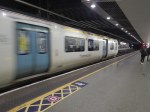



Note.
- The train I took was going to Gravesend. I suspect it was because of engineering work.
- An empty train passed through, whilst I waited. I’ve never seen that before on Thameslink in St. Pancras station.
- I travelled in the front of the Thameslink train for the one stop.
- The change at Farringdon station was very quick, as it was just down in the lift and the Heathrow train was waiting.
These are some notes on a fast change using the lifts between Southbound Thameslink and the Elizabeth Line at Farringdon station.
- Get the first lift of the two that arrives, if like me, you can use escalators.
- If it goes up, walk across the station at street level and get the two serial escalators down to the Elizabeth Line.
- If it goes down, take the lift to the Elizabeth Line.
If you can’t manage escalators, you have to wait for a lift going down.
I have some observations.
Meeting And Greeting At St. Pancras Station
From my position in Le Pain Quotidien, I was able to watch passengers leaving and arriving at the Eurostar terminal opposite.
There were quite a few people, who were meeting and greeting others.
In Effects Of The ULEZ In West London, I said this about meeting and greeting at Heathrow.
But as it now so easy to get to the Airport using the Elizabeth Line will more people use the new line to meet and greet and say goodbye to loved ones or business associates. Since the Elizabeth Line opened, I’ve met a couple of friends at Heathrow, who were passing through.
Will the Elizabeth Line increase the number of trips to the airport, by making meeting and greeting easier?
If it does, then it will put more pressure on the services to Heathrow Airport.
Seats In St. Pancras Thameslink Station
These pictures show some of the large number of seats in St. Pancras Thameslink Station.
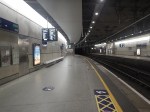


Should there be more seats along the platform at stations on the Elizabeth Line, where passengers change trains?
My Train To The Airport Was Crowded
Ten in the morning on a Sunday, is not the time I’d expect to be busy, but I estimated it was about ninety percent full, judging by the few empty seats.
There Were Eight Trains Per Hour (tph) To And From Heathrow
From Real Time Trains, it looks like the following trains were running.
- Elizabeth Line – Abbey Wood and Terminal Four – 2 tph
- Elizabeth Line – Abbey Wood and Terminal Five – 2 tph
- Heathrow Express – Paddington and Terminal Five – 4 tph
My train to the Airport had been going to Terminal Four.
Is eight tph the maximum frequency, that can use the tunnel to the Airport?
Is The Elizabeth Line Diverting Passengers From Heathrow Express?
When I returned from the Airport, my Elizabeth Line train left about ten minutes after a Heathrow Express train.
- The Heathrow Express train wasn’t very full.
- The Elizabeth Line train was very full.
- Passengers got out at all stations.
- I got out at Tottenham Court Road.
It will be interesting to see the Heathrow Express passenger figures.
Which Is The Best Elizabeth Line Station For A Marks and Spencer?
Because their gluten-free food is so much better than other shops, this is important to me.
- There are larger stores at Ealing Broadway, Tottenham Court Road (West), Liverpool Street (West), Stratford and Ilford.
- There are food only stores at Heathrow, Paddington, Bond Street and Liverpool Street (East).
Today, I used the large store by the Western entrance at Tottenham Court Road station.
But, if you want to avoid walking, Stratford is probably the easiest.
Effects Of The ULEZ In West London
This page on the Transport for London web site is entitled ULEZ Expansion 2023.
This is the first paragraph.
To help clear London’s air and improve health, the Ultra Low Emission Zone (ULEZ) is expanding across all London boroughs from 29 August 2023.
These are some points from the rest of the page.
- Poor air quality is impacting the health of Londoners, and it’s mainly caused by polluting vehicles.
- Air pollution even contributes to the premature death of thousands of Londoners every year.
- 9 out of 10 cars seen driving in outer London already meet the ULEZ emissions standards.
- If you drive anywhere within the ULEZ and your vehicle does not meet the emissions standards, you could face a daily charge of £12.50.
- Residents of the ULEZ are not exempt from the charge.
- Any money received from the scheme is reinvested into running and improving London’s transport network, such as expanding bus routes in outer London.
There is no reference to trucks or HGVs.
These are my thoughts.
Objections To The ULEZ
If you type ULEZ into Google and look at the News page, you get a lot of stories that don’t show the ULEZ in a good light.
Here are a few headlines.
- BBC – ULEZ: Labour MPs Seek Support For Non-Londoners
- BBC – Firms In Essex Could Close Due To ULEZ, Warns Business Leader
- Big Issue – London’s Ulez Plans Could Hit Disabled People, Charities And Small Businesses The Hardest
- Daily Mail – Sadiq Khan Claims That Nazis Have Infiltrated Anti-Ulez Protests
- Guardian – EU Motorist Fined Almost £11,000 After Falling Foul Of London Ulez Rule
- Guardian – London’s Mayor Faces High Court Challenge Over Ulez Expansion
- Kent Live – Anti-ULEZ Campaign Group Support Soars As Kent Drivers ‘Unfairly Targeted’
- LBC – No More Ulez? Sadiq Khan Considers Scrapping Controversial Scheme And Replacing It With ‘Pay-As-You-Drive’ System
- Slough Observer – Ulez Faces High Court Challenge
- Which? – Why It Could Cost £17.50 To Drop A Loved One At Heathrow This Summer
It looks like Sadiq Khan has fallen into a hole.
And he hasn’t stopped digging!
To make it worse, he has suggested a Pay-As-You-Drive System. I seem to remember, that a Dutch Prime Minister, who tried it, lost the next election.
But then Sadiq Khan likes tolls as the new Silvertown Tunnel and the Blackwall Tunnel will be tolled in a few years.
Heathrow Airport
Heathrow Airport is one of the world’s busiest airports and 76,000 people work at the airport, with many more employed nearby.
The airport handled 61.6 million passengers in 2022, which is a few short of 170,000 per day.
If you consider that those that work at the airport do two trips per day and passengers generally do one, that means there are 322,000 trips per day to or from the airport.
But as it now so easy to get to the Airport using the Elizabeth Line will more people use the new line to meet and greet and say goodbye to loved ones or business associates. Since the Elizabeth Line opened, I’ve met a couple of friends at Heathrow, who were passing through.
I wonder, if that daily journey total of 322,000 could be nearer to 350,000 or even 400,000.
If the ULEZ charge makes some passengers and staff switch from their car to using a bus or train, this probably means that public transport to and from the airport, will need to be boosted by a substantial amount.
But improving public transport to Heathrow wouldn’t be easy.
- The Elizabeth Line seems to have put a big hole in the finances of Heathrow Express.
- How many more trains can be squeezed into the Heathrow Tunnel?
- The Western Rail Link to Heathrow would probably need to be built. But that seems to be in limbo.
- New trains for the Piccadilly Line are a few years away.
It might have been better to build a different scheme for Western access to Heathrow like the Heathrow Southern Railway.
I suspect that there will be a lot more passengers on the Elizabeth Line to and from Heathrow.
A ULEZ For Heathrow
This article on fleetworld, from four years ago, is entitled Heathrow To Introduce Charging ULEZ In 2022.
It hasn’t happened, but that doesn’t mean it won’t be implemented in the future.
If it did happen, there would be more passengers for the Elizabeth Line.
The Elizabeth Line
I have written three posts about how busy the Western section of the Elizabeth Line can get.
- Very Busy Lizzie
- Elizabeth Line: Commuters Say Service ‘Not What Was Promised’
- So Many Cases On A Train!
Is there sufficient capacity to accommodate all the ULEZ-dodgers on the trains to and from Heathrow?
To make matters worse, there is a large Asian population from the Indian sub-continent living along the Elizabeth Line between Ealing Broadway and Reading.
- They seem to be enthusiastic users of the line.
- Having ridden several times on crowded Indian trains, perhaps using trains is very much part of South Asian culture.
- I also suspect that a lot of Indian families have spread themselves along the line, just like my mother’s close family spread themselves along the 107 bus route.
In Very Busy Lizzie, I said this.
Reading needs four tph to Central London.
The ULEZ will make this even more essential.
The Piccadilly Line
The Piccadilly Line may be getting new trains, but it is not a line that is blessed with lots of step-free stations.
The West London Orbital Railway
It does appear that the West London Orbital Railway may be more likely to be built, than a few months ago.
In Is There Progress On The West London Orbital Railway?, I wrote about a report, that consultants were being chosen.
This railway could ease pressure on the railways in West London.
Cutting Pollution In London From Trucks
London like all big cities has a lot of trucks.
As the average truck has a much larger engine than the average car, I would suspect it gives out more pollution.
One way to cut pollution from large vehicles would be to run them on hydrogen.
But unlike some cities in the UK, London has no hydrogen policy and filling stations to fill them up.
The Mayor could at least get a workable hydrogen policy.
Conclusion
I suspect the next Mayor of London will have to have a rethink on the ULEZ and implement a hydrogen policy.
Moorgate And Luton Airport Parkway
This morning I went by train from Moorgate to Luton Airport Parkway to have a look at the Luton DART.
I used the following route.
- Elizabeth Line – Moorgate to Farringdon.
- Thameslink – Farringdon to Luton Airport Parkway.
I came back from Luton Airport Parkway on a Luton Airport Express.
I took these pictures on the route.



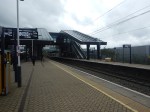
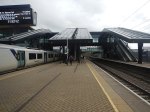
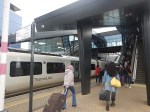
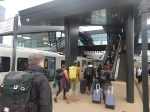
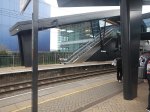
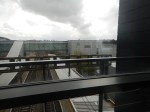
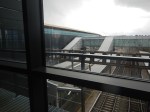
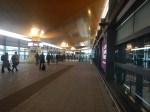
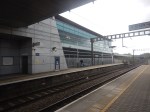
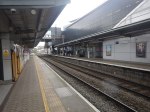

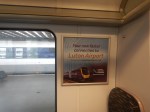
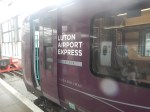
Note.
- The change at Farringdon station was very easy.
- You walk past toilets at the Farringdon change.
- There are two bridges, lots of escalators and lifts at Luton Airport Parkway station.
- I didn’t take the DART to the airport.
These are some detailed thoughts.
Luton Airport Parkway Station
It is a much improved station, but still has some work to do.
- There was a problem with one escalator.
- Some of the signage is not finalised.
- I had a problem with ticketing, as I was sold the wrong ticket.
- Staff probably need a bit more training.
But then the station has only been open three weeks.
Luton Airport Express
East Midland Railway’s St. Pancras and Corby service is now branded as Luton Airport Express.
- It has its own web site.
- Trains only stop at Luton Airport Parkway, Luton, Bedford, Wellingborough and Kettering.
- Trains take as little as twenty-two minutes between St. Pancras and Luton Airport Parkway.
- Class 360 trains are used.
- Trains run every thirty minutes.
As it serves the local area, I wonder how many airport employees, now use this train to get to work?
Was Baldrick An Essex Man?
I have been looking at Network Rail’s page for Beaulieu Park station.
This is the heading.
Network Rail and Essex County Council are working together to develop proposals for the first railway station to be built on the Great Eastern main line for over 100 years.
These two paragraphs outline the project and where the finance is being obtained.
The new station is part of a wider regeneration of the Beaulieu Park estate in Chelmsford with new road infrastructure and up to 14,000 homes.
Essex County Council, in partnership with Chelmsford City Council, successfully secured £218m of funding from the Government’s Housing and Infrastructure (HIF) fund together with £34m contributions from the South East Local Enterprise Partnership and the developers of Beaulieu, Countryside and L&Q.
These features of Beaulieu Park station are listed on the page.
- Three platforms with a central loop line and new tracks to enable stopping services to call at the station while allowing fast trains to pass through unimpeded
- Step free access to all platforms via 2 lifts
- Accessible toilets, baby change facilities, waiting area and space for retail/catering
- Ticketing facilities, with ticket vending machines and a gate line
- Pedestrian and cycle access routes to the station
- 500 spaces for cycle parking and storage
- A bus interchange including bus stands for local services
- Pick up and drop off area with dedicated taxi bays
- Parking for over 700 cars, 5% of which to be designated Blue Badge bays, and motorcycle spaces, as well as dedicated parking for station staff, emergency services, and a dedicated space for service access.
Note.
- How many other parkway stations, other than Ebbsfleet International station have 700 parking spaces?
- The parking at Whittlesford Parkway can only hold 377 vehicles.
- How many other parkway stations have an overtaking loop for faster trains?
Beaulieu Park is not your average parkway station!
I have a few thoughts.
Which Of The Current Services Will Call?
The Network Rail page says this about services.
It will provide additional access to the railway with regular connections to the capital (only 40 minutes from London Liverpool Street station) and other destinations in the east of England. New tracks will enable stopping services to call at the station while allowing fast trains to pass through unimpeded.
Note.
- Trains between London and Hatfield Peverel station typically take under forty minutes.
- Two fast trains per hour (tph) between Liverpool Street and Norwich via Colchester, Ipswich and Stowmarket pass through.
- Only one of the fast trains stops at Chelmsford.
- Four stopping tph, one to each of Braintree, Clacton-on-Sea, Colchester Town and Ipswich pass through.
If all the stopping trains stopped, Beaulieu Park would have the following services.
- Braintree – 1 tph
- Chelmsford – 4 tph
- Clacton-on-Sea – 1 tph
- Colchester – 3 tph
- Colchester Town – 1 tph
- Hatfield Peverel – 1 tph
- Ingatestone – 2 tph
- Ipswich – 1 tph
- Kelvedon – 2 tph
- London Liverpool Street – 4 tph
- Marks Tey – 2 tph
- Romford – 1 tph
- Shenfield – 3 tph
- Stratford – 4 tph
- Witham – 4 tph
All trains are new Class 720 electric trains.
I also feel, that Network Rail could be being cunning.
Suppose, the Liverpool Street and Norwich express, that doesn’t stop at Chelmsford, stopped instead at Beaulieu Park.
- This would give an hourly express service between Beaulieu Park and Norwich, which stopped at Colchester, Manningtree, Ipswich, Stowmarket and Diss.
- It would also enable two tph between Beaulieu Park and Ipswich.
The 700 parking spaces at Beaulieu Park now start to make sense.
- Both Ipswich and Norwich stations are within walking distance of the town centres and the football grounds.
- Ipswich station has a shuttle bus service to the town centre and the hospital.
- Both stations have several local train services.
Beaulieu Park station appears to have been designed as a Park-and-Ride station for the Great Eastern Main Line and all its branches.
Services To And From Lowestoft
In Making Sense Of The New East Anglia Franchise, I looked in detail at Greater Anglia’s promises.
In a section, which is entitled London – Lowestoft – Yarmouth Services, I said this.
There are going to be four direct services between London and Lowestoft each day. This probably initially means two trains to London in the morning peak and two trains back in the evening one.
When, I first moved back to Suffolk in the 1970s, I regularly caught a diesel-hauled train from Wickham Market to London for the day.
This is all motherhood and apple pie for those in Lowestoft wanting to go to London, but I suspect it isn’t the easiest service for a train operator to schedule efficiently and make money.
Would a train operator really want to start a full train at Lowestoft at say six in the morning and then have it wait around all day in London before returning in the evening?
The service hasn’t started.
Services To And From Cambridge Or Peterborough
At some time in the last decade, one of the predecessors of Greater Anglia, used to run a service to Peterborough via Colchester and Ipswich, so that travellers in Essex could catch trains to the North.
Given too that Cambridge has an employment problem, if a service was run, it might attract passengers.
The Class 755 trains Could Serve Bury St. Edmunds, Cambridge, Lowestoft, Newmarket, Peterborough And Yarmouth
Consider.
- A pair of Class 755 trains would leave Liverpool Street.
- They would use electric power to run to Ipswich.
- The trains would run in one of the paths of the current hourly Ipswich service.
- Like their all electric siblings; the Class 745 trains, they would probably run most of the journey at near 100 mph.
- At Ipswich the trains would split.
- One train would go to on to Lowestoft and Yarmouth and the other would go to Cambridge and Peterborough.
If passenger numbers felt it was a good idea, I’m certain, it could be timetabled.
The Chelmsford Avoiding Line
In Will The Chelmsford Avoiding Line Be Rebuilt?, I described the avoiding line, that used to be between the two tracks at Chelmsford station.
It probably saved a few minutes, by allowing fast expresses to pass stopping trains.
Effectively, a new avoiding line is being built at Beaulieu Park, a few miles from the original position at Chelmsford.
So will the fast expresses save a few minutes?
Could The Elizabeth Line Run To Beaulieu Park?
Consider
- The end sections of the Elizabeth Line seem to be busy, as I wrote in Very Busy Lizzie.
- The City of Chelmsford is between Shenfield and Beaulieu Park.
- Paddington and Reading is 35.9 miles.
- Liverpool Street and Hatfield Peverel is 35.9 miles.
So Beaulieu Park is actually closer to London than Reading.
Perhaps, at some time in a few years, passenger traffic between Beaulieu Park and Shenfield will be such, that the Elizabeth Line will be extended to Beaulieu Park.
The ideal service from Beaulieu Park would surely be two tph to Heathrow, as getting to Heathrow from East Anglia by train needs a change at Liverpool Street.
The only drawback is that to work effectively on the Great Eastern Main Line, a sub-variant of the Class 345 trains will be needed with a 100 mph operating speed. I wrote about these trains in Extending The Elizabeth Line – High Speed Trains On The Elizabeth Line.
But they may have the advantage of being able to take the fast lines between Shenfield and Stratford.
Conclusion
Beaulieu Park may just look like any other station to serve a housing development.
But it’s a lot more than that!
- It’s a Park-and-Ride for the whole Great Eastern Main Line and London.
- It should speed up expresses between London and Colchester, Ipswich or Norwich.
- It should improve local connectivity.
- It could take a lot of traffic off the nearby A12.
- It could give the City of Chelmsford its own local metro.
- It could give Heathrow a direct link to much of Essex.
- How much carbon will be saved by passengers?
We need many more well thought out Park-and-Ride stations.
TfL Needs More Elizabeth Line Trains Because Of HS2 Delays At Euston
The title of this post, is the same as that of this article on Ian Visits.
This is the first paragraph.
Transport for London (TfL) is warning that delays to the HS2 railway may require it to buy more Elizabeth line trains to cope with the thousands of people dropped off at Old Oak Common needing to get into central London.
Given, the way they got the project management and the cost and schedule so wrong, I wonder if we can rely on this assertion.
I certainly find fault with this statement.
In an ideal world, TfL would be able to send some empty Elizabeth line trains stabled in a depot to the west of Old Oak Common station, but the location of the main depot rules that out.
The Wikipedia entry for the Elizabeth Line says this about the future service.
In May 2023, it is planned to allow trains to run from both eastern branches to west of Paddington. This will allow both more flexible, and higher frequency, services: 24 tph peak, 20 tph off-peak, and direct services between Shenfield and Heathrow. In the longer term, when Old Oak Common opens, all trains will serve Old Oak Common, with those not serving the Reading or Heathrow branches reversing there.
The service changes for 21 May 2023 were confirmed in February 2023. The peak timetable will increase to 24 trains per hour. Off-peak service level will remain at 16 trains per hour, with two Shenfield–Paddington trains extended to Heathrow Airport Terminal 5 and two Abbey Wood–Terminal 5 trains switching to Terminal 4.
Consider.
At present 8 trains per hour (tph), pass through the site of Old Oak Common station.
By reversing the trains at Old Oak Common, rather than Paddington, this will surely mean that after the 21st of May 2023, 24 tph in the Peak and 20 tph in the Off Peak will pass through Old Oak Common.
If eight tph, still go on to Heathrow, Maidenhead and Reading, 16 tph will be turned in the Prak and 8 tph in the Off Peak.
This would give more capacity, as more trains would be running between Old Oak Common and Whitechapel.
If TfL have collected the right statistics, I’m sure they can predict the number of trains needed.
It seems to me, that the most important thing that TfL can do is make sure they can turn all the trains they need to at Old Oak Common station.
How Are Trains Going To Be Reversed At Old Oak Common?
The Victoria Line can handle 33 tph between Brixton and Walthamstow Central and the Elizabeth Line could use a similar method to handle the 16 tph, it needs to turn at Old Oak Common.
A process called stepping-up is used on the Victoria Line.
- On arrival in the terminal platform, the driver shuts the train down and leaves the cab.
- A second driver gets in the cab at the other end of the train and readies the train for departure.
- When instructed by the signalling, the new driver initiates the process by which the train leaves the station.
The original driver of the train, walks to the other end of the platform, to get themselves ready to be called to step-up to another train, at an appropriate time in the future.
I suspect to use stepping-up at Old Oak Common for the Elizabeth Line will need four platforms; two through platforms for services beyond Old Oak Common and two adjacent bay-platforms for services to be turned.
In Crossrail Trains Cleared To Use The Heathrow Tunnel, I gave this detailed description from Ian of the Class 345 trains‘ Auto-Reverse feature.
Around half of westbound trains will terminate at Paddington, but to head back eastwards, once all the passengers are off, they carry on westwards to Westbourne Park, then return back to Paddington on the eastbound line.
Normally that means the train driver would drive to Westbourne Park, stop, walk through the train to the other end, then drive back. But with “auto-reverse”, as soon as the train leaves Paddington, the driver switches to automatic and starts walking through the train to the other end. By the time the train arrives at Westbourne Park sidings, the driver will be sitting in the drivers cab at the other end of the train ready to head back into Central London.
I suspect that the Elizabeth Line will use Auto-Reverse or some other nifty piece of automation at Old Oak Common.
Riding The X140 Bus Between Heathrow Airport And Harrow Bus Station
I did this journey, which will be part of the Superloop, in better weather than yesterday, and was able to take these better pictures.

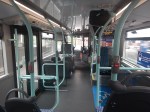
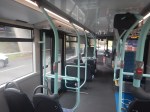
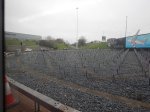
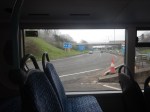
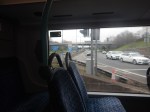




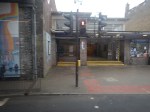
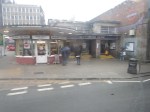
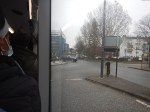

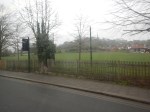

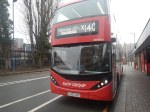
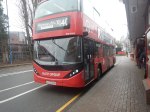
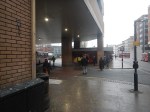
Note.
- The roads were much better than yesterday’s trip and were mostly two lanes each way, with large roundabouts at junctions.
- I suspect the bus was going at between 30 and 40 mph most of the way.
- There was still quite a lot of traffic.
- It is a distance of about 15 miles.
- The timetable says that buses run every 10-13 minutes.
- The X26 buses run between about six in the morning at midnight.
- There are twelve intermediate stops.
- Harrow-On-The-Hill station is next to Harrow Bus station.
- Heathrow Central connects to Heathrow Express, the Elizabeth and Piccadilly Lines.
- Hayes and Harlington connects to the Elizabeth Line and GWR’s local services.
- Northolt station connects to the Central Line.
- Northolt Park station connects to Chiltern.
- South Harrow station connects to the Piccadilly Line.
- Harrow-On-The-Hill connects to the Metropolitan Line and Chiltern
The journey took 49 minutes, which is only a minute longer than the timetable.
I have a few thoughts.
Passenger Numbers
These were my observations on my journey that started at about 11:30 on a dry day.
- Few got on at Heathrow Central, but I suspect we had just missed a bus.
- By Hayes & Harrington station, the bus was about a quarter full.
- At South Harrow station it must have been about three-quarters full.
- At Harrow bus station all the lower-deck seats were taken.
I would expect that the loading I saw fits with TfL’s expectations.
The Bus
The bus was one of the latest ADL battery-electric buses.
- It had a strong performance.
- It had wi-fi and phone charging.
- It was probably less than a year old.
- It was a lot better than yesterday’s bus!
At present not all buses on the route are battery-electric, as some are still older hybrids.
Travelling To Heathrow From The Northern Reaches Of The Metropolitan Line
Many people travel to and from Heathrow either for work or because they are flying.
- But it is not an easy journey from the Northern reaches of the Metropolitan Line.
- I believe the X26 bus could be a viable way to get to the airport for many.
- There would be a change at Harrow-on-the-Hill, but the station is at least step-free.
- It would avoid parking fees.
- Fares could be less than fuel costs.
The only big drawback, is that the X26 bus is not twenty-four hours.
More And More Frequent Buses Would Help
I believe that the Superloop should be a 24-hour service, as a lot of things go on at airports in the middle of the night.
I’ve just found out that there is an N140 bus that covers the route.
I also think, that as with the Overground, services should be at least four buses per hour.
New Fast Bus Service To Link London’s Outer Boroughs
The title of this post is the same as that of this article on the BBC.
This is the sub-heading.
A new fast service bus network has been announced for London’s outer boroughs.
These three paragraphs outline the concept.
Six new routes will be created and four incorporated into the ‘Superloop’ network, complete with distinct branding.
The plans propose a fast service to make more stops linking many of the peripheral boroughs.
The network is part of London Mayor Sadiq Khan’s effort to compensate for the impact of the ultra-low emission zone expansion, due to start in August.
This draft map from TfL illustrates the concept.
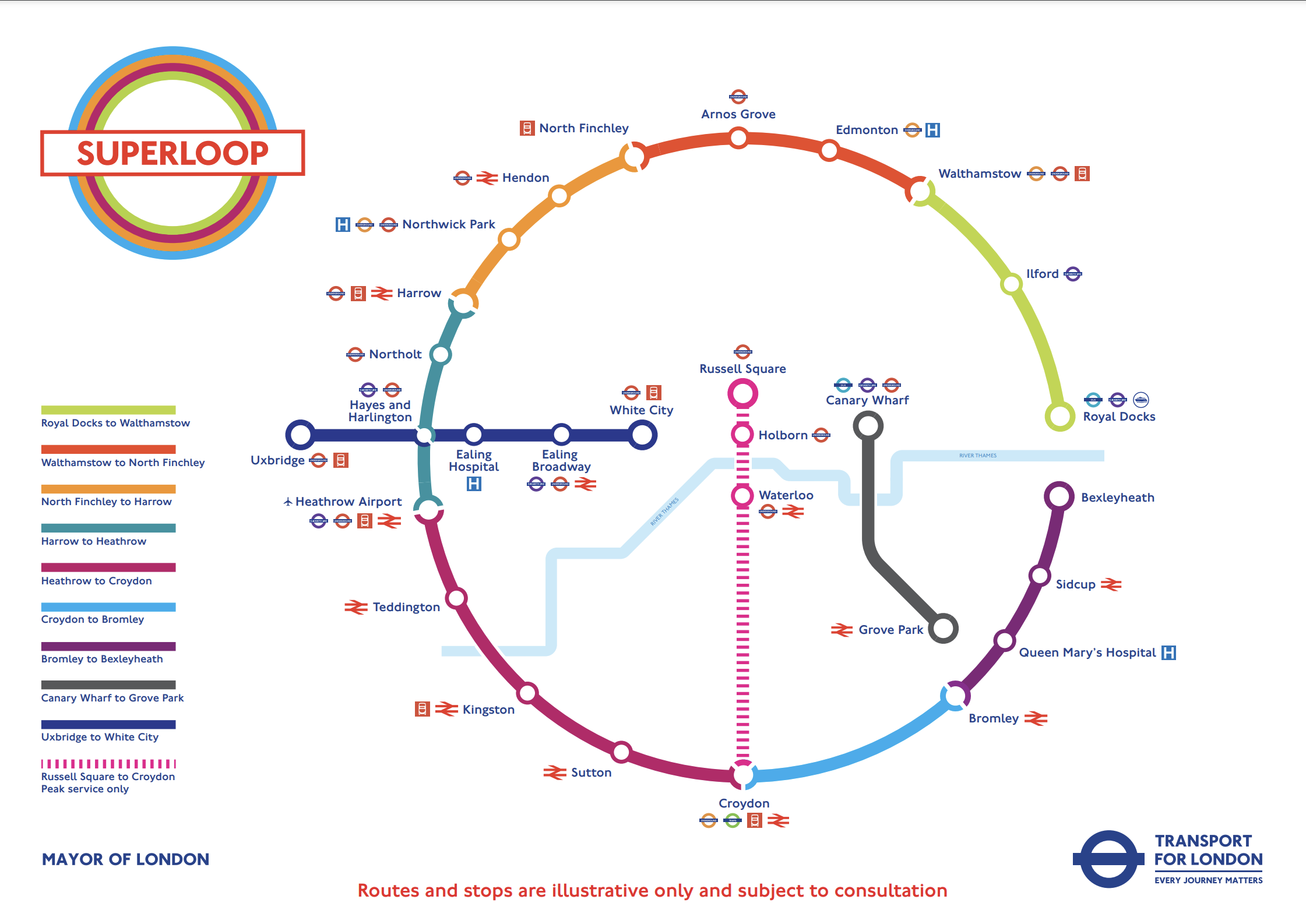
In the draft map, the following can be discerned.
- Arnos Grove station is in the North.
- West Croydon station is in the South.
- Royal Docks and Bexleyheath are in the East.
- Uxbridge and Hayes & Harlington stations are in the West.
- Elizabeth Line stations on the route include Ilford, Custom House, Heathrow Airport and Hayes & Harlington.
The plan may work well, as in the 1950s and 1960s, I used the 107 bus route very regularly, as it cut a circular path between Queensbury in the West and Enfield in the East.
I have some thoughts.
Royal Docks And Bexleyheath
This Google Map shows the Royal Docks.

Note.
- The dotted red line indicates the Royal Docks.
- The runway of the London City Airport can be seen.
- Custom House station on the Elizabeth Line is served by the Elizabeth Line and the Docklands Light Railway.
This second Google Map shows the Western end of the Royal Victoria Dock.

Note.
- Custom House station is in the North-East corner of the map.
- The Excel is on the East end of the map.
- London City Hall is at the Western end of the Royal Victoria Dock.
- The cable-car to Greenwich connects to the area.
I would suspect that the bus from Walthamstow will terminate close to City Hall and the cable-car.
This Google Map shows the Royal Docks and Bexleyheath.
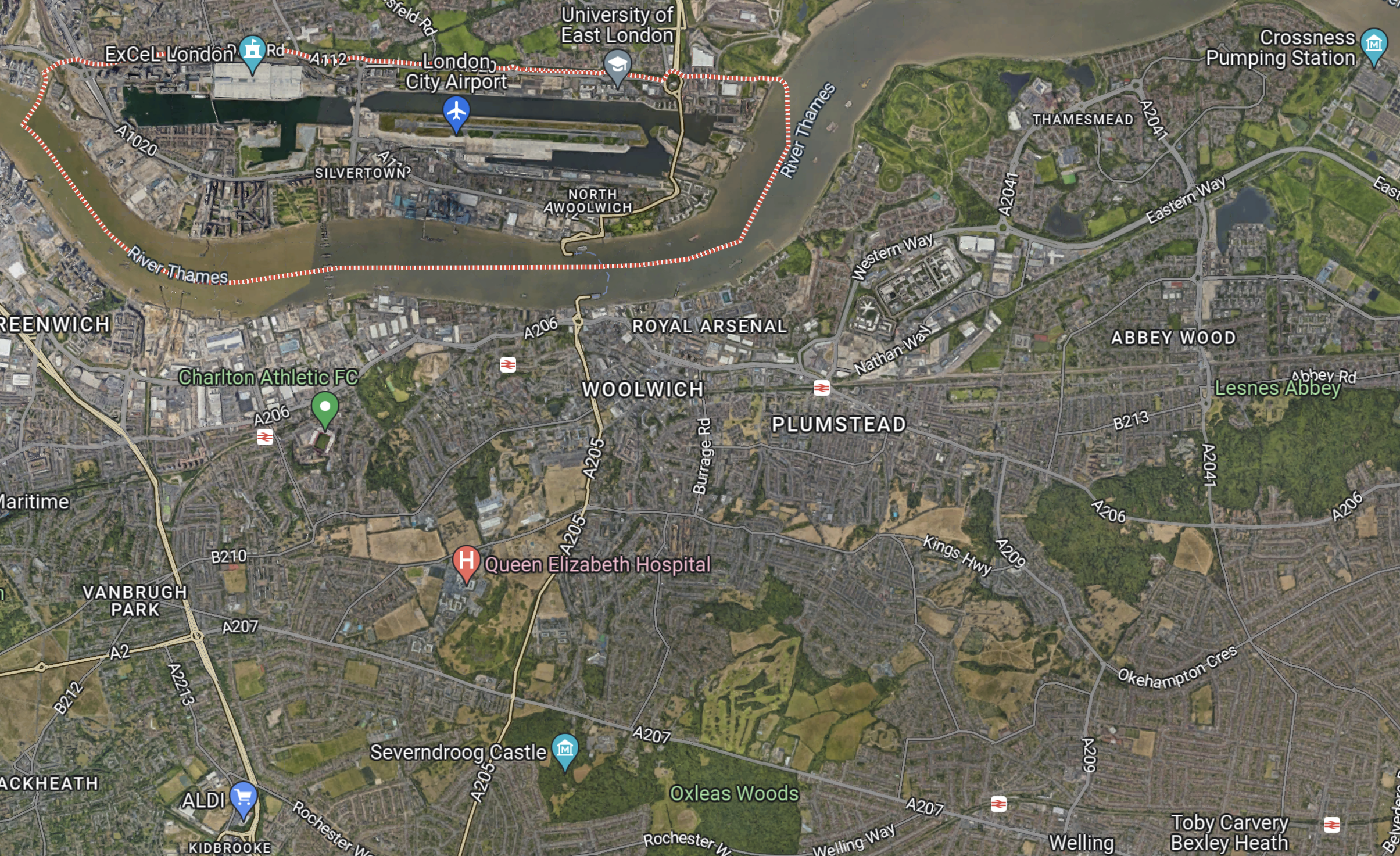
Note.
- The dotted red line indicates the Royal Docks.
- Bexleyheath station is in the South-East corner of the map.
I wouldn’t be surprised to see the Mayor organise a bus, through his new pet project; the Silvertown Tunnel.
Electric Or Hydrogen
Ideally, the buses will need to be zero-carbon; which means battery-electric or some form of hydrogen power.
Birmingham has a similar series of express routes, that run across the city, which I wrote about in Riding Birmingham’s New Hydrogen-Powered Buses.
I feel that long routes like some of these are should be run with hydrogen-powered buses, because of there longer range.
TfL Considers Replacing Over Half Of London Overground Trains Within The Next 4 Years
The title of this post, is the same as that of this article on MyLondon.
This is the sub-heading.
The trains were specially built for the dimensions of the Overground network
This paragraph outlines, why the trains may be replaced.
The 57 Class 378 ‘Capitalstar’ trains which provide the majority of services on London Overground could disappear as soon as June 2027, as Transport for London (TfL) officials decide what to do with them as their leases expire. The five carriage walkthrough trains have helped revolutionise the Overground network, being built to special dimensions to fit the unique profile of the suburban routes they run on – notably the East London line, where trains use the narrow single-bore Thames Tunnels.
Note.
- The Class 378 trains, which I use regularly, still seem to be performing well!
- They could do with a lick of paint and a tidying up in places.
- Would it be too much to ask for power sockets and wi-fi?
- The other London Overground trains, the Class 710 trains can’t run through the Thames Tunnel on the East London Line, as they have no means to evacuate passengers in the tunnel in an emergency.
- More Class 378 trains are needed for the East London Line to increase services, but these can be obtained by transferring trains from the North London Line and replacing those with new Class 710 trains.
I live near the two Dalston stations on the London Overground and the thing we need most is more capacity.
I have some thoughts on London Overground’s future trains.
Increased Services On The Current Network
Plans exist to increase the frequency on various London Overground services and this graphic sums up what was planned a few years ago.
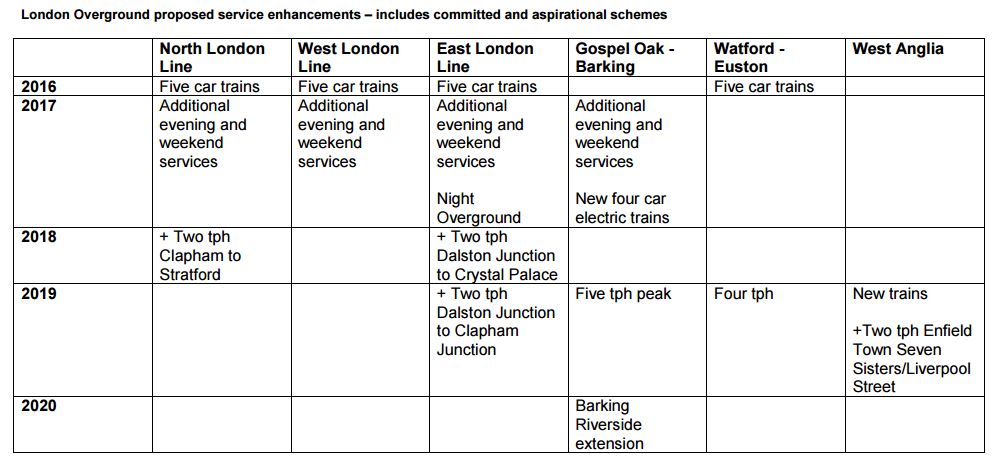
Note the extra two trains per hour (tph) between the following stations.
- Clapham Junction and Stratford
- Dalston Junction and Crystal Palace
- Dalston Junction and Clapham Junction
- Enfield Town and Liverpool St. via Seven Sisters
I think only Route 1 services have been increased.
I know signalling updates are holding up the extra trains on the East London Line, but are more trains needed to fully implement the extra services?
- Routes 2 and 3 services will need Class 378 trains because of the tunnel and these would be transferred from the North London Line.
- Route 4 would need Class 710 trains, as the service already uses them.
So there may be a need for more Class 710 trains.
West London Orbital Railway
The graphic doesn’t mention the West London Orbital Railway.
- There would be two routes between West Hampstead and Hounslow and Hendon and Kew Bridge using the Dudding Hill Line.
- The tracks already exist.
- Some new platforms and stations would be needed.
- The route would probably need improved signalling.
- Four tph on both routes would probably be possible.
- The West London Orbital Railway would connect to the Great Western Railway, the North London and Elizabeth Lines and High Speed Two at Old Oak Common station.
I believe it could be run by battery-electric versions of either the Class 378 or Class 710 trains. This would avoid electrification.
As some commentators have suggested that the West London Orbital Railway and the Gospel Oak and Barking Line would be connected, I would expect that new battery-electric Class 710 trains would be used.
Adding On-board Energy Storage To The Class 378 Trains
In Will London Overground Fit On-board Energy Storage To Class 378 Trains?, I asked whether it would be worthwhile.
I finished with these two sentences.
I have no idea how much electricity would be saved by regenerative braking on the London Overground, but various applications of regenerative braking technology talk of electricity savings of between ten and twenty percent.
I think it is only a matter of time before the technology is proven to be sufficiently reliable and the numbers add up correctly for the Class 378 trains to be fitted with on-board energy storage.
What would be the advantages from fitting on-board energy storage?
- There would be the savings of electricity by the use of regenerative braking to the batteries.
- Trains could be rescued from the Thames Tunnel, if there was a power failure.
- Hotel power would be maintained, if there was a power failure.
- Trains can be moved in depots and sidings without power.
- Trains would be able to move in the event of cable theft.
- Short route extensions might be possible.
- Could battery power be used to serve Euston during the rebuilding process for High Speed Two?
- Do Network Rail want to remove third-rail electrification from Euston station for safety or cost reasons?
There could be a saving in train operating costs.
We know the trains are coming up for a new lease.
Suppose the leasing company fitted them with new batteries and some other customer-friendly improvements like new seat covers, better displays, litter bins, power sockets and wi-fi.
- The leasing company would be able to charge more, as they have added value to the trains.
- TfL would be saving money due to less of an electricity bill.
- The passenger numbers might increase due to the extra customer-friendly features.
- Electrification might be removed from places where theft is a problem.
- Third-rail electrification could be removed from Euston station. It’s only 2.8 miles to South Hampstead station, where third-rail electrification already exists.
Get it right and passengers, TfL, Network Rail and the leasing company would all be winners.
Could The Fenchurch Street And Grays Service Be Handed Over To The Elizabeth Line?
Before I discuss the suggestion in the title of this post, I will write down some thoughts.
The Capacity And Connection Problems At Fenchurch Street Station
If you read the Wikipedia entry for Fenchurch Street station, this paragraph sums up some of the problems of the station.
Fenchurch Street is one of the smallest railway terminals in London in terms of platforms, but one of the most intensively operated. It is the only London terminal with no direct interchange with the London Underground. Plans to connect it stalled in the early 1980s because of the lack of progress on the Jubilee line, but it is close to Tower Hill on the Underground and to Tower Gateway on the Docklands Light Railway.
I live in Dalston and if I want to use the services out of Fenchurch Street station to get anywhere it is a struggle.
As all services out of Fenchurch Street station stop at Limehouse, West Ham and Barking stations on the approach into London, I will usually go via either West Ham or Barking stations. As the three services out of Fenchurch Street are each two trains per hour (tph), this can mean a near-thirty minute wait at either West Ham or Barking stations, which at some times of the year are not the most customer-friendly of stations.
More services out of Fenchurch Street station would help to ease the problem, but the station is at capacity and nothing short of a complete rebuild of the station will solve the problems the capacity and connectivity..
There is a section called Future in the Wikipedia entry, where this is said.
There have been proposals to move the station 380 yards to the east to allow the station to expand to 6 platforms, (up from the current 4) and would be built partly on the site of Tower Gateway DLR station, which would likely be permanently closed.
The new station could be built with direct interchange with Tower Hill tube station, which could also have a replacement DLR station for Tower Gateway as Transport for London have looked into closing Tower Gateway and constructing a replacement on the Bank branch to increase capacity.
This project sounds like it would take a long time and cause a lot of disruption and inconvenience. But it would add capacity and connectivity.
This Google Map shows the location of the station.
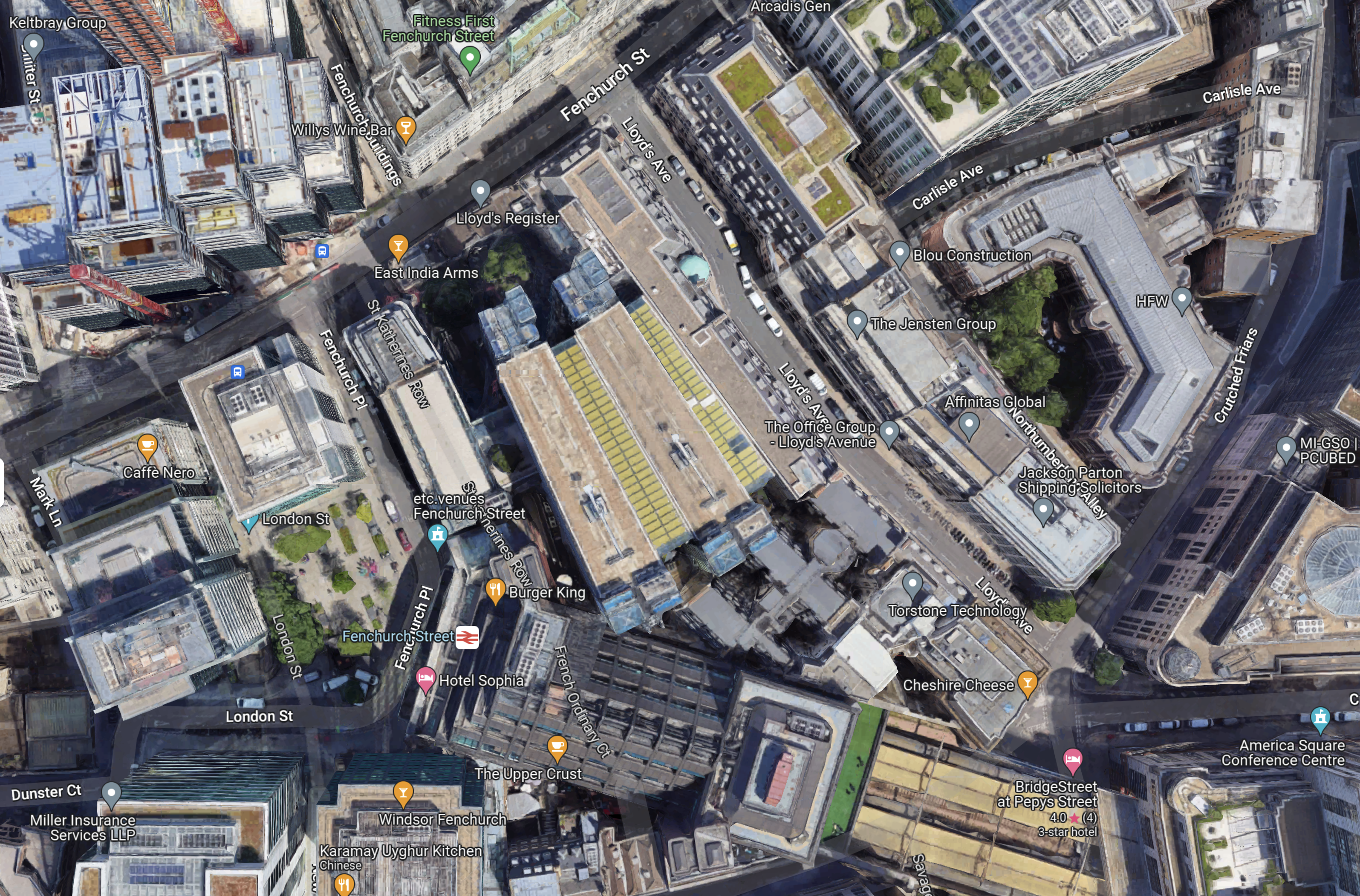
Note.
- Fenchurch Street station is towards the bottom of the map in the centre.
- It is completely hemmed in by buildings.
- There is just a small square in front.
I feel it would be very difficult to rebuild a larger station in the same place.
Services Into Fenchurch Street Station
Currently, there are three services into Fenchurch Street station.
- Fenchurch Street and Shoeburyness via Limehouse, West Ham, Barking, Upminster, West Horndon, Laindon, Basildon, Pitsea, Leigh-on-Sea, Chalkwell, Westcliff, Southend Central, Southend East and Thorpe Bay.
- Fenchurch Street and Southend Central via Limehouse, West Ham, Barking, Upminster, Ockendon, Chafford Hundred Lakeside, Grays, Tilbury Town, East Tilbury, Stanford-le-Hope, Pitsea, Leigh-on-Sea, Chalkwell and Westcliff
- Fenchurch Street and Grays via Limehouse, West Ham, Barking, Dagenham Dock, Rainham and Purfleet.
Note.
- All services are two tph.
- All services call at Limehouse, West Ham and Barking.
Each station gets the following frequency of trains.
- Barking – 6 tph
- Basildon – 2 tph
- Benfleet – 2 tph
- Chafford Hundred Lakeside – 2 tph
- Chalkwell – 4 tph
- Dagenham Dock – 2 tph
- East Tilbury – 2 tph
- Grays – 4 tph
- Laindon – 2 tph
- Leigh-in-Sea – 4 tph
- Limehouse – 6 tph
- Ockendon – 2 tph
- Pitsea – 4 tph
- Purfleet – 2 tph
- Rainham – 2 tph
- Southend Central – 4 tph
- Southend East – 2 tph
- Stanford-le-Hope – 2 tph
- Thorpe Bay – 2 tph
- Tilbury Town – 2 tph
- Upminster – 4 tph
- Westcliff – 4 tph
- West Ham – 6 tph
- West Horndon – 2 tph
c2c would appear to be offering a service, that is well-balanced about the stations it serves.
Can Elizabeth Line Trains Reach Barking?
This map from cartometro.com shows Woodgrange Park junction, where the Gospel Oak and Barking Line crosses over the Great Eastern Main Line.
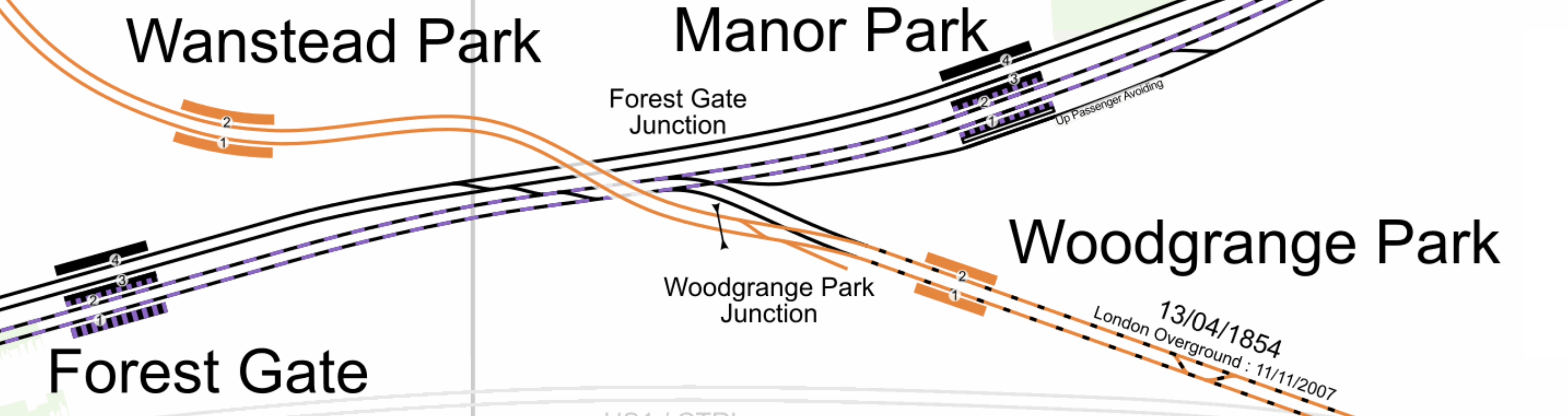
Note.
- The Gospel Oak and Barking Line is shown in orange.
- Gospel Oak station is to the North-West and Barking is to the South-East.
- The Elizabeth Line tracks are shown with a dash of purple.
- It looks to me, that a train on the Elizabeth Line going East could come through Platform 2 in Forest Gate station and then take the Gospel Oak and Barking Line through Platform 2 at Woodgrange Park station.
- It also looks as if trains could go through Platform 1 at both Woodgrange Park and Forest Gate stations to go West on the Elizabeth Line.
I don’t know whether they still do, but c2c trains used to use Woodgrange Park junction to access Liverpool Street station, when Fenchurch Street was closed or at weekends.
At Barking station, they would take the flyover over the station call in Platforms 7 and 8 in the station.
From the Eastern ends of Platforms 7 and 8, trains can use one of three routes.
- The London Overground route to Barking Riverside station.
- The c2c route to Grays via Purfleet.
- The c2c route to Upminster.
Note.
- The platforms at Barking Riverside station are probably too short for the Elizabeth Line trains.
- The Class 345 trains would fit into the bay platforms at Grays and Southend Central.
The simplest thing to do would probably be to divert the two tph between Fenchurch Street and Grays to either Liverpool Street or Paddington at the London end.
Each station would now get the following frequency of trains.
- Barking – 6 tph
- Basildon – 2 tph
- Benfleet – 2 tph
- Chafford Hundred Lakeside – 2 tph
- Chalkwell – 4 tph
- Dagenham Dock – 2 tph
- East Tilbury – 2 tph
- Grays – 4 tph
- Laindon – 2 tph
- Leigh-in-Sea – 4 tph
- Limehouse – 4 tph
- Ockendon – 2 tph
- Pitsea – 4 tph
- Purfleet – 2 tph
- Rainham – 2 tph
- Southend Central – 4 tph
- Southend East – 2 tph
- Stanford-le-Hope – 2 tph
- Thorpe Bay – 2 tph
- Tilbury Town – 2 tph
- Upminster – 4 tph
- Westcliff – 4 tph
- West Ham – 4 tph
- West Horndon – 2 tph
Only Limehouse and West Ham would get fewer trains.
But there would surely, be an extra pair of paths between Fenchurch Street and Barking.
I have also looked at trains through Pitsea, Upminster and Westcliff it appears that nearly all of the traffic is c2c’s passenger trains.
So would it be possible, with perhaps improved signalling to add an extra two trains between Fenchurch Street and Shoeburyness?
Each station would now get the following frequency of trains.
- Barking – 8 tph
- Basildon – 4 tph
- Benfleet – 4 tph
- Chafford Hundred Lakeside – 2 tph
- Chalkwell – 6 tph
- Dagenham Dock – 2 tph
- East Tilbury – 2 tph
- Grays – 4 tph
- Laindon – 4 tph
- Leigh-in-Sea – 6 tph
- Limehouse – 6 tph
- Ockendon – 2 tph
- Pitsea – 6 tph
- Purfleet – 2 tph
- Rainham – 2 tph
- Shoeburyness – 4 tph
- Southend Central – 6 tph
- Southend East – 4 tph
- Stanford-le-Hope – 2 tph
- Thorpe Bay – 2 tph
- Tilbury Town – 2 tph
- Upminster – 4 tph
- Westcliff – 6 tph
- West Ham – 6 tph
- West Horndon – 4 tph
More stations are getting four and six tph.
Conclusion
There are certainly possibilities to improve c2c by running services on the Elizabeth Line route.
A Quality Takeaway With A Station And A Large Garden
It was cold today and on walking from the Hanover Square entrance to Bond Street station to the Marks and Spencer store on Oxford Street, I came across this Leon, where I had a hot chocolate.




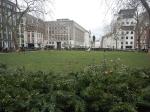

Is this the ultimate pit-stop on the Elizabeth Line?
 The Anonymous Widower