Hydrogen Super-Hub May Be Headed To UK’s Port Of Southampton
The title of this post, is the same as that of this article on Hydrogen Fuel News.
It is an interesting article and behind Southampton’s move is this proposition.
The hope is that making the location a hydrogen super-hub would greatly reduce its CO2 emissions.
This paragraph, explains what they will do.
This location would not focus on green H2, but would instead use carbon capture, usage, and storage (CCUS) technology to cut back on the CO2 emissions produced through this hydrogen fuel production. In this way, it would provide a zero-emission fuel while decarbonizing much of the process of its creation. It would provide that locally produced fuel to industries and activities that are currently highly polluting.
Note.
- They are not going to generate green hydrogen, which is usually produced by electrolysis using renewable energy.
- So how will they create hydrogen?
- Increasingly, carbon capture, usage, and storage (CCUS) is being talked about, rather than just carbon capture and storage (CCS). Surely, this is an improvement.
- Will we see hydrogen-powered tugs and boats used by the port?
This could be a good move by the Port of Southampton.
Engineers Go Microbial To Store Energy, Sequester CO2
The title of this post, is the same as that of this article on the Cornell Chronicle.
This is the first two paragraphs.
By borrowing nature’s blueprints for photosynthesis, Cornell bioengineers have found a way to efficiently absorb and store large-scale, low-cost renewable energy from the sun – while sequestering atmospheric carbon dioxide to use later as a biofuel.
The key: Let bioengineered microbes do all the work.
This is slave labour, that even the most ardent of Human and Animal Rights activists would approve.
This is technology to watch!
Nippon Steel Pledges To Be Carbon Neutral By 2050
The title of this post, is the same as that of this article on NikkeiAsia.
These are the first two paragraphs.
Nippon Steel has set a goal to reach net-zero emission by 2050, Nikkei learned on Thursday, a move that could nudge other manufacturers to try to meet Prime Minister Yoshihide Suga’s pledge to achieve carbon neutrality across the country by the same year.
Nippon Steel, Japan’s biggest steelmaker, will introduce a new way of steelmaking using hydrogen which can reduce carbon emissions by up to 80% compared with conventional methods of production. The steelmaker’s new green target will be unveiled in a business plan it is currently drafting which will be published by March 2021.
To my mind, hydrogen is the way to go!
Diesel-Battery Hybrid TER Train To Be Tested Next Year
The title of this post, is the same as that of this article on Railway Gazette International.
These are the two introductory paragraphs.
Testing of a Coradia Polyvalent electro-diesel regional trainset fitted with a battery hybrid traction system is to begin early next year and passenger services are planned for 2022, Alstom has announced.
Two of the trainset’s four diesel engines are to be replaced by lithium-ion batteries, which will be used to recover and store braking energy for reuse. It is hoped that this will reduce energy consumption and greenhouse gas emissions by 20%, as well as reducing operating and maintenance costs.
Other points from the article.
- Testing is planned for 2021, with service entry, the year after.
- There are 300 of these Polyvalent trains in service.
- TER trains will stop using diesel by 2030.
- France intends to run its last diesel train in 2035.
It looks like Alstom are using a similar approach to that of Hitachi in the UK.
It looks like the French are ahead of us in the decarbonisation timetable for rail.
Northern Powerhouse Rail – Significant Upgrades And Electrification Of The Rail Lines From Leeds And Sheffield To Hull
In this article on Transport for the North, which is entitled Northern Powerhouse Rail Progress As Recommendations Made To Government, one of the recommendations proposed for Northern Powerhouse Rail is significant upgrades and electrification of the rail lines from Leeds and Sheffield to Hull.
Northern Powerhouse Rail’s Objective For The Leeds and Hull Route
Wikipedia, other sources and my calculations say this about the trains between Leeds and Hull.
- The distance between the two stations is 51.7 miles
- The current service takes around 57 minutes and has a frequency of one train per hour (tph)
- This gives an average speed of 54.4 mph for the fastest journey.
- The proposed service with Northern Powerhouse Rail will take 38 minutes and have a frequency of two tph.
- This gives an average speed of 81.6 mph for the journey.
This last figure of nearly 82 mph, indicates to me that a 100 mph train will be able to meet Northern Powerhouse Rail’s objective.
Northern Powerhouse Rail’s Objective For The Sheffield and Hull Route
Wikipedia, other sources and my calculations say this about the trains between Sheffield and Hull.
- The distance between the two stations is 59.4 miles
- The current service takes around 80 minutes and has a frequency of one tph.
- This gives an average speed of 44.6 mph for the fastest journey.
- The proposed service with Northern Powerhouse Rail will take 50 minutes and have a frequency of two tph.
- This gives an average speed of 71,3 mph for the journey.
This last figure of over 70 mph, indicates to me that a 90 mph train will be able to meet Northern Powerhouse Rail’s objective.
Services From Hull Station
Hull station is a full interchange, which includes a large bus station.
- Currently, the station has seven platforms.
- There appears to be space for more platforms.
- Some platforms are long enough to take nine-car Class 800 trains, which are 234 metres long.
- There are some good architectural features.
If ever there was a station, that had basic infrastructure, that with appropriate care and refurbishment, could still be handling the needs of its passengers in a hundred years, it is Hull.
- It would be able to handle a 200 metre long High Speed Two Classic-Compatible train, tomorrow.
- It would probably be as no more difficult to electrify than Kings Cross, Liverpool Lime Street, Manchester Piccadilly or Paddington.
- It would not be difficult to install charging facilities for battery electric trains.
These are some pictures of the station.
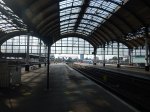
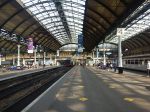




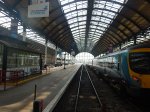

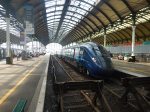

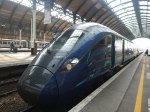
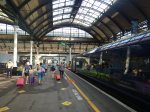
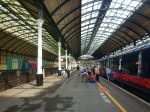
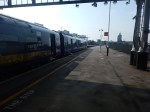
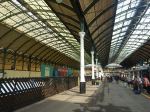
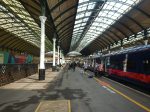
Currently, these are the services at the station, that go between Hull and Leeds, Selby or Sheffield.
- Hull Trains – 7 trains per day (tpd) – Hull and London via Brough, Selby and Doncaster.
- LNER – 1 tpd – Hull and London via Brough, Selby and Doncaster.
- Northern Trains – 1 tph – Hull and Halifax via Brough, Selby, Leeds and Bradford Interchange.
- Northern Trains – 1 tph – Hull and Sheffield via Brough, Gilberdyke, Goole, Doncaster, Rotherham Central and Meadowhall.
- Northern Trains – 1 tph – Hull and York via Brough and Selby.
- Northern Trains – 1 tph – Bridlington and Sheffield via Hull, Brough, Goole, Doncaster and Meadowhall.
- TransPennine Express – 1 tph – Hull and Manchester Piccadilly or Manchester Airport via Brough, Selby, Leeds, Huddersfield and Stalybridge.
Note.
- I have included services through Selby, as the station is on the way to Leeds and is a notorious bottleneck.
- All services go through Brough.
- All trains work on diesel power to and from Hull.
- Hull Trains and LNER use Hitachi bi-mode trains, that work most of the route to and from London, using the 25 KVAC overhead electrification.
- Northern use a variety of diesel trains only some of which have a 100 mph operating speed.
There would also appear to be freight trains working some of the route between Hull and Brough stations.
Upgrading The Tracks
I very much believe that to meet Northern Powerhouse Rail’s objectives as to time, that the lines to Hull from Leeds and Sheffield must have a 100 mph operating speed.
Hull And Leeds And On To London
This Google Map shows a typical section of track.
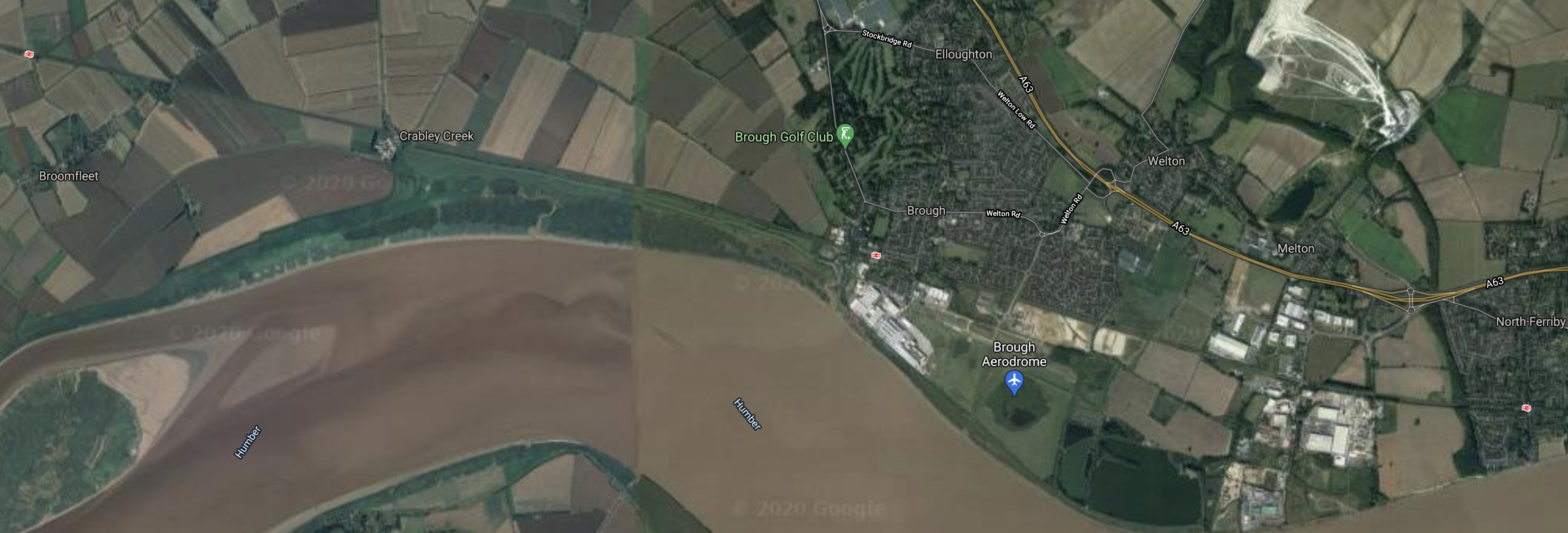
Note.
- Broomfleet station is in the North-West corner of the map.
- Brough station is just to the East of the middle of the map.
- Ferriby station is in the South-East corner of the map.
The Hull and Selby Line is fairly straight for most of its route.
The Selby Swing Bridge
The main problem is the Selby swing bridge, which is shown in this Google Map.
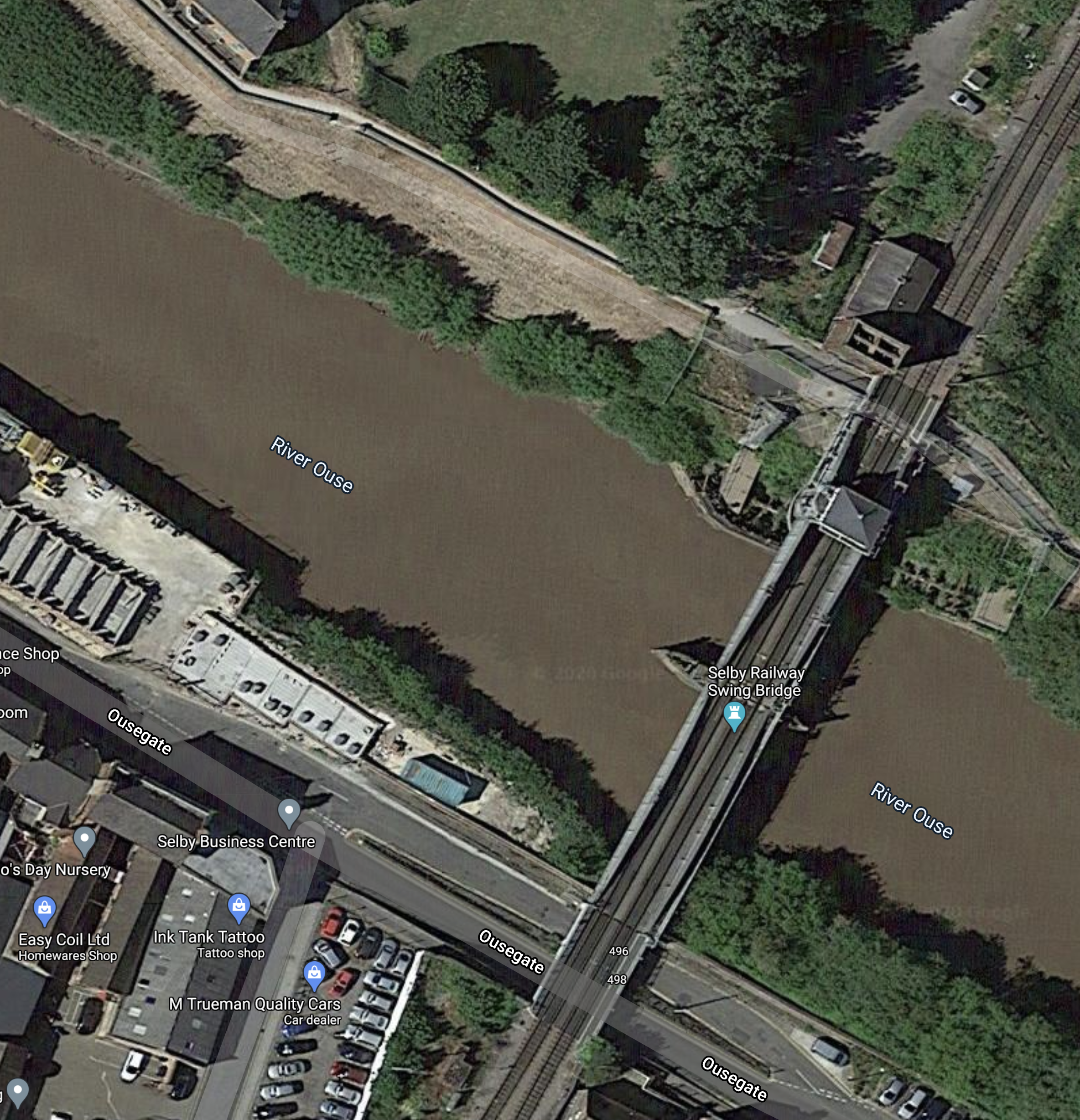
Note.
- The bridge was opened in 1891.
- It is a Grade II Listed structure.
- It is a double-track bridge.
- It swings through ninety degrees to allow ships to pass through.
- It has a low speed limit of 25 mph.
- The bridge regularly carries the biomass trains to Drax power station.
This page on the Fairfield Control Systems web site, describes the major refurbishment of the bridge.
- The bridge structure has been fully refurbished.
- A modern control system has been installed.
- The page says the bridge glides to an exact stop.
Network Rail are claiming, it will be several decades before any more work needs to be done on parts of the bridge.
It looks to me, that Network Rail have decided to live with the problems caused by the bridge and automate their way round it, if possible.
Level Crossings
One general problem with the route between Hull and Selby is that it has around a dozen level crossing, some of which are just simple farm crossings.
The main route West from Selby goes to Leeds and it is double track, fairly straight with around a dozen level crossings.
West from Selby, the route to the East Coast Main Line to and from London is also double track and reasonably straight.
But it does have level crossings at Common Lane and Burn Lane.
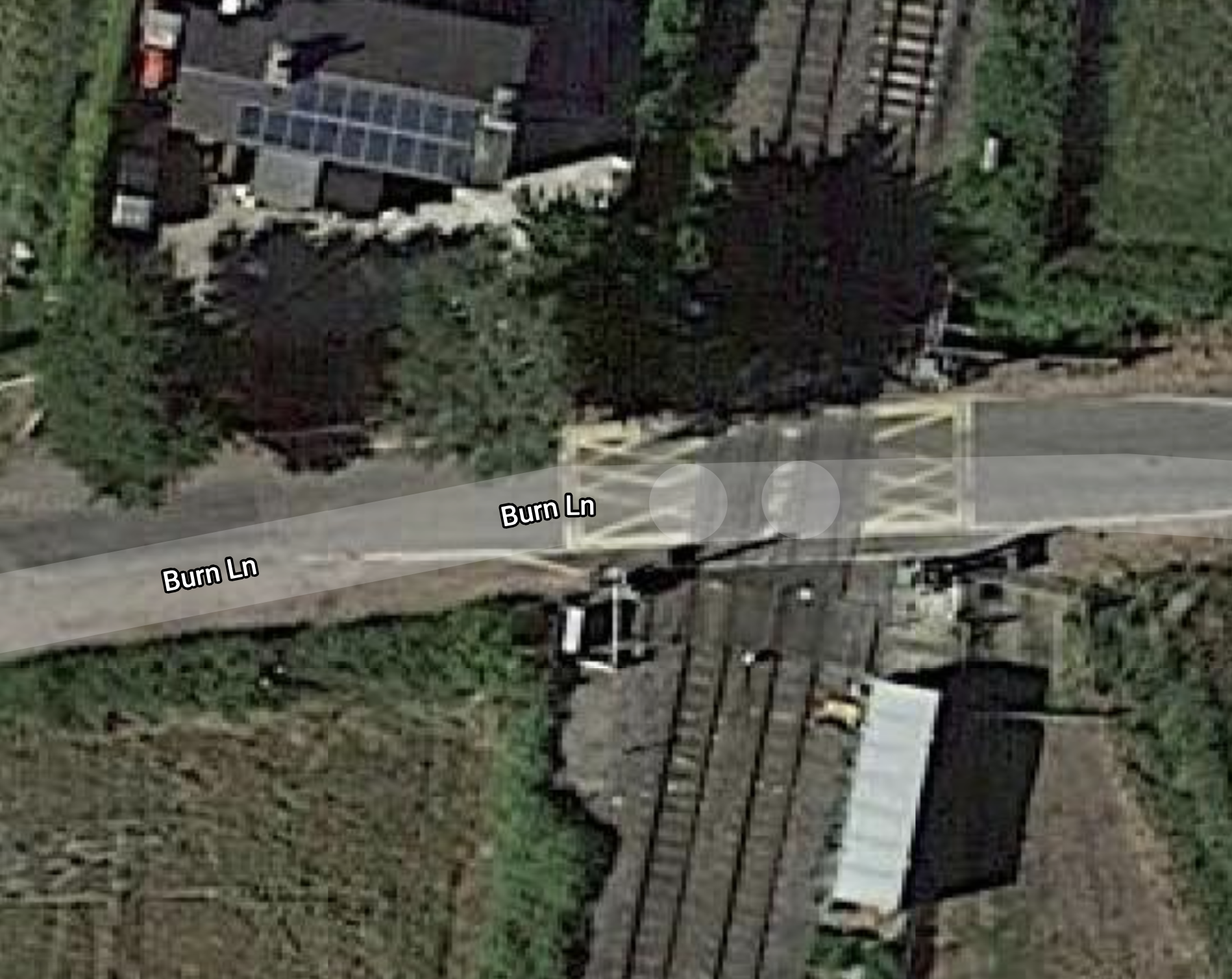
The Google Map show Burn Lane level crossing, which is typical of many in the area.
Hull And Sheffield
The other route West from Hull goes via Goole and Doncaster.
This Google Map shows the Hull and Doncaster Branch between Goole and Saltmarshe stations.
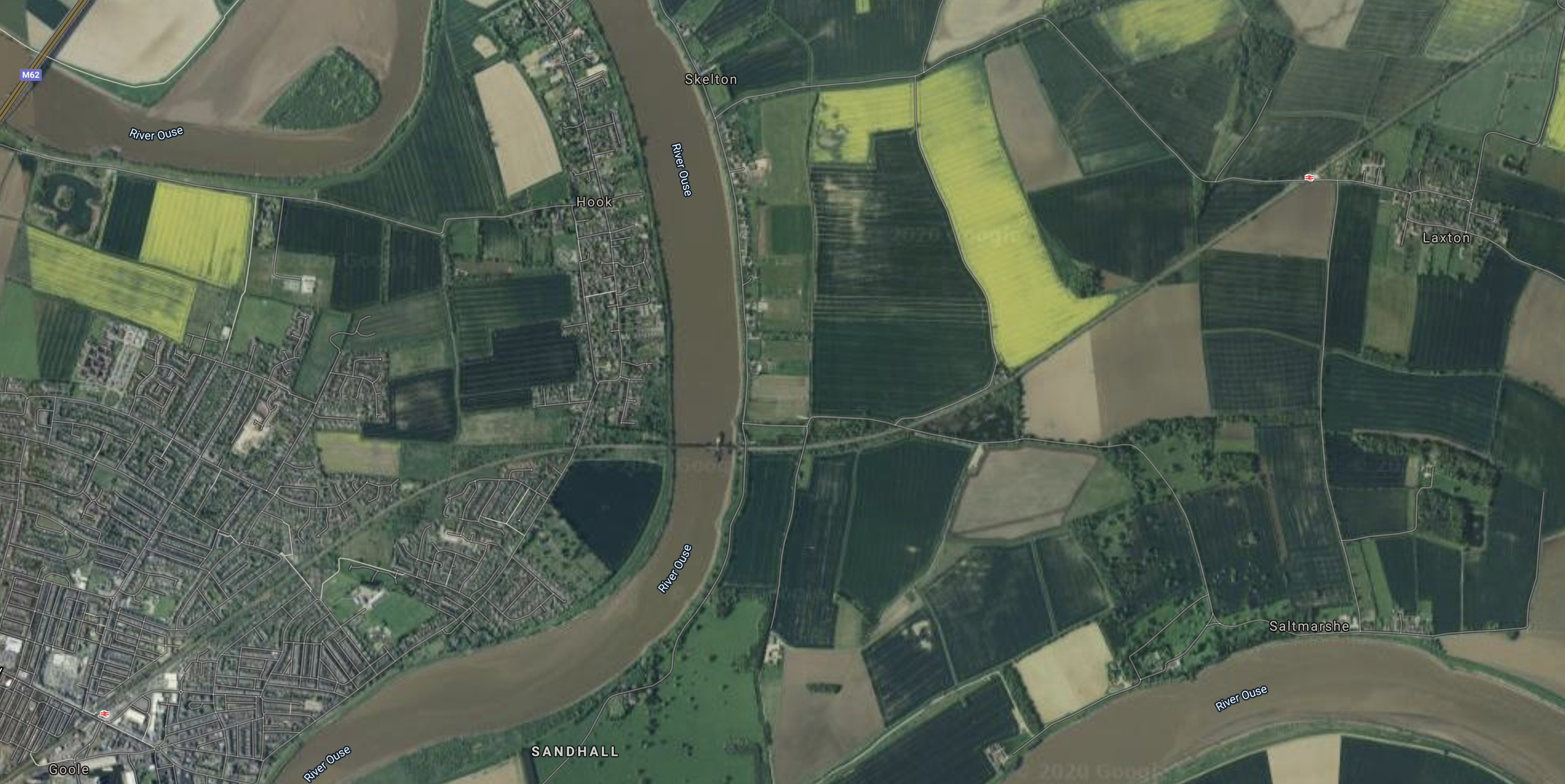
Note.
- The Hull and Doncaster Branch runs diagonally across the map.
- Goole and its station is in the South West corner of the map.
- The Hull and Doncaster Branch goes leaves the map at the North-East corner and then joins the Selby Line to the West of Gilberdyke station.
This Google Map shows that where the railway crosses the River Ouse there is another swing bridge.
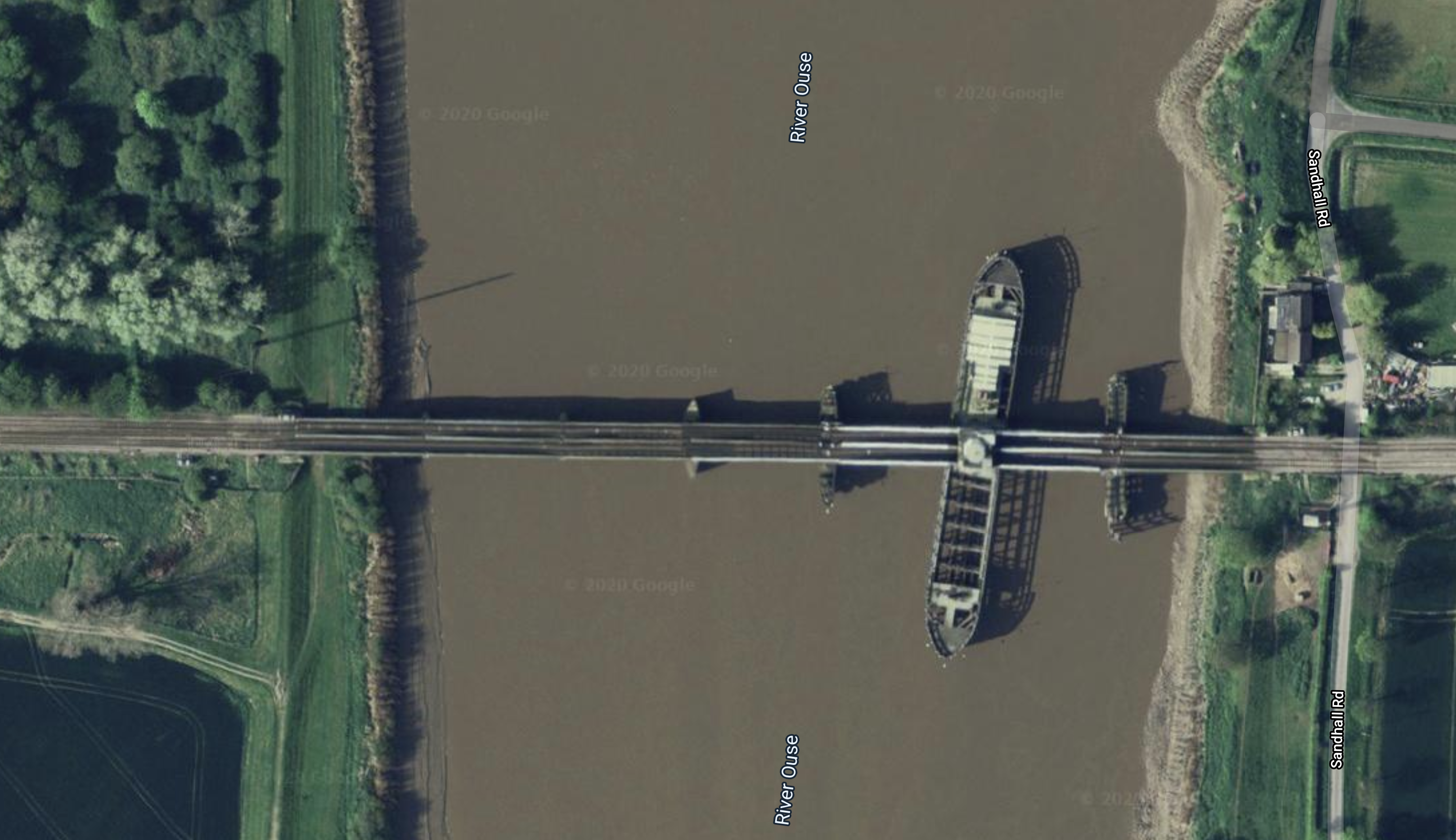
This is the Goole Railway Swing Bridge.
- The bridge was opened in 1869.
- The maximum speed for any train is 60 mph, but some are slower.
- It is a Grade II* Listed structure.
- In the first decade of this century the bridge was strengthened.
- It appears to carry a lesser number of freight trains than the Selby bridge
As with the Selby bridge, it appears to be working at a reasonable operational standard.
I’ve followed the line as far as Doncaster and it is fairly straight, mostly double-track with about a half-a-dozen level crossings.
Updating To 100 mph
It looks to my naïve eyes, that updating the lines to an operating speed of 100 mph, should be possible.
But possibly a much larger problem is the up to thirty level crossings on the triangle of lines between Hull, Leeds and Sheffield.
Full ERTMS In-Cab Digital Signalling
This is currently, being installed between London and Doncaster and will allow 140 mph running, which could save several minutes on the route.
The next phase could logically extend the digital signalling as far as York and Leeds.
Extending this signalling to Hull and Sheffield, and all the lines connecting the cities and towns of East Yorkshire could be a sensible development.
It might even help with swing bridges by controlling the speed of approaching trains, so that they arrive at the optimal times to cross.
Electrification
Eventually, all of these routes will be fully electrified.
- Hull and Leeds via Brough, Selby and Garforth.
- Hull and Scarborough via Beverley and Seamer.
- Hull and Sheffield via Brough, Goole, Doncaster and Rotherham.
- Hull and York via Brough and Selby.
- York and Scarborough via Seamer.
But there are two problems which make the electrification of the routes to Hull challenging.
- The Grade II Listed Selby swing bridge.
- The Grade II* Listed Goole Railway swing bridge.
There will be diehard members of the Heritage Lobby, who will resist electrification of these bridges.
Consider.
- Both bridges appear to work reliably.
- Adding the complication of electrification may compromise this reliability.
- Train manufacturers have developed alternative zero-carbon traction systems that don’t need continuous electrification.
- Hitachi have developed battery electric versions of the Class 800 and Class 802 trains, that regularly run to and from Hull.
- Other manufacturers are developing hydrogen-powered trains, that can use both hydrogen and overhead electrification for traction power.
My Project Management experience tells me, that electrification of these two bridges could be the major cost and the most likely cause of delay to the completion of the electrification.
It should also be noted that Network Rail are already planning to electrify these routes.
- Huddersfield and Dewsbury on the TransPennine Route, which might be extended to between Huddersfield and Leeds.
- York and Church Fenton
There is also electrification at Doncaster, Leeds and York on the East Coast Main Line, which would probably have enough power to feed the extra electrification.
Hitachi’s Regional Battery Trains
Hitachi and Hyperdrive Innovation are developing a Regional Battery Train.
This Hitachi infographic gives the specification.

Note.
- The train has a range of 90 kilometres or 56 miles on battery power.
- It has an operating speed of 100 mph on battery power.
- Class 800 and Class 802 trains can be converted to Hitachi Regional Battery Trains, by swapping the diesel engines for battery packs.
When running on electrification, they retain the performance of the train, that was converted.
Discontinuous Electrification
I would propose using discontinuous electrification. by electrifying these sections.
- Hull and Brough – 10.5 miles
- Hull and Beverley – 13 miles
- Doncaster and Sheffield – 20 miles
- Selby and Leeds – 21 miles
- Selby and Temple Hirst Junction – 5 miles
- Seamer and Scarborough – 3 miles
This would leave these gaps in the electrification in East Yorkshire.
- Brough and Doncaster – 30 miles
- Brough and Selby – 21 miles
- Brough and Church Fenton – 31 miles
- Seamer and Beverley – 42 miles
- Seamer and York – 39 miles
A battery electric train with a range of fifty miles would bridge these gaps easily.
This approach would have some advantages.
- There would only need to be 72.5 miles of double-track electrification.
- The swing bridges would be untouched.
- TransPennine services terminating in Hull and Scarborough would be zero-carbon, once Huddersfield and Dewsbury is electrified.
- LNER and Hull Trains services to London Kings Cross would be zero-carbon and a few minutes faster.
- LNER could run a zero-carbon service between London Kings Cross and Scarborough.
But above all, it would cost less and could be delivered quicker.
Collateral Benefits Of Doncaster and Sheffield Electrication
The extra electrification between Doncaster and Sheffield, would enable other services.
- A zero-carbon service between London Kings Cross and Sheffield.
- Extension of Sheffield’s tram-train to Doncaster and Doncaster Sheffield Airport.
- A possible electric service along the Dearne Valley.
As plans for Sheffield’s rail and tram system develop, this electrification could have a substantial enabling effect.
Hydrogen
This map shows the Zero Carbon Humber pipeline layout.

Note.
- The orange line is a proposed carbon dioxide pipeline
- The black line alongside it, is a proposed hydrogen pipeline.
- Drax, Keadby and Saltend are power stations.
- Easington gas terminal is connected to gas fields in the North Sea and also imports natural gas from Norway using the Langeled pipeline.
- There are fourteen gas feels connected to Easington terminal. Some have been converted to gas storage.
I can see hydrogen being used to power trains and buses around the Humber.
Conclusion
Discontinuous electrification could be the key to fast provision of electric train services between Leeds and Sheffield and Hull.
If long journeys from Hull were run using battery electric trains, like the Hitachi Regional Battery Train, perhaps hydrogen trains could be used for the local services all over the area.
Project Management Recommendations
I have proposed six sections of electrification, to create a network to allow all services that serve Hull and Scarborough to be run by battery electric trains.
Obviously with discontinuous electrification each section or group of sections to be electrified is an independent project.
I proposed that these sections would need to be electrified.
- Hull and Brough – 10.5 miles
- Hull and Beverley – 13 miles
- Doncaster and Sheffield – 20 miles
- Selby and Leeds – 21 miles
- Selby and Temple Hirst Junction – 5 miles
- Seamer and Scarborough – 3 miles
They could be broken down down into four sections.
- Hull station, Hull and Brough and Hull and Beverley
- Doncaster and Sheffield
- Selby station, Selby and Leeds and Selby and Temple Hirst Junction.
- Scarborough station and Scarborough and Seamer.
I have split the electrification, so that hopefully none is challenging.
EC To Consider Hydrogen Produced From Nuclear Power As Low-Carbon
The title of this post, is the same as that of this article on Nuclear Engineering International.
This is the opening paragraph.
The European Commission (EC) will consider hydrogen produced from nuclear power as “low-carbon”, Paula Abreu Marques, head of unit for renewables and CCS policy told the European Commission’s energy directorate. “Electrolysis can be powered by renewable electricity, which would then be classified as renewable hydrogen,” she said.
I think that those advocating this have a point, as no carbon-dioxide will be released once the nuclear plant has been built.
This type of hydrogen is referred to as purple hydrogen in the article.
I wonder how costs will compare with Shell’s new process, that I wrote about in Shell Process To Make Blue Hydrogen Production Affordable.
Conclusion
Nuclear power used to generate hydrogen with electrolysers could be a valuable way to generate hydrogen for transport needs, in a country that because of geography can’t generate a lot of electricity from renewables. A farm of small modular nuclear reactors linked to a large electrolyser could be the most affordable way to satisfy their needs.
It could also be a way for an industrial company to generate large amounts of hydrogen for steelmaking or an integrated chemical plant.
Hyundai And Ineos To Co-operate On Driving Hydrogen Economy Forward
The title of this post, us the same as that of this article on Yahoo News.
This is the introductory paragraph.
Chemicals giant Ineos has announced a new agreement with Korean car firm Hyundai aimed at developing the production of hydrogen.
I find this an interesting tie-up between two large companies.
I first came across Hyundai, when they were working on large projects in Saudi Arabia in the early 1980s, where Artemis was being used for the project management.
From what it says in the article, the two companies are a good fit for the hydrogen market.
- Hyundai has the hydrogen fuel cell technology, that INEOS needs for its Land-Rover Defender-type vehicle.
- INEOS has the hydrogen production technology.
- INEOS produces 300,000 tonnes of hydrogen per year.
This deal could be a a small deal over technology or a large deal that could transform the manufacture and fuelling of hydrogen-powered transportation from small cars to large ships with trains, buses and trucks in between.
H2U Eyre Peninsula Gateway Hydrogen Project Begins Largest Green Ammonia Plant
The title of this post, is the same as that of this article on Hydrogen Fuel News.
- South Australia will be creating the largest green ammonia plant in the world.
- It will make 40,000 tonnes of green ammonia every year.
- The plant will be powered totally by renewable energy.
- At its heart will be a 75 MW hydrogen electrolyser.
This paragraph sums up the main objective of the plant.
According to Dr. Attilio Pigneri, H2U CEO, the project will play an important role in the ongoing development of the emerging green hydrogen and green ammonia markets.
It appears a lot of the green ammonia will be exported to Japan.
What Is Green Ammonia?
It is just ammonia produced by renewable energy. This is the first paragraph of the Wikipedia entry for ammonia.
Ammonia is a compound of nitrogen and hydrogen with the formula NH3. A stable binary hydride, and the simplest pnictogen hydride, ammonia is a colourless gas with a characteristic pungent smell. It is a common nitrogenous waste, particularly among aquatic organisms, and it contributes significantly to the nutritional needs of terrestrial organisms by serving as a precursor to food and fertilizers. Ammonia, either directly or indirectly, is also a building block for the synthesis of many pharmaceutical products and is used in many commercial cleaning products. It is mainly collected by downward displacement of both air and water.
It is a very useful chemical compound and it is now being developed as a zero-carbon fuel, as I wrote in The Foul-Smelling Fuel That Could Power Big Ships.
It can also be used as a refrigerant.
One of the most amazing pieces of engineering, I ever saw was a very old barn, where a farmer stored vast tonnages of apples. It was kept cool, by a refrigeration plant certainly built before the Second World War or possibly even the First, which used ammonia as the refrigerant.
Now that’s what I call engineering!
A Trip To Grantham Station – 4th November 2020
I hadn’t intended to go to Grantham station, but that’s what I did on the last day before lockdown.
Over the last couple of weeks, I’ve been talking to a guy in Lincolnshire, who read Energy In North-East Lincolnshire, on this blog.
Last week, we both realised that we’d worked together in the 1970s, when he worked at a bank in the City, and I did some data analysis for the section, where he worked.
He is unwell with cancer at the moment and suggested I come down and see him in Skegness, where he now lives with his wife.
So I arrived at Grantham and found that the connecting train was running nearly an hour late and even then it was terminating at Boston.
After a quick exchange of texts, I told him the bad news and he gave me the good news, that his condition had improved and would be able to see me after Christmas and/or lockdown.
Luckily, I was able to change my ticket and took the next train back to London, after taking these pictures of the station.
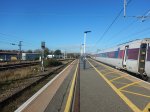
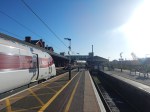
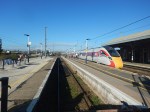
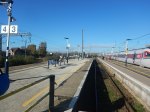
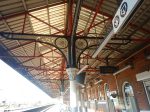
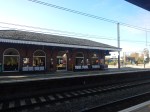
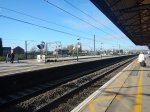
I just had time to have a last drink of Aspall cyder before lockdown, in the station bar.
These are some thoughts.
Platform Layout At Grantham
The Wikipedia entry for Grantham station says this about the platforms.
It is composed of four platforms; platforms 1 and 2 are on the East Coast Main Line and are responsible for express services between London and Scotland. Platform 1 serves exclusively London King’s Cross via Peterborough and Stevenage; Platform 2 serves cities of northern England and Edinburgh. Platform 2, 3 and 4 are formed from a large island platform structure. Platform 3 is a bay platform at the northern end of the station that is used to allow local trains to reverse, while Platform 4 is a two-way platform that is used by East Midlands Railway. Only Platform 1 has amenities, including toilets, refreshments and a buffet.
This Google Map shows the station.
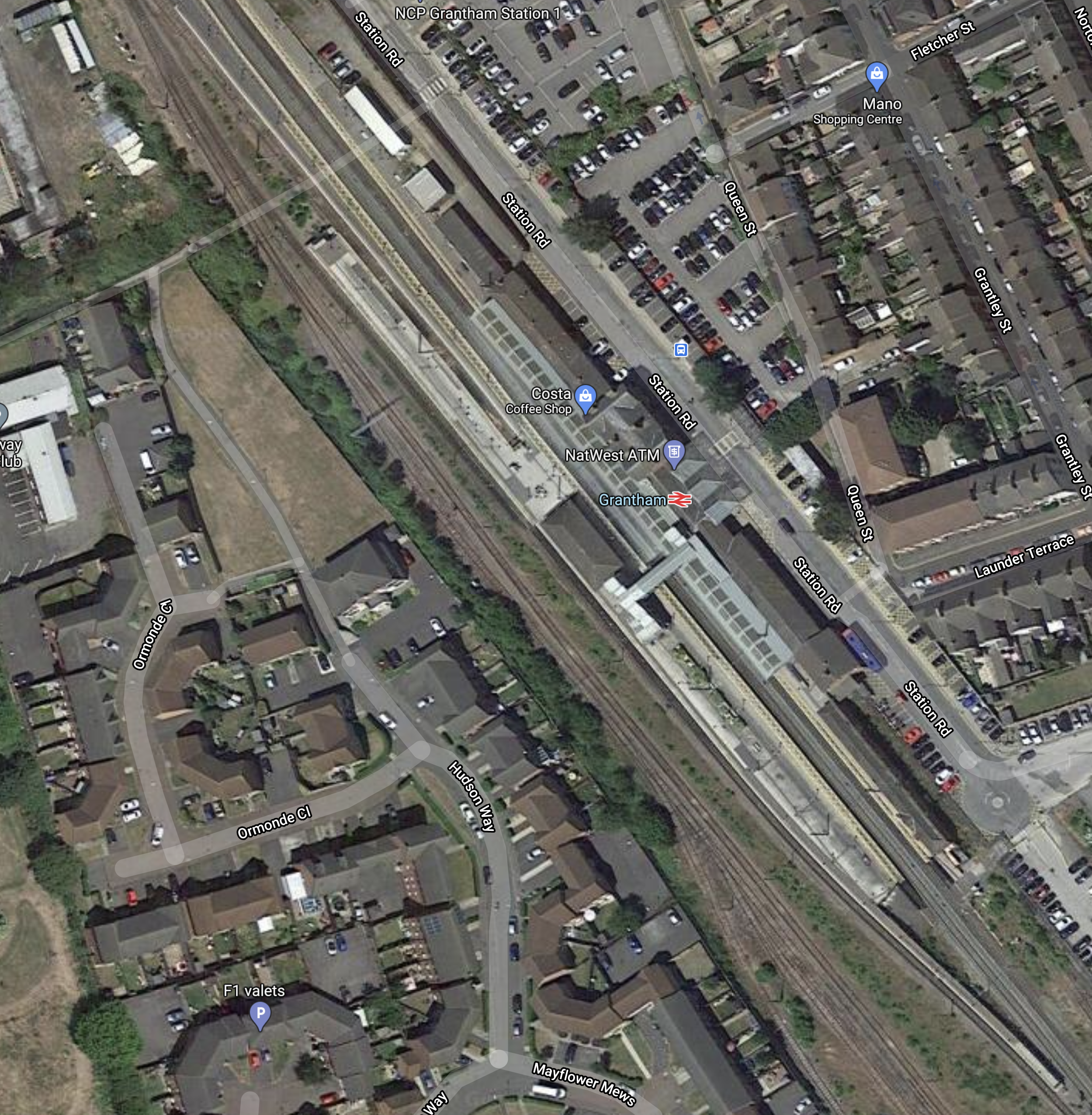
Note.
- Platforms are numbered 1 to 4 from East to West.
- Platforms 1 and 2 are long enough to take two five-car Class 800 trains working as a pair.
- Platform 4 may be long enough for these pairs of trains or could be made so.
- All trains to and from Nottingham call in Platform 4.
- Trains from Nottingham to Peterborough call in Platform 4 before crossing over to the down lines.
- There would appear to be no easy way for a Southbound train on the East Coast Main Line to access Platform 4.
- Platform 3 didn’t get much use on the day I visited.
There is also an avoiding line to allow freight and other passing trains to avoid going through the platforms.
Services Through Grantham Station
Services stopping at Grantham are as follows.
- LNER – One tp2h – London Kings Cross and Harrogate via Stevenage, Grantham, Doncaster, Wakefield Westgate, Leeds
- LNER – One tp2h – London Kings Cross and Bradford Forster Square via Stevenage, Grantham, Doncaster, Wakefield Westgate, Leeds
- LNER – One tp2h – London Kings Cross and Lincoln via Stevenage, Peterborough, Grantham and Newark North Gate
- LNER – One tp2h – London Kings Cross and York via Stevenage, Peterborough, Grantham, Newark North Gate, Retford and Doncaster.
- Hull Trains – Five tpd – London Kings Cross and Hull via Stevenage, Grantham, Retford, Doncaster, Selby, Howden and Brough
- Hull Trains – Two tpd – London Kings Cross and Beverley via Stevenage, Grantham, Retford, Doncaster, Selby, Howden, Brough, Hull and Cottingham.
- East Midlands Railway – One tph – Liverpool Lime Street and Horwich via Peterborough and Nottingham
- East Midlands Railway – One tph – Nottingham and Skegness
Note.
- tph is trains per hour
- tp2h is trains per two hours.
- tpd is trains per day.
Adding the services together, there is a frequent service between Stevenage, Peterborough, Grantham and Newark North Gate.
Train Timings Between London Kings Cross and Grantham
The fastest trains take 67 minutes between London Kings Cross and Grantham.
- The distance is 105.5 miles
- This would be an average speed of 94.5 mph.
- The East Coast Main Line is being upgraded with in-cab digital ERTMS signalling, which will allow 140 mph running.
- The works at Kings Cross station will have increased the station’s capacity.
I wouldn’t be surprised to see a time between London Kings Cross and Grantham, of under an hour, time-tabled in the near future.
Could There Be A London Kings Cross and Nottingham Service Via Grantham?
On this page on UK Rail Forums, this was posted in 2010.
According to today’s East Midlands news on BBC1, Network Rail is considering inviting tenders to run a faster service from Nottingham to London King’s Cross via Grantham, from 2014. The present service of around 1hr 45m is considered too slow by passengers.
How would this new service be reconciled with the much-publicised capacity constraints at Welwyn and at King’s Cross itself? Will the proposed possible service be diesel-powered under the wires from Grantham, or will the Grantham-Nottingham stretch be electrified? Interesting times.
Technology has changed since 2010 and the East Coast Main Line has improved.
- King;s Cross station is being sorted.
- Digital ERMTS signalling is coming to the East Coast Main Line
- Hatachi’s new Class 800 trains have arrived and could go between Grantham and Nottingham on diesel power.
- Grantham and Nottingham takes 35 minutes on a service with three stops, that’s timed for a Class 153 train.
- Grantham and Nottingham is just over twenty miles.
As I said earlier, that I believe Grantham and London could be inside an hour, I wouldn’t be surprised to see a Nottingham and London Kings Cross service in under an-hour-and-a-half.
But it could be better than that?
Hitachi’s Regional Battery Train
This is the train that could unlock the potential of a London Kings Cross and Nottingham service.
This Hitachi infographic gives details of the train.
Note that the train has a range of 90 kilometres or 56 miles, at speeds of up to 100 mph.
The trains would be ideal for a London Kings Cross and Nottingham service.
- They would charge the batteries, whilst using the electrification on the East Coast Main Line.
- The battery range is such, that it would not need any charging between leaving Grantham and returning there from Nottingham.
- They could travel at speeds of up to 140 mph on the East Coast Main Line, once the digital ERTMS signalling is installed.
- Stops could be at Stevenage, Peterborough and Grantham.
LNER’s five-car Class 800 trains, which are branded Azumas can be turned into Regional Battery Trains, by replacing the three diesel engines with battery packs.
I would suspect that times of around eighty minutes, between London Kings Cross and Nottingham, could be in order.
A Park-And-Ride For Nottingham And London
Nottingham has several Park-and-Ride sites, that are served by the trams. of the Nottingham Express Transit, which already calls at Nottingham station.
Would another site on the rail line between Grantham and Nottingham be useful?
This map shows. where the rail line crosses the A46, near its junction with the A52.
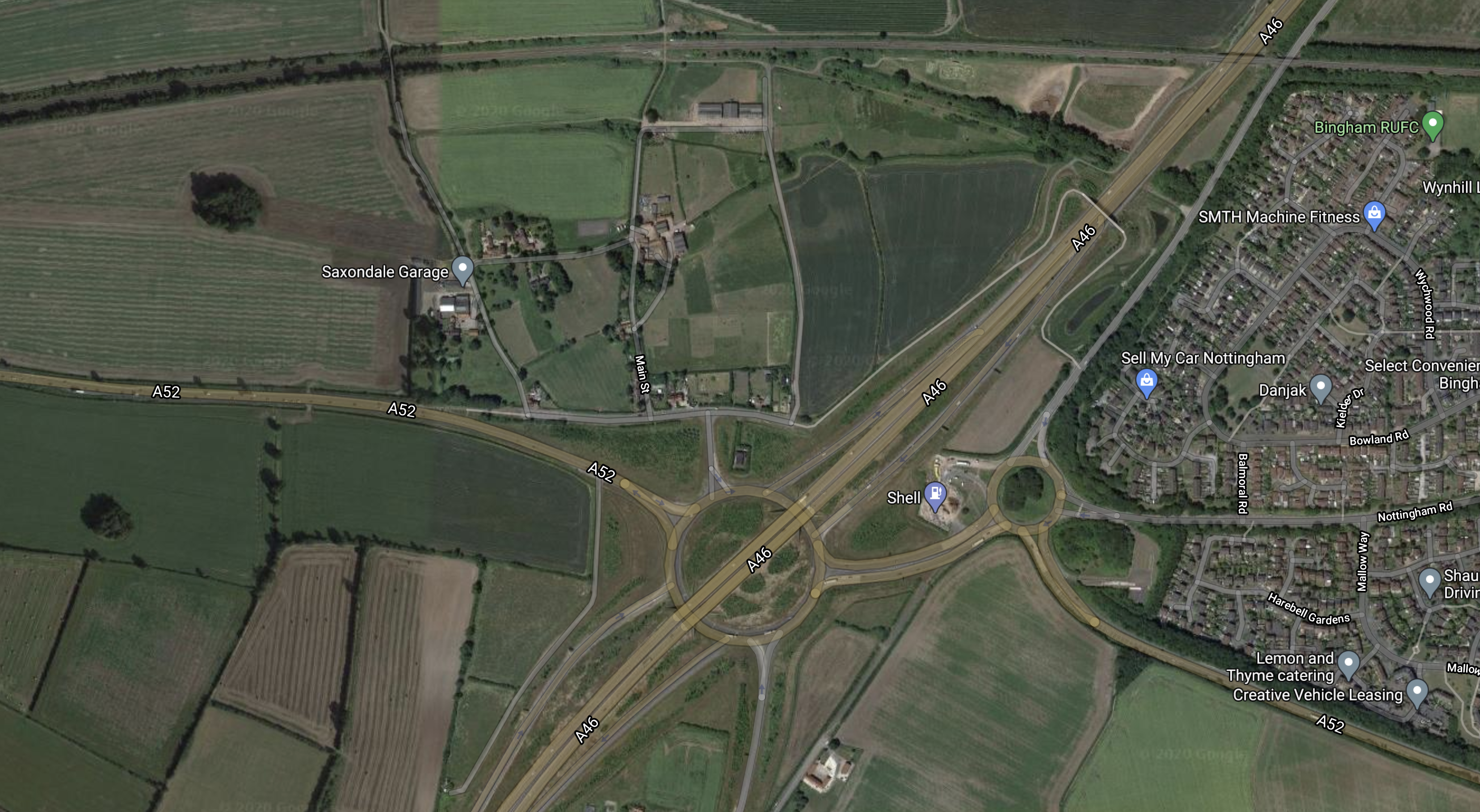
Note the Grantham and Nottingham line running across the top of the map and the big junction between the A52 and the A46.
It looks to be a good place for a Park-and-Ride station, if it was decided one needed to be built.
There might also be sites further in towards Nottingham, close to the racecourse or the Holme Pierpoint National Watersports Centre.
A Combined Nottinghamshire And Lincolnshire Service
I originally called this section a Combined Nottingham And Lincoln Service, but I don’t see why it can’t serve most of both counties.
Consider.
- Birmingham, Brighton, Cambridge, Oxford and Southend get two services from the capital by different routes.
- Hitachi’s Class 800 trains can Split/Join in around two minutes.
- Running five-car Class 800 trains all the way between London Kings Cross and Lincoln is not a good use of a valuable train path on the East Coast Main Line.
- Lincoln is just 16.5 miles and 24 minutes from the East Coast Main Line.
- Nottingham is 22 miles and could be 20 minutes from the East Coast Main Line.
- Both Lincoln and Nottingham would be in battery range for a return trip from the East Coast Main Line.
- Platforms 1, 2 and 4, at Grantham are long enough to handle two Class 800 trains, running as a pair and regularly pairs call in Platforms 1 and 2.
I believe it would be possible for a pair of Regional Battery Trains to do the following.
- Leave London Kings Cross and run to Grantham in an hour, stopping at Stevenage and Peterborough.
- Stop in Platform 4 at Grantham station, where the trains would split.
- One train would continue on the East Coast Main Line to Newark North Gate station, where it would leave the East Coast Main Line and go to Lincoln.
- The other train would continue to Nottingham.
Note.
- Coming back, the process would be reversed with trains joining in Platform 1 or Platform 4 at Grantham.
- There may need to be some track and signalling modifications, but nothing too serious or challenging.
Connections to other parts of Nottinghamshire and Lincolnshire would be as follows.
- Nottingham and Nottinghamshire would be connected using the Nottingham Express Transit and the Robin Hood and Maid Marian Lines from Nottingham station.
- All stations between Grantham and Nottingham would be reached from either Grantham or Nottingham.
- All stations to Boston and Skegness would be reached from Grantham.
- All stations between Newark and Lincoln would be reached from either Lincoln or Newark.
- All stations between Doncaster and Lincoln would be reached from either Doncaster or Lincoln.
- All stations between Peterborough and Lincoln would be reached from either Lincoln or Peterborough.
- All stations to Market Rasen, Grimsby Town and Cleethorpes would be reached from Lincoln.
Note.
- I feel that some Lincoln services could be extended to Cleethorpes via Market Rasen and Grimsby Town.
- Hopefully, a timetable could be developed, so that no connection was overly long.
Most of the distances are not unduly long and I would hope that most secondary services could be battery electric trains, which would be charged in the larger stations like Boston, Cleethorpes, Doncaster, Grantham, Lincoln, Mansfield, Nottingham, Peterborough, Sleaford, Spalding and Worksop.
Doncaster, Grantham and Peterborough already have 25 KVAC overhead electrification and this could be used to charge the trains, with possibly some small extensions.
The other stations will need a number of systems to charge the trains, as they pass through.
Some stations will be suitable for the installation of the standard 25 KVAC overhead electrification, but others will need specialised charging systems.
It appears that Adrian Shooter of Vivarail has just announced a One-Size-Fits-All Fast Charge system, that has been given interim approval by Network Rail.
I discuss this charger in Vivarail’s Plans For Zero-Emission Trains, which is based on a video on the Modern Railways web site.
There is more about Vivarail’s plans in the November 2020 Print Edition of the magazine, where this is said on page 69.
‘Network Rail has granted interim approval for the fast charge system and wants it to be the UK’s standard battery charging system’ says Mr. Shooter. ‘We believe it could have worldwide implications.’
Vivarail’s Fast Charge system must surely be a front-runner for installation.
What frequency of the Combined Nottinghamshire And Lincolnshire service would be needed and could be run?
Consider.
- Currently, Lincoln is served with one tp2h with a five-car Class 800 train running the service.
- The Lincoln service alternates with a one tp2h service to York, which also calls at Retford and Doncaster.
- Work is progressing on increasing the number of high speed paths on the East Coast Main Line.
Obviously, an hourly service to both Nottingham and Lincoln would be ideal and would give most of the two counties an hourly service to and from London Kings Cross with a single change at either Doncaster, Grantham. Lincoln, Newark, Nottingham or Peterborough.
- An hourly service might be difficult to timetable because of the York service.
- But I don’t believe it would be impossible to setup.
Especially if after, the Eastern leg of High Speed Two opens, East Coast Main Line services from London Kings Cross to North of York are replaced in part, by High Speed Two services.
The Effect Of High Speed Two
High Speed Two will build a new station at Toton called East Midlands Hub station.
- The station will be situated about halfway between Nottingham and Derby, with frequent connections to both cities.
- There will be frequent services to Birmingham, Leeds, London, Newcastle and Sheffield.
- I wouldn’t be surprised to see a direct service to Edinburgh and Glasgow from the station.
- There will be a lot of economic growth around the station.
I very much feel, that a lot of passengers were travel to East Midlands Hub station for both long distance trains and to access the Derby-Nottingham area.
A Cambridge And Birmingham Service
In How Many Trains Are Needed To Run A Full Service On High Speed Two?, I proposed a Cambridge and Birmingham Curzon Street service.
This is what I said.
The obvious one is surely Cambridge and Birmingham
- It would run via Peterborough, Grantham, Nottingham and East Midlands Hub.
- It would connect the three big science, engineering and medical centres in the Midlands and the East.
- It would use High Speed Two between Birmingham Curzon Street and East Midlands Hub.
- It could be run by High Speed Two Classic-Compatible trains.
It might even be a replacement for CrossCountry’s Stansted Airport and Birmingham service.
Timings for the various legs could be.
- Cambridge and Peterborough – CrossCountry – 49 minutes
- Peterborough and Grantham – LNER – 19 minutes
- Grantham and Nottingham -Best Estimate – 20 minutes
- Nottingham and Birmingham Curzon Street – Midlands Rail Engine – 33 minutes
Note.
- This totals to two hours and one minute.
- The current service takes two hours and forty-four minutes.
- The Ely and Peterborough and Grantham and Nottingham legs are not electrified.
If the route were to be fully electrified or the trains were to be fitted with batteries, the time via High Speed Two, would surely be several minutes under two hours.
Conclusion
These objectives are possible.
- An hourly service between London Kings Cross and Grantham, Lincoln, Newark and Nottingham.
- A very much more comprehensive train service for Nottingham and Lincolnshire.
- A two hour service between Cambridge and Birmingham.
Most of the services would be zero carbon.
No major infrastructure would be needed, except possibly completing the electrification between Nottingham and Ely, some of which is probably needed for freight trains anyway.
Alternatively, the High Speed Two Classic-Compatible trains could be fitted with batteries.
 The Anonymous Widower