HS2 Tech Incubator Bases Start-Ups On Site
The title of this post, is the same as that of this press release from HS2.
This is the introductory paragraph.
The latest cohort of the successful Innovation Accelerator initiative will base tech start-ups with project’s main civil engineering contractors to help tailor innovative solutions for the construction industry.
After discussing the aims, the press release then lists five SMEs.
Silicon Microgravity, a SME spun out from Cambridge University research, is developing non-invasive next-generation gravity sensors to identify underground hazards that could be deployed for ground investigation surveys and utility diversion planning.
EHAB is developing hyper-local weather forecasting and using A.I. to optimise daily works schedules according to when or if rain is due. Reducing weather-related delays helps to maintain programme timetables and control costs.
Immense Simulations will further develop its A.I.-based strategic and operational transport planning tool to de-risk the effects of works traffic on local road networks. The technology could also help plan for the effects future that HS2 stations could have on traffic movements in surrounding areas.
Consequence has developed “carbon accounting” technology that illustrates the full carbon content of construction materials used on HS2.
Mafic is developing technology to enhance productivity and protect delivery schedules.
My experience of science, data analysis and writing a lot of database and project management software, leads me to the conclusion, that these companies have been well-chosen and a majority will be a success.
Regulator Approves New Grand Union Train Service From Carmarthen To London Paddington
The title of this post, is the same as that of this press release from the Office of Rail and Road.
This is the sub-heading of the press release.
The Office of Rail and Road (ORR) has opened up the Great Western Main Line to competition and enabled a significant increase in rail services between London and South Wales.
These points are made in the press release.
- The rail regulator has approved the introduction of new train services between London, Cardiff and South West Wales from the end of 2024.
- The services will be operated by a new open access operator, Grand Union Trains, bringing competition to the Great Western route out of Paddington.
- Passengers travelling between London, Bristol Parkway, Severn Tunnel Junction, Newport, Cardiff, Gowerton, Llanelli and Carmarthen will benefit from an extra five daily return services and greater choice of operator.
- The decision opens up the Great Western Main Line to competition for the first time, with potential benefits in terms of lower fares, improved service quality and innovation for all passengers using the route.
- The application, submitted to ORR in June 2022, was disputed by Network Rail due to concerns about capacity on the network. But following careful consideration and analysis, ORR has directed Network Rail to enter into a contract with Grand Union.
- Grand Union has committed to significant investment in new trains.
- As an ‘open access’ train operator, however, it will not get paid subsidies from public funds, unlike current operators along the route.
ORR supports new open access where it delivers competition for the benefit of passengers. In making this decision, the regulator has weighed this up against the impact on Government funds and effect on other users of the railway, both passengers and freight customers.
These are my thoughts.
The Company
Grand Union Trains have certainly persevered to get this approval.
- The company was created by Ian Yeowart, who previously created open access operators; Alliance Rail Holdings and Grand Central before selling both to Arriva.
- After multiple negotiations with the Office of Road and Rail (ORR), Yeowart must know how to get an acceptable deal.
- Grand Union Trains have a similar application for a service between Euston and Stirling with the ORR.
Grand Union Trains also have a web site.
The home page has a mission statement of Railways To Our Core, with this statement underneath.
At Grand Union we are passionate about Britain’s railways. We are committed to the traditional values of providing a high-quality customer service and a comfortable journey experience at a fair price.
I’ll go with that.
The Financial Backing Of The Company
All the UK’s open access operators are well-financed either by Arriva or First Group.
The ORR would not receive any thanks, if they approved an operator, which duly went bust.
So what is the quality of the financing behind Grand Union Trains?
This article on Railway Gazette is entitled RENFE Looks At Entering UK Rail Market Through Open Access Partnership, which starts with this paragraph.
Open access passenger service developer Grand Union Trains is working with Spain’s national operator RENFE and private equity firm Serena Industrial Partners on a proposed service between London and Wales.
That is fairly clear and would surely help in the financing of Grand Union Trains.
The Route
Trains will run between Carmarthen and London Paddington, with stops at Llanelli, Gowerton, Cardiff, Newport, Severn Tunnel Junction and Bristol Parkway.
A new station at Felindre will replace Gowerton at some time in the future.
There will be five trains per day (tpd).
I have some thoughts and questions about the route
Felindre Station
Felindre station is named in Wikipedia as the West Wales Parkway station, where it is introduced like this.
West Wales Parkway is a proposed railway station north of Swansea, near to the boundaries of the neighbouring principal area of Carmarthenshire, and the villages of Felindre and Llangyfelach. The station is proposed to be situated at the former Felindre steelworks, near Junction 46 of the M4 and A48, and near Felindre Business Park and Penllergaer Business Park. The project is in the planning stages, as part of a wider Department for Transport proposal to re-open the Swansea District line to passenger traffic.
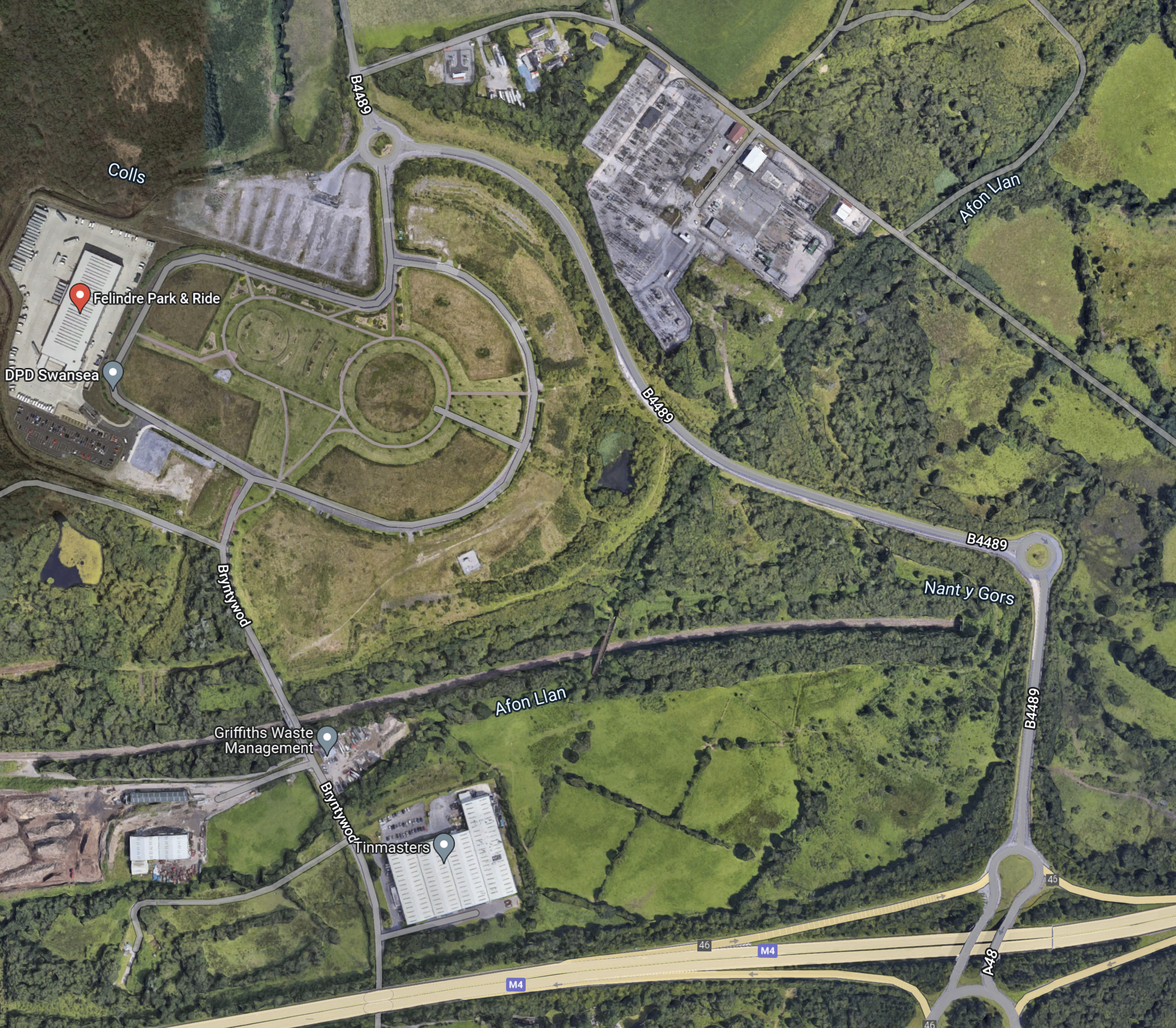
This Google Map shows where, it appears the Felindre station will be built.
Note.
- The Felindre Business Park in the North-West corner of the map, with a Park-and-Ride.
- The M4 running across the bottom of the map.
- The Swansea District Line runs East-West between the motorway and the Business Park.
It looks that the new station could be located on the South side of the Business Park.
When High Speed Two Opens Will Trains Call At Old Oak Common?
When High Speed Two opens, all GWR trains will stop at Old Oak Common station for these connections.
- Chiltern for for Banbury, Bicester, High Wycombe and the West Midlands
- Elizabeth Line for Central and East London and the Thames Valley
- Heathrow Airport
- High Speed Two for Birmingham and the North
- Overground for Outer London
As Old Oak Common will be such an important interchange, I think they should.
Will The Platforms At Carmarthen Station Need Lengthening?
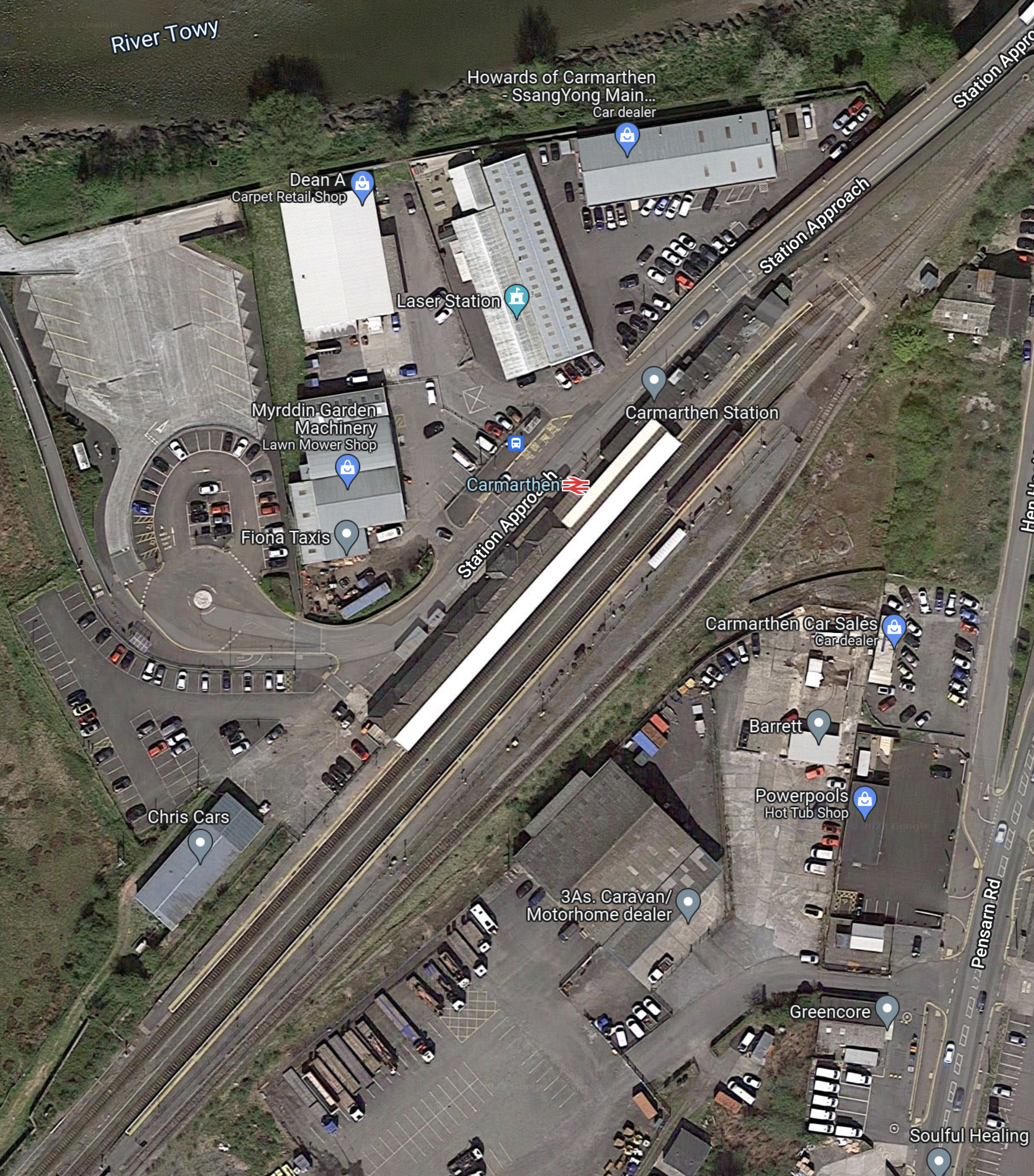
This Google Map shows Carmarthen station.
Note.
- The station has two platforms.
- There are certainly pictures of the station with an InterCity 125 in the station. There is a picture on the Wikipedia entry for Carmarthen station.
These pictures show the station.

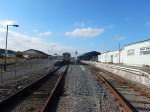


I suspect that the station will be upgraded to accommodate Grand Union Trains.
The Trains
An article in the June 2022 Edition of Modern Railways, which is entitled Grand Union Bids For London To Carmarthen, gives these details of the trains.
- Three classes.
- 2023 start for the service.
- Cycle provision.
- Vanload freight will be carried.
- Electric trains could start between London and Cardiff by 2023.
- In 2025, trains could be nine-car bi-modes.
- South Wales-based operation and maintenance.
- 125 full-time jobs created.
It certainly seems to be a comprehensive and well-thought out plan.
I have a few thoughts on the trains.
What Make Of Trains Will Be Procured?
Consider.
- Lumo’s Class 803 trains were ordered from Hitachi in March 2019 and entered service in October 2021.
- So if they ordered their version of the Hitachi trains by the end of 2022, the trains could be in service by July/August 2025.
- It would probably be easier, if the only fast trains on the Great Western Main Line between London and South Wales were all Hitachi trains with identical performance.
But the Spanish backers of Grand Union Trains may prefer Spanish-designed trains assembled in South Wales. So would a bi-mode version of CAF’s Class 397 trains be suitable?
On the other hand, the Carmarthen and Cardiff section of the route without a reverse at Swansea is only seventy-five miles.
This Hitachi infographic shows the Hitachi Intercity Tri-Mode Battery Train.

Consider.
- Charging could be provided at Carmarthen using a short length of electrification or one of Furrer + Frey standard chargers.
- Charging would also use the electrification between London Paddington and Cardiff.
- A nine-car Class 800 or Class 802 train has five engines and a five-car train has three engines.
- The Intercity Tri-Mode Battery Train was announced in December 2022.
- In the intervening two years how far has the project progressed?
- For the last twelve months, Lumo have been running trains with an emergency battery-pack for hotel power. How are the batteries doing, whilst being ferried up and down, the East Coast Main Line?
Can Hitachi configure a train with more than one battery-pack and a number of diesel engines, that has a range of seventy-five miles? I suspect they can.
I suspect that CAF also have similar technology.
There is also a benefit to Great Western Railway (GWR).
If GWR were able to fit out their Class 802 trains in the same way, they would be able to run between Cardiff and Swansea on battery power.
- It is only 45.7 miles.
- Charging would need to be provided at Swansea.
- GWR could still run their one tpd service to Carmarthen.
It looks like both train operating companies could be able to do as Lumo does and advertise all electric services.
What Could Be The Maxmum Range Of A Hitachi Train On Batteries?
This Hitachi infographic shows the Hitachi Regional Battery Train.

Consider.
- It has a battery range of 90 km or 56 miles on the single battery.
- I would expect that by a regional train, Hitachi mean a five car Class 800 or 802 train, like those that go to Cheltenham, Lincoln or Middlesbrough.
- A five-car Hitachi Regional Battery Train would have a battery that could contain power equivalent to 280 car-miles.
- Five-car Class 800 or 802 trains have three engine positions.
- These Hitachi trains have a very sophisticated control system, which I wrote about in Do Class 800/801/802 Trains Use Batteries For Regenerative Braking?
I believe the engineers at Hyperdrive Innovation have designed the battery-packs that replace the diesel engines as simulations of the diesel engines, so they can be a direct replacement.
This would mean that battery-packs could be additive, so the following could apply to a five-car train.
- Two battery packs could have a range of 112 miles.
- Three battery packs could have a range of 168 miles.
GWR generally runs pairs of five-car trains to Swansea, which would be 90 miles without electrification.
If five-car trains with two battery packs, could be given a range of 112 miles, GWR could run an electric service to Swansea.
They could also run to Carmarthen, if Grand Union Trains would share the charger.
What ranges could be possible with nine-car trains, if one battery pack is good for 280 car-miles?
- One battery-pack, gives a range of 280/9 = 31 miles
- Two battery-packs, give a range of 2*280/9 = 62 miles
- Three battery-packs, give a range of 3*280/9 = 93 miles
- Four battery-packs, give a range of 4*280/9 = 124 miles
- Five battery-packs, give a range of 5*280/9 = 155 miles
- Six battery-packs, give a range of 6*280/9 = 187 miles
- Seven battery-packs, give a range of 7*280/9 = 218 miles
Note.
- I have rounded figures to the nearest mile.
- There are five cars with diesel engines in a nine-car train, which are in cars 2,3,5, 7 and 8.
- Diesel engines are also placed under the driver cars in five-car Class 810 trains.
- For the previous two reasons, I feel that the maximum numbers of diesel engines in a nine-car train could be a maximum of seven.
- I have therefor assumed a maximum of seven battery packs.
These distances seem sensational, but when you consider that Stradler’s Flirt Akku has demonstrated a battery range of 243 kilometres or 150 miles, I don’t think they are out of order.
But, if they are correct, then the ramifications are enormous.
- Large numbers of routes could become electric without any infrastructure works.
- Grand Union Trains would be able to run to Carmarthen and back without a charger at Carmarthen.
- GWR would be able to run to Swansea and back without a charger at Swansea.
Prudence may mean strategic chargers are installed.
Rrenewable Energy Developments In South West Wales
In Enter The Dragon, I talked about renewable energy developments in South West Wales.
I used information from this article on the Engineer, which is entitled Unlocking The Renewables Potential Of The Celtic Sea.
The article on the Engineer finishes with this conclusion.
For now, Wales may be lagging slightly behind its Celtic cousin to the north, but if the true potential of the Celtic Sea can be unleashed – FLOW, tidal stream, lagoon and wave – it looks set to play an even more prominent role in the net zero pursuit.
The Red Dragon is entering the battle to replace Vlad the Mad’s tainted energy.
South West Wales could see a massive renewable energy boom.
Grand Union Trains will increase the capacity to bring in more workers to support the developments from South Wales and Bristol.
ZERRCI – Zero Emissions Repowering Of Railway Construction Infrastructure
This project was one of the winners in the First Of A Kind 2022 competition run by Innovate UK.
In this document, this is said about the project.
Project No: 10037562
Project title: ZERRCI – Zero Emissions Repowering Of Railway Construction Infrastructure
Lead organisation: EMINOX LIMITED
Project grant: £59,852
Public description: Eminox, HS2 and SCS Railways propose a solution for the delivery of a low emissions, greener
railway. Our solution covers the development of an electric motor and battery system, which can be
retrofitted into existing construction equipment, replacing the traditional diesel engine with a quieter,
cleaner, zero emissions drivetrain. These pieces of plant and equipment will be used as direct
replacements for diesel machines in the constructing and maintaining railway infrastructure.
Eminox is leading this project with its experience in providing cost effective retrofit emissions
solutions and together with HS2 and SCS JV will be involved in demonstrating the first repowered
construction equipment in a real-world rail infrastructure environment.
This proposed venture has been instigated by HS2 in line with their ambition as set out in their Net
Zero Carbon plan for diesel free construction sites by 2029. As the solution will extend the life
expectancy of the machine, it will contribute to HS2’s vision of net-zero by 2035.
This solution will offer a more cost-effective route to zero emissions construction compared to
purchasing similar new electric powered equipment by extending the life expectancy of existing
plant and machinery. With a target of 50% the price of purchasing new excavators it is expected to
incentivise the broader uptake of demand in electric plant and equipment at scale across the
industry supply chain.
Phase 1 of this project aims to deliver a proposal for a prototype zero-emissions excavator. By
performing a feasibility study on the conversion principals, we intend to extract a broad
understanding of the challenges associated with integration and develop an optimised battery and
motor system specification.
Phase 2 will involve the conversion, commissioning and delivery of a repowered excavator, and
subsequent in-service validation. By using this converted machine to conduct initial trials, it will be
proven that no machine functionality or safety features have been compromised during conversion,
and we will establish power storage requirements to provide adequate duty cycle performance.
This will result in a fully proven demonstrator with real-world validation enabling further
development of optimised battery solutions.
My Thoughts And Conclusion
So Many Cases On A Train!
This afternoon about three, I went to West Ealing station to see what it was like to transfer between the Elizabeth Line Central Tunnel and the Western Branch at Paddington.
Coming back, I took an Elizabeth Line service that had started from Heathrow Airport and it was one of the busiest Lizzies, I’d ever ridden!
To get on the train at West Ealing station, I got in to probably coach 4 of 9, as that was in the dry and the back end of the train I needed for Moorgate station was certainly in the wet.
I then had to walk half the length of the train to get to the back of the train.
It was not easy, as the train was full of scores of passengers with large wheelie cases.
This got me thinking.
Are Passengers Transferring To The Lizzie Line?
And especially those with large cases. that are the sort you could use for bringing in a pair of folded-up contortionists.
- These cases don’t fit well on the Piccadilly Line, which has only a few step-free stations.
- From what I’ve seen cases are easily wheeled to Elizabeth Line platforms at Heathrow.
- Many of these cases won’t fit in the average family car.
- All parking is expensive at Heathrow, whether it is short, medium or long.
- Valet parking at Heathrow has been devalued by all the scam artists.
- Taxis are the province of those that own oil wells, hedge funds or belong to the highest wunch of bankers.
- Pick-up and drop-off is now very expensive.
- There were a good proportion of couples, who were both dragging or pushing a massive case.
- The Elizabeth Line is cheaper than the Heathrow Express.
- The Elizabeth Line like the Piccadilly Line allows the use of a bank card as a ticket.
- Only the Elizabeth and Piccadilly Lines take you direct to dozens of stations with only same-platform interchanges.
- The Elizabeth Line has step-free interchanges with the Bakerloo, Circle, District, Hammersmith and City, Jubilee, and Metropolitan Lines, the Docklands Light Railway and the London Overground.
- Whitechapel has been turned into a major transport hub for the Easternmost part of London.
There seems to be quite a few reasons why a traveller going to or from Heathrow might at least try the Elizabeth Line.
And travellers seemed to be doing it in droves today!
Were Upmarket Passengers Using The Lizzie Line?
Take the couple next to me on the train from West Ealing.
- Around sixty.
- Very well-dressed.
- Possibly Mediterranean or South American.
- Matching medium-size wheelie-cases.
- She was wearing expensive glasses.
A couple of years ago, they would have probably used the Heathrow Express.
They certainly weren’t the only passengers, who looked like archetypal Heathrow Express passengers.
Will The Lizzie Line Take Passengers From The Piccadilly Line?
As the cost will be the same, I suspect the answer will be yes.
Although, there will be groups of travellers, who will probably remain loyal to the Piccadilly Line.
- If you were going to or from the step-free Cockfosters or Oakwood, with a heavy case, all the way on the Piccadilly Line could be a simple sensible option. I used to live near Oakwood station and remember several long trips on the Piccadilly Line, but not too Heathrow.
- The step-free Kings Cross St. Pancras, Green Park, Knightsbridge and Earls Court may well have reasons to keep their regular passengers.
- Those only travelling a few stops to or from Heathrow will probably stay with the Piccadilly Line for convenience.
- Transport for London have been adding step-free access to the Heathrow Branch and this will surely promote use.
The Piccadilly Line is also getting new trains in a few years.
In Extending The Elizabeth Line – Piccadilly Line To Ealing Broadway, I talked about a proposal to turnback some Piccadilly Line trains at Ealing Broadway station.
I think it is a good idea, as it could make it simpler for Piccadilly Line passengers to access Heathrow and reduce congestion on the Piccadilly Line.
Will The Lizzie Line Take Passengers From The Heathrow Express?
This is an extract from Extending The Elizabeth Line – Piccadilly Line To Ealing Broadway
It will be difficult to predict what will happen to Heathrow Express, but I suspect several groups of passengers will desert it.
- Passengers wanting to go anywhere East of Paddington without changing trains.
- Passengers wanting any Elizabeth Line station.
- Passengers, who don’t like the prices of Heathrow Express.
- Passengers using Oyster or contactless cards.
- Passengers who want to ride on London’s spectacular new Elizabeth Line.
After Old Oak Common station is opened for High Speed Two, the numbers could further decrease.
Will Heathrow Express survive?
Will The Lizzie Line Attract Passengers Who Usually Drive?
Large swathes of the country already have single-change step-free access to the Elizabeth Line.
- All services out of Liverpool Street and/or Stratford.
- All services out of Moorgate.
- All Thameslink services through Farringdon.
- All services out of Paddington.
- All services through Abbey Wood.
- When Crossrail to Ebbsfleet (C2E) opens, this will add all services through Gravesend and Ebbsfleet.
- When High Speed Two opens, this will add all services through Old Oak Common.
- When the Western Rail Approach To Heathrow is completed, this will add all services through Reading.
If you can get a train direct to the Elizabeth Line network and then a train direct to your terminal, would you seriously want all the hassle of parking after a two hour drive?
I can see parking at Heathrow suffering a severe lack of demand.
Conclusion
Lizzie will start a revolution in travel to and from Heathrow.
A Thought On Broughton Station
This Google Map shows Hawarden Airport to the West of Chester.
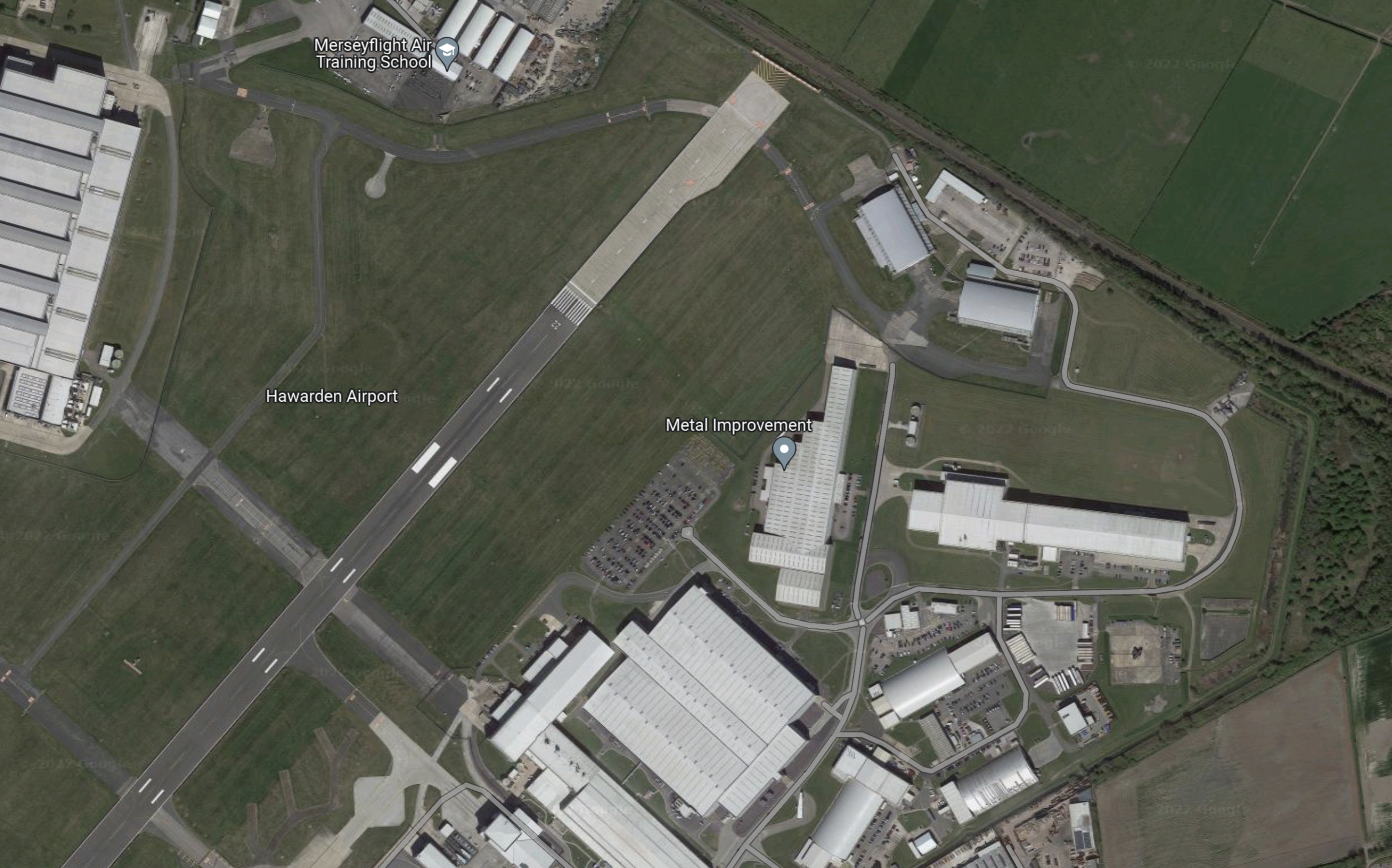
Note.
- Airbus make wings for their aircraft at their Broughton factory on this airport.
- The wings are flown to Europe for final assembly.
- The North Wales Coast Line passes the Northern end of the runway.
When I bought my return ticket between Chester and Holyhead, which was good value at £25.25 with my Senior Railcard, I got chatting with the clerk about Airbus and their Broughton factory.
He felt it needed a station and afterwards I checked and found that the Welsh Government had been trying to build one for some time.
Thinking back, I wonder if he keeps getting asked about getting to the Airbus factory and wishes that the government and Airbus would make his job easier by building a Broughton station.
A station at Broughton might also cut the factory’s carbon footprint, by allowing more staff to go to work by train.
A Merseyrail Extension To Shotton
Shotton is already served by the Borderlands Line which connects Wrexham and Bidston.
This line is shown on the West side of this map, which shows how the Merseyrail network might look in the future.

Note.
- Chester could have services that terminate in the East at Crewe and Runcorn East stations.
- Chester already has electric services from Liverpool, which will receive new Class 777 trains in the next few months.
- The new trains can be fitted with a battery electric capability.
I just wonder, if a Cross-Chester Metro could be built.
- Eastern termini would be Runcorn East or possibly Warrington Bank Quay and Crewe.
- Shotton is only 7.9 miles from Chester.
- Shotton low-level station used to have four tracks.
- I suspect that Shotton or even Flint could be the Western terminus.
- Extra stations could be added as required.
Note.
It would probably be best, if the trains were battery-electric that could use 25 KVAC overhead electrification, as this would allow them to charge at the Eastern termini.
I also feel that Crewe and Chester should be electrified, so that Chester could be reached by the new Class 805 trains running under electric power.
This would also allow Chester to become a High Speed Two destination, that was served by High Speed Two Classic-Compatible trains.
I believe that a Cross-Chester Metro is a possibility.
HS2 Completes First Tunnel Cross Passages
The title of this post, is the same as that of this press release from High Speed Two.
This is the first paragraph.
As the tunnelling machines under the Chilterns approach the four-mile mark, HS2 completes the first of thirty-eight underground connections between the northbound and southbound tunnels.
This video from High Speed Two, shows the construction of the cross tunnels.
There appears to have been a resurgence of traditional tunneling methods, albeit it with the assistance of modern mechanised tools.
In London recently, these tunnels have been dug without the use of expensive tunnel boring machines.
- The running and station tunnels for the Bank Station Upgrade.
- The tunnel for the Paddington Bakerloo Line Link.
I suspect there will a lot more dug traditionally in the future.
Bank And Moorgate
The map from cartometro.com shows the plethora of lines at Moorgate and Bank stations.
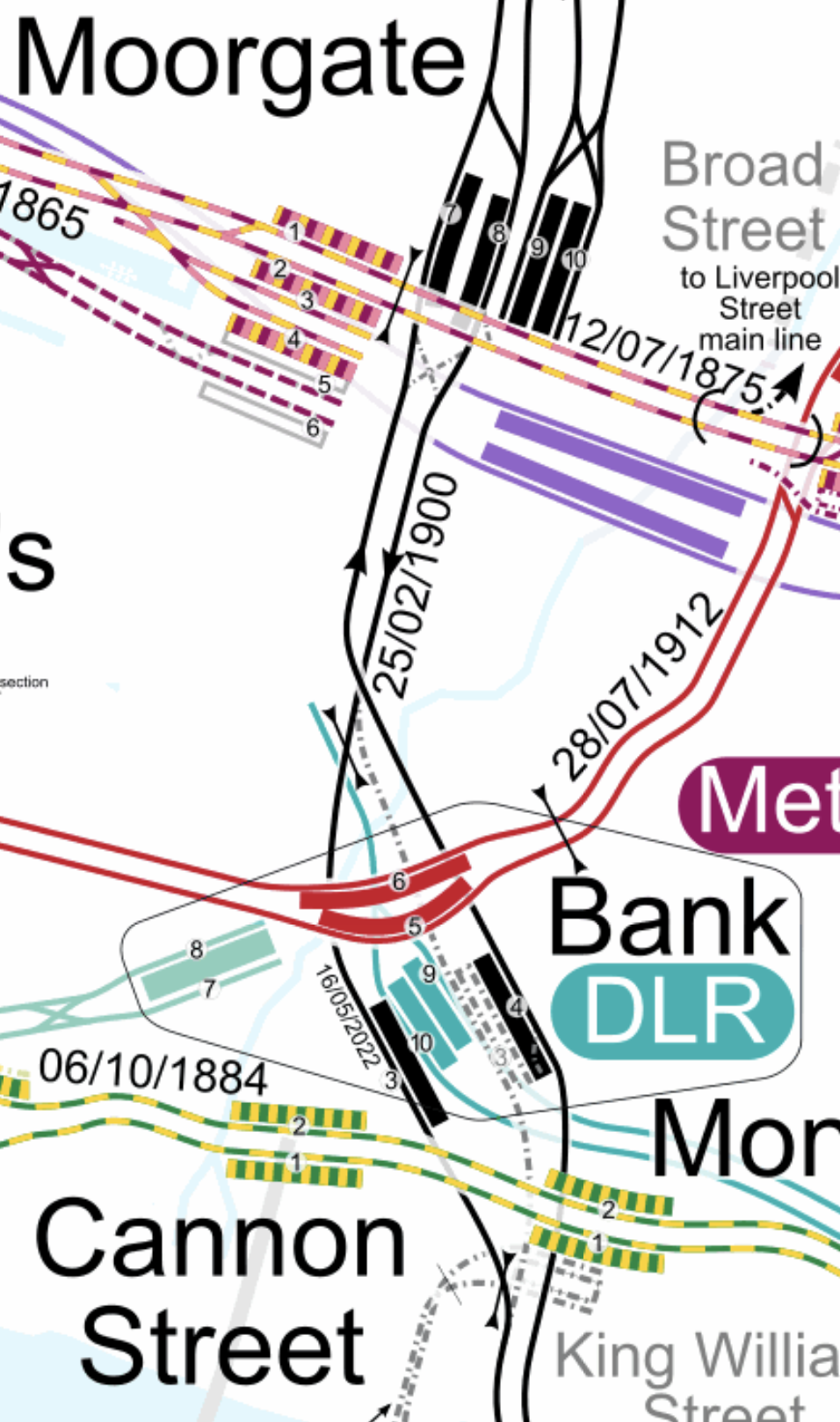
Note.
- Moorgate station is served by the Circle, Elizabeth, Hammersmith & City, Metropolitan, Northern and Northern City Lines.
- Bank station is served by the Central, Circle, District, Northern and Waterloo & City Lines.
- Bank station is also one terminus of the DLR.
I believe it would be possible to dig a long pedestrian tunnel with a travelator, between Moorgate and Bank stations under Moorgate, which connects the two stations.
City Thameslink Station And St. Paul’s
I discussed this in A Pedestrian Connection Between City Thameslink Station And St. Paul’s Tube Station.
The Connection Between The Northern And Lizzie Lines At Tottenham Court Road Station
In Elizabeth Line To Northern Line At Moorgate Station, I described how I was rather underwhelmed with the connection between the Bank branch of the Northern Line and the Lizzie Line.
It’s just too far to walk in the long tunnel, which is not as well fitted out as the connection to the Bakerloo Line at Paddington.
At least it can be improved, without a major amount of expense.
So what is the connection between the Lizzie Line and the Northern Line like at Tottenham Court Road?
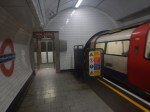
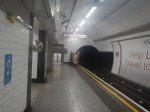
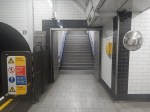
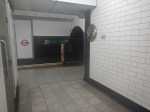
There is access to stairs and a lift at the Southern end of the Northern Line platforms, that lead to the pedestrian tunnel between the two platforms of the Lizzie Line.
These pictures show the connection.

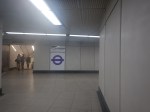
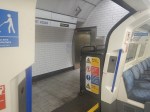
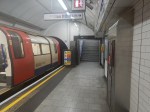
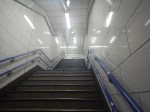

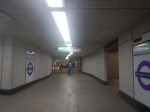
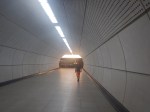
Note.
- It is certainly a lot easier than the connection at Moorgate.
- You have a choice of stairs or a lift between lines.
- Both Northern branches and both Southern branches of the Northern Line all have services through Tottenham Court Road station. Just make sure, that you get a Charing Cross branch train.
- If you’re using Tottenham Court Road station for changing to the Lizzie Line from the Northern Line, then make sure you get at the Southern end of the Northern train.
- If you’re using Tottenham Court Road station for changing to the Northern Line, then make sure you get at the Eastern end of the Lizzie Line train.
Practice will make perfect, how passengers handle this interchange.
Going Between Euston And Heathrow
There is no problem with the interchange to and from the Elizabeth Line, but getting to and from the Charing Cross branch of the Northern Line is not step-free.
Hopefully, High Speed Two and the rebuilding of Euston station will solve this problem.
High Speed Two Works Between Denham And West Ruislip Stations – 5th August 2022
I took these pictures as my Chiltern Train returned from Birmingham Moor Street station tonight.

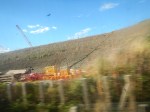



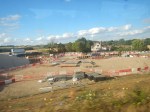

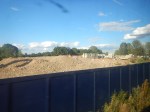
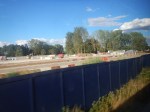
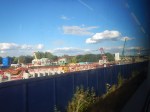

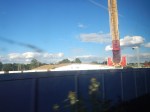
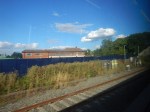
Note that the pictures were taken looking to the North of the Chiltern Main Line.
The Birmingham Bull – 5th August 2022
The non-human star of the Opening Ceremony of the 2022 Commonwealth Games in Birmingham was a mechanical bull.
This article on the BBC is entitled Commonwealth Games: Scots Creator Reveals Secrets Of Metal Bull.
These three introductory paragraphs give an overview of the design.
The secrets of the mechanical bull that wowed audiences during the opening ceremony of the Commonwealth Games have been revealed by its Scottish creator.
The 10m high scrap metal sculpture was one of the stars of the celebration in Birmingham’s Alexander Stadium.
Michael Dollar, of creative model makers Artem, said it took six people to operate the giant structure.
The BBC also revealed today, that the bull would be parked for a few days in Centenary Square outside the Library of Birmingham.
So as my day had fallen apart, I got on a Chiltern train to Birmingham and took these pictures.




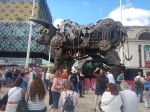
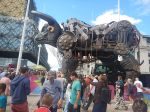





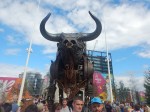




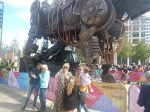
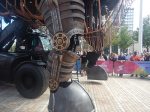
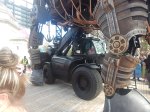
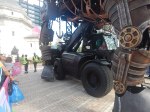


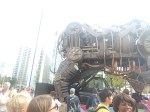
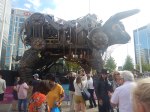
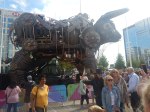
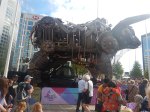


Note.
- The first picture has the The Library Of Birmingham in the background, with its lattice frontage and gold dome.
- The Bull seems to have been built on a loader chassis.
- There were a large crowd in Centenary Square looking at the Bull.
I have never seen a public work of art surrounded by such a crowd, most of whom were taking selfies or traditional pictures.
This article on the BBC is entitled Birmingham Commonwealth Games: Ceremony Bull To Stay.
The BBC article says this about the future of the bull.
A giant mechanical bull that became the star of the Birmingham Commonwealth Games opening ceremony it set to stay in the city.
The 10m sculpture is on display in Centenary Square after its debut last week, although its future has been less clear.
Largely made of foam, it was due to be dismantled at the end of the Games, sparking public outcry.
But Birmingham City Council has confirmed the bull has won a reprieve.
It will stay in the square until the end of September before being moved indoors.
This wonderful work of engineering art, is far too good and is now too well-loved to be scrapped.
As it needs to go inside, why not bring it inside High Speed Two’s new Curzon Street station, to greet passengers visiting Birmingham?
High Speed Two Publish Rural Footbridge Design
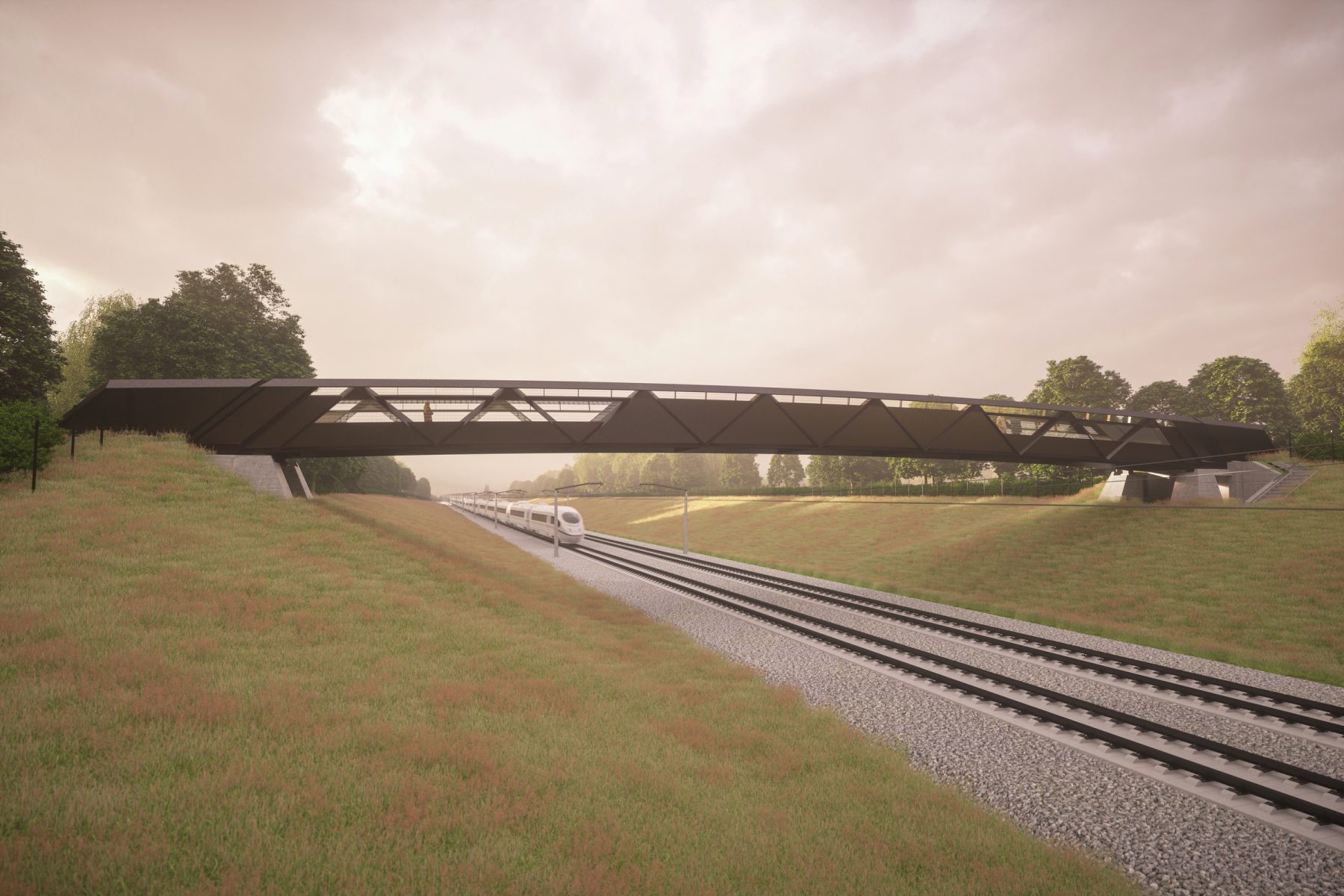
High Speed Two have published their rural footbridge design on this page of their web site.
This image from High Speed Two shows an artist’s impression of the bridge.
This is High Speed Two’s own thoughts on the design.
Made of weathering steel, the sides of the lightweight bridges will lean outwards to maximise views of the sky and improve the experience of people crossing the railway.
Weathering steel – which ages naturally to a russet brown colour – was chosen to help match the tone of the surrounding countryside, while the plates that form the structure of the bridges will be angled to appear narrower and lighter.
To emphasise the sense of lightness, each span will be slightly higher in the middle so that they appear to leap over the railway. Most of the bridges will consist of just one 42m span, with extra spans added where necessary to create bridges of up to 102m long.
The design of the bridge would appear to be a good compromise between accessibility, cost, ease of construction and installation and practicality.
The article also covers other topics.
Step-Free
This paragraph explains how the bridges will be step-free.
In order to improve efficiency of manufacturing and assembly, all the bridges will have the same basic form, with the approach paths built into the earthworks on either side of the bridge. This also means that all the footbridges will effectively be step-free.
I can see bridges of this type being built at other rural locations.
A Single-Platform Station
These images show James Cook station in Middlesbrough.
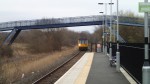


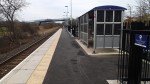
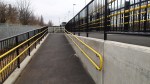
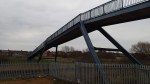



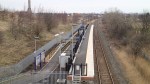


High Speed Two’s rural bridge design could be used as part of a design for a step-free station on a rural line.
Bridleways
The footbridge can be used for a bridge on a bridleway.
Designed with guidance from the British Horse Society, the bridges which carry bridleways will follow the same basic pattern, with a recycled, non-slip rubber deck and the structure acting like a baffle to stop horses being distracted by passing trains.
Footbridges will be 2.5m wide, while bridleways will be 3.5m wide to allow two horses to pass comfortably and safely.
It should be remembered, that horses are flight animals and if they are startled they run, so if say a train went under the bridge, when they were on top, they would most likely go forward and cross the bridge quickly.
I would happily have ridden my stallion; Vague Shot over a bridge like this.
I also think, the design of the bridge in the landscape should allow riders to approach to a safe distance from the bridge and perhaps watch a train or two go through.
Other Animals
I can see other animals like badgers, foxes and hares using a bridge like this.
I also think, that on classic railways, bridges like these could be used to allow farmers to move sheep or possibly cattle over a railway, with some simple design changes.
Conclusion
This bridge has more applications, than the initial one, for which it was designed.
 The Anonymous Widower