New HS2 Pilot Project Swaps Steel For Retired Wind Turbine Blades To Reinforce Concrete
The title of this post, is the same as that of this press release from High Speed Two.
These are the first three paragraphs.
Worn-out wind turbine blades destined for the incinerator will instead be used to create carbon-friendly reinforced concrete on Britain’s new high speed rail network, HS2 Ltd has said today (12.03.21).
The innovative project will swap steel rebar, traditionally used to reinforce concrete, with sections of glass fibre reinforced polymer turbine blades that have reached the end of their operational lives generating low carbon electricity.
By 2023, around 15,000 turbine blades will have been decommissioned across the UK and EU. Until now, expired blades have either been ground down to be used as building materials or sent to energy-from-waste incinerators.
Replacing reinforcing steel with sections of retired wind turbine blades is claimed to cut up to 90 % of the carbon generated by steel reinforcement.
It would appear to me, that this is a worthwhile process.
- In 2018, 295,000 metric tons of steel reinforcing bars were produced in the UK.
- Retired blades don’t end up in landfill or incinerators.
- Could we export them as eco-friendly reinforcing bars, to countries with smaller wind industries.
As we have more wind farms, than most other countries, we will probably have more blades to recycle, so perhaps we should research other secondary uses for these blades.
‘Upgrade East Coast Main Line Before HS2’ If Leeds And Yorkshire Want Faster Rail Links To London
The title of this post, is the same as that of this letter to the Yorkshire Post.
This is the opening paragraph.
The decision to scrap HS2 running to Leeds is controversial but those who travel to London should not despair.
The writer makes these points.
- High Speed Two will probably charge a premium fare because of the speed.
- The current journey time to the capital is two hours 13 minutes at a cost of £28-60, if purchased in advance.
- Planned improvements on the East Coast Main Line will reduce the journey time to London King’s Cross to one hour 56 minutes.
- High Speed Two will take one hour 22 minutes.
- If the line between Doncaster and Leeds were to be improved, the journey time could be reduced to one hour 45 minutes.
The writer finishes by saying that if the government ‘four tracked’ the entire East Coast route, 140mph LNER’s Azuma trains would match the times of High Speed Two.
In What Will Be The Fastest Times Possible Between London King’s Cross And Leeds?, I came to this conclusion.
It looks like a non-stop service between London and Leeds running at 140 mph, with perhaps some sections at perhaps a bit faster, could be able to match the High Speed Two times.
Running non-stop saves a total of eighteen minutes.
In an hour, I would give Leeds one non-stop and one stopping service to London.
Earth Friendly Concrete
I was alerted to this product by this article on New Civil Engineer, which is entitled Keltbray Saves Carbon And Money With Earth Friendly Concrete On East London Job.
The article gave enough clues to find the Earth Friendly Concrete home page.
This is the introduction on the page.
We want to have a positive impact on the environment and supply our customers with an excellent product, that is why we created Earth Friendly Concrete ® by Wagners. It is a concrete that uses no ordinary Portland cement, instead using a geopolymer binder system made from the chemical activation of two industrial waste by-products – blast furnace slag (waste from iron production) and fly ash (waste from coal fired power generation). Our product has ZERO Portland cement and it has a much lower embodied energy compared to ordinary concrete, saving 250kg of CO2 for every cubic metre poured. Importantly, the engineering and construction properties of this environmentally friendly concrete is, in some areas, better than normal concrete. EFC has some significant performance advantages over normal Portland cement concrete, including improved durability, lower shrinkage, earlier strength gain, higher flexural tensile strength and increased fire resistance.
On this page, which is entitled About EFC, this said about the products Environmental Excellence.
EFC is a new class of concrete that contains NO ordinary Cement. Globally, the production of 1 tonne of Portland Cement produces 1 tonne of CO₂ emissions and is responsible for 5 to 8% of manmade greenhouse gas emissions. Instead of cement, EFC has a geopolymer binder that is made from the chemical activation of two recycled industrial wastes, flyash and slag. This recycled binder reduces the CO₂ emissions associated with Portland cement by 80 to 90%.
Every m3 of 40 MPa EFC saves 220kg CO₂ emissions.
Wagners, the company behind the development, are based in Queensland. Australia.
So it’s a case of Well Done The Aussies!
They have appointed Capital Concrete, to deliver Earth Friendly Concrete in the London area.
Conclusion
Does High Speed Two and other large projects that will need large amounts of concrete, know about this development?
The New Winslow Station Site
This Google Map shows the site of the new Winslow station, on the East West Railway.
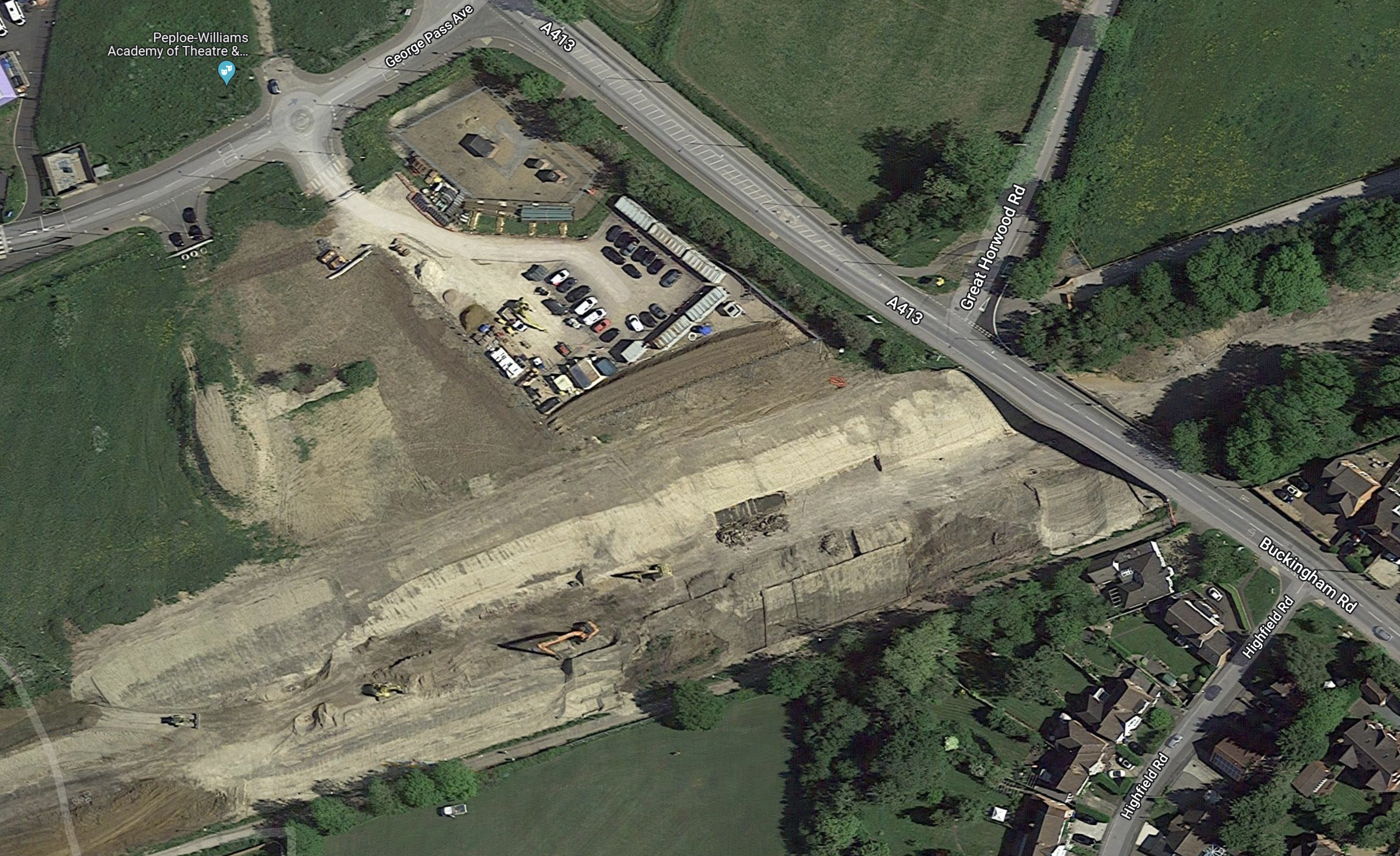
Note.
- The line from north of Wolvercote Tunnel (just north of Oxford) through Bicester to Bletchley would be enabled for 100 mph (160 km/h) double-track running.
- There will be two platforms at Winslow station.
- The station is planned to open in 2024.
Services at the station are likely to be.
- Two tph – Oxford and Milton Keynes via Oxford Parkway, Bicester Village, Winslow and Bletchley
- One tph – Oxford and Bedford via Oxford Parkway, Bicester Village, Winslow, Bletchley, Woburn Sands and Ridgmont
Note.
- tph is trains per hour.
- It appears the current Bedford and Bletchley service will continue.
It looks like the one tph service between Aylesbury and Milton Keynes via Aylesbury Vale Parkway, Winslow, Bletchley has been deferred indefinitely.
Consider.
- Building a single track railway between Aylesbury Vale Parkway station and Claydon Junction on the East West Railway can’t be that challenging or expensive.
- A single track railway should be able to handle the required train service of up to two tph at Aylesbury Vale Parkway station and occasional freight trains.
It doesn’t look too difficult or costly. So why? The only valid reason I can think of is that High Speed Two doesn’t want it for some reason.
Northern Eden Project Worth £125 million Gets Green Light
The title of this post, is the same as that of this article on The Times.
These are the first two paragraphs.
Plans to transform the seafront of a deprived town into a £125 million northern outpost of the Eden Project have been given the green light.
Councillors in Lancashire approved plans for the site on Morecambe seafront which it is hoped will attract around a million visitors and create 400 jobs.
I think the Eden Project Morecambe could be a real Northern success.
Here’s my reasoning.
Location, Location, Location
These are the three most important factors with any house, building or property.
Morecambe has a superb location for visitors coming by car or train, as is close to both the M6 Motoway and the West Coast Main Line.
I wrote about getting to the Eden Project in Getting To The Proposed Morecambe Eden Project By Train.
I suspect visitors coming by road, would drive to a suitable Park-and-Ride and then take a train.
Lancaster Will Be A High Speed Two Station
Lancaster will be served by the following High Speed Two services.
- London Euston – Two hours and three minutes – One tph
- London Old Oak Common – One hour and fifty-six minutes – One tph
- Birmingham Curzon Street – One hour and six minutes – One tph
- Crewe – Fifty-nine minutes – One tph
- Warrington Bank Quay – Forty-two minutes – One tph
- Wigan North Western – Thirty-one minutes – Two tph
- Preston – Seventeen minutes – Two tph
- Oxenholme – Twelve minutes – One tp2h
- Penrith – Thirty-five minutes – One tp2h
- Carlisle – Fifty-two minutes – One tph
- Lockerbie – One hour and eleven minutes – One tph
- Edinburgh – Two hours and twelve minutes – One tp2h
- Motherwell – One hour and fifty-six minutes – One tp2h
- Glasgow – Two hours and twelve minutes – One tp2h
Note.
- tph is trains per hour.
- tp2h is trains per two hours.
- A shuttle train between Lancaster and the Eden Project Morecambe will probably add ten minutes.
High Speed Two will make the Eden Project Morecambe one of the best connected entertainment venues in the UK.
Avanti West Coast And TransPennine Express North Of Warrington Bank Quay After High Speed Two Opens
When High Speed Two opens, it is likely that North of Warrington Bank Quay station, the operating speed of this section of the West Coast Main Line will be faster than the current 125 mph, as the track will have been straightened and digital signalling will have been installed.
It will probably be at least 140 mph.
These trains will be running express passenger services on the route and will be able to match the speed and timings of High Speed Two’s Classic-Compatible trains to the North of Warrington Bank Quay station.
- Avanti West Coast’s Class 390 trains
- TransPennine Express’s Class 397 trains
- TransPennine Express’s Class 802 trains
There is likely to be savings of a few minutes on these services.
- Avanti West Coast – London Euston and Glasgow Central
- TransPennine Express – Manchester Airport, Manchester Piccadilly and Glasgow Central
- TransPennine Express – Liverpool Lime Street and Glasgow Central
Connections from the North-West of England and Southern Scotland will be fast and frequent.
Eden Project Morecambe Will Be A Day Trip For Greater North West England
An area defined by Carlisle, Blackburn, Manchester, Crewe, Chester, Liverpool and Blackpool will be close enough to have a day trip to the venue.
Eden Project Morecambe Is Unlikely To Be A Poor Attraction
The Eden Project Morecambe must be worth attending, but with twenty years experience of running a similar attraction in Cornwall, it is unlikely to be a failure.
Eden Project Morecambe Will Be Easier To Travel To Than The Original Eden Project For Many
I have never even been past the Eden Project in Cornwall, as it is not the easiest place to get to without a car.
I intend to go, but it will probably need two nights in a hotel to do it justice.
But Eden Project Morecambe could well be much shorter trip from London.
Currently, Avanti West Coast’s fastest time between London Euston and Lancaster are two hours and forty minutes, which would mean an under three hours trip both ways to and from Eden Project Morecambe. The Cornish site is probably nearly five hours by public transport.
Conclusion
All these factors should contribute to the success of the attraction.
HS2 To Trial New Building Method Which Could Provide Carbon-Free Energy
The title of this post, is the same as that of this article on Rail Technology Magazine.
This is the first three paragraphs.
Part of HS2’s Innovation programme, an HS2 building site in London is to become a test bed for a new building method which could ultimately provide carbon-free energy to stations on the new high speed route.
The new approach will be trialled by contractors Mace Dragados at the project’s Euston station site in London and will draw ground heat up through the foundations of a newly-built construction site office.
Developed by Keltbray, the innovative new technology is estimated to harness enough energy to supply 80% of the building’s heating and hot water needs.
It’s an incredibly simple, but extremely powerful idea, that revolutionises heating, cooling and hot water in buildings.
Read the article and then read the brochure on the Keltbray web site.
Barriers And Planters On The London Overground Platforms At Clapham Junction Station
To get home from Feltham station, after my visit this morning to see the new bridge, which I wrote about in The Completed Bridge At Feltham Station, I changed trains at Clapham Junction station.
I noticed that a barrier has been put up between the current two Overground platforms; 1 and 2.
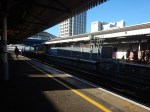
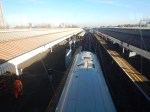
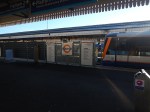
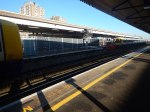
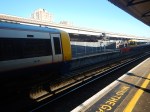
.I suspect it is for safety reasons, as it will certainly stop passengers falling off the platform.
I also noticed that planters had been placed where I suspect that the new Platform 0 will be built.
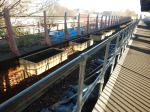
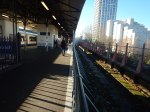
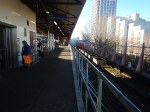
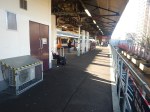
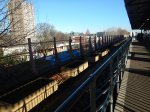
Note.
- If the track is to placed between the planters and the platform, the space could be a bit small.
- Or is the platform going to be rebuilt a bit narrower?
- It also looks like the platform won’t be long enough for the planned eight-car train.
I also took these pictures of what looks to be a Fire Exit.
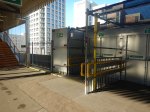
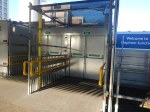
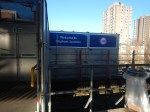
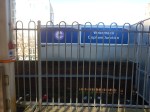
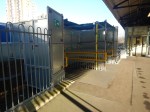
Could it be a temporary entrance, that will be used if there is a lot of work going on about the Grant Road entrance to create the new platform?
I also took these pictures of the Eastern end of the platform.
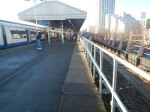
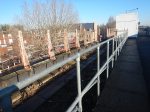
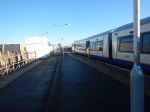
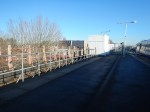

Considering, that the Class 378 train is five cars and an eight-car train would be sixty percent longer, it looks to me, that they will have to extend the platform, behind the temporary entrance or perhaps further towards the East.
Or could Network Rail have called up Baldrick, and asked him for one of his cunning plans?
Consider.
- Currently, there is a one train per hour (tph) between Milton Keynes and Clapham Junction stations, run by Southern.
- The service used to run between Milton Keynes and South Croydon stations.
- There surely is a need for a high-frequency service between the High Speed Two station at Old Oak Common and Clapham Junction station.
- Currently, there is no planned link between Crossrail and the West London Line.
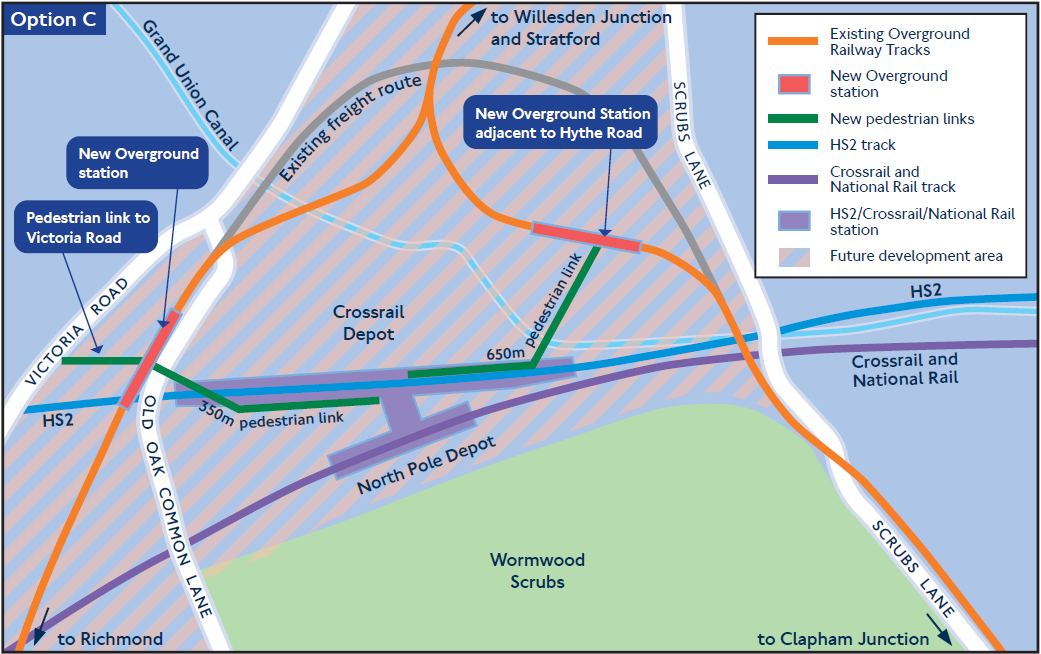
Hythe Road station is planned to be on the West London Line and will serve the High Speed Two station at Old Oak Common.
This Transport for London map, shows the position of the proposed Hythe Road station with respect to High Speed Two and Crossrail.
Note.
- The West London Line to and from Clapham Junction goes down the East of the map.
- The North London Line to and from Richmond goes down the West of the map.
- The current Milton Keynes and Clapham Junction service doesn’t go through the site of Hythe Road station, but somehow sneaks round on the freight line in the map.
Wikipedia describes the proposal for Hythe Road station like this.
Hythe Road railway station would be situated about 700 metres (770 yards) from the mainline Old Oak Common station. Construction work would involve re-aligning the track along a new railway embankment (built slightly to the north of the existing line) and demolishing industrial units along Salter Street, on land currently owned by a vehicle sales company (‘Car Giant’). The station structure will sit on a viaduct, with a bus interchange underneath. The station will incorporate 3 platforms, allowing through services between Stratford and Clapham Junction with an additional bay platform to accommodate terminating services from Clapham Junction.
I can envisage an eight tph service between Clapham Junction and Hythe Road stations, made up something like this.
- Four tph between Stratford and Clapham Junction stations
- One tph between Milton Keynes and Clapham Junction stations
- Three tph between Hythe Road and Clapham Junction stations
Note.
- Services would stop at Shepherd’s Bush, Kensington (Olympia), West Brompton and Imperial Wharf.
- Two platforms at Clapham Junction station could easily handle eight tph.
- The London Overground’s five car Class 378 trains would probably be long enough for the shuttle.
- There is even the possibility of running the Milton Keynes and Clapham Junction service with five car trains, to void the expense of creating an eight-car platform at Clapham Junction station.
It would be better if the Milton Keynes and Clapham Junction service could go through Hythe Road station. But this might be difficult to arrange.
Conclusion
An eight tph service through Old Oak Common could be a nice little add-on for both High Speed Two and Crossrail.
HS2 Reveals Images Of First Landscaped ‘Green Tunnels’ For Bucks And Northants
The title of this post, is the same as this press release from High Speed Two.
This image shows one of the proposed tunnels.
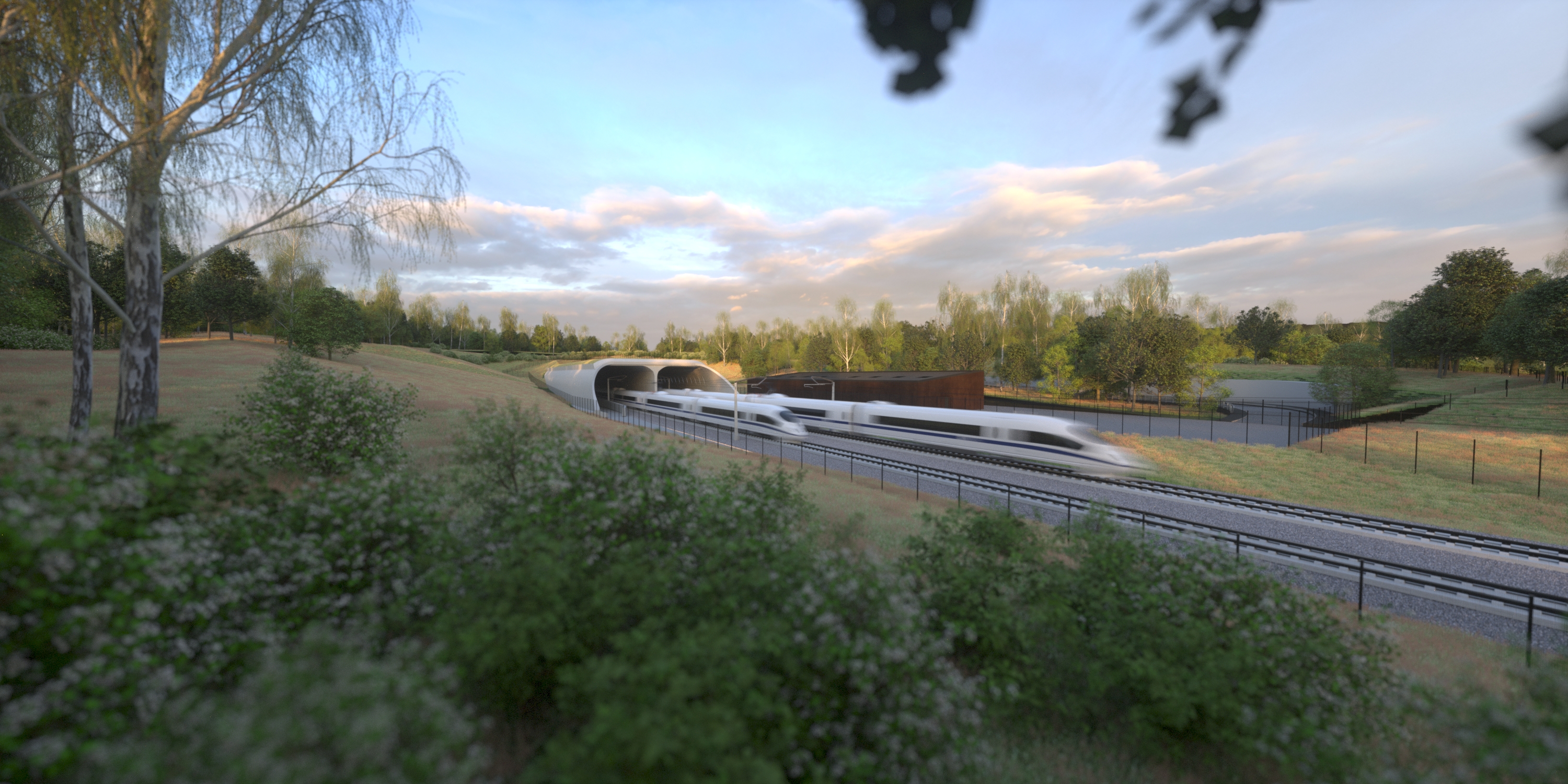
The article explains the design and describes how the tunnels will be built in a factory in Derbyshire and assembled on site.
Off-site concrete construction was used at Custom House station on Crossrail. I wrote about the construction of this station in An Express Station.
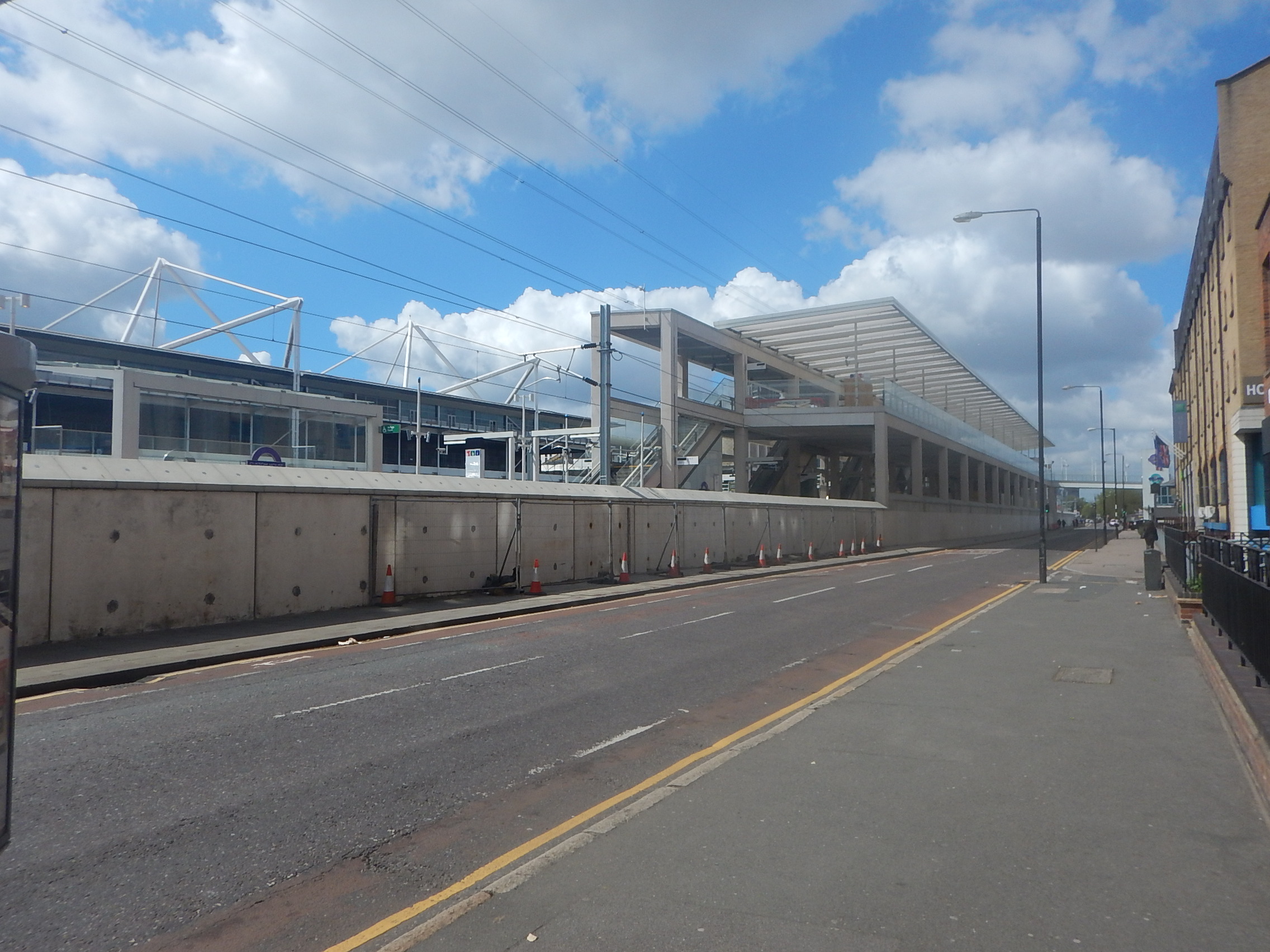
The picture shows Custom House station under construction. One of the engineers told me, that the quality of the concrete in the station, is so much better than normal.
Riding Birmingham’s New Hydrogen-Powered Buses
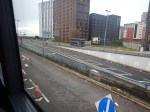
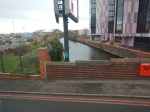
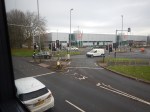
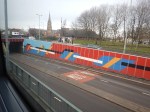
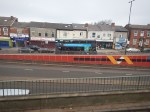
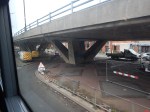
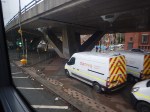
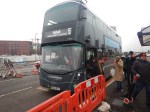
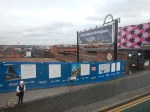
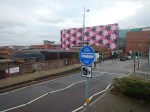
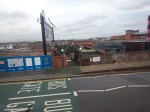
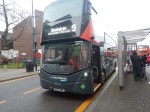
I went to Birmingham today and took one of their new hydrogen buses on route 51 to Perry Barr and another one back.


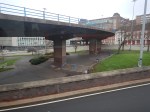
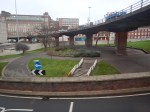
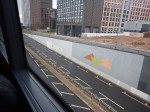



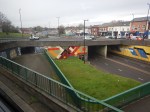
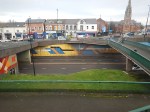
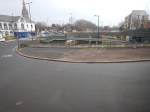
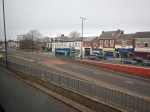

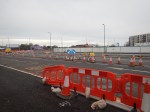
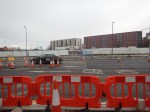

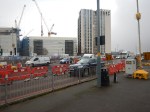

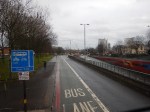
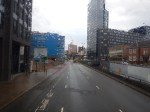
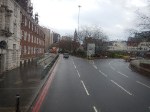
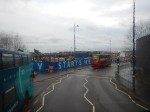
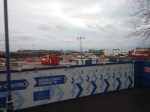
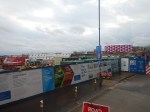

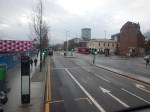
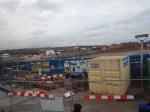
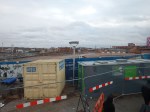
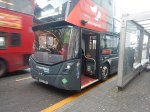

Note.
- As the pictures show Perry Barr is a bit of traffic bottleneck because of the reconstruction of Perry Barr station an other developments in the area, because of the Commonwealth Games, which are going to e held in Birmingham in 2022.
- The route goes past the High Speed Two site.
- Birmingham is a city of highways, flyovers, underpasses and roundabouts.
- The buses have wi-fi and charging points for phones.
I very much feel that the buses are the best hydrogen-powered vehicles, that I’ve travelled in, as they are smooth, comfortable, quiet and seem to have excellent performance.
Birmingham Buses Have Their Own Hydrogen Electrolyser
London bring their hydrogen in by truck from Runcorn, where it is created by electrolysis, for their hydrogen-powered buses.
On the other hand, Birmingham Buses have their own electrolyser at the Tyseley Energy Park.
This Google Map shows Tyseley Energy Park.

Note.
- The Birmingham Bus Refueler hadn’t opened, when this map was last updated.
- Tyseley Energy Park is only a few miles from the City Centre and route 51.
- I estimate that the Tyseley Energy Park occupies around four hectares.
This page on the Tyseley Energy Park web site described the refuelling options that are available.
- Fuels available include hydrogen, biomethane, compressed natural gas, diesel, gas oil and AdBlue.
- There are a range of charging options for electric vehicles.
The 3 MW electrolyser was built by ITM Power of Sheffield, which I estimate will produce nearly 1.5 tonnes of hydrogen per day.
According to this page on the Wrightbus website, a hydrogen-powered double-deck bus needs 27 Kg of hydrogen to give it a range of 250 miles. The refuelling of each bus takes eight minutes.
So the current fleet of twenty buses will need 540 Kg of hydrogen per day and this will give them a combined range of 5000 miles.
It would appear that the capacity of the electrolyser can more than handle Birmingham’s current fleet of twenty buses and leave plenty of hydrogen for other vehicles.
Could Other Towns And Cities Build Similar Energy Parks?
I don’t see why not and it looks like ITM Power are involved in a proposal to build an electrolyser at Barking.
Some would feel that London ought to follow Birmingham and create its own hydrogen.
.
HS2 Ltd Awards Landmark Rolling Stock Contracts To Hitachi-Alstom Joint Venture
The title of this post, is the same as that of this press release from High Speed Two.
The press release gives two major bullet points.
- Major boost for UK train-building as HS2’s state-of-the-art fleet of 225mph (360km/h) high speed trains will be built by Alstom and Hitachi Rail at their factories in County Durham, Derby and Crewe
- Landmark contract set to support 2,500 jobs across the UK and boost the economy by over £157m each year
The press release then gives a link to this video clip.
The video doesn’t appear to show much.
These are my thoughts.
The Train Specification
This document on the Government web site is the Train Technical Specification for High Speed Two Classic-Compatible Trains.
The Bare Bones Of The Contract
These three paragraphs in the press release outline the contract.
HS2 Ltd today confirmed that a Hitachi/Alstom JV has been awarded the contracts to build Britain’s next generation of high speed trains at their factories in Derby and County Durham in a major deal set to support 2,500 jobs across the UK.
The landmark contracts – worth around £2bn – will see the JV design, build and maintain a fleet of 54 state-of-the-art high speed trains that will operate on HS2 – the new high-speed railway being built between London, the West Midlands and Crewe.
Capable of speeds of up to 225mph (360km/h), the fully electric trains will also run on the existing network to places such as Glasgow, Liverpool, Manchester and the North West. Building on the latest technology from the Japanese Shinkansen ‘bullet train’ and European high-speed network, they will be some of the fastest, quietest and most energy efficient high-speed trains operating anywhere in the world.
The third paragraph is probably the most significant, with the last few words standing out.
They will be some of the fastest, quietest and most energy efficient high-speed trains operating anywhere in the world.
That is a high bar and let’s hope the joint venture achieves it.
The Fastest Trains?
In Wikipedia’s section on High Speed Rail, this is said.
China has the fastest conventional high-speed rail in regular operation, with the Beijing–Shanghai high-speed railway reaching up to 350 km/h (217 mph).
It may not be the fastest, when it opens, but the Hitachi/Alstom JV train will certainly put the wind up the Chinese.
The Quietest Trains?
In Class 345 Trains Really Are Quiet!, which I wrote in May 2017, I said this.
This morning I was sitting waiting on Platform 8 at Stratford station.
Platform 8 is separated from Platform 9 by just two tracks, so you notice a train, when it goes through Platform 9 at speed.
Usually, the trains that go through Platform 9 at speed towards Liverpool Street station are Class 321 trains or rakes of Mark 3 coaches oulled by a Class 90 locomotives.
Today, a new Class 345 train went through and the level of noise was extremely low compared to other trains.
Bombardier have applied world class aviation aerodynamics to these trains. Particularly in the areas of body shape, door design, car-to-car interfaces, bogies and pantographs.
Remember too, that low noise means less wasted energy and greater energy efficiency.
I have since confirmed the quietness of Aventras many times.
I know the Aventra is only a suburban trundler, but have the JV applied all the knowledge that makes an Aventra such a quiet train to their new high speed train.
One of the best ways to cut noise on a vehicle or train, is to make sure all the components are as quiet as possible.
On a train, a surprising amount of high-frequency noise comes from the pantograph.
This article from Rail Technology Magazine is entitled HS2 Ltd Awards Hitachi-Alstom JV Landmark Rolling Stock Contracts. This is said about the pantograph.
The new trains will utilise a pioneering low noise pantograph, the arm which collects power from the overhead wires developed by Hitachi Rail. The technology was first developed in Japan and will make the new HS2 trains quieter than comparable high speed trains.
There’s nothing wrong with that logic.
The Most Energy Efficient Trains?
There are several clues to the energy efficiency of these trains.
The Rail Technology Magazine article also says this.
Regenerative braking to boost energy efficiency.
Nothing is said about whether the energy is returned to the track in any of the articles on the train.
But in the specification for the train, in Section 7.3 Braking, this is said.
The Unit shall be capable of achieving this deceleration for any payload up to Normal
Payload (HDL) without regenerating to the 25kV power supply.
So what does the train do with the energy?
It must be stored on the train and reused to accelerate the train or provide hotel power, which means the train must have integrated battery storage.
This would contribute to the train’s energy efficiency.
Other factors, that would contribute are a lighter weight and good aerodynamics.
Relationship To The Zefiro 300
The Zefiro 300 is a high speed train, that was built by a consortium of Bombardier and Hitachi Rail in Italy.
This is said in the Wikipedia entry for the Zefiro 300.
An evolution of the Italian version of the Zefiro 300 was also offered by Bombardier (joined with Hitachi Rail) for High Speed 2 commercial tender.
Note.
- The Zefiro 300 uses FLEXX Eco bogies.
- The Zefiro 300 is a 300 kph train.
- The Zefiro 300 is called a Frecciarossa 1000 in Italy.
There is also a Zefiro 380 in China, which is a 380 kph train.
I’ve ridden one of these trains and describe it in Riding The Frecciarossa.
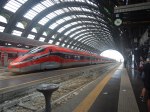
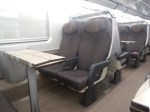


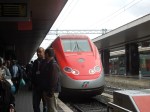
I think the High Speed Two trains will have level boarding.
Bogies
The bogies are one of the most important parts of the train. Like the Zefiro 300, will the train have FLEXX Eco bogies?
This article on Global Railway Review is entitled FLEXX Eco: The Leading Lightweight Passenger Bogie Design and it gives details on the bogie and its history.
Some of the concepts were developed at British Rail Research and some were applied to the bogies of the legendary British Rail Mark 3 and Mark 4 coaches, which ride better than some of today’s trains.
The Rail Technology Magazine article says this about the bogies.
Further supporting the UK rail supply chain, all of the bogies for the new trains will be assembled and maintained at Alstom’s facility in Crewe – which is the first time since 2004 that both jobs have been done in the UK.
It sounds sensible to have one factory to assemble and maintain the bogies.
Will this factory also supply the bogies for Aventras, which are also FLEXX Eco?
Assembly
The press release says this about assembly.
- The first stages including vehicle body assembly and initial fit-out will be done at Hitachi Rail’s facility at Newton Aycliffe, County Durham.
- The second stage of fit out and testing will be done at Alstom’s Litchurch Lane factory in Derby.
Conclusion
I find it interesting, how improvements in one area help another.
The JV has worked hard to perfect this design.
 The Anonymous Widower