The Connection Between The Northern And Lizzie Lines At Tottenham Court Road Station
In Elizabeth Line To Northern Line At Moorgate Station, I described how I was rather underwhelmed with the connection between the Bank branch of the Northern Line and the Lizzie Line.
It’s just too far to walk in the long tunnel, which is not as well fitted out as the connection to the Bakerloo Line at Paddington.
At least it can be improved, without a major amount of expense.
So what is the connection between the Lizzie Line and the Northern Line like at Tottenham Court Road?
There is access to stairs and a lift at the Southern end of the Northern Line platforms, that lead to the pedestrian tunnel between the two platforms of the Lizzie Line.
These pictures show the connection.
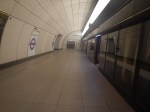
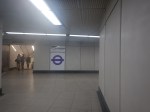
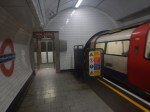
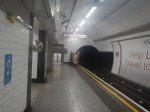
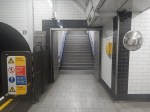
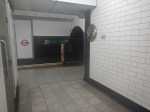
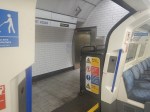
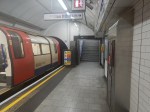
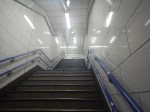
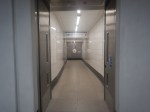
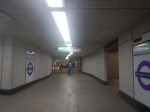
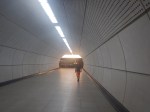
Note.
- It is certainly a lot easier than the connection at Moorgate.
- You have a choice of stairs or a lift between lines.
- Both Northern branches and both Southern branches of the Northern Line all have services through Tottenham Court Road station. Just make sure, that you get a Charing Cross branch train.
- If you’re using Tottenham Court Road station for changing to the Lizzie Line from the Northern Line, then make sure you get at the Southern end of the Northern train.
- If you’re using Tottenham Court Road station for changing to the Northern Line, then make sure you get at the Eastern end of the Lizzie Line train.
Practice will make perfect, how passengers handle this interchange.
Going Between Euston And Heathrow
There is no problem with the interchange to and from the Elizabeth Line, but getting to and from the Charing Cross branch of the Northern Line is not step-free.
Hopefully, High Speed Two and the rebuilding of Euston station will solve this problem.
High Speed Two Works Between Denham And West Ruislip Stations – 5th August 2022
I took these pictures as my Chiltern Train returned from Birmingham Moor Street station tonight.
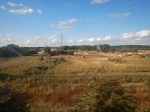
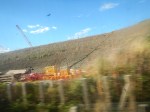
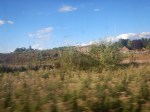


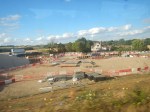

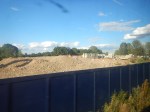
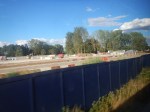
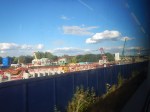

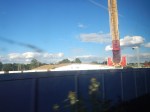
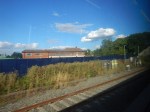
Note that the pictures were taken looking to the North of the Chiltern Main Line.
The Birmingham Bull – 5th August 2022
The non-human star of the Opening Ceremony of the 2022 Commonwealth Games in Birmingham was a mechanical bull.
This article on the BBC is entitled Commonwealth Games: Scots Creator Reveals Secrets Of Metal Bull.
These three introductory paragraphs give an overview of the design.
The secrets of the mechanical bull that wowed audiences during the opening ceremony of the Commonwealth Games have been revealed by its Scottish creator.
The 10m high scrap metal sculpture was one of the stars of the celebration in Birmingham’s Alexander Stadium.
Michael Dollar, of creative model makers Artem, said it took six people to operate the giant structure.
The BBC also revealed today, that the bull would be parked for a few days in Centenary Square outside the Library of Birmingham.
So as my day had fallen apart, I got on a Chiltern train to Birmingham and took these pictures.
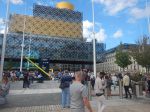
















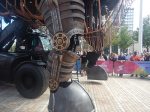
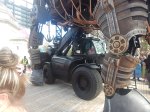
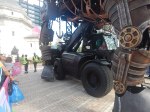



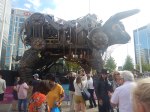
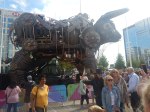

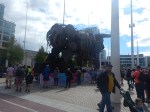
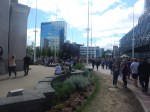
Note.
- The first picture has the The Library Of Birmingham in the background, with its lattice frontage and gold dome.
- The Bull seems to have been built on a loader chassis.
- There were a large crowd in Centenary Square looking at the Bull.
I have never seen a public work of art surrounded by such a crowd, most of whom were taking selfies or traditional pictures.
This article on the BBC is entitled Birmingham Commonwealth Games: Ceremony Bull To Stay.
The BBC article says this about the future of the bull.
A giant mechanical bull that became the star of the Birmingham Commonwealth Games opening ceremony it set to stay in the city.
The 10m sculpture is on display in Centenary Square after its debut last week, although its future has been less clear.
Largely made of foam, it was due to be dismantled at the end of the Games, sparking public outcry.
But Birmingham City Council has confirmed the bull has won a reprieve.
It will stay in the square until the end of September before being moved indoors.
This wonderful work of engineering art, is far too good and is now too well-loved to be scrapped.
As it needs to go inside, why not bring it inside High Speed Two’s new Curzon Street station, to greet passengers visiting Birmingham?
High Speed Two Publish Rural Footbridge Design
High Speed Two have published their rural footbridge design on this page of their web site.
This image from High Speed Two shows an artist’s impression of the bridge.
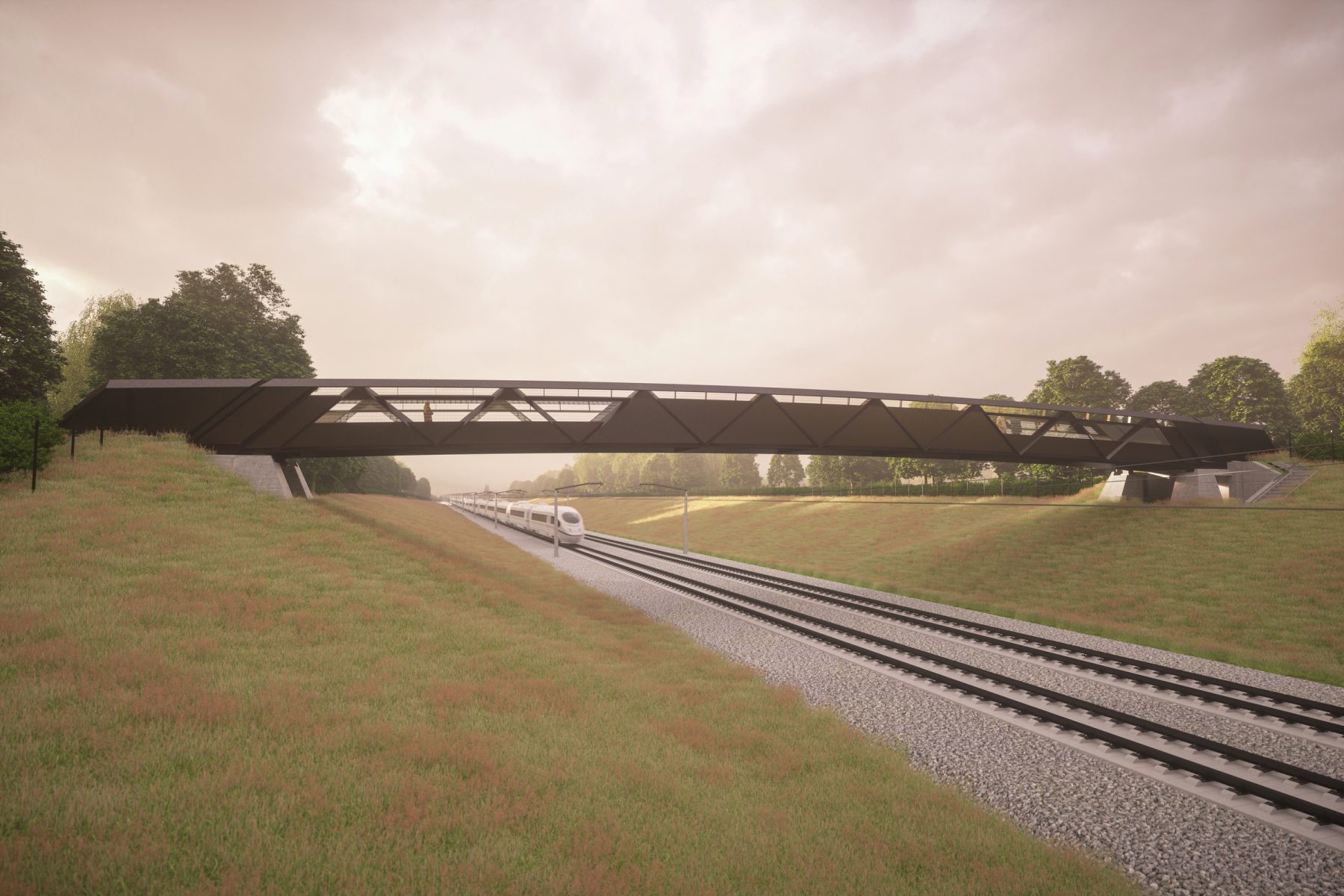
This is High Speed Two’s own thoughts on the design.
Made of weathering steel, the sides of the lightweight bridges will lean outwards to maximise views of the sky and improve the experience of people crossing the railway.
Weathering steel – which ages naturally to a russet brown colour – was chosen to help match the tone of the surrounding countryside, while the plates that form the structure of the bridges will be angled to appear narrower and lighter.
To emphasise the sense of lightness, each span will be slightly higher in the middle so that they appear to leap over the railway. Most of the bridges will consist of just one 42m span, with extra spans added where necessary to create bridges of up to 102m long.
The design of the bridge would appear to be a good compromise between accessibility, cost, ease of construction and installation and practicality.
The article also covers other topics.
Step-Free
This paragraph explains how the bridges will be step-free.
In order to improve efficiency of manufacturing and assembly, all the bridges will have the same basic form, with the approach paths built into the earthworks on either side of the bridge. This also means that all the footbridges will effectively be step-free.
I can see bridges of this type being built at other rural locations.
A Single-Platform Station
These images show James Cook station in Middlesbrough.

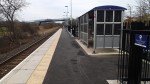
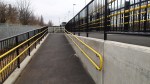
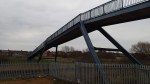

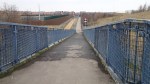

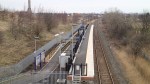
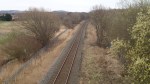

High Speed Two’s rural bridge design could be used as part of a design for a step-free station on a rural line.
Bridleways
The footbridge can be used for a bridge on a bridleway.
Designed with guidance from the British Horse Society, the bridges which carry bridleways will follow the same basic pattern, with a recycled, non-slip rubber deck and the structure acting like a baffle to stop horses being distracted by passing trains.
Footbridges will be 2.5m wide, while bridleways will be 3.5m wide to allow two horses to pass comfortably and safely.
It should be remembered, that horses are flight animals and if they are startled they run, so if say a train went under the bridge, when they were on top, they would most likely go forward and cross the bridge quickly.
I would happily have ridden my stallion; Vague Shot over a bridge like this.
I also think, the design of the bridge in the landscape should allow riders to approach to a safe distance from the bridge and perhaps watch a train or two go through.
Other Animals
I can see other animals like badgers, foxes and hares using a bridge like this.
I also think, that on classic railways, bridges like these could be used to allow farmers to move sheep or possibly cattle over a railway, with some simple design changes.
Conclusion
This bridge has more applications, than the initial one, for which it was designed.
A First Trip To Barking Riverside Station
I took a first trip to Barking Riverside station this morning and took these pictures.
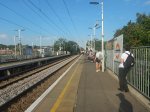
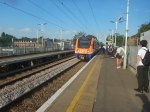
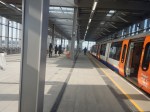
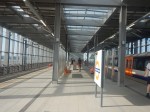
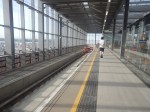
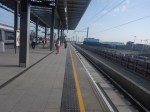
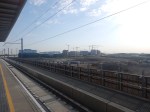
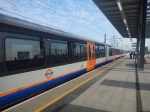

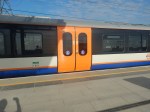
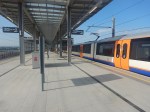
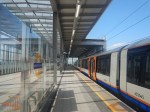
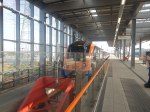
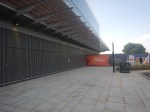
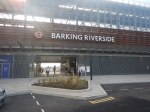

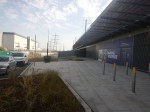
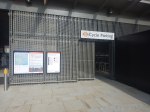

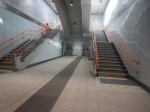
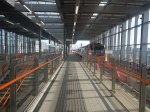

I have a few thoughts and observations.
A Trip To Northfleet
Yesterday, I went to Northfleet station.
Partly, it was to have a drink with my old friend; Ian, but mainly it was to take some pictures to add to Elizabeth Line To Ebbsfleet Extension Could Cost £3.2 Billion.
Normally, when I go to see Ian I take the HighSpeed service out of St. Pancras.
But this service is expensive and as I was leaving from Moorgate, I decided to take the Elizabeth Line to Abbey Wood and get a train to Northfleet station instead.
I have a few thoughts on my journey.
Cost
I used my Freedom Pass to Abbey Wood and then bought an Off Peak Day Return between Abbey Wood and Northfleet for just £4.95 with a Senior Railcard.
Convenience
As you have to use one of the bridges at Abbey Wood to change to and from the Elizabeth Line, I used the one at the station end and popped through the barrier to buy my onward ticket from a machine.
Surely, Freedom Passes should be linked to a bank account, so if you want to stray outside Zone 6, you are automatically charged.
Elizabeth Line Messages On Southeastern
At Swanscombe station today, whilst waiting for my Thameslink train to take me back to Abbey Wood, I noticed that the displays were telling passengers to change at Abbey Wood for the Elizabeth Line.
You certainly wouldn’t use the dreadful Swanscombe station with heavy cases, but stations like Abbey Wood, Dartford, Gravesend and others would enable granny or grandpa to take a sensible-size wheeled case to Heathrow Airport with reasonable ease, once the Elizabeth Line becomes a fully-connected railway between Abbey Wood and Heathrow.
Onward Trains At Abbey Wood
There are two easy onward Thameslink tph at Abbey Wood, that run at sixteen and forty-six minutes past the hour.
You can also take the first Dartford train and then take the first train from there.
If you get the Thameslink train from Abbey Wood timings are as follows.
- Slade Green – 6 minutes
- Dartford – 11 minutes
- Stone Crossing – 16 minutes
- Greenhithe – 18 minutes
- Swanscombe – 21 minutes
- Northfleet – 23 minutes
- Gravesend – 27 minutes
- Higham – 33 minutes
- Strood – 39 minutes
- Rochester – 42 minutes
- Chatham – 45 minutes
- Gillingham – 50 minutes
- Rainham – 55 minutes
Note.
- There are also two Southeastern tph between Charing Cross and Gravesend, but they don’t serve Abbey Wood.
- The timings appeared sensible in my two trips; yesterday and today.
- Travellers also have a choice in that they can use the more expensive HighSpeed services to selected stations.
After just missing a Thameslink train today by a few seconds, and then had to wait thirty minutes for the next train, I am convinced that there needs to be a four tph service between Abbey Wood and Rainham.
Four tph Between Rainham And Abbey Wood
In Crossrail Ltd Outlines Plan To Complete The Elizabeth Line, I said this about Western branch services.
When Crossrail is fully open, the Western Branch frequencies are planned to be as follows.
- Reading and Abbey Wood – 4 tph in the Peak and 2 tph in the Off Peak
- Maidenhead and Abbey Wood – 2 tph all day
- Heathrow Terminal 4 and Abbey Wood – 4 tph all day.
- Heathrow Terminal 5 and Abbey Wood – 2 tph all day.
This includes 6 tph between Heathrow and Abbey Wood all day.
Crossrail To Ebbsfleet is proposing that the South-Eastern branch will terminate as follows.
- 4 tph – Abbey Wood
- 4 tph – Northfleet
- 4 tph – Gravesend
So will this mean that the six tph to Heathrow will be split equally between Abbey Wood, Northfleet and Gravesend, with two Heathrow tph terminating at each terminal?
The North Kent Metro
My naive mind thinks, why don’t the two Heathrow and Gravesend services terminate at Rainham?
This would give the following.
- The minimum four tph between Abbey Wood and Rainham.
- Rainham should be able to turnback for tph.
- Services would call at Belvedere, Erith, Slade Green, Dartford, Stone Crossing, Greenhithe, Swanscombe, Northfleet, Gravesend, Higham, Strood, Rochester, Chatham and Gillingham.
North Kent would have its own metro running under London Overground rules.
It could even start as soon as Class 345 trains are allowed to run to Rainham.
Airport Connect
Consider
- The Elizabeth Line service between Abbey Wood and Rainham could serve Heathrow at its Western end.
- The Thameslink service would serve Luton Airport Parkway.
- Both services would serve Liverpool Street for the Stansted Express and services to and from Southend Airport.
- Both services would serve Farringdon for services to and from Gatwick Airport.
- An extra station at Silvertown could serve London City Airport.
- In future, there could even be a connection to High Speed Two at Old Oak Common.
One service on the Elizabeth Line would connect all these together.
HS2 Starts Work On First Pioneering ‘Green Tunnel’
The title of this post is the same as that of this press release on the High Speed Two web site.
These three paragraphs introduce the work at Chipping Warden.
HS2 today [Friday 10th June] announced the start of construction at the site of its first innovative ‘green tunnel’, designed to blend the high speed railway into the landscape and reduce disruption for communities.
Unlike a normal underground tunnel, the one-and-a-half mile (2.5km) Chipping Warden green tunnel in Northamptonshire is being built on the surface using a pioneering off-site manufacturing approach to speed up construction and improve efficiency.
This approach will see more than five thousand giant concrete tunnel segments made in a factory in Derbyshire before being assembled on site. The completed tunnel will then be covered by earth, with trees, shrubs and hedgerows planted to fit in with the surrounding countryside.
Note.
- High Speed Two are building five of these tunnels between London and Birmingham.
- I know from talking to engineers at Custom House station, which was also built in a factory, that the quality is excellent.
- But is it also cheaper and quicker, as all segments on the five tunnels are identical, no expensive tunnel boring machine is required and conventional equipment can be used?
These are some images from High Speed Two, which show the erection of the first segments of the green tunnel.


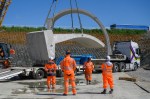
There is also this video, which shows more about the green tunnels.
I suspect we’re going to see a lot more of these tunnels.
Call For Rail Sector To Mobilise To Get Ukrainian Agricultural Exports Moving
The title of this post, is the same as that of this article on Railway Gazette.
These are the first two paragraphs.
Rail has a central role in the European Commission’s plan to establish ‘Solidarity Lanes’ for the transport of Ukrainian agricultural exports which would normally use the Black Sea ports that are being blockaded by Russia.
Announcing its plan, the commission said the Russian blockade is threatening global food security, creating an urgent need for alternative transport routes. Ukraine is the largest exporter of sunflower oil (50% of world exports), the third largest of rapeseed (20%) and barley (18%), the fourth of maize (16%) and the fifth of wheat (12%).
It certainly is a big problem and not just for Ukraine, but for any country that habitually buys these agricultural products from Ukraine.
But it will probably require a lot of investment to solve.
These are points from the article.
- Trains handling 1,400 tonnes are possible.
- The average waiting time for wagons at the Ukrainian border is sixteen days.
- The capacity of existing freight corridors must be expanded and new ones must be created.
After reading the whole article, it does seem that an EU plan is being created.
I have my thoughts.
Gauge Change
Consider.
- There will be a gauge change between standard and Russian gauge.
- Spanish company; Talgo has developed the technology, so that trains can run on both gauges and even change between gauges at a slow speed.
- The technology is used on the Strizh train, which runs passenger services between Berlin and Moscow via Warsaw.
I feel it is likely, that Talgo could develop freight wagons to move the agricultural products between Ukraine and ports in Poland or Germany.
Talgo’s Plans
In A Spaniard In The Works!, I outlined Talgo’s plans, which included building a factory at Longannet in Scotland.
But their plans must have been disrupted, as the company did not secure the High Speed Two Classic-Compatible rolling stock contract.
On the other hand Longannet could be an ideal place to build trains for Eastern Europe. They could go on a ferry to Gdansk, Helsinki or other ports.
Cycle Paths To Run Alongside HS2 For 200 Miles
The title of this post, is the same as that of this article on The Times.
This is the first paragraph.
The route of HS2, the high-speed railway line from London to Manchester, is to become an unlikely tourist and leisure destination, with a trail for cyclists and walkers that will eventually run for 200 miles.
The article says this about the design of the proposed trail.
- The cycle path is expected to be 3m wide.
- The walkers path is expected to be 2.5m wide.
- The two paths would be separated by a grass verge.
I am pleased that the combined path will be set at some distance from the High Speed Two track, as I don’t like to be near speeding trains.
I have some thoughts.
Rest Areas
In some places, there should be rest areas. Some of these could be close to towns or villages, where there is a convenient cafe or pub.
In Burnley, there is even a Premier Inn on the banks of the Leeds and Liverpool Canal and the manager told me, that in the summer, they get cyclists staying the night, as it’s the mid-point between Leeds and Liverpool.
Mobility Scooters
Will rules for these to use the trail be developed?
Health And Safety
In Edinburgh to Inverness in the Cab of an HST, I talked about a memorable trip, that I made to Inverness.
The route to Inverness is for a long way alongside the A90 and driver told me how on one trip, there was a serious multiple car crash in heavy snow.
So he stopped the train, alerted the emergency services and even asked the passengers, if there were any medical staff on board.
Obviously, stopping a High Speed Two train from 225 mph is not as practical as stopping an InterCity 125 from perhaps 90 mph.
But the drivers’ eyes or the CCTV systems on the train would probably spot a minor accident on the path, so the appropriate assistance can be called.
Conclusion
I like this idea.
It should be fully developed.
HS2 Reveals Dramatic Carbon Saving With Ambitious Modular Design For Thame Valley Viaduct
The title of this post, is the same as that of this press release on High Speed Two.
This is the first paragraph.
HS2 today revealed the final designs for the Thame Valley Viaduct and the pioneering pre-fabricated construction methods that will see the 880m long structure slotted together like a giant Lego set, cutting its carbon footprint by an estimated 66%.
This is one of the pictures released in this photoset.

This second picture shows a closer view of a pillar and the catenary.

It does appear in these two views that the catenary and the gantries that support it are more elegant than those that tend to be used on most electrification schemes at the present time.
These paragraphs describe how the design saved carbon emissions.
Applying lessons from recent high speed rail projects in Spain, the design team cut the amount of embedded carbon by simplifying the structure of the viaduct so that every major element can be made off site.
In a major step forward for viaduct design in the UK, the team opted for two wide ‘box girder’ beams per span instead of eight smaller beams – to simplify and speed up assembly.
The production of steel and concrete is a major contributor to carbon emissions, with the new lighter-weight structure expected to save 19,000 tonnes of embedded carbon in comparison to the previous design. That’s the same amount of carbon emitted by one person taking a flight from London to Edinburgh and back 70,000 times.
It would appear that saving weight and using less steel and concrete can save a lot of carbon emissions.
I once got a bonus at ICI because I saved ten metres on the height of a chemical plant. My boss said, I’d saved nearly a million. by using a mathematical model on an analogue computer to show that a vessel in the plant wasn’t needed and this eliminated a complete floor of the plant.
How much concrete and steel has been saved by High Speed Two on this viaduct, by making it more basset than Afghan hound?
Ever since I watched the building of Crossrail’s Custom House station, I have been in favour of off-site construction.
I wrote about it in An Express Station and am pleased to see it being used on High Speed Two.
 The Anonymous Widower