Northern Trials New Technology To Blast Leaves From Train Tracks
The title of this post, is the same as that of this article on Rail Technology Magazine.
This is the sub-heading.
Northern is trialling new technology to blast leaves from train tracks this autumn. The technology, called Water-Trak, is attached to the undercarriage of passenger trains and sprays a small amount of water onto the track when a slippery rail is detected. This creates rainy-day conditions on the rail surface, which cleans the rail and makes the conditions better for braking.
Northern have fitted the Water-Trak system to five trains this autumn and seem pleased with the results, as they are fitting another eleven trains for next autumn.
Northern Unveils ‘Supersonic’ Leaf Busting Tech
The title of this post, is the same as that of this article on Rail Technology Magazine.
These two paragraphs outline the project.
A collaborative effort between Northern and The University of Sheffield has resulted in the development of an innovative piece of technology, small enough to be fitted onto passenger trains, that clears leaves from the line.
A recent demonstration at the Wensleydale Railway has highlighted the effectiveness of this tech, meaning that the disruptions from fallen leaves to rail operations could soon be a thing of the past.
The process is described in this paragraph.
The new cleaning system, developed by researchers from the University’s Department of Mechanical Engineering, works via firing dry ice pellets in a stream of air at supersonic speed at the railhead, resulting the freezing of the leaves stuck on the line, which are subsequently blasted away as the dry ice pellets turn back into a gas. The dry ice pellets themselves are provided from waste carbon dioxide from other industries.
I suppose the only problem, is that it releases carbon dioxide into the atmosphere.
More Details
This page on the Sheffield University web site, which is entitled End Of The Line For Rail Delays Caused By Autumn Leaf Fall, gives more derails.
Adding Alderley Edge And Manchester Piccadilly To The Bee Network
This article on the Railway Gazette has a list of the lines, that will be transferred between Northern Rail and the Bee Network.
Included in the list is this line.
Alderley Edge And Manchester Piccadilly
I think this route would be the following.
- The Southern terminus would be Alderley Edge.
- The Northern terminus would be Manchester Piccadilly.
- Intermediate stations would be Wilmslow, Handforth, Cheadle Hulme, Stockport, Heaton Chapel and Levenshulme.
- The route is fully electrified with 25 KVAC overhead.
- Most of the route has a range of operating speeds. up to 110 mph.
- The distance is 13.6 miles
- Trains take 29 minutes
- Trains are often three-car Class 331 trains.
The route is the same as the current Northern Trains service.
This is my thought.
Trains
As the route is fully-electrified, electric trains are needed.
Any 110 mph trains would probably be ideal, to keep out of the way of the expresses.
Adding Wigan And Manchester Victoria To The Bee Network
This article on the Railway Gazette has a list of the lines, that will be transferred between Northern Rail and the Bee Network.
Included in the list is this line.
Wigan and Manchester Victoria via the West Coast Main Line and a proposed station at Golborne, which could open from 2025.
I think this route could be the following.
- The Eastern terminal would be Manchester Victoria
- The Northern terminal would be Wigan North Western, as it is on the West Coast Main Line.
- Intermediate stations would be Golborne, Patricoff, Eccles and Salford Central.
- The route is fully electrified with 25 KVAC overhead.
- Most of the route has a 90 mph operating speed.
There is no comparable route in the current timetable.
These are a few thoughts.
Golborne Station
In Beeching Reversal – Reopening Golborne Railway Station, I discussed the reopening of Golborne station.
I didn’t think it would be likely, as it was a cramped site in the middle of a village, as this Google Map shows.
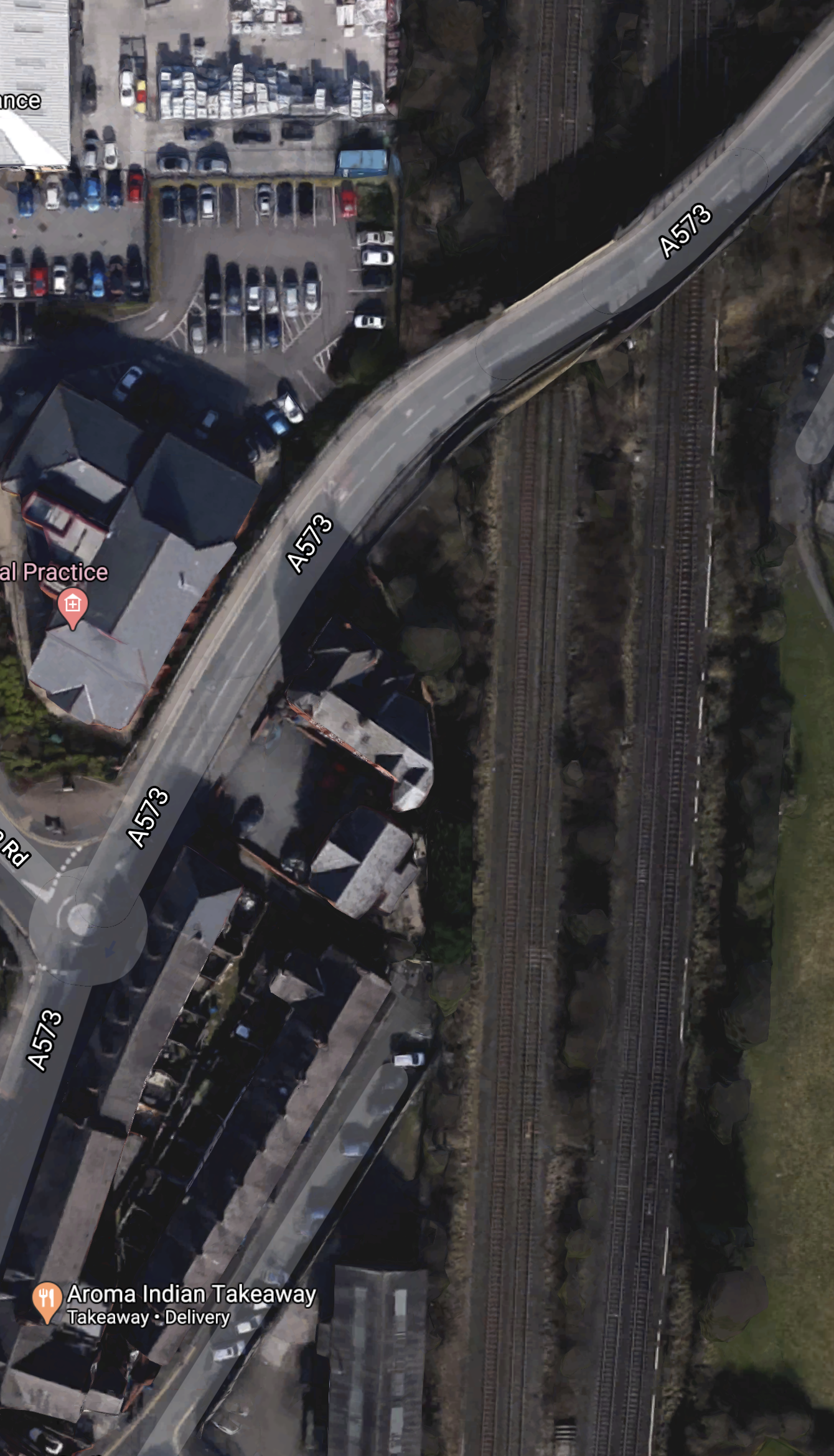
But I didn’t notice the four tracks through the site.
As the line through here, will have to be rebuilt for High Speed Two to raise the operating speed from the current 90 mph to as high as 140 mph. perhaps a high class architect could find a way to build a station at the site on the slow lines?
Improvements To Wigan North Western Station
In Wigan North Western Station Set For Platform Extension Work, I talked about work to make Wigan North Western station ready for High Speed Two.
I concluded, by saying this.
It certainly looks like Wigan North Western station is being updated to have a comprehensive network of local electric services to give a large number of stations, good access to current West Coast Main Line and future High Speed Two services.
I also added this picture of Wigan North Western station.
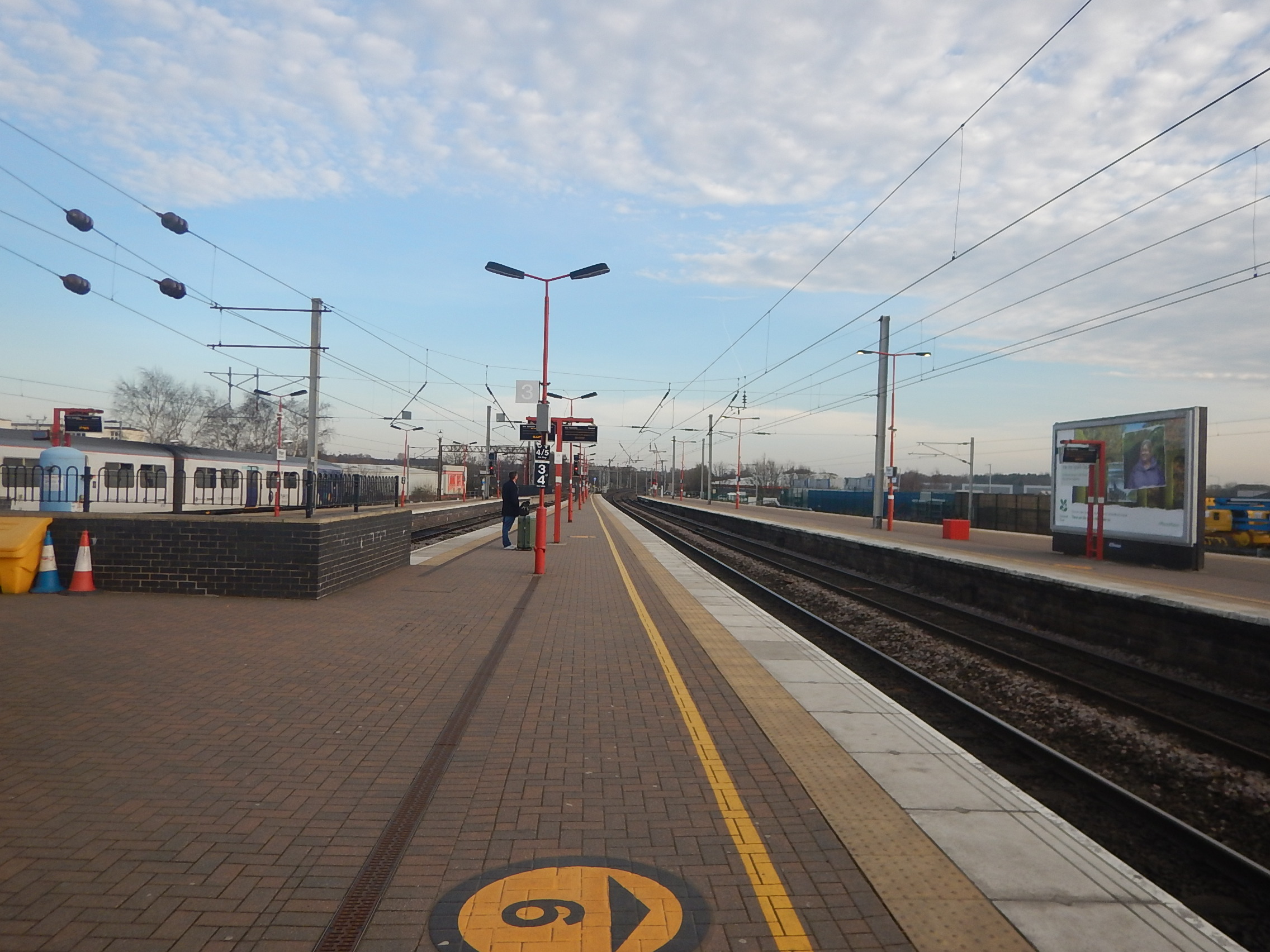
Wigan North Western station can’t be far off being able to accept pairs of High Speed Two Classic Compatible trains, that will be 400 metres long.
The Wigan North Western and Manchester Victoria service will add Golborne, Patricoff, Eccles, Salford Central and Manchester Victoria to the list.
Connecting To Scottish Services
The Internet gives these times from Wigan North Western.
- London Euston – 1 hour and 55 minutes – Current
- London Euston – 1 hour and 34 minutes – High Speed Two
- Glasgow Central – 2 hours and 35 minutes – Current
- Glasgow Central – 2 hours and 06 minutes – High Speed Two
It looks to me, that there is an awful lot of trackwork to be done to the West Coast Main Line between Wigan North Western and Glasgow Central.
But on the other hand, changing at Wigan North Western will be a reasonably fast alternative, if whilst building High Speed Two to Manchester, the current route is closed.
Calls For Study Into Reopening Of Leeds Railway Station To Expand Capacity
The title of this post, is the same as that of this article on Rail Technology Magazine.
This is the introductory paragraph.
Local politicians in Leeds have called for the revival of Marsh Lane railway station to ease some of the pressure on the city’s busy main station, seeking viability studies to be carried out on it and other sites as a first step.
This Google Map shows the area of the proposed Leeds Marsh lane station.
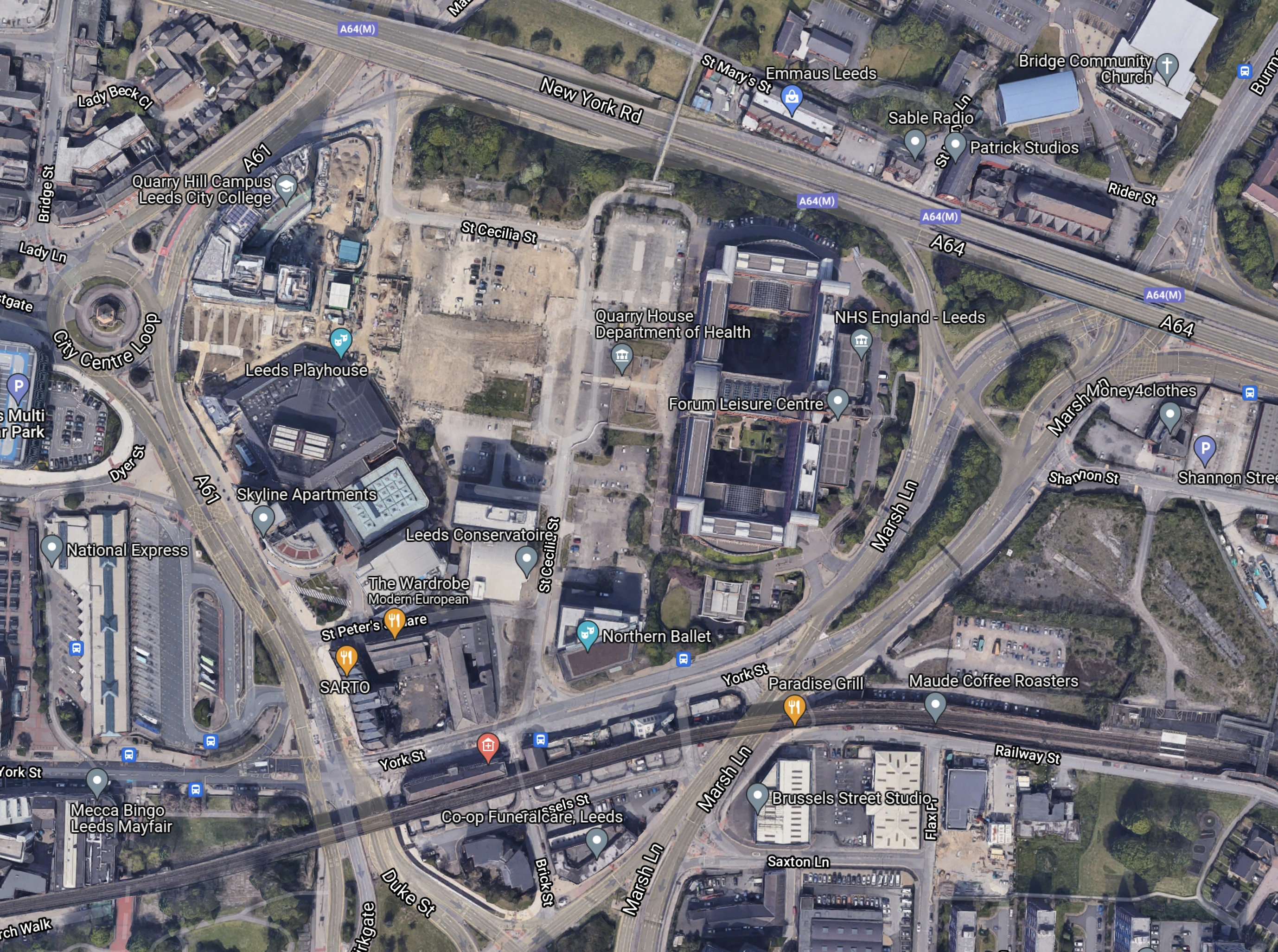
Note.
- The Leeds Playhouse, Leeds Conservatoire, Northern Ballet and large NHS offices in the centre of the circle of roads.
- Marsh Lane runs down the East side and crosses under the Leeds and Hull via Selby railway line.
- I would assume that the station will be built, where the road goes under the railway.
This second map is an enlargement of where the station used to be.
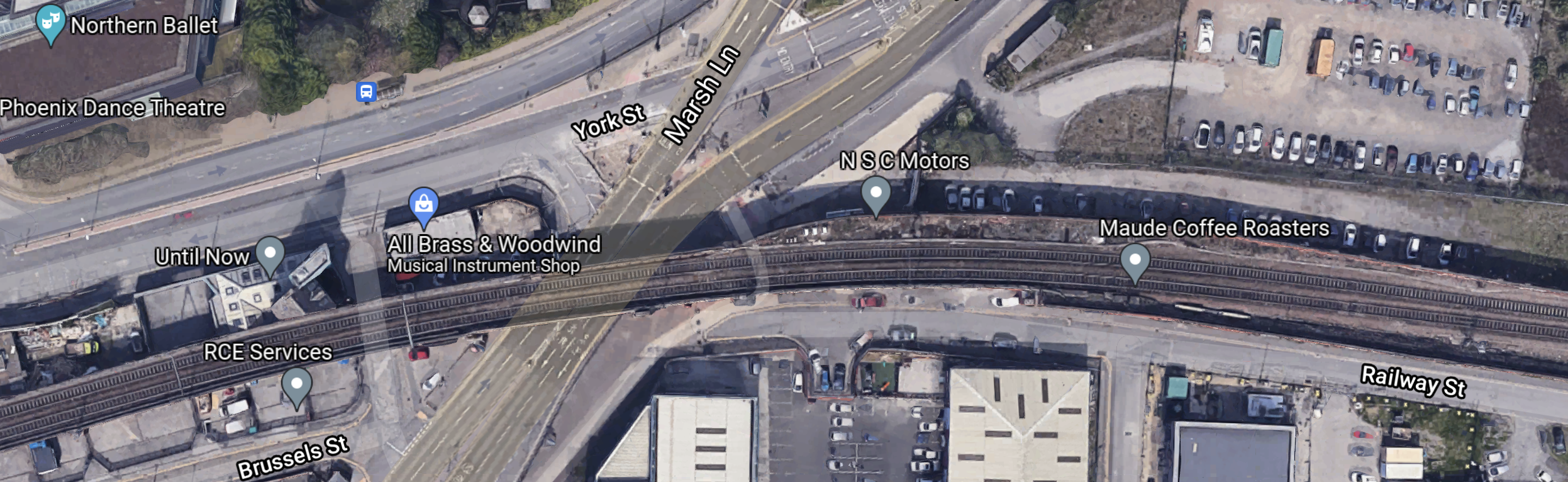
It looks like there would be space to put two platforms outside the double-track line.
Services Through Leeds Marsh Lane Station
The following services appear to run through the site of Leeds Marsh Lane Station.
- CrossCountry – Plymouth and Edinburgh/Glasgow
- LNER – Leeds and Edinburgh
- Northern – Blackpool North and York
- Northern – Halifax and Hull
- Northern – Leeds and York
- TransPennine Express – Liverpool Lime Street and Newcastle
- TransPennine Express – Liverpool Lime Street and Scarborough
- TransPennine Express – Manchester Airport and Newcastle
- TransPennine Express – Manchester Airport and Redcar
- TransPennine Express – Manchester Piccadilly and Hull
Note.
- All trains are hourly in both directions.
- There are also up to two freight trains per hour (tph) through the area.
There’s certainly scope for a balanced timetable through the station, but will there be enough time for all to stop?
Conclusion
Building this station looks to feasible and a good service could be provided.
Whether it is built would depend on passenger numbers and the cost of building.
Hence the need for a comprehensive study!
Electrification Between Clay Cross North Junction And Sheffield Station
Long term readers of this blog, will have noticed that I make regular references to this proposed electrification, that is part of High Speed Two’s proposals to connect Sheffield to the new high speed railway.
So I thought I would bring all my thoughts together in this post.
Connecting Sheffield To High Speed Two
Sheffield is to be accessed from a branch off the Main High Speed Two route to Leeds.
This map clipped from High Speed Two’s interactive map, shows the route of the Sheffield Branch, from where it branches North West from the main Eastern Leg of High Speed Two.
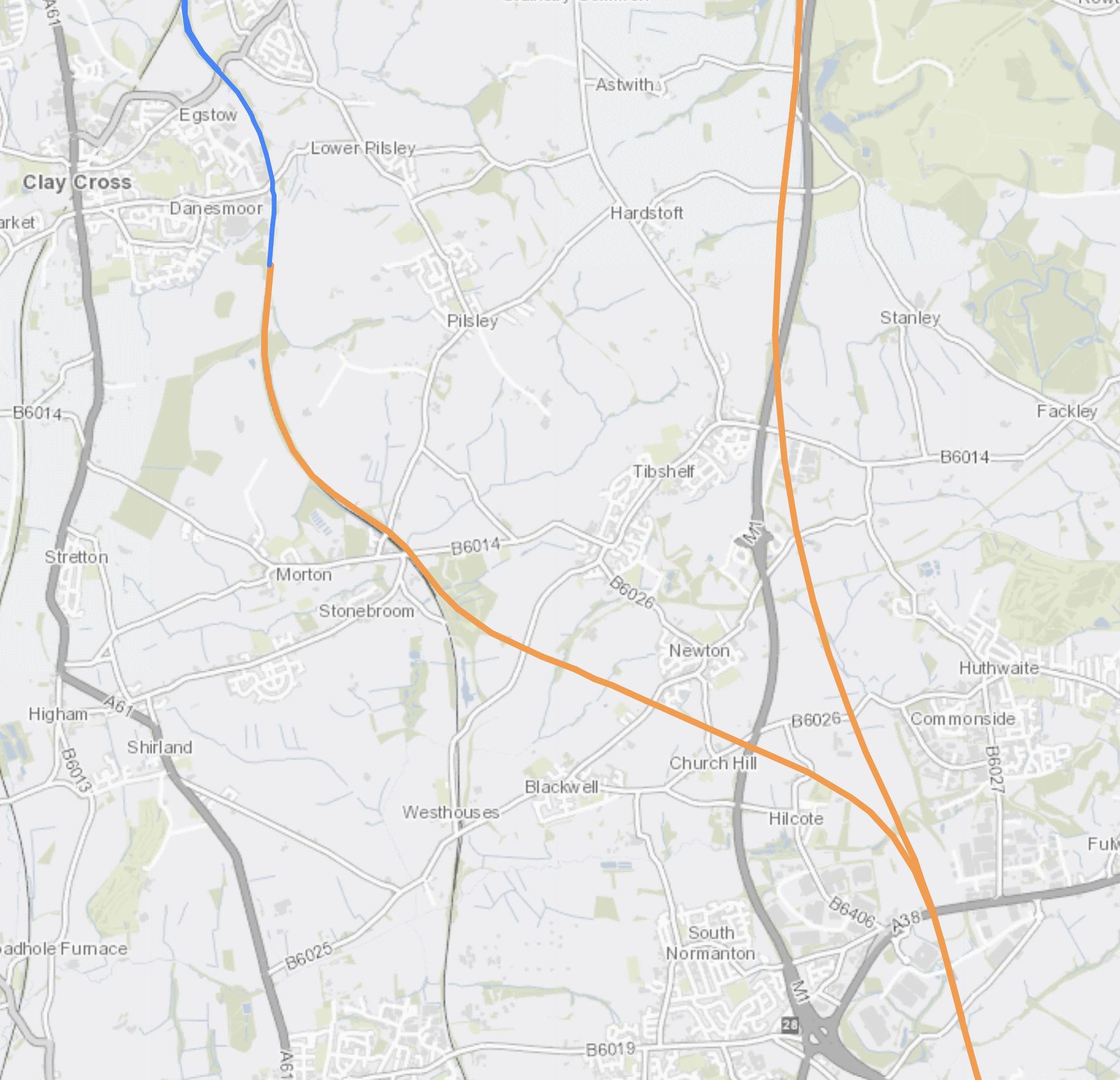
Note.
- Orange indicates new High Speed Two track.
- Blue indicates track that High Speed Two will share with other services.
- The orange route goes North to Leeds, along the M1
- The blue route goes North to Chesterfield and Sheffield, after skirting to the East of Clay Cross.
- The orange route goes South to East Midlands Hub station.
This second map, shows where the Erewash Valley Line joins the Sheffield Branch near the village of Stonebroom.
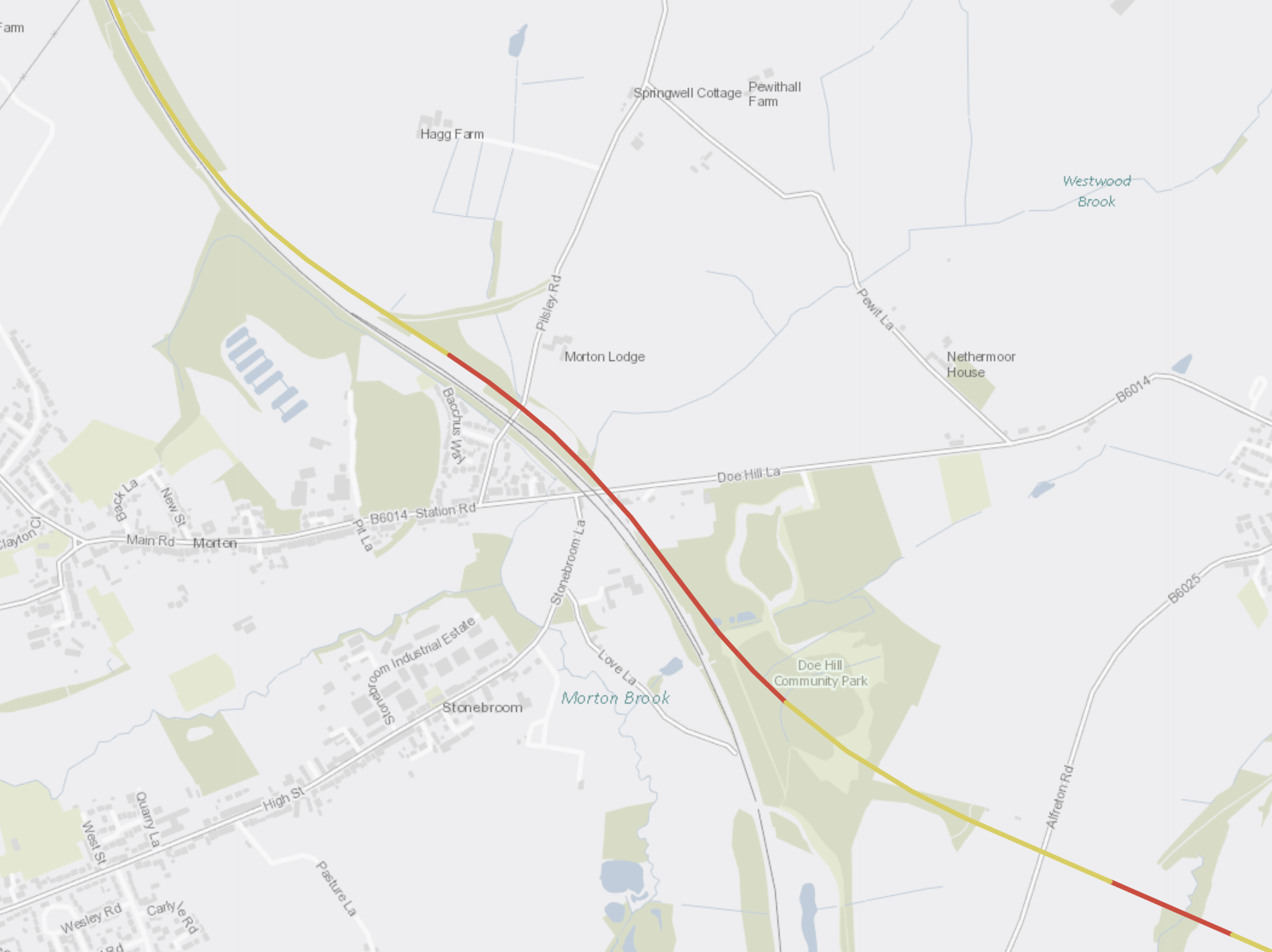
Note.
- Red is an embankment.
- Yellow is a cutting.
- The Sheffield Branch goes North-West to Clay Cross, Chesterfield and Sheffield
- The Sheffield Branch goes South-East to East Midlands Hub station.
- The Sheffield Branch goes through Doe Hill Country Park.
- The Sheffield Branch runs alongside the existing Erewash Valley Line, which goes South to Langley Mill, Ilkeston and the Derby-Nottingham area.
The Sheffield Branch and the Erewash Valley Line appear to share a route, which continues round Clay Cross and is shown in this third map.
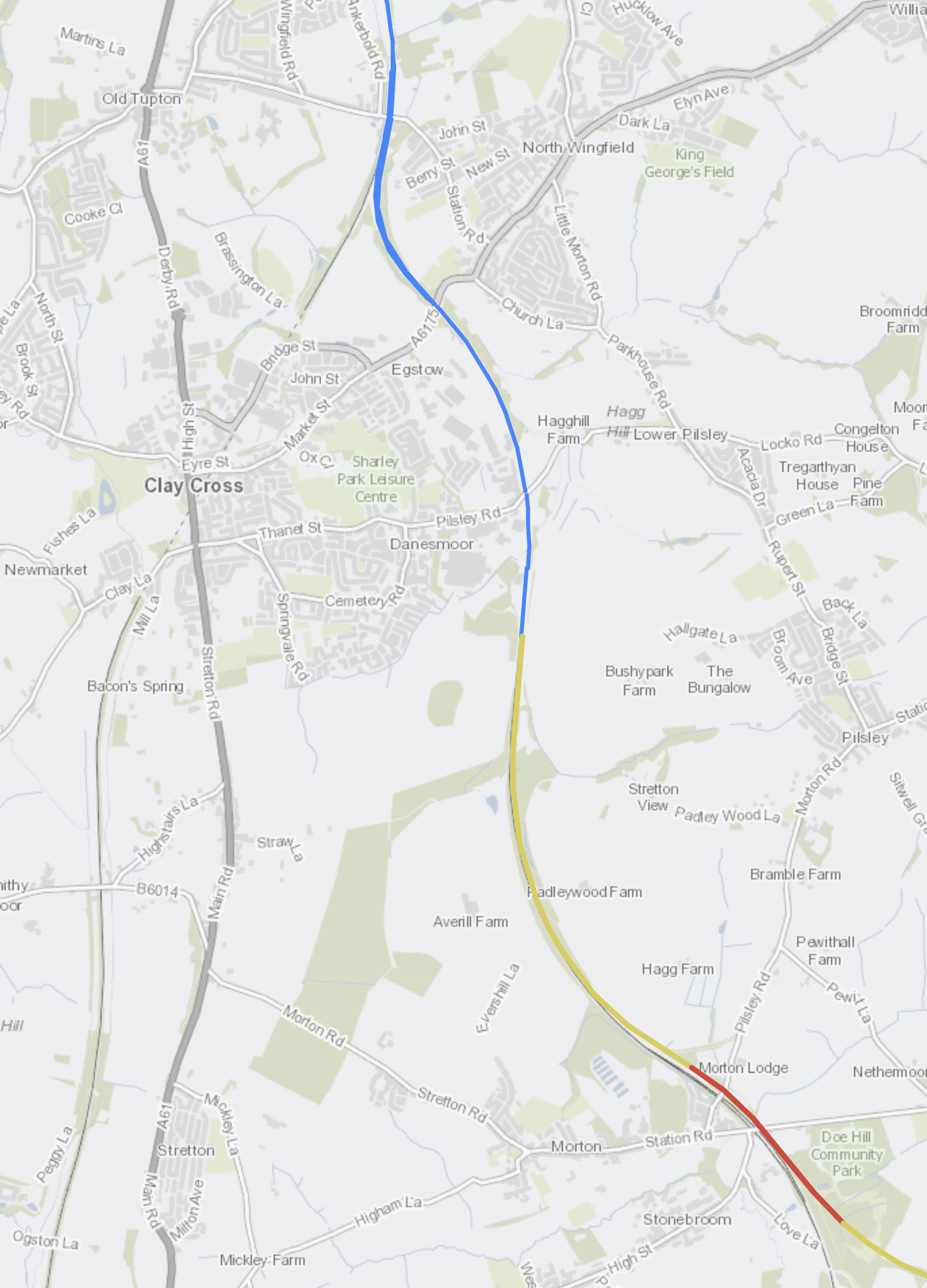
Note
- Doe Hill Country Park is in the South-East corner of the map.
- The dark line running North-South is the A61.
- Running to the West of the A61 is the Midland Main Line, which currently joins the Erewash Valley Line at Clay Cross North junction.
High Speed Two and the Midland Main Line will share a route and/or tracks from Clay Cross North junction to Sheffield.
This fourth map, shows where the combined route joins the Hope Valley Line to Manchester to the South West of Sheffield.
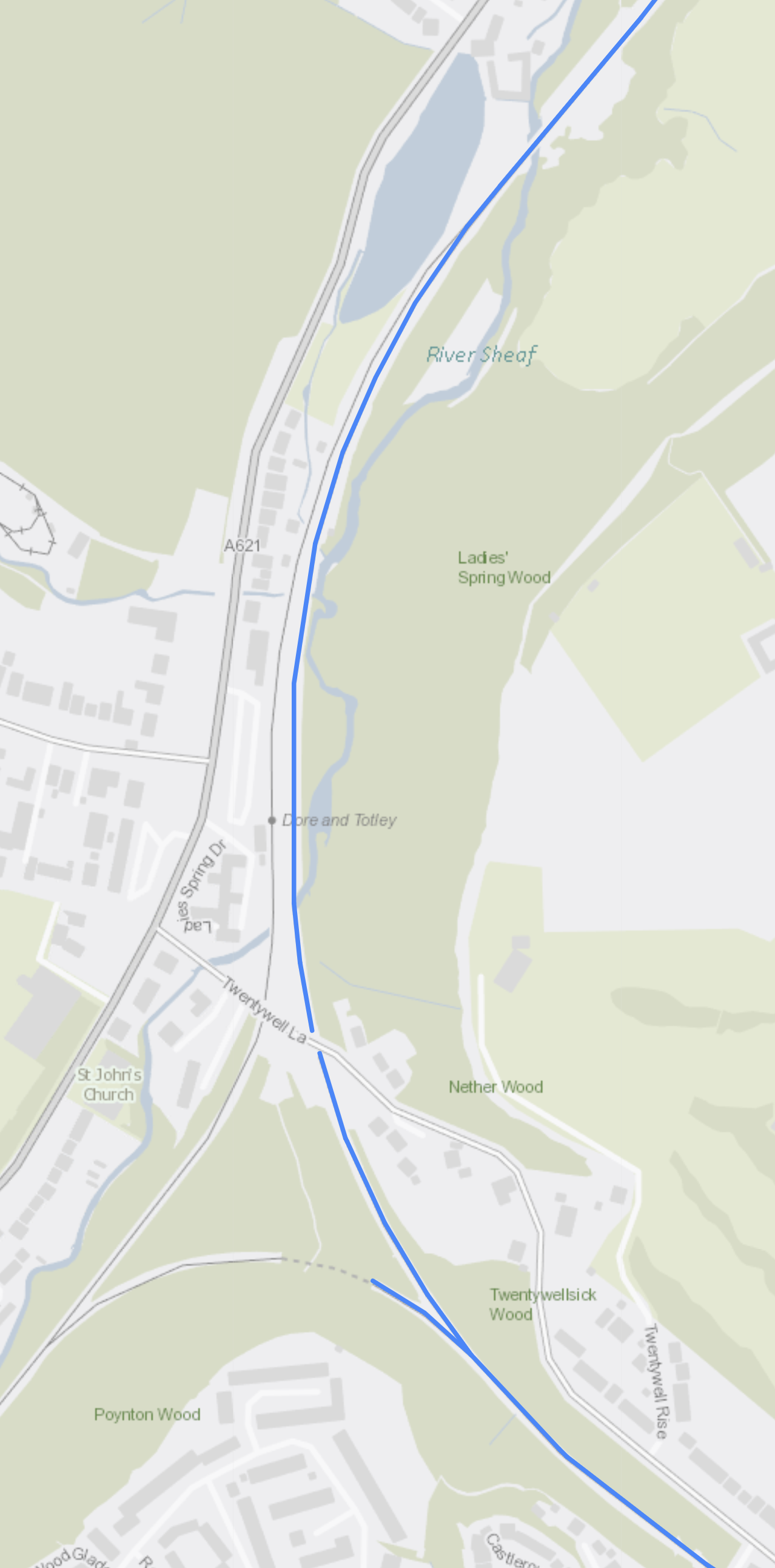
Note.
- Sheffield is to the North East.
- Chesterfield is to the South East,
- Totley junction is a large triangular junction, that connects to the Hope Valley Line.
These are some timings for various sections of the route.
- Clay Cross North Junction and Chesterfield (current) – 4 minutes
- Clay Cross North Junction and Sheffield (current) – 17 minutes
- Chesterfield and Sheffield (current) – 13 minutes
- Chesterfield and Sheffield (High Speed Two) – 13 minutes
- East Midlands Hub and Chesterfield (High Speed Two) – 16 minutes
- East Midlands Hub and Sheffield (High Speed Two) – 27 minutes
As Class Cross North Junction and Sheffield are 15.5 miles, this means the section is run at an average speed of 53 mph.
Can I draw any conclusions from the maps and timings?
- There would appear to be similar current and High Speed Two timings between Chesterfield and Sheffield.
- The various junctions appear to be built for speed.
The Midland Main Line will be electrified between Clay Cross North Junction and Sheffield, so that High Speed Two trains can use the route.
What will be the characteristics of the tracks between Clay Cross North Junction and Sheffield?
- Will it be just two tracks as it mainly is now or will it be a multi-track railway to separate the freight trains from the high speed trains?
- Will it have a high enough maximum speed, so that East Midland Railway’s new Class 810 trains can go at their maximum speed of 140 mph?
- Will it be capable of handling a frequency of 18 tph, which is the maximum frequency of High Speed Two?
Surely, it will be built to a full High Speed Two standard to future-proof the line.
Current Passenger Services Between Clay Cross North Junction And Sheffield Station
These trains use all or part of the route between Cross North Junction And Sheffield stations.
- CrossCountry – Plymouth and Edinburgh via Derby, Chesterfield, Sheffield and Leeds – 1 tph
- East Midlands Railway – London St. Pancras and Sheffield via Derby and Chesterfield – 2 tph
- East Midlands Railway – Liverpool Lime Street and Norwich via Stockport, The Hope Valley Line, Sheffield and Chesterfield – 1 tph
- Northern Trains – Manchester Piccadilly and Sheffield via the Hope Valley Line – 1 tph
- Northern Trains – Leeds and Nottingham via Meadowhall, Sheffield and Chesterfield – 1 tph
- TransPennine Express – Manchester Airport and Cleethorpes via Stockport, the Hope Valley Line and Sheffield – 1 tph
Note.
- tph is trains per hour.
- High Speed Two is currently planning to run two tph to Sheffield, which will run between Cross North junction and Sheffield stations.
- The services on the Hope Valley Line run on electrified tracks at the Manchester end.
These services can be aggregated to show the number of trains on each section of track.
- Hope Valley Line between Manchester and Totley junction – 3 tph
- Totley junction and Sheffield station – 7 tph
- Totley junction and Clay Cross North junction via Chesterfield – 4 tph
Adding in the High Speed Two services gives these numbers.
- Hope Valley Line between Manchester and Totley junction – 3 tph
- Totley junction and Sheffield station – 9 tph
- Totley junction and Clay Cross North junction via Chesterfield – 6 tph
This report on the Transport for the North web site, is entitled At A Glance – Northern Powerhouse Rail. It states that Transport for the North’s aspirations for Manchester and Sheffield are four tph with a journey time of forty minutes.
Adding in the extra train gives these numbers.
- Hope Valley Line between Manchester and Totley junction – 4 tph
- Totley junction and Sheffield station – 10 tph
- Totley junction and Clay Cross North junction via Chesterfield – 6 tph
This level of services can be accommodated on a twin-track railway designed to the right high speed standards.
Freight Services Between Clay Cross North Junction And Sheffield Station
The route is used by freight trains, with up to two tph on each of the three routes from Totley junction.
And these are likely to increase.
Tracks Between Clay Cross North Junction And Sheffield Station
I am absolutely certain, that two tracks between Clay Cross North junction And Sheffield station will not be enough, even if they are built to High Speed Two standards to allow at least 140 mph running under digital signalling.
Battery Electric Trains
The only battery-electric train with a partly-revealed specification is Hitachi’s Regional Battery Train, which is described in this Hitachi infographic.

Note.
- The train is a 100 mph unit.
- Ninety kilometres is fifty-six miles.
I would expect that battery-electric trains from other manufacturers like Alstom, CAF and Siemens would have similar performance on battery power.
In Thoughts On CAF’s Battery-Electric Class 331 Trains, I concluded CAF’s approach could give the following ranges.
- Three-car battery-electric train with one battery pack – 46.7 miles
- Four-car battery-electric train with one battery pack – 35 miles
- Four-car battery-electric train with two battery packs – 70 miles
I was impressed.
These are my thoughts on battery-electric trains on the routes from an electrified Sheffield.
Adwick
Sheffield and Adwick is 22.7 miles without electrification
I am sure that battery-electric trains can handle this route.
If the battery range is sufficient, there may not need to be charging at Adwick.
Bridlington
Sheffield and Bridlington is 90.5 miles without electrification, except for a short section through Doncaster, where trains could top up batteries.
I am sure that battery-electric trains can handle this route.
But there would need to be a charging system at Hull, where the trains reverse.
An alternative would be to electrify Hull and Brough, which is just 10.4 miles and takes about twelve minutes.
Derby Via The Midland Main Line
Clay Cross North junction and Derby is 20.9 miles without electrification.
I am sure that battery-electric trains can handle this route.
Gainsborough Central
Sheffield and Gainsborough Central is 33.6 miles without electrification
I am sure that battery-electric trains can handle this route.
But there will need to be a charging system at Gainsborough Central.
Huddersfield Via The Penistone Line
This is a distance of 36.4 miles with electrification at both ends, after the electrification between Huddersfield and Westtown is completed.
I am sure that battery-electric trains can handle this route.
Hull
Sheffield and Hull is 59.4 miles without electrification, except for a short section through Doncaster, where trains could top up batteries.
I am sure that battery-electric trains can handle this route.
But there will probably need to be a charging system at Hull.
An alternative would be to electrify Hull and Brough, which is just 10.4 miles and takes about twelve minutes.
Leeds Via The Hallam Or Wakefield Lines
This is a distance of 40-45 miles with electrification at both ends.
I am sure that battery-electric trains can handle this route.
Lincoln
Sheffield and Lincoln Central is 48.5 miles without electrification
I am sure that battery-electric trains can handle this route.
But there will probably need to be a charging system at Lincoln Central.
Manchester Via The Hope Valley Line
This is a distance of forty-two miles with electrification at both ends.
I am sure that battery-electric trains can handle this route.
Nottingham
Clay Cross North junction and Nottingham is 25.1 miles without electrification
I am sure that battery-electric trains can handle this route.
But there may need to be a charging system at Nottingham.
York
This is a distance of 46.4 miles with electrification at both ends.
I am sure that battery-electric trains can handle this route.
Is London St. Pancras And Sheffield Within Range Of Battery-Electric Trains?
In the previous section, I showed that it would be possible to easily reach Derby, as Clay Cross North junction and Derby is 20.9 miles without electrification.
- Current plans include electrifying the Midland Main Line as far North as Market Harborough.
- Market Harborough is 82.8 miles from London St. Pancras
- Derby is 128.3 miles from London St. Pancras
So what would be the best way to cover the 45.5 miles in the middle?
One of the best ways would surely be to electrify between Derby and East Midlands Parkway stations.
- Derby and East Midlands Parkway stations are just 10.2 miles apart.
- Current services take around twelve-fourteen minutes to travel between the two stations, so it would be more than enough time to charge a battery-electric train.
- Power for the electrification should not be a problem, as Radcliffe-on-Soar power station is by East Midlands Parkway station. Although the coal-fired power station will soon be closed, it must have a high class connection to the electricity grid.
- The East Midlands Hub station of High Speed Two will be built at Toton between Derby and Nottingham and will have connections to the Midland Main Line.
- An electrified spur could connect to Nottingham station.
I have flown my virtual helicopter along the route and found the following.
- Three overbridges that are not modern and built for large containers and electrification.
- Two level crossings.
- One short tunnel.
- Two intermediate stations.
- Perhaps half-a-dozen modern footbridges designed to clear electrification.
I’ve certainly seen routes that would be much more challenging to electrify.
I wonder if gauge clearance has already been performed on this key section of the Midland Main Line.
If this section were to be electrified, the sections of the Midland Main Line between London St. Pancras and Sheffield would be as follows.
- London St. Pancras and Market Harborough – Electrified – 82.8 miles
- Market Harborough and East Midlands Parkway – Not Electrified – 35.3 miles
- East Midlands Parkway and Derby – Electrified – 10.2 miles
- Derby and Clay Cross North junction – Not Electrified – 20.9 miles
- Clay Cross North junction and Sheffield – Electrified – 15.5 miles
Note.
- The World Heritage Site of the Derwent Valley Mills is not electrified, which could ease the planning.
- Leicester station with its low bridge, which could be difficult to electrify, has not been electrified.
- Under thirty miles of electrification will allow battery-electric trains to run between London St. Pancras and Sheffield, provided they had a range on batteries of around forty miles.
Probably, the best way to electrify between East Midlands Parkway and Derby might be to develop a joint project with High Speed Two, that combines all the power and other early works for East Midlands Hub station, with the electrification between the two stations.
Will The Class 810 Trains Be Converted To Battery-Electric Operation?
Hitachi’s Class 8xx trains tend to be different, when it comes to power. These figures relate to five-car trains.
- Class 800 train – 3 x 560 kW diesel engines
- Class 801 train – 1 x 560 kW diesel engine
- Class 802 train – 3 x 700 kW diesel engines
- Class 803 train – All electric – No diesel and an emergency battery
- Class 805 train – 3 x 700 kW diesel engines (?)
- Class 807 train – All electric – No diesel or emergency battery
- Class 810 train – 4 x 700 kW diesel engines (?)
Note.
- These figures relate to five-car trains.
- Class 807 train are seven-car trains.
- Where there is a question mark (?), the power has not been disclosed.
- Hitachi use two sizes of diesel engine; 560 kW and 700 kW.
It was generally thought with the Class 810 train to be used on the Midland Main Line, will be fitted with four engines to be able to run at 125 mph on diesel.
But are they 560 kW or 700 kW engines?
- A Class 802 train has an operating speed of 110 mph on diesel, with 2100 kW of installed power.
- To increase speed, the power will probably be related to something like the square of the speed.
So crudely the power required for 125 mph would be 2100*125*125/110/110, which works out at 2712 kW.
Could this explain why four engines are fitted? And why they are 700 kW versions?
Interestingly, I suspect, Hitachi’s five-car trains have two more or less identical driver cars, except for the passenger interiors, for the efficiency of manufacturing and servicing.
So does that mean, that a fifth engine could be fitted if required?
There probably wouldn’t be a need for five diesel engines, but as I also believe that the Hyperdrive Innovation battery packs for these trains are plug-compatible with the diesel engines, does that mean that Hitachi’s trains can be fitted with five batteries?
Suppose you wanted to run a Class 810 train at 125 mph to clear an electrification gap of forty miles would mean the following.
- It would take 0.32 hours or 19.2 minutes to cross the gap.
- In that time 2800 kW of diesel engines would generate 896 kWh.
- So to do the same on batteries would need a total battery capacity of 896 kWh.
- If all diesel engines were replaced, each battery would need to be 224 kWh
A battery of this size is not impractical and probably weighs less than the at least four tonnes of the diesel engine it replaces.
Conclusions
Electrification between Clay Cross North Junction and Sheffield station is an important project that enables the following.
- A high proportion of diesel services to and from Sheffield to be converted to battery-electric power.
- With electrification between Derby and East Midlands Parkway, it enables 125 mph battery-electric trains to run between London St. Pancras and Sheffield.
- It prepares Sheffield for High Speed Two.
It should be carried out as soon as possible.
Battery-Electric Trains And The TransPennine Upgrade
In Is There Going To Be Full Electrification Between Leeds And Huddersfield?, I showed this map of the TransPennine Upgrade between Huddersfield and Westtown near Dewsbury.
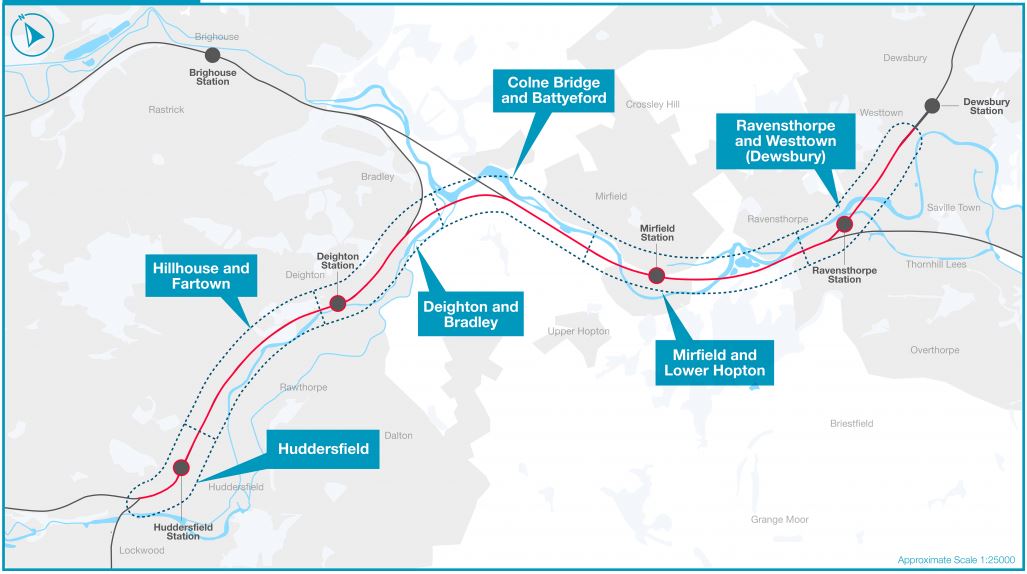
Note.
- There will be electrification between Dewsbury and Huddersfield.
- Tracks will be doubled from two to four.
- Ravensthorpe, Mirfield, Deighton and Huddersfield stations will be electrified and probably upgraded.
- Dewsbury and Huddersfield stations are eight miles apart.
This page on the Network Rail website gives more information.
Click on Huddersfield and Westtown (Dewsbury) and you get this information.
On 31 March 2021, we submitted a Transport and Works Act Order (TWAO) application to the Secretary of State for Transport for the Huddersfield to Westtown (Dewsbury) scheme.
Throughout this eight-mile section of the route, we’re proposing to double the number of tracks from two-to-four, electrify from Huddersfield to Dewsbury and make big improvements to the four stations in this section – Huddersfield, Deighton, Mirfield and Ravensthorpe; where we also need to separate the lines going to/from Leeds from the lines going to/from Wakefield, with either a bridge or a tunnel.
It is a much larger scheme than the one between Bolton and Wigan, which I wrote about in Bolton-Wigan £78m Rail Electrification Project Announced.
- Huddersfield-Westtown is eight miles, whereas Bolton-Wigan is 6.5 miles.
- Both involve upgrading four stations.
- Both involve full electrification.
- Huddersfield-Westtown involves doubling the number of tracks, whereas Bolton-Wigan needs little work to the track.
- Huddersfield-Westtown will need a bridge or a tunnel, whereas Bolton-Wigan might need minor work to a couple of flat junctions.
- Huddersfield station is Grade 1 Listed, whereas Wigan Wallgate station has some good features.
- The Huddersfield-Westtown scheme is costed at £2.9 billion, whereas Bolton-Wigan is just £78 million.
The Huddersfield-Westtown scheme is thirty-seven times larger in terms of money.
What Passenger Services Use The Route Between Huddersfield And Dewsbury?
These services use the route, all or in part.
- Northern Trains – Wigan Wallgate and Leeds via Manchester Victoria, Hebden Bridge, Brighouse, Mirfield, Ravensthorpe and Dewsbury – 1 tph
- Northern Trains – Huddersfield and Castleford via Deighton, Mirfield and Wakefield Kirkgate – 1 tph
- TransPennine Express – Liverpool Lime Street and Scarborough via Manchester Victoria, Stalybridge, Huddersfield and Leeds – 1 tph
- TransPennine Express – Manchester Airport and Redcar Central via Manchester Victoria, Stalybridge, Huddersfield, Dewsbury and Leeds – 1 tph
- TransPennine Express – Liverpool Lime Street and Edinburgh via Manchester Victoria, Huddersfield and Leeds – 1 tph
- TransPennine Express – Manchester Airport and Newcastle via Manchester Victoria, Huddersfield, Dewsbury and Leeds – 1 tph
- TransPennine Express – Manchester Piccadilly and Hull via Stalybridge, Huddersfield and Leeds – 1 tph
- TransPennine Express – Huddersfield and Leeds via Deighton, Mirfield, Ravensthorpe and Dewsbury – 1 tph
Note.
- All trains are one train per hour (tph)
- Three tph run non-stop between Huddersfield and Leeds.
- Two tph stop at Deighton station, Mirfield and Ravensthorpe.
After completion of the Huddersfield and Westtown upgrade, there will be electrification at the following places.
- West of Manchester Victoria station
- Between Huddersfield and Westtown
- Between Leeds and York – Currently being electrified between York and Church Fenton.
And these routes will not be electrified.
- Dewsbury and Leeds – 9.2 miles
- Leeds and Hull – 51.5 miles
- Mirfield and Castleford – 16 miles
- Manchester Piccadilly and Stalybridge – Could be electrified – 7.5 miles
- Manchester Victoria and Heaton Lodge Junction via Hebden Bridge – 47.4 miles
- Manchester Victoria and Stalybridge – Could be electrified – 7.7 miles
- Redcar Central and Northallerton – 28.1 miles
- Stalybridge and Huddersfield – 18 miles
- York and Scarborough – 42.1 miles
Note that all routes except Mirfield and Castleford and Leeds and Hull have electrification at both ends.
Which Routes Between Huddersfield And Westtown Could Be Handled By Battery-Electric Trains?
I will assume that operators will have a battery-electric train capable of running 56 miles on batter ypower. This distance comes from Hitachi’s specification for the Hitachi Regional Battery Train, which is shown in this Hitachi infographic.
These are the routes and my answers.
Northern Trains – Wigan Wallgate and Leeds
The longest section without electrification is Manchester Victoria and Heaton Lodge Junction via Hebden Bridge, which is 47.4 miles.
I am sure this route is possible with battery-electric trains.
Northern Trains – Huddersfield and Castleford
The longest section without electrification is Mirfield and Castleford, which is 16 miles.
But it must be handled on both an out and back basis. So the train will cover 32 miles on battery power.
I am sure this route is possible with battery-electric trains.
TransPennine Express – Liverpool Lime Street and Scarborough
The longest section without electrification to the West of Leeds, is Manchester Victoria and Huddersfield, which is 25.7 miles.
At the Eastern end, as York and Scarborough is 42.1 miles without electrification, there would need to be some electrification or a charging system at Scarborough station.
I am sure this route is possible with battery-electric trains.
TransPennine Express – Manchester Airport and Redcar Central
The longest section without electrification to the West of Leeds,is Manchester Victoria and Huddersfield, which is 25.7 miles.
At the Eastern end, as Northallerton and Redcar Central is 28.1 miles without electrification, there may need to be some electrification or a charging system at Redcar Central station.
I am sure this route is possible with battery-electric trains.
TransPennine Express – Liverpool Lime Street and Edinburgh
The longest section without electrification is Manchester Victoria and Huddersfield, which is 25.7 miles.
Leeds and Edinburgh is fully electrified.
I am sure this route is possible with battery-electric trains.
TransPennine Express – Manchester Airport and Newcastle
The longest section without electrification is Manchester Victoria and Huddersfield, which is 25.7 miles.
Leeds and Newcastle is fully electrified.
I am sure this route is possible with battery-electric trains.
TransPennine Express – Manchester Piccadilly and Hull
The longest section without electrification to the West of Leeds, is Manchester Victoria and Huddersfield, which is 25.5 miles.
At the Eastern end, as Leeds and Hull is 51.5 miles, there would need to be some electrification or a charging system at Hull station.
I am sure this route is possible with battery-electric trains.
TransPennine Express – Huddersfield and Leeds
The longest section without electrification is Dewsbury and Leeds, which is 9.2 miles.
I am sure this route is possible with battery-electric trains.
Handling The Eastern Ends
At Hull, Redcar Central and Scarborough stations, there will need to be some means to recharge the trains, so they can get back to the electrification on the East Coast Main Line.
There could either be a short length of 25 KVAC overhead electrification or a special-purpose charging station.
There would need to be an allowance in the turnback, of perhaps 10-15 minutes to make sure trains started back with full batteries.
Will Huddersfield And Westtown Be Long Enough To Charge A Battery-Electric Train?
I have looked at train times between Huddersfield And Westtown and typically trains take around 11-12 minutes to go between Huddersfield and Dewsbury stations.
That should probably be enough, especially, as the trains will probably be using regenerative braking to batteries at any station stops.
Conclusion
I am absolutely certain that by completing the TransPennine Upgrade with full electrification between Huddersfield and Westtown, that all passenger services through the section could be run by battery-electric trains with a range of ninety kilometres or fifty-six miles.
There would probably need to be some electrification or a charging system at Hull, Redcar Central and Scarborough stations.
A Thought On Short Sections Of Electrification
As with the Bolton-Wigan scheme to the West of the Pennines, a length of electrified track that is less than ten miles, allows several services to be run by battery-electric trains and decarbonised.
How many other sections of less than ten miles of electrification can transform train services and reduce the use of diesel around the UK, by the introduction of fleets of battery-electric trains?
Northern Rail Apologises Over Disruption On Durham Coast Line
The title of this post, is the same as that of this article on the Northern Echo.
These is the first two paragraphs.
Easington MP Grahame Morris has invited Northern Rail executives and the Rail Minister to travel on the Durham Coast Line following “another weekend of rail chaos”.
As the football season kicked off and Seaham Food Festival attracted thousands of people, travellers were left angry and disappointed as they were unable to board overcrowded rail services at Horden and Seaham train stations.
The article then goes on to say that this has been an ongoing problem for several years.
I would have thought that to maximise revenue on any transport service, it is best to provide enough stagecoaches, charabancs, buses, trams or trains.
Could this business naivety be why the original Northern went bust?
What Should The Government Do?
As Northern is now run by the Government’s Operator Of Last Resort, it is up to the Government.
In Boris Johnson Backs Station Opening Which Could See Metro Link To County Durham, I report on an exchange between Boris Johnson and an MP in Prime Minister’s Questions.
These are my two main improvements.
Reopen Ferryhill Station And The Leamside and Stillington Lines To Create A New Route
Boris Johnson talked about reopening Ferryhill station, which could be key to opening up a second route between Teesside and Newcastle and Sunderland.
- Ferryhill station would be on the East Coast Main Line and electrified to handle battery-electric trains.
- Ferryhill terminal would be an ideal Southern terminal for a reopened Leamside Line, which most stakeholders seem in favour of, as it would take the pressure off the East Coast Main Line to the South of Newcastle and connect large areas to the rail network and in particular, the Tyne and Wear Metro.
- Ferryhill station would be at the Northern end of the freight-only Stillington Line, which runs South-Eastwards from the East Coast Main Line at Ferryhill to Stockton and Hartlepool or Middlesbrough.
- A combination of the Leamside and Stillington Lines would open up a second route between the two conurbations.
It might also be possible to run a semi-fast York and Newcastle service via Northallerton, Yarm, Thornaby, Stockton, Ferryhill and the Leamside Line.
- This service would only run on the East Coast Main Line, where there were four tracks to the South of Northallerton.
- It could be run by a battery-electric train.
- A battery-electric train could be charged at York, Ferryhill and Newcastle.
This article on the Northern Echo is entitled ‘Rapid’ Progress On Reopening Leamside Line, Connecting County Durham And Washington.
Things don’t seem to be standing still.
There would appear to be lots of scope for rail development between the Tyne and Wear in the North and the Tees in the South.
If the go-ahead is given by Government to develop the Leamside and Stillington Lines, the great thing is that construction of the new route will not affect anything on the important East Coast Main Line, as Network Rail would just be creating a railway by-pass around one of busiest sections of main line, that will be used by local and freight trains.
Two routes through the area, would certainly double the capacity, if both had an hourly train.
Battery-Electric Trains
I mentioned battery-electric trains as the rolling stock for a possible semi-fast service between York and Newcastle.
We are accumulating a large pile of surplus Class 350, 387 and 379 trains.
- They are being replaced by modern units.
- They were built within the last twenty years.
- They are all high-quality four car trains.
- They can all be modified for a 110 mph operating speed, so could venture on the East Coast Main Line if needed.
These trains have been mentioned several times as possibilities for conversion to battery-electric trains.
With a few strategically-placed charging systems, these would be ideal trains for services in the area.
Conclusion
It would be a great improvement for train services in the North-East.
My first step would be to convert the Hexham and Nunthorpe service via Newcastle, Sunderland, Seaham, Horden and Middlesbrough to battery-electric operation, by adding charging at Hexham and Nunthorpe stations.
Some are keen on hydrogen trains for this route, but these will have a longer gestation period.
I would also suspect that travellers in the North-East would prefer jam today, rather than possibly inferior jam sometime in the future.
Battery-electric trains based on the train classes I named would also be ideal for the Northumberland Line and the Salburn and Bishop Auckland service.
My First Ride In A Class 769 Train
I went to Cardiff today and had my first ride in a Class 769 train. These pictures summarise my ride on the train between Cardiff Central and Bargoed stations.




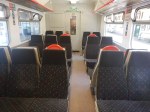
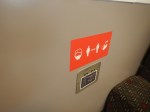
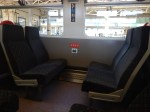
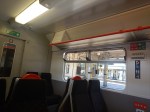
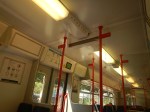

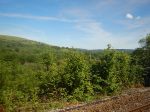
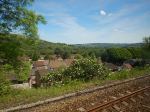
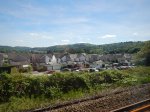
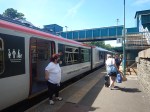
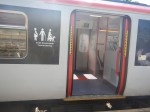
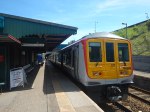
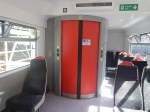
So what was it like?
Noise And Vibration
Going up to Bargoed, I deliberately sat as near over the top of the engine as I could.
There was a bit of a whine, but not as much as in a new Class 195 train.
For those, who commuted on Class 319 trains for years on Thameslink, they probably wouldn’t notice much difference.
Performance
For a 100 mph electric train built for running between the flat lands of Bedfordshire and the South Coast over the hillocks of the Downs, the train climbed to Bengoed, which has an altitude of around a thousand feet with a purpose.
But then I have a Porterbrook brochure for these trains and the power source was sized, such that the train would be able to climb the stiffest routes in the UK.
The Interior
It looked to me like the Thameslink interior with new sea covers and plugs to charge a mobile phone.
They could certainly be upgraded a bit further to the standard of the Class 319 trains on the Abbey Line, that I wrote about in A Very Smart Class 319 Train.
A Job To Do
Trains for Wales has acquired these trains for extra capacity, whilst they refurbish their Class 150, 153 and 160 trains.
It looks to me, that they will do this job more than adequately.
Future Uses
I suspect Porterbrook hope that these trains will find uses around the UK, as they have spent a lot of time, effort and money to bring these trains into service.
But there are around eighty of the Class 319 trains in service or in store, from which the Class 769 trains are converted.
So they could find uses in several niche applications.
Short Term Fleets
This is effectively, the Trains for Wales application, where extra trains are provided, so that a fleet refurbishment can be performed.
- They would surely, have been a better replacement fleet for Greater Anglia, than the three Mark 2 coaches and a pair of diesel locomotives, that they used after a series of level crossing accidents.
- They could also be used to increase capacity for some major events like the Open Golf or a pop festival.
- Uniquely, they can stand in for both a 100 mph electric train or a 90 mph diesel train.
- They can even be fitted with third-rail shoes.
- They are the right size at four cars.
- They fit most UK platforms.
- They can be run in formations of up to twelve cars.
I wouldn’t be surprised to see Porterbrook or someone on their behalf, keep a fleet of trains on standby to handle short term needs.
Route Development And Testing
There has been a lot of pressure to open up new routes in recent years and these trains would be ideal to try out routes and test new electrification.
Tri-Mode Services
Great Western Railway have a particular problem with their service between Reading and Gatwick, in that it has some third-rail electrification. As they might like to extend this service to Oxford, an ideal train would be dual-voltage and self-powered.
This extract is from the Great Western Railway section in the Wikipedia entry for the Class 769 train.
Although initially planned for use in London and the Thames Valley whilst twelve Class 387 units are modified for Heathrow Express services, the future plan for these units will be operating on services between Oxford, Reading and Gatwick Airport, which would mean operating on unelectrified, 25 kV AC OHLE and 750 V DC third-rail routes. To enable this, Great Western Railway’s allocation of Class 769 units will retain their dual-voltage capability in addition to being fitted with diesel power units. The units will also receive an internal refurbishment and be fitted with air cooling.
I suspect, that they’ll also be used on the Henley, Marlow and Windsor branches, which have some operational problems.
- The branches are not electrified.
- Some branches run occasional services to Paddington.
- The Windsor branch probably needs more capacity.
The Marlow branch could be difficult, but I suspect that, there’s a solution somewhere.
Luxury Bi-Modes
Greater Anglia felt they needed luxury bi-modes for East Anglia and they bought Class 755 trains, which are probably a lot more expensive, as they are brand-new and from Stadler of Switzerland.
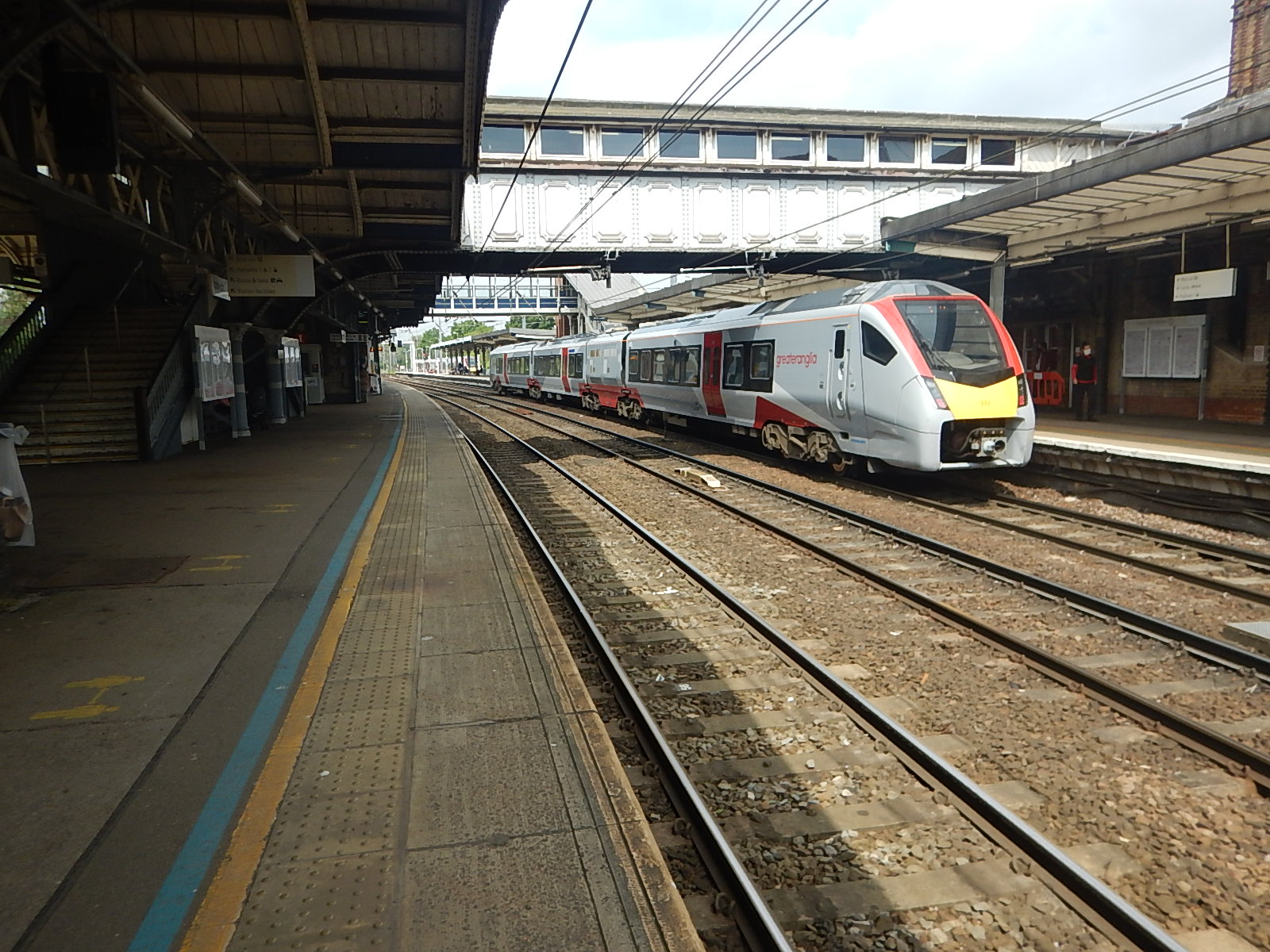
Surprisingly, the Class 319 trains have a higher passenger capacity.
But both trains could do a similar task, where the route is partially electrified.
As I said earlier about the GWR units.
The units will also receive an internal refurbishment and be fitted with air cooling.
Porterbrook’s brochure for the Class 769 train talks about using them between Manchester and Buxton.
Surely, this route could do with a Northern version of a GWR interior.
I also think a service should link Hellifield and Buxton. as I wrote about in Why Not Buxton To Hellifield?
That would show what Class 769 trains could do!
It would also connect the Peak District to the hills North of Lancashire.
I might also be, that the standby-fleet should also be the luxury variant of the train. Surely, supporters going to the Open at some of the inaccessible venues could afford pay to pay extra for a comfy train.
Express Freight And Parcels Services
Rail Operations Group would appear to have placed the second-largest order for Class 769 trains, which they will use to launch a high-speed parcels service called Orion.
This extract is from the Rail Operations Group section in the Wikipedia entry for the Class 769 train.
Orion is aiming to launch its first trial service conveying parcels and light freight in April 2021, with the Midlands to Mossend now likely to be the debut flow. The company is to use converted Class 319s for the service and is now planning for a fleet of 19 four-car units – nine Class 319s and 10 Class 769s. Arlington Fleet Services at Eastleigh is modifying the interiors of the units to accommodate roller cages for parcels, with the aim of operating primarily under electric power but with the 769s using their diesel engines to act as tractor units for the 319s on non-electrified stretches. The first 769 bi-mode, No 769501, has undergone its Flex conversion at Brush in Loughborough and is due to be outshopped from Arlington at Eastleigh in March following its interior modification.
In Did These Strawberries Have Road- Or Rail-Miles?, I talked about strawberries going between Scotland and London.
Surely, the movement of high-quality food could be one of the cargoes for Orion.
It wouldn’t be the first such traffic, as Class 43 power cars of the InterCity 125s used to carry flowers and fish up to London from Cornwall.
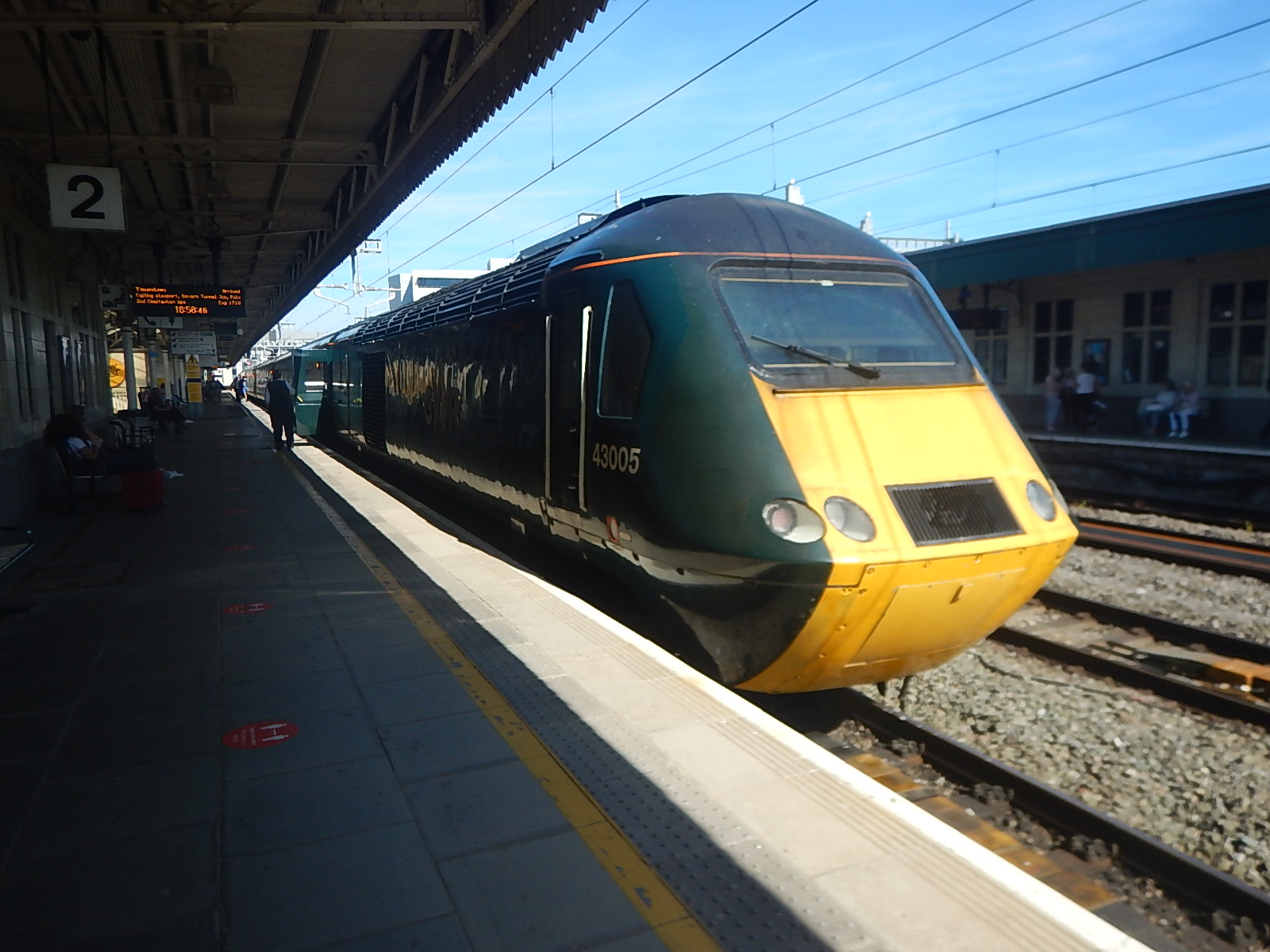
There’s a lot of space in the back of a Class 43 power car.
I certainly feel there are possibilities for using Class 769 trains as high speed parcels transport.
It should be noted that Class 325 trains already run high speed parcel services up and down the country on behalf of Royal Mail. These trains may look like later British Rail trains, but they are in fact based on Class 319 trains.
So I doubt, there’ll be any worries that the trains can’t handle the required services after conversion.
Conclusion
It looks to me that Porterbrooks plan to convert numbers of their Class 319 trains into Class 769 trains will find several ready markets.
It could be argued that more carbon savings could be achieved by perhaps a new battery-electric or hydrogen-electric train. But these will take years to develop!
These trains are a good short-term solution, that will help define their zero-carbon successors.
Headbolt Lane Station Fly-Through
I had to show this Merseytravel YouTube video, as I feel the new Headbolt Lane station uses some interesting ideas.
This Google Map shows Headbolt Lane and the railway.
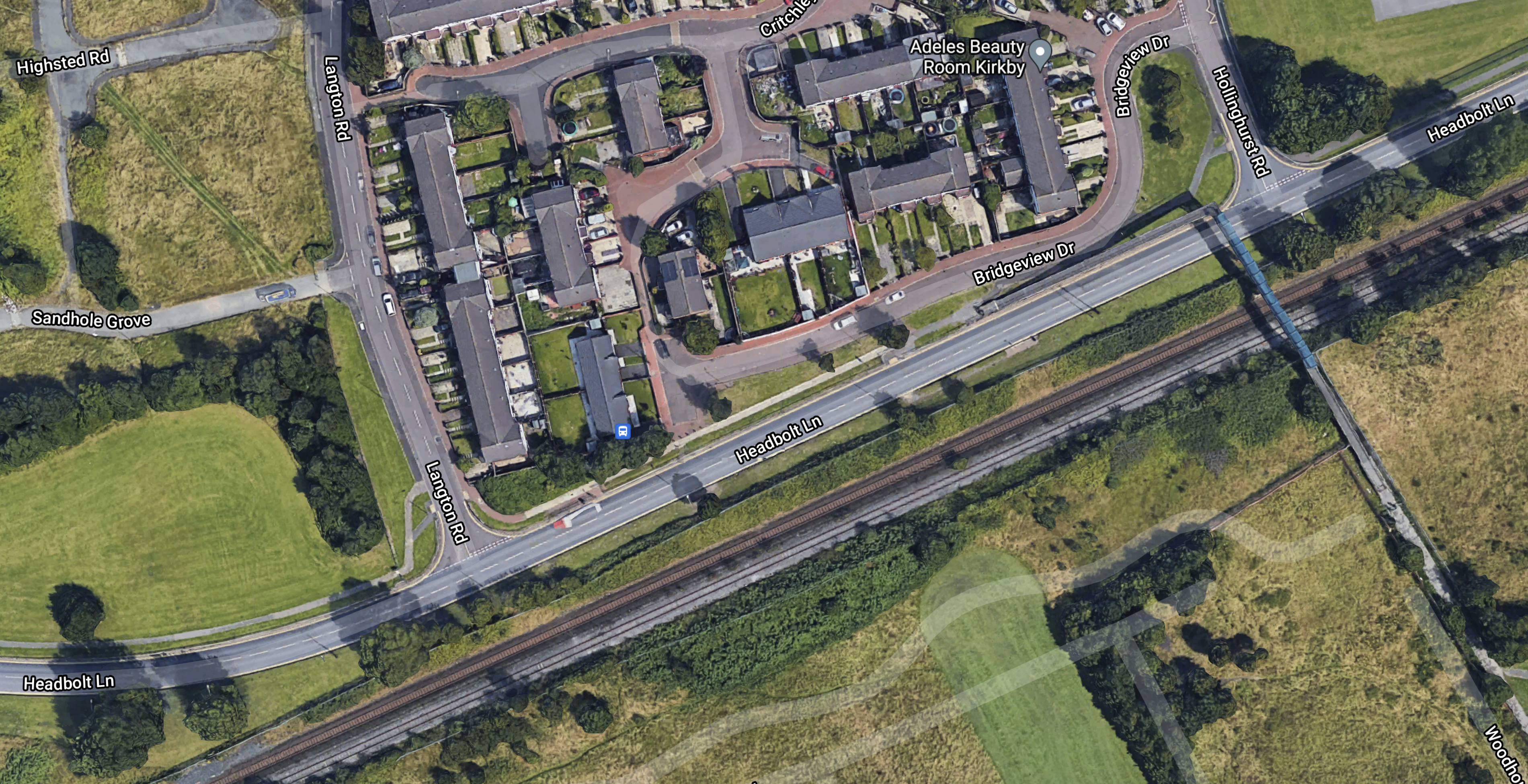
Note.
- The footbridge over the railway. I took the pictures from and around this bridge in Merseyrail To Skelmersdale – Headbolt Lane Station.
- The footbridge can’t be seen in the YouTube video.
Liverpool is to the West and Wigan is to the East.
These are my thoughts.
Is The Station North Or South Of The Railway?
As it is called Headbolt Lane, the station must have good access from that road, otherwise travellers will get rather confused.
So until proven otherwise, I will assume that the station must be to the North of the railway.
Which Way Is Liverpool In the Video?
If the station is North of the railway, then in the first part of the video, the visualisation approaches the station from the North and Liverpool is to the right and Wigan is to the left.
If that is right, then the yellow bus always points towards Liverpool.
How Many Platforms?
Wikipedia says that Headbolt Lane station will have three platforms.
From the video there will be two platforms for trains to and from Liverpool, although the current layout at Kirkby station makes do with just one platform.
There would also appear to be a single platform for trains to and from Wigan, Bolton and Manchester.
But there is a second Eastern track shown in the video, which possibly indicates provision has been made for a second platform for services in that direction.
Wot No Bridge?
It would appear that there is no bridge over or subway under the railway.
But it does appear that the platform layout shown allows passengers to walk between the ends of the tracks on the level to the platform or platforms on the side of the station away from the station building.
Will There Be A Second Entrance To The Station On The Other Side Of The Tracks?
The layout would allow this and it could be useful for those passengers living or working on that side of the railway.
Is The Platform Layout Unique?
I have travelled widely looked at railway stations all over the world.
But I can’t remember seeing a layout like this.
The layout does have advantages.
- An expensive bridge with lifts will not be needed.
- There is nothing mechanical or electrical to go wrong.
- Extra platforms can be added if required.
- It can also be used as a simple step-free way to cross the railway.
I suspect that the layout could be used in other places.
Train Frequencies To Liverpool
The current service between Kirkby station and Liverpool is four trains per hour (tph), which is handled on a single platform.
One platform at Headbolt Lane would surely be sufficient, but a second platform must surely allow extra services and provide more resilience in case of train failure.
Train Frequencies To Wigan, Bolton And Manchester
The current service between Kirkby station and Manchester is one tph, which is handled on a single platform.
One platform at Headbolt Lane would surely be sufficient and could easily handle two tph.
Are two platforms provided for Liverpool services, so that extra services could be run in the Peak or to provide more resilience, should a train fail in the station.
A Service To Skelmersdale
Consider.
- Skelmersdale is about five miles North of the line between Headbolt Lane and Wigan.
- One of Merseyrail’s current Class 507 trains covers the 5.5 miles between Kirkby and Sandhills station in twelve minutes.
- The proposed layout of Headbolt Lane station does not allow direct services between Liverpool and Skelmersdale.
These distances and timing would mean the following.
- A single shuttle train between Headbolt Lane and Skelmersdale could run a two tph service.
- A pair of shuttle trains between Headbolt Lane and Skelmersdale could run a four tph service.
Passengers would need to change trains at Headbolt Lane station.
This may seem less passenger-friendly than a direct service, but it could be the most affordable option.
And it could always be improved with modifications at Headbolt Lane station.
Is There A Role For Battery-Electric Trains?
Consider.
- For Health and Safety reasons, it is very unlikely that any new third-rail track will be laid in the UK.
- The distance between the current Kirkby station and the new Headbolt Lane station is about 1.5 miles.
- The distance between Headbolt Lane and Skelmersdale stations is less than eight miles.
- I suspect Headbolt Lane and Skelmersdale stations would both have good power supplies.
- Merseyrail’s new Class 777 trains have a battery capability.
Would this allow the following?
- Liverpool and Headbolt Lane services to use battery power between Kirkby and Headbolt Lane station. All charging would be done between Liverpool and Kirkby.
- The shuttle train between Headbolt Lane and Skelmersdale would work on battery power, with batteries charged at both ends of the route.
There is also the possibility, that the Headbolt Lane and Manchester Victoria service could be run using battery-electric Class 331 trains.
- Headbolt Lane and Manchester Victoria will be a 28.5 mile service with a couple of miles of electrification at the Manchester end.
- I estimate that the battery-electric Class 331 trains will have sufficient range to handle this route with charging at Headbolt Lane station.
- Currently, trains from Manchester Victoria take over ten minutes to turnround at Kirkby station.
- Provision for a charger could be built into Headbolt Lane station.
It would be a simple way to electrify the Kirkby and Manchester Victoria service.
In addition, battery-electric Class 331 trains are likely to have longer battery range than the Class 777 trains.
So might it be better if the Headbolt Lane and Skelmersdale shuttle was worked by battery-electric Class 331 trains.
If the two East-facing platforms at Headbolt Lane station were to be fitted with charging facilities, this would give an increased level of reliability.
Could Northern’s Manchester Victoria Service Terminate At Skelmersdale?
If both services were to be run by Northern’s battery-electric Class 331 trains, this could be a possibility.
- A reverse would be needed at Headbolt Lane station.
- I estimate that 2tph on the route would fit together well.
- Trains would be charged at Skelmersdale station.
- Chargers might not be needed at Headbolt Lane station.
In addition, a two tph service would fit in well with four or six tph to Liverpool.
Conclusion
It’s almost as if Headbolt Lane station could consist of three elements.
- The station facilities, bus interchange and car parking.
- A two-platform station for Merseyrail services to Liverpool
- A two-platform station with charging facilities for Northern services to Blackburn, Bolton, Manchester Victoria, Skelmersdale and Wigan.
All services from Headbolt Lane station will be run by battery-electric reains.
Costs have been saved by the following.
- Not having a bridge over the tracks.
- Maintaining the separation between Northern and Merseyrail services.
- Not electrifying between Kirkby and Headbolt Lane stations.
- Not electrifying the Skelmersdale Branch.
The whole station appears to have been designed on a single level.
 The Anonymous Widower