The Future Of Drax Power Station
Drax power station is not liked by a lot of environmentalists.
I have been thinking about the future of the power station and the public company that owns it.
Drax power station has a nameplate capacity of around 2.5 GW running on biomass.
It also will be the Southern end of EGL2, which will be an undersea electricity 2 GW superhighway distributing Scottish wind power from Peterhead in Scotland. So the dreaded biomass hated by certain groups will be relegated from the Premier League of electricity generation and replaced by Scottish wind.
As reported in various publications, Drax has signed a deal in the US, so that the biomass can be used for the production of sustainable aviation fuel (SAF)
To my mind, the Drax site could be an ideal one for one or more small modular nuclear reactors.
- The large Drax site has been producing electricity for 52 years.
- In 1986, the site produced nearly 4 GW of electricity.
- I would suspect that the substations on the site could be enlarged to distribute 4 GW of electricity.
- EGL2 will bring in 2 GW of Scottish wind-generated electricity.
- The site has excellent rail connections.
- The site has twelve cooling towers and is encircled by the River Ouse.
- Could all this water be used for cooling the small modular nuclear reactors.
I believe that perhaps three small modular nuclear reactors could be built on the Drax site to backup EGL2 and bring a reliable source of sustainable power to Yorkshire.
Drax is also only about forty miles from the vast hydrogen stores at Aldbrough and Rough, so if Drax needed, if could use excess electricity to create hydrogen for storage.
SSE is consulting on a 1+ GW hydrogen power station at Keadby, so perhaps Drax should have a similar hydrogen power station on its site?
Nuclear Deal Gives Rolls-Royce £2.5bn Boost
The title of this post, is the same as that of this article on The Times.
This is the sub-heading.
UK engineers selected to build a fleet of mini-nuclear power plants in the Czech Republic
These are the first two introductory paragraphs.
Almost £2.5 billion was added to the market value of Rolls-Royce after it was selected to build a fleet of mini-nuclear power plants in the Czech Republic, the first deal of its kind in Europe.
Rolls was selected as the preferred supplier for the development and construction of a number of small modular reactors by the Czech government from a shortlist of seven companies. The exact number of SMRs due to be delivered will be announced in the next few weeks.
Strangely, despite the announcement having a positive movement on the company’s share price, there was no corporate press release. but the Rolls-Royce subsidiary; Rolls Royce SMR did publish this press release, which is entitled Rolls-Royce SMR Named As Preferred Supplier To Build In Czechia.
These four paragraphs are the complete release.
Rolls-Royce SMR CEO, Chris Cholerton, said: “We welcome today’s landmark announcement by the Government of the Czech Republic and the Czech State utility, ČEZ Group, naming Rolls-Royce SMR as their preferred supplier for the development and construction of Small Modular Reactors (SMRs).
“This decision, to select Rolls-Royce SMR from a list of seven potential SMR technology providers, follows a rigorous evaluation process by ČEZ Group. Discussions are ongoing to finalise contract terms and the final agreements are subject to customary regulatory clearances. Details of the agreement will be published at signing.
“This important strategic partnership further strengthens Rolls-Royce SMR’s position as Europe’s leading SMR technology, and will put CEZ, Rolls-Royce SMR and its existing shareholders at the forefront of SMR deployment.
“Rolls-Royce SMRs will be a source of clean, affordable, reliable electricity for Czechia – creating jobs, enabling decarbonisation, reducing the reliance on imported energy and supporting the global effort to reach net zero.”
These are my thoughts.
Rolls-Royce And Small Nuclear Reactors
The Wikipedia entry for Rolls-Royce Submarines, who build the nuclear engines for submarines, indicates that the subsidiary was formed in 1954.
The first nuclear submarine with a Rolls-Royce engine was HMS Valiant, which was commissioned in 1966, according to its Wikipedia entry.
Valiant was powered, until it was decommissioned in 1994, by a Rolls-Royce PWR or Pressurised Water Reactor, that is described in this Wikipedia entry.
Since Valiant, the UK has built nearly forty nuclear submarines for the Royal Navy, and all have been or will be powered by that original Rolls-Royce PWR or derivatives of the design.
The next nuclear submarine project for Rolls-Royce Submarines, will be the nuclear power unit for the SSN-AUKUS, which is described in this Wikipedia entry, which describes the submarine like this in the first paragraph.
The SSN-AUKUS, also known as the SSN-A, is a planned class of nuclear-powered fleet submarine (SSN) intended to enter service with the United Kingdom’s Royal Navy in the late 2030s and Royal Australian Navy in the early 2040s. The class will replace the UK’s Astute-class and Australia’s Collins-class submarines.
The Wikipedia entry for the Rolls-Royce PWR, says this about the power unit for the SSN-AUKUS.
Rolls Royce is building the reactor for SSN-AUKUS, which may be the PWR3, or a derivative.
The PWR3 is the latest version of the original 1966 design.
If you fly on the latest Airbus A350, the aircraft is powered by Rolls-Royce Trent XWB engines, which are the most powerful engines in the Trent family of turbofan engines.
The Trent engine was developed from the RB-211 engine of the 1960s. The RB-211 may have bankrupted the company, but it later provided the cash-flow for the world-class company we see today.
I don’t think Rolls-Royce need have any fears about using sixty years of nuclear reactor technology to build the Rolls-Royce SMR.
Rolls-Royce And The US Department Of Defense Nuclear Microreactor Program
I discuss this in Rolls-Royce To Play Key Role In US Department Of Defense Nuclear Microreactor Program.
Surely to be involved in a key US program, Rolls-Royce’s offering must be tip-top.
Will The Czechs Play Any Part In The Manufacture?
This article in the Financial Times, is entitled Rolls-Royce Wins Pioneering Deal To Build Mini Nuclear pPlants In Czech Republic.
A paragraph sounds very much like active participation to me.
Between the Two World Wars, Skoda Works in Czechoslovakia, was according to its Wikipedia entry, was one of the largest European industrial conglomerates of the 20th century.
This paragraph from the Wikipedia entry describes their history after the First World War.
By World War I, Škoda Works had become the largest arms manufacturer in Austria-Hungary, supplying the Austro-Hungarian army with mountain guns, mortars and machine guns, including the Škoda M1909, and the ships of the Austro-Hungarian navy with heavy guns. After the end of the war and the creation of the First Czechoslovak Republic, the company, previously focused on manufacturing of armaments, diversified and became a major manufacturer of locomotives, aircraft, ships, machine tools, steam turbines, equipment for power utilities, among other industrial products.
The company sounded just like a Czechoslovakian version of Vickers.
I believe that as a teenager, I heard a story, that the armour plate for the British battleship; Duke of York, was smuggled out of Czechoslovakia, under the noses of the Nazis. I can’t find the story on the Internet, but Czech armour seemed to be of high quality, between the two wars.
This paragraph from the Wikipedia entry describes the history of Skoda Works after World War II.
After World War II, Škoda Works was nationalized and split into several companies by the newly communist government in Czechoslovakia. Important products during the Communist era include nuclear reactors and trolley buses.
I don’t think they made nuclear trolley buses, but they might have had the capability.
What happened to the knowledge about all the steelworking needed to make nuclear reactors?
This further paragraph gives an indication. that lack of modern designs killed the business.
The factory concentrated on markets in the Soviet Union and the Eastern Bloc. The company produced a wide range of heavy machinery such as nuclear reactors and locomotives. A lack of updates to its product designs and infrastructure considerably weakened the company’s competitive position and its brand.
Note.
- Can Rolls-Royce and their partner; The Welding Institute (TWI), provide modern designs and techniques to build the parts of reactors for modern SMRs in Czechia?
- The Welding Institute, which is based just outside of Cambridge, describes themselves as the leading engineering institution supporting welding and joining professionals with welding, joining and allied technologies.
- Czechia is also in the heart of Europe and components would be easily shipped by rail or road to European construction sites.
- Wikipedia also says that a lot of post-Soviet trams and trolley busses, were made by Skoda, so the same must count for something.
There will be much worse places to build components for SMRs than Czechia.
Will The Czechs Help With The Soviet Reactors?
If the Czechs built the reactors, they will have a lot of answers about things like.
- Where the Soviet reactors are?
- When will the Soviet reactors need replacing?
- How were they transported?
- How were they assembled?
- What will be the difficult parts to take apart?
Choosing the Czechs for their knowledge as partners seems a good idea.
Conclusion
The Czechs would appear to be good partners for Rolls-Royce.
Teesside Private SMR Nuclear Power Station To Be Built
The title of this post, is the same as that of this article on the BBC.
This is the sub-heading.
An agreement has been reached to build a privately financed nuclear power station in Teesside.
These are the first three paragraphs.
Community Nuclear Power (CNP) has announced plans to install four small modular reactors (SMRs) in North Tees.
CNP said it aims to be up and running in ten years’ time and will supply “roughly a gigawatt of energy”.
With other similar power stations planned, hundreds of jobs are expected to be created in the north-east of England.
A CNP spokesperson said the four North Tees reactors will generate clean, always-on energy which will be used to help develop a green energy and chemical hub, also within the North Tees Group Estate, on the north bank of the River Tees near Stockton.
These are my thoughts.
The Westinghouse AP300™ SMR
This SMR has its own web page.
This is the sub-heading.
Only SMR based on Licensed, Operating & Advanced Reactor Technology
These paragraphs introduce the reactor.
The Westinghouse AP300™ Small Modular Reactor is the most advanced, proven and readily deployable SMR solution. Westinghouse proudly brings 70+ years of experience developing and implementing new nuclear technologies that enable reliable, clean, safe and economical sources of energy for generations to come.
Our AP1000® reactor is already proving itself every day around the globe. Currently, four units utilizing AP1000 technology are operating in China, setting performance records. Six more are under construction in China and one AP1000 reactor is operating at Plant Vogtle in Georgia while a second nears completion.
Our AP300 SMR leverages that operating experience, as well as tens of millions of hours on AP1000 reactor development.
Gain the benefits of the record-setting Westinghouse AP1000 PWR technology in a smaller power output to augment the backbone of your community energy system.
The AP300 SMR complements the AP1000 reactor for a cleaner energy mix, energy security, and grid flexibility and stabilization.
Westinghouse seem to have taken a very professional and scientifically correct approach and downsized something that works well.
Where Will The Reactors Be Built?
This is a paragraph from the BBC article.
Small reactors, built in a factory by the American power giant Westinghouse, will be transported to Seal Sands near Billingham, coming on stream in the early 2030s and going some way to providing part of the big rise in nuclear capacity the UK government wants to see by 2050.
This Google Map shows the mouth of the River Tees.
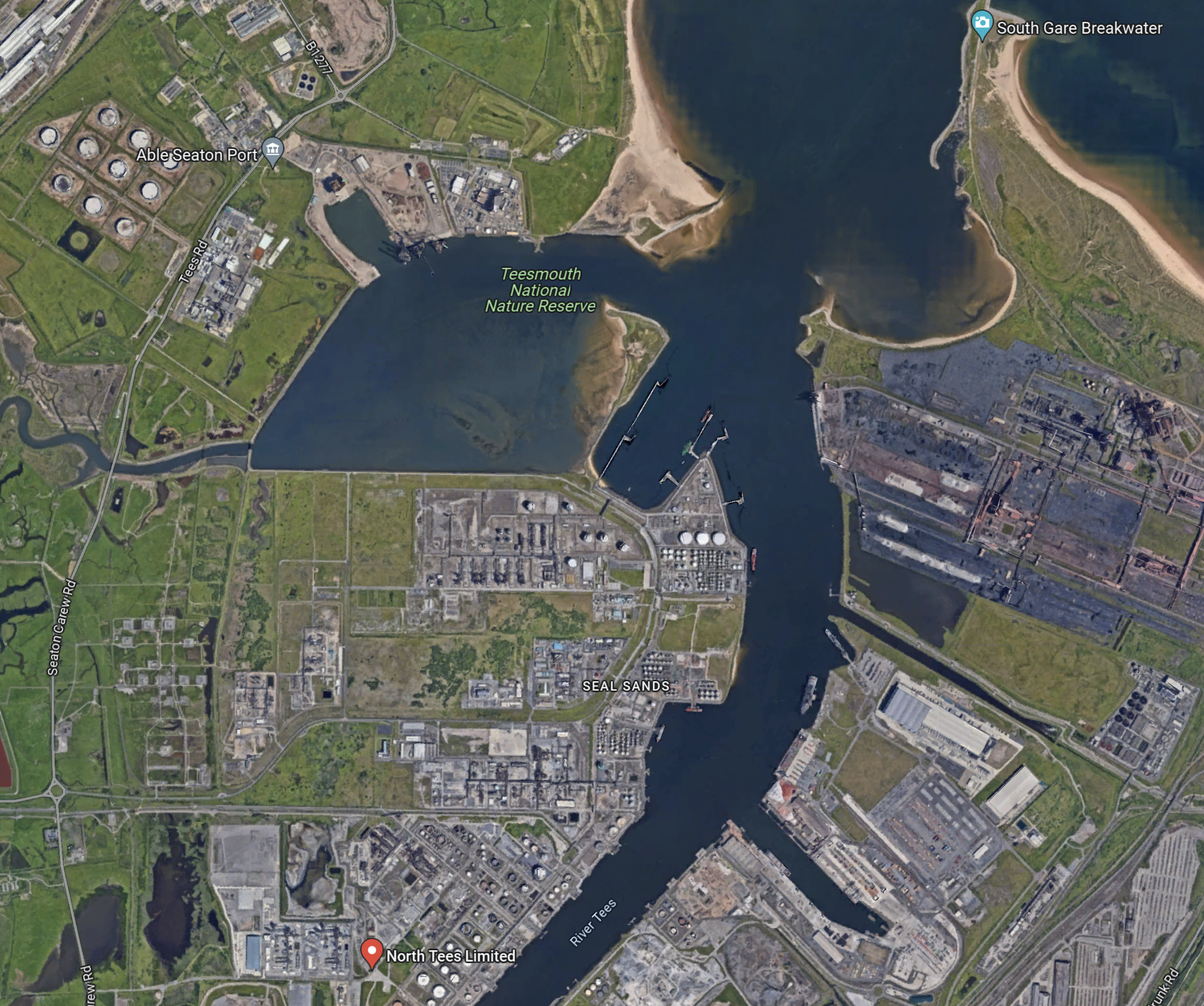
Note.
- The red arrow at the bottom of the map indicates the location of North Tees Group Estate.
- Follow the river to the North and a capitalised label indicating the position of Seal Sands can be seen.
This second Google Map shows the Seal Sands area in a larger scale.
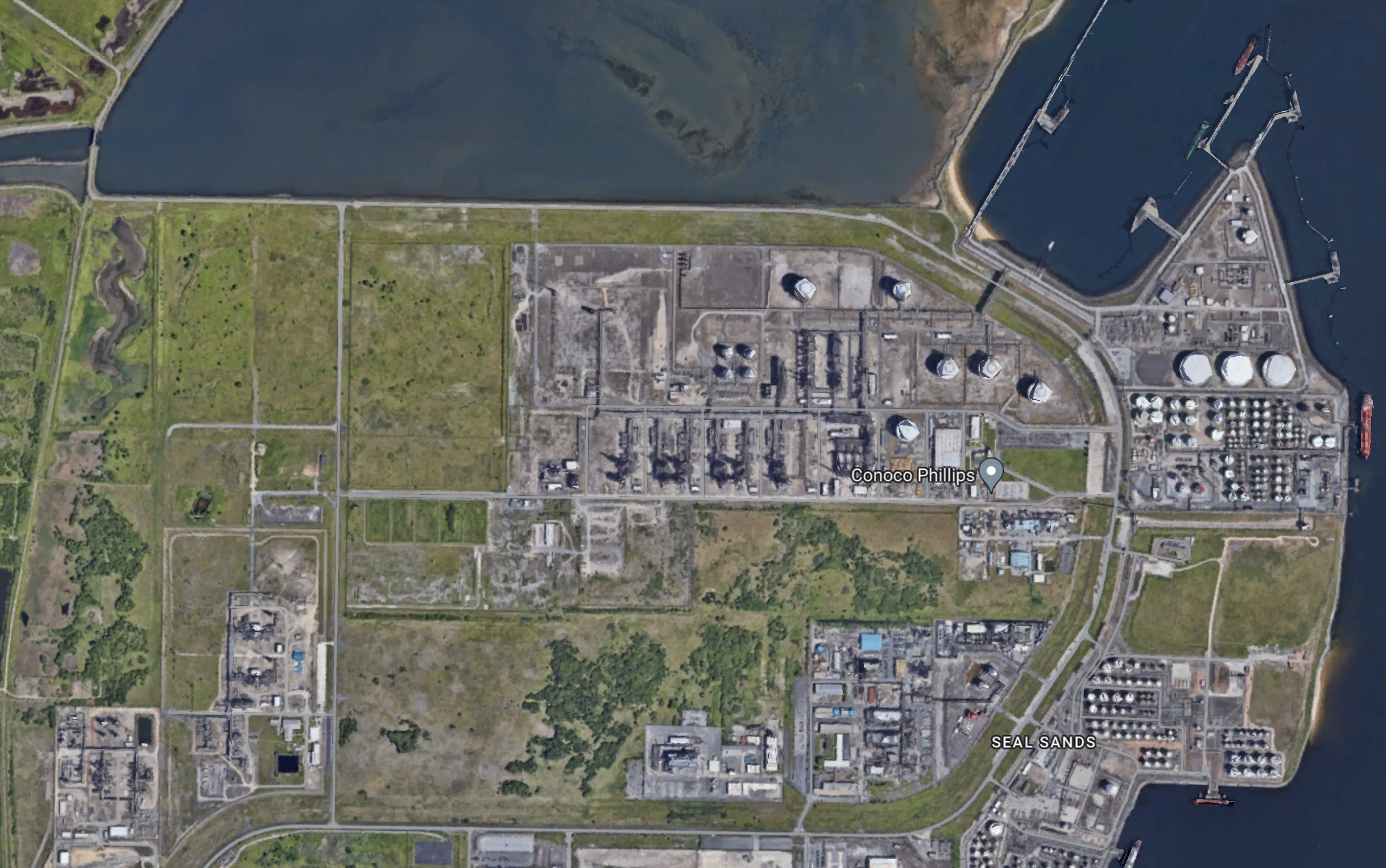
There seems to be several spaces, where the reactors could be located.
Would It Be Safe To Locate A Nuclear Reactor Or Reactors In a Cluster Of Oil Refineries And/Or Chemical Plants?
Consider.
- In the 1970s, when I worked at ICI, there were companies like Westinghouse advocating nuclear steelmaking.
- We did discuss the concept a couple of times over coffee but no one, I worked with, ever looked at it officially or seriously, as far as I know.
- In addition to requiring large amounts of electricity, oil refineries and chemical plants often use a lot of steam.
- Nuclear reactors generate steam to produce electricity, so some could be diverted to oil refineries or chemical plants
- To decarbonise some processes might switch to hydrogen.
- In Westinghouse And Bloom Energy To Team Up For Pink Hydrogen, I talk about how to use a nuclear reactor to efficiently produce pink hydrogen.
It looks like for efficiency, building the various plant close together could be a good thing.
But is it safe?
I suspect the level of safety will be that of the least safe plant.
So provided all plants are designed to the highest standards, it should be OK, as nuclear plants, oil refineries and chemical plant don’t regularly explode.
The Donald C Cook Nuclear Plant
The Donald C Cook Nuclear Plant in Michigan is a 2.2 GW nuclear plant, that was built by Westinghouse and commissioned in the mid-1970s.
They were clients for Artemis, the project management system that I wrote.
Soon after the Three Mile Island accident on March 28th, 1979, I visited the Donald C Cook Nuclear Plant to see how they were coping with the aftermath of the accident.
I remember being told by the operators of the plant, who were American Electric Power, that as it was their only nuclear plant, they were going to do everything by the book and Artemis was helping them to do that.
Reading about the plant, which is now licenced to operate until 2034 for one reactor and 2037 for the other, it seems to have performed impeccably so far for nearly fifty years.
It is a credit to both Westinghouse, who built it and American Electric Power who own it.
Now that is what I call high-class engineering and I’d be happy to have a cluster of SMRs to the same standard in my back yard.
Sizewell B
I used to live a few miles from Sizewell B, which is another Westinghouse reactor.
- This is the Wikipedia entry for the power station.
- Sizewell B was based on a proven Westinghouse design.
- It seems to have performed well since it was commissioned in 1995.
It looks like it will be operating until 2055, which will make its working life similar to those of the reactors at the Donald C Cook Nuclear Plant.
Westinghouse And Hinckley Point C Compared
Consider.
- Sizewell B was built in approximately seven years.
- This compares well with the two units at the Donald C Cook Nuclear Plant, which took six and nine years respectively
- It looks like Hinckley Point C will take between twelve and fourteen years to build.
- Sizewell B and the two units at Donald C Cook Nuclear Plant seem to be looking at a sixty year operating lifetime.
- Sizewell has a rail connection and Hinckley Point does not.
- Sizewell B seems to have been signed off, when John Major was Prime Minister.
- Hinckley Pont C seems to have resulted from a government white paper when Gordon Brown was Prime Minister.
Westinghouse seem to design nuclear power stations, that can operate for a long period and can be built within a decade.
Westinghouse And Rolls-Royce
Consider.
- Rolls-Royce also have an SMR design.
- Rolls-Royce and Westinghouse are both world-class companies.
- Rolls-Royce have the advantage they are British.
- I also suspect, that both Westinghouse and Rolls-Royce will use the same subcontractors and sub-assembly manufacturers.
- The Rolls-Royce SMR has a power output of 470 MW.
- The Westinghouse SMR has a power output of 300 MW.
I suspect the choice between the two, will be like choosing between top-of-the-range British and American products.
Conclusion
I wonder why we ended up with an unproven new French design at Hinckley Point, when sitting in Suffolk was a traditional Westinghouse design, that was performing to its design specification?
But for the SMR, we need to buy the reactors, which are financially best for Britain. If Westinghouse choose to manufacture large sections in the UK, they could be the better bet, as I suspect, if SMRs are successful, we’ll be seeing exports from the UK.
UK’s Nuclear Fusion Site Ends Experiments After 40 Years
The title of this post, is the same as that of this article on the BBC.
I have followed fusion research since ZETA at Harwell was started up in 1957.
These first few paragraphs from the BBC article, sum up up fusion research.
For the next four decades, the European project pursued nuclear fusion and the promise of near-limitless clean energy.
But on Saturday the world’s most successful reactor will end its last test.
Nuclear fusion was “discovered” in the 1920s and the subsequent years of research focused on developing fusion for nuclear weapons.
In 1958, when the United States’ war research on fusion was declassified, it sent Russia, UK, Europe, Japan and the US on a race to develop fusion reactions for energy provision.
Fusion is considered the holy grail of energy production as it releases a lot of energy without any greenhouse gas emissions.
It is the process that powers the Sun and other stars. It works by taking pairs of light atoms and forcing them together – the opposite of nuclear fission, where heavy atoms are split apart.
Four decades of research, loads of money and some of the best brains in the world have produced very little, except about knowing what doesn’t work.
It doesn’t seem that anybody is getting any value from fusion research any more.
It’s almost as if, we’ve hit a brick wall and we can’t go any farther.
It must be terribly demoralising for everybody involved.
Would the scientists and engineers be better employed on other research?
I wouldn’t totally abandon fusion research, but put it more on a watching brief, so that if anything positive happens elsewhere, the UK might be able to take advantage.
Could we even do what we have recently done with High Speed Two and scrap it, before using the money on other energy projects?
My priorities would be.
Floating Wind Research
Because we are surrounded by sea, offshore floating wind is likely to be our major energy source by the end of the decade.
Energy Network Control Research
Our energy network will be getting more complex and we need better algorithms to control it.
Storage Research
We need lots of energy storage, that is affordable to install, that can be placed everywhere in the UK.
Project Management Research
I believe that some of the energy ideas will need advanced project management techniques, that may or may not have been invented yet.
Small Modular Reactor Research
SMRs are one way to go, but is the backup research in place?
Tidal Research
Places in the UK have high tidal ranges and we should exploit them.
The Government And Research
The government is funding a lot of energy research.
Much of the funding is going for short term projects, which is good in that we have an urgent need for improvement in our energy performance, but is bad in that it ignores the future.
Diamond 2
The Diamond Light Source has been an unqualified success. I am convinced that we need Diamond 2 in the North, which I wrote about in Blackpool Needs A Diamond.
Is Sizewell C Needed?
I am generally pro-nuclear, but I am not sure if building a large nuke at Sizewell is the right action.
Consider.
- East Anglia has 3114 MW of offshore wind in operation.
- East Anglia has 6772 MW of offshore wind under construction, with Contracts for Difference or proposed.
- Vattenfall are considering abandoning development of their large wind farms off the Norfolk coast, which are proposed to have a capacity of 3196 MW.
- If the two Vattenfall wind farms don’t get built, it is likely that East Anglia will have around 6700 MW of offshore wind capacity.
- Sizewell C has a proposed nameplate capacity of 3260 MW. Some might argue, that to back up East Anglia’s offshore wind power, it needs to be larger!
- Norfolk and Suffolk no large electricity users, so are Vattenfall finding they have a product no one wants to buy.
- National Grid is developing four interconnectors to bring power from Scotland to the Eastern side of England, which will back up wind power in the East with the massive Scottish pumped storage, that is being developed.
- National Grid and their Dutch equivalent; TenneT are developing LionLink to connect the UK and the Netherlands to clusters of wind farms between our countries in the North Sea.
- Kent and East Anglia have several gas and electric interconnectors to Europe.
- Sizewell is well-connected to England’s grid.
These are my thoughts.
Energy Storage At Sizewell
Consider.
- Sizewell is well connected to the grid.
- It has the sea on one side.
- It could easily be connected to the large offshore wind farms, thirty miles out to sea.
If large energy storage could be built on the Sizewell site or perhaps under the sea, then this energy could be recovered and used in times of low wind.
Perhaps the technology of the STORE Consortium, which I discussed in UK Cleantech Consortium Awarded Funding For Energy Storage Technology Integrated With Floating Wind, could be used.
In this system, energy is stored in 3D-printed concrete hemispheres under the sea.
A Small Nuclear Reactor Cluster At Sizewell
Rolls-Royce are proposing that their small modular reactors will have a capacity of 470 MW.
Perhaps a cluster of seven small modular reactors at Sizewell, with a building schedule matched to the need to back up wind farms would be better and easier to finance.
I also feel a cluster of SMRs would have less risk and would be less likely to be delayed.
Where Is Generating Capacity Needed In The UK?
These areas already have large amounts of offshore wind in operation or proposed to be built before 2030.
- Celtic Sea
- North Wales
- Liverpool Bay
- Cumbria
- Scotland
- Scotland’s Offshore Islands
- North East England
- Humberside
- Lincolnshire
- East Anglia
- Thames Estuary
- Kent
- Sussex
Amongst the back up for these wind farms, there are only two modern nuclear stations; Sizewell B and the still-to-open Hinckley Point C.
If you look at a map of England and its power generation, there is a tremendous gap of capacity South of a line between Hinckley Point and Brighton, with little or no offshore wind and no nuclear.
There is probably a need for a large nuke near Weymouth.
Alternatively, perhaps several SMRs could be built underneath places like Salisbury Plain, Dartmoor and Exmoor!
Conclusion
We probably need the nuclear electricity from another Hinckley Point C-sized nuclear power station, so that we have adequate back-up for offshore wind.
But I am not sure that Sizewell is the right place to build it.
Ultra Safe Nuclear, Hyundai Engineering, SK Ecoplant Sign MOU For Clean Hydrogen Production
The title of this post, is the same as that of this press release from Ultra Safe Nuclear Corporation.
These are the first two paragraphs.
Ultra Safe Nuclear Corporation, the U.S.-based global leader in the deployment of fourth-generation gas-cooled microreactors, Hyundai Engineering (Representative Director Hong Hyun-sung) and SK ecoplant (Representative Director Park Kyung-il) are teaming up to conduct research and development for carbon-free hydrogen production. The three companies signed an MOU on Thursday, April 20th for the construction of a “Hydrogen Micro Hub” at the SK ecoplant headquarters in Seoul’s Jongno-gu.
The “Hydrogen Micro Hub” is a facility that produces hydrogen by applying a high-temperature electrolysis process of solid oxide electrolysis cells (SOEC) to the electricity and high-temperature steam generated by USNC’s Micro-Modular™ Reactor (MMR®). This is a carbon-free hydrogen production method that extracts hydrogen by decomposing water with electricity generated from nuclear power.
Ultra Safe Nuclear Corporation has a web site.
- Ultra Safe Nuclear Corporation, is a U.S. corporation headquartered in Seattle.
- Canada appears to be deeply involved.
- Innovate UK appears to have dished out a grant.
- They appear to have sold five of their MMRs.
The company could be a serious competitor in the market for small modular nuclear reactors.
Could Rolls-Royce SMRs Be The Solution To Europe’s Gas Shortage?
Of all the offshore wind farms, that I’ve looked at recently, I find Magnora’s ScotWind N3 wind farm the most interesting.
I wrote about it in ScotWind N3 Offshore Wind Farm.
I said this.
In any design competition, there is usually at least one design, that is not look like any of the others.
In the successful bids for the ScotWind leases, the bid from Magnora ASA stands out.
- The company has an unusual home page on its offshore wind web site.
- This page on their web site outlines their project.
- It will be technology agnostic, with 15MW turbines and a total capacity of 500MW
- It will use floating offshore wind with a concrete floater
- It is estimated, that it will have a capacity factor of 56 %.
- The water depth will be an astonishing 106-125m
- The construction and operation will use local facilities at Stornoway and Kishorn Ports.
- The floater will have local and Scottish content.
- The project will use UK operated vessels.
- Hydrogen is mentioned.
- Consent is planned for 2026, with construction starting in 2028 and completion in 2030.
This project could serve as a model for wind farms all round the world with a 500 MW power station, hydrogen production and local involvement and construction.
I very much like the idea of a concrete floater, which contains a huge electrolyser and gas storage, that is surrounded by an armada of giant floating wind turbines.
These are my thoughts.
Floating Concrete Structures
To many, they may have appear to have all the buoyancy of a lead balloon, but semi-submersible platforms made from concrete have been used in the oil and gas industry for several decades.
Kishorn Yard in Scotland was used to build the 600,000-tonne concrete Ninian Central Platform,in 1978. The Ninian Central Platform still holds the record as the largest movable object ever created by man.
The Ninian Central Platform sits on the sea floor, but there is no reason why a semi-submersible structure can’t be used.
Electrolysers
There is no reason, why a large electrolyser, such as those made by Cummins, ITM Power or others can’t be used, but others are on the way.
- Bloom Energy are working on high temperature electrolysis, which promises to be more efficient.
- Torvex Energy are developing electrolysis technology that used sea water, rather than more expensive purified water.
High Temperature Electrolysis
High temperature electrolysis needs a heat source to work efficiently and in Westinghouse And Bloom Energy To Team Up For Pink Hydrogen, I described how Bloom Energy propose to use steam from a large nuclear power station.
Offshore Nuclear Power
I’ve never heard of offshore nuclear power, but it is not a new idea.
In 1970, a company called Offshore Power Systems was created and it is introduced in its Wikipedia entry like this.
Offshore Power Systems (OPS) was a 1970 joint venture between Westinghouse Electric Company, which constructed nuclear generating plants, and Newport News Shipbuilding and Drydock, which had recently merged with Tenneco, to create floating nuclear power plants at Jacksonville, Florida.
Westinghouse’s reactor was a 1.150 MW unit, which was typical of the time, and is very similar in size to Sizewell B.
The project was cancelled before the reactors were towed into position.
Nuclear Knowledge Has Improved
Consider.
- In the fifty years since Offshore Power Systems dabbed their toes in the water of offshore nuclear power, our knowledge of nuclear systems and engineering has improved greatly.
- The offshore oil and gas industry has also shown what works impeccably.
- The floating offshore wind industry looks like it might push the envelop further.
- There has been only one nuclear accident at Fukushima, where the sea was part of the problem and that disaster taught us a lot.
- There have been a large number of nuclear submarines built and most reached the planned end of their lives.
- Would a small modular nuclear reactor, be safer than a large nuclear power plant of several GW?
I would suggest we now have the knowledge to safely build and operate a nuclear reactor on a proven semi-submersible platform, built from non-rusting concrete.
An Offshore Wind Farm/Small Modular Reactor Combination Producing Hydrogen
Consider.
- A typical floating offshore wind farm is between one and two gigawatts.
- A Rolls-Royce small modular reactor is sized to produce nearly 0.5 GW.
- The high temperature electrolyser will need some heat to achieve an optimum working temperature.
- Spare electricity can be used to produce hydrogen.
- Hydrogen can be stored platform.
- Hydrogen can be sent ashore using existing gas pipes.
- Hydrogen could even be blended with natural gas produced offshore to create a lower-carbon fuel.
- It would also be possible to decarbonise nearby offshore infrastructure.
A balance between wind and nuclear power can be obtained, which would provide a steady output of energy.
Conclusion
There are a large numbers of possibilities, to locate a Rolls-Royce small modular reactor close to a wind farm to use high temperature electrolysis to create green hydrogen, which can be used in the UK or exported through the gas network.
Nuclear-Enabled Hydrogen – How It Helps To Reach Net Zero
The title of this post, is the same as that of this article on Power Engineering.
These are the first two paragraphs.
Nuclear enabled hydrogen is zero carbon, has low cost energy input, is large scale and offers co-location synergy and energy system connectivity.
With the revival of interest in nuclear energy, interest is growing in the potential for nuclear-enabled hydrogen, otherwise sometimes known as ‘pink’ hydrogen, to meet the anticipated demand for hydrogen at scale.
The article is certainly a must-read.
Topics covered include.
- Co-location of pink hydrogen production with industrial clusters, where heat can also be provided.
- The production of hydrogen on a large scale.
- The use of high temperature electrolysis, using steam from the nuclear plant.
I particularly like the idea of combining a small modular nuclear reactor with high temperature electrolysis to generate hydrogen for local industry like a steelworks or chemical plant.
Sizewell C Nuclear Power Station: Government To Take 20% Stake
The title of this post, is the same as that of this article on the BBC.
This is the first three paragraphs.
The government plans to take a 20% stake in a £20bn large-scale nuclear plant at Sizewell, the BBC has learned.
French developer EDF will also take a 20% stake in the Suffolk power station.
Ministers hope the confirmation of two cornerstone investors will encourage infrastructure investors and pension funds to take up the remaining 60%.
I used to live near Sixewell and the general feeling of local Suffolk people is not particularly against having nuclear power stations in their back yards.
There are several small points in favour of Sizewell C.
- Sizewell has been operating nuclear power plants safely since the 1960s.
- Leiston, which is the nearest town, has a very strong engineering tradition.
- Leiston also improved by several notches during the building of Sizewell B.
- The site is accessible by rail and possibly sea with the right ship.
- Nuclear fuel can be brought in and out by train.
- If they spent a small amount on the train service to Saxmundham, construction workers could come in by train.
- Sizewell C has been proposed to be used to generate hydrogen for Freeport East at the Ports of Harwich an Felixstowe.
- The power cable to take electricity from Sizewell C towards London is already built.
- Sizewell is much more convenient to get to from London, than other possible nuclear sites.
Overall, I feel that Sizewell is a good place for nuclear power station.
On the other hand, there are these points against the station.
- There will be at least 6.7 GW of wind farms built off the East Anglian coast before Sizewell C is completed.
- There may be substantial objection to the new power station.
- Large nuclear power stations are rarely built to time and on budget.
- I feel that if we go the nuclear route, that small modular nuclear reactors may be better.
I can understand why Governments like Sizewell as a nuclear power station site.
Plan For New Nuclear Reactors At Wylfa And Trawsfynydd A Step Closer As Natural Resource Wales Looks At Designs
The title of this post, is the same as that of this article on nation.cymru.
These are the first two paragraphs.
Plans for new nuclear power stations at Trawsfynydd and Wylfa have taken a step closer after the UK Government asked government regulators to assess designs for the reactors.
Natural Resources Wales will be among those assessing the designs by Rolls-Royce, with both Wylfa and Trawsfynydd have been named as potential sites for housing them within the UK.
These are points about the reactors.
- They will cost £1.8 billion each.
- They are capable of powering a city the size of Cardiff, which has a population of about half-a-million.
- I’ve read elsewhere that the reactors are planned to have a nameplate capacity of 470 MW.
The article did mention, that the Nimbys were lining up.
The Wylfa Site
The original Wylfa power station was a Magnox nuclear station generating 980 MW, that was decommissioned in 2015.
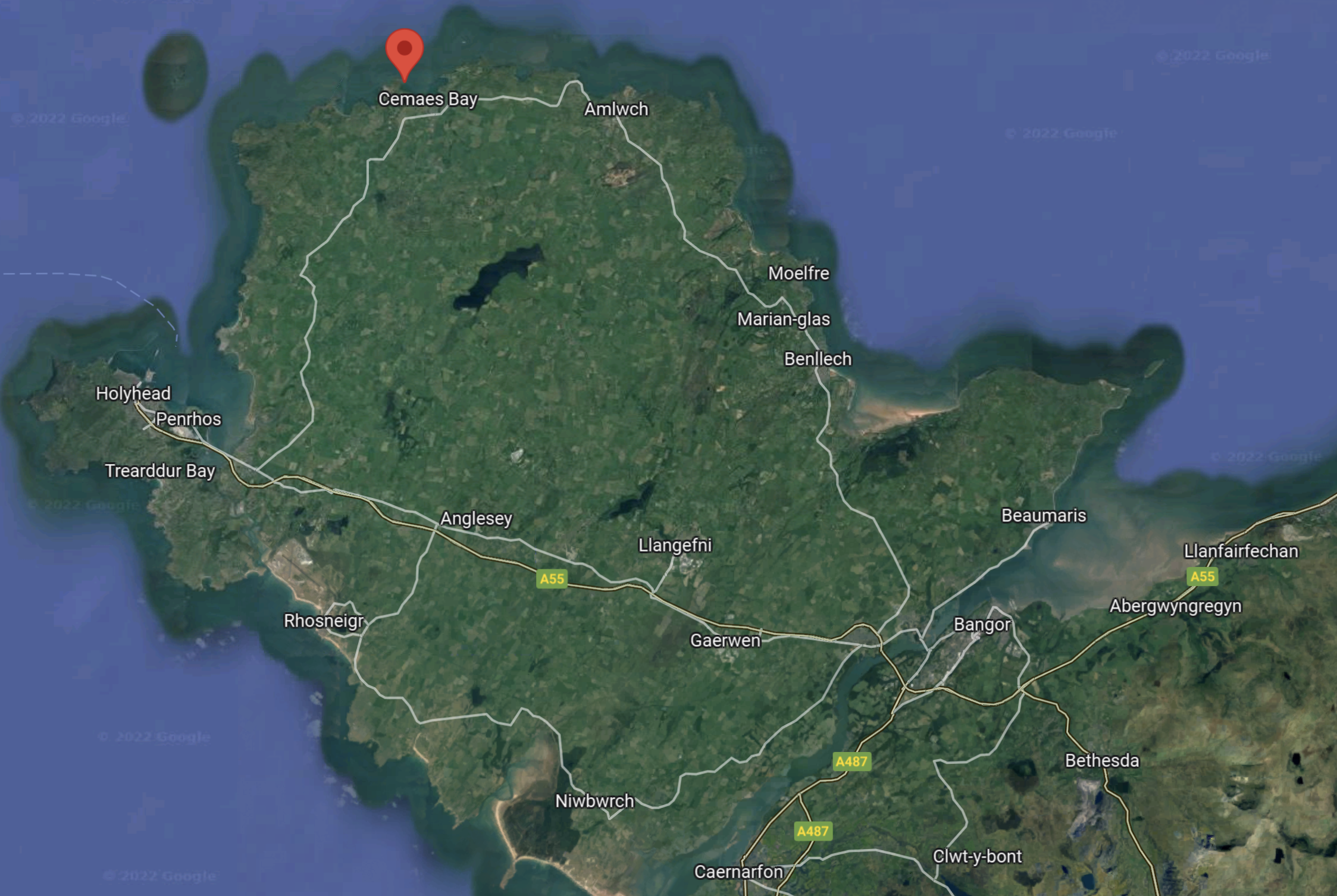
This Google Map shows the location of the site on Anglesey.
This second Google Map shows the site in more detail.
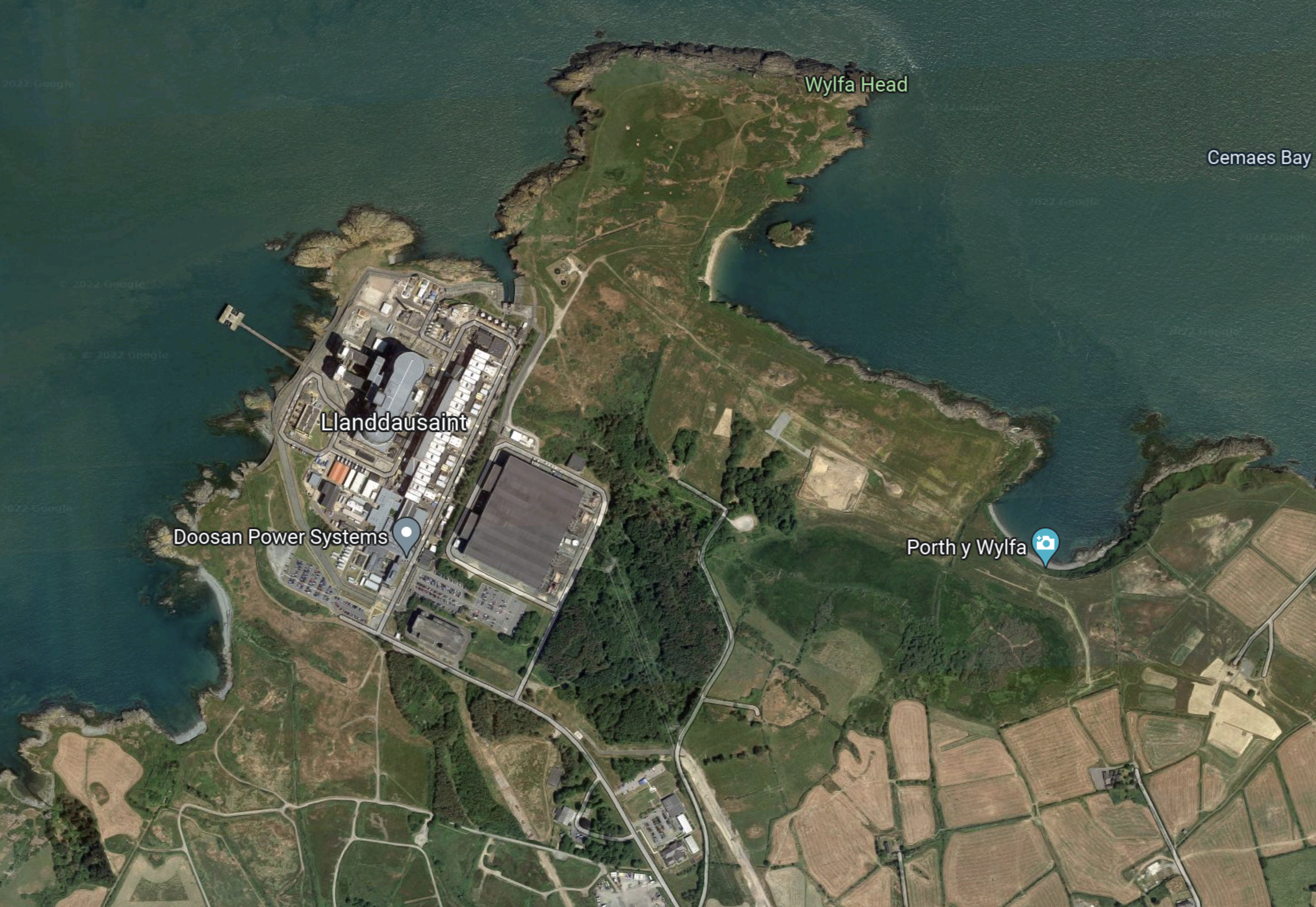
The power station doesn’t appear to have had a rail link, but there is a railway line a few miles away, with sidings that might have been used to handle fuel flasks.
There has been a proposal for a hybrid plant consisting of a wind farm and small modular nuclear reactors, which is described in this Wikipedia section, where this is said.
In January 2021, Shearwater Energy presented plans for a hybrid plant, to consist of a wind farm and small modular reactors (SMRs), to be installed adjacent to the existing Wylfa power station but separate from the proposed Wylfa Newydd site. Shearwater has signed a memorandum of understanding with NuScale Power for the SMRs. The plant could start generation as early as 2027 and would ultimately produce up to 3 GW of electricity and power a hydrogen generation unit producing up to 3 million kg of hydrogen per year.
Note.
- Wylfa Newydd was a proposal by Hitachi to build a nuclear station on the site.
- Shearwater Energy is a UK developer of energy opportunities.
- NuScale Power is an American company with its own design of small modular nuclear reactor.
In Holyhead Hydrogen Hub Planned For Wales, I talked about hydrogen and the port of Holyhead.
The Trawsfynydd Site
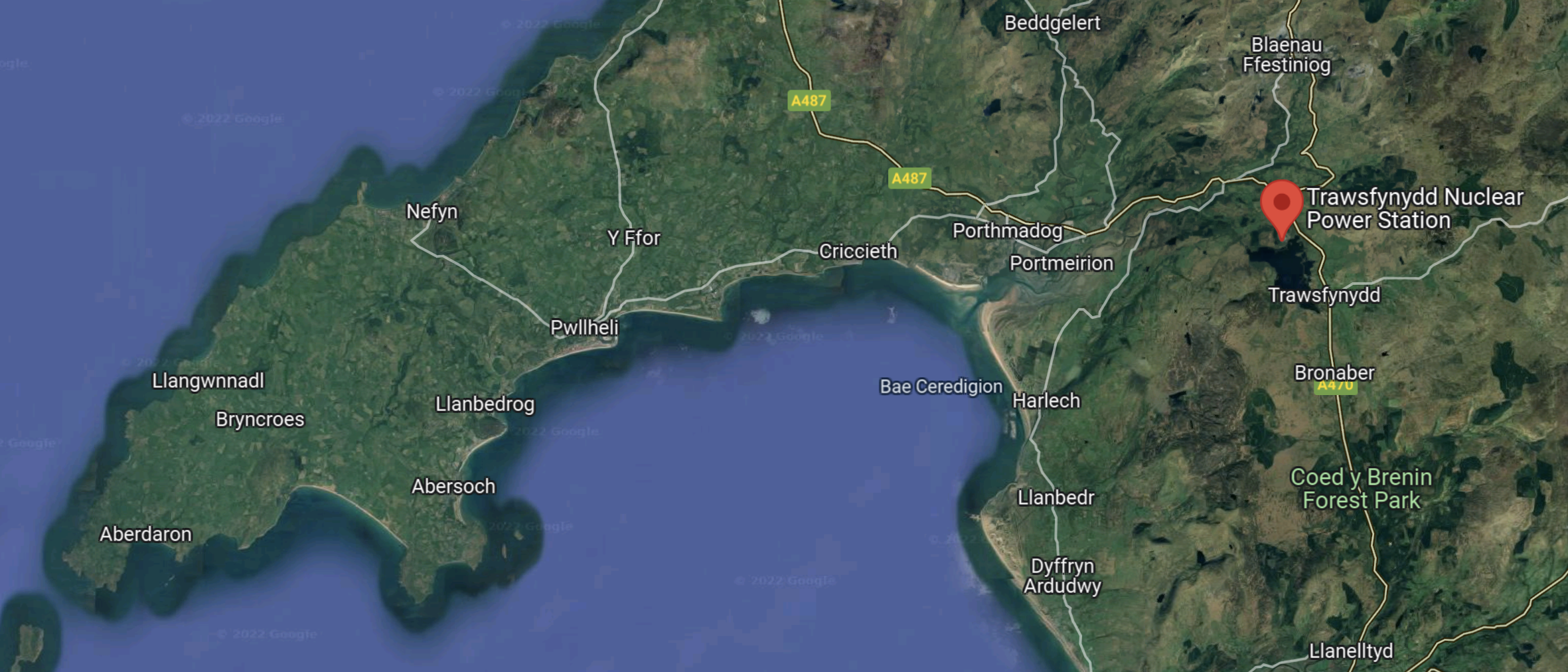
The original Trawsfynydd power station was a Magnox nuclear station generating 470 MW, that was decommissioned in 1991.
This Google Map shows the location of the site in North Wales.
This second Google Map shows the site in more detail.
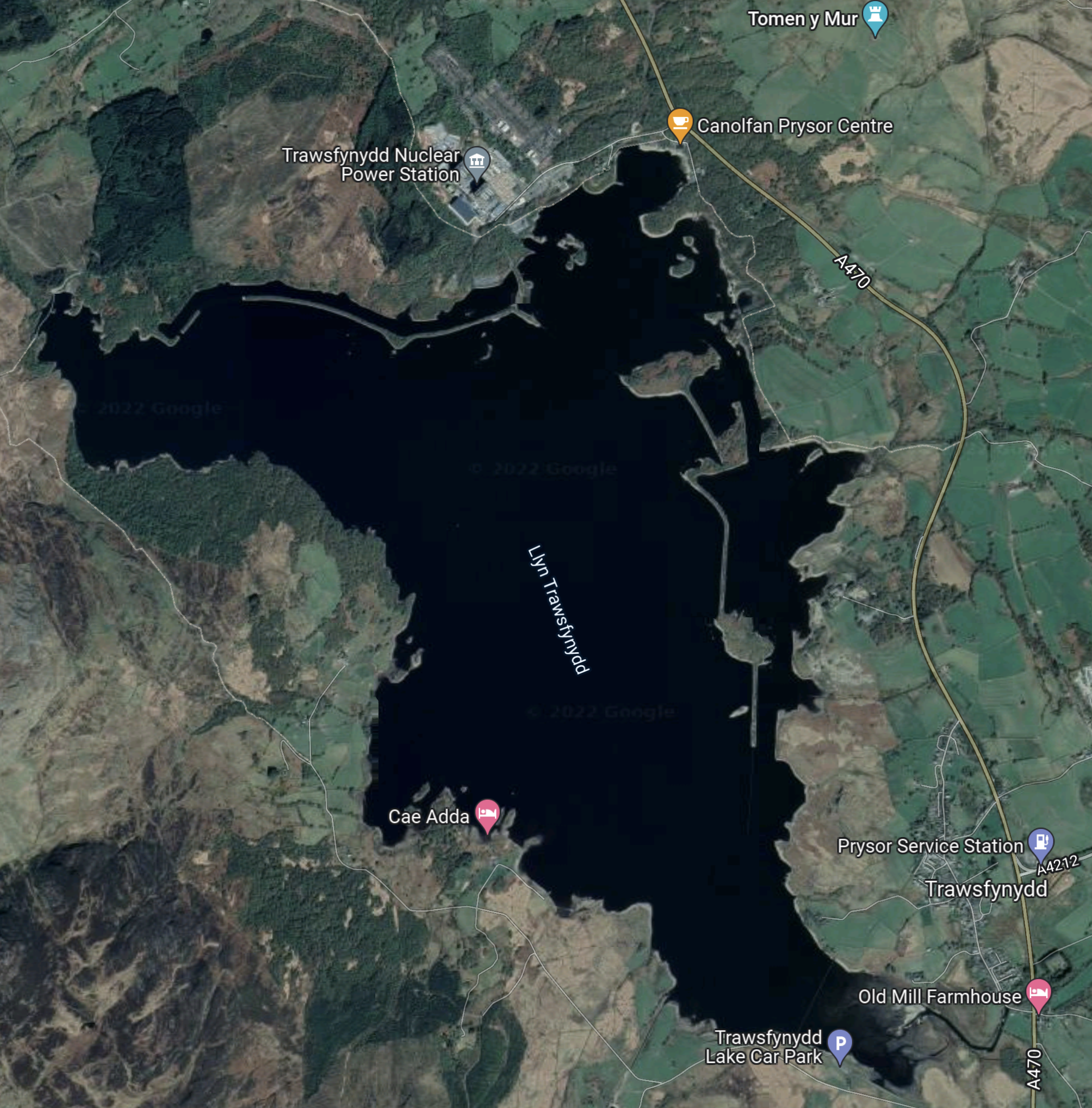
Note.
- The power station was built on the Northern shore of Llyn Trawsfynydd.
- Llyn Trawsfynydd is a man-made lake, that was built in the 1920s to supply water to the 24 MW Maentwrog hydro electric power station.
- There is a railway from near the site, that connects to the Conwy Valley Line at Blaenau Ffestiniog.
The Trawsfynydd site is a lot more than just a decommissioned Magnox power station.
Pumped Energy Storage In Snowdonia
Currently, there are two existing pumped storage in Snowdonia.
- Dinorwig power station, which is often called Electric Mountain, which has a capacity of 9.1 GWh.
- Ffestiniog power station, which has a capacity of around 1 GWh. If anybody has a better figure let me know!
A third scheme is under development at Glyn Rhonwy, which could have a capacity of 700 MWh.
Looking at the size of Llyn Trawsfynydd, I do wonder, if it could be the top lake of a future pumped storage scheme.
- Llyn Trawsfynydd, contains 40 million tonnes of water.
- There is a head of 190 metres.
That could give energy storage of 20 GWh. That sounds a lot of GWhs! But with two possible small modular nuclear reactors at possibly 500 MW each nearby and some help from windfarms, it could be filled within a day, if there is a suitable low-level reservoir.
Rolls-Royce And The Duisburg Container Terminal
In Rolls-Royce Makes Duisburg Container Terminal Climate Neutral With MTU Hydrogen Technology, I showed how Rolls-Royce and its subsidiary were providing an innovative climate neutral solution for Duisburg Container Terminal in Germany.
A North West Wales Powerhouse
Could Rolls-Royce be planning a Duisburg-style solution for North West Wales.
- Small modular nuclear reactors at Wylfa and Trawsfynydd.
- Hydrogen electrolysers to create hydrogen for the Port of Holyhead and heavy transport.
- Adequate pumped hydro storage for surplus energy.
But there could be little serious above-ground construction.
Conclusion
Something is awakening in North West Wales.
 The Anonymous Widower