Sizewell C Nuclear Power Station: Government To Take 20% Stake
The title of this post, is the same as that of this article on the BBC.
This is the first three paragraphs.
The government plans to take a 20% stake in a £20bn large-scale nuclear plant at Sizewell, the BBC has learned.
French developer EDF will also take a 20% stake in the Suffolk power station.
Ministers hope the confirmation of two cornerstone investors will encourage infrastructure investors and pension funds to take up the remaining 60%.
I used to live near Sixewell and the general feeling of local Suffolk people is not particularly against having nuclear power stations in their back yards.
There are several small points in favour of Sizewell C.
- Sizewell has been operating nuclear power plants safely since the 1960s.
- Leiston, which is the nearest town, has a very strong engineering tradition.
- Leiston also improved by several notches during the building of Sizewell B.
- The site is accessible by rail and possibly sea with the right ship.
- Nuclear fuel can be brought in and out by train.
- If they spent a small amount on the train service to Saxmundham, construction workers could come in by train.
- Sizewell C has been proposed to be used to generate hydrogen for Freeport East at the Ports of Harwich an Felixstowe.
- The power cable to take electricity from Sizewell C towards London is already built.
- Sizewell is much more convenient to get to from London, than other possible nuclear sites.
Overall, I feel that Sizewell is a good place for nuclear power station.
On the other hand, there are these points against the station.
- There will be at least 6.7 GW of wind farms built off the East Anglian coast before Sizewell C is completed.
- There may be substantial objection to the new power station.
- Large nuclear power stations are rarely built to time and on budget.
- I feel that if we go the nuclear route, that small modular nuclear reactors may be better.
I can understand why Governments like Sizewell as a nuclear power station site.
Plan For New Nuclear Reactors At Wylfa And Trawsfynydd A Step Closer As Natural Resource Wales Looks At Designs
The title of this post, is the same as that of this article on nation.cymru.
These are the first two paragraphs.
Plans for new nuclear power stations at Trawsfynydd and Wylfa have taken a step closer after the UK Government asked government regulators to assess designs for the reactors.
Natural Resources Wales will be among those assessing the designs by Rolls-Royce, with both Wylfa and Trawsfynydd have been named as potential sites for housing them within the UK.
These are points about the reactors.
- They will cost £1.8 billion each.
- They are capable of powering a city the size of Cardiff, which has a population of about half-a-million.
- I’ve read elsewhere that the reactors are planned to have a nameplate capacity of 470 MW.
The article did mention, that the Nimbys were lining up.
The Wylfa Site
The original Wylfa power station was a Magnox nuclear station generating 980 MW, that was decommissioned in 2015.
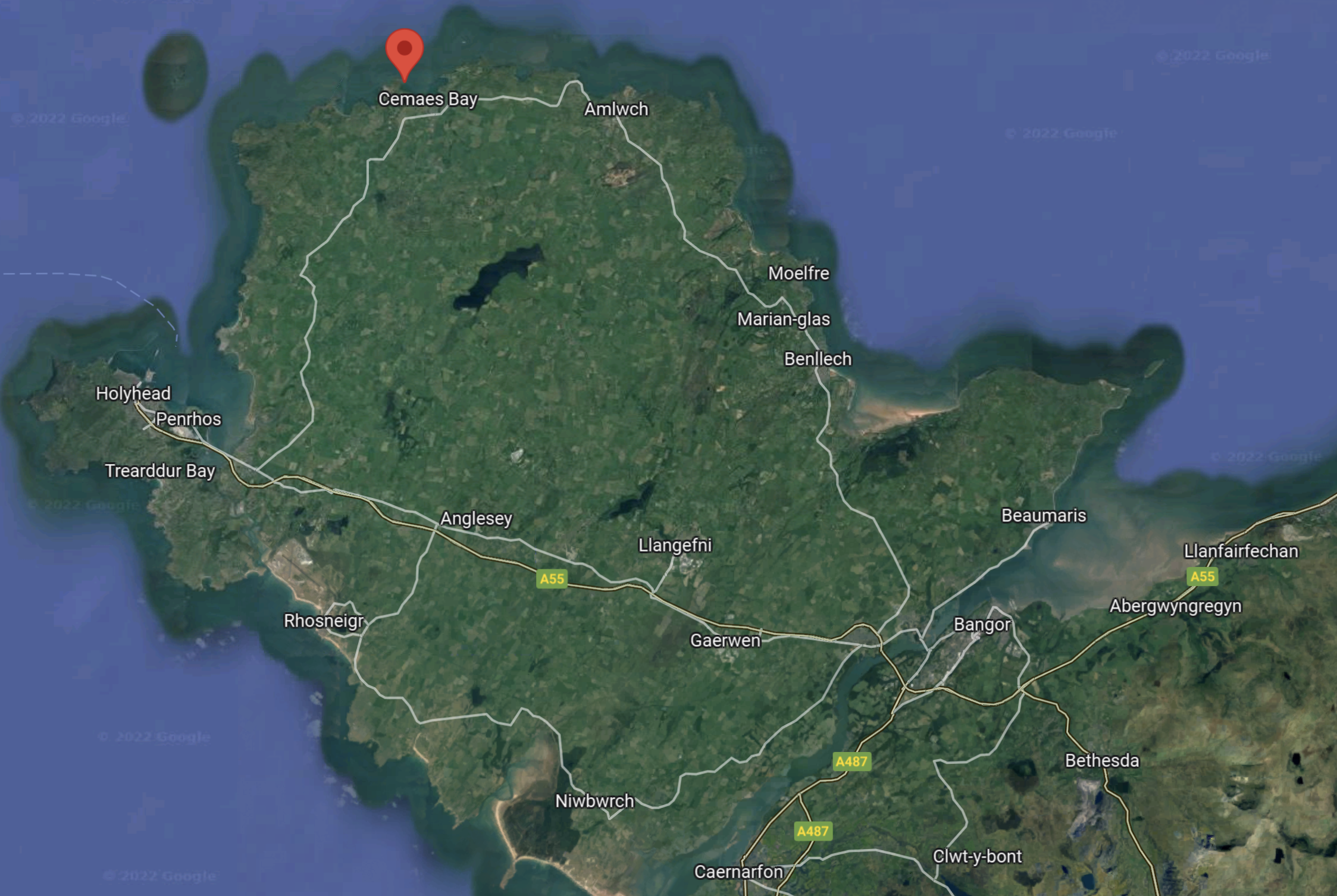
This Google Map shows the location of the site on Anglesey.
This second Google Map shows the site in more detail.
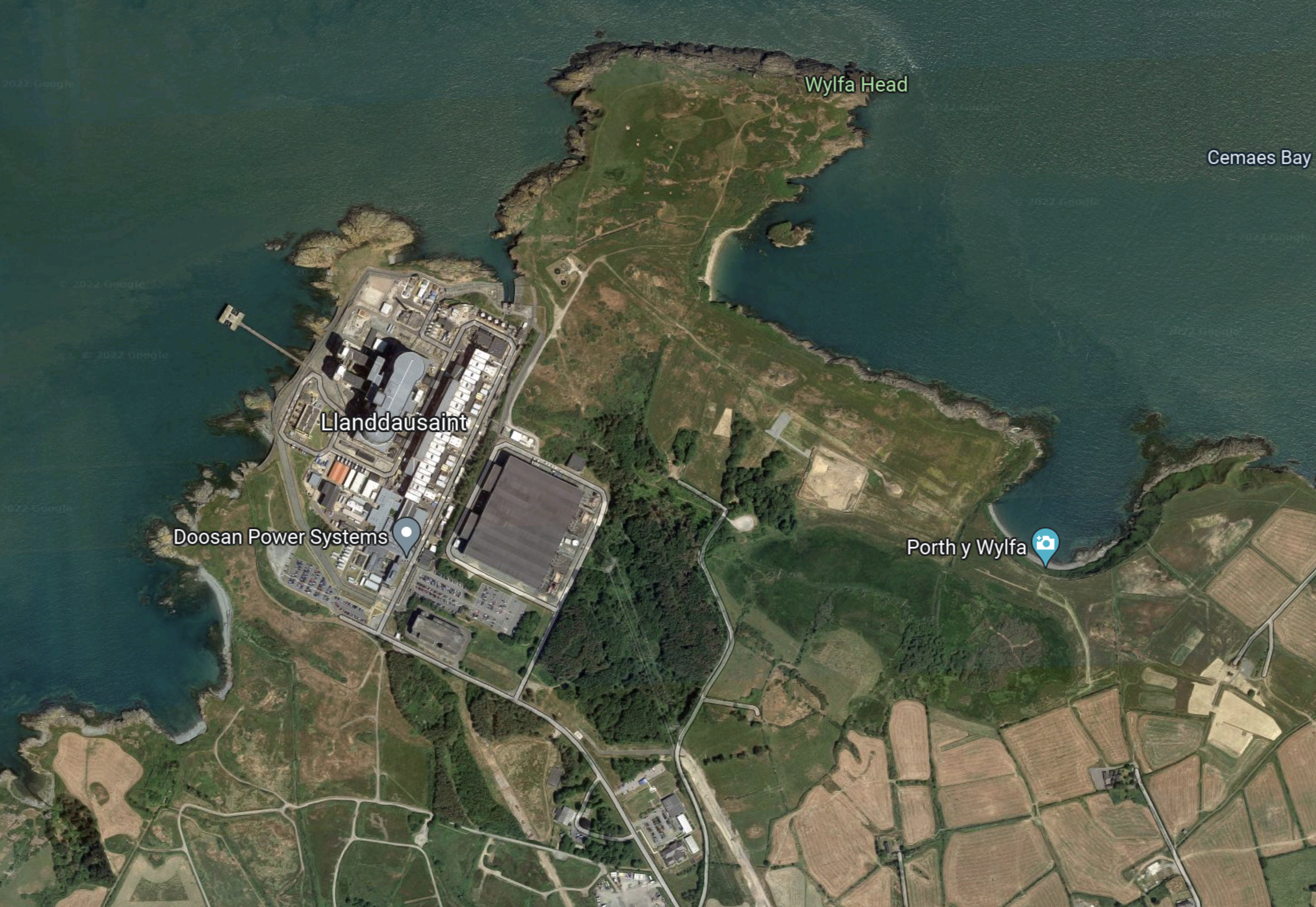
The power station doesn’t appear to have had a rail link, but there is a railway line a few miles away, with sidings that might have been used to handle fuel flasks.
There has been a proposal for a hybrid plant consisting of a wind farm and small modular nuclear reactors, which is described in this Wikipedia section, where this is said.
In January 2021, Shearwater Energy presented plans for a hybrid plant, to consist of a wind farm and small modular reactors (SMRs), to be installed adjacent to the existing Wylfa power station but separate from the proposed Wylfa Newydd site. Shearwater has signed a memorandum of understanding with NuScale Power for the SMRs. The plant could start generation as early as 2027 and would ultimately produce up to 3 GW of electricity and power a hydrogen generation unit producing up to 3 million kg of hydrogen per year.
Note.
- Wylfa Newydd was a proposal by Hitachi to build a nuclear station on the site.
- Shearwater Energy is a UK developer of energy opportunities.
- NuScale Power is an American company with its own design of small modular nuclear reactor.
In Holyhead Hydrogen Hub Planned For Wales, I talked about hydrogen and the port of Holyhead.
The Trawsfynydd Site
The original Trawsfynydd power station was a Magnox nuclear station generating 470 MW, that was decommissioned in 1991.
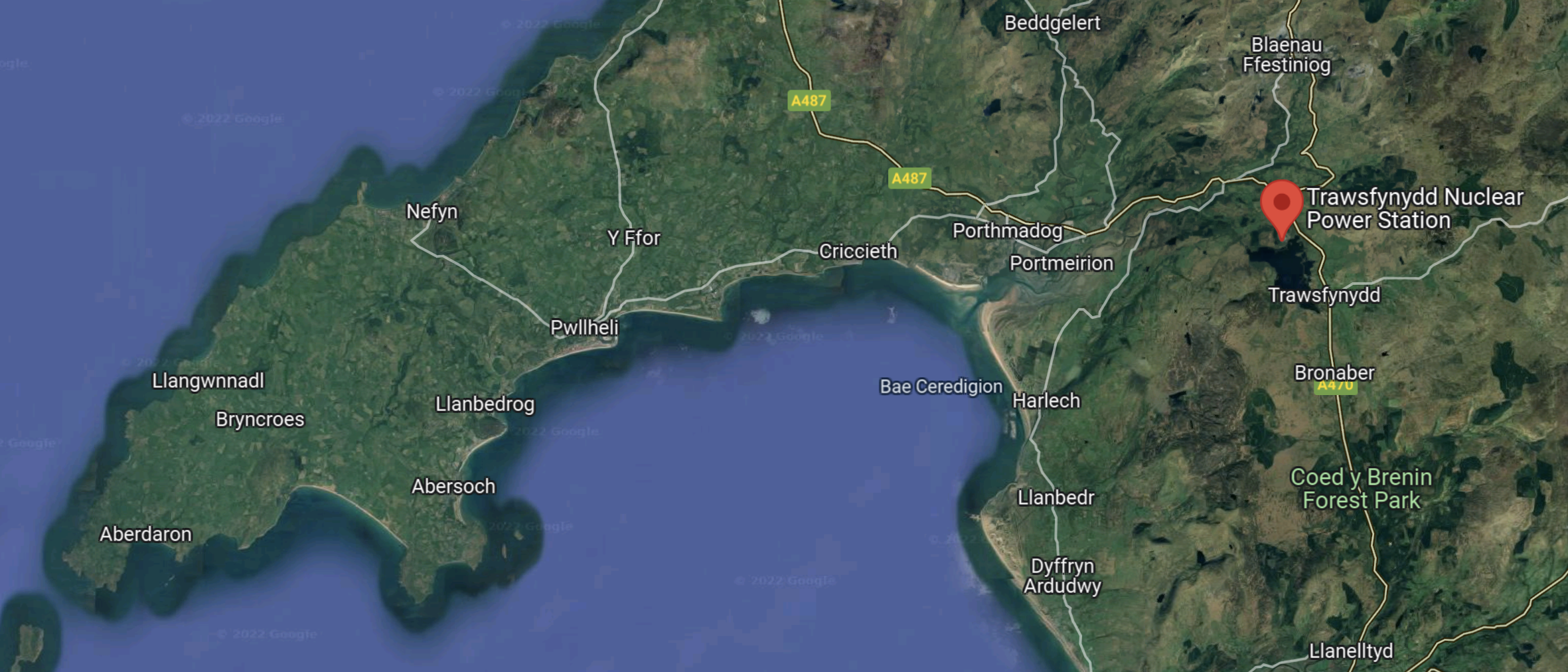
This Google Map shows the location of the site in North Wales.
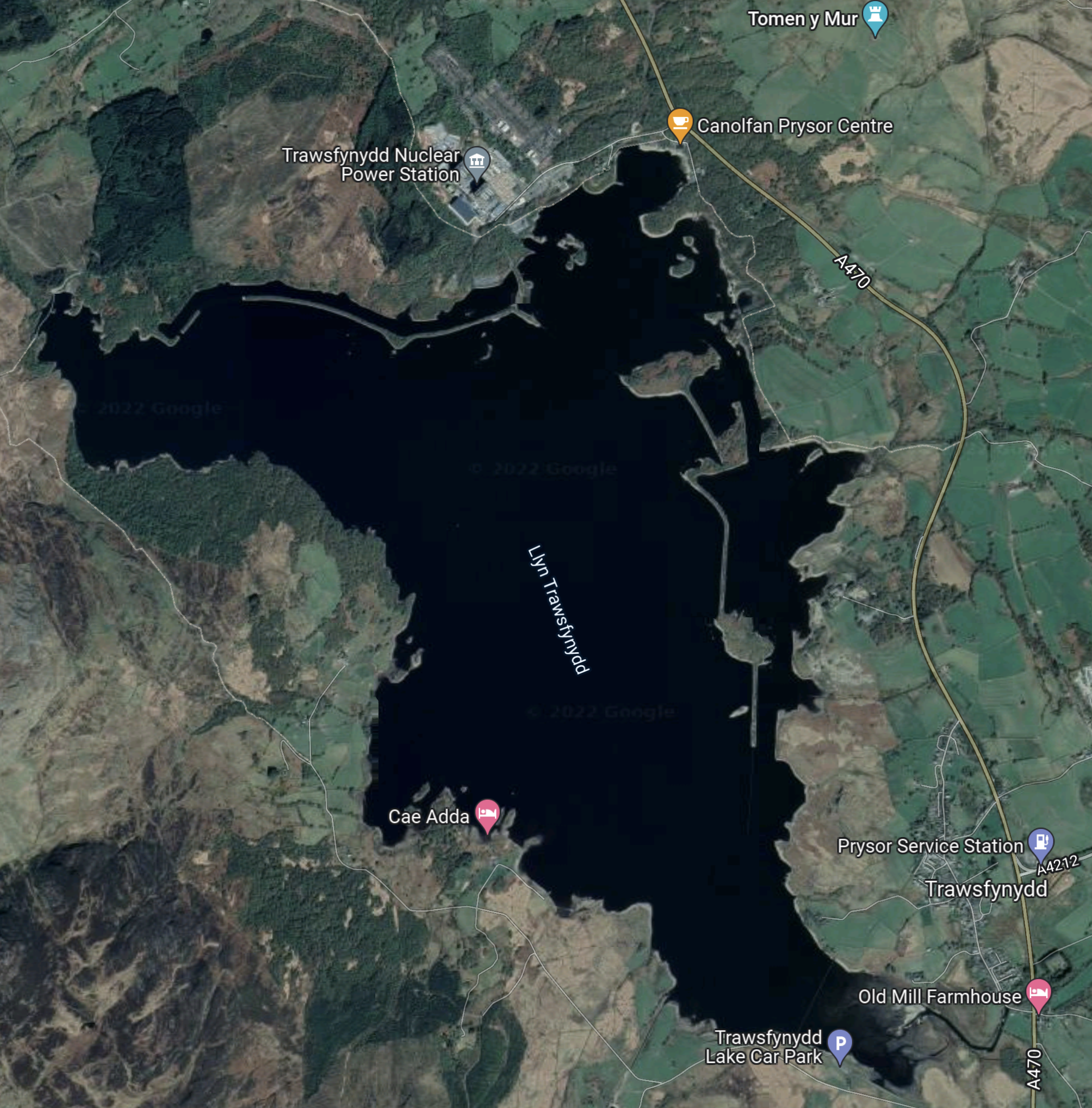
This second Google Map shows the site in more detail.
Note.
- The power station was built on the Northern shore of Llyn Trawsfynydd.
- Llyn Trawsfynydd is a man-made lake, that was built in the 1920s to supply water to the 24 MW Maentwrog hydro electric power station.
- There is a railway from near the site, that connects to the Conwy Valley Line at Blaenau Ffestiniog.
The Trawsfynydd site is a lot more than just a decommissioned Magnox power station.
Pumped Energy Storage In Snowdonia
Currently, there are two existing pumped storage in Snowdonia.
- Dinorwig power station, which is often called Electric Mountain, which has a capacity of 9.1 GWh.
- Ffestiniog power station, which has a capacity of around 1 GWh. If anybody has a better figure let me know!
A third scheme is under development at Glyn Rhonwy, which could have a capacity of 700 MWh.
Looking at the size of Llyn Trawsfynydd, I do wonder, if it could be the top lake of a future pumped storage scheme.
- Llyn Trawsfynydd, contains 40 million tonnes of water.
- There is a head of 190 metres.
That could give energy storage of 20 GWh. That sounds a lot of GWhs! But with two possible small modular nuclear reactors at possibly 500 MW each nearby and some help from windfarms, it could be filled within a day, if there is a suitable low-level reservoir.
Rolls-Royce And The Duisburg Container Terminal
In Rolls-Royce Makes Duisburg Container Terminal Climate Neutral With MTU Hydrogen Technology, I showed how Rolls-Royce and its subsidiary were providing an innovative climate neutral solution for Duisburg Container Terminal in Germany.
A North West Wales Powerhouse
Could Rolls-Royce be planning a Duisburg-style solution for North West Wales.
- Small modular nuclear reactors at Wylfa and Trawsfynydd.
- Hydrogen electrolysers to create hydrogen for the Port of Holyhead and heavy transport.
- Adequate pumped hydro storage for surplus energy.
But there could be little serious above-ground construction.
Conclusion
Something is awakening in North West Wales.
Rolls-Royce Makes Duisburg Container Terminal Climate Neutral With MTU Hydrogen Technology
The title of this post, is the same as this press release from Rolls-Royce.
This is the first sentence.
Rolls-Royce will ensure a climate-neutral energy supply at the container terminal currently under construction at the Port of Duisburg, Germany.
There is also this Rolls-Royce graphic, which shows the energy sources.

It would appear batteries, combined heat and power (CHP), grid electricity, hydrogen electrolyser, hydrogen storage and renewable electricity are being brought together to create a climate-neutral energy system.
- As the graphic was named hydrogen technology for ports, I would assume that this is a Rolls-Royce mtu system that will be deployed at more than one port around the world.
- Note the H2 CHPs in the graphic. Could these be applications for Rolls-Royce’s beer keg-sized 2.5 MW electrical generator based on a Super Hercules engine?
- One of Rolls-Royce’s small modular nuclear reactors could be ideal for a large port outside Germany.
This is the last paragraph of the press release.
“Hydrogen technology is no longer a dream of the future, but hydrogen technology will prove itself in everyday use in Duisburg. The parallel use of fuel cell solutions and hydrogen engines shows that we have taken the right path with our technology-open approach to the development of new solutions for the energy supply of the future,” says Andreas Schell, CEO of Rolls-Royce Power Systems.
Rolls-Royce mtu appear to be very serious about the possibilities of hydrogen.
Rolls-Royce Submits SMR Design For UK Assessment
The title of this post, is the same as that of this article on World Nuclear News.
This is the first paragraph.
Rolls-Royce SMR Limited has submitted its 470 MWe small modular reactor (SMR) design for entry to the UK’s Generic Design Assessment (GDA) regulatory process. The review of the SMR design – based on a small pressurised water reactor – will formally begin once the government has assessed the company’s capability and capacity to successfully enter the GDA process.
It’s good to see this project progressing.
Is This One Of The Most Significant Pages On The Internet?
The page is Rolls-Royce’s List Of Press Releases.
On July 8th, 2021, the company issued this press release, which is entitled Rolls-Royce Welcomes All-Electric Ground Support From Jaguar Land Rover For All-Electric Flight Speed World Record Attempt.
This is the opening paragraph.
Rolls-Royce’s all-electric aircraft the ‘Spirit of Innovation’ will take to the skies for the first time in the coming weeks as we work towards a world-record attempt with a target speed of 300+ MPH (480+ KMH). This exciting project will be carbon neutral and to support this ground-breaking innovation Jaguar Land Rover is loaning all-electric zero emission Jaguar I-PACE cars as towing and support vehicles.
This picture shows Spirit of Innovation and one the Jaguar I-PACE cars together in this Rolls-Royce picture

They make an interesting pair.
There is a full analysis of the plane in this article on CleanTechnica, which is entitled Rolls-Royce Attempting 100% Electric Aircraft Speed Record, Jaguar I-PACE Offering Ground Support.
The Jaguar can even tow the plane.

Unusual.
Also on On July 8th, 2021, the company issued this press release, which is entitled Rolls-Royce And Cavendish Nuclear Sign Delivery And Manufacturing Partnership Agreement For SMR Programme.
Another world-class company has joined the small modular nuclear reactor programme.
I have feelings, that this could be the start of something small and incredibly powerful!
Conclusion
I suspect Rolls-Royce have lots of useful research sitting in their archives. We should all follow, what they doing.
Rolls-Royce Seeks Private Funds To Power Nuclear Project
The title of this post, is the same as that of this article on The Times.
The article is based on this press release on the Rolls-Royce web site, which is entitled More Power And Updated Design Revealed As Nuclear Power Team Targets First Place In The Assessment Queue In Autumn 2021.
This is the first two paragraphs.
The consortium, led by Rolls-Royce, which is creating a compact nuclear power station known as a small modular reactor (SMR), has revealed its latest design and an increase in power as it completes its first phase on time and under budget.
It has also announced it is aiming to be the first design to be assessed by regulators in the second half of 2021 in the newly-opened assessment window, which will keep it on track to complete its first unit in the early 2030s and build up to 10 by 2035.
It would appear that they are following AstraZeneca’s example and building the relationships with the regulators early, so the process of regulation doesn’t delay entry into service.
An Updated Design
These two paragraphs describe the design changes.
As the power station’s design has adjusted and improved during this latest phase – with more than 200 major engineering decisions made during this latest phase – the team has optimised the configuration, efficiency and performance criteria of the entire power station , which has increased its expected power capacity, without additional cost, from 440 megawatts (MW) to 470MW.
The refreshed design features a faceted aesthetic roof; an earth embankment surrounding the power station to integrate with the surrounding landscape; and a more compact building footprint, thanks to successes optimising the use of floor space.
These changes appear to be positive ones.
Transformation To A Focussed Business
Rolls-Royce are transforming the current consortium to an as yet unnamed stand-alone business, as detailed in this paragraph from the press release.
With a focus on continuing its progress at pace, the UK SMR team is transitioning from being a collaborative consortium to a stand-alone business, which will deliver a UK fleet of power stations to become a low carbon energy bastion alongside renewables, while securing exports to make the power station a key part of the world’s decarbonisation toolkit.
Are Rolls-Royce aiming to repeat the success they’ve had with Merlins in World War II and large turbofan engines for airliners with small modular nuclear reactors that decarbonise the world? The strategy is certainly not going against the heritage of the company.
Use Of A Small Modular Nuclear Reactor
This paragraph from the press release outlines a few uses.
The power station’s compact size makes it suitable for a variety of applications, helping decarbonise entire energy systems. Each power station can supply enough reliable low carbon power for around one million* homes, or be used to power net zero hydrogen and synthetic aviation fuel manufacturing facilities, desalination plants or energy intensive industrial sites.
Their size would appear to increase the number of applications.
Hydrogen Production
I particularly like the idea of using an SMR to produce hydrogen for chemical feedstock or to make steel.
I indicated this in Will INEOS And Rolls-Royce Get Together Over Hydrogen Production?
I estimate that a 470 MW SMR would produce around 4,900 tonnes of hydrogen per day.
The numbers certainly seem convenient.
Cost Of Energy And Capital Costs
Tom Samson, Chief Executive Officer of the UK SMR consortium is quoted as saying.
Nuclear power is central to tackling climate change, securing economic recovery and strengthening energy security. To do this it must be affordable, reliable and investable and the way we manufacture and assemble our power station brings down its cost to be comparable with offshore wind at around £50 per megawatt-hour.
Hinckley Point C has a strike price of over £80 per megawatt-hour.
The release also gives a price of around £2.2 billion per unit dropping to £1.8 billion by the time five have been completed.
Benefits To The UK
The press release lists these benefits to the UK.
- create 40,000 regional UK jobs by 2050
- generate £52 billion of economic benefit
- have 80% of the plant’s components sourced from the UK
- target an additional £250 billion of exports – memoranda of understanding are already in place with Estonia, Turkey and the Czech Republic
The value of exports would indicate export sales of over a hundred reactors.
Lifetime
The press release indicates the following about the lifetime of the reactors.
- The reactor will operate for at least 60 years.
- The design, which will be finalised at the end of the regulatory assessment process, proposes that all used fuel will be stored on each site for the lifetime of the plant.
I would assume that Rolls-Royce are developing a philosophy for taking the SMRs apart at the end of their life.
Construction
This paragraph from the press release talks about the construction process.
The power station’s design cuts costs by using standard nuclear energy technology used in 400 reactors around the world, so no prototyping is required. The components for the power station are manufactured in modules in factories, before being transported to existing nuclear sites for rapid assembly inside a weatherproof canopy. This replicates factory conditions for precision activities and further cuts costs by avoiding weather disruptions. The whole sequence secures efficiency savings by using streamlined and standardised processes for manufacturing and assembly, with 90% of activities carried out in factory conditions, helping maintain extremely high quality. In addition, all spoil excavated will be reused on site to build the earth embankment, removing the need for it to taken off site, reducing road journeys that are both financially and environmentally costly.
I have talked to project managers, who have assembled factory-built railway stations and their experiences would back the Rolls-Royce method of construction.
My project management knowledge would also indicate, that the construction of an SMR could be much more predictable than most construction projects, if the factory-built modules are built to the specification.
Funding
According to the article in The Times, the consortium now seems to be in line for £215 million of Government funding, which will unlock £300 million of private funding.
Conclusion
It looks like this project will soon be starting to roll.
Green Hydrogen To Power First Zero Carbon Steel Plant
The title of this post, is the same as that of this article on renews.biz.
This is the two introductory paragraphs.
A new industrial initiative, backed by EIT InnoEnergy, will build the world’s first large-scale steel production plant powered by green hydrogen, in north Sweden.
The H2 Green Steel industrial initiative, which will mobilise €2.5bn of investment, aims to deliver a project that will create a new green steel producer from inception.
These further points are made.
- There will be downstream steel products manufacture.
- The initiative will create 10,000 direct and indirect jobs.
- Production could start in 2024.
- Up to five million tonnes of steel could be produced by 2030.
The plant will be built in the Boden-Lulea area of Northern Sweden.
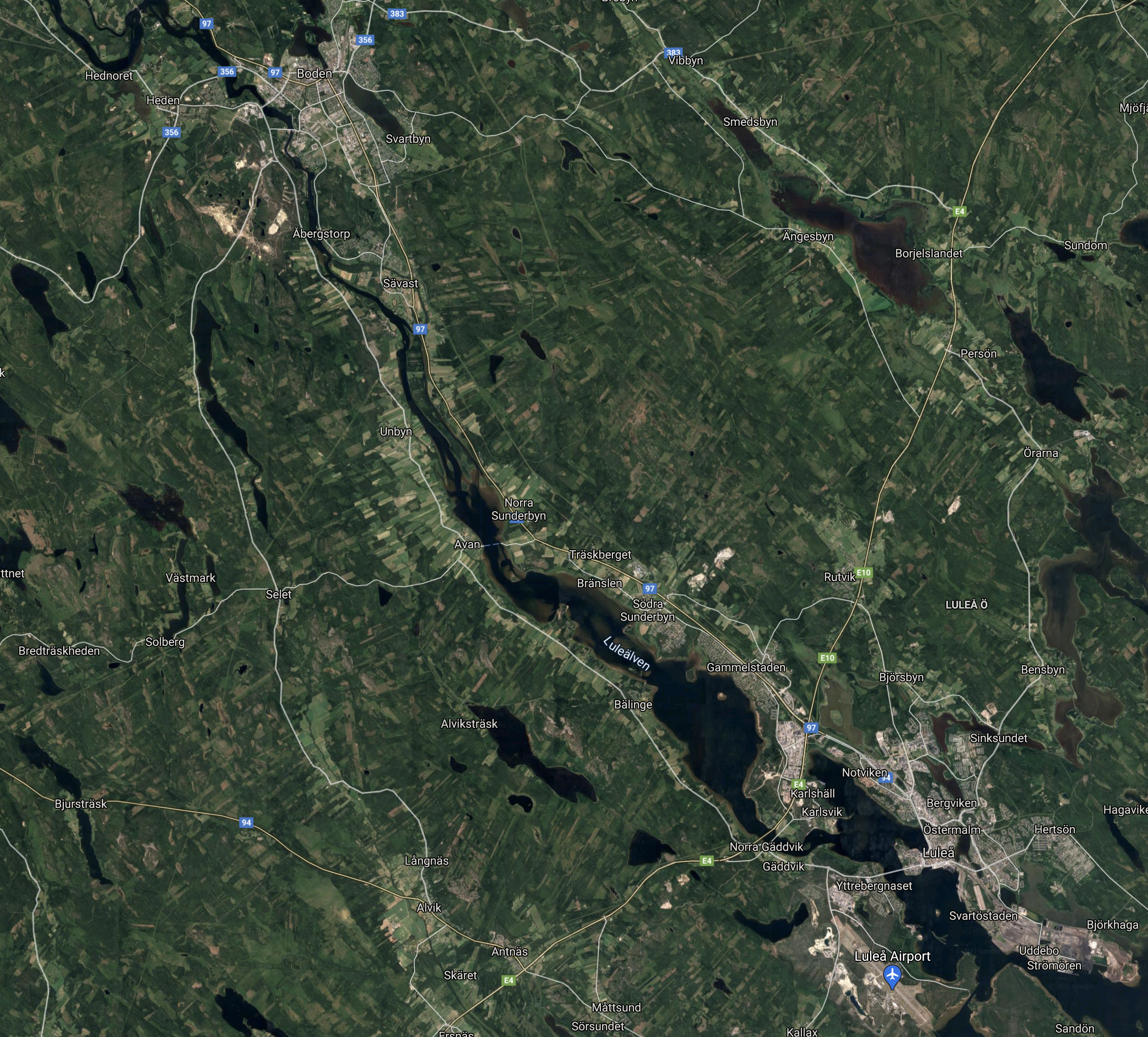
Note.
H2 Green Steel has a web site, which explains more.
What About Scunthorpe?
Surely, the obvious location for green steel production plant in the UK would be Scunthorpe.
- The HumberZero network can bring in hydrogen and take away any carbon dioxide.
- The steelworks makes world-class products like railway rails.
- It is a massive site.
- The site has good rail access.
But there don’t seem to be any plans for hydrogen steelmaking at Scunthorpe.
Conclusion
I hope we’ve not missed the boat for hydrogen steelmaking.
- We’ve certainly got the sites, the renewable energy and the hydrogen technology.
- On the other hand, I can remember sensible arguments for lots of much smaller steel plants from fifty years ago, as an alternative to nationalisation of the steel industry by the Wilson Government in 1967.
- I can also remember proposals for nuclear steelmaking.
I just wonder, if a design of hydrogen steelmaking plant could be developed, perhaps even using a small modular nuclear reactor to generate the hydrogen.
If we are going to have a steel industry in the future, we must do something radical.
EC To Consider Hydrogen Produced From Nuclear Power As Low-Carbon
The title of this post, is the same as that of this article on Nuclear Engineering International.
This is the opening paragraph.
The European Commission (EC) will consider hydrogen produced from nuclear power as “low-carbon”, Paula Abreu Marques, head of unit for renewables and CCS policy told the European Commission’s energy directorate. “Electrolysis can be powered by renewable electricity, which would then be classified as renewable hydrogen,” she said.
I think that those advocating this have a point, as no carbon-dioxide will be released once the nuclear plant has been built.
This type of hydrogen is referred to as purple hydrogen in the article.
I wonder how costs will compare with Shell’s new process, that I wrote about in Shell Process To Make Blue Hydrogen Production Affordable.
Conclusion
Nuclear power used to generate hydrogen with electrolysers could be a valuable way to generate hydrogen for transport needs, in a country that because of geography can’t generate a lot of electricity from renewables. A farm of small modular nuclear reactors linked to a large electrolyser could be the most affordable way to satisfy their needs.
It could also be a way for an industrial company to generate large amounts of hydrogen for steelmaking or an integrated chemical plant.
Is Sizewell The Ideal Site For A Fleet Of Small Modular Nuclear Reactors?
As someone who spent forty years in project management, the Small Modular Nuclear Reactor or SMR could be a project manager’s dream.
Suppose you were putting a fleet of SMRs alongside Sizewell B.
This Google Map shows the current Sizewell site.
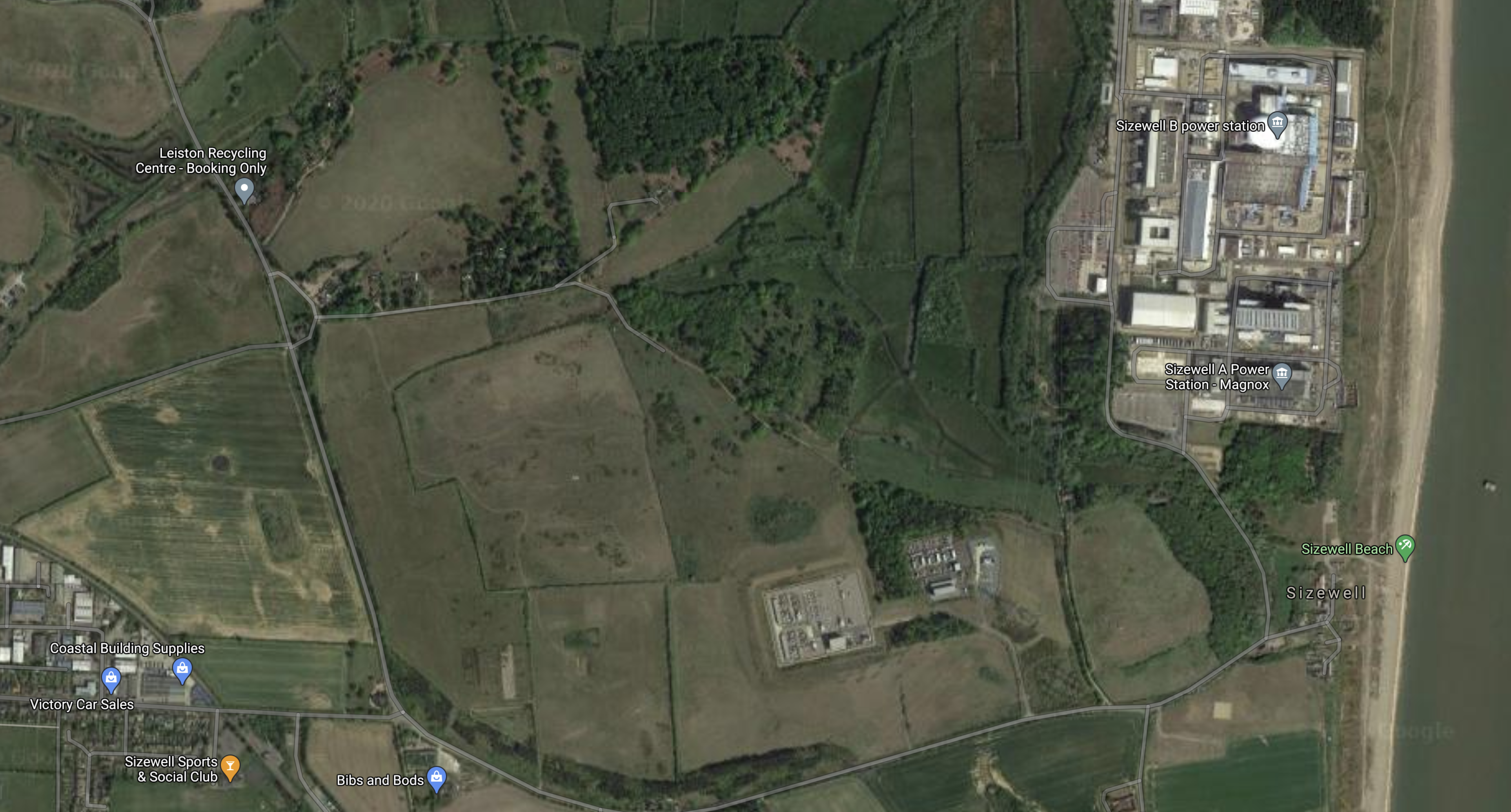
Sizewell A power station, with Sizewell B to its North, is on the coast.
This second Google Map shows the power stations to an enlarged scale.
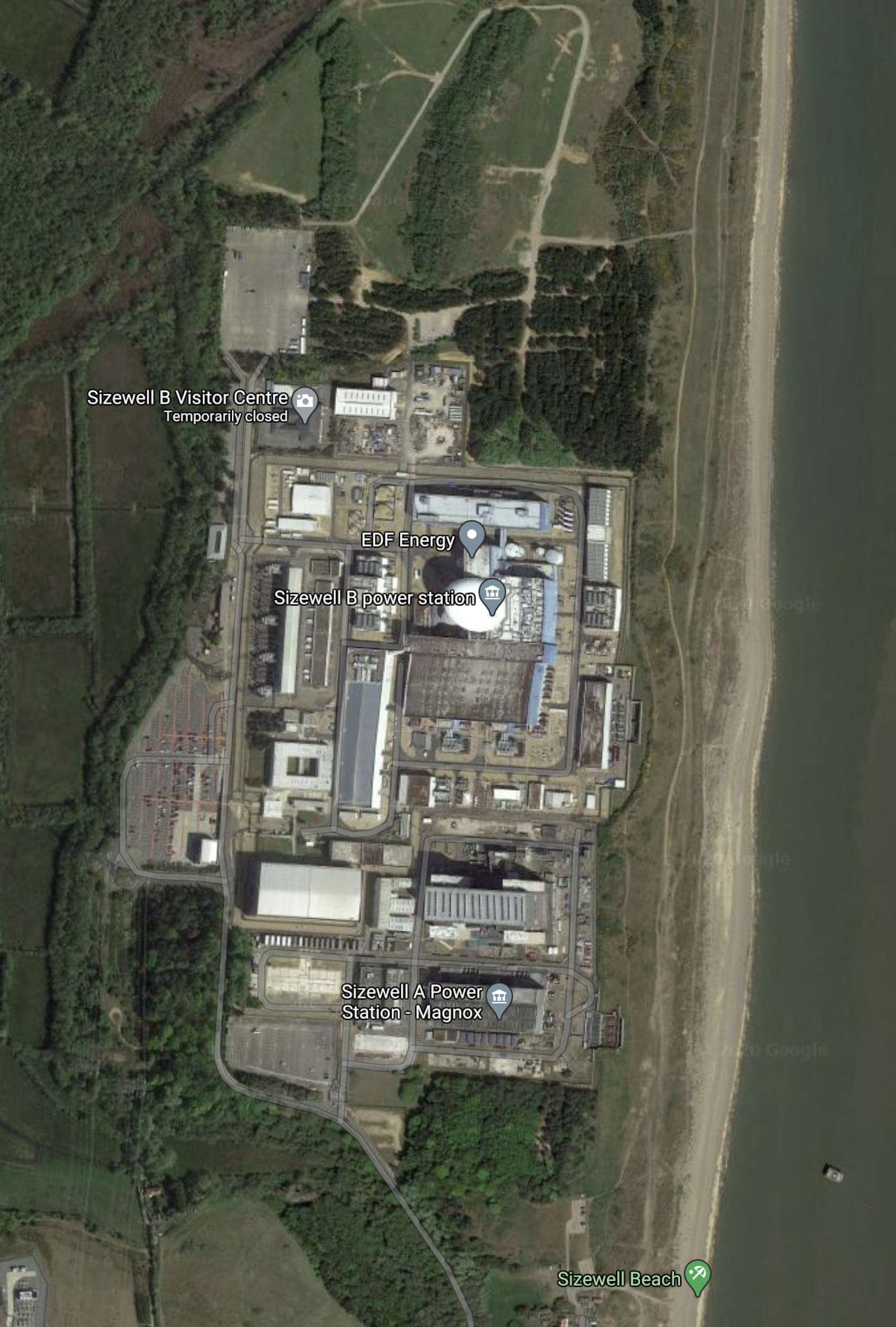
Note the white dome in the middle of Sizewell B.
Sizewell A
Sizewell A power station was shut down at the end of 2006 and is still being decommissioned, according to this extract from Wikipedia.
The power station was shut down on 31 December 2006. The Nuclear Decommissioning Authority (NDA) is responsible for placing contracts for the decommissioning of Sizewell A, at a budgeted cost of £1.2 billion. Defuelling and removal of most buildings is expected to take until 2034, followed by a care and maintenance phase from 2034 to 2092. Demolition of reactor buildings and final site clearance is planned for 2088 to 2098.
Only a few of those, reading this post, will be around to see the final end of Sizewell A.
Note that the size of the Sizewell A site is 245 acres.
It appears to me, that if any power station will be able to be built on the cleared site of Sizewell A, until the late 2080s or 2090s.
Sizewell B
Sizewell B power station opened in 1995 and was originally planned to close in 2035. The owner; EDF Energy, has applied for a twenty-year extension to 2055.
Sizewell C
Sizewell C power station is currently under discussion.
- It will be built by the French, with the help of Chinese money.
- It will have an output of 3260 MW or 3.26 GW.
- It will cost £18 billion.
- It will take twelve years to build.
This Google Map shows Sizewell B and the are to the North.
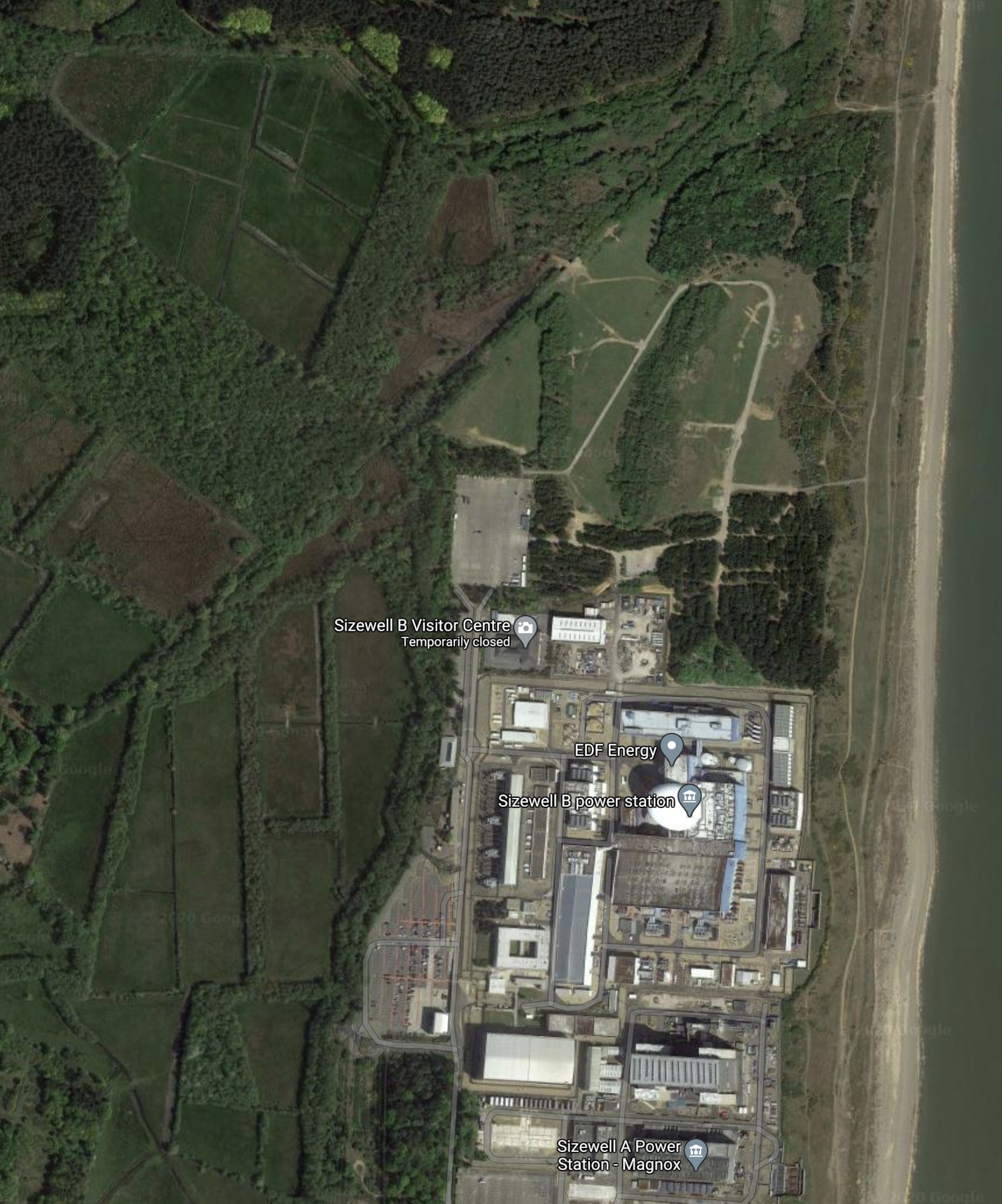
I would assume it will be built in this area.
A Fleet Of Small Modular Nuclear Reactors
These are my thoughts on building a fleet of SMRs at Sizewell instead of the proposed Sizewell C.
Land Use
In Rolls-Royce signs MoU With Exelon For Compact Nuclear Power Stations, I gave these details of the Rolls-Royce design of SMR.
- A Rolls-Royce SMR has an output of 440 MW.
- The target cost is £1.8 billion for the fifth unit built
- Each SMR will occupy 10 acres.
- Eight SMRs would need to be built to match the output of Hinckley Point C, which will occupy 430 acres.
It looks on a simple calculation, that even if the SMRs needed fifteen acres, the amount of land needed would be a lot less.
Connection To The National Grid
The transmission line to the National Grid is already in place.
This Google Map shows the sub-station, which is to the South-West of Sizewell A.
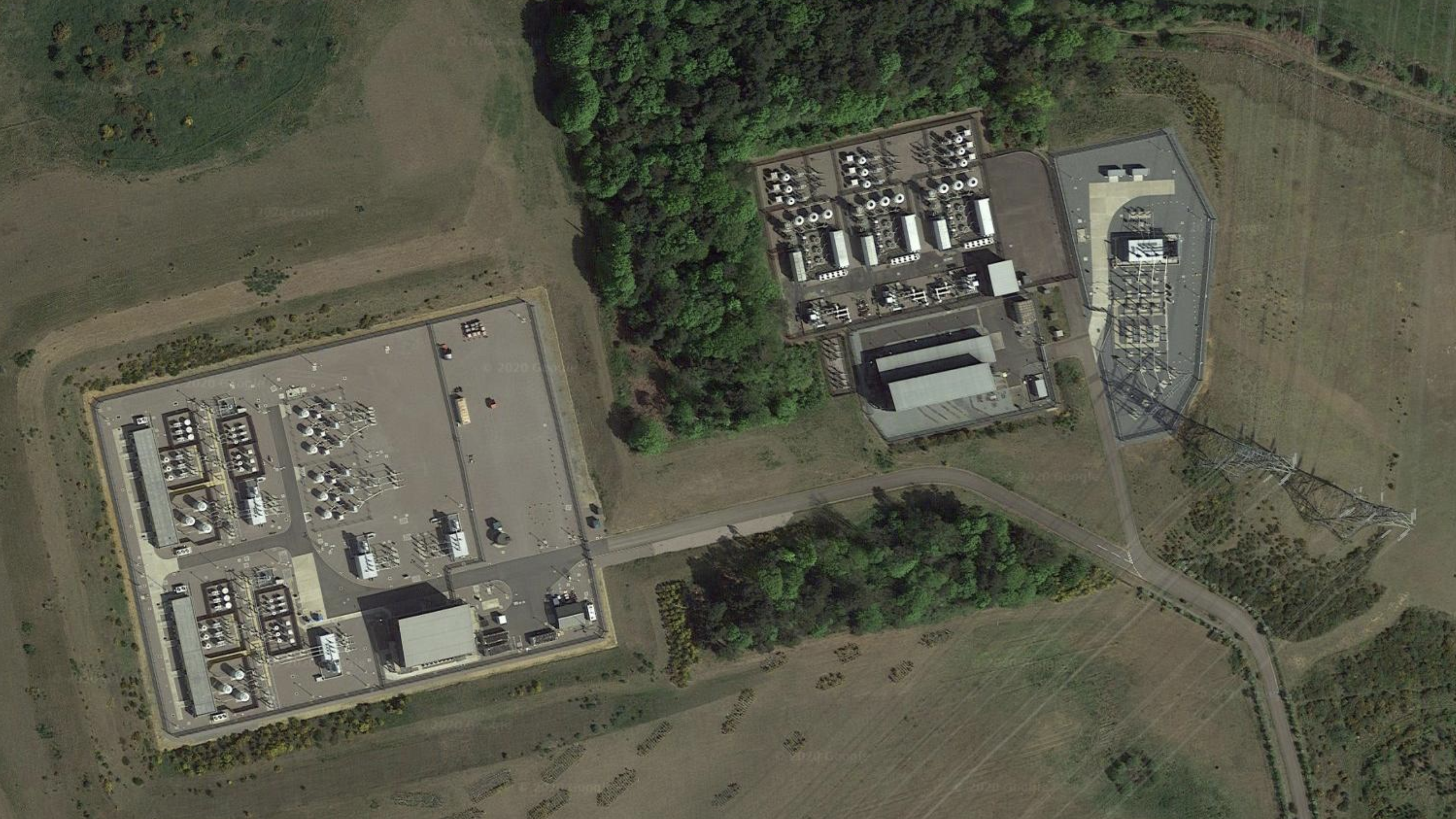
From Sizewell, there is a massive twin overhead line to Ipswich.
This Google Map shows the overhead line as it crosses Junction 53 of the A14 to the West of Ipswich.
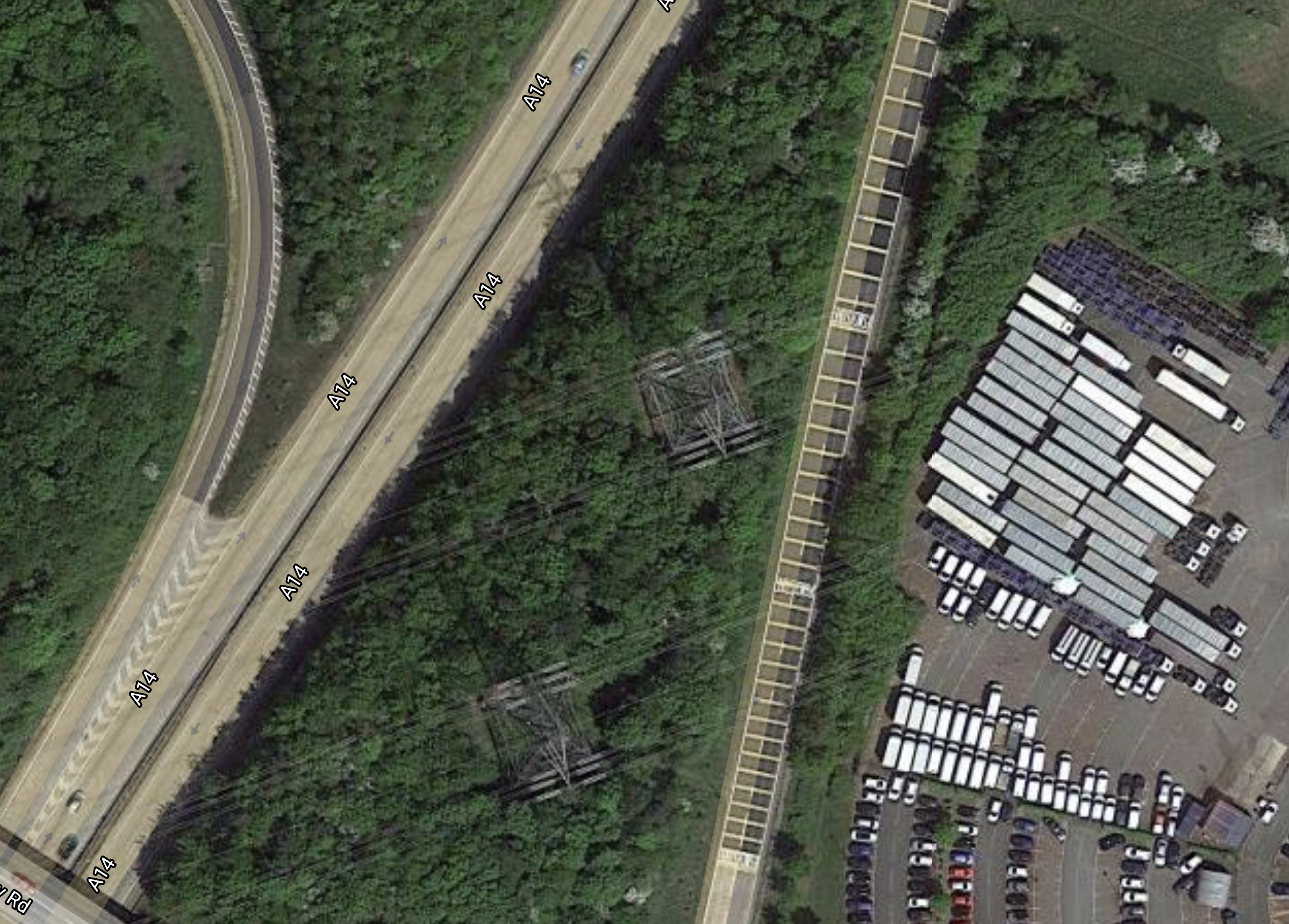
The pylons are in the centre of the map, with the wires going across.
The line has been built for a massive amount of nuclear power at Sizewell.
The Sizewell Railhead
This Google Map shows the railhead at Sizewell.
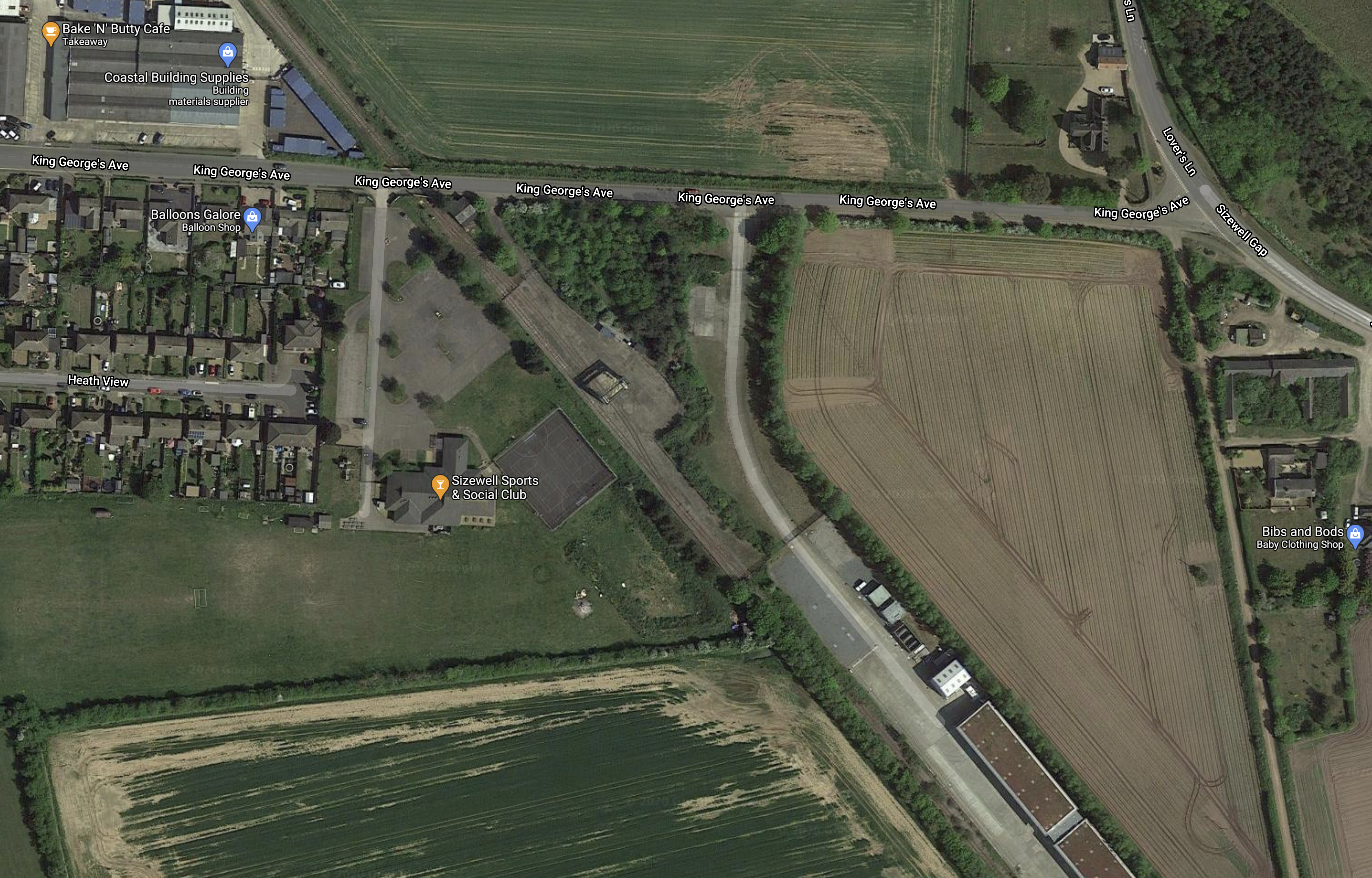
It can also be picked out in the South West corner of the first map.
- The railhead is used to take out spent fuel for processing.
- In the past, it brought in construction materials.
- Wikipedia suggests if the Sizewell C is built, the might be a new railhead closer to the site.
- If a fleet of SMRs were to be built, as the modules are transportable by truck, surely they could be move in by rail to avoid the roads in the area.
- I am an advocate of reinstating the railway from Saxmundham to Aldeburgh, as this would be a way of doubling the frequency on the Southern section of the East Suffolk Line between Saxmundham and Ipswich stations.
I hope that whatever is built at Sizewell, that the rail lines in the area is developed to ease construction, get workers to the site and improve rail services on the East Suffolk Line.
Building A Fleet Of SMRs
One of the disadvantages of a large nuclear power station, is that you can’t get any power from the system until it is complete.
This of course applies to each of the individual units, but because they are smaller and created from a series of modules built in a factory, construction of each member of the fleet should be much quicker.
- Rolls-Royce are aiming for a construction time of 500 days, from the fifth unit off the production line.
- That would mean, that from Day 501, it could be producing power and earning money to pay for its siblings.
- If the eight units were built in series, that would take eleven years to build a fleet of eight.
But as anybody, who has built anything even as humble as a garden shed knows, you build anything in a series of tasks, starting with the foundations.
I suspect that if a fleet were being built, that construction and assembly would overlap, so the total construction time could be reduced.
That’s one of the reasons, I said that building a fleet could be a project manager’s dream.
I suspect that if the project management was top-class, then a build time for a fleet of eight reactors could be nine years or less.
Resources are often a big problem in large projects.
But in a phased program, with the eight units assembled in turn over a number of years, I think things could be a lot easier.
Financing A Fleet Of SMRs
I think that this could be a big advantage of a fleet of SMRs over a large conventional large nuclear power station.
Consider
- I said earlier, that as each unit was completed, it could be producing power and earning money to pay for its siblings.
- Hinckley Point C is budgeted to cost £18 billion.
- Eight Rolls-Royce SMRs could cost only £14.4 billion.
I very much feel that, as you would get a cash-flow from Day 500 and the fleet costs less, that the fleet of smaller stations is easier to finance.
Safety
SMRs will be built to the same safety standards as all the other UK reactors.
In this section on Wikipedia this is said about the Rolls-Royce SMR.
Rolls-Royce is preparing a close-coupled three-loop PWR design, sometimes called the UK SMR.
PWRs or pressurised water reactors are the most common nuclear reactors in the world and their regulation and safety is well-understood.
This is from the History section of their Wikipedia entry.
Several hundred PWRs are used for marine propulsion in aircraft carriers, nuclear submarines and ice breakers. In the US, they were originally designed at the Oak Ridge National Laboratory for use as a nuclear submarine power plant with a fully operational submarine power plant located at the Idaho National Laboratory. Follow-on work was conducted by Westinghouse Bettis Atomic Power Laboratory.
Rolls-Royce have a long history of building PWRs, and Rolls-Royce PWRs have been installed in all the Royal Navy’s nuclear submarines except the first. The Royal Navy’s second nuclear submarine; HMS Valiant, which entered service in 1966, was the first to be powered by a Rolls-Royce PWR.
How much of the design and experience of the nuclear submarine powerplant is carried over into the design of the Rolls-Royce SMR?
I don’t know much about the safety of nuclear power plants, but I would expect that if there was a very serious accident in a small reactor, it would be less serious than a similar accident in a large one.
Also, as the reactors in a fleet would probably be independent of each other, it is unlikely that a fault in one reactor should affect its siblings.
Local Reaction
I lived in the area, when Sizewell B was built and I also went over Sizewell A, whilst it was working.
From personal experience, I believe that many in Suffolk would welcome a fleet of SMRs.
- Sizewell B brought a lot of employment to the area.
- House prices rose!
- Both Sizewell A and B have been well-run incident-free plants
Like me, some would doubt the wisdom of having a Chinese-funded Sizewell C.
Conclusion
Big nuclear has been out-performed by Rolls-Royce
Will INEOS And Rolls-Royce Get Together Over Hydrogen Production?
It has been a busy week for press releases.
8th November 2020 – Rolls-Royce signs MoU With Exelon For Compact Nuclear Power Stations
9th November 2020 – Rolls-Royce signs MoU with CEZ For Compact Nuclear Power Stations
9th November 2020 – INEOS Launches A New Clean Hydrogen Business To Accelerate The Drive To Net Zero Carbon Emissions
Does the timing of these three press releases indicate that there is possible co-operation between the INEOS and Rolls-Royce?
These are my thoughts.
Electricity Needs Of Integrated Chemical Plants
Integrated chemical plants, like those run by INEOS need a lot of electricity.
When I worked for ICI Plastics in the early 1970s, one of the big projects at Wilton works was the updating of the Wilton power station.
- Fifty years later it is still producing electricity.
- It is fired by a variety of fuels including coal, oil, gas and biomass.
- It even burned 110,000 tonnes of cow fat (tallow) from the carcasses of animals slaughtered during the BSE Crisis of 1996.
- It produces 227 MW of electricity.
- It also produces around 4,000,000 tonnes of steam per year for the plants on the complex.
- Wilton 10 is a 2007 addition to the station, that burns 300,000 tonnes of a combination of sustainable wood, sawmill waste and otherwise unusable wood offcuts a year.
- Wilton 11 is a 2016 addition to the station, that burns domestic waste, which arrives by train from Merseyside.
ICI was proud of its power station at Wilton and there were regular rumours about the strange, but legal fuels, that ended up in the boilers.
Integrated chemical plants like those on Teesside can be voracious consumers of electricity and steam.
I can envisage companies like INEOS boosting their electricity and steam capacity, by purchasing one of Rolls-Royce’s small modular reactors.
A Look At Teesside
If you look at the maps of the mouth of the Tees, you have the Hartlepool nuclear power station on the North side of the river.
- It was commissioned in 1983.
- It can generate 320 MW of electricity.
- It is expected to close in 2024.
This Google Map shows the mouth of the Tees.
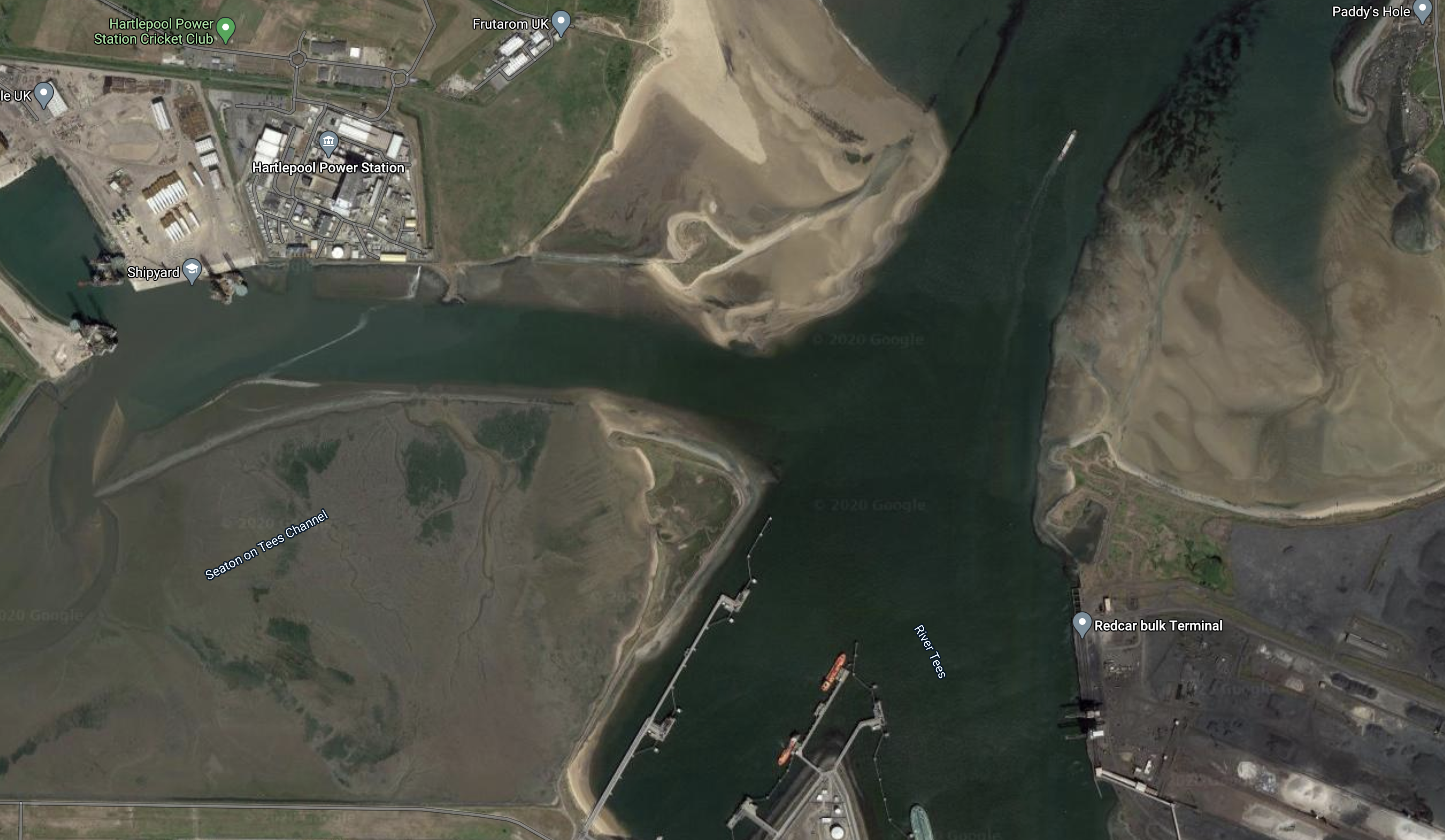
Note.
- Hartlepool power station is in the North-West corner of the map.
- The Hartlepool site is probably about forty acres.
- Wilton power station is on the South side of the Tees in the Wilton International site.
I can see, when Hartlepool power station closes, that more power will be needed on Teesside to feed the various industries in the area.
Some will come from offshore wind, but could a fleet of perhaps four of Rolls-Royce’s small modular reactors be built on a decommissioned Hartlepool power station site to replace the output of the current station?
If built in a planned sequence to correspond to the expected need, there are savings to be made because each unit can be commissioned, when they are completed and used to generate cash flow.
I can even see INEOS building a large electrolyser in the area, that is powered either by wind or nuclear power, according to what power is available and the various costs.
An Integrated Small Modular Nuclear Reactor And Electrolyser
Some countries don’t have good resources to exploit for renewable power.
Will a small modular nuclear reactor, be pared with a large electrolyser to produce hydrogen for feedstock for chemical plants and fuel for transport?
How Much Hydrogen Would A Small Modular Nuclear Reactor Produce?
Consider.
- One of Rolls-Royce’s small modular nuclear reactors has a power output of 440 MW.
- It takes 23 MWh of electricity to create ten tonnes of hydrogen.
This would create 4,600 tonnes of hydrogen in a day.
That is a lot of zero-carbon chemical feedstock to make fertiliser, plastics, pharmaceuticals and other chemicals and fuel for heavy transport.
Conclusion
I will be very surprised if INEOS were not talking to Rolls-Royce about using small modular nuclear reactors to generate the enormous quantities of electrical power and steam, needed to produce chemicals and fulfil their ambition to be a world leader in the supply of hydrogen.

