Floating Offshore Substation Project Secures EUDP Funding
The title of this post, is the same as that of this article on offshoreWIND.biz.
This is the sub-heading.
Semco Maritime, ISC Consulting Engineers, Aalborg University, Energy Cluster Denmark, and Norway and Sweden-based Inocean have secured funding to further develop a floating offshore substation (FOSS) concept.
This is the first paragraph.
The parties announced their collaboration in 2022 and are now set to further accelerate floating offshore substation development through funding from the Energy Technology and Demonstration Program (EUDP).
These three paragraphs talk about the design.
The substation layout has been developed to fit the shape of a three-column stabilised substructure, according to the partners.
The floating offshore substation is a crucial component in the offshore wind farm industry as deeper ocean sites further from the coastline are to be utilised, the partners said.
Between 60-80 per cent of the world’s offshore wind energy potential is in areas with depths greater than 60+ metres, which presents a need for an alternative solution to bring the power to shore, such as a floating offshore substation, according to the developers.
That all seems sensible.
Hydro-Storage Options To Be Studied For Grängesberg
The title of this post, is the same as that of this news item from Anglesey Mining.
These are the highlights of the news item.
- Anglesey Mining plc, together with its 49.75% owned subsidiary Grängesberg Iron AB (“GIAB”) have entered into an MoU with Mine Storage to investigate the potential for the Grängesberg Mine to be converted into a Pumped Hydro-Storage project at the end of the mine’s producing life.
- Pumped-Hydro Storage is a green-energy storage solution that utilises water and gravity to store electrical energy. An underground mine can provide a closed-loop solution using proven, pumped hydro-power technology. Essentially, the system involves water being gravity fed through pipes down a shaft into the turbines, which produce electricity for supply to the grid and also pump the water back to surface. The mine storage system has a high round-trip efficiency of 75-85% and proven durability.
- The MoU with Mine Storage could lead to numerous future benefits.
I like this project.
Too often, when mines, quarries or other large operations come to the end of their economic lives, they are just abandoned in the hope that something worthwhile will happen.
But here we have a company planning the end of an iron ore mine in a way that will turn it into a source of future revenue.
I have a few thoughts.
Mine Storage
Mine Storage are a Swedish company with an informative web site.
The web site answered most of my questions.
Mines Are Moving From a Liability To A Resource
Consider.
- Gravitricity are using mines to store energy using cables and weights.
- Charlotte Adams and her team at Durham University are developing the use of the heat in abandoned coal mines.
- The Global Centre of Rail Excellence is being developed in a disused opencast mine in Wales.
- RheEnergise are developing their first High Density Hydro system in the Hemerdon Tungsten Mine in Devon.
And now we have this co-operation between Anglesey Mining and Mine Storage working together on pumped storage hydroelectricity.
Where is Grängesberg
This Google Map shows the location of Grängesberg.
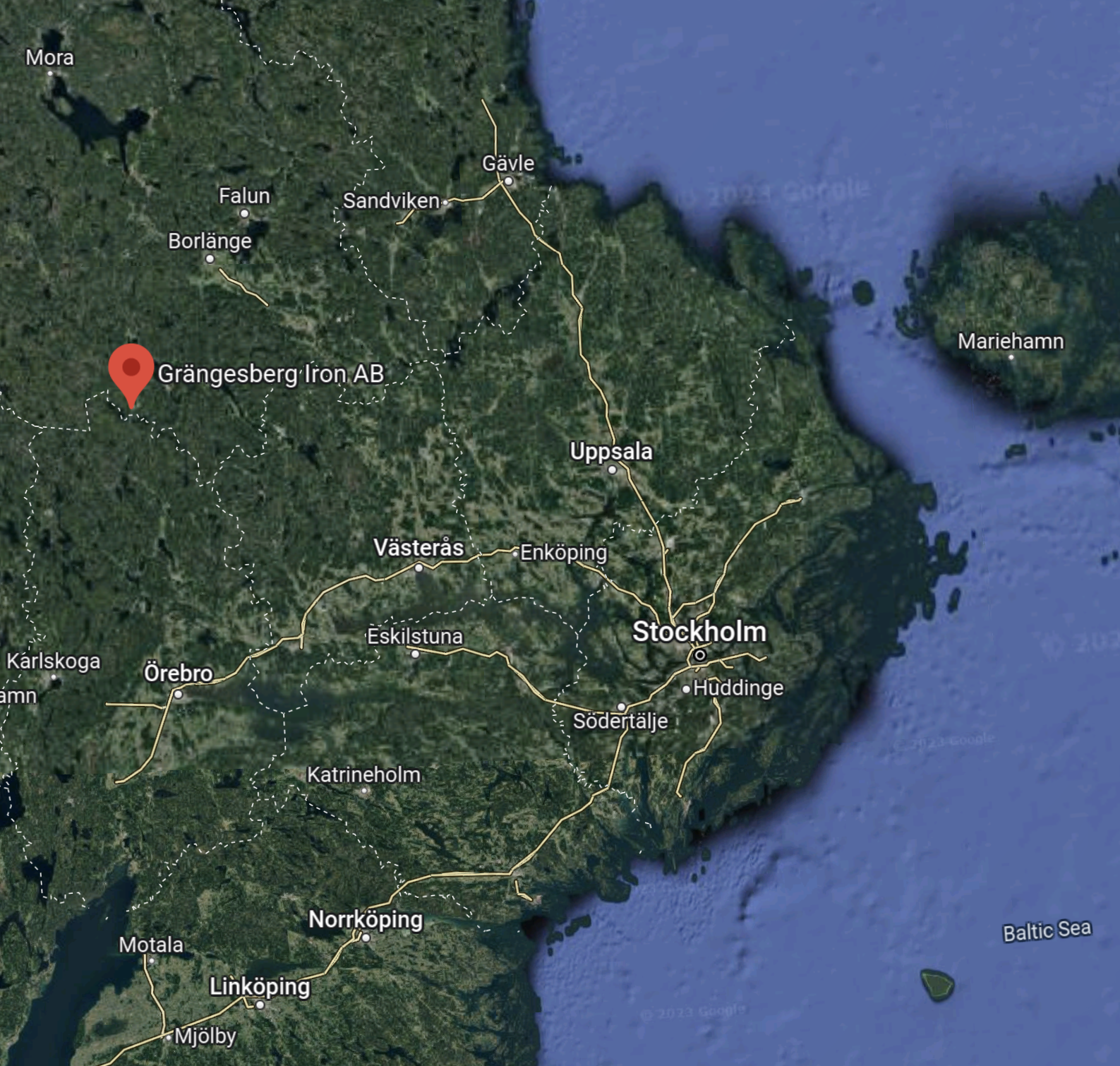
It is convenient for storing energy for Stockholm.
The Luck Of The Genes
There’s an article in The Times, which is entitled When It Comes To Success, Luck Can Trump Intelligence.
It got me thinking about my life.
I have been pretty successful in life, and I put it down to winning the gene lottery, with a part-Jewish father and a part-Huguenot mother, who taught me hard work and everything they knew. So were my genes forged by religious persecution in the harsh conditions of the ghettoes of Europe?
But luck has always played a great part in my success. On the way, three or four successful men have chosen me for projects and I’ve repaid them by succeeding. I’ve been at the heart of the creation of two world-changing companies.
But the luck turned bad, a dozen years ago. My wife and our youngest son died from cancer and I had a serious stroke.
But the genetic lottery of being coeliac and therefore having B12 injections, has meant, I’ve made a good recovery from the stroke. The B12 injections is a stroke recovery method from the States, but is considered quackery over here. I believe it saved my life.
And then during the pandemic, those coeliac genes and the gluten-free diet I need for health, seem to have protected me from a severe dose of the covids. I’ve yet to find a fellow coeliac, who has had one either. Scientific research from Italy and Sweden, is also backing up my observations.
Lady luck has smiled on me. Or does the devil, look after her own?
An Elegant Solution
There’s an old English expression about couples lying in bed like spoons.
I wonder, if this analogy is used in other languages like Swedish.
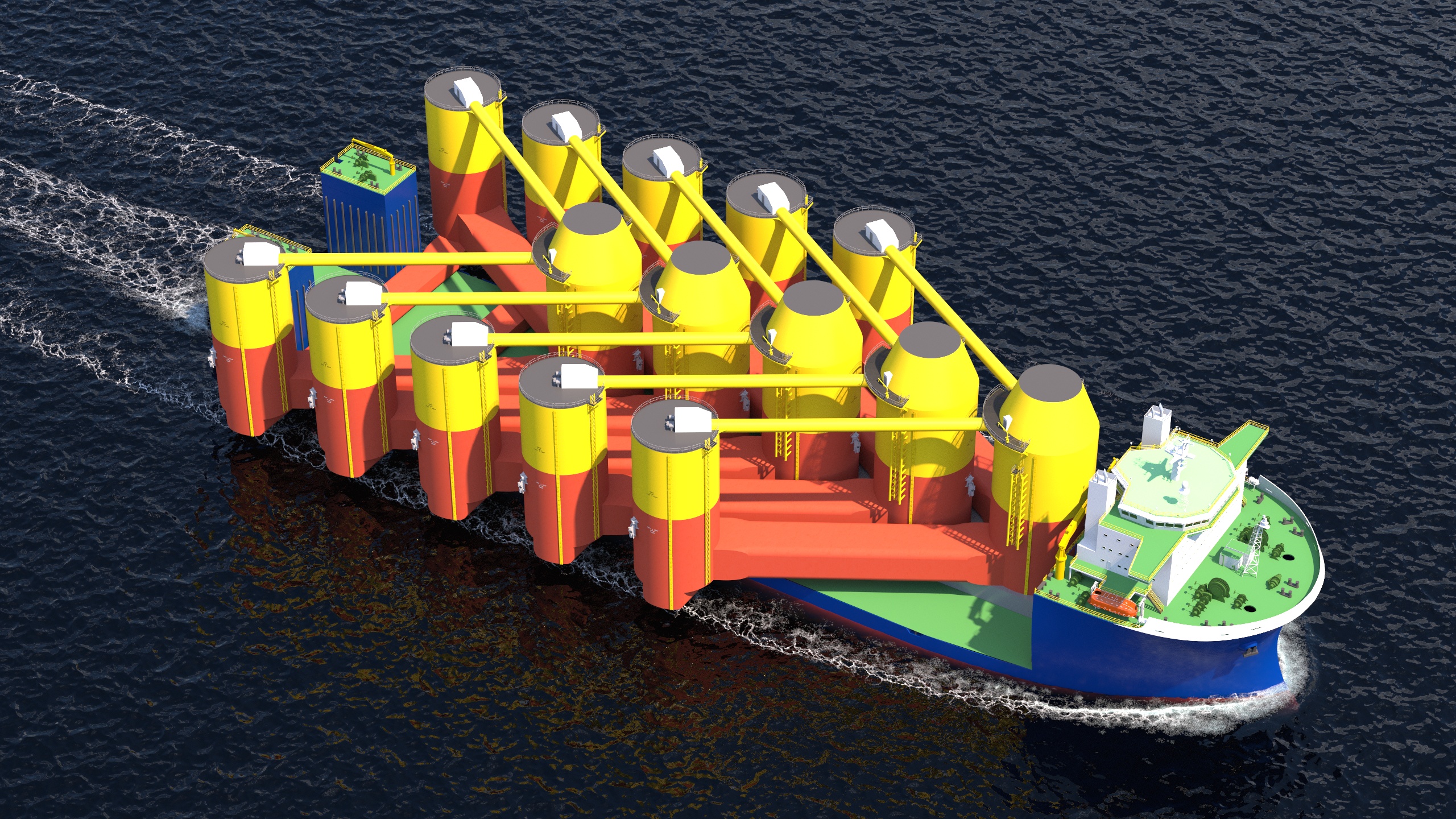
Swedish company; Bassoe Technology have certainly used the stacking technique of spoons or bodies in the design of their innovative wind-turbine floats, which they call D-Floaters.
This visualisation shows five D-floaters being transported on a ship.
Note.
- The D-Floaters do look strong and sturdy.
- There are several competing floats for wind turbines based on triangles.
- There is probably an optimal cost between transporter ships and D-Floaters.
Given that these structures may be moved thousands of miles before installation, this method of transportation must be economic.
The loaded ship does remind me of one of the bath toys my kids had in the 1970s.
Another Renewable Power Idea From Sweden
I have posted some ideas from Sweden on this blog including.
- H2 Green Steel – H2 Green Steel Plans 800 MW Hydrogen Plant In Sweden
- HYBRIT – Sweden’s Grand Plan To Make Zero-Carbon Steel
- Minesto – Is This The World’s Best Renewable Energy Video?
- TwinHub – Hexicon Wins UK’s First Ever CfD Auction For Floating Offshore Wind
And now there’s the SEATWIRL, which the company says is the future of offshore wind.
In the Areas Of Use, there is a section with a heading of SeaTwirl For Niche Markets, where this is said.
SeaTwirl has now identified markets where wind turbines of the size of 1 MW can meet a clear market demand and sees a possibility to build a business aimed at these niche markets in parallel with its main target. That can mean revenues for the company sooner than was originally planned.
The niche markets that have been identified are islands and remote seaside villages, fish farms and desalination plants. These are business and places that today are run mainly on electricity from diesel generators, which is both expensive and emits CO2.
One of the places I would use these turbines, is on the apex of four-beam steel portal frame buildings. The original concept for these buildings had been developed at Cambridge University during World War Two and one of the team, had set up a business in Warwickshire, constructing these buildings for barns, factory units and other purposes.
He had programmed a simple computer program, which he ran on a time-shared computer system. I was hired to improve the computer program.
What surprised me was the strength of these buildings and I believe they could support vertical turbines like SeaTwirl along the apex.
I feel there are many other applications, especially if they are designed to be part pf a bigger system.
Conclusion
I like the concept of SeaTwirl.
MingYang Turbines to Spin on Hexicon’s Floating Offshore Wind Project
The title of this post, is the same as that of this article on offshoreWIND.biz.
This is the sub-heading.
Hexicon has selected China-headquartered Mingyang Smart Energy (Mingyang) as the preferred turbine supplier for its flagship 32 MW TwinHub floating offshore wind project in the UK.
These two paragraphs add a bit more detail.
Hexicon has also awarded Mingyang the wind turbine generator Front-End Engineering Design (FEED) contract for the project, which is located 16 kilometres off the coast of Cornwall, England.
TwinHub will use Hexicon’s TwinWind floating foundation technology which will allow two of Mingyang’s MySE 8.0-180 wind turbines to be placed on a single foundation, which could enable more energy to be generated in a given area while reducing the environmental impact compared with a single foundation.
Hexicon’s flagship project secured a Contract for Difference (CfD) in the UK Government’s most recent allocation round.
Is This The World’s Best Renewable Energy Video?
This is a promotional video from Minesto about their Deep Green technology.
Is it a serious proposition or is it just kite-flying?
After reading their web site in detail, I think they are serious.
Here’s why!
The Company Is A Well-Backed Spin-Out from Swedish Aerospace Company SAAB
These two paragraphs are from the About Us page.
Minesto is a marine energy technology developer, founded in 2007 as a spin-off from Swedish aerospace manufacturer Saab. Since then, Minesto has successfully developed its unique Deep Green technology.
The company has operations in Sweden, Wales, Northern Ireland and Taiwan, with headquarters in Gothenburg, Sweden. Main owners are BGA Invest and Midroc New Technology. The Minesto share is listed on the Nasdaq First North Growth Market in Stockholm.
A company rarely succeeds without appropriate and sufficient financial backing.
One Of Their Target Markets Is Powering Remote Islands
This page from World Atlas is entitled Which Countries Have The Most Islands?
These are the top five countries.
- Sweden – 267,570
- Norway – 239,057
- Finland – 178,947
- Canada – 52,455
- United States – 18,617
Note.
- That’s a lot of islands.
- The United Kingdom is 26th with a thousand islands.
- Scandinavia has 685574 islands or 686993 if you include Denmark.
Sweden has a thousand inhabited islands, so that means that in Scandinavia alone, there are about 2,500 inhabited islands. How many need a reliable decarbonised power supply?
In the UK, we are developing Remote Island Wind to serve similar locations, which I wrote about in The Concept Of Remote Island Wind.
The UK and Minesto are both looking at the supply of power to remote islands.
One of Minesto’s projects is in the Faroe Islands and it is described in this page on the Minesto web site, which has a title of Faroe Islands – Tidal Energy To Reach 100% Renewable By 2030.
These are the first two paragraphs.
In the Faroe Islands, Minesto is part of one of the world’s most ambitious energy transition schemes.
Collaborating with the electric utility company SEV, Minesto is working to pave the way for tidal energy to become a core part of the Faroese energy mix, allowing them to reach 100% renewable energy by 2030.
Onshore wind and tidal could be an ideal combination, if they worked together.
At the bottom of the Faroe Islands page, the web site talks about The Deep Green Island Mode Project, where this is said.
In June 2019, Minesto was awarded a €2.5 million grant from the European Commission’s SME Instrument programme. The awarded funding will support the installation of Minesto’s technology in the Faroe Islands together with the utility company SEV. The aim of the project, called Deep Green Island Mode (DGIM), is to install Minesto’s first two commercially viable microgrid units in a production and customer environment.
Successful demonstration of DGIM will act as a first step to developing commercial ties with utilities across Europe, both for smaller-scale microgrid systems and as a catalyst for the market up take of larger utility-scale Deep Green systems.
This is also said about the number of installations in Europe.
15 million Europeans live on Europe’s 2,400 inhabited islands, at an average of approximately 1,500 households per island. As recognised by the European Commission, island energy is expensive, polluting, inefficient and dependent on external supply, with significant negative impacts on emissions, the competitiveness of businesses, and the economy.
It appears to me, that Minesto have researched their market well.
Minesto Can Provide Baseload Power
Another of Minesto’s projects is in Taiwan and it is described in this page on the Minesto web site, which has a title of Taiwan – Replacing Nuclear With Renewable Baseload.
These are the first two paragraphs.
In Taiwan, Minesto is carrying out site development with the purpose to establish the first tidal energy arrays with Minesto’s technology in Asia – and to demonstrate renewable baseload generation from the continuously-flowing Kuroshio current.
The conditions for extracting marine energy in Taiwan are very good due to access to both tidal streams and continuous ocean currents. Taiwan aims to produces 20% of electricity from renewable sources by 2025 and has decided to scrap its nuclear power capacity within the same timeframe. Today, 97.5 percent of the country’s total energy use comes from imported fossil fuels.
Taiwan has a well-developed industrial infrastructure and a number of stakeholders in the private and public sectors are active in marine energy.
Decarbonising Taiwan and removing nuclear is a tough ask!
Conclusion
Minesto may be kite-flying in an unusual way, but they appear to be a very serious Swedish company.
North Seas Countries Commit To 260 GW Of Offshore Wind By 2050
The title of this post, is the same as that of this article on Renewables Now.
This is the first two paragraphs.
The nine member countries of the North Seas Energy Cooperation (NSEC) on Monday committed to at least 260 GW of offshore wind energy by 2050.
The NSEC aims to advance offshore renewables in the North Seas, including the Irish and Celtic Seas, and groups Belgium, Denmark, France, Germany, Ireland, Luxembourg, the Netherlands, Norway, Sweden and the European Commission.
Note.
Intermediate targets are 76 GW by 2030 and 193 GW by 2040.
The UK has a target of 50 GW by 2030, of which 5 GW will be floating offshore wind.
The UK is not mentioned, but has joint projects with the Danes, Germans, Irish, Norwegians, Spanish and Swedes.
There is nothing about energy storage or hydrogen!
On the figures given, I think we’re holding our own. But then we’ve got more sea than anybody else.
Hexicon Wins UK’s First Ever CfD Auction For Floating Offshore Wind
The title of this post, is the same as that of this press release from Hexicon.
This is the first paragraph.
Today (7th of July) the UK Government confirmed that Hexicon AB’s TwinHub project in the Celtic Sea was successful in the latest Contracts for Difference (CfD) Allocation Round (AR4). It has been awarded a CfD for its 32MW floating wind project at a strike price of £87.30/MWh (2012 real prices) taking the project a significant step closer to completion.
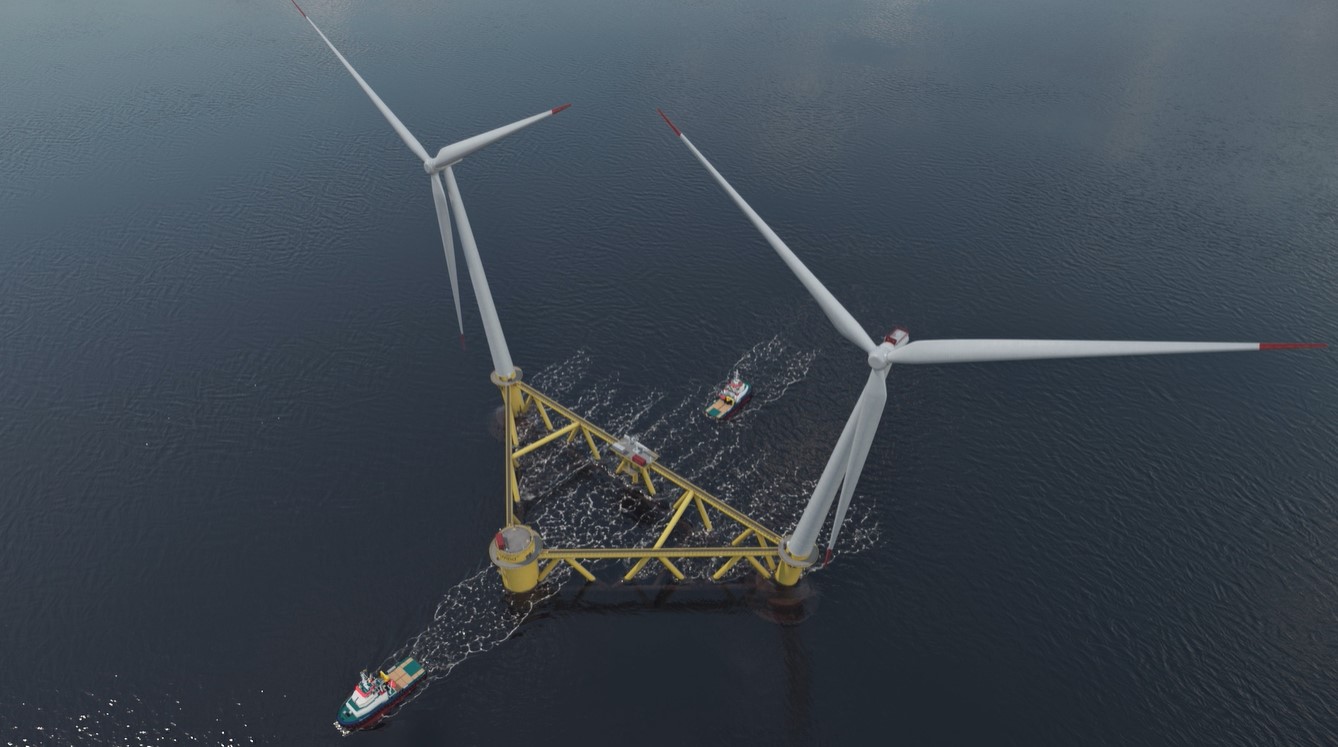
This image shows one of their TwinHub turbine installations being towed into place.
The TwinHub home page has a title of The First Floating Offshore Wind Project in The Celtic Sea.
This is the description on the page.
The TwinHub offshore wind demonstration project intends to prove how Hexicon’s innovative design with two turbines on one floating foundation can further reduce the Levelized Cost of Energy (also referred to as LCoE) before large scale commercialisation. The TwinHub project is a stepping stone to help kick-start floating wind in the Celtic Sea, an area identified as a hotspot for floating wind by the UK Government. It will pave the path for larger and larger projects to help support The Crown Estates’ ambitious target of 4GW of floating wind in the Celtic Sea.
Scroll the page down and there is a short video of a pair of wind turbines in operation.
- It appears that when there is no wind, it automatically goes into a safe parked mode.
- As the wind rises, one turbine starts up.
- The second turbine starts up and the float turns so they face the wind.
It appears to be a classic example of disruptive innovation.
I did the calculations for floating and reusable oil and gas platforms in the 1970s, that were designed by two Cambridge University professors, which would have been launched horizontally and upturned when in position. This experience leads me to believe that the Swedish designers of this type of platform have been able to verify that this is a workable design.
This document from the Department of Business, Industry and Industrial Strategy indicates that the demonstration is for 32 MW.
Does that indicate, that this installation is twin 16 MW wind turbines?
16 MW seems to be the size of the largest wind turbines in the world.
There is a lot to like about this Swedish design.
- As the video shows, it appears to balance itself with the wind.
- I suspect from the calculations I did in Cambridge, that the twin design with its higher weight is more stable than a floating single turbine design.
- The float and its two turbines can be assembled alongside a dock with a large stable onshore dockside crane.
- Servicing would also be done in a dock.
- Working onshore is much safer and easier, than working offshore.
- The twin design allows more power to be generated in a given area of sea.
This is a brilliant concept and it will give Putin, the Sheikhs and the other oil dictators, the most terrible of nightmares.
The initial site chosen for this design in the UK, will be in the sea at Hayle in Cornwall.
This map shows the location.
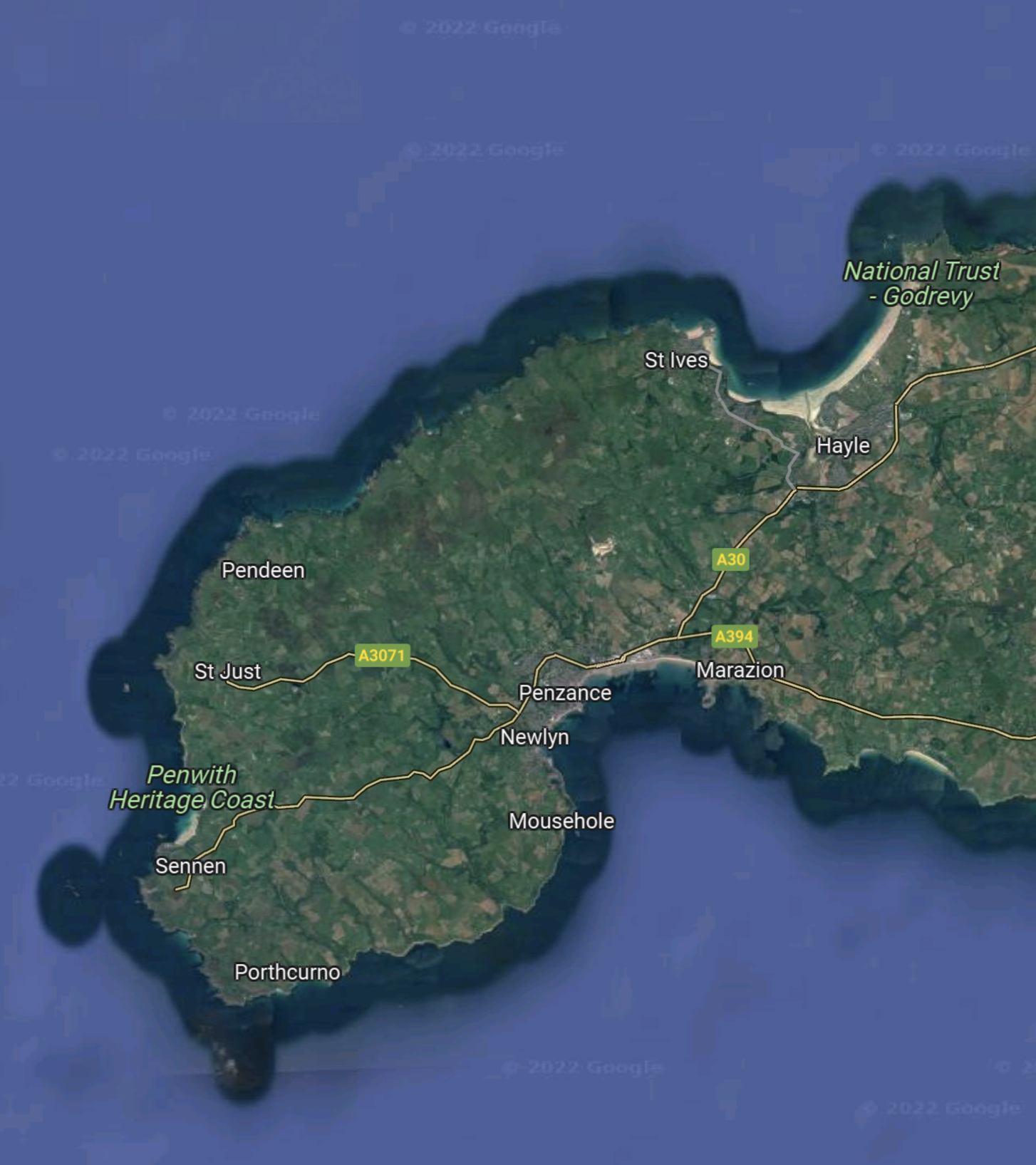
Hayle is in the North-East corner of the map, by the sandy beach.
A 32 MW turbine could probably provide enough electricity for 15,000 houses.
How A British-Made Missile Launcher Helped Keep Vladimir Putin’s Army At Bay
The title of this post, is the same as that of this article on The Telegraph.
This is the sub-title.
The Anglo-Swedish next-generation light anti-tank weapon (NLAW) has achieved cult status in Ukraine.
But not perhaps in Russia! Unless they worship the devil!
Seriously, though, we may be watching the war, which marks the beginning of the end of the tank.
- A general of my acquaintance told me about ten years ago, that tanks were a nightmare for army commanders, unless the terrain was very tank-friendly. He should have known, as he’d once run the Army Survey, which gives geographical information to the British Army.
- Defenders like the jolly Ukrainian in the video in the Telegraph article, will get better missiles and do more damage to tanks.
- Satellites and drones will get more watchful and intelligent and will direct the firepower of defenders to the inch.
- Tanks could get bigger, but then they would be more likely to get stuck.
My only worry, is will the death of the tank, make chemical, biological or nuclear war more likely?

