Azuma Test Train Takes To The Tracks As LNER Trials Possible New Route
The title of this post, is the same as that of this article on Rail Technology Magazine.
This is the first paragraph.
London North Eastern Railway (LNER) completed a test run from Cleethorpes in Lincolnshire and London King’s Cross, with the view to operating a direct service in the future.
These two paragraphs describe how the tests were carried out.
A first test train travelled from Doncaster on 26 June which called at Grimsby Town, Cleethorpes, Barnetby and Market Rasen. At each station, a series of platform and train validations were performed to ensure that a service could be compatible in the future.
On the journey itself, a specialist team travelled onboard, carried out a number of checks and assessments which is required for any potential new route or extension. A detailed assessment was undertaken. The findings will now be reviewed by the stakeholders.
The test run was in four sections.
- 5Q80 – Departed Doncaster Carr Lane Depot at 0817 and arrived Cleethorpes Platform 4 at 1000.
- 5Q81 – Departed Cleethorpes Platform 3 at 1054 and arrived Lincoln Central Platform 5 at 1219.
- 5Q82 – Departed Lincoln Central Platform 5 at 1226 and arrived Cleethorpes Platform 2 at 1355.
- 5Q83 – Departed Cleethorpes Platform 2 at 1528 and arrived Doncaster Carr Lane Depot at 1654.
Note.
- These details came from Real Time Trains.
- It looks like three platforms 2, 3 and 4 at Cleethorpes station were checked.
- The route between Cleethorpes and Lincoln Central was checked both ways.
- The route between Doncaster Carr Lane Depot and Cleethorpes was checked both ways.
- Typically, each station stop took around 10-12 minutes, which probably gave adequate time for the specialist team to make their checks and assessments.
- Class 800 trains run six times a day between Lincoln Central and King’s Cross, so I must assume that section is well-checked and has the correct clearances.
- Lincoln Central station is 16.7 miles from the electrified East Coast Main Line at Newark Northgate station.
- Cleethorpes station is 52.1 miles from the electrified East Coast Main Line at Doncaster station.
- The distance between Lincoln Central and Cleethorpes stations is 47.2 miles.
- The timing between Lincoln Central and Cleethorpes appears to be just under one hour and thirty minutes.
It looks like a thorough test has been performed.
I have a few thoughts.
Platforms At Cleethorpes Station
According to the Wikipedia entry for Cleethorpes station, the station has three platforms, which are numbered 1, 2 and 3.
These three pictures show Cleethorpes station in 2020.

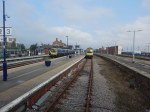
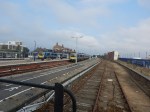
Note.
- The two trains are Class 185 trains of TransPennine Express.
- The train in the left is in Platform 1.
- Platform 2 appears to be empty.
- The train on the right is Platform 3.
I would assume Platform 4 could be the derelict platform shown in the third picture at the right. Or it might be a typo!
But if it is felt that LNER will need their own platform, it would surely be a good idea to do all testing at the same time.
Initial Service Pattern
I would expect that the initial service pattern would follow that used for many new services.
- There will be an early morning train up to London.
- There will be a late afternoon or early evening return train.
Journey time could be around three hours and twenty minutes.
Once the demand is proven, extra trains to and from London might be added in the middle of the day.
Could This Service Be Served By Battery-Electric Class 800 Trains?
From a picture on this article on the BBC, the test run appears to have been carried out by a bi-mode Class 800 train.
The full route from Doncaster to King’s Cross has four sections.
- Doncaster and Cleethorpes – 52.1 miles – Unelectrified
- Cleethorpes and Lincoln Central – 47.2 miles – Unelectrified
- Lincoln Central and Newark Northgate – 16.7 miles – Unelectrified
- Newark Northgate and King’s Cross – 120.1 – Electrified
To go between King’s Cross and Doncaster via Cleethorpes would need a battery-electric train with a range of 116 miles.
In What Will Be The Range Of A Hitachi Class 800 Battery Train?, I came to this conclusion about the battery range of a Class 800 train.
The first version of the battery-electric train will have a range of around a hundred miles, so that they can handle the Great Northern and Great Eastern Joint Line diversion on battery power.
But fairly soon after introduction into service, I will be very surprised if they don’t claim the Guinness world record by running farther than the Stadler FLIRT Akku’s 139 miles.
Note.
- Trains would be charged using the existing electrification of the East Coast Main Line.
- No new infrastructure would be required.
But for service recovery reasons, it could be prudent to add electrification to Platform 4 at Cleethorpes station.
Could TransPennine’s Service Between Doncaster and Cleethorpes Be Served By Battery-Electric Class 802 Trains?
As it is only a round trip of 104.2 miles, I don’t see why this couldn’t be done by say 2028.
Could LNER’s Service Between King’s Cross and Lincoln Be Served By Battery-Electric Class 800 Trains?
As it is only a round trip of only 33.4 miles, this is the easy trip to decarbonise.
Could Hull Station Be Electrified?
I took these pictures, as I passed through Hull station yesterday.
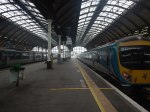
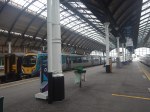
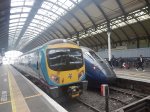
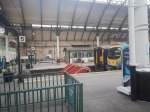
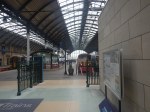


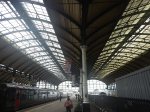
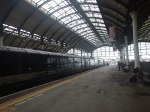
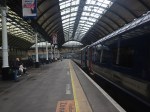

It appears that Hull station has a similar Victorian roof to Liverpool Lime Street and London Paddington, so I suspect the answer is yes.
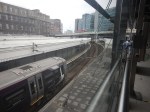
These pictures show the platforms and overhead electrification at Liverpool Lime Street station, since the recent remodelling.


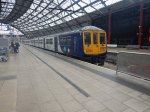
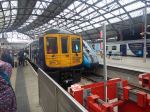
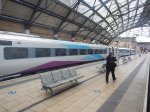

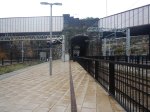
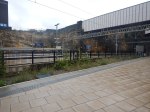

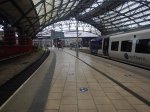

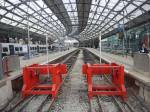
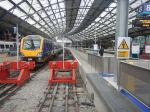

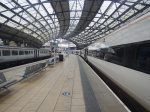

The electrification seems to be very traditional, with lots of steel gantries over the tracks.
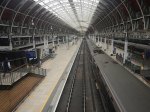
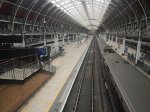
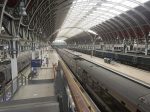
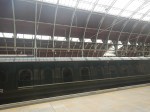
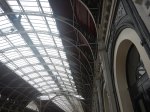
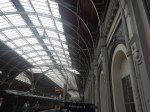
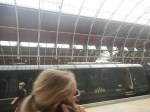
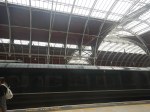
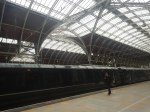
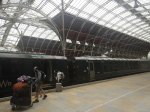
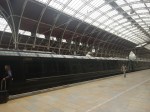
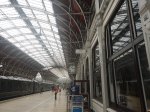
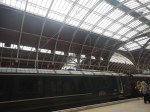
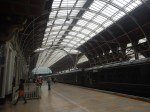
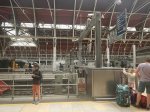
These pictures show the platforms and overhead electrification at London Paddington station.
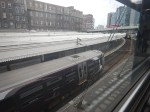

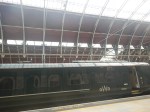
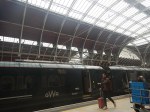
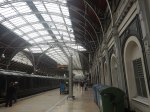
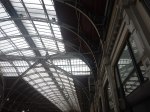
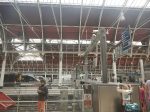
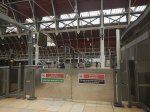
Note.
- The roof seems to have extra tie-bars reaching across.
- The wires seem to be hung from the roof.
- At the end of the platform they are fixed to large arch supports.
- Because Liverpool Lime Street’s electrification is newer than Paddington’s, it seems to have much more professional look.
After looking at the electrification in Liverpool Lime Street and Paddington, I believe that Hull station could be successfully electrified.
This map from OpenRailwayMap shows the platform layout at Hull station.
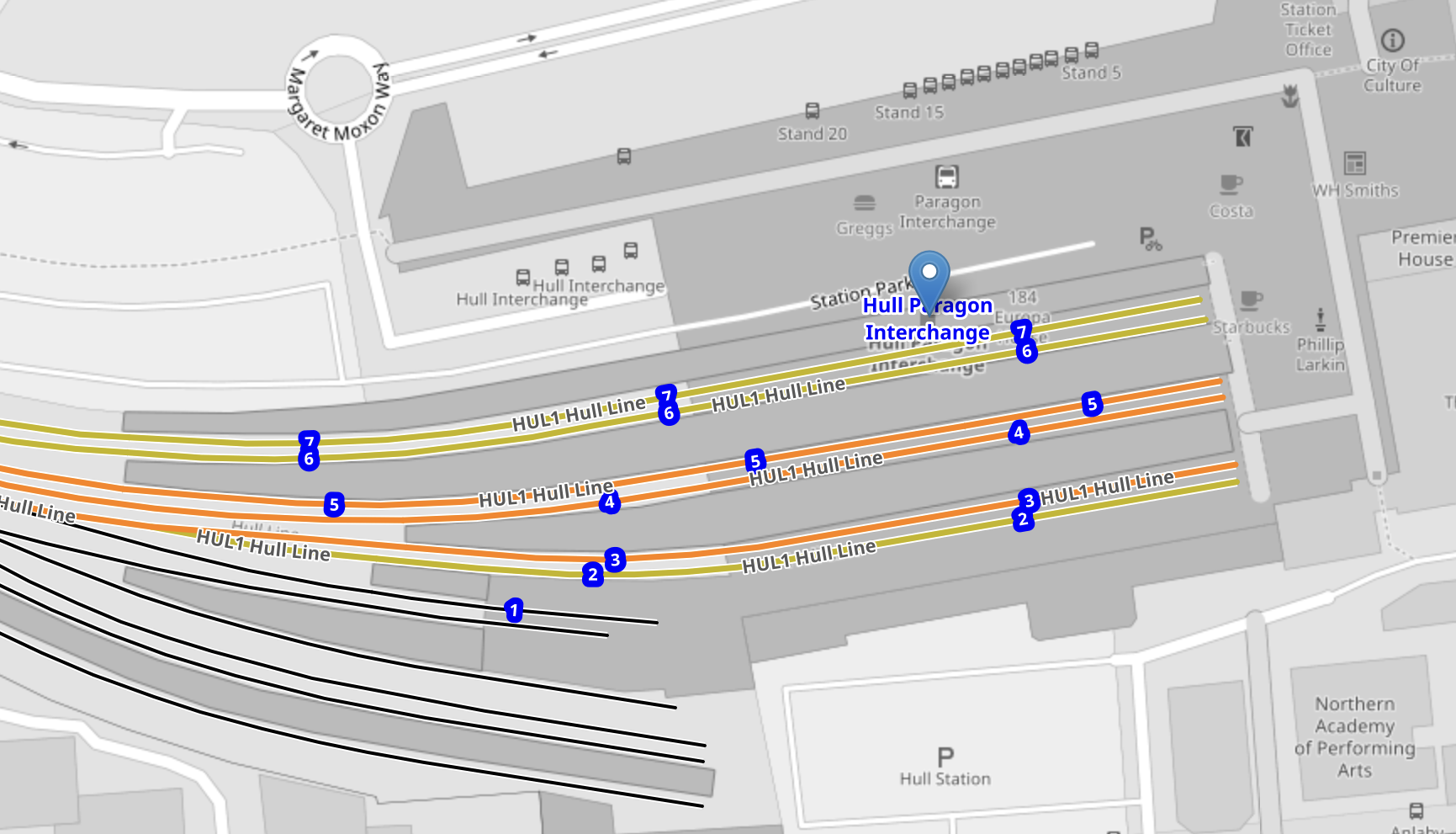
Note.
- Yesterday, my trains arrived in and left from Platform 7, which is the Northern-most platform.
- Other pictures in this blog show Hull Trains’s London service in Platform 7.
- Yesterday all Class 802 trains to and from London run by Hull Trains and LNER used Platform 7.
- I have been told by station staff, that Platform 7 can take a nine-car LNER Azuma.
- In Ten-Car Hull Trains, I talk about ten-car Class 802 trains running to and from Hull.
- Platform 7 or another platform at Hull station must be able to handle a ten-car train, which means that Hull station can handle a train, that is 260 metres long.
Looking at the station map, I believe that Hull station’s capacity for long express trains, is on a par with that of Liverpool Lime Street station.
I could see both stations handling two trains per hour (tph) across the Pennines and to and from London, with if necessary trains being formed of a pair of five-car trains.
How Many Services From Hull Station Can Be Run With Battery Trains?
Hull Trains service between London and Beverley travels for 44.5 miles on unelectrified track between Temple Hirst junction and Beverley.
Typically Hull Trains services wait in Hull station for the following times.
- Going between London King’s Cross and Beverley – Between ten and fifteen minutes.
- Returning to London King’s Cross – Upwards of twenty-five minutes.
I believe these waits in Hull station would mean that.
- A train going North to Beverley will have a battery containing enough electricity to get the train to Beverley and back, which is a distance of 16.7 miles.
- A train going South from Hull will have a battery containing enough electricity to get the train to Temple Hirst junction, which is a distance of 36.1 miles.
I believe that Hull Trains are currently working a timetable, that has been designed for operation by trains with a range on batteries of around fifty miles, provided there is electrification in at least one platform at Hull station to charge the trains.
It is also interesting to look at LNER’s two services that serve Hull.
- The 0700 to London, is scheduled to arrive at Hull station at 0635 from stabling at Doncaster and waits up to twenty-five minutes before leaving for London.
- The 2004 from London, is scheduled to arrive at Hull station at 2004 and waits up to twenty-five minutes before going South to overnight stabling in Doncaster.
It looks like LNER’s two trains follow Hull Trains rules.
- They use Platform 7 in Hull station.
- Trains going South have up to twenty-five minutes in the station.
It appears to me, that both Hull Trains and LNER are running a timetable, that would allow their services to be run using trains with a battery that had a range of around fifty miles, that could be fully-charged at Hull station before going South.
TransPennine Express run an hourly service to Liverpool Lime Street via Leeds and Manchester Victoria.
According to OpenRailwayMap’s map of electrification, when the TransPennine Upgrade is complete, the only section of the route without electrification will be the 42.1 miles between Hull and Micklefield.
As TransPennineExpress have some of the same Class 802 trains as Hull Trains, if there were at least two electrified platforms in Hull station, then Hull and Liverpool services could be run by battery-electric trains, with a similar specification to those of Hull Trains.
Northern Trains run an hourly service to Halifax via Leeds.
According to OpenRailwayMap’s map of electrification, , the only sections of the route without electrification will be the 42.1 miles between Hull and Micklefield and the 17.5 miles between Leeds and Halifax.
As Leeds and Micklefield is timetabled for seventeen minutes, I suspect this would be enough time to fully charge a battery-electric version of CAF’s Class 331 train and with charging in Hull station, then this route could be electrified.
Northern Trains also run other services, but because the Goole swing bridge is closed, I can’t get all the distances without electrification from Hull.
Ones I can find are.
- Beverley – 16.7 miles for return trip.
- Bridlington – 31.1 miles
- Doncaster – 40.8 miles
- Micklefield – 42.1 miles
- Scarborough – 53.8 miles
- Sheffield – 59.4 miles
- Temple Hirst – 36.1 miles
- York – 41.1 miles – Hull and Church Fenton
Note.
- York and Doncaster are electrified.
- Bridlington and Scarborough have suitable platforms where 25 KVAC overhead electrification could be installed to charge trains.
- Sheffield and Doncaster is only 18.6 miles and this may be the way to electrify between Sheffield and Hull.
- In The Data Sheet For Hitachi Battery Electric Trains, I state that Hitachi’s battery-electric trains have a range of 43.5 miles
It looks if enough platforms are electrified at Hull, all current services from the city could be run by battery-electric trains.
Conclusion
I believe that by electrifying Hull station, that Hull could have a station consistent with the HumberZero philosophy, with battery-electric trains running hither and thither, handling all rail traffic to and from the City.
York And Church Fenton Electrification
This news item from Network Rail is entitled Yorkshire’s First New Electric Railway In 25 Years Set To Cut Carbon And Slash Journey Times.
This section summarised the work
Work began on the York to Church Fenton electrification scheme in October 2019, and to date has delivered:
- 17 kilometres of new, more reliable track, ready to run faster trains
- An innovative 65-metre-wide under-track crossing
- 270 new steel masts, which carry the overhead electric wires
When the new wires are energised, they will allow more environmentally friendly hybrid trains to run along this section at speeds of up to 125mph – that’s 30mph faster than they currently run.
This OpenRailwayMap shows between York and Church Fenton.
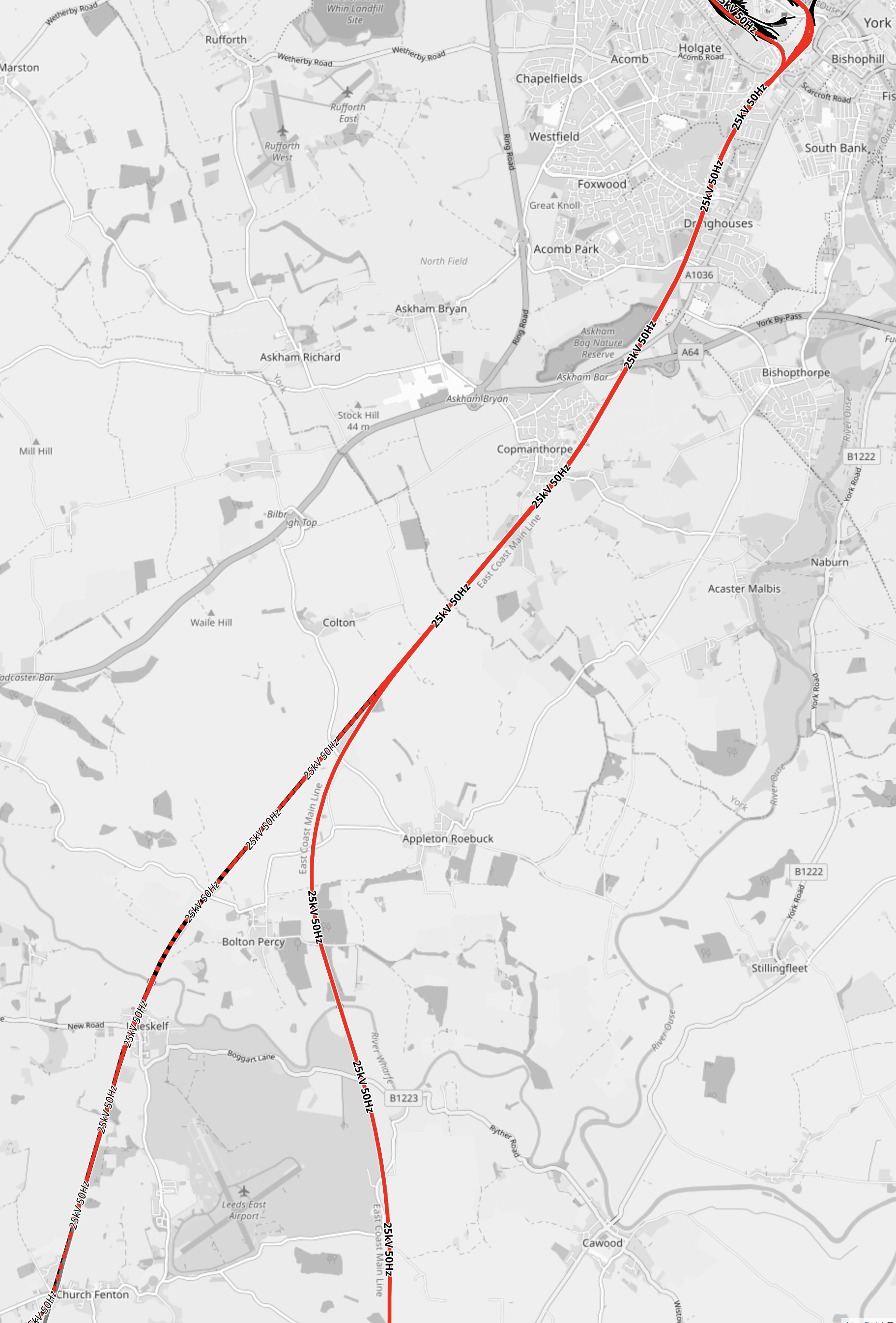
Note.
red lines indicate 25 KVAC overhead electrification.
York is in the North-East corner of the map.
Church Fenton is in the South-West corner of the map.
The track marked in red going South is the Selby Diversion, which was built in 1983 to avoid the Selby coalfield. It joins the York and Church Fenton route at Colton Junction.
The Colton Junction and Church Fenton section is marked in red and black, indicating this section is being electrified.
This second OpenRailwayMap shows between Church Fenton and Neville Hill TMD in the East of Leeds.
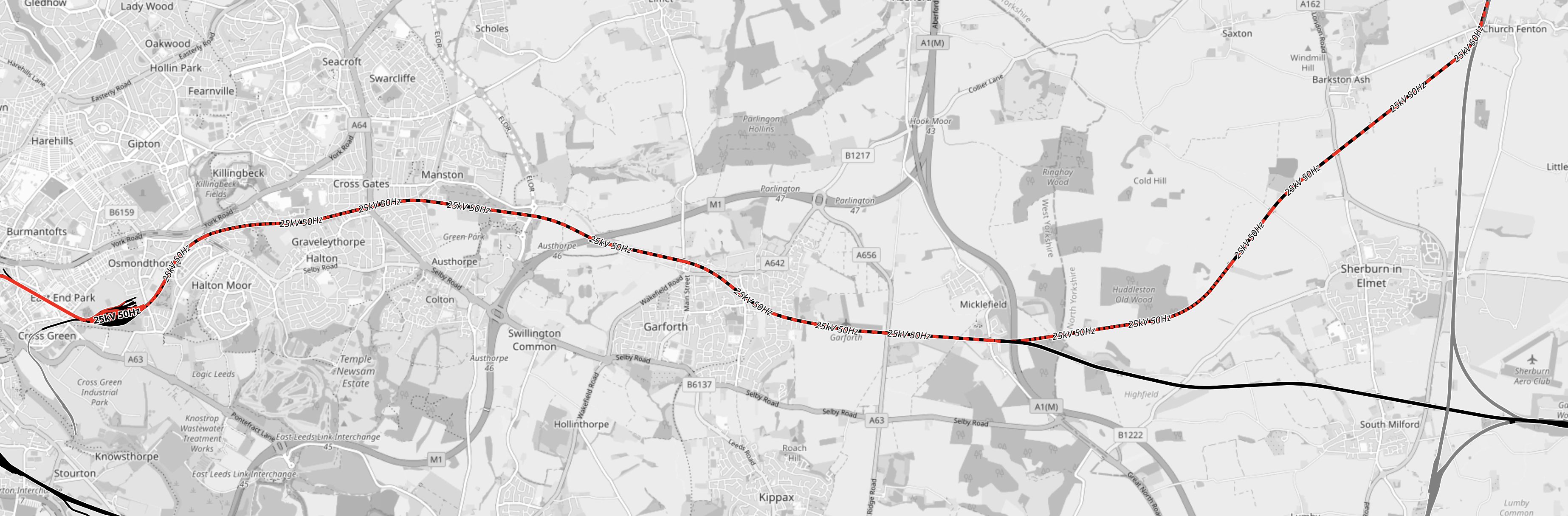
Note.
- Church Fenton is in the North-East corner of the map.
- Neville Hill TMD is the big black blob in the middle of the West edge of the map.
- The route marked in red and black will probably be the next to be electrified.
- Between Leeds and Neville Hill is electrified.
Electrification of Church Fenton and Neville Hill TMD means that the electrification between Leeds and York would be complete.
These services use this route between Leeds and York.
- TransPennine Express – 1 tph – Liverpool Lime Street and Newcastle
- TransPennine Express – 1 tph – Manchester Airport and Redcar Central
- CrossCountry – 1 tph – Plymouth and Edinburgh Waverley
In addition, the new electrified route will have other effects.
Electric trains will have direct electrified access to Neville Hill TMD from York.
Micklefield is only 42 miles from Hull and with charging at Hull, I suspect TransPennine’s Manchester Piccadilly and Hull service could go battery-electric.
Green Light For Major Transpennine Improvements
The title of this post, is the same as that of this article on Railnews.
These paragraphs outline the project.
Improvements on the Transpennine route in West Yorkshire have been given the green light, after a Transport and Works Act order was signed by the transport secretary on 27 June, six months earlier than planned.
The cost of the upgrades was described as ‘multi-billion’ by Network Rail, which said it was the ‘biggest milestone’ so far on the Transpennine Route Upgrade programme.
The improvements will be carried out between Huddersfield and Westtown in Dewsbury, and include quadrupling the double line and remodelling track layouts as well as major renovations at Huddersfield, Deighton and Mirfield and a new station at Ravensthorpe. In addition, there will be a flyover near Ravensthorpe to separate the Wakefield and Leeds lines and reduce conflicting movements.
Effectively, Grant Shapps fired the starting gun for this project four days ago.
I have written various posts on the upgrade and they can be read from this link.
The Transpennine Route Upgrade Web Site
The project now has its own comprehensive web site, which is named the Transpennine Route Upgrade.
A Reply To Peter Robins About Electrification
Peter Robins made this very perceptive comment.
The main point of TPU isn’t electrification, though, it’s upgrading the track to remove bottlenecks, improve lines speeds, add capacity. This is mainly what the Hudd-Dew TWA order is about. If you electrify the line while you’re doing that, then you increase the number of connecting places/lines which are within range of current batteries.
I think that Lds-CF will also have to wait for the post-IRP review, meaning the full upgrade will be a long time coming.
This Hitachi infographic shows the specification of their Regional Battery Train.

Note.
- It is a 100 mph train.
- Batteries can be charged when travelling under wires or 10-15 mins static.
- Range on batteries is 90 km. or 56 miles.
- My experience of Hitachi bi-modes is that pantographs on these trains can go up and down, with all the alacrity of a whore’s drawers.
Hitachi have stated that they will be testing a Class 802 train with batteries later this year.
Could Hitachi Battery Trains Be Charged On The Electrification Between Huddersfield And Dewsbury?
Looking at the data from RealTimeTrains for this route it appears that the fastest time I can find between Huddersfield And Dewsbury is eleven minutes.
Would this be enough time to fully-charge the battery? If not the electrification could perhaps be extended for a couple of miles.
How Many Of Transpennine Express (TPE)’s Services Could Be Decarbonised, if Huddersfield And Dewsbury Were To Be Electrified?
I’ll look at each service that uses this route.
Liverpool Lime Street And Newcastle
This is an hourly service that calls at Newton-le-Willows, Manchester Victoria, Huddersfield, Dewsbury, Leeds, York, Northallerton, Darlington and Durham.
- Liverpool Lime Street and Manchester Victoria is electrified.
- Colton Junction and Newcastle is electrified.
- Huddersfield and Dewsbury will be electrified by the Transpennine Route Upgrade.
This leaves the following sections without electrification.
- Manchester Victoria and Huddersfield – 25.8 miles
- Dewsbury and Colton Junction – 29.3 miles
Note.
- There are also stops under the wires, at Dewsbury, Huddersfield and Leeds, which could be used to top up the battery.
- The largest unelectrified section would be 29.3 miles.
It looks to me that Liverpool Lime Street And Newcastle could be served using a Hitachi Regional Battery Train or similar.
Manchester Airport And Redcar Central
This is an hourly service that calls at Gatley, Manchester Piccadilly, Manchester Oxford Road, Manchester Victoria, Huddersfield, Dewsbury, Leeds, York, Thirsk, Northallerton, Yarm, Thornaby and Middlesbrough.
- Manchester Airport and Manchester Victoria is electrified.
- Colton Junction and Northallerton is electrified.
- Huddersfield and Dewsbury will be electrified by the Transpennine Route Upgrade.
This leaves the following sections without electrification.
- Manchester Victoria and Huddersfield – 25.8 miles
- Dewsbury and Colton Junction – 29.3 miles
- Northallerton and Redcar Central – 28.8 miles
Note.
- There are also stops under the wires, at Dewsbury, Huddersfield and Leeds, which could be used to top up the battery.
- The largest unelectrified section would be 29.3 miles.
- I suspect that charging could be needed at Redcar end of the route. Middlesbrough would probably be best, as it could also charge the LNER services, if they used battery power from Northallerton.
It looks to me that Manchester Airport And Redcar Central could be served using a Hitachi Regional Battery Train or similar.
Manchester Piccadilly And Hull
This is an hourly service that calls at Stalybridge, Huddersfield, Leeds, Selby and Brough.
- Manchester Piccadilly and Manchester Victoria is electrified.
- Huddersfield and Dewsbury will be electrified by the Transpennine Route Upgrade.
- Leeds and Neville Hill Depot is electrified.
This leaves the following sections without electrification.
- Manchester Victoria and Huddersfield – 25.8 miles
- Dewsbury and Leeds – 29.3 miles
- Neville Hill Depot and Hull – 50 miles
Note.
- There are also stops under the wires, at Huddersfield and Leeds, which could be used to top up the battery.
- The largest unelectrified section would be 50 miles.
- I am sure that charging would be needed at Hull end of the route. Hull would probably be best, as it could also charge the Hull Trains, LNER and Northern Trains services, if they used battery power from the East Coast Main Line.
- Alternatively, there could be electrification between Hull and Brough. or Neville Hill and Micklefield. The latter would knock eight miles off the unelectrified section and is needed to allow electric trains to access Neville Hill Depot under electric power.
It looks to me that Manchester Piccadilly and Hull could be served using a Hitachi Regional Battery Train or similar.
Manchester Piccadilly and Huddersfield
This is an hourly service that calls at Stalybridge, Mossley, Greenfield, Marsden, and Slaithwaite.
- Manchester Piccadilly is electrified.
- Huddersfield is electrified.
This leaves the following sections without electrification.
- Manchester Piccadilly and Huddersfield – 25.5 miles
Note.
- There are also stops under the wires, at Manchester Piccadilly and Huddersfield, which would be used to top up the battery.
- The largest unelectrified section would be 25.5 miles.
- Trains would be charged at both ends of the route.
It looks to me that Manchester Piccadilly and Huddersfield could be served using a Hitachi Regional Battery Train or similar.
Huddersfield And Leeds
This is an hourly service that calls at Deighton, Mirfield, Ravensthorpe, Dewsbury, Batley, Morley and Cottingley
- Huddersfield is electrified.
- Leeds is electrified.
This leaves the following sections without electrification.
- Dewsbury and Leeds – 29.3 miles
Note.
- There are also stops under the wires, at Manchester Piccadilly and Huddersfield, Deighton, Mirfield, Ravensthorpe, Dewsbury and Leeds, which would be used to top up the battery.
- The largest unelectrified section would be 29.3 miles.
- Trains would be charged at both ends of the route.
It looks to me that Huddersfield and Leeds could be served using a Hitachi Regional Battery Train or similar.
York And Scarborough
This is an hourly service that calls at Malton and Seamer
- York is electrified.
This leaves the following sections without electrification.
- York And Scarborough – 42.1 miles
Note.
- The largest unelectrified section would be 42.1 miles.
- Trains would be charged at both ends of the route.
It looks to me that York and Scarborough could be served using a Hitachi Regional Battery Train or similar.
How Many Of Northern Trains’s Services Could Be Decarbonised, if Huddersfield And Dewsbury Were To Be Electrified?
I’ll look at each service that uses this route.
Wigan North Western And Leeds
This is an hourly service that calls at Daisy Hill, Atherton, Walkden, Salford Crescent, Salford Central, Manchester Victoria, Rochdale, Smithy Bridge, Littleborough, Walsden, Todmorden, Hebden Bridge, Mytholmroyd, Sowerby Bridge, Brighouse, Mirfield, Dewsbury, Morley and Cottingley
- Wigan North Western is electrified.
- Salford Crescent and Manchester Victoria is electrified.
- Heaton Lodge East junction and Dewsbury is electrified.
- Leeds is electrified.
This leaves the following sections without electrification.
- Wigan North Western and Salford Crescent – 16 miles
- Manchester Victoria and Heaton Lodge East junction – 37.6 miles
- Dewsbury and Leeds – 29.3 miles
Note.
- There are also stops under the wires, at Wigan North Western, Salford Crescent, Salford Central, Manchester Victoria, Mirfield, Dewsbury and Leeds, which would be used to top up the battery.
- The largest unelectrified section would be 37.6 miles.
- Trains would be charged at both ends of the route.
It looks to me that Wigan North Western and Leeds could be served using a Hitachi Regional Battery Train or similar.
Huddersfield And Castleford
This is an occasional service that calls at Deighton, Mirfield and Wakefield Kirkgate.
As it is run by buses at the moment, I can’t get the data to work out if it could be served using a Hitachi Regional Battery Train or similar.
But I suspect it can, after looking at a map.
How Many Of Grand Central’s Services Could Be Decarbonised, if Huddersfield And Dewsbury Were To Be Electrified?
I’ll look at each service that uses this route.
London King’s Cross And Bradford Interchange
This is a four trains per day service that calls at Doncaster, Pontefract Monkhill, Wakefield Kirkgate, Mirfield, Brighouse, Halifax and Low Moor.
- King’s Cross and Doncaster is electrified.
- Mirfield is electrified.
This leaves the following sections without electrification.
- Doncaster and Mirfield – 34.8 miles
- Mirfield and Bradford Interchange – 17.3 miles
Note.
- There are also stops under the wires, at Mirfield, which would be used to top up the battery.
- The largest unelectrified section would be 34.8 miles.
- Trains would need to be charged at Bradford Interchange, during the turnround of around an hour.
- It is likely, that some electrification will be erected in the Bradford area, to improve services to Leeds.
It looks to me that London King’s Cross and Bradford Interchange could be served using a Hitachi Regional Battery Train or similar.
Conclusion
It looks like electrifying between Huddersfield and Dewsbury will enable a Hitachi Regional Battery Train or similar to work all passenger routes, that run on that section of track.
TransPennine Express Explores Further Fleet And Capacity Expansion Options
The title of this post, is the same as that of this article on Railway Gazette.
This is the first paragraph.
First TransPennine Express is hopeful that it will be able to issue a call for expressions of interest in the provision of additional bi-mode trains before the end of March. This follows ‘a healthy level of interest’ in its existing call for expressions of interest in the supply of bi-mode locomotives to replace the Class 68s which work with its MkVa coaches.
I wrote about the expressions of interest to replace the Class 68 locomotives with new bi-mode locomotives in Suppliers Sought For New Bi-Mode Locomotives For TransPennine Express And Great Western Railway.
This was my conclusion in the related post.
When I saw First Group’s proposals, I thought that they were over ambitious.
But after doing a few simple calculations, I think they can decarbonise some, but not all of the TransPennine Express services and the Night Riviera.
So do First Group want to complete the decarbonisation of TransPennine Express services?
These are my thoughts.
The Train Fleet Specification
The Railway Gazette article makes these points about the new bi-mode trains.
- The trains could be existing or new bi-modes.
- It would be desirable for the trains to have a long-term electric-only option.
- Options for this would include removing the diesel engines or converting the trains to battery-electric operation.
- Hydrogen is not mentioned.
- A fleet size of twenty-five trains is mentioned.
- The possibility of electric-only trains in the future is mentioned..
- Five-cars, with the ability to lengthen to six- or seven-cars.
- 200 km/h operation.
There is nothing unusual in the specification.
Will They Be Existing Or New Trains?
I doubt that there are any existing 200 km/h bi-modes in the UK, that are not wanted by their current operators.
I am very certain they will be new trains.
Could The Trains Be Hitachi Class 802 Trains?
The trains sound very much like Hitachi Class 802 trains, that are in service with TransPennine Express, Great Western Railway and Hull Trains, all of whom are First Group companies.
- Long-term, the diesel engines can be removed or replaced with batteries.
- The battery option is under development and should be on test this year.
- The trains can be lengthened to as long as twelve cars, so six- and seven-car trains would be possible.
Hitachi will obviously show interest in this possible order.
Will These Trains Replace the Class 185 Trains?
Consider.
- TransPennine Express have 51 three-car Class 185 trains.
- This is a total of 153 cars.
- On some routes they work singly and on others they work in pairs.
- A three-car Class 185 train has 167 Standard Class and 15 First Class seats or 60.7 seats per car.
- A pair of Class 185 trains have 334 Standard Class and 30 First Class seats.
- A five-car TransPennine Express Class 802 train has 318 Standard Class and 24 First Class seats or 68.4 seats per car.
- It would appear that a Class 802 train is not that far short of the capacity of a pair of Class 185 trains.
- Some of the TransPennine services are very crowded.
I suspect that twenty-five five-car trains be able to handle the the workload of the Class 185 trains.
If a small amount of extra capacity were needed, some of the new trains could be six-cars.
In this section, I have assumed the new trains will be Class 802 trains, but any train manufacturer pitching for this order would adjust the capacity to the needs of TransPennine Express.
The Railway Gazette article says this.
TPE continues to explore opportunities for new services in the north of England, and the move could also feed into government plans for the removal of older and more costly to operate diesel trains elsewhere on the network, should any rolling stock become surplus to requirements at TPE.
So where could the Class 185 trains be used in the future?
Recently, MTU Hybrid PowerPacks have replaced the transmission on a Class 168 train, which reduces carbon emissions and fuel consumption and makes the train quieter and more passenger-friendly, as it doesn’t use diesel in stations.
The Class 185 trains are only fifteen years old and I suspect that MTU have designed the Hybrid PowerPack, so that it can replace the Cummins engine in trains like these.
The conversion could be done as a rolling program, so that any future operator would start with diesel and go hybrid a train at a time.
There has been speculation, that the trains may end up on the East West Railway and I wrote about this in East West Railway Company To Start Second Phase Of Rolling Stock Procurement.
But the East West Railway may prefer to use zero-carbon trains on a route, where there is electrification in places on the route.
Alternatively, South Western Railway run 10 two-car Class 158 trains and 30 three-car Class 159 trains between London Waterloo and Exeter.
- South Western Railway is another First Group company.
- The Class 185 trains could provide a capacity increase.
- The Class 185 trains are 100 mph trains, whereas the Class 158/159 trains are only capable of 90 mph.
The London Waterloo and Exeter Route could be electrified in the future and I am pretty sure, that the Class 185 trains with a hybrid transmission could be a good stand-in until this happens.
Other Train Manufacturers
I believe that Hitachi are in pole position for this order, just because they are an established supplier to both TransPennine Express and First Group.
But twenty-five five-car trains would be a very worthwhile order, so I suspect that companies like Alstom, CAF, Siemens, Stadler and Talgo will also express interest.
Conclusion
Buying extra bi-mode trains will take TransPennine Express further along the route to full decarbonisation.
Calls For Study Into Reopening Of Leeds Railway Station To Expand Capacity
The title of this post, is the same as that of this article on Rail Technology Magazine.
This is the introductory paragraph.
Local politicians in Leeds have called for the revival of Marsh Lane railway station to ease some of the pressure on the city’s busy main station, seeking viability studies to be carried out on it and other sites as a first step.
This Google Map shows the area of the proposed Leeds Marsh lane station.
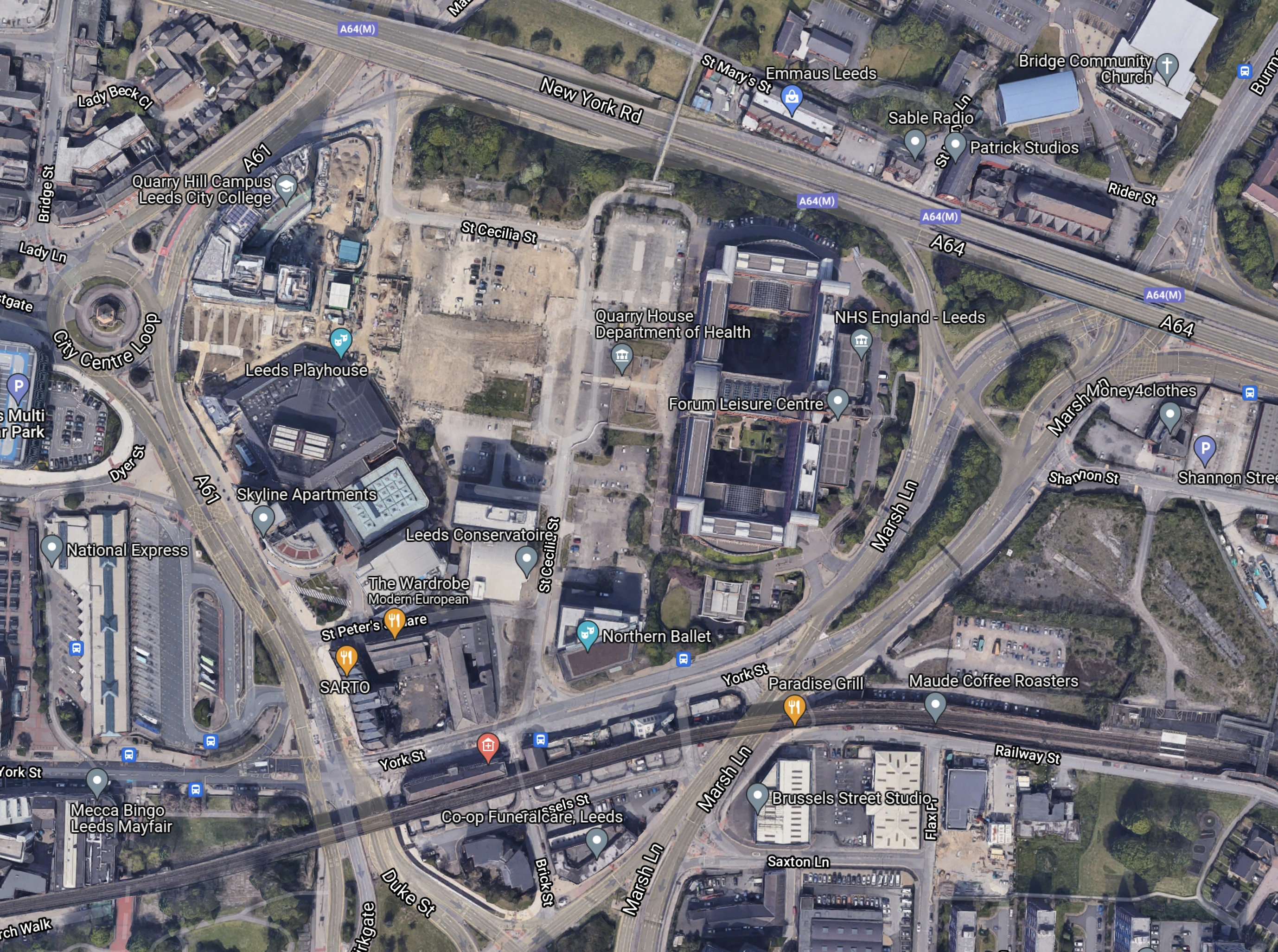
Note.
- The Leeds Playhouse, Leeds Conservatoire, Northern Ballet and large NHS offices in the centre of the circle of roads.
- Marsh Lane runs down the East side and crosses under the Leeds and Hull via Selby railway line.
- I would assume that the station will be built, where the road goes under the railway.
This second map is an enlargement of where the station used to be.
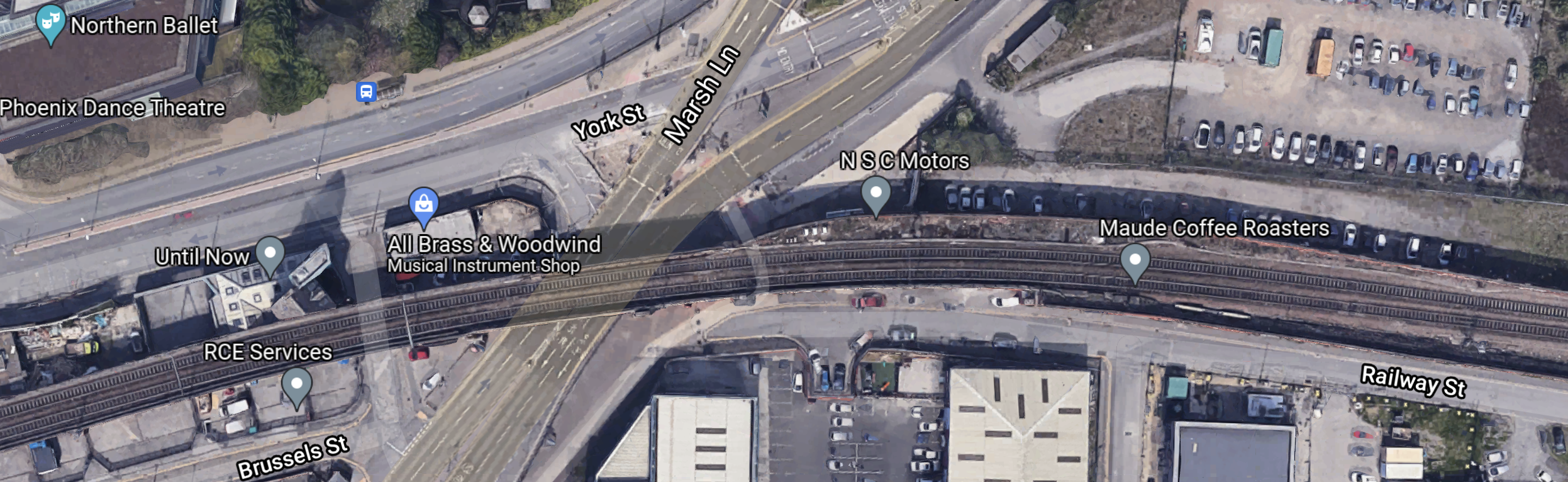
It looks like there would be space to put two platforms outside the double-track line.
Services Through Leeds Marsh Lane Station
The following services appear to run through the site of Leeds Marsh Lane Station.
- CrossCountry – Plymouth and Edinburgh/Glasgow
- LNER – Leeds and Edinburgh
- Northern – Blackpool North and York
- Northern – Halifax and Hull
- Northern – Leeds and York
- TransPennine Express – Liverpool Lime Street and Newcastle
- TransPennine Express – Liverpool Lime Street and Scarborough
- TransPennine Express – Manchester Airport and Newcastle
- TransPennine Express – Manchester Airport and Redcar
- TransPennine Express – Manchester Piccadilly and Hull
Note.
- All trains are hourly in both directions.
- There are also up to two freight trains per hour (tph) through the area.
There’s certainly scope for a balanced timetable through the station, but will there be enough time for all to stop?
Conclusion
Building this station looks to feasible and a good service could be provided.
Whether it is built would depend on passenger numbers and the cost of building.
Hence the need for a comprehensive study!
Northern Eden Project Worth £125 million Gets Green Light
The title of this post, is the same as that of this article on The Times.
These are the first two paragraphs.
Plans to transform the seafront of a deprived town into a £125 million northern outpost of the Eden Project have been given the green light.
Councillors in Lancashire approved plans for the site on Morecambe seafront which it is hoped will attract around a million visitors and create 400 jobs.
I think the Eden Project Morecambe could be a real Northern success.
Here’s my reasoning.
Location, Location, Location
These are the three most important factors with any house, building or property.
Morecambe has a superb location for visitors coming by car or train, as is close to both the M6 Motoway and the West Coast Main Line.
I wrote about getting to the Eden Project in Getting To The Proposed Morecambe Eden Project By Train.
I suspect visitors coming by road, would drive to a suitable Park-and-Ride and then take a train.
Lancaster Will Be A High Speed Two Station
Lancaster will be served by the following High Speed Two services.
- London Euston – Two hours and three minutes – One tph
- London Old Oak Common – One hour and fifty-six minutes – One tph
- Birmingham Curzon Street – One hour and six minutes – One tph
- Crewe – Fifty-nine minutes – One tph
- Warrington Bank Quay – Forty-two minutes – One tph
- Wigan North Western – Thirty-one minutes – Two tph
- Preston – Seventeen minutes – Two tph
- Oxenholme – Twelve minutes – One tp2h
- Penrith – Thirty-five minutes – One tp2h
- Carlisle – Fifty-two minutes – One tph
- Lockerbie – One hour and eleven minutes – One tph
- Edinburgh – Two hours and twelve minutes – One tp2h
- Motherwell – One hour and fifty-six minutes – One tp2h
- Glasgow – Two hours and twelve minutes – One tp2h
Note.
- tph is trains per hour.
- tp2h is trains per two hours.
- A shuttle train between Lancaster and the Eden Project Morecambe will probably add ten minutes.
High Speed Two will make the Eden Project Morecambe one of the best connected entertainment venues in the UK.
Avanti West Coast And TransPennine Express North Of Warrington Bank Quay After High Speed Two Opens
When High Speed Two opens, it is likely that North of Warrington Bank Quay station, the operating speed of this section of the West Coast Main Line will be faster than the current 125 mph, as the track will have been straightened and digital signalling will have been installed.
It will probably be at least 140 mph.
These trains will be running express passenger services on the route and will be able to match the speed and timings of High Speed Two’s Classic-Compatible trains to the North of Warrington Bank Quay station.
- Avanti West Coast’s Class 390 trains
- TransPennine Express’s Class 397 trains
- TransPennine Express’s Class 802 trains
There is likely to be savings of a few minutes on these services.
- Avanti West Coast – London Euston and Glasgow Central
- TransPennine Express – Manchester Airport, Manchester Piccadilly and Glasgow Central
- TransPennine Express – Liverpool Lime Street and Glasgow Central
Connections from the North-West of England and Southern Scotland will be fast and frequent.
Eden Project Morecambe Will Be A Day Trip For Greater North West England
An area defined by Carlisle, Blackburn, Manchester, Crewe, Chester, Liverpool and Blackpool will be close enough to have a day trip to the venue.
Eden Project Morecambe Is Unlikely To Be A Poor Attraction
The Eden Project Morecambe must be worth attending, but with twenty years experience of running a similar attraction in Cornwall, it is unlikely to be a failure.
Eden Project Morecambe Will Be Easier To Travel To Than The Original Eden Project For Many
I have never even been past the Eden Project in Cornwall, as it is not the easiest place to get to without a car.
I intend to go, but it will probably need two nights in a hotel to do it justice.
But Eden Project Morecambe could well be much shorter trip from London.
Currently, Avanti West Coast’s fastest time between London Euston and Lancaster are two hours and forty minutes, which would mean an under three hours trip both ways to and from Eden Project Morecambe. The Cornish site is probably nearly five hours by public transport.
Conclusion
All these factors should contribute to the success of the attraction.
Are First Group Moving Towards Zero-Carbon?
My post, which was entitled Suppliers Sought For New Bi-Mode Locomotives For TransPennine Express And Great Western Railway, prompted me to ask the question in the title of this post.
This factsheet for First Bus says that all their buses will be zero-carbon by 2035.
This factsheet for First Rail says this about Decarbonising Rail Travel.
FirstGroup’s ambition is to be the partner of choice for low or zero emission transport. We recently became the first UK rail and bus operator to formally commit to setting an ambitious science-based target for reaching net zero emissions by 2050 or earlier.
First Rail leads the sector in decarbonisation, including the introduction of bi-mode diesel and electric powered trains which allow us to make best use of electrified networks. We have signed up to the Government’s challenge to take all diesel-only trains out of service by 2040.
GWR has recently taken delivery of the UK’s first tri-mode train which can use overhead wires, third rail or diesel power. Sustainability is at the heart of the NRCs and both SWR and TPE will develop a decarbonisation policy and roadmap towards net zero emissions in accordance with this goal. New all-electric and bi-mode trains will be introduced by Avanti to replace diesel only trains in the current fleet.
Both these factsheets appear to have been written in 2021.
The zero-carbon status of each of First Group’s rail companies is as follows.
Avanti West Coast
The mainstay of Avanti West Coast are fifty-six Class 390 electric trains.
Twenty Class 221 diesel trains are being replaced by ten new Class 807 electric trains and thirteen new Class 805 bi-mode trains.
Great Western Railway
The mainstay of Great Western Railway are a mixture of ninety-three Class 800 and Class 802 bi-mode trains.
They also have thirty-three Class 387 electric trains working London commuter routes.
There are a large assortment of ninety-four diesel trains of various classes working rural routes and local services in Bristol, Exeter, Oxford and Plymouth. There are a lot of these trains in the UK and I suspect that a nationwide solution will be developed.
There are thirty-five Class 43 diesel locomotives, that power the shortened InterCity 125 trains in the South-West. I wrote about converting these to hydrogen in Will We See Class 43 Power Cars Converted To Hydrogen?
Four Class 57 diesel locomotives that haul the Night Riviera are covered by the request for suppliers, that prompted me to write this post.
South Western Railway
The mainstay of South Western Railway are a mixture of around three hundred electric trains.
There are also ten Class 158 diesel trains and thirty Class 159 diesel trains. There are a lot of these trains in the UK and I suspect that a nationwide solution will be developed.
TransPennine Express
The mainstay of TransPennine Express are nineteen Class 802 bi-mode trains and twelve Class 397 electric trains.
There are also fifty-one Class 185 diesel trains.
Fourteen Class 68 diesel locomotives that haul coaches are covered by the request for suppliers, that prompted me to write this post.
Hull Trains
Hull Trains have a fleet of five Class 802 bi-mode trains.
Lumo
Lumo have a fleet of five Class 803 electric trains.
The service is also sold on the basis of its low-carbon footprint.
Conclusion
First Group would appear top have a fair way to go towards full decarbonisation.
- They have around a hundred-and-thirty Hitachi bi-mode trains. Research is ongoing to replace some diesel engines with batteries.
- They have a lot of diesel trains and locomotives, that are still in front-line service.
- They have the tricky problem of the Class 43 locomotives, which I suspect will result in a nationwide solution.
But at least they have started by requesting proposals to replace the other diesel locomotives.
The Future Of The Class 68 Locomotives
This post has been brought on by the comments to two posts I have written today.
- Direct Rail Services Disposes Of Heritage Locomotives
- Suppliers Sought For New Bi-Mode Locomotives For TransPennine Express And Great Western Railway
Both Direct Rail Services and TransPennine Express are major users of Class 68 locomotives, with each having a fleet of fourteen locomotives.
In addition, Chiltern Railways has a smaller fleet of six locomotives.
- Direct Rail Services use their locomotives for various passenger and freight duties, including the important one of moving nuclear material around the country.
- TransPennine Express use their locomotives on their passenger services across the North of England.
- Chiltern Railways use their locomotives on their passenger services between London and Birmingham and sometimes Oxford.
The design was a bespoke one by Stadler for Direct Rail Services and the first one entered service in 2014.
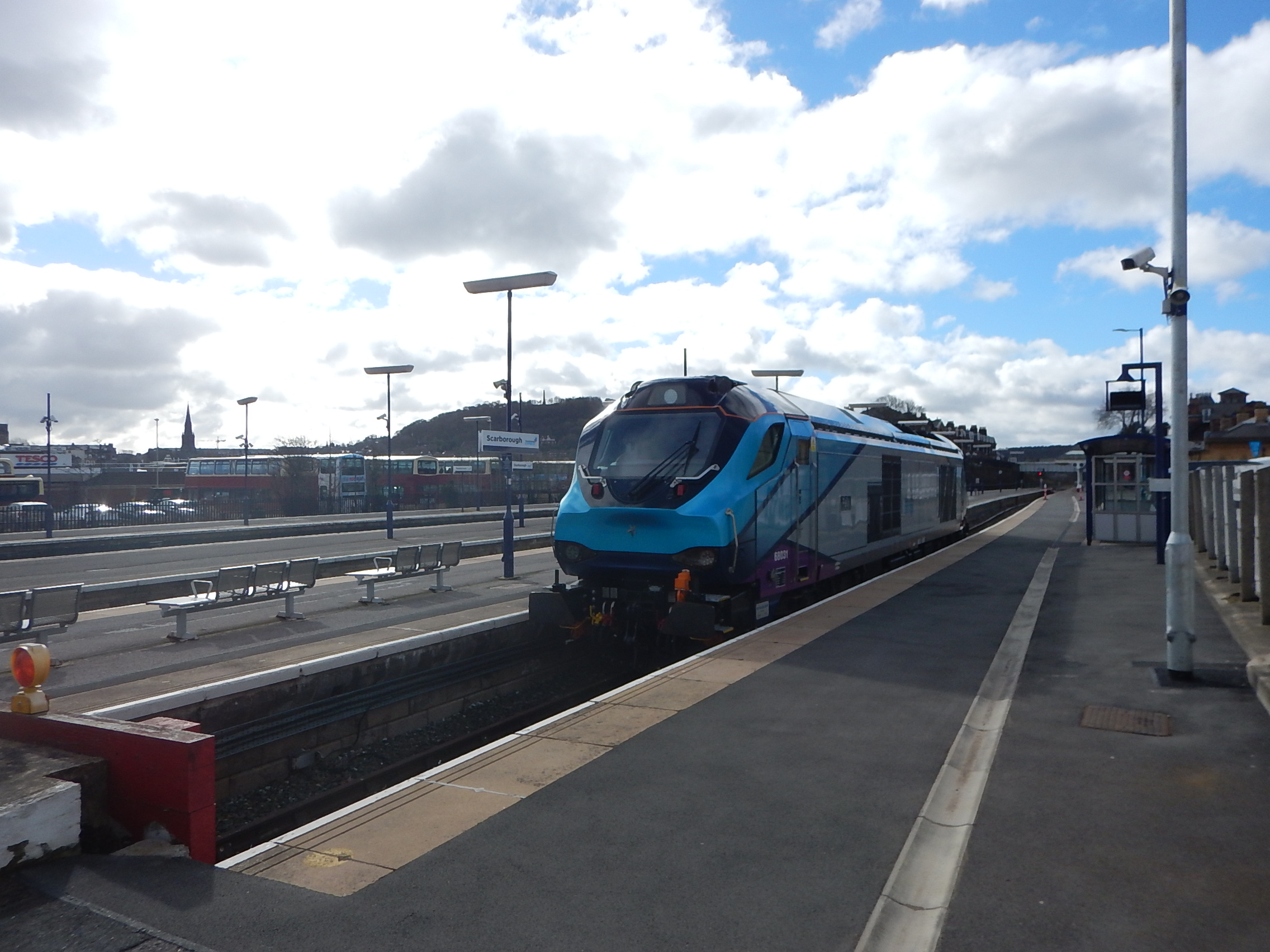
The picture shows one of TransPennine’s Class 68 locomotives at Scarborough. As the picture shows, they are a smart and purposeful-looking locomotive, that wouldn’t look out of place in the right livery on the front of the Royal Train.
It has some good features.
- It is a 100 mph locomotive.
- It seems to be well-liked by operators.
- It can haul both passenger and freight trains.
- It can act as a Thunderbird or rescue locomotive.
But they have three problems; emissions, noise and diesel.
This is from Wikipedia.
The locomotive’s propulsion system is compliant with Stage III A of the European emission standards, but not the more stringent Stage III B requirements.
But noise is a another problem and this has caused council action in Scarborough.
More important than emissions or noise, is the fact, that the locomotive is diesel-powered, so the fleet will probably have to be retired from the railway, at a time, when there is still useful life left in the locomotives.
The Class 68 locomotive is a member of the Stadler Eurolight family, of which there are three versions.
All follow similar design principles, differing mainly in dimensions, with Spain, Taiwan and the UK ordering upwards of twenty-thirty locomotives.
The UKLight branch of the family has two other members.
The Class 88 locomotive is an electro-diesel version of the Class 68 locomotive and the development of the design is described in this extract from the Class 88 locomotive’s Wikipedia entry.
Amid the fulfillment of DRS’ order for the Class 68, Stadler’s team proposed the development of a dual-mode locomotive that could be alternatively powered by an onboard diesel engine or via electricity supplied from overhead lines (OHLE). Having been impressed by the concept, DRS opted to place an order for ten Class 88s during September 2013. Having been developed alongside the Class 68, considerable similarities are shared between the two locomotives, amounting to roughly 70 percent of all components being shared.
According to Wikipedia, the type had a smooth entry into service.
The Class 93 locomotive will be the next development of the UKLight branch of the family, when it is delivered in 2023.
It will be a tri-mode locomotive, that will be capable of being powered by 25 KVAC overhead electrification, an onboard diesel engine and batteries.
It will be a 110 mph locomotive.
It can haul both passenger and freight trains.
Rail Operations Group have ordered 30 locomotives.
This is the first paragraph of the section in Wikipedia called Specification.
The Class 93 locomotive has been developed to satisfy a requirement for a fast freight locomotive that uses electric power while under the wires, but is also capable of self-powered operations. Accordingly, it is capable of running on diesel engines, from overhead wires, or from its onboard batteries. These batteries, which occupy the space used for the braking resistors in the Class 88, are charged via the onboard transformer or regenerative braking; when the batteries are fully charged, the locomotive only has its friction brakes available. The diesel engine is a six-cylinder Caterpillar C32 turbocharged power unit, rated at 900 kW, conforming with the EU97/68 stage V emission standard. The batteries units are made of Lithium Titanate Oxide and use a liquid cooling solution, enabling rapid charge and discharge.
It is a truly agnostic locomotive, that can take its power from anywhere.
The last paragraph of the specification compares the locomotive to the Class 66 locomotive.
In comparison with the Class 66, the Class 93 can outperform it in various metrics. In addition to a higher top speed, the locomotive possesses greater acceleration and far lower operating costs, consuming only a third of the fuel of a Class 66 along with lower track access charges due to its lower weight. ROG has postulated that it presents a superior business case, particularly for intermodal rail freight operations, while also being better suited for mixed-traffic operations as well. Each locomotive has a reported rough cost of £4 million.
It is no ordinary locomotive and it will change rail freight operations in the UK.
I have a feeling that the Class 93 locomotive could be a lower-carbon replacement for the Class 68 locomotive.
But I also believe that what Stadler have learned in the development of the Class 93 locomotive can be applied to the Class 68 locomotive to convert them into zero-carbon locomotives.
It may be just a matter of throwing out the diesel engine and the related gubbins and replacing them with a large battery. This process seems to have worked with Wabtec’s conversion of diesel locomotives to FLXdrive battery-electric locomotives.
Suppliers Sought For New Bi-Mode Locomotives For TransPennine Express And Great Western Railway
The title of this post, is the same as that of this article on Rail Advent.
These three paragraphs give a summary of the proposed fleet of locomotives required by First Group for their two operations.
TransPennine Express is looking for expressions of interest from suppliers for a fleet of at least 15 bi-mode locomotives for use on with its Mk5 carriages.
The provision released by First Group is for up to 30 bi-mode locomotives, with an additional 5 for use on Great Western Railway’s Sleeper Service.
The operators say that the new locomotives must have the capability to be powered by overhead wires as well as being able to operate with an alternate traction mode, IE Diesel or Battery, where routes are not yet electrified or for use as a contingency.
I have also read the detailed proposal, which can be downloaded from this page of the First Group web site.
- The locomotives must be capable of hauling a train at 100 mph.
- First Group are putting a high emphasis on environmental impact of the locomotives.
- The locomotives must be compatible with the latest emission regulations.
- The locomotives must be low-noise.
- The locomotives must be capable of hauling seven coaches, including a driving van trailer.
Nothing in the request for proposals would appear to be too challenging.
I have some thoughts.
The Number Of Locomotives For TransPennine Express
Currently, TransPennine Express has a fleet of fourteen Class 68 locomotives and enough coaches and driving van trailers to create thirteen rakes of Mark 5A coaches.
So why do TransPennine Express talk of up to thirty locomotives?
- Fifteen locomotives would handle the current services, so thirty could cover new services or more services on the current locomotive-hauled routes.
- Manchester Airport and Cleethorpes and Manchester Piccadilly and Hull are run by Class 185 diesel trains, which will need replacing at some future time.
- First Group probably know the costs of running Class 802 trains and locomotives with rakes of coaches better than anyone , so are they thinking about swapping some Class 802 trains for locomotives with rakes of coaches?
The last point would be one for the accountants.
But I am led to the conclusion, that TransPennine Express could be expanding and also decarbonising the long routes still operated by Class 185 trains.
The Number Of Locomotives For Great Western Railway
Currently, Great Western Railway has a fleet of four Class 57 locomotives to haul the Night Riviera.
Five replacement locomotives would probably be enough.
Could A Battery-Electric Locomotive Handle The TransPennine Express Requirement?
Currently, there are gaps in the electrification of the TransPennine network.
- Manchester Victoria and Stalybridge – 7.7 miles – Electrification in progress
- Stalybridge and Huddersfield – 18 miles
- Huddersfield and Dewsbury – 8 miles – Electrification in progress
- Dewsbury and Leeds – 9.1 miles
- Leeds and York – 25.6 – Electrification in progress
- Northallerton and Redcar – 28.8 miles
- Manchester Piccadilly and Stalybridge – 7.5 miles
- Leeds and Hull – 51.8 miles
- Doncaster and Cleethorpes – 72.1 miles
- Scarborough and York – 42 miles
- Doncaster and Sheffield – 18.7 miles
- Sheffield and Stockport – 36.8 miles – Rumoured to be electrified
Note.
- Many gaps are quite small.
- The longest gaps are on easy routes.
- Sheffield will be electrified for the Midland Main Line.
- A length of electrification at Scunthorpe could ease Doncaster and Cleethorpes.
I feel that a battery-electric locomotive with a range of a hundred miles hauling seven coaches, would be able to handle all the TransPennine routes.
If the train could run the routes with an electricity consumption of 4 kWh per vehicle-mile, seven coaches would need 4 * 8 * 100 = 3.2 MWh of battery storage.
Note.
- A 3.2 MWh battery would weigh around 3.2 tonnes, which would be less than the diesel engine in a Class 68 locomotive.
- Regenerative braking to batteries could be used to improve range.
- In How Much Power Is Needed To Run A Train At 125 Or 100 mph?, I calculated that an InterCity 125 needs 1.81 kWh per vehicle mile to maintain 100 mph.
I am fairly certain, that a well-designed efficient battery-electric locomotive would be able to handle all of the routes for TransPennine Express.
Could A Battery-Electric Locomotive Handle The Night Riviera?
I have just looked up the Southbound Night Riviera on Real Time Trains.
- It leaves Paddington at 23:50.
- It is typically eight coaches and a Class 57 locomotive.
- The train is planned to run at 75 mph.
- The first 53 miles between Paddington and Newbury are electrified.
- There is a stop of one hour and 39 minutes at Exeter.
- Newbury and Exeter is 120.4 miles
- Exeter and Penzance is 130.8 miles
The Northbound Night Riviera only has a five minute stop at Exeter and two minutes stops at Totnes, Newton Abbott and Taunton.
A battery-electric locomotive would need a range of 140 miles hauling eight coaches.
- Some stops like Plymouth may need to be lengthened by a few minutes to charge the batteries.
- Extra stops of perhaps five minutes could be added to top-up the batteries.
- The train would be limited to 75 mph, which would improve efficiency.
- It might even be prudent to electrify the uphill track of some of the steeper parts of the route.
But think of the marketing advantages of a zero-carbon sleeper train!
Conclusion
When I saw First Group’s proposals, I thought that they were over ambitious.
But after doing a few simple calculations, I think they can decarbonise some, but not all of the TransPennine Express services and the Night Riviera.
 The Anonymous Widower