The Data Sheet For Hitachi Battery Electric Trains
Was I just slow to spot this data sheet or has it only just been released?
You can download a copy from this page on the Hitachi web site.
In a section on the page, which is entitled Intercity Battery Trains, this is said.
A quick and easy application of battery technology is to install it on existing or future Hitachi intercity trains. Adding just one battery reduces emissions by more than 20% and offers cost savings of 20-30%.
Our intercity battery powered trains can cover 70km on non-electrified routes, operating at intercity speeds at the same or increased performance. Hitachi Rail’s modular design means this can be done without the need to re-engineer or rebuild the train and return them to service as quickly as possible for passengers.
These are my initial thoughts.
Plug-and-Play
It looks like the train is plug-and-play.
A diesel engine will be swapped for a battery-pack and the train’s computer controls the power sources accordingly.
Hitachi’s Battery Philosophy Explained
This is said on the data sheet.
Battery technology has the potential to play a significant role in the future of sustainable rail mobility, setting
the rail industry on the path to full intercity decarbonisation by 2050.
Installing batteries on intercity trains can complement electrification and provide a low emission alternative
to domestic air travel.Our retrofit solution for intercity trains offers phased replacement of diesel engines at the time that they would
have been due for their regular heavy maintenance overhaul, replacing each engine in turn until trains are fully battery electric. The solution delivers fuel cost savings and lowers CO2 emissions by at least 20% for every engine replaced, and a 20% reduction in whole life maintenance costs – well within the battery’s life span of 8-10 years.
Performance On Battery Power
The data sheet gives these bullet points.
- 750kW peak power
- Weight neutral.
- At least 20% lower CO2 emissions
- 70km on non-electrified routes
- 20% reduction in whole life maintenance costs
- Up to 30% fuel cost savings
- Zero emissions in and out of stations
- Charge on the move
- 10 year life span
Note.
- 750 kW peak power, is around the power of the diesel-engine, that will be replaced.
- I wouldn’t be surprised that powerwise, the battery pack looks like a diesel engine.
- Weight neutral means that acceleration, performance and handling will be unchanged.
- Batteries are easier to maintain than diesels.
- It is stated that a train can be fully-decarbonised.
I have a feeling these trains are no ordinary battery-electric trains.
Seventy Kilometre Range On Battery
Seventy kilometres is 43.5 miles.
This may not seem much, but the data sheet says this.
Our battery hybrid trains can cover 70km on non-electrified routes, operating at intercity speeds at the same
or increased performance. By identifying the routes with short non-electrified sections of 70km or less, we could
see the replacement of existing diesel trains with fully battery-operated trains on those routes within a year.
And, using battery power to avoid electrifying the hardest and most expensive areas, such as tunnels and bridges,
enables flexibility on electrification, minimising passenger disruption during upgrades.
Note.
- It looks like the trains can operate at 125 mph on battery power, where the track allows it. But then the rolling restistance of steel wheel on steel rail, is much lower, than that of rubber tyres on tarmac.
- Hitachi seem to have developed a philosophy on how the trains will be used.
- Hitachi’s pantographs, go up and down with all the alacrity of a whore’s drawers. They will be ideal for a short length of electrification.
I think these LNER routes could be immediately decarbonised.
- LNER – London and Harrogate , where only 18.3 miles is unelectrified. Trains may not need charging, as a full battery could handle both ways.
- LNER – London and Hull, where 36.1 miles is unelectrified. A short length of electrification to charge trains would be needed at Hull.
- LNER – London and Lincoln, where only 16.7 miles is unelectrified. Trains would not need charging, as a full battery could handle both ways.
- LNER – London and Middlesbrough, where only 20.3 miles is unelectrified. Trains would not need charging, as a full battery could handle both ways.
Note.
- It looks like some services could start fairly soon, once batteries are available.
- Hull Trains could use the 70 km batteries and charging at Hull, as it passed through. This would decarbonise Hull Trains passenger operations.
- Services to Aberdeen, Cleethorpes and Inverness would be out of range of the initial Hitachi trains.
Could the last point, partially explain the purchase of the CAF tri-mode trains, which I wrote about in First Tri-Mode Long Distance Trains For The East Coast Main Line?
We shall see what we shall see.
But having a choice of battery-electric or tri-mode trains will enable route development and decarbonisation.
What Is The Size Of The Battery Pack?
In How Much Power Is Needed To Run A Train At 125 Or 100 mph?, I estimated that to maintain 125 mph, a Class 801 train has a usage figure of 3.42 kWh per vehicle mile.
If a five-car Class 800 can run 70 km or 43.5 miles at 125 mph, as indicated by Hitachi, then the battery size can be calculated.
3.42 * 5 * 43.5 = 743.85 kWh
As the battery pack can supply 750 kW according to the data sheet, this looks like this will run the train for an hour.
Is that coincidence or a design criteria?
What Battery Capacity Would Be Needed For A Hundred Miles?
For a five-car train, this is the energy needed for a hundred miles.
3.42 *5 * 100 = 1710 kWh or three batteries.
For a nine-car train, this is the energy needed for a hundred miles.
3.42 *9 * 100 = 3078 kWh or five batteries.
It looks like all diesel engines will be replaced by batteries.
Will Class 801 Trains Swap Their Single Diesel Engine For a Battery Power Pack?
Consider.
- Class 801 trains have a single diesel engine for emergency power.
- Lumo’s Class 803 trains, are all-electric with a battery-pack for emergency hotel power only.
- Hitachi must have full details on the performance of Lumo’s trains.
- The East Coast Main Line is notorious for the wires to come tumbling down.
- The diesel engine and the battery pack appear to weigh the same.
- Batteries cost less to maintain than diesels.
I can’t see why the single diesel engine can’t be replaced by a standard battery pack, without loosing any functionality.
What Would Be The Range Of A Fully Battery-Electric Train?
This is a paragraph from a data sheet.
Our retrofit solution for intercity trains offers phased replacement of diesel engines at the time that they would
have been due for their regular heavy maintenance overhaul, replacing each engine in turn until trains are fully battery electric. The solution delivers fuel cost savings and lowers CO2 emissions by at least 20% for every engine replaced, and a 20% reduction in whole life maintenance costs – well within the battery’s life span of 8-10 years.
Note.
- It looks like Hitachi are expecting operators to replace engines in turn.
- Replacing engines with batteries saves the operators money.
As a five-car Class 800 train has three diesel engines and a nine-car train has five engines, does this mean that the range of fully-batteried Class 800 train is 70 km or 210 km?
- A fully-batteried Class 800 train will weigh the same as the current diesel.
- One battery can drive the train for 70 km at 125 mph according to Hitachi.
- There are no branches of electrified lines that are 125 mph lines without electrification.
- I would assume that the train can use regenerative braking to recharge the batteries.
- 210 kilometres is 130 miles.
I don’t know much about the electrical systems of Hitachi’s trains, but it is likely that there will be an electrical bus to distribute power from one end of the train to the other.
So a five-car Class 800 train with three fully-charged battery packs could have over 2 MWh of electricity on board, that could be used for traction.
- Applying the usage figure of 3.42 kWh per vehicle mile, gives a range for the five-car train of at least 117 miles.
- The equivalent figure for a nine-car train will be at least 121 miles.
These distances would open up routes like these on the East Coast Main Line.
- LNER – London King’s Cross and Aberdeen – 91.4 miles – Charge before return.
- LNER/Hull Trains – London King’s Cross and Beverley via Temple Hirst junction – 44.3 miles – No Charging needed before return.
- Grand Central – London King’s Cross and Bradford Interchange via Shaftholme junction – 47.8 miles – No Charging needed before return.
- LNER – London King’s Cross and Cleethorpes via Newark and Lincoln – 63.9 miles – Charge before return.
- LNER – London King’s Cross and Harrogate via Leeds – 18.3 miles – No Charging needed before return.
- LNER – London King’s Cross and Inverness– 146.2 miles – Charge before return.
- LNER/Hull Trains – London King’s Cross and Hull via Temple Hirst junction – 36.1 miles – No Charging needed before return.
- LNER – London King’s Cross and Middlesbrough via Northallerton – 20.3 miles – No Charging needed before return.
- LNER – London King’s Cross and Scarborough via York – 42.1 miles – No Charging needed before return.
- LNER/Grand Central – London King’s Cross and Sunderland via Northallerton – 47.4 miles – No Charging needed before return.
Note.
- The miles are the longest continuous distance without electrification.
- Only Aberdeen, Cleethorpes and Inverness would need to charge trains before return.
- Inverness may be too far. But is it in range of LNER’s new CAF tri-mode trains?
The battery range would also allow LNER to use the Lincoln diversion on the Joint Line.
Why Didn’t LNER Buy More Azumas?
This puzzles me and I suspect it puzzles other people too.
Surely, an all Azuma fleet will be easier to manage.
But in this article on Modern Railways, which is entitled LNER Orders CAF Tri-mode Sets, this is said.
Modern Railways understands the new fleet will be maintained at Neville Hill depot in Leeds and, like the ‘225’ sets, will be used predominantly on services between London and Yorkshire, although unlike the ‘225s’ the tri-modes, with their self-power capability, will be able to serve destinations away from the electrified network such as Harrogate and Hull.
Note.
- Hull would possibly need work to provide some form of charging for battery-electric Azumas, but Harrogate is close enough to be served by a one-battery Azuma.
- The CAF Tri-mode sets would certainly handle routes like Cleethorpes, Middlesbrough and Sunderland, but would they really need a ten-car train.
- Ten-car trains would also be busy on the Leeds route.
- The UK is going to need more 125 mph trains for Cross Country, Grand Central, Grand Union, TransPennine Express and possibly other train companies.
- Has Hitachi got the capacity to build the trains in the UK?
So has the Government given the order to CAF to create a level of competition?
Conclusions
These are my conclusions about Hitachi’s battery packs for Class 80x trains, which were written in November 2023.
- The battery pack has a capacity of 750 kWh.
- A five-car train needs three battery-packs to travel 100 miles.
- A nine-car train needs five battery-packs to travel 100 miles.
- The maximum range of a five-car train with three batteries is 117 miles.
- The maximum range of a nine-car train with five batteries is 121 miles.
As battery technology gets better, these distances will increase.
Hitachi have seen my figures.
They also told me, that they were in line with their figures, but new and better batteries would increase range.
In July 2025, I wrote Batteries Ordered For Grand Central Inter-City Trains, which mentions the following.
- Grand Central’s trains will be electric-diesel-battery hybrid inter-city trainsets.
- The trains will have lithium ion phosphate batteries.
- The trains will be delivered in 2028.
- The batteries will be smaller and more powerful, than current batteries.
This is also said about safety, hazards and cybersecurity.
The Safety Integrity Level 2 and IEC 61508 compliant battery management system will detect and mitigate hazards and meet the IEC 62243 cybersecurity standard.
These batteries would appear to give Hitachi and Grand Central Trains everything they want and need.
It looks like the new battery chemistry, will give Hitachi extra range.
First Tri-Mode Long Distance Trains For The East Coast Main Line
The title of this post, is the same as that of this press release from LNER.
This is the sub-heading.
London North Eastern Railway (LNER) is pleased to confirm that CAF has been named as the successful bidder to deliver a fleet of 10 new tri-mode trains for LNER. Porterbrook has been chosen as the financier of the new fleet. The trains will be able to operate in electric, battery or diesel mode.
These are the first two paragraphs.
Benefits of tri-mode trains range from a reduction in emissions, particulates, noise and vibration pollution, lower maintenance and operating costs and upgradeable technology, with an expected increase in range and performance as technology develops further. Battery power reduces the need to use diesel traction in areas where overhead powerlines are not available.
Complementing the modern Azuma fleet of 65 trains, the new ten-coach trains will help LNER achieve its vision of becoming the most loved, progressive and trusted train operator in the UK, delivering an exceptional service for the customers and communities served along its 956-mile network.
I have a few thoughts.
Will The Trains Have Rolls-Royce mtu Diesel Engines?
Consider.
- CAF’s Class 195, 196 and 197 Civity trains for the UK all have Rolls-Royce mtu diesel engines.
- Porterbrook are headquartered in Derby.
- Rolls-Royce are headquartered in Derby.
- In Rolls-Royce And Porterbrook Agreement Will Drive Rail Decarbonisation, I talked about how the two companies were planning to decarbonise trains using techniques like mtu Hybrid PowerPacks and hydrogen fuel cells.
I would think it very likely that the new trains will have Rolls-Royce mtu engines.
Will The Trains Have Rolls-Royce mtu Hybrid PowerPacks?
It was in 2018, that I first wrote about mtu Hybrid PowerPacks in Rolls-Royce And Porterbrook Launch First Hybrid Rail Project In The UK With MTU Hybrid PowerPacks.
- Examples of these power packs are now running in Germany, Ireland and the UK.
- The mtu Hybrid PowerPack how has its own web site.
- There is also this YouTube video.
- If CAF use off-the-shelf mtu Hybrid PowerPacks in their Civity trains, there is one big massive plus – They don’t have to develop the complicated control software to get a combination of diesel engines and batteries to perform as immaculately as Busby Berkeley’s dancers or a Brigade of Guards.
- The mtu Hybrid PowerPacks also have a big plus for operators – The batteries don’t need separate charging infrastructure.
- In Rolls-Royce Releases mtu Rail Engines For Sustainable Fuels, I talk about how mtu engines can run on sustainable fuels, such as biodiesel or HVO.
I think it is extremely likely that CAF’s new trains for LNER will be powered by mtu Hybrid PowerPacks.
Class 800 And Class 397 Trains Compared
The Class 800 train is LNER’s workhorse to Scotland from London.
The Class 397 train used by TransPennine Express, is a 125 mph Civity train.
Differences include.
- The Class 800 train can run at 140 mph, where the signalling allows, but is the Class 397 train only capable of 125 mph?
- The Class 397 train accelerate at 0.92 m/s², whereas the Class 800 train can only manage 0.7 m/s².
- The Hitachi train has 14 % more seats, 36 First and 290 Standard as opposed to 22 First and 264 Standard in five-car trains.
I will add to this list.
Will The New Trains Be Capable Of 140 mph Running?
As the East Coast Main Line is being fully digitally signalled to allow 140 mph running of the numerous Hitachi expresses on the route, I wouldn’t be surprised to see, that the new CAF trains will be capable of 140 mph.
In this article on Modern Railways, which is entitled LNER Orders CAF Tri-mode Sets, this is said.
The new fleet will be equipped with CAF Signalling’s European Rail Traffic Management System digital signalling. This will align with the East Coast Digital Programme, which aims to introduce European Train Control System (ETCS) on the southern stretch of the East Coast main line from King’s Cross to Stoke Tunnel by 2029.
Later in the article this is said.
LNER has retained 12 ‘91s’ hauling eight rakes of Mk 4s, and the rollout of ETCS is another reason the operator has sought to order the replacement fleet. LNER’s passenger numbers have rebounded more quickly than other operators post-Covid, which has helped make the case for confirming the order.
This does seem sensible.
What Will Be The Range Of The CAF Trains Without Electrification?
The longest LNER route without electrification is the Northern section of the Inverness service between Inverness and Dunblane, which is 146.1 miles. There are also eight stops and some hills.
In Edinburgh to Inverness in the Cab of an HST, there’s a video of the route.
I’m sure that even, if they don’t normally run the new trains to Inverness, being able to do so, could be useful at some point.
It should be noted that the Guinness World Record for battery-electric trains is 139 miles, which is held by a Stadler Akku.
I am left with the conclusion that London and Inverness needs a tri-mode train or lots of electrification. Did this rule out Hitachi?
The Number Of Trains Ordered
The Modern Railways article says this about the number of trains.
The contract includes an eight-year maintenance services agreement with an option to extend; CAF says the order value, including maintenance, exceeds €500 million. When the tender was published the intention was to include an option for five additional sets; LNER confirmed to Modern Railways there is an option to purchase additional sets on top of the base order of 10.
Can we assume this means that other trains will be ordered, if the trains are a success?
Can These New CAF Trains Be Made Net Zero?
This is a paragraph, in the LNER press release.
This new fleet of trains will keep LNER on track to reduce its emissions by 67 per cent by 2035 and be net zero by 2045. LNER has already reduced carbon emissions by 50 per cent compared with 2018/19. Per mile, LNER trains produce 15 times less carbon emissions than a domestic flight.
As the new CAF trains will probably have a service life of at least forty years, there must be some way, that these new trains can be made net zero.
Consider.
- I am absolutely certain, that the new CAF trains will have Rolls-Royce mtu diesel engines.
- LNER’s existing Class 800 and 801 trains have Rolls-Royce mtu diesel engines.
Rolls-Royce mtu according to some of Rolls-Royce’s press releases appear to be developing net zero solutions based on hydrogen or net zero fuels.
This press release from Rolls-Royce is entitled Rolls-Royce Successfully Tests mtu Engines With Pure Hydrogen, suggests that Rolls-Royce mtu are working on a solution.
Routes They Will Serve
The Modern Railways article says this about the routes to be served.
Modern Railways understands the new fleet will be maintained at Neville Hill depot in Leeds and, like the ‘225’ sets, will be used predominantly on services between London and Yorkshire, although unlike the ‘225s’ the tri-modes, with their self-power capability, will be able to serve destinations away from the electrified network such as Harrogate and Hull.
Note.
- This surprised me, as I’d always expected the Yorkshire routes will be served by Hitachi battery-electric trains.
- But it does look that both Harrogate and Hull stations, have long enough platforms to hold a ten-car train.
- With their tri-mode technology, it also looks like the CAF trains won’t be needed to be charged before returning to London.
The last point would enable them to try out new routes.
These are distances from the electrification of the East Coast Main Line of the destinations that LNER served, where there is not full electrification.
- Aberdeen via Ladybank – 91.4 miles
- Carlisle via Skipton – 86.8 miles
- Cleethorpes via Newark and Lincoln – 63.9 miles
- Harrogate via Leeds – 18.3 miles
- Huddersfield via Leeds – 17.2 miles
- Hull via Temple Hirst junction – 36.1 miles
- Inverness via Dunblane – 146.1 miles
- Lincoln via Newark – 16.7 miles
- Middlesbrough via Northallerton – 22.2 miles
- Scarborough via York – 42.1 miles
- Sunderland via Northallerton – 47.4 miles
Note.
- The first place after the ‘via’ is where the electrification ends.
- Carlisle could be a possibility during High Speed Two upgrading of the West Coast Main Line or for an enthusiasts’ special or tourist train.
- Cleethorpes is a possible new service for LNER. I wrote about this in LNER To Serve Cleethorpes.
- Scarborough must be a possible new service for LNER.
- All stations can take ten-car trains, with the possible exception of Middlesbrough, which is currently being upgraded.
- Huddersfield and Leeds is being electrified under the TransPennine Upgrade.
This would appear to show that LNER need enough bi-mode or tri-mode trains to run services to Aberdeen, Cleethorpes, Harrogate, Hull, Inverness, Lincoln, Middlesbrough and Sunderland.
But.
- It would appear that the initial batch of trains, will not be serving the North of Scotland.
- Aberdeen and Inverness could be served, when there is enough electrification at the Southern end.
I am also fairly sure, that no significant infrastructure is required.
Do Hitachi Have A Problem?
I am starting to wonder, if Hitachi are having trouble with the designing and building of their battery packs.
- It’s not like Hitachi to allow someone to run off with a €500 million contract from under their nose.
- Are they short of capacity to build the trains at Newton Aycliffe?
But then they’re probably up to their elbows in work on the High Speed Two Classic-Compatible trains.
Are There Any Other Routes, Where The New CAF Trains Could Be Employed?
The trains would certainly be suitable for these routes.
- Chiltern – InterCity services.
- CrossCountry Trains – Fleet replacement
- Grand Central Trains – Fleet replacement
- Grand Union Trains – For Carmarthen and Stirling open access services.
- Great Western Railway – Replacing Castles in the South West.
- ScotRail – Replacing Inter7City trains.
- South Western Railway – Basingstoke and Exeter St. Davids and other routes.
Note.
- CAF could sell a lot of trains.
- I estimate that fleet replacement for Grand Central Trans would cost around €350 million
- The specification would vary according to the route.
Could CAF have got the LNER order, because they have the capacity in the Newport factory?
Conclusion
It looks like CAF have done a good job in designing the trains.
I’m also fairly sure that CAF are using Rolls-Royce mtu PowerPacks.
May The Maths Be With You!
It was a bit of a surprise, when in the November 2023 Edition of Modern Railways, in an article, which was entitled Extra Luggage Racks For Lumo, I read this closing paragraph.
Lumo celebrated its second birthday in late October and was also set to mark the carriage of its two-millionth passenger. It is understood Lumo is interested in augmenting its fleet, such has been the success of the service; while many operators favour bi-mode units, Lumo is proud of its all-electric credentials so straight EMUs are still preferred, although the possibilities of including batteries which could power the trains may be pursued (the ‘803s’ have on-board batteries, but only to provide power to on-board systems if the electricity supply fails).
I find this development very interesting.
Surely the obvious way to increase capacity would be to acquire some extra identical trains and run the busiest services as ten-car trains. I talked about Hull Trains running ten-car trains in Ten-Car Hull Trains. Both companies have five trains, so I suspect that this number would allow for occasional ten-car trains.
If not, then add a few identical trains to the fleet, so capacity can be matched to the demand.
- Some services would be ten-car instead of five-car.
- Platforms at Edinburgh, King’s Cross and Newcastle already handle nine and ten-car trains, so infrastructure costs would be minimal.
- No extra paths would be needed, as a ten-car train can run in a path, that normally has five-car trains, as Hull Trains have shown.
A simple spreadsheet should probably predict, when and how many extra trains need to be added to the fleet.
Lumo And Traction Batteries
But why does the Modern Railways’s article talk about traction batteries?
In the two years since Lumo started their service, there have been days, when the East Coast Main Line has been closed for engineering works, bad weather or an incident. I wrote about an incident in Azumas Everywhere!.
Some of these engineering works have been able to be by-passed by using diversions. But not all of these diversion routes are fully-electrified, so are not available for Lumo.
There would appear to be three viable diversions for the East Coast Main Line.
- Werrington Junction and Doncaster via Lincoln – Not Electrified – 85.4 miles
- Doncaster and York via Leeds – Being Electrified – 55.5 miles
- Northallerton and Newcastle – Not Electrified – 56.8 miles
If all or some of Lumo’s five-car trains had a battery-range of a hundred miles, they would be able to divert around some blockades.
Note.
- A traction battery could also provide power to on-board systems if the electricity supply fails.
- A traction battery would allow the train to skip past some catenary problems.
- I would be interested to know how much diversions, bad weather and incidents have cost Lumo in lost sales and refunds.
As an electrical engineer, I believe, that the emergency-only and the traction batteries could be the same design, but with different software and capacity.
The extra cost of the larger capacity traction battery, might deliver a better service and also pay for itself in the long term.
Extending Lumo’s Route
Lumo will want to maximise revenue and profits, so would it be possible to extend the route North of Edinburgh?
Consider.
- Edinburgh and Aberdeen is 131.4 miles
- Ladybank is a station to the North of the Forth Bridge, which is under 40 miles from Edinburgh.
- The line between Edinburgh and Ladybank is being electrified.
- Ladybank is just 91.4 miles South of Aberdeen.
At some point in the next few years, I believe that one of Lumo’s trains fitted with a hundred mile traction battery could reach Aberdeen on electric power.
The train would need to be charged at Aberdeen before returning South.
How would Aberdonians like that?
Unfortunately, Inverness is 146.1 miles from the nearest electrification at Dunblane, so it is probably too far for a hundred mile traction battery.
It does appear to me that if Lumo’s trains were fitted with a hundred mile traction battery, this would enable them to take some non-electrified diversions and provide a service to Aberdeen.
How Useful Would A Hundred Mile Range Battery-Electric Train Be To Other Operators?
I take each operator in turn.
Hull Trains
Consider.
- It appears that Hull Trains change between diesel and electric power at Temple Hirst junction, which is between Doncaster and Selby, on their route between King’s Cross and Hull/Beverley.
- The distance between Temple Hirst junction and Beverley is 44.3 miles.
- It would appear that an out-and-return journey could be possible on a hundred mile traction battery.
- The hundred mile traction battery would also allow Hull Trains to use the Lincoln diversion, either when necessary or by design.
To ensure enough range, a short length of overhead electrification could be erected at Hull station to combat range anxiety.
The Modern Railways article also says this.
The co-operation between sister East Coast Main Line open access operators Lumo and Hull Trains continues, with one recent move being the use of Hull Trains ‘802’ on Lumo services to cover for a shortage of the dedicated ‘803s’ while one was out of action for repairs following a fatality. although the two types are similar, there are notable differences, most obviously that the Hull Trains units are bi-modes while the Lumo sets are straight EMUs, and a training conversion course is required for Lumo drivers on the ‘802s’. There are also challenges from a passenger-facing perspective – the Hull trains units have around 20 % fewer seats and a First Class area.
If Hull Trains used traction batteries rather than diesel engines could the trains be identical to Lumo’s trains from the driver’s perspective?
This would surely appeal to First Group, who are the owner of both Hull Trains and Lumo.
TransPennine Express
These are TransPennine Express services.
- Liverpool Lime Street and Newcastle – Fully Electrified
- Liverpool Lime Street and Hull – Part Electrified – Hull and Micklefield – 42 miles
- Manchester Airport and Saltburn – Part Electrified – Saltburn and Northallerton – 33.6 miles
- Manchester Piccadilly and Newcastle – Fully Electrified
- Manchester Piccadilly and Scarborough – Part Electrified – York and Scarborough – 42.1 miles
- York and Scarborough – Not Electrified – 42.1 miles
- Manchester Piccadilly and Huddersfield – Fully Electrified
- Huddersfield and Leeds – Fully Electrified
- Liverpool Lime Street and Cleethorpes – Part Electrified – Hazel Grove and Cleethorpes – 104.6 miles
Note.
- I am assuming that the TransPennine Upgrade has been completed and Manchester and Leeds is electrified.
- Liverpool Lime Street and Cleethorpes will need some form of charging at Cleethorpes and a slightly larger battery.
All of these TransPennine Rxpress routes would be possible with a battery-electric train with a hundred mile traction battery.
LNER
These are distances from the electrification of the East Coast Main Line.
- Aberdeen via Ladybank – 91.4 miles – Charge before return
- Bradford Forster Square – Electrified
- Carlisle via Skipton – 86.8 miles – Charge before return
- Cleethorpes via Newark and Lincoln – 63.9 miles – Charge before return
- Harrogate via Leeds – 18.3 miles
- Huddersfield via Leeds – 17.2 miles
- Hull via Temple Hirst junction – 36.1 miles
- Lincoln via Newark – 16.7 miles
- Middlesbrough via Northallerton – 22.2 miles
- Scarborough via York – 42.1 miles
- Skipton – Electrified
- Sunderland via Northallerton – 47.4 miles
Note.
- The first place after the ‘via’ is where the electrification ends.
- Carlisle could be a possibility during High Speed Two upgrading of the West Coast Main Line or for an enthusiasts’ special or tourist train.
- Cleethorpes is a possible new service for LNER. I wrote about this in LNER To Serve Cleethorpes.
- Scarborough must be a possible new service for LNER.
- ‘Charge before return’ means the train must be charged before return. Carlisle is electrified, but Cleethorpes is not.
- The only new infrastructure would be the charging at Cleethorpes.
All of these LNER routes would be possible with a battery-electric train with a hundred mile traction battery.
The hundred mile traction battery would also allow LNER to use the Lincoln diversion.
Grand Central
These are distances from the electrification of the East Coast Main Line for Grand Central’s services.
- Bradford Interchange via Shaftholme junction – 47.8 miles
- Cleethorpes via Doncaster – 52.1 miles – Charge before return
- Sunderland via Northallerton – 47.4 miles
Note.
- The first place after the ‘via’ is where the electrification ends.
- Cleethorpes is a possible new service for Grand Central.
- ‘Charge before return’ means the train must be charged before return.
All of these routes would be possible with a battery-electric train with a hundred mile traction battery.
The hundred mile traction battery would also allow Grand Central to use the Lincoln diversion.
Avanti West Coast
These are distances from the electrification of the West Coast Main Line for Avanti West Coast’s services.
- Chester via Crewe – 21.1 miles
- Gobowen via Wolverhampton – 47.7 miles
- Holyhead via Crewe – 105.5 miles – Charge before return
- Shrewsbury via Wolverhampton – 29.7 miles
- Wrexham via Crewe – 33.3 miles
Note.
- The first place after the ‘via’ is where the electrification ends.
- Gobowen is a possible new service for Avanti West Coast.
- ‘Charge before return’ means the train must be charged before return.
All of these routes would be possible with a battery-electric train with a hundred mile traction battery.
Great Western Railway
These are distances from the electrification of the Great Western Main Line for Great Western Railway’s services.
- Bristol Temple Meads via Chippenham – 24.4 miles
- Carmarthen via Cardiff Central – 77.4 miles – Charge before return
- Cheltenham Spa via Swindon – 43.2 miles
- Exeter St. Davids via Newbury – 120.4 miles – Charge before return
- Great Malvern via Didcot East junction – 76.1 miles – Charge before return
- Hereford via Didcot East junction – 96.9 miles – Charge before return
- Oxford via Didcot Parkway – 10.3 miles
- Paignton via Newbury – 148.7 miles – Charge before return
- Pembroke Dock via Cardiff Central – 121.6 miles – Charge before return
- Penzance via Newbury – 172.6 miles – Charge before return
- Plymouth via Newbury – 120.4 miles – Charge before return
- Swansea via Cardiff Central – 53 miles – Charge before return
- Weston-super-Mare via Chippenham – 43.8 miles
- Worcester Foregate Street via Didcot East junction – 68.2 miles – Charge before return
- Worcester Shrub Hill via Didcot East junction – 67.6 miles – Charge before return
Note.
- The first place after the ‘via’ is where the electrification ends.
- ‘Charge before return’ means the train must be charged before return.
- Partial electrification through Hereford, Great Malvern, Worcester Foregate Street and Worcester Shrub Hill, could possibly be used to charge services from Hereford and Worcester.
- Partial electrification through Penzance, Plymouth and Exeter St. Davids, could possibly be used to charge services from the South West.
- Partial electrification West of Swansea, could possibly be used to charge services from West Wales.
All routes, except for Hereford and Worcester, the South-West and West Wales, would be possible with a battery-electric train with a hundred mile traction battery.
I’ll now look at the three groups of services in more detail.
Services To Hereford And Worcester
These are distances from the electrification of the Great Western Main Line for Great Western Railway’s Hereford and Worcester services.
- Great Malvern via Didcot East junction – 76.1 miles
- Hereford via Didcot East junction – 96.9 miles
- Worcester Foregate Street via Didcot East junction – 68.2 miles
- Worcester Shrub Hill via Didcot East junction – 67.6 miles
Note.
- All services join the Great Western Main Line at Didcot East junction.
- Some services will be probably need to have, their batteries charged at the Hereford and Worcester end.
At the present time, the electrification finishes at Didcot East junction, but if it were to be extended to Charlbury station, these would be the distances without electrification.
- Great Malvern via Charlbury – 52.3 miles
- Hereford via Charlbury – 73.1 miles
- Worcester Foregate Street via Charlbury – 44.4 miles
- Worcester Shrub Hill via Charlbury – 43.8 miles
Note.
- Some of the track between Oxford and Charlbury is only single track, which may give advantages, when it is electrified.
- It might be possible with a hundred mile traction battery for all Worcester services to charge their batteries between Charlbury and London Paddington and not need a charge at Worcester to return.
- A larger traction battery or extending the electrification to perhaps Morton-in-Marsh could see Great Malvern in range of battery-electric trains from London Paddington without a charge.
- Hereford would probably be too far to get away without charging at Hereford.
This OpenRailwayMap shows the layout of Hereford station.
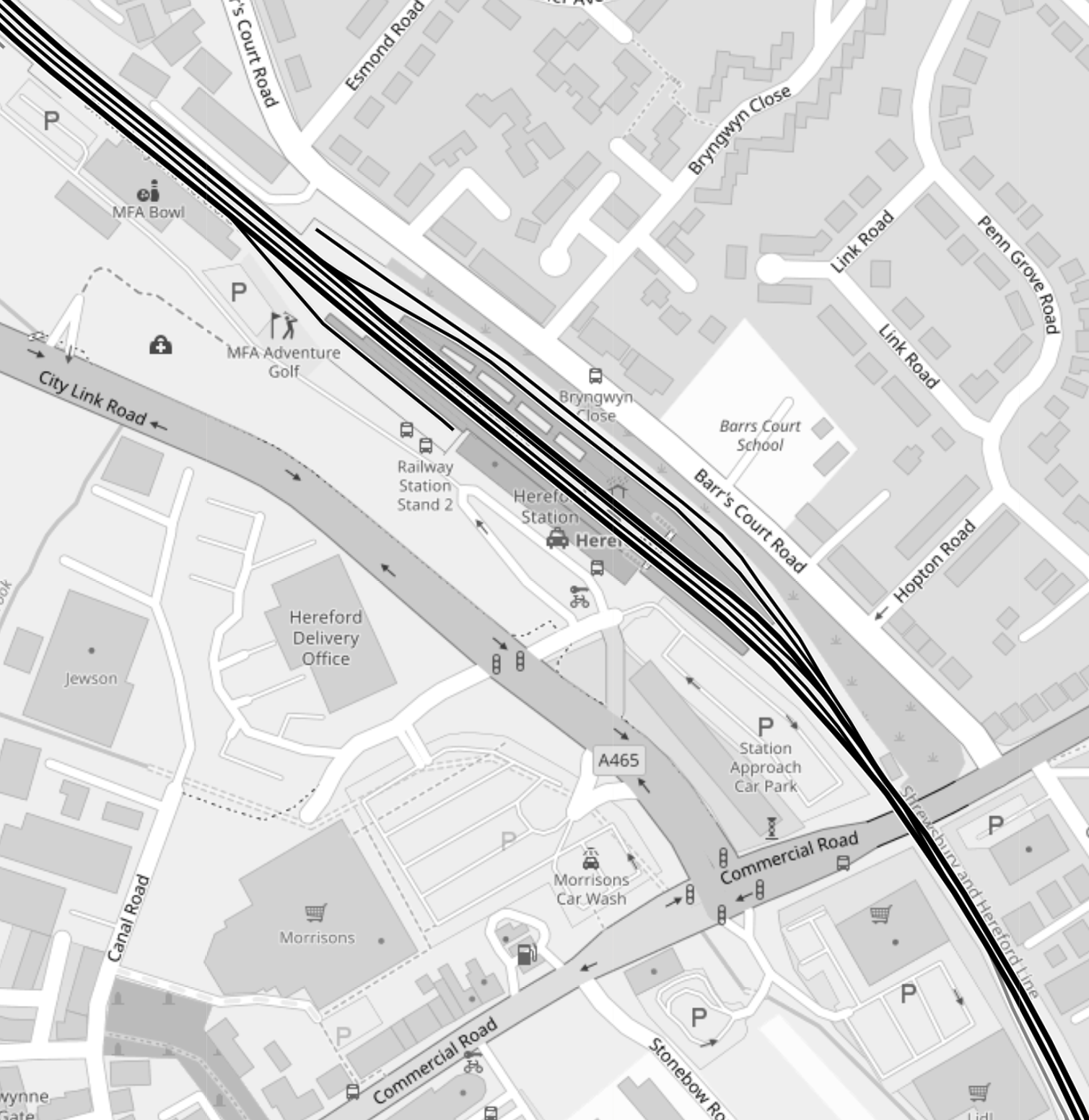
I’m certain that a platform can be found, where there is space for a charger, which could also be used for other trains serving the station.
Services To The South West
In the August 2023 Edition of Modern Railways, there is an article, which is entitled GWR Seeks Opportunities To Grow.
This is the sub-heading.
Managing Director Mark Hopwood tells Philip Sherratt there is plenty of potential to increase rail’s economic contribution.
This is two paragraphs.
The desire to provide electrification to support aggregates traffic from the Mendip quarries could also benefit GWR , says Mr. Hopwood. ‘Having an electric loco would massively help with pathing heavy freight trains through the Thames Valley. If you could electrify from Newbury to East Somerset Junction, a big chunk of the Berks and Hants route would be wired.
Then you can ask how much further you could get on battery power on an IET without running out of juice.’
Newbury to East Somerset Junction would be 53.5 miles of electrification, so I can build this table of services to the South-West
- Exeter St. Davids via Newbury – 120.4 miles – 66.9 miles
- Paignton via Newbury – 148.7 miles – 95.2 miles
- Penzance via Newbury – 251.9 miles – 198.5 miles
- Plymouth via Newbury – 172.6 miles – 119 miles
Note.
- The distance between Penzance and Plymouth is 79.5 miles.
- The first figure in the table is the distance to Newbury.
- The second figure in the table is the distance to East Somerset junction.
A possible way of running these four services to London on battery power is emerging.
- Exeter St. Davids via Newbury – Charge before return – Run on battery for 66.9 miles to East Somerset junction.
- Paignton via Newbury – Charge before return – Run on battery for 95.2 miles to East Somerset junction.
- Penzance via Newbury- Charge before return – Run on battery for 79.5 miles to Plymouth – Charge at Plymouth – Run on battery for 119 miles to East Somerset junction.
- Plymouth via Newbury – Charge before return – Run on battery for 119 miles to East Somerset junction.
Once at East Somerset junction, it’s electrification all the way to Paddington.
This is the corresponding way to run services from London.
- Exeter St. Davids via Newbury – Run on electrification to East Somerset junction, charging the battery on the way – Run on battery for 66.9 miles to Exeter St. Davids.
- Paignton via Newbury – Run on electrification to East Somerset junction, charging the battery on the way – Run on battery for 95.2 miles to Paignton.
- Penzance via Newbury – Run on electrification to East Somerset junction, charging the battery on the way – Run on battery for 119 miles to Plymouth – Charge at Plymouth – Run on battery for 79.5 miles to Penzance.
- Plymouth via Newbury – Run on electrification to East Somerset junction, charging the battery on the way – Run on battery for 119 miles to Plymouth.
More electrification or a larger than a hundred mile traction battery would be needed, as Plymouth and East Somerset junction is 119 miles.
But if a Stadler Akku can do 139 miles on a charge, why shouldn’t a Hitachi battery-electric train?
Services To West Wales
It seems that the current timetable is already setup for battery-electric trains to run to and beyond Swansea.
- Carmarthen and Swansea is almost exactly 32 miles.
- Pembroke Dock and Swansea is 73.4 miles.
- Swansea and Cardiff Central is 45.7 miles.
Note
- All these sections could be run by a battery-electric train, with a fully-charged hundred mile traction battery.
- All trains going to or from Carmarthen or Pembroke Dock reverse at Swansea, where a generous time of more than eleven minutes is allowed for the manoeuvre.
- During the reverse at Swansea, there is sufficient time to charge the batteries, if overhead wires were present.
Battery-electric services could serve Wales Wales with overhead electrification at Carmarthen, Pembroke Dock and Swansea.
Conclusion
We will go a long way, if we embrace battery-electric trains.
Most routes can be handled with a train with a traction battery range of 100 miles.
Exceptions are.
- Hazel Grove and Cleethorpes – 104.6 miles
- Plymouth and East Somerset junction – 119 miles
But if a Stadler Akku can do 139 miles on a charge, why shouldn’t a Hitachi battery-electric train?
Could Train Services At Liverpool Lime Street Station Be Made Carbon-Free?
This map from OpenRailwayMap shows Liverpool Lime Street station.

Note.
- There are ten platforms, which are arranged in two sets of five.
- Electrified tracks are shown in red.
- The lilac track is the loop of the underground Wirral Line.
It would appear that the station is fully electrified.
Services To And From Liverpool Lime Street
These services currently run to and from Liverpool Lime Street station.
- Avanti West Coast – London Euston – 1 tph – Electric
- East Midlands Railway – Norwich – 1 tph – Diesel – Electrified to Liverpool South Parkway – 25.2 miles to electrification at Trafford Park.
- London Northwestern Railway – Birmingham New Street – 1 tph – Electric
- Northern – Blackpool North – 1 tph – Electric
- Northern – Manchester Airport – 1 tph – Electric
- Northern – Manchester Oxford Road – 1 tph – Diesel – Electrified to Liverpool South Parkway – 25.2 miles to electrification at Trafford Park.
- Northern – Warrington Central – 1 tph – Diesel – Electrified to Liverpool South Parkway – 12.7 miles to Warrington Central.
- Northern – Wigan North Western – 2 tph – Electric
- TransPennine Express – Cleethorpes – 1 tph – Electric – Electrified to Liverpool South Parkway – 25.2 miles to electrification at Trafford Park.
- TransPennine Express – Glasgow – 2 tpd – Electric
- TransPennine Express – Hull – 1 tph – Electric
- TransPennine Express – Newcastle – 1 tph – Electric
- Transport for Wales – Chester – 1 tph – Diesel – Electrified to Runcorn – 13.9 miles to Chester.
Note.
- tpd is trains per day
- tph is trains per hour
- There are nine electric services and four diesel services.
It looks to me, that by using battery-electric trains on the four diesel services, Liverpool Lime Street station can be made carbon-free.
Distances on battery power for each service would be as follows.
- East Midlands Railway – Norwich – Both ways – 25.2 miles between Liverpool South Parkway and Trafford Park with charging at both ends.
- Northern – Manchester Oxford Road – Both ways – 25.2 miles between Liverpool South Parkway and Trafford Park with charging at both ends.
- Northern – Warrington Central – Both ways – 12,7 miles between Liverpool South Parkway and Warrington Central with charging between Liverpool Lime Street and Liverpool South Parkway.
- Transport for Wales – Chester – Both ways – 13.9 miles between Runcorn and Chester with charging between Liverpool Lime Street and Runcorn.
Note the flexibility of battery-electric trains allows a variety of charging regimes.
Conclusion
Liverpool Lime Street Station can be made carbon-free
TransPennine Express Releases Blueprint For Improving Service And Fleet Upgrade
The title of this post, is the same as that of this article on Rail Technology Magazine.
This is the sub-heading.
TransPennine Express (TPE), which transferred to the government’s owning group (DOHL) earlier this year, has set out its plans to address many of the issues which have caused problems and disruption for rail customers.
These three paragraphs summarize their plans.
Making Journeys Better: A Prospectus gives clear detail of the issues TPE has faced during the past two years as well as outlining how TPE, under DOHL, will work to make things better, having completed an in-depth review of the business.
Part of the plans involve the operators plans for its new fleet. Its New Trains Programme outlines its long term view for decarbonisation. The report states that TPE will look towards new technology on its fleet to overcome the lack of clarity on the full electrification of the line.
This, it states will help with the cascading and removal of diesel trains faster across its network.
It always looked to me, that TPE under First Group, brought rather a dog’s breakfast of trains, when a unified fleet of Class 802 trains, as per Hull Trains, might have been easier to operate.
- They are already retiring the Class 68 locomotives and their Mark 5 coaches, so surely to decarbonise their services, a number of battery electric high speed trains would be an idea.
- They are already testing Class 802 battery-electric trains for Hitachi and Eversholt Rail.
- I also feel that CAF could offer a suitable battery-electric train, based on the Class 397 train.
TPE say in the example, that they expect a decision later in the month.
TransPennine Express Services And Battery Electric Trains
These are their services and how they would be effected by battery-electric trains.
- Liverpool Lime Street And Newcastle – Fully-electrified after TransPennine Upgrade.
- Liverpool Lime Street And Hull – Fully-electrified after TransPennine Upgrade.. – 42 miles unelectrified – Service could be run by a battery-electric train that charged between Leeds and Micklefield.
- Manchester Airport and Saltburn – Fully-electrified between Manchester Airport and Northallerton after TransPennine Upgrade. – 33.6 miles unelectrified – Service could be run by a battery-electric train that charged between Leeds and Northallerton. Would eliminate overnight noise problems at Redcar.
- Manchester Piccadilly and Newcastle – Fully-electrified after TransPennine Upgrade.
- Manchester Piccadilly and Scarborough – Fully-electrified between Manchester Piccadilly and York after TransPennine Upgrade. – 42.1 miles unelectrified – Service could be run by a battery-electric train that charged between Leeds and York.
- York and Scarborough – Electrified at York – 42.1 miles unelectrified – Service could be run by a battery-electric shuttle train that charged at York.
- Manchester Piccadilly and Huddersfield – Electrified at Manchester Piccadilly – 25.5 miles unelectrified – Service could be run by a battery-electric shuttle train that charged at Manchester Piccadilly.
- Leeds and Huddersfield – Electrified at Leeds – 17.2 miles unelectrified – Service could be run by a battery-electric shuttle train that charged at Leeds.
- Liverpool Lime Street and Cleethorpes – 125,6 miles unelectrified – In Electrification Of The Hope Valley Line, I show how this route can be run by battery-electric trains that charged on existing electrification a short new section of electrification at Cleethorpes.
Note.
- If Manchester Victoria and Huddersfield, is not electrified, battery-electric trains would be able to cross the 25.8 miles of unelectrified track on battery power.
- If Leeds and Huddersfield, is not electrified, battery-electric trains would be able to cross the 17.2 miles of unelectrified track on battery power.
- I am assuming that the TransPennine Upgrade between Manchester and Leeds will be completed, so that between Liverpool Lime Street and Leeds is fully-electrified.
- The only new infrastructure needed would be electrification at Cleethorpes to charge the trains.
All services except for Liverpool Lime Street and Cleethorpes could be run using battery-electric trains with a range on a full battery of at least 100 miles and with no additional electrification.
Electrifying Cleethorpes Station
This Google Map shows Cleethorpes station.
These pictures show the station in June 2023, when it appears to be going through a platform refurbishment.
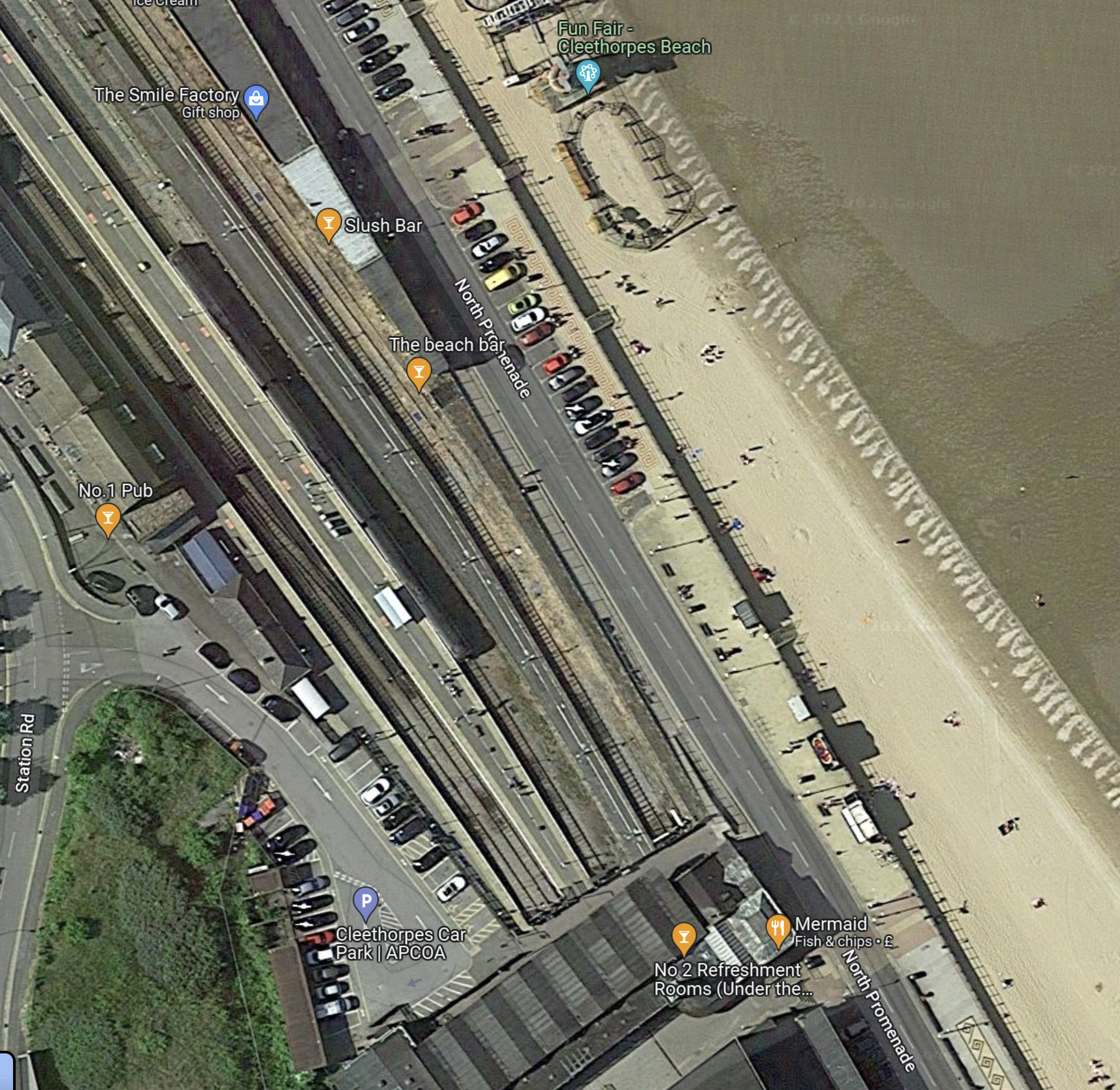
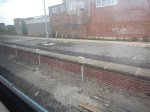
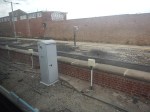
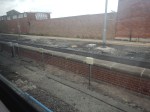
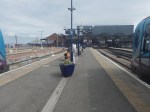
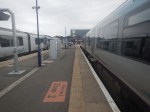
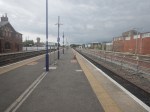
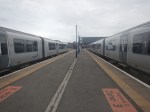
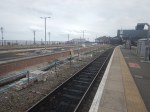
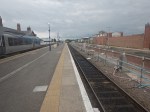
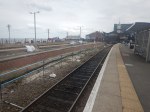
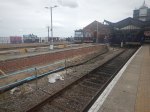
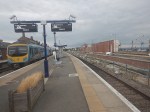
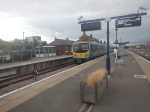
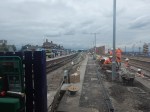
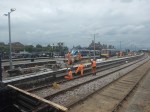
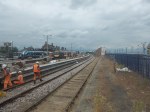
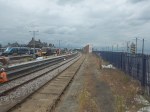
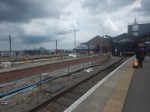
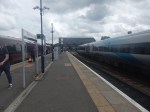
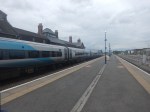
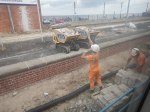
I don’t think it would be the most difficult station to electrify.
- There are four platforms.
- As the station is likely to get more battery-electric services, including one from King’s Cross, I would suspect that at least three out of the four platforms would be electrified.
- Although, the station is Grade II Listed, there doesn’t appear to be any canopies or important architectural details, that would get in the way of electrification.
Once Cleethorpes station had been successfully electrified, similar installations could be applied at other stations like Saltburn, Scarborough and Skegness.
Conclusion
If TransPennine Express were to buy the right number of battery-electric trains with a hundred mile range, they can decarbonise all their routes in a train factory.
Could Sheffield Station Become A Battery-Electric Train Hub?
Promised Improvements To Train Services At Sheffield
This news story from the Department of Transport is entitled Yorkshire And The Humber To Benefit From £19.8 billion Transport Investment.
Sheffield station gets several mentions of improvement to these routes.
Sheffield And Hull
This is said about train services between Sheffield and Hull.
The number of trains between Hull and Sheffield will be doubled, to 2 per hour, with capacity also doubled.
These points describe typical current services.
- The route is 59.4 miles long.
- Modern Class 170 trains take 78 minutes.
- There are stops at Meadowhall, Doncaster, Goole and Brough.
- The maximum speed of the line is mostly around 70 mph, with one short section of 100 mph.
- The average speed is 45.7 mph.
- The train continues to Scarborough after a six-minute stop at Hull.
I believe that if this route were to be electrified, that a time around an hour would be possible between Sheffield and Hull.
Sheffield and Scarborough takes two hours and 45 minutes. With electrification, this time could be less than two hours and 30 minutes.
But it would be around 113 miles of new double-track electrification.
I believe that Sheffield and Hull is a route that could be run by battery-electric trains, that would be charged at both ends of the route.
Sheffield And Leeds
This is said about train services between Sheffield and Leeds.
The line between Sheffield and Leeds will be electrified and upgraded, giving passengers a choice of 3 to 4 fast trains an hour, instead of 1, with journey times of 40 minutes. A new mainline station for Rotherham will also be added to the route, which could give the town its first direct service to London since the 1980s, boosting capacity by 300%.
These points describe typical current services.
- The route is 41.1 miles long.
- Modern Class 195 trains take 56 minutes.
- There is a few miles of electrification at the Leeds end.
- There are stops at Meadowhall, Barnsley and Wakefield Kirkgate.
- The maximum speed of the line is mostly around 60-70 mph.
- The average speed is 44 mph.
I believe that if this route were to be electrified, that a time around fifty minutes might be possible between Sheffield and Leeds.
That is not really good enough, but if they went through a new mainline station for Rotherham, the trains would be able to use 100 mph tracks all the way to Leeds. There would also be electrification between South Kirby junction and Leeds.
I suspect forty minutes should be possible with 100 mph running between Rotherham and Leeds.
I believe that Sheffield and Leeds is a route that could be run by battery-electric trains, that would be charged at both ends of the route.
Sheffield And Manchester
This is said about train services between Sheffield and Manchester.
The Hope Valley Line between Manchester and Sheffield will also be electrified and upgraded, with the aim of cutting journey times from 51 to 42 minutes and increasing the number of fast trains on the route from 2 to 3 per hour, doubling capacity.
In Electrification Of The Hope Valley Line, I talked about electrification of the line and how the services on the line could be run by battery-electric trains.
This was my conclusion in the linked post.
I believe that full electrification of the Hope Valley Line is not needed, if battery-electric trains are used.
I also believe that battery-electric trains and the current improvements being carried out on the Hope Valley Line will enable a forty minute time between Manchester Piccadilly and Sheffield.
I believe that the Hope Valley Line could be speeded up, by the use of intelligent engineering, rather than expensive and disruptive electrification.
Don Valley Line
This is said about the Don Valley Line.
Communities will be reconnected through the reopening of lines and stations closed under the Beeching reforms of the 1960s. This will include the restoration of the Don Valley Line between Stocksbridge and Sheffield Victoria, and new stations at Haxby Station, near York, Waverley, near Rotherham, and the Don Valley Line from Sheffield to Stocksbridge.
I’ve talked about the Don Valley Line before in Reopening The Don Valley Section Of The Former Woodhead Line Between Stocksbridge and Sheffield Victoria To Passenger Services.
The Don Valley Line has a comprehensive Wikipedia entry, which is well worth a read.
Could the Don Valley Line be worked by battery-electric trains?
It would appear that these promised improvements to and from Sheffield could be worked by battery-electric trains.
Now that battery-electric trains are being developed, it could also have services, using these trains.
Could Battery-Electric Trains Improve Other Services At Sheffield?
These are some possibilities.
Chesterfield And Sheffield Victoria
This news story from the Department of Transport is entitled East Midlands To Benefit From £9.6 billion Transport Investment.
This news story also talks about the Stocksbridge Line and Sheffield Victoria, where this is said.
Funding will also be provided for the Barrow Hill Line between Chesterfield and Sheffield Victoria, with a new station at Staveley in Derbyshire.
I wrote about the Barrow Hill Line in Reinstatement Of The Barrow Hill Line Between Sheffield And Chesterfield.
In the related post, this was my conclusion.
This looks to be a very sensible project.
- It could be run with either trains or tram-trams.
- It should be electrified, so it could be zero-carbon.
- Tram-trains could be used to make stations simpler.
- It could give an alternative route for electric trains to Sheffield station.
- The track is already there and regularly used.
But surely the biggest reason to built it, is that it appears to open up a lot of South and South-East Sheffield and North-East Chesterfield for development.
Now that battery-electric trains are being developed, Chesterfield and Sheffield could also have services, using these trains.
Sheffield And Adwick
Nothing is said in the news story about train services between Sheffield and Adwick.
Consider.
- Sheffield and Adwick is 22.7 miles.
- Journeys take fifty minutes.
- There are seven intermediate stations.
- This is an average speed of 27.2 mph.
- Adwick and Doncaster is 4.4 miles and electrified.
- There are generous turn-round times at both ends of the route.
- There are rather unusual reversing arrangements at Adwick.
I wonder if electric trains on this route, would knock a few minutes off the journey time because of the better acceleration and deceleration of electric trains.
Could this route be another route from Sheffield suitable for battery-electric trains?
- The train could fully charge between Adwick and Doncaster and at Adwick.
- It is only a short route with a round trip under sixty miles.
I believe this route could be very suitable for battery-electric trains.
Sheffield And Huddersfield
Nothing is said in the news story about train services in the Penistone Line between Sheffield and Huddersfield.
Consider.
- Sheffield and Huddersfield is 36.4 miles.
- Journeys take one hour and nineteen minutes.
- There are fifteen intermediate stations.
- This is an average speed of 27.6 mph.
- Huddersfield is being electrified as part of the TransPennine Upgrade.
I wonder if electric trains on this route, would knock a few minutes off the journey time because of the better acceleration and deceleration of electric trains.
Could this route be another route from Sheffield suitable for battery-electric trains?
Sheffield And Lincoln
Nothing is said in the news story about train services between Sheffield and Lincoln.
Consider.
- Sheffield and Lincoln is 48.5 miles.
- All Sheffield and Lincoln services start in Leeds.
- Journeys take one hour and twenty-five minutes.
- There are nine intermediate stations.
- This is an average speed of 34.2 mph.
- There is no electrification.
- Turn-round time at Lincoln is 26 minutes.
- All trains terminate in Platform 5 at Lincoln.
I wonder if electric trains on this route, would knock a few minutes off the journey time because of the better acceleration and deceleration of electric trains.
Could this route be another route from Sheffield suitable for battery-electric trains?
- Platform 5 could be electrified at Lincoln.
- There may need to be a battery top-up at Sheffield and Leeds.
I believe this route could be very suitable for battery-electric trains.
Electrification Between Sheffield And London
Consider.
- The Midland Main Line electrification is creeping up from London.
- It should soon be installed between St. Pancras and Market Harborough.
- Sheffield and Market Harborough is 81.9 miles.
- The Class 810 trains that will run the Sheffield and London route can’t be far off entering service.
There might be scope for running battery-electric trains on the route, until the electrification is complete.
A Battery-Electric Train Hub At Sheffield
I believe that a fair proportion of services to and from Sheffield could be run using battery-electric trains or bog-standard electric trains.
This OpenRailwayMap shows the platforms at Sheffield.

Note.
- The lilac tracks are those of the Sheffield Supertram.
- The darker lines are the tracks in the station.
- Tracks could be electrified as required.
Eventually, Sheffield will be a fully-electrified station, because of the Midland Main Line electrification.
But why not do it sooner rather than later, so that by running new or refurbished battery-electric trains to places like Huddersfield, Hull, Leeds, Lincoln, London and Manchester?
- Services would be speeded up by around a minute or two for each stop.
- Faster journeys may attract more passengers.
- Routes would be creating less carbon emission and pollution.
- In some cases, routes would be zero carbon.
Some routes would need electrification at the terminal to charge the trains, but Leeds, London St. Pancras and Manchester are already fully electrified.
Charging Long Distance Battery-Electric Trains When They Stop In Sheffield
These long distance services stop in Sheffield.
- CrossCountry – Plymouth and Edinburgh
- CrossCountry – Reading and Newcastle
- East Midland Railway – London and Leeds
- East Midland Railway – Liverpool Lime Street and Norwich
- Northern – Leeds and Lincoln
- Northern – Leeds and Nottingham
- Northern – Sheffield and Cleethorpes
- TransPennine Express – Liverpool Lime Street and Cleethorpes
battery-electric trains could be given a top-up, as they pass through.
I am assuming that CrossCountry, East Midland Railway, Northern and TransPennine Express will be running suitable battery-electric trains.
Battery-Electric Train Hubs
To be a battery-electric train hub, a station probably needs to have all or nearly all of its platforms electrified.
- It should be able to fully-charge any battery-electric trains terminating in the station, provided that the turn-round time is long enough.
- It should be able to give a through battery-electric train a boost if required, so that it gets to the final destination.
It would appear that there are already several battery-electric train hubs in the England, Scotland and Wales.
This map from OpenRailwayMap shows Liverpool Lime Street station, with electrified tracks shown in red.
It would appear that the station is fully electrified and is an excellent battery-electric train hub.
This map from OpenRailwayMap shows Manchester Piccadilly station, with electrified tracks shown in red.

It would appear that the station is fully electrified, except for the Northernmost platform, and is an excellent battery-electric train hub.
This map from OpenRailwayMap shows Leeds station, with electrified tracks shown in red.
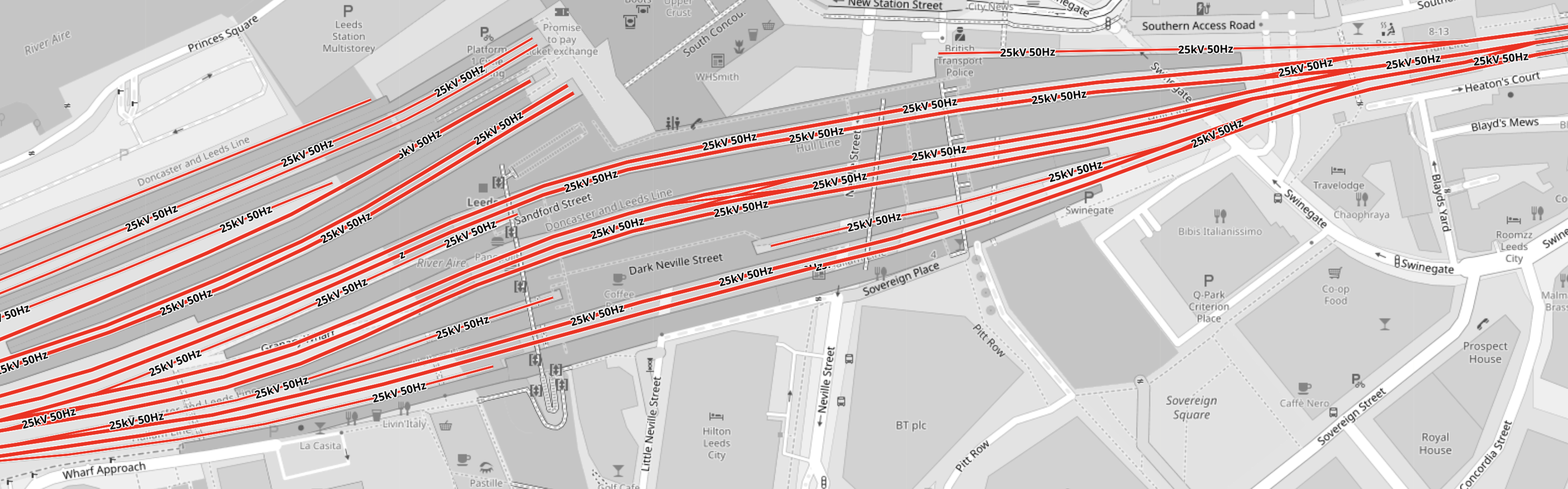
It would appear that the station is fully electrified and is an excellent battery-electric train hub, with twelve electrified bay platforms.
Conclusion
I can see a very comprehensive scheme being developed for Sheffield, based on a hub for battery-electric trains at Sheffield station.
Improvements To Leeds And Hull Services
This news story from the Department of Transport is entitled Yorkshire And The Humber To Benefit From £19.8 billion Transport Investment.
This is said about Leeds and Hull services.
Hull will also be brought into the Northern Powerhouse Rail network, reducing journey time from Leeds from 58 minutes to just 48. The number of trains between Hull and Sheffield will be doubled, to 2 per hour, with capacity also doubled. Journeys from Hull to Manchester will drop from 115 to 84 minutes, enabling 2 fast trains to Leeds.
I shall look at the 10:15 Northern Trains service between Hull and Leeds on the 13th October 2023.
- The distance is 51.8 miles.
- There are seven stops.
- The service is run by a diesel Class 158 train.
- Journey time is 69 minutes.
Ten minutes off this time would be worthwhile.
I shall look at the 10:03 TransPennine Express service between Hull and Leeds on the 13th October 2023.
- There are two stops.
- The service is run by a diesel Class 185 train.
- Journey time is 54 minutes.
Ten minutes off this time would be difficult.
Note.
- The line between Micklefield and Leeds is being electrified.
- The distance between Hull and Micklefield is 42 miles.
- The route has a maximum speed of between 75 and 90 mph.
There is also an historic swing bridge at Selby, which would probably be difficult to electrify.
How Many Minutes Could Electric Trains Save Between Leeds and Hull?
Electric trains have better acceleration and deceleration, when compared to diesel trains, so two minutes per stop and for the acceleration and deceleration at Hull and Leeds, would give the following times.
- Northern Trains – 53 minutes
- TransPennine Express – 48 minutes
As electrification is not mentioned for between Leeds and Hull, the only electric trains, that could work the route will be battery-electric trains.
Battery-Electric Trains Between Leeds and Hull
Consider.
- TransPennine Express already have Class 802 trains, from which the battery-electric version is being developed.
- Northern Trains would need a suitable battery-electric train. There has been talk of a CAF battery-electric Class 331 train, but nothing more. These would surly be ideal.
- Trains could be charged on new electrification in Hull station and between Micklefield and Leeds.
The trains would need a range of just 42 miles.
A Second Fast Train Between Leeds and Hull
What does this statement in the news story imply?
Journeys from Hull to Manchester will drop from 115 to 84 minutes, enabling 2 fast trains to Leeds.
I feel that this statement must be read in conjunction with the benefits of the TransPennine Route Upgrade.
One benefit is given as Faster Journeys, where this is said.
We’re speeding up journeys so you can travel to your favourite towns and cities more quickly. Our fastest journey times are forecast to be 63-66 minutes between Manchester and York and 41-42 minutes between Manchester and Leeds.
The news story says that the fastest journey times between Leeds and Hull will be 48 minutes, which would give a Hull and Manchester time of 89-90 minutes.
Alternatively, there could be these timings on one train.
- Hull and Leeds – 48 mins
- Hull and Manchester Victoria – 84 mins
- Leeds and Manchester Victoria – 36 mins
Note.
- The train would call at Brough, Selby, Leeds, Huddersfield and Stalybridge.
- There may be a new station at Leeds Thorpe Park
- The distance between Hull and Manchester Victoria is 94.7 miles.
- This is an average speed of 67.6 mph.
It almost looks like it’s connectivity East of Leeds and speed between Leeds and Manchester.
Conclusion
Battery-electric trains would provide all the improvements promised between Leeds and Hull.
A First Trip To Headbolt Lane Station – 13th October 2023
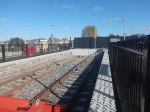
Headbolt Lane station opened a week ago and I went to take a look today, where I took these pictures.
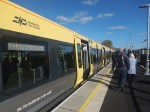

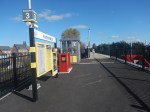

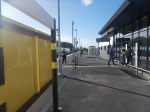
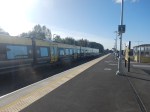


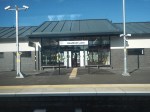

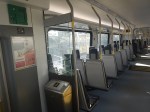
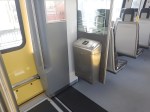

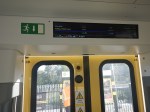


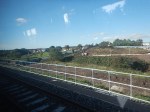
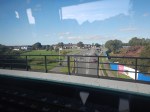

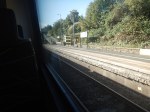


Note.
- It is a three-platform station, with two platforms pointing towards Liverpool and one towards Wigan Wallgate station.
- Changing trains is about a fifty metre walk.
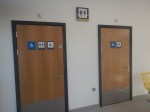
- The toilets are trans-ready. But the toilets at Peterborough station, that I wrote about in A Pair Of Toilets At Peterborough Station were too.
I have a few thoughts.
Could There Be Through Running Between Headbolt Lane and Wigan Wallgate Stations?
This picture shows the walkway between Platform 2 on the South side of the tracks and Platforms 1 and 3 on the North side.
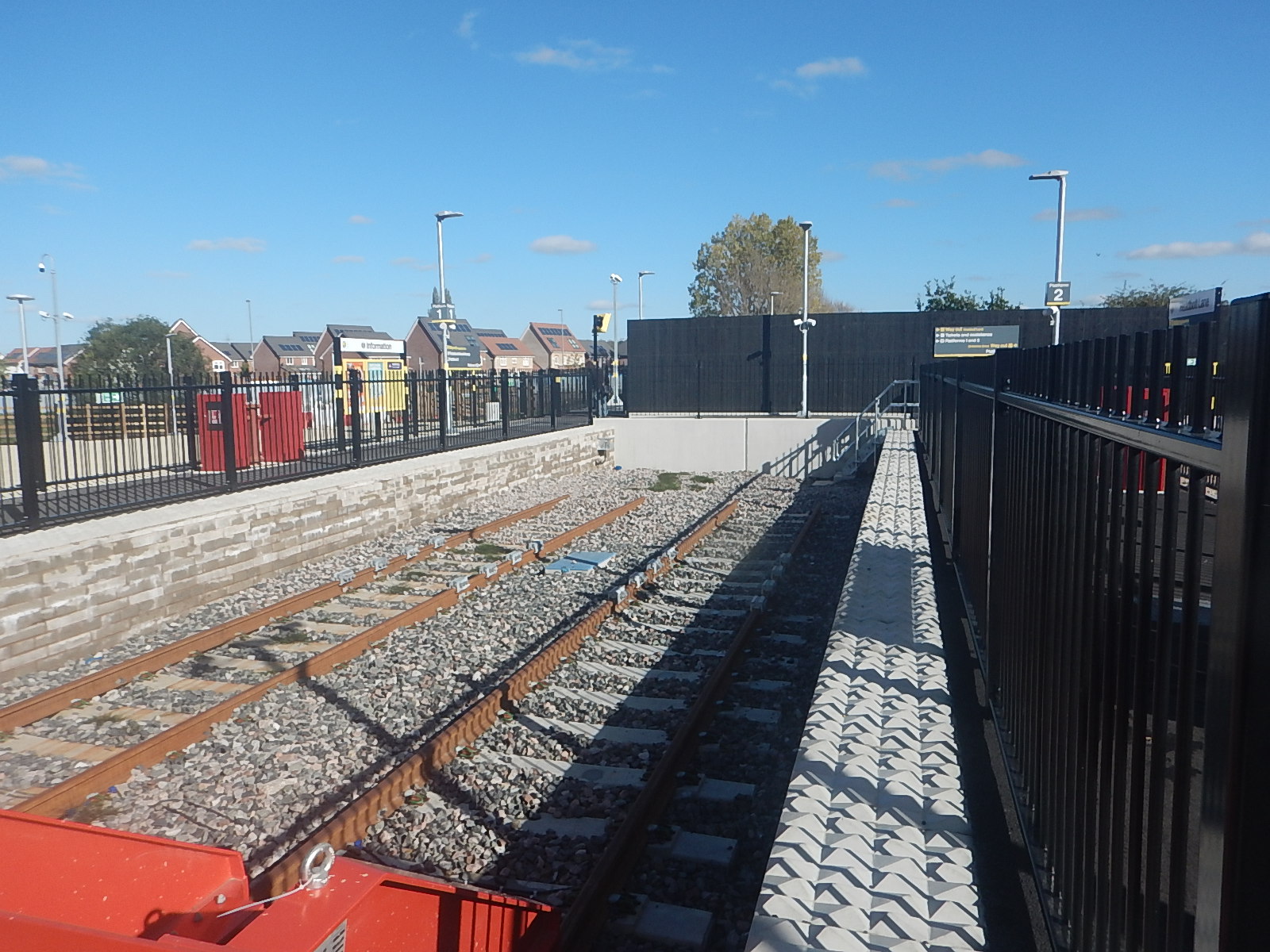
Note.
- Platform 1 is the platform on the left and Platform 2 is on the right.
- Platform 3 is in line with Platform 1 behind the fence at the far end of Platforms 1 and 2.
- The tracks don’t go straight through.
- There are two concrete blocks forming the walkway between platforms.
I suspect the answer is no at the moment.
But I wouldn’t be surprised to find, that the blocks have been designed to be lifted out and there is space to put a footbridge over the tracks, so that if in the future, through running were to be required, it is possible.
How Would A Station To Skelmersdale Be Connected?
In New Express Bus Improves Links Between Skelmersdale And Liverpool, I talked about a new express bus service between Kirkby and Skelmersdale.
This page on Bus Times gives details of the service.
The 319 Trainlink service will surely give useful information on possible passenger numbers.
In Would A Lower Cost Rail Link To Skelmersdale Be Possible?, I looked at options for the rail line.
Wigan’s Comprehensive Local Connections
Wigan North Western and Wigan Wallgate station have services to all these stations.
- Accrington
- Appley Bridge
- Ashton-under-Lyne
- Atherton
- Bescar Lane
- Blackburn
- Blackpool North
- Bolton
- Broad Green
- Bryn
- Burnley Manchester Road
- Burscough Bridge
- Clifton
- Daisy Hill
- Deansgate
- Eccleston Park
- Edge Hill
- Euxton Balshaw Lane
- Farnworth
- Garswood
- Gathurst
- Hag Fold
- Headbolt Lane
- Hindley
- Hoscar
- Huyton
- Ince
- Kearsley
- Leyland
- Littleborough
- Manchester Oxford Road
- Manchester Victoria
- Meols Cop
- Moorside
- Moses Gate
- New Lane
- Orrell
- Parbold
- Pemberton
- Poulton-le-Fylde
- Prescot
- Rainford
- Toby
- Rochdale
- Rose Grove
- Salford Central
- Salford Crescent
- Smithy Bridge
- Southport
- Stalybridge
- St Helens Central
- Swinton
- Todmorden
- Thatto Heath
- Upholland
- Walkden
- Wavertree Technology Park
- Westhoughton
Fifty-eight stations is certainly comprehensively connected.
The Connection To High Speed Two At Wigan North Western
This map from OpenRailwayMap shows the two Wigan stations; North Western and Wallgate.
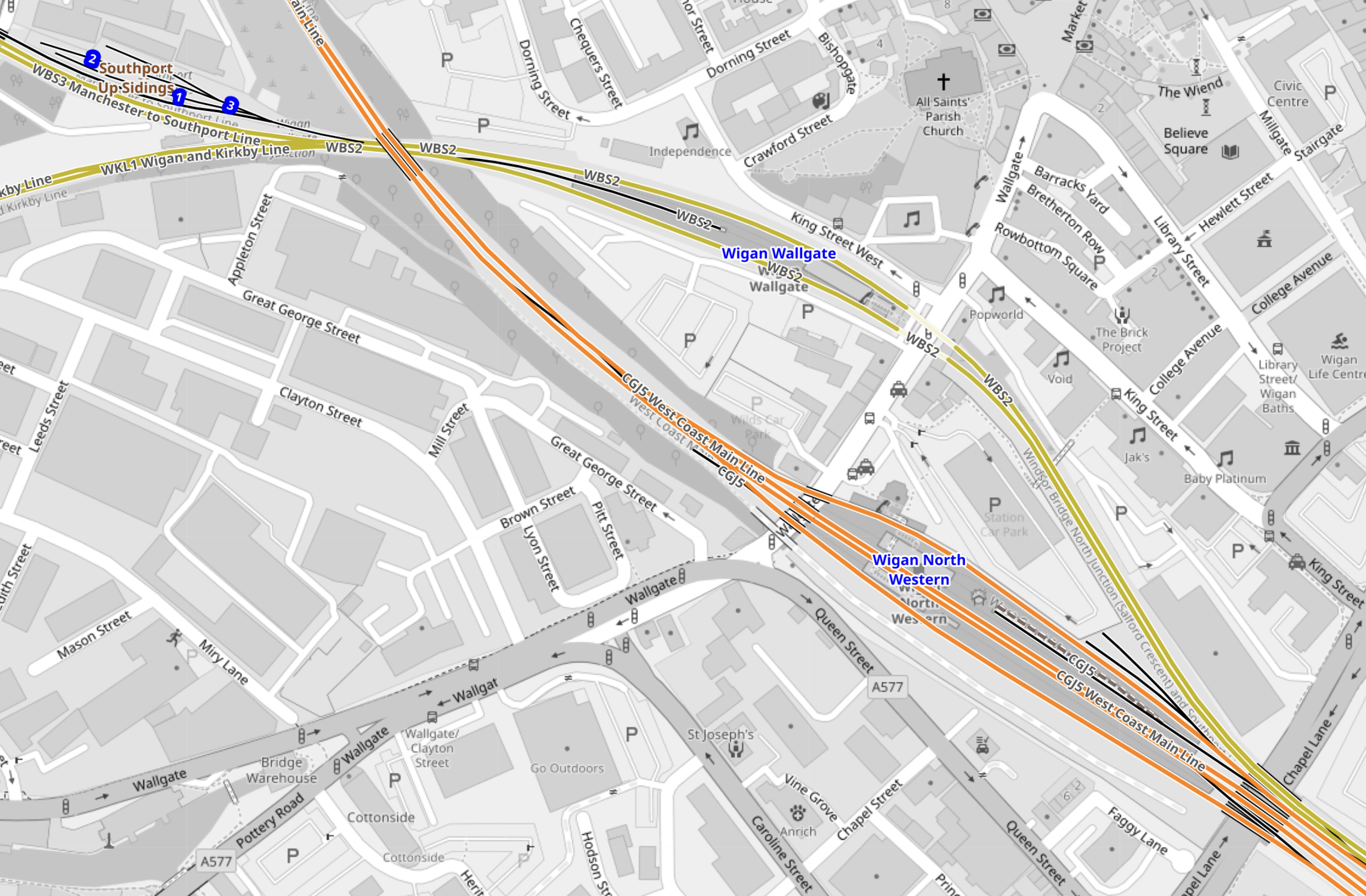
Note.
- The orange tracks are the West Coast Main Line, which in the future, will carry High Speed Two services to and from Preston, Lancaster, Carlisle and Scotland.
- The yellow tracks are the local lines between Manchester in the East and Kirkby and Southport in the West.
- The local lines split after they pass under the West Coast Main Line, with the North-Western branch going to Southport and the Western branch going to Headbolt Lane, Kirkby and Liverpool.
- Wigan North Western is on the West Coast Main Line.
- Wigan Wallgate is on the local lines.
The stations are close enough to be converted into a superb combined station, where local passengers can join high speed services.
This picture shows the platforms of Wigan North Western station.
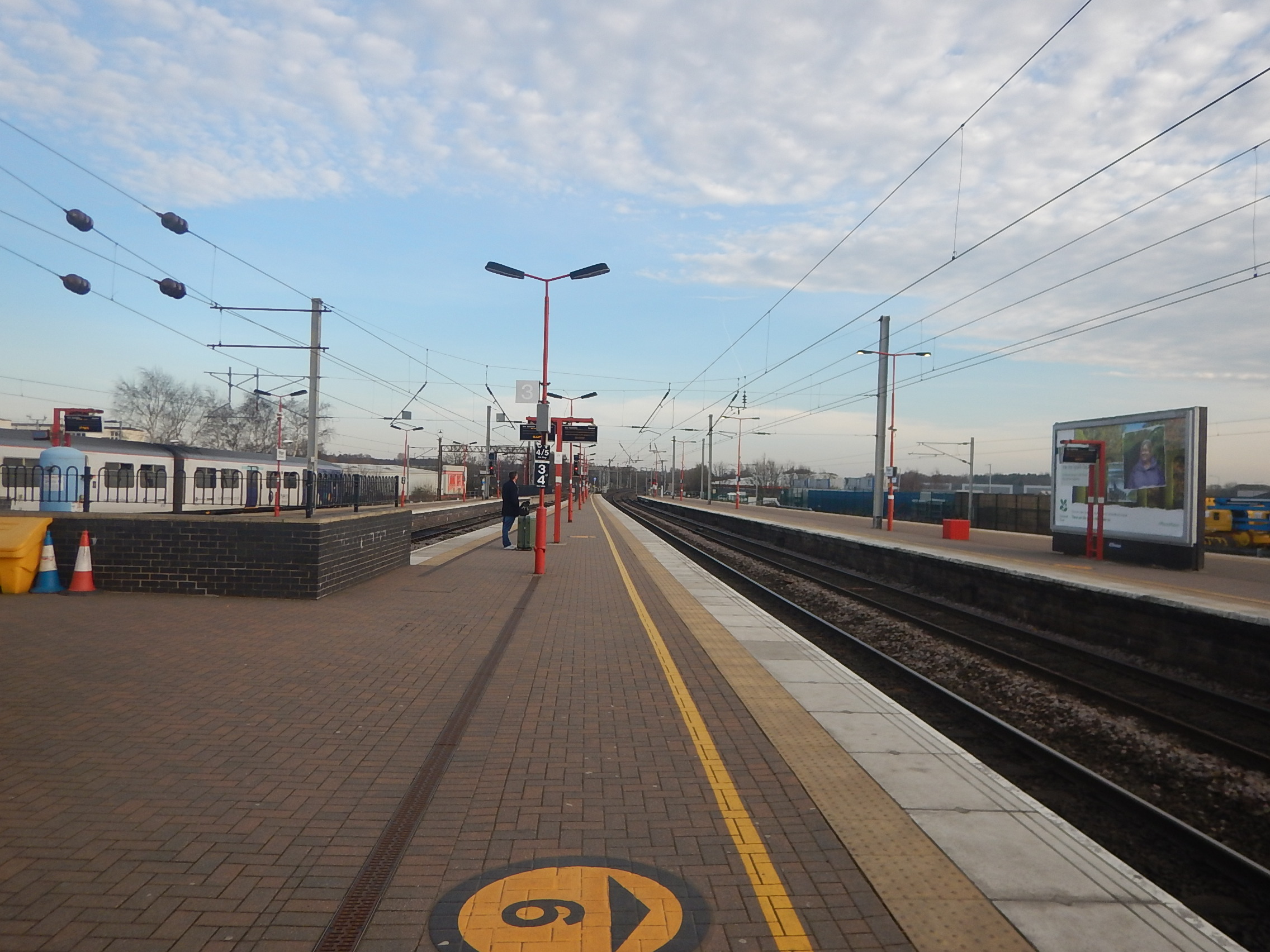
Wigan North Western station can’t be far off being able to accept pairs of High Speed Two Classic Compatible trains, that will be 400 metres long.
This graphic shows High Speed Two services after Phase 2b is completed.
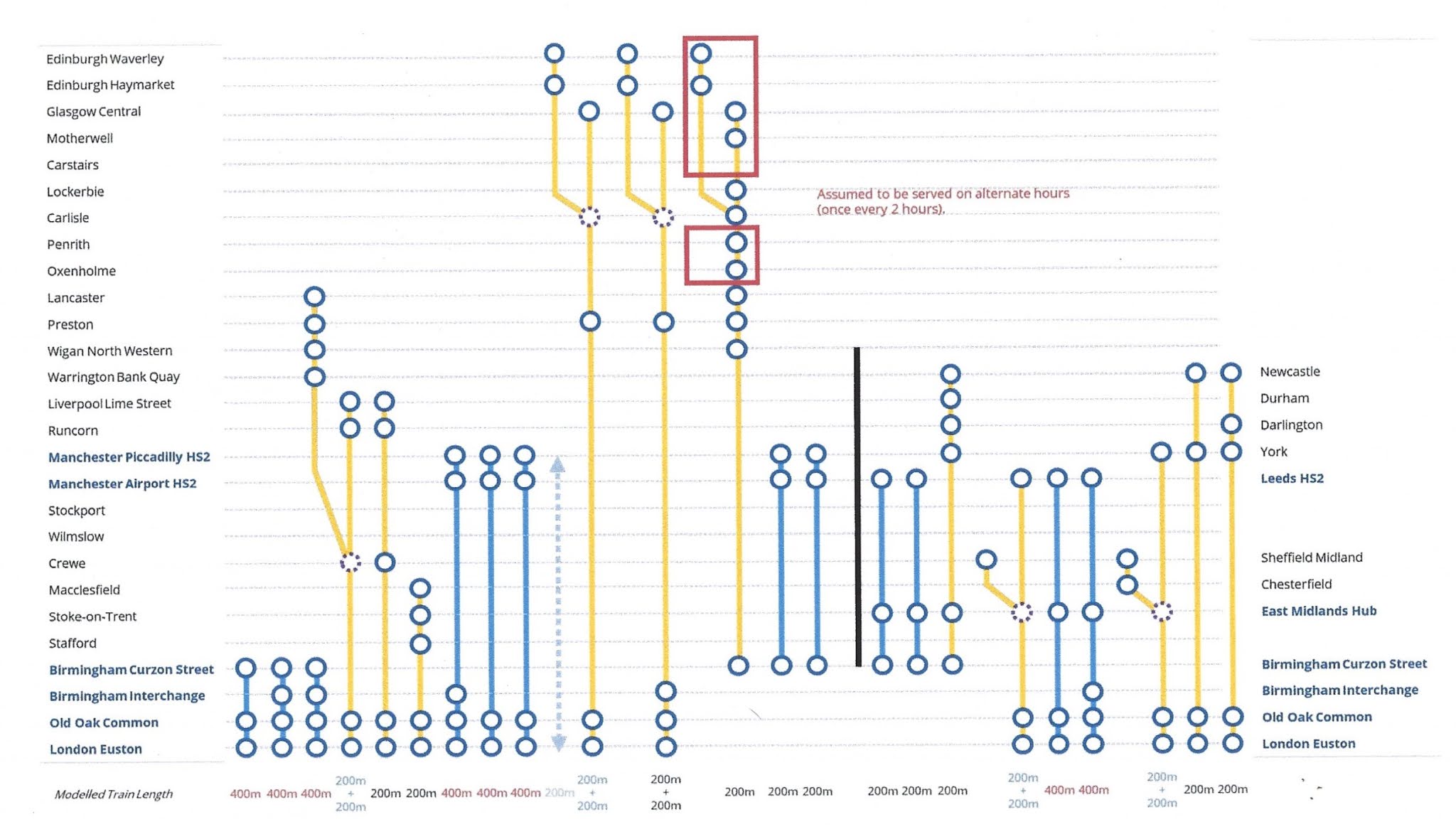
Only two High Speed Two services stop at Wigan North Western.
- The London and Lancaster service, which splits and joins with a London and Liverpool service at Crewe.
- The Birmingham and Scotland service.
As Wigan North Western has comprehensive local connections to the Northern areas of Liverpool and Manchester, it surely needs more services.
North West To Benefit From £19.8 billion Transport Investment
This is the title of this government document, which has this sub-heading.
Multibillion-pound plan to link major cities in the North via bus, rail and new and improved roads.
It says this about Greater Manchester and Liverpool City Region.
- Greater Manchester will also receive around £1.5 billion from the CRSTS2 budget and around £900 million additional funding – funded from HS2 – which is an unprecedented investment in local transport networks. That is more than double their allocation under the previous programme
- Liverpool City Region will also receive c.£1 billion from the CRSTS2 budget, plus a further £600 million on top – funded from HS2. That is more than double their allocation under the last round
Some of that amount of money could go a long way to improve Liverpool and Manchester connections through Wigan and create a link to High Speed Two.
TransPennine Services Between Liverpool/Manchester And Scotland
Currently, the following services run between Liverpool and Manchester, and Scotland.
- Manchester Airport and Glasgow Central – 1 tp2h – via Manchester Piccadilly, Manchester Oxford Road, Preston, Lancaster, Oxenholme Lake District, Penrith North Lakes, Carlisle, Lockerbie and Motherwell
- Manchester Airport and Edinburgh Waverley – 1 tp2h – via Manchester Piccadilly, Manchester Oxford Road, Preston, Lancaster, Oxenholme Lake District and Haymarket Penrith North Lakes, Carlisle and Lockerbie and Haymarket
- Liverpool Lime Street and Glasgow Central – 2 tpd – via St Helens Central, Wigan North Western, Preston, Lancaster, Oxenholme Lake District, Carlisle, Lockerbie and Motherwell
Note.
- tp2h is trains per two hours.
- tpd is trains per day.
- Only the Liverpool services go through Wigan.
- North of Preston all trains will use the same route.
- All three services are run by Class 397 trains.
- When High Speed Two Classic-Compatible trains start running to Glasgow and Edinburgh, they will use the same route North of Preston.
Point 5 surely means that High Speed Two’s trains will be limited to the same speed as the current Class 397 trains, which is 125 mph. Although, this might be increased to up to 140 mph, by the use of in-cab digital signalling.
Consider.
- Edinburgh to Preston is 191.4 miles.
- The current TransPennine express service from Edinburgh to Preston is scheduled for two hours and 34 minutes, with five stops, at an average speed of 74.6 mph.
- The Wikipedia entry for High Speed Two says that the London-Edinburgh service from Edinburgh to Preston is scheduled for two hours and 30 minutes, with two stops and a split/join at Carlisle, at an average speed of 76.6 mph.
- The Wikipedia entry for High Speed Two says that the Birmingham-Edinburgh service from Edinburgh to Preston is scheduled for two hours and 24 minutes, with four stops, at an average speed of 79.8 mph.
Note.
- The first timing is based on a Class 397 train and the others will be High Speed Two Classic Compatible trains.
- The times would appear to be vaguely in line with each other.
- The removal of the split/join could explain why the Birmingham service is six minutes faster.
The following would appear to be true.
- Both the Class 397 and High Speed Two Classic Compatible trains can run at similar speeds North of Preston.
- The High Speed Two Classic Compatible train may have faster acceleration and deceleration, which could save a few minutes.
- Nothing substantial has been done to improve the tracks between Edinburgh and Preston.
- As the current times are run without digital signalling and the Class 397 train, is within ten minutes of that, I would be very surprised if digital signalling will be installed before High Speed Two services reach Edinburgh.
I also suspect that if digital signalling and a few other improvements were made to the North of Preston, a few extra minutes could be saved.
The Future Of TransPennine Services Between Liverpool/Manchester And Scotland
Will the TransPennine services between Liverpool/Manchester and Scotland continue after High Speed Two services start running to North of the border?
Consider.
- I have never seen any plans from High Speed Two for services between Liverpool/Manchester and Scotland.
- If the TransPennine services, aren’t kept, travelling between Liverpool/Manchester and Scotland will need a change at Wigan North Western or Preston.
- The TransPennine services will probably need only a single train per hour (tph) on the West Coast Main Line to the North of Preston.
I can see them continuing. But possibly in a different form.
In 1967, I went from Glasgow to Manchester on a train.
- The Glasgow and Edinburgh trains joined at Carstairs.
- They then split again at Preston.
- One half went to Manchester and the other half went to Liverpool.
I remember that the train was late, because of late arrival of the Edinburgh train at Carstairs.
I needed to take a taxi. But I wrote my first complaint letter and got a cheque from British Rail.
Could similar joining and splitting be used again, as it uses only one train path between Preston and Scotland?
Would it also be better, if the service were to be under the Management of High Speed Two?
There are several possibilities, but I feel the TransPennine services will continue.
TransPennine Express To Stop Using Loco-Hauled Push-Pull Trains In December
The title of this post, is the same as that of this article on Railway Gazette.
This is the sub-heading.
TransPennine Express has confirmed that it will cease using its push-pull sets of Class 68 locomotives and MkVa coaches, previously designated Nova 3 sets, from the December 2023 timetable change.
These are my thoughts.
The Nova 3 Trains
Currently, the Nova 3 trains are made up from the following.
- 14 – Class 68 locomotives
- 52 – Mark 5a coaches
- 14 – Driving Van Trailers
Note.
- There have been complaints about the noise of the Class 68 locomotives at Scarborough and also at Marylebone with Chiltern Railways.
- The Class 68 locomotives could be switched to freight duties.
- The coaches are capable of 125 mph.
- A maximum of thirteen sets can be created.
- I suspect CAF wouldn’t object to being asked to build some more Mark 5a coaches and driving van trailers.
- The current fleet has a spare locomotive and a spare driving van trailer to allow for servicing.
All locomotives and coaches are a maximum of seven years old, so will have plenty of life left.
The Class 93 Locomotive
Rail Operations Group have ordered ten Class 93 locomotives, with twenty options, which have an impressive specification.
- Built by Stadler in Valencia.
- Same family as a Class 68 and 88 locomotive.
- Electric, diesel and battery power
- 110 mph operating speed
- Ability to pull passenger and freight trains.
- Delivery scheduled for 2023.
I believe that if the Class 68 diesel locomotive of a Nova 3 train, were to be replaced with a Class 93 locomotive, a very useful train would be created.
- It would be ten mph faster, than a Nova 3 train.
- It could use the diesel engine and the batteries to bridge gaps in electrification.
- By adding extra carriages it could be tailored to the needs of a route.
- In Vegetable Oil Fuelling Chiltern Railways Trains In UK First, I discuss how it might be possible to run all these locomotives on HVO to cut emissions.
- It could be quieter.
Could it be a simple way to reduce carbon emissions on a route?
The Successor To The Class 93 Locomotive
Stadler keep innovating in their designs for locomotives and are already building hydrogen-powered multiple units.
I can see Stadler coming up with a hydrogen-powered locomotive, with the following specification.
- In the same family as Class 68, 88 and 93 locomotives.
- Ability to do everything that Class 68, 88 and 93 locomotives can do.
- Ability to use 25 KVAC overhead electrification, where it exists.
- Ability to be able to be fitted with third-rail equipment, so it can use 750 VDC third-rail electrification, where it exists.
- At least a 110 mph operating speed.
- Range of at least 200 miles on hydrogen.
Stadler would sell a lot of these locomotives to decarbonise railways all over the world.
Possible Routes
These are possible routes for a rake of Mark 5a coaches hauled by a Class 93 locomotive or its zero-carbon successor.
Hull Trains
Consider.
- Hull Trains is an open access operator.
- Hull Trains currently have a fleet of five Class 802 trains, each of which have five-cars.
- A Class 93 locomotive has a power of 900 kW on diesel, whereas the Class 802 train has 2100 kW.
- The Class 802 train has nearly ten percent more capacity.
- In Ten-Car Hull Trains, I saw two Class 802 trains working as a pair. Does this indicate they have a capacity problem?
- Between Hull and the East Coast Main Line is only 36.1 miles and isn’t very challenging and I suspect could probably be easily handled by a Class 93-hauled rake of Mark 5a coaches.
- Adding extra coaches would not be difficult and would probably be less costly than with the more complex Class 802 trains.
- Hull Trains need to have a plan to decarbonise.
- HVO could be used to cut down emissions.
A Class 93-hauled rake of Mark 5a coaches could be an intermediate step to full decarbonisation with a hydrogen locomotive.
Would other operators of Class 802 trains like to increase their fleets, by adding Hull Trains’s five Class 802 trains?
TransPennine Express
Consider.
- TransPennine Express currently have four different fleets of trains, so it must cause problems with the allocation of drivers.
- The Class 397 trains are confined to the West Coast Main Line.
- So that leaves the bi-mode Class 802 trains and the diesel Class 185 trains to work the TransPennine routes.
The Wikipedia entry for the Class 802 train, gives more details of the plans for the Class 802 trains.
During October 2021, it was announced that TransPennine Express, Hitachi, and Angel Trains had agreed to convert one of the former’s Nova 1 trainsets into a battery hybrid train on a trial basis with the aim of supporting the technology’s further development. If successful, Hitachi and Angel Trains have proposed the retrofitting of the entire fleet. In January 2022, reports emerged that the Nova 1 fleet was operating under diesel power even when operating on entirely electrified sections of the East Coast Main Line on account of the insufficient power supplies present along the line; national railway infrastructure owner Network Rail is reportedly set to complete upgrades to the power supplies within two years.
The fleet is also set to benefit from the rollout of electrification under the Transpennine route upgrade scheme. The company’s management has noted that, in the event of largescale electrification being funded and implemented, the Class 802s could have some of their engines removed to reduce roughly 15% of their weight and thus raise their efficiency. Furthermore, Leo Goodwin, TPE’s managing director, has observed that while the Class 802s have an initial maximum speed of 125 mph (201 km/h), they have the capability of being modified for operating at 140 mph (230 km/h) if infrastructure upgrades were to permit such speeds at a future date.
Could an augmented fleet of battery-electric Class 802 trains handle the bulk of the TransPennine routes, with the shorter and unelectrified ones still being handled by the Class 185 trains?
These shorter routes are.
- Leeds and Huddersfield
- Manchester Piccadilly and Huddersfield
- York and Scarborough
Plans only exist to electrify Leeds and Huddersfield.
I suspect a few more battery-electric Class 802 trains would be needed.
Great Western Railway
Could a Class 93-hauled rake of Mark 5a coaches be used as a replacement for the GWR Castles or short-formation InterCity125s?
- They both have four passenger coaches.
- They are both 125 mph trains.
- A Class 68 locomotive could be used on routes without electrification.
- HVO could be used to cut down emissions.
- The Mark 5a coaches would probably be quieter, as they only have one diesel engine.
A Class 93-hauled rake of Mark 5a coaches could be an intermediate step to full decarbonisation with a hydrogen locomotive.
Alternatively, five-car Class 802 trains could be used as replacements for GWR Castles.
Great Western Railway also have the problem of decarbonising services between Bristol/Gloucester and Weymouth/Southampton/Portsmouth.
Great Western Railway look like they’re needing some innovative thinking.
I also suspect a few more battery-electric Class 802 trains would be needed for other routes.
Transport For Wales Rail
Transport for Wales Rail run a Premier Service between Holyhead and Cardiff using Class 67 locomotives and Mark 4 coaches.
According to the Wikipedia entry for Transport for Wales Rail, they have seven sets of 4/5 coaches to run this service.
If Transport for Wales Rail wanted to decarbonise this route, they would need to replace the locomotives for a zero-carbon unit.
Perhaps, their best solution, would be to wait until a suitable hydrogen-powered locomotive is available and buy seven rakes of new coaches with driving van trailers.
Grand Union
Grand Union has a detailed Wikipedia entry, where this is the first paragraph.
Grand Union is a prospective open access operator who are proposing to operate train services in the United Kingdom from England to Wales and Scotland. Grand Union is headed by Ian Yeowart, who founded previous open access operators Alliance Rail Holdings and Grand Central before selling both to Arriva.
That seems a sound foundation.
- They have permission to run trains between Paddington and Carmarthen starting in December 2024.
- They have also applied to run trains between Euston and Stirling.
- They are now backed by Spanish companies; Serena Industrial Partners and Renfe.
- They are proposing to use nine Mark 4 coaches hauled by Class 93 locomotives.
Consider.
- CAF has a factory in Wales.
- CAF has sold trains to Transport for Wales.
- The Mark 5a coaches will definitely be available by December 2024.
- Mark 5a coaches could easily be arranged as a rake of eight coaches and a driving van trailer.
- Grand Union is backed by Spanish companies.
I wouldn’t be surprised if Grand Union were to use sets of CAF-built Mark 5a coaches for their Carmarthen service. And later for their Stirling service.
A Class 93-hauled rake of Mark 5a coaches could be an intermediate step to full decarbonisation with a hydrogen locomotive.
Grand Central
Consider.
- Grand Central is another open access operator.
- Grand Central has a mixed fleet of twelve five-car diesel trains.
- These trains run under electrification on the East Coast Main Line.
- According to the Wikipedia entry for Grand Central trains, they have plans for expansion across the North and to and from London.
- Grand Central need to have a plan to decarbonise.
- HVO could be used to cut down emissions.
A Class 93-hauled rake of Mark 5a coaches could be an intermediate step to full decarbonisation with a hydrogen locomotive.
South Western Railway
South Western Railway have an excellent fleet of new or nearly new trains, with the exception of the diesel Class 158 and Class 159 trains, that work services between Waterloo and Exeter trains via Basingstoke and Salisbury.
- Waterloo and Exeter is 172 miles.
- Only the 47.7 miles between Waterloo and Basingstoke is electrified with 750 VDC third-rail electrification.
- Train lengths vary between five and eight cars.
- The current trains date from around 1990 and must need replacing soon.
I wouldn’t be surprised that if after a rebranding with new trains, this could be a popular route.
A version of Hitachi’s ubiquitous bi-mode Class 802 could be used.
But.
- They would need to be ordered and built.
- The third-rail gear, would need to be developed and tested.
- Passengers would be travelling for over two and a half hours with underfloor diesel engines.
An alternative could be a Class 68-hauled rake of Mark 5a coaches.
- These trains would be available after release from TransPennine Express.
- They would run in TransPennine Express formation.
- Length could be adjusted by adding or removing coaches, if required.
- The noise is all in the locomotive, which is isolated from the passengers.
At some point in the future, the route could be decarbonised by swapping the locomotive for a hydrogen-electric locomotive with the ability to handle third-rail electrification.
ScotRail
ScotRail have a similar problem to Great Western Railway with their short-formation InterCity125s.
- They have 52 Class 43 locomotives and 120 Mark 3 coaches, which is probably enough for 24 trains.
- Scotland has substantial amounts of electrification.
- I feel that a Class 68-hauled rake of Mark 5a coaches would be a more than adequate replacement.
- Class 93 locomotives could be used where routes are partially electrified.
- Scotland is not going to be short of green hydrogen.
When a suitable hydrogen-electric locomotive is available, these trains can be decarbonised.
CrossCountry
CrossCountry have a fleet consisting of the following trains.
- 5 – 2+7 InterCity125 trains
- 7 – two-car Class 170 trains
- 22 – three-car Class 170 trains
- 34 – four-car Class 220 trains
- 4 – four-car Class 221 trains
- 20 – five-car Class 221 trains
Note.
- The fleet is all diesel.
- I’ll ignore the Class 170 trains in this analysis.
- The Class 220 and 221 trains often work in pairs to provide the required capacity.
So how could these trains be decarbonised?
- The InterCity125s and the Class 220 and 221 trains could be replaced by a locomotive-hauled rake of Mark 5a coaches of an appropriate length.
- Motive power could be provided by an appropriate Class 68 or 93 locomotive.
When a suitable hydrogen-electric locomotive is available, these trains can be fully decarbonised.
Decarbonisation Of UK Main Line Services
It is generally assumed that the railways of the UK will need to fully decarbonise if the UK and the constituent nations are going to meet their decarbonisation targets.
I believe that my analysis shows that decarbonisation of main line passenger services can be achieved by the purchase of two types of trains.
- Five-car bi-mode Class 802 trains or similar.
- Locomotive-hauled rakes of Mark 5a coaches of an appropriate length.
Note.
- The Class 802 trains would be mainly to augment existing Hitachi fleets.
- Some Class 802 trains would be fitted with batteries instead of diesel generators to handle gaps in the electrification.
- The rakes of coaches would be powered by an appropriate locomotive.
- The lengths of the rakes of coaches would be adjusted to meet the demand of each service.
Initially, the following locomotives would be used.
- Class 68 locomotives would be used on unelectrified lines.
- Class 93 locomotives would be used on full or partially electrified lines.
When the hydrogen-electric locomotives become available, these would take over the routes, which couldn’t be decarbonised by full electrification or by using a Class 93 locomotive.
Liverpool Lime Street And Newcastle By Battery-Electric Class 802 Train
After my visit to Morley station, which I wrote about in Morley Station – 17th August 2023, in this post, I look at how a battery-electric Class 802 train might run between Liverpool Lime Street And Newcastle stations.
These are the various sections of the route.
- Liverpool Lime Street and Manchester Victoria – 31.6 miles – 36 minutes – Electrified
- Manchester Victoria and Huddersfield – 25.7 miles – 30 minutes – Not Electrified
- Huddersfield and Dewsbury – 8 miles – 7 minutes – Currently Being Electrified
- Dewsbury and Leeds – 9.1 miles – 14 minutes – Not Electrified
- Leeds and York – 25.8 miles – 30 minutes – Currently Being Electrified
- York and Newcastle – 80.2 miles – 58 minutes – Electrified
Note.
- Liverpool Lime Street and Manchester Victoria, Leeds and York and York and Newcastle are all long enough to fully charge a battery-electric train.
- There is electrification of both ends of the route.
- Manchester Victoria and York is a distance of 68.6 miles.
- The total route length is a distance of 180.4 miles.
In the August 2023 Edition of Modern Railways, there is an article, which is entitled GWR Seeks Opportunities To Grow.
This is the sub-heading.
Managing Director Mark Hopwood tells Philip Sherratt there is plenty of potential to increase rail’s economic contribution.
This is a paragraph.
Meanwhile, GWR had announced plans with Eversholt Rail to trial the replacement of a diesel generator unit with batteries on a Class 802 IET. However, Mr. Hopwood says this would not be useful for GWR and so the trial is not proceeding; instead, a TransPennine Express Class 802 will be the subject of a battery trial.
Could the trial be conducted on TransPennine Express’s Liverpool Lime Street And Newcastle route?
- The total route length is a distance of 180.4 miles.
- The two electrified sections at the ends of the route; Liverpool Lime Street and Manchester Victoria and York and Newcastle are both long enough to fully charge a battery-electric train.
- The central section between Manchester Victoria and York is not overly long at 68.6 miles.
- The route is convenient for Hitachi’s headquarters at Newton Aycliffe.
It looks like, the Liverpool Lime Street And Newcastle route would make an ideal test route for battery-electric Class 802 trains.
Manchester Piccadilly And Newcastle By Battery-Electric Class 802 Train
This is a very similar route to the Liverpool Lime Street And Newcastle route with a different Western terminal.
These are the various sections of the route.
- Manchester Piccadilly and Huddersfield – 25.5 miles – 42 minutes – Not Electrified
- Huddersfield and Dewsbury – 8 miles – 10 minutes – Currently Being Electrified
- Dewsbury and Leeds – 9.1 miles – 14 minutes – Not Electrified
- Leeds and York – 25.8 miles – 30 minutes – Currently Being Electrified
- York and Newcastle – 80.2 miles – 58 minutes – Electrified
Note.
- Turnround time at Manchester Piccadilly and York and Newcastle are all long enough to fully charge a battery-electric train.
- There is electrification of both ends of the route.
- Manchester Piccadilly and York is a distance of 68.4 miles.
- The total route length is a distance of 148.5 miles.
Like the Liverpool Lime Street And Newcastle route, I believe the Manchester Piccadilly And Newcastle route would make an ideal test route for battery-electric Class 802 trains.

