Greenfield Station – 16th December 2021
Greenfield station is the nearest station to the West of the Standedge tunnels. In my meanderings between Middlesbrough and Mirfield, I went to have a look.
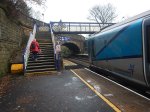
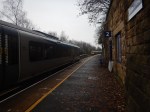
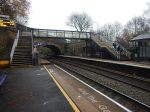
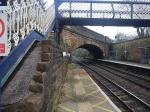
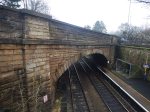
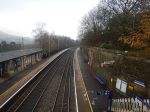
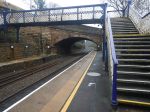
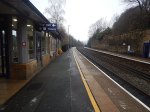
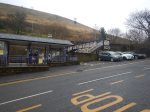
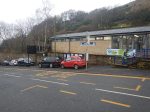
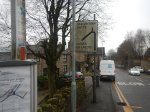
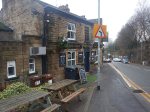

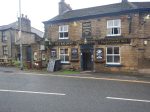
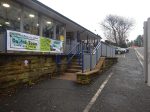
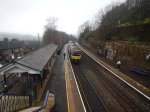
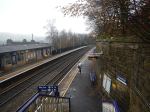
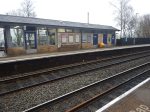
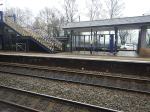
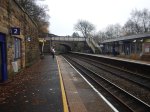
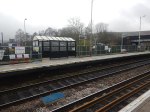
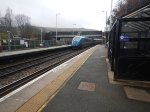
As the pictures show, this is a modern station with its own pub and an excellent cafe on the other side of the road.
But the access to the Huddersfield-bound platform is not step-free.
This Google Map shows the station.
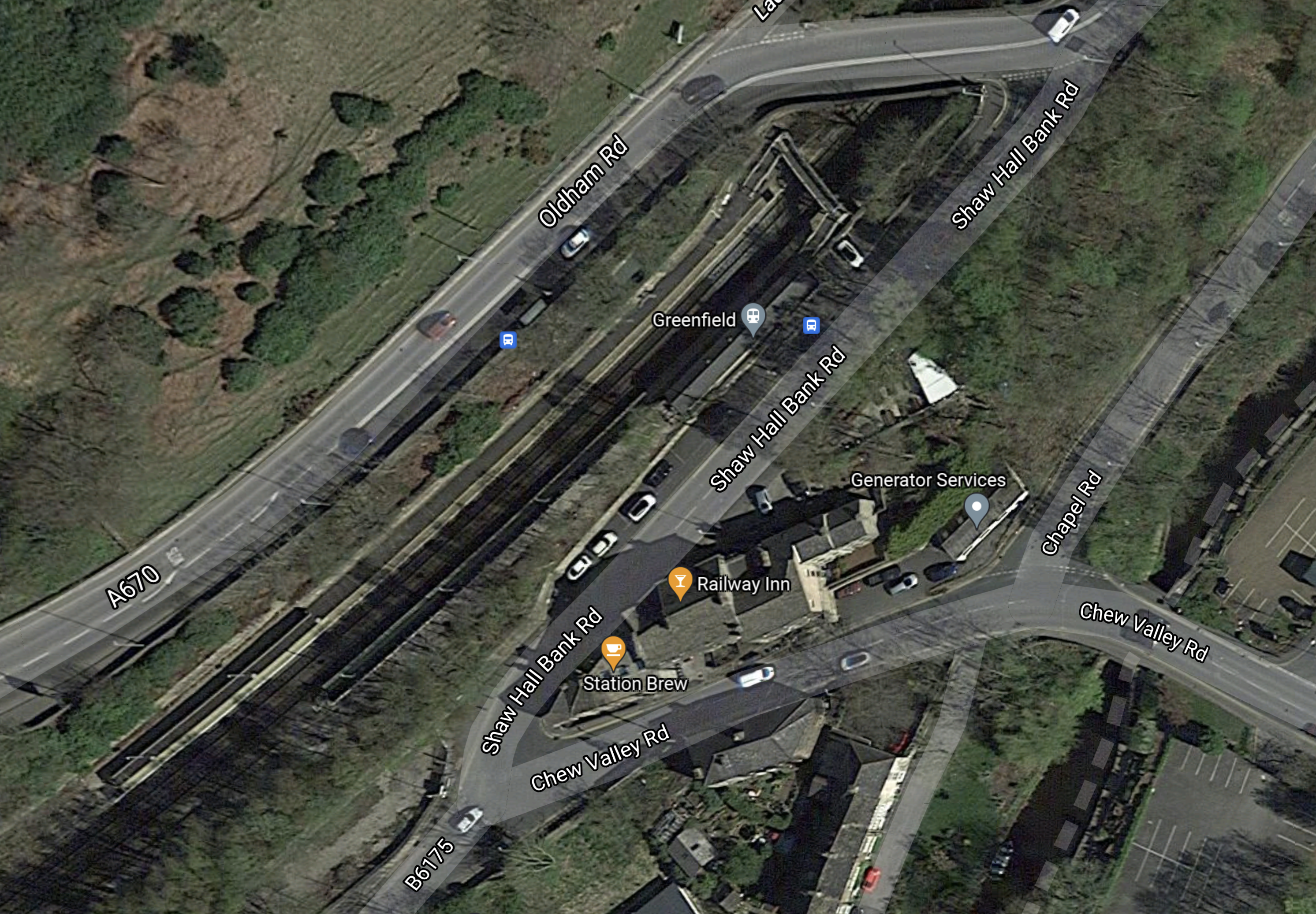
It is a cramped site, but the road didn’t appear to be very busy.
Could A High Speed Line Go Through Greenfield Station?
As I said it is a cramped site, but if the platform by the road were to be made bi-directional, the station would be converted into a two train per hour (tph) step-free station.
This is possible as has been shown on the Borders Railway at Galashiels station.
Look at this picture taken from the bridge.
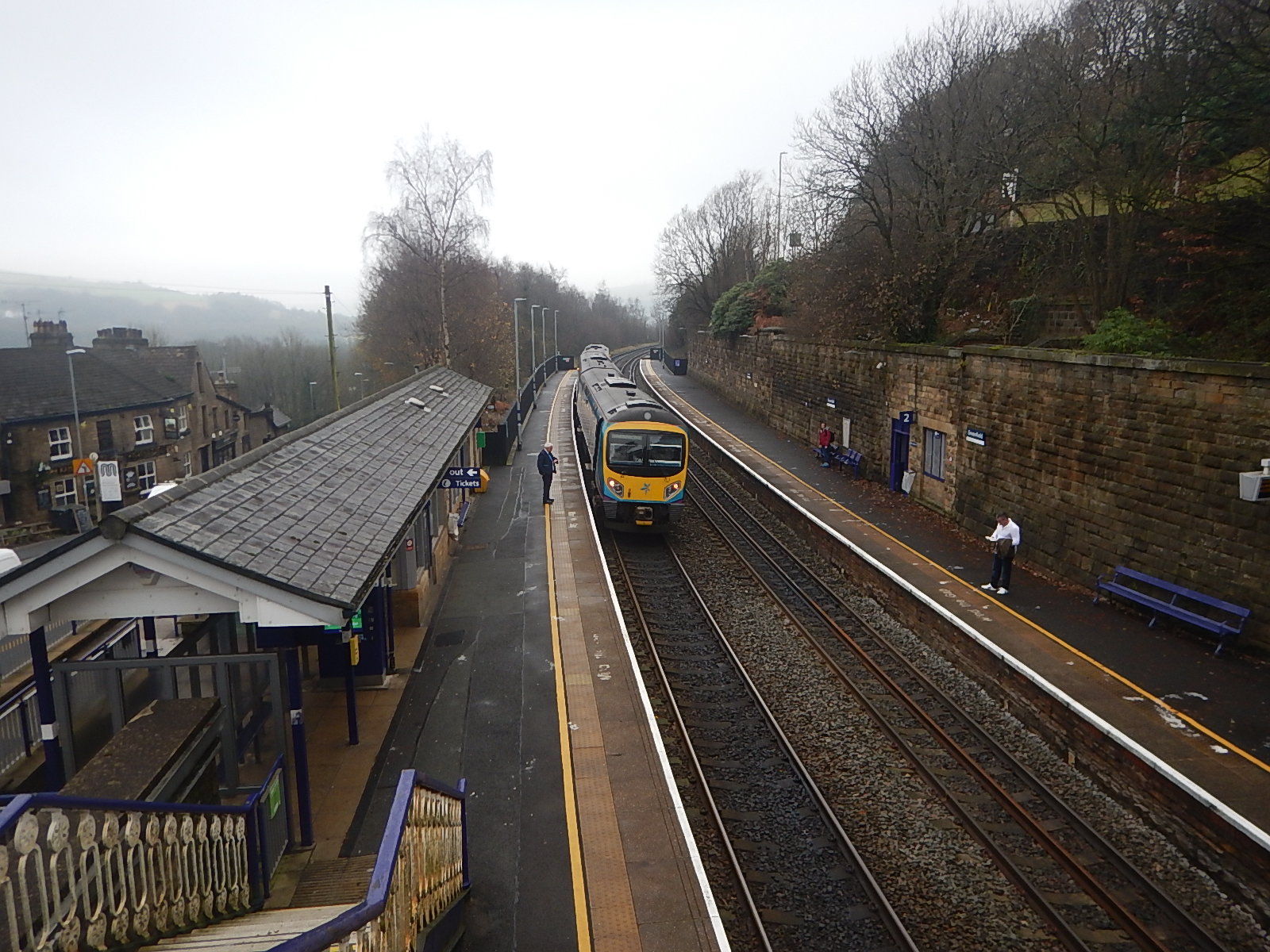
I feel that by removing the second platform and rebuilding the retaining wall and the road bridge, that two 125 mph tracks could be squeezed through.
Step-Free Access
If after two high speed lines through, will it be possible to have full step-free access?
It will certainly be the same for both directions, but what will the access be like between platform and train?
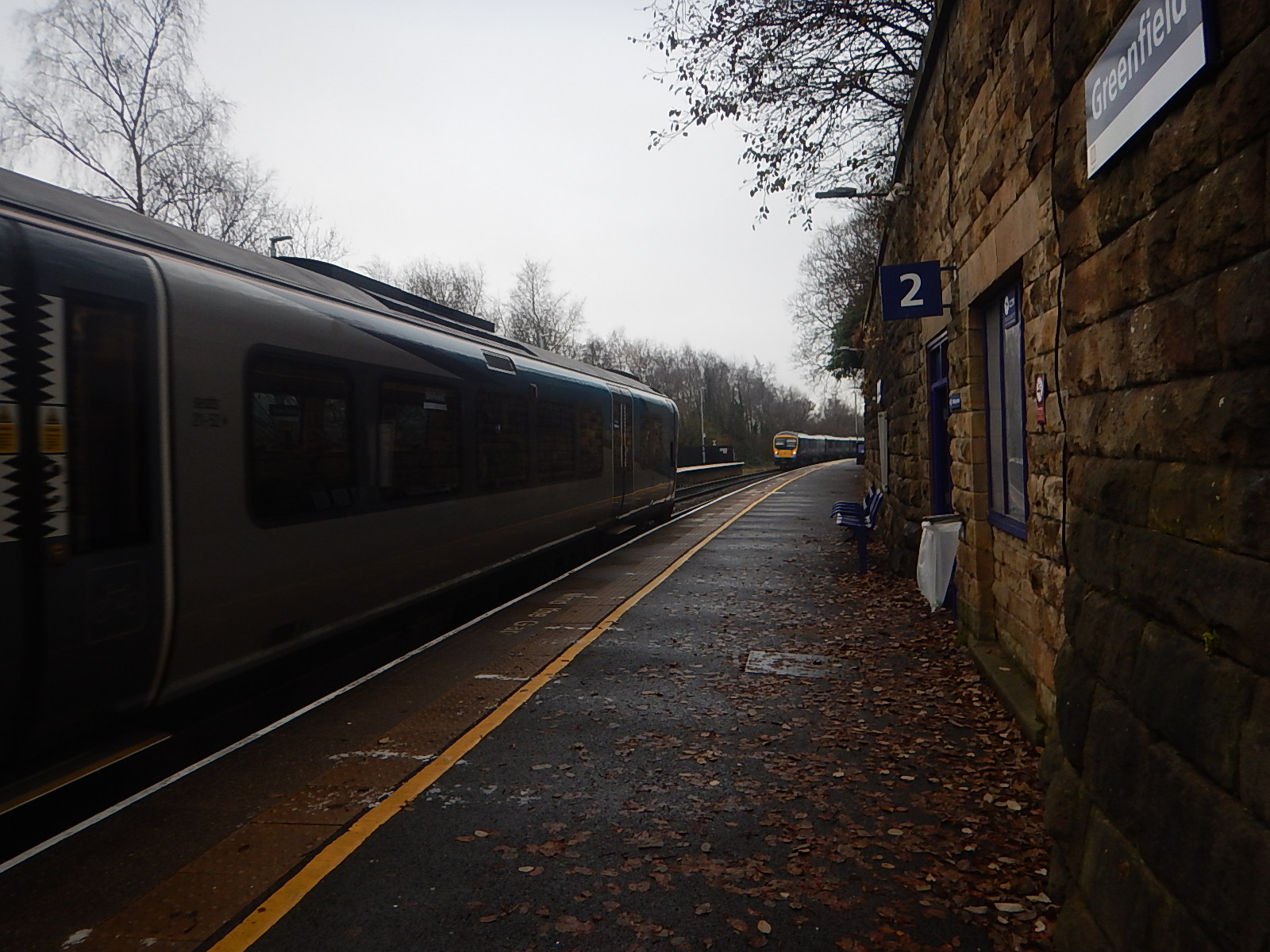
The picture shows a train in the current Huddersfield-bound platform.
It is not bad, but it could be better, as has been demonstrated at the recently-opened Soham station.
But with only one class of train calling in the station it could be a lot better.
The Station Brew Cafe
I had a late breakfast at the Station Brew Cafe opposite the station.
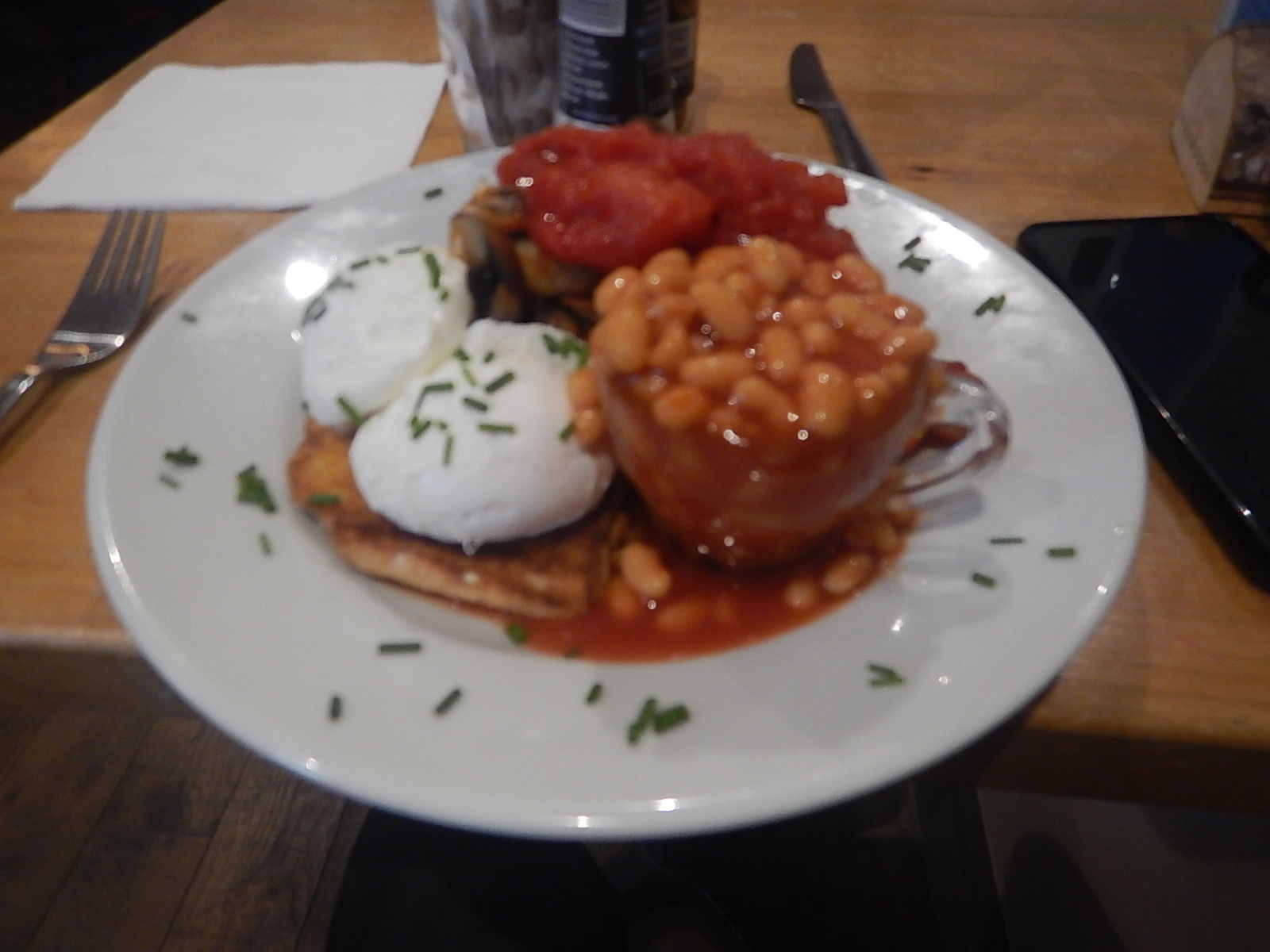
Excellent! And gluten-free too!
Note the small cup, which I assumed they used to microwave the beans.
Conclusion
It would be difficult but not impossible engineering to squeeze a high speed line through Greenfield station.
Marsden Station – 16th December 2021
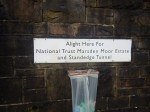
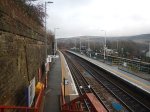
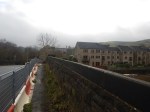
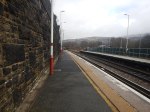
On my meanderings yesterday I visited Marsden station, which has been suggested that it could be the Eastern end of a high speed route to Manchester and Liverpool.
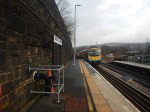
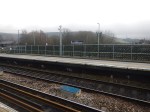
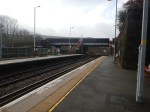
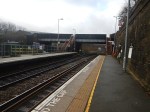


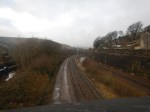
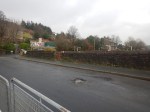
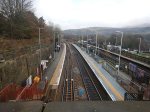
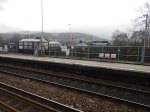
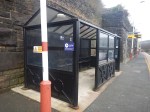

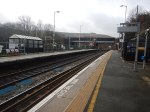
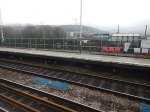
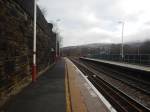
This Google Map shows the station.
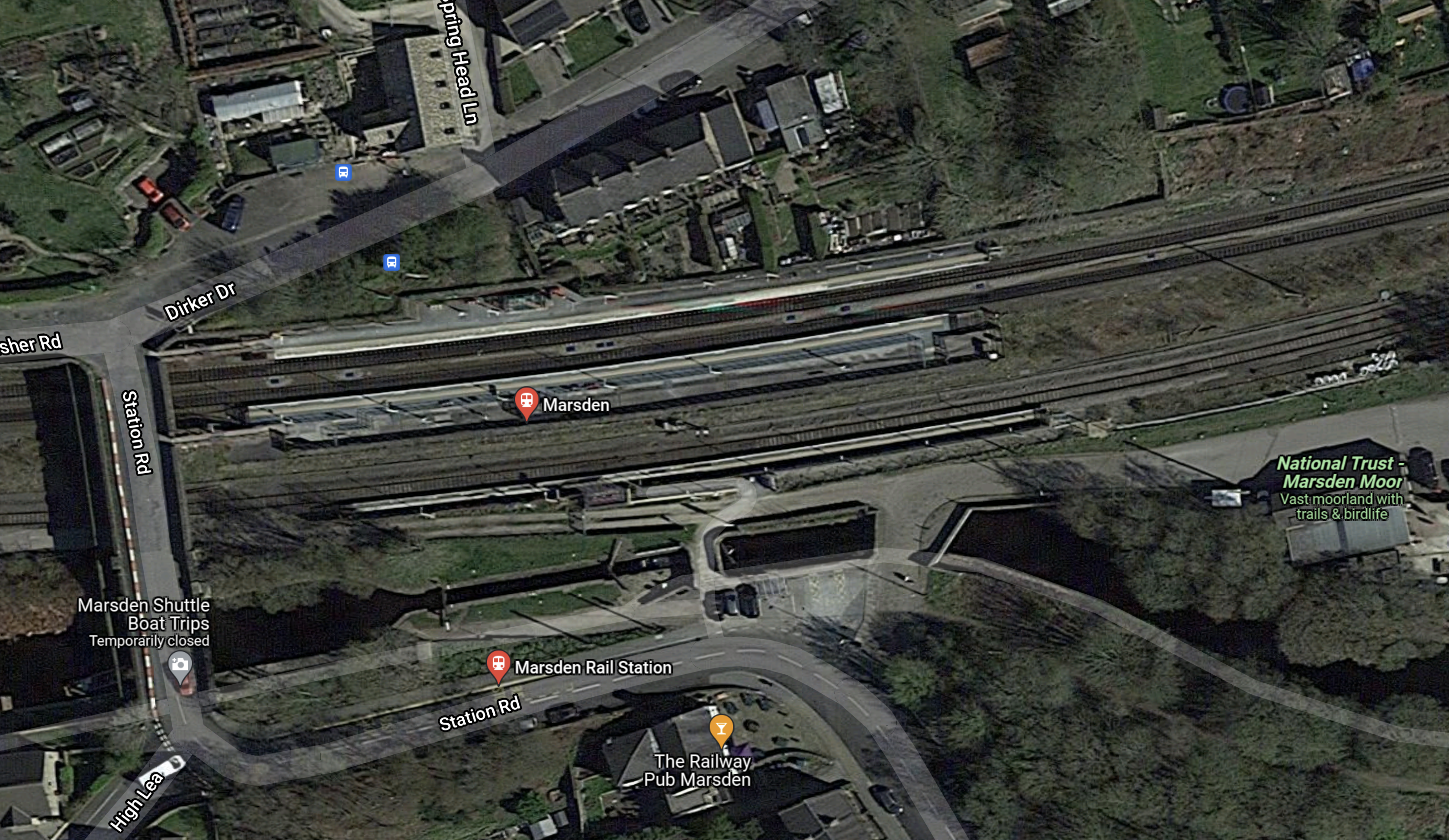
Note.
- The station has three platforms. but trains seem to only use the two Northern platform.
- Access to the platforms is up and down dreadful iron stairs.
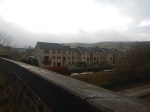
- There is a new housing development by the station.
The station needs improvement.
Could A High Speed Line Go Through Marsden Station?
Having looked at the station, I wouldn’t be surprised if Network Rail have a plan to put two fast and one or possibly two slow tracks through this station.
My preference would be to run 125 mph or faster trains on the current pair of Northern lines and create a new station on a single bi-directional line or a pair of lines to the South.
- Trains on the fast line wouldn’t stop.
- There would be a capacity of two trains per hour (tph) in both directions through the station.
It might even be possible to extend high speed running to Slaithwaite station. I didn’t visit that station, but from the Wikipedia entry, I didn’t seem to miss much.
This Google Map shows Slaithwaite station.

After the station, the tracks would merge into two tracks to go the 4.5 miles to Huddersfield, where all trains appear to stop.
Step-Free Access
If after two high speed lines through, will it be possible to have full step-free access?
It will certainly be the same for both directions, but what will the access be like between platform and train?
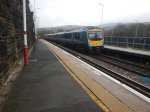
The picture shows a train in the current Huddersfield-bound platform.
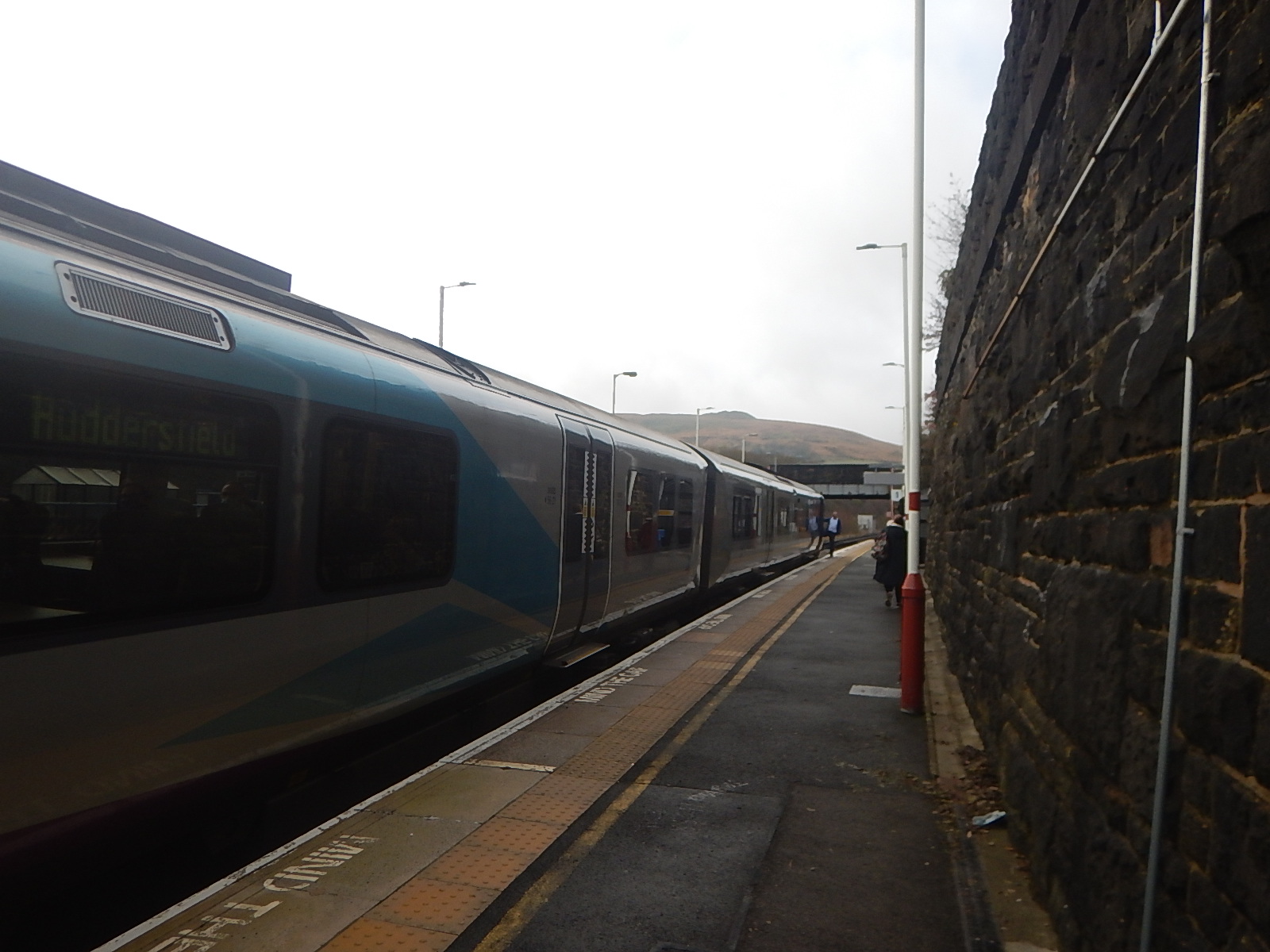
It is not bad, but it could be better, as has been demonstrated at the recently-opened Soham station.
But with only one class of train calling in the station it could be a lot better.
Conclusion
I believe two high speed tracks can be built through Marsden station.
More On Batteries On Class 802 Trains
In the December 2021 Edition of Modern Railways, there’s an article called Battery Trial For TPE ‘802’.
Class 802 trains are now involved in two battery trials.
- One involves Great Western Railway (GWR) trains, which I wrote about in Hitachi And Eversholt Rail To Develop GWR Intercity Battery Hybrid Train – Offering Fuel Savings Of More Than 20%.
- A second involves TransPennine Express (TPE), which I wrote about in Hitachi Rail And Angel Trains To Create Intercity Battery Hybrid Train On TransPennine Express.
This article puts some flesh of the bones of the two trials.
It is hoped that replacing one diesel engine (generator unit) with a battery pack will enable the following.
- Reduction of carbon emissions by at least 20 %.
- Reduction of fuel consumption.
- The ability to rely on battery power when entering and leaving stations to reduce noise pollution and emissions.
This paragraph explains a possible way the trains will be operated.
Another option is to use the battery to provide ‘classic’ hybridisation efficiency, allowing most diesel running to be done fuel-efficiently under two engines rather than three. In this case, the battery module would provide top-up power for peak demand and give regenerative braking capability when operating in diesel mode, which the trains currently do not have.
This is one of the aims of the GWR trial and I suspect anybody, who has owned and/or driven a hybrid car will understand Hitachi’s thinking.
The next paragraph is very revealing.
To fully test the 6m-long, 2.2m-wide battery module, the intention is for it to be flexibly programmable in order for different approaches to charging, including from the overhead line power supply, diesel engines and during braking , to be evaluated.
It looks to me that Hyperdrive Innovation will earn their fees for the battery design and manufacture.
This picture shows the underneath of a Class 802 train.
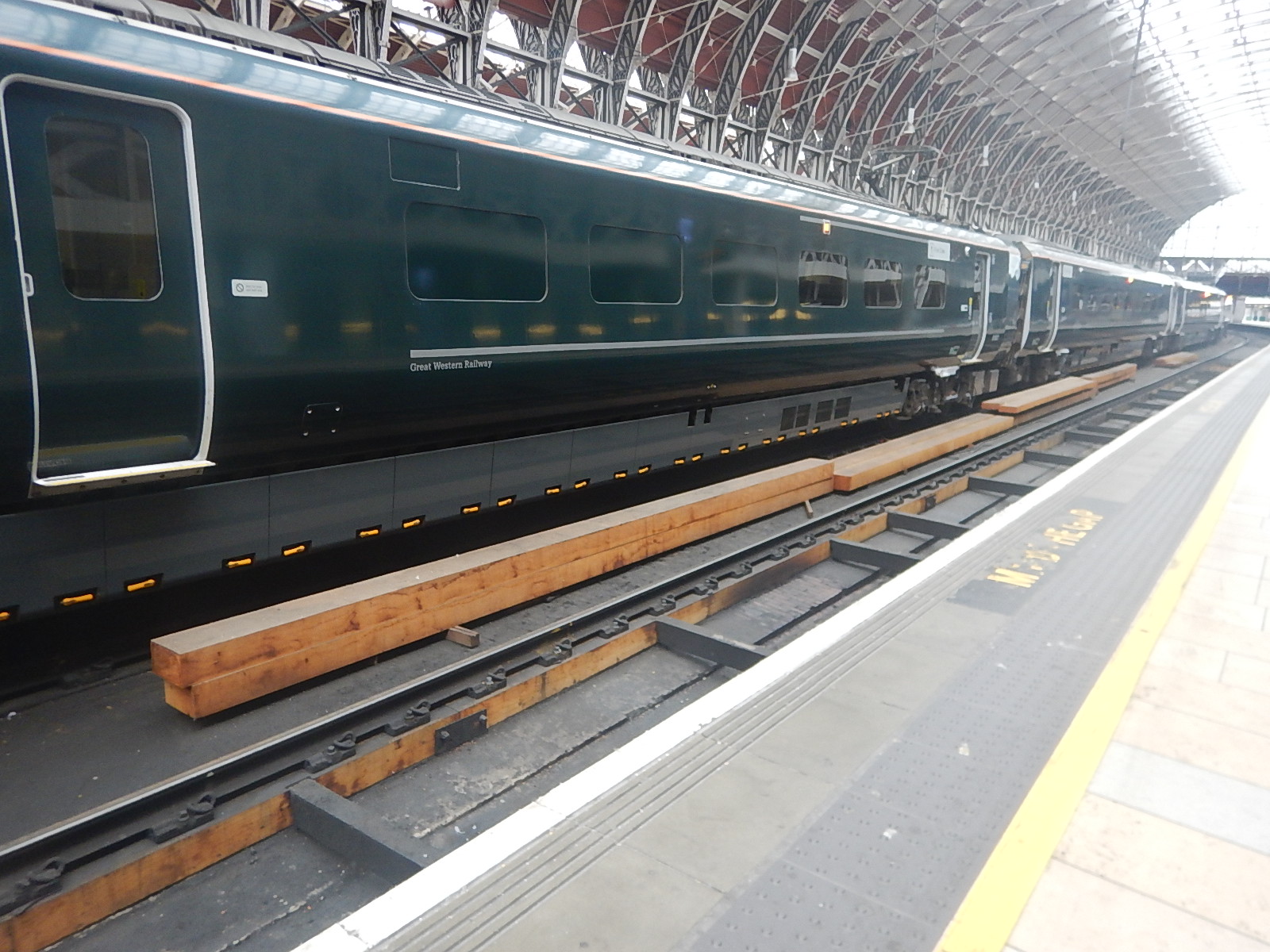
Note.
- The car is 26 metres long
- The car is 2.75 metres wide.
- The MTU 12V 1600 diesel engines, fitted to a Class 802 train, each weigh around two tonnes.
- The engines have a power output of 700 kW
I would think that the 6 x 2.2 m battery would fit under the car easily.
As an engineer, who has evaluated all sorts of weight and balance problems, I would make the battery similar in weight to the diesel engine. This would mean that the existing mountings for the diesel engine should be able to support the battery pack. It would also probably mean that the handling of a car with a diesel engine and one with a battery pack should be nearer to being identical.
Tesla claim an energy density of 250 Wh/Kg for their batteries, which would mean a battery with the weight of one of the diesel engines could have a capacity of around 500 kWh.
As a Control Engineer, I believe that Hitachi and Hyperdrive Innovation have a tricky problem to get the algorithm right, so that the trains perform equally well under all conditions. But with a good simulation and lots of physical testing, getting the algorithm right is very much a solvable problem.
The article says this about the reliability of the diesel engines or generator units (GU) as Hitachi call them.
Whilst reliability of the generator units (GU) has improved, operators of the bi-mode sets still report frequent issues which see sets ending their daily diagram with one out of use.
I wonder, if battery packs will improve reliability.
From statements in the article, it looks like Hitachi, MTU and the train operating companies are being cautious.
The article also says this about the design of the battery packs.
The battery pack has been designed so it is a like-for-like replacement for a GU, which can maintain or improve performance, without compromising on seats or capacity.
I have always said it would be plug-and-play and this would appear to confirm it.
How Will The Batteries Be Charged?
I showed this paragraph earlier.
To fully test the 6m-long, 2.2m-wide battery module, the intention is for it to be flexibly programmable in order for different approaches to charging, including from the overhead line power supply, diesel engines and during braking , to be evaluated.
GWR and TPE run their Class 802 trains to several stations without electrification. and they will probably need some method of charging the battery before leaving the station.
This is Hitachi’s infographic for the Hitachi Intercity Tri-Mode Battery Train.

Note.
- This infographic was published with the Hitachi press release announcing the development of the tri-mode train for GWR.
- One diesel engine has been replaced by a battery pack.
- Charging the battery can be under wires or 10-15 minutes whilst static.
- At some stations like Exeter St. Davids, Penzance, Plymouth or Swansea, heavily-laden services might need the assistance of batteries to get up to operating speed.
The infographic released with the Hitachi press release announcing the trials for TPE.
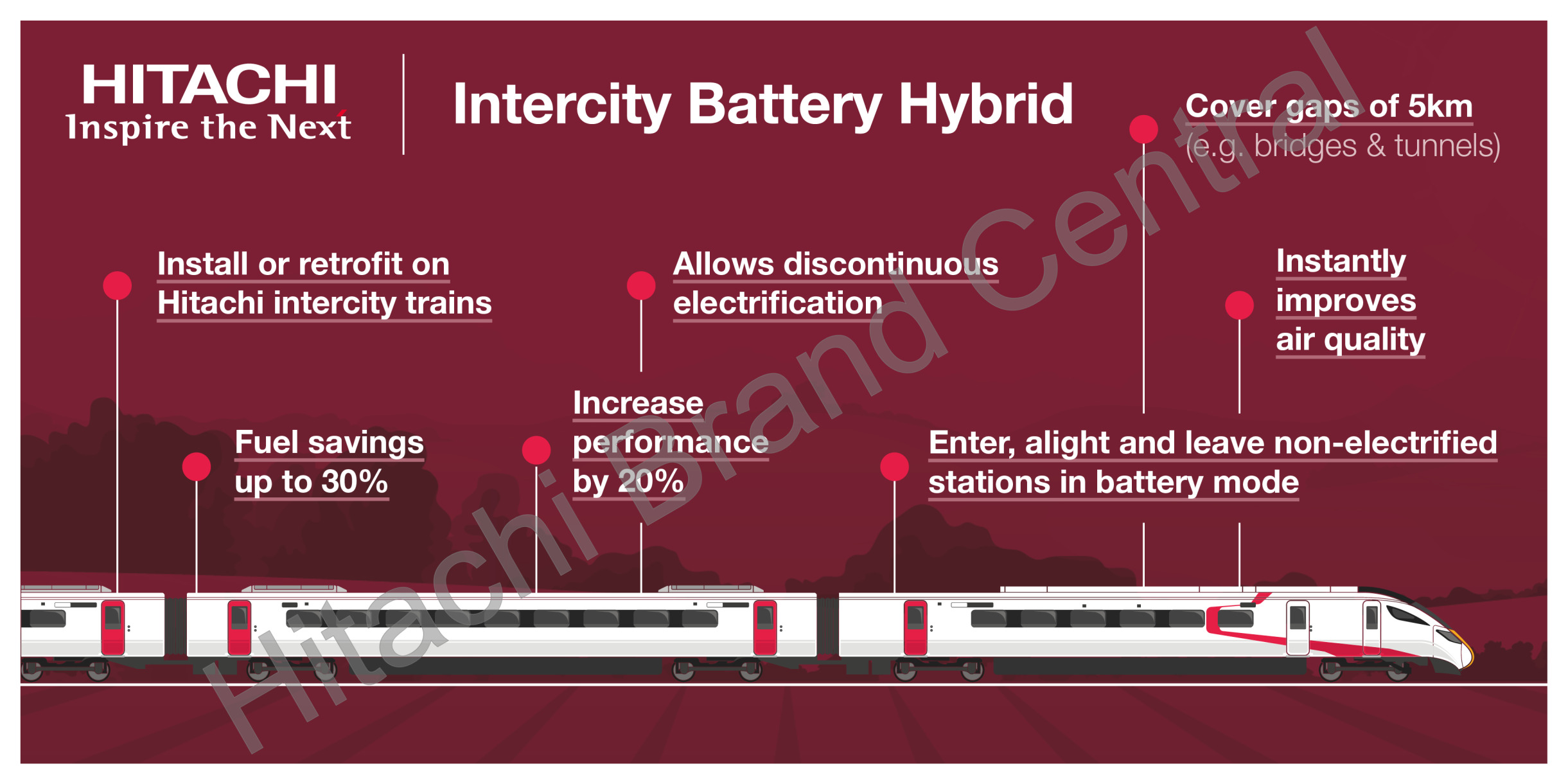
It is similar, but it says nothing about charging.
So how will these trains be charged in stations like Hull, Middlesbrough. Penzance, Scarborough and Swansea, so they leave on their return journey with a full battery?
Consider.
- The formation of a five-car Class 802 train is DPTS-MS-MS-MC-DPTF.
- Pantographs appear to be on both driver cars.
- The middle three cars have diesel engines.
- Only the middle three cars have traction motors.
- There is probably a high-capacity electrical bus running the length of the train, to enable electricity to power all the cars from either or both paragraphs, when running on an electrified line.
The simplest way to charge the batteries would probably be to install a short lengthy of 25 KVAC overhead electrification in the station and then to charge the batteries the driver would just raise the pantograph and energise the electrical bus, which would then feed electricity to the batteries.
I wrote about Furrer + Frey’s Voltap charging system in Battery Train Fast Charging Station Tested. This charging system would surely work with Hitachi’s designs as batteries can be charged from overhead electrification.
Conclusion
I suspect that Hitachi will achieve their objectives of saving fuel and cutting emissions.
But there is more than this project to just replacing one diesel engine with a battery pack and seeing what the savings are.
It appears that the battery packs could have an effect on train reliability.
If the battery packs are truly like-for-like with the diesel engines, then what will be effect of replacing two and three diesel engines in a five-car Class 802 train with battery packs.
Will it be possible to develop an ability to setup the train according to the route? It’s only similar to the way Mercedes probably set up Lewis Hamilton’s car for each circuit.
But then the speed Formula One cars lap Silverstone is not that different to the maximum speed of a Hitachi Class 802 train.
Could The Standedge Tunnels Be Part Of A High Speed Line?
This article on Rail Technology Magazine is entitled Warrington Borough Council React To Integrated Rail Plan, where this is said about improvements between Liverpool and Manchester via Warrington.
One such promise is the delivery of a new high-speed line between Warrington, Manchester and Marsden as part of NPR.
The IRP will also introduce a fully electrified upgraded line between Liverpool and Warrington as part of NPR.
Note NPR is Northern Powerhouse Rail.
Where Is Marsden?
This Google Map shows the rail line between the Standedge Tunnels and Marsden station.
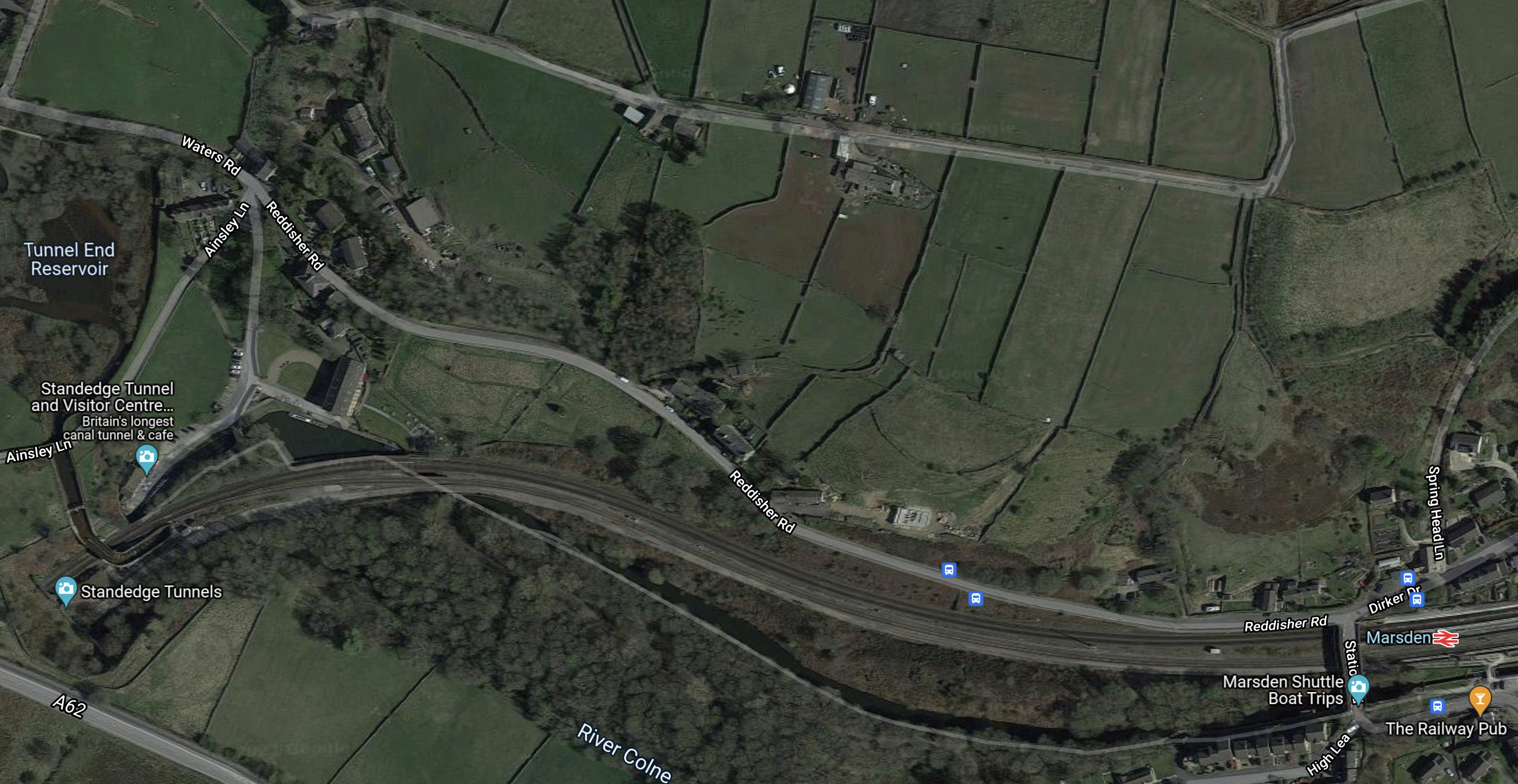
Note.
- Standedge Tunnels and the Visitor Centre in the West.
- Marsden station in the South-East corner of the map.
- The railway between them is the Huddersfield Line.
- The distance between Marsden station and the Eastern Portals of the Standedge Tunnels is about a mile.
Huddersfield station is seven miles to the East of Marsden station.
The Eastern End Of The Standedge Tunnels
This Google Map shows the Eastern end of the Standedge tunnels.
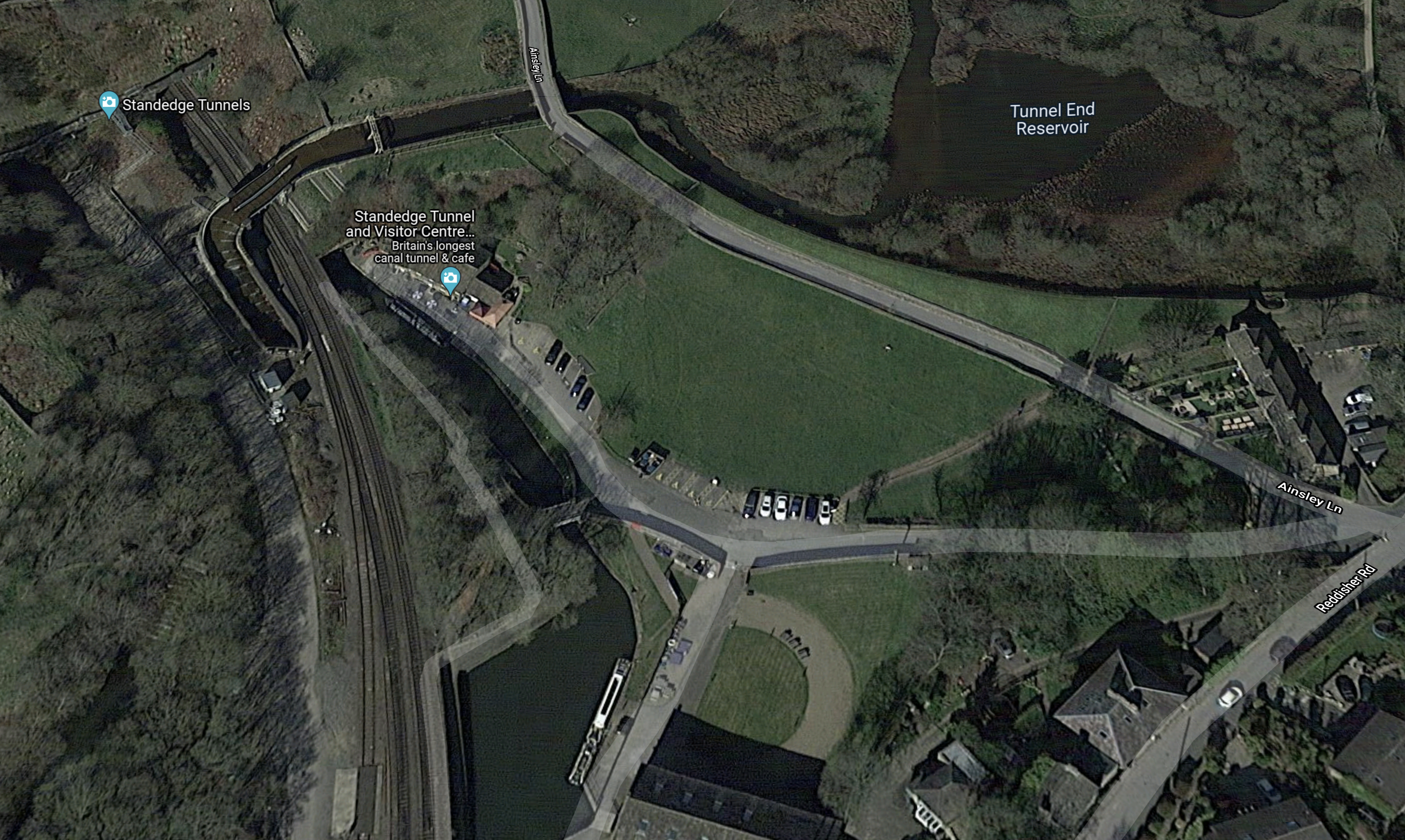
Note.
- This is a 3D image tilted to give a possibly better view.
- Only a double-track railway and a canal tunnel are in daily use.
- There are two other disused but intact single-track rail tunnels.
- I suspect that the Tunnel End Reservoir keeps the canal water at the right level.
It looks to me that the Standedge Tunnels will be part of the proposed high speed route.
Greenfield Station
Greenfield station is to the West of the Western portal of the Standedge tunnels.
The distance between Greenfield and Marsden stations is six miles.
The Standedge Tunnels
Wikipedia has a very comprehensive description of the canal tunnel and the three rail tunnels that form the Standedge tunnels complex.
These are points from the entry.
- The canal tunnel is the oldest and was opened in 1811.
- The two single-track rail tunnels were opened in 1848 and 1871
- The double-track rail tunnel opened in 1894.
- The rail tunnels were all built using the canal tunnel for access.
- All the tunnels are parallel to each other.
- The tunnels are level.
- All tunnels appear to be connected together with cross passages.
- For safety reasons some diesel-powered boats are towed through the canal tunnel using electric tugs.
- The railway tunnels were the only level section of the route and were fitted with water troughs for steam engines.
- Drainage of the rail tunnels appears to be good, with water draining into the canal.
- Only the 1894 tunnel is in use by trains, but all three rail tunnels are maintained.
- The 1848 tunnel can be used for emergency access and is accessible to fire engines and ambulances.
The complex appears to be a masterpiece of nineteenth century engineering.
There are several factors that could enable the conversion of the rail tunnels into a high-capacity modern railway with speeds up to at least 100 mph.
- The tunnels are level.
- The tunnels are well-drained.
- The access to the tunnels is good.
- Slab track, which allows higher speeds could be installed in the tunnels, as it was in the Bowshank Tunnel on the Borders Railway.
But the biggest factor could be the possibility of using battery-electric trains to avoid electrification of the main lines, which as now would probably be in the double-track tunnel.
This Hitachi infographic describes their Intercity Battery Hybrid Train, which is based on a Class 802 train and they are developing in partnership with TransPennine Express.
Note.
- Greenfield and Marsden stations are only six miles apart.
- The tunnels are only a few metres longer than 5000 metres.
- The train may only be able to cover 5 km now, but I believe this could be increased.
I also wonder, if the electrification on either side could get as close to the tunnel as possible.
This would enable trains to drop pantograph at speed and switch to battery power a few metres from the tunnel and get to the other side using a mix of battery-power and kinetic energy. Once under the wires at the other side of the tunnel and they had slowed to a safe speed at which they could raise the pantograph, it would be raised and trains would continue using the electrification.
The operating speed would probably be determined by any curves at the ends of the straight and level tunnel.
This method of operation may be OK for expresses, but what about other passenger and freight trains?
I wonder, if it would be possible to put a third track in one of the other rail tunnels.
- Slab-track would probably be installed.
- This third track could be electrified.
- It would be signalled to allow bi-directional running.
This by-pass tunnel could keep the main lines free for the expresses.
Conclusion
I am fairly sure that the Standedge Tunnels could be incorporated in a high speed line.
Hitachi Rail And Angel Trains To Create Intercity Battery Hybrid Train On TransPennine Express
The title of this post, is the same as that of this Press Release from Hitachi Rail.
The press release starts with these three points.
- Hitachi Rail, Angel Trains and TransPeninne Express (TPE) agree to trial retrofitting battery on intercity train
- Trial, starting next year, can cut fuel usage by at least 20% and reduce emissions on Transpennine network from 2022 onwards
- Tri-mode service can cut noise pollution in urban areas and improve air quality.
Hitachi also point to this infographic.
This very much looks to be a step forward from the Intercity Tri-Mode Battery Train that was announced in December 2020 in this press release from Hitachi which is entitled Hitachi And Eversholt Rail To Develop GWR Intercity Battery Hybrid Train – Offering Fuel Savings Of More Than 20%.
The Intercity Tri-Mode Battery Train is described in this Hitachi infographic.
The specifications are very similar, except for the following.
- The battery range is given as five kilometres.
- Fuel savings are up to 30% instead of at least 20%.
- A performance increase of 30 % is claimed.
- The upgrade appears to be able to be fitted to Hitachi intercity trains, as opposed to a straight replacement of one engine by batteries.
It looks to me, that Hitachi have been working hard to improve their design.
I think this paragraph of the press release is key.
The trial will see a diesel engine replaced by batteries to help power a five-carriage train, along with the two remaining engines. The power provided by the batteries will help to reduce the amount of fuel required to operate the train.
Hitachi don’t say, but I suspect the trains and their batteries have a lot of energy saving features.
- Regenerative braking is already used to power some services like lighting and air-conditioning on the trains.
- But I suspect regenerative braking will also be used to recharge the batteries.
- A sophisticated computer system will drive the train in the most optimal manner.
- Hopefully, diesel will only be used as a last resort.
Features like these and others will enable the trains to jump gaps in the electrification. As more and more tricks are added and batteries hold more charge, the gaps the trains will be able to cross will get larger.
Five kilometres might not sound much, but I think it could be surprisingly useful.
I will use an example from the Midland Main Line to illustrate how the trains and discontinuous electrification might work.
In Discontinuous Electrification Through Leicester Station, I described the problems at Leicester station and how discontinuous electrification could solve the problem.
The following is a modified extract from that post.
This Google Map shows the bridge and the Southern end of the station.
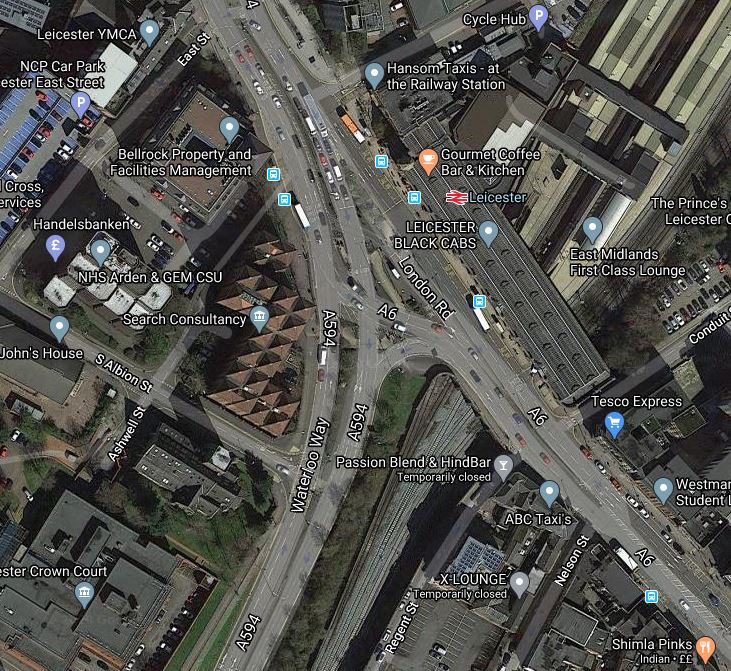
It looks to me, that Leicester station and the road, would have to be closed to traffic for some time, if the bridge were to be rebuilt, to allow the erection of electrification through the area. Leicester and all train passengers would love that!
A solution could be discontinuous electrification.
- The electrification from the South, would finish on the South side of bridge.
- The electrification from the North, would finish at a convenient point in Leicester station or just to the North.
- Electric trains would cover the gap of up to five kilometres on battery power.
Note.
Pantographs could be raised and lowered, where the wires exist.
Trains would probably use a stopping profile in Leicester station, that ensured they stopped with full batteries.
This would mean they had enough electricity to get back up to speed and reconnect to the electrification on the other side of the station.
To get an idea at how long five kilometres is in the Centre of Leicester, this Google Map shows the Leicester station.

Note that the platforms are around three hundred metres long.
In other words the electrification can be kept well away from the station and its troublesome bridge.
How much money would be saved and disruption avoided?
Application To The TransPennine Express Routes
These are the various routes, where Class 802 trains could be used.
Liverpool Lime Street And Edinburgh, Newcastle, Scarborough Or York
Sections are as follows.
- Liverpool Lime Street and Manchester Victoria – 31.7 miles – Electrified
- Manchester Victoria and Stalybridge – 8 miles – Electrified probably by 2024
- Stalybridge and Huddersfield – 18 miles – Diesel
- Huddersfield and Dewsbury – 8 miles – Electrified probably by 2024
- Dewsbury and Leeds – 9.2 miles – Diesel
- Leeds and York – 25.6 miles – Electrified probably by 2024
- York and Newcastle – 80.2 miles – Electrified
Note.
- All services take a common route between Liverpool Lime Street and York.
- A surprising amount is electrified.
- A further 42 miles are being electrified.
- The 3 km Morley Tunnel between Dewsbury and Leeds might not be electrified.
- The 5 km Standedge Tunnel between Huddersfield and Stalybridge might not be electrified.
It looks to me that the 5 km battery range will avoid electrification of two long Victorian tunnels.
Manchester Airport And Newcastle Or Redcar Central
Sections are as follows.
- Manchester Airport and Manchester Victoria – 13.2 miles – Electrified
- Manchester Victoria and Stalybridge – 8 miles – Electrified probably by 2024
- Stalybridge and Huddersfield – 18 miles – Diesel
- Huddersfield and Dewsbury – 8 miles – Electrified probably by 2024
- Dewsbury and Leeds – 9.2 miles – Diesel
- Leeds and York – 25.6 miles – Electrified probably by 2024
- York and Newcastle – 80.2 miles – Electrified
- Northallerton and Redcar Central – 29 miles – Diesel
The route goes through the Morley and Standedge tunnels.
Manchester Piccadilly And Hull
Sections are as follows.
- Manchester Piccadilly and Stalybridge – 7.5 miles – Electrified probably by 2024
- Stalybridge and Huddersfield – 18 miles – Diesel
- Huddersfield and Dewsbury – 8 miles – Electrified probably by 2024
- Dewsbury and Leeds – 9.2 miles – Diesel
- Leeds and Selby – 21 miles – Diesel
- Selby and Hull – 31miles – Diesel
The route goes through the Morley and Standedge tunnels.
Manchester Piccadilly And Huddersfield
The route goes through the Standedge tunnel.
Huddersfield And Leeds
The route goes through the Morley tunnel.
Manchester Airport And Cleethorpes
The Hope Valley Line which is part of this route has three tunnels.
Perhaps they will use a bit of diesel to get through Totley.
The Future
This paragraph sums up what Hitachi and Angel Trains could see as a possible future direction.
Once complete, the trial provides a pathway for Hitachi Rail, the train builder and maintainer, and Angel Trains, the train’s owner to develop plans to retrofit batteries to the wider fleet.
These plans will probably go in the directions like decarbonisation, more efficient operation and better standards for passengers.
Conclusion
This looks like a solution that has been helped by real ale in an appropriate hostelry.
- The battery range has been chosen so Network Rail don’t necessarily have to electrify the tunnels.
- Full electrification can be used either side of the tunnels.
- Will any stations not be electrified. After all if the trains are using battery power in stations do they need electrification?
- It might be useful to have some more bi-mode freight locomotives, that could traverse the tunnels on diesel or batteries.
Hitachi and Network Rail certainly seem to be cooking up a solution.
Could Avanti West Coast Run A Lumo-Style Service Between London And Liverpool?
Avanti West Cost’s Class 807 Trains
Avanti West Coast will be introducing their new Class 807 trains by 2023.
One of the routes, on which they will run, will be between London Euston and Liverpool Lime Street stations.
These trains are members of Hitachi’s AT300 family, with these characteristics.
- Seven cars.
- 453 seats
- 125 mph operating speed, with 140 mph possible under in-cab signalling, where the track allows.
They have been designed to be able to achieve or better times from the Class 390 trains, which have the advantage of tilt.
The Seats In The New Trains
Seats are important to passengers and there has been criticism, that some of the seats in Hitachi trains are like ironing boards.
But, so far nothing has been said about the seats on the new Class 807 trains.
453 seats in seven cars of a Class 807 train is 64.7 seats per car.
These are comparison figures for other trains.
- On a nine-car Class 801 train, there are 611 seats or 67.8 seats per car.
- On a five-car Class 801 train, there are 302 seats or 60.4 seats per car.
- On a five-car Class 810 train, there are 301 seats or 60.2 seats per car.
- On a five-car Class 803 train, there are 406 seats or 81.2 seats per car.
- On a nine-car Class 390 train, there are 469 seats or 52.1 seats per car.
- On an eleven-car Class 390 train, there are 589 seats or 53.5 seats per car.
Note.
- The Class 390 trains or Pendolinos have less seats per car, than the Hitachi trains. Is this because of all the space taken up by the tilting mechanism?
- As the seats per car for a Class 807 is between the five- and nine-car Class 801 trains, it would appear that the seat density is not much different to the trains on LNER and Great Western Railway.
- Lumo’s Class 803 trains on their low-cost service would appear to have a higher seating density. But Lumo says that they have redesigned the seats for more comfort.
- In The Seat Of Aurora, I looked at a report from Modern Railways on the seats in the Class 810 trains, which the writer found were much more comfortable.
It would appear that the two latest fleets of Hitachi trains have seats that are designed for more comfort.
Consider.
- First Group own seventy percent of Avanti West Coast.
- First Group own hundred percent of two train operating companies; Great Western and TransPennine Express, who run versions of Hitachi AT300 trains, so they probably have a lot of bottom-level feedback.
- In the current Class 390 train upgrade, Avanti West Coast are replacing all the Standard Class seats, the company must care about seat quality.
- First Group own hundred percent of Lumo, who have acquired new trains with comfortable seats.
I would be very surprised if the seats in the new Class 807 trains for Avanti West Coast were not custom-designed for their routes.
The Unusual Length Of The Class 807 Train
These are the length of the Class 390 and Class 807 trains.
- Class 390/0 – nine-car – 217.5 metres
- Class 390/1 – eleven-car – 265.3 metres
- Class 807 – seven-car – 182 metres
Note.
- A ten-car Class 807 train would be 260 metres.This could be convenient, if more eleven-car Pendolinos were needed.
- The Class 807 train is thirty-five metres shorter, than the nine-car Pendolino.
As eleven-car Class 390 trains commonly run London Euston and Liverpool Lime Street, why would they need the Class 807 train to be shorter?
I think there is a clue in this picture.

It shows a Class 390 train in Liverpool South Parkway station.
- At the time, Liverpool Lime Street station was closed for track remodelling.
- Liverpool South Parkway was acting as Liverpool’s main terminus.
- To accommodate the Pendolinos a temporary platform extension was built in the station.
Could it be that shorter trains were ordered to avoid the expense of lengthening the platforms at Liverpool South Parkway and perhaps other stations, that Avanti West Coast might serve?
The Current Service Between London Euston And Liverpool
The current London Euston and Liverpool Lime Street service is as follows.
- There is one train per hour (tph)
- The service calls at Milton Keynes Central, Stafford, Crewe and Runcorn.
- All of the stations can accommodate an eleven-car Pendolino.
- Trains take around an average of two hours and twelve minutes.
- The first Northbound train leaves at 07:07 and the last at 21:07.
- The first Southbound train leaves at 07:00 and the last at 20:48.
Services are generally run by eleven-car Class 390 trains, which gives a capacity of 589 passengers per hour.
I always think, there a need for a later train back to London, but then that could be said of many places.
A Possible Service From December 2022
Wikipedia says this.
- There will be two tph.
- The second service will call at Liverpool South Parkway station.
If two tph were to be run by Class 807 trains, this would give the following.
- A capacity of 906 seats per hour.
- This is a 54 % increase in capacity.
But if only the Liverpool South Parkway service was run by a Class 807 train and the other service was still run by an eleven-car Class 390 train, this would give the following.
- A capacity of 1042 seats per hour.
- This is a 77 % increase in capacity.
And all without expensive and disruptive platform extensions at Liverpool South Parkway station.
According to Wikipedia, the plans will need to be approved by the Office of Road and Rail.
How Fast Will A Class 807 Train Travel Between London Euston And Liverpool?
The Class 807 trains will have these features.
- The trains will have no diesel engines or batteries. This must save weight and that means better acceleration.
- The trains will have no tilt mechanism.. This must save weight and that means better acceleration.
- The trains will have a new nose. Is it more aerodynamic, which would cause less drag and increase operating speed?
Would these features mean the Class 807 trains can match the performance of the Class 390 train, despite not having tilt?
There are also improvements on the West Coast Main Line, that have not been fully reflected in the timetable.
I did a full analysis about how a two-hour journey time might be achieved in Will Avanti West Coast’s New Trains Be Able To Achieve London Euston and Liverpool Lime Street In Two Hours? This analysis led me to these conclusions.
- I am convinced that the new trains are designed for a two hour journey between London Euston and Liverpool Lime Street stations.
- Refurbished Class 390 trains should also be able to do the same time.
- I also calculated that nine trains would be needed for the two tph service, if they can arrange a fifteen minute turnround at both ends of the route. So would, the Class 807 trains be used on the Liverpool service to release newly-refurbished Class 390 trains to boost Blackpool and Birmingham services?
Alternatively, if the two services are run using eleven-car Class 390 trains for the current service and seven-car Class 807 trains for the one via Liverpool South Parkway, Avanti West Coast would need five of each train.
- They could fit in thirty minute turnrounds at both ends of the route.
- The mixed pair of trains would give a 77 % increase in capacity.
- The Class 807 service would be a two-hour trip.
- If the Class 390 service couldn’t match the time it could use current timings.
Whatever is done, it would be a flagship service between London and Liverpool.
The new trains will pay for themselves many times over, if this is the case, as a two-hour journey will surely attract passengers.
Organising The Service
If you really wanted to make the service simple and passenger-friendly, you would have dedicated platforms for the trains at both ends of the route.
- In Liverpool Lime Street station trains seem to have used one platform for many years. Currently, they seem to be using Platform 9.
- Surely, a similar arrangement could be setup at London Euston.
The service could also be setup with contactless ticketing, if that was felt the way things should be done.
Going The Whole Way
Suppose, that the London Euston and Liverpool Lime Street service is very successful for any number of reasons.
- The two hour journey time.
- The all-electric service.
- The doubling of the frequency.
- The availability of more seats.
- The expansion of Merseyrail into England’s first battery-electric Metro, which I wrote about in Chancellor To Fund £710m Merseyrail Expansion.
- The cost of driving, due to a mileage charge on all journeys.
Will this lead to a need to expand the service?
If it does, the obvious way would be to lengthen Liverpool South Parkway station and run longer trains.
An Eleven-car Class 390 train would carry 589 passengers.
Adding three-cars to a seven-car and the train would still be shorter than an eleven-car Class 390 train, but it would carry around 650 passengers.
This would add an extra ten percent capacity to the route.
This would surely provide the capacity until High Speed Two arrives towards the end of the decade.
I do wonder if Avanti West Coast are using the London Euston and Liverpool Lime Street service to experiment with how they might run High Speed Two services.
Conclusion
As a two tph service run by Class 807 trains in two hours would be over 4,500,000 seats in each direction, I feel that this will be a very popular and intensive service.
I feel that Avanti West Coast will need to apply lessons learned on sister company’s Lumo’s service between London Kings Cross and Edinburgh.
Lumo Aims To Be The Green Alternative To Edinburgh – London Flights
The title of this post, is the same as that of this article on Railway Gazette.
Some points from the article.
Lumo Is Targeting Flyers
This is a paragraph.
Lumo is aiming to carry more than 1 million passengers per year. It is particularly targeting people who currently fly between Edinburgh and London; in June it says there were 74 764 air journeys on the route, compared to 82 002 by rail.
I find it interesting that the number of passengers using air and rail are within nine percent. I thought it would have been more of a difference.
The Service Will Ramp Up
This is a paragraph.
Services will ramp up over a period of months to the planned timetable of five trains each way per day. A small increase is envisaged at the December timetable change, followed by full implementation in Q1 2022.
There is a lot of training to do and some more Class 803 trains to be delivered.
Viability Level
Industry sources are quoted that at the prices charged, the trains will need to be eighty percent full to be viable.
As a Control Engineer, who has built hundreds of mathematical models, I am fairly certain, that by adjusting ticket prices and getting the marketing right, they’ll hit that level.
Late Bookers
The eighty percent viability level probably means that they can afford to leave a few seats available for those that need to book the day before.
Yesterday, when I went to Spalding, I bought my ticket in the Booking Office half-an-hour before travel and got a seat with a window.
Seat allocation algorithms on LNER seem to be very good and I don’t think Lumo’s will be in any way inferior.
Early Bookers
The article says advance tickets can be bought earlier than the usual twelve weeks.
So say you always travel to Scotland for your mother’s birthday, you can buy the ticket early and not be hit by low availability, as it turns out later that Rangers are playing Celtic on the day you travel.
Mutual Support In Case Of Disruption
This is a paragraph.
Reciprocal contracts providing support in case of disruption have been signed with other operators, including LNER.
I think in all the troubles yesterday, that I wrote about in Azumas Everywhere!, LNER could have done with some help yesterday.
Lumo Want To Grow Rail
This is a quote from the company.
We want to grow rail and bring people to a more sustainable, environmentally way of travelling.
They also seem fairly relaxed if you want to travel in First on LNER.
Luggage
This is a paragraph.
Passengers will be able keep their luggage close by or, for an additional charge, have it delivered to their final station or destination.
Does that mean you’re going to Edinburgh to see the family at Christmas and the New Year, you can take a lot of luggage and get it delivered both ways?
Efficient Running North Of Newcastle
I particularly liked this paragraph.
The trainsets will be able to run with power draw limited to 80% of normal on the northern part of the East Coast Main Line where there is limited power supply, with modelling by FirstGroup’s engineers and Network Rail suggesting that for five-car sets this will not affect sectional running times and will allow electric trains to continue running.
If you’re on time, the passengers won’t mind, but the electricity saved is all profit.
As a Control Engineer, my philosophy would be to have an economy mode for 80 % power sections.
- Trains would enter these sections with a full battery, that had been charged earlier from the electrification.
- The battery would provide hotel power in these sections.
- Traction power would come from the electrification.
- Trains could leave these sections with an almost flat battery.
The battery is not used for traction, but because it is handling the hotel power, less power is drawn from the electrification for traction.
I always remember Freddie Laker was keen on getting his pilots to save fuel.
Charging The Hotel Power Battery
Obviously this can be charged from the overhead electrification, although I doubt they would charge it in sections where power supplies are limited.
But can the battery be charged using regenerative braking?
In Do Class 800/801/802 Trains Use Batteries For Regenerative Braking?, I tried to answer this question using the information in this document on the Hitachi Rail web site, which is entitled Development of Class 800/801 High-speed Rolling Stock for UK Intercity Express Programme , which was published in 2014 and contains this diagram of the traction system.

Note that BC in the diagram stands for battery charger. So even in 2014, Hitachi were thinking about batteries.
In this diagram it seems to me, that electricity for the Auxiliary Power Supply and charging any batteries, can come from these sources.
- The Electrification
- The Generator Unit, if fitted
- The Drive Converter if it can divert regenerative braking energy to the APS.
It is all very comprehensive.
Handling Engineering Blockades
This is a paragraph.
Lumo has looked at how to manage any engineering blockades involving diversions away from the wires, with options including transfers to Hull Trains or TPE services operated using bimode trainsets, transfer to buses if no alternatives are available, and even the cancellation of a service if passengers indicate they would prefer not to travel if their journey will be disrupted.
Being part of a larger group always helps.
Borrowing Trains
Yesterday, whilst waiting to leave Peterborough, I saw a TransPennine Express Class 802 train go through.
Peterborough isn’t exactly near the Pennines!
On checking today, it appears it was running in one of Lumo’s paths.
So was the train being borrowed for training purposes?
But I can envisage, when a difficult blockade say around Newark is to be enacted, that Lumo would borrow a bi-mode from TransPennine Express, so they could use diesel to run the service via Lincoln.
Conclusion
There’s a lot more to Lumo than has so far been disclosed.
In the meantime read the Railway Gazette article, as there’s more there for starters.
Electrification Between Clay Cross North Junction And Sheffield Station
Long term readers of this blog, will have noticed that I make regular references to this proposed electrification, that is part of High Speed Two’s proposals to connect Sheffield to the new high speed railway.
So I thought I would bring all my thoughts together in this post.
Connecting Sheffield To High Speed Two
Sheffield is to be accessed from a branch off the Main High Speed Two route to Leeds.
This map clipped from High Speed Two’s interactive map, shows the route of the Sheffield Branch, from where it branches North West from the main Eastern Leg of High Speed Two.
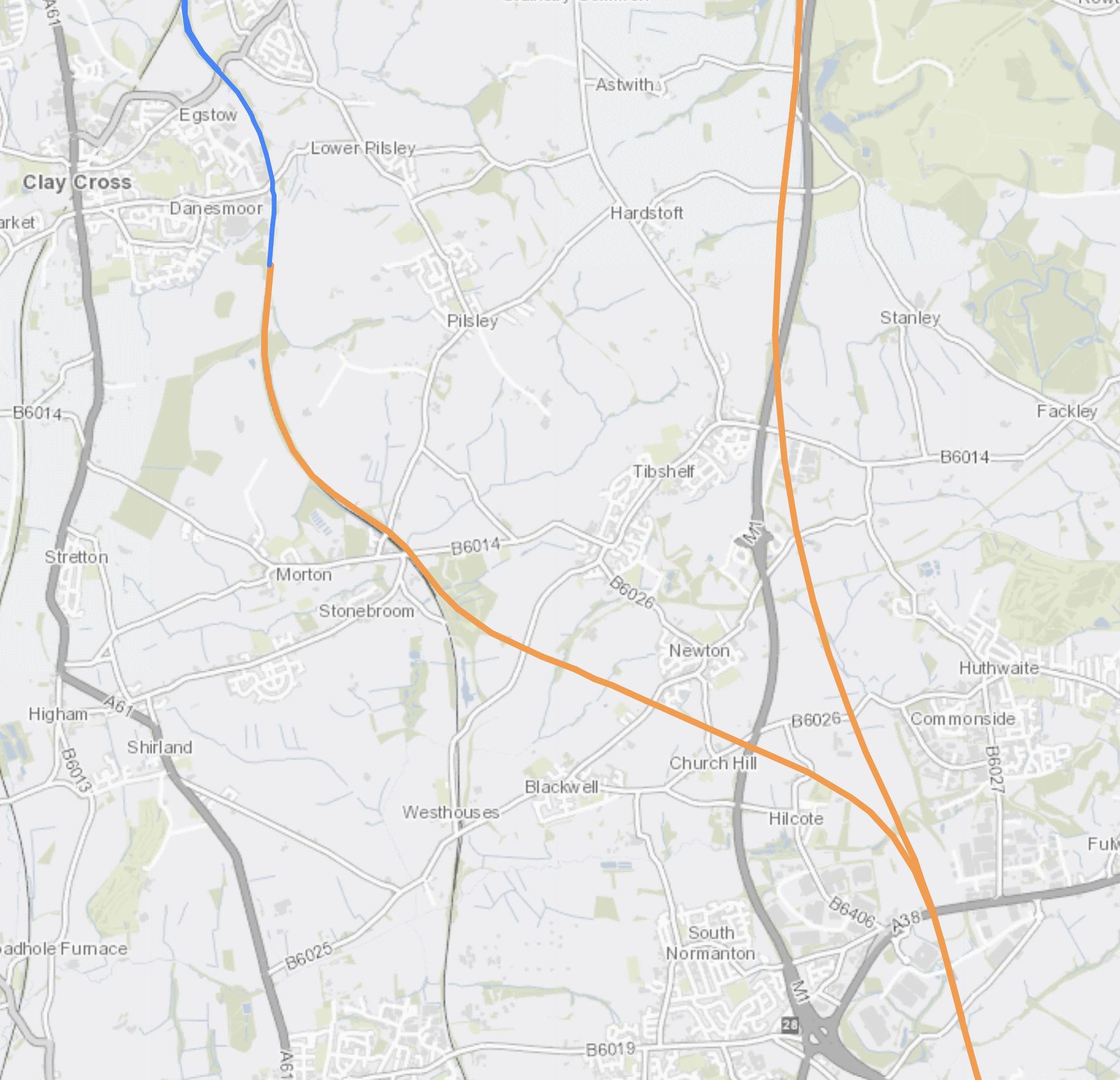
Note.
- Orange indicates new High Speed Two track.
- Blue indicates track that High Speed Two will share with other services.
- The orange route goes North to Leeds, along the M1
- The blue route goes North to Chesterfield and Sheffield, after skirting to the East of Clay Cross.
- The orange route goes South to East Midlands Hub station.
This second map, shows where the Erewash Valley Line joins the Sheffield Branch near the village of Stonebroom.
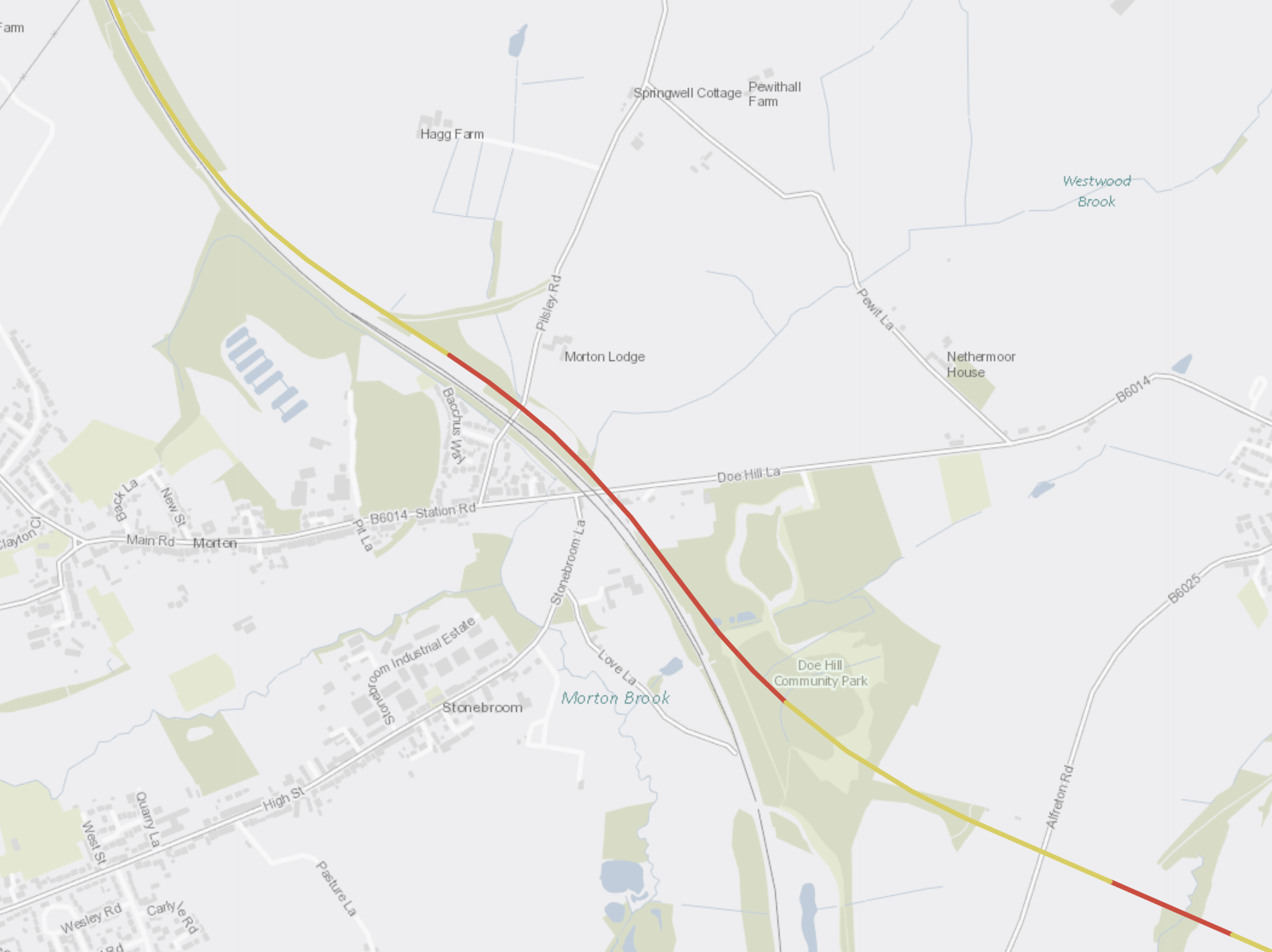
Note.
- Red is an embankment.
- Yellow is a cutting.
- The Sheffield Branch goes North-West to Clay Cross, Chesterfield and Sheffield
- The Sheffield Branch goes South-East to East Midlands Hub station.
- The Sheffield Branch goes through Doe Hill Country Park.
- The Sheffield Branch runs alongside the existing Erewash Valley Line, which goes South to Langley Mill, Ilkeston and the Derby-Nottingham area.
The Sheffield Branch and the Erewash Valley Line appear to share a route, which continues round Clay Cross and is shown in this third map.
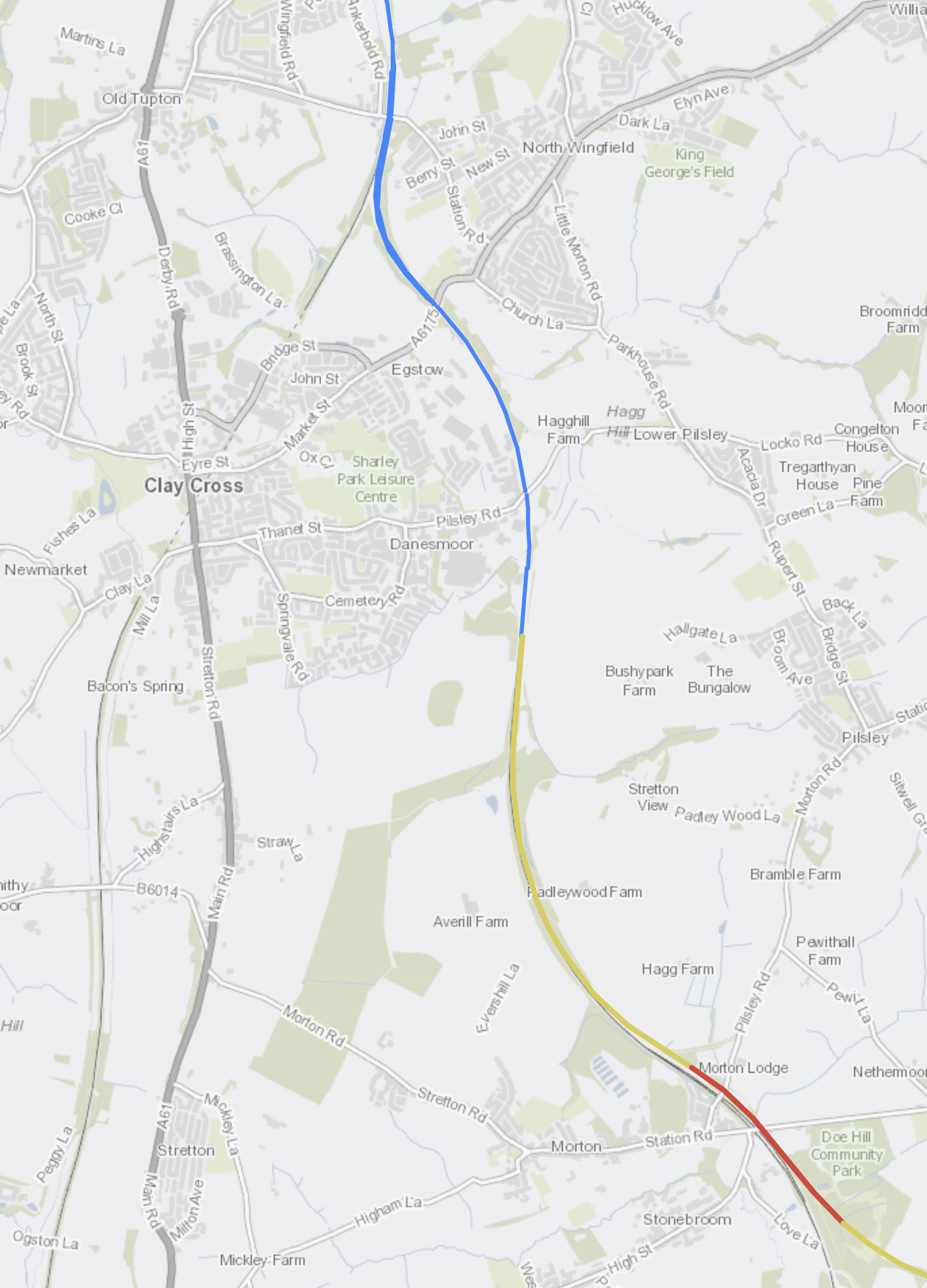
Note
- Doe Hill Country Park is in the South-East corner of the map.
- The dark line running North-South is the A61.
- Running to the West of the A61 is the Midland Main Line, which currently joins the Erewash Valley Line at Clay Cross North junction.
High Speed Two and the Midland Main Line will share a route and/or tracks from Clay Cross North junction to Sheffield.
This fourth map, shows where the combined route joins the Hope Valley Line to Manchester to the South West of Sheffield.
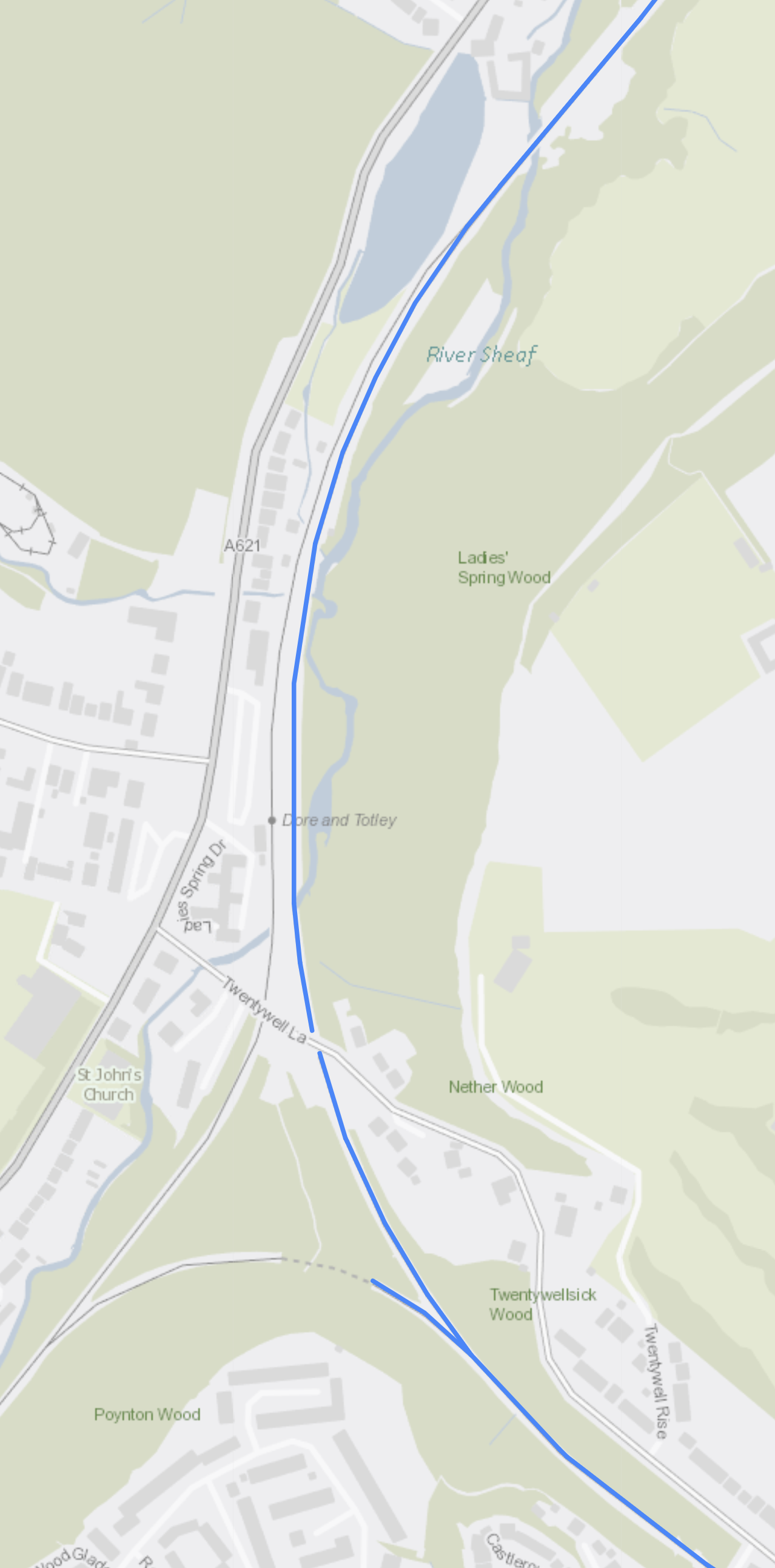
Note.
- Sheffield is to the North East.
- Chesterfield is to the South East,
- Totley junction is a large triangular junction, that connects to the Hope Valley Line.
These are some timings for various sections of the route.
- Clay Cross North Junction and Chesterfield (current) – 4 minutes
- Clay Cross North Junction and Sheffield (current) – 17 minutes
- Chesterfield and Sheffield (current) – 13 minutes
- Chesterfield and Sheffield (High Speed Two) – 13 minutes
- East Midlands Hub and Chesterfield (High Speed Two) – 16 minutes
- East Midlands Hub and Sheffield (High Speed Two) – 27 minutes
As Class Cross North Junction and Sheffield are 15.5 miles, this means the section is run at an average speed of 53 mph.
Can I draw any conclusions from the maps and timings?
- There would appear to be similar current and High Speed Two timings between Chesterfield and Sheffield.
- The various junctions appear to be built for speed.
The Midland Main Line will be electrified between Clay Cross North Junction and Sheffield, so that High Speed Two trains can use the route.
What will be the characteristics of the tracks between Clay Cross North Junction and Sheffield?
- Will it be just two tracks as it mainly is now or will it be a multi-track railway to separate the freight trains from the high speed trains?
- Will it have a high enough maximum speed, so that East Midland Railway’s new Class 810 trains can go at their maximum speed of 140 mph?
- Will it be capable of handling a frequency of 18 tph, which is the maximum frequency of High Speed Two?
Surely, it will be built to a full High Speed Two standard to future-proof the line.
Current Passenger Services Between Clay Cross North Junction And Sheffield Station
These trains use all or part of the route between Cross North Junction And Sheffield stations.
- CrossCountry – Plymouth and Edinburgh via Derby, Chesterfield, Sheffield and Leeds – 1 tph
- East Midlands Railway – London St. Pancras and Sheffield via Derby and Chesterfield – 2 tph
- East Midlands Railway – Liverpool Lime Street and Norwich via Stockport, The Hope Valley Line, Sheffield and Chesterfield – 1 tph
- Northern Trains – Manchester Piccadilly and Sheffield via the Hope Valley Line – 1 tph
- Northern Trains – Leeds and Nottingham via Meadowhall, Sheffield and Chesterfield – 1 tph
- TransPennine Express – Manchester Airport and Cleethorpes via Stockport, the Hope Valley Line and Sheffield – 1 tph
Note.
- tph is trains per hour.
- High Speed Two is currently planning to run two tph to Sheffield, which will run between Cross North junction and Sheffield stations.
- The services on the Hope Valley Line run on electrified tracks at the Manchester end.
These services can be aggregated to show the number of trains on each section of track.
- Hope Valley Line between Manchester and Totley junction – 3 tph
- Totley junction and Sheffield station – 7 tph
- Totley junction and Clay Cross North junction via Chesterfield – 4 tph
Adding in the High Speed Two services gives these numbers.
- Hope Valley Line between Manchester and Totley junction – 3 tph
- Totley junction and Sheffield station – 9 tph
- Totley junction and Clay Cross North junction via Chesterfield – 6 tph
This report on the Transport for the North web site, is entitled At A Glance – Northern Powerhouse Rail. It states that Transport for the North’s aspirations for Manchester and Sheffield are four tph with a journey time of forty minutes.
Adding in the extra train gives these numbers.
- Hope Valley Line between Manchester and Totley junction – 4 tph
- Totley junction and Sheffield station – 10 tph
- Totley junction and Clay Cross North junction via Chesterfield – 6 tph
This level of services can be accommodated on a twin-track railway designed to the right high speed standards.
Freight Services Between Clay Cross North Junction And Sheffield Station
The route is used by freight trains, with up to two tph on each of the three routes from Totley junction.
And these are likely to increase.
Tracks Between Clay Cross North Junction And Sheffield Station
I am absolutely certain, that two tracks between Clay Cross North junction And Sheffield station will not be enough, even if they are built to High Speed Two standards to allow at least 140 mph running under digital signalling.
Battery Electric Trains
The only battery-electric train with a partly-revealed specification is Hitachi’s Regional Battery Train, which is described in this Hitachi infographic.

Note.
- The train is a 100 mph unit.
- Ninety kilometres is fifty-six miles.
I would expect that battery-electric trains from other manufacturers like Alstom, CAF and Siemens would have similar performance on battery power.
In Thoughts On CAF’s Battery-Electric Class 331 Trains, I concluded CAF’s approach could give the following ranges.
- Three-car battery-electric train with one battery pack – 46.7 miles
- Four-car battery-electric train with one battery pack – 35 miles
- Four-car battery-electric train with two battery packs – 70 miles
I was impressed.
These are my thoughts on battery-electric trains on the routes from an electrified Sheffield.
Adwick
Sheffield and Adwick is 22.7 miles without electrification
I am sure that battery-electric trains can handle this route.
If the battery range is sufficient, there may not need to be charging at Adwick.
Bridlington
Sheffield and Bridlington is 90.5 miles without electrification, except for a short section through Doncaster, where trains could top up batteries.
I am sure that battery-electric trains can handle this route.
But there would need to be a charging system at Hull, where the trains reverse.
An alternative would be to electrify Hull and Brough, which is just 10.4 miles and takes about twelve minutes.
Derby Via The Midland Main Line
Clay Cross North junction and Derby is 20.9 miles without electrification.
I am sure that battery-electric trains can handle this route.
Gainsborough Central
Sheffield and Gainsborough Central is 33.6 miles without electrification
I am sure that battery-electric trains can handle this route.
But there will need to be a charging system at Gainsborough Central.
Huddersfield Via The Penistone Line
This is a distance of 36.4 miles with electrification at both ends, after the electrification between Huddersfield and Westtown is completed.
I am sure that battery-electric trains can handle this route.
Hull
Sheffield and Hull is 59.4 miles without electrification, except for a short section through Doncaster, where trains could top up batteries.
I am sure that battery-electric trains can handle this route.
But there will probably need to be a charging system at Hull.
An alternative would be to electrify Hull and Brough, which is just 10.4 miles and takes about twelve minutes.
Leeds Via The Hallam Or Wakefield Lines
This is a distance of 40-45 miles with electrification at both ends.
I am sure that battery-electric trains can handle this route.
Lincoln
Sheffield and Lincoln Central is 48.5 miles without electrification
I am sure that battery-electric trains can handle this route.
But there will probably need to be a charging system at Lincoln Central.
Manchester Via The Hope Valley Line
This is a distance of forty-two miles with electrification at both ends.
I am sure that battery-electric trains can handle this route.
Nottingham
Clay Cross North junction and Nottingham is 25.1 miles without electrification
I am sure that battery-electric trains can handle this route.
But there may need to be a charging system at Nottingham.
York
This is a distance of 46.4 miles with electrification at both ends.
I am sure that battery-electric trains can handle this route.
Is London St. Pancras And Sheffield Within Range Of Battery-Electric Trains?
In the previous section, I showed that it would be possible to easily reach Derby, as Clay Cross North junction and Derby is 20.9 miles without electrification.
- Current plans include electrifying the Midland Main Line as far North as Market Harborough.
- Market Harborough is 82.8 miles from London St. Pancras
- Derby is 128.3 miles from London St. Pancras
So what would be the best way to cover the 45.5 miles in the middle?
One of the best ways would surely be to electrify between Derby and East Midlands Parkway stations.
- Derby and East Midlands Parkway stations are just 10.2 miles apart.
- Current services take around twelve-fourteen minutes to travel between the two stations, so it would be more than enough time to charge a battery-electric train.
- Power for the electrification should not be a problem, as Radcliffe-on-Soar power station is by East Midlands Parkway station. Although the coal-fired power station will soon be closed, it must have a high class connection to the electricity grid.
- The East Midlands Hub station of High Speed Two will be built at Toton between Derby and Nottingham and will have connections to the Midland Main Line.
- An electrified spur could connect to Nottingham station.
I have flown my virtual helicopter along the route and found the following.
- Three overbridges that are not modern and built for large containers and electrification.
- Two level crossings.
- One short tunnel.
- Two intermediate stations.
- Perhaps half-a-dozen modern footbridges designed to clear electrification.
I’ve certainly seen routes that would be much more challenging to electrify.
I wonder if gauge clearance has already been performed on this key section of the Midland Main Line.
If this section were to be electrified, the sections of the Midland Main Line between London St. Pancras and Sheffield would be as follows.
- London St. Pancras and Market Harborough – Electrified – 82.8 miles
- Market Harborough and East Midlands Parkway – Not Electrified – 35.3 miles
- East Midlands Parkway and Derby – Electrified – 10.2 miles
- Derby and Clay Cross North junction – Not Electrified – 20.9 miles
- Clay Cross North junction and Sheffield – Electrified – 15.5 miles
Note.
- The World Heritage Site of the Derwent Valley Mills is not electrified, which could ease the planning.
- Leicester station with its low bridge, which could be difficult to electrify, has not been electrified.
- Under thirty miles of electrification will allow battery-electric trains to run between London St. Pancras and Sheffield, provided they had a range on batteries of around forty miles.
Probably, the best way to electrify between East Midlands Parkway and Derby might be to develop a joint project with High Speed Two, that combines all the power and other early works for East Midlands Hub station, with the electrification between the two stations.
Will The Class 810 Trains Be Converted To Battery-Electric Operation?
Hitachi’s Class 8xx trains tend to be different, when it comes to power. These figures relate to five-car trains.
- Class 800 train – 3 x 560 kW diesel engines
- Class 801 train – 1 x 560 kW diesel engine
- Class 802 train – 3 x 700 kW diesel engines
- Class 803 train – All electric – No diesel and an emergency battery
- Class 805 train – 3 x 700 kW diesel engines (?)
- Class 807 train – All electric – No diesel or emergency battery
- Class 810 train – 4 x 700 kW diesel engines (?)
Note.
- These figures relate to five-car trains.
- Class 807 train are seven-car trains.
- Where there is a question mark (?), the power has not been disclosed.
- Hitachi use two sizes of diesel engine; 560 kW and 700 kW.
It was generally thought with the Class 810 train to be used on the Midland Main Line, will be fitted with four engines to be able to run at 125 mph on diesel.
But are they 560 kW or 700 kW engines?
- A Class 802 train has an operating speed of 110 mph on diesel, with 2100 kW of installed power.
- To increase speed, the power will probably be related to something like the square of the speed.
So crudely the power required for 125 mph would be 2100*125*125/110/110, which works out at 2712 kW.
Could this explain why four engines are fitted? And why they are 700 kW versions?
Interestingly, I suspect, Hitachi’s five-car trains have two more or less identical driver cars, except for the passenger interiors, for the efficiency of manufacturing and servicing.
So does that mean, that a fifth engine could be fitted if required?
There probably wouldn’t be a need for five diesel engines, but as I also believe that the Hyperdrive Innovation battery packs for these trains are plug-compatible with the diesel engines, does that mean that Hitachi’s trains can be fitted with five batteries?
Suppose you wanted to run a Class 810 train at 125 mph to clear an electrification gap of forty miles would mean the following.
- It would take 0.32 hours or 19.2 minutes to cross the gap.
- In that time 2800 kW of diesel engines would generate 896 kWh.
- So to do the same on batteries would need a total battery capacity of 896 kWh.
- If all diesel engines were replaced, each battery would need to be 224 kWh
A battery of this size is not impractical and probably weighs less than the at least four tonnes of the diesel engine it replaces.
Conclusions
Electrification between Clay Cross North Junction and Sheffield station is an important project that enables the following.
- A high proportion of diesel services to and from Sheffield to be converted to battery-electric power.
- With electrification between Derby and East Midlands Parkway, it enables 125 mph battery-electric trains to run between London St. Pancras and Sheffield.
- It prepares Sheffield for High Speed Two.
It should be carried out as soon as possible.
New Rail Service From Newcastle To Edinburgh To Stop At These Northumberland Stations
The title of this post, is the same as that of this article on the Chronicle Live.
Details of the service are as follows.
- It will be run by TransPennine Express.
- It starts in December 2021.
- It will run five times per day (tpd)
- It will call at Cramlington, Morpeth, Widdrington, Alnmouth, Berwick-upon-Tweed, Reston and Dunbar.
It is planned to run at least until May 2023.
These are my thoughts.
What Trains Will TransPennine Express Use?
The service will probably need a single train, if it was run by a dedicated fleet of trains, that just shuttled between Edinburgh and Newcastle. TransPennine could use either an electric Class 802 train or a diesel Class 185 train.
The diesel train might not be a good idea for operational reasons as TransPennine’s current services to Newcastle and Edinburgh use Class 802 trains.
But this service wouldn’t need a Class 802 train, as the route is fully electrified, so TransPennine might use a Class 800 train, if one were available from another company in the First Group.
TransPennine could also extend selected Manchester Airport and Newcastle services to Edinburgh, which might be the most efficient ways of using both trains and platforms in Newcastle.
This would give those using the intermediate stations between Edinburgh and Newcastle a service to and from Manchester Airport and the intervening stations, with a change at Newcastle, which would involve staying on the same train.
I’d organise the service as five tpd between Manchester Airport and Edinburgh with calls at Manchester Piccadilly, Manchester Oxford Road, Manchester Victoria, Huddersfield, Dewsbury, Leeds, York, Northallerton, Darlington, Durham, Chester-le-Street, Newcastle, Cramlington, Morpeth, Widdrington, Alnmouth, Berwick-upon-Tweed, Reston and Dunbar.
The big advantage of this, is that TransPennine could use the existing Class 802 trains, although they may need one more.
Reston Station
It looks like it will be a much needed service, that will get the new Reston station up and running.
I suspect that, passenger numbers at Reston station will determine the calling pattern after May 2023.
Will Other Services Continue?
TransPennine Express only has one service that stops between Newcastle and Edinburgh and that is the hourly service between Liverpool Lime Street and Edinburgh stations and that only stops at Morpeth.
I doubt this service will be changed, although after May 2023, it may make some extra stops depending on passenger numbers on the new service.
It should be noted that CrossCountry and LNER call irregularly at Alnmouth, Berwick-upon-Tweed and Dunbar.
As LNER are in rather a mess over their new timetable, I suspect that after May 2023, there could be a bit of a sort out of services.
How Will The New Service Fit With The Reopened Northumberland Line?
Initially the Northumberland Line will run as far as Ashington and won’t open until 2023 at the earliest.
But plans exist to extend the Northumberland Line to Morpeth.
The new service would fit well with an extended Northumberland Line service.
How Will The New Service Fit With East Coast Trains New London And Edinburgh Service?
East Coast Trains will be running a new Open Access service between London and Edinburgh from this autumn.
- It will have a frequency of 5 tpd.
- It will stop at Newcastle, Morpeth and Stevenage.
- It will offer one way fares of £25.
East Coast Trains are another First Group company.
As both services are five tpd in both directions, will the two services co-ordinate stops, so that passengers between say London and Reston can take advantage?
Going North, the stopping train could follow the East Coast Trains express and going South the stopping train would be a few minutes in front of the express.
This would also help with maximising capacity between Edinburgh and Newcastle on the busy East Coast Main Line.
Conclusion
This new stopping service between Edinburgh and Newcastle looks to be a simple solution to improve passenger services for intermediate stations between the two important cities.
Should All High Speed Long Distance Services To Newcastle Extend To Edinburgh?
Look at this Google Map of Newcastle station.
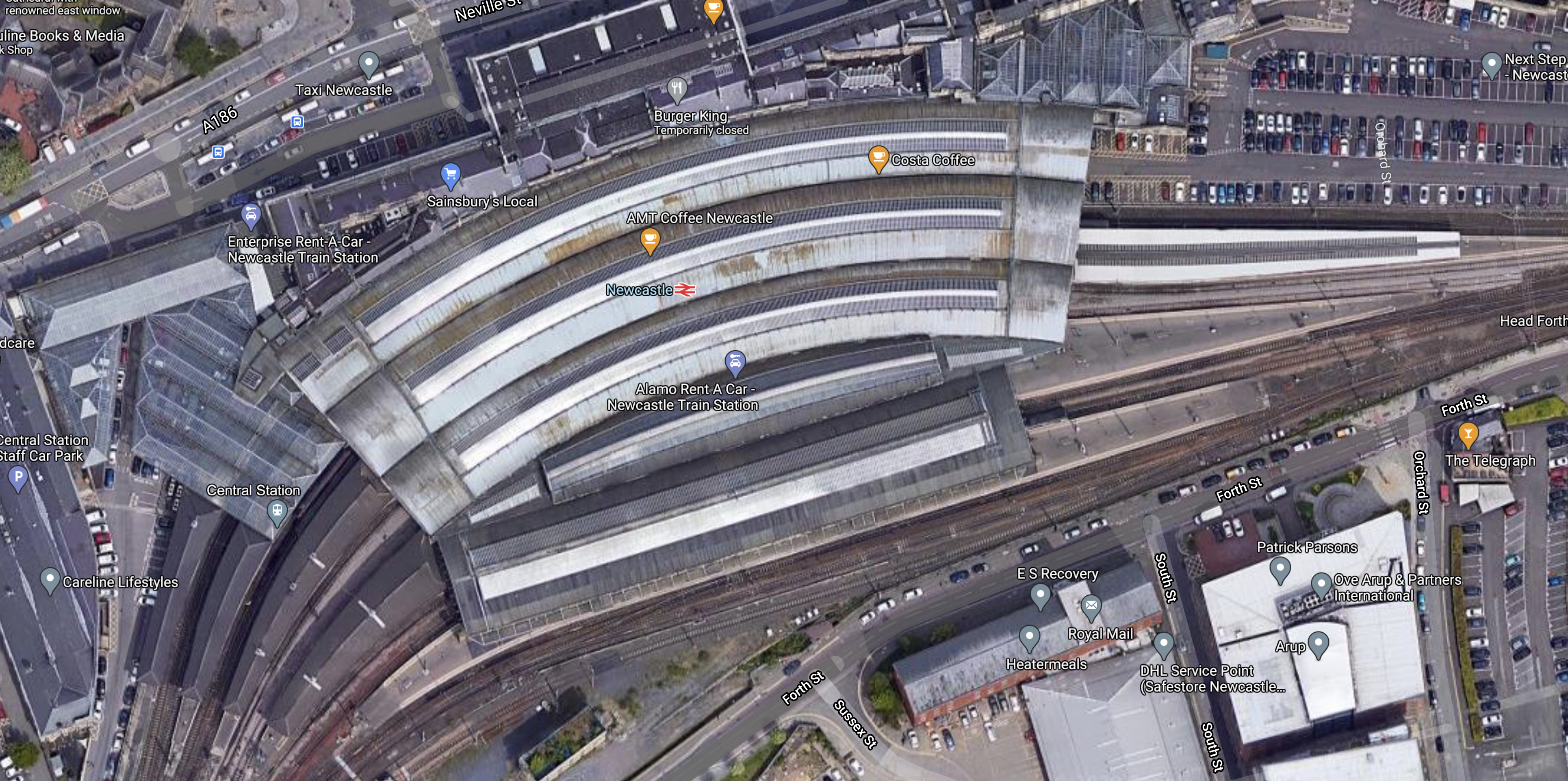
Note.
- It is built on a curve.
- It is on a cramped site.
- Platforms are numbered from 1 at the top to 8 at the bottom.
- Platform 2 seems to be used for all express services going North.
- Platforms 3 and 4 seem to be used for all express services going South.
- Not all platforms would appear to be long enough for nine-car Class 80x trains.
I am certain, that any nation with a sophisticated railway system wouldn’t build a station on a curve with no avoiding lines like Newcastle these days.
Network Rail have a plan to sort out Darlington station and I’m sure they’d like to sort out Newcastle as well!
Current Long Distance Trains Through And To Newcastle
These include.
- CrossCountry – Plymouth and Edinburgh or Glasgow via Alnmouth, Berwick-upon-Tweed and Dunbar.
- CrossCountry – Southampton Central or Reading and Newcastle.
- LNER – King’s Cross and Edinburgh via Berwick-upon-Tweed
- LNER – King’s Cross and Edinburgh via Alnmouth
- TransPennine Express – Liverpool Lime Street and Edinburgh via Morpeth
- TransPennine Express – Manchester Airport and Newcastle.
Note.
- All have a frequency of one train per hour (tph)
- All trains call at Newcastle.
- Two tph terminate at Newcastle and four tph terminate at Edinburgh or beyond.
There is also a new and Edinburgh service from East Coast Trains, that will start this year.
- It will run five trains per day (tpd).
- It will call at Newcastle.
- It will stop at Morpeth between Newcastle and Edinburgh.
There will also be High Speed Two services to Newcastle in a few years.
- There will be two tph between Euston and Newcastle
- There will be one tph between Birmingham Curzon Street and Newcastle.
Note.
- All services will be run by 200 metre long High Speed Two Classic-Compatible trains.
- There is no High Speed Two service to Newcastle, that calls at Leeds.
- Only one High Speed Two service to Newcastle calls at East Midlands Hub.
I suspect High Speed Two services need a dedicated platform at Newcastle, especially, if another High Speed Two service were to be added.
Extra Paths For LNER
In the December 2020 Edition of Modern Railways, there is an article, which is entitled LNER Seeks 10 More Bi-Modes.
This is the last paragraph.
Infrastructure upgrades are due to prompt a timetable recast in May 2022 (delayed from December 2021), from which point LNER will operate 6.5 trains per hour out of King’s Cross, compared to five today. As an interim measure LNER is retaining seven rakes of Mk. 4 coaches hauled by 12 Class 91 locomotives to supplement the Azuma fleet and support its timetable ambitions until new trains are delivered.
There would certainly appear to be a path available if LNER wanted to increase the frequency of trains between King’s Cross and Edinburgh from the current two trains per hour (tph) to three.
I laid out how I would use this third path to Edinburgh in A New Elizabethan.
The Possible Long Distance Trains Through And To Newcastle
These trains can be summed up as follows.
- 1 tph – CrossCountry – Plymouth and Edinburgh or Glasgow via Alnmouth, Berwick-upon-Tweed and Dunbar.
- 1 tph – CrossCountry – Southampton Central or Reading and Newcastle.
- 1 tph – LNER – King’s Cross and Edinburgh via Berwick-upon-Tweed
- 1 tph – LNER – King’s Cross and Edinburgh via Alnmouth
- 1 tph – TransPennine Express – Liverpool Lime Street and Edinburgh via Morpeth
- 1 tph – TransPennine Express – Manchester Airport and Newcastle.
- 5 tpd – East Coast Trains – King’s Cross and Edinburgh via Morpeth
- 2 tph – High Speed Two – Euston and Newcastle
- 1 tph – High Speed Two – Birmingham Curzon Street and Newcastle
- 1 tph – LNER – King’s Cross and Edinburgh – Extra service
This is ten tph and the five tpd of East Coast Trains.
Capacity Between Newcastle And Edinburgh
I wonder what capacity and linespeed would be possible on the East Coast Main Line between Newcastle and Edinburgh.
There are a few freight trains and some suburban electrics at the Northern end, but I suspect that the route could handle ten tph with some upgrades.
Edinburgh As A Terminal
Consider.
- Not all trains terminate at Edinburgh, but several tpd go through to places like Aberdeen, Glasgow, Inverness and Stirling.
- Edinburgh has several shorter East-facing bay platforms, that can take five-car Class 802 trains.
- Edinburgh has undergone a lot of reconstruction in recent years, so that it can turn more trains.
I very much feel that Edinburgh could handle, at least ten tph from the South.
Conclusion
I think it would be possible to extend all trains to Newcastle to at least Edinburgh.
Would it increase passenger capacity between the two capitals?
It would certainly avoid the difficult and expensive rebuilding at Newcastle station.
 The Anonymous Widower