Station Stop Performance Of The Intercity Tri-Mode Battery Train
Hitachi have stated that the their Intercity Tri-Mode Battery Trains will not use their diesel engines in stations and to leave the station.
The first Intercity Tri-Mode Battery Trains will be conversions of Class 802 trains.
This page on the Eversholt Rail web site, has a data sheet for a Class 802 train.
The data sheet shows the following for a five-car Class 802 train.
- It can accelerate to 120 kph/75 mph in 100 seconds in electric mode.
- It can accelerate to 160 kph/100 mph in 160 seconds in electric mode.
- It can accelerate to 120 kph/75 mph in 140 seconds in diesel mode.
- It can decelerate from 120 kph/75 mph in 50 seconds in electric mode.
Note.
- 75 mph is the operating speed of the Cornish Main Line and possibly the Highland Main Line.
- 100 mph is the operating speed for a lot of routes in the UK.
- It would appear that trains accelerate to 75 mph forty second faster in electric mode, compared to diesel mode.
- In diesel mode acceleration slows markedly once 100 kph is attained.
Can we assume that performance in battery mode, will be the same as in electric mode?
I am always being told by drivers of electric cars, trains and buses, that they have sparkling performance and my experience of riding in battery electric trains, indicates to me, that if the battery packs are well-engineered, then it is likely that performance in battery mode could be similar to electric mode, although acceleration and operating speed my be reduced to enable a longer range.
If this is the case, then the following times for a station call with a 75 mph operating speed are possible.
- Electric mode – 50 + 60 + 100 = 210 seconds
- Diesel mode – 50 + 60 + 140 = 250 seconds
- Battery mode – 50 + 60 + 100 = 210 seconds
Note.
- The three figures for each mode are deceleration time, station dwell time and acceleration time.
- Times are measured from the start of deceleration from 75 mph, until the train accelerates back to 75 mph.
- I have assumed the train is in the station for one minute.
I suspect with a stop from 100 mph, that there are greater savings to be made than the forty seconds at 75 mph, due to the reduced acceleration in diesel mode past 100 kph.
Savings Between London Paddington And Penzance
There are fifteen stops between London Paddington and Penzance, which could mean over ten minutes could be saved on the journey.
This may not seem that significant, but it should be born in mind, that the fastest journey times between London and Penzance are between five hours and eight minutes and five hours and fourteen minutes.
So these small savings could bring a London Paddington and Penzance journey much closer to five hours.
Savings Between London Kings Cross And Inverness
There are probably not as great savings to be made on this route.
- The electrification runs as far as Stirling.
- There are only five intermediate stops between Stirling and Inverness
- Stirling and Inverness are 151 miles apart.
On the other hand, the route has a lot of gradients, which may give opportunities to use the batteries to boost power on climbs and save fuel and emissions.
Conclusion
Replacing one or more of the diesel engines on a Class 800, 802, 805 or 810 train, on a route, where the full complement of diesel engines is not required, may well result in time savings on the journey, simply by reducing the time taken to accelerate back to operating speed.
I have indicated two routes, where savings can be made, but there may be other routes, where savings are possible.
A London Mongrel Gets Ready For Christmas
I constantly, refer to myself as a London Mongrel, as my father did.
This extract from a previous post, explains why I do.
On the other hand, I’m a London Mongrel of German Jewish and French Huguenot roots, with quarters of stubborn Devonian and solid Northants yeoman stock thrown in. A large proportion of my ancestors are also real East Enders and of course my father was a genuine Cockney.
The older I get, the more I think, the Devonian genes of my Dalston-born maternal grandmother are asserting themselves.
I was going to my son’s house for Christmas Dinner, but we felt last night, that it was best to call it off, as although, what we had planned would have been within the rules, it would be better not to take any chances.
Yesterday, there was an article in The Times about how Michelin-starred chefs were doing Christmas meals in a box for home warming through!
So last night, I bought one for sixty-one pounds from Roasted by Jack and Scott.
I’ve already got the beer in, as this picture shows.
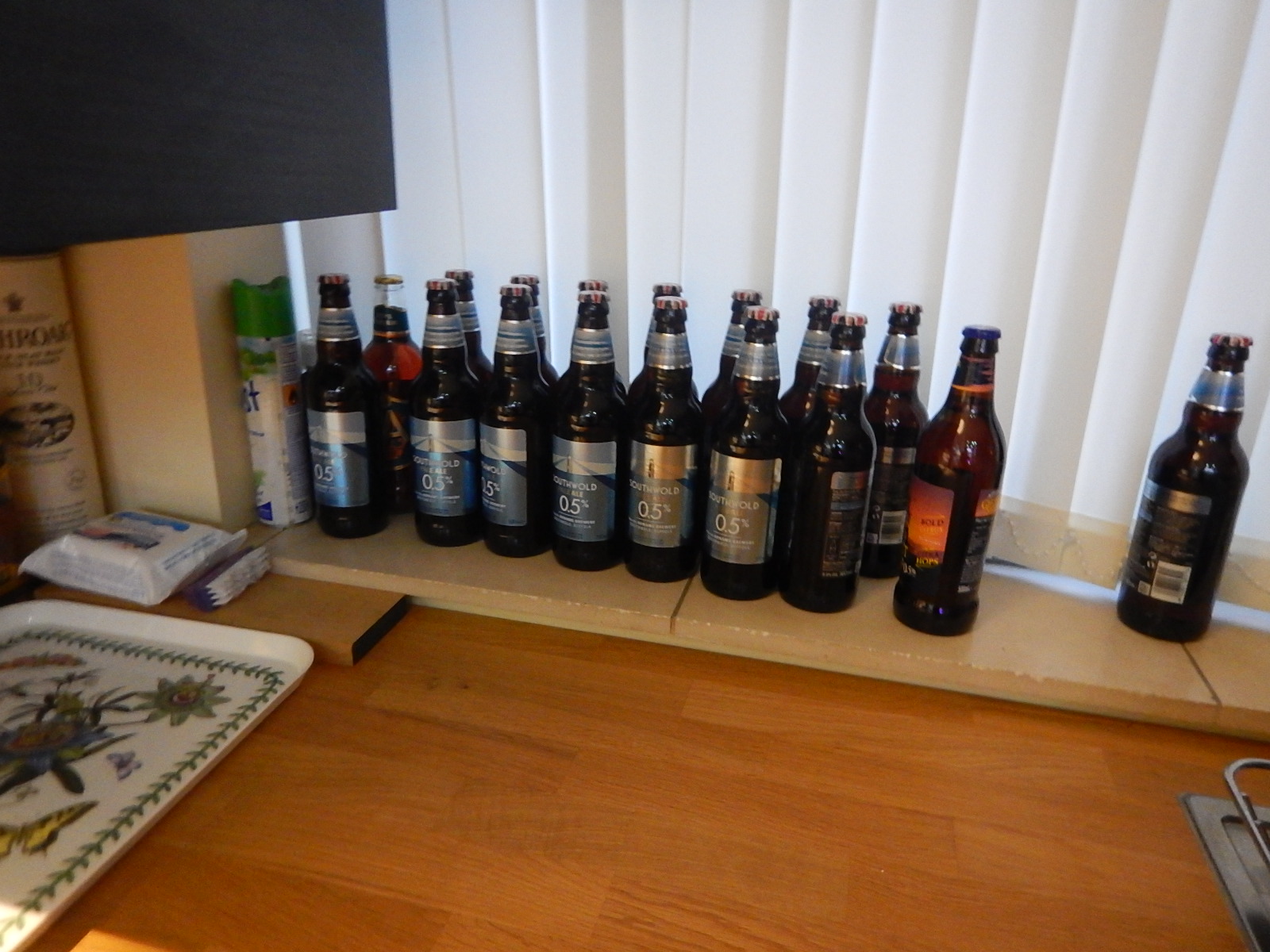
But then it’s all gluten-free, low-alcohol beer from Adnams, that tastes just like the halves from the same brewery, that my father used to buy for me sixty years ago.
My father didn’t want me to be the alcoholic his father was, so he introduced me to beer in social settings at an early age and now at seventy-three, I can honestly say, that, there are few times in my past, where I’ve got really drunk. So thank you, Dad!
But then my father was unconventional and didn’t follow the rules.
A year or so ago, I was reminded of a story about my father by someone I was at school with at Minchenden.
My father had ordered a new Vanden Plas Princess 1100 from a garage near the school. So one morning over breakfast, he asked the seventeen-year-old me, if I wouldn’t mind picking up the car after school and bring it home.
So after school, I picked up the car and took it home.
I can’t remember, if I gave any of my school-mates a lift. But I may have done!
Football
The one problem, I have is not being able to watch Premier League football on television, except on Match of the Day.
The Premier League have sold the Christmas rights to Amazon, which is a company, I don’t do business with!
Anyway, as the pictures come by broadband, I doubt I’d be able to watch it, as my broadband is crap.
BT told my MP, it’s because I’m too close to the exchange!
Conclusion
I’ll be OK. But then like my father, my sons and my granddaughter, we all seem happy in our own company.
I am also lucky in being coeliac on a gluten-free diet!
The more I research my health, the more I’m convinced that my genes have given me a strong immune system and that is protecting me from the covids.
But then, self-isolating by habit is not a bad trait in these terrible times.
New Form Of Solar Energy To Enter US Market
The title of this post, is the same as that of this article on abc News.
This is the first few paragraphs.
Organic energy is getting a jolt with the launch of GO-OPV’s ORENgE system in North America.
Organic energy uses a thin film panel to capture the sun’s rays and converts it to power, similar to traditional solar power.
The panels could be used for windows or trucks, phone or computer chargers, or it can be a building-integrated photovoltaics in glass.
This sounds good to me!
My South-facing windows make air-conditioning a must in my house.
But my air-conditioning broke in 2018 and no-one has been able to fix it!
This technology would sort it out in a trice!
Conclusion
This is technology to watch.
Report Reveals The Environmental Benefits HS2 Will Deliver
The title of this post, is the same as that of this article on Rail Technology Magazine.
This is the introductory paragraph.
A significant report from the High-Speed Rail Group has been published today and details how the environmental team working on HS2 are delivering connected, climate-resilient habitats at a new scale, raising ambition for future infrastructure projects.
The report also suggests that High Speed Two will bring forward other projects.
The Borders Railway
The article says this about the Borders Railway.
Besides providing capacity, an extended high-speed rail network could catalyse wider public transport upgrades, such as improving the case for reopening the Borders Railway to Carlisle.
It appears to me, that to go South, from towns like Galashiels, Hawick, Peebles and Selkirk will be quicker if you change at Carlisle to High Speed Two.
Battery Electric Trains On The Borders Railway
The Borders Railway could also be one, that is ideal for battery electric operation.
- It is already electrified at the Edinburgh end of the route.
- Newcraighall station, where the current wires end, is only thirty miles or so from the current end of the line at Tweedbank.
- Tweedbank and Hawick are about 15 miles.
- At the Southern end of the route it joins the West Coast Main Line to the North of Carlisle.
- Hawick and the West Coast Main are about 35 miles.
- The West Coast Main Line is fully electrified.
This Hitachi infographic gives the specification of their Regional Battery Train

As Hitachi and others are talking of trains with a range of over fifty miles on batteries, I can see a sensible plan evolving to run battery electric trains between Edinburgh and Carlisle.
- At both ends trains would join the Borders Railway with full batteries.
- It might be sensible to extend the electrification at both ends for perhaps five to ten miles.
- From the South trains could certainly reach Hawick and might possibly be able to reach Tweedbank.
- From the North trains could certainly reach Tweedbank and might possibly be able to reach Hawick.
I feel that by using the best of modern battery technology and with charging during extended stops at Hawick and Tweedbank, battery electric trains could work between Carlisle and Edinburgh.
Faradair’s BEHA Hybrid Aircraft Boosted By Partnerships
The title of this post, is the same as that of this article on AINonline.
This is the introductory paragraph.
Faradair, the UK company developing a hybrid-electric short takeoff and landing aircraft for applications including regional airline service, on Thursday announced four new risk-sharing partners. Honeywell, MagniX, Cambridge Consultants, and Nova Systems, have all signed up to contribute to the development of the Bio Electric Hybrid Aircraft (BEHA), which is expected to enter service in 2026.
Some points from the article.
- The aircraft is bio-electric as it is powered by a small gas-turbine generator, which drives a contra-rotating ducted fan, through a pair of electric-motors.
- It has a quick-change interior, that can handle 18 passengers or five tonnes of cargo.
- Range is given as 1,150 miles, with a service ceiling of 14,000 feet and a speed of up to 230 mph.
The Faradair web site gives other useful data.
- Wingspan is 57 ft.
- Length is 48 ft. 2 in.
The article also discloses an innovative way of marketing the aircraft, which looks to me, like a modern update to how the company I helped found; Metier Management Systems, leased Artemis project management computer systems, several decades ago.
Comparison With Eviation Alice
I must compare the Faradair BEMHA with the Eviation Alice.
The Alice can carry nine passengers.
- It cruises at 276 mph.
- Range is 620 miles
- Service ceiling is 12,500 ft.
- Wingspan is 52 ft. 11 in.
- Length is 43.3 ft.
The Alice would appear to be slightly smaller, with a shorter range.
- If you look at the pictures of the two aircraft on the Faradair and Eviation Alice web sites, you will see that they are radical designs.
- The Eviation Alice is fully electric, whereas the Faradair BEHA has a hybrid engine based on a small gas turbine running on aviation biofuel.
- Both aircraft use MagniX electric motors.
- Both aircraft fit into defined segments of the aviation market.
I very much believe that we’ll be seeing more unusual zero-carbon and carbon-neutral aircraft designs in the next few years.
A few thoughts.
Battery-Electric or Gas Turbine?
The Eviation Alice is solely powered by a battery, whereas the Faradair BMHA uses a hybrid engine based on a small gas turbine running on aviation biofuel.
Airbus built an experimental aircraft called the Airbus E-Fan X. This aircraft was to have used a gas-turbine and a battery. The aircraft was cancelled because of the Covid-19 pandemic.
So Faradair seem to be going a similar route to Airbus.
The AINonline article says this about Honeywell’s involvement.
Honeywell will support Faradair in producing a turbogenerator based on its gas turbine and generator technologies that is able to run on sustainable aviation fuel. The U.S. aerospace group will also contribute to other systems for BEHA, including avionics and flight controls.
According to Wikipedia, Honeywell certainly have lots of experience of small gas-turbine engines. They also make large numbers of auxiliary power units for aircraft.
The big disadvantage of the battery approach, is surely the weight of the battery, which needs to be large to have enough energy for the flight.
- But electric power also restricts the aircraft to airports with recharging facilities. This must reduce the flexibility of the aircraft.
- And also what happens after a diversion caused by weather, a passenger becoming unwell or some other circumstance, where the aircraft ends up at an airport with no handling for electric aircraft?
But with an aircraft that only needs sustainable aviation fuel, it can be filled up from a bowser used for small airliners and business jets, that are running on that fuel, as many will be.
If you want to be zero-carbon perhaps it would be better to fuel the gas-turbine with hydrogen.
Airbus seem to have come to that conclusion with their future plans, that I wrote about in ZEROe – Towards The World’s First Zero-Emission Commercial Aircraft.
I have a feeling that both Airbus and Faradair have shown, that to get enough range and for convenience, sustainable aviation fuel or hydrogen is better.
Nine Or Eighteen Seat?
Regulation has made nine- and nineteen-seats into niche markets and each developer is concentrating on a particular market.
- An airline that uses small airliners like Loganair, actually has aircraft in both groups.
- I suspect other airlines have similar mixed fleets.
- Cape Air, who are the lead customer for the Alice, only fly nine-seat aircraft.
The customer has a choice depending on the size of aircraft he needs.
Short Take-Off And Landing Capability
I have flown as a passenger several times in small airliners with a capacity of up to nineteen seats.
- Usually, they have been in a Cessna Caravan or Britten Normand Islander.
- In a couple of cases, the trip has involved a take-off or landing on a short or grass runway.
- Additionally, I have over a thousand hours in command of a Cessna 340, where I used on a lot of short runways.
I would feel that as a lot of small airports have short runways, that a short take-off and landing capability would be usefull or even a necessity for a small airliner.
Versatility
This Faradair press release is dated December 17th, 2020.
This paragraph details the aircrafts versatility.
The ambition is to deliver an initial portfolio of 300 Faradair®-owned BEHAs between 2026-2030, in the largest proof of concept air mobility programme ever created. Of these, 150 aircraft will be built in firefighting configuration, 75 as quick change (QC, passenger to cargo) aircraft, deployed at general aviation airfields globally, and 50 as pure freighters. The final 25 aircraft will be demonstrated in non-civilian government roles, including logistics, border and fisheries patrol, and drug interdiction.
Note.
I particularly like the quick-change variant.
As 125 aircraft can be used for freighters, has one of the large parcel carriers expressed an interest?
I must admit, I’m surprised that 150 aircraft will be needed in a firefighting configuration. Have they got a possible client?
To be continued…
New Device Separates Hydrogen From Natural Gas When The Two Gases Are Blended In Pipelines
The title of this post, is the same as that of on this article on Hydrogen Fuel News.
This is the introductory paragraph.
With clean hydrogen gaining recognition worldwide as the carbon-free fuel capable of making a significant contribution to addressing climate change, Southern California Gas Co. (SoCalGas) today announced it will field test a new technology that can simultaneously separate and compress hydrogen from a blend of hydrogen and natural gas.
It may sound rather mundane, but it means, you can convert surplus electricity into hydrogen and blend it with natural gas and distribute it in the local natural gas grid.
- As natural gas grids can contain a proportion of hydrogen, this shouldn’t be a problem.
- Any user, who needs hydrogen connects one of these clever devices to the grid and it separates out the hydrogen, for your use.
- All very simple and efficient, as you don’t need a second gas grid for hydrogen.
I very much like this idea, which was developed by a Dutch company called HyET Hydrogen.
There is also an explanatory video.
This invention could change the world!
Thameslink Is Back On The London Tube Map
The title of this post, is the same as that, of this this article on Ian Visits.
Thameslink last appeared on the tub map in 1999.
I’m glad it’s back.
I regularly use Thameslink as a quick route across London, especially, if I want to go to Tate Modern, as the gallery is a short walk from Blackfriars station.
Hydrogen Super-Hub May Be Headed To UK’s Port Of Southampton
The title of this post, is the same as that of this article on Hydrogen Fuel News.
It is an interesting article and behind Southampton’s move is this proposition.
The hope is that making the location a hydrogen super-hub would greatly reduce its CO2 emissions.
This paragraph, explains what they will do.
This location would not focus on green H2, but would instead use carbon capture, usage, and storage (CCUS) technology to cut back on the CO2 emissions produced through this hydrogen fuel production. In this way, it would provide a zero-emission fuel while decarbonizing much of the process of its creation. It would provide that locally produced fuel to industries and activities that are currently highly polluting.
Note.
- They are not going to generate green hydrogen, which is usually produced by electrolysis using renewable energy.
- So how will they create hydrogen?
- Increasingly, carbon capture, usage, and storage (CCUS) is being talked about, rather than just carbon capture and storage (CCS). Surely, this is an improvement.
- Will we see hydrogen-powered tugs and boats used by the port?
This could be a good move by the Port of Southampton.
Railfuture North East – New Station At Team Valley
When I wrote Beeching Reversal – Ferryhill Station Reopening, I used this document from Railfuture, for information.
The document lists a series of campaigns and a New Station At Team Valley was one.
This is their summary of this campaign.
Construct a new Station at Team Valley where ECML passes through Team Valley near the site of
the former Low Fell station. The station could be served by a new local service from York or
Darlington to Newcastle via the ECML, the existing TransPennine Express services, the new Teesside
– Tyneside service via the Stillington freight line, or by an extension of the proposed local service
from Northumberland. This proposal is particularly relevant because the roads into
Newcastle from the south are congested at peak times and there are air quality issues to the extent
that the City Council is considering charging arrangements to help limit the traffic flow
These are my thoughts.
Location Of The Station
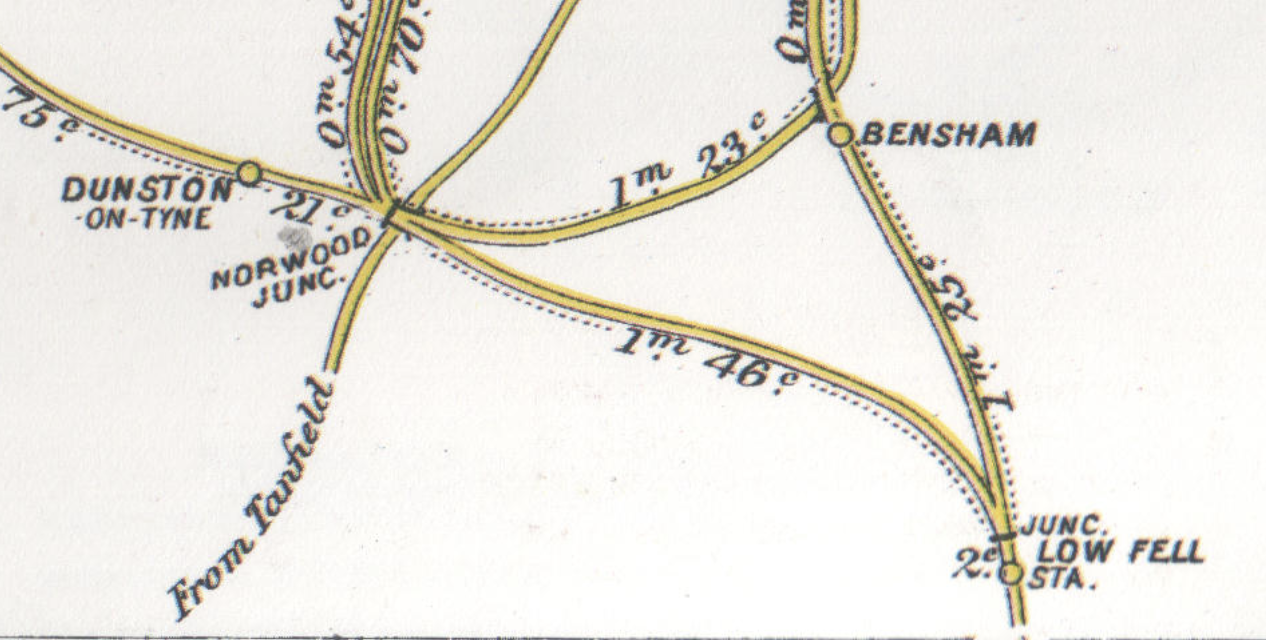
This map clipped from Wikipedia, shows the location of Low Fell station on the 1911 Railway Clearing House map.
Note.
- The still-open Dunston station in the West.
- Low Fell station at the Southern junction of the triangular junction.
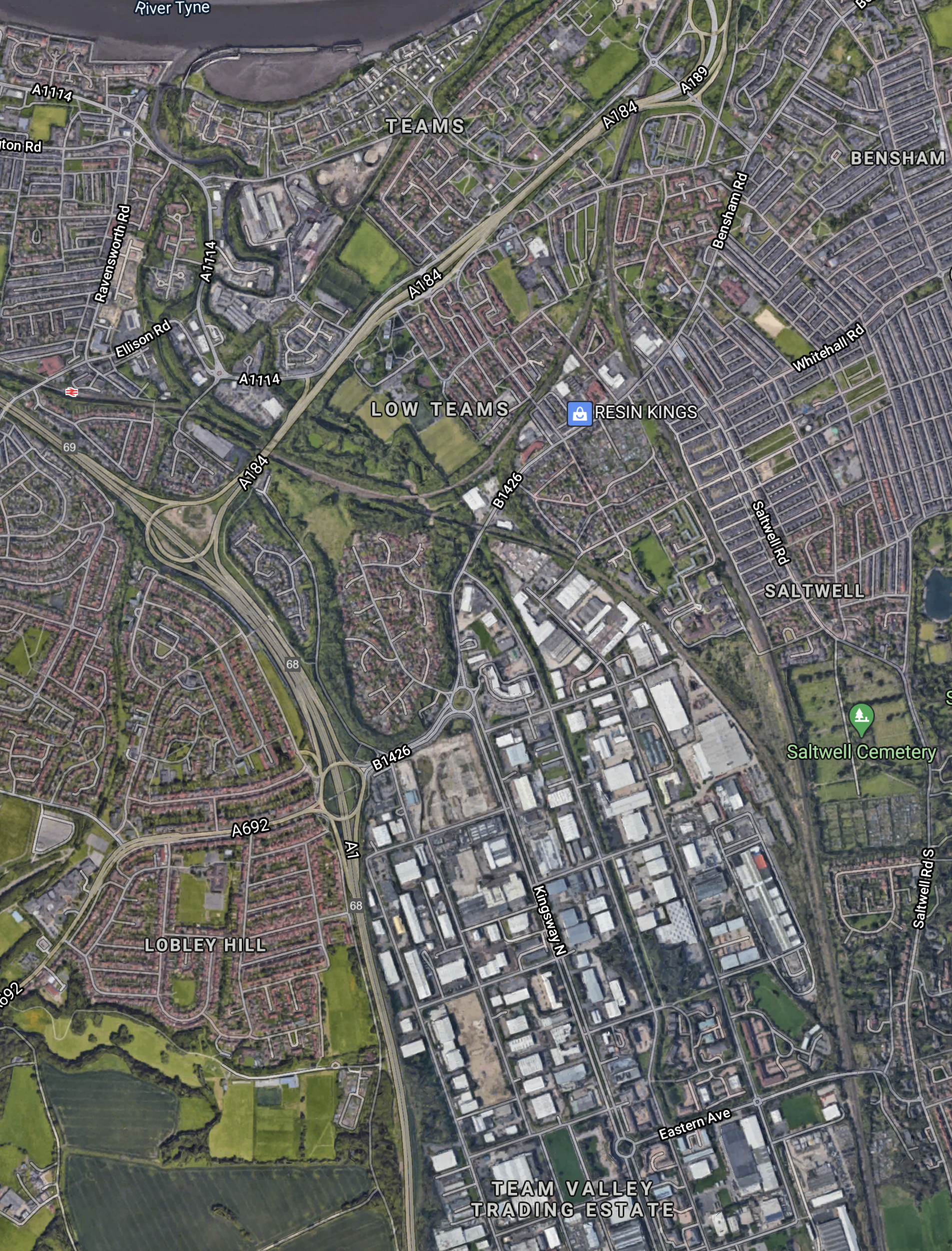
This Google Map shows the same lines today.
Note.
- Dunston station towards the North-East corner of the map.
- The triangular junction can be picked out.
- The Team Valley, where according to Wikipedia, there are 20,000 jobs and large retail stores.
- The East Coast Main Line passing down the Eastern side of Team Valley.
This second Google Map shows, where the station might have been.

Note.
- The giveaway is the road leading to the bridge is called Station Road.
- A Royal Mail site with lots of red vans is in the South-West corner of the map.
- But was the station North or South of Eastern Avenue?
There’s certainly a lot of space.
Reasons For The Station
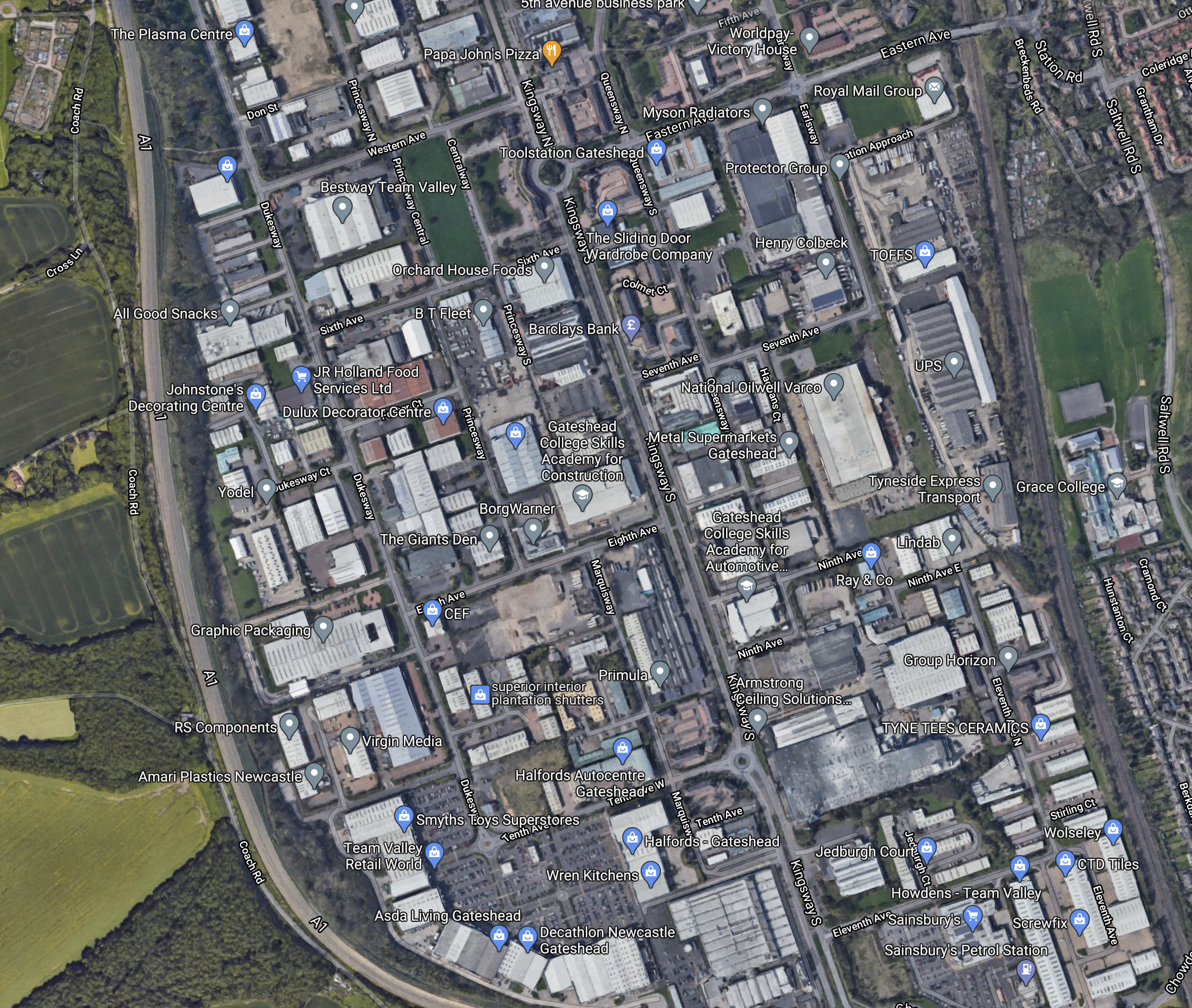
This Google Map sums up the reasons for the station.
Note.
- The East Coast Main Line running down the East side of the site.
- There are a lot of businesses in Team Valley.
- If 20,000 work at the site, how many visitors does it get in a day?
Several trading estates and large shopping centres have railway stations in the UK. So why not Team Valley?
I can understand why Railfuture said this in their proposal.
This proposal is particularly relevant because the roads into Newcastle from the south are congested at peak times and there are air quality issues to the extent that the City Council is considering charging arrangements to help limit the traffic flow
I certainly can’t fault Railfuture’s desire to see a station at Team Valley
Current Passenger Train Services Through Team Valley
These services currently pass the location of the proposed Team Valley station.
- LNER – London Kings Cross and Edinburgh via York, Darlington. Newcastle and Berwick-upon-Tweed
- LNER – London Kings Cross and Edinburgh via Peterborough, Newark North Gate, Doncaster, York, Darlington, Durham and Newcastle
- CrossCountry – Plymouth and Edinburgh via Totnes, Newton Abbot, Exeter St Davids, Tiverton Parkway, Taunton, Bristol Temple Meads, Bristol Parkway, Cheltenham Spa, Birmingham New Street, Derby, Chesterfield, Sheffield, Wakefield Westgate, Leeds, York, Darlington, Durham and Newcastle
- CrossCountry – Southampton and Newcastle via Birmingham New Street, Derby, Sheffield, Doncaster, York, Darlington and Durham
- TransPennine Express – Liverpool Lime Street and Edinburgh via Newton-le-Willows, Manchester Victoria, Huddersfield, Leeds, York, Darlington, Durham, Newcastle and Morpeth
- TransPennine Express – Manchester Airport and Newcastle via Manchester Piccadilly, Manchester Oxford Road, Manchester Victoria, Huddersfield, Dewsbury, Leeds, York, Northallerton, Darlington and Durham
Note.
- All trains have a frequency of one train per hour (tph)
- All trains call at York, Darlington and Newcastle.
- I have missed out some of the intermediate stations, where trains don’t call at least hourly.
- I have missed out stations South of Birmingham New Street.
- A few Northern Trains services pass through at Peak times or to go to and from depots.
I suspect some of these services could stop and to encourage commuters to and from Newcastle, Durham and Darlington to swap from car to train,
I also suspect that Team Valley station needs a frequency of at least two tph and if possible four! Four tph would give a Turn-up-and-Go service to Darlington, Newcastle and York.
Planned And Possible Future Passenger Train Services Through Team Valley
From various sources, these services are either planned or possible.
High Speed Two
High Speed Two are planning the following services, that will pass through.
- Birmingham Curzon Street and Newcastle via East Midlands Hub, York, Darlington and Durham.
- London Euston and Newcastle via Old Oak Common, East Midlands Hub and York.
- London Euston and Newcastle via Old Oak Common, East Midlands Hub, York and Darlington.
Note.
- All trains have a frequency of one tph.
- All trains call at York, East Midlands Hub, York and Newcastle.
- All trains will be 200 metres long.
It is extemely unlikely, that these trains will stop in Team Valley station, but I would feel, that the platforms should be able to accommodate these trains and other long trains, to future-proof the design and to cater for possible emergencies, diversions or engineering works.
The longest trains on the route would probably be one of the following.
- A pair of five-car Class 800 trains or similar, which would be 260 metres long.
- A High Speed Two Classic-Compatible train, which would be 200 metres long.
Unless provision needed to be made for pairs of High Speed Two Classic-Compatible trains.
East Coast Trains
From next year, East Coast Trains, intend to run a five trains per day (tpd) service between London and Edinburgh via Stevenage, Newcastle and Morpeth.
These will pass straight through Team Valley station.
Northern Powerhouse Rail
Northern Powerhouse Rail has an objective to to run four tph between Leeds and Newcastle in 58 minutes.
At present there are only three tph on this route, two tph from TransPennine Express and one tph from CrossCountry. All three services stop at Leeds, York, Darlington, Durham and Newcastle.
Northern Powerhouse Rail need to decide the stopping pattern for their four tph between Leeds and Newcastle, some of which could call at Team Valley
In Beeching Reversal – Ferryhill Station Reopening, I did a similar analysis to this for Ferryhill station and concluded that the fourth service should be a London Kings Cross and Edinburgh with just two stops at Newcastle and Leeds.
Railfuture’s Proposals
Railfuture said this in their document about services to Team Valley
The station could be served by a new local service from York or
Darlington to Newcastle via the ECML, the existing TransPennine Express services, the new Teesside
– Tyneside service via the Stillington freight line, or by an extension of the proposed local service
from Northumberland.
There are four services here.
- A local service from York or Darlington to Newcastle via the ECML.
- The existing TransPennine Express services.
- The new Teesside– Tyneside service via the Stillington freight line
- By an extension of the proposed local service from Northumberland.
I shall cover these three services in the next three sections.
A New Local Service From York Or Darlington To Newcastle Via The ECML
This service could have the following characteristics.
- It could call at York, Darlington, Northallerton, the new Ferryhill station, Durham, Chester-le-Street and Team Valley stations.
- It could be hourly or two tph.
- The Southern terminal could be York, Darlington or possibly Leeds.
- The route would be fully electrified, if the route between Leeds and York were to be finally wired.
If the Southern terminal were Leeds this would give Northern Powerhouse Rail, their fourth service between Leeds and Newcastle.
The Existing TransPennine Express Services
TransPennine Express runs these two services through Team Valley station.
- Liverpool Lime Street and Edinburgh via Newton-le-Willows, Manchester Victoria, Huddersfield, Leeds, York, Darlington, Durham, Newcastle and Morpeth
- Manchester Airport and Newcastle via Manchester Piccadilly, Manchester Oxford Road, Manchester Victoria, Huddersfield, Dewsbury, Leeds, York, Northallerton, Darlington and Durham
Note.
- You can make arguments for either or both trains to stop at Team Valley station.
- Both trains connect to Manchester Victoria, Huddersfield, Leeds, York, Darlington, Durham and Newcastle.
- You can argue for direct connections to Edinburgh, Liverpool Lime Street and Manchester Airport.
The arguments will be partly settled by the number of tickets purchased.
Tyneside And Teesside Via Ferryhill And The Stillington Freight Line
Will this proposed service call at Team Valley station?
- As this is likely to be the faster service between Tyneside and Teesside, I suspect this service will be a prime candidate to call at Team Valley station.
- It is also favoured to call by Railfuture.
It would be useful to know how many people from Teesside regularly go to Team Valley to work or buy something.
A Service To Northumberland
This would be a new service on a disused freight line to Ashington and Blyth.
Little has been settled yet about this line.
If trains went South of Team Valley, where would they terminate?
Thoughts On The Trains
It is likely, that Cross Country, East Coast Trains, High Speed Two, LNER andTransPennine Express will be running trains capable of 125 mph on the East Coast Main Line through Team Valley station.
In Beeching Reversal – Ferryhill Station Reopening, I said this about the trains for any passenger service that uses the East Coast Main Line between Newcastle and Ferryhill.
I also feel that as some of these services will be running on the East Coast Main Line between Ferryhill and Newcastle, it probably would be desirable for these services to be run by Hitachi’s Regional Battery Trains, which would be capable of maintaining the maximum speed for the route, as all the other passenger services can at present!
Increasingly, in the UK, over the last few years, we have seen increasing numbers of 110 mph local trains working on high speed lines, like the East Coast Main Line, Great Western Main Line, Midland Main Line and West Coast Main Lines, as these increase the capacity and mix better with 125 mph expresses.
But it is my belief that in the future we’ll be seeing more 125 mph services on main lines to increase the capacity.
- Great Western Railway are already running Class 800 trains to Oxford and Bedwyn from Paddington.
- In Call For ETCS On King’s Lynn Route, I wrote about using 125 mph trains to speed up all services into Kings Cross.
- When High Speed Two trains start sharing the East and West Coast Main Lines, all services would probably need to be fast services on the shared lines.
The specification of Hitachi’s Regional Battery Train is shown in this Hitachi infographic.
I am certain, that the train could be built to this specification for high speed routes, like the ones I indicated earlier to Bedwyn, Oxford, Kings Lynn and to share with High Speed Two.
- 125 mph on electrified lines.
- 140 mph on electrified lines with full in-cab digital ERTMS signalling.
- 100 mph on battery power for 56 miles (90 kilometres)
Many places in the UK, will join Bedwyn, Oxford and Thanet in having high speed commuter services to their regional large city.
Could There Be A Combined Service?
As I said earlier, Railfuture are proposing these four services in the North East.
- A local service from York or Darlington to Newcastle via the ECML.
- The existing TransPennine Express services.
- The new Teesside– Tyneside service via the Stillington freight line
- By an extension of the proposed local service from Northumberland.
In the same document, they also say this about a Newcastle and Berwick service via Morpeth.
Developing a North of Morpeth Local Service by extending local Newcastle – Morpeth services to
Berwick offering an hourly service calling at all stations, possibly linking to similar service from
Berwick to Edinburgh. This service need not terminate in Newcastle and could be extended to serve
Team Valley and areas in County Durham that are on electrified lines.
It strikes me, that if you add up all their proposals, Railfuture could be proposing a Berwick and York service with the following characteristics.
Hourly or two tph.
Northern terminus of Berwick or Blyth.
Southern terminus of Leeds, York or Darlington.
Routing via East Coast Main Line to the North of Ferryhill station.
Routing via East Coast Main Line or Stillington Line and Eaglescliffe to the South of Ferryhill station.
Calling at York, Northallerton, Darlington, Ferryhill, Chester-le-Street, Team Valley, Newcastle, Manors, Ceamlington, Morpeth, Pegswood, Widdrington, Acklington, Alnmouth and Chathill.
Trains would be a version of Hitachi’s Regional Battery Train or something like it, with the specification I proposed earlier.
- 125 mph on electrified lines.
- 140 mph on electrified lines with full in-cab digital ERTMS signalling.
- 100 mph on battery power for 56 miles (90 kilometres)
- A four or five car train would probably be sufficient.
It would effectively be a High Speed Metro. And probably, one of the first of many, that will be built around the world.
Conclusion
A new station at Team Valley seems a sensible idea.
As my logic shows, I think that between Berwick and York, is a section of line, that might be able to support a High Speed Metro.
 The Anonymous Widower