Coeliac Disease And Atrial Fibrillation
I am 75 and coeliac and I had or have atrial fibrillation. Cardiologists tell me that, the atrial fibrillation led to my stroke in 2011.
I should also say, that my father was an undiagnosed coeliac and he died from a stroke younger than I am now.
I typed the title of this post into Doctor Google.
I found this paper on Cureus, which is entitled Celiac Disease and Risk of Atrial Fibrillation: A Meta-Analysis and Systematic Review.
I will show two paragraphs from the Abstract,
This is the Introduction.
Several studies have found celiac disease may be associated with a variety of cardiac manifestations. Atrial fibrillation (AF) is one of the most common arrhythmias that can cause significant morbidity. However, the risk of atrial fibrillation in patients with celiac disease according to epidemiological studies remains unclear. The aim of this meta-analysis study is to assess the risk of atrial fibrillation in patients diagnosed with celiac disease compared to controls.
And this is the Conclusion.
A significant association between celiac disease and risk of atrial fibrillation was reported in this study. There is a 38% increased risk of atrial fibrillation. Additional studies are needed to clarify the mechanistic link between atrial fibrillation and celiac disease. Some of the limitations of this study are that all were observational studies, some were medical registry-based and there was high heterogeneity between studies.
One of the paper’s conclusions is more research needs to be done.
I know that I have a supercharged immune system, in that it seems to protect me from flu and the dreaded covids and it gave the AstraZeneca vaccine a good kicking. Research from Nottingham University has also shown, that coeliacs on a gluten-free diet have a 25 % lower risk of cancer compared to the general population.
So I asked Doctor Google if there was any link between the immune system and atrial fibrillation.
I found this paper on PubMed, which is entitled The Role Of Immune Cells In Atrial Fibrillation.
This was the Abstract.
Atrial fibrillation (AF) is the most common sustained arrhythmia, but its mechanisms are poorly understood. Recently, accumulating evidence indicates a link between immune response and AF, but the precise mechanism remains unclear. It should be noticed that the relationship between immune response and AF is complex. Whether immune response is a cause or a result of AF is unclear. As the functional unit of the immune system, immune cells may play a vital role in the immunological pathogenesis of AF. In this review, we briefly highlight the evidence on relationships between immune cells and AF, and discuss their potential roles in AF pathogenesis. We hope this review could provide new orientation and enlightenment for further research on AF mechanism.
One of the paper’s conclusions is more research needs to be done.
Conclusion
I feel a lot of research concerning coeliacs, their immune systems and atrial fibrillation should be done and this could lead to a better understanding of atrial fibrillation.
Hydrogen ICE Trucks Offer Lower Cost Shift Away From Diesel
The title of this post, is the same as that of this hydrogen news item from Ryse Hydrogen.
These three paragraphs put forward their view.
Truck manufacturers are offering fleet managers an alternative decarbonisation route that allows them to use clean hydrogen within a well-known environment: the internal combustion engine (ICE).
This U.S. engine giant Cummins will unveil a medium-duty concept truck powered by the H2-ICE at this week’s IAA Transportation exhibition in Hanover, Germany, while Westport Fuel Systems revealed its HPDI hydrogen ICE engine for heavy duty vehicles just last week.
Hydrogen ICE vehicles offer many of the benefits of hydrogen fuel cells housed within a technology that is already familiar to millions of mechanics and engineers around the world.
I agree with Ryse and feel that several companies are working on doing the same for smaller vehicles like cars and vans.
Extending the Elizabeth Line – Stratford To Walthamstow and Chingford
A lot of people in Walthamstow and Chingford would like a direct rail connection to Stratford with its shopping, sporting, entertainment and employment opportunities.
The Hall Farm Curve used to provide this connection, but it was removed in 1968, despite having been electrified in 1960.
This map from cartometro.com shows the curve.

Note.
- The Chingford branch line is shown in orange.
- The triple-track Stratford branch of the West Anglia Main Line crosses the Chingford branch line at right angles.
- Lea Bridge station reopened in 2016.
It has been stated that the Hall Farm Curve would be reinstated as an electrified single track.
There would probably be a need for a crossover to the North of the former Hall Farm junction to enable trains from Lea Bridge to get to the Chingford-bound track.
The Hall Farm Curve would also give access to Elizabeth Line and Greater Anglia services at Stratford. But it may be that when the Elizabeth Line opens fully in November, travellers get used to going into Liverpool Street and changing there.
Services Between Stratford and Chingford Via Walthamstow
Providing this service might be difficult, but not impossible.
- Trains could use the High Meads Loop at Stratford.
- Digital signalling may allow more trains to be squeezed in.
- Chingford could certainly handle eight trains per hour (tph)
But there is always the problem of the level crossing at Highams Park station.
Changing Between The Elizabeth And Chingford Branch Lines At Liverpool Street Station
Consider.
- At present Liverpool Street station on the Lizzie Line has sixteen trains per hour (tph).
- Eight tph go to both Eastern termini at Abbey Wood and Shenfield.
- In the West two tph go to each of Heathrow Terminal 4, Heathrow Terminal 5, Maidenhead and Reading, with the other eight tph reversing at Paddington.
- If you travel in the Eastern end of a Lizzie Line train, you should enter Liverpool Street station opposite to where all London Overground services including those to and from Chingford terminate in the station.
- The walking route between the Elizabeth And Chingford Branch Lines At Liverpool Street is step-free.
Some passengers will use this route to places like Walthamstow Central, but others moan, that there is no direct connection between the Victoria and Lizzie Lines.
Stations Without Step-Free Access On The Chingford Branch Line
These stations on the Chingford Branch Line do not have full step-free access between train and street.
- Bethnal Green
- Cambridge Heath
- London Fields
- Hackney Downs
- Clapton
- St. James Street
- Walthamstow Central
- Wood Street
Only Hackney Downs and Walthamstow Central have been mentioned with respect to installing some form of step-free access.
Increasing Capacity Between Liverpool Street And Chingford
The Chingford Branch Line can handle pairs of four-car trains and running these all day, would surely be the best way to increase capacity.
Conclusion
If money was no object, the Chingford Branch Line could be improved to make it a much better feeder line for the Elizabeth Line.
I also have a feeling, that a lot of people living in North-East London will switch their travelling from the Victoria Line to the Chingford Branch Line and the Lizzie Line.
Energy Dome To Partner With Ørsted For Energy Storage
The title of this post, is the same as that of this article on CleanTechnica.
This paragraph from the long article, gives details of the partnership.
I got a press release from Energy Dome this past week telling me that its technology has attracted interest from Ørsted, the Danish company that is a global leader in wind turbine technology. The two companies have signed a memorandum of understand that will allow them to explore the feasibility of deploying of a 20 MW/200 MWh Energy Dome facility at one or more Ørsted sites.
Is this the first deal between a major wind farm developer and a third-party non-lithium battery developer?
The article on CleanTechnica is very much a must-read and it goes into detail about the technology behind Energy Dome’s unique CO2 battery.
These are my thoughts.
Energy Dome Has A UK Office
Is this significant?
- The UK has a large need for energy storage than any other country in Europe, as we have lots of renewable energy generation, that could benefit.
- Most Italians speak good English.
- The UK government is prepared to develop innovative payment schemes for renewable energy.
- Their is a long history of Italians in the United Kingdom.
- Italians are distributed all over the UK.
- Some of the best Italian chefs are resident in the UK.
- The UK market is not biased against foreign customers.
I wouldn’t be surprised, if Energy Dome targeted the UK market.
Ørsted
Some facts about Ørsted.
- Ørsted are the largest energy company in Denmark.
- As of January 2022, the company is the world’s largest developer of offshore wind power by amount of built offshore wind farms.
- Ørsted own or have shares in fifteen offshore wind farms in the UK, which have a total capacity of 8731 MW.
- Ørsted have no interests in onshore wind in the UK.
- Ørsted divested itself of its last onshore wind farm in 2014.
The fact that Ørsted has partnered with Energy Dome is highly significant, as in my experience large powerful companies don’t partner with smaller start-ups without a lot of technical due diligence.
Use Of A 20 MW/200 MWh Energy Dome
I suspect that Ørsted will deploy their first 20 MW/200 MWh Energy Dome facility with onshore wind.
When you compare the 20 MW/200 MWh Energy Dome with the 1.5 GW/30 GWh Coire Glas pumped storage hydroelectric power station, it is only a fairly small storage system, in both terms of output and storage.
As an Electrical and Control Engineer, I suspect that will mainly be used with smaller offshore wind farms to smooth the output, rather than as serious stand-by power for a large GW-sized wind farm.
In the UK, Ørsted has three smaller wind farms, that could be suitable.
- Barrow – 90 MW
- Burbo Bank – 90 MW
- Gunfleet Sands 3 – 12W
Note.
- All are a few miles offshore.
- Gunfleet Sands 3 was built to test two l6 MW turbines.
- All the three wind farms are over twelve years old.
I think it is unlikely, that any of these three wind farms will be fitted with the Energy Dome.
I do believe though, that a 20 MW/200 MWh Energy Dome facility could work well with the Barrow wind farm, as it is a simple farm not connected to any others.
Amber Train Links The Baltic States To Western Europe
The title of this post, is the same as that of this article on Railway Gazette.
These paragraphs outline the freight link.
A trial Amber Train service between the Baltic States left the Estonian port of Muuga on September 13, arriving the following day at Kaunas in Lithuanian where its load of semi-trailers was transferred to 1 435 mm gauge wagons for onward transport to destinations including France and the Netherlands.
The 1 520 mm gauge wagons returned to Muuga with trailers for onward sea transport to Finland.
This Google Map shows the Estonian port of Muuga Harbour.
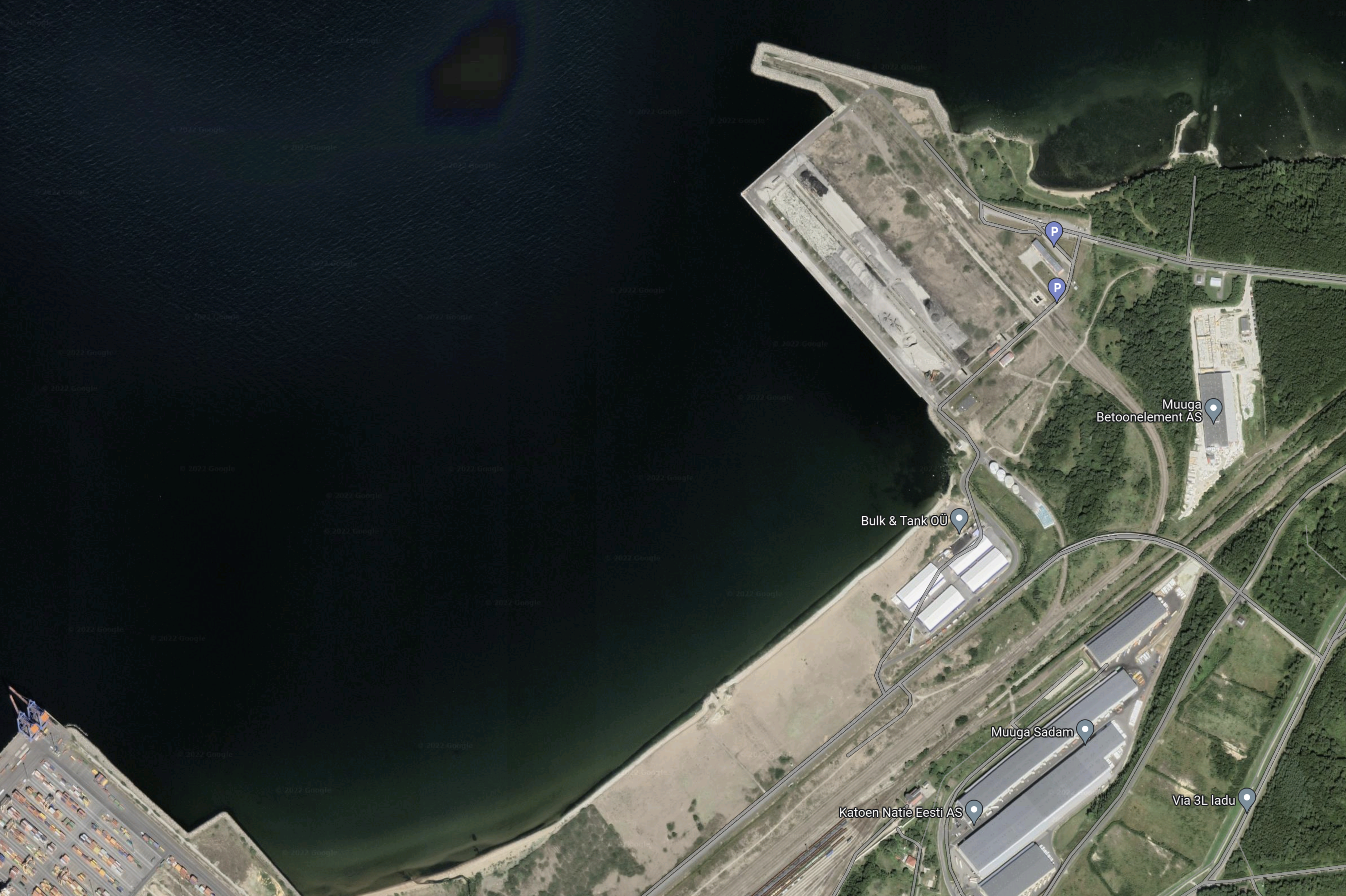
Note.
- Muuga Harbour is the largest cargo port in Estonia, located on the southern coast of the Gulf of Finland, 17 kilometres (11 mi) northeast of the capital Tallinn
- It is one of the few ice-free ports in northernmost Europe and one of the most modern ports in the Baltic Sea region.
- Enlarging the picture shows a lot of rail lines.
It looks like Muuga Harbour is an ideal Northern terminus for the Amber Train freight service.
This Google Map shows the area of the Kaunus Intermodal Terminal.

Note.
- The railway runs diagonally across the map.
- Estonia is to the North-East.
- Poland is to the South-West.
This map shows how the different gauges are used in the North-East of the previous map.
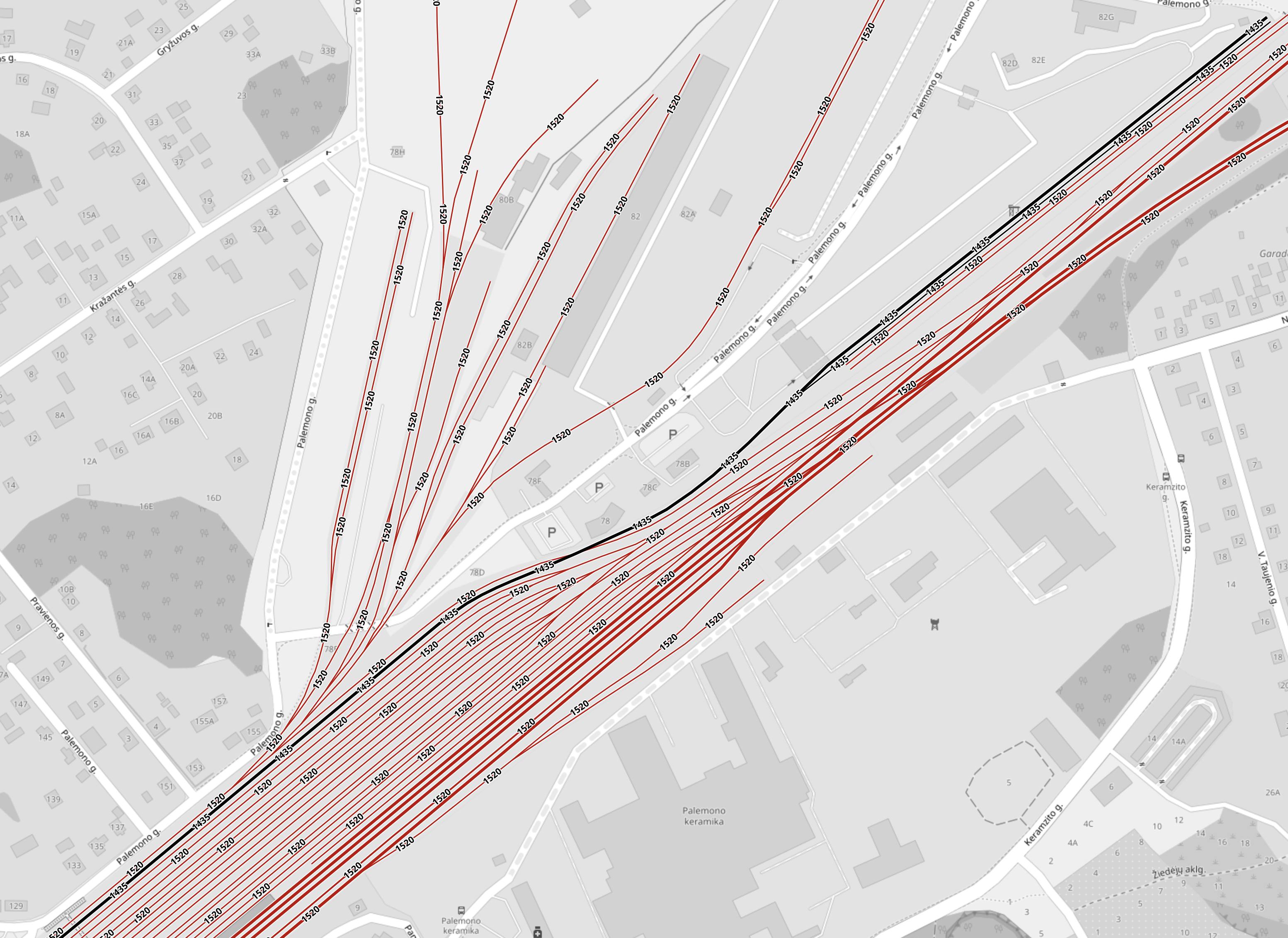
Note.
- Standard gauge tracks are shown in black.
- Russian gauge tracks are shown in red.
- The standard gauge track ends in the North-East corner of the map.
Trucks would probably moved between trains on parallel tracks in this freight terminal.
It appears to be a very simple way to run piggy-back trains of trucks between The Baltic States and Finland and Central and Western Europe.
Rail Baltica
According to Wikipedia, the location for the Kaunas Intermodal Terminal was chosen as it is compatible with the route of Rail Baltica, which will create a new standard gauge route between Kaunas and Tallinn in Estonia.
The Amber Train
The Amber Train has an impressive web site, where this is said on the home page.
Amber Train is a joint project of the national railways of Lithuania, Latvia and Estonia. It is an excellent example of cooperation, that offers road and railway clients convenient and efficient freight logistics.
Amber Train is an intermodal train, which runs on the route Šeštokai / Kaunas – Riga – Talinn, thus connecting the three Baltic States by railways and opening new business opportunities for freight shippers.
Exclusivity of the project is the connection of Western and North Europe, using the unique Šeštokai and Kaunas intermodal terminals, which enable the transshipment of freight from the European gauge to the 1520 mm gauge and vice versa.
The train is planned to run 2 times per week (with a future perspective to run up to 4 times per week), delivery time is 24 hours. Train length – up to 43 container wagons.
It is planned, that already in 2021 customers will be offered the opportunity to transport semi-trailers by railways via all three Baltic States. For this purpose, special “pocket” wagons are already in production.
Operations are managed by AB LTG Cargo (Part of Lithuanian Railways group), Latvia’s LDZ Loģistika and Estonia’s Operail.
It appears to be a well-thought out service.
A few years ago, I was on the roads of North-East Poland, about a hundred miles South of Kaunas.
These roads were crowded with large trucks going between The Baltic States and Finland and Central and Western Europe.
I suspect that once the Amber Train is fully established, a proportion of these trucks will go by rail.
Offshore Wind Extension Projects 2017
Surely this is old news from five years ago.
This page on the Crown Estate web site, starts with this statement.
Extensions to operational wind farms have proven to be a successful way of efficiently developing more offshore generating capacity.
I can accept that as a sensible policy.
In Wikipedia’s list of UK offshore wind farms, there are three farms; Beatrice Extension, Burbo Bank Extension and Walney Extension with Extension in their name, producing 1.5 GW of electricity.
The page then explains what the Crown Estate did in 2017 and what has happened since.
In February 2017 The Crown Estate launched an opportunity for existing wind farms to apply for project extensions. This opportunity closed in May 2018, with eight project applications received, all of which met our specified application criteria.
Since then, The Crown Estate has undertaken a plan level Habitats Regulations Assessment (HRA), to assess the possible impact of the proposed windfarm extensions on relevant nature conservation sites of European importance. Throughout the assessment process, The Crown Estate was supported by expert independent advisors, and consulted with the statutory marine planning authorities, the statutory nature conservation bodies and a number of non-governmental stakeholders.
In August 2019, The Crown Estate announced the conclusion of the HRA, confirming that seven of the 2017 extension application projects, representing a total generating capacity of 2.85GW, would progress to the award of development rights.
Note.
- They did a lot of consulting.
- Seven projects, which total 2.85 GW or about 400 MW per extension have received development rights.
The projects are.
- Sheringham Shoal offshore wind farm – 719 MW with Dudgeon
- Dudgeon offshore wind farm – 719 MW with Sheringham Shoal
- Greater Gabbard offshore wind farm
- Galloper offshore wind farm
- Rampion offshore wind farm – 1200 MW
- Gwynt y Môr offshore wind farm – 1100 MW
- Thanet offshore wind farm – 340 MW
Note.
- Where I have a figure, it’s on the right.
- They already seem to have exceeded the Crown Estate’s figure.
- But then if they go large or accelerate the project, the developers will make more money. The upside of that is we get more electricity earlier.
These seven Extension projects are being accelerated by the Government in the 2022 Growth Plan.
Could Chiltern Go Battery-Electric?
In the October 2022 Edition of Modern Railways, there is an article, which is entitled Chiltern Considers Turbo Future, with a sub-title of Battery Replacement Could Be On The Cards.
These are the first two paragraphs.
In early September Chiltern Railways was preparing to launch a market sounding exercise to consider options for the future of the Class 165 Turbo DMU fleet.
The operator has 28×2-car and 11×3-car ‘165s’. which operate alongside its more modern Class 168 DMUs and its loco-hauled sets. The market sounding exercise will consider two options for the future of the fleet – some sort of hybrid conversion, or outright replacement.
The Class 165 Trains
The Class 165 trains were built in 1990-1991.
- Maximum Speed – 75 mph
- Prime Movers – One per car, Perkins 2006-TWH
- 2-car Trains – 28
- 3-car Trains – 11
One is being converted to a diesel/battery hybrid.
The Class 168 Trains
The Class 168 trains were built in 1998-2004.
- Maximum Speed – 100 mph
- Prime Movers – One per car, MTU 6R 183TD13H
- 2-car Trains – 9
- 3-car Trains – 8
- 4-car Trains – 11
One has been converted to a diesel/battery hybrid.
Conversion To Hybrid Operation
If this proves to be feasible, it will surely be the more affordable of the two options.
But it does leave Chiltern with a mixed fleet with two types of train with different maximum speeds and these lengths.
- 2-car Trains – 37
- 3-car Trains – 19
- 4-car Trains – 11
Would a fleet of similar trains, with perhaps a maximum speed of 100 mph, be better operationally?
Battery-Electric Operation
The Modern Railways article introduces the concept of battery-electric operation with this paragraph.
If a replacement fleet is considered the best option for the Turbo units, the replacements could take the form of a straight battery EMU, taking advantage of recent advances in ‘fast charge’ technology.
The article also says this about battery technology and electrification.
There is optimism that advances in battery technology will provide a smooth pathway to decarbonise Chiltern’s operations – the company serves the only non-electrified London terminus.
In the longer-term, it is hoped electrification from Birmingham to Banbury as part of a strategy to decarbonise CrossCountry and freight services would enable Chiltern to run a battery EMU on London to Birmingham duties, running under battery power as far north as Banbury and switching to overhead wires from there, both powering the unit and enabling the batteries to be recharged.
The Modern Railways article looked at each route and I will do this in more detail.
London Marylebone And Aylesbury via High Wycombe
London Marylebone and Oxford would be under battery operation for 40 miles.
Trains would be charged at London Marylebone and Aylesbury stations.
London Marylebone And Aylesbury Vale Parkway
London Marylebone and Oxford would be under battery operation for 41 miles.
Trains would be charged at London Marylebone and Aylesbury Vale Parkway stations.
It might be better to electrify between Aylesbury and Aylesbury Vale Parkway stations.
London Marylebone And Banbury
London Marylebone and Oxford would be under battery operation for 69 miles.
Trains would be charged at London Marylebone and Banbury stations.
Leamington Spa And Birmingham Moor Street
Assuming the Birmingham and Banbury section of the route is electrified, this route will be electrified.
London Marylebone And Birmingham Moor Street Or Birmingham Snow Hill
Assuming the Birmingham and Banbury section of the route is electrified, this route can be considered to be in two sections.
- London Marylebone and Banbury – Battery operation – 69 miles
- Banbury and Birmingham – Electric operation – 42 miles
Trains would be charged at London Marylebone station and on the electrified section.
London Marylebone And Gerrards Cross
London Marylebone and Oxford would be under battery operation for 19 miles or 38 miles both ways.
Trains would be charged at London Marylebone station.
London Marylebone And High Wycombe
London Marylebone and Oxford would be under battery operation for 28 miles or 56 miles both ways.
Trains would be charged at London Marylebone station.
London Marylebone And Oxford
London Marylebone and Oxford would be under battery operation for 66.8 miles.
Trains would be charged at London Marylebone and Oxford stations.
London Marylebone And Stratford-upon-Avon
Assuming the Birmingham and Banbury section of the route is electrified, this route can be considered to be in two sections.
- London Marylebone and Banbury – Battery operation – 69 miles
- Banbury and Hatton Junction – Electric operation – 26 miles
- Hatton Junction and Stratford-upon-Avon – Battery operation – 9 miles
Trains would be charged at London Marylebone station and on the electrified section.
Chiltern’s Mainline Service
Chiltern’s Mainline service between London and Birmingham is run by either a Class 68 locomotive pulling a rake of six Mark 3 coaches and a driving van trailer or two or three Class 168 trains.
As the locomotive-hauled train is about eight coaches, it could surely be replaced by two four-car multiple units working together.
I believe that if Chiltern obtained a fleet of four-car battery electric trains, this would be the most efficient fleets for all their routes.
Charging At London Marylebone Station
I took these pictures at Marylebone station today.









Note.
- It is a surprisingly spacious station and I feel that Furrer+Frey or some other specialist company could add some form of charging to the platforms.
- Charging would probably performed using the train’s pantograph.
It appears that the turnround time in Marylebone is typically twelve minutes or more, which should be adequate to fully charge a train.
Conclusion
Both solutions will work for Chiltern.
But I prefer the new battery-electric train, which has some crucial advantages.
- Battery-electric trains will be quieter than hybrid trains.
- Marylebone station has a noise problem and battery-electric trains are very quiet.
- Chiltern have ambitions to built new platforms at Old Oak Common and to serve Paddington. This could be easier with a battery electric train.
Rhe only disadvantage is that Banbury and Birmingham would need to be electrified.
Chancellor Confirms England Onshore Wind Planning Reform
The title of this post, is the same as that of this article on renews.biz.
These are the first two paragraphs.
UK Chancellor Kwasi Kwarteng has confirmed that onshore wind planning policy is to be brought in line with other infrastructure to allow it to be deployed more easily in England.
The announcement is the strongest sign yet that the Conservative Party could be poised to reverse its 2015 ban on new onshore wind farms being built in England.
I take a scientifically-correct view of onshore wind, in that I am sometimes against it, but on the other hand in certain locations, I would be very much in favour.
These pictures show Keadby Wind Farm in Lincolnshire.
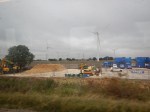

As the wind farm sits next to two gas-fired power stations and is surrounded by high voltage overhead electricity cables, this is probably a more acceptable location, than beside a picturesque village.
In this page on their web site, SSE says this about the construction of the 68 MW wind farm.
After receiving planning permission in 2008, construction began in 2012 and the first turbine foundation was complete in February 2013. The final turbine was assembled on 11 December 2013 and the project was completed in summer 2014.
If this is typical, and I think it is, it would take six years plus the time arguing about planning permission, to get a new onshore wind farm built.
But supposing, you are a farmer who wants to decarbonise. One way might be with a 10 MW wind turbine and a hydrogen electrolyser, so you had your own hydrogen source to power your tractors and other equipment.
On the other hand, solar panels on house, shed and barn roofs might be a more discrete alternative.
Rolls-Royce Releases mtu Rail Engines For Sustainable Fuels
The title of this post, is the same as that of this press release from Rolls-Royce.
The press release starts with these bullet points.
- mtu Series 1300, 1500 and 1800 engines already released; Series 1600 and 4000 to follow shortly
- Up to 90% CO2 savings by operating existing engines with Hydrotreated Vegetable Oil (HVO/renewable diesel)
- Locally emission-free operation possible in combination with mtu Hybrid PowerPack
- Field tests with DB Cargo and RDC Autozug Sylt
Note.
- Hitachi Class 800, 802, 805 and Class 810 trains appear to use Series 1600 engines.
- CAF Class 195, 196 and Class 197 trains appear to use Series 1800 engines.
- Class 43 power cars, as used in InterCity 125 trains appear to use Series 4000 engines.
It would appear that many of the UK’s new diesel trains and the remaining Class 43 power-cars can be converted to run on HVO.
This paragraph from the press release gives more details.
Rolls-Royce is taking a significant step towards even more climate-friendly rail transport with the release of mtu rail engines for use with sustainable fuels. With synthetic diesel fuels of the EN15940 standard, CO2 emissions can be reduced by up to 100 percent compared to fossil diesel. Hydrotreated Vegetable Oil (HVO or renewable diesel), which is already commercially available today, reduces CO2 emissions by up to 90 percent. If the fuels are produced with the help of renewable energy and green hydrogen – through what is termed a Power-to-X process – existing rail vehicles can be operated in a completely CO2-neutral manner. The mtu Series 1800 engines which are used in mtu PowerPacks, as well as Series 1300 and 1500 for locomotives and multi-purpose vehicles, are already approved for use with synthetic fuels such as HVO. Series 1600 and versions of Series 4000 engines will follow in the near future. The release of engines for climate-friendly fuels requires a series of tests and trials and Rolls-Royce has found strong partners for this activity. DB Cargo and RDC Autozug Sylt have already tested or are currently testing mtu Series 4000 engines with HVO in their locomotives.
Rolls-Royce mtu seem to have covered all issues.
This is a very significant statement in the paragraph.
If the fuels are produced with the help of renewable energy and green hydrogen – through what is termed a Power-to-X process – existing rail vehicles can be operated in a completely CO2-neutral manner.
This must be the most affordable way to make your diesel trains zero carbon.
Conclusion
Rolls-Royce and Cummins seem to be doing a thoroughly professional job in decarbonising the diesel engines they have made in recent years.
It now needs someone to take small diesel engines down the conversion route, just as Rolls-Royce mtu and Cummins are cleaning up their large engines.
This Is A 30 MW Power Station
This YouTube video shows a thirty MW power station, that is being built in France.
This page on the Principle Power web site describes the project.
This Google Map shows the location of Leucate and Le Barcares.
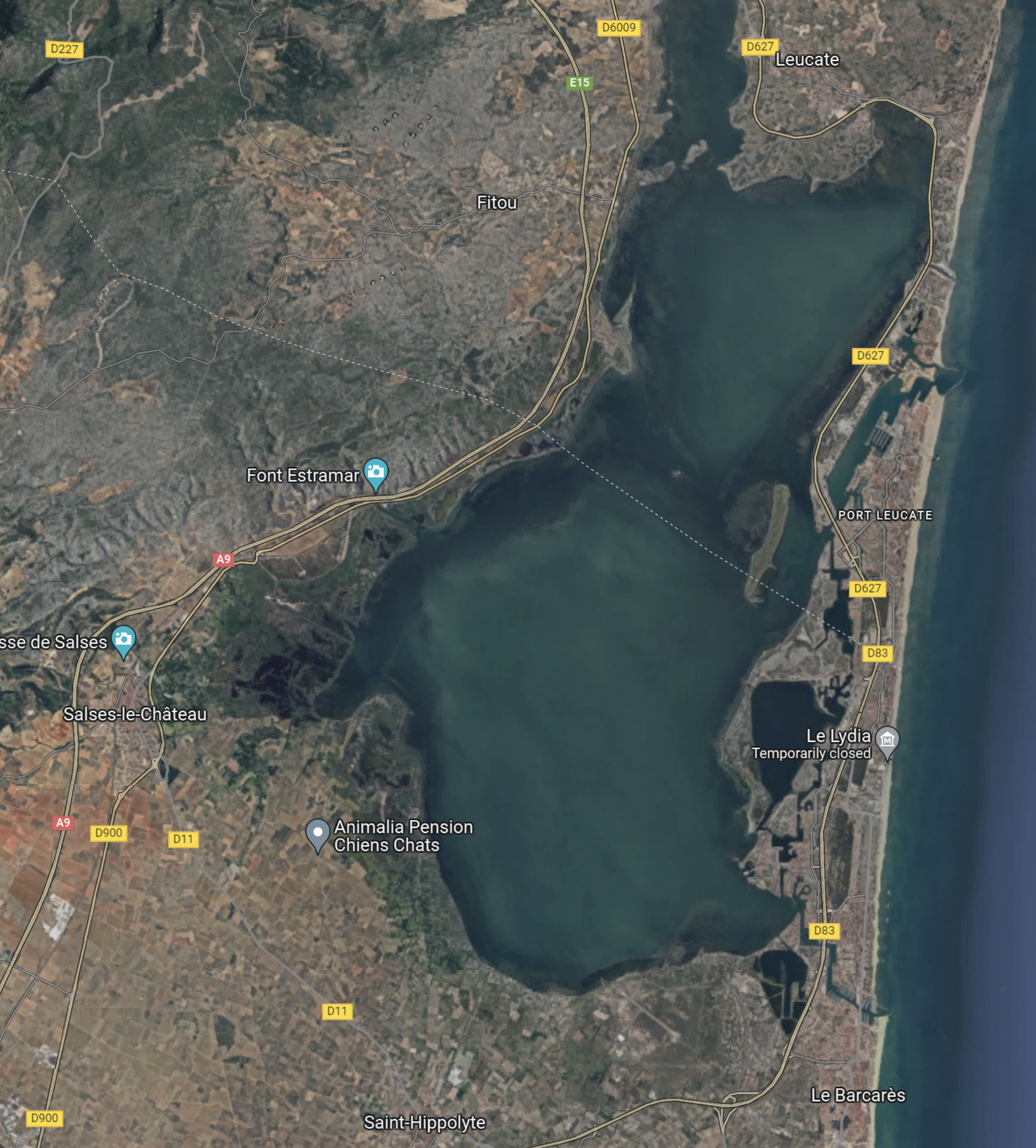
The wind farm is around 16 kilometres offshore.
Enjoy!
 The Anonymous Widower