Is This The Ultimate Tourist Bus?
This picture clipped from the Wrightbus web site, shows one of their latest products – An open-top electric tourist bus.
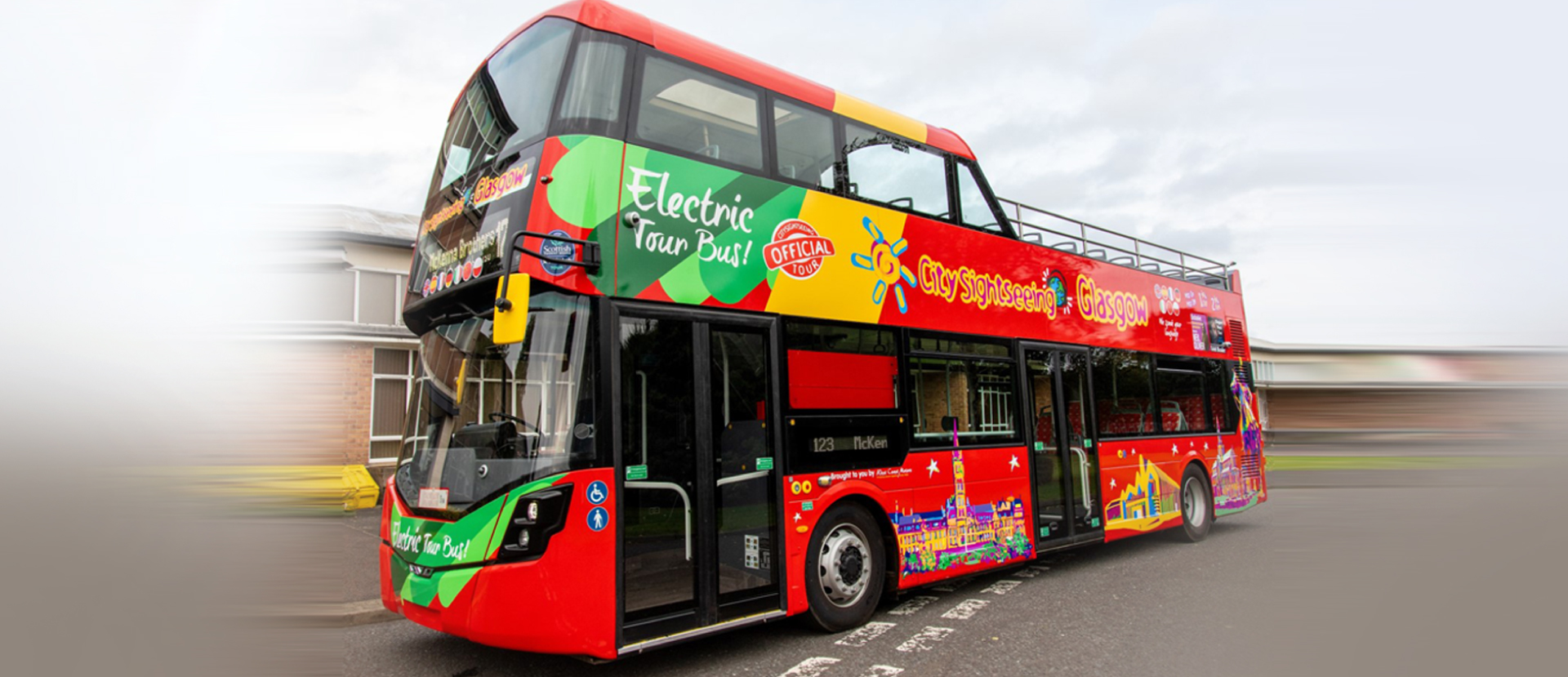
It appears to be running in Glasgow.
But if I was in charge of tourism, I’d get a hydrogen-powered version, as that would surely attract the punters.
Heathrow: Where Was The Redundancy?
In the early 1970s, I was involved in a small way, in the design of chemical plants for ICI.
When designing a chemical plant, you obviously want a plant that will have a high availability, so output is maximised, even if some parts have to be shut down.
With chemical plants, you might duplicate some reaction vessels, pipework or pumps for example.
But surely, when you are designing large infrastructure, it should be designed to keep going.
This document from Network Rail is entitled £140m Transformation Of Liverpool Lime Street Completed On Time.
These bullet points serve as sub-headings.
- Track, platform and signalling improvements
- Paving the way for bigger, better trains with more seats for more customers in future
- Part of the wider Great North Rail Project
- Part of #StationsDay – celebrating the £5.2billion investment to regenerate Britain’s rail stations
But I also believe two other important sub-projects were carried out during the work.
The Station Has Been Substantially Prepared For High Speed Two
Consider.
- Platforms were lengthened so they can accept 265.3-metre long eleven-car Class 390 trains.
- Platforms were widened, so they could handle the 607 passengers, that can be carried in an eleven-car train.
- There appears to be five full-size platforms numbered 6-10.
- Is there the possibility of a sixth platform, which is currently numbered E (for Emergency (?))?
- The approaches to the station have been remodeled, so trains can enter the station very efficiently.
- The Class 390 trains are going between Crewe and Liverpool Lime Street stations, in times that are not far off those expected from High Speed Two trains.
As Liverpool Lime Street will only need to handle half-length 200-metre long classic compatible High Speed Two trains, Liverpool Lime Street station is now ready for High Speed Two.
Liverpool Lime Street Station Is Now Effectively Two Five Platform Stations
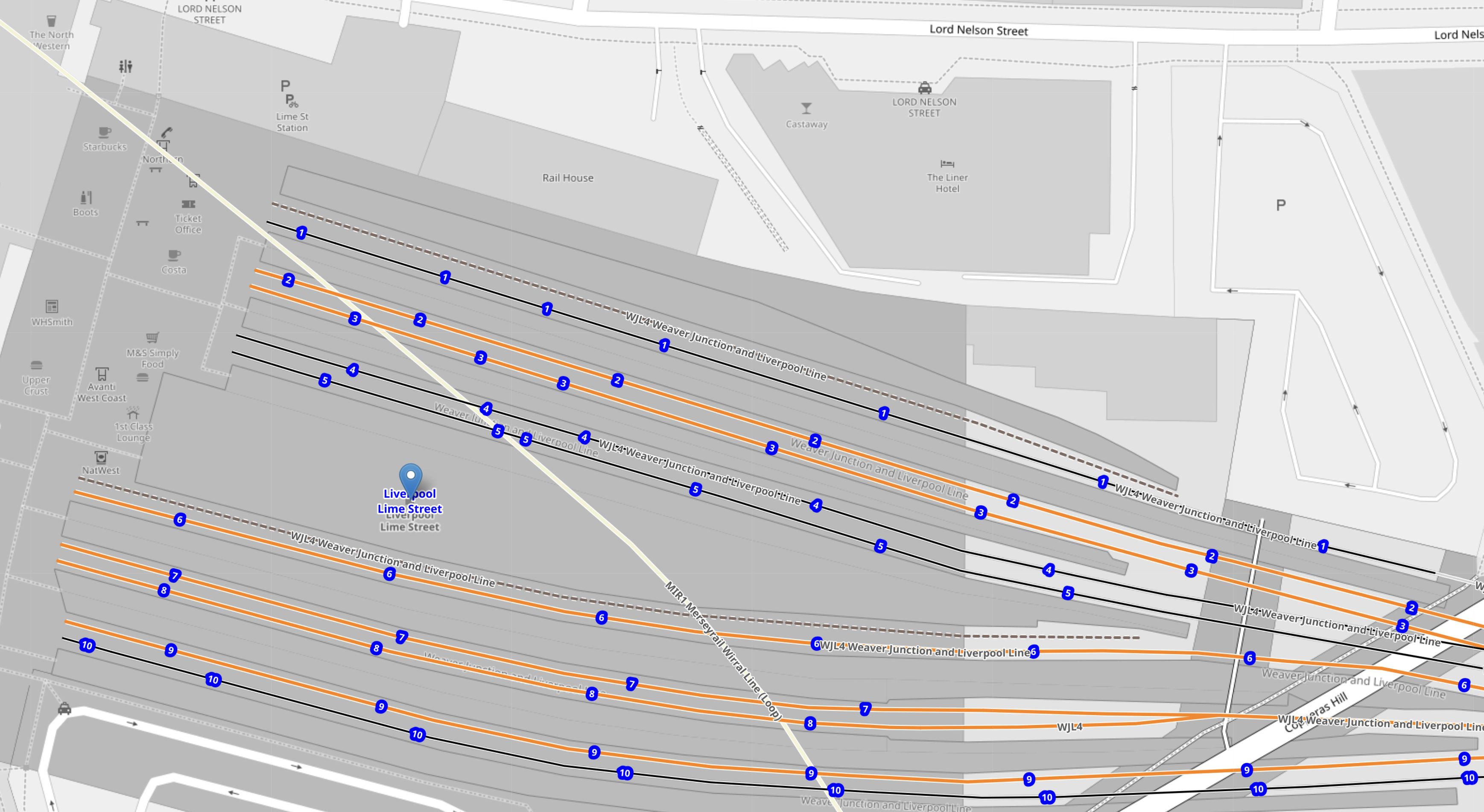
This OpenRailwayMap shows the platform layout at Liverpool Lime Street station.
Note.
- The platforms indicated by blue dots with numbers are the ten platforms of the station.
- The platforms in the Northern-half of the station are numbered 1-5.
- The platforms in the Southern-half of the station are numbered 6-10.
- All platforms; 1-10 are electrified.
- The white line running diagonally across the map, shows the route of the loop of the Wirral Line.
Click the map to show it to a larger scale.
These are some of my pictures of the station.























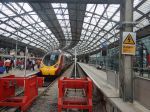






It is without doubt, one of the best stations aesthetically and operationally in the world.
Wrightbus Hydrogen Buses Trial Begins At Sizewell C
The title of this post, is the same as that of this article on Route One.
This is the sub-heading.
An order of 150 more StreetDeck Hydroliners, plus battery-electrics, could follow, says the manufacturer
These three paragraphs give more details.
A trial of four Wrightbus StreetDeck Hydroliner hydrogen fuel cell-electric buses at Sizewell C nuclear power plant in Suffolk was launched this week.
The three double-deckers and one single-decker are transporting workers at the under-construction site to test operational performance of the clean technology.
Wrightbus says a successful pilot scheme could lead to an order of 150 hydrogen buses from Sizewell, which would represent the UK largest fleet using that technology.
These zero-carbon buses are to ensure that transporting workers to the site for the project, has the lowest possible carbon footprint.
Sunset Studios Pivots From Plan To Develop Major Soundstage Complex Outside US
The title of this post, is the same as that of this article on the Hollywood Reporter.
This is the sub-heading.
Operator Hudson Pacific and investment giant Blackstone had envisioned a 91-acre site in North London to have 21 soundstages totaling 470,000 square feet.
These two paragraphs give more details.
Plans have been formally put on hold for a 91-acre film and TV soundstage complex outside of London that had been billed as a major foray for the Sunset Studios brand outside the United States.
Sunset Studios, owned by operator Hudson Pacific along with significant investor Blackstone, had announced the project in 2021 during what may have been the height of the streaming content spending boom on film and TV projects.
This Google Map shows the site today.
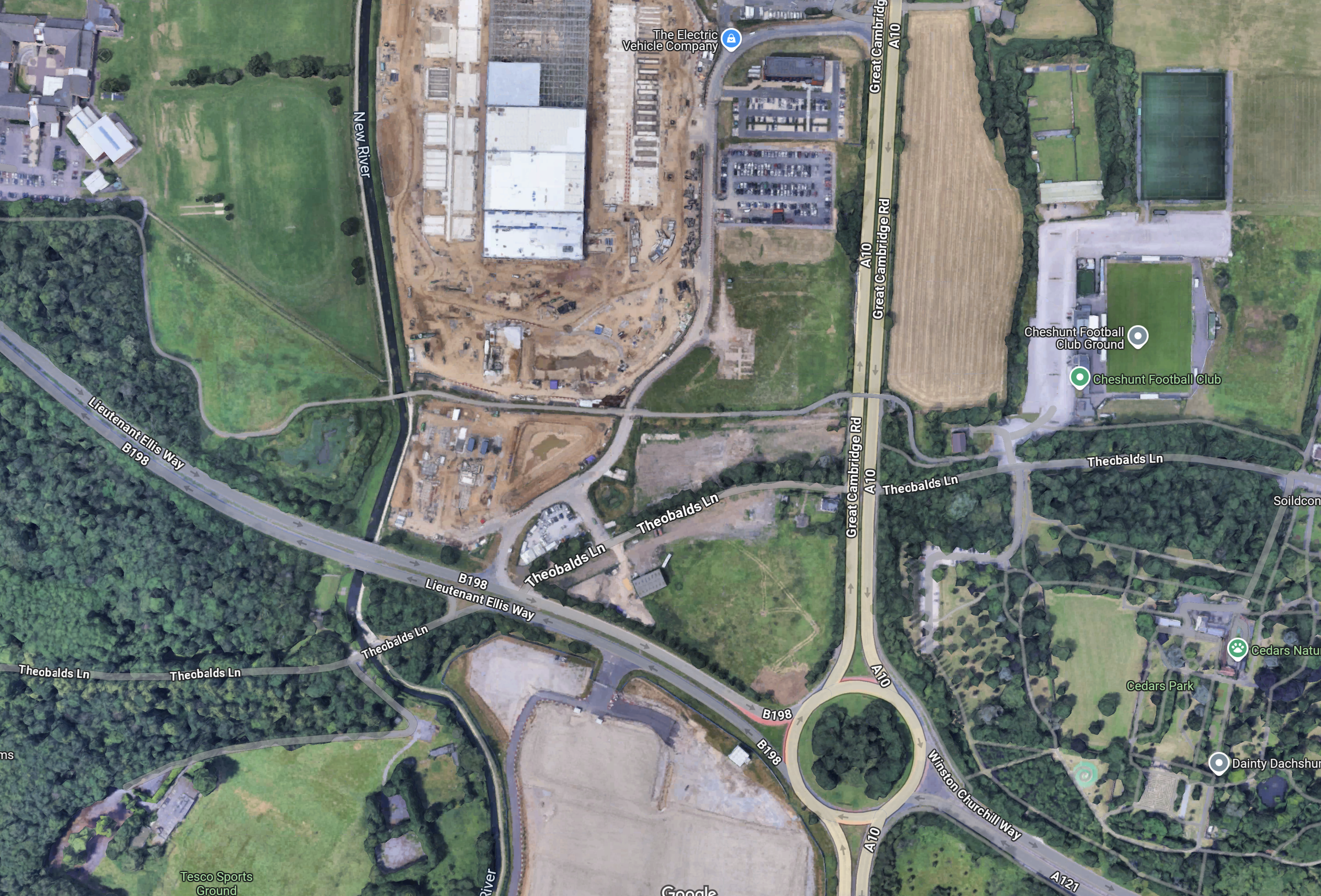
Note.
- The North-South road is the A10.
- The roundabout , is where Winston Churchill Way meets the A10.
- The dual-carriageway going West from the roundabout is Lieutenant Ellis Way.
- Construction of a data centre for Google seems to have started to the North-West of the roundabout.
- Lieutenant Ellis Way would have separated the data centre from the studios.
In Google Starts Building £790m Site In Hertfordshire, I say more about building the data centre.
This Google Map shows the area South of the roundabout, where Winston Churchill Way meets the A10.
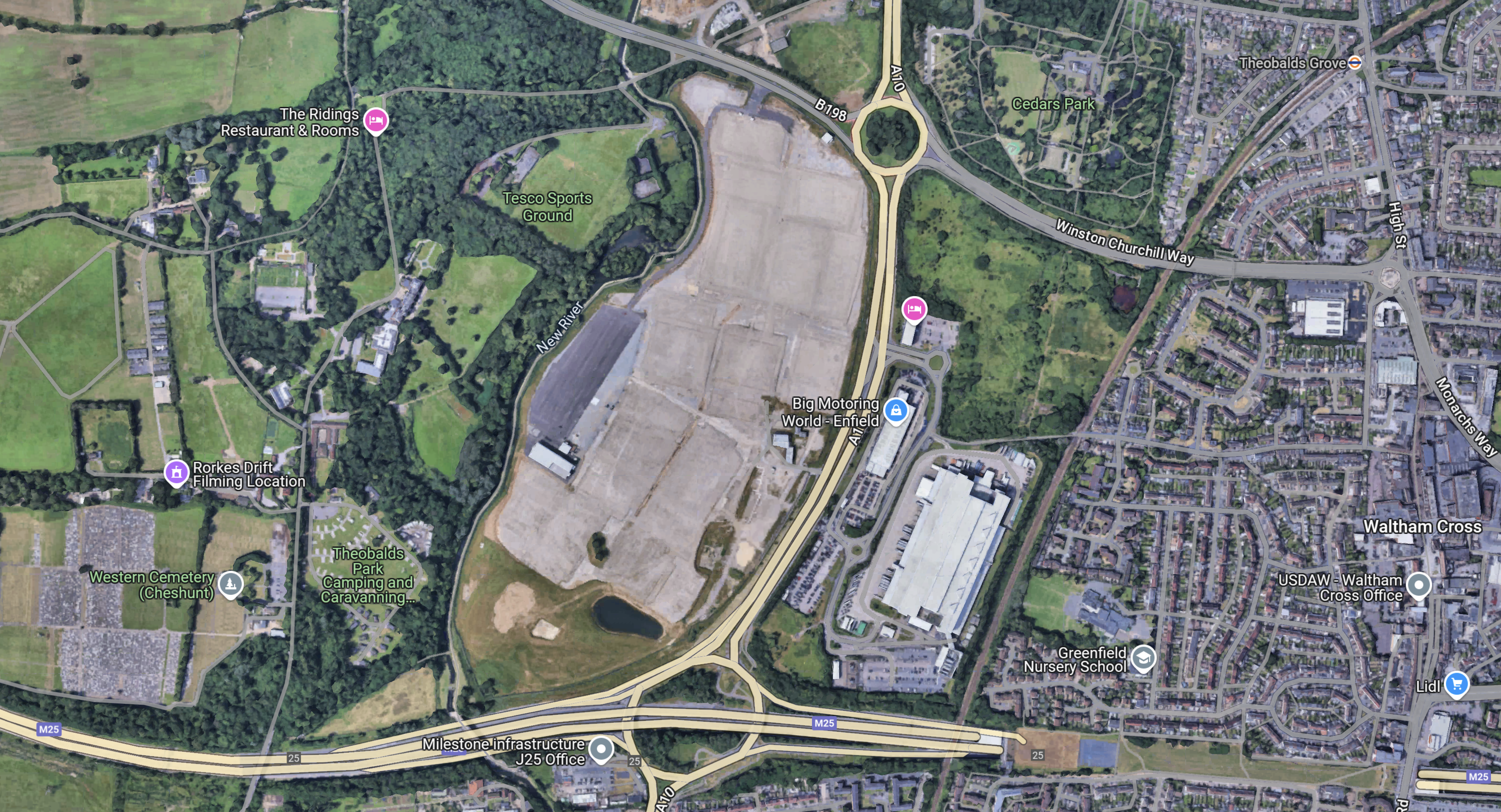
Note.
- The North-South road is the A10.
- The green patch of land to the South-East of the roundabout where Winston Churchill Way meets the A10 appears to be ripe for development.
- Looking at the green patch with a higher resolution, the land is little more than high class scrub beloved of newts.
- The London Overground line to Cheshunt runs down the East side of the site.
- To the North, the London Overground crosses Winston Churchill Way to get to Theobalds Grove station.
- To the South, the London Overground crosses the M25 to get to Turkey Street station.
- The M25 runs across the bottom of the map, through junction 25.
- The site to the West of the A10 between the two roundabouts, was the site reserved for Sunset Studios.
- The site appears to have been concreted.
What is going to happen to the Sunset Studios site now?
The Empires Strike Back
The theme of this post was suggested by this article in The Times by Gerard Baker, which is entitled Karma has come for Mark Carney — and Canada.
This is the sub-heading.
This embodiment of globalism finds himself championing national sovereignty just as Trump eyes a North American union
These are the two introductory paragraphs.
Mark Carney is the very embodiment of the globalist ideal that ruled the world for a quarter-century after the end of the Cold War. Born in the mid-1960s in the far Northwest Territories, he grew up in Alberta in the kind of place previous generations would never have left. But the brilliant kid from a large Catholic family won a scholarship to Harvard and then took a masters and doctorate at Oxford.
Marked out as a member of the intellectual elite of his generation, he followed their well-worn path and joined Goldman Sachs, working in the US, the UK and Japan. As international borders came down, goods and capital flowed around the world like water, and rootless young men and women feasted on the pot of gold at the End of History, Carney jetted from capital to capital, developing bond issuance strategies in post-apartheid South Africa and helping deal with the consequences of the Russian debt crisis of 1998.
Mark Carney has done very well!
I have a few thoughts.
Energy Production In Canada And The UK
I have just looked up how Canada produces its electricity.
- 17.5 % -Fossil fuel
- 14.6 % – Nuclear
- 8 % – Renewables
So how does Canada produce the other sixty percent?
Hydro! Wow!
As I write, the UK is producing electricity as follows.
- 10.7 % – Fossil fuel
- 37.7 % – Low-carbon
- 51.6 % – Renewables
Changes To Energy Use In The Next Ten Years
Three things will happen to energy generation and use in the next ten years.
- Our use of renewable and non-zero carbon sources will converge with Canada’s at about 75 %.
- The use of energy storage will grow dramatically in Canada and the UK.
- Green hydrogen production will increase dramatically to decarbonise difficult and expensive-to-decarbonise industries like aviation, cement, chemicals, glass, heavy transport, refining and steel.
Canada and the UK, together with a few other sun-, water- or wind-blessed countries, like Australia, Denmark, Falkland Islands, Iceland, Japan, Korea, New Zealand and Norway, who share a lot of our values, will be in the prime position to produce all this green hydrogen.
Conclusion
It does look like all the old empires of the Middle Ages are reasserting themselves.
Hence the title of this post!
Mark Carney is now in the right position to use Canada’s and a few other countries hydrogen muscles to power the world to net-zero.
Zenobē Lands Financing For 400MW Eccles Project
The title of this post, is the same as that of this article on Solar Power Portal.
This is the sub-heading.
Battery energy storage system (BESS) developer/operator Zenobē has announced that it has successfully financed its Eccles BESS project in Scotland, in one of the biggest finance rounds in European history.
These two paragraphs add more details.
The total debt raised for the 400MW/800MWh project was £220 million, which the company says is one of the largest finance raises for a standalone BESS project ever made in Europe. The funding was provided by a group of lenders organised by National Westminster Bank and KKR Capital Markets Partners LLP. Additionally, Zenobē has announced that construction on the Eccles BESS—the company’s largest battery project to date—has begun.
The Eccles BESS is the final part of the firm’s £750 million investment in Scotland. Zenobē’s Blackhillock BESS, a 200MW/400MWh project located near Inverness, recently began commercial operations, and is set to expand to 300MW/600MWh later this year.
Zenobe seem to be able to finance these projects, without too much difficulty.
Construction seems to have started. But then, I suspect there are wind turbines in the vScottish Borders already lined up to use the batteries.
This Google Map shows an Eccles substation.
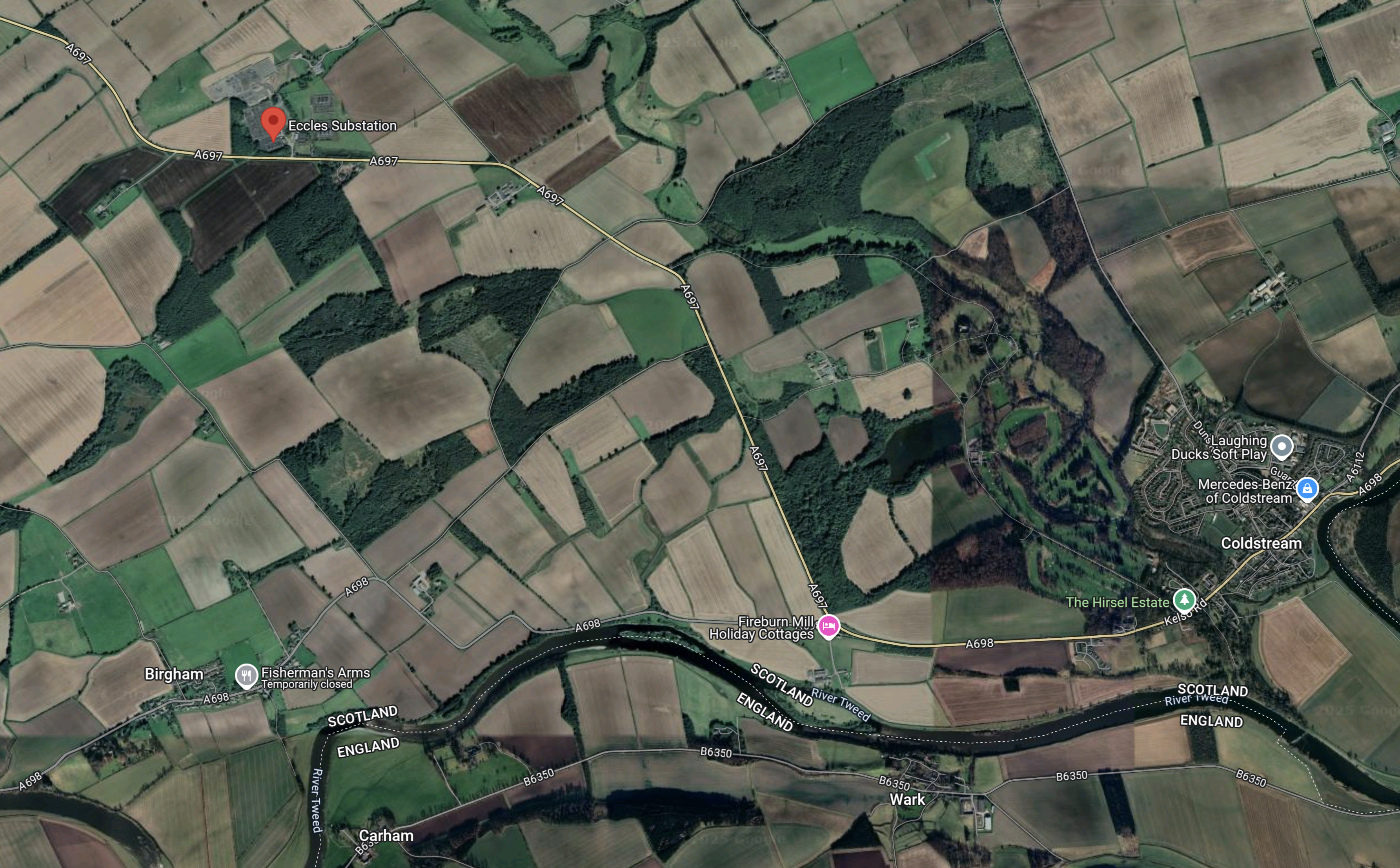
Note.
- The Eccles substation is marked by the red arrow.
- The town at the East edge of the map is Coldstream.
- The England-Scotland border is clearly marked.
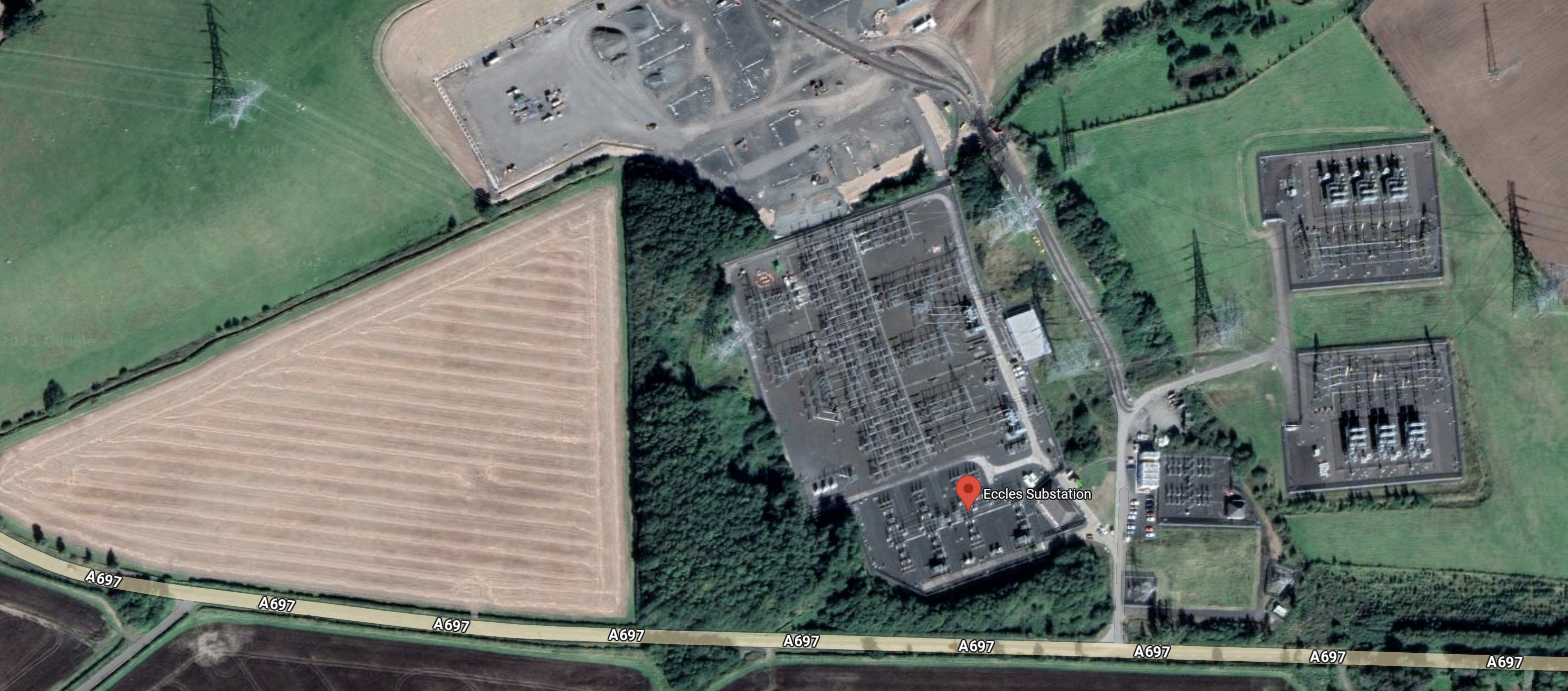
This second Google Map shows a closer view of the Eccles substation.
Note.
- t looks to be a substantial substation.
- There would appear to be plenty of space for a large battery.
- It is close to the A 597 road for the delivery of heavy equipment.
I suspect this substation could be the location of the battery.
It’s also right in the heart of Scottish onshore wind territory.
It is also according to the Solar Power Portal a £220 million project.
A project of this size will deliver substantial benefits in terms of work to the local community.
It will likely have a community benefit fund or something similar.
So you would expect the project would be welcomed into the local area.
But you would be wrong, if this article on the BBC, which is entitled Village ‘Heart Ripped Out’ By Battery Site Plans, is typical of the feeling about the batteries.
This is the sub-heading.
A rural community in the Borders is warning that Scotland’s renewable energy revolution is coming at a cost.
These three paragraphs add more detail.
Residents of Leitholm – a village between Coldstream and Greenlaw – claim the heart is being ripped out of their community with the arrival of battery storage facilities.
If all six proposed facilities are approved, more than 200 acres of farmland will be turned over to concreted compounds within a three-kilometre radius of their village.
Retired nursery owner Seonaid Blackie said: “This is not the place it used to be – people are worried sick.”
The residents view is balanced by industry expert Professor John Irvine, from St Andrew’s University, believes energy storage has a vital role to play in reaching net-zero targets.
My view is what is needed is an energy storage system, that can be built substantially underground.
If you look at large Battery Energy Storage Systems (BESS), they are best described as container parks.
We need energy storage systems, that fit in a single tennis court, rather than thirty football pitches.
Gravitricity is one possibility, who are also Scottish, who store energy using weights in disused mine shafts.
The French system; DELPHY is also a vertical system for storing hydrogen in a custom-built hole.
Practically, I believe the solution adopted will be to spread the batteries out and spend money on surrounding them with trees and other camouflage.
SSE And Gilkes Energy Submit Plans For Pumped Hydro Storage Project
The title of this post, is the same of this article in Solar Power Portal.
This is the sub-heading.
SSE Renewables and Gilkes energy have submitted a planning consent application to Scottish Ministers for a proposed Pumped Storage Hydro (PSH) project.
These two paragraphs add more detail.
The Fearna PSH project is proposed as a 50:50 joint venture project between SSE and Gilkes Energy, with Gilkes Energy leading the development under a developer services agreement with SSE Renewables. The scheme will have an installed capacity of 1.8GW and a stored capacity of up to 36GWh, providing 20 hours of storage. If approved, the project would be the largest pumped hydro scheme in the UK.
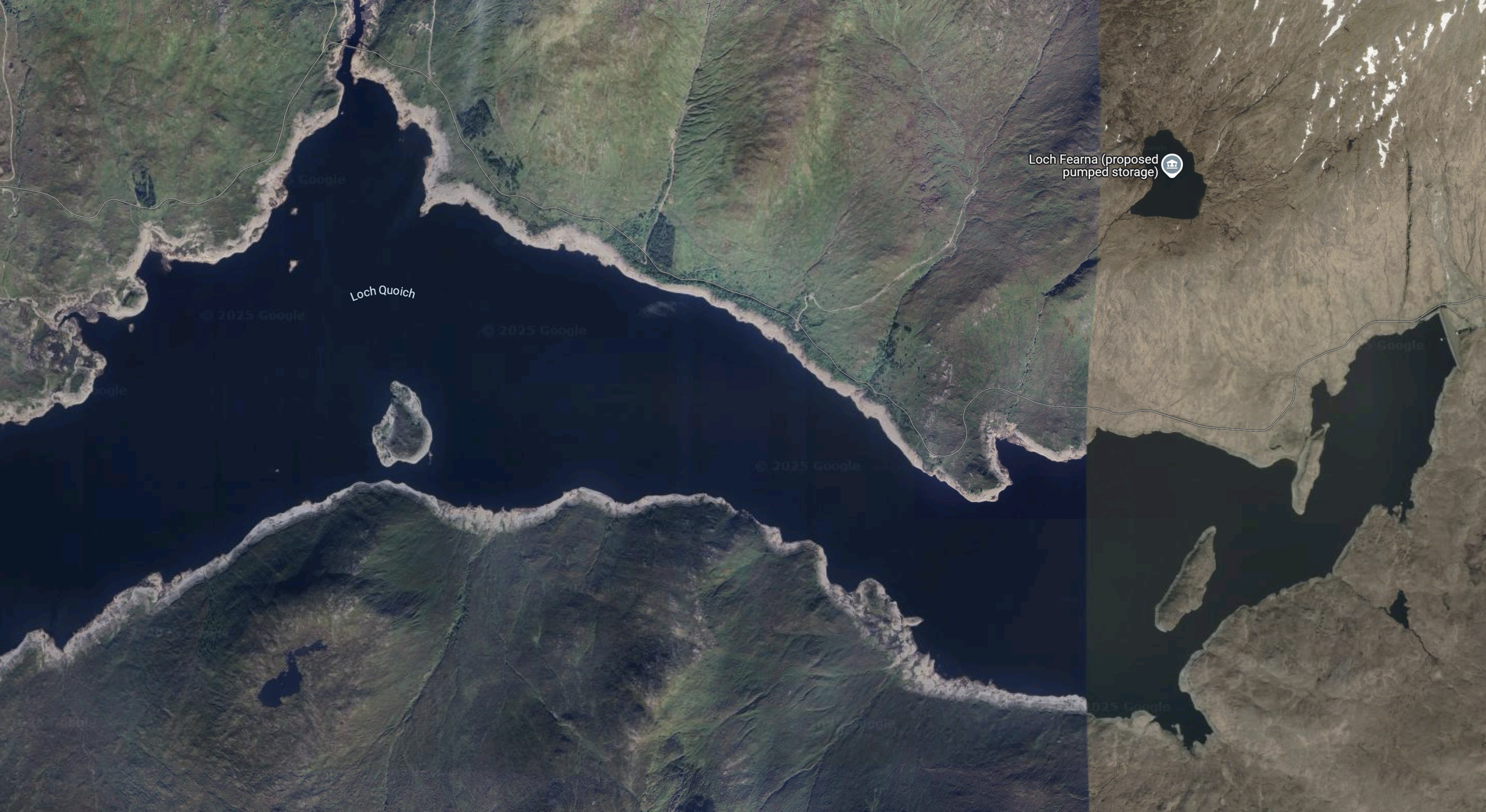
The proposed site is located around 25km from Invergarry in the Scottish Highlands and adjoins SSE Renewables’ existing Loch Quoich reservoir, which forms part of the Great Glen hydro scheme. The development will include the construction of tunnels and a new power station that will connect the existing Loch Quoich reservoir to an upper reservoir at Loch Fearna.
This Google Map shows the location of Invergarry and Loch Quoich.

Note.
Loch Quoich is the dolphin-shaped loch at the West of the image.
Invergarry is indicated by the red dot at the East of the image.
This second Google Map shows the location of Loch Fearna to the North-East of Loch Quoich.
These are my thoughts.
It Will Be A Large Scheme
With an installed capacity of 1.8GW and a stored capacity of up to 36GWh, providing 20 hours of storage, this is not a small scheme.
Wikipedia’s Description Of Loch Quoich
This is the first two paragraphs of the Wikipedia entry for Loch Quoich.
Loch Quoich (Scottish Gaelic: Loch Chuaich) is a loch and reservoir situated west of Loch Garry approximately 40 km northwest of Fort William, Lochaber, Scotland. The name means “loch of the quaich”. In 1896, it was listed as six miles long and three-quarters of a mile in width, belonging to Mrs. Ellice of Glenquoich, within the parish of Kilmonivaig.
Both lochs form part of the Glen Garry hydroelectricity project commissioned by the North of Scotland Hydro-Electric Board in the 1950s.
So is the Loch Fearna scheme, a massive repurposing of the existing Glen Garry hydroelectricity project?
I wrote about this before in Repurposing The Great Glen Hydro-Electric Scheme?
This map from the SSE Renewables web site shows the layout of the dams and power stations between Loch Quoich and Invergarry..
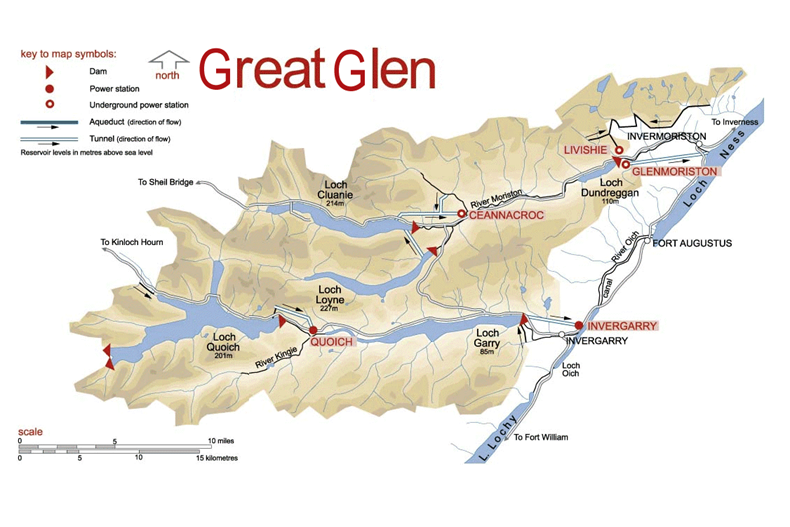
The sizes of the power stations in the scheme are as follows.
- Ceannacroc – 20 MW
- Livishie – 15 MW
- Glenmoriston- 37 MW
- Quoich – 18 MW
- Invergarry – 20 MW
- Mucomir – 1.7 MW
This gives a total power of 112.7 MW.
112.7 MW to 1.8 GW (1800 MW) is a colossal increase in power.
It should be noted that 1.8 GW is half the power of Hinckley Point C nuclear power station.
Europe’s Biggest Battery Storage Project Goes Live In Scotland
The title of this post, is the same, as this article in The Times.
This is the sub-heading.
Zenobe’s site at Blackhillock can store surplus generation for when the wind doesn’t blow and the sun doesn’t shine
These are the first two paragraphs.
Europe’s biggest battery storage project has entered commercial operation in Scotland, promising to soak up surplus wind power and prevent turbines being paid to switch off.
Zenobe said the first phase of its project at Blackhillock, between Inverness and Aberdeen, was now live with capacity to store enough power to supply 200 megawatts of electricity for two hours. It is due to be expanded to 300 megawatts by next year.
I believe we can do better, than install large lithium-ion batteries.
We need to get the pumped storage like Coire Glas, the liquid air like Highview Power and the gravity batteries like Gravitricity going as fast as we can.
They are more environmentally friendly than Tesla’s lithium ion tiddlers and a second generation liquid air battery appears to be 200 MW and 2.5 MWh, so they can supply 200 MW for 12.5 hours.
The Blackhillock battery can do just two hours.
Two of them working as a pair, with a 1 GW wind farm, are as big as a small modular nuclear reactor, so could do the same job, with respect to power supply, using machinery and tank designs, that have been used for decades.
I suspect, that like 1960s coal-fired power stations, they would keep running for fifty years and be simply recycled as steel, copper and other scrap.
Highview Power could make Bishops Stortford famous!
Cammell Laird To Study Market Opportunities For UK-Built SOVs
The title of this post, is the same as that of this article on offshoreWIND.biz.
This is the sub-heading.
The Offshore Renewable Energy (ORE) Catapult, in partnership with the National Shipbuilding Office and The Crown Estate, has appointed Cammell Laird, part of APCL Group, to carry out a detailed analysis of the future market opportunity for UK-built service operation vessels (SOVs) for offshore wind.
These two paragraphs explain the plan.
According to an ORE Catapult analysis, hundreds of SOVs will likely be in operation worldwide in the coming years as global offshore wind capacity is expected to grow to over 850 GW by 2050. To support the capacity expansion, the global SOV fleet will need to grow as well, with an associated global market of nearly GBP 35 billion (approximately EUR 41.6 billion) expected between now and 2050.
The UK SOV Manufacturing Business Case Development study for which Cammell Laird has been commissioned will help to develop knowledge of how the UK can provide vessel manufacturing to support offshore wind, delivering jobs and economic investment to communities around the country, according to ORE Catapult.
These are my thoughts.
Cammell Laird Are Also To Build A New Mersey Ferry
I wrote about this in Sail Into The Future In Style With Super-Realistic Virtual Tour Of The New Mersey Ferry.
I wouldn’t put it past Liverpool, to use one of the City’s famous icons to sell UK-built service operation vessels (SOVs) for offshore wind.
Will Rolls-Royce Get Involved?
In Rolls-Royce Powers World’s Fastest Offshore Crew Transfer Vessels, I describe how Rolls-Royce mtu are providing powerful engines for Italian Crew Offshore Vessels.
Will Rolls-Royce mtu provide the power for Cammell Laird’s service operation vessels?
UK Government Sets 8-Hour Minimum For LDES Cap-And-Floor Scheme
The title of this post, is the same as that of this article on Energy Storage News.
This is the sub-heading.
The UK government has published a Technical Decision Document confirming crucial aspects of its long duration electricity storage (LDES) cap-and-floor scheme, which includes increasing the minimum duration required from six hours to eight.
These three paragraphs give more details.
The document, released by regulator Ofgem on 11 March, details the final overarching rules and requirements for the scheme as well as how it will be implemented, though significant detail still remains to be worked out.
The scheme will provide a cap-and-floor revenue protection for 20-25 years that will allow all capital costs to be recoverable, and is effectively a subsidy for LDES projects that may not be commercially viable without it. Most energy storage projects being deployed in the UK today are lithium-ion battery energy storage systems (BESS) of somewhere between 1-hour and 3-hour in duration (very occasionally higher).
One of the most significant new details of the scheme is that, following industry feedback, the minimum duration for projects to qualify has been increased from six hours to eight hours of continuous rated power.
As a control engineer, I believe this is all good stuff and is a good improvement on the previous regime.
The whole article is a must read and I believe that more investors, will invest heavily in energy storage.
But then the UK, with its massive potential for offshore wind, has the resources to create and fill many GW of energy storage.
Boris once said, that we would become the Saudi Arabia of wind!
 The Anonymous Widower