Is The UK Developing Sea-Drones To Protect Wind Farms?
I asked Google AI the question in the title of this post and received this answer.
Yes, the UK is actively developing and utilizing sea-drones (and autonomous boats) for its offshore wind farms. This technology is being used to protect the farms by patrolling subsea infrastructure, inspecting underwater turbine foundations, and delivering heavy equipment to mitigate human risk.
Here is a look at how sea drones and autonomous systems are being developed and used for the UK’s offshore energy sector:
Subsea Security and Patrolling: The UK and NATO are highly focused on protecting critical subsea cables and wind networks from adversarial interference. Firms like Aberdeen-based Honuworx have been contracted to develop autonomous underwater vehicles capable of prolonged remote operation for defense and infrastructure surveillance.
Underwater Structure Inspection: Projects like the UNITE program (led by Heriot-Watt University and supported by the National Robotarium) are testing AI-controlled underwater robots to operate in turbulent seas and maintain offshore wind infrastructure. Meanwhile, Beam (an offshore wind services company) successfully deployed the world’s first AI-driven autonomous underwater drone at Scotland’s Seagreen wind farm, cutting inspection times in half.
Sailing Drones & Remote Operations: Energy companies like Vattenfall are controlling uncrewed surface vessels (USVs) and sailing drones from remote operation centers in Aberdeen to patrol and keep North Sea wind farms safe and efficient.
Heavy-Lift Cargo Drones: Beyond sea drones, energy giant Ørsted has utilized giant autonomous drones to deliver heavy equipment—like 70kg boxes of safety gear—directly to the tops of offshore wind turbines in the UK, removing the need for ships and cranes in rough seas
We should fight fire with innovation.
The Undersea Tunnel Network That Could Transform Shetland’s Fortunes
The title of this post, is the same as that of this article on the BBC.
This is the sub-heading.
Shetland wants to ditch ageing ferries and replace them with undersea tunnels connecting five islands including Unst, the most northerly of the British Isles.
These three paragraphs add some more detail.
The plans sound grand but they have also been greeted with some scepticism.
Can the Shetland Isles really pull off such an ambitious plan, given the UK’s struggles to deliver big projects such as high speed rail?
Yes, says the prime minister of the tiny Faroe Islands, which are 200 miles further out into the Atlantic.
The Faroe Islands Tunnel Network
I asked Google AI to describe the Faroe Island tunnel network and received this answer.
The Faroe Islands tunnel network is a massive feat of engineering connecting the 18-island archipelago.
It features over twenty land tunnels and four ultramodern subsea tunnels.
The system replaces unpredictable ferries, drastically reduces travel times, and even features the world’s first subsea roundabout.
The subsea tunnel network links major islands and regions:
Eysturoyartunnilin (Eysturoy Tunnel): A major project stretching over 11 km that connects the capital, Tórshavn, to the towns of Runavík and Strendur.
It is famous for the world’s first underwater roundabout—dubbed the “jellyfish”—which sits 72 meters below the seabed and is illuminated by stunning blue light effects and sculptures by local artist Tróndur Patursson. Travel times between Tórshavn and Runavík plummeted from over an hour to just 16 minutes.
Sandoyartunnilin (Sandoy Tunnel): Spanning roughly 11 km, this subsea tunnel connects the island of Sandoy to Streymoy.
It reaches depths up to 150 meters below sea level and integrates a relatively isolated community into the mainland, turning an hours-long ferry journey into a brief 30-minute commute.
Norðoyatunnilin (Northern Islands Tunnel): A 6.3 km subsea connection linking the island of Eysturoy with Borðoy (home to Klaksvík, the second-largest city in the Faroes).
Vágatunnilin (Vágar Tunnel): The first subsea tunnel constructed (opening in 2002), spanning 4.9 km and connecting the main island of Streymoy to Vágar, where the Faroe Islands’ international airport is located.
How the Network Works
Design & Specs: All four subsea tunnels are spacious, two-laned, single-tube designs.
The speed limit throughout the tunnels is fixed at 80 km/h.
Safety & Depth: The tunnels can reach depths of up to 187 meters below the Atlantic Ocean. Despite this, the maximum road gradient never exceeds 5%, ensuring safety for all vehicles.
Toll System: All subsea tunnels require a toll fee. Drivers can either pay per single trip or purchase a Tunnel Pass that covers driving through any subsea connection over a specific timeframe.
How Were The Faroe Tunnels Funded?
I asked Google AI to say how the Faroe Tunnels were funded and received this answer.
The Faroe Islands’ extensive subsea tunnel network is primarily funded through public-private financial partnerships utilizing international bank loans, pension fund investments, and government guarantees.
These multi-million-pound infrastructure projects pay for themselves entirely over time through user tolls.
The mechanics of this self-financing model operate as follows:
Public Companies & Bonds: The government establishes dedicated, publicly-owned companies (such as P/F Eystur- og Sandoyartunlar) that build, own, and manage the infrastructure. These companies take out large loans from international financial institutions—including UK and US pension funds—and issue bonds to private investors.
Toll Revenue Repayment: The loans and bonds are secured against future toll revenues, which are collected from motorists using the tunnels.
Government Guarantees: The Faroese government provides financial backing, essentially guaranteeing minimum traffic usage to reassure institutional investors.
Cross-Subsidization: To ensure all islands benefit, highly-trafficked tunnels (like the Eysturoy tunnel) subsidize the costs of less-trafficked tunnels (like the Sandoy tunnel).
Inside The Faroe Tunnels
This article on the BBC is entitled Faroe Islands: Inside The Undersea Tunnel Network.
It is worth a look.
They’re Only A Five-Pack Of Mens’sTrunks
With all this hot weather, I needed some more Marks and Spencer’s trunks to keep myself comfortable and cool.
I liked the overall packaging, so I took these pictures.
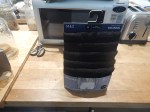
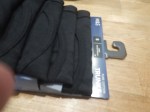



Note.
- Most of the packaging is a piece of carefully cut and folded cardboard.
- It was probably done with love by a robot.
- It’s almost folded into a pair of crocodile’s jaws, so the product is held safely.
- All five pairs were still in the packaging, when I brought them home.
But then as the product was made in Bangladesh, where crocodiles are native, I would expect them to get this type of packaging right.
In some ways the hook, is the most interesting part of the packaging, as it appears to have been stamped out of a sheet of quality laminated cardboard.
My father was a letterpress printer in the 1950s and one of the specialties of his business was stamping out components like these on one of his two Original Heidelberg printing machines.
Around the turn of the last century, I had a friend, who could design origami packaging like this. Quality and sustainable ideas like these will keep going around and around.
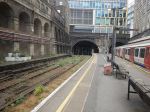
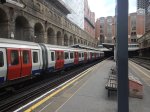
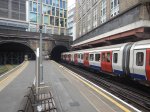
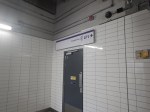
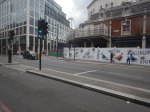
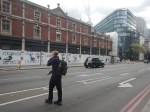
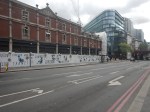
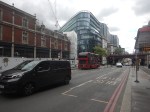
A Walk Between Barbican Station And Snow Hill – 18th May 2026
When I wrote What Housing Is Being Built At Cockfosters Station?, I rambled off about the building of the London Museum over the tracks underneath Smithfield.
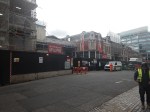
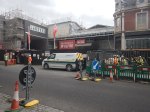
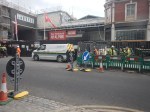
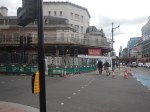
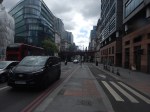
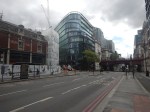
So this morning, I went and took these pictures, whilst I walked between Barbican Station and Snow Hill.
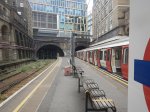
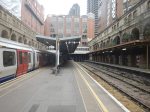
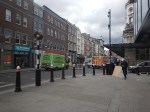
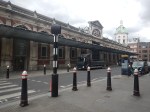
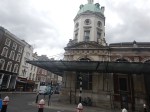
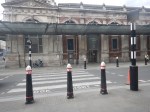
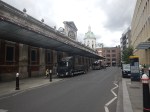

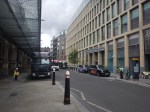
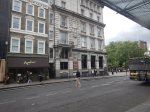
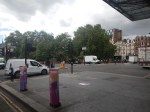
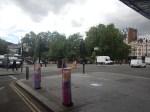

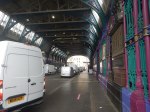
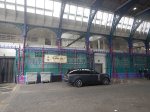
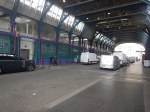

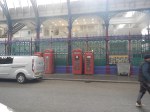
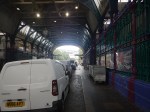
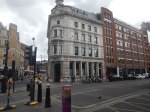
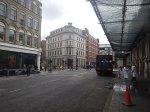
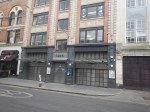
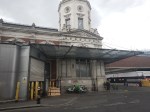
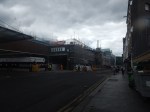
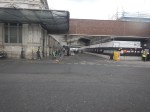
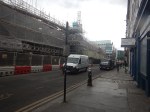
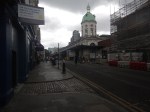
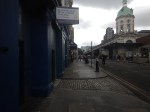
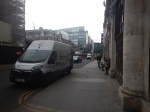

Note.
Blackpool North Station Platform Layout
In this post, I will look at the current platform layout at Blackpool North station and see if it needs to be updated for High Speed Two.
This OpenRailwayMap shows the current platform layout at the station.
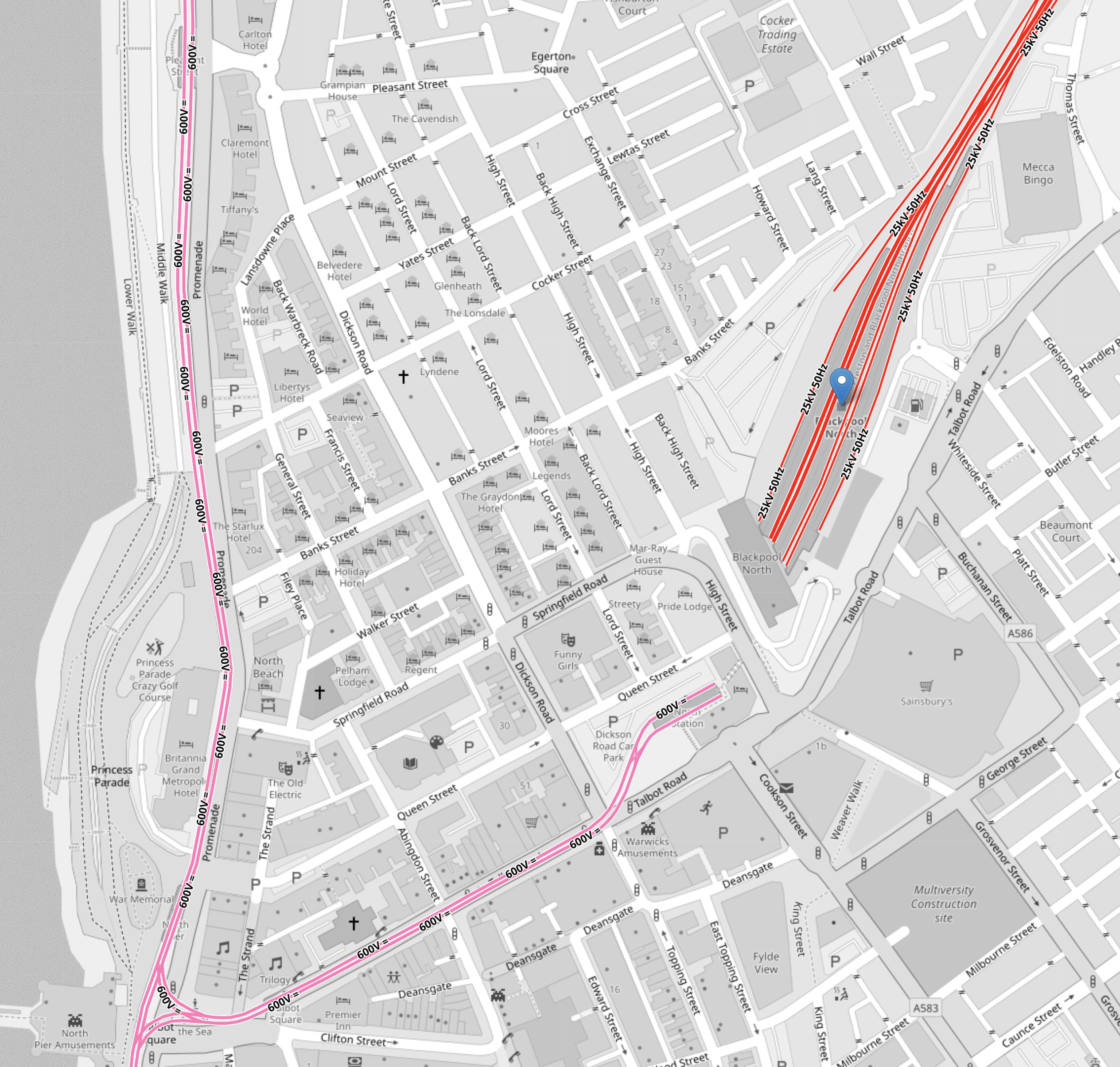
Note.
- The pink tracks are the Blackpool Tramway.
- The Tramway station has two terminating platforms and a crossover and together with the delta junction on the seafront, trams can go North or South.
- I wouldn’t be surprised to see the Tramway upgraded.
- The red tracks are the Blackpool Branch to Blackpool North station.
- Blackpool North station has six platforms and their lengths are 277, 277, 205, 203, 203 and 205 metres.
- The two longer platforms are on the South side of the station and can take an 11-car Pendolino or an HS2 200 m. Classic-Compatible train.
It appears to be a compact interchange between the trams and the trains.
I have some further thoughts.
Do Trains Spend The Night Parked In Blackpool North Station?
The Wikipedia entry for Blackpool North station says this about work done whilst the station was being electrified.
A major rebuild and upgrade of the nearby carriage servicing depot was carried out at the same time.
I asked Google AI, the question in the title of this section and received this reply.
Yes, trains can and do spend the night parked in the sidings and platforms at Blackpool North station. While many trains return to depots for maintenance, some units are stabled overnight at the station to facilitate the first early morning services of the day, as the facility is a key terminus for Northern Trains.
Overnight Stabling: Trains often occupy the 6 platforms or nearby sidings to start service early in the morning.
Station Activity: While passenger facilities close around midnight, the site itself remains secure for overnight parking.
Blackpool North station appears to be almost an efficient cross between terminal station and depot.
Stabling a train at Blackpool North station could be the easy way for Avanti West Coast or HS2 to run an early train to London.
Could A Late Train From London Bring Up All The Stragglers And Take Back All The Early-Risers?
The only transport, I’ve ever scheduled in anger were container ships, but it seems the following could be possible.
- A late train runs from London Euston to Blackpool North, stopping at stations where it is thought necessary.
- The train gets an overnight service and a wash-and-brush-up in Blackpool North station, from staff in the local depot.
- An early train runs from Blackpool to London Euston, stopping at stations where it is thought necessary.
It would be efficient use of equipment and staff. It would also help those in Crewe, Warrington, Wigan, Preston and the Fylde, who wanted to spend a long day in London or the South.
Could Blackpool North Handle A 400 Metre HS2 Classic-Compatible Train To And From London?
Consider.
- Avanti West Coast’s London Euston and Blackpool North train calls at Crewe, Warrington Bank Quay, Wigan North Western and Preston.
- The Specification of the HS2 Classic-Compatible Train says that they should be able to split and join, with all the speed and competence of a sex act, at one of Epstein’s parties.
- Blackpool North has two platforms that are 277 metres long, which can both handle 200 metre HS2 Classic-Compatible Trains.
- Preston station has a platform, that is one of the longest in England at 362 metres.
- Wigan North Western station has a platform that is 274 metres long.
- Warrington Bank Quay station has main line platforms that are 250-260 metres long.
- Crewe station has a platform that is 390 metres long.
- The provisional timetable for HS2 shows pairs of 200 metre HS2 Classic-Compatible Trains, stopping at Preston and Crewe stations.
- When built, HS2 stations at London Euston, Old Oak Common and Birmingham Interchange will be able to handle pairs of 200 metre HS2 Classic-Compatible Trains.
I am fairly sure that a 400 metre HS2 Classic-Compatible Train could run between London Euston and Blackpool North stations
- The train could call at Old Oak Common, Birmingham Interchange, Crewe, Warrington Bank Quay, Wigan North Western and Preston stations.
- The frequency could be as passenger numbers needed.
- HS2 stations at London Euston, Old Oak Common and Birmingham Interchange will be able to handle pairs of 200 metre HS2 Classic-Compatible Trains.
- Crewe, Warrington Bank Quay, Wigan North Western and Preston stations should be able to handle pairs of 200 metre HS2 Classic-Compatible Trains by using selective door opening.
- Each 200 metre HS2 Classic-Compatible Train, would use one of Platform 1 or 2 at Blackpool North station.
The two 200 metre HS2 Classic-Compatible Trains would either split and join at Preston station or by some shunting in Blackpool North station.
Conclusion
I believe Blackpool North station could handle as least one pair of 200 metre HS2 Classic-Compatible Trains to and from London Euston every hour.
It might be able to handle two such trains in every hour.
Four Cunard Queens To Come Together For The First Time, In Liverpool
The title of this post, is the same as that of this news item from Liverpool City Region.
This is the sub-heading.
British cruise line Cunard has announced that all four Cunard ships will come together in Liverpool in 2028.
On 16 May 2028, Queen Mary 2, Queen Elizabeth, Queen Victoria and Queen Anne will unite on the River Mersey, the first time the full fleet of four has ever assembled.
This is a unique opportunity to see all four Queens together in one place, and will happen in Liverpool, Cunard’s spiritual home, where the company was founded in 1840.
These two paragraphs add some more details.
The last time Cunard ships gathered on the Mersey was in 2015, when the three Queens came together to celebrate the brand’s 175th anniversary, attracting more than one million spectators to the city and its waterfront.
The 2028 gathering is expected to build on that legacy, drawing significant crowds and global attention, with Liverpool marking the moment in its own distinctive style through a waterfront celebration as the Four Queens meet, returning home for the first time.
Queen Mary 2’s arrival in Liverpool on 16 May 2028 will also mark her first ever transatlantic crossing from New York directly to the city, as well as Cunard’s first eastbound arrival from New York to Liverpool in more than 61 years, since RMS Sylvania berthed at Princes Landing Stage on 18 November 1966.
But there is another big difference between the the 2015 gathering and the planned 2028 gathering, other than an extra liner, is that in 2017-8, Liverpool Lime Street station was transformed, which I wrote about in Liverpool Lime Street Station After the Transformation of 2017-18.
The station station has ten platforms, arranged so they can operate as two separate stations; one serving Manchester and the East and the other serving Crewe and the South.
- Five platforms are longer than 220 metres, so they can handle 8-car 200 metre HS2 Classic-Compatible trains.
- Three platforms are longer than 265 metres, so they can handle 11-car 265.3 metre Pendolino Class 390 trains.
- Four platforms are longer than 150 metres, so they can handle 5-car Hitachi Class 802 trains.
- Platform 5 on the Manchester and the East side of the station is 181 metres long and I suspect can handle a Hitachi Class 807 train in an emergency.
It looks to me, that the station was rebuilt, so that Liverpool can handle any combination of trains, that Network Rail envisage might want to use the station at the same time.
A major event like the Grand National, an important international football match in Euro 2028 or the 2028 Four Queens Gathering could attract lots of visitors, some of whom might come in luxury excursion trains.
If Network Rail have been prudent, they will have planned for an event like the 2028 Four Queens Gathering.
Typically, Liverpool Lime Street station now has two trains per hour (tph) to London Euston.
Usually, these are an 11-car Pendolino and a 7-car Class 807 train, which have a total capacity of 607+453 or 1060 seats.
This picture shows Platform 9 handling an 11-car Pendolino.
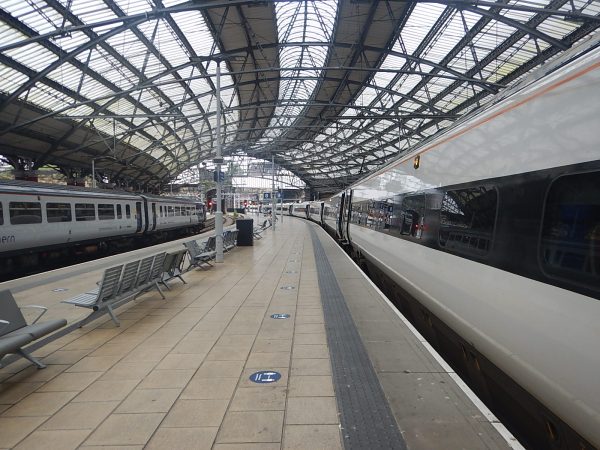
Note.
- The curve of the platform appears to be used to allow the longer train to fit.
- The platform is wide, so 607 passengers and their baggage, babies and buggies can safely embark from the an 11-car Penolino train.
- In Wires, New Platforms And Sidings At Blackpool North Station – 17th April 2018, it appears that platforms at Blackpool North station have a slight curve too.
Have Network Rail been listening to a certain limerick about a Man of Kent?
Liverpool Lime Street Station After the Transformation of 2017-18
This document from Network Rail is entitled £140m Transformation Of Liverpool Lime Street Completed On Time.
These bullet points serve as sub-headings.
- Track, platform and signalling improvements
- Paving the way for bigger, better trains with more seats for more customers in future
- Part of the wider Great North Rail Project
- Part of #StationsDay – celebrating the £5.2billion investment to regenerate Britain’s rail stations
But I also believe two other important sub-projects were carried out during the work.
The Station Has Been Substantially Prepared For High Speed Two
Consider.
- Platforms were lengthened so they can accept 265.3-metre long eleven-car Class 390 trains.
- Platforms were widened, so they could handle the 607 passengers, that can be carried in an eleven-car train.
- There appears to be five full-size platforms numbered 6-10.
- Is there the possibility of a sixth platform, which is currently numbered E (for Emergency (?))?
- The approaches to the station have been remodeled, so trains can enter the station very efficiently.
- The Class 390 trains are going between Crewe and Liverpool Lime Street stations, in times that are not far off those expected from High Speed Two trains.
As Liverpool Lime Street will only need to handle half-length 200-metre long classic compatible High Speed Two trains, Liverpool Lime Street station is now ready for High Speed Two.
Liverpool Lime Street Station Is Now Effectively Two Five Platform Stations
This OpenRailwayMap shows the platform layout at Liverpool Lime Street station.
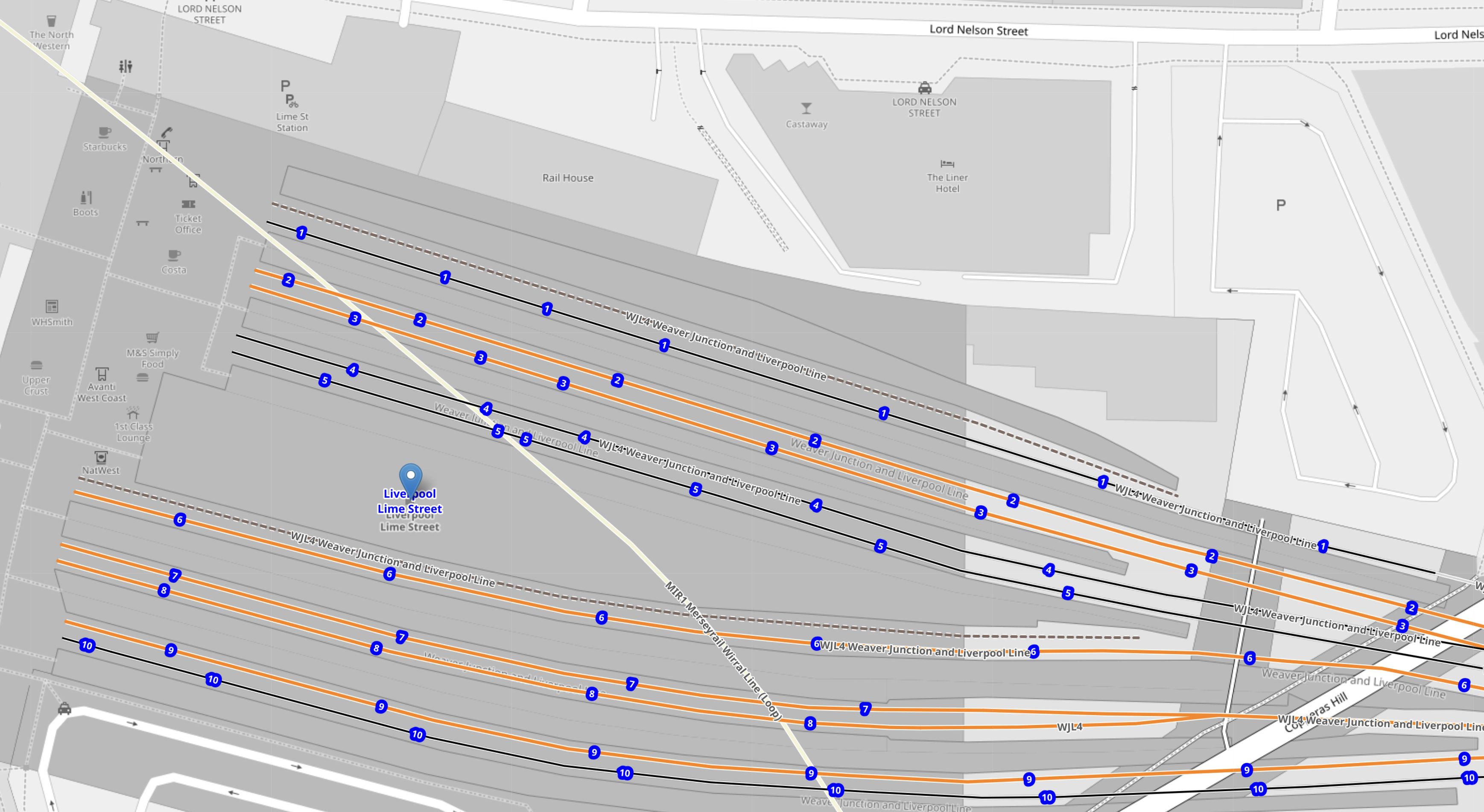
Note.
- The platforms indicated by blue dots with numbers are the ten platforms of the station.
- The platforms in the Northern-half of the station are numbered 1-5.
- The platforms in the Southern-half of the station are numbered 6-10.
- All platforms; 1-10 are electrified.
- The white line running diagonally across the map, shows the route of the loop of the Wirral Line.
Click the map to show it to a larger scale.
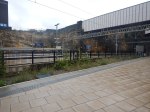
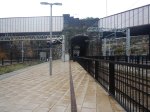
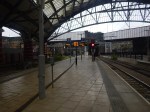
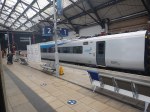
These are some of my pictures of the station.

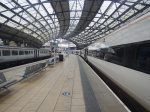

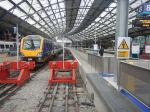

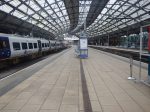
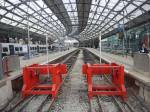

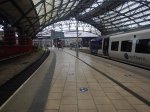
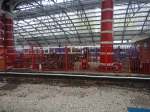
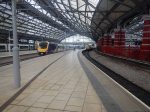


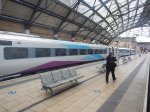
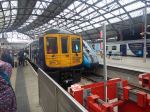
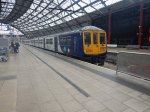


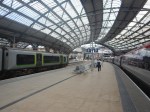
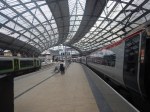
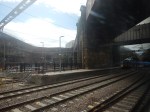
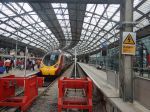
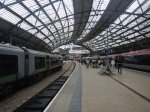
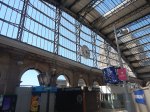
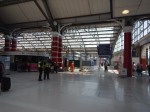
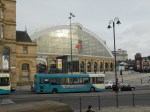
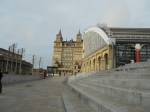

It is without doubt, one of the best stations aesthetically and operationally in the world.
Magna Tram Stop – 23rd April 2026
I went to the new Magna tram stop on the Sheffield tram-train today and took these pictures.
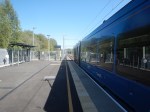
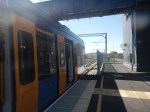
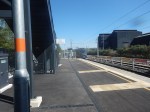
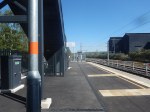
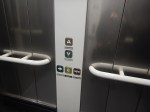
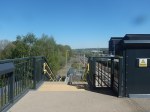

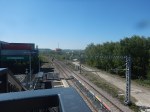
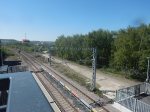
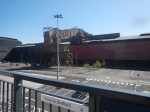
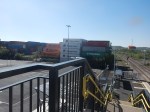
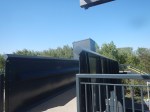
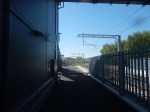
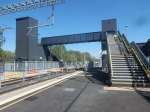
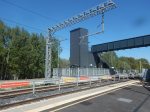
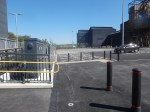

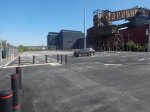
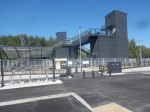
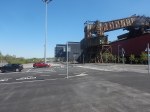
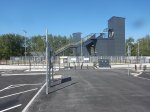
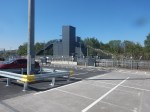
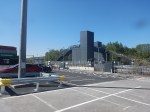
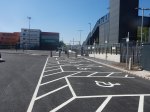
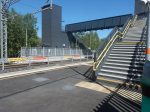
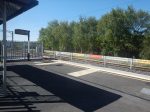
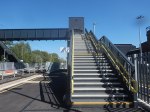
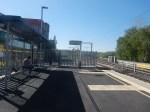
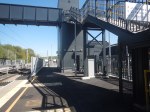
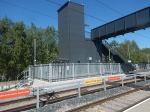
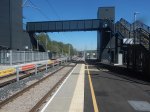
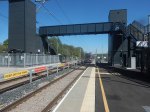
The tram stop structure looks like two identical lift towers with a staircase, that have been lifted in onto foundations, that are opposite each other.
- The two structures appear to be made almost entirely of steel, which is surely appropriate for the Sheffield and Rotherham area.
- The lifts are typical quality lifts from Stannah.
- After installation the staircases point in opposite directions.
- Were the three components of the bridge just lifted into place and then wired up and switched on?
- A steel bridge completes the tram stop.
- The design of the bridge keeps the travellers well away from the electrification.
- The bridge steelwork was constructed locally at Barnsley.
I believe, this tram stop was designed for ease of installation and the lowest possible cost consistent with high quality.
I wouldn’t be surprised that this tram stop bridge has been designed so it can be replicated in different sizes at different locations.
I have some further thoughts.
Can This Design Be Adapted For Other Applications, Locations And Sizes?
I believe it can and this bridge could be the first of many.
Can This Design Be Assembled Around A Working Railway With A Few Short Possessions?
I believe it can, which would be a good cost and time saving in assembly!
I also believe, that as at Magna, it could be assembled around a working electrified railway.
There is a lot to like about this tram-stop design.
Are Sheffield Planning Any Expansion Of The Trams?
Out of curiosity, I had to ask Google AI, the title of this section.
I received this answer.
Yes, Sheffield is actively planning to expand its tram network as part of a major public transport regeneration project aiming for better connectivity and reduced congestion. Key proposals include extending the tram-train network to Doncaster and Barnsley, a new route to Stocksbridge, a connection to Chesterfield via Barrow Hill, and a new stop at the Magna Science Adventure Centre.
Key details of the expansion plans include:
Network Expansion Plans: The South Yorkshire Mayoral Combined Authority (SYMCA) is evaluating several extensions, including a potential route connecting the Royal Hallamshire Hospital and the southern city centre.
Tram-Train Focus: Future expansion heavily features tram-trains, which can use existing rail lines, such as the 9-mile link to Stocksbridge.
Doncaster and Barnsley Routes: Proposed extensions involve utilizing existing rail lines for faster connections to Doncaster and a new line to Barnsley.
Infrastructure Investment: The government has announced £570 million for upgrading the existing Supertram network, including improving capacity at Sheffield Train Station.
Timeline: While studies and developments are ongoing, significant work is expected to pick up speed toward 2030, integrated with Northern Powerhouse Rail developments.
Could we see more innovative bridges?
A Crossing For Coeliacs?
I have been getting increasingly frustrated with the roadworks at the crossroads of Moorgate and Ropemaker Street and at the weekend, I wrote How Not To Resurface An Intersection.
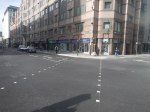
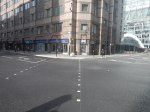
But at last order is beginning to emerge and today, I took these pictures of the new diagonal crossing.
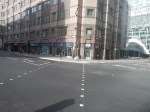
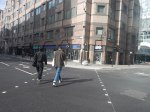
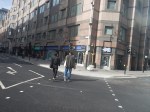
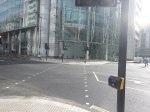
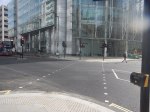
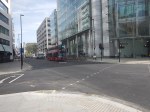

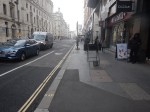
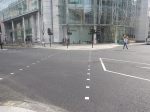
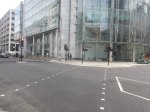

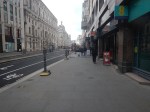
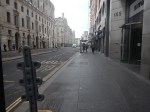
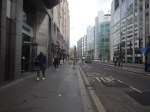
Note.
- The diagonal crossing is in use.
- At the North-Eastern end of the crossing, is the Marks and Spencer on Finsbury Pavement, with its coeliac-friendly food department in the basement.
- At the South-Western end of the crossing on Moorgate is a branch of LEON, which serves excellent gluten-free food.
- The crossing also provides a shorter route between the Southbound bus stop and Moorgate station.
The work on the crossing appears to be more or less complete. Or will it be zebraed?
Ministers Sack Top Rail Adviser Who Spoke Out Over HS2 Train Debacle
The title of this post, is the same as that of this article on The Times.
This is the sub-heading.
Chris Gibb, an industry veteran, said plans to shorten HS2 trains would likely inflate costs, slow services beyond Birmingham and result in fewer seats
These three paragraphs add more details.
A leading government adviser has been fired for criticising Whitehall plans to reduce the length of HS2 trains, it can be revealed.
Chris Gibb, a non-executive director of the nationalised train operator, is understood to have had his contract terminated by ministers this weekend after allegedly breaching media engagement rules.
Gibb was appointed to the board of the Department for Transport Operator Limited (DFTO) in 2020, having worked in the rail industry for more than 40 years. DFTO is the state-owned company that oversees train companies as they are brought into full public ownership.
This paragraph appears to detail what Gibb has said that caused offence.
Gibb said there was “no doubt that if HS2 opened by replacing 11-coach Pendolinos with eight-coach trains, these would be full and leave people behind on day one”.
So I will audit, what he said.
Now that Leeds is not going to be served by HS2, Manchester Piccadilly, is the only station other than Birmingham Curzon Street, that will terminate 400 m. trains, and the Birmingham station will be brand-new, so hopefully, that will be designed for the right capacity.
Manchester Piccadilly currently handles three trains per hour from London.
- Milton Keynes Central, Rugby, Stoke-on-Trent, Macclesfield and Stockport
- Nuneaton, Stoke-on-Trent and Stockport
- Stafford, Crewe, Wilmslow and Stockport
Trains are usually Class 390 11-car Pendolino with 607 seats
These will be replaced by.
- 200m. train – Euston and Macclesfield via Old Oak Common, Stafford and Stoke-on-Trent.
- 400m. train – Euston and Manchester Piccadilly via Old Oak Common, Birmingham International and Manchester Airport.
- 400m. train – Euston and Manchester Piccadilly via Old Oak Common and Manchester Airport.
- 400m. train – Euston and Manchester Piccadilly via Old Oak Common and Manchester Airport.
Trains will be 200m 8-car HS2 train which will have 504 seats. 400m trains will be two trains running as a pair.
I can add up the hourly seats.
Currently, if the three trains per hour are 11-car Pendolinos, then the hourly London-Manchester capacity is 1821 seats.
On HS2, if the four and a half trains per hour are 8-car HS2 trains, then the hourly London-Manchester capacity is 9 x 504 or 4536 seats, or a 149% increase in capacity.
- And HS2 doesn’t serve Macclesfield, Stockport or Wilmslow!
- Four 200m. HS2 trains would give a 121 % increase in capacity.
- Perhaps, as there is spare capacity on HS2 between Crewe and London, another service could be fitted into the hourly scheme of things.
How about Blackpool?
How Many 8-car HS2 Trains Would Be Needed To Replace The Capacity Of The Current Service?
To provide an hourly London-Manchester capacity of 1821 seats with 8-car HS2 trains would need around 3.6 trains.
Even in the unreal world that in which politicians exist, I doubt fractions of a train exist.
So I suspect, a practical timetable could be.
- 200m. train – Euston and Macclesfield via Old Oak Common, Stafford and Stoke-on-Trent.
- 200m. train – Euston and Manchester Piccadilly via Old Oak Common, Birmingham International and Manchester Airport.
- 200m. train – Euston and Manchester Piccadilly via Old Oak Common and Manchester Airport.
- 200m. train – Euston and Manchester Piccadilly via Old Oak Common and Manchester Airport.
This would be 2016 hourly seats, which is an increase of about 10 %
Please check my figures, as they could explain a lot.

