Cemex To Install World-First Hydrogen Process At UK Cement Plant
The title of this post, is the same as that of this article on The Chemical Engineer from 2024.
These two paragraphs introduce the article.
CEMEX is set to trial a process developed by Hiiroc that uses plasma to produce hydrogen for greener industrial heat at its cement plant in Rugby, UK.
Cemex is finalising contract details now with UK-based process developer Hiiroc and expects to start engineering studies early next year with hydrogen production set for a “hard deadline” of January 2026. The cement major thinks the process is a better bet for producing hydrogen than water electrolysis because it requires 80% less electricity and wins out over steam methane reforming because it doesn’t produce CO2.
I believe that this process, which has its origins in Hull University, could revolutionise the manufacture of zero-carbon hydrogen.
The article describes its first big application at Cemex’s Rugby cement plant.
There are obviously issues to be solved and the article is mainly an interview with Alfredo Carrato, who is innovation advisor at Cemex Ventures.
These are some thoughts.
HiiROC Is Containerised
The article says this.
Carrato expects the changes required to integrate the process at the Rugby plant to be minimal. One or two of Hiiroc’s containerised process units will be plugged into the grid and pipes installed to carry hydrogen to the existing kiln where a new burner will be installed to combust the hydrogen producing heat to convert limestone to clinker.
It also says this.
If successful, the Rugby plant could see eight or nine of Hiiroc’s modules installed at the site, Carrato said.
There could be a lot of low-carbon cement coming out of Rugby.
But containerisation also means that any factory using natural gas for a lot of heat, can plug in a number of Hiiroc’s containerised process units and decarbonise.
Worldwide Expansion
The article says this.
“We do have plans to expand this across our operations worldwide for a number of reasons. Hydrogen certainly is a relevant vector that we are considering to decarbonise our operations. And second, the modularity of the solution allows for a quick deployment.”
Cemex Aim To Be Net Zero By 2050
The article says this.
Cemex has set itself a target of becoming net zero by 2050. The Hiiroc process can make use of biomethane so could allow Cemex to replace its use of fossil fuel natural gas. It could also use renewable electricity to power its plasma burners. In terms of output, the process produces carbon black which can be used as an additive in its cement-making operations or sold for use in tyres, rubbers, plastics, inks, and toners.
“Because of the stoichiometry, the volume of carbon black is pretty significant, meaning we are not able to take the entirety of what is produced. So, we need to figure out how to also monetise it.”
Hiiroc is searching for alternative markets too. It has partnered with researchers in Europe and the US to investigate how the carbon black from its process could be used in other applications including filters, soil enhancers, and animal feed.
Note.
- The process can run on biomethane, as well as natural gas and chemical plant flare gas.
- The carbon black could be a long-term problem, but I suspect a use will be found.
Having worked in integrated chemical plants, I believe innovative uses for both feedstocks and what to do with the carbon black will be found.
Water Stress
The article says this.
Carrato said: “We’re looking at not only the carbon footprint, but also the stress on water. Water electrolysis has a lot of water demand, whereas technology such as Hiiroc has none. In regions where there’s a lot of water scarcity, we believe that Hiiroc can move the needle [for industrial decarbonisation] way better than water electrolysis.”
Any water problems seem soluble.
Conclusion
Alfredo Carrato of Cemex Ventures seems to be enthusiastic about his charge.
London Stansted Powers Up New Solar Farm
The title of this post, is the same as this press release from Stansted Airport.
These paragraphs are the text of the press release.
London Stansted’s new on-site solar farm is now fully operational, marking a major milestone on its net zero journey.
The solar farm, the first of its kind at a London airport, has more than 24,000 panels and has been constructed and will be operated by Onsite Power, EDF power solutions’ C&I solar division, on land already owned by Stansted immediately to the east of the airport.
The panels can produce up to 17.2 MW of direct current (DC) power. Once converted, the solar farm can produce up to 12.8 MW of usable alternating current (AC) power which is supplied directly into the airport’s network. This enables the solar farm, on the sunniest day, to produce power equivalent to the airport’s peak demand.
Over a year, the solar farm will generate enough electricity to meet the annual demand of 7,000 houses, similar in number to the town of Saffron Walden.
The development is an integral part of London Stansted’s £1.1 billion transformation programme and has been designed to help meet the airport’s current and increasing electricity demands, including those associated with the growing use of electric vehicles.
The project will also support London Stansted’s commitment to achieve net zero carbon emissions from its direct airport operations by no later than 2038.
It would appear that this installation meets these criteria.
- The solar farm, on the sunniest day, can produce power equivalent to the airport’s peak demand.
- The airport has a suitable, easily accessible field or roof, where the solar panels can be installed.
- There is no mention in the press release of a battery, so I would also expect, that the airport has a good two-way grid connection, so that any excess electricity can be exported.
- In SSE Energy Solutions Powers Ascot’s Shift To Electrification With One Of UK Sport’s Largest Rooftop Solar Projects, I describe a project to put a solar roof on the grandstand at Ascot racecourse, which required no upfront funding. Did EDF organise the funding of this project, which is thirty times larger than Ascot’s solar roof?
It also appears that the installation incorporates a degree of future proofing.
Jim Ratcliffe Mothballs UK Plants Over ‘Ridiculously High Gas Price’
The title of this post, is the same as that of this article in The Times.
These three paragraphs give more details.
Sir Jim Ratcliffe’s Ineos is mothballing three chemical plants in Hull in response to Britain’s “ridiculously high gas price”.
The plants directly employ 245 people producing acetyls, which are used as raw materials for everything from pharmaceuticals to food and military explosives. Ineos said the sites support almost 4,000 jobs in the wider supply chain across Humberside.
Ineos’s Hull acetyls plants “just cannot compete” as gas prices are now 12 times higher in Britain than in the United States, Ratcliffe said. The plants use gas as a feedstock and also burn hydrogen derived from gas as an energy source to power chemical production.
I don’t think, that this story, is as simple as it seems.
Consider.
- Sir Jim Ratcliffe graduated from the University of Birmingham in 1974 with a degree in chemical engineering.
- The plants in Hull make acetyls.
- The acetyl group has a Wikipedia entry.
- From my own experience, the 1970s was an exciting time for chemical engineering.
- ICI were trying to use a process purchased from BASF to make acetylene, which failed miserably, as all the process did was coat Runcorn in soot.
- Did ICI use the acetylene to make acetyls?
- Google AI says you can make acetyl-containing compounds, such as acetic acid and vinyl acetate, starting from acetylene.
- For a time, I shared an office, with a fellow Liverpool University graduate, who was helping to get the ICI plant working.
In the end the ICI plant was dismantled.
Has Sir Jim Ratcliffe A Connection To HiiROC?
I asked Google AI this question and received this reply.
Yes, Sir Jim Ratcliffe has an indirect financial and strategic connection to HiiROC through his petrochemical company, INEOS.
The INEOS Connection: INEOS backed HydrogenOne Capital Growth—a hydrogen-focused investment fund—which made a £10 million equity investment in HiiROC to develop affordable “turquoise hydrogen” (clean hydrogen produced via thermal plasma electrolysis).
Shared Industrial Projects: HiiROC has collaborated on low-carbon hydrogen projects in the Humberside region close to major INEOS operational footprints, connecting clean-tech hydrogen initiatives with heavy UK industrial chemical hubs.
Note.
- The last paragraph, I clipped from The Times mentioned hydrogen.
- The HiiROC process can use any hydrocarbon gas as feedstock and is five times more energy efficient than traditional electrolysis.
- HiiROC is backed technically by the University of Hull.
- The ICI plant produced loads of soot and HiiROC produces carbon black, so I wonder, if the two processes are by any chance related?
It strikes me that some of the various interests have come up with a route to creating acetyls, that is more efficient.
I suspect Sir Jim Ratcliffe will disclose a clever plan at some time.
What Is The Connection Between The University Of Hull And HiiROC?
I asked Google AI this question and received this reply.
The University of Hull and HiiROC have a collaborative partnership focused on developing clean energy technology.
Nature of the ConnectionTechnology
Collaboration: HiiROC worked collaboratively with the University of Hull (leveraging regional programs like those from the university’s Aura Innovation Centre) to help develop and test Thermal Plasma Electrolysis (TPE).
Clean Energy Innovation: This proprietary TPE technology converts biomethane, flare gas, or natural gas into clean “emerald” hydrogen and valuable solid carbon black without greenhouse gas emissions.
By-Product Research: The partnership includes joint efforts to research potential commercial uses for carbon black, the solid carbon by-product created during HiiROC’s hydrogen-generation process.
Regional Growth: HiiROC established its development and testing facilities in Hull to advance this technology, working alongside local academic and business innovation networks tied to the university.
From my experience in the 1960s at ICI Mond Division in Cheshire, I believe that this could be one of the most important research projects in the UK.
Could INEOS Be Going To Collect All Their Flare Gas In Hull?
Consider.
- The HiiROC process can use any hydrocarbon gas as feedstock.
- This would include chemical plant flare gas, biomethane and natural gas.
- The HiiROC process extracts the hydrogen as hydrogen gas.
- The HiiROC process extracts the carbon as carbon black.
I have seven questions.
- Suppose INEOS collected all the flare gas from their chemical plants in Hull, could they use this as feedstock in a HiiROC process to create hydrogen efficiently?
- Could they collect biomethane from Humberside and mix this with the flare gas?
- Could they bring in extra flare gas from chemical plants elsewhere in the UK and Europe using coastal gas tankers or rail tankers?
- Could INEOS use natural gas, if they were short of flare gas and biomethane?
- Could any excess hydrogen be stored in Aldbrough or Rough gas storage?
- Could any excess hydrogen be sold on to other companies?
- Could hydrogen be used to make the acetyls?
I suspect that all questions have an answer in the affirmative.
Conclusion
I feel that Sir Jim Ratcliffe made a very shrewd investment in HiiROC.
Centrica And Return Partner To Scale Battery Flexibility In Germany
The title of this post, is the same as that of this press release from Centrica.
This is the sub-heading.
Centrica Energy and Return have signed long-term Virtual Tolling agreement for 100 MW / 400 MWh of battery storage flexibility in Germany. The contracted capacity is not tied to one dedicated battery project. Instead, it is provided through Return’s Virtual Flexibility Portfolio (VFP), bringing together capacity from Return-owned battery storage assets across Germany
These two paragraphs add more details.
The structure gives Centrica access to Return’s virtual flexibility portfolio, creating greater diversification and resilience, while the underlying capacity remains backed by physical battery energy storage systems (BESS). Rather than relying on one dedicated asset, capacity can be provided from across Return’s broader German battery portfolio.
The deal marks a new partnership between the two companies and brings together complementary strengths: Return provides the physical battery assets and operational expertise, while optimisation will rely on Centrica Energy’s established multi-market optimisation service, with participation across Wholesale Markets and Ancillary Services in Germany to commercialise the flexibility in the market.
It should be noted that this is the third major battery project, where Centrica are optimising a battery in Europe. The others were in Sweden and Finland.
I suspect that Centrica do a good job, when they are asked.
Are Centrica Good At Optimising Grid Batteries?
I asked Google AI this question and received this reply.
Yes, Centrica is considered a strong and established player in grid battery (BESS) optimisation.
Centrica Energy leverages over 15 years of flexible asset trading experience and has actively optimised battery energy storage systems since 2018. They currently manage over 950 MW of grid-scale batteries on contract across the UK and Europe.
Key Strengths in Optimisation
Portfolio Diversification: Unlike smaller or newer software-only optimisers, Centrica balances battery risk alongside a diverse portfolio of renewables, thermal plants, and gas peakers.
Large balance sheets allow them to offer robust financial backing and revenue security (such as multi-year fixed-payment structures) to asset developers.
Verified Performance: Their Centrica Energy BESS Optimisation results—such as strong gross value capture in markets like Belgium—have undergone independent agreed-upon procedures by Deloitte.
Advanced Forecasting: They use proprietary algorithms, meteorology data, and machine learning models to trade dynamically across wholesale, balancing, and ancillary service markets.
They seem to have got all the issues comprehensively covered.
New Dawn For Solar Power At Historic Hydro Site
The title of this post, is the same as that of this press release from Drax.
This is the sub-heading.
Renewable energy pioneer Drax has completed the first in a series of solar power installations across its historic Galloway and Lanark hydropower schemes in Scotland
These paragraphs add more details.
The state-of-the-art panels have been installed on the roof of Glenlee power station in Galloway as part of an £850,000 investment by Drax. Around 1,500 panels will be fitted as part of the project by Drax’s project partner Geo Green Power. The renewable electricity generated by the panels will mainly be used to meet the hydro scheme’s own power needs, helping to cut an estimated 500 tonnes of CO2 through displacing the need for fossil-fuel generation from the national grid.
The initiative is a positive step towards realising Drax’s commitment of achieving net zero emissions across its value chain by the end of 2040.
This solar installation seems a sensible one.
- I suspect the solar panels, share the grid connection with the hydropower scheme’s existing one.
- The panels are on the roof, so I doubt anyone will see them and complain.
- The solar panels will cut the need for fossil-fuel generation.
- Drax has nine hydro power stations in the UK, so I suspect others can have solar roofs.
It does seem, that those with big roofs are being signed up to cover them with solar.
In SSE Energy Solutions Powers Ascot’s Shift To Electrification With One Of UK Sport’s Largest Rooftop Solar Projects, I wrote about how Ascot racecourse had been fitted with a solar roof, at no upfront capital cost to the racecourse.
How Much Solar Power Will Be Installed In The UK By 2030?
I asked Google AI this question and received this reply.
The UK government aims to install 45 to 47 gigawatts (GW) of solar power capacity by 2030.
Key Details
Current Capacity: The UK has roughly 17.5 to 18 GW of installed solar capacity.
The Plan: Reaching the 2030 goal means more than doubling or nearly trebling current capacity.
The Strategy: The UK Solar Roadmap outlines a push for a “rooftop revolution” alongside large-scale ground solar farms. It allocates about 36.2 GW to distribution networks and 10.8 GW to transmission connections.
It looks to me, that if you have a large roof, use a lot of electricity and have a good grid connection, you might get a solar panel salesman knocking on your door.
But if it all works out, the UK will end up with 45 to 47 GW of grid-connected solar power.
A Quick Visit To Hartlepool – 19th September 2026
I went to Hartlepool today from King’s Cross station.
These were my objectives.
- Assess Grand Central Trains current offering.
- See how Hartlepool station has improved since my last visit.
- Take some pictures of Hartlepool Nuclear Power Station.
These are some pictures I took.






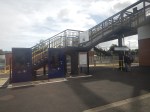












































Note.
Here are my thoughts on my objectives.
Grand Central Trains And Their Class 180 Trains
This is a summary of my journey from King’s Cross and Hartlepool.
- The journey took eight minutes under three hours and we arrived thirteen minutes late.
- The train was four minutes early at the Newark Crossing, one minute early at Doncaster and on-time at York. Was this good driving or was the driver having assistance from the digital signalling?
- Delays seemed to build up after York.
There was no trolley, so I didn’t have any refreshment.
This is a summary of my journey from Hartlepool and King’s Cross.
- The journey took seven minutes over three hours and we arrived one minute late.
- The train was two minutes late at York and Doncaster and a minute late at the Newark Crossing.
- As the train ran smoothly into King’s Cross, was it using the digital signalling, as I observed in Did My InterCity225 From Leeds Arrive Like An Airliner In King’s Cross?
- At King’s Cross we shared Platform 4, with a five-car Azuma, which shows the advantage of splitting the platforms into a and b.
There was again no trolley, but the buffet was in the next car.
Six Hours In A Class 180 Train Was Not Good For Me
I have not felt well today and I blame six hours in Class 180 trains yesterday.
I used to feel like this, after a ride in a Class 390 train, but since they have been fitted with better air-conditioning, I have not had a problem.
Hopefully, the Class 820 trains will be better.
Hartlepool Nuclear Reactor Moves To UK Regulatory Assessment
The title of this post, is the same as that of this article on the Northern Echo.
This is the sub-heading.
Plans for a new generation of nuclear power stations moved closer after the Government approved the next regulatory stage for an advanced reactor planned for Hartlepool
These two paragraphs add more details.
The approval follows a partnership between X-energy and Centrica to build a new generation of UK nuclear power stations using Xe-100 Advanced Modular Reactors, starting in Hartlepool.
On the partnership’s first anniversary, the Government directed regulators to begin assessing X-energy’s Xe-100 reactor under the Generic Design Assessment, a major step towards commercial licensing in the UK.
This Google Map shows the area around the current Hartlepool Nuclear Power Station.
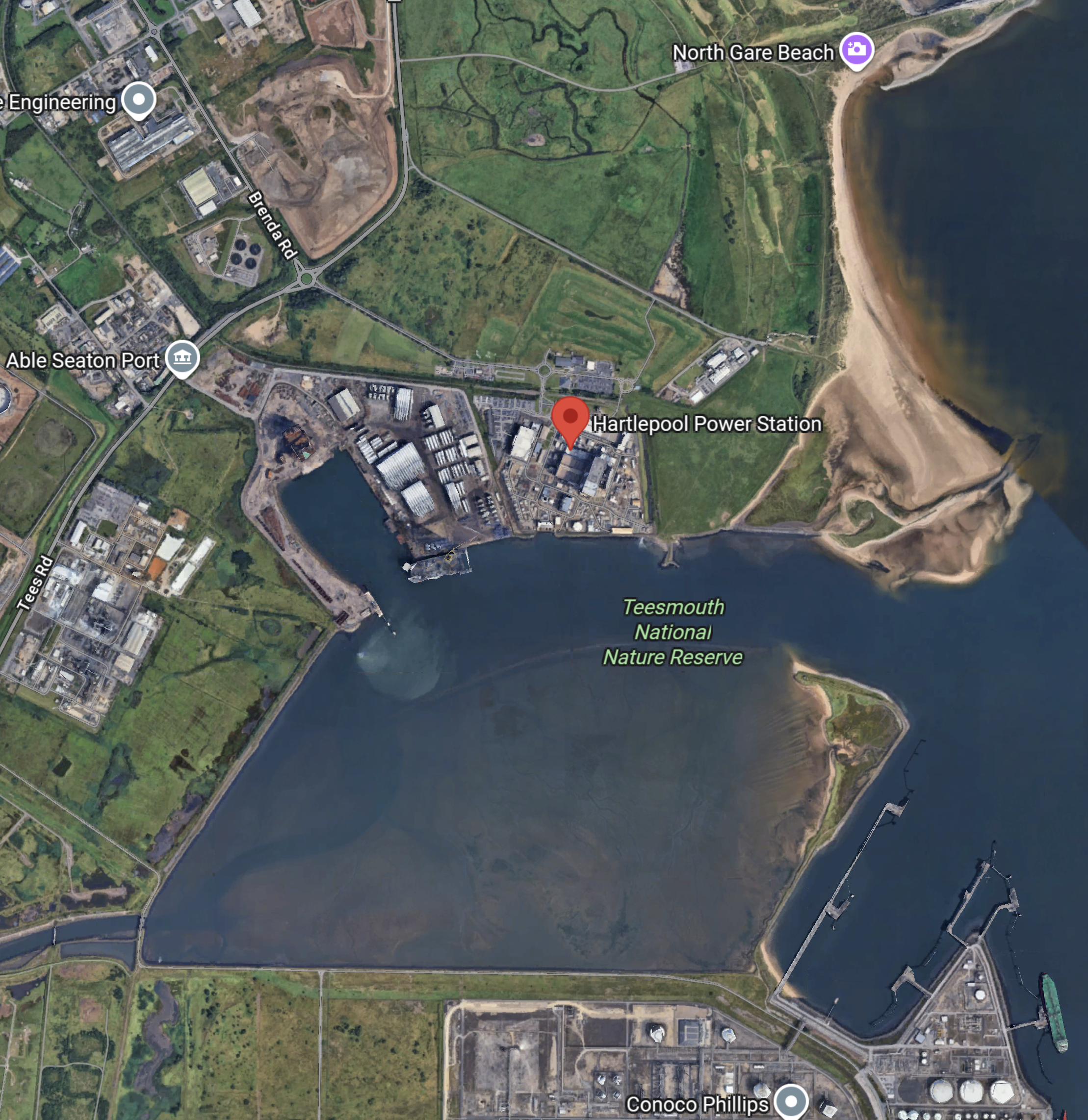
Note.
- Hartlepool Nuclear Power Station is indicated by the red arrow.
- Hartlepool serves as a major industrial, manufacturing, and logistics hub supporting offshore wind farms rather than a landing point for their electricity grid connections.
- Full details of the current nuclear power station is given in its Wikipedia entry, but here’s a summary.
- It is an Advanced Gas-Cooled Reactor, which uses carbon dioxide for cooling.
- It was commissioned in 1983.
- It is scheduled to be closed in 2030.
- It produces 1,185 MW of electricity.
- The current site has rail access from the Durham Coast Line.
Nothing is said in the article about the capacity or the timescale for building the new power station.
What Will Be The Capacity Of X-energy’s New Nuclear Power Station At Hartlepool?
I took a quick look with Google AI and received this answer.
AI Overview
X-energy’s planned new nuclear power station at Hartlepool is proposed to have a capacity of up to 960 megawatts (MW), using a 12-unit deployment of its Xe-100 advanced modular reactors.
Project Details
Technology: X-energy Xe-100 high-temperature, gas-cooled small modular reactor (each individual unit generates 80 MW of electricity).
Configuration: A 12-reactor plant (“12-pack” multi-unit layout).
Location: Adjacent to the existing Hartlepool Power Station in Teesside, northeast England.
Timeline: First electricity generation is targeted for the mid-2030s, following the scheduled closure of the current operating plant.
That was an excellent answer, that gave me all I needed.
Hartlepool’s Rail Links
This OpenRailwayMap shows the Durham Coast Line and the rail links to the current Hartlepool Nuclear Power Station.
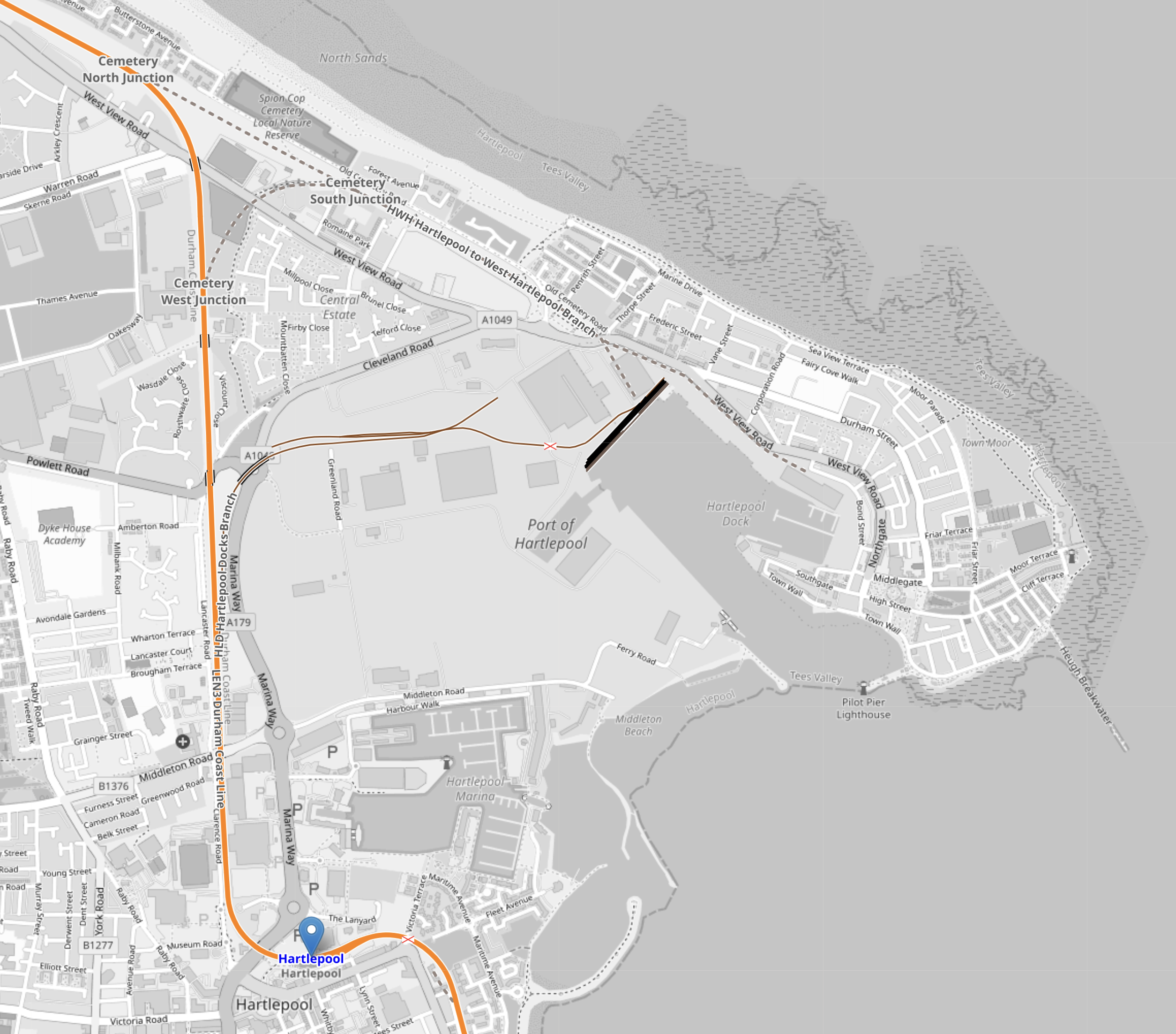
Note.
- The orange track going North-South across the map is the Durham Coast Line between Newcastle and Middlesbrough.
- Hartlepool station is indicated by the blue arrow.
- A rail connection goes East from the Durham Coast Line to the Port of Hartlepool and the current Hartlepool Nuclear Power Station, which I believe is the big square building by the black line.
- Hartlepool station is served by six trains per day (tpd) to and from London King’s Cross, with five tpd on Sundays.
- All London services are operated by open access operator Grand Central Trains, who have new Hitachi Class 820 tri-mode trains on order for delivery in 2028.
Current timings are a few minutes over three hours, but I suspect that the new Hitachi trains could do the trip very close to three hours.
UK Offshore Wind In 2030 – Calculated September 2026
The next general election is likely to be held in 2029, so how much wind energy will be added before the next Parliament?
The Current Position
The Wikipedia entry for the list of operational wind farms in the UK, says this.
In July 2025, there were offshore wind farms consisting of 2,809 turbines with a combined capacity of 16,035 megawatts.
Due To Be Commissioned In 2026
It would appear these wind farms will come on-line in 2026.
- Dogger Bank A – 1235 MW – Fixed
- East Anglia 3 – 1372 MW – Fixed
- Sofia – 1400 MW – Fixed
This would add 3 wind farms and 4,007 MW to give a total of 20,042 MW.
Due To Be Commissioned In 2027
It would appear these wind farms will come on-line in 2027.
- Dogger Bank B – 1235 MW – Fixed
- Dogger Bank C – 1218 MW – Fixed
- Inch Cape – 1080 MW – Fixed
- Llŷr 1 – 100 MW – Floating
- Llŷr 2 – 100 MW – Floating
- Norfolk Boreas – 1380 MW – Fixed
This would add 6 wind farms and 5,113 MW to give a total of 25,155 MW.
Due To Be Commissioned In 2028
It would appear these wind farms will come on-line in 2028.
- East Anglia 2 – 963 MW – Fixed
- Hornsea 3 – 2852 MW – Fixed
This would add 2 wind farms and 3,815 MW to give a total of 28,970 MW.
Due To Be Commissioned In 2029
It would appear these wind farms will come on-line in 2029.
- Green Volt – 400 MW – Fixed
- Norfolk Vanguard East – 1545 MW – Fixed
- Norfolk Vanguard West – 1545 MW – Fixed
This would add 3 wind farms and 3,490 MW to give a total of 32,460 MW.
Due To Be Commissioned In 2030
It would appear these wind farms will come on-line in 2030.
- Caledonia – 2000 MW – Fixed
- Erebus – 100 MW – Floating
- Five Estuaries – 1080 MW – Fixed
- MarramWind – 3000 MW – Floating
- Mona – 1500 MW – Fixed
- Morecambe – 480 MW – Fixed
- N3 Project – 495 MW – Mixed
- North Falls – 504 MW – Fixed
- Outer Dowsing – 1500 MW – Fixed
- Pentland – 92.5 MW – Floating
- Ramplion 2 – 1200 – Fixed
This would add 11 wind farms and 11,951.5 MW to give a total of 44,411.5 MW.
Due To Be Commissioned In 2031
It would appear this wind farms will come on-line in 2031.
- Awel y Môr – 775 MW – Fixed
- Berwick Bank Phase B – 1380 MW – Fixed
- Dogger Bank SE – 1500 MW – Fixed
- Dogger Bank SW – 1500 MW – Fixed
- Spiorad na Mara – 840 MW – Fixed
This would add 5 wind farms and 5,995 MW to give a total of 50,406.5 MW.
UK Offshore Wind Summary 2026 And 2031
I can now summarise UK offshore wind for the next few years.
- 2025 – 16,035 MW
- 2026 – 3 – 4,007 MW – 20,042 MW
- 2027 – 6 – 5,113 MW – 25,155 MW
- 2028 – 2 – 3,815 MW – 28,970 MW
- 2029 – 3 – 3,490 MW – 32,460 MW
- 2030 – 11 – 11,951.5 MW – 44,411.5 MW
- 2031 – 5 – 5,995 MW – 50,406.5 MW
Note.
- The first figure after the year is the number of wind farms to be commissioned that year.
- The middle figure is the expected capacity of the wind farms to be commissioned that year.
- The last figure is the expected total offshore wind capacity at the end of that year.
- Typically, we need about 30 to 35 GW to power the UK.
- The next general election must be held by the 15th August 2029.
So whoever wins the election will inherit a windfall of just under 12 GW of offshore wind.
Centrica, X-energy Advance Nuclear Plans As UK Regulators To Begin Design Review For Xe-100
The title of this post, is the same as that of this press release from Centrica.
This is the sub-heading.
On the one-year anniversary of the Centrica X-energy partnership being signed, the UK Government has directed regulators to accept the X-energy Xe-100 Advanced Modular reactor into the Generic Design Assessment, marking a significant step toward UK commercial licensing.
Under their partnership, the companies intend to deploy up to 6 GW of new nuclear capacity in the UK (10-20 Xe-100 power stations depending on size of each installation)
These first two paragraphs add some details.
Centrica and X‑Energy, Inc., a leading developer of advanced nuclear reactors and fuel technology, today announced that X‑energy’s Xe‑100 Generation IV advanced Small Modular Reactor (“SMR”) has been accepted into the United Kingdom’s Generic Design Assessment (“GDA”) process.
GDA acceptance formally triggers the process of assessing the design’s acceptability for deployment and operation ahead of the technical and environmental evaluations required for site‑specific licensing and permitting. The assessment is expected to take approximately three years and will be administered by the UK Office for Nuclear Regulation (“ONR”), the Environment Agency (EA), and Natural Resources Wales
To learn more, I asked Google AI for what it knows on the Xe-100 reactor and I received this.
The Xe-100 is an advanced Generation IV high-temperature gas-cooled pebble-bed small modular nuclear reactor developed by the American company X-energy.
Key Specifications & Design
Power Output: Generates about 80 megawatts of electricity (MWe) or 200 MW thermal per unit, and can be scaled up into a four-pack configuration yielding 320 MW.
Cooling System: Uses inert helium gas instead of water to remove heat from the core, reaching operating temperatures above 750°C.
Fuel Type: Runs on proprietary TRISO-X fuel pebbles, where each billiard-ball-sized pebble contains roughly 18,000 microscopic TRISO fuel particles that act as individual containment vessels.
Note.
- 320 MW may seem small, but you have to remember Sizewell A was two 210 MW Magnox reactors and it operated for forty years.
- I like the choice of helium for a coolant. Especially, as the gas is widely used for cooling superconducting magnets, so there must be plenty of expertise.
- Helium is also present in the atmosphere at 5.2 parts per million.
- I also like the concept of the fuel pebbles.
These are some of my questions.
Where Was TRISO Fuel Developed?
The Wikipedia entry for TRISO Fuel has a History section, which starts with this paragraph.
Coated-particle ceramic fuels were initially developed in the United Kingdom as part of the Dragon reactor project. During the development of the Dragon reactor, its designers became concerned by the need to purge gaseous fission products from the reactor core and their potential migration to other parts of the reactor This concern led to the choice of coated-particle fuel, where the fuel would be formed from small particles of uranium then coated with pyrolytic carbon. The inclusion of silicon carbide as a diffusion barrier was first suggested by D. T. Livey in 1961, in order to better retain fission products.
Note.
- The United States and Germany made contributions to the development of TRISO fuel.
- the first commercial reactor to use TRISO, was the 330 MWe Fort Saint Vrain Nuclear Power Plant
- The experimental High Temperature Test Reactor in Japan, constructed in 1998, uses prismatic UO2 TRISO fuel.
- Japan has the only TRISO-fueled reactor in commercial operation.
- Oak Ridge National Laboratory in the United States, developed the process used to make TRISO fuel.
The Wikipedia entry for the Dragon reactor is worth a read.
These are the first two paragraphs of its Wikipedia entry.
Dragon was an experimental high temperature gas-cooled reactor at Winfrith in Dorset, England, operated by the United Kingdom Atomic Energy Authority (UKAEA). Its purpose was to test fuel and materials for the European High Temperature Reactor programme, which was exploring the use of tristructural-isotropic (TRISO) fuel and gas cooling for future high-efficiency reactor designs. The project was built and managed as an Organisation for Economic Co-operation and Development/Nuclear Energy Agency international project. In total, 13 countries were involved in its design and operation during the project lifetime.
Originally conceived as a small research reactor, during the design phase it grew larger. The choice of helium coolant was made after a long debate within the UKAEA between proponents of helium and carbon dioxide, with helium ultimately selected. Groundbreaking occurred in 1960. It operated from 1965 to 1976, and is generally considered extremely successful.
Who Are The Technology Partners Of X-energy?
I had to ask Google AI this question and received this reply.
X-energy works with major technology, industrial, and energy partners to develop and deploy its advanced small modular nuclear reactors (SMRs) and TRISO-based fuel technology.
Key Technology and Strategic Partners
Amazon and AWS: A primary investor (through the Climate Pledge Fund) and customer, Amazon collaborates with X-energy on scaling nuclear energy for data centers and AI infrastructure. X-energy, Amazon Web Services (AWS), NVIDIA, and Idaho National Laboratory are founding members of Project Prometheus to apply AI to advanced nuclear deployment.
NVIDIA: A founding partner in Project Prometheus alongside AWS and Idaho National Laboratory, helping integrate AI accelerators and tools into nuclear design and operations.
Doosan Enerbility & Korea Hydro & Nuclear Power (KHNP): South Korean industrial partners collaborating to support multi-gigawatt deployments of Xe-100 reactors and manufacture key components.
Energy Northwest: A utility partner working on X-energy’s first-of-a-kind project development in Washington state.
Dow Inc.: Partnered with X-energy to deploy an initial four-unit Xe-100 plant at Dow’s Seadrift chemical manufacturing site in Texas.
Centrica: Partnered through a Joint Development Agreement to deploy Advanced Modular Reactors and pursue up to 6 gigawatts of new nuclear capacity in the United Kingdom.
IHI Corporation: Partnered to expand U.S.-Japan supply chain collaboration and commercial-scale manufacturing for reactor components.
Oak Ridge National Laboratory: Collaborates with X-energy’s fuel subsidiary, TRISO-X, on advanced nuclear fuel research.
Note.
- There are companies and organisations here from Korea, Japan, the US and the UK.
- Do Amazon and Centrica see an Xe-100 reactor as a reliable way of powering a data centre without a grid connection?
- The Korean and Japanese companies would be ideal to ensure the quality of reactor and other key compoonents.
- Chemical manufacturing sites use a lot of electricity and Dow’s contribution could define a widespread use of the Xe-100.
- Oak Ridge have been a client of mine in the past and like AWRE in England, I would trust their nuclear technology.
I also believe that if you put these companies in a joint venture, you’ll get out more ideas than you expect.
Who Are The Financial Partners Of X-energy?
I had to ask Google AI this question and received this reply.
Amazon & Climate Pledge Fund: Led major funding rounds (including a $500 million investment in 2024 and ongoing backing) and holds a significant stake in the company.
Jane Street: Led X-energy’s oversubscribed $700 million Series D financing round.
Ares Management: Provided financial backing and funds across multiple investment rounds alongside special purpose acquisition sponsorships.
Emerson Collective: Participated as a key venture capital backer across multiple funding rounds.
NGP Energy Capital Management: Contributed significant capital through multiple financing stages.
Segra Capital Management: Acted as an ongoing financial participant in major capital raises.
Other Investors: Includes ARK Invest, Point72, Galvanize, Ken Griffin (Citadel founder), XTX Ventures, Reaves Asset Management, and the University of Michigan.
Note that like the technology, the finance comes from a wide variety of sources.
This all sounds like a good positive start.
Will Centrica, X-energy Be Going For A Multi-Country Design Review For Xe-100?
There are four major countries with extensive nuclear power experience, with stakes in the Xe-100; Japan, Korea, the US and the UK.
There is also Oak Ridge in the US, which appears to be supplying the concept of the fuel.
If this group can’t convince the regulators in these four countries, that they have a safe and viable project, then they shouldn’t be in business.
Conclusion
It’s now mainly up to the regulators.
Unfortunately, you get stories with titles like this article on the BBC, which have a title of Green Party Leader Criticises Nuclear Reactor Plan.
Chinese Offshore Wind Foundation Manufacturer Inks MoU With Scotland’s Ardersier Port
The title of this post, is the same as that of this article on offshoreWIND.biz.
This is the sub-heading.
Dajin Heavy Industry and Haventus, the owner and developer of Ardersier Port in Scotland, have signed a Memorandum of Understanding (MoU) to explore combining Dajin’s manufacturing and transport capability with Ardersier’s port infrastructure to support both fixed-bottom and floating wind projects in the UK and across Europe.
These two paragraphs add more details.
Dajin and Haventus will also work together to identify potential new commercial opportunities and how Ardersier Port could provide a site for storage, marshalling, assembly and transportation of offshore wind components to the offshore wind foundation manufacturer.
According to Haventus, Ardersier Port’s extensive quayside land, deep-water access and a high-voltage power connection can support the manufacturing, fabrication, assembly and storage of large-scale structures for offshore wind and other energy-related projects.
These are my thoughts.
Where Is Ardesier?
This Google Map shows the location of the Port of Ardesier in relation to Inverness, the Orkneys and Shetlands, and Norway.
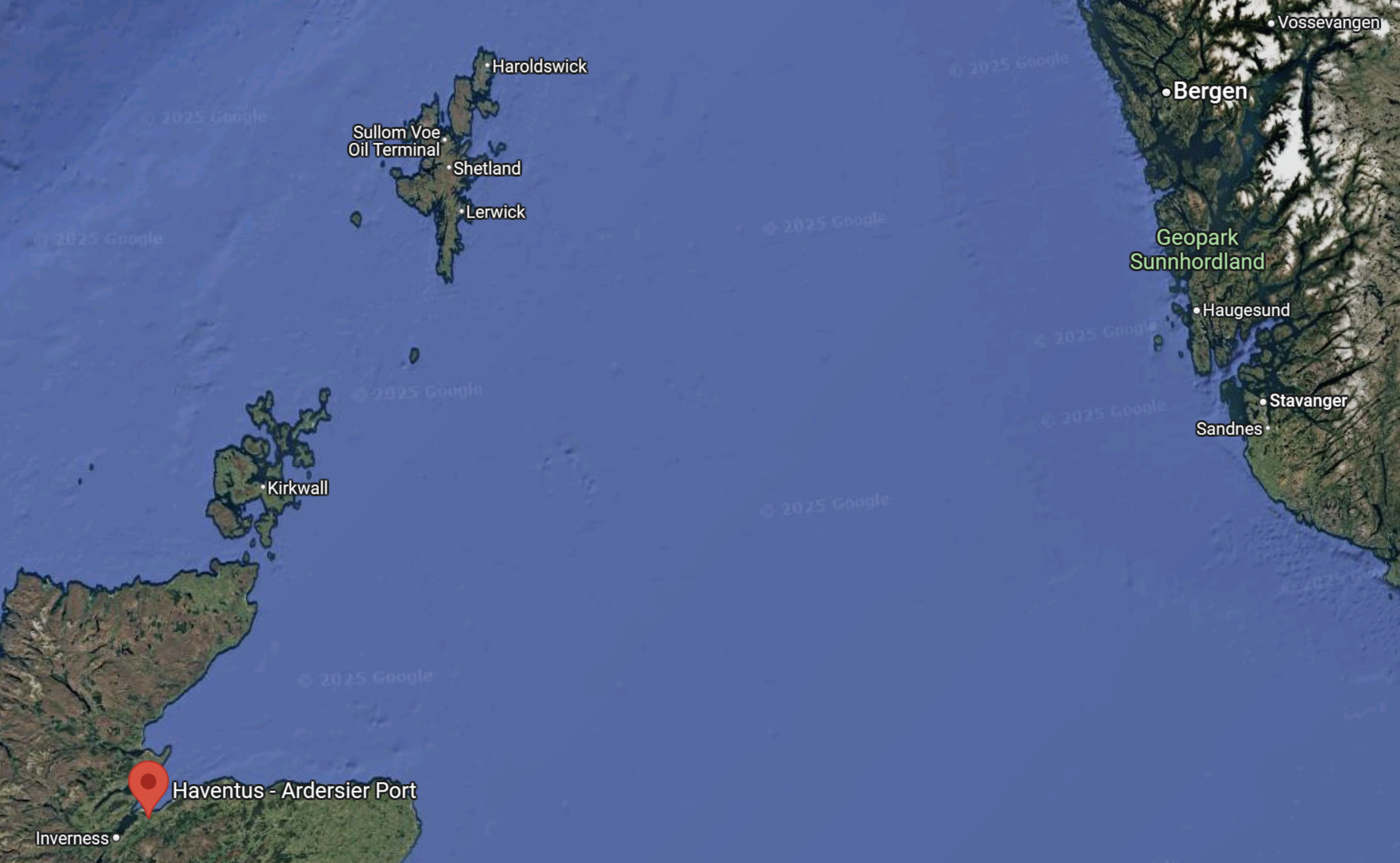
The Port of Ardesier would appear to be ideally placed to bring in business for the partnership.
This Google Map shows more detail around Haventus – Ardesier Port.
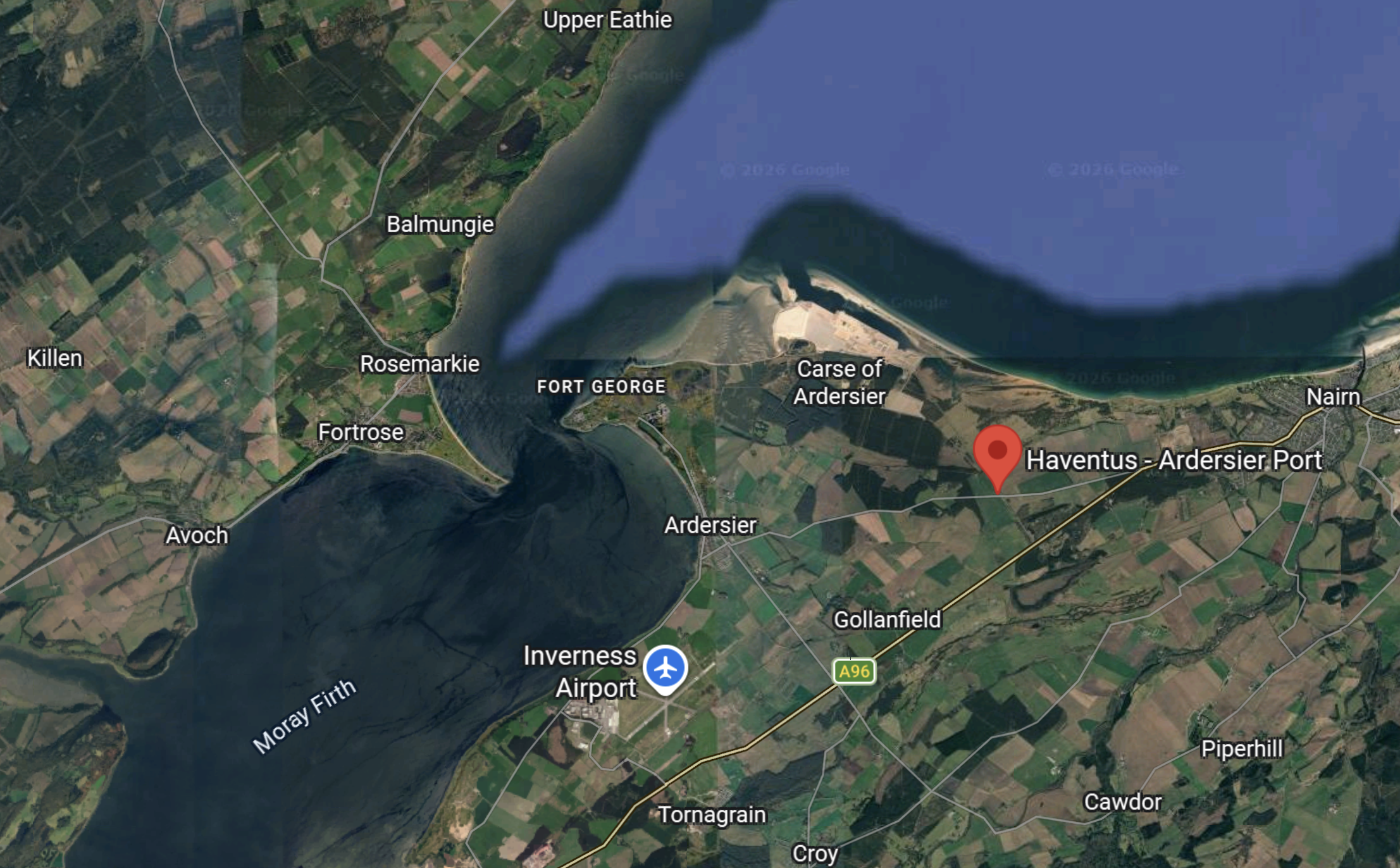
Note.
- Haventus appears to be located close to Inverness Airport, which has a railway station on the Inverness and Aberdeen Line.
- Inverness is on the Moray Firth.
Are Haventus A British Company?
I asked Google AI the question in the title of this section and received this answer.
Yes, Haventus is a British company.
It is registered in the UK with its corporate headquarters in London, and its primary operations focus on redeveloping the Ardersier Port in the Scottish Highlands to support offshore wind energy.
Company Details
Registration: Registered in England and Wales (Haventus Limited).Head Office: London, United Kingdom.
Project: Transforming the former fabrication yard at Ardersier Port near Inverness, Scotland, into an energy transition facility for offshore wind.
Key Backing: Funded by British institutions like the UK Infrastructure Bank and the Scottish National Investment Bank, alongside major private equity investment from US-based Quantum Capital Group.
Could The Port Of Ardersier Have A Rail Connection?
This OpenRailwayMap shows the Port of Ardersier, the Aberdeen and Inverness Line and Inverness Airport.
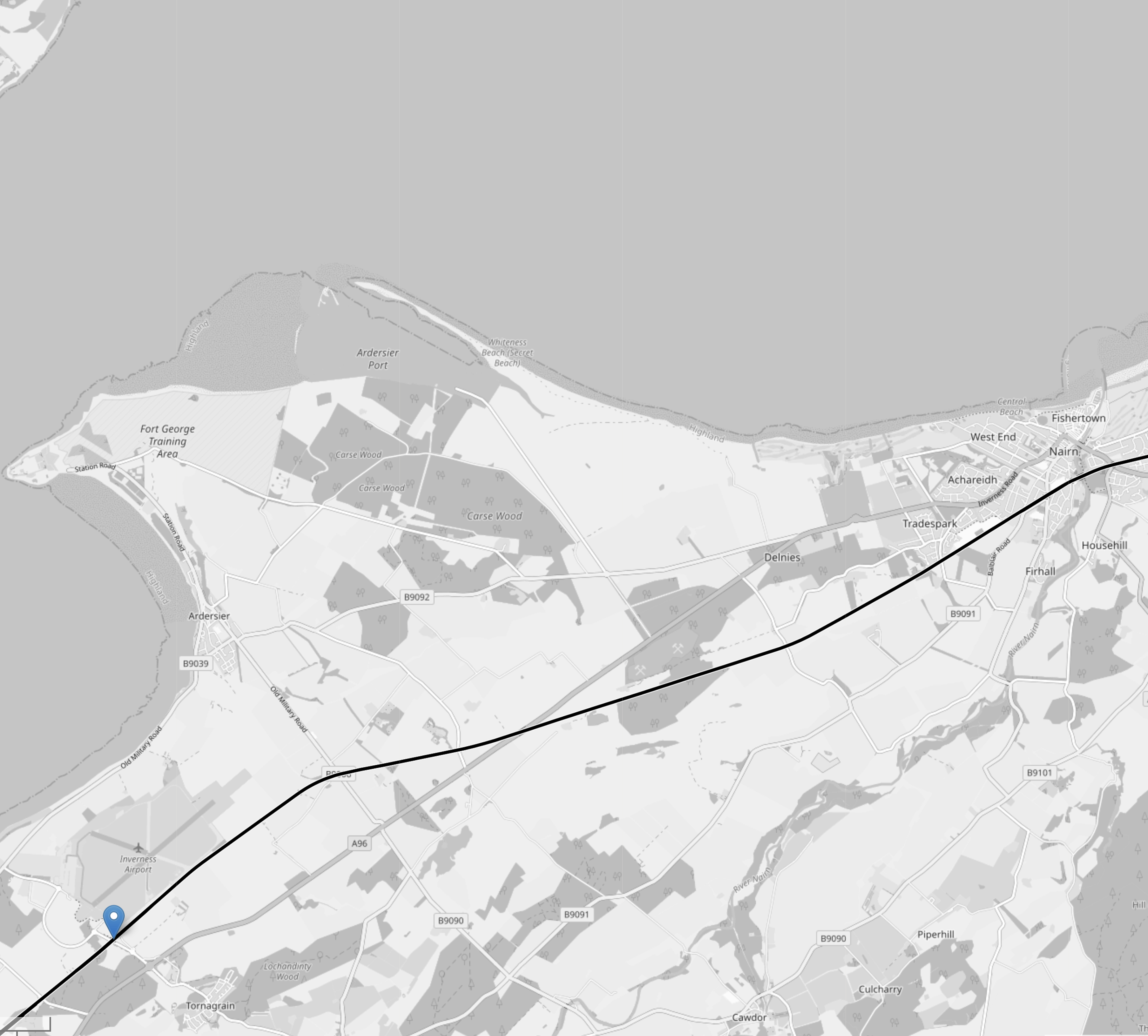
Note.
- The heavy black track is the Aberdeen and Inverness Line.
- The Port of Ardersier is above it in the middle of the map.
- Inverness Airport is marked by the blue arrow.
There seems to be a lot of space in the area.
Could A Steel Mini-Mill Be Built In The Area?
Consider.
- Dajin Heavy Industry could need a lot of steel.
- A steel mini-mill would need a lot of energy.
- The UK has a lot of scrap steel, that could be of good enough quality to make the steel gubbins needed for offshore wind components.
- Scrap could be brought in by sea or rail.
- That part of Scotland has lots of offshore wind power.
- Three pumped storage hydro systems are being built in the Scottish Highlands to store electricity.
- Workers could be brought in by train from as far as Aberdeen.
The Port of Ardersier could be an ideal place for a steel mini-mill.
How Many Acres Do You need for a Small Steel From Scrap Mill?
I asked Google AI the question in the title of this section and received this answer.
A small scrap-based steel mini-mill requires roughly 5 to 20 acres of land for basic production, casting, and rolling units.
If you include a dedicated on-site scrap yard and heavy inventory storage buffers, the requirement expands closer to 25 to 50+ acres.
Core Space Breakdown
Melt Shop & Electric Arc Furnace (EAF): 2 to 4 acres for the core melting furnace, ladle metallurgy furnace, and pollution control equipment.
Casting & Rolling Mill: 2 to 5 acres for continuous casting (billets or blooms) and the hot re-rolling lines.
Scrap Yard & Raw Materials: 5 to 20 acres depending on how much local scrap inventory you need to stockpile.
Finished Goods & Logistics: 3 to 10 acres for cooling beds, product staging, truck loading docks, and internal roadways.
From this crude analysis with Google AI, I believe that there is enough space to put a small steel mill in the area.
Ideas Borrowed From Failures During The Years Of North Sea Oil and Gas
I suspect there are a few of these, which might be possible to develop at Ardersier.
Conclusion
The Port of Ardersier has lots of possibilities,

