Chinese Offshore Wind Foundation Manufacturer Inks MoU With Scotland’s Ardersier Port
The title of this post, is the same as that of this article on offshoreWIND.biz.
This is the sub-heading.
Dajin Heavy Industry and Haventus, the owner and developer of Ardersier Port in Scotland, have signed a Memorandum of Understanding (MoU) to explore combining Dajin’s manufacturing and transport capability with Ardersier’s port infrastructure to support both fixed-bottom and floating wind projects in the UK and across Europe.
These two paragraphs add more details.
Dajin and Haventus will also work together to identify potential new commercial opportunities and how Ardersier Port could provide a site for storage, marshalling, assembly and transportation of offshore wind components to the offshore wind foundation manufacturer.
According to Haventus, Ardersier Port’s extensive quayside land, deep-water access and a high-voltage power connection can support the manufacturing, fabrication, assembly and storage of large-scale structures for offshore wind and other energy-related projects.
These are my thoughts.
Where Is Ardesier?
This Google Map shows the location of the Port of Ardesier in relation to Inverness, the Orkneys and Shetlands, and Norway.
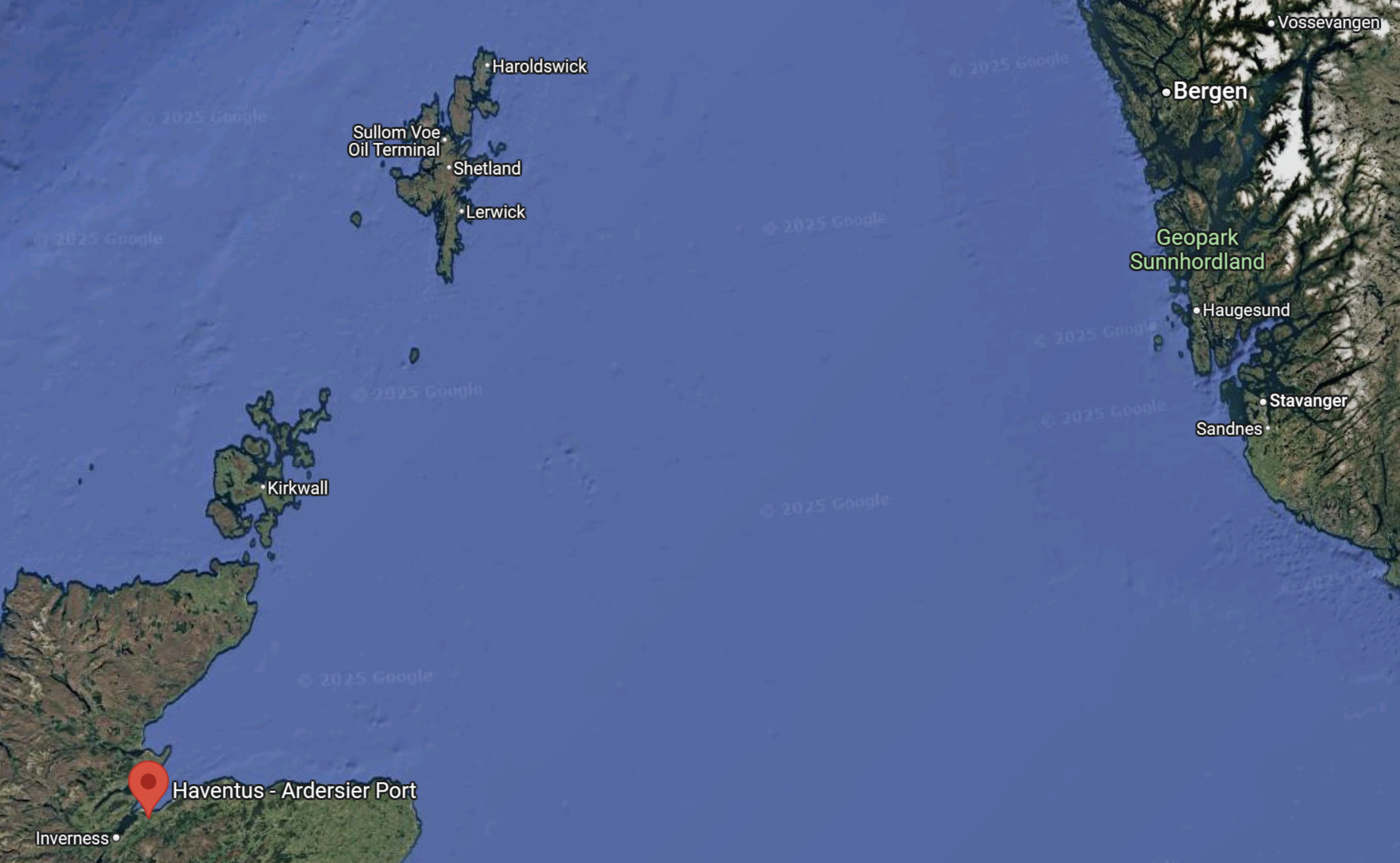
The Port of Ardesier would appear to be ideally placed to bring in business for the partnership.
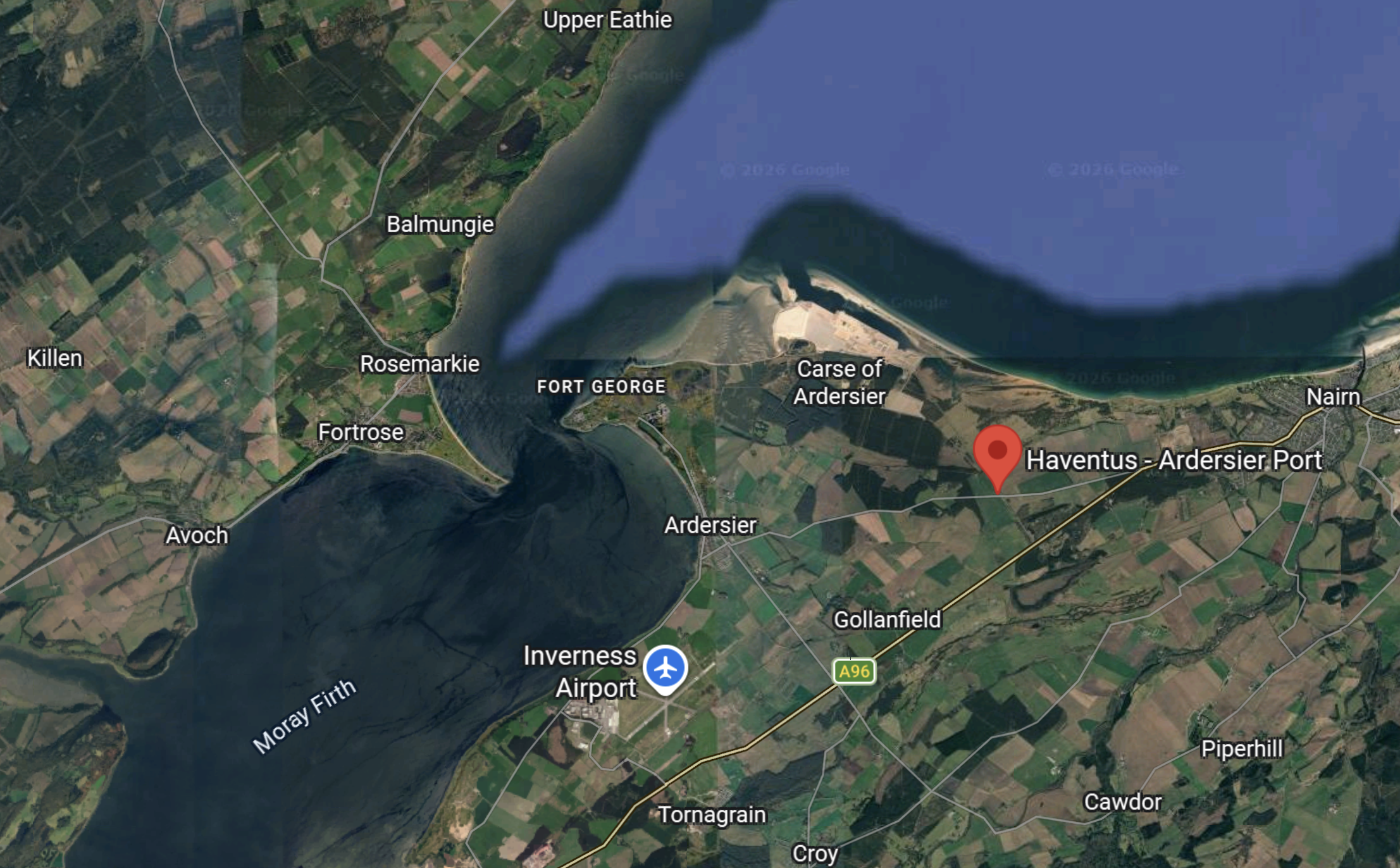
This Google Map shows more detail around Haventus – Ardesier Port.
Note.
- Haventus appears to be located close to Inverness Airport, which has a railway station on the Inverness and Aberdeen Line.
- Inverness is on the Moray Firth.
Are Haventus A British Company?
I asked Google AI the question in the title of this section and received this answer.
Yes, Haventus is a British company.
It is registered in the UK with its corporate headquarters in London, and its primary operations focus on redeveloping the Ardersier Port in the Scottish Highlands to support offshore wind energy.
Company Details
Registration: Registered in England and Wales (Haventus Limited).Head Office: London, United Kingdom.
Project: Transforming the former fabrication yard at Ardersier Port near Inverness, Scotland, into an energy transition facility for offshore wind.
Key Backing: Funded by British institutions like the UK Infrastructure Bank and the Scottish National Investment Bank, alongside major private equity investment from US-based Quantum Capital Group.
Could The Port Of Ardersier Have A Rail Connection?
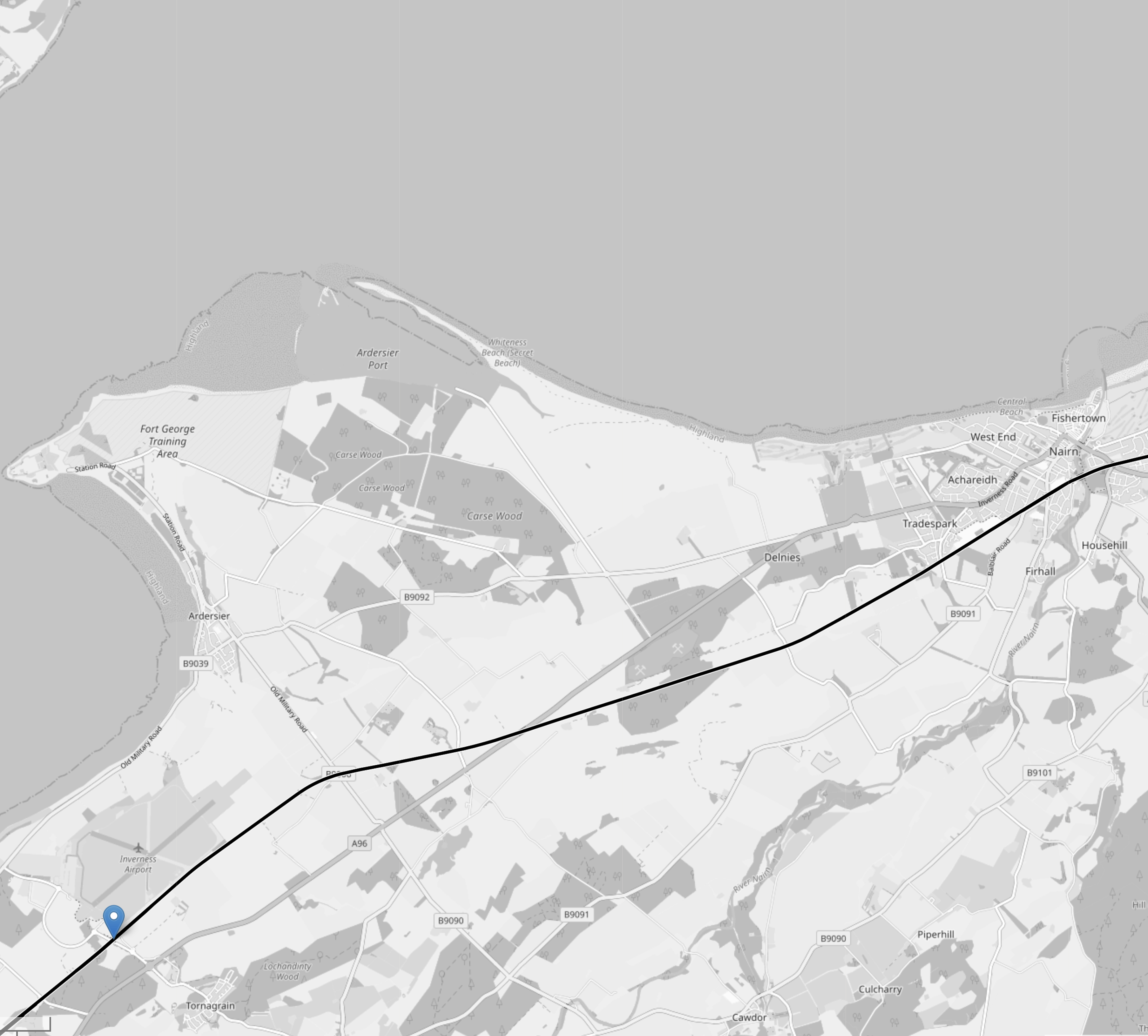
This OpenRailwayMap shows the Port of Ardersier, the Aberdeen and Inverness Line and Inverness Airport.
Note.
- The heavy black track is the Aberdeen and Inverness Line.
- The Port of Ardersier is above it in the middle of the map.
- Inverness Airport is marked by the blue arrow.
There seems to be a lot of space in the area.
Could A Steel Mini-Mill Be Built In The Area?
Consider.
- Dajin Heavy Industry could need a lot of steel.
- A steel mini-mill would need a lot of energy.
- The UK has a lot of scrap steel, that could be of good enough quality to make the steel gubbins needed for offshore wind components.
- Scrap could be brought in by sea or rail.
- That part of Scotland has lots of offshore wind power.
- Three pumped storage hydro systems are being built in the Scottish Highlands to store electricity.
- Workers could be brought in by train from as far as Aberdeen.
The Port of Ardersier could be an ideal place for a steel mini-mill.
How Many Acres Do You need for a Small Steel From Scrap Mill?
I asked Google AI the question in the title of this section and received this answer.
A small scrap-based steel mini-mill requires roughly 5 to 20 acres of land for basic production, casting, and rolling units.
If you include a dedicated on-site scrap yard and heavy inventory storage buffers, the requirement expands closer to 25 to 50+ acres.
Core Space Breakdown
Melt Shop & Electric Arc Furnace (EAF): 2 to 4 acres for the core melting furnace, ladle metallurgy furnace, and pollution control equipment.
Casting & Rolling Mill: 2 to 5 acres for continuous casting (billets or blooms) and the hot re-rolling lines.
Scrap Yard & Raw Materials: 5 to 20 acres depending on how much local scrap inventory you need to stockpile.
Finished Goods & Logistics: 3 to 10 acres for cooling beds, product staging, truck loading docks, and internal roadways.
From this crude analysis with Google AI, I believe that there is enough space to put a small steel mill in the area.
Ideas Borrowed From Failures During The Years Of North Sea Oil and Gas
I suspect there are a few of these, which might be possible to develop at Ardersier.
Conclusion
The Port of Ardersier has lots of possibilities,
Haventus, Sarens PSG Unveil ‘On-Land to Launch’ Floating Wind Solution
The title of this post, is the same as that of this article on offshoreWIND.biz.
This is the sub-heading.
UK companies Haventus and Sarens PSG have developed a low-cost solution for the integration and launch of floating offshore wind turbines.
These two introductory paragraphs add more details.
Haventus said that it is working to enable offshore wind project developers to acquire fully assembled floating bases and turbines at Ardersier, Scotland, as well as providing dry storage which does not require complex licensing.
A heavy-lift solution will enable safe on-land integration and launch to the harbour of fully integrated floating offshore wind turbines.
Note.
- Haventus introduce themselves on their web site, as an energy transition facilities provider, offering pivotal infrastructure for the offshore wind industry. The first facility, they are developing is the Port of Ardesier in the North of Scotland, to the North-East of Inverness.
- Sarens PSG introduce themselves on their web site, as specialists in turnkey heavy lifting and transportation solutions for offshore wind component load-in, marshalling, assembly, deployment, and integration.
It looks to me that the two companies are ideal partners to put together flotillas of large floating wind turbines.
These two paragraphs seem to describe the objectives of the partnership.
This should shorten supply chains through single-site sourcing of key components and remove the operational, safety, logistical, and engineering complexity that comes with storage and integration activities in the marine environment.
The companies also said that the solution can also drive down the costs and accelerate floating offshore wind deployment by simplifying transport and installation requirements and remove the obstacles of weather and design life variables that must be considered with ‘wet’ storage and integration.
I was always told as a young engineer to define your objectives first, as you might find this helps with the design and costs of the project.
I do wonder sometimes, if the objectives of High Speed Two smelt too much of a project designed by lots of parties, who all had different objectives.
The Location Of The Port Of Ardesier
This Google Map shows the location of the Port of Ardesier in relation to Inverness, the Orkneys and Shetlands, and Norway.
The Port of Ardesier would appear to be ideally placed to bring in business for the partnership.
Haventus Chosen To Accelerate Opportunities For Floating Offshore Wind In Scotland
The title of this post, is the same as that of this press release from Cerulean Winds.
These three bullet points, act as sub-headings.
- The under-construction Ardersier Energy Transition Facility owned by Haventus, is selected by Cerulean, the floating wind company with 3GW under development in the Central North Sea
- Announcement marks major boost to future of offshore floating wind in Scotland, as UK floating offshore wind supply chain takes shape
- Cerulean Winds to leverage its unique experience in floating infrastructure from oil and gas sector, in particular, Alliance Contracting
These four paragraphs add detail to the post.
Haventus, owner of the under-construction Ardersier Energy Transition Facility, located near Inverness, Scotland, has been selected by Cerulean Winds, the lead developer of 3GW+ UK floating offshore wind, as its chosen deployment port.
Ardersier Energy Transition Facility, which has secured £400 million of funding, including a £100 million credit facility from the UK National Wealth Fund & Scottish National Investment Bank, will be Scotland’s largest offshore wind facility on the North Sea coast. Cerulean’s commitment to using the facility marks a major step toward realising the UK and Scottish governments’ vision of creating a world-leading floating offshore wind (FLOW) industrial base.
By 2050, FLOW could contribute more than £47 billion to the UK economy and employ 100,000 people. Ardersier will support achieving these targets by deploying and servicing offshore wind installations, providing green jobs and establishing a UK supply chain to rival international competitors.
The Cerulean alliance’s first project will be the Aspen development, a 1 GW wind farm in the Central North Sea approximately 100km from shore, that is targeting first power between 2028-29. The project is designed to enable Scotland’s supply chain and direct more than £1 billion of investment in FLOW manufacturing and service support in the country, with the Ardersier Energy Transition Facility acting as a strategic hub. This early investment will help establish the industrial foundation needed to maximise domestic economic benefits from ScotWind’s planned buildout from 2030.
The numbers are huge and hopefully the initial returns will provide the capital to develop the later wind farms.
In some ways, I’m disappointed, as this is the sort of project, I’d love to be writing the software for.
I also these days have no family responsibilities and only need to look after myself.

