Get H2 Partners Propose Green Hydrogen Pipeline In Europe
The title of this post, is the same as that of this article on the Green Car Congress.
This is the first paragraph.
Seven companies from the GET H2 initiative in Europe want to build a cross-border pipeline for green hydrogen. From Lingen (Emsland) to Gelsenkirchen and from the Dutch border to Salzgitter, production, transport, storage and industrial acceptance of green hydrogen are to be connected in several steps between 2024 and 2030 under the umbrella of the overall project.
Note.
- I suspect this could be almost four hundred kilometres of hydrogen pipeline.
- The hydrogen will be used in refineries, for steelmaking and other industrial uses.
- It could avoid production of sixteen million tonnes of carbon dioxide by 2030.
This will need a lot of wind-turbines and electrolysers, most of which I expect will be in the German and Dutch parts of the North Sea.
First French Region Signs Hydrogen Train Contract
The title of this post, is the same as that of this article on the International Railway Journal.
This is the introductory paragraph.
The Bourgogne-Franche Comté region has signed a contract with Alstom, through operator French National Railways (SNCF), for the supply of three Coradia Polyvalent electro-hydrogen dual-mode multiple units.
These are some points from the article.
- The three trains are from an order for 14 from four French regions.
- The trains can use 1500 VDC and 25 KVAC electrification.
- They will be able to use hydrogen power, where there is no electrification.
- Range on hydrogen will be 400-600 km.
- Operating speed will be up to 160 kph.
- Trains will be four cars, with a capacity of 220 passengers.
- Trains will start test running in 2024 on the 19km non-electrified Auxerre – Laroche – Migennes line.
As with the Alstom Class 600 hydrogen trains for the UK, deliveries don’t seem to be fast.
I wrote Hydrogen Trains Ready To Steam Ahead in January 2019. This is the first few paragraphs.
The title of this post is the same as that of an article in today’s copy of The Times.
This is the first two paragraphs.
Hydrogen trains will be introduced in as little as two years under ambitious plans to phase out dirty diesel engines.
The trains, which are almost silent and have zero emissions, will operate at speeds of up to 90 mph and release steam only as a by-product. The new trains, which will be called “Breeze” will be employed on commuter and suburban lines by early 2021.
Wikipedia is now saying, that these trains will enter service in 2024.
As Alstom haven’t got any orders for the train, I will be very surprised if they achieve that date.
Is it Alstom, French project management or problems with hydrogen?
I don’t think it’s anything to do with hydrogen, as the Germans built the successful iLint for Alstom and Birmingham University put together a hydrogen demonstration train in double-quick time.
Given all the problems that the French are having with rolling out the Covid-19 vaccine could it be that the French have a Can’t Do! attitude, rather than most other countries, which seem to have a Can Do! attitude.
Ex-Steelworks To Make Wind Farm Parts In Plan For 6,000 Green Jobs
The title of this post, is the same as that of this article on The Times.
This is the introductory paragraph.
The government will invest almost £100 million creating new wind turbine ports in northeast England, with a big renewables company announcing plans to make crucial parts in Teesside.
The two ports will be on Teesside and North Lincolnshire.
The next generation of wind turbines in the North Sea will be very different.
Larger Turbines
They will be larger and the blades will be bigger, so building them close to, where they will be installed is a sensible idea.
We are also very good at aerodynamics in the UK. This is the reason Airbus designs and builds wings in the UK.
Floating Turbines
The next generation of wind farms will be floating, as for some reason, they have a higher capacity factor.
I am personally pleased about this, as it appears they are based on a patented but failed design of floating oil production platform from the 1970s, where I performed the calculations on how to install them.
Some of these floating wind turbines can also be floated into port for major services and upgrades, which probably means we need local manufacturing of as many parts as possible.
Hydrogen Rather Than Electrical Connection
They will also create hydrogen, rather than electricity, by using a combination of wind turbine and hydrogen electrolyser.
As distances between shore and wind farm get longer, it is cheaper to use a gas pipe, rather than a DC electricity link.
Hydrogen can also be stored in worked out gas fields and also brought ashore in redundant pipelines.
The hydrogen electrolysers will probably be built in the world’s largest electrolyser factory in Rotherham, owned by ITM Power; a UK company.
Conclusion
As we are going to build almost 70 GW of offshore wind in the next few years, we’re going to need a turbines and I believe increasingly, they will be built in the UK.
So these two wind ports at Teesside and in Lincolnshire are a good idea.
CP Hydrogen Locomotive Pilot Powered By Ballard
The title of this post, is the same as that of this article on Railway Age.
This is the introductory paragraph.
Canadian Pacific (CP) will use fuel cell modules from Ballard Power Systems for its first hydrogen fuel cell (HFC)-powered linehaul freight locomotive.
I have said that someone will build a hydrogen powered freight locomotive for some time and it looks like Canada is first to show their hand.
The engine shown in the picture in the Railway Age article is 4107, which is an EMD FP9, which looks to be a typical North American diesel-electric locomotive.
- It has a power of 1300 kW.
- It can haul freight or passenger trains.
- Ninety were built in the 1950s.
- They have a maximum speed of between 65-105 mph.
The diesel engine and alternator will be swapped for six 200 kW fuel cells from Ballard and a battery.
This video shows 4107 leading the Royal Canadian Pacific, which is a luxury excursion passenger train.
Will this train be hydrogen powered in the future? It would be an interesting way to bring in the tourists.
Engine Development At ABC Shaped By Sustainability
The title of this post, is the same as that on this article on Riviera Maritime Media.
This is the introductory paragraph.
Belgian engine manufacturer ABC is supplying the power for a new ‘green’ oceanographic research vessel, while it continues development of a hydrogen engine.
The article then gives a good summary of the progress being made by ABC in developing diesel, dual and hydrogen power for ships, based on their existing diesel technology.
- Their diesel engines will be powering the new Belgian maritime research ship; Belgica.
- They are developing hydrogen engines up to 10 MW.
- They aim to have a hydrogen engine working by Q2 2021.
- They have the capacity to build up to a hundred engines a year.
The company seems to be following an alternative route to decarbonisation, by converting existing large diesel designs to hydrogen.
The article is very much worth a read.
Ryze Hydrogen’s Suffolk Freeport Hydrogen Vision Takes Shape
The title of this post, is the same as that of this article on S & P Global.
This is the introductory paragraph.
Ryze Hydrogen plans to install a 6 MW electrolyzer at the Sizewell nuclear site in Suffolk as a launchpad for mass production of low carbon hydrogen in and around the future freeport of Felixstowe, company founder Jo Bamford told S&P Global Platts March 3.
Ryze Hydrogen are building the Herne Bay electrolyser.
- It will consume 23 MW of solar and wind power.
- It will produce ten tonnes of hydrogen per day.
This would mean that Sizewell’s 6 MW electrolyser could be producing around a thousand tonnes of hydrogen per year or 2.6 tonnes per day.
Note that the port and the power station are only about thirty miles apart.
Suffolk is thinking big again!
The last part of the article is where Jo Bamford discusses the cost of hydrogen and hydrogen buses and how he intends to sell them to the UK and ultimately the world.
Suffolk and Jo Bamford appear to be made for each other, with complementary ambitions.
Biggest Mobile Hydrogen Fuel Cell In The World To Power Sergey Brin’s Mysterious Airship
The title of this post, is the same as that of this article on Hydrogen Fuel News.
This is the introductory paragraph.
LTA Research and Exploration, the secretive and mysterious airship company owned by Google co-founder and former Alphabet President Sergey Brin, will use the biggest mobile hydrogen fuel cell in the world to power its disaster relief airship.
The size of the fuel cell appears to be 1.5 MW according to the Hydrogen Fuel News article.
The company has a web site with a title of The Future Off 21st Century Airships.
The web site talks about vision, focus and their response to Covid-19, so it is certainly not vapourware, although it seems to be more about building the team.
Conclusion
Sergey Brin has his heart in the right place
But he is ploughing a furrow, that has been attempted many times and sadly most attempts have ended in failure.
H2 Green Steel Plans 800 MW Hydrogen Plant In Sweden
The title of this post, is the same as that of this article on montel.
The title says it all.
In Can The UK Have A Capacity To Create Five GW Of Green Hydrogen?, I said the following.
Ryze Hydrogen are building the Herne Bay electrolyser.
- It will consume 23 MW of solar and wind power.
- It will produce ten tonnes of hydrogen per day.
The electrolyser will consume 552 MWh to produce ten tonnes of hydrogen, so creating one tonne of hydrogen needs 55.2 MWh of electricity.
This would mean that H2 Green Steel’s electrolyser could be producing around one hundred and forty thousand tonnes of hydrogen per year or 380 tonnes per day.
What About Scunthorpe?
I very much believe that Scunthorpe in Lincolnshire, would be the ideal place for hydrogen steelmaking in the UK as I outlined in Green Hydrogen To Power First Zero Carbon Steel Plant.
So could 800 MW of electricity be available to produce the hydrogen in the area.
Currently, the world’s largest offshore wind farm is Hornsea One with a capacity of 1218 MW, which feeds into the National Grid at Killingholme.
This Google Map shows the distance between Scunthorpe and Killingholme.
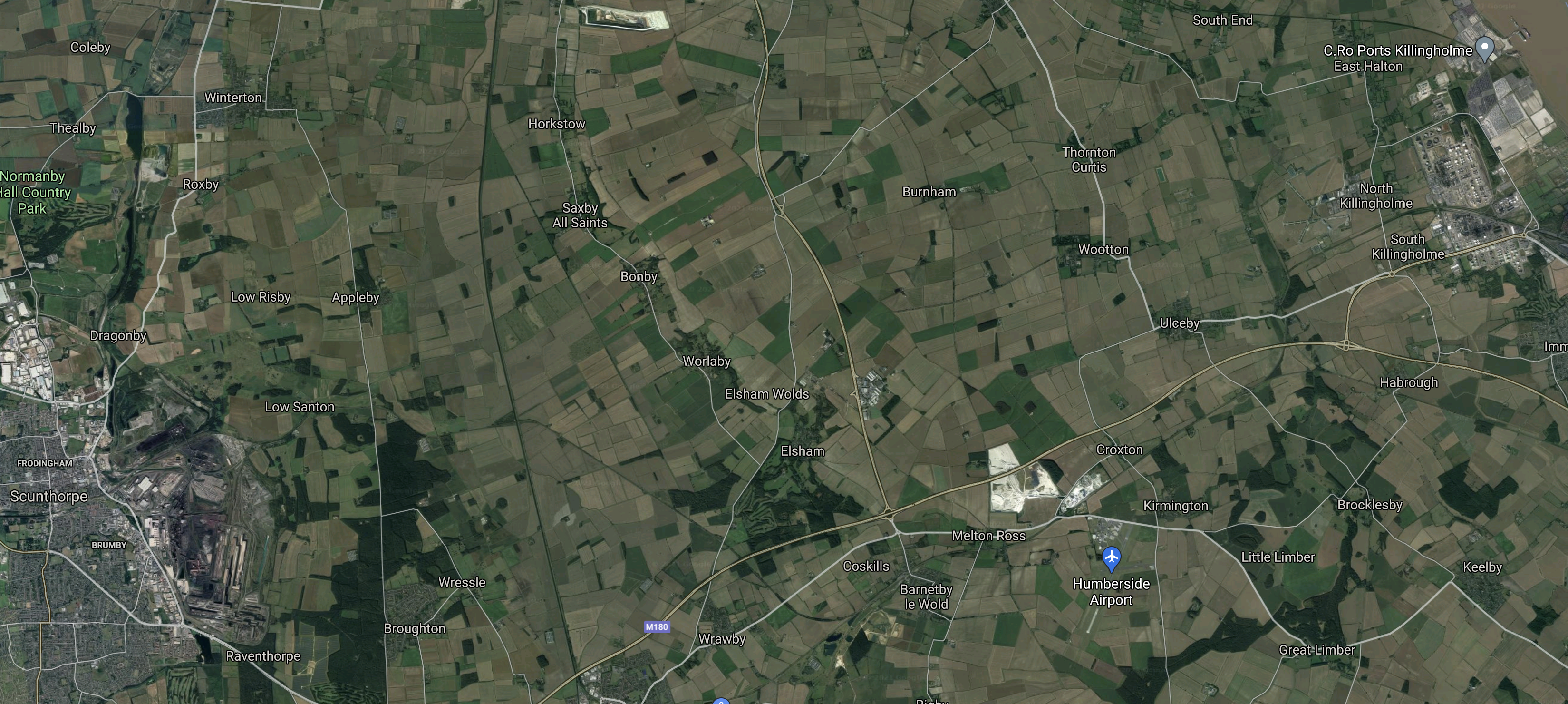
Note.
- Scunthorpe is in the South-West corner of the map.
- Killingholme is in the North-East corner of the map.
The distance is about twenty miles.
When fully developed, the Hornsea Wind Farm is planned to have a capacity of 6 GW or 6000 MW, so there should be enough renewable energy.
Could The Hydrogen Be Created Offshore?
In ITM Power and Ørsted: Wind Turbine Electrolyser Integration, I wrote about combining wind turbines and electrolysers to create an offshore wind turbine, that generates hydrogen, rather than electricity.
This approach may be ideal for the later phases of the Hornsea Wind Farm.
- Redundant gas pipes can be used to bring the hydrogen ashore.
- Worked-out offshore gas fields can be used to store hydrogen.
- Worked-out gas fields in the area, are already being used to store natural gas from Norway.
- The hydrogen can be fed directly into the HumberZero hydrogen network.
But the main reason, is that some serious commentators feel it is more affordable approach in terms of capital and maintenance costs.
It is also easy to convert hydrogen back to zero-carbon electricity, if you have a handy gas-fired power station. There could be as many of three of these at Keadby.
Conclusion
It’s all coming together on Humberside.
Anything the Swedes can do, we can do better!
DHL Teams With Volvo Trucks To Speed Up Transition To Fossil-Free Trucking
The title of this post is the same as that of this article on CleanTechnica.
This is the introductory paragraph.
Electric buses, electric garbage trucks, and even electric construction equipment are becoming more and more commonplace in urban landscapes, but there’s still some debate over whether or not battery electric vehicles will take over open-road, long distance trucking any time soon. To help make the case that electric trucking is the way forward, DHL Freight and Volvo Trucks have partnered to speed up the introduction of heavy duty electric trucks to be used for regional transport throughout Sweden.
Read the article and see what you think.
The author takes the view that electric trucks may be able to handle heavy duty road transport and that would sideline expensive fuel cell trucks powered by hydrogen.
This is a paragraph.
If it’s successful, the move to battery electric trucking could be one of the final nails in the coffin of expensive hydrogen fuel cell projects like Nikola Trucks and Volvo’s own recently acquired Daimler truck division.
I am not so sure, that he is right!
Recently, I wrote Holyhead Hydrogen Hub Planned For Wales and Felixstowe And Harwich Ports Submit Bid For ‘Freeport’ Status, where hydrogen hubs are proposed at the posts of Holyhead and Felixstowe.
- This is a distance of 335 miles.
- As trucks average 55 mph on motorways and dual carriageways, this journey would take six hours.
- Six hours is the maximum time a truck driver can work without a break.
- Tesla have said that their battery Semi Truck will have a range of 300 or 500 miles.
I feel that this rough calculation shows that both electric and hydrogen trucks could handle the Felixstowe and Holyhead route.
- With the battery truck, the weight and size of the battery would probably reduce the payload.
- Factors like cost of ownership, payload and drivers hours would probably play a big part in the choice.
- Trucks would need to be refuelled at the start of the journey, if they’d just come off a ferry.
- On Tesla’s figures, recharging a battery truck would take thirty minutes.
Once we start looking at practical journeys like say Cologne and Dublin, if you want to do it with one truck, it has to be hydrogen.
But a container between Felixstowe and Holyhead could probably be handled by an electric truck.
If you look at between Dover and Holyhead, that is 370 miles and at 55 mph, it would take almost seven hours. So the driver would need a break.
Conclusion
There will need to be extensive modelling to decide, what type of truck is best for a particular route, operator and cargo.
Daimler’s Philosophy
In Daimler Trucks Presents Technology Strategy For Electrification – World Premiere Of Mercedes-Benz Fuel-Cell Concept Truck, I examined Daimler’s strategy for hydrogen and electric trucks.
This is a summary of their philosophy.
- Mercedes-Benz GenH2 Truck, a fuel-cell truck with a range of up to 1,000 kilometres and more for flexible and demanding long-haul transport – customer trials in 2023, start of series production in second half of this decade.
- Mercedes-Benz eActros LongHaul, a battery-electric truck with a range of about 500 kilometres for energy-efficient transport on plannable long-haul routes – projected to be ready for series production in 2024.
- Mercedes-Benz eActros, a battery-electric truck with a range of well over 200 kilometres for heavy urban distribution to go into series production in 2021.
Note.
- 500 kilometres is 310 miles,
- The Mercedes-Benz eActros LongHaul will be able to handle Dover or Felixstowe and Holyhead with a thirty minute driver break/battery charge somewhere in the Midlands.
- The Mercedes-Benz GenH2 Truck will be able to handle Dover or Felixstowe and Holyhead without refuelling.
- The Mercedes-Benz GenH2 Truck will be able to handle a 620 mile out-and-back journey from Dover or Felixstowe without refuelling. This would allow journeys to Birmingham, Derby, Leeds, Liverpool, Manchester, Nottingham and Sheffield
The flexibility built into Daimler’s philosophy is probably a sensible approach and ideal for truck journeys from Dover and Felixstowe.
Daimler would appear to have done a lot of modelling.
Felixstowe And Harwich Ports Submit Bid For ‘Freeport’ Status
The title of this post is the same as this article on the BBC.
These are the first three paragraphs.
A bid for “freeport” status for two existing ports has been submitted after the project was approved by a council.
East Suffolk Council unanimously backed the bid for the Port of Felixstowe and Harwich International to become one of 10 freeport facilities across the UK.
Freeport East would see owners Hutchison operate a single custom zone covering both coastal ports.
I think, some will think this a bit cheeky, but I think it is a product of the characters of the counties of Essex and Suffolk.
I was conceived in Suffolk and have probably spent half my life in the county.
It’s a county that thinks big.
- Is there another woman, who as Boudica did, assembled an army of hundreds of thousands and attempted to throw an unwelcome invader out of her country?
- The history of her tribe; the Iceni is closely tied, according to some historians, to the development of the thoroughbred racehorse at New Horse Market or Newmarket as it is known today!
- Newmarket is to horse racing as St. Andrews is to golf.
- The town is home of about 3,500 horses and is a major centre for horse and animal health.
- Newmarket Heath is a Site of Special Scientific Interest and is to be the largest area of mown grass in the world.
- Suffolk sheep are one of the most numerous sheep breeds in the world, having been exported all over the world.
- Suffolk is the only county in England with its own breed of sheep, cattle (Red Poll) and horse (Suffolk Horse)
- Bury St. Edmunds Abbey was one of the largest churches in England.
When I was about seven, the Port of Felixstowe was just a small dock exporting grain and now it the busiest container port in the UK and the eighth in Europe.
It is no surprise to me, that Felixstowe and Harwich want to be a Freeport, so they can expand further.
There have already been related news and media reports.
Freeport East Web Site
The Freeport East web site is at www.freeporteast.com.
Read these sections.
It is an ambitious vision. As someone, who believes we must innovate, this paragraph from the Innovation section strikes the right tone.
Beyond the energy sector, Freeport East will also contribute to wider innovation in the technology sector. Hutchison Ports is already working with Cambridge University and Three UK to develop innovative 5G applications. Hutchison Ports is also working with the New Anglia LEP, Tech East and BT’s research centre at Adastral Park on new telecommunications infrastructure. Freeport East will embed these technological innovations at its heart and help to make the UK a world leader in technological innovation
The web site, also talks about the ports becoming major centres for the development and servicing of renewable energy in the North Sea.
A Little Help From Their Friends
I notice that in some reports, they have joined forces with the University of Cambridge. As Cambridge colleges are big local landowners, this can only be to the benefit of the concept.
A Hydrogen Freeport
This article on the Eadt Anglian Daily Times is entitled Top Ports Could Be Powered By Hydrogen In Major Project.
The project is well-described in the article with this infographic, that shows how nuclear power from Siewell and wind power from the North Sea can come together to decarbonise shipping and the port.
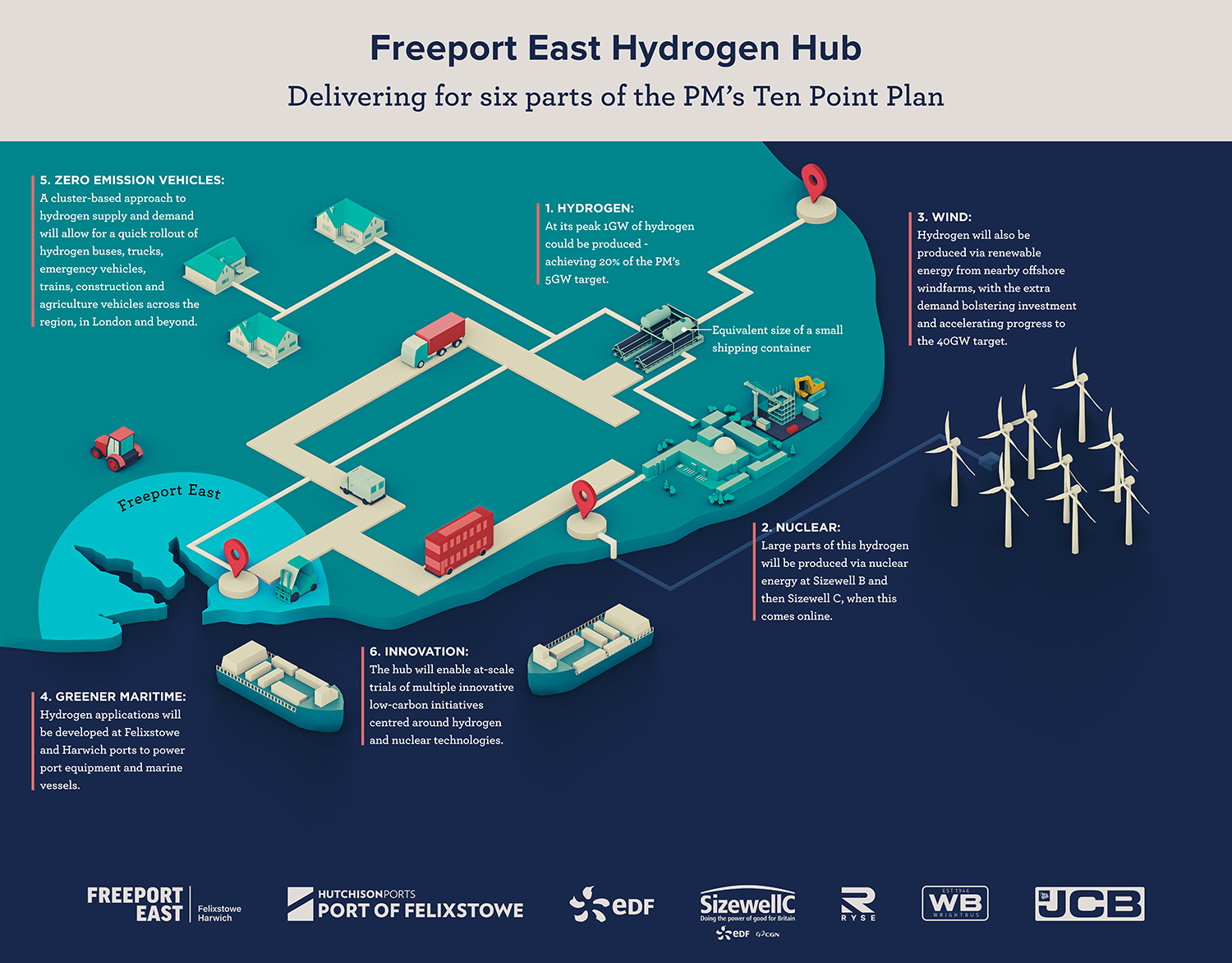
This paragraph sums up the hydrogen project.
At its peak, the power project, which will be delivered in partnership with Ryze-Hydrogen and EDF, developers of the proposed Sizewell C nuclear power station, will produce 1GW of hydrogen – 20% of the 5GW target in the Prime Minister’s Ten Point Plan for a Green Industrial Revolution.
Suffolk is thinking big again!
It certainly does appear, that several ports are following the hydrogen route. On this blog I have mentioned Antwerp, Holyhead and Portsmouth recently.
So what will the hydrogen be used for?
The East Anglian article says this.
The clean fuel would be used to power port equipment, ships, trucks and trains.
Port Equipment
I think the interesting one is port equipment.
- The chairman of JCB is Anthony Bamford.
- His son; Jo Bamford owns Ryze Hydrogen.
- JCB have recently released a hydrogen-powered digger.
- JCB is mentioned on the infographic.
Could we be seeing a range of hydrogen-powered port equipment, that has been developed by JCB?
Other companies like Hyster are certainly developing hydrogen-powered port equipment.
Ships
Decarbonisation of ships is difficult, as they need a lot of power and it usually comes from that most noxious of fuels; bunker oil.
The Wikipedia entry for bunker oil, has a section called Environmental Issues, where this is said.
Emissions from bunker fuel burning in ships contribute to air pollution levels in many port cities, especially where the emissions from industry and road traffic have been controlled. The switch of auxiliary engines from heavy fuel oil to diesel oil at berth can result in large emission reductions, especially for SO2 and PM. CO2 emissions from bunker fuels sold are not added to national GHG emissions. For small countries with large international ports, there is an important difference between the emissions in territorial waters and the total emissions of the fuel sold.
A lot of work is being done to power ships with hydrogen.
Provide refuelling for hydrogen-powered ships and you’ll get the business.
Trucks
Diesel trucks hauling goods to and from ports contribute to the pollution in the port, but if they are powered by hydrogen, the pollution for workers and neighbours is less.
I can see some freight terminals adopting a policy of No Hydrogen – No Load, with hauliers.
In Holyhead Hydrogen Hub Planned For Wales, I talked about a hydrogen hub at Holyhead. Will the ports of Dover, Felixstowe and Immingham need to have hydrogen refuelling facilities to handle hydrogen trucks hauling goods between the island of Ireland and Europe?
Trains
It is my belief, that hydrogen freight locomotives will be developed, so Felixstowe will need facilities to fuel the trains.
Imagine two highly-automated ports at Felixstowe and Holyhead, both with large supplies of hydrogen.
- A hydrogen-powered freight train would link the two ports.
- Hydrogen-powered handling equipment would load and unload the containers.
How many trucks would that take off the roads between Holyhead and Felixstowe?
Conclusion
The Port of Felixstowe is going to use hydrogen to become more efficient and zero-carbon, and make it more attractive to shippers wanting to pay more than lip-service to decarbonisation.
The EU have constantly accused Boris of turning the UK into Singapore-on-Thames!
But here we are creating Singaport-on-the-Haven.
The EU has freeports, so I guess it’s OK.
 The Anonymous Widower