Retired Alaska Airlines Turboprop To Get New life As ‘World’s Largest’ Hydrogen-Powered Plane
The title of this post, is the same as that of this article on KUOW.
It’s increasingly looking like, there will be at least a couple of viable hydrogen conversions of current turboprop aircraft to hydrogen.
Where’s The Bus Stop Code?
In Is Transport for London’s Management Dysfunctional?, I said this.
Perhaps six years ago, I e-mailed TfL to ask, if the five-digit number displayed on the bus-stop, to get details of how long you will wait for the next bus, could be repeated under the shelter, so that if you are waiting in bad weather you can find out the next bus time without venturing outside.
I got a reply saying they’d look into it.
About a year ago, they changed the instructions on the bus stops and the new posters have a space for the installers to put in the stop number.But have I seen one of these spaces with the number in it? Of course not!
Sounds like one department made a worthwhile change and then didn’t inform those, who would carry it out.
TfL is a dysfunctional operation, that needs a thorough overhaul of management. Starting at the top!
I finally got a picture I can use, which shows the empty space in the poster for the number of the bus-stop.

Whilst, I’m about it, how about some other features.
Get Me To A Post Code
If the bus stop number was nnnnn, you might type something like “nnnnn SW1P 3PA” and you would be texted back with something like “Take 141 bus to Northchurch Road”.
Summon The Police
If the bus stop number was nnnnn, you might type something like “nnnnn Police” and they would come to your bus stop.
I Want To Get To The Nearest Station
If the bus stop number was nnnnn, you might type something like “nnnnn Station” and you would be texted back with something like “Take 141 bus to Old Street Station”
I Want To Get To The Nearest Hospital
If the bus stop number was nnnnn, you might type something like “nnnnn Hospital” and you would be texted back with something like “Take 25 bus to Whitechapel Station”
My First Ride In A Welsh Class 230 Train – 4th May 2023
These pictures show my first ride in a Welsh Class 230 train.

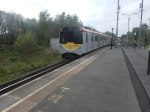


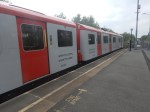





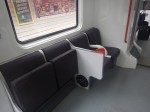
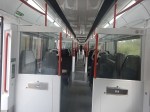




As with the other Class 230 trains, the trains are a tribute to Adrian Shooter’s perseverance.
Bidston Station – 4th May 2023
Bidston station is where I changed for Wrexham.

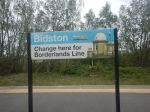
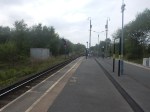

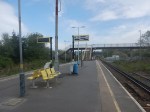
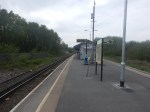



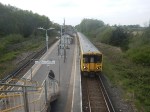
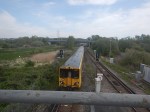
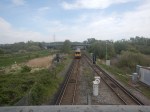

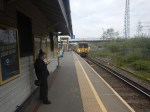


I look forward to going back to Bidston, when trains run directly to Wrexham on batteries.
Cummins And Accelera Showcase Broadest Portfolio Of Decarbonizing Technologies With An Emphasis On Hydrogen
The title of this post, is the same as that of this press release from Cummins.
This is the first paragraph.
Cummins Inc. and Accelera™ by Cummins, Cummins’ zero-emissions technology brand, will showcase a variety of technologies in their booth at Advanced Clean Transportation Expo (May 2 to 4, Anaheim, California). The line-up emphasizes the role that hydrogen will play as part of Destination Zero, Cummins’ strategy to go further, faster to reduce greenhouse gas (GHG) and air quality impacts of its products and reach zero emissions by 2050. The company will showcase technologies across the hydrogen value chain, including electrolyzers to produce hydrogen that can power both a hydrogen-fueled internal combustion engine (H2-ICE) concept truck and a fuel cell electric powertrain.
The press release says this about their electrolysers for hydrogen production.
The hydrogen ecosystem is underpinned by green hydrogen production. Accelera’s electrolyzer technology is enabling the infrastructure scale-up needed to support hydrogen-powered vehicles.
They also say that they now have a 2.5 MW electrolyser module.
The press release has a section about the X15H Peterbilt Model 579 Concept Truck, which is a conversion of a standard Peterbilt Model 579 truck.
Cummins will reveal a heavy-duty concept truck featuring the X15H hydrogen internal combustion engine (H2-ICE). The proof-of-concept installation with ratings up to 500 horsepower (372 kW) features a 700-bar pressure 80 kg high-capacity hydrogen storage system. The H2-ICE conversion highlights the opportunity for heavy-duty truck applications to operate on zero-carbon hydrogen fuel with an operating range of more than 500 miles. The hydrogen conversion work is not expected to compromise truck performance, cargo capacity or payload. The substitution of the diesel engine with the 15-liter hydrogen engine and integration with the existing driveline highlights the ability of H2-ICE to offer a zero-carbon solution for fleets to deploy quickly with limited investment.
This footnote says a bit more about the X15H hydrogen internal combustion engine.
The X15H hydrogen engine with up to 1900 foot-pounds torque is an all-new engine platform featuring cutting-edge technology to enhance power density, reduce friction losses and improve thermal efficiency. As a result, performance is equivalent to that of a similar displacement diesel engine and compatible with the same transmissions, drivelines and cooling packages. A further benefit of the X15H is significantly quieter running than a diesel.
It looks to me, that Cummins will be going for both the new build and replacement market.
Werner Enterprises Signs Letter Of Intent Planning To Secure 500 X15H Engines From Cummins and Transport Enterprise Leasing To Integrate Cummins X15H Hydrogen Engine Into Heavy Duty Trucks show this sales philosophy at work.
The press release also says this about their hydrogen fuel cell engine.
Hydrogen fuel cell engines turn hydrogen stored onboard a fuel cell electric vehicle (FCEV) into electricity to power the electric powertrain. This creates efficient, zero-emissions power for demanding applications with longer ranges and harder duty cycles. On display at ACT Expo is Accelera’s FCE150 Gen 4 fuel cell engine, powered to go the distance with superior performance and reliability and zero tailpipe emissions. It features increased power density, efficiency and durability with ease of system integration. It is available in 150 kW and 300 kW configurations with the flexibility to decarbonize a range of heavy-duty applications.
This looks to be a formidable beast.
After America, The World
It will be interesting to see what plans Cummins have for the rest of the world.
These posts contain some of my thoughts.
- Air Products, Cummins To Accelerate Hydrogen Integration In Fuel Cells Trucks
- Could London’s New Routemaster Buses Be Converted To Hydrogen Power?
- Cummins Fuel Cell Technology Powers Coradia iLint Fleet In Germany
- Daimler Truck North America And Cummins Collaborate To Drive Hydrogen Fuel Cell Trucks Forward In North America
- Do Cummins And Stadler Have a Cunning Plan?
- Electrolyser System To Linde For Green Hydrogen Production In Niagara Falls, New York
- Ricardo Supports Industry Leaders To Develop Innovative Dedicated Hydrogen Engine
This must be one of the biggest conversions of a major corporation to zero-carbon thinking.
Net-Zero Concept Aircraft: Which Designs Are The Current Front Runners?
The title of this post is the same as that of this article on Simple Flying.
The article is a good summary of what may happen in the field of Net-Zero aircraft in the next ten or twelve years.
Old Street Station – 2nd May 2023
I took these pictures this morning, as my bus passed Old Street roundabout.












It’s still progressing as slowly as ever.
Nicholas Lane – 1st May 2023
Nicholas Lane is a lane in the City of London, that runs between Cannon Street in the South and Lombard Street in the North.
This Google Map shows the lane.
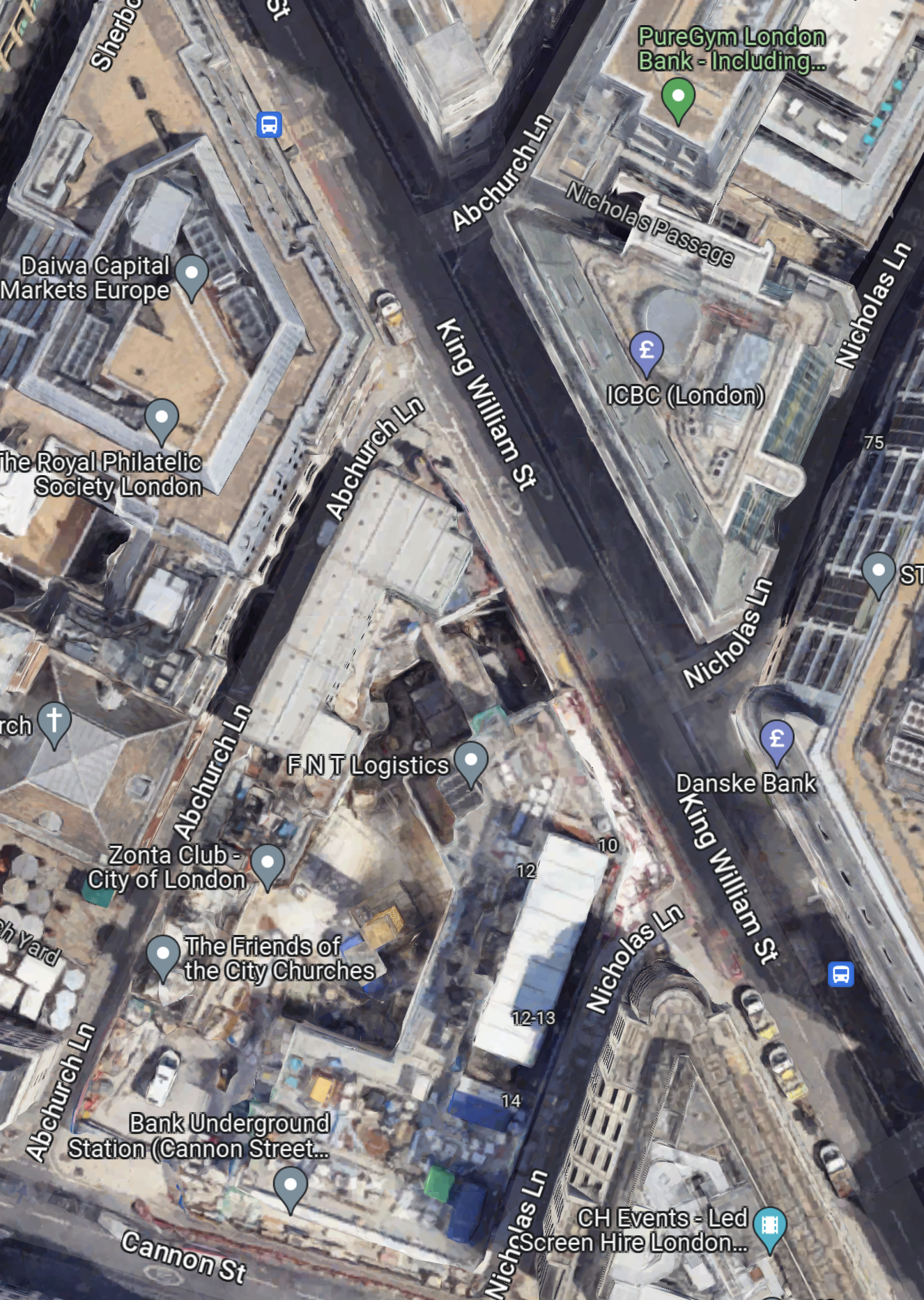
Note.
- Nicholas Lane tuns diagonally across King William Street.
- Cannon Street can be seen in the South-West corner of the map.
- The new entrance to Bank station is on Cannon Street.
- Nicholas Lane runs up the side of the new station entrance.
- There are two bus stops for the 21, 43 and 141 buses on King William Street.
The bus stops are within easy walking distance of the new station entrance, if you walk along the Southern section of Nicholas Lane.
These pictures show Nicholas Lane and King William Street.








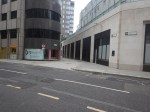

Note.
- I suspect some coffee shops or a fast food joint will appear at the King William Street end of Nicholas Lane.
- The windows on the corner could be ready to be a shop.
- In Bank Station Upgrade – 6th January 2023, I described the eight storey building, that will sit on top of the station entrance.
The lane could also a preferred route for many, who are changing at Bank station to or from the buses.
Elizabeth Line Takes Fliers Away From Heathrow Express
The title of this post, is the same as that of this article on The Times.
These three paragraphs add details to the story.
The opening of the Elizabeth Line has eaten into the revenues of Heathrow Express, the country’s most expensive railway service per mile travelled.
Filings reveal that Heathrow Express, which offers a 15-minute service between London Paddington and Heathrow, has failed to recover to pre-pandemic levels despite flight volumes at the airport returning to near-normal. Heathrow said revenues from Heathrow Express in the first three months of the year were £22 million.
While that is 50 per cent more than in the same period last year, when Covid-19 travel restrictions were beginning to be relaxed, it is almost a third down on the £31 million of revenues in the first quarter of 2019.
Considering how air travel is on the upturn, Heathrow Express would not appear to be performing as the airport expects.
Remember, that First Group are paid by Heathrow Airport to run the service, which is owned by the airport.
In So Many Cases On A Train!, I wrote about a trip from West Ealing to Moorgate station. These were my opening sentences.
This afternoon about three, I went to West Ealing station to see what it was like to transfer between the Elizabeth Line Central Tunnel and the Western Branch at Paddington.
Coming back, I took an Elizabeth Line service that had started from Heathrow Airport and it was one of the busiest Lizzies, I’d ever ridden!
To get on the train at West Ealing station, I got in to probably coach 4 of 9, as that was in the dry and the back end of the train I needed for Moorgate station was certainly in the wet.
I then had to walk half the length of the train to get to the back of the train.
It was not easy, as the train was full of scores of passengers with large wheelie cases.
It certainly got me thinking about how passengers were getting to and from Heathrow and I came to this conclusion.
Lizzie will start a revolution in travel to and from Heathrow.
Judging by the title of the article in The Times, the revolution has already started.
Consider these reasons.
- Heathrow Express is overpriced.
- It doesn’t go where many passengers want to go.
- It’s not the best way to get workers to and from the airport.
- The ULEZ will discourage passengers and staff from driving to the airport.
In Effects Of The ULEZ In West London, I said this about journeys to and from the airport.
Heathrow Airport is one of the world’s busiest airports and 76,000 people work at the airport, with many more employed nearby.
The airport handled 61.6 million passengers in 2022, which is a few short of 170,000 per day.
If you consider that those that work at the airport do two trips per day and passengers generally do one, that means there are 322,000 trips per day to or from the airport.
But as it now so easy to get to the Airport using the Elizabeth Line will more people use the new line to meet and greet and say goodbye to loved ones or business associates. Since the Elizabeth Line opened, I’ve met a couple of friends at Heathrow, who were passing through.
I wonder, if that daily journey total of 322,000 could be nearer to 350,000 or even 400,000.
If the ULEZ charge makes some passengers and staff switch from their car to using a bus or train, this probably means that public transport to and from the airport, will need to be boosted by a substantial amount.
I can see airport workers lobbying for free tickets on Heathrow Express, but they probably live closer to the airport than Paddington or perhaps even in the Eastern areas of London served by the Elizabeth Line.
The Elizabeth Line Is Showing Signs Of Running Out Of Capacity
In the last few weeks, I’ve been on some very full Elizabeth Line trains.
Articles, like this one on Rail Advent, which is entitled Transport for London Looks Into Funding For Additional Elizabeth Line Trains, are also starting to appear.
These three paragraphs explain the problem.
Transport for London has announced that they are looking for confirmation from the Government regarding funding so that they can look into the possibility of purchasing additional Elizabeth Line trains.
The news from TfL comes after the recent announcement of delays to HS2 terminating at London Euston.
TfL says that without the extra trains, there is insufficient capacity on the Elizabeth Line (until HS2 is extended to Euston in the 2040s) for passengers looking to use HS2 and the Elizabeth Line to get into Central London.
Alstom also appear to want the space in the factory to build other trains.
So it appears that Transport for London must act soon.
Heathrow Express Needs To Be Repurposed
In Extending The Elizabeth Line – High Speed Trains On The Elizabeth Line, I talked about running faster trains through the Central Tunnel of the Elizabeth Line.
As any train would have to be compatible with the platform-edge doors in the central tunnel of the Elizabeth Line, the trains would have to be dimensionally identical to the current Class 345 trains.
- Nine cars
- Possibility of lengthening to ten cars.
- 204.73 metres long.
- 6 sets of doors per carriage
- Ability to run under full digital signalling.
- The trains would be designed for a higher speed of at least 110 or 125 mph, to enable running on the fast lines of the Great Western Main Line.
- The trains would have Heathrow Express branding and interior.
Services could be as follows.
- Heathrow Terminal 4 and Southend Victoria via Bond Street and Liverpool Street for the City and Stratford.
- Heathrow Terminal 5 and Ebbsfleet International via Bond Street and Liverpool Street for the City and Canary Wharf.
Note.
- Both services would be two trains per hour (tph)
- Traffic would determine, which Eastern terminal is paired with which Western terminal.
- Each route would also have two Elizabeth Line tph on the same route.
The Heathrow Express services would run as follows.
- Between Heathrow Airport and Paddington, they would run as now.
- I believe that by using the power of the digital signalling, they could be slotted into the queue of Elizabeth Line trains taking the Central Tunnel.
- They would run through the Central Tunnel, as just another Elizabeth Line train, stopping at all stations.
- Southend Victoria trains would stop at Stratford, take the fast lines to Shenfield, after which they would stop at all stations to Southend Victoria.
- Ebbsfleet International trains would stop at all stations from Abbey Wood to Ebbsfleet International.
Note.
- Trains would stop at Old Oak Common after it opened for High Speed Two and GWR.
- All ticketing would be contactless.
- Passengers using Heathrow Express to the West of Paddington, would pay an extra fee, but nothing like today’s price.
These Heathrow Express routes would have advantages.
- Southend Airport and Southend Victoria would get a direct fast train to Central London and High Speed Two.
- Heathrow would have a direct connection with Continental train services at Ebbsfleet International.
- Capacity could be increased by going to ten-car trains.
- Heathrow Express could release their platforms at Paddington.
- There would be two fast tph between Heathrow and Stratford.
- There would be two fast tph between Heathrow and Canary Wharf.
- There would be four fast tph between Heathrow and Bond Street for the shopping and Liverpool Street for the City of London.
- There would be four fast tph between Heathrow and Farringdon for Thameslink, Gatwick and Luton Airports.
Heathrow Express trains will be fifteen minutes faster to all destinations.
I don’t think there would be any major disadvantages.
Kentish Town Station – 30th April 2023
This article on the BBC is entitled Kentish Town Tube Station Set To Close For Year.
This is the sub-heading.
Kentish Town Tube station is set to close for up to a year while its 26-year-old escalators are replaced.
Other works will also be performed during the closure.
- The ticket office will be removed.
- The ticket barriers will be realigned.
- New paintworks, flooring, wall tiling, and new signage will also be fitted.
These pictures show the current state of Kentish Town station.






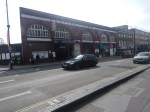
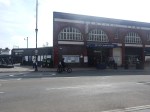

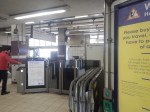
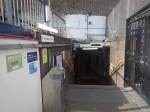

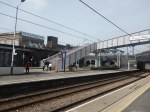
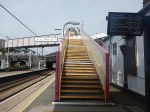


Note.
- The Victorian frontage of the station could do with a refurbishment.
- The platforms need to be restored to be the same standard as the clock.
- The escalators don’t look as bad as the article says, but new ones will give them forty years.
- Information around the gate-line for both the Underground and Thameslink, is not to the standards this passenger expects.
- The stairs connecting the London Underground station to the Thameslink bridge could be improved.
- The Thameslink information is good.
- The bridge needs lifts.
There is even a side-gate to access the Thameslink platforms, if the main entrance is closed.
Are More Trains Needed?
For a Sunday morning, both stations were surprisingly busy.
But there were only two Thameslink trains per hour (tph) between Luton and Rainham.
On all days except Sunday, the four tph Sutton Loop Line is usually running, but on Sunday it appears it’s only the Luton and Rainham service.
I suspect the Sunday service will be boosted for the duration of the closure.
Could The Side Gate Be Used Permanently?
The side-gate to the Thameslink platforms will have to be used during the station closure.
But could some arrangement be designed, so that it could be used all of the time?
Conclusion
With an unlimited budget, there’s a lot that could be done at this station.
 The Anonymous Widower