Masons Of Yorkshire Distillery Enters Partnership With LNER
The title of this post, is the same as that of this article on Rail Advent.
These two paragraphs outline the partnership.
A Yorkshire Distillery has entered a partnership with London North Eastern Railway for its vodka to be served in the railway’s first-class carriages.
In the agreement, Classic Vodka from the highly awarded Masons of Yorkshire Distillery will be the only vodka served on all first-class routes between Inverness, London Kings Cross, and Aberdeen and Kings Cross.
As the railways are now effectively controlled by the UK Government, perhaps we should see more British food and drink featuring on trains.
Rockton To Buy Up To 40 Heart Aerospace ES-30 Electric Aircraft
The title of this post, is the same as that of this article on Aviation Source News.
These are the first two paragraphs.
Swedish investment and aircraft leasing company Rockton has confirmed that it will acquire up to 40 of Heart Aerospace’s regional electric aircraft, the ES-30.
The purchase confirmation converts an earlier letter of intent with the Swedish aircraft manufacturer into firm purchase orders for 20 aircraft with purchase rights for 20 more.
It’s good to see a leasing company getting involved, as it probably means that the finances are viable.
The Wikipedia entry for Heart Aerospace, describes the range of the ES-30 like this.
The ES-30 is planned to have a 108 nautical miles (200 kilometres; 124 miles) fully electric range or a 215 nmi (398 km; 247 mi) range when also using generators powered by aviation biofuel. A range of 430 nmi (800 km; 490 mi) could be possible if only 25 passengers are carried.
These are some UK airport to airport distances.
- Aberdeen – Kirkwall – 124 miles
- Aberdeen – Sumburgh – 188 miles
- Anglesey – Belfast – 109 miles
- Anglesey – Belfast City – 109 miles
- Anglesey – Cork – 192 miles
- Anglesey – Derry – 163 miles
- Anglesey – Dublin – 71 miles
- Anglesey – Ronaldsway – 58 miles
- Anglesey – Shannon – 186 miles
- Anglesey – Waterford – 130 miles
- Birmingham – Belfast – 226 miles
- Birmingham – Dublin – 200 miles
- Birmingham – Edinburgh – 250 miles
- Birmingham – Glasgow – 260 miles
- Birmingham – Inverness – 363 miles
- Birmingham – Kirkwall – 451 miles
- Birmingham – Newcastle – 178 miles
- Birmingham – Newquay – 198 miles
- Birmingham – Schipol – 402 miles
- Birmingham – Sumburgh – 513 miles
Birmingham – Wick – 418 miles - Edinburgh – Schipol – 473 miles
- Gatwick – Edinburgh – 356 miles
- Gatwick – Schipol – 374 miles
- Glasgow – Belfast – 106 miles
- Glasgow – Belfast City – 103 miles
- Glasgow – Derry – 121 miles
- Glasgow – Kirkwall – 221 miles
- Glasgow – Sumburgh – 300 miles
- Glasgow – Stornoway – 177 miles
- Haverfordwest – Waterford – 94 miles
- Haverfordwest – Newquay – 94 miles
- Heathrow – Newquay – 212 miles
- Humberside – Schipol – 333 miles
- Inverness – Kirkwall – 106 miles
- Inverness – Sumburgh – 190 miles
- Leeds – Schipol – 386 miles
- Liverpool – Belfast City – 151 miles
- Liverpool – Cardiff – 135 miles
- Liverpool – Dublin – 140 miles
- Liverpool – Haverfordwest – 127 miles
- Liverpool – Norwich – 180 miles
- Liverpool – Ronaldsway – 89 miles
- London City – Haverfordwest – 167 miles
- London City – Humberside – 145 miles
- London City – Manchester – 161 miles
- London City – Norwich – 100 miles
- Manchester – Schipol 413 miles
- Newcastle – Cardiff – 230 miles
- Newcastle – Belfast City – 168 miles
- Newcastle – Newquay – 346 miles
- Newcastle – Schipol – 395 miles
- Newquay – Brest – 140 miles
- Newquay – Cardiff 98 miles
- Newquay – Cork – 180 miles
- Newquay – Deauville – 241 miles
- Newquay – Dinard – 183 miles
- Newquay – Dublin – 212 miles
- Newquay – Guernsey – 128 miles
- Newquay – Jersey – 152 miles
- Newquay – Nantes – 211 miles
- Newquay – Orly – 351 miles
- Newquay – Rouen – 285 miles
- Newquay – Scillies – 68 miles
- Newquay – Waterford – 150 miles
- Norwich – Schipol – 277 miles
- Ronaldsway – Belfast – 75 miles
- Ronaldsway – Belfast City – 62 miles
- Ronaldsway – Birmingham – 165 miles
- Ronaldsway – Dublin – 80 miles
- Ronaldsway – East Midlands – 161 miles
- Ronaldsway – Glasgow – 123 miles
- Ronaldsway – Leeds – 121 miles
- Ronaldsway – Manchester – 109 miles
- Southend – Schipol – 180 miles
- Stansted – Aberdeen – 379 miles
- Stansted – Edinburgh – 316 miles
- Stansted – Glasgow – 334 miles
- Stansted – Inverness – 426 miles
- Stansted – Schipol – 335 miles
- Stansted – Wick – 472 miles
- Sumburgh – Bergen – 226 miles
- Sumburgh – Kirkwall – 85 miles
Note.
- I have included Schipol, as in certain areas of the UK, passengers sometimes fly long-haul from Schipol.
- I have included Haverfordwest, as it will be close to all the wind farm activity in the Celtic Sea.
- I have included Anglesey, as I think it has possibilities.
- The distances wee calculated using on of the Free Map Tools.
These are some more specific thoughts.
The Basic ES-30 And The UK
With a range of 124 miles, I don’t believe that the range is long enough for the UK.
But saying that there are some established routes, where it should be able to operate.
- Glasgow – Belfast
- Glasgow – Belfast City
- Glasgow – Derry
- Haverfordwest – Waterford
- Haverfordwest – Newquay
- Inverness – Kirkwall
- Liverpool – Haverfordwest
- Liverpool – Ronaldsway
- London City – Norwich
- Newquay – Cardiff
- Newquay – Scillies
- Ronaldsway – Belfast
- Ronaldsway – Belfast City
- Ronaldsway – Dublin
- Ronaldsway – Glasgow
- Ronaldsway – Leeds
- Ronaldsway – Manchester
These routes have the following in common.
- They are mostly between major airports with advanced facilities.
- Most airports served have access to renewable electricity.
- Some of the routes can support hundred seat airliners.
- Fifty percent go to the Isle of Man.
I can see several routes between the UK and the island of Ireland and to and from the Isle of Man using ES 30 aircraft.
The Extended Range ES-30 And The UK
The 247 mile range of the extended range ES-30, brings lots more routes into play.
Key routes could be the following.
- Aberdeen – Kirkwall
- Aberdeen – Sumburgh
- Anglesey – Cork
- Anglesey – Shannon
- Birmingham – Belfast
- Birmingham – Dublin
- Birmingham – Newcastle
- Birmingham – Newquay
- Glasgow – Kirkwall
- Glasgow – Stornoway
- Heathrow – Newquay
- Inverness – Sumburgh
- Liverpool – Belfast City
- Liverpool – Dublin
- Liverpool – Norwich
- London City – Haverfordwest
- London City – Humberside
- London City – Manchester
- Newcastle – Belfast City
- Newcastle – Cardiff
- Newquay – Brest
- Newquay – Cork
- Newquay – Deauville
- Newquay – Dinard
- Newquay – Dublin
- Newquay – Guernsey
- Newquay – Jersey
- Newquay – Nantes
- Newquay – Waterford
- Ronaldsway – Birmingham
- Ronaldsway – East Midlands
There will also be other routes.
The Extended Range With 25 Passengers ES-30 And The UK
The 490 mile range of the extended range ES-30 with only 25 passengers, brings a few more routes into play.
- Birmingham – Edinburgh
- Birmingham – Glasgow
- Birmingham – Inverness
- Birmingham – Kirkwall
- Birmingham – Schipol
- Birmingham – Wick
- Edinburgh – Schipol
- Gatwick – Edinburgh
- Gatwick – Schipol
- Glasgow – Sumburgh
- Humberside – Schipol
- Leeds – Schipol
- Manchester – Schipol
- Newcastle – Newquay
- Newcastle – Schipol
- Newquay – Orly
- Newquay – Rouen
- Norwich – Schipol
- Southend – Schipol
- Stansted – Aberdeen
- Stansted – Edinburgh
- Stansted – Inverness
- Stansted – Glasgow
- Stansted – Schipol
- Stansted – Wick
Note.
- All airports East of Birmingham and Manchester seem to be close enough to Schipol for an Extended Range ES-30 with 25 passengers to serve the route.
- Most major Scottish Airports can be reached from Stansted.
- Flying from Gatwick to Scottish Airports is around forty miles longer than flying from Stansted.
Liverpool Airport
Liverpool Airport could be a major destination for the ES 30, as it could be a key airport for flying between the UK and the island of Ireland.
Liverpool would obviously need the electric infrastructure, but I also believe it needs a better connection to the major railway station at Liverpool South Parkway, which has extensive rail connections.
This Google Map shows the area between Liverpool South Parkway station and the airport.

Note.
- Liverpool South Parkway station is marked by the red arrow in the North-West corner of the map.
- The airport is in the opposite corner, with the terminal to the North of the runway.
- The main railway between the South and Liverpool Lime Street passes to the South of the station.
- The A561 passes across to the South of the railway and to the North of the airport.
I suspect some form of people mover like the Luton DART can be built between the station and the airport.
It should be noted that as Hunts Cross has only one platform for Merseyrail Northern Line trains and this could be a factor in limiting the line’s capacity. So could a second platform be installed at the airport to both act as an airport station and to increase the frequency on the Northern Line?
I believe that in a couple of years, journey times between Euston and Liverpool South Parkway will be under two hours and they will only get shorter with High Speed Two. With a fast connection between the airport and the station, there could be a sub-three-hour zero-carbon route between London and the island of Ireland.
- Avanti West Coast Class 805 train to Liverpool South Parkway.
- People mover to the airport.
- Electric aircraft on the 140 miles to Dublin.
Dublin air traffic are usually efficient in getting planes in quickly.
Glasgow Airport
Glasgow Airport could be a major destination for the ES 30, as it could be a key airport for flying between the UK and the island of Ireland.
As with Liverpool Airport it needs a better connection to the rail network.
If Glasgow Airport is successful running zero-carbon aircraft to Ireland, this could change all previous thinking on a Glasgow Airport Rail Link.
Ronaldsway Airport
Geography and electric airliners could be very kind to Ronaldsway Airport and the Isle of Man.
- Electric airliners can easily reach much of the island of Ireland and the UK mainland between Glasgow and Birmingham, from Ronaldsway Airport with ease.
- The Isle of Man will in a couple of years be surrounded by wind farms.
- With other developments on the island, it could sell itself to the UK and Ireland, as a green holiday destination.
But what would the motorcycle enthusiasts say?
Anglesey Airport
I believe that Anglesey Airport could be brought to life in a big way by electric aircraft like the ES-30 or the Eviation Alice.
These are flight distances from Anglesey Airport.
- Anglesey – Belfast – 109 miles
- Anglesey – Belfast City – 109 miles
- Anglesey – Cork – 192 miles
- Anglesey – Derry – 163 miles
- Anglesey – Dublin – 71 miles
- Anglesey – Ronaldsway – 58 miles
- Anglesey – Shannon – 186 miles
- Anglesey – Waterford – 130 miles
All of these except for Cork, Derry, Shannon and Waterford would be possible in the basic ES-30.
This Google Map shows the airport, which is also labelled as RAF Valley.

Note that the North Wales Coast Line passes the site on the North-East side.
At present, Avanti West Coast trains take nearly four hours between London and Holyhead.
But later this year, new bi-mode Class 805 trains will replace, the current diesel only Class 221 trains.
- The current diesel only trains take two hours and five minutes between Crewe and Holyhead.
- The current diesel only trains take one hour and forty-three minutes between Crewe and London Euston.
- The fastest electric trains take one hour and twenty-nine minutes between Crewe and London Euston.
- High Speed Two trains will take 56 minutes between Crewe and London Euston.
When you consider that a lot of the North Wales Coast Line, is straight and flat, I can see the following times being possible, with some improvement and smart electrification between Crewe and Holyhead and a smaller number of stops.
- Crewe and Anglesey Airport – One hour and twenty minutes
- London Euston and Anglesey Airport – Two hours and fifty minutes
With High Speed Two Classic-Compatible trains, the London Euston and Anglesey Airport time could be below two hours and thirty minutes.
I believe that with a well-designed terminal at Anglesey Airport, this could be the fastest zero-carbon way between London and Ireland.
Haverfordwest Airport
This Google Map shows the location of Haverfordwest Airport in the East of Pembrokeshire.
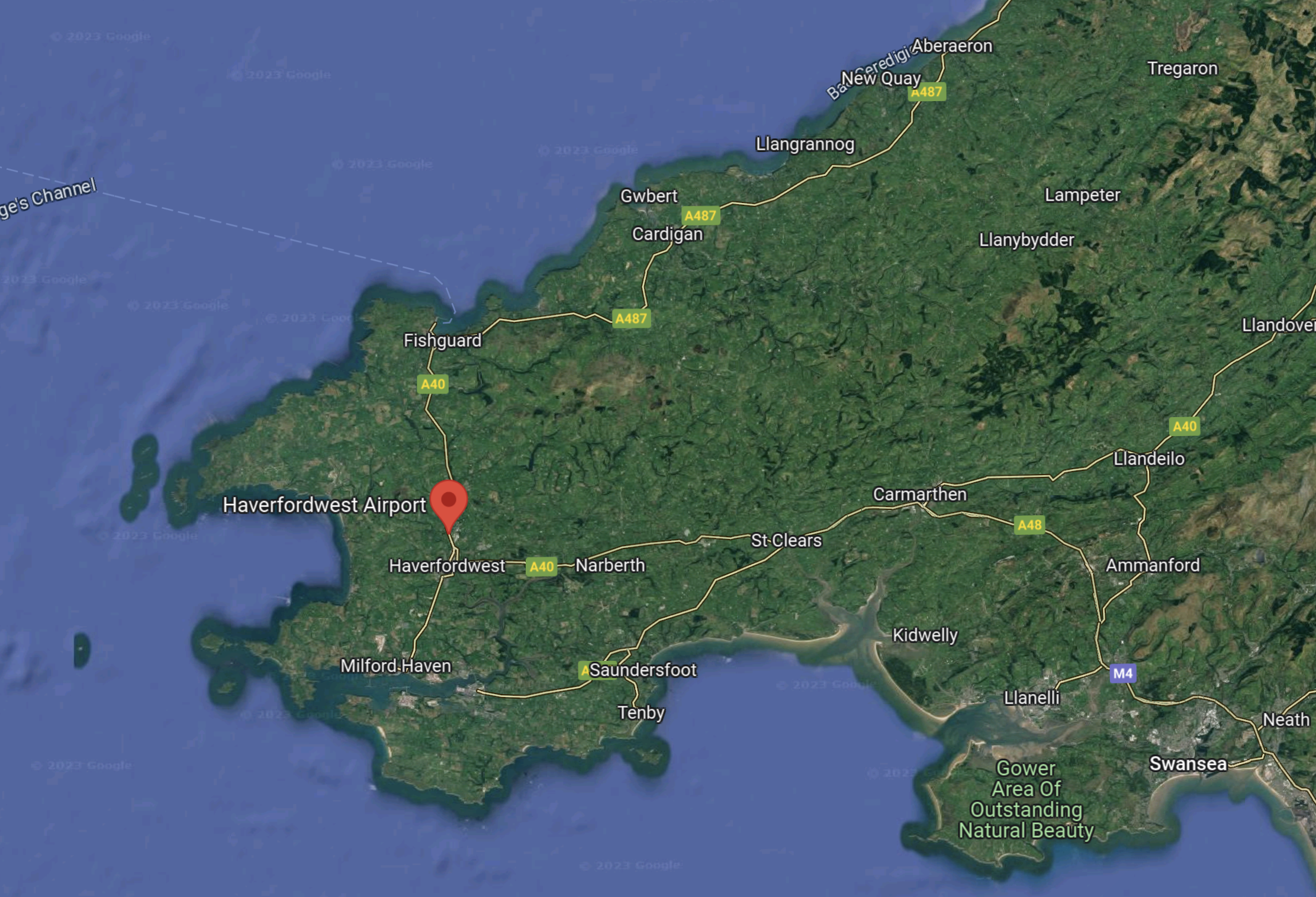
This second Google Map shows a close-up of the airport.

This map from OpenRailwayMap shows the airport and the nearest railway station.
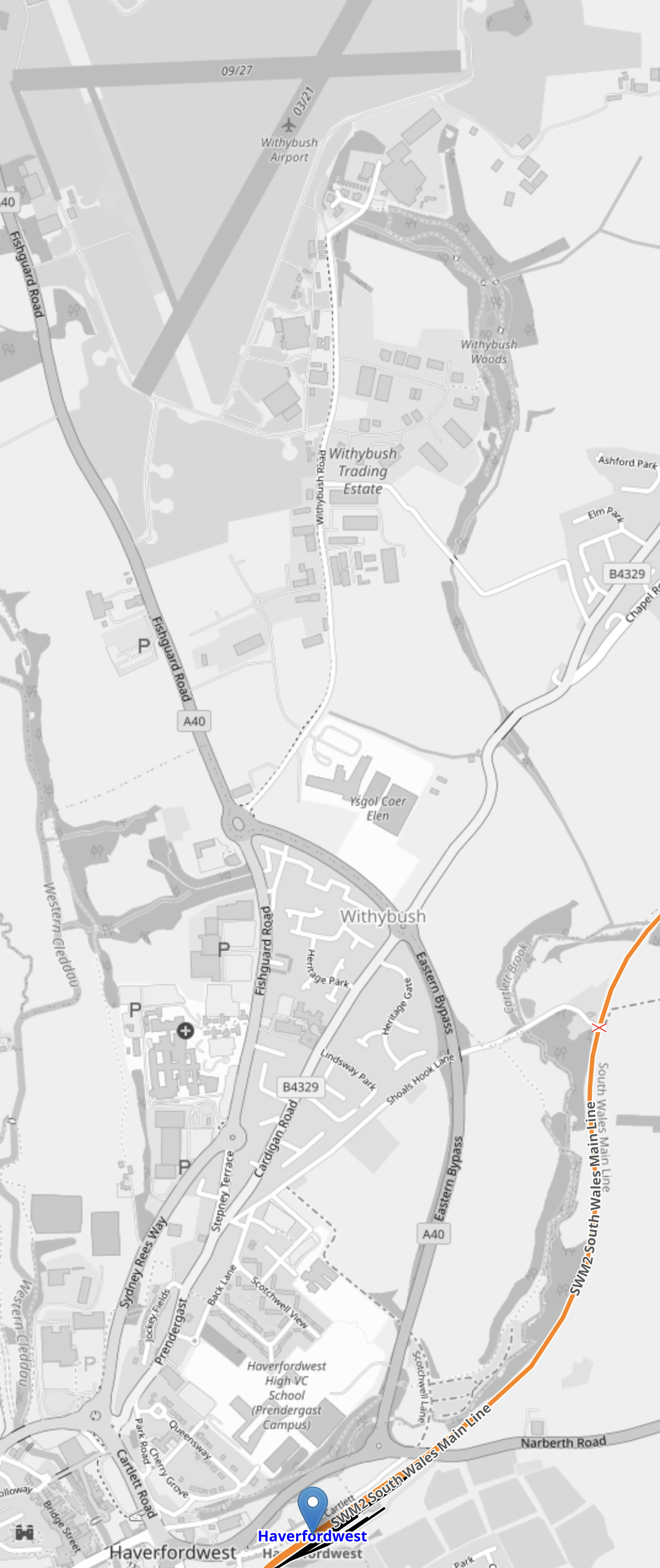
Note.
- Haverfordwest Airport is at the top of the map.
- Haverfordwest station is at the bottom of the map.
- There are rail connections to Cardiff, Fishguard, Milford Haven, Pembroke Dock and Swansea from the the station.
- Rail passengers for London would change at Swansea.
The road looks good between the airport and the station, so would an electric bus to handle transfers be ideal?
Consider.
- I have flown myself into Haverfordwest Airport and there were no navigation or operational problems that I can remember.
- With all the wind farm development planned for the coast of Pembrokeshire and the Celtic Sea, I feel that an airport in the area with regular flights to London and perhaps Waterford in Ireland could be essential.
- London City and Haverfordwest airports are 167 miles apart
- Waterford and Haverfordwest airports are 94 miles apart
- Quiet electric aircraft may ease any planning problems.
- Will a helicopter base be needed for serving wind farms in the Celtic Sea?
I believe, Haverfordwest Airport could be converted into a high-class airport for the Eastern tip of South Wales.
Haverfordwest Airport could also attract other services, given that the Welsh Government have a policy of not building new roads.
I have a feeling that quiet electric airliners will lead to the development of airports like Haverfordwest as feeder airports for the Heathrows and Schipols of this world.
Waterford Airport
Waterford Airport has recently been expanded and it appears from the Wikipedia entry, they are expecting more tourists.
This Google Map shows the position of the airport and the railway station in Waterford.

Note.
- The red arrow at the top of the map indicates Waterford station on the Northern side of the city.
- The airport is indicated by the blue dot in the South-East corner of the map.
- The airport is about ten kilometres from the City Centre.
In the past, Waterford has been quite a busy airport, but Covid-19 seems to have killed most of the traffic.
So could a zero-carbon service between Waterford and Haverfordwest be profitable?
- Those working with the wind energy in the Celtic Sea might find route useful.
- It would give a low-carbon route between Waterford and South Wales, which some might like.
- I also believe that the novelty of flying in an electric plane would attract passengers.
Waterford and Haverfordwest might be one of those routes, where electric planes might be worth trying.
This Google Map shows the Celtic Sea.
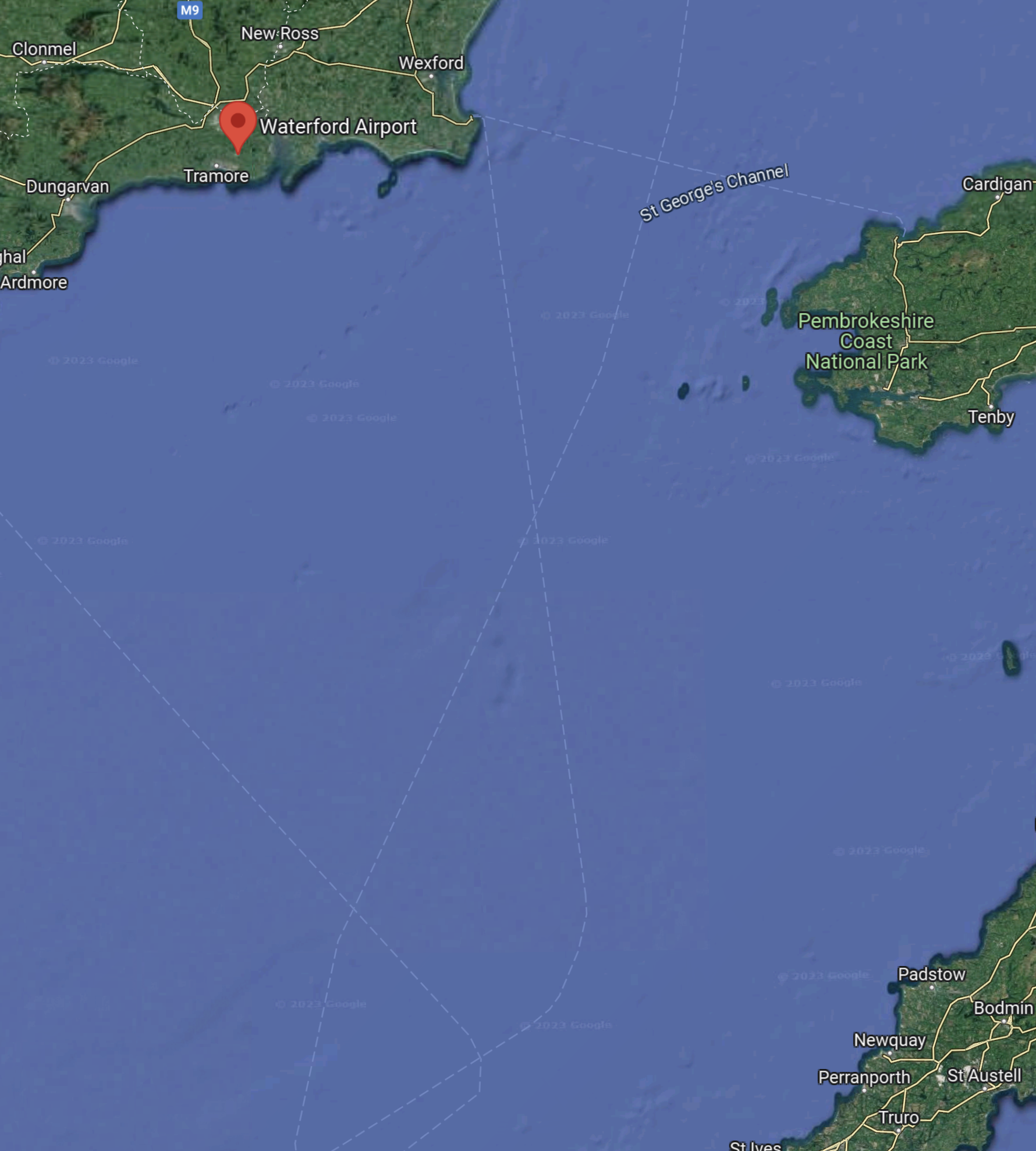
Note.
- Waterford Airport is indicated in red on the South-East corner of Ireland.
- Haverfordwest Airport is on the South-Western tip of Wales.
- Newquay Airport is in the South-East corner of the map on the North coast of Cornwall.
There could be as much as 50 GW of floating wind farms installed in this area.
I feel that there could be a case for a triangular Haverfordwest, Newquay and Waterford service.
Newquay Airport
Newquay Airport has been in the news recently because of the antics of Richard Branson and Virgin Orbit.
This Google Map shows the airport in relation to the town.
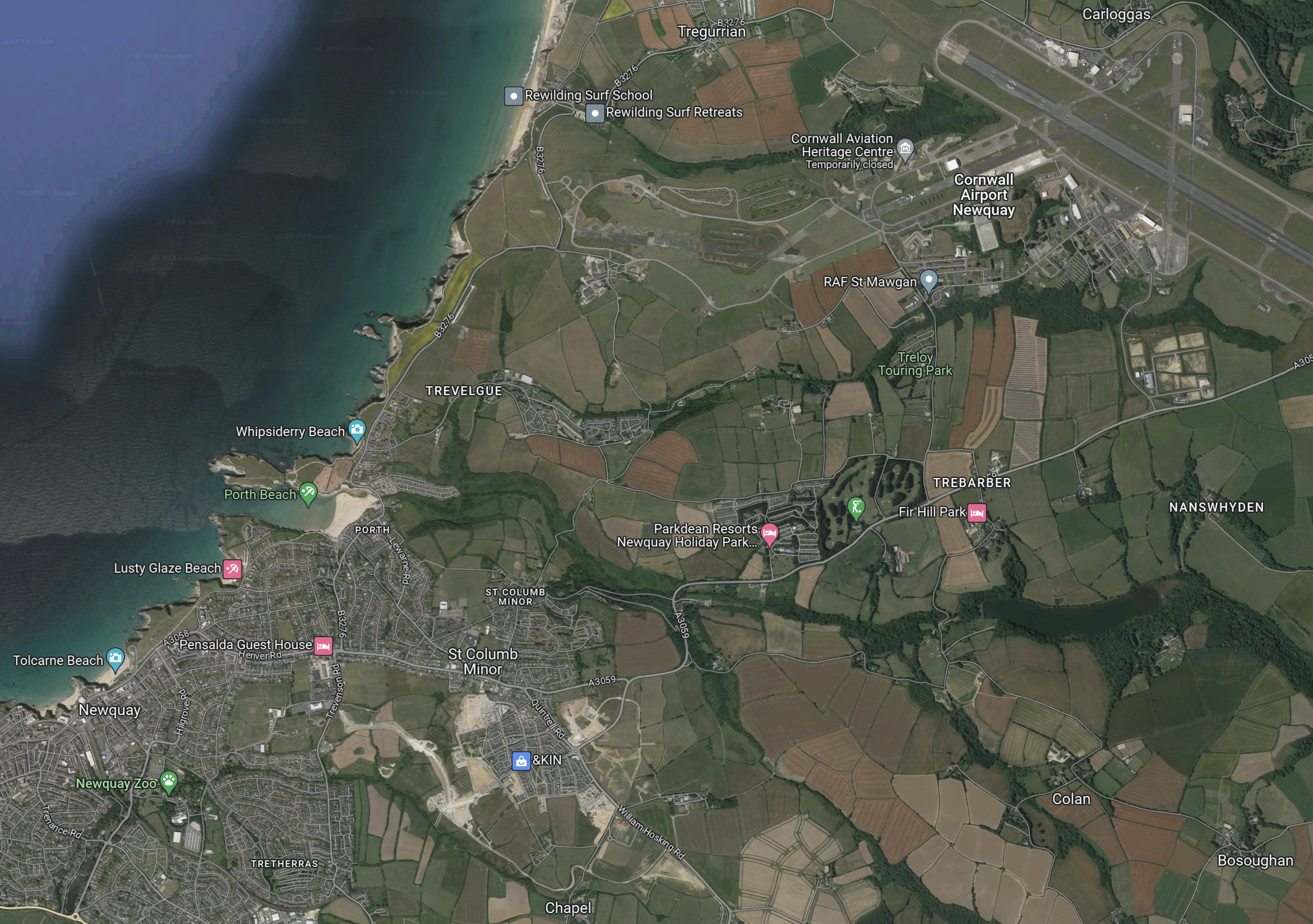
Note.
- The airport is in the North-East corner and boasts a long runway.
- The airport serves well over a dozen destinations.
- The town of Newquay is in the South-West corner of the map.
- Newquay station is by the sea.
All of these places would be suitable destinations for electric aircraft.
- Birmingham
- Brest
- Cardiff
- Cork
- Deauville
- Dinard
- Dublin
- Guernsey
- Heathrow
- Jersey
- Nantes
- Orly
- Rouen
- Scillies
- Waterford
Newquay Airport could get very busy with electric aircraft supporting tourism and the developing wind power industry.
This second Google Map shows the town centre and station.

Surely, having the station by Great Western Beach is good marketing.
In The Proposed Mid-Cornwall Metro, I talked about a plan to run an hourly Metro service between Newquay and Falmouth.
This article on Rail Technology Magazine is dated January 2023 and entitled Mid Cornwall Metro Secures £50m In Levelling Up Funding, where these are the first two paragraphs.
Following yesterday’s major Levelling Up funding announcement, the government has pledged an almost £50m grant to improve the railways linking Newquay, St Austell, Truro and Falmouth in Cornwall.
This financial aid to improve Cornwall Rail links represents the only successful bid out of four that were submitted to the Levelling up funding. The improvement scheme will be helmed by a partnership with Great Western Railway and Network Rail.
Note.
- I believe this means the Mid-Cornwall Metro will be built.
- Especially as looks like it will cost less than £100 million.
- As this Metro will serve Newquay, it shouldn’t be too difficult to link the plane with the train, with perhaps a zero-carbon bus.
- The Metro would then link Newquay Airport to the main population centres of Newquay, St Austell, Truro and Falmouth.
- If the Metro could be run using zero-carbon trains, that would surely put the icing on the cake!
The map from OpenRailwayMap shows the route.
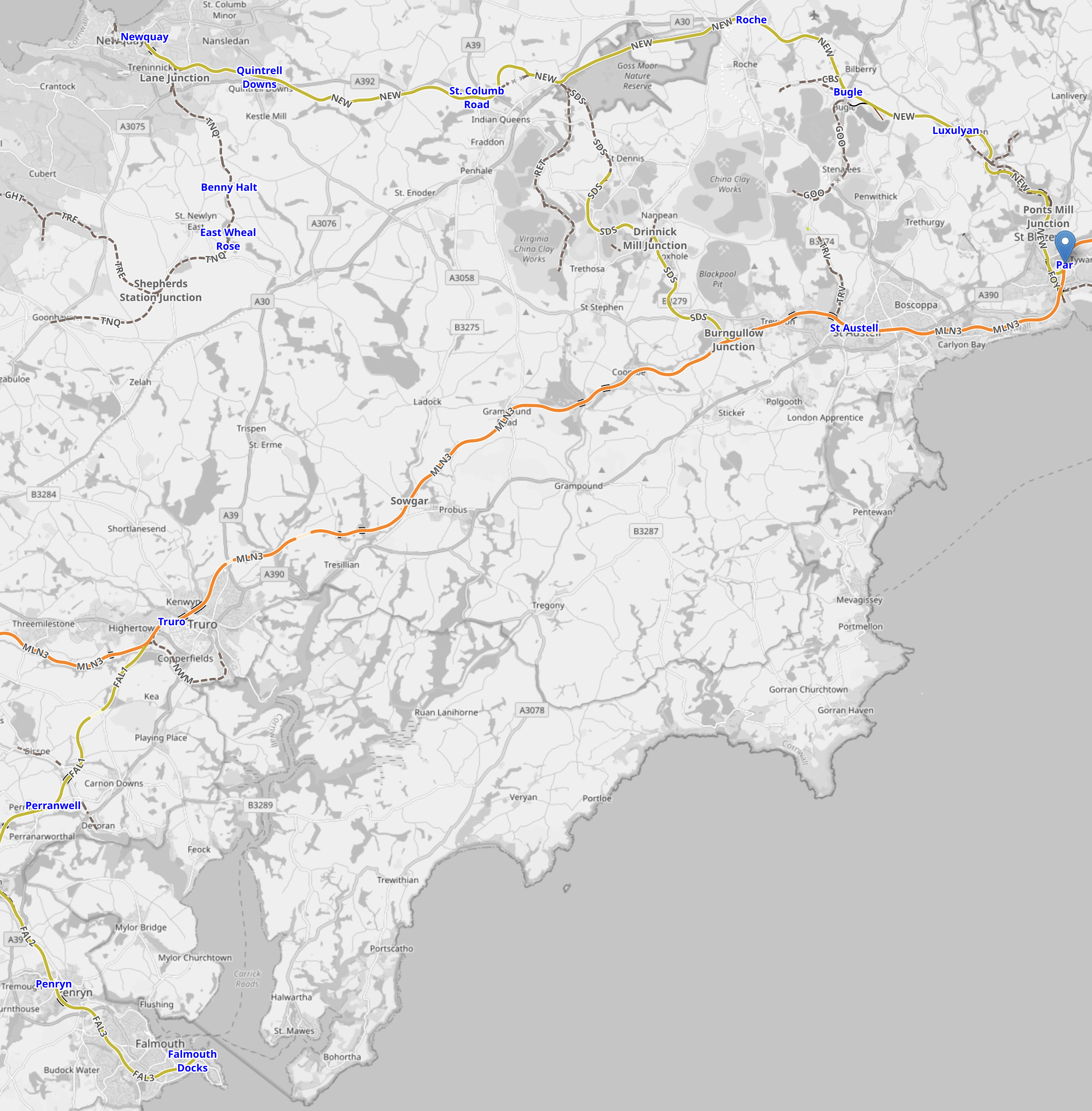
Note.
- Newquay is in the North-West corner of the map.
- Trains spend around 6-7 minutes waiting at Newquay.
- The blue arrow in the North-East corner marks Par station, where a chord will be reinstated to allow trains to go between Newquay and St. Austell.
- Par is the nearest station to the Eden Centre.
- Newquay and Par is 20.6 miles.
- The route, then goes along the Cornish Main Line, through St. Austell and then on to Truro.
- Par and Truro is 18.9 miles.
- At Truro the Metro would take the Falmouth branch.
- Falmouth and Truro is 11.8 miles.
- Trains spend around 7-8 minutes waiting at Falmouth Docks
- The total route is just over fifty miles, which probably means that battery-electric trains could work the route with charging at each end, whilst the train is turned round.
This airport and metro combination could give a big-boost to zero-carbon tourism.
Inverness Airport
Inverness Airport has recently been expanded with a station on the Inverness and Aberdeen Line.
Consider.
- Electric aircraft like the ES-30 will be able to reach both Kirkwall on Orkney and Sumburgh on Shetland from both Inverness and Aberdeen Airports.
- Sumburgh would need an extended range ES-30.
- Flights would be a few miles shorter from Inverness than from Aberdeen.
- Kirkwall and Sumburgh is only 85 miles, so there may be possibilities for serving both Orkney and Shetland with one flight.
- Extended range ES-30s might be able to do return trips to Kirkwall without a major charge at Kirkwall.
- I once flew in my Cessna-340 to Kirkwall to see the original turbine, that was placed on the island. There is a lot of cold forbidding sea in the area. Perhaps the slightly shorter trip from Inverness, might be better for everybody’s nerves?
- Just as the oil and gas industry did in the last century, I can see the offshore wind power industry generating a lot of passenger traffic to the Orkney and Shetland Islands.
Both Inverness and Aberdeen can be reached from Stansted by an ES-30 carrying a reduced passenger load.
Birmingham Airport
Birmingham Airport could become a major base for electric aircraft.
The 247 mile range of the extended range ES-30 would allow it to be able to reach the following places.
- Belfast
- Dublin
- Newcastle
- Newquay
- Ronaldsway
Reduce the passenger load slightly to 25 passengers and the plane would be able to reach.
- Edinburgh
- Glasgow
- Inverness
- Kirkwall
- Wick
But Birmingham Airport is only 65 minutes from Euston and will in the future be served by High Speed Two, in under an hour.
The airport also has a large catchment area of its own, who might be tempted to choose flying zero-carbon.
Spokes From Speke
In the 1980s, I went to a presentation from Royal Mail in Ipswich about guaranteed next day delivery of parcels. It was important to me, as I was writing software that needed to get from Ipswich, where it was created to London, where it would be tested and installed on customers machines. We also needed to get copies to our customers in Edinburgh and Aberdeen.
The Royal Mail’s latest concept of Spokes From Speke was described.
- All urgent parcels and First Class mail would be collected from the local sorting office and taken to the local airport, which in our case would probably have been Stansted.
- These consignments would then be flown to Speke Airport as Liverpool Airport was known in those days at around midnight.
- They would then be sorted and reloaded onto other planes to complete their journey.
- The planes would then return home and the parcels and mail would be delivered by truck to the local sorting office.
Aircraft used included Short Skyvans and piston-engined twins. Some we’re the quietest of aircraft.
I have heard or read somewhere that in some airports, there were complaints about noisy aircraft flying in and out in the middle of the night.
Now fifty years on companies are looking to speed up deliveries.
- In the UK, companies are experimenting with 100 mph overnight parcels trains.
- This article on Railway Gazette is entitled Varamis Rail Launches Regular Express Light Freight Service.
- Eversholt Rail are putting money behind converting redundant electric multiple units into parcel trains.
But DHL in the USA are going another way and have ordered twelve Alice aircraft from Eviation.
It looks like the cargo Alice could have a useful load of just over a tonne and a range of around 290 miles.
I can envisage flights of near-silent silent Alices sneaking into and out of airports in the middle of the night to deliver and collect urgent parcels.
Techniques like Spokes From Speke will come again, but this time with electric aircraft.
How Would The ES-30 Compare With An Eviation Alice?
The Wikipedia entry for the Eviation Alice gives these figures.
- Passengers – 9
- Maximum Speed – 300 mph
- Range – 290 miles
- Take-off distance – 840 metres
- Landing distance – 620 metres
Note.
- These are figures that most pilots would expect from an aircraft of this size.
- My Cessna 340 was about the same and about eight percent slower.
- It also had a much longer range.
If you look at my list of flights, these will not be possible.
- Birmingham – Inverness – 363 miles
- Birmingham – Kirkwall – 451 miles
- Birmingham – Schipol – 402 miles
- Bimingham – Sumburgh – 513 miles
Birmingham – Wick – 418 miles - Edinburgh – Schipol – 473 miles
- Gatwick – Edinburgh – 356 miles
- Gatwick – Schipol – 374 miles
- Glasgow – Sumburgh – 300 miles
- Humberside – Schipol – 333 miles
- Leeds – Schipol – 386 miles
- Manchester – Schipol 413 miles
- Newcastle – Newquay – 346 miles
- Newcastle – Schipol – 395 miles
- Newquay – Orly – 351 miles
- Stansted – Wick – 472 miles
- Sumburgh – Bergen – 226 miles
- Sumburgh – Kirkwall – 85 miles
Note.
- Most routes that are too long are to Schipol or Scotland.
- Anglesey appears to have Ireland extremely well covered.
- Birmingham, Glasgow and Liverpool keep their Irish routes.
- Newquay is still a hub, that would promote tourism in Cornwall and only loses the Orly connection, although it keeps the flight to Heathrow.
- Ronaldsway still looks to be a possible zero-carbon airport.
I would suggest that a range of 290 miles, is an ideal one for an electric aircraft in the UK, as it can handle a large number of routes.
These are routes that I feel would attract a large number of passengers.
- Anglesey – Belfast – 109 miles
- Anglesey – Belfast City – 109 miles
- Anglesey – Derry – 163 miles
- Anglesey – Dublin – 71 miles
- Glasgow – Belfast – 106 miles
- Glasgow – Belfast City – 103 miles
- Glasgow – Derry – 121 miles
- Heathrow – Newquay – 212 miles
- Inverness – Kirkwall – 106 miles
- Inverness – Sumburgh – 190 miles
- Liverpool – Belfast – 153 miles
- Liverpool – Belfast City – 151 miles
- Liverpool – Dublin – 140 miles
- Liverpool – Norwich – 180 miles
- Liverpool – Ronaldsway – 89 miles
- London City – Humberside – 145 miles
- London City – Manchester – 161 miles
- Newcastle – Cardiff – 230 miles
- Newcastle – Belfast City – 168 miles
- Newquay – Brest – 140 miles
- Newquay – Cardiff 98 miles
- Newquay – Cork – 180 miles
- Newquay – Deauville – 241 miles
- Newquay – Scillies – 68 miles
- Newquay – Waterford – 150 miles
- Norwich – Schipol – 277 miles
- Ronaldsway – Belfast City – 62 miles
- Ronaldsway – Dublin – 80 miles
- Ronaldsway – Glasgow – 123 miles
- Southend – Schipol – 180 miles
- Sumburgh – Kirkwall – 85 miles
Alice may not be big enough for some routes.
But it will be a wonderful route-proving aircraft for the larger ES-30 and other zero-carbon aircraft.
Conclusion
There will be a lot of uses for battery-electric aircraft in the UK.
Elizabeth Line’s £29million Fares Bonanza As Passenger Numbers Hit New High
The title of this post, is the same as that of this news item on msn.
These four paragraphs outline the story.
The Elizabeth line has enjoyed a £29m fares income bonanza due to record passenger numbers, it was revealed on Wednesday.
But the positive state of its finances – alongside a prediction that it will break even this year – came as line managers belonging to the TSSA union announced they would strike on May 24 in an unresolved pay battle.
This threatens to close the central section of the £20bn line, between Paddington and Abbey Wood, and embarrass Mayor Sadiq Khan and Transport for London as the walkout falls on the first anniversary of its opening.
Latest figures from TfL show the Elizabeth line is carrying 3.5m passengers a week – and at times almost four million.
After the experience of continuously rising passenger numbers after the opening of the London Overground, it looks like the so-called mathematicians of Transport for London have got their numbers wrong again.
I have some thoughts.
When There’s A Sniff Of Money, The Unions Strike
This seems to be the case.
Perhaps Now Is The Time To Expand The Elizabeth Line?
I would add extra services between Oxford and Southend Victoria.
The extra fare revenue could be spent on trains.
MONTE and Eviation Sign Deal For Up To 30 All-Electric Alice Aircraft
The title of this post, is the same as that of this press release from MONTE.
These are the first two paragraphs.
MONTE is delighted to announce that it has entered into a Letter of Intent with Eviation, a leader in clean-sheet, all-electric aviation, to purchase up to 30 all-electric Alice Aircraft.
The Alice is a clean-sheet design, 9-seater aircraft built with industry leading MagniX electric propulsion systems. It is the only flight proven all-electric aircraft of its size. MONTE will provide financing and leasing solutions for the Alice and its associated charging infrastructure to its global customer base of regional aircraft operators.
My experience includes.
- As an engineer, experimenting with battery-powered rechargeable instruments in the 1960s.
- As a pilot, I have over a thousand hours in command of a Cessna 340A, which was powered by two piston engines.
- As a driver, I have owned and driven some of Colin Chapman’s composite masterpieces.
- As a financier, I have owned half of a finance company that leased large trucks.
The Alice may look futuristic, but it is based on proven engineering, manufacturing and aviation principles.
My leasing experience, leads me to believe, that leasing these aircraft could be a sound business.
I am looking forward to my first flight.
£77 Million Investment For UK Heavy Duty And Commercial Vehicle Projects
The title of this post is the same as that of this press release from the Advanced Propulsion Centre.
These are the projects.
Ford to design, develop, and build a fleet of 8 hydrogen fuel cell powered Transit vans, with the latest advances in technology
£8 million awarded by government, matched by industry to a total £16.3 million.
This research project will design and develop a hydrogen fuel cell-powered version of the Ford Transit van, with a Ford Dagenham estate facility re-purposed for upfitting of the vehicle. By bringing the manufacturer, vehicle operator and supply chain businesses together, this project aims to establish a business case for the wider rollout of hydrogen Light Commercial Vehicles.
Project partners include: Ocado, BP, Cygnet Texkimp, Cambustion, Viritech.
Note.
- I suspect Ocado will do the road testing.
- BP will probably supply the hydrogen.
- Cygnet Texkimp are a company based in Northwich and is a leading global provider of fibre handling and converting technology. Have they developed a machine for knitting hydrogen fuel tanks?
- Cambustion‘s Engineering Services team provides powertrain development and testing services to a range of global clients from our Cambridge, UK base.
- Viritech’s web site has a mission statement of Rewiring the DNA of Hydrogen Powertrains.
Ford seem to have assembled a team of all the talents.
Wrightbus to develop a new world-leading zero-emission battery and hydrogen fuel-cell electric, multi-axle vehicles
£6.4 million awarded by government, matched by industry to a total £12.7 million.
This project will produce a new, market-leading platform for battery and fuel cell electric driven buses. Whilst demand is growing for zero-emission vehicles, there are currently few options available for heavy, multi-axle vehicles like large buses.
Project partners include: Queens University Belfast, Grayson Thermal Systems, Hutchinson Engineering, Translink.
Note.
- Grayson Thermal Systems are based in Birmingham and specialise in providing HVAC for vehicles and especially zero-carbon ones.
- Hutchinson Engineering are based in Widnes and invest in state-of-the-art machinery and technology to give our customers the most advanced, cost-effective solutions in design, fabrication and manufacturing.
- Translink provides public transport in Northern Ireland.
It looks like Wrightbus have excellent partners.
ULEMCo creating a zero-emission hydrogen fuel cell range extender for prototype ambulance, fire engine and road sweepers
£3.9 million awarded by government, matched by industry to a total £7.9 million.
This project will develop a hydrogen fuel cell range extender for electric vehicles used for special purposes, such as ambulances, fire engines and street sweepers. The zero-emissions range extender will be based on existing, proven technology from the Toyota Mirai, and demonstrate how zero emissions vehicles can be used in a wide range of specialised and challenging settings.
Project partners include: Altair Engineering, Emergency One, Technical Services Ltd, Oxon Fire & Rescue Services
Note.
- ULEMCo are based in the Liverpool City Region and it is very much in Liverpudlian DNA to repurpose something that works. Hence the use of The Toyota technology.
- Altair Engineering is a multinational engineering and technology company.
- Emergency One is a Scottish manufacturer of fire engines and emergency vehicles.
- Technical Services Ltd, who are based in Cleckheaton, supply thermal management systems and solutions.
- Oxon Fire & Rescue Services will obviously be doing the testing.
In Hydrogen-Powered Ambulance Drives Into Glasgow Ahead Of London Trial, I wrote about a prototype hydrogen-powered ambulance, that was built by ULEMCo and industry partners, that was shown at COP26.
Is this project turning the prototype into a system, that can be manufactured in large volumes?
Bramble Energy developing a hydrogen double-deck bus, using innovative, low-cost fuel cell technology
£6.3 million awarded by government, matched by industry to a total £12.7 million.
This project will demonstrate a fuel cell/battery hybrid powertrain on a double-decker bus. This novel product will be cheaper than the equivalents currently available for large vehicles like buses and uses innovative new electronics and energy recovery technologies.
Project partners include: University of Bath, Equipmake, Aeristech
Note.
- Bramble Energy‘s Printed Circuit Board Fuel Cell (PCBFC™) is a patent protected, revolutionary design which leverages existing manufacturing routes from the printed circuit board industry to offer a cost-effective, scalable hydrogen fuel cell solution.
- Equipmake are based at Snetterton in Norfolk.
- In Equipmake Hybrid To Battery Powered LT11, I describe Equipmake’s conversion of a New Routemaster to battery operation.
- Aeristech are based in Crawley and have developed a range of award-winning compressors for Tier-1, OEMs and other customers.
- Is the compressor needed to pump a mixture of hydrogen and air through the fuel cell?
I have a feeling, that this could be a very revolutionary design.
BorgWarner developing hydrogen combustion systems for heavy-duty commercial transport
£4.9 million awarded by government, matched by industry to a total £9.8 million.
This project aims to speed up the rollout of hydrogen-burning internal combustion engines, as an alternative to diesel. Hydrogen is a clean fuel, producing only water when burned. Project Cavendish will develop new fuel and air management systems, so that existing heavy duty diesel technologies can be repurposed to use hydrogen as fuel.
Project partners include: Mahle, Cambustion, Hartridge
Note.
- BorgWarner is a large American automotive supplier.
- Mahle is a large German automotive supplier.
- Cambustion‘s Engineering Services team provides powertrain development and testing services to a range of global clients from our Cambridge, UK base.
- Since the brand formation in 1930 Hartridge, who are based in Buckingham, has become a world leader in diesel fuel injection test equipment.
- Project Cavendish is obviously named after Henry Cavendish, who discovered hydrogen.
In Ricardo Supports Industry Leaders To Develop Innovative Dedicated Hydrogen Engine, I talk about another project involving BorgWarner. Is Project Cavendish a follow-on from the original project or a new one?
Leyland Trucks scaling up the production of electric trucks through innovations in automation and advanced testing
£2.6 million awarded by government, matched by industry to a total £5.1 million.
By better use of automation and advanced testing, Leyland Trucks aim to increase productivity and step up their production of battery electric trucks. A ‘digital twin’ of the Leyland production line will be set up, meaning any changes can be run in simulation before being rolled out physically.
Project partners include: Expert Tooling, HSSMI
Note.
- Leyland Trucks is one of Britain’s leading manufacturing companies. It is PACCAR’s established centre for light and medium duty truck design, development and manufacture. The company is based in Leyland.
- Expert Technologies are specialists in delivering industrial automation solutions. The company is based in Coventry.
- HSSMI is a sustainable manufacturing consultancy.
As I have done a lot of simulation in my time, I’m very much in favour of digital twins.
JLR leading a consortium research project to develop a high-efficiency and highly integrated 800V inverter designed and built in the UK
£6.3 million awarded by government, matched by industry to a total £12.6 million.
This project will explore and develop technology for inverters – a key component in electric vehicles. As well as developing a best-in-class product, this work will support the growth of a UK supply chain in components for electric vehicles.
Project partners include: University of Bristol, Custom Interconnect Ltd, API Capacitors Ltd
Note.
- JLR is Jaguar Land Rover.
- Custom Interconnect is an advanced electronics manufacturing company, which is based in Andover.
- API Capacitors is the UK’s leading designer and manufacturer of high quality power capacitors for power electronic applications. The company is based in Great Yarmouth.
I suspect this invertor will have several applications.
Conclusion
The grants seem to have been widely spread around the UK.
Will Hollywood Celebrity Involvement Be The Catalyst To Spark Development Of the Borderlands Line?
In Wrexham General Station – 4th May 2023, I showed this map, of Wrexham General station and the Racecourse Ground.

Consider.
- Wrexham A. F. C. are certainly a club, whose fans won’t need much encouragement to go to matches by train.
- I also feel that given the celebrity ownership, it will be one of those grounds where away supporters will want go.
- Its ground and Wrexham General station is well-served by direct trains from Birmingham, Cardiff, Liverpool and London.
- Interesting matches next year could be against Crewe, Newport and Tranmere.
I’m sure that because of the location of the ground and the celebrity owners, there will be pressure to improve the Borderlands Line to Liverpool.
The Wikipedia entry for the Borderlands Line has a section called Development, where this is said.
The doubling of the journey frequency on the line is one of the aims of the Growth Track 360 group, a consortium of business, politicians and public sector leaders. The group aims to improve transport and create jobs in the North Wales, Merseyside and Cheshire area over the next 20 years. During the 2017 Autumn budget, Chancellor Philip Hammond stated that part of the additional £1.2 billion funding Wales was receiving would be used to look into proposals to improve journey times on the line and developing a business case.
In October 2019, Transport for Wales announced £280,000 have been allocated to revamp stations along the line in north Wales and Merseyside, as part of TfW’s £194 million station improvement programme.
In a section called Proposed New Stations, these improvements have been proposed.
- Build a new station at Deeside Industrial Park.
- Build a new station at Woodchurch.
- Build a new station at Beechwood.
- Incorporate the line into the Merseyrail Wirral line to provide direct connectivity with Liverpool city centre.
- Replace the High and Low levels at Shotton station with a dedicated interchange station, improving connectivity between the North Wales Coast Main Line & the Borderlands line.
- Remove level crossings to improve line speed.
All these proposals seem reasonable.
There is also a section called Proposed Electrification, where this is said.
There have been proposals for the full or partial electrification of the line since 1999 with participation of Merseytravel and the devolved institutions in Wales. Such electrification is usually intertwined with proposals for the full incorporation of the line into the electrified Merseyrail network, allowing for services from either Wrexham Central or partway along the line to travel all the way to Birkenhead and Liverpool Central.
In 2008, a Network Rail study estimated the cost for third-rail electrification of the entire line to be £207 million. To lower costs, Merseytravel suggested overhead-wire electrification as an alternative, bringing estimates down to £66 million. However, this would mean trains running between Wrexham and Liverpool would have to be compatible with both electric systems, therefore incompatible with the third-rail only trains in use at the time.
There is political support to electrify the line from both Welsh and Merseyside authorities, however the responsibility of rail infrastructure lies with the UK Government’s Department for Transport. The Welsh Government aims to increase services between North Wales and Merseyside, in particular Wrexham and Deeside with Liverpool and Liverpool John Lennon Airport. Whereas Merseyside authorities would like to increase services to stations on the line on the Wirral Peninsula in particular, as well as the rest of the line.
In 2016, a working group had been set up to examine improving the line, including proposals to increase the frequency of trains on the line. It is hoped that an increase in the number of passengers would improve the case for electrification.
It seems that various solutions have been proposed.
Consider what will be available to Merseyrail and Transport for Wales within a year or so.
- Merseyrail will be running a new fleet of electric Class 777 trains.
- These new trains will be running from Bidston station and under Liverpool City Centre using the Wirral Line.
- Merseytravel has an option for a further 60 units.
- Class 777 trains are designed for running with 25 KVAC overhead electrification, should this be required in the future.
- Merseyrail and Transport for Wales will be working with Stadler on the use of battery-electric trains.
- Bidston and Wrexham Central are only 27.5 miles apart.
- The Borderlands Line is not the most challenging of rail lines to improve, as it is fairly straight and level.
- It is unlikely that Health and Safety would allow any more third rail electrification. But would this ban also apply in Wales?
- West Kirby trains run for 10.4 miles in 34 minutes to perform their loop under from Bidston under Liverpool City Centre.
- If Wrexham trains could turn under Liverpool City Centre, this would improve shopping, business and educational opportunities for those living along the Borderlands Line.
This section of the Wikipedia entry for the Borderlands Line says this about the range of the Class 777 trains on battery power.
The Liverpool City Region Combined Authority announced that trials of the seven battery electric multiple unit (BEMU) versions of their new Class 777 had shown that they were capable of travelling up to 20 miles (32 km) without a charge. Further trials by Stadler reached a range of 84 miles (135 km). This would allow the line to be served without the full electrification.
In Battery Answer To Schleswig-Holstein’s Diesel Replacement Question, I talked about how Stadler were using battery-electric trains to replace diesels in Schleswig-Holstein.
It seems obvious to me, that Stadler would have experience of a suitable battery-electric train and charging system, that could be applied to the Borderlands Line.
- I would suspect that the 34 minutes that the train would take to go from Bidston to Liverpool and back to Bidston would be more than adequate to fully charge the batteries on a train.
- This would be enough to get a full train to Wrexham, even when Liverpool or Everton were playing an FA Cup match against Wrexham A. F. C.
But how would trains recharge at Wrexham? This map from OpenRailwayMap shows the track layout at Wrexham.

Note.
- Wrexham Central station is in the South-East corner of the map.
- Wrexham General station is towards the top of the map marked by blue letters.
- A single track connects Platform 4 at Wrexham General station to the single platform at Wrexham Central station.
It looks like space could be a bit limited at Wrexham Central station, so would it be an idea to electrify between the two stations?
A train takes typically about seven minutes from arrival at Wrexham General station from Bidston until it leaves the station to return to Bidston.
- This should be enough to charge the train fully.
- Theoretically, it would allow Wrexham to have a four trains per hour (tph) service to Liverpool.
- Electrifying between the two stations would be about 0.6 miles of single-track electrification.
- Connection and disconnection to the electrification would be in Wrexham General station.
- The electrification would only be switched on, when there is a train using it. This could be arranged using simple automation or by employing another signaller.
I do wonder if Welsh Health and Safety would allow third-rail electrification? If it’s a UK matter, then give it to the Welsh Government. But it would be the only third-rail electrification in the Principality.
Conclusion
I believe that if the Welsh Government would allow third-rail electrification, the service could start as soon as Merseyrail has enough battery trains.
South Korea Targets Over 2,000 Hydrogen Buses By 2026
The title of this post, is the same as that of this news item from Argus Media.
This is the sub-heading.
South Korea plans to convert more than 250 commuter buses intro hydrogen-fuelled buses by this year and more than 2,000 by 2026, in a concerted effort to raise the uptake of hydrogen vehicles.
It appears to be a well-thought plan.
This last paragraph gives South Korea’s long-term objective.
A higher uptake of hydrogen vehicles is in line with the hydrogen roadmap the government released in November 2022, where it envisioned the transportation sector as one of the key drivers of large-scale hydrogen demand. South Korea aims to raise its supply of high-mobility vehicles such as hydrogen buses and trucks, with a goal of producing 30,000 hydrogen commercial vehicles and building 70 liquid hydrogen refuelling stations in the country by 2030.
We need an ambitious plan like this in the United Kingdom.
As the UK population is thirty percent larger than South Korea’s we probably need one with similar but larger ambitions.
Wrexham General Station – 4th May 2023
I took these pictures on my trip to Wrexham General station, yesterday.
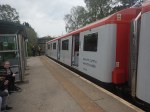

















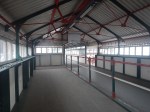
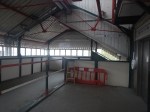






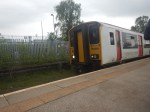

Note.
- The station is next to the Racecourse Ground, which is the home of Wrexham A.F. C.
- I didn’t walk to the ground, but there can be few league grounds, in England, Scotland or Wales, that are closer to a station.
- There is a one train per hour (tph) service along the Borderlands Line to Bidston station on the Wirral Line.
- It is a well-equipped station with lifts, toilets and a cafe.
It was tastefully refurbished in the 1990s.
This Google Map shows the relationship between the Racecourse Ground and Wrexham General station.
It can’t be much for than about two hundred metres between the station and the ground.
The Much-Loved Railway Food Carrier Bag
Coming back from Liverpool yesterday on Avanti West Coast, I treated myself to a coffee and a Nakd bar.
I took this picture after I’d cleared away and put all the rubbish in the bag.

These bags seem to be unique to British trains and I’ve never seen one in use on the many foreign trains, I’ve used all over the world.
Yesterday, the train was a Pendolino and I had no trouble carrying my coffee back to my seat, whilst the train tilted.
Were these bags invented by British Rail?
I can never understand, why they are not used by takeaways, as they are ideal for carrying food and drinks without spilling anything and they are much easier to carry and are ideal for collecting up the rubbish to put in a litter bin.
 The Anonymous Widower