The Stadler Data Sheet For A Class 777 IPEMU
This data sheet is now available on the Stadler web site.
These are my observations.
Battery Charging
The datasheet says this about battery charging.
While an IPEMU is running on the electrified network, the batteries can be charged from the third rail, as well as through regenerative braking.
I’m glad to see the trains have regenerative braking, which in a train with frequent stops saves electricity.
Battery Charging Time
The datasheet says this about battery charging time.
IPEMUs can be recharged in less than 15 minutes.
That time compares favourably with Hitachi’s time.
Expected Battery Life
The datasheet says this about expected battery life.
The IPEMU battery can undergo more than 10,000 charge/discharge cycles, which is about four times the lifetime of a battery used in EVs.
Stadler also give the battery a minimum expected life of eight years.
Transition Between Electrification And Battery
The datasheet says this about this important transition.
Transition between electrified and non-electrified networks without interruption, reducing travel times.
Stadler certainly do the changeover from electric to diesel smoothly on a Class 755 train.
A Comparison To Tesla
This is a paragraph in the introduction of the data sheet.
The battery/vehicle weight-ratio of a Tesla is about 25 per cent, while the ratio of the IPEMU is only about 6 per cent.
I suspect the rolling resistance, is also a lot less, than the rolling resistance of a Tesla, due to the superior properties of steel wheels on rail, as opposed to rubber tyres on road.
Battery Range
The data sheet gives the following.
- Installed battery capacity – 320 KWh
- Maximum speed (IPEMU mode) – 62 mph
- Range in battery operation – 34 miles
- Maximum demonstrated range – 84 miles
Note.
- I would assume the 55 km given for range on the datasheet is a guaranteed range.
- The maximum demonstrated range is from New Merseyrail Train Runs 135km On Battery.
- All other figures are from the datasheet.
In an article in the October 2017 Edition of Modern Railways, which is entitled Celling England By The Pound, Ian Walmsley says this in relation to trains running on the Uckfield Branch, which is not very challenging.
A modern EMU needs between 3 and 5 kWh per vehicle mile for this sort of service.
I don’t think the terrain of Merseyrail’s services are much different from the Uckfield branch, so what are the figures for the Class 777 trains on battery power?
- 55 km range – 2.353 kWh per vehicle mile
- 135 km range – 0.952 kWh per vehicle mile
The train appears to be very miserly with electricity.
But if the attention to detail in the electrical system of the train is of the standard of a Swiss watch, I don’t think they are unreasonable.
Operation With 25 kV Overhead Electrification
The datasheet says nothing about this, but the Wikipedia entry for the Class 777 train says this under Design.
Because current regulatory policy makes it unlikely that future extensions of Merseyrail’s unshielded third rail traction power supply will be approved, Class 777 units will be delivered with provision for the future installation of 25 kV 50 Hz AC overhead line traction equipment.
This is probably needed for charging at locations without third-rail electrification.
A Heavy Load From Felixstowe To Manchester
As I waited for my train at Canonbury station this morning, this very long train went through.
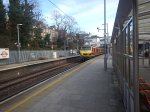
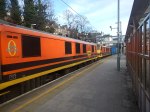
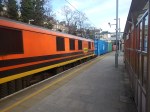

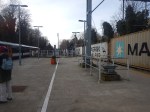
After I got home, I found that it was going from the Port of Felixstowe to Trafford Park Freightliner Terminal.
The journey will take around nine-and-a-half hours.
- This time includes a sixty-five minute stop at Ipswich to change the diesel locomotive or locomotives used to haul the train out of the Port of Felixstowe for the pair of Class 90 electric locomotives for the rest of the journey to the North-West.
- The two locomotives together have a power output of about 7.5 MW.
- The train will pick up the West Coast Main Line at Primrose Hill and then take the Trent Valley Line between Rugby and Stafford before approaching Trafford Park, using the Castlefield Corridor through Manchester Piccadilly and Oxford Road stations.
- As I write this, the train is on time as it approaches Tamworth.
The train has done well as at Watford, it was running twenty minutes late. The train crew have used the 7.5 MW well to claw back the time.
Did it help the crew to regain the schedule, that they had 7.5 MW on hand, as opposed to the less than 3 MW from the UK’s largest diesel locomotive?
To my mind, this illustrates one of the reasons, why long distance trains are best run by powerful electric locomotives.
In Do Cummins And Stadler Have a Cunning Plan?, I describe the new Class 99 locomotive.
- It is an electro-diesel locomotive.
- It has 6 MW available on 25 KVAC overhead electrification.
- It has a 1.8 MW Cummins diesel engine, which may be powerful enough to haul the largest trains in and out of the Port of Felixstowe, where the route is not electrified.
Thirty of these locomotives have been ordered by GB Railfreight.
I believe that one of these locomotives could handle a very heavy freight train between the Port of Felixstowe and Trafford Park Freightliner Terminal.
- The locomotive working alone could handle the train on the unelectrified line between Felixstowe and Ipswich.
- There would be no need to electrify the lines in the Port of Felixstowe.
- There would be no need for a prolonged stop in Ipswich.
- An hour on the journey could be saved.
- There might be a saving in the number of crew.
The Class 99 locomotive seems to be well-designed for handling freight trains out of Felixstowe.
Were Freightliner experimenting with what they needed from an electro-diesel locomotive, when I took this picture at Shenfield?
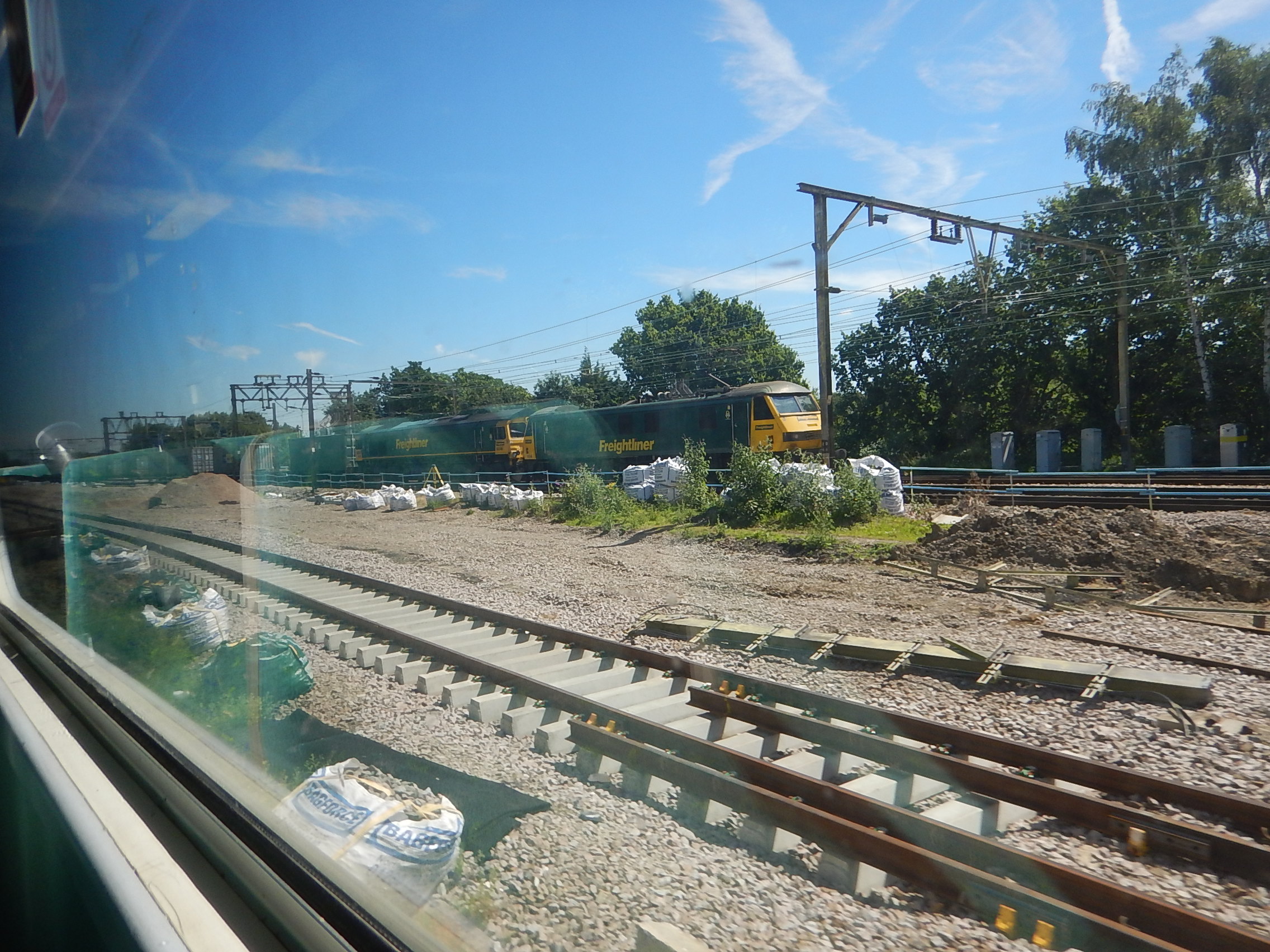
Note.
- The Class 90 electric locomotive has 3.7 MW of power.
- The Class 66 diesel locomotive has 2.4 MW of power.
Was what I saw an affordable electro-diesel locomotive?
New Merseyrail Train Runs 135km On Battery
The title of this post, is the same as that of this article on Liverpool Business News.
This paragraph gives the details.
Posting on social media site Linked In, Joaquim Font Canyelles, project leader at Stadler Rail, said: “Our new Merseytravel class 777 IPEMU (Independent Powered Electrical Multiple Unit) proved its strength after running 135 km fully loaded and without external current supply, which is much longer than we expected.
Note that 135 km is 83.9 miles.
These are possible routes, where the battery-electric trains could be deployed.
- Bidston and Wrexham Central – 27.5 miles
- Canada Dock Branch – 4.6 miles
- Chester and Crewe – 21.2 miles
- Chester and Runcorn East – 13 miles
- Ellesmere Port and Runcorn East – 10.8 miles
- Ormskirk and Preston – 15.3 miles
- Hunts Cross and Manchester Oxford Road – 27.1 miles
- Kirkby and Manchester Victoria – 30 miles
- Kirkby and Wigan Wallgate – 12 miles
- Liverpool Lime Street and Chester via Runcorn – 27 miles
- Liverpool Lime Street and Manchester Oxford Road – 31.5 miles
- Southport and Manchester Oxford Road – 37.8 miles
- Southport and Stalybridge – 45.5 miles
- Southport and Wigan Wallgate – 17.4 miles
Note.
- All routes could be done both ways with the exception of Southport and Stalybridge and possibly Southport and Manchester Oxford Road.
- Southport trains to Wigan and Manchester would charge their batteries at Southport.
- Central Liverpool and Wrexham Central would not need the change at Bidston.
- Hunts Cross and Preston via Central Liverpool would not need the change at Ormskirk.
- A Liverpool Lime Street and Manchester Oxford Road service would be possible.
Batteries can add a lot of range to a city’s railway system.
Conclusion
If Merseyrail can get hold of the routes to Crewe, Manchester, Preston and Wrexham, the Liverpool City Region will have one of the best metros for a city of its size.
Bus Information In Shops And Cafes
Several years ago, I wrote to Transport for London and suggested that the 5- digit code that you text to get bus information, be displayed inside the bus shelter. So you could read it whilst staying in the dry in bad weather.
There is now a space for the code on the instructions inside the shelter, but it is never filled in.
This morning, I had breakfast in Leon and afterwards I did some food shopping in Marks & Spencer, before walking back to Leon to get the bus home from outside.
It was cold in London this morning, so as I had a few minutes to wait for a bus, I ducked back into the Leon, as it was warmer in there.
I know the 5-digit code, that I should use, so I only emerged, when the bus was close.
Perhaps Transport for London, should provide small information posters that can be downloaded, printed and displayed by cafes, shops and other businesses close to a bus stop.
HS2 Smashes Carbon Target
The title of this post, is the same as that of this article on Rail Engineer.
This is a must-read article which explains how the various companies building High Speed Two are progressing in making all of the work sites diesel-free.
GeoPura is mentioned in the article and on this page on GeoPura’s case studies, which is entitled HS2 Reveals Successful Results Of Hydrogen Generator Trial, full details of the trial are given.
An HS2 construction site in London has held successful trials for two zero-emissions hydrogen fuel cell-based electricity generators – cutting carbon and improving air quality for workers and the local community.
The two GeoPura 250kVA hydrogen power units (HPUs) were trialled over the last year at HS2’s Victoria Road Crossover Box in Ealing, as a direct replacement for diesel generators to power machinery on the site.
There is also this video from High Speed Two.
Note.
- The use of electric cranes, diggers, dump trucks.
- The red trailer with lots of small cylinders, which is used to supply hydrogen.
- HS2 are also using HVO and flywheels to store energy.
- The video is narrated by HS2’s Air Quality Manager. If every project had one of these, it must surely speed decarbonisation.
We need more electric construction.
Cars In Central London Surged 60% After Khan Stopped Evening Congestion Charge
The title of this post, is the same as that of this article on the Standard.
These are the first two paragraphs.
Transport for London’s own data shows the dramatic impact of the Mayor’s decision to shorten the £15-a-day C-charge’s operating hours, ending it at 6pm rather than 10pm.
Last February, an average of 12,968 vehicles entered the zone between 6pm-10pm. But by October this had increased to 20,654 — a rise of 59 per cent.
To a Control Engineer like me, it is obvious that if you reduce the cost of the London Congestion Charge in the evenings between 18:00 and 22:00, you’re going to get more traffic.
Was that what was intended?
Or was the Mayor given bad advice?
I would have thought, the best course of action would have been to keep the charges as they were and use some the money to improve public transport in the central area.
Zero-Carbon Lighting Of Large Spaces
In Cockfosters Train Depot – 12th January 2023, I took a series of pictures of Cockfosters Train Depot, of which these are a selection.








Note, the lamp clusters on top of tall poles to light the area.
You see lots of these lights to illuminate play areas, car parks, rail sidings and truck depots.
Could a SeaTwirl or another vertical wind turbine be placed as high as possible up the pole, that supports the lights?
- A battery would be needed for when the wind doesn’t blow.
- A control system would be used to use the lights, when they are needed.
- The poles would be able to be laid down, like many lights can be, for servicing from the ground.
Cockfosters would be an excellent location for a test, as the wind is always blowing and the site has an altitude of nearly a hundred metres.
Tevva Starts First Mass Production Of Electric Lorries In UK
The title of this post, is the same as that of this article on Professional Engineering.
These are the first three paragraphs.
Tevva is building its 7.5 tonne vehicles at Tilbury in Essex after it received European Community Whole Vehicle Type Approval (ECWVTA), meaning it can start producing and selling in volume across the UK and Europe.
The start-up has already started delivering its first mass-produced lorries to customers including Travis Perkins and Royal Mail. It expects to sell up to 1,000 in 2023.
Described as “ideal” for last mile and urban delivery fleets, the electric truck offers up to 227km range from its 105kWh battery on a single charge. It will be followed later in 2023 by a 7.5 tonne hydrogen-electric alternative. The hydrogen range extender will reportedly increase the range up to 570km.
That seems like a good start to me; certification, orders for a thousand and generous ranges with or without a hydrogen extender.
In Equipmake Hybrid To Battery Powered LT11, I described Equipmake’s battery-electric New Routemaster bus.
Both the battery-electric Routemaster and the Tevva truck seem to have generous ranges, so has better battery technology been developed.
The Bowes Park And Bounds Green Out-Of-Station Interchange
After I’d taken the latest pictures in Bowes Park Station – 12th January 2023, I walked to Bounds Green station to go back South to the Angel.
I took these pictures on the way.
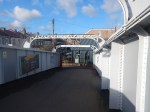




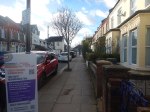





Note.
- The walk is level and could be done easily, if you were pushing a buggy, dragging a case or in a wheel-chair.
- There is a footbridge over the busy Bowes Road, which doesn’t have lifts. But you don’t need it to go between the stations.
- There is a light-controlled crossing outside Bounds Green station to cross Brownlow Road.
- The walk took me about six minutes.
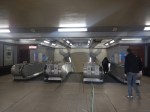
These pictures show the escalators at Bounds Green station.






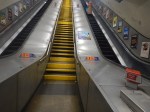
Could the central stairs be replaced by an inclined lift?
Would This Out-Of-Station Interchange Create An Easy Route Between Northern Piccadilly Line Stations And The Elizabeth Line?
Consider.
- Cockfosters, Oakwood and Arnos Grove stations have car parking.
- All stations on the Piccadilly Line from Bounds Green Northwards are well-connected by buses.
- Bounds Green station has escalators.
- Bowes Park station has stairs.
- Bowes Park station has a well-stocked cafe.
- Moorgate station has escalators and lifts to the Elizabeth Line.
For a perfect route, some things must be done.
The Frequency Of Trains On The Northern City Line
At the moment the trains through the station are two trains per hour (tph) between Moorgate and Stevenage.
But the frequency has been as high as four tph.
The frequency needs to be higher to cut waiting for a train.
Step-Free Access
This needs to be installed or improved at Bounds Green, Bowes Park and Moorgate stations.
Signage
The route between Bowes Park And Bounds Green stations needs better signage.
Conclusion
This Out-Of-Station Interchange could be made more use of.
A Road Scheme That Appears To Going Nowhere
This article on the BBC is entitled A57 Link Roads Mottram Bypass: Charity Seeks Judicial Review.
This is the sub-heading.
Environmental campaigners are seeking a judicial review of proposals designed to ease road congestion between Manchester and Sheffield.
And these are the first two paragraphs.
Plans for the A57 Link Roads Mottram Bypass scheme were boosted in November when Transport Minister Huw Merriman granted a development consent order.
But countryside charity the CPRE said there was no evidence building a new road “moves away a traffic problem”.
I remember this area well from the 1960s, when I was studying at Liverpool University and my parents lived in Felixstowe.
- There was no motorway across the Midlands between Coventry and Stafford and the alternative of the A5 was a nose-to-tail crawl.
- The M62 was still in the design phase.
So I took to using this cross-country route.
- A45 between Felixstowe and Huntingdon.
- A1 to Worksop, which was mainly dual-carriageway.
- A57 to Manchester, through Sheffield and Glossop, which was and still is single-track.
- A580 to Liverpool.
I think my best time was about five hours in a 1954 Morris Minor.
I feel, I must have gone through Mottram in Longdendale, judging by the map on the BBC article.
It is interesting to read the Wikipedia entry for the Longdendale Bypass, which starts like this.
The Longdendale Bypass (also known as the A57/A628 Mottram-in-Longdendale, Hollingworth & Tintwistle Bypass) is a long-planned road scheme in England by the Highways Agency. The aim is to alleviate traffic congestion on the A57 road/A628 road/A616 road routes that presently pass through the villages. There is both support and opposition for this long-planned scheme which will pass through the valley of Longdendale and part of the Peak District National Park.
The scheme was approved by the Highways Agency in 2014, so politicians have not exactly been quick off the mark.
These are some choice phrases from the Wikipedia entry.
- It is used by a relatively large number of heavy goods vehicles.
- Supporters of the scheme say that the A628 is one of the most congested A-road routes in the country.
- There is no viable alternative to a bypass.
- A survey in 2010 found that the junction of the A57 and M67 was the most congested in Manchester.
It is a disaster and the intervention by the CPRE will further delay a solution.
Conclusion
It is problems like this, that lead me to one solution.
On the one hand, you improve the railways and on the other you bring in universal road charging.
Hopefully passengers and freight will find a happy equilibrium.
But voters wouldn’t like it and any Government, that brought it in would lose the next election to a yet-to-be-formed Motorists Party.
 The Anonymous Widower