Darlington Station – 28th October 2020
I went to Teesside to have a look round yesterday.
These are my thoughts on Darlington station.
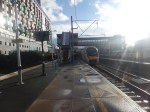
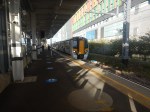
Platform 1 And Platform 4
These pictures show the two main platforms at Darlington station.
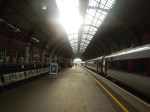
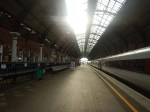
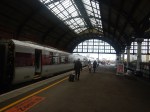
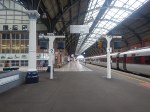
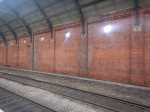
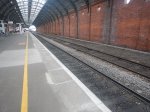
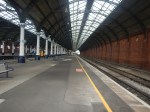
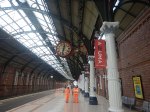
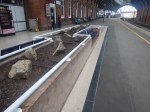
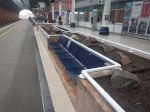

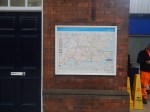
Note.
- They are affectively a very wide island platform.
- Platform 1 handles all trains going South and East to Middlesbrough and Saltburn.
- Platform 4 handles all trains going North and West to Bishop Auckland.
- The platforms are well over 200 metres long.
- Both the main platforms have a second track, between the current track and the walls of the station.
- Both main platforms have a large clock.
- Platform 1 has some innovative seating.
- Uniquely, there is a London Rail Map on the London-bound Platform 1. Every London-bound platform needs a copy of this map, but they are very rare.
They appear to handle all the current services easily.
There is certainly a lot of space to improve the station.
Station Structure
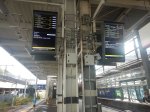
The station stricture is probably best described as grand, stylish and Victorian and it appears to be in good condition.
- The tracks through the station are enclosed in two large brick walls.
- A roof of the period, is supported on the walls and a number of perhaps forty cash-iron columns.
These pictures give a flavour of the station.
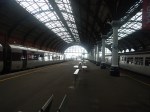
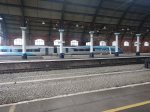
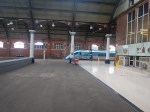
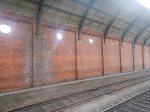

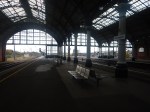
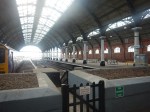
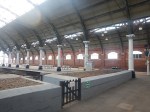
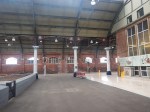
There must be few better station structures than Darlington in the UK and as it is Listed Grade II*. I would expect this is recognised by English Heritage.
The Southern Bay Platforms
There are two bay platforms at the Southern end of the station.
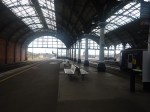

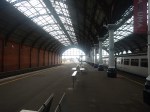
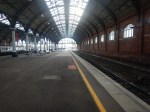
There were bay platforms at the Northern end, but these have now been removed.
I wonder, if these two bay platforms could be invaluable in the expansion of services both on the Tees Valley Line and generally in the area.
Current plans envisage the following.
- Four trains per hour (tph) between Saltburn and Darlington.
- Two tph between Darlington and Bishop Auckland.
One obvious way to achieve this objective would be to do the following.
- Run two tph between Saltburn and Bishop Auckland. These trains would run as now with Saltburn services using Platform 1 and Bishop Auckland services using Platform 4 at Darlington station.
- Run two tph between Saltburn and Darlington. These trains would use Platform 2 at Darlington station.
The advantages of this are.
- To get to Middlesbrough or Saltburn, you would go to the island Platform 1/2, as you do now.
- To get to Bishop Auckland, you would go to Platform 4, as you do now.
- If battery trains were to be used the bay platforms would be ideal for a Vivarail Fast Charge system
There would probably need to be some changes to the tracks serving Platform 1 and 2.
Other possibilities might include.
- Darlington might also be a useful terminal for a service to Whitby via Middlesbrough.
- Using the station as a Northern terminus for an Express Parcels Service from London.
Lengthened platforms able to take a five-car Class 802 train, could be useful for service recovery.
The Western Pedestrian Entrance To The Station
Darlington Town Centre lies to the West of the station and these pictures show what probably was a very grand entrance to the station connected to it by a subway.
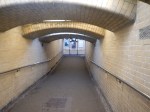
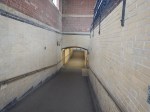
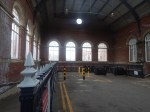
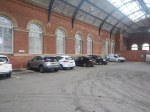
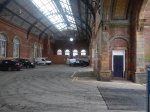
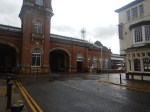
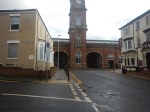
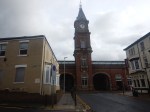
This Google Map shows the size of the entrance.
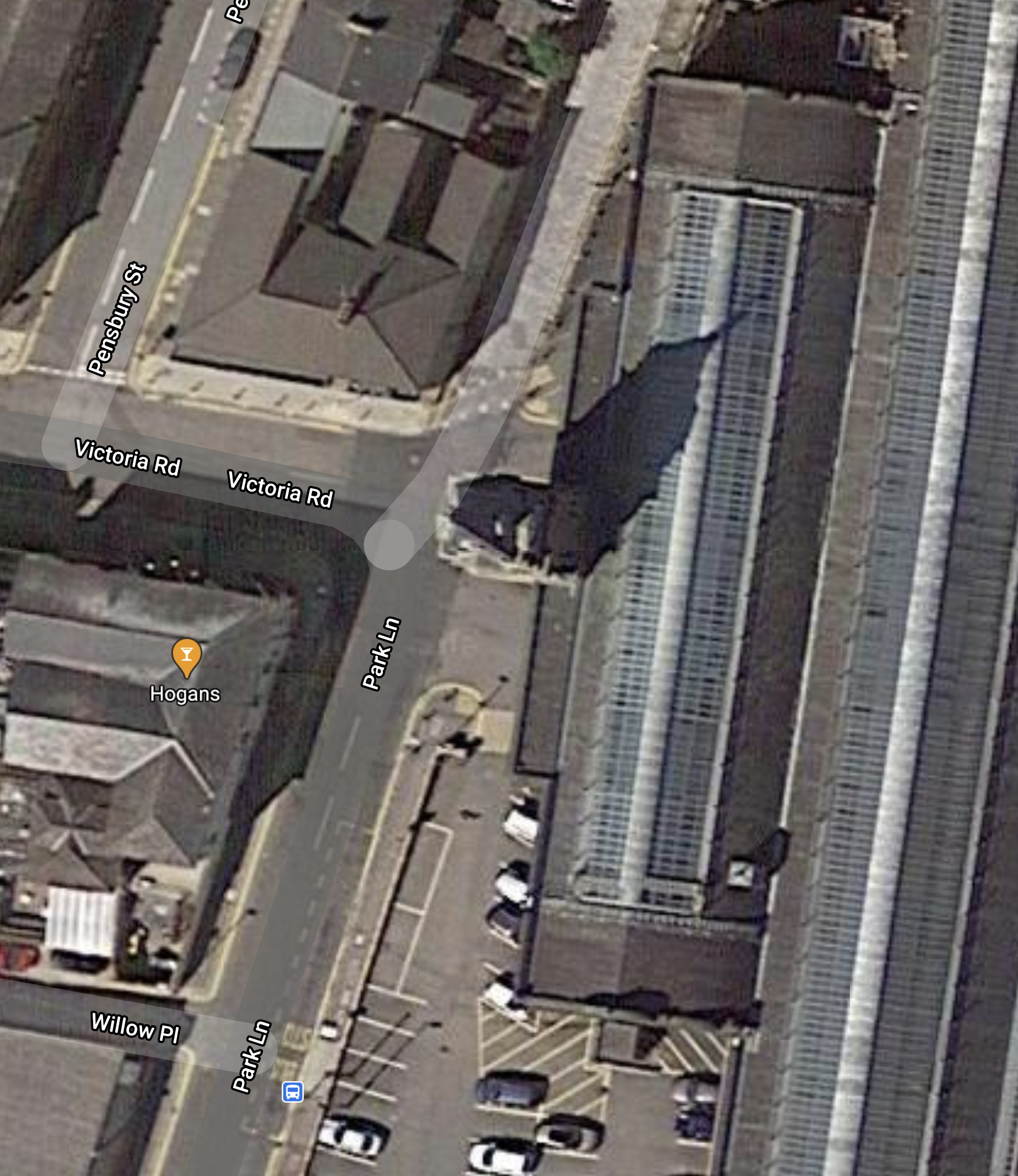
It is one of those buildings that would be described by a certain breed of estate agent, as having development potential.
- There are no lifts to the subway.
- It could be turned into a retail experience.
- Does the clock tell the right time?
- Buses were signposted in this direction, but there appeared to be little information.
Surely, it could be turned into an asset to both the railway and the town.
The Southern Approaches To The Station
These pictures show the Southern approach to the station.
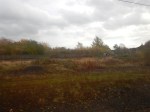

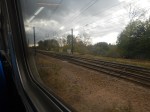

The Tees Valley Line to and from Middlesbrough and Saltburn joins to the South of the station and trains going to Bishop Auckland have to cross over the two tracks of the East Coast Main Line.
This Google Map shows the track layout just to the South of the station.
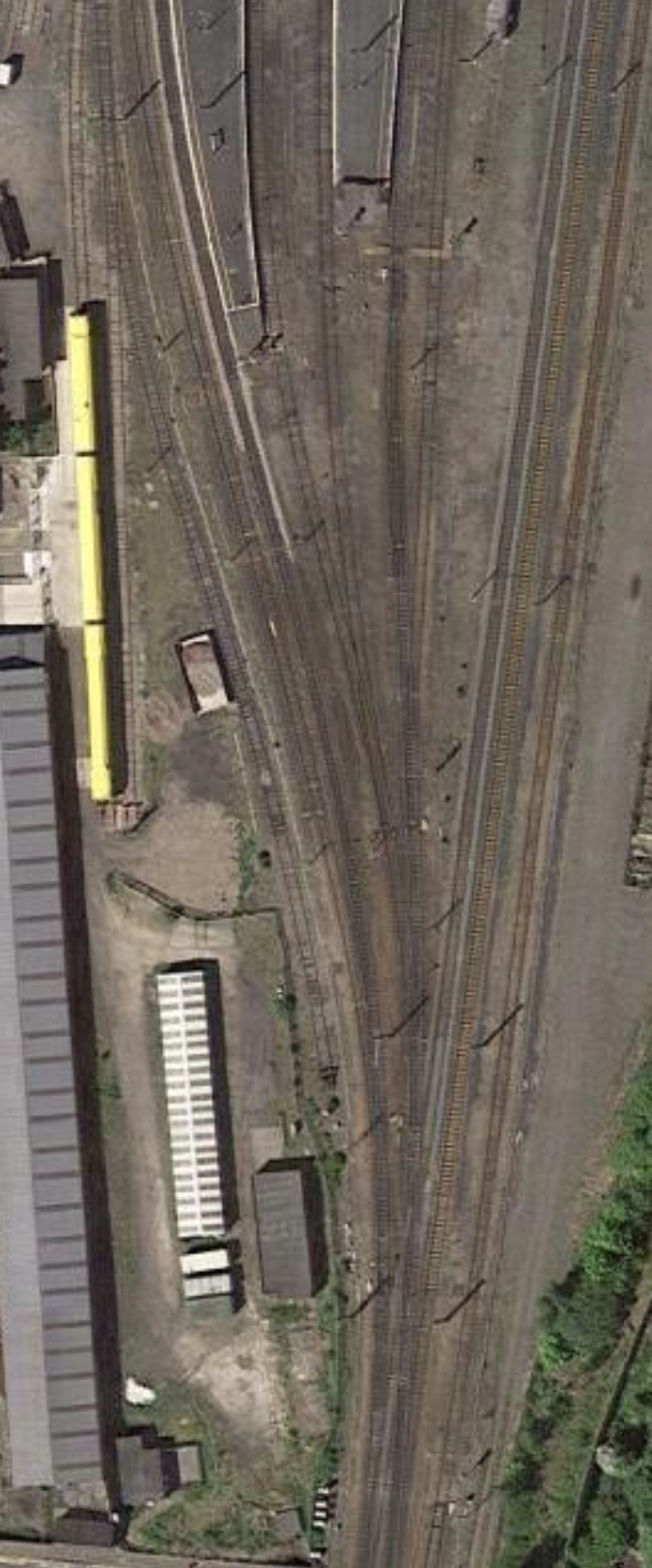
Note.
- The Southern ends of the platforms can just be seen at the top of the map.
- Platforms are numbered 1 to 4 from West to East.
- The two avoiding lines going past the East side of the station.
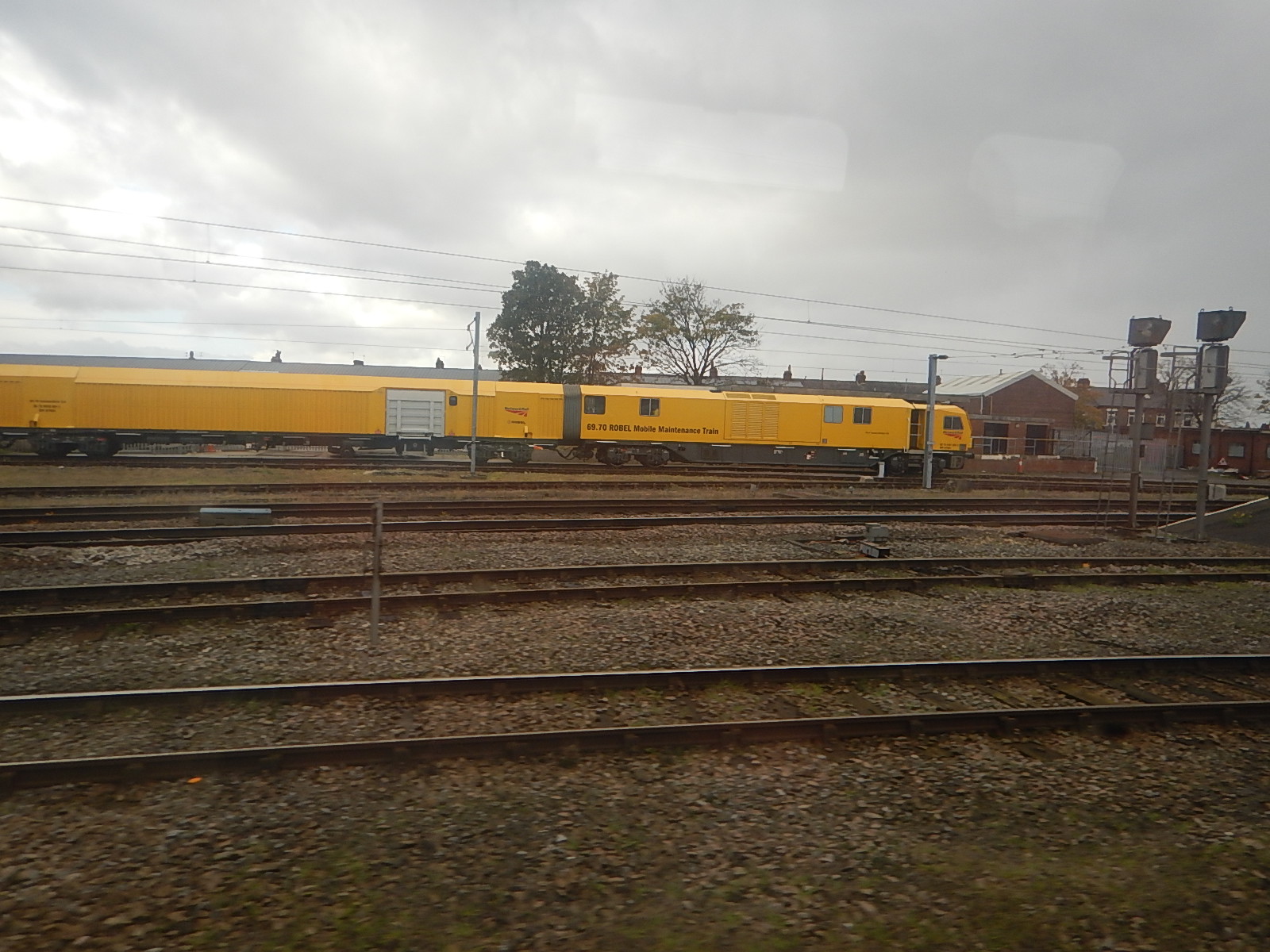
- The yellow train is one of Network Rail’s Mobile Maintenance Trains.
The Mobile Maintenance Train was parked in the same place yesterday, as this picture shows.
The second Google Map shows Darlington South Junction, where the Tees Valley Line from Middlesbrough joins the East Coast Main Line.
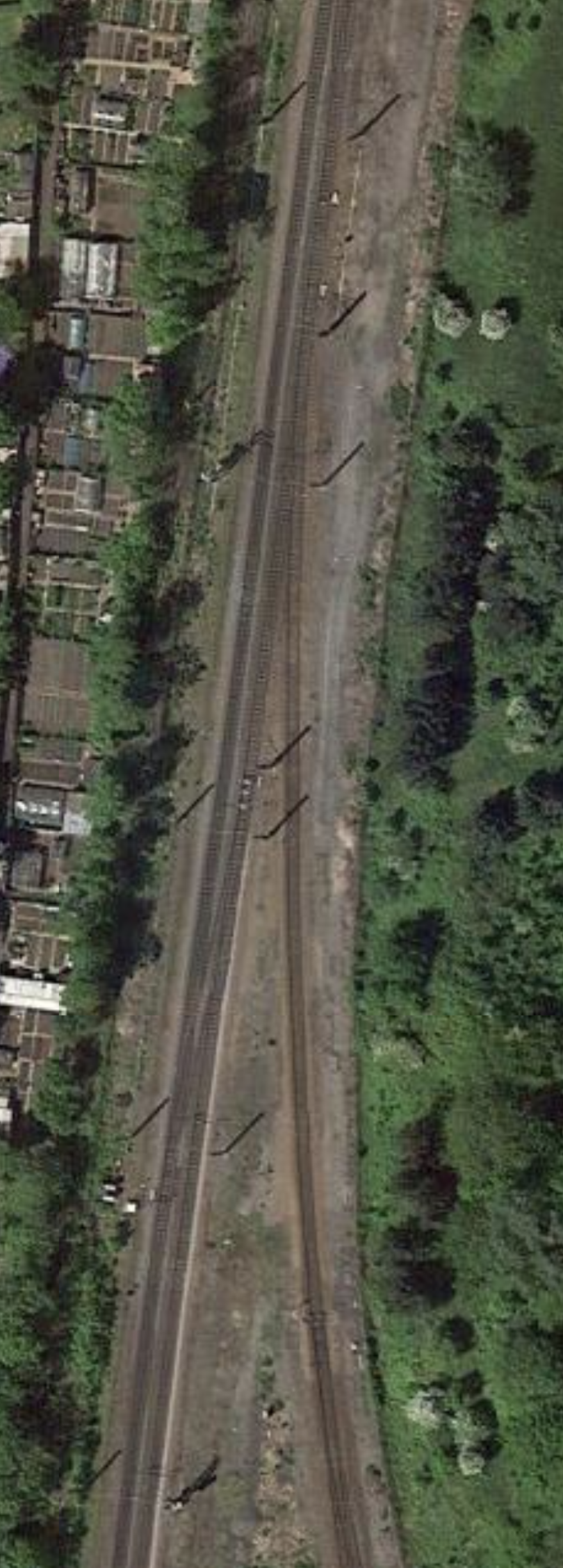
These two maps indicate the problem of train operation at Darlington.
A train between Bishop Auckland in the West and Middlesbrough and Saltburn in the East, can sneak down the Southbound East Coast Main Line and take the Tees Valley Line to continue on its way.
But a train going the other way, needs to cross both tracks of the East Coast Main Line on the flat, which means precision working by drivers and signallers, to avoid causing delays to both main line and local trains.
I suspect all the following are true.
- The number of London and Scotland expresses will increase.
- London and Scotland expresses will be running faster.
- The number of freight services on the route will increase.
- The number of services between Bishop Auckland and Saltburn will increase from the current hourly only service.
- High Speed Two will eventually start to run services between London and Birmingham, and at least as far North as Newcastle
All will make the need for improvements South, and probably North, of Darlington station increasingly important.
Could it be that the simplest solution would be to create a dive-under?
- It would only need to be single-track.
- It could probably be built without affecting current services, as was the Acton dive-under.
- There would appear to be plenty of space.
It would only need to allow trains from the Eastern branch of the Tees Valley Line to access Platform 4 at Darlington station.
High Speed Two Is Coming
High Speed Two is coming to Darlington and I wrote about that in £100m Station Revamp Could Double Local Train Services.
This was my conclusion about what will happen to services at Darlington in that post.
I think that this will happen.
- The Tees Valley Line trains will be greatly improved by this project.
- Trains will generally run at up to 140 mph on the East Coast Main Line, under full digital control, like a slower High Speed Two.
- There will be two high speed platforms to the East of the current station, where most if not all of the High Speed Two, LNER and other fast services will stop.
- There could be up to 15 tph on the high speed lines.
With full step-free access between the high speed and the local platforms in the current station, this will be a great improvement.
So what will the step-free access be like?
The young assistant in WH Smith told me that a hole will be made in the wall on the East side of the current Platform 1.
It does seem that a new bridge could reach over all the platforms with an entrance for the Town Centre in a refurbished Western entrance.
Passengers would arrive by high speed train every few minutes from the South, Newcastle or Scotland.
- Those for the Town Centre would walk across the bridge and exit the station in a refurbished Western entrance.
- Those needing onward local train travel would descend into the current station to catch another frequent train.
- Hopefully, there would be space somewhere for a bus station.
It would be a real gateway station for Darlington.
Tunnelling Complete At Bank Tube Station
The title of this post, is the same as that of this article on Infrastructure Intelligence.
This is the opening paragraph.
Tunnelling work at the project to modernise and expand Bank Underground station in London has been completed, marking a major milestone in the project. The tunnelling, which forms part of the programme to expand the size of the station by 40%, has seen more than 1.3km of tunnels constructed since May 2017.
I use Bank station regularly and it has been fully-functional during the tunnelling.
Hopefully, it will only in 2022.
Werrington Dive-Under – 28th October 2020
I took these pictures as I passed the Werrington Dive-Under on my way North this morning.
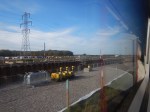
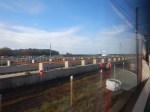
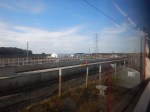
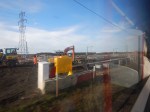
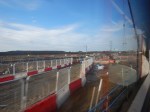
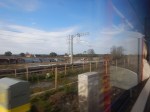
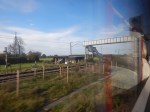
It seems to be coming on.
Two New Black Country Railway Stations Receive Planning Approval
The title of this post, is the same as that of this article on Rail Engineer.
Planning permission has been granted for two new railway stations on the Walsall to Wolverhampton line, marking a major milestone in the project to restore passenger services to this part of the Black Country.
The stations at Darlaston and Willenhall will offer local residents vastly improved connections to Wolverhampton, Walsall and Birmingham New Street stations when they open in 2023.
The article also gives full details on the location of the stations and the rail services that will be provided.
Frankfurt Starts Building Fuel Station For World’s Biggest Zero-Emissions Train Fleet
The title of this post, is the same as that of this article on Reuters.
These are the two opening paragraphs.
German regional transport group RMV began construction on Monday of a filling station near Frankfurt that will use hydrogen generated as a by-product of chemicals manufacturing to fuel the world’s largest fleet of zero-emissions passenger trains.
France’s Alstom will deliver 27 hydrogen-powered fuel cell trains to the Infraserv Hoechst industrial park in the Rhine-Main region in mid-2022. Starting regular local services by that winter, the fleet will replace diesel engines.
All the investment will be partly funded by fares.
Chlorine Manufacture
I find it interesting, that the article also states that the hydrogen comes as a by-product of chlorine manufacture. When I worked in a ICI’s electrolysis plant around 1970, their plant used the Castner-Kellner process to produce both gases.
The process uses a lot of mercury and Wikipedia says this about the future of the process.
The mercury cell process continues in use to this day. Current-day mercury cell plant operations are criticized for environmental release of mercury leading in some cases to severe mercury poisoning as occurred in Japan Minamata_disease. Due to these concerns, mercury cell plants are being phased out, and a sustained effort is being made to reduce mercury emissions from existing plants.
Are INEOS, who now own the Runcorn plant, and the Germans still using the Castner-Kellner process?
I remember two stories about the theft of mercury from the Runcorn plant.
Mercury was and probably still is very valuable, and it was always being stolen. So ICI put a radioactive trace in the mercury, which didn’t affect the process. The result was that all legitimate metal dealers on Merseyside bough Geiger counters to check any mercury before they bought it.
One guy thought he had found the ideal way to steal mercury, so he filled his bike frame with the metal and wheeled it to the gate. Whilst he clocked out, he propped the bike against the gate-house. Unfortunately, it fell over and because of the weight of the mercury, he was unable to pick it up.
My work in the plant, involved devising a portable instrument that would detect mercury in air and a colleague’s project was to develop a way of detecting mercury in urine samples from the plant operatives.
Those projects say a lot, about why we should be careful around any process involving mercury.
A Trip To Stansted Airport In A Class 745/1 Train
This lunchtime a friend was passing through Stansted Airport on the way to Glasgow. As we hadn’t seen each other for a couple of years, we had decided to have a coffee at the Airport.
I took these pictures on the trip.
Property Development At Tottenham Hale
There is a lot of development going on around Tottenham Hale station.
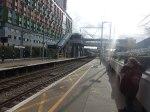
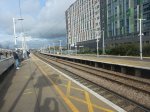
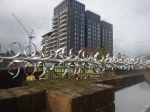
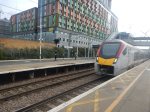
There will be a lot more to come.
The New Class 745/1 Train
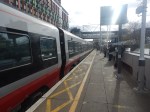
I travelled in a new Class 745/1 train, which are replacing the Class 379 trains.
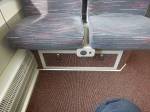
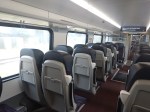
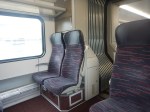
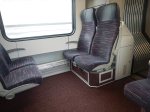
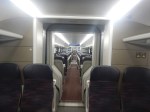

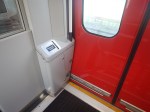
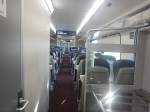
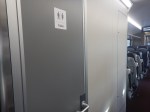
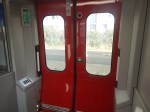
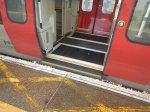
Note.
- The trains have twelve articulated sections.
- The trains are 236.5 metres long.
- Only 11-car Class 390 trains or a pair of five-car Class 80x trains are longer.
- The train has767 seats at a density of 3.24 seats/metre
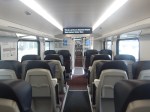
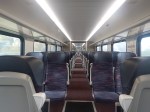
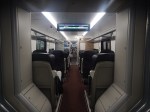
This picture through the train emphasises the train’s length.
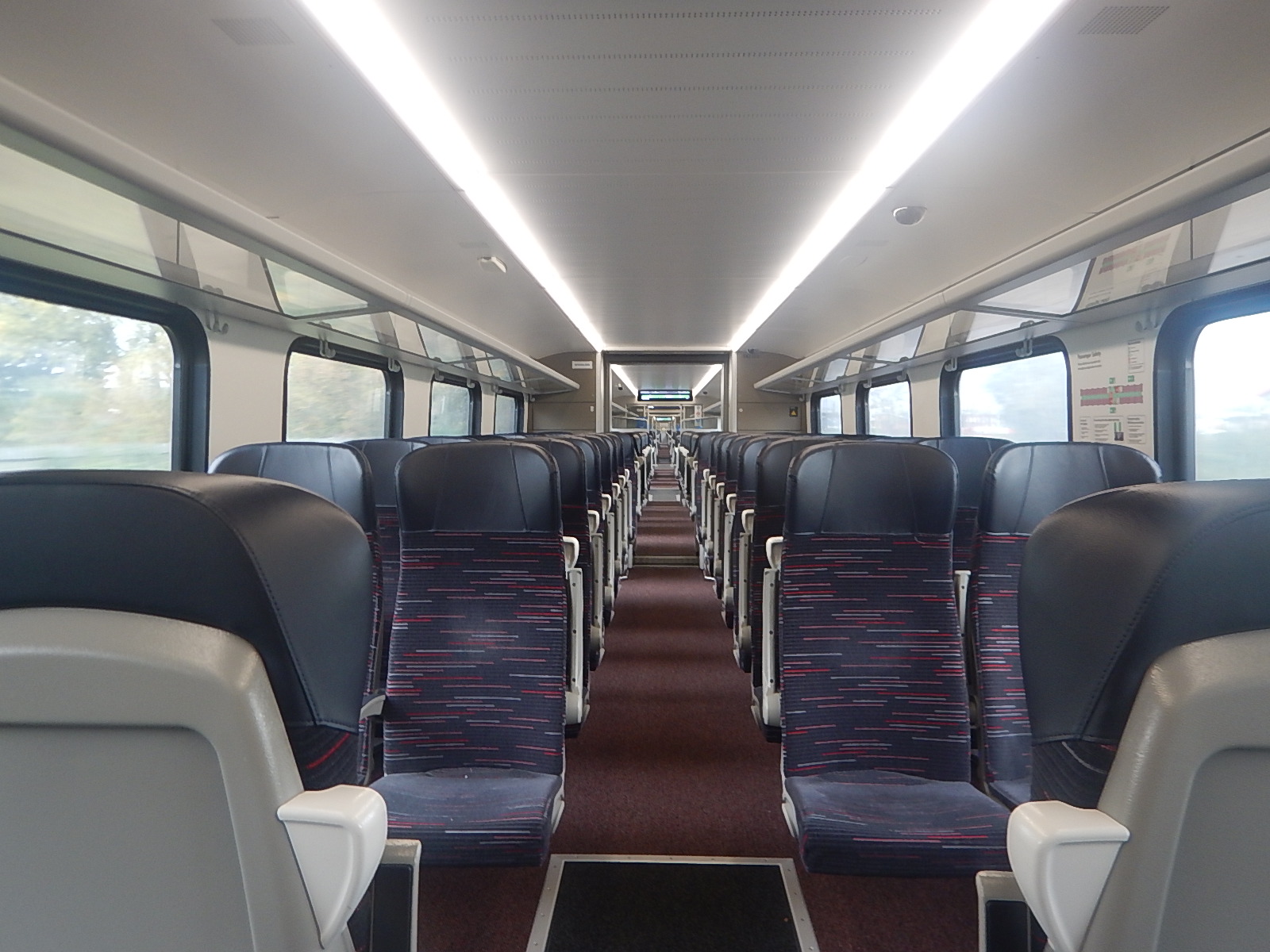
Note.
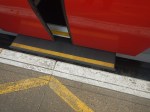
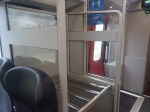
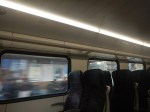
- There are some light slops, but no steps.
- A coffee and snack trolley would be possible.
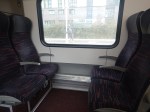
- The overhead racks are generously-sized.
- Some seats are higher and you step up into them, as they are over the wheels.
The ride was also excellent.
Class 745/1 Train Performance
I made these observations.
- My train stopped at Tottenham Hale, Harlow Town, Bishops Stortford and Stansted Mountfitchet.
- The train was at 80 mph most of the time on the West Anglia Main Line.
- The maximum speed if a Class 745 train is 100 mph.
- The operating speed of the West Anglia Main Line is given on Wikipedia as 100 mph maximum.
- The train was didn’t exceed 70 mph on the Stansted Branch.
- Between Stansted Airport and Stansted Mountfitchet, the train accelerated to 70 mph and then braked at the right time to stop precisely in the following station.
At all times, I felt the train was running very easily. But then there are 125 mph members of the Flirt family running in Norway.
I can see these trains cutting the current 49 minutes between Liverpool Street and Stansted Airport.
Other times to London’s airports are as follows.
- London Bridge – Gatwick – Thameslink – 48 minutes.
- Victoria – Gatwick – Gatwick Express – 30 minutes.
- Victoria – Gatwick – Southern – 32 minutes.
- Paddington – Heathrow Central – Heathrow Express – 15 minutes
- Paddington – Heathrow Central – Crossrail – 28 minutes
With the exception of Heathrow Express, the new Stansted Express doesn’t stand up too badly.
Rye House Gas-Fired Power Station
One of the landmarks you pass on the West Anglia Main Line is Rye House power station.


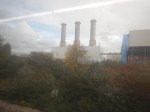
The weather wasn’t good, but the pictures give an impression of the 715 MW gas-fired power station.
This Google Map shows the power station.
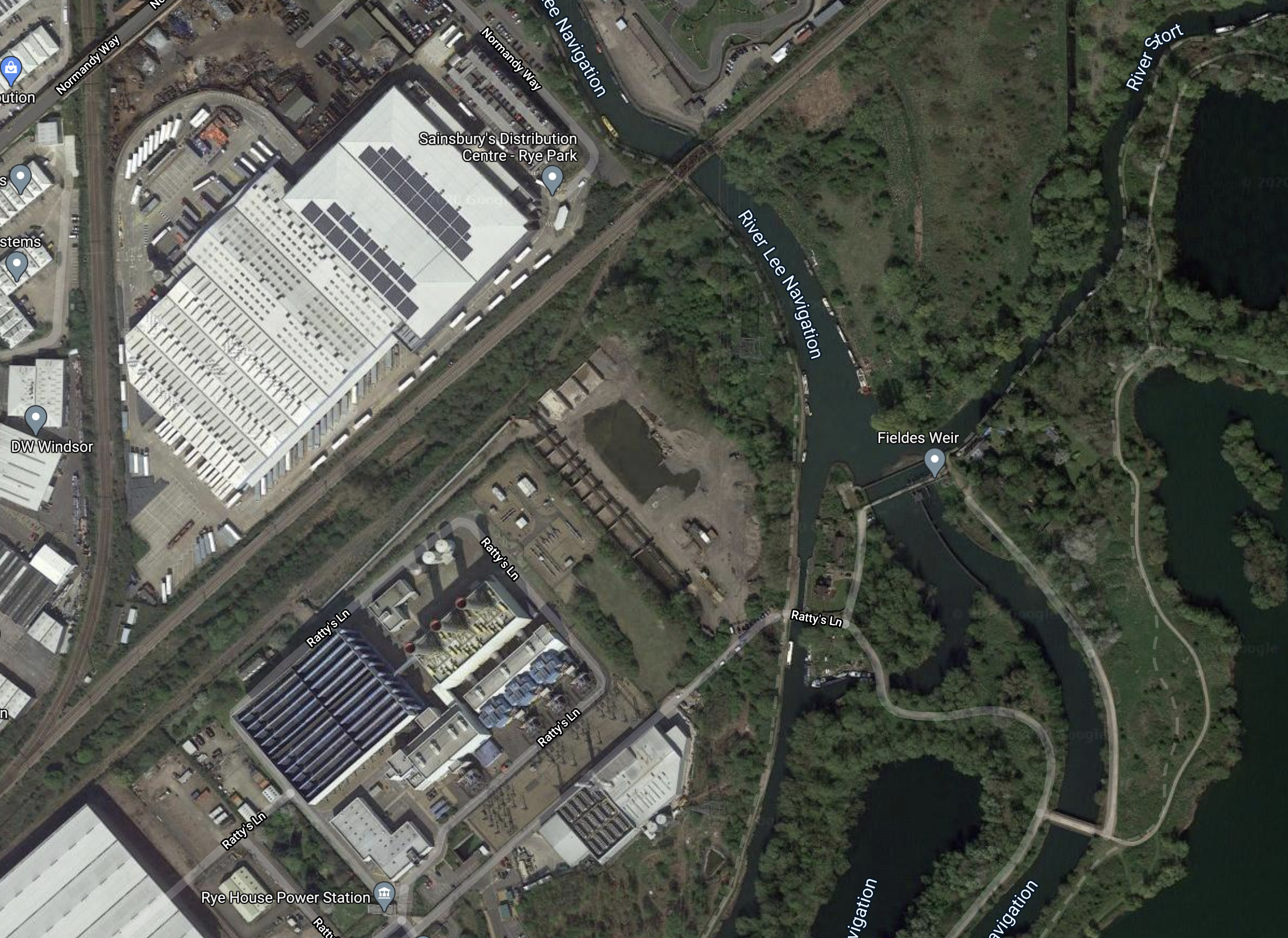
Note.
- The West Anglia Main Line running SW-NE across the map.
- Sainsbury’s distribution centre to the North of the railway.
- The power station to the South of the railway.
- The grid-like structure is an air-cooled condenser.
But where is the station’s carbon capture equipment?
The Lea Valley is London’s greenhouse, as this second Google Map shows.
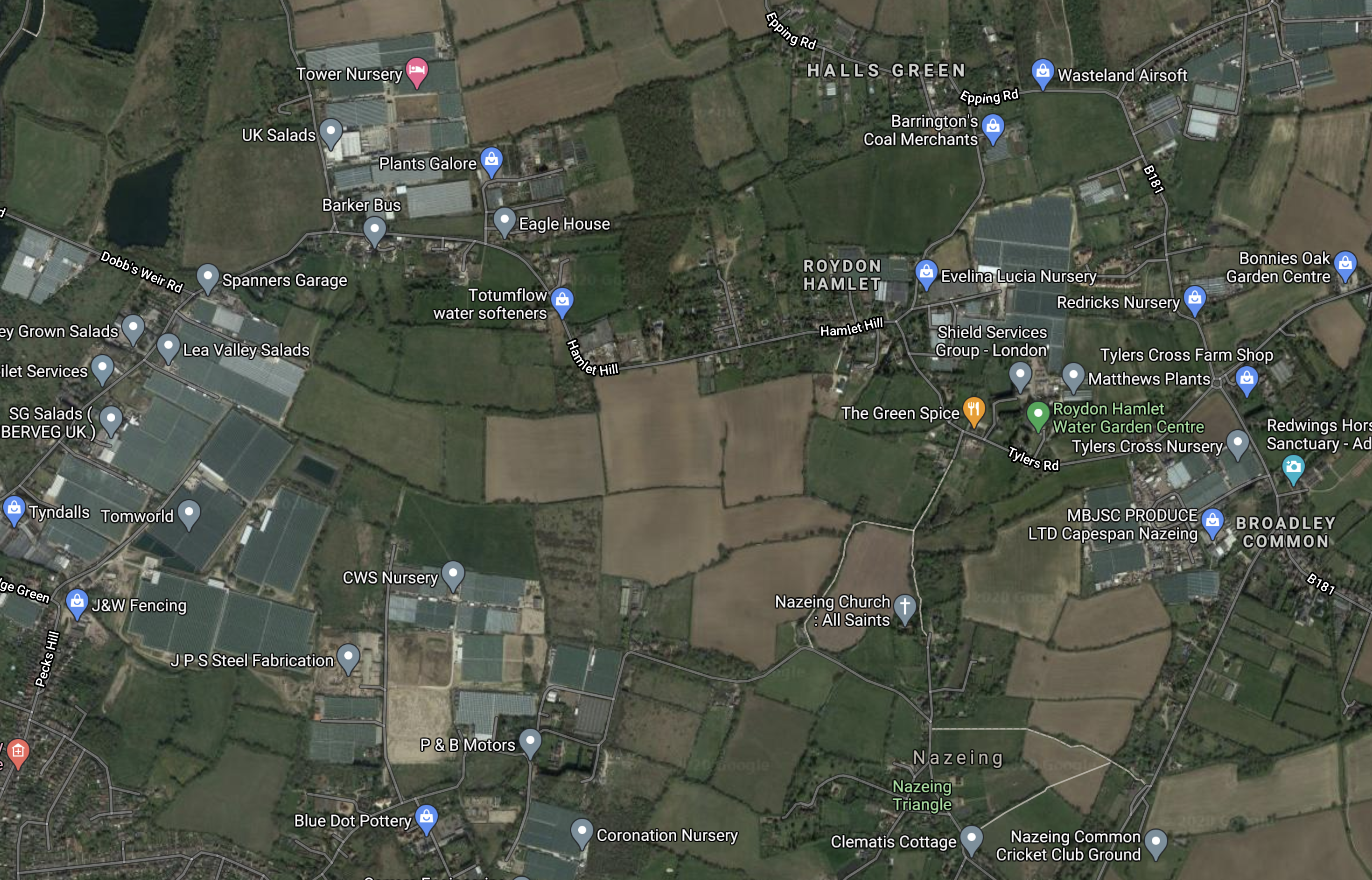
Note all the nurseries and salad producers on the map, which is a mile or so to the South East of the power station.
Drax Group used to pipe carbon dioxide to salad producers from Drax power station, so why aren’t they doing it here?
Changing At Tottenham Hale Station
This set of pictures show my change at Tottenham Hale station, when I returned to London.
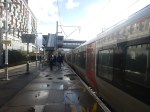
Note.
- The step-free entry to the Class 745 train.
- The Stansted Express used Platform 3.
- It was then followed in Platform 3, by a train to Liverpool Street via Hackney Downs station.
- At the same time, a train arrived in Platform 4, which went to Stratford via Lea Bridge station.
- I took the Stratford train to Lea Bridge station.
- The train was a Class 379 train, which has been replaced by the Class 745 train.
It looks like all Stansted Expresses have an interchange to trains to Hackney Downs and Stratford after a few minutes.
This sums up, what travellers can do at Tottenham Hale station, after arriving on a Stansted Express.
- Stay on the Stansted Express for Liverpool Street.
- Wait for the next train to Hackney Downs and Liverpool Street, on the same platform.
- Wait for the train to Stratford, on the other side of the same platform.
- Catch the Victoria Line, as passengers have done for decades.
- There are also lots of buses and taxis.
When Crossrail opens, there will be connections at Stratford and Liverpool Street.
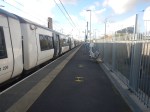
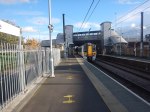
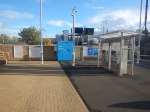
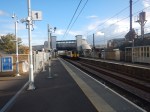
Lea Bridge Station
I took these pictures at Lea Bridge station.
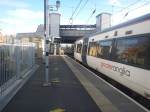
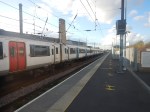
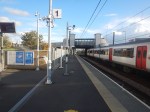
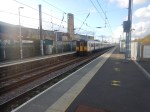
Note, that not all trains on this route are Class 379 trains.
Property Development At Lea Bridge Station
There is a lot of development going on around Lea Bridge station.
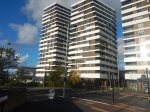
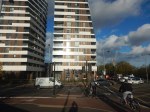


As at Tottenham Hale and Stratford, there will probably be more to come.
Lea Bridge Road In Mid Afternoon
As I just mixed a 56 bus home, I walk about half-a-mile to the next bus stop.
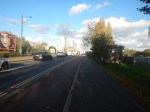
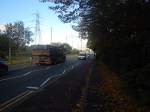
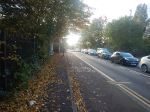
It was not a pleasant walk!
£100m Station Revamp Could Double Local Train Services
The title of this post, is the same as that of this article on the Northern Echo.
This is the opening paragraph.
Officials behind plans for a £100m-plus transformation of Darlington’s Bank Top Station have confirmed it will remain the only one on the East Coast Mainline without a platform specifically for the London to Scotland service.
Darlington station has made various appearances in my life, all of which have been pleasurable ones.
I went several times to ICI’s Wilton site on Teesside in the 1970s, when the route to London was worked by the iconic Class 55 locomotives or Deltics.
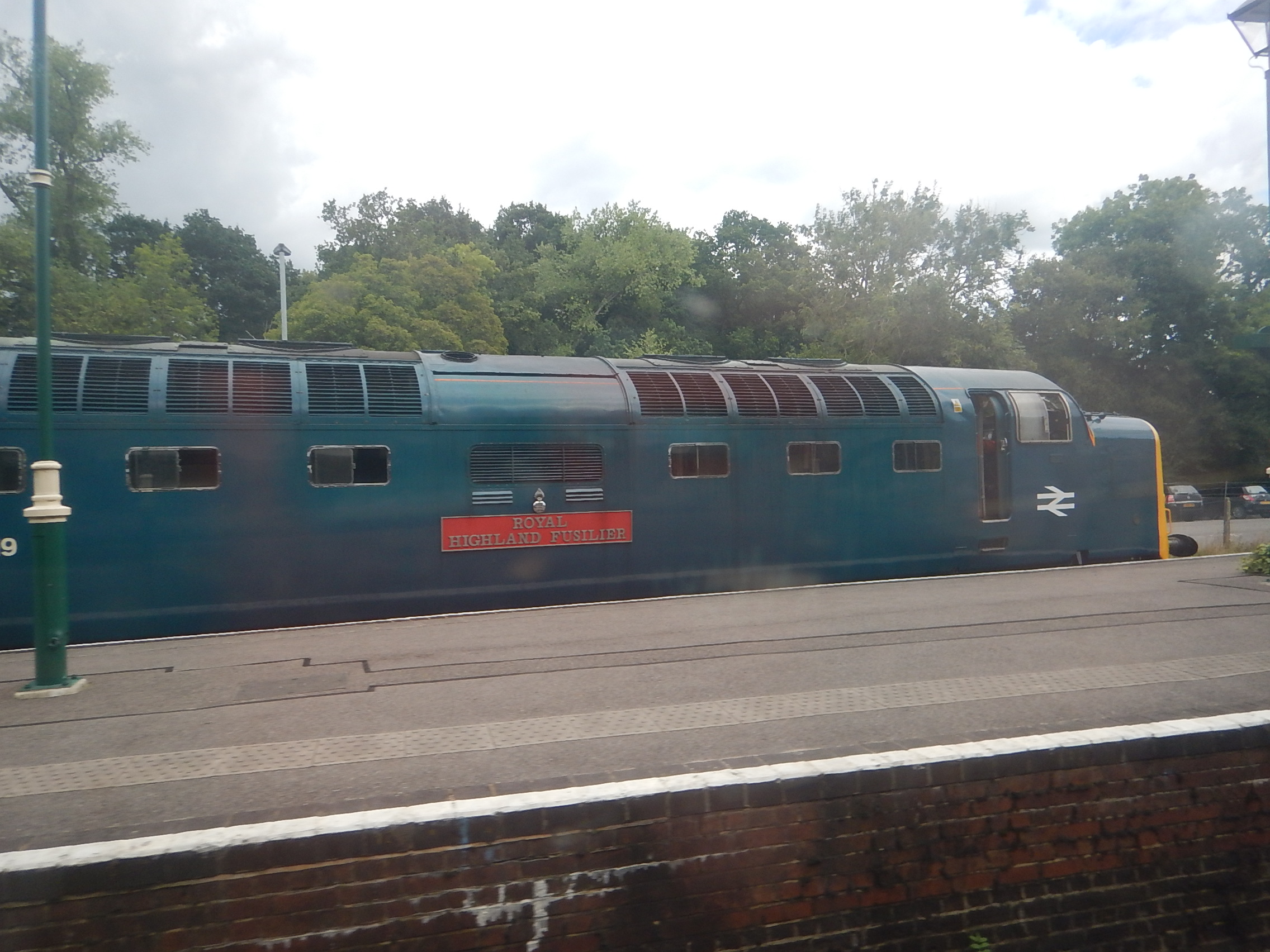
I wrote about one memorable trip home from Darlington in The Thunder of Three-Thousand Three-Hundred Horses.
Over the years, I also seem to have had several clients for my computing skills in the area, including the use of my data analysis software; Daisy at Cummins Engines in the town.
And lately, it’s been for football at Middlesbrough to see Ipswich play, where I’ve changed trains. Sometimes, Town even won.
The improvements planned for the station are two-fold.
Improvement Of Local Services
This paragraph from Wikipedia, sums up the local train services on the Tees Valley Line between Saltburn and Bishop Auckland via Darlington, Middlesbrough and Redcar.
Northern run their Tees Valley line trains twice hourly to Middlesbrough, Redcar and Saltburn (hourly on Sundays), whilst the Bishop Auckland branch has a service every hour (including Sundays). The company also operates two Sundays-only direct trains to/from Stockton and Hartlepool.
If ever a route needed improvement it is this one.
This paragraph from the Northern Echo article, outlines the plans for Darlington station.
The meeting was also told the overhaul, which will see new platforms, a new station building, parking and an interchange for passengers, alongside other improvements, would also double capacity on Tees Valley and Bishop Auckland lines, meaning four trains an hour on the former and two trains an hour on the latter.
I also believe that the route is a shoe-in for zero-carbon services; hydrogen or battery electric.
Hydrogen Trains On Teesside
In Fuelling The Change On Teesside Rails, I discuss using hydrogen powered trains for the lines in the area and they could certainly provide services on more than just the Tees Valley Line.
- Teesside certainly has big plans for hydrogen to fuel its chemical industry.
- Hydrogen powered transport in the area has been backed by the Government, as I wrote about in Tees Valley Wins £1.3million Project To Bring Hydrogen Vehicles To The Region.
- Plans are advancing for a depot for hydrogen-powered trains at Lackenby.
The hydrogen powered trains would probably be this Alstom Breeze.
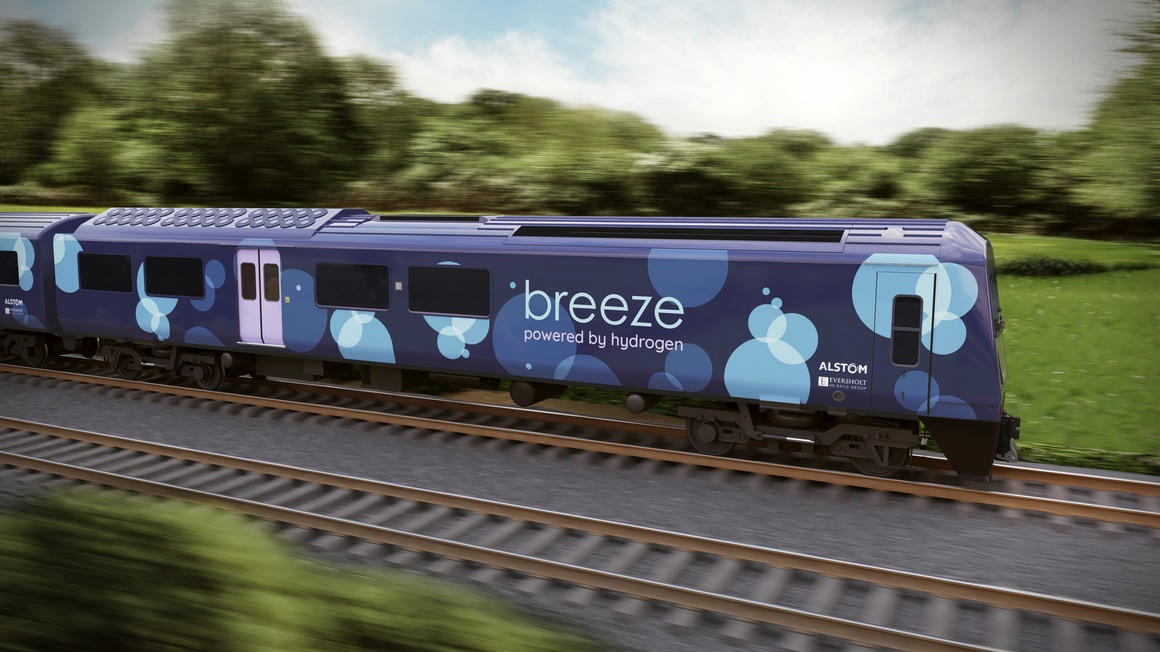
They would appear to be in pole position to change the image of Teesside’s trains.
Battery Electric Trains On Teesside
But I suspect. that an Anglo-Japanese partnership, based in the North-East could have other ideas.
- Hitachi have a train factory at Newton Aycliffe on the Tees Valley Line.
- Hyperdrive Innovation design and produce battery packs for transport and mobile applications in Sunderland.
The two companies have launched the Regional Battery Train, which is described in this Hitachi infographic.

Note than 90 kilometres is 56 miles, so the train has a very useful range.
Hitachi have talked about fitting batteries to their express trains to serve places like Middlesbrough, Redcar and Sunderland with zero-carbon electric services.
But their technology can also be fitted to their Class 385 trains and I’m sure that Scotland will order some battery-equipped Class 385 trains to expand their vigorous electric train network.
Both Scotland and Teesside will need to charge their battery trains.
Example distances on Teesside include.
- Darlington and Saltburn – 28 miles
- Darlington and Whitby – 47 miles
- Darlington and Bishop Auckland – 12 miles
The last route would be possible on a full battery, but the first two would need a quick battery top-up before return.
So there will need to be strategically-placed battery chargers around the North-East of England. These could include.
- Hexham
- Nunthorpe
- Redcar or Saltburn – This would also be used by TransPennine Express’s Class 802 trains, if they were to be fitted with batteries.
- Whitby
If Grand Central did the right thing and ran battery electric between London and Sunderland, there would probably be a need for a battery charger at Sunderland.
It appears that Adrian Shooter of Vivarail has just announced a One-Size-Fits-All Fast Charge system, that has been given interim approval by Network Rail.
I discuss this charger in Vivarail’s Plans For Zero-Emission Trains, which is based on a video on the Modern Railways web site.
There is more about Vivarail’s plans in the November 2020 Print Edition of the magazine, where this is said on page 69.
‘Network Rail has granted interim approval for the fast charge system and wants it to be the UK’s standard battery charging system’ says Mr. Shooter. ‘We believe it could have worldwide implications.’
I believe that Hitachi and Hyperdrive Innovation, with a little bit of help from friends in Seaham, can build a battery-electric train network in the North-East.
The Choice Between Hydrogen And Battery Electric
Consider.
- The hydrogen trains would need a refuelling system.
- The battery electric trains would need a charging structure, which could also be used by other battery electric services to and from the North-East.
- No new electrification or other infrastructure would be needed.
- If a depot is needed for the battery electric trains, they could probably use the site at Lackenby, that has been identified as a base for the hydrogen trains.
Which train would I choose?
I think the decision will come down to politics, money and to a certain extent design, capacity and fuel.
- The Japanese have just signed a post-Brexit trade deal and France or rather the EU hasn’t.
- The best leasing deal might count for a lot.
- Vivarail have stated that batteries for a battery electric train, could be leased on a per mile basis.
- The Hitachi train will be a new one and the Alstom train will be a conversion of a thirty year old British Rail train.
- The Hitachi train may well have a higher passenger capacity, as there is no need for the large hydrogen tank.
- Some people will worry about sharing the train with a large hydrogen tank.
- The green credentials of both trains is not a deal-breaker, but will provoke discussion.
I feel that as this is a passenger train, that I’m leaning towards a battery electric train built on the route.
An Avoiding Line Through Darlington
The Northern Echo also says this about track changes at the station.
A meeting of Darlington Borough Council’s communities and local services scrutiny committee was told a bus lane-style route off the mainline at the station would enable operators to run more high-speed services.
Councillors heard that the proposed track changes would enable very fast approaches to Darlington and allow other trains to pass as East Coast Mainline passengers boarded.
Some councillors seem to be unhappy about some trains passing through the station without stopping.
Are their fears justified?
This Google Map shows Darlington station.
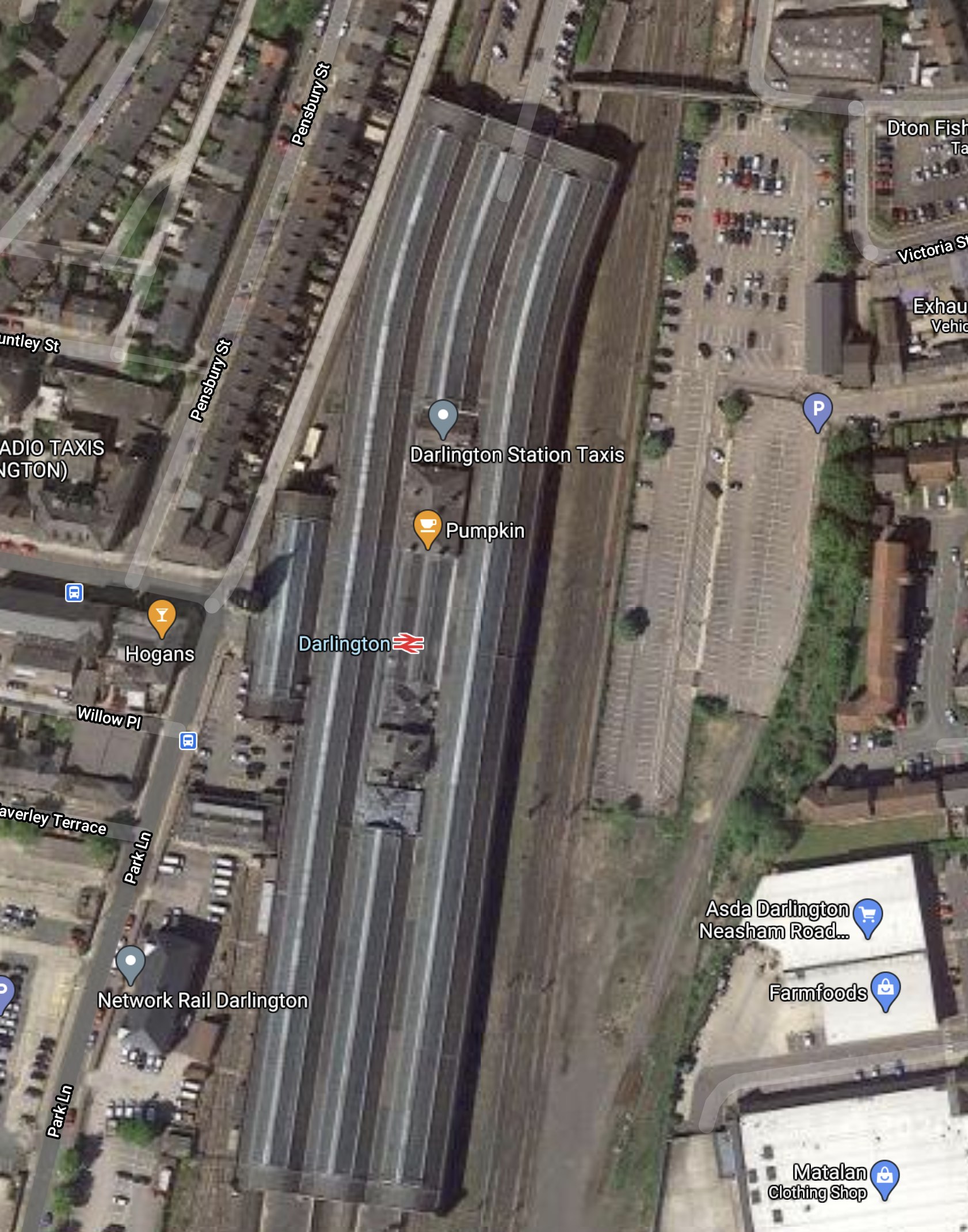
Note.
- The station has two long platforms and two South-facing bay platforms.
- There is plenty of space.
- There already appear to be a pair of electrified avoiding lines on the Eastern side of the station.
Wikipedia also says this about how Darlington station will be changed by High Speed Two.
The new high speed rail project in the UK, High Speed 2, is planned to run through Darlington once Phase 2b is complete and will run on the existing East Coast Main Line from York and Newcastle. Darlington Station will have two new platforms built for the HS2 trains on the Main Line, as the station is built just off the ECML to allow for freight services to pass through.
This would appear to suggest that the two current avoiding lines will be turned into high speed platforms.
Current High Speed Services At Darlington
The current high speed services at Darlington are as follows.
- LNER – two trains per hour (tph) – London Kings Cross and Edinburgh
- Cross Country – one tph – Plymouth and Edinburgh or Glasgow
- Cross Country – one tph – Southampton and Newcastle
- TransPennine Express – one tph – Liverpool and Edinburgh
- TransPennine Express – one tph – Manchester Airport and Newcastle
Northbound, this gives eight tph to Newcastle and four tph to Edinburgh
East Coast Trains
East Coast Trains‘s services are not planned to stop at Darlington.
High Speed Two Trains
Darlington is planned to be served by these High Speed Two trains.
- 1 tph – Birmingham Curzon Street and Newcastle via East Midlands Hub, York and Durham
- 1 tph – London Euston and Newcastle via Old Oak Common and York.
Both will be 200 metre High Speed Two Classic-Compatible trains
Northbound, this gives ten tph to Newcastle and four tph to Edinburgh.
As the Eastern Leg of High Speed Two has some spare capacity, I suspect there could be other services through Darlington.
Improvements To The East Coast Main Line
If you look at the East Coast Main Line between Doncaster and Newcastle, the route is a mixture of two and four-track railway.
- Between Doncaster and York, there are two tracks
- Between York and Northallerton, there are four tracks
- Between Northallerton and Darlington, there are two tracks
- North of Darlington, the route is mainly two tracks.
I have flown my virtual helicopter along much of the route and I can say this about it.
- Much of the route is through agricultural land, and where absolutely necessary extra tracks could possibly be added.
- The track is more-or-less straight for large sections of the route.
- Routes through some towns and cities, are tightly hemmed in by houses.
I also believe that the following developments will happen to the whole of the East Coast Main Line before High Speed Two opens.
- Full ERTMS in-cab digital signalling will be used on all trains on the route.
- The trains will be driven automatically, with the driver watching everything. Just like a pilot in an airliner!
- All the Hitachi Class 80x trains used by operators on the route, will be able to operate at up to 140 mph, once this signalling and some other improvements have been completed.
- All level crossings will have been removed.
- High Speed Two is being built using slab track, as I stated in HS2 Slab Track Contract Awarded. I suspect some sections of the East Coast Main Line, that are used by High Speed Two services, will be upgraded with slab track to increase performance and reduce lifetime costs.
Much of the East Coast Main Line could become a 140 mph high speed line, as against High Speed Two, which will be a 225 mph high speed line.
This will mean that all high speed trains will approach Darlington and most other stations on the route, at 140 mph.
Trains will take around a minute to decelerate from or accelerate to 140 mph and if the station stop took a minute, the trains will be up to speed again in just three minutes. In this time, the train would have travelled two-and-a-half miles.
Conclusion
I think that this will happen.
- The Tees Valley Line trains will be greatly improved by this project.
- Trains will generally run at up to 140 mph on the East Coast Main Line, under full digital control, like a slower High Speed Two.
- There will be two high speed platforms to the East of the current station, where most if not all of the High Speed Two, LNER and other fast services will stop.
- There could be up to 15 tph on the high speed lines.
With full step-free access between the high speed and the local platforms in the current station, this will be a great improvement.
How Many Trains Are Needed To Run A Full Service On High Speed Two?
The latest High Speed Two schedule was published in the June 2020 Edition of Modern Railways.
The Two Train Classes
Two separate train classes have been proposed for High Speed Two.
Full-Size – Wider and taller trains built to a European loading gauge, which would be confined to the high-speed network (including HS1 and HS2) and other lines cleared to their loading gauge.
Classic-Compatible – Conventional trains, capable of high speed but built to a British loading gauge, permitting them to leave the high speed track to join conventional routes such as the West Coast Main Line, Midland Main Line and East Coast Main Line.
The Wikipedia entry for High Speed Two has a section entitled Rolling Stock, where this is said about the design.
Both types of train would have a maximum speed of at least 360 km/h (225 mph) and a length of 200 metres (660 ft); two units could be joined together for a 400-metre (1,300 ft) train. It has been reported that these longer trains would have approximately 1,100 seats.
These are some of my thoughts.
Seating Density
I would assume that this means that a single 200 metre train, will have a capacity of approximately 550 seats or a density of 2.75 seats per metre. How does that compare with other trains?
- 9-car Class 801 train – 234 metres – 611 seats – 2.61 seats/metre
- 7-car Class 807 train – 182 metres – 453 seats – 2.49 seats/metre
- 9-car Class 390 train – 217.5 metres – 469 seats – 2.16 seats/metre
- 11-car Class 390 train – 265.3 metres – 589 seats – 2.22 seats/metre
- 12-car Class 745/1 train – 236.6 metres – 767 seats – 3.24 seats/metre
- 16-car Class 374 train – 390 metres – 902 seats – 2.31 seats/metre
Note.
- What I find strange with these figures, is that I feel most crowded and cramped in a Class 390 train. Could this be because the Pendelino trains are eighteen years old and train interior design has moved on?
- But I always prefer to travel in a Hitachi Class 80x train or a Stadler Class 745 train.
I very much feel that a seating density of 2.75 seats per metre, designed using some of the best modern practice, could create a train, where travelling is a very pleasant experience.
Step-Free Access
I have travelled in high speed trains all over Europe and have yet to travel in one with step-free access.
Surely, if Stadler can give their trains step-free access everybody can.
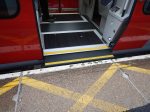
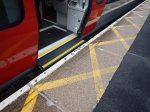
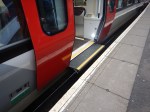
The pictures shows step-free access on Stadler Class 745 and Class 755 trains.
If I turned up pushing a friend in a wheelchair, would I be able to push them in easily? Or better still will they be able to wheel themselves in?
A Greater Anglia driver tp;d me recently, that now they never have to wait anymore for wheelchairs to be loaded.
So surely, it is in the train operator’s interest to have step-free access, if it means less train delays.
Double-Deck Trains
In my view double-deck trains only have one only good feature and that is the ability to see everything, if you have a well-designed window seat.
I may be seventy-three, but I am reasonably fit and only ever travel on trains with airline-sized hand baggage. So I don’t find any problem travelling upstairs on a double-deck bus or train!
But it could have been, so very different, if my stroke had been a bit worse and left me blind or in a wheelchair for life.
I have seen incidents on the Continent, which have been caused by double-deck trains.
- A lady of about eighteen in trying to get down with a heavy case dropped it. Luckily it only caused the guy she was travelling with, to roll unhurt down the stairs.
- Luggage is often a problem on Continental trains because of the step-up into the train and access is worse on double deck trains.
- I also remember on a train at Leipzig, when several passengers helped me lift a guy and his wheelchair out of the lower deck of a double-deck train, which was lower than the platform, as they often are with double-deck trains.
I am not totally against double-deck trains, but they must be designed properly.
Consider.
- High Speed Two’s Full-Size trains will only use London Euston, Old Oak Common, Birmingham Interchange, Birmingham Curzon Street, Manchester Airport, Manchester Piccadilly, East Midlands Hub and Leeds stations.
- All stations used by Full-Size trains will be brand-new or substantially rebuilt stations.
- Someone sitting in a wheelchair surely has the same right to a view from the top-deck of a double-deck train as anybody else.
- Jumbo jets seemed to do very well without a full-length top-deck.
- The A 380 Superjumbo has been designed so that entry and exit on both decks is possible.
I feel if High Speed Two want to run double-deck trains, an elegant solution can surely be found.
A Crude Estimate On The Number Of Trains
This is my crude estimate to find out how many trains, High Speed Two will need.
Western Leg
These are the services for the Western Leg between London , Birmingham, Liverpool, Manchester, Edinburgh and Glasgow.
- Train 1 – London Euston and Birmingham Curzon Street – 400 metre Full-Size – 45 minutes – 2 hour Round Trip – 4 trains
- Train 2 – London Euston and Birmingham Curzon Street – 400 metre Full-Size – 45 minutes – 2 hour Round Trip – 4 trains
- Train 3 – London Euston and Birmingham Curzon Street – 400 metre Full-Size – 45 minutes – 2 hour Round Trip – 4 trains
- Train 4 – London Euston and Lancaster – Classic Compatible – 2 hours 3 minutes – 5 hour Round Trip – 5 trains
- Train 4 – London Euston and Liverpool – Classic Compatible – 1 hours 34 minutes – 4 hour Round Trip – 4 trains
- Train 5 – London Euston and Liverpool – Classic Compatible – 1 hours 34 minutes – 4 hour Round Trip – 4 trains
- Train 6 – London Euston and Macclesfield – Classic Compatible – 1 hours 30 minutes – 4 hour Round Trip – 4 trains
- Train 7 – London Euston and Manchester – 400 metre Full-Size – 1 hour and 11 minutes – 3 hour Round Trip – 6 trains
- Train 8 – London Euston and Manchester – 400 metre Full-Size – 1 hour and 11 minutes – 3 hour Round Trip – 6 trains
- Train 9 – London Euston and Manchester – 400 metre Full-Size – 1 hour and 11 minutes – 3 hour Round Trip – 6 trains
- Train 10 – London Euston and Edinburgh – Classic Compatible – 3 hours 48 minutes – 8 hour Round Trip – 8 trains
- Train 10 – London Euston and Glasgow – Classic Compatible – 3 hours 40 minutes – 8 hour Round Trip – 8 trains
- Train 11 – London Euston and Edinburgh – Classic Compatible – 3 hours 48 minutes – 8 hour Round Trip – 8 trains
- Train 11 – London Euston and Glasgow – Classic Compatible – 3 hours 40 minutes – 8 hour Round Trip – 8 trains
- Train 12 – Birmingham Curzon Street and Edinburgh or Glasgow – Classic Compatible – 3 hours 20 minutes – 7 hour Round Trip – 7 trains
- Train 13 – Birmingham Curzon Street and Manchester – 200 metre Full-Size – 41 minutes – 2 hour Round Trip – 2 trains
- Train 14 – Birmingham Curzon Street and Manchester – 200 metre Full-Size – 41 minutes – 2 hour Round Trip – 2 trains
Note.
- I have assumed 400 metre Full-Size trains will be a pair of 200 metre trains.
- Trains 4, 10 and 11 are pairs of 200 metre long Classic-Compatible trains, that split and join at Crewe. Carlisle and Carlisle respectively.
- Trains 5 and 6 are single 200 metre long Classic-Compatible trains.
- The full schedule will need 34 Full-Size trains and 56 Classic-Compatible trains
According to Wikipedia, the first order will be for 54 Classic-Compatible trains, so I would assume, that more trains will be ordered.
Eastern Leg
These are the services for the Eastern Leg between London , Birmingham, East Midlands Hub, Leeds, Sheffield, York and Newcastle.
- Train 15 – Birmingham Curzon Street and Leeds – 200 metre Full-Size – 49 minutes – 2 hour Round Trip – 2 trains
- Train 16 – Birmingham Curzon Street and Leeds – 200 metre Full-Size – 49 minutes – 2 hour Round Trip – 2 trains
- Train 17 – Birmingham Curzon Street and Newcastle – Classic Compatible – 1 hour 57 minutes – 5 hour Round Trip – 5 trains
- Train 18 – London Euston and Sheffield – Classic Compatible – 1 hour 27 minutes – 4 hour Round Trip – 4 trains
- Train 18 – London Euston and Leeds – Classic Compatible – 1 hour 21 minutes – 3 hour Round Trip – 3 trains
- Train 19 – London Euston and Leeds – 400 metre Full-Size – 1 hour and 21 minutes – 3 hour Round Trip – 6 trains
- Train 20 – London Euston and Leeds – 400 metre Full-Size – 1 hour and 21 minutes – 3 hour Round Trip – 6 trains
- Train 21 – London Euston and Sheffield – Classic Compatible – 1 hour 27 minutes – 4 hour Round Trip – 4 trains
- Train 21 – London Euston and York – Classic Compatible – 1 hour 24 minutes – 3 hour Round Trip – 3 trains
- Train 22 – London Euston and Newcastle – Classic Compatible – 2 hour 17 minutes – 5 hour Round Trip – 5 trains
- Train 23 – London Euston and Newcastle – Classic Compatible – 2 hour 17 minutes – 5 hour Round Trip – 5 trains
Note.
- I have assumed 400 metre Full-Size trains will be a pair of 200 metre trains.
- Trains 15 and 16 work as a pair,
- Trains 18 and 21 are pairs of 200 metre long Classic-Compatible trains, that split and join at East Midlands Hub.
- Trains 22 and 23 are single 200 metre long Classic-Compatible trains
- The full schedule will need 16 Full-Size trains and 29 Classic-Compatible trains.
Adding the two legs together and I estimate that 50 Full-Size trains and 85 Classic-Compatible trains, will be needed to run a full schedule.
Trains Per Hour On Each Section
It is possible to make a table of how many trains run on each section of the High Speed Two network in trains per hour (tph)
- London Euston (stops) – 1-11, 18-23 – 17 tph
- London Euston and Old Oak Common – 1-11, 18-23 – 17 tph
- Old Oak Common (stops) – 1-11, 18-23 – 17 tph
- Old Oak Common and Birmingham Interchange – 1-11, 18-23 – 17 tph
- Birmingham Interchange (stops) – 2, 3, 7, 11, 20 – 5 tph
- Birmingham Curzon Street (stops) – 1-3, 12-14, 15-17 – 9 tph
- Birmingham and Crewe – 4,5, 7-9, 10-14 – 10 tph
- Crewe (stops) – 4,5 – 2 tph
- Crewe and Liverpool – 4,5 – 2 tph
- Crewe and Lancaster – 4, 10-12 – 4 tph
- Crewe and Manchester – 7-9, 13, 14 – 5 tph
- Crewe and Wigan via Warrington – 4 – 1 tph
- Crewe and Wigan via High Speed Two (new route) – 10-12 – 3 tph
- Lancaster (stops) 4 – 1 tph
- Lancaster and Carlisle – 10-12 – 3 tph
- Carlisle and Edinburgh – 10-12 – 2.5 tph
- Carlisle and Glasgow – 10-12 – 2.5 tph
- Birmingham and Stoke – 6 – 1 tph
- Stoke (stops) – 6 – 1 tph
- Stoke and Macclesfield – 6 – 1 tph
- Macclesfield (stops) – 6 – 1 tph
- Birmingham and East Midlands Hub – 15-17, 18-20, 21-23 – 9 tph
- East Midlands Hub (stops) – 15-17, 18-20, 21 – 7 tph
- East Midlands Hub and Sheffield – 18, 21 – 2 tph
- Sheffield (stops) – 18, 21 – 2 tph
- Midlands Hub and Leeds – 15, 16, 18-20 – 5 tph
- Leeds (stops) – 15, 16, 18-20 – 5 tph
- East Midlands Hub and York – 17, 21-23 – 4 tph
- York (stops) – 17, 21-23 – 4 tph
- York and Newcastle – 17, 22, 23 – 3 tph
- Newcastle (stops) – 17, 22, 23 – 3 tph
These are a few thoughts.
Capacity Of The Southern Leg
The busiest section is between London Euston and Birmingham Interchange, which handles 17 tph.
As the maximum capacity of High Speed Two is laid down in the Phase One Act as 18 tph, this gives a path for recovery, according to the article.
Trains Serving Euston
The following train types serve London Euston station.
- Full-Size – 8 tph
- 400 metre Classic-Compatible – 5 tph
- 200 metre Classic-Compatible – 4 tph
In the current service proposal, , Trains 5,6, 22 and 23 are just single 200 metre Classic Compatible trains.
This is inefficient and another four tph could be run into Euston station, by the use of appropriate splitting and joining.
- Train 5 could run an identical manner to Train 4 to give extra services to Lancaster, Preston, Wigan North Western and Warrington Bank Quay.
- Train 6 to Macclesfield is a problem and perhaps should call at Birmingham Interchange, where it could split and join to serve somewhere else like Wolverhampton and Shrewsbury.
- Trains 22 and 23 could split and join at East Midlands Hub and serve other places in the East of England like Cleethorpes, Hull, Lincoln, Middlesbrough and Scarborough.
Paths are expensive entities to provide and every path into Euston should support a 400 metre train or a pair of 200 metre trains.
Platform Use At Euston
This page on the High Speed Two web site, gives details of Euston High Speed Two station.
HS2 will deliver eleven new 400m long platforms, a new concourse and improved connections to Euston and Euston Square Underground stations. Our design teams are also looking at the opportunity to create a new northerly entrance facing Camden Town as well as new east-west links across the whole station site.
So how will the eleven platforms be used?
Destinations served from London are planned to be as follows.
- Birmingham Curzon Street – Full-Size – 3 tph
- Edinburgh/Glasgow – Classic-Compatible – 2 tph
- Lancaster – Classic-Compatible – 1 tph
- Leeds – Full-Size – 2 tph – Classic-Compatible – 1 tph
Liverpool – Classic-Compatible – 2 tph
- Macclesfield – Classic-Compatible – 1 tph
- Manchester Piccadilly – Full-Size – 3 tph
- Newcastle – Classic-Compatible – 2 tph
- Sheffield – Classic-Compatible – 2 tph
- York – Classic-Compatible – 1 tph
That is ten destinations and there will be eleven platforms.
I like it! Lack of resources is often the reason systems don’t work well and there are certainly enough platforms.
Could platforms be allocated something like this?
- Birmingham Curzon Street – Full-Size
- Edinburgh/Glasgow – Classic-Compatible
- Leeds – Full-Size
- Liverpool – Classic-Compatible – Also serves Lancaster
- Macclesfield – Classic-Compatible
- Manchester Piccadilly – Full-Size
- Newcastle – Classic-Compatible
- Sheffield – Classic-Compatible – Also serves Leeds and York
Note.
- No platform handles more than three tph.
- There are three spare platforms.
- Each platform would only be normally used by one train type.
- Only Birmingham Interchange, East Midlands Hub, Leeds, Preston and York are not always served from the same platform.
Platform arrangements could be very passenger- and operator-friendly.
Platform Use At Birmingham Curzon Street
Birmingham Curzon Street station has been designed to have seven platforms.
Destinations served from Birmingham Curzon Street station are planned to be as follows.
- Edinburgh/Glasgow – Classic-Compatible – 1 tph
- Leeds – Full-Size – 2 tph
- London Euston – Full-Size – 3 tph
- Manchester Piccadilly – Full-Size – 2 tph
- Newcastle – Classic-Compatible – 1 tph
- Nottingham – Classic-Compatible – 1 tph
Note.
- The Nottingham service has been proposed by Midlands Engine Rail, but will be running High Speed Two Classic Compatible trains.
- That is six destinations and there will be seven platforms.
I like it! For the same reason as London Euston.
Could platforms be allocated something like this?
- Edinburgh/Glasgow – Classic-Compatible
- Leeds – Full-Size
- London Euston – Full-Size
- Manchester Piccadilly – Full-Size
- Newcastle/Nottingham – Classic-Compatible
Note.
- No platform handles more than three tph.
- There are two spare platforms.
- Each platform would only be normally used by one train type.
- Only East Midlands Hub is not always served from the same platform.
Platform arrangements could be very passenger- and operator-friendly.
Back-to-Back Services via Birmingham Curzon Street
The current plan for High Speed Two envisages the following services between the main terminals served by Full-Size trains.
- London Euston and Birmingham Curzon Street – 3 tph – 45 minutes
- London Euston and Leeds – 2 tph – 81 minutes
- London Euston and Manchester Piccadilly – 3 tph – 71 minutes
- Birmingham Curzon Street and Leeds – 2 tph – 40 minutes
- Birmingham Curzon Street and Manchester Piccadilly – 2 tph – 41 minutes
Suppose a traveller wanted to go between East Midlands Hub and Manchester Airport stations.
Wouldn’t it be convenient if the Leeds to Birmingham Curzon Street train, stopped in Birmingham Curzon Street alongside the train to Manchester Airport and Piccadilly, so passengers could just walk across?
Or the two services could be run Back-to-Back with a reverse in Birmingham Curzon Street station?
Note.
- The current fastest times between Nottingham and Manchester Airport stations are around two-and-a-half hours, with two changes.
- With High Speed Two, it looks like the time could be under the hour, even allowing up to eight minutes for the change at Birmingham Curzon Street.
The design of the track and stations for High Speed Two, has some interesting features that will be exploited by the train operator, to provide better services.
Capacity Of The Western Leg Between Birmingham And Crewe
The section is between Birmingham and Crewe, will be running 10 tph.
As the maximum capacity of High Speed Two is laid down in the Phase One Act as 18 tph, this gives plenty of room for more trains.
But where will they come from?
High Speed One copes well with a few interlopers in the shape of Southeastern’s Class 395 trains, which run at 140 mph, between the Eurostars.
High Speed Two is faster, but what is to stop an operator running their own Classic-Compatible trains on the following routes.
- Birmingham Curzon Street and Liverpool via Crewe, Runcorn and Liverpool South Parkway.
- Birmingham Curzon Street and Holyhead via Crewe, Chester and an electrified North Wales Coast Line.
- Birmingham Curzon Street and Blackpool via Crewe, Warrington Bank Quay, Wigan North Western and Preston.
- Birmingham Curzon Street and Blackburn and Burnley via Crewe, Warrington Bank Quay, Wigan North Western and Preston.
Note.
- If these trains were say 130 metres long, they could call at all stations, without any platform lengthening.
- I’m sure that the clever engineers at Hitachi and Hyperdrive Innovation could come up with battery electric Classic-Compatible train, that could run at 225 mph on High Speed Two and had a battery range to reach Holyhead, with a small amount of electrification.
- A pair of trains, could work the last two services with a Split/Join at Preston.
The advantages of terminating these service in Birmingham Curzon Street would be as follows.
- A lot more places get a fast connection to the High Speed Two network.
- Passengers can reach London with an easy change at Birmingham Curzon Street station.
- They can also walk easily between the three Birmingham stations.
But the big advantage is the trains don’t use valuable paths on High Speed Two between Birmingham Curzon Street and London Euston.
Crewe Station
In the current Avanti West Coast timetable, the following trains pass through Crewe.
- London Euston and Blackpool – 4 trains per day (tpd)
- London Euston and Chester – 1 tph
- London Euston and Edinburgh/Glasgow – 2 tph
- London Euston and Liverpool – 1 tph
- London Euston and Manchester Piccadilly – 1 tph
Most trains stop at Crewe.
In the proposed High Speed Two timetable, the following trains will pass through Crewe.
- London Euston and Edinburgh/Glasgow – 2 tph
- London Euston and Lancaster/Liverpool – 2 tph
- London Euston and Manchester – 3 tph
- Birmingham Curzon Street and Edinburgh/Glasgow -1 tph
- Birmingham Curzon Street and Manchester – 2 tph
Note.
- Only the Lancaster and Liverpool trains stop at Crewe station.
- North of Crewe there will be a three-way split of High Speed Two routes to Liverpool, Wigan and the North and Manchester Airport and Piccadilly.
- High Speed Two will loop to the East and then join the West Coast Main Line to the South of Wigan.
- High Speed Two trains will use the West Coast Main Line to the North of Wigan North Western station.
This map of High Speed Two in North West England was captured from the interactive map on the High Speed Two web site.

Note.
- The current West Coast Main Line (WCML) and Phase 2a of High Speed Two are shown in blue.
- Phase 2b of High Speed Two is shown in orange.
- The main North-South route, which is shown in blue, is the WCML passing through Crewe, Warrington Bank Quay and Wigan North Western as it goes North.
- The Western Branch, which is shown in blue, is the Liverpool Branch of the WCML, which serves Runcorn and Liverpool.
- High Speed Two, which is shown in orange, takes a faster route between Crewe and Wigan North Western.
- The Eastern Branch, which is shown in orange, is the Manchester Branch of High Speed Two, which serves Manchester Airport and Manchester Piccadilly.
- The route in the East, which is shown in blue, is the Macclesfield Branch of High Speed Two, which serves Stafford, Stoke-on-Trent and Macclesfield.
The route of Northern Powerhouse Rail between Manchester Airport and Liverpool has still to be finalised.
Liverpool Branch
Consider.
- The Liverpool Branch will take two tph between London Euston and Liverpool.
- In the future it could take up to 6 tph on Northern Powerhouse Rail between Liverpool and Manchester Piccadilly via Manchester Airport.
I believe that Liverpool Lime Street station, after the recent updating can handle all these trains.
Manchester Branch
This document on the Government web site is entitled HS2 Phase 2b Western Leg Design Refinement Consultation.
It indicates two important recently-made changes to the design of the Manchester Branch of High Speed Two.
- Manchester Airport station will have four High Speed platforms instead of two.
- Manchester Piccadilly station will have six High Speed platforms instead of four.
These changes will help the use of these stations by Northern Powerhouse Rail..
Consider.
- The Manchester Branch will be new high speed track, which will probably be built in a tunnel serving Manchester Airport and Manchester Piccadilly stations.
- The Manchester Branch will terminate in new platforms.
- The Manchester Branch will take five tph between Birmingham Curzon Street or London Euston and Manchester Airport and Manchester Piccadilly.
- In the future it could take up to six tph on Northern Powerhouse Rail between Liverpool and Manchester Piccadilly via Manchester Airport.
- London Euston and Old Oak Common will be new stations on a tunnelled approach to London and will handle 18 tph.
If London Euston and Old Oak Common can handle 18 tph, I can’t see why Manchester Airport and Piccadilly stations can’t handle somewhere near a similar number of trains.
At the moment eleven tph have been allocated to the Manchester Branch.
I believe that if infrastructure for Northern Powerhouse Rail was designed so that as well as connecting to Manchester and Liverpool, it connected Manchester and the West Coast Main Line running North to Preston, Carlisle and Scotland, services to the following destinations would be possible.
- Barrow
- Blackburn
- Blackpool
- Edinburgh
- Glasgow
- Windermere
Note.
- Edinburgh and Glasgow would probably be a service that would alternate the destination, as it is proposed for High Speed Two’s Birmingham and Scotland service.
- There would probably be a need for a North Wales and Manchester service via Chester.
- All trains would be Classic-Compatible.
If the Manchester Branch were to be built to handle 18 tph, there would be more than enough capacity.
Crewe, Wigan And Manchester
My summing up earlier gave the number of trains between Crewe, Wigan and Manchester as follows.
- Crewe and Manchester – 5 tph
- Crewe and Wigan via Warrington – 1 tph
- Crewe and Wigan via High Speed Two (new route) – 3 tph
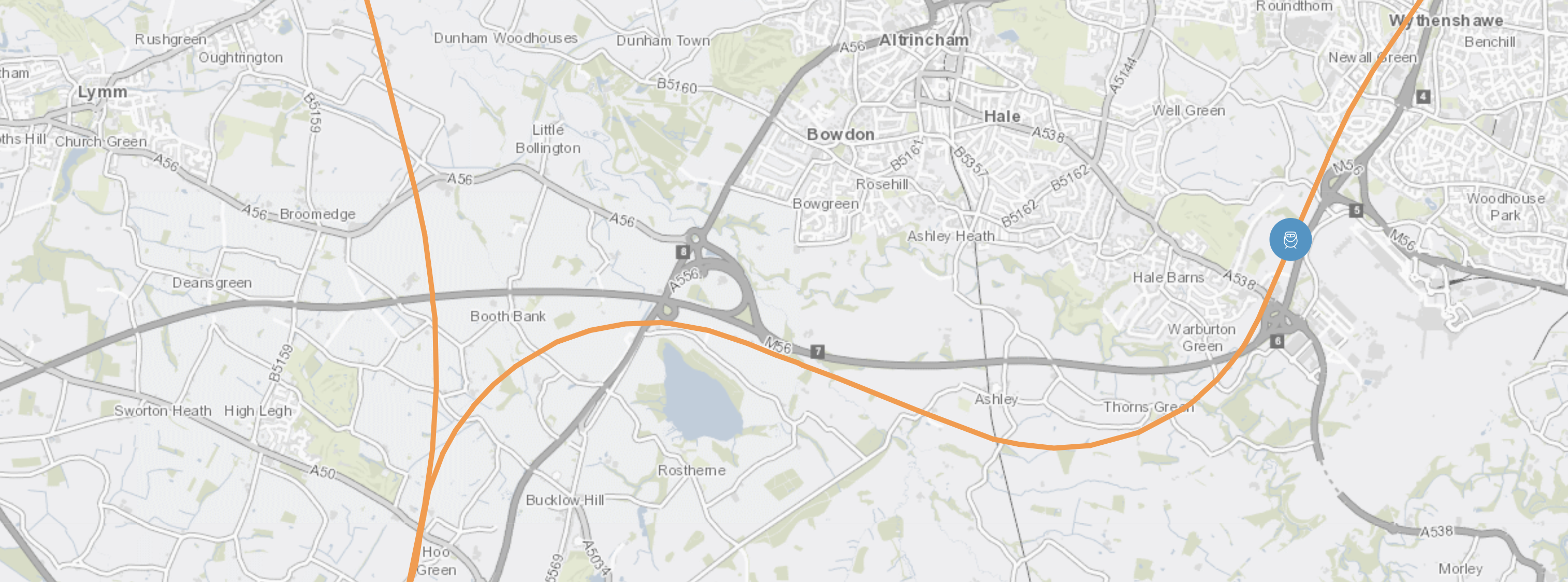
This map of High Speed Two where the Manchester Branch leaves the new High Speed Two route between Crewe and Wigan was captured from the interactive map on the High Speed Two web site.
Note.
- The Manchester Branch runs to the South of the M56,
- The large blue dot indicates Manchester Airport station.
- Wigan is to the North.
- Crewe is to the South.
- Manchester Piccadilly is to the North East.
I believe this junction will be turned into a full triangular junction, to connect Wigan directly to Manchester Airport and Manchester Piccadilly.
- Barrow, Blackburn, Blackpool, Preston and Windermere could all have high speed connections to Manchester Airport and Manchester Piccadilly. Trains could be shorter Classic-Compatible trains.
- A Manchester and Scotland service would take the same route.
Another pair of tracks could leave the junction to the West to create a direct route between Manchester Airport and Liverpool for Northern Powerhouse Rail, by sneaking along the M56.
Suppose extra services were as follows.
- Manchester and Barrow – 1 tph
- Manchester and Blackburn – 1 tph
- Manchester and Blackpool – 1 tph
- Manchester and Liverpool – 6 tph
- Manchester and Scotland – 1 tph
- Manchester and Windermere – 1 tph
The frequencies from the junction would be as follows.
- To and from Crewe – High Speed Two (Manchester) – 5 tph – High Speed Two (North) – 3 tph = 8 tph
- To and from Liverpool – Northern Powerhouse Rail – 6 tph = 6 tph
- To and from Manchester – High Speed Two – 5 tph – Northern Powerhouse Rail – 6 tph – Local – 4 tph – Scotland – 1 tph = 16 tph
- To and from Wigan – High Speed Two – 3 tph – Local – 4 tph – Scotland – 1 tph = 8 tph.
Only the Manchester Branch would be working hard.
The Liverpool Connection
I indicated that another pair of tracks would need to extend the Manchester Branch towards Liverpool in the West for Northern Powerhouse Rail.
- Would these tracks have a station at Warrington?
- Would there be a connection to allow services between Liverpool and the North and Scotland?
It might even be possible to design a Liverpool connection, that avoided using the current Liverpool Branch and increased the capacity and efficiency of all trains to Liverpool.
Capacity Of The Western Leg Between Wigan And Scotland
The sections between Crewe and Carlisle, will be running at the following frequencies.
- Wigan and Lancaster – 4 tph
- Lancaster and Carlisle – 3 tph
- Carlisle and Edinburgh – 2.5 tph
- Carlisle and Glasgow – 2.5 tph
Note.
- The unusual Scottish frequencies are caused by splitting and joining at Carlisle and alternate services to Edinburgh and Glasgow.
- Any local high speed services and a Scotland service from Manchester, will increase the frequencies.
Over this section the services will be running on an improved West Coast Main Line.
But in some cases the trains will be replacing current services, so the increase in total frequencies will be less than it first appears.
Avanti West Coast currently run the following Scottish services.
- One tph – London Euston and Glasgow via the most direct route.
- One tph – London Euston and alternately Edinburgh and Glasgow via Birmingham.
This means that effectively Glasgow has 1.5 tph and Edinburgh 0.5 tph from London Euston.
The capacity of the current eleven-car Class 390 trains is 145 First and 444 Standard Class seats, which compares closely with the 500-600 seats given in Wikipedia for High Speed Two trains. So the capacity of the two trains is not that different.
But High Speed Two will be running 2.5 tph Between London Euston and both Edinburgh and Glasgow.
I would expect, that Class 390 services to Scotland will be discontinued and replaced by High Speed Two services.
Capacity Of The Eastern Leg Between Birmingham And East Midlands Hub
The section is between Birmingham and East Midlands Hub, will be running 9 tph
As the maximum capacity of High Speed Two is laid down in the Phase One Act as 18 tph, this gives plenty of room for more trains.
But where will they come from?
Midlands Engine Rail is proposing a service between Birmingham Curzon Street and Nottingham.
- It will have a frequency of one tph.
- It will be run by High Speed Two Classic-Compatible trains.
- The journey will take 33 minutes.
- It will run on High Speed Two infrastructure between Birmingham Curzon Street and East Midlands Hub.
If High Speed Two has been designed with this service in mind, I doubt it will be a difficult service to setup.
- There might be enough capacity on High Speed Two for two tph on the route,
- It could possibly be extended to Lincoln.
It will also depend on the service timing being consistent with an efficient use of trains and platforms.
- Thirty-three minutes is not a good timing, as it means twenty-seven minutes wait in a platform to get a round trip time, that suits clock-face time-tabling.
- The current Lincoln and Nottingham service takes 56 minutes for 34 miles.
- LNER’s London Kings Cross and Lincoln service travels the 16 miles between Lincoln and Newark in 25 minutes.
- I estimate that after track improvements, with a single stop at Newark Castle station, that Nottingham and Lincoln could be achieved in several minutes under fifty minutes.
- This would enable a sub-ninety minute journey time between Birmingham Curzon Street and Lincoln, with enough time to properly turn the trains at both ends of the route.
- The three hour round trip would mean that an hourly service would need three trains.
This is probably just one of several efficient time-tabling possibilities.
Are there any other similar services?
The obvious one is surely Cambridge and Birmingham
- It would run via Peterborough, Grantham, Nottingham and East Midlands Hub.
- It would connect the three big science, engineering and medical centres in the Midlands and the East.
- It could be run by High Speed Two Classic-Compatible trains.
It might even be a replacement for CrossCountry’s Stansted Airport and Birmingham service.
Capacity Of The Eastern Leg Between East Midlands Hub And Sheffield
The section between East Midlands Hub and Sheffield, will be running 2 tph
As the maximum capacity of High Speed Two is laid down in the Phase One Act as 18 tph, this gives plenty of room for more trains.
But where will they come from?
This map of High Speed Two where the Sheffield Branch leaves the new High Speed Two route between East Midlands Hub and Leeds was captured from the interactive map on the High Speed Two web site.
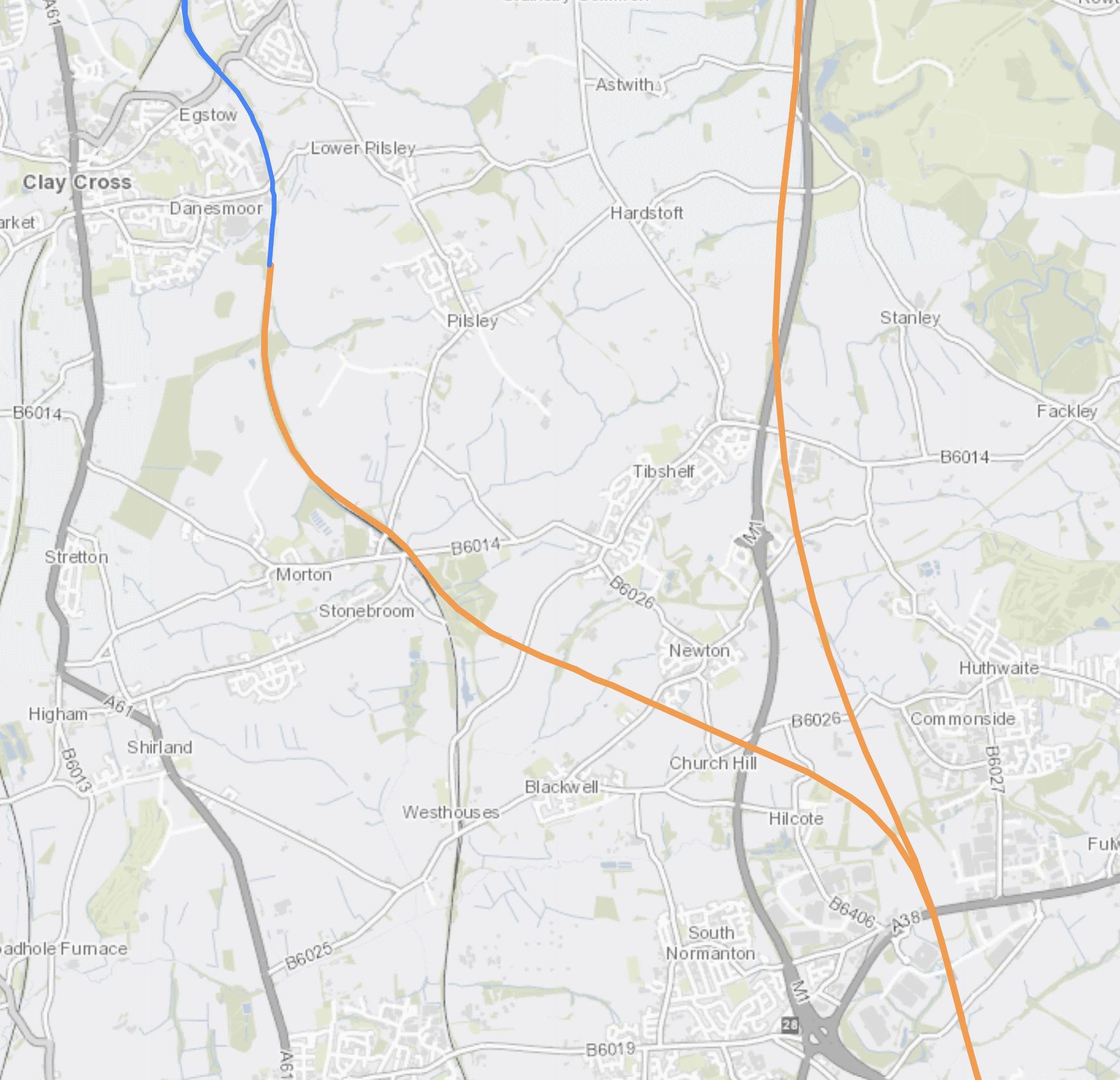
Note.
- The main route of High Speed Two between East Midlands Hub, is shown in orange and follows the route of the M1 Motorway, towards the East of the map.
- The Sheffield Branch is new track to Clay Cross North Junction, where is takes over the Midland Main Line to Sheffield, which is shown in blue.
- The line going South in the middle of the map is the Erewash Valley Line, which goes through Langley Mill and Ilkeston stations.
I suspect Clay Cross to Sheffield will be an electrified high speed line, with a maximum speed of at least 140 mph.
Could the Erewash Valley Line have been used as an alternative route to Sheffield?
This map of High Speed Two captured from their interactive map, shows the connection of High Speed Two and the Erewash Valley Line to East Midlands Hub.
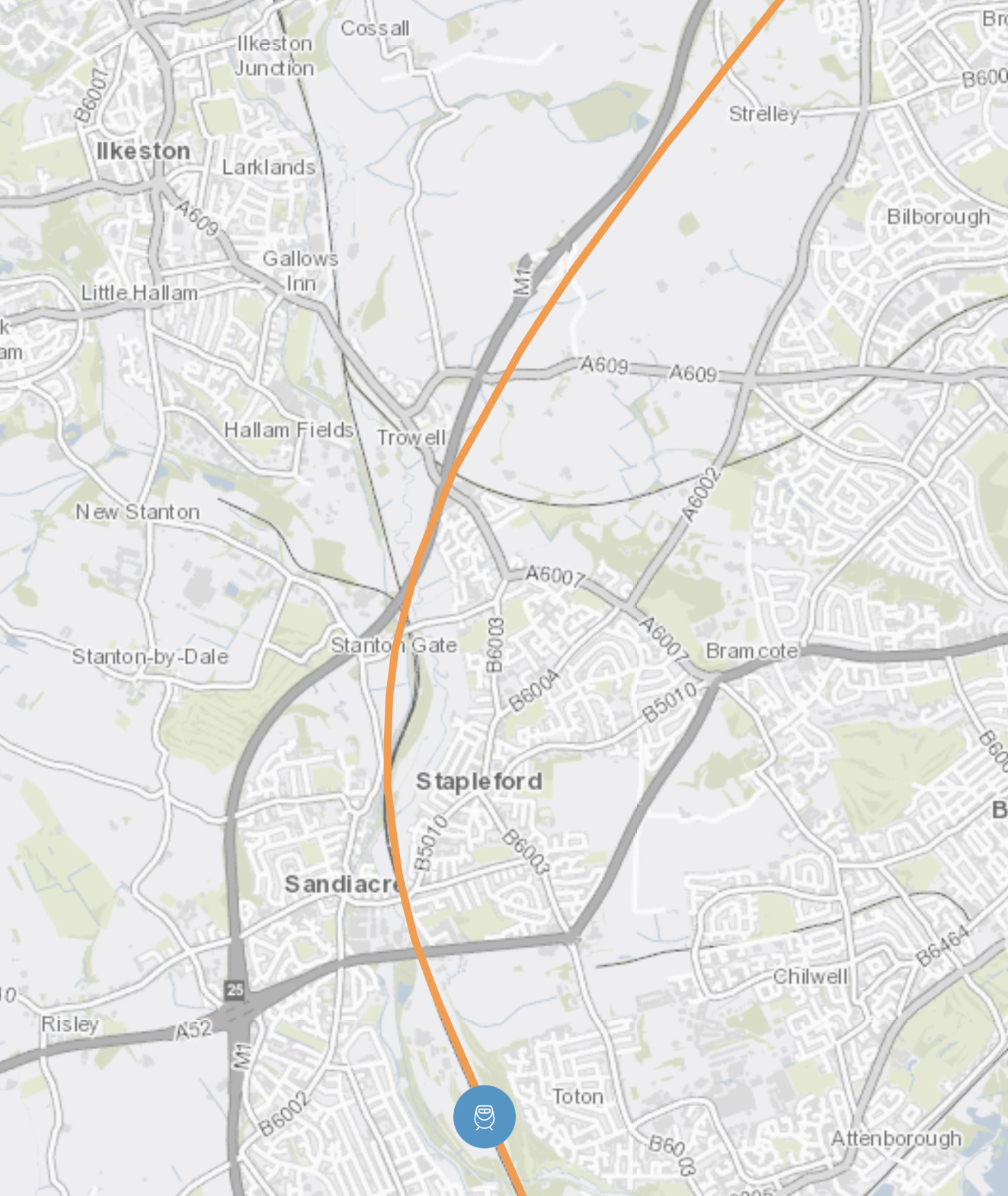
Note.
- East Midlands Hub is shown by the big blue dot.
- High Speed Two is shown in orange.
- The route to Leeds vaguely follows the M1 Motorway.
- The Erewash Valley Line goes North to the East of Ilkeston.
Would have been quicker and easier to electrify the Erewash Valley Line, as the High Speed Two route to Chesterfield and Sheffield?
- Network Rail updated the route a few years ago.
- It does not have the problems of electrification, through a World Heritage Site, as does the route through Derby.
- It could surely handle two tph, even if they were High Speed Two Classic Compatible trains.
- Sheffield will be just under ninety minutes from London by High Speed Two, as opposed to two hours now.
I suspect that it all comes down to saving a few minutes to Sheffield and the civic pride of having a High Speed Two connection.
So it looks like we’ll have the following capacity between East Midlands Hub and Sheffield.
- Between East Midlands Hub and Clay Cross North Junction, there will be the High Speed Two capacity of 18 tph.
- Between Clay Cross and Sheffield, there will probably be an upgraded capacity of perhaps 8-10 tph.
It seems a lot of capacity for just two tph.
Consider.
- High Speed Two is planning to run three tph between Birmingham Curzon Street and East Midlands Hub
- Midlands Rail Engine is planning to run one tph between Birmingham Curzon Street and East Midlands Hub
- Four tph is considered a Turn-Up-And-Go service, and could exist between Birmingham Curzon Street and East Midlands Hub.
- Sheffield and Leeds, both probably need a Turn-Up-And-Go service, to and from East Midlands Hub.
- Semi-fast services between Sheffield and East Midlands Hub, calling at Chesterfield, Alfreton, Langley Mill and Ilkeston would be possible, by using the Erewash Valley Line.
- The Maid Marian Line will join the Robin Hood Line in adding extra connectivity to East Midlands Hub Station.
- Leeds and East Midlands Hub could have a six tph service courtesy of High Speed Two and Midlands Rail Engine.
Using High Speed Two’s web site, the following times should be possible.
- Sheffield and East Midlands Hub – 27 minutes
- Sheffield and Birmingham Curzon Street – 47 minutes.
Both services allow time for an efficient service.
There are certainly many options to create a Turn-Up-And-Go service between Sheffield and East Midlands Hub and also improve connections to other locations across the area.
Capacity Of The Eastern Leg Between East Midlands Hub And Leeds
The section is between East Midlands Hub and Leeds, will be running 5 tph
High Speed Two between Midlands Hub and Leeds is a totally new high speed line.
- As the maximum capacity of High Speed Two is laid down in the Phase One Act as 18 tph, this gives plenty of room for more trains.
- The Southern section of the leg closely follows the M1 Motorway.
- Leeds, York and Newcastle will be 27, 36 and 93 minutes from East Midlands Hub, respectively.
This map of High Speed Two, which shows the route of the line in Yorkshire, was captured from the interactive map on the High Speed Two web site.
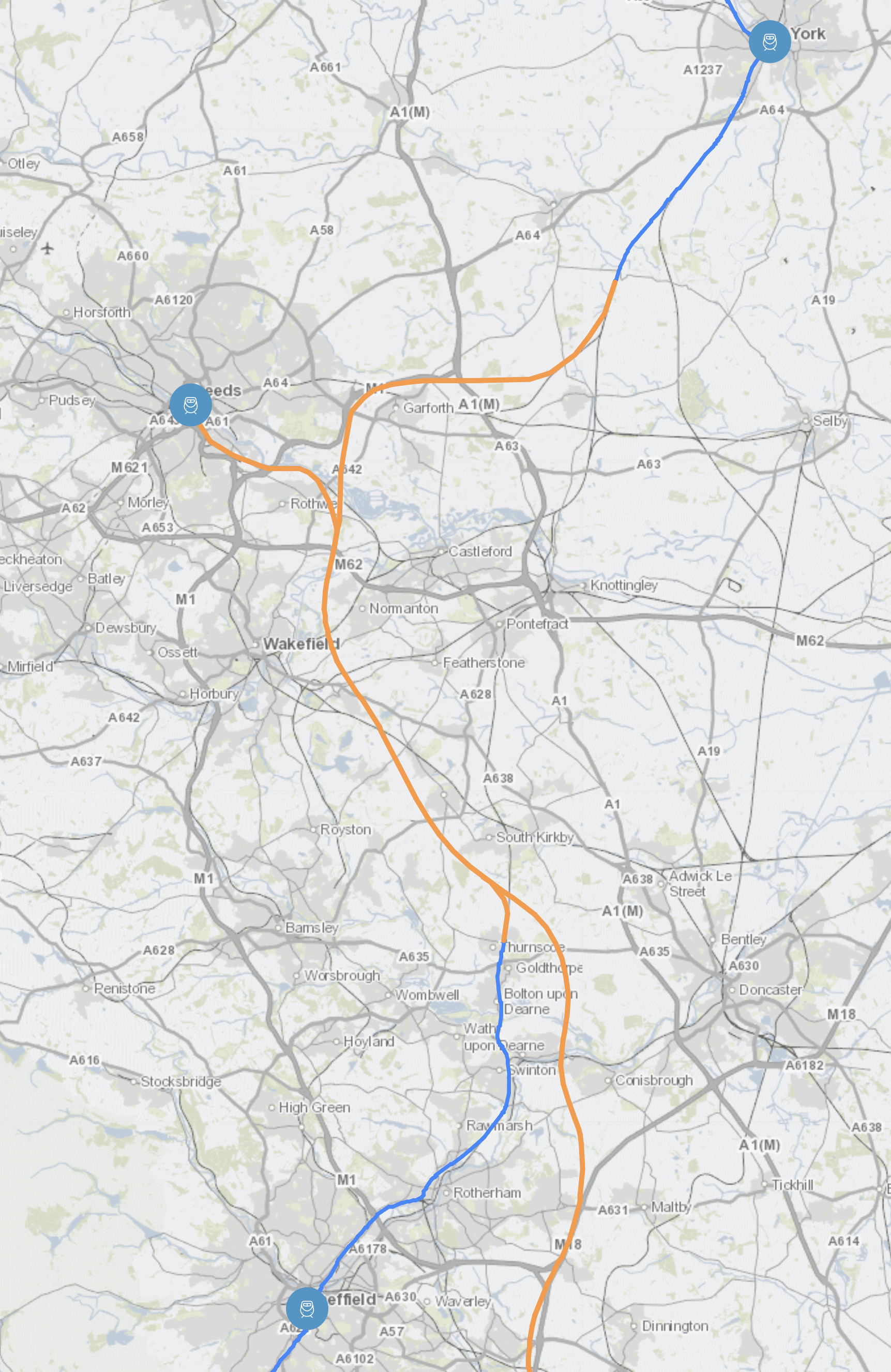
Note.
- Sheffield is marked by the blue dot in the South.
- Leeds is marked by the blue dot in the North West.
- York is marked by the blue dot in the North East.
- New routes are shown in orange.
- Upgraded routes are shown in blue.
The route seems to open up several possibilities for extra routes.
- Leeds and Sheffield will be used by Northern Powerhouse Rail and there will be four tph, taking 28 minutes.
- Leeds and Bedford via East Midlands Hub has been proposed by Midlands Rail Engine.
- Services between Sheffield and the North via York must be a possibility.
This map of High Speed Two, which shows the routes to the East of Leeds, was captured from High Speed Two’s interactive map.
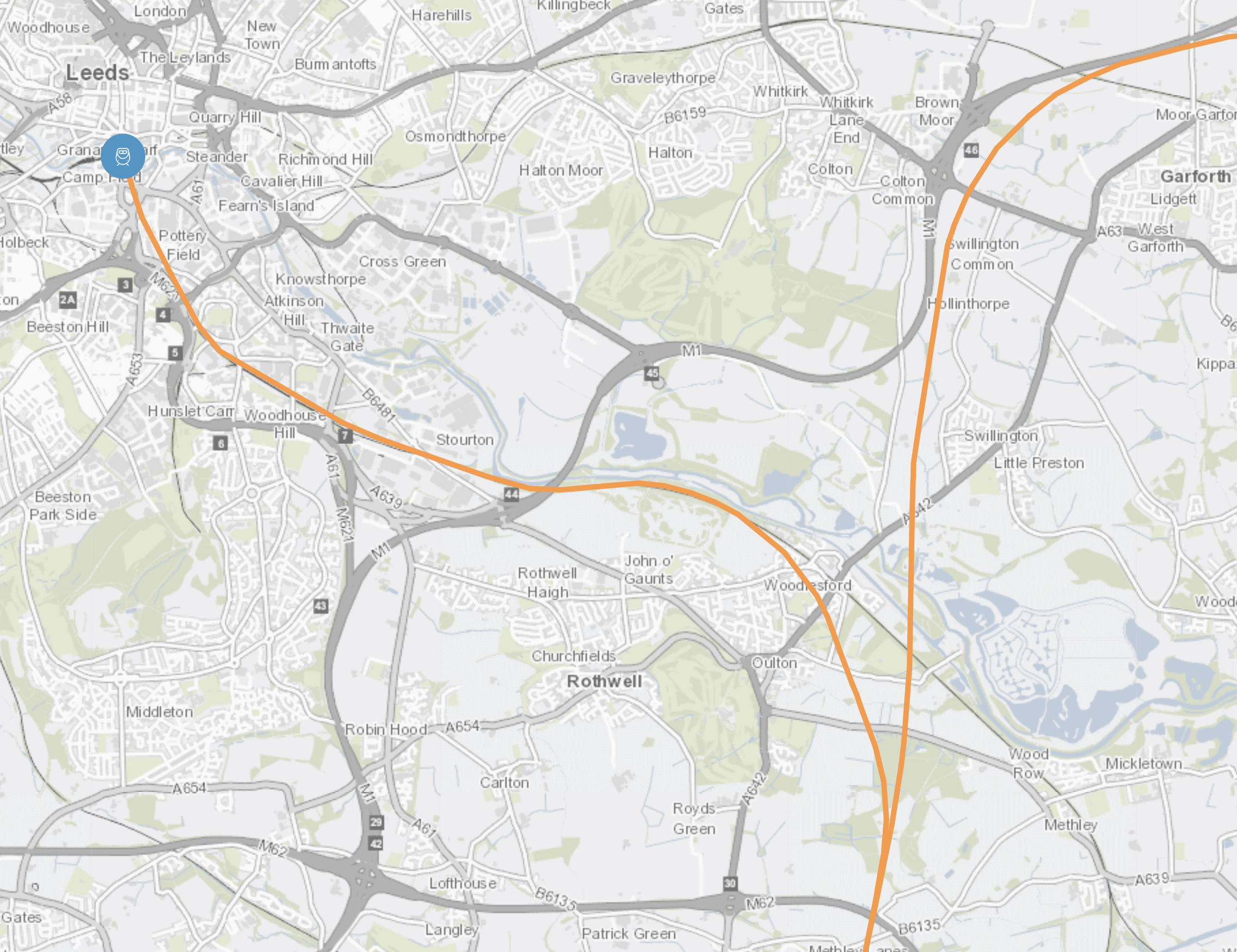
I think that two things might be missing.
- A full triangular junction would surely allow services between Leeds and the North via York.
- A high speed connection to Hull.
We shall see in the future.
Capacity Of The Eastern Leg Between York And Newcastle
The section between York and Newcastle, will be running at a frequency of 3 tph.
Over this section the services will be running on an improved East Coast Main Line.
Conclusion
I shall split the conclusions into various sections.
Route And Track Layout
I think there may be places, where the route and track layout might need to be improved.
- The Manchester Branch probably needs a triangular junction with the Western Leg of High Speed Two.
- How Liverpool is served by Northern Powerhouse Rail needs to be decided.
- The approach to Leeds probably needs a triangular junction with the Eastern Leg of High Speed Two.
- It is not clear how services will reach Hull.
Hopefully, these issues will become clear in the next year or so.
Capacity
The sections with the highest levels of capacity would appear to be the following.
- London Euston and Birmingham Interchange.
- The Manchester Branch
- The section shared with the East Coast Main Line between York and Newcastle.
- The section shared with the West Coast Main Line between Wigan and Scotland.
But on these sections extra trains can be run.
- Birmingham and North West England
- Birmingham and East Midlands Hub
- East Midlands Hub and Leeds
- East Midlands Hub and Sheffield
- East Midlands Hub and York
I can see, this capacity being filled by high speed local services, like those proposed by Midlands Rail Engine.
Rolling Stock
The only comment, I will make, is that there could be a need for a shorter Classic-Compatible train to work local services.
Crossrail’s Late-Running Bond Street Project Ready For Key Testing This Month
The title of this post, is the same as that of this article on Building.
This is the opening paragraph.
Bond Street station should be ready for the crucial next stage of testing by the end of the month.
At last the end of the tunnel seems to be in sight.
 The Anonymous Widower