Arriva’s Grand Central Applies For Extended Track Access Rights
The title of this post, is the same as that of this news item from Arriva.
These three bullet points, act as sub-headings.
- Grand Central to submit application to the rail regulator for extended track access up to 2038.
- Proposals for a new, greener fleet are outlined as part of the application.
- Application signals Arriva’s long-term commitment to UK rail.
These three paragraphs add more detail to the application.
Arriva Group’s UK open access train operating company, Grand Central, has today announced it is seeking to extend its existing track access rights until 2038, securing its services for the next 15 years and unlocking Arriva’s intentions to invest in new, state-of-the-art trains.
Grand Central has been operating services on the East Coast mainline since 2007 as an open access operator, which means it receives no government funding or subsidy. It directly links 15 destinations, including cities in Yorkshire and the North East with London’s Kings Cross.
The application represents a significant commitment to long-term services and supports its plans to expand services with improved connectivity and increased frequency, as outlined in a previous application, submitted to the Office of Rail and Road in May this year.
These are my observations and thoughts.
Grand Central’s Current Services
Grand Central currently runs two separate services.
- King’s Cross and Sunderland via Peterborough,York, Thirsk, Northallerton, Eaglescliffe and Hartlepool – six tpd
- King’s Cross and Bradford Interchange via Peterborough, Doncaster, Pontefract Monkhill, Wakefield Kirkgate, Mirfield, Brighouse, Halifax and Low Moor – four tpd
Note.
- tpd is trains per day.
- Weekend services are reduced.
- Peterborough is served by one train in each direction.
Grand Central have applied to run more services.
Distances Without Electrification On Current Services
Only the Northern ends of both routes are not electrified.
- King’s Cross and Sunderland – Longlands junction and Sunderland – 48.5 miles
- King’s Cross and Bradford Interchange – Doncaster and Bradford Interchange – 52.1 miles
Note.
- Going North, any train batteries could be charged on the East Coast Main Line.
- Before returning South, train batteries could need to be charged at the two terminals.
- Battery-electric trains would need infrastructure changes at the two terminals.
The two terminals; Bradford Interchange and Sunderland are not particular spacious.
These pictures show Bradford Interchange station.
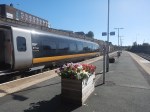
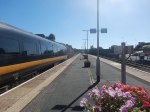

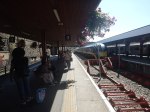

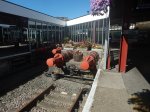
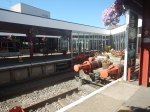
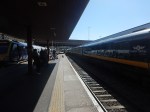
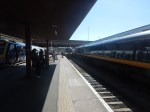



And these pictures show Sunderland station, which is underground.
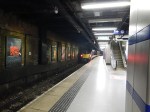
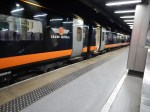
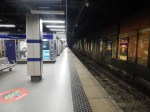

Putting even a short length of catenary to charge battery-electric trains might not be that easy at either station.
Grand Central’s New Trains
Arriva’s news item, gives these details on the new trains.
- Increased capacity: The new trains would feature approximately 20 per cent more seats than the current Class 180 units, providing additional capacity to meet growing passenger demand.
- Modernised fleet: The new Bi-Mode trains would replace the existing 24-year-old Class 180 units bringing new customer focussed features and a more comfortable experience for passengers.
- Greener services: The Bi-mode trains would cut carbon emissions and provide smoother journeys for passengers. They can operate on electric and non-electric tracks, so they can serve long into the future as track electrification gathers pace across the UK.
Note.
- A five-car Class 802 train has approximately twenty percent more seats than a four-car Class 180 train.
- Hull Trains, LNER, Lumo and TransPennine Express all run Hitachi Class 80x trains on the East Coast Main Line, which could ease operations, if all trains were similar.
- Bi-mode trains are specified. Grand Central will change mode once on each trip.
- LNER have specified CAF Tri-mode trains for their new fleet. Will these have an extra level of complication, that Grand Central don’t need?
I suspect that rand Central will opt for the Hitachi trains.
Using The Joint Line Between Peterborough and Doncaster via Lincoln
The diesel Class 180 trains can use this line, in times of incidents or engineering works.
Class 800 and Class 802 trains can also use this diversion, so it might be sensible to be able to use the line in time of trouble.
Chiltern Trains’ London And Birmingham Services
Both Arriva and Chiltern Trains are subsidiaries of Deutsche Bahn.
Currently, Chiltern run six-car rakes of Mark 3 coaches, with a Class 68 locomotive at one end and a driving van trailer at the other, between London and Birmingham.
They are nice trains, but they are not zero-carbon.
Could these be replaced by an eight-car Class 802 train?
- Chiltern have said that they are looking for new trains.
- An eight-car Class 802 train could be a similar length to the current trains.
- London Marylebone and Birmingham Moor Street is only 111.7 miles.
- The Hitachi trains would offer an increase in capacity.
- They might save a few minutes.
But the trains will still be not zero-carbon.
This page on the Hitachi web site is entitled Intercity Battery Trains.
The trains for London Marylebone and Birmingham Moor Street would be built as conventional eight-car Hitachi trains, with perhaps four diesel engines.
- Over the years, the Chiltern Main Line would be partially electrified, starting perhaps in the middle around Banbury.
- One by one, the diesel engines would be replaced by batteries, so that the trains could run on battery power between the electrified sections.
- Eventually, the London Marylebone and Birmingham Moor Street service would be fully battery-electric.
- As Kidderminster is only twenty miles past Birmingham Moor Street, there must surely be possibility for extension of the service.
I believe that Hitachi’s Intercity Battery Train, is going to play a large part in the decarbonisation of UK railways.
Chiltern Trains’ London And Oxford Services
If eight-car Hitachi Intercity Battery Trains can handle London Marylebone and Birmingham Moor Street services, then I am fairly sure that five-car Hitachi Intercity Battery Trains could handle London Marylebone and Oxford services.
They would also have more capacity, than the current trains, that serve Oxford and Bicester Village.
Conclusion
It may be advantageous for Deutsche Bahn to put the two orders together.
Width And Height Of A Stadler Regio Shuttle RS1 Compared To UK Multiple Units
I am building this table, so that I can get a feel for where Stadler RS ZERO trains can go on the UK network.
Height Of The Regio Shuttle RS1
This is given as 3.70 metres in Wikipedia.
Other figures given in Wikipedia are.
- Class 150 – 3.774 metres
- Class 156 – 3.805 metres
- Class 158 – 3.73 metres
- Class 165 – 3.79 metres
- Class 185 – 3.71 metres
- Class 195 – 3.85 metres
- Class 378 – 3.774 metres
- Class 345 – 3.760 metres
- Class 399 – 3.720 metres
- Class 710 – 3.760 metres
- Class 745 – 3.915 metres
- Class 755 – 3.915 metres
Surprisingly, the Regio Shuttle RS1 is the shortest train!
But this means, that if the Regio Shuttle RS1 can get under all the bridges on a route, then all the other trains can.
Width Of The Regio Shuttle RS1
This is given as 2.90 metres in Wikipedia.
Other figures given in Wikipedia are.
- Class 150 – 2.816 metres
- Class 156 – 2.730 metres
- Class 158 – 2.700 metres
- Class 165 – 2.810 metres
- Class 185 – 2.673 metres
- Class 195 – 2.772 metres
- Class 378 – 2.800 metres
- Class 345 – 2.772 metres
- Class 399 – 2.650 metres
- Class 710 – 2.772 metres
- Class 745 – 3.720 metres
- Class 755 – 3.720 metres
Surprisingly, the Regio Shuttle RS1 is the widest train!
But this means, that if the Regio Shuttle RS1 can squeeze between the narrowest infrastructure on a route, then all the other trains can.
Conclusion
Does this mean, that once a Regio Shuttle RS1 can run on a route, lots of other trains can?
Itb looks to me, like a clever example of cunning Swiss engineering.
Could Stadler RS ZERO Be Used For The West London Orbital Railway?
In Stadler Presents A World First In Berlin, I talked about the launch of the Stadler RS ZERO.
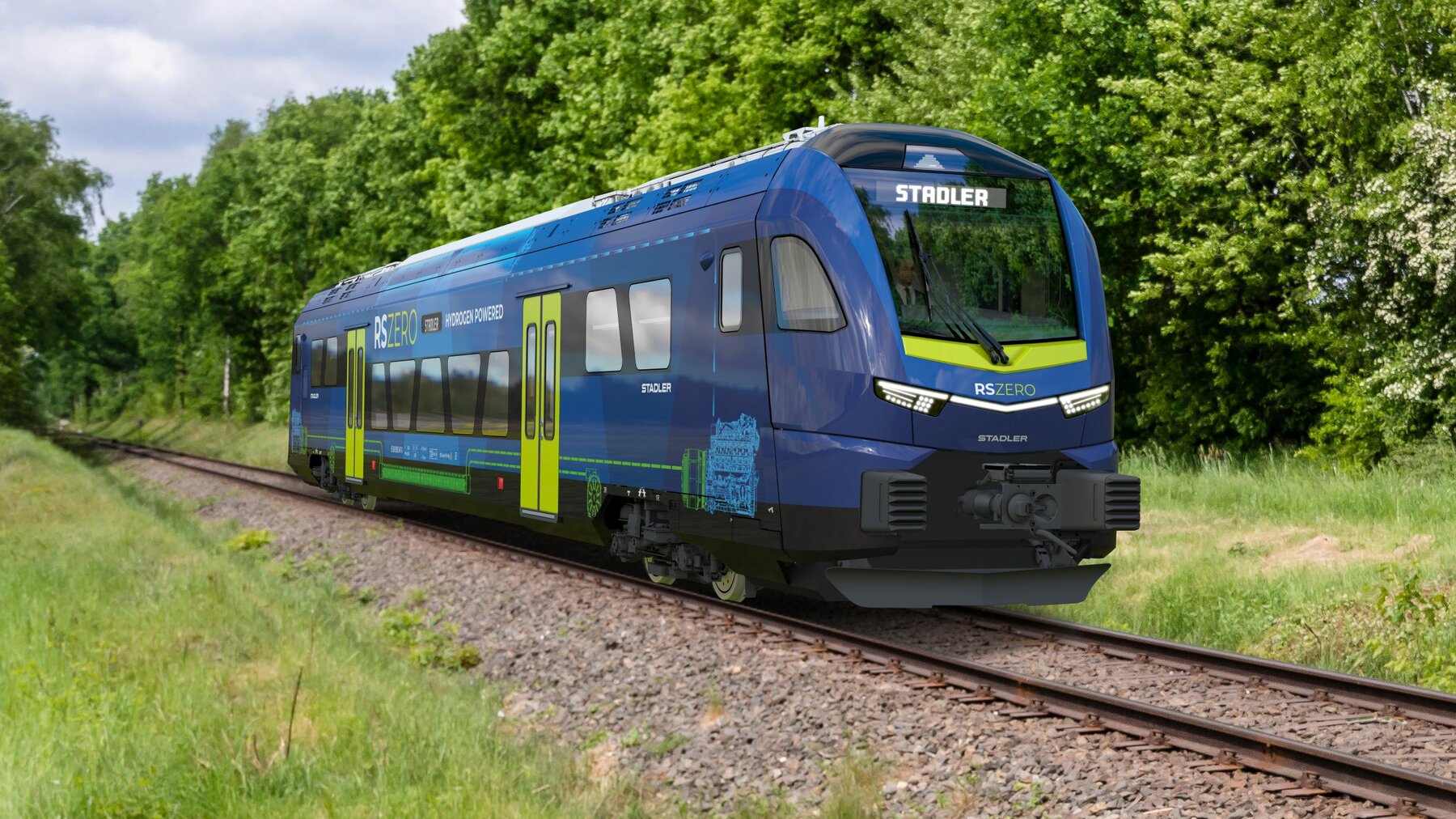
I wonder, if these newly-launched trains, would be ideal for the West London Orbital Railway?
- They will be zero-carbon and will not be emitting fumes or carbon dioxide.
- Stadler could size the trains to UK platform height, just as they did the Flirts for Greater Anglia.
- The two routes are only eleven miles long with 25 KVAC electrification at the Midland Main Line end, so the battery-electric version could be ideal.
- They are likely to be extremely quiet, as battery-electric trains always seem to be.
This picture of the earlier Stadler Regio-Shuttle RS1 from Chemnitz, shows that it should be possible to have almost level boarding.
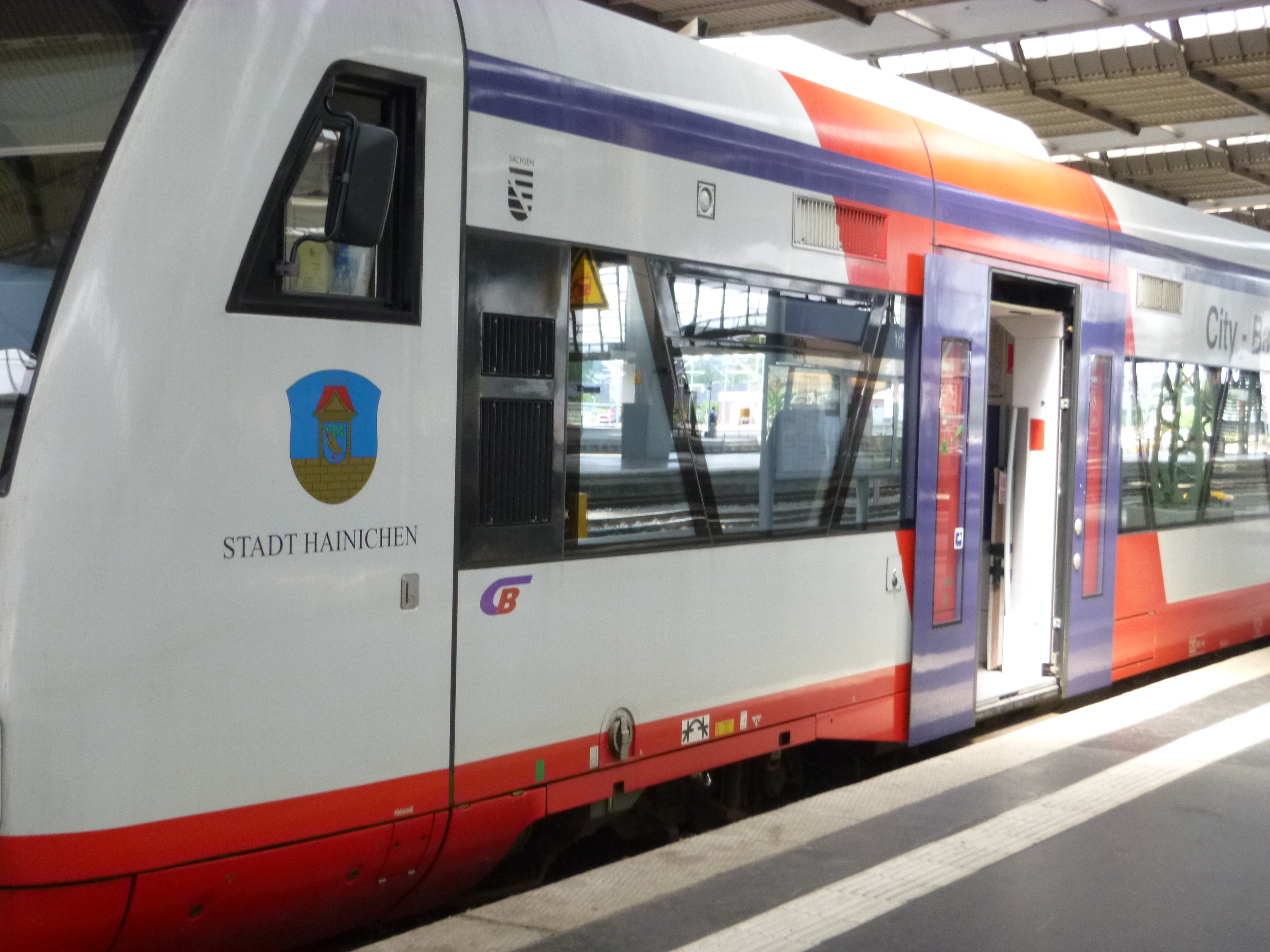
At least at new stations, where the platform height could be built for the RS ZERO.
The new stations along the Dudding Hill Line could be very simple indeed.
Conclusion
I feel that a fleet of RS ZEROs could convert the Dudding Hill Line into an efficient, step-fee and frequent addition to London’s passenger railways.
Stadler Presents A World First In Berlin
The title of this post, is the same as that of this press release from Stadler.
These are the first two paragraphs.
With the RS ZERO, the rail vehicle manufacturer is presenting the successor to the successful Regio-Shuttle RS1 model. There is a choice of two modern and environmentally friendly drive technologies: Hydrogen and battery. Both will enable CO2 emission-free operation of secondary lines in the future.
Stadler today unveiled the prototype of the new RS ZERO, the innovative successor to the successful RS1 Regio-Shuttle. The Regio-Shuttle has been one of the most popular vehicles in German regional rail transport for 28 years, with around 500 RS1 vehicles currently in operation in Germany and the Czech Republic. Stadler is building on this proven technology and integrating state-of-the-art, environmentally friendly drive systems. The RS ZERO is optionally available with a hydrogen and/or battery drive and thus not only sets new standards for environmentally friendly rail transport, but also presents a world first.
These pictures from Chemnitz Trams And The Chemnitz Model, show the Regio-Shuttle RS1.
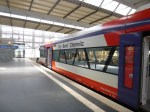
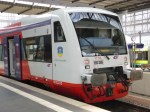
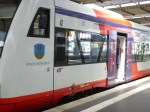
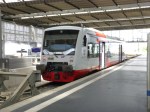
Note.
- The Regio-Shuttles can run as up to seven car trains.
- These Regio-Shuttles are electro-diesel.
- The distinctive diagonal windows.
- They can carry 170 passengers at 75 mph.
- They can run as train-trams using the Chemnitz model on compatible tram networks.
The Regio-Shuttle Wikipedia entry gives more details.
This image from the press release shows the prototype RS ZERO.
It looks very similar to my pictures from Chemnitz.
I have a few thoughts.
Comparison To A Class 150 Train
A Class 150 train can carry up to 149 seated passengers at 75 mph, which is similar to the RS ZERO.
As Stadler have built trains for Greater Anglia, Merseyrail and the Glasgow Subway, I believe that Stadler could build an RS ZERO, that would fit the UK loading gauge.
In What Train Is This?, I show the standard of interior, that can be achieved by refurbishing a Class 150 train, but unlike the RS ZERO, the train won’t be zero-carbon.
Does The RS ZERO Have A Toilet?
This is a paragraph from the press release.
The prototype of the RS ZERO presented today in Berlin is a one-car vehicle with hydrogen drive. Stadler is demonstrating the numerous design options with a multi-purpose area equipped for carrying bicycles, pushchairs and bulky luggage, lounge and comfort zones, standard and privacy seats, a wheelchair space, WC and a train office.
The train appears to be able to have what an operator might need.
What Will Be The Range Of An RS ZERO On Hydrogen?
I suspect, Stadler will provide a train, that will handle the route.
Conclusion
This could be a very handy train to decarbonise branch and secondary lines in the UK.
Heathrow Rail Link Withdrawn, But MP Vows To Carry On
The title of this post, is the same as that as this article on Rail Magazine.
These are the first three paragraphs.
Hopes for a rail link between the Great Western Main Line and Heathrow Airport appear to have finally ended.
The scheme had been on hold since 2021, when Network Rail staff working on it were transferred to other tasks.
At the time, NR called it a “controlled pause”, but a pre-application process has now been withdrawn, according to the Planning Inspectorate website.
Currently, the two main routes to Heathrow from the Great Western Main Line are.
- Continue to Paddington and get either the Heathrow Express or the Elizabeth Line to the airport.
- Use the RailAir bus from Reading to the airport.
Both routes probably encourage passengers and staff to drive to the airport.
I have my thoughts.
Tan Dhesi
The article says this about this MP’s support for the rail link.
However, Slough MP Tan Dhesi, a former shadow transport minister, believes the link still has wide support as it would bring 20% of the UK population within one interchange of its busiest airport.
Dhesi led an All-Party Parliamentary Group for the Western Rail Link to Heathrow before the General Election. He now plans to re-launch the group, as some previous members have since lost their seats.
He has a point, but is this because a large number of his constituents work at Heathrow.
Would an improved local bus service, at least partially serve the need?
RailAir Between Reading And Heathrow
This appears to have two drawbacks.
- It only runs every thirty minutes.
- It doesn’t serve Terminal Four.
But at least it runs modern coaches, not buses.
I would increase the frequency to perhaps every twenty or even fifteen minutes, serve Terminal Four and perhaps in the future, switch to Wrightbus’s new hydrogen coaches, which I wrote about in Wrightbus Hydrogen Coach Planned For 2026.
I feel that switching to hydrogen power, may attract more passengers to the route.
Obviously, I feel the other RailAir routes from Guildford, Watford and Woking to Heathrow would also be updated.
Improving The Rail Route Between Reading And Heathrow Via Hayes And Harlington Station
Hayes and Harlington station has the following frequencies to Heathrow and Reading, in trains per hour (tph)
- Heathrow Terminals Two & Three – 6 tph
- Heathrow Terminal Four – 4 tph
- Heathrow Terminal Five – 2 tph
- Maidenhead – 2 tph
- Reading – 2 tph
More trains between Reading and Hayes and Harlington might encourage more passengers to use the trains.
Could Hayes And Harlington Station Become A Transport Hub For Heathrow?
This Google Map shows Hayes and Harlington station.
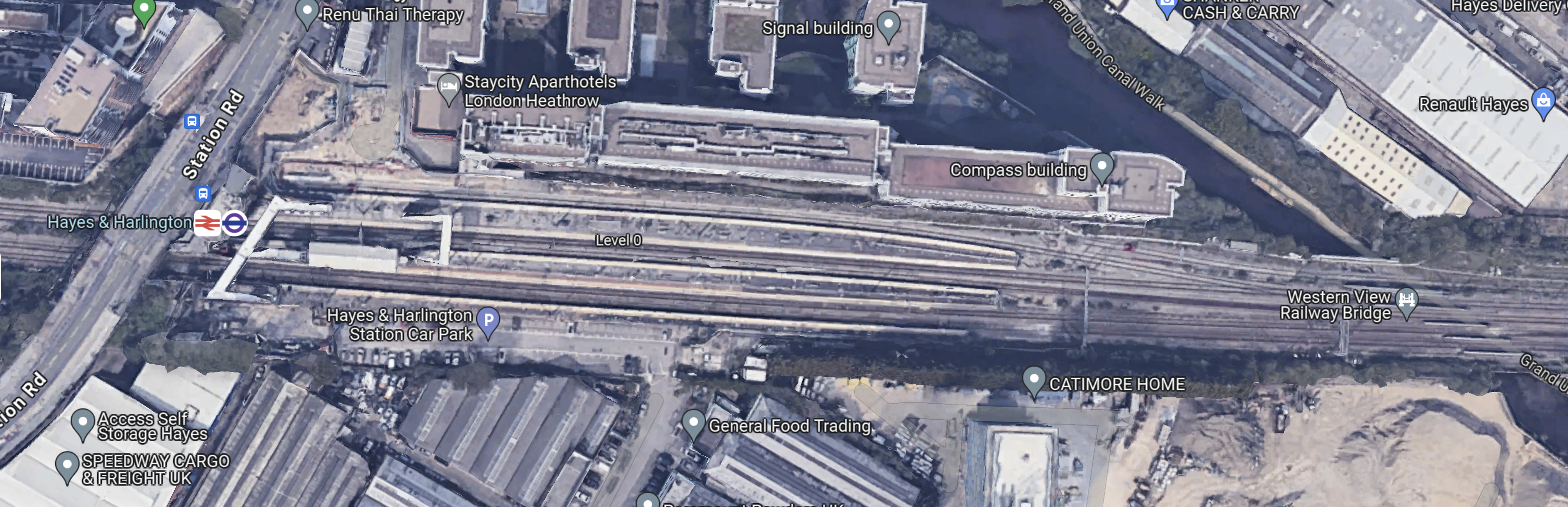
Note.
- It has platforms on all four tracks of the Great Western Main Line.
- There is a London-facing bay platform to terminate Elizabeth Line trains, if needed.
- The land to the North of the station has been developed.
- There is land to the South of the station that could be developed.
Could the space above the tracks, with some of the land to the South of the station be developed into a transport hub for Heathrow?
Heathrow Southern Railway
I prefer the Heathrow Southern Railway, which is a comprehensive, privately funded scheme.
Observing Trains At Stafford Station
I’m fairly certain, that I’ve only been to Stafford once in my life, in the past. That would be in 1968, when I went to English Electric in the town, when I was looking for a job on leaving Liverpool University.
In the end, my first job on leaving was at ICI in Runcorn.
As Stafford station, is on the West Coast Main Line, I’ve been through the station many times, on my way to Liverpool, Manchester, Preston, Scotland and other places in the North West of England.
I travelled North to Stafford in one of London Northwestern’s Class 350 trains, which definitely had ironing board seats. Some of these trains are being replaced with new Class 730 trains.
Stafford Station
This OpenRailwayMap shows the layout of platforms at the station.
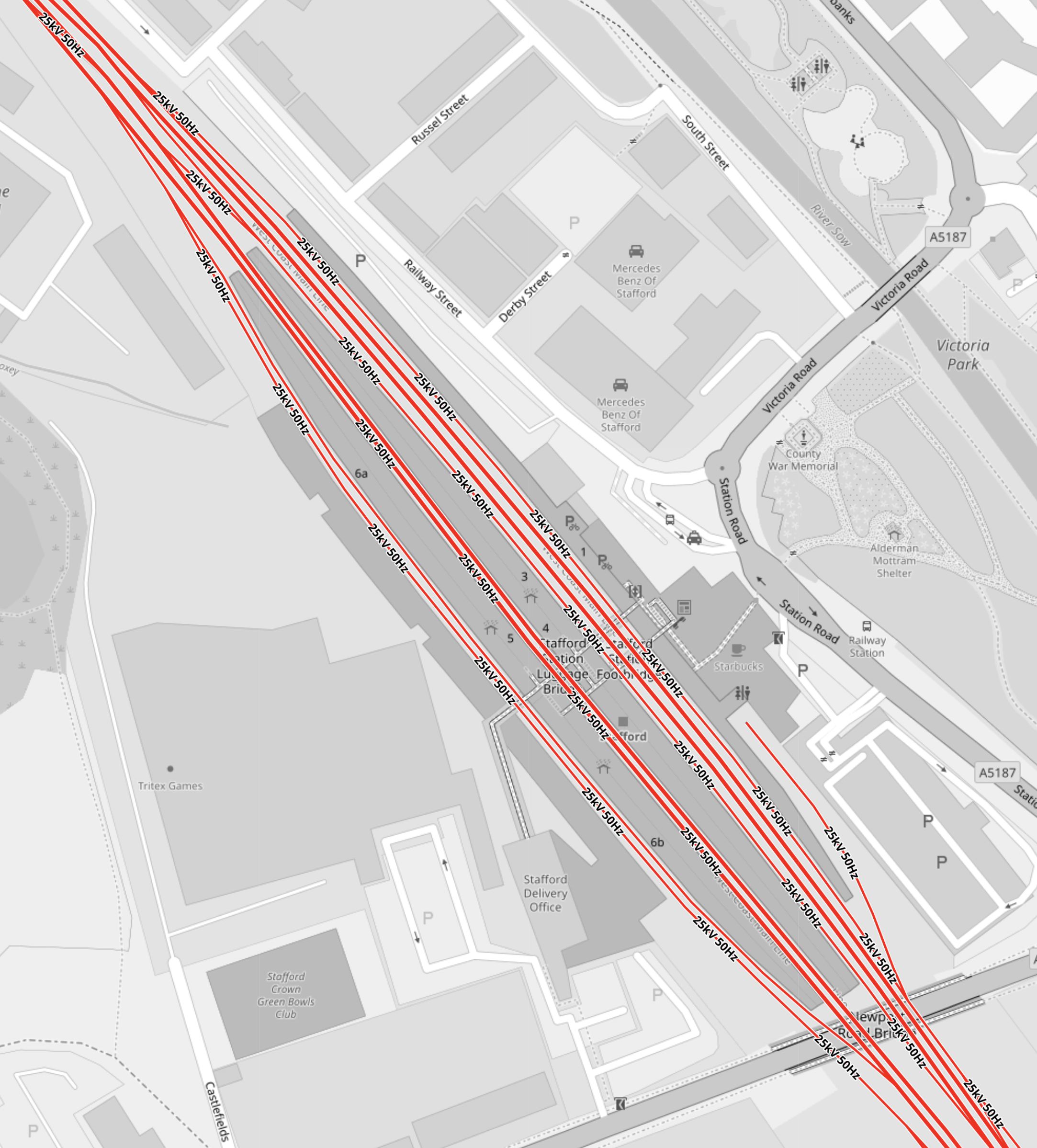
Note.
- Platforms are numbered starting with Platform 1 in the East.
- There are five through tracks for passenger trains and a double-track goods loop.
- All tracks are electrified and bi-directional.
- The platforms are three hundred metres long, but I feel they could be lengthened to take the 400 metre long High Speed Two trains.
- The platforms are certainly long enough for pairs of 200 metre long High Speed Two trains, to split and join at the station.
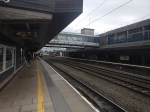
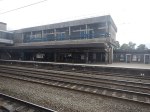
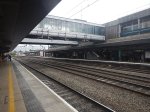
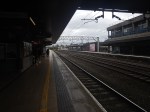
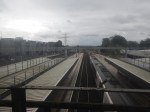
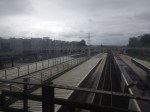
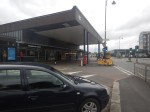
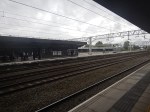
These pictures show Stafford station.
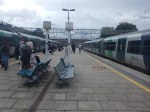
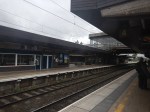

Note.
- The station was built of concrete in the early 1960s.
- It has a unique feature, in that there is a waiting area above the tracks, so kids of all ages can watch the trains speed through.
- It has been improved several times in recent years.
- It is step-free with several lifts.
I feel, the station could be converted into a major High Speed Two hub station.
High Speed Two Services
This graphic shows High Speed Two services after Phase 2b is completed.
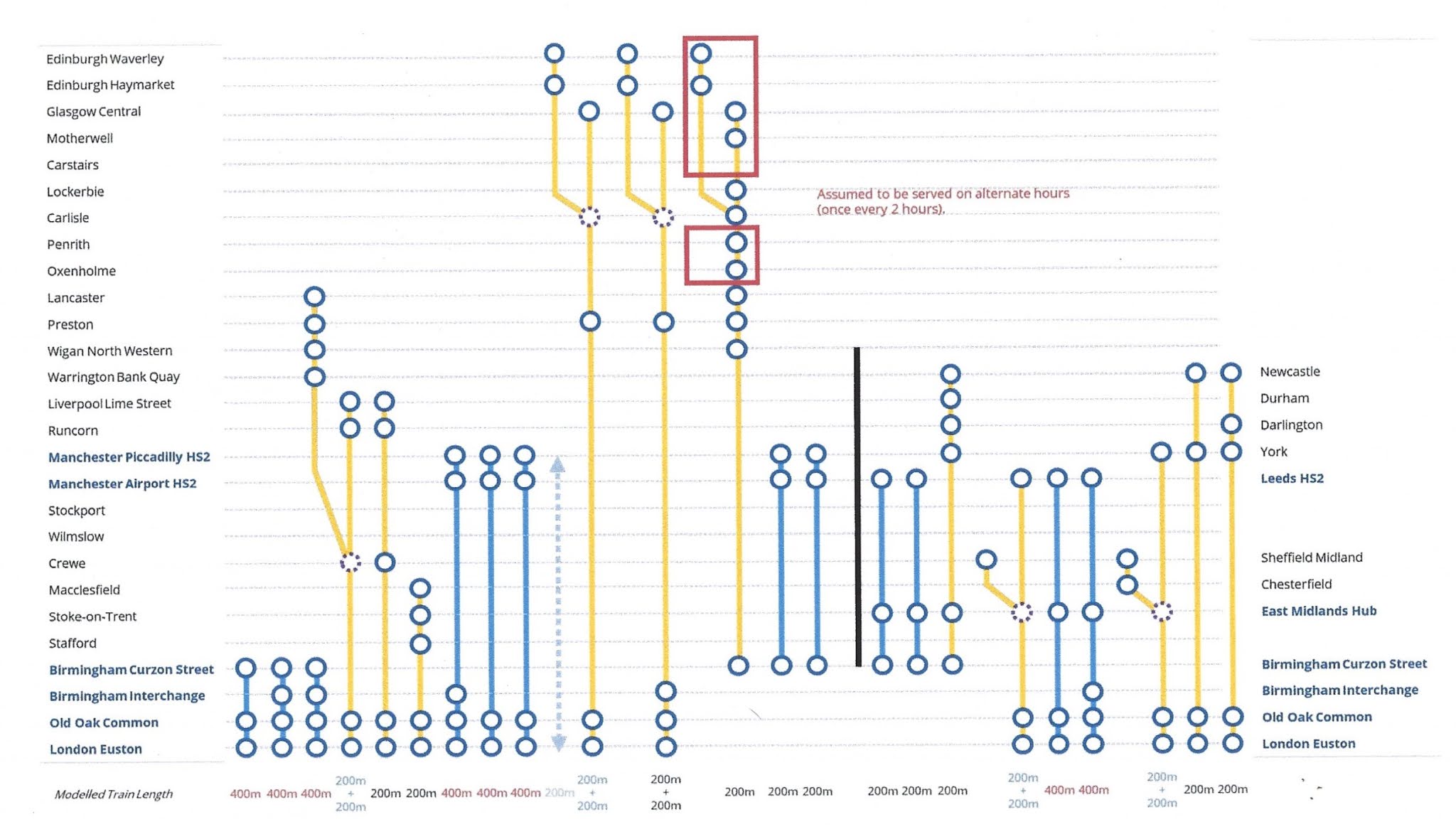
Note.
- Everything to the right of the vertical black line has now been cancelled
- Services shown in blue are run by High Speed Two Full Size trains.
- Services shown in yellow are run by High Speed Two Classic-Compatible trains.
- Each of these trains will have a frequency of one train per hour (tph).
These High Speed Two trains pass through Stafford.
- London and Lancaster/Liverpool Lime Street – Split/Join at Crewe
- London and Crewe/Runcorn/Liverpool Lime Street
- London and Stafford/Stoke-on-Trent/Macclesfield
- London and Manchester Airport/Piccadilly
- London and Manchester Airport/Piccadilly
- London and Manchester Airport/Piccadilly
- London and Edinburgh/Glasgow – Split/Join at Carlisle
- London and Edinburgh/Glasgow – Split/Join at Carlisle
- Birmingham and Edinburgh/Glasgow
- Birmingham and Manchester Airport/Piccadilly
- Birmingham and Manchester Airport/Piccadilly
In addition space will need to be found for these other services.
- Avanti – London and Chester/North Wales
- Avanti – London and Blackpool
- Freight – London and Liverpool/Manchester and Scotland
That gives a total of at least fourteen tph through Stafford station or one every 257 seconds.
Between Stafford and Crewe, with the completion of the flyover at Norton Bridge, there is effectively four tracks all the way, so this should give enough capacity to allow fourteen tph between Stafford and Crewe.
Between Stafford and Handsacre junction, where High Speed Two will join the Trent Valley Line about half the route is four-track with the rest being just two-track.
Will the two-track section be able to handle fourteen tph? I suspect it will, especially, as it is sandwiched between two four-track sections.
These are my thoughts about making the most of capacity through Stafford station.
Could Pairs Of High Speed Two Trains, Split And Join At Stafford?
Stafford station has 300 metre long platforms and pairs of High Speed Two Trains are 400 metres long.
Looking at maps and pictures of Stafford station, I suspect that lengthening the platforms at Stafford would be possible.
In the provisional High Speed Two service diagram, that I displayed earlier, these are two services.
- London and Crewe/Runcorn/Liverpool Lime Street
- London and Stafford/Stoke-on-Trent/Macclesfield
These could be run as a pair of trains between London and Stafford.
One advantage of running the two services as a pair, is that it would reduce the number of trains between Stafford and Handsacre junction by one, which might help the scheduling of trains through the double-track section, of the Trent Valley Line.
Fitting In The London and Chester/North Wales Services
Consider.
- These important services will soon be run by five-car Class 805 trains.
- The trains are diesel-electric.
- A pair would be 260 m long.
- There are ten trains per day (tpd) on the route.
The service has a few problems.
- It takes up a path between Crewe and Handsacre junction via Stafford, where train paths are at a premium.
- It is not zero-carbon.
- If London and Holyhead times were reduced, it would probably attract more passengers to the route.
As there are plenty of spare paths on High Speed Two, due to the cancellation of the Eastern leg, the easiest way to speed up the service would be to use High Speed Two between Handsacre junction and London.
200 metre long High Speed Two Classic-Compatible trains could be used, but this would need one of the following.
Electrification between Crewe and Holyhead. Although this was promised by the last government, I suspect the antis will stop it.
Partial electrification between Crewe and Holyhead. As Crewe and Holyhead is only 105.5 miles, I suspect a creditable scheme to use battery-electric trains could be developed. These trains could be useful in opening up High Speed Two to other destinations.
Could Other Services Piggy-Back On London and Chester/North Wales Services?
The London and Chester/North Wales services would all be run by 200 metre long High Speed Two trains.
There would be no reason, why on the London end of the journey, they could be paired with another High Speed Two train to and from another destination.
- They could split and join with a Blackpool service at Crewe.
- They could split and join with a Barrow service at Crewe.
- They could split and join with a second Stoke-on-Trent/Macclesfield service at Stafford.
Services like these, would improve the coverage of High Speed Two.
As with the joining of the Liverpool Lime Street and Macclesfield services, the pairing of trains reduces the number of paths needed on the double-track section of the Trent Valley Line to the South of Stafford.
Other Splitting And Joining At Stafford
It may be possible to arrange other splitting and joining at Stafford.
By rearranging the Manchester and/or the Scottish services, it might be possible to reduce the number of trains, through the double-track section of the Trent Valley Line.
There are certainly several possibilities.
Conclusion
Stafford station could be crucial, in making High Speed Two Lite feasible.
SaxaVord ‘A Real Spaceport Now’ After First Rocket Explosion
The title of this post, is the same as that of the title of this article on The Times.
This is the sub-heading.
Despite the disappointment of last Monday’s fire engineers remain confident that the Unst site is ready for launch
These are the first two paragraphs.
Nothing could look more ominous for the European space industry than the tower of flame lighting up the skies over Shetland’s SaxaVord spaceport when a prototype engine suddenly and spectacularly caught fire on the launchpad last week.
The blaze was certainly “a nightmare” for the engineers of Rocket Factory Augsburg (RFA), the German company that hoped to conduct its first vertical rocket launch this year.
These are my thoughts and some from the article.
- I can remember a headline of Ike’s Phutnik, in a tabloid, when the United States tried to launch their first satellite.
- The safety systems seem to have worked well and no-one was hurt.
- The Chief Operating Officer of Rocket Factory Augsburg, still seems to have the ambition to make the project succeed.
- The operators are confident that SaxaVord will be ready for the next trials, whenever they are required.
- There is interest from Malaysia, to launch earth observation satellites.
- Scotland also offers other opportunities to southeast Asian tech businesses, as there are no launch sites in the region.
But most importantly, SaxaVord is generating interest from a wide range of users, as this paragraph indicates.
Others have already decided. SaxaVord has struck launch agreements with Lockheed Martin, the US aerospace giant and the German company HyImpulse as well as the UK’s Skyrora. Another four deals with international satellite companies are said to be in the offing.
If an established company were to launch a successful satellite, it could make all the difference to SaxaVord.
Conclusion
These are the last two paragraphs of the article.
Interest on this global scale enables the Scottish space pioneers to shrug off Monday’s blaze and the bad publicity it entailed. For anyone thinking the fire was bad news, emails from colleagues in the US told an altogether different story.
“You’re a real spaceport now,” read one message to a Shetland engineer. “You can’t call yourself a spaceport until you’ve had a rocket blow up!”
I have been to a party at NASA in Houston and they wouldn’t have been as successful, as they have, if they gave up on a failure. They try, try and try again.
Spotlight On The IVECO E-WAY H2: Less Weight, 15% More Passenger Capacity
The title of this post, is the same as that of this article on Sustainable Bus.
This is the sub-heading.
Up to seven time less batteries than a BEV bus (one module instead of 7), with 15% more passengers. These are the specifications mostly stressed by IVECO BUS when outlining the features of IVECO BUS E-WAY H2, presented at Busworld 2023 in Brussels. The bus model derives directly from the E-WAY BEV bus model
Note.
- The hydrogen fuel cell technology is from Hyundai.
- The bus is designed to be lighter in weight, which increases passenger capacity from 93 to 111 and gives an enhanced range.
- The driveline is from Accelera by Cummins, with a Siemens electric motor.
- IVECO provide the front axle and ZF the rear.
- Surprisingly, the bus is assembled from stainless steel panels, onto a steel floor.
It strikes me, that if the late great Colin Chapman had designed a bus, it would follow some of IVECO’s design.
Conclusion
This bus could set the standard for hydrogen-powered buses.
I particularly liked the saving in lithium compared to an electric bus.
City Airport May Help Others To Take Flight
The title of this post, is the same as that of this article on The Times.
This is the sub-heading.
The government’s decision to lift the cap on permitted passengers at London City airport is a compromise that could be a template for future growth
These are the first two paragraphs.
Planning decisions always upset someone. Still, credit to housing secretary Angela Rayner and the transport supremo Louise Haigh for annoying all sides with one of the first from the new Labour government: allowing London City airport to lift its cap on permitted passengers a year to nine million from the present 6.5 million.
Their verdict hacked off Newham council, which has long opposed the airport’s expansion, leaving it “deeply concerned” over the noise impact on local residents. It angered environmental campaigners, with Greenpeace saying it’d “undermine the UK’s climate leadership”. And it even “disappointed” the airport’s boss, Alison FitzGerald, who wanted an end to the 24-hour flight curfew from 12.30pm on Saturday but failed to get it pushed out to 6.30pm.
The government seem to have chosen a good compromise that has annoyed several parties.
The article goes on to argue, that we should make the best use of the thirty regional airports in the UK.
So shouldn’t the priority be to utilise regional capacity better, via airline and airport incentives if necessary, to minimise journey times to airports and spread the noise and air pollution around? Only then should ministers consider big new projects.
That seems very sensible to me.
Consider.
- Technology will bring us quieter and more environmentally-friendly aircraft, that will benefit those near the airport.
- Electric aircraft are closer to service entry than you think.
- Good public transport links to an airport, would surely cut car usage for both passengers and employees.
- Bus networks to many airports could be improved and made more attractive to passengers, by using modern electric or hydrogen buses. Even Gatwick is taking this route!
- Cranbrook station and Exeter Airport were supposed to have a bus link, but nothing has happened.
- Several airports are near main railway lines and it would be possible to build a station. It will be interesting to see how passenger traffic at the new Inverness station develops.
- East Midlands, Edinburgh, Glasgow, Leeds/Bradford and Liverpool Airports are larger regional airports, that are close, but not directly connected to the rail network.
- Carlisle and Exeter Airports don’t have the best of websites. Humberside sets a good standard.
- Doncaster Sheffield Airport has everything except a rail link and scheduled services.
Some of these improvements are not major and would surely be worthwhile, especially with a small amount of compromise.
London And Edinburgh By Lumo Using the Joint Line Diversion
This press release on the First Group web site is entitled FirstGroup Applies To Run Rochdale To London Rail Service With New British-Built Trains.
These are the first two paragraphs.
FirstGroup plc, the leading private sector transport operator, has submitted the first phase of an application for a new open access rail service between Rochdale and London to the Office of Rail and Road (ORR), restoring this direct link for the first time in almost a quarter of a century.
FirstGroup plans to expand its open access rail operations as part of its successful Lumo business, building on Lumo’s existing service which has transformed long-distance connectivity between London and Edinburgh and helped support a growth in passenger numbers for all operators on the East Coast Mainline. All of the trains on this new route will be electric and battery powered, and the service will be operated by brand new trains built in the UK.
Note.
- This service will be run under the Lumo brand.
- Battery-electric trains will be used.
- Stops will include Manchester Victoria, Eccles, Newton-le-Willows and Warrington Bank Quay.
- Only 15 km. of the route, between Miles Platting and Rochdale is not electrified.
Allowing for out and back trips between Platting and Rochdale, a sensible reserve and I suspect a battery-electric train with a range of 40-50 kilometres, would allow the train to be able to do a round trip to Rochdale from London Euston.
Hitachi have now published this page on their web site, which is entitled Intercity Battery Trains.
These are the first two paragraphs.
A quick and easy application of battery technology is to install it on existing or future Hitachi intercity trains. Hitachi Rail’s modular design means this can be done without the need to re-engineer or rebuild the train and return them to service as quickly as possible for passengers.
Replacing one diesel engine with just one battery reduces emissions by more than 20% and offers cost savings of 20-30%. Our intercity battery powered trains can cover 70km on non-electrified routes, operating at intercity speeds at the same or increased performance.
It would appear that Hitachi’s standard Intercity Battery Train will have a range of 70 km.
- A 70 km. range would be more than enough to handle Lumo’s Euston and Rochdale service.
- Lumo’s Class 803 trains don’t have a diesel generator to replace.
- One car does have a smaller battery for emergency hotel power, should the electrification fail.
As an Electrical Engineer, I wouldn’t be surprised to find out that the traction batteries of Hitachi’s standard Intercity Battery Train and the emergency batteries of Lumo’s Class 803 trains are of a similar design. The batteries could even be interchangeable, which would enable both Lumo’s routes to Scotland and Rochdale to use identical Class 803 trains.
Lumo’s Class 803 trains would have this specification.
- All-electric.
- Emergency battery to provide back-up hotel power.
- A range on battery of 70 km or 43 miles away from electrification.
The off-electrification range could be very useful in getting round incidents or overhead wiring problems.
An extended range of 70 km. would allow the following destinations to have all-electric services from London.
- Beverley #
- Bristol Temple Meads #
- Cheltenham #
- Chester
- Harrogate
- Huddersfield
- Hull
- Lincoln
- Middlesbrough
- Swansea #
Destinations marked with a hash (#), would need charging at the final destination.
A more detailed analysis will probably show other possible routes.
It looks to me, that Hitachi have got the specification of their Intercity Battery Train about right.
Bridging The Joint Line Diversion
This OpenRailwayMap shows the Great Northern and Great Eastern Joint Line (GNGE) or Joint Line.
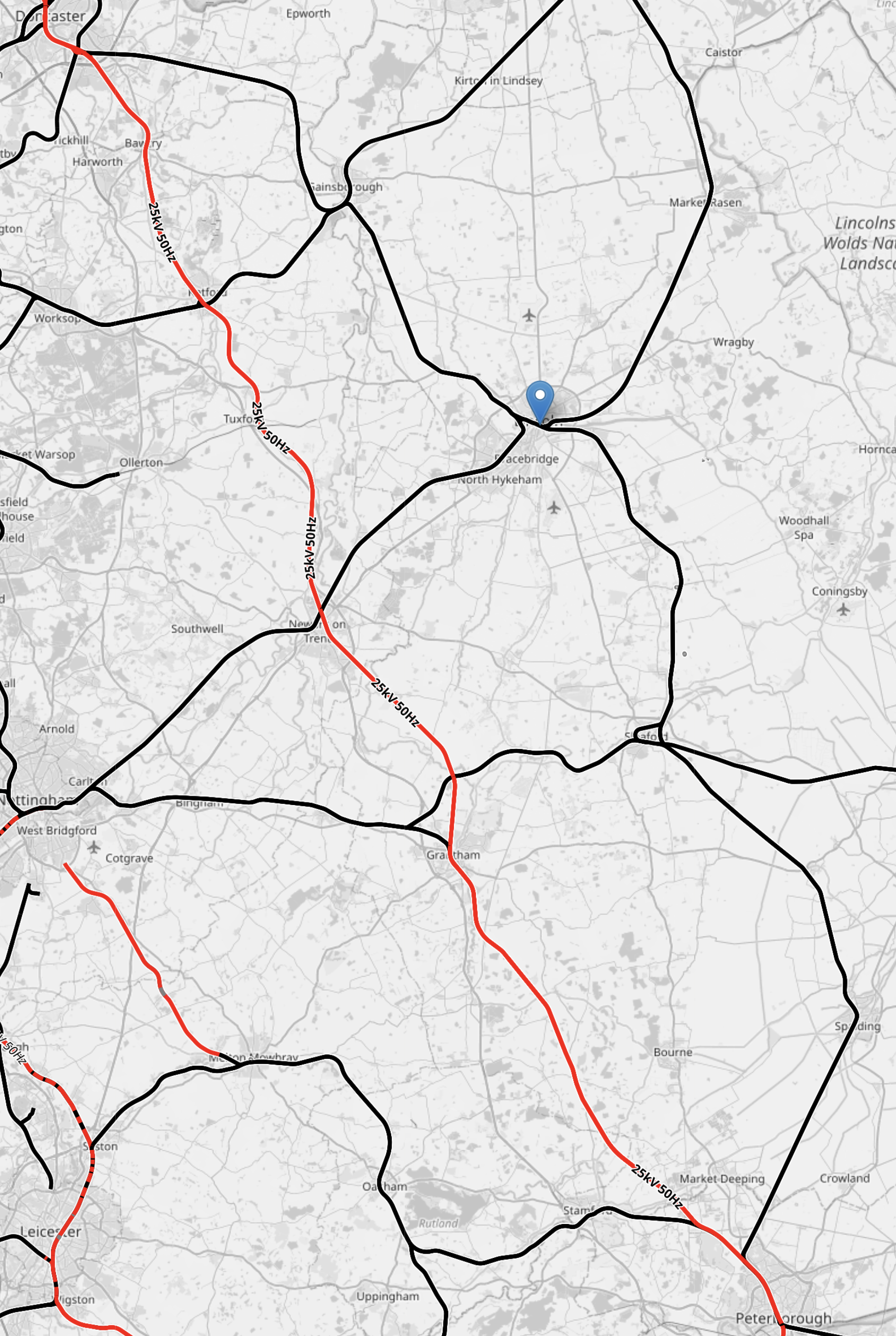
Note.
- Doncaster is in the North-West corner of the map.
- Peterborough is in the South-East corner of the map.
- The red line connecting them is the East Coast Main Line.
- Lincoln station is marked by the blue arrow.
Great Northern and Great Eastern Joint Line (GNGE) is described like this by its Wikipedia entry.
The Great Northern and Great Eastern Joint Railway, colloquially referred to as “the Joint Line” was a railway line connecting Doncaster and Lincoln with March and Huntingdon in the eastern counties of England. It was owned jointly by the Great Northern Railway (GNR) and the Great Eastern Railway (GER).
Over the last decades of the Twentieth Century, the Joint Line declined and British Rail did their worst to simplify the route.
But in the 2010s, Network Rail developed the route into a by-pass for the East Coast Main Line between Werrington and Black Carr junctions via Lincoln.
- Trains are routed via Spalding, Sleaford, Lincoln, Saxilby and Gainsborough.
- There is no electrification.
- The route can handle two freight trains per hour.
- The route can handle 9 ft. 6 in containers.
- There is a passenger service between Doncaster and Peterborough via Lincoln.
- Self-powered trains like InterCity125s, Class 800 trains and Class 802 trains can use their diesel power to use the diversion.
- All-electric trains, like LNER’s Class 801 trains and Lumo’s Class 803 trains have no self-power, so can’t use the diversion.
- Black Carr junction and Lincoln is 35 miles.
- Werrington junction and Lincoln is 51.7 miles.
The January 2024 Edition of Modern Railways says that the diversion is approximately 90 miles or 145 kilometers.
It would appear that there are two simple solutions.
- Electrify a section through Lincoln, so that Lincoln is within 70 kilometres of the electrification at both Werrington and Black Carr junctions.
- Fit bigger batteries to the trains.
A combination of both solutions might be possible.
 The Anonymous Widower