British Gas Introduce Hydrogen-Powered Van Trials
The title of this post, is the same as that of this press release from Centrica.
This is the sub-heading.
British Gas is piloting the use of a hydrogen-powered van to help decarbonise their fleet, marking a significant step in their commitment to achieve net zero emissions by 2040
These two paragraphs add some details.
The partnership with Ryze Power, the suppliers of clean hydrogen and alternative fuels and energy, will provide British Gas with access to the green hydrogen to power the Vauxhall Vivaro van over the two-month trial. The van is being put through its paces by a British Gas engineer in Birmingham, accessing Ryze’s refueling station at Tyseley during their working day.
The journey to Centrica, parent company of British Gas, reaching its 2040 net zero target includes achieving a net zero fleet by 2030, which is where this initiative supports the business in its vital next steps. Water vapour is the only emissions from the hydrogen vans, which include a battery a fraction of the size of that in an EV, meaning less requirement for mining precious metals.
I have written about this van before in Vauxhall Begins UK Customer Trials Of Hydrogen Vans.
The New Station With Wildflowers And No Car Park
The title of this post, is the same as that of this article on the BBC.
This is the sub-heading.
A new railway station with solar panels and wildflowers on the roof and no car park has been hailed as an example of sustainable transport
These three paragraphs, explain the thinking behind the design.
Cambridge South station, on Francis Crick Avenue, at the city’s Biomedical Campus, is expected to be completed by early 2026.
Designer and architect Jan Kroes said the site, which sits next to a nature reserve, would “fit in within the green belt”.
Network Rail said the site would be next to a guided busway system and connect with local cycleways and footpaths.
Regularly, when I lived nearly twenty miles from Cambridge, I would drive to Whittlesford Parkway station, which has 348 parking spaces and take the train to London.
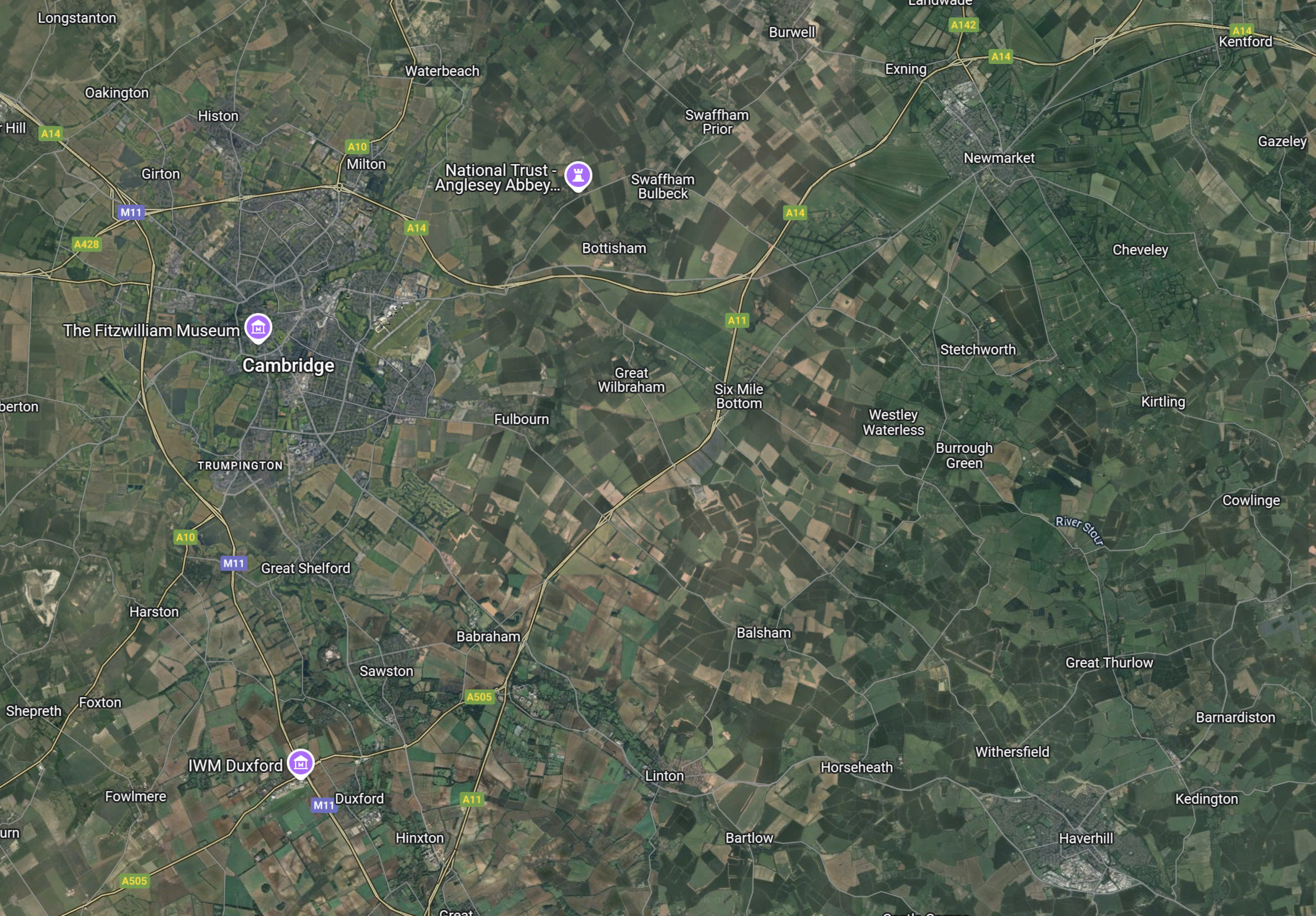
This Google Map shows the area to the South-East of Cambridge.
Note.
- Cambridge is towards the North-West corner of the map.
- Newmarket, which has a population of nearly 16,000, is towards the North-East corner of the map.
- Haverhill, which has a population of nearly 30,000, is towards the South-East corner of the map.
- Whittlesford Parkway station, is towards the South-West corner of the map close to the Imperial War Museum at Duxford
- I used to live at Great Thurlow between Newmarket and Haverhill.
The only railway stations on this map are Cambridge, Cambridge North, Dullingham, Newmarket, Shelford and Whittlesford Parkway.
As bus services are pretty thin on the ground, if you live to the bSouth-East of Cambridge, I can understand if there has been surprise, at the lack of parking at the new Cambridge South station.
- If you are travelling to London or Stansted Airport, you can still use Whittlesford Parkway, which has parking.
- But if when the East West Railway opens, you will need to use Cambridge or Cambridge South stations.
- Now that Cambridge North station is open, travelling to Norwich by train may be easier, unless there is not enough parking at Cambridge North station.
When I lived in the area, the most common excuse for not using the train, was the problems of parking at the stations.
I predict, that parking will be added to Cambridge South station.
A True Underground Advert
I spotted this advert at Swiss Cottage station today.

I’m surprised the censors of Transport for London didn’t ban it.
Another version of the advert is also running around on a 476 bus near me. But in that one a single lady is lying down to fit the bus.
Coach Chaos At The Finchley Road Coach Stop On A Sunday Lunchtime
I went to Finchley Road coach stop at lunchtime today and took these pictures.




















































Note.
- Finchley Road coach stop is on the Finchley Road, just to the North of Finchley Road tube station.
- The Finchley Road coach stop is lavelled CL.
- Not all coaches stopped at the Finchley Road coach stop.
- I did see a double-deck coach taking visitors to the Harry Potter Attraction pass through ar Victoria Coach station and the Finchley Road.
- There is a pedestrian subway under Finchley Road.
- There is a second stop for Southbound coaches on the other side of the Finchley Road.
- There are a few tatty shops along the pavement selling snacks, coffee, tea and other travellers needs.
- In the early pictures note, the large number of travellers queuing along the pavement in front of those shops.
- It looks like a lot of those travellers, were waiting for the Flixbus.
- The Flixbus stayed parked for several minutes.
- Finchley Road tube station is not step-free.
- Finchley Road tube station is served by the Metropolitan and Jubilee Lines.
I took most of the pictures from the opposite site to the Northbound coach stop, as the pavement was rather crowded.
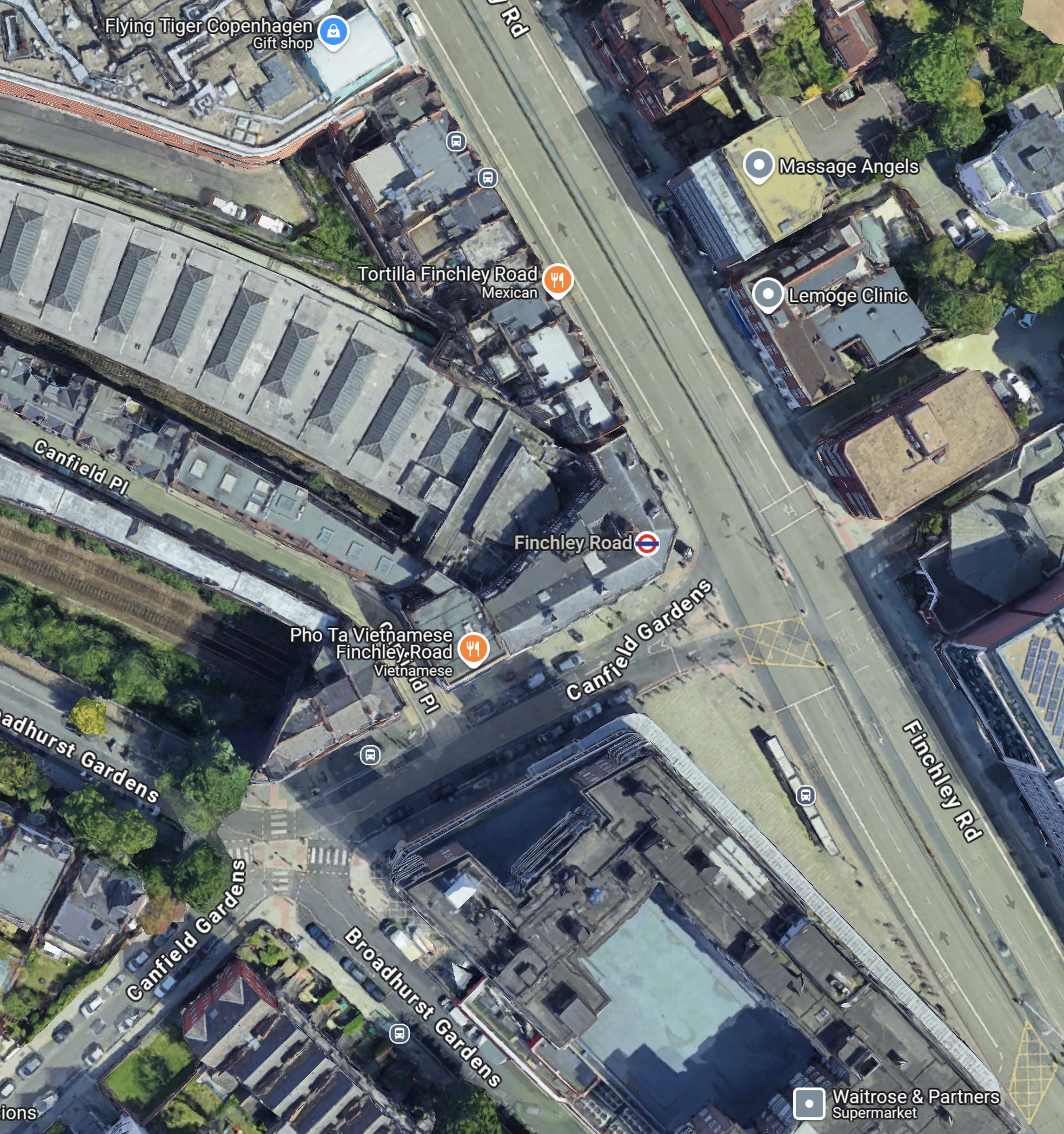
This Google Map shows Finchley Road, the tube station and the coach stop.
Note.
- The Finchley Road is the dual-carriageway road.
- The two grey dots at the Northend end of the Finchley Road, indicate the Coach stop and to its North a bus stop.
- The larger orange dot indicates the Tortilla restaurant, which is visible in several of the pictures.
- The London Underground roundel indicates Finchley Road tube station.
- The building curving away to the North-West is the train shed for the four platforms of Finchley Road tube station.
South of Finchley Road tube station, is a large Waitrose in the old John Barnes building.
This pictures show some of the Train to Street access at Finchley Road station.




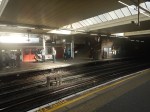

Note.
- There is a high step out of the Jubilee Line trains.
- The steps from platform to the street are steep with a heavy case or a baby in a buggy.
But it’s a long time, since I’ve done any travelling with a baby.
I have some further thoughts.
Travelling With Heavy Luggage, In A Wheelchair Or A Baby Buggy
It might be better to take a 13 or 113 bus to Finchley Road tube station, as the stop is just South of the station and no more than fifty metres from the Finchley Road coach stop.
You could even get the bus from Swiss Cottage station, which is the next station South from Finchley Road and has a complete set of traditional escalators with uplighters.





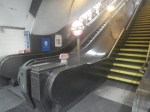
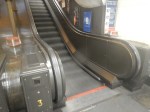
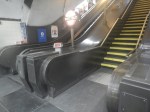
Note.
A Busy Saturday Lunchtime At Victoria Coach Station
I went to Victoria Coach station at lunchtime today and took these pictures.


















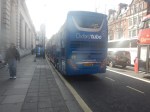
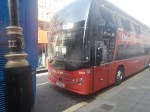



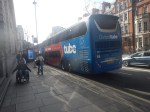




These are my thoughts.
Where Are The British Coaches?
The nearest I saw were the smart coaches of the Oxford Tube, which were built by Plaxtons on a Volvo chassis.
The National Express coaches were made by Caetano in Spain.
I can certainly understand, why Wrightbus’s first product of a new era of British coach-building is an affordable Chinese-built coach, that is fitted with a Cummins engine, that possibly can be converted to hydrogen, as is the case, with some Cummins diesel engines.
As the coach will have a delivery time of six months, I think we’ll see them on the road fairly soon.
There Were Several Three Axle Coaches
In fact, I didn’t know they were very common.
- I suspect that three axles is better for the weight.
- But then you don’t see too many coaches in Central London unless you go to Victoria.
Wrightbus are saying that their hydrogen coach will have three axles.
The Wrightbus Effect
This article on Route One, says of the new Wrightbus Contour coach.
- It will be released this year.
- It will be an affordable product and Chinese-built.
- It will be a 55-seat diesel coach.
- It will have a Cummins engine.
In Wrightbus StreetDeck Ultroliner Next-Gen To Get Cummins Power, I describe how Wrightbus’s new Cummins-powered double-deck bus will be able to be converted to hydrogen-power. I suspect the same option will be available with the Contour diesel coaches.
The article on Route One, says this about the availability of the new coaches.
The Contour’s “competitive price” and lead time of six months promises an edge over some current industry norms, the business says.
That fits with what my finance company found forty years ago, when it was leasing coaches. If there were more coaches, you could lease more.
It looks to me, that the Cummins-powered, Chinese-built Wrightbus Contour coach will be affordable, available and convertible to zero-carbon hydrogen power.
If the quality and reliability of the coaches are high, then these coaches should sell and more coach operators will be wanting to run services from Victoria coach station, with their new affordable Wrightbus Contour coaches.
After what I saw on Saturday, will Victoria coach station have the space to accommodate them?
Coaches To Attractions
I saw coaches to Harry Potter, Legoland and other attractions.
Will this be an area that develops, if there were to be a greater availability of coaches, which Wrightbus, appears to be offering?
FLiXBUS
This is the first paragraph of the Wikipedia entry for FLiXBUS.
FlixBus (styled FLiXBUS) is a German brand that offers low-cost intercity coach services in Europe, North America, South America, and Asia. It is owned by Flix SE , which also operates FlixTrain, FlixCar, Kâmil Koç, and Greyhound Lines. FlixBus operates buses or, in many cases, just handles marketing, pricing, and customer service for a commission, on behalf of bus operators. In 2023, FlixBus had revenues of €2 billion and carried 81 million passengers of which 55 million were in Europe, 14 million were in Turkey, and 12 million were in North America.
They certainly seem to be an ambitious low-cost company, who serve a lot of places in the UK.
As they are a German company and Wrightbus have sold scores of zero-carbon buses to Germany could Wrightbus and FLiXBUS have been talking about affordable, quality coaches?
Could Wrightbus’s New Hydrogen Coach Do A London Scotland Round Trip On A Full Load Of Hydrogen?
Victoria Coach Station And Edinburgh
I have just looked up on the National Express web site and found that I can leave Victoria Coach Station at 22:00 and arrive in Edinburgh at 07:40 the following morning for a ticket price of £29.90.
The road distance would appear to be 638.1 km, which would be a 1276 km round trip. So I would expect that, there would need to be refueling in the round trip.
Victoria Coach Station And Glasgow
I have just looked up on the National Express web site and found that I can leave Victoria Coach Station at 23:00 and arrive in Glasgow at 07:40 the following morning for a ticket price of £23.90.
The road distance would appear to be 652.1 km, which would be a 1300 km round trip. So as with Edinburgh, I would expect that, there would need to be refueling in the round trip.
A Refuelling Strategy
Consider.
- I would expect that a refuelling strategy would minimise, the carrying of large amounts of hydrogen, through the centre of London or any other conurbation.
- The Southern Uplands of Scotland already host a lot of wind farms, including the UK’s largest onshore wind farm at Whitelee, which has a capacity of 539 MW.
- An electrolyser to produce hydrogen is being developed at Whitelee, which is 32.8 km South of Glasgow.
- Newport Pagnell services is 86.5 km. from the Southern end of the M1.
- Toddington services is 62 km. from the Southern end of the M1.
I wonder if two refuelling points, say 50-100 km. from each end of the route, would be a safe an efficient way to fuel the coaches?
Some Services Between London And Scotland
They are in South to North order.
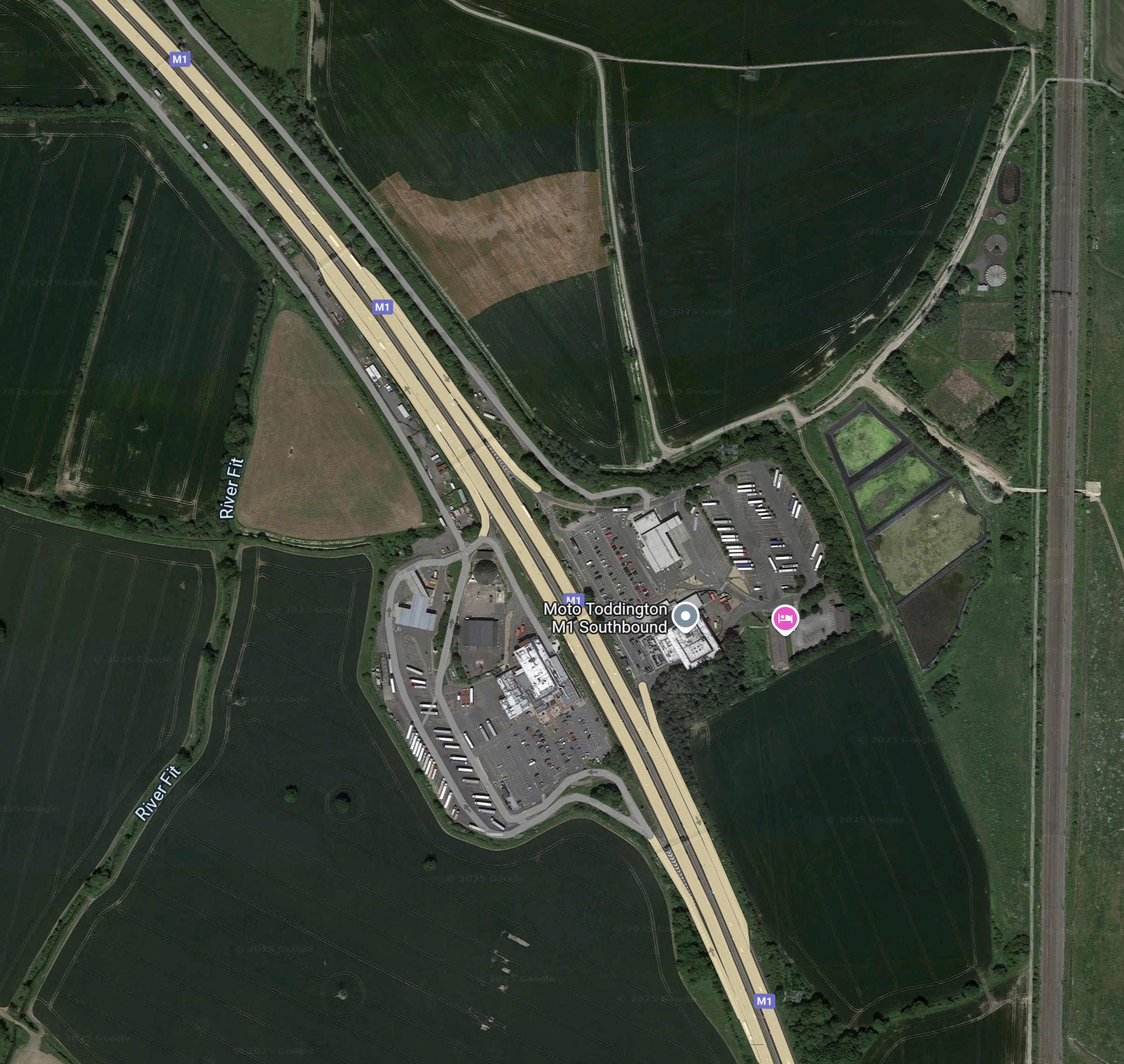
Toddington Services
Toddington Services is 62 km. from the Southern end of the M1.
This map shows the services.
Note.
- There is land around the services that could be used to create more parking for hydrogen coaches.
- There doesn’t appear to be much space for a large wind farm to provide electricity to generate hydrogen.
- The Midland Main Line runs up the Eastern side of the map.
I wonder, if hydrogen could be brought to a refuelling site at Toddington services by the use of rail wagons.
Newport Pagnell Services
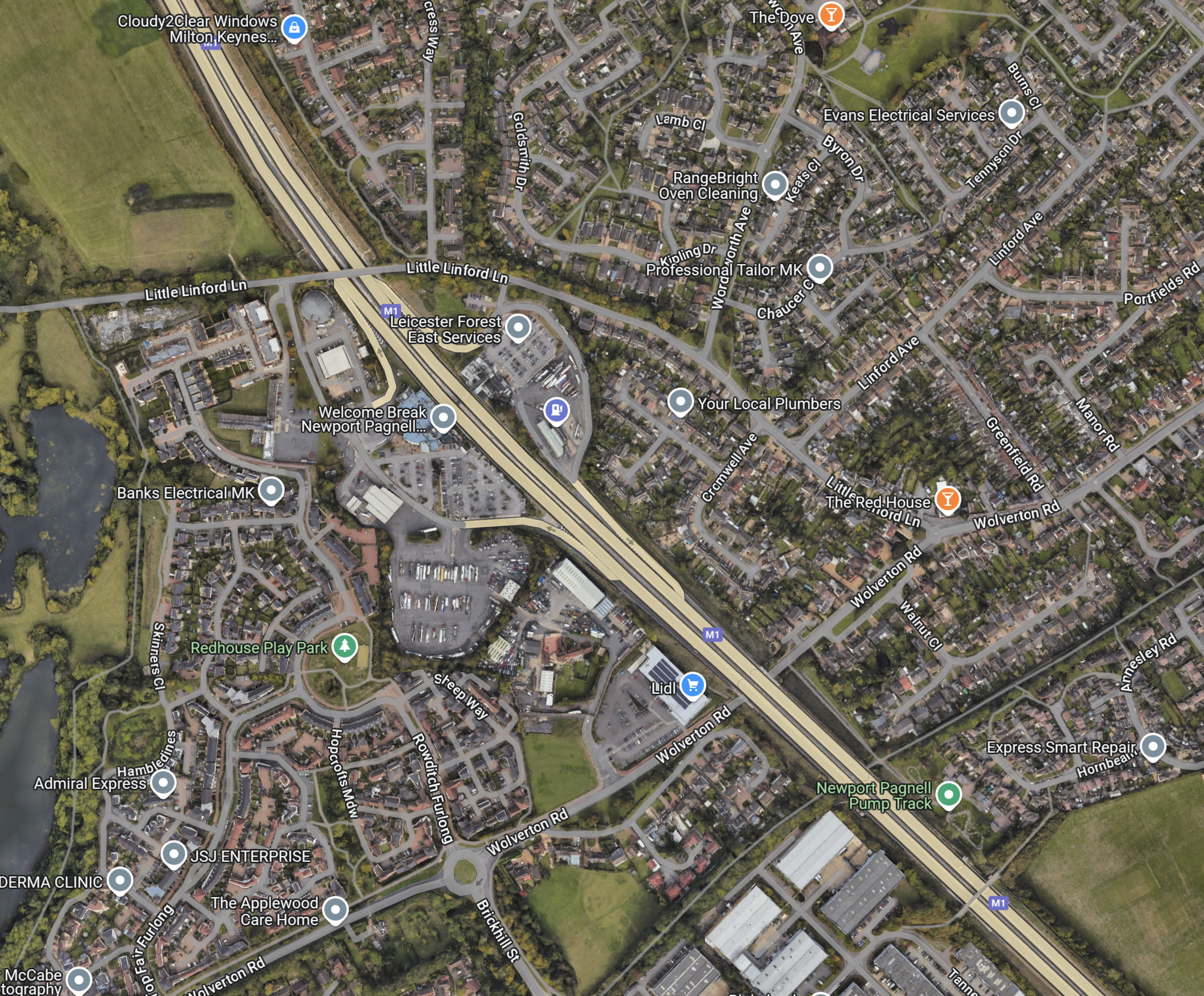
Newport PagnellServices is 86.5 km. from the Southern end of the M1.
This map shows the services.
Note.
- The services are labelled as Leicester Forest East.
- The services are tightly surrounded by houses.
I’m not sure the residents would like to have a hydrogen refuelling station in their midst.
Northampton Services
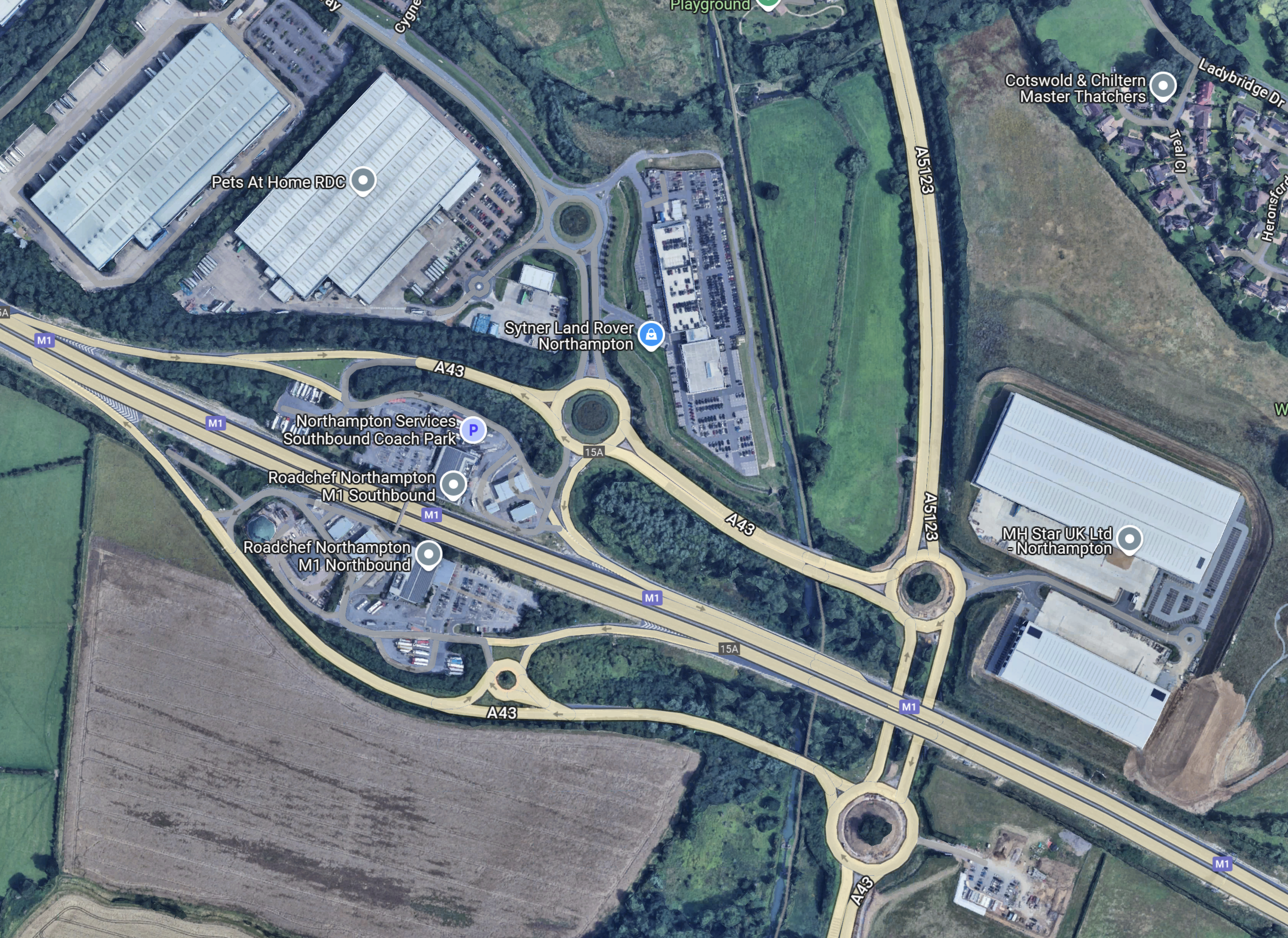
Northampton Services is 104.5 km. from the Southern end of the M1.
This map shows the services.
Note.
- It looks a rather complicated services.
- It might be too far from London.
- Provision of hydrogen might be difficult.
I think that this is another services that we can discount.
Watford Gap Services
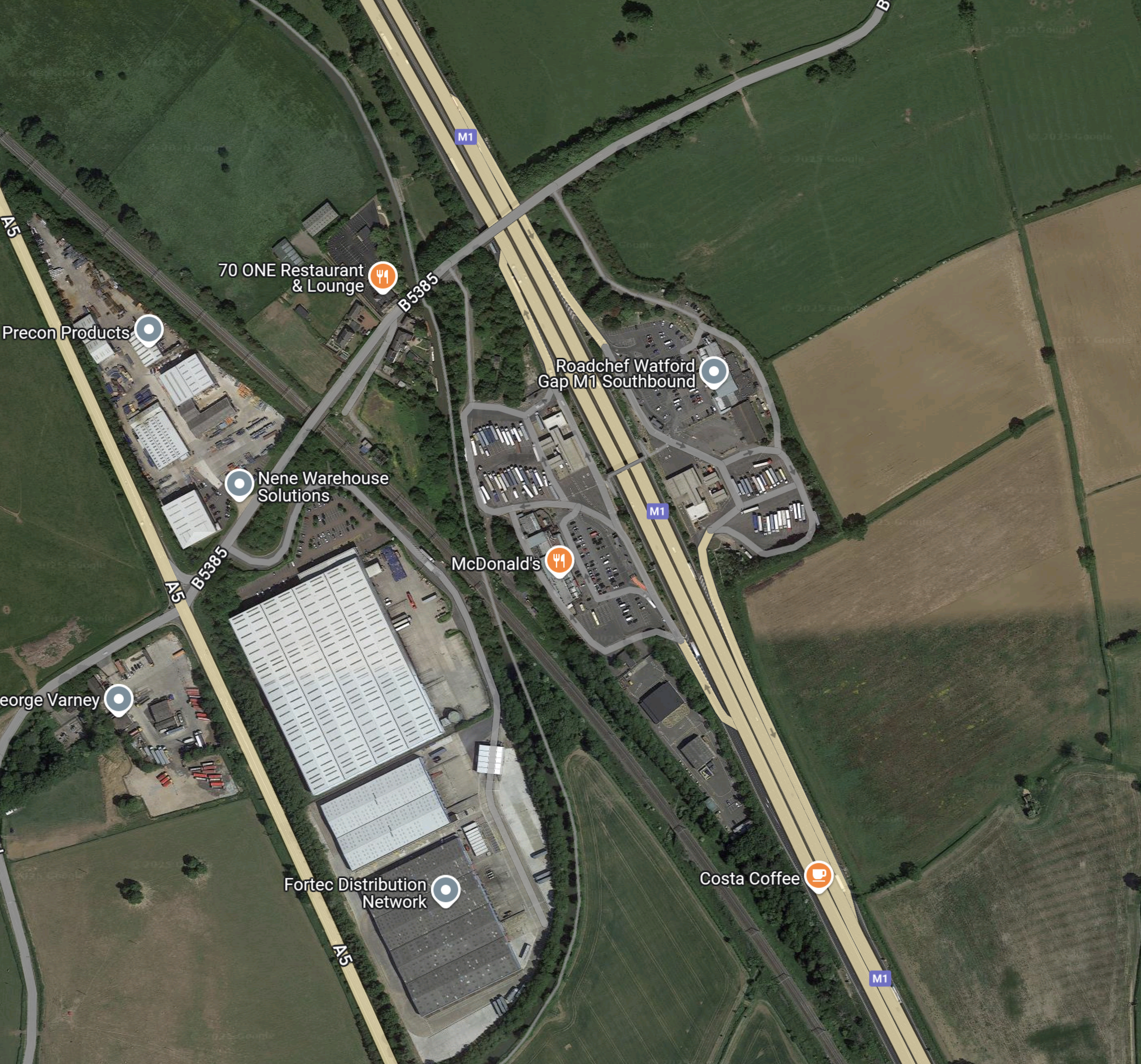
Watford Gap Services is 120.8 km. from the Southern end of the M1.
This map shows the services.
Note.
- There is land around the services that could be used to create more parking for hydrogen coaches.
- There doesn’t appear to be much space for a large wind farm to provide electricity to generate hydrogen.
- The West Coast Main Line runs through the centre of the services.
I wonder, if hydrogen could be brought to a refuelling site at Watford Gap services by the use of rail wagons.
Rugby Services
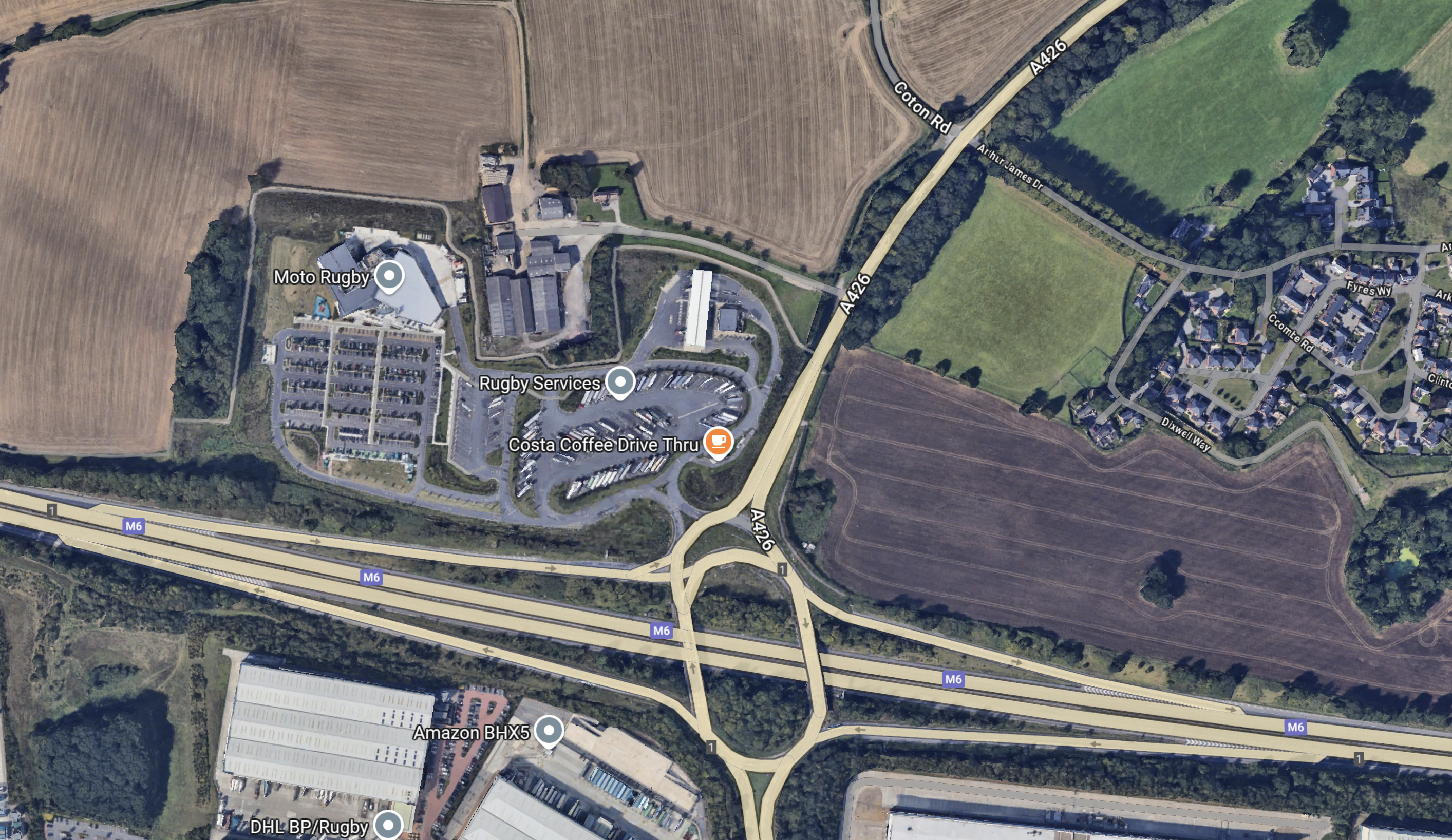
Rugby Services is 137.8 km. from the Southern end of the M1.
This map shows the services.
Note.
- There is land around the services that could be used to create more parking for hydrogen coaches.
- It is at Junction 1 of the M6.
There is also a gas compressor station nearby, so I wonder, if a HiiROC system could be located here to extract hydrogen from the natural gas.
This map shows the location of the Churchover compressor station, with relation to Rugby services.
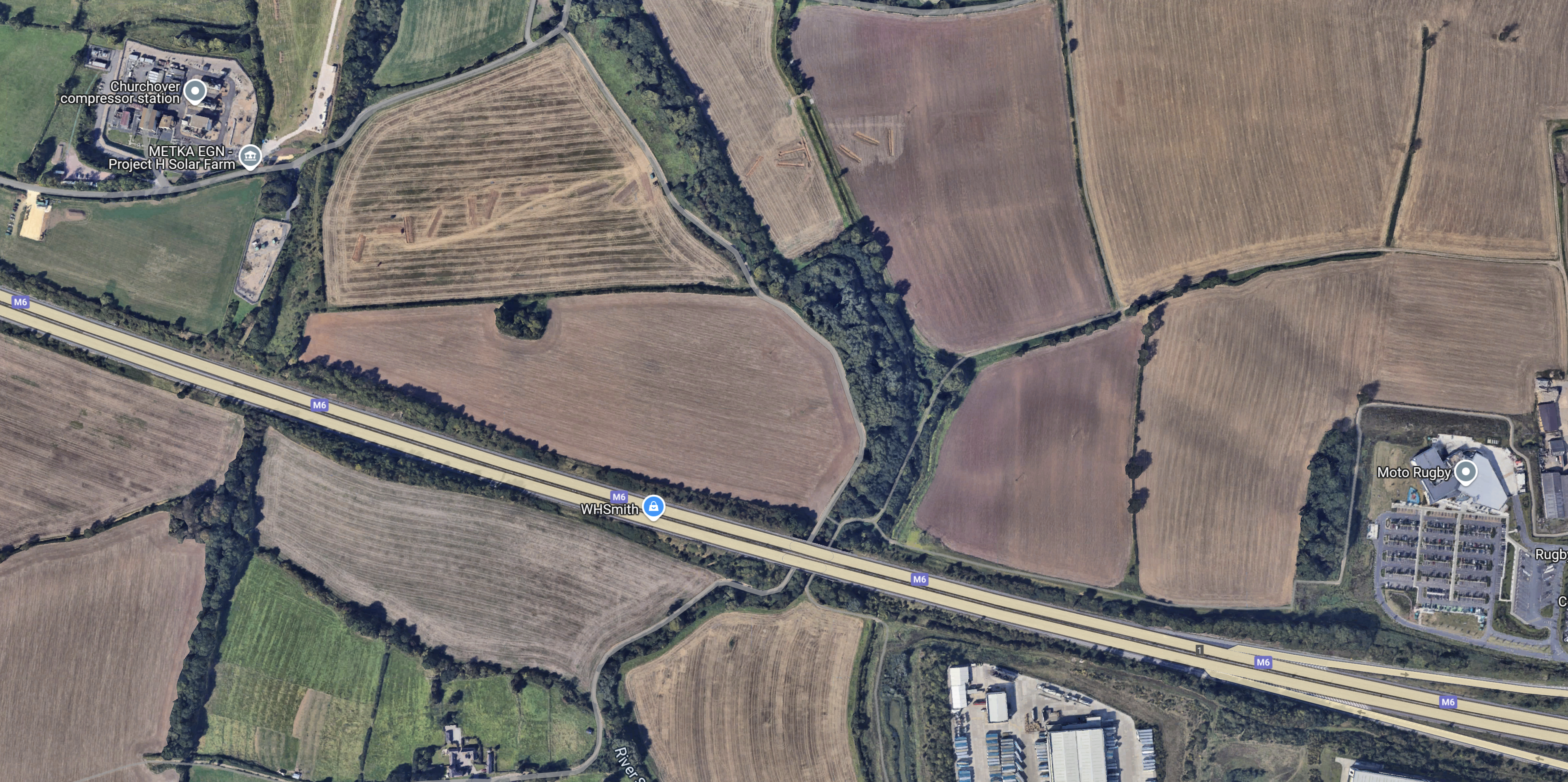
Note.
- The compressor station is in the North-West corner of the map.
- Rugby services are in the South-East corner of the map.
- From labels on the map it appears, a solar farm might be planned by the compressor station.
With a system like HiiROC creating turquoise hydrogen from natural gas, this could be a major filling station for hydrogen-powered trucks, coaches and cars.
Conclusion
It looks to me, that Toddington services would be best, but there would need to be a large increase in capacity, if a large number of hydrogen coaches, were going to fill up at Toddington for their trip into London.
The alternative would be to give the coach a large enough hydrogen tank for a complete round trip.
Wrightbus Back To Coach With Contour Diesel And Hydrogen Future
The title of this post, is the same as that of this article on Route One.
These are two introductory paragraphs.
Wrightbus has announced details of its return to the coach sector with the launch of the Contour, a new diesel-powered two-axle model built in partnership with Chinese OEM King Long.
Alongside the Contour, the company has spoken in more detail of its plans to introduce a tri-axle integral hydrogen fuel cell-electric coach, due for debut in 2026.
Specific and new product points include.
- The diesel-powered coach will be built in partnership with a Chinese OEM.
- It will be a 12.2m coach with 55 seats plus toilet.
- Left- and right-hand drive variants will be available.
- Luggage space is nine cubic metres, reducing to seven cubic metres with a passenger lift fitted.
This paragraph describes the hydrogen coach.
That vehicle will be its first fully integral coach model, developed entirely in-house. The initial variant will be a 15m overdecker capable of accommodating 69 passengers on the upper deck and up to 15 passengers and two wheelchair users on the lower deck, with 10 cubic metres of luggage space. Wrightbus has not confirmed yet whether it will carry the Contour name, nor where the body will be built.
They also say that a single-deck version is being considered for later, while the coach’s modular construction will make it suited to a number of different drivetrain options, depending on demand.
It would appear that Wrightbus have all options covered.
Wrightbus Goes Back To The Future As It Relaunches The Contour Coach
The title of this post, is the same as that of this press release from Wrightbus.
This is the detail of the press release.
Wrightbus is entering the coach market for the first time in more than 30 years with the launch of two new vehicles in the next 18 months.
The first vehicle to hit the market is the Contour, a low-emission 55-seater coach that was launched at a customer showcase event today (March 5).
It’s a case of back to the future for Wrightbus, which last produced a Contour coach in 1987 before retiring the vehicle.
The second vehicle, a zero-emission hydrogen coach – which is under development in Ballymena, Northern Ireland – will be added to the Wrightbus coach range within the next 18 months to help drive decarbonisation of the sector.
The low emission Contour has a lead time of just six months from order, which is considerably faster than the current one-to-two-year average wait customers have come to expect from the sector. Featuring a Cummins Euro 6 400BHP X11 engine and a ZF automatic gearbox, the modern-day Contour has been built with comfort in mind, with up to 55 reclining seats – each with its own USB port – alongside other modern safety features. Competitively priced and available with or without PSVAR compliance, there is also the option of the vehicle being ‘pre-prepared’, protecting the vehicle’s ‘second life’ and flexibility.
The coach has a range of bespoke options for customers to choose from and is designed to maximise luggage space and functionality.
It will be supported by a full Wrightbus warranty, alongside an unparalleled service and maintenance package from AllServiceOne, the Wrightbus repair and maintenance arm.
With the largest fleet of mobile technicians throughout the UK and Northern Ireland, AllServiceOne is the ultimate one-stop-shop for fleet support and service.
Wrightbus CEO, Jean-Marc Gales, said bringing the Contour to market was a pivotal move.
“The coach market has changed over the last few years and it’s the right time for a new player to come to the market.
We have long spoken about broadening our portfolio to offer customers an even greater range of Wrightbus vehicles.
Our first entry into the coach sector after an absence of more than three decades is another significant step in our expansion plans,” said Mr Gales.
“We know there are gaps in the market and the demand for coaches is growing.
This partnership allows us to bring high-quality low-emission vehicles to market almost immediately.
Throughout the process of readying the vehicle for our UK market, we have worked alongside our partner closely to ensure the Contour meets the exacting Wrightbus high quality standards that customers have come to expect.
Our AllServiceOne technicians have embarked on an extensive training programme and have a full working knowledge of the coach to ensure excellent fleet support. “At the same time as the launch of the Contour, our world-leading engineers are continuing to develop our own zero-emission hydrogen coach from our factory in Northern Ireland. We expect the hydrogen coach to be ready for launch in the next 18 months, which is a hugely exciting prospect.” The hydrogen coach concept was first revealed in 2024 as a prototype vehicle.
When launched, it will be a tri-axle hydrogen fuel cell electric coach capable of a 1,000km range, putting it on a par with traditional diesel-fuelled coaches.
These are my thoughts.
The Coach Has A Cummins Engine
Cummins will probably build the engines in their UK factory in Darlington.
Thirty years ago, I did a small data analysis consultancy for Cummins in Darlington and I was impressed by the operation and the company’s attitude.
One of their policies was that if the customer wants a special engine, then the company, is prepared to give the customer what they need.
So you can be sure, that the Cummins X11 engine to be supplied for the Contour coach, will be exactly what Wrightbus want.
The Cummins X15 Engine Is Convertible To A X15 Hydrogen Engine
Some of Cummins diesel engines are convertible to hydrogenfuel, by changing the cylinder head and the fuel system.
This can be done with a Cummins X15 engine and I wouldn’t be surprised if the X11 engine fitted to the Contour coach can be converted to hydrogen.
So an operator can buy a diesel coach and if they need, they could convert it to hydrogen.
USB Ports
This is stated in the press release.
Contour has been built with comfort in mind, with up to 55 reclining seats – each with its own USB port.
When I rode recently in a Irizar coach, there were no USB ports.
There Is A Promised Delivery Time Of Six Months
In the 1990s, I used to part-own a finance company, that leased vehicles.
One of the vehicles we used to loan money for was upmarket coaches like the Wrightbus Contour.
- They were a relatively large loan of about £50,000.
- The borrower was often very reputable with a good credit history.
- The repossession rate was very low.
The press release says, that a two-year delivery time is normal for coaches and, I can remember that we could have financed more coaches, if they had been available.
So it would appear to me, that if Wrightbus can deliver a new coach in six months, they will sell a lot of coaches and I believe from past experience, that finance will be available from trusted sources.
The Hydrogen Coach Will Be A Hydrogen Fuel Cell Electric Tri-Axle Coach
This is stated in the press release.
When launched, it will be a tri-axle hydrogen fuel cell electric coach capable of a 1,000km range, putting it on a par with traditional diesel-fuelled coaches.
I suspect to get the 1,000 km range of the diesel coach and to protect the hydrogen tank, means some extra weight and an extra axle.
But I wouldn’t be surprised to see a reduced range hydrogen coach without the third axle.
Wrightbus Are The Company Who Launched Ballard Hydrogen Fuel Cells In London
I wrote London’s Hydrogen Buses in July 2013 and all Wrightbus buses hydrogen buses have used hydrogen full cells from Ballard Power Systems in Canada.
But there could be a complication in that Cummins make fuel cells in Germany and we are approaching Trumpian Tariff War Territory.
On the other hand in Australian Volgren Rolls Out First Hydrogen Bus Based On Wrightbus Chassis Technology, it shows how Wrightbus are prepared to licence their technology to reputable companies.
So any country, like Australia, Brazil, Canada, India, Mexico, Singapore or the United States, who can build coaches, can licence Wrightbus’s designs and fit the appropriate components to make a complete coach.
Note.
- Wrightbus is owned by the Bamford family, who own JCB.
- Wrightbus have licenced designs to Australia, Hong Kong and Singapore in the past.
- JCB have large manufacturing facilities in India.
I’m certain that the Bamfords and their advisors can work it out!
AI Could Make New Runways Obsolete
The title of this post, is the same as that of this article on Jewish News.
This is the sub-heading.
As Heathrow’s controversial third runway gets the green light and Gatwick looks on track for a second one, an Israeli tech innovation could reduce the need for such costly expansions.
These paragraphs add some detail.
IntellAct is a cutting-edge AI company that helps airports maximise efficiency, cut delays and save billions of pounds. By optimising ground operations and reducing aircraft turnaround times, it could spare airports the need for new runways entirely.
“The aviation industry is bleeding from a thousand cuts,” says Udi Segall, IntellAct’s founder and CEO. “Constant delays – with an average of 15.5 minutes per flight — add up to billions in costs. We saw a financial opportunity in how airlines manage their activities, and that’s where IntellAct comes in.”
IntellAct leverages big data and machine learning to provide airlines, airports and ground handling teams with real-time visibility into service performance bottlenecks and the ability to address them in a way that can yield significant operational improvements and a dramatic reduction in flight delays.
It’s an interesting thought.
I am reminded of a story from the 1960s, from ICI.
They had a polypropylene plant, that was notoriously inefficient, so a guy called Humphrey Bowen (?) used a discrete simulation program called HOCUS to create a board game of the chemical plant. This game was then played one Sunday, with beer and sandwiches between the various teams of production workers. It became heated at one point, but they did learn a lot about the behaviour of the plant and improved its efficiency.
I think it is true to say, that in the early 1970s, I worked with a bunch of interesting people at ICI Plastics.
These days, use might be made of a digital twin.
Latest Northumberland Line station Set To Open
The title of this post, is the same as that of this article on Place North East.
This is the sub-heading.
Newsham Station in Blyth will be up and running on Monday, 17 March, allowing passengers to travel to Newcastle in 21 minutes.
These four paragraphs add detail.
It follows on from the reopening of the line in December, when Ashington and Seaton Delaval were brought back into action.
The line has been closed to passengers for almost 60 years, although freight still ran along the tracks.
Morgan Sindall Infrastructure-Rail is the main contractor on the almost £300m project.
Figures released by Northern, which operates the services, show around 50,000 passenger journeys were made on the line in the first month, a figure that has now surpassed 110,000.
Those passenger numbers seem very good and I suspect we’ll see London Overground Syndrome arriving.
It’s already starting to look like the project has been £300 million well spent and we should be looking for more similar projects.

