Trump Will Fix It
I can’t believe that I’ve just seen the title of this post, emblazoned across Trump’s stage.
The phrase doesn’t have the same connotations and odious ring, that it does in the UK, but because of its associations with Jimmy Saville, it is probably better not used.
All the world can now do, is wait for the result.
- It does appear that in the US, female voters have a high turnout.
- According to the Guardian, nearly a third of voters are black.
Certainly, if I were black or female, I wouldn’t feel, I could vote for Trump.
UK And Germany To Upgrade Some Sea Kings For Ukraine
Yesterday, the UK government issued a press release, which is entitled Landmark UK-Germany Defence Agreement To Strengthen Our Security And Prosperity.
This is the sub-heading.
A landmark defence agreement will be signed by Defence Secretary John Healey MP and German Defence Minister Boris Pistorius in London today in a major moment for NATO, and European security and prosperity. It is the first-of-its-kind agreement between the UK and Germany on defence.
This introductory paragraph, lays down the tone and objectives of the agreement.
The signing of the Trinity House Agreement marks a fundamental shift in the UK’s relations with Germany and for European security. This agreement between Europe’s two biggest defence spenders will strengthen national security and economic growth in the face of growing Russian aggression and increasing threats.
It is a wide-ranging document, but in this post, I will concentrate on one topic; Sea King helicopters, which are talked about in this paragraph.
New Ukraine support – new joint work to enable German Sea King helicopters to be armed with modern missile systems as well as work on capability coalitions.
As Ukraine is a mainly landlocked company, I do think it must be a compliment to the Sea Kings’ capabilities that the Ukrainians find the naval helicopters useful.
These three paragraphs from the Wikipedia entry for the Westland Sea King, document the history of operations of the Sea King in the Ukrainian Naval Aviation.
In November 2022, in response to the 2022 Russian invasion of Ukraine the United Kingdom announced they were donating three former Royal Navy Sea Kings to Ukraine. In January 2023, the first Sea King was videoed being used by the Ukrainian Naval Aviation.
In April 2023, the BBC did an interview with one of the co-pilots of a UK donated Sea King to Ukraine. These helicopters served in the Falklands War so they are at least some 40 years old. The co-pilot has said that the Sea King is used for rescuing pilots who have ejected, delivering soldiers, and conducting reconnaissance, among other tasks. One engineer also told the BBC: “They are old…but they have gone through modernisation, and we need them very much. I believe this is just the start of our work together.” The BBC also reports that a third Sea King is being prepared to be sent to Ukraine in the “coming weeks”. The third Sea King HU.5 was delivered to Ukraine in May 2023.
In January 2024, Germany agreed to send 6 further Sea Kings to Ukraine.
I feel the Ukrainians, with their initiative, will find the elderly Sea Kings very useful.
3rd October 2024 – A Day In Liverpool
A Three-Leg Journey North
This is the second time, I’ve bought one of there journeys North and they are a pain, unless you want to guarantee seats.
I suppose, I should buy my tickets earlier, but if I can buy my rickets on the day on other train companies, I would prefer to do it on Avanti West Coast.
Avanti West Coast’s problem is that they haven’t got their new Class 807 trains into service yet, which will double the services to Liverpool.
T arrived at Warrington Bank Quay on time and the transfer to Newton-le-Willows went smoothly, but then, I waited thirty minutes for my train to Liverpool Lime Street.
This OpenRailwayMap shows the route I took.
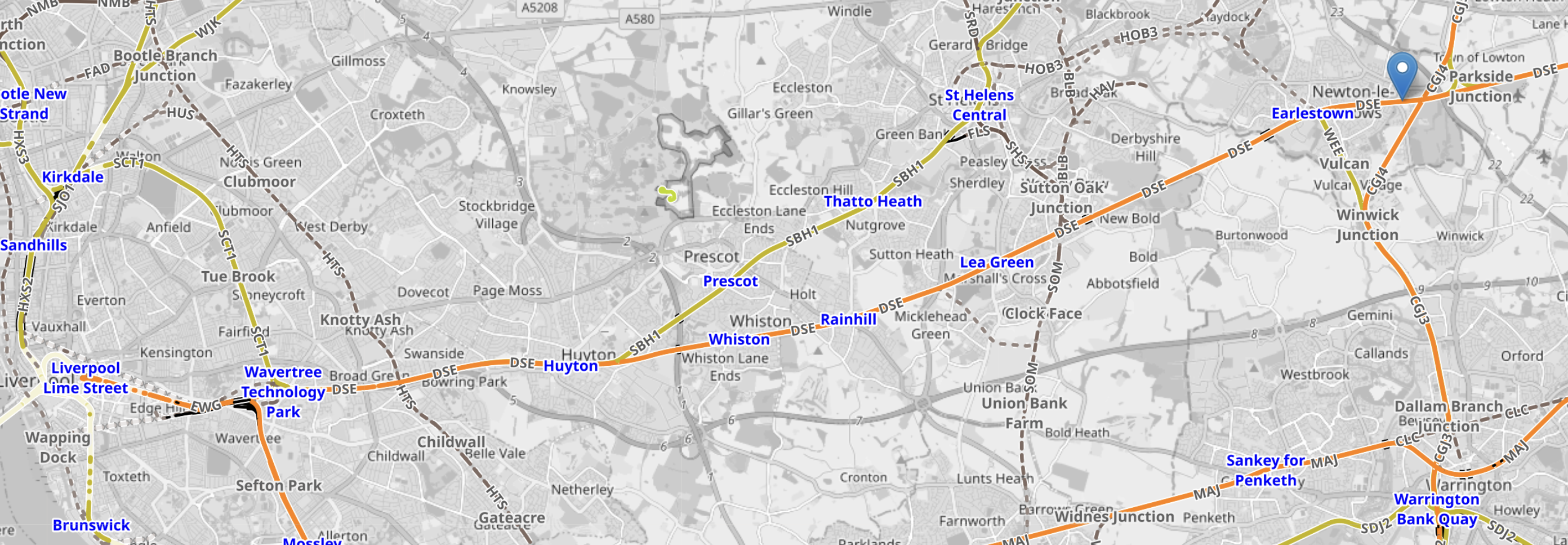
Note.
- Liverpool Lime Street station is at the Western side of the map.
- Newton-le-Willows station is marked by the blue arrow in the top right corner of the map.
- Warrington Bank Quay station is in the bottom right corner of the map.
It does seem a round about route, But I got there. Although, I was late.
Hopefully, in a couple of years, you’ll be able to take a local train between Liverpool Lime Street and Newton-le-Willows stations to link up with FirstGroup’s low-cost Lumo Open Access service between Euston and Rochdale.
A Single Journey Home
I was booked home on the 18:43 train from Lime Street, but as you can often do, I asked and was allowed to board the 17:43.
A Crowded And Crazy Euston
I arrived back at Euston at 20:00, but it was crowded, as the station is very much a building site for High Speed Two.
I felt I would treat myself to a taxi, but I couldn’t find any.
So I took a 205 bus along Euston Road to King’s Cross, where I jumped on the the Circle Line for Moorgate.
From there I took my usual 141 bus home.
A friendly station guy at Moorgate, indicated, there might not be any taxis at Euston.
I’d also found earlier, that there were no escalators to the Underground.
Perhaps more than ever, care should be taken at Euston, when getting to and from the station.
It Looks To Me That High Speed Two Has Got Their Planning Wrong At Euston
The big problem at Euston is getting to and from the National Rail station from East or West,
Compare Euston in this respect with Liverpool Street, King’s Cross, St. Pancras or Paddington.
In The New Step-Free Entrance At Euston Square Station, I show the plans for step-free access to the sub-surface lines.
This new entrance to Euston station, should be built first.
All the dithering about High Speed Two seems to have delayed it!
World-First Operation To Treat Rhino’s Broken Leg
The title of this post, is the same as that of this article on the BBC.
This is the sub-heading.
A rhinoceros with a broken leg is back on its feet after a world-first operation.
These are the first three paragraphs.
Amara, a southern white rhino at Knowsley safari park, was given keyhole surgery and had to wear a cast for four weeks.
Surgeons took what they knew about operating on horses and applied it to Amara because there was so little information about rhinos which had been injured in this way.
A team of 10 vets was involved in the operation, which they described as “unlike anything we’ve experienced previously”.
I bet it wasn’t like a horse, as equines in my experience don’t have a bodger on their bonce.
The BBC featured the story in BBC Breakfast this morning and I wouldn’t be surprised to see it turn up later or on the Internet.
Some may say, is the expense worth it to operate on a rhino.
But I would say, that the experience gained by the University of Liverpool, will be applied to the treatment of other large animals, like buffalo, bison, draught horses, elephants and hippotami.
Also, knowing Scousers as I do, I suspect that some of the techniques used, will be scrounged by Liverpool’s medics and applied to humans.
Recently Opened In Dalston
This shop has recently opened at Dalston Junction.
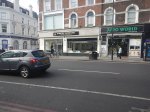
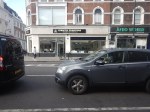
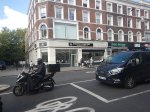
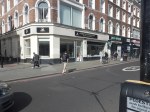
Is the name a bit cheeky?
Sadiq Khan: Prisoners Should Jump Queue For Housing
The title of this post, is the same as that of this article from The Times.
This is the sub-heading.
The mayor of London said prioritising those released would help to cut reoffending
I know politicians can make rash and barmy statements, but this must surely be one of the most ridiculous.
But then Khan likes wasteful, ridiculous policies like renaming all the lines of the London Overground, that I wrote about in Khan’s Stupid Plan To Rename The Overground Lines.
This is a comment to the article.
Do time for violent offences or drug trading. Obtain early release to make space in prisons for people who have posted hurty words on social media. On early release, jump the housing queue.
Surely this is stating the obvious.
The Aerosol Tales
When I left Liverpool University in 1968, I was very familiar with the use of products distributed in aerosol cans.
- I had used aerosol shaving cream, although about that time, I acquired my beard.
- I certainly used aerosol deodorant, as did most in the 1960s.
- Aerosol paints were common for covering scuffs and scratches in your car.
- Aerosols were often used to apply sun protection.
- Aerosols containing cream or a non-dairy alternative for culinary use were not unknown.
- Aweosol lubricants were starting to appear.
Although, I went to work for the chemical giant; ICI, at that time, I had no idea how an aerosol and its can worked.
As ICI at the time, ICI were major manufacturers of aerosol propellants, I quickly learned how they worked.
The Wikipedia entry for Aerosol Spray Dispenser gives a lot of history about aerosol cans and their propellants.
The Wikipedia entry for Propellant has this paragraph describing propellants of the last century.
Chlorofluorocarbons (CFCs) were once often used as propellants, but since the Montreal Protocol came into force in 1989, they have been replaced in nearly every country due to the negative effects CFCs have on Earth’s ozone layer. The most common replacements of CFCs are mixtures of volatile hydrocarbons, typically propane, n-butane and isobutane. Dimethyl ether (DME) and methyl ethyl ether are also used. All these have the disadvantage of being flammable. Nitrous oxide and carbon dioxide are also used as propellants to deliver foodstuffs (for example, whipped cream and cooking spray). Medicinal aerosols such as asthma inhalers use hydrofluoroalkanes (HFA): either HFA 134a (1,1,1,2,-tetrafluoroethane) or HFA 227 (1,1,1,2,3,3,3-heptafluoropropane) or combinations of the two. More recently, liquid hydrofluoroolefin (HFO) propellants have become more widely adopted in aerosol systems due to their relatively low vapor pressure, low global warming potential (GWP), and nonflammability.
Note that the whole range of these chemicals, effect the ozone layer.
Rocksavage Works
ICI’s Rocksavage Works, was an integrated chemical plant by the Mersey,.
- It made all types of CFCs for aerosols and other purposes.
- It also made the fire suppressant and extinguisher; Bromochlorodifluoromethane or BCF.
- Alongside BCF, it made the anaesthetic Halothane or as ICI called it Fluothane.
- The plant was a poisonous place with all those bromine, chlorine and fluorine compounds.
- Despite this, the plant had a remarkable safety record.
I had the pleasure of working at the plant and it was where, I had most of my excellent Health and Safety training, from the amazing site foreman; Charlie Akers.
Some of the wisdom he distributed has proved invaluable in aiding my stroke recovery.
I suspect that since the signing of the Montreal Protocol, the plant has changed greatly or has even been closed.
All that appears to be left is the 800 MW gas-fired Rocksavage power station and a Facebook page.
Aerosol Baked Beans
In those days, I worked most of the time in a lab at Runcorn Heath.
One of the labs near to where I generally worked, in the large research complex, was a lab, where new aerosol products were developed and tested.
One of the standard jokes about that lab, was that they were working on aerosol baked beans. They said, they would develop the product, even of they had to eject them from the can one at a time.
Gift Time
One afternoon, the boss of the aerosol development lab came through with a tray of goodies.
On the tray, which was much like a cinema usherette’s ice cream tray of the sixties was a whole host of partly-labeled aerosol cans. Only clues to what the product might be were written on the outside in felt-tip pen.
I grabbed two, one of which was marked something like lubricating oil and the other was just marked hand cream, which I of course gave to my new wife; C.
We were married for nearly forty years and often, when she bought hand cream, she would remark, that it wasn’t of the same standard as the little can I brought home from work.
It appears to me, that one of the world’s top cosmetic companies and ICI were trying to create the world’s best and probably most expensive hand creams.
DMW
Fast-forward nearly twenty years and I was approached by Lloyds Bank about two individuals, who had developed an aerosol valve, that instead of using CFCs or other ozone-depleting chemicals.
- By the exploitation of the nether end of fluid dynamics, the propellant of the aerosol was nothing more harmless than pure nitrogen.
- I formed a company called DMW with the two inventors.
- John Gummer, who at the time was my MP and Environment Minister, knew of the aerosol valve and he took the details to Montreal.
So did a device developed in Suffolk help push through the Montreal Protocol?
Osbourne Reynolds
I also wonder, if we had some supernatural help. At the time, I lived in the family home of Osbourne Reynolds.
- He did a lot of the early work on fluid dynamics.
- He was the first UK Professor of Engineering.
- He was professor of Engineering at Manchester University for nearly forty years.
- The Reynolds number is named after him.
- Remarkably, students are sill taught on the equipment Reynolds designed.
- Reynolds was certainly one of our great Victorian scientists.
This Wikipedia entry gives more details of his remarkable life and work.
After Montreal the aerosol valve was sold to Johnson & Johnson.
DMW continued to develop other products and we had one, who no-one had any idea about how it worked.
So I discussed it with the Reynolds’s expert at Manchester University and he said he had no idea either.
But he was absolutely certain, that Reynolds would have known.
 The Anonymous Widower