Velocys Announces Long-Term Clean Avgas Deals With Airline Behemoths
The title of this post, is the same as that of this article on the Energyst.
This is the first paragraph.
Fuel-from-waste pioneer Velocys has made the world’s biggest sustainable aviation fuel (SAF) plant more investible, as it detailed massive likely long-term supply deals to two big airline groups.
The share price seemed to benefit from the announcement.
I’m not bothered, as I have a small investment.
Alstom And Eversholt Rail Sign An Agreement For The UK’s First Ever Brand-New Hydrogen Train Fleet
The title of this post, is the same as that of this press release from Alstom.
This is the first two paragraphs.
Alstom, Britain’s leading train manufacturer and maintenance provider, and Eversholt Rail, leading British train owner and financier, have today announced a Memorandum of Understanding aimed at delivering the UK’s first ever brand-new hydrogen train fleet.
The two companies have agreed to work together, sharing technical and commercial information necessary for Alstom to design, build, commission and support a fleet of ten three-car hydrogen multiple units (HMUs). These will be built by Alstom in Britain. The new HMU fleet will be based on the latest evolution of the Alstom Aventra platform and the intention is that final contracts for the fleet will be signed in early 2022.
This is an Alstom visualisation of the train.
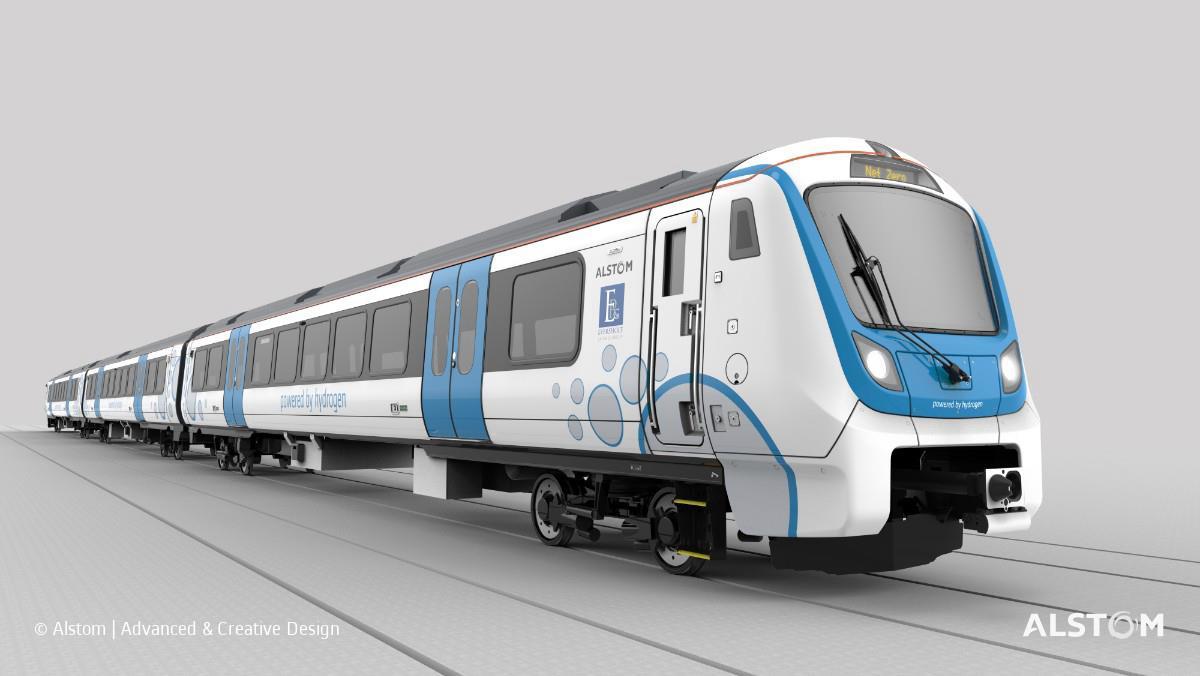
The first thing I notice is that the train doesn’t have the same aerodynamic nose as this current Class 710 train, which is one of the London Overground’s Aventras.
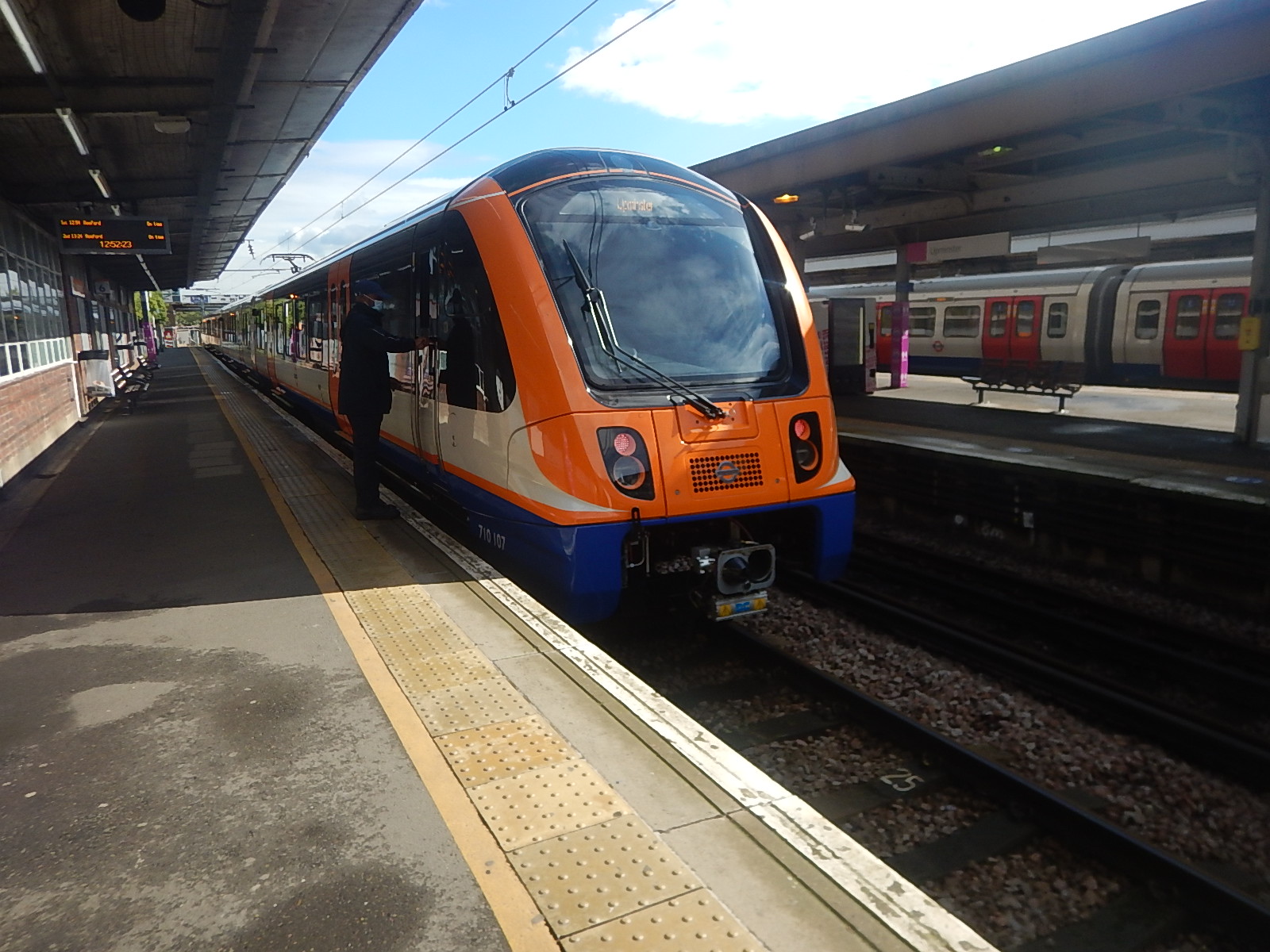
Note how the lights, coupler position and the front-end structure are all different.
These are my further thoughts on the design.
The Aventra’s Traction System
In this article in Global Rail News from 2011, which is entitled Bombardier’s AVENTRA – A new era in train performance, gives some details of the Aventra’s electrical systems. This is said.
AVENTRA can run on both 25kV AC and 750V DC power – the high-efficiency transformers being another area where a heavier component was chosen because, in the long term, it’s cheaper to run. Pairs of cars will run off a common power bus with a converter on one car powering both. The other car can be fitted with power storage devices such as super-capacitors or Lithium-ion batteries if required. The intention is that every car will be powered although trailer cars will be available.
Unlike today’s commuter trains, AVENTRA will also shut down fully at night. It will be ‘woken up’ by remote control before the driver arrives for the first shift
This was published over ten years ago, so I suspect Bombardier (or now Alstom) have refined the concept.
Bombardier have not announced that any of their trains have energy storage, but I have my suspicions, that both the Class 345 and Class 710 Aventra trains use super-capacitors or lithium-ion batteries, as part of their traction system design.
- I was told by a Bombardier driver-trainer that the Class 345 trains have an emergency power supply. When I said “Batteries?”, He gave a knowing smile.
- From the feel of riding on Class 710 trains, as a Control Engineer, I suspect there is a battery or supercapacitor in the drive system to give a smoother ride.
I also feel that the Aventra has been designed, so that it can accept power from a large variety of sources, which charge the battery, that ultimately drives the train.
The Formation Of A Three-Car Aventra
The only three-car Aventra is the Class 730/0 train.
I have not seen one of one of these trains in the metal and the formation can’t be found on the Internet. But Wikipedia does show the pantograph on the middle car.
In The Formation Of A Class 710 Train, I said this.
Here is the formation of the train.
DMS+PMS(W)+MS1+DMS
The plates on the individual cars are as follows.
DMS – Driving Motored Standard
-
- Weight – 43.5 tonnes
- Length – 21.45 metres
- Width 2.78 metres
- Seats – 43
The two DMS cars would appear to be identical.
PMS  -Pantograph Motored Standard
-
- Weight – 38.5 tonnes
- Length – 19.99 metres
- Width 2.78 metres
- Seats – 51
The signifies a wheelchair space.
MS1 – Motored Standard
-
- Weight – 32.3 tonnes
- Length – 19.99 metres
- Width 2.78 metres
- Seats – 52
It is similar in size to the PMS car, but has an extra seat.
So could the formation of a three-car Aventra be?
DMS+PMS(W)+DMS
I have just removed the MS1 car.
This would mean that a three-car Aventra has the following dimensions and capacity.
- Weight – 125.5 tonnes
- Length – 62.89 metres
- Seats – 137
There will probably be a difference between these figures and those of a three-car Class 730 train, as those trains have end-gangways.
Could All The Hydrogen Gubbins Fit Underneath The Train?
These pictures show the space underneath a Class 710 train.
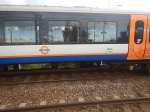
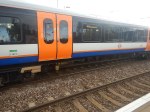
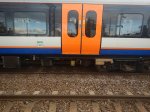
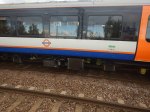
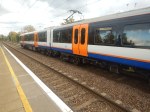
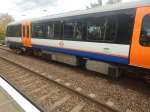
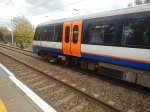
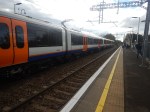
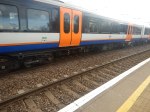
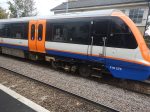
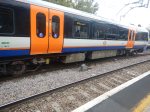
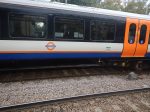

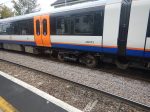
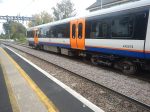
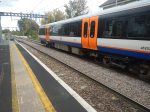
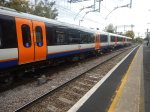
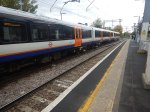
If you also look at Alstom’s visualisation of their Hydrogen Aventra on this post, there would appear to be lots of space under the train.
It should also be noted that Birmingham University’s engineers have managed to put all of the hydrogen gubbins underneath the floor of Porterbrook’s Class 799 train.
Looking at my pictures, you can see the following.
- The two DMS (Driving Motored Standard) cars have large boxes underneath
- The MS1(Motored Standard) car is fairly clear underneath. But this will probably not be there in a three-car train.
- The PMS (Pantograph Motored Standard) car has some space underneath.
If more space needs to be created, I suspect that the cars can be lengthened, between the bogies. The Class 710 trains have twenty metre intermediate cars, whereas some versions have twenty-four metre cars.
I believe that Aventras have been designed, so that various power sources could be installed under the floor.
When the Aventra was designed, over ten years ago, these could have included.
- A diesel generator and all the fuel tanks and cooling systems.
- A battery or other energy storage system.
Since then two other suitable power sources have been developed.
- Rolls-Royce, Honeywell and others have developed small and powerful gas-turbine generators.
- Ballard Power Systems and others have developed hydrogen fuel cell generators.
If you look at the proportions of the Alstom hydrogen train and the pictures of Class 710 trains, I feel that the Alstom train could have the longer twenty-four metre cars.
It may be a tight fit compared to creating the Alstom Coradia iLint hydrogen train, but I would feel it is possible to install a fuel cell or cells, the required cooling and the hydrogen tanks, having seen cutaway drawings of hydrogen-powered double-deck buses on the Wrightbus web site.
Interestingly, the Alstom press release doesn’t mention fuel cells, so could the train be powered by a small gas turbine?
I think it is unlikely, but it is technically feasible.
Does The Alstom Hydrogen Aventra Have Longer Cars?
I have been looking at pictures of Aventras on Wikipedia and in my own archive.
It appears that only Aventras with twenty-four metre carriages have five windows between the pair of double-doors in the intermediate carriages.
This picture shows the PMS car from a Class 710 train.
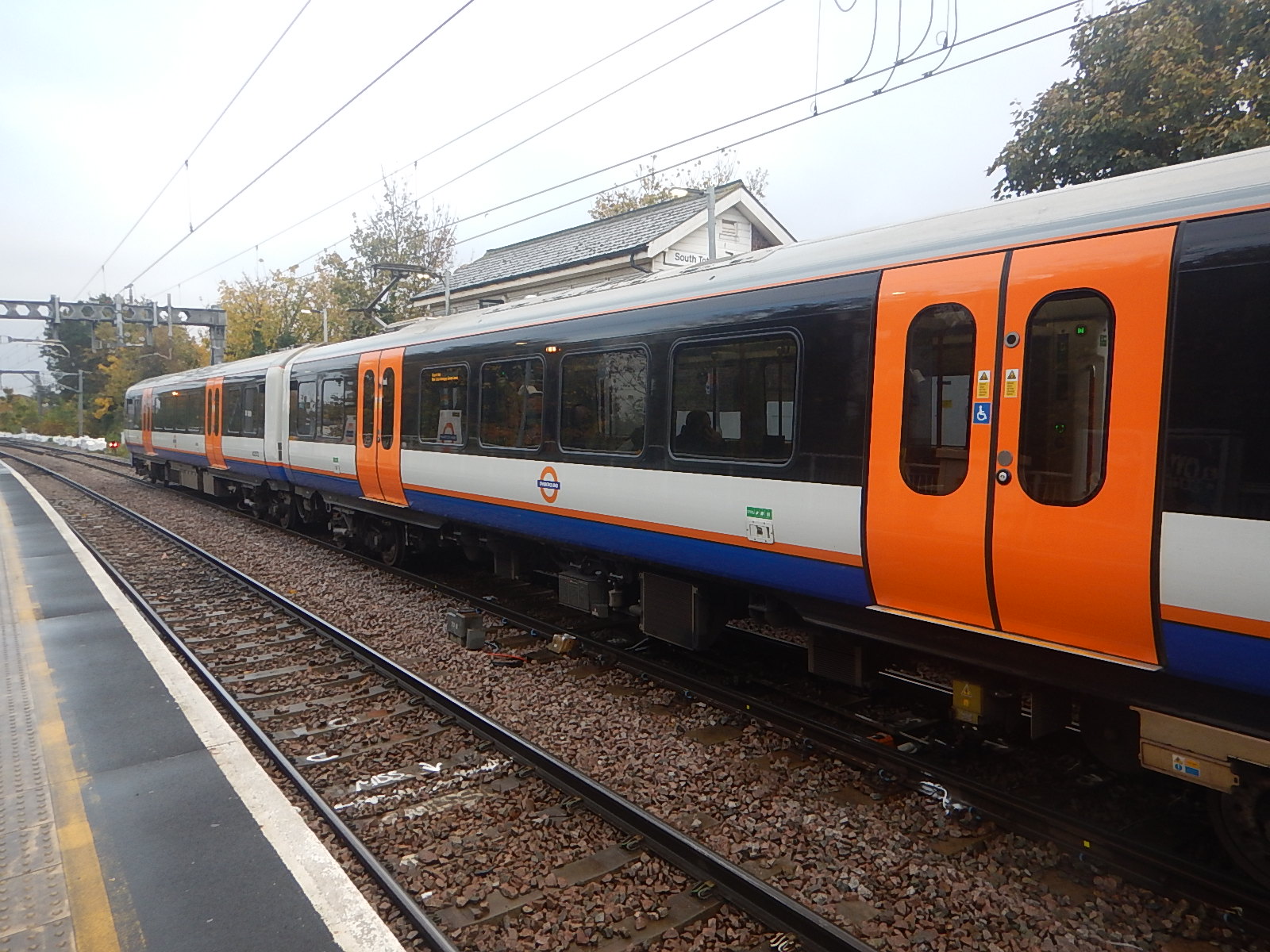
The PMS car is to the right and has four windows between the doors.
This is the side view of one of Greater Anglia’s Class 720 trains.
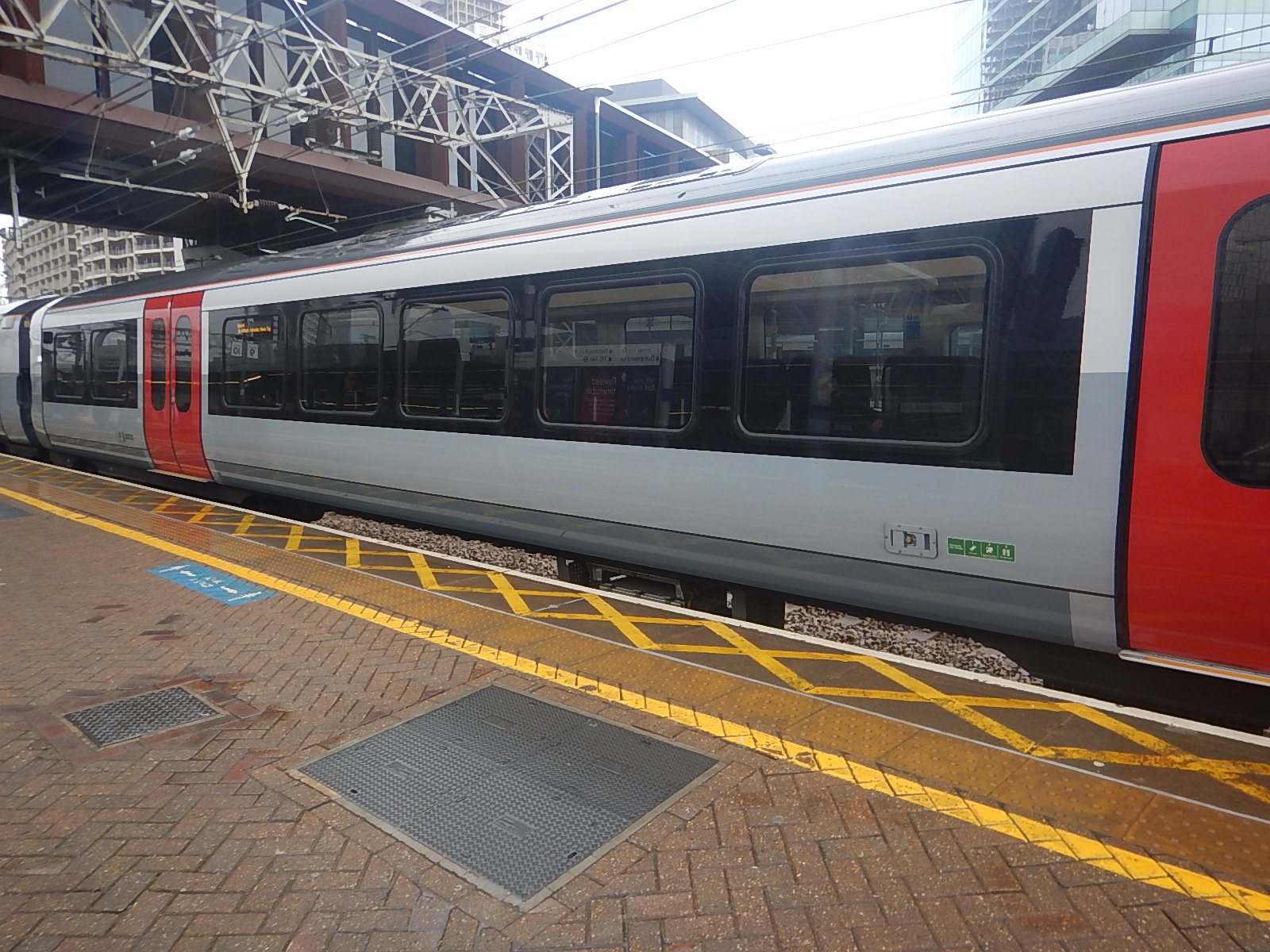
It has twenty-four metre intermediate cars and five windows.
It looks to me that the Alstom Hydrogen Aventra will have twenty-four metre cars.
This will give an extra four x 2.78 metres space under the train compared to a Class 710 train.
It would also appear that the Aventras with twenty-four metre cars also have an extra window in the driving cars, between the doors.
Does the four metre stretch make it possible to position tubular hydrogen tanks across the train to store a practical amount of hydrogen?
Is The Alstom Hydrogen Train Based On A Three-Car Class 730/0 Train?
I have just found this video of a three-car Class 730/0 under test.
And guess what! It has five windows between the doors.
But then it is a train with twenty-four metre cars.
It looks to me, that Alstom have looked at the current Aventra range and decided that the three-car Class 730/0 could be the one to convert into a useful train powered by hydrogen.
So if it is a Class 730/0 train with hydrogen gubbins under the floor, what other characteristics would carry over.
- I suspect Aventras are agnostic about power and so long as they get the right quantity of volts, amps and watts, the train will roll along happily.
- But it means that the train can probably use 25 KVAC overhead electrification, 750 VDC third-rail electrification, hydrogen or battery power.
- I wouldn’t be surprised if if could use 15 KVAC and 3KVDC overhead electrification for operation in other countries, with perhaps a change of power electronics or transformer.
- The interior layout of the trains can probably be the same as that of the Class 730/0 trains.
- The Class 730/0 trains have an operating speed of 90 mph and this could be good enough for hydrogen.
This could be a very capable train, that could find a lot of applications.
Could The Proposed Alstom Hydrogen Aventra Be Considered To Be A Class 730/0 Train With A Hydrogen Extender?
It appears that the only difference between the two trains is that the proposed Alstom Hydrogen Aventra has a hydrogen propulsion system, that can be used when the electrification runs out.
The hydrogen fuel cell will convert hydrogen into electricity, which will either be used immediately or stored in a battery on the train.
The Class 730/0 trains have already been ordered to run services on Birmingham’s electrified Cross-City Line.
There are plans to expand the line in the future and I do wonder if the proposed Alstom Hydrogen Aventras could be the ideal trains for extending the network.
How Does The Alstom Hydrogen Aventra Compare With The Class 600 Breeze Train?
The Class 600 train, which is based on the British Rail-era Class 321 train seems to have gone cold.
If it was a boxing match, it would have been stopped after the fourth round, if not before.
This Alstom visualisation shows the Class 600 train, which is also known as the Breeze.
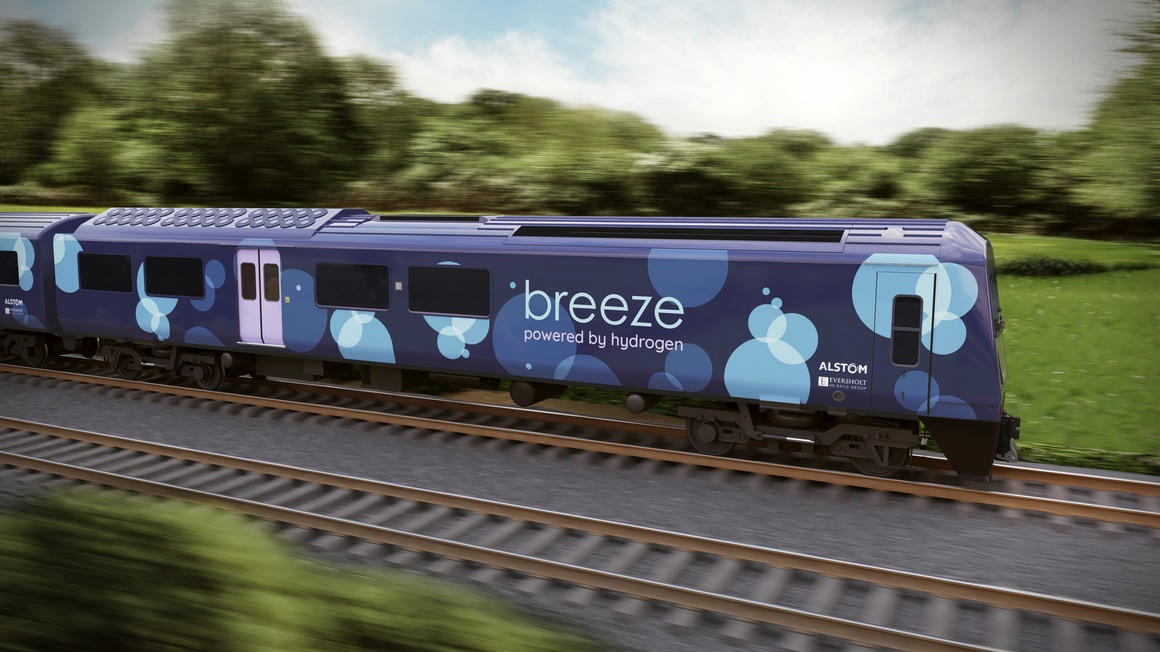
I have a feeling that Alstom have done their marketing and everybody has said that the Class 600 train wouldn’t stand up to a modern train.
- When you consider that each end of the train is a hydrogen tank, I wonder if possible passenger and driver reaction has not been overwhelmingly positive.
- The project was announced in January 2021 and in the intervening time, hydrogen technology has improved at a fast pace.
- There could even be a battery-electric version of the proposed Alstom Hydrogen Aventra.
- The modern train could possibly be lengthened to a four or five car train.
It does strike me, that if Alstom are going to succeed with hydrogen trains, that to carry on with the Class 600 train without an order into the future is not a good idea.
How Does The Alstom Hydrogen Aventra Compare With The Alstom Coradia iLint?
The Alstom Coradia iLint is the world’s first hydrogen train.

It is successfully in service in Germany.
These are some characteristics of the Coradia iLint from the Internet.
- Seats – 180
- Length – 54.27 metres
- Width – 2.75 metres
- Height – 4.31 metres
- Operating Speed – 87 mph
- Range – 370-500 miles
- Electrification Use – No
The same figures for the Alstom Hydrogen Aventra are as follows.
- Seats – 164
- Length – 72 metres
- Width – 2.78 metres
- Height – 3.76 metres
- Operating Speed – 90 mph
- Range – Unknown
- Electrification Use – Unknown, but I would expect it is possible.
Note.
- I have taken figures for the Alstom Hydrogen Aventra from the Class 730/0 train and other Aventras.
- The number of seats is my best estimate from using the seat density of a Class 710 train in a 24 metre long car.
- The width and height seem to be standard for most Aventras.
- Alstom have said nothing about the range on hydrogen.
- I am surprised that the Aventra is the wider train.
But what surprises me most, is how similar the two specifications are. Had the designer of the original Lint hoped to sell some in the UK?
What Is The Range Of The Alstom Hydrogen Aventra?
When they launched the Breeze, Alstom were talking about a range of a thousand kilometres or just over 620 miles.
I have talked to someone, who manages a large bus fleet and they feel with a hydrogen bus, you need a long range, as you might have to position the bus before it does a full day’s work.
Would similar positioning mean a hydrogen train needs a long range?
I suspect it would in some applications, but if the train could use electrification, as I suspect the Alstom Hydrogen Aventra can, this must help with positioning and reduce the range needed and the amount of hydrogen used.
Would Alstom aim to make the range similar to the Coradia iLint? It’s probably a fair assumption.
Could the Alstom Hydrogen Aventra Be Extended To Four Or Five Cars?
I don’t see why not, as Aventras are designed to be lengthened or shortened, by just adding or removing cars, just like their predecessors the Electrostars were.
I can certainly see routes, where a longer Alstom Hydrogen Aventra could be needed and if Alstom have also decided that such a train could be needed, they will surely have investigated how to lengthen the train.
Applications In The UK
These are links to a few thoughts on applications of the trains in the UK.
- Alstom Hydrogen Aventras And Extension Of The Birmingham Cross-City Line
- Alstom Hydrogen Aventras And The Reopened Northumberland Line
- Alstom Hydrogen Aventras And Great Western Branch Lines Between Paddington And Oxford
- Alstom Hydrogen Aventras And The Uckfield Branch
There are probably a lot more and I will add to this list.
Applications Elsewhere
If the Coradia iLint has problems, they are these.
- It can’t use overhead electrification, where it exists
- It has a noisy mechanical transmission, as it is a converted diesel multiple unit design.
The Alstom Hydrogen Aventra can probably be modified to use electrification of any flavour and I can’t see why the train would be more noisy that say a Class 710 train.
I suspect Alstom will be putting the train forward for partially-electrified networks in countries other than the UK.
Conclusion
This modern hydrogen train from Alstom is what is needed.
It might also gain an initial order for Birmingham’s Cross-City Line, as it is a hydrogen version of the line’s Class 730/0 trains.
But having a hydrogen and an electric version, that are identical except for the hydrogen extender, could mean that the trains would be ideal for a partially-electrified network.
There could even be a compatible battery-electric version.
All trains would be identical to the passenger and probably the driver too. This would mean that mixed fleets could be run by an operator, with hydrogen or battery versions used on lines without electrification as appropriate.
Fortescue Future Industries To Convert Ship To Ammonia-Fuelled Propulsion Next Year
The title of this post is the same as that of this article on Ship and Bunker.
Andrew Forrest is at it again.
Are Grand Central Going To Order Some Hitachi Intercity Battery Hybrid Trains?
I ask this question because I’ve just looked at the Hitachi infographic for the Hitachi Intercity Battery Hybrid Train, that I wrote about in Hitachi Rail And Angel Trains To Create Intercity Battery Hybrid Train On TransPennine Express
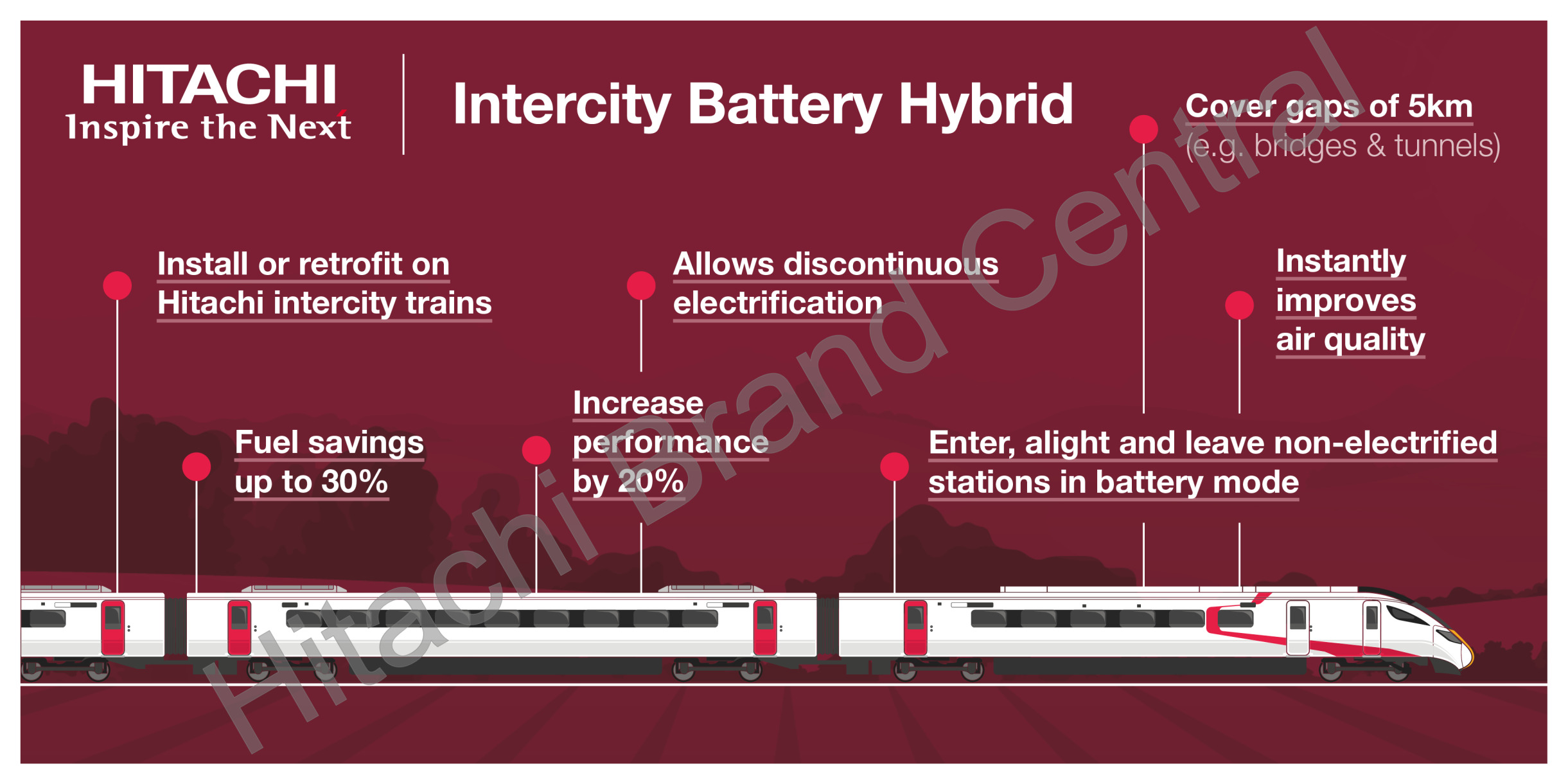
Note that in the background of the image Hitachi Grand Central can be seen.
Looking at Grand Central‘s routes I can say the following.
- The Sunderland service uses the fully-electrified East Coast Main Line to the South of Northallerton.
- The Bradford service uses the East Coast Main Line to the South of Shaftholme Junction.
- The Sunderland service runs for 47.4 miles on lines without electrification.
- The Bradford service runs for 47.8 miles on lines without electrification.
- The trains run at 125 mph on East Coast Main Line.
- Each service has around half-a-dozen stops, most of which are on lines without electrification.
Grand Central run the services using Class 180 diesel trains.
I think there are two possibilities for new trains.
Hitachi Intercity Battery Hybrid Train
This train would be similar to the Hitachi Intercity Battery Hybrid Train shown in the infographic.
- It would be designed to run efficiently on diesel.
- The train could run at 140 mph on electricity and with a signalling update.
- The claimed extra performance could speed up the services.
- Batteries would be used in stations.
There would be a worthwhile saving in fuel and less carbon emissions.
Hitachi Intercity Battery Hybrid Train With A Larger Battery
This would be similar to the standard train, but with a larger battery.
- Battery range would be sufficient to cover the lines without electrification.
- Charging would need to be installed at Bradford Interchange and Sunderland stations.
- The other two diesel engines might be replaced with batteries.
- No diesel would be used.
- The train could run at 140 mph on electricity and with a signalling update.
- The claimed extra performance could speed up the services.
- Batteries would be used in stations.
There would be no fuel costs and zero emissions.
In Grand Central Opts For Split And Join, I wrote about Grand Central’s application to run more services that had been reported in the April 2018 Edition of Modern Railways in an article that is entitled Grand Central Applies For Extra Services.
If Grand Central are still interested in expanding and splitting and joining, then the Hitachi trains, which have a proven ability in this area would fit the requirement.
In
Hitachi Rail And Angel Trains To Create Intercity Battery Hybrid Train On TransPennine Express
The title of this post, is the same as that of this Press Release from Hitachi Rail.
The press release starts with these three points.
- Hitachi Rail, Angel Trains and TransPeninne Express (TPE) agree to trial retrofitting battery on intercity train
- Trial, starting next year, can cut fuel usage by at least 20% and reduce emissions on Transpennine network from 2022 onwards
- Tri-mode service can cut noise pollution in urban areas and improve air quality.
Hitachi also point to this infographic.
This very much looks to be a step forward from the Intercity Tri-Mode Battery Train that was announced in December 2020 in this press release from Hitachi which is entitled Hitachi And Eversholt Rail To Develop GWR Intercity Battery Hybrid Train – Offering Fuel Savings Of More Than 20%.
The Intercity Tri-Mode Battery Train is described in this Hitachi infographic.

The specifications are very similar, except for the following.
- The battery range is given as five kilometres.
- Fuel savings are up to 30% instead of at least 20%.
- A performance increase of 30 % is claimed.
- The upgrade appears to be able to be fitted to Hitachi intercity trains, as opposed to a straight replacement of one engine by batteries.
It looks to me, that Hitachi have been working hard to improve their design.
I think this paragraph of the press release is key.
The trial will see a diesel engine replaced by batteries to help power a five-carriage train, along with the two remaining engines. The power provided by the batteries will help to reduce the amount of fuel required to operate the train.
Hitachi don’t say, but I suspect the trains and their batteries have a lot of energy saving features.
- Regenerative braking is already used to power some services like lighting and air-conditioning on the trains.
- But I suspect regenerative braking will also be used to recharge the batteries.
- A sophisticated computer system will drive the train in the most optimal manner.
- Hopefully, diesel will only be used as a last resort.
Features like these and others will enable the trains to jump gaps in the electrification. As more and more tricks are added and batteries hold more charge, the gaps the trains will be able to cross will get larger.
Five kilometres might not sound much, but I think it could be surprisingly useful.
I will use an example from the Midland Main Line to illustrate how the trains and discontinuous electrification might work.
In Discontinuous Electrification Through Leicester Station, I described the problems at Leicester station and how discontinuous electrification could solve the problem.
The following is a modified extract from that post.
This Google Map shows the bridge and the Southern end of the station.
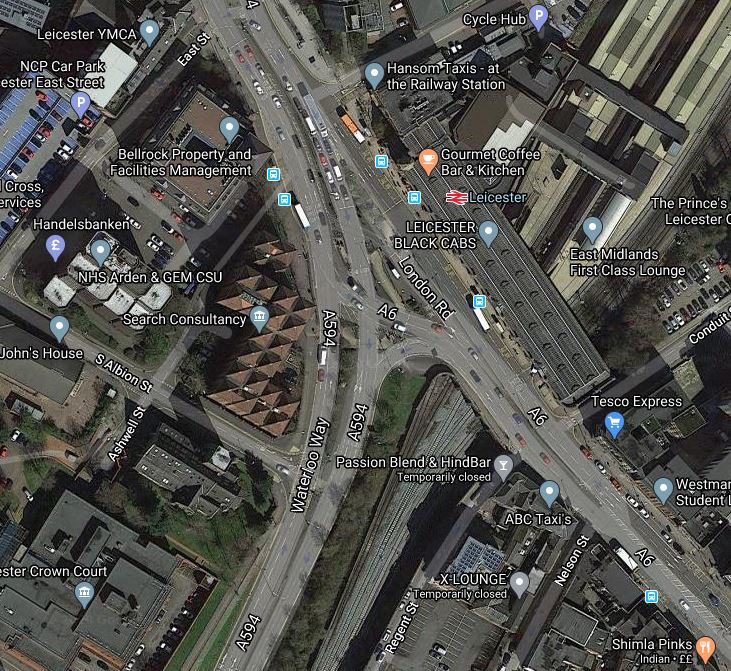
It looks to me, that Leicester station and the road, would have to be closed to traffic for some time, if the bridge were to be rebuilt, to allow the erection of electrification through the area. Leicester and all train passengers would love that!
A solution could be discontinuous electrification.
- The electrification from the South, would finish on the South side of bridge.
- The electrification from the North, would finish at a convenient point in Leicester station or just to the North.
- Electric trains would cover the gap of up to five kilometres on battery power.
Note.
Pantographs could be raised and lowered, where the wires exist.
Trains would probably use a stopping profile in Leicester station, that ensured they stopped with full batteries.
This would mean they had enough electricity to get back up to speed and reconnect to the electrification on the other side of the station.
To get an idea at how long five kilometres is in the Centre of Leicester, this Google Map shows the Leicester station.

Note that the platforms are around three hundred metres long.
In other words the electrification can be kept well away from the station and its troublesome bridge.
How much money would be saved and disruption avoided?
Application To The TransPennine Express Routes
These are the various routes, where Class 802 trains could be used.
Liverpool Lime Street And Edinburgh, Newcastle, Scarborough Or York
Sections are as follows.
- Liverpool Lime Street and Manchester Victoria – 31.7 miles – Electrified
- Manchester Victoria and Stalybridge – 8 miles – Electrified probably by 2024
- Stalybridge and Huddersfield – 18 miles – Diesel
- Huddersfield and Dewsbury – 8 miles – Electrified probably by 2024
- Dewsbury and Leeds – 9.2 miles – Diesel
- Leeds and York – 25.6 miles – Electrified probably by 2024
- York and Newcastle – 80.2 miles – Electrified
Note.
- All services take a common route between Liverpool Lime Street and York.
- A surprising amount is electrified.
- A further 42 miles are being electrified.
- The 3 km Morley Tunnel between Dewsbury and Leeds might not be electrified.
- The 5 km Standedge Tunnel between Huddersfield and Stalybridge might not be electrified.
It looks to me that the 5 km battery range will avoid electrification of two long Victorian tunnels.
Manchester Airport And Newcastle Or Redcar Central
Sections are as follows.
- Manchester Airport and Manchester Victoria – 13.2 miles – Electrified
- Manchester Victoria and Stalybridge – 8 miles – Electrified probably by 2024
- Stalybridge and Huddersfield – 18 miles – Diesel
- Huddersfield and Dewsbury – 8 miles – Electrified probably by 2024
- Dewsbury and Leeds – 9.2 miles – Diesel
- Leeds and York – 25.6 miles – Electrified probably by 2024
- York and Newcastle – 80.2 miles – Electrified
- Northallerton and Redcar Central – 29 miles – Diesel
The route goes through the Morley and Standedge tunnels.
Manchester Piccadilly And Hull
Sections are as follows.
- Manchester Piccadilly and Stalybridge – 7.5 miles – Electrified probably by 2024
- Stalybridge and Huddersfield – 18 miles – Diesel
- Huddersfield and Dewsbury – 8 miles – Electrified probably by 2024
- Dewsbury and Leeds – 9.2 miles – Diesel
- Leeds and Selby – 21 miles – Diesel
- Selby and Hull – 31miles – Diesel
The route goes through the Morley and Standedge tunnels.
Manchester Piccadilly And Huddersfield
The route goes through the Standedge tunnel.
Huddersfield And Leeds
The route goes through the Morley tunnel.
Manchester Airport And Cleethorpes
The Hope Valley Line which is part of this route has three tunnels.
Perhaps they will use a bit of diesel to get through Totley.
The Future
This paragraph sums up what Hitachi and Angel Trains could see as a possible future direction.
Once complete, the trial provides a pathway for Hitachi Rail, the train builder and maintainer, and Angel Trains, the train’s owner to develop plans to retrofit batteries to the wider fleet.
These plans will probably go in the directions like decarbonisation, more efficient operation and better standards for passengers.
Conclusion
This looks like a solution that has been helped by real ale in an appropriate hostelry.
- The battery range has been chosen so Network Rail don’t necessarily have to electrify the tunnels.
- Full electrification can be used either side of the tunnels.
- Will any stations not be electrified. After all if the trains are using battery power in stations do they need electrification?
- It might be useful to have some more bi-mode freight locomotives, that could traverse the tunnels on diesel or batteries.
Hitachi and Network Rail certainly seem to be cooking up a solution.
London’s Newest Property Hotspot Has Been Revealed — And It’s On The NLE Tube Line
The title of this post, is the same as that of this article on the Metro.
This doesn’t surprise me one bit.
Any new train or tram line, whether it is under or over the ground always creates a property hot spot.
That’s why London needs to develop the West London Orbital Railway, Crossrail to Ebbsfleet and New Bermondsey station as soon as possible, as the areas they serve need a lift.
On a wider view, it is also why reopening rail lines is such a good policy. Some might object to property hot-spots, but most residents of the UK, like it when property prices rise!
Carbon Emissions Cut With The New Trains In East Anglia
The title of this post, is the same as that of this article on Rail Advent.
The article explains the various ways Greater Anglia’s new trains cut carbon emissions.
The picture shows a PowerPack car of a Class 755 train.

The article indicates that these cars are more intelligent than I thought.
- Regenerative braking can be used to power the trains systems.
- The trains have a coast mode to cut emissions.
- The article also confirms, that with time some diesel engines will be replaced with batteries.
It will be interesting to see how much carbon emissions are saved, when the trains have batteries and software developments are complete.
The picture sh
Northumberland Line: Railway ‘Could Create Economic Powerhouse’
The title of this post, is the same as that of this article on the BBC.
This is the first paragraph.
An “east coast economic powerhouse” stretching from Edinburgh to Leeds could be created if the Northumberland Line rail scheme goes ahead, a public inquiry has been told.
The article also explains why a public inquiry is needed.
The article also says that about thirty objections have been raised.
Wright Electric Announces Plans For 100-Seater Electric Aircraft
The title of this post, is the same as that of this article on Electrive.
It is an article well worth a read about Wright’s plans to convert BAe 146 airliners into electric airlines.
Hydrogen-Powered Aircraft Offer Fresh Perspective For Sustainable Travel
The title of this post, is the same as that of this article on The Engineer.
The article puts forward the view of Jenny Kavanagh, Chief Strategy Officer, Cranfield Aerospace Solutions.
They are developing Project Fresson, which appears to have switched from electric to hydrogen propulsion. In the article Jenny Kavanagh says it is showing more promise and in the Wikipedia entry for Project Fresson, there is a section on hydrogen power, which details the switch.
As the article in The Engineer and the Wikipedia entry for Project Fresson seem to agree, I would assume that that the Wikipedia entry is being updated.
 The Anonymous Widower