Why Do 21 And 141 Buses Always Come Together?
To get between my house and Moorgate station, I use either a 21 or a 141 bus.
During the day, both buses run at a frequency of about one bus every ten minutes.
As the buses take exactly the same route between Bank station and Newington Green, surely it would be logical, if the buses were timed on this section, so that the buses ran every five minutes.
But inevitably, a 21 and a 141 bus always turn up together, which generally means if you miss both, you have to wait ten minutes until another pair come along.
Surely, a bus every file minutes might encourage more people to use the buses.
New 775m-Long Freight Trains Begin Operating On UK’s Rail Network
The title of this post, is the same as that as this article on Global Railway Review.
This is the first paragraph.
DP World have announced that its two deep-water ports at Southampton and London Gateway have become the first in the UK capable of handling Freightliner’s new 775m-long intermodal container trains.
It appears from the article that Birmingham, Manchester and Leeds can also handle these longer trains.
Linde Commits To Green Hydrogen For Trucks And Becomes H2Accelerate Member
The title of this post, is the same as that of this article on Hydrogen Fuel News.
- Linde have already installed more than two hundred hydrogen filling stations around the world.
- Now, it appears they intend to install a lot more.
Could this give a big stimulus to more hydrogen trucks, buses and other road vehicles?
It should probably be noted that Linde are a shareholder in ITM Power and have ordered several large electrolysers from the Sheffield company.
Rolls-Royce To Re-Engine A Fleet Of Aircraft That Went Into Service In 1955 For $2.6 Billion
This sounds like good business if you can get it for Rolls-Royce.
It’s all described in this press release from Rolls-Royce, which is entitled Rolls-Royce North America Selected To Power The B-52 Commercial Engine Replacement Program.
These are the first two paragraphs.
Rolls-Royce North America has been selected to provide the powerplant for the B-52 Stratofortress under the Commercial Engine Replacement Program (CERP), further extending a long history of powering the United States Air Force.
The decision means the American-made Rolls-Royce F-130 engine will power the B-52 for the next 30 years. The Air Force made the announcement after a vigorous multi-year competition.
Note.
- It looks like the B-52s will stay in service until 2050.
- That is not bad for an aircraft that first flew in 1952, when I was five.
Wikipedia describes the deal like this.
The USAF intends to purchase 650 engines (608 direct replacements, 42 spare engines) for its fleet of 76 B-52H aircraft in a $2.6 billion deal.
I suspect the accountants are pleased at Rolls-Royce, as $2.6 million is good cash-flow.
- The F-130 engine is a military variant of the BR725 engine, which was developed by Rolls-Royce Deutschland, which although it started as a joint-venture between Rolls-Royce and BMW, is now part of Rolls-Royce.
- The engines will be built by Rolls-Royce North America in Indianapolis.
So I suspect development costs will not be too horrendous!
Construction Ramps Up At £260 Million Mossend International Railfreight Park In Scotland
The title of this post, is the same as that of this article on Rail Engineer.
This is the first paragraph.
The development of a major new low carbon, multi-modal rail freight facility located in the heart of Scotland has taken a significant step forward with the laying of a private rail track to facilitate construction. Once complete, Mossend International Railfreight Park (MIRP) will provide 2.2 million sq ft of logistics space and Scotland’s first 775-metre electric rail terminal.
This looks to be all good stuff.
But Glasgow has needed the capability to handle 775-metre electric freight trains for some time.
- 775 metres is the length of the longest freight trains in use in the UK, after an increase in length, that I wrote about in New 775m-Long Freight Trains Begin Operating On UK’s Rail Network.
- Electric locomotives will cut carbon emissions.
- Mossend International Railfreight Park (MIRP) has a fully electrified connection to the West Coast Main Line (WCML).
- From the WCML routes are electrified most of the way to major freight destinations in England and to the Channel Tunnel.
So what took politicians so long to decide to upgrade the MIRP, as surely the ability to handle the longest electric freight trains will surely encourage the following?
- The movement of freight from road to rail.
- A reduction in freight traffic on the roads of Scotland and to a lesser extend England.
- The ability to run electric freight trains between Glasgow and Continental Europe.
If freight ramps up after the MIRP is completed, there’ll probably be a need for the following.
Some new highly capable locomotives like the Class 93 locomotive.
More than the proposed 16 trains per day (tpd).
They will certainly need the planned 24/7 operation.
This Google Map shows the site of the MIRP at the current time.
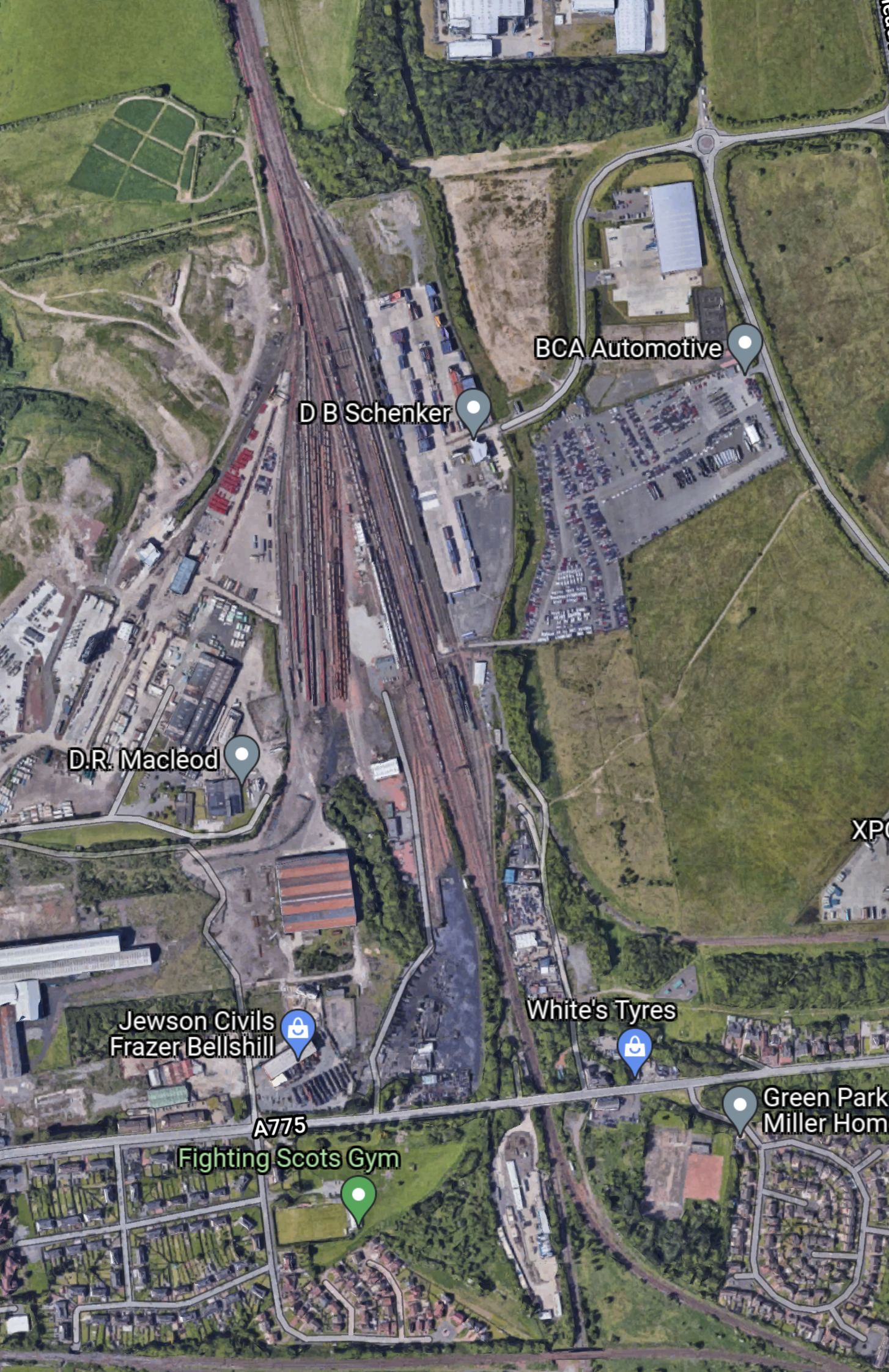
It will be interesting to see how the site grows.
Level Crossing Trouble On The Northumberland Line
There is an article on Chronicle Live, which is entitled Exodus Fears Over Northumberland Line Underpass Plans For Ashington.
There is also this sub-heading.
Opponents of a planned underpass in Ashington as part of work on the Northumberland Line rail project are being urged to have their say.
So what are some people protesting about?
This page on the ABC Railway Guide is entitled Hospital Crossing Level Crossing and gives details of the level crossing, that Network Rail want to replace with an underpass.
- The crossing is a public footpath crossing with whistleboards.
- Individual and collective risk rating is high.
- It is used by 110 pedestrians and cyclists per day.
- There don’t seem to have been many recent incidents.
I know of a similar crossing in a similar town to Ashington, where there have been several deaths and suicides.
As the Northumberland Line is likely to have a half-hourly service, which will mean four trains per hour (tph) over the crossing, I doubt any Health and Safety professional would sign off the Northumberland Line without separation of the trains from pedestrians and cyclists.
Admittedly, the main complaint of the residents is noise and drunken pedestrians, but aren’t the latter most likely to be run over by a train.
There is also suggestions that the crossing be moved further to the North.
This Google Map shows the crossing.
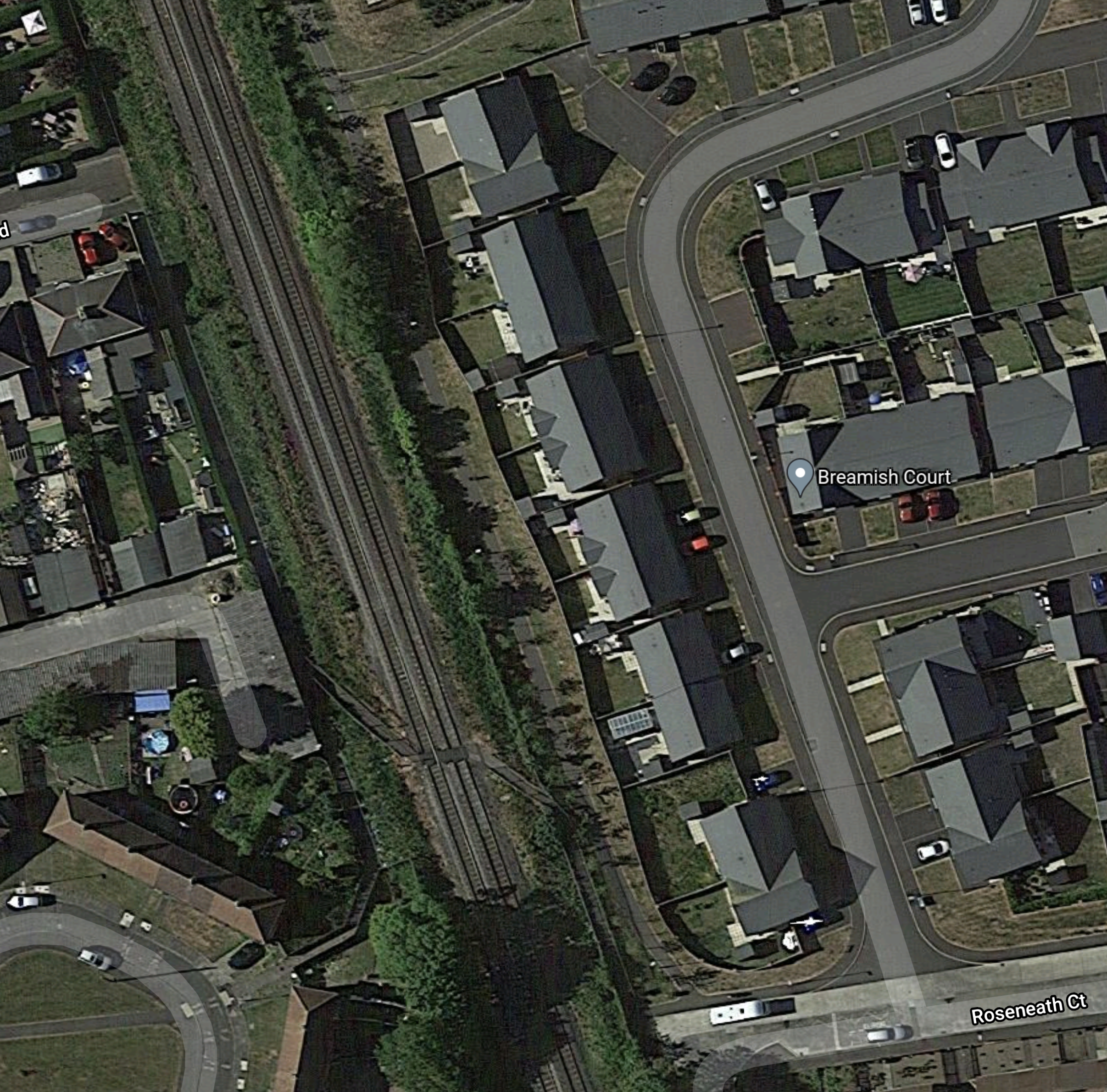
Note how the crossing zig-zags across the railway.
This second Google Map shows a 3D visualisation from the East.
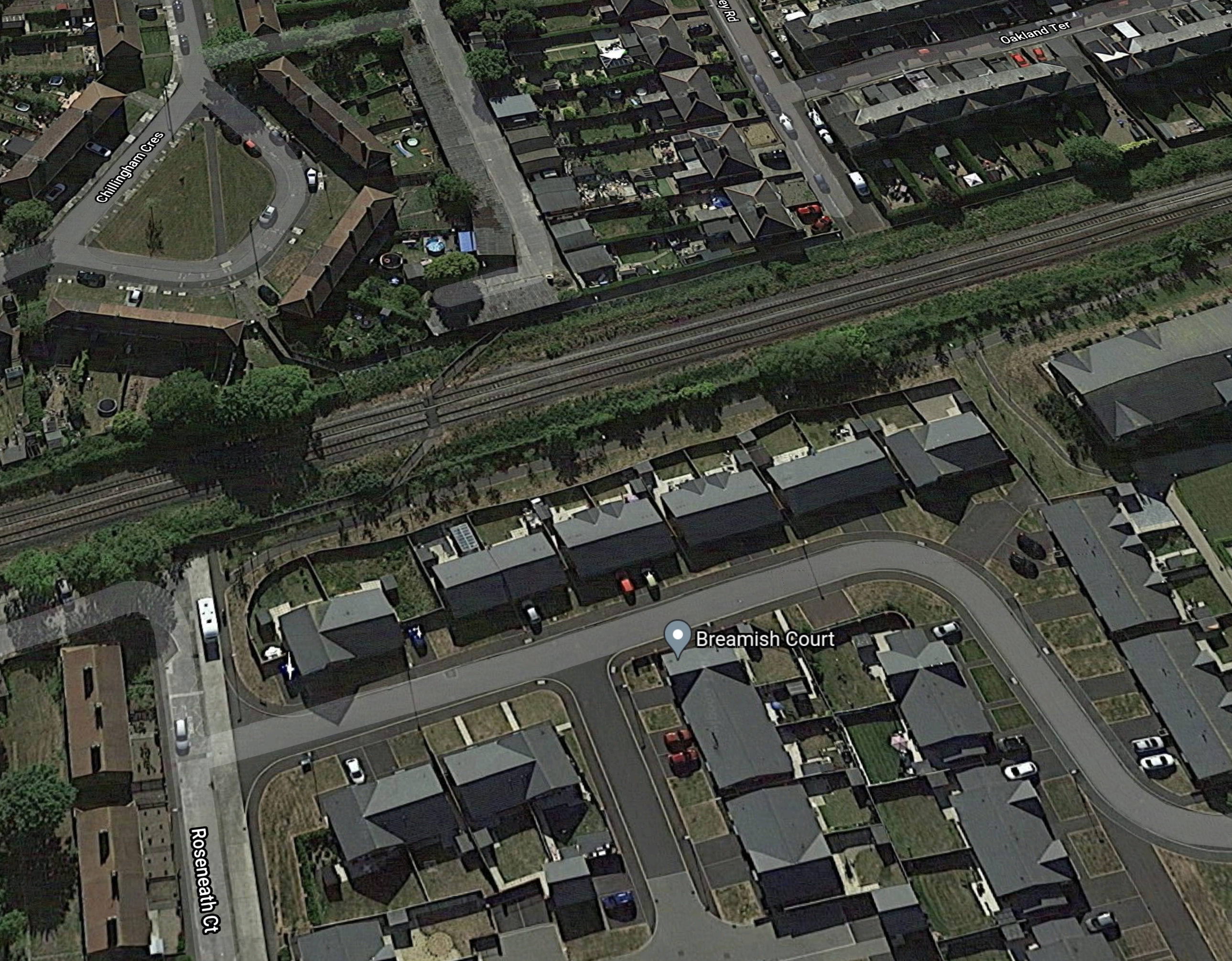
The proposed underpass would appear to connect Roseneath Court in the bottom-left and Darnley Road in the top-right.
- It does appear that the current route goes behind houses on both sides of the railway.
- I would suspect that underpasses could be built in line with both Roseneath Court and Darnley Road.
- But either route would mean that the noisy and the drunks would walk further in a parallel direction to the railway and would create more disturbance.
This level crossing argument will run and run, as many do.
The Effect Of Battery-Electric Trains
I think it is likely that services on this line could be run by battery-electric trains.
These trains could be new trains from CAF, Hitachi or Vivarail or modern electrical multiple units, that have been upgraded with batteries.
- They would be capable of 100 mph or more on the East Coast Main Line.
- They would run on battery power at an appropriate speed of perhaps 80 mph on the Northumberland Line, which is not planned to be electrified.
- I suspect the passenger trains will cruise up and down the Northumberland Line faster than the current freigtht trains.
- On battery power with no overhead wires, they will be very quiet trains.
Paradoxically, these new trains, although much better for passengers, could be more dangerous for the users of level crossings because of their faster speed and lower noise.
Panasonic Launches 5 kW Type Pure Hydrogen Fuel Cell Generator
The title of this post, is the same as that of this press release from Panasonic.
This is the first paragraph.
Panasonic Corporation today announced that it has developed a pure hydrogen fuel cell generator, which generates power through chemical reaction with high-purity hydrogen and oxygen in the air. The generator will be launched on October 1, 2021 for commercial use in Japan.
Features include.
- 5 kW basic unit scalable as needed.
- A hot water unit can be added to use the waste heat.
- Ability to run during a power outage.
- Remote operation.
I can envisage a log of uses for a useful generator like this and I will be interested to see how equipment like this is used in the future.
But there will be many generators in all sizes from many different manufacturers that will be released in the next few years to fulfil a lot of different applications.
We will also see lots of innovative ways to distribute hydrogen to various agricultural, industrial and office locations.
UK To Norway Sub-Sea Green Power Cable Operational
The title of this post is the same as that of this article on the BBC.
This is the first two paragraphs.
The world’s longest under-sea electricity cable, transferring green power between Norway and the UK, has begun operation.
The 450-mile (725km) cable connects Blyth in Northumberland with the Norwegian village of Kvilldal.
The BBC article is based on this press release from National Grid.
The link has been called the North Sea Link (NSL).
These are some thoughts.
What Is The Capacity Of The North Sea Link?
The National Grid press release says this.
[The link] will start with a maximum capacity of 700 megawatts (MW) and gradually increase to the link’s full capacity of 1400MW over a three-month period.
It also says this.
Once at full capacity, NSL will provide enough clean electricity to power 1.4 million homes.
It is more or less equivalent to two or three gas-fired power stations.
What Is The Operating Philosophy Of The North Sea Link?
The National Grid press release says this.
The Norwegian power generation is sourced from hydropower plants connected to large reservoirs, which can respond faster to fluctuations in demand compared to other major generation technologies. However, as the water level in reservoirs is subject to weather conditions, production varies throughout seasons and years.
When wind generation is high and electricity demand low in Britain, NSL will enable renewable power to be exported from the UK, conserving water in Norway’s reservoirs. When demand is high in Britain and there is low wind generation, hydro power can be imported from Norway, helping to ensure secure, affordable and sustainable electricity supplies for UK consumers.
It almost seems to me, that the North Sea Link is part of a massive pumped-storage system, where we can bank some of our wind-generated electricity in Norway and draw it out when we need it.
I would suspect that the rate and direction of electricity transfer is driven by a very sophisticated algorithm, that uses detailed demand and weather forecasting.
As an example, if we are generating a lot of wind power at night, any excess that the Norwegians can accept will be used to fill their reservoirs.
The Blyth Connection
This page on the North Sea Link web site, describes the location of the UK end of the North Sea Link.
These three paragraphs describe the connection.
The convertor station will be located just off Brock Lane in East Sleekburn. The site forms part of the wider Blyth Estuary Renewable Energy Zone and falls within the Cambois Zone of Economic Opportunity.
The converter station will involve construction of a series of buildings within a securely fenced compound. The buildings will be constructed with a steel frame and clad with grey insulated metal panels. Some additional outdoor electrical equipment may also be required, but most of the equipment will be indoors.
Onshore underground cables will be required to connect the subsea cables to the converter station. Underground electricity cables will then connect the converter station to a new 400kV substation at Blyth (located next to the existing substation) which will be owned and operated by National Grid Electricity Transmission PLC.
This Google Map shows the area.

Note.
- The light grey buildings in the North-West corner of the map are labelled as the NSL Converter Station.
- Underground cables appear to have been dug between the converter station and the River Blyth.
- Is the long silver building to the West of the triangular jetty, the 400 KV substation, where connection is made to the grid?
The cables appear to enter the river from the Southern point of the triangular jetty. Is the next stop Norway?
Britishvolt And The North Sea Link
Britishvolt are are building a factory at Blyth and this Google Map shows are to the North and East of the NSL Converter Station.
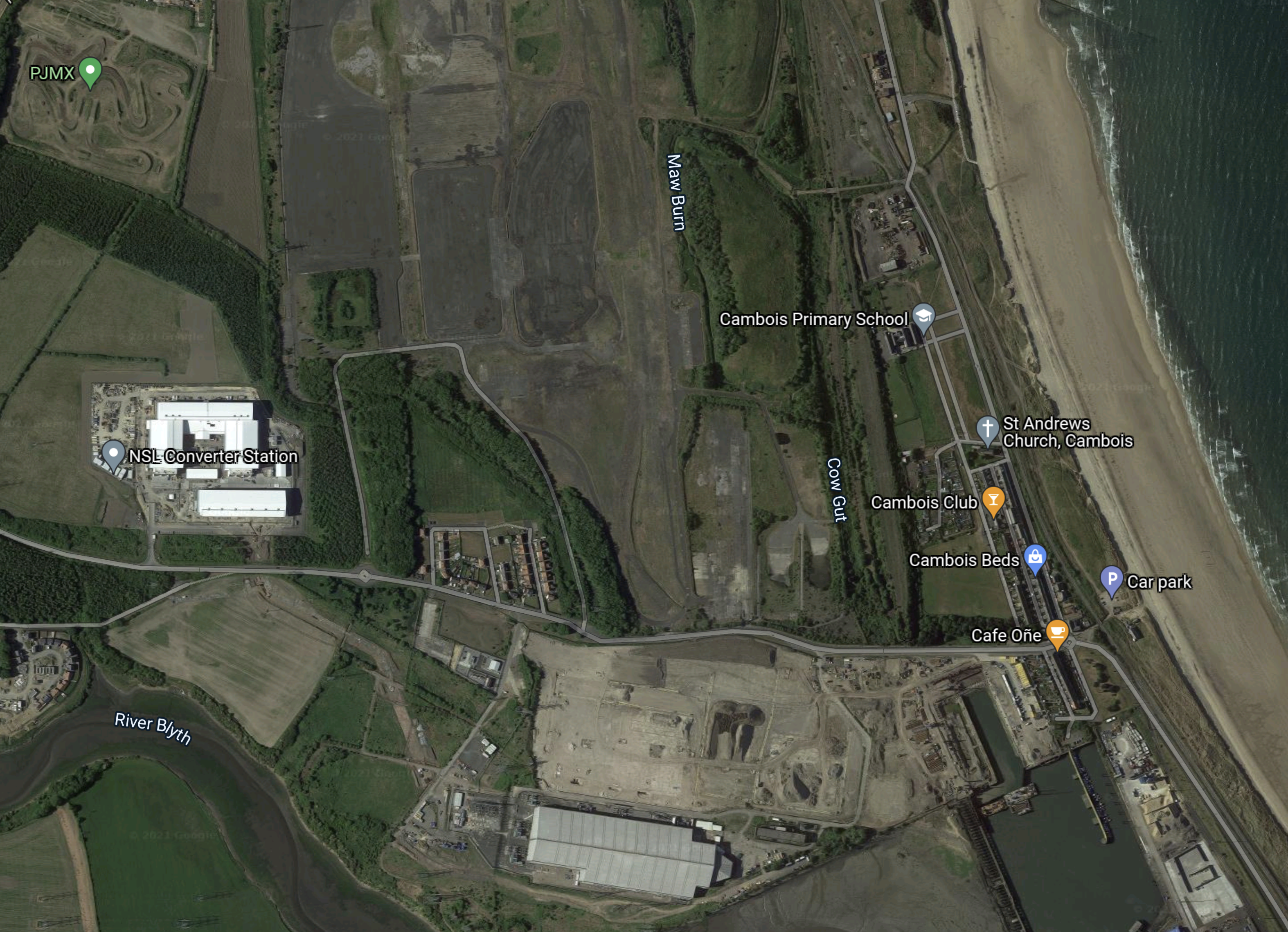
Note the light-coloured buildings of the NSL Converter Station.
I suspect there’s plenty of space to put Britishvolt’s gigafactory between the converter station and the coast.
As the gigafactory will need a lot of electricity and preferably green, I would assume this location gives Britishvolt all they need.
Where Is Kvilldal?
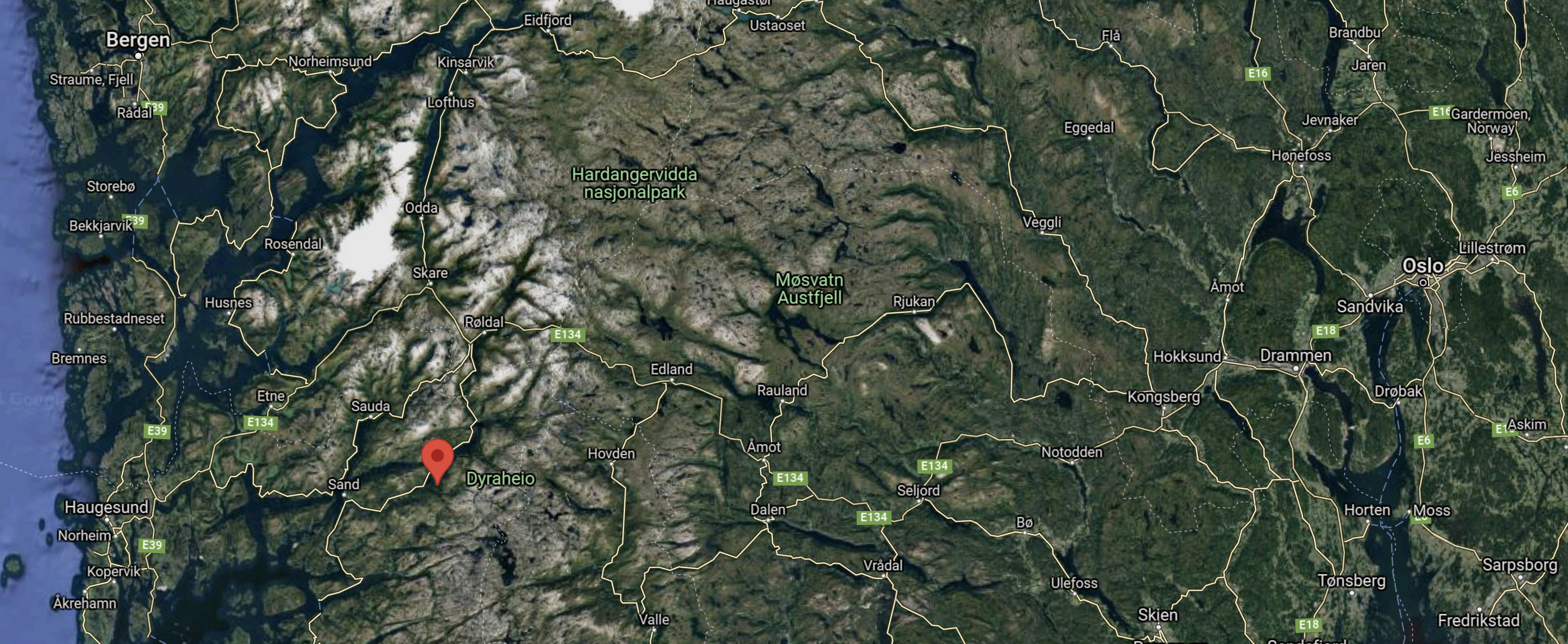
This Google Map shows the area of Norway between Bergen and Oslo.
Note.
- Bergen is in the North-West corner of the map.
- Oslo is at the Eastern edge of the map about a third of the way down.
- Kvilldal is marked by the red arrow.
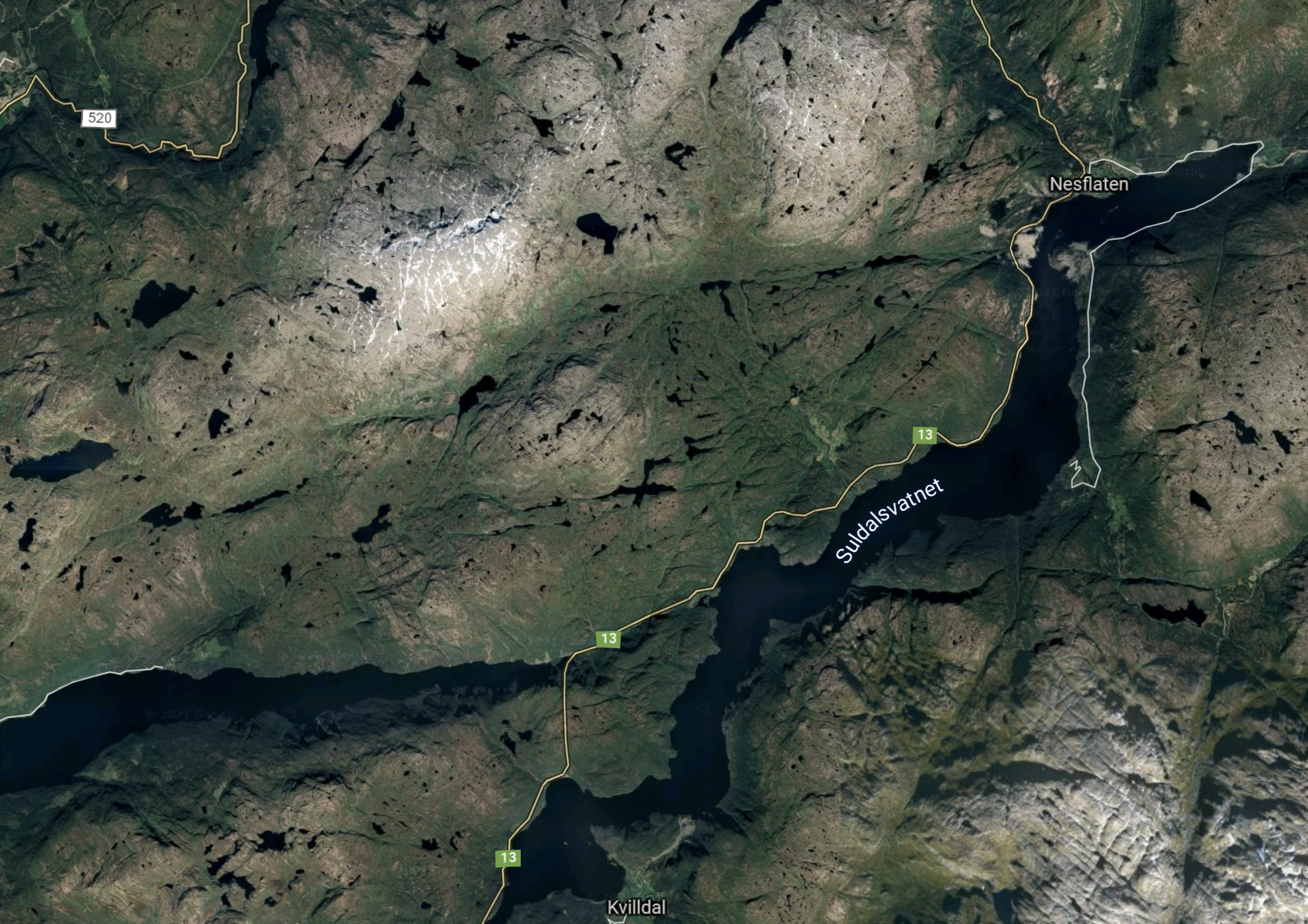
This second Google Map shows the lake to the North of Kvilldal.
Note.
- Suldalsvatnet is the sixth deepest lake in Norway and has a volume of 4.49 cubic kilometres.
- Kvilldal is at the South of the map in the middle.
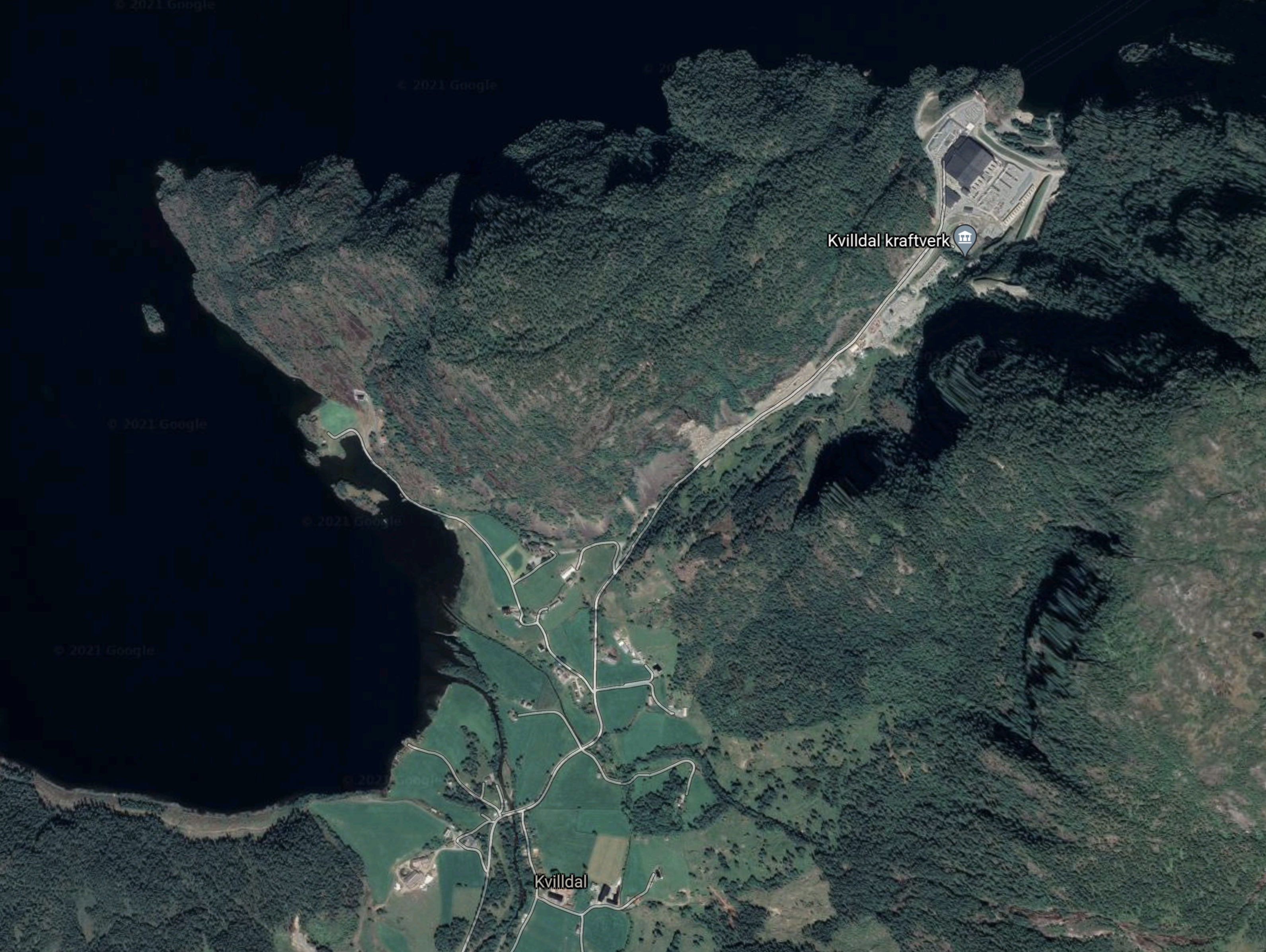
This third Google Map shows Kvilldal.
Note.
- Suldalsvatnet is the dark area across the top of the map.
- The Kvilldal hydro-electric power station on the shore of the lake.
- Kvilldal is to the South-West of the power station.
Kvilldal doesn’t seem to be the biggest and most populous of villages. But they shouldn’t have electricity supply problems.
Kvilldal Power Station And The North Sea Link
The Wikipedia entry for Kvilldal power station gives this information.
The Kvilldal Power Station is a located in the municipality of Suldal. The facility operates at an installed capacity of 1,240 megawatts (1,660,000 hp), making it the largest power station in Norway in terms of capacity. Statnett plans to upgrade the western grid from 300 kV to 420 kV at a cost of 8 billion kr, partly to accommodate the NSN Link cable] from Kvilldal to England.
This power station is almost large enough to power the North Sea Link on its own.
The Kvilldal power station is part of the Ulla-Førre complex of power stations and lakes, which include the artificial Lake Blåsjø.
Lake Blåsjø
Lake Blåsjø would appear to be a lake designed to be the upper reservoir for a pumped-storage scheme.
- The lake can contain 3,105,000,000 cubic metres of water at its fullest.
- The surface is between 930 and 1055 metres above sea level.
- It has a shoreline of about 200 kilometres.
This Google Map shows the Lake.
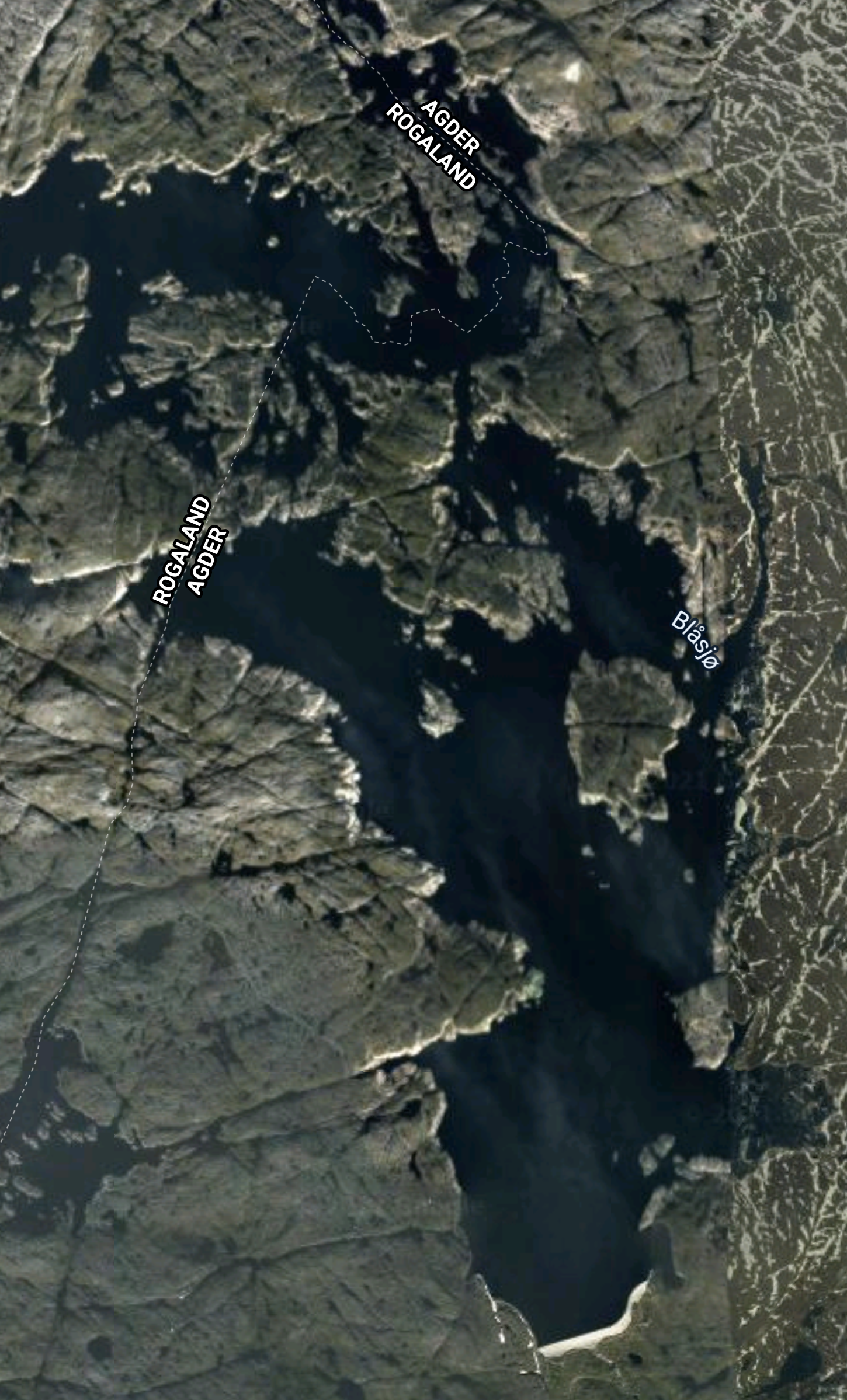
Note the dam at the South end of the lake.
Using Omni’s Potential Energy Calculator, it appears that the lake can hold around 8 TWh of electricity.
A rough calculation indicates that this could supply the UK with 1400 MW for over eight months.
The Wikipedia entry for Saurdal power station gives this information.
The Saurdal Power Station is a hydroelectric and pumped-storage power station located in the municipality of Suldal. The facility operates at an installed capacity of 674 megawatts (904,000 hp) (in 2015). The average energy absorbed by pumps per year is 1,189 GWh (4,280 TJ) (in 2009 to 2012). The average annual production is 1,335 GWh (4,810 TJ) (up to 2012)
This Google Map shows the area between Kvilldal and Lake Blåsjø.

Note
- Kvilldal is in the North West of the map.
- Lake Blåsjø is in South East of the map.
This second Google Map shows the area to the South-East of Kvilldal.
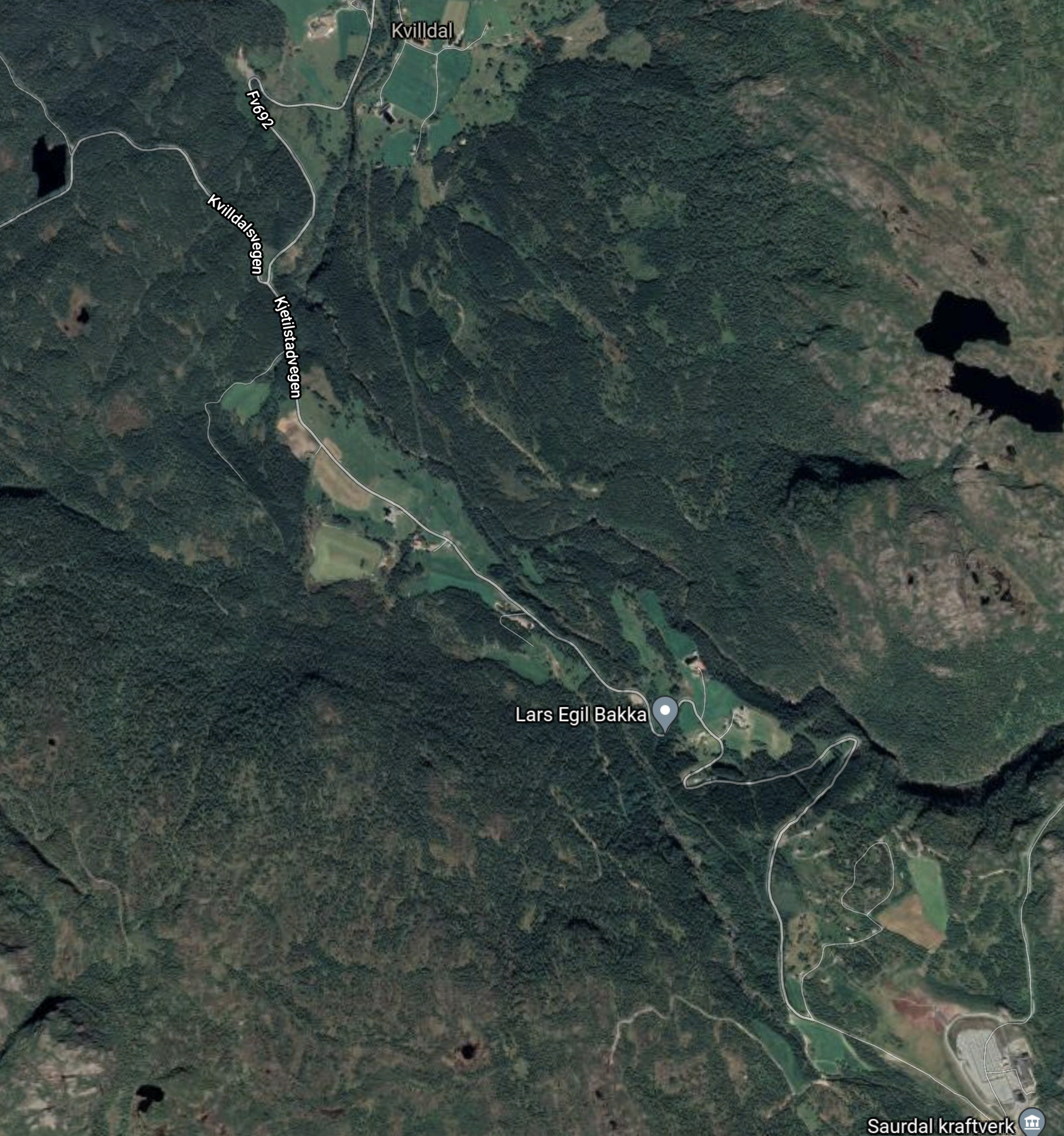
Note.
- Kvilldal is in the North-West of the map.
- The Saurdal power station is tight in the South-East corner of the map.
This third Google Map shows a close-up of Saurdal power station.

Saurdal power station is no ordinary power station.
This page on the Statkraft web site, gives a brief description of the station.
The power plant was commissioned during 1985-1986 and uses water resources and the height of fall from Lake Blåsjø, Norway’s largest reservoir.
The power plant has four generating units, two of which can be reversed to pump water back up into the reservoir instead of producing electricity.
The reversible generating units can thus be used to store surplus energy in Lake Blåsjø.
Is Lake Blåsjø and all the power stations just a giant battery?
Economic Effect
The economic effect of the North Sea Link to both the UK and Norway is laid out in a section called Economic Effect in the Wikipedia entry for the North Sea Link.
Some points from the section.
- According to analysis by the United Kingdom market regulator Ofgem, in the base case scenario the cable would contribute around £490 million to the welfare of the United Kingdom and around £330 million to the welfare of Norway.
- This could reduce the average domestic consumer bill in the United Kingdom by around £2 per year.
- A 2016 study expects the two cables to increase price in South Norway by 2 øre/kWh, less than other factors.
This Economic Effect section also talks of a similar cable between Norway and Germany called NorGer.
It should be noted, that whereas the UK has opportunities for wind farms in areas to the North, South, East and West of the islands, Germany doesn’t have the space in the South to build enough wind power for the area.
There is also talk elsewhere of an interconnector between Scotland and Norway called NorthConnect.
It certainly looks like Norway is positioning itself as Northern Europe’s battery, that will be charged from the country’s extensive hydropower and surplus wind energy from the UK and Germany.
Could The Engineering Be Repeated?
I mentioned NorthConnect earlier.
- The cable will run between Peterhead in Scotland and Samnanger in Norway.
- The HVDC cable will be approximately 665 km long.
- The cable will be the same capacity as the North Sea Link at 1400 MW.
- According to Wikipedia construction started in 2019.
- The cable is planned to be operational in 2022.
- The budget is €1.7 billion.
Note.
- Samnager is close to Bergen.
- NorthConnect is a Scandinavian company.
- The project is supported by the European Union, despite Scotland and Norway not being members.
- National Grid is not involved in the project, although, they will be providing the connection in Scotland.
The project appears to be paused at the moment, awaiting how North Sea Link and NordLink between Norway and Germany are received.
There is an English web site, where this is the mission statement on the home page.
NorthConnect will provide an electrical link between Scotland and Norway, allowing the two nations to exchange power and increase the use of renewable energy.
This sounds very much like North Sea Link 2.
And then there is Icelink.
- This would be a 1000-1200 km link between Iceland and the UK.
- It would have a capacity of 1200 MW.
- National Grid are a shareholder in the venture.
- It would be the longest interconnector in the world.
The project appears to have stalled.
Conclusion
I can see these three interconnectors coming together to help the UK’s electricity generation become carbon-free by 2035.
Life After Pancreatic Cancer
The London Marathon always throws up human stories.
This one from the Argus, which is entitled Youngest London Marathon Runner Raising Funds For Medics Who Saved Her Life, is one of the best I can remember.
These are the first two paragraphs.
The youngest runner in the London Marathon is undertaking the challenge to raise money for the medics who saved her life by carrying out surgery to remove a tumour from her gut the size of a large grapefruit.
Lucy Harvey, from Poole, Dorset, was admitted to Poole Hospital in January 2019 with appendicitis, but the pre-op scans identified a mass on her pancreas.
This story has really touched me.
- My son died at 37 from pancreatic cancer.
- His daughter, who is now eighteen, was born with a congenital hernia of the diaphragm and was saved by heroic surgery in the Royal London Hospital by Vanessa Wright.
- I support pancreatic cancer research at Liverpool University, where I met my late wife in the 1960s.
- I raised a little bit of money, for the pancreatic cancer study I talk about in There’s More To Liverpool Than Football And The Beatles!.
My granddaughter now lives a reasonably normal life!
Pop Up Metro Aims To Provide Affordable Passenger Operation
The title of this post, is the same as that of this article on Trains News Wire.
It describes entrepreneur Henry Posner’s Railroad Development Corporation‘s concept of a Pop-Up Metro and how it is being demonstrated in Rockhill, Pennsylvania, where it is being demonstrated at the Rockhill Trolley Museum.
Routes suggested in the article include.
Not all these routes are fully electrified.
There is some interesting ideas in the concept.
The female project manager is also quoted as saying
I found that if you just say yes to Henry, something interesting happens!
Little did I think, that these days, I’d see that said in a serious article.
Let’s hope that represents the can-do approach behind the design, but staying within the rules of safety.
 The Anonymous Widower