Go-Ahead For West London 460-Home Build To Rent Scheme
The title of this post, is the same as that of this article on Construction Enquirer.
This is the first paragraph.
The scheme is the first to be brought forward by Connected Living London, a partnership between build to rent specialist Grainger and Transport for London.
This must be the way for London to get best value from all the suitable sites for housing, owned by Transport for London.
Four sites are mentioned in the article.
- Next to Southall station
- Next to Arnos Grove station
- Montford Place in Kennington. which is currently being used as a construction site for the Northern Line Extension.
- Above the new Nine Elms station on the Northern Line Extension.
These are some thoughts on the sites.
Arnos Grove Station
The developers will have to be careful, with the design at Arnos Grove station, as it’s a Grade II* Listed building.
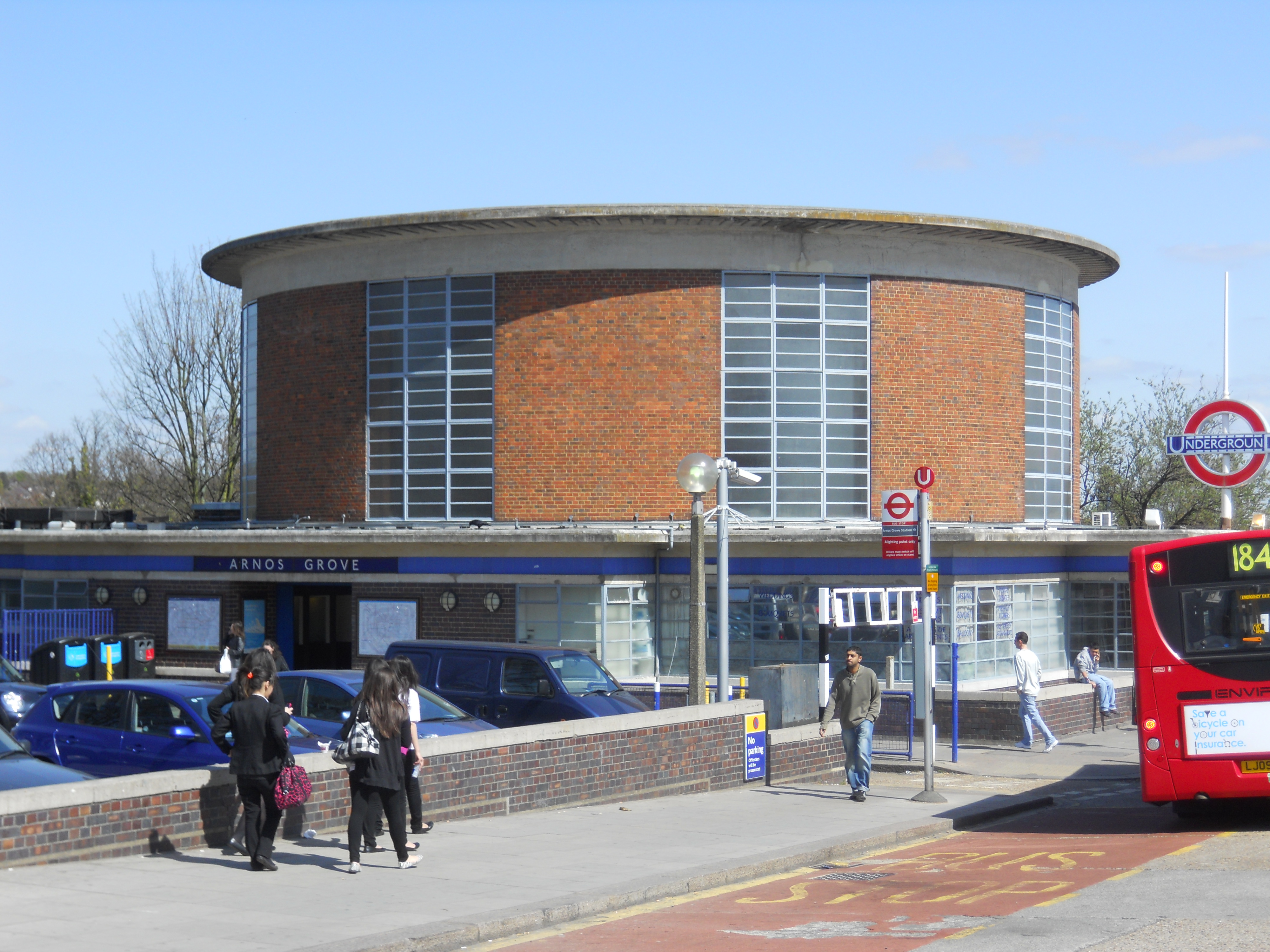
This Google Map shows the station.

I never knew, that the station had so much parking.
Will the development be over some or all of this car parking?
This article on Ian Visits is entitled Plans To Build Flats On Arnos Grove Tube Station Car Park.
Ian says that there will be four blocks, with a total of162 rental homes, of which 40 % will be affordable.
- It doesn’t seem to be high density or high towers.
- A map shows it is not over the railway.
Ian also says this about the loss of car parking.
Unsurprisingly, there are local objections to the plans to remove the car park with nearly 300 parking spaces, although TfL counters that a third of the people who currently drive to the station living within walking distance.
But then many people never drive very far from where they live. For environmental reasons, perhaps fossil fuel vehicles should pay a Movement Tax of say five pounds, every time the vehicle is moved in a built-up area. Zero-emission vehicles would be exempt!
Montford Place
I took these pictures of the Montford Place site in July.



This site could be sensitive too! But surely, the residents don’t want an ugly utilitarian headhouse for the ventilation shaft of the Northern Line Extension.
This Google Map shows the site.

It is not small, judging by the two buses at the side.
There’s also a large hole to cover!
Green Tugboats? ‘Revolutionary’ Hydrogen Ship Engine Unveiled In Belgium
The title of this post, is the same as that of this article on Business Green.
This is the first paragraph.
A “revolutionary” hybrid ship engine powered by green hydrogen and diesel has been unveiled today in Belgium, with developers claiming the innovation could cut CO2 emissions from ships, trains and electricity generators by up to 85 per cent.
The engine has been given the name BeHydro.
The first order has been received by the developers; ABC, for two 2MW dual fuel engines that will be installed on a hydrogen-powered tug for the Port of Antwerp.
Motors up to the size of 10 MW are under development.
This is the last sentence of the article.
In theory, any large diesel engine can be replaced by a BeHydro engine. The hydrogen future starts today.
It is a quote from the CEO of one of the companies involved.
Conclusion
This is a development to follow.
The BeHydro engine, with its dual-fuel approach, is claimed to cut carbon emissions by 85 %.
In the Wikipedia entry for ABC or Anglo Belgian Corporation, there is a section called Products. This is a paragraph.
The engines are found in use on large river barges such as those found on the Rhine, coastal freighters, fishing boats, ferries, tugboats (which typically use 2 engines), and other ships. Other applications include electricity generation, and pumping engines, engines for cranes, and locomotives (including the Belgian Railways Class 77 and Voith Maxima), as well as dual fuel (gas/oil) DZD engines.
I feel that that the BeHydro engine will keep the company busy.
Four Must-Read Articles From H2-View
I have just read these articles on H2-View.
- New partnership aims to convert Dash 8 airliner to hydrogen fuel
- 1,000 new hydrogen-powered buses planned for European roads
- Investing in hydrogen trains will put UK green recovery on the fast track
- Mercedes-Benz GenH2 Truck revealed
They are all worth a read.
The last one includes an informative video about German policy on hydrogen.
Preliminary Sampling Indicate Significant Lithium Grades In Geothermal Waters At United Downs Project, Cornwall
The title of this post, is the same as that of this article on Think Geoenergy.
This is the introductory paragraph.
Cornish Lithium releases announcement on finding “globally significant” lithium grades in geothermal waters at the United Downs Deep Geothermal Power Project in Cornwall, UK and is now preparing for work on a pilot plant.
The article gives a full explanation.
There is more on this press release on the Cornish Lithium web site.
Cleethorpes Station – 16th September 2020
On Wednesday, I took a trip on the South Humberside Main Line from Doncaster to Cleethorpes and back.
Cleethorpes station is a terminal station on the beach, with cafes not far away.



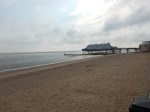
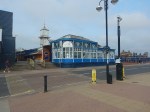

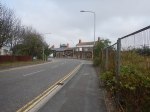
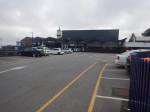

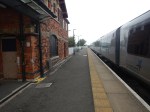
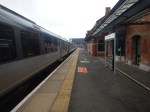
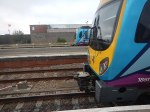
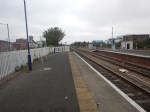
This Google Map shows the station and its position on the sea-front and the beach.
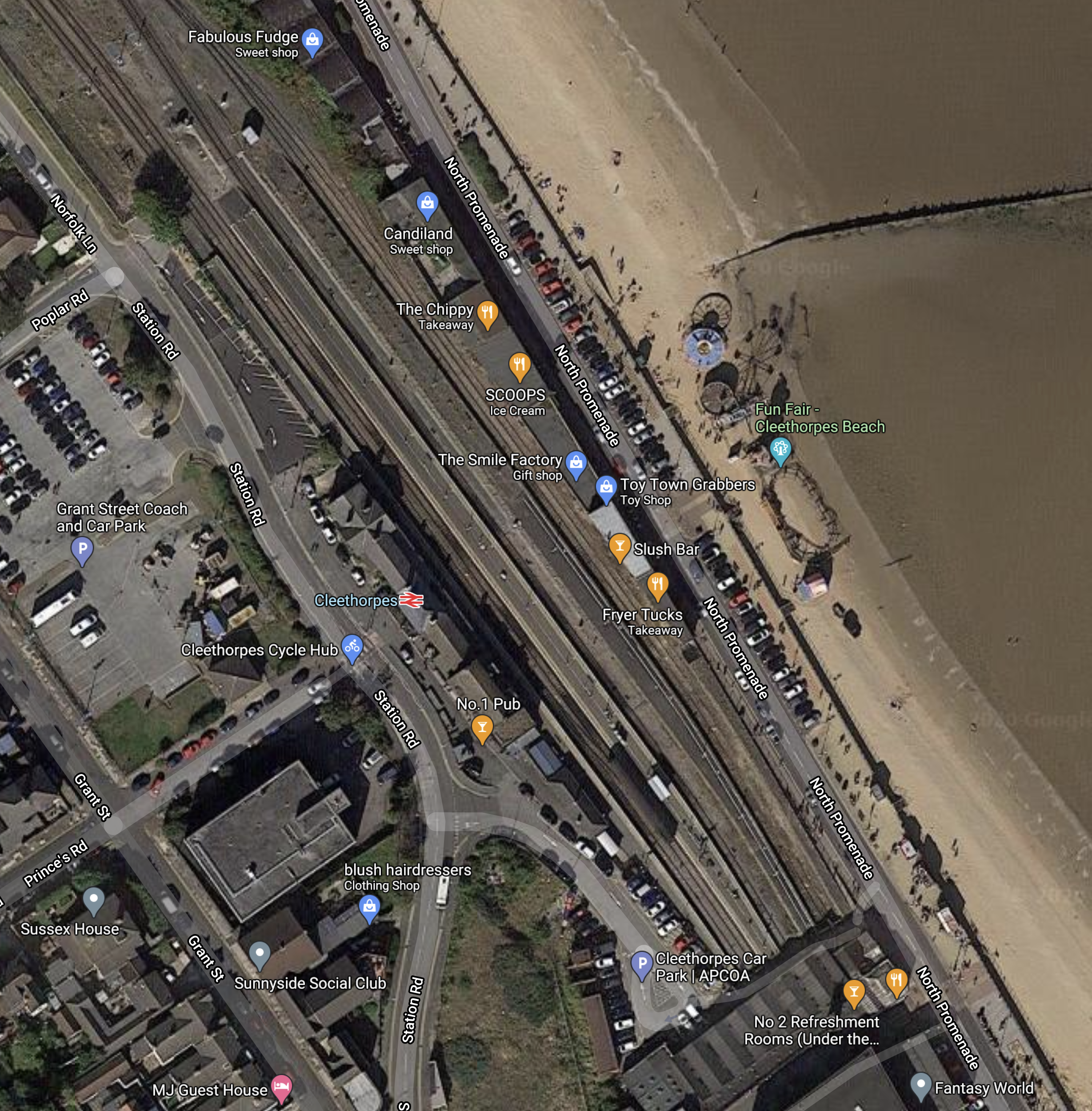
The station organisation was a bit shambolic at present, probably more to do with COVID-19 than anything else, but the station and the train services could be developed into something much better, when the good times return, as they surely will.
Improving The Station Facilities
The original station building is Grade II Listed and although it is only only a three-platform station, there used to be more platforms.
Five platforms or even six would be possible, if there were to be a need.
But as the station has wide platforms, is fully step-free and has most facilities passengers need, most of the improvements would involve restoring the original station building for a productive use.
The Current Train Service
The main train service is an hourly TransPennine Express service between Cleethorpes and Manchester Airport stations via Grimsby Town, Scunthorpe, Doncaster, Sheffield and Manchester Piccadilly.
The trains are Class 185 trains, which are modern diesel multiple units, which entered service in 2006.
There is also a two-hourly service along the Barton Line to Barton-upon-Humber station.
It should be noted that all services to and from Cleethorpes, call at Grimsby Town station.
Could The TransPennine Service Be Run By Battery Electric Trains?
The route between Cleethorpes and Manchester Airport can be split into the following legs.
- Cleethorpes and Grimsby Town – Not Electrified – 3,25 miles – 8 minutes
- Grimsby Town and Habrough – Not Electrified – 8 miles – 12 minutes
- Habrough and Doncaster – Not Electrified – 41 miles – 56 minutes
- Doncaster and Sheffield – Not Electrified – 19 miles – 29 minutes
- Sheffield and Stockport – Not Electrified – 37 miles – 41 minutes
- Stockport and Manchester Piccadilly – Electrified – 6 miles – 10 minutes
- Manchester Piccadilly and Manchester Airport – Electrified – 11 miles – 12 minutes
Note.
- At the Manchester end of the route, trains are connected to the electrification for at least 44 minutes.
- The longest non-electrified leg is the 52 miles between Cleethorpes and Doncaster stations.
- Doncaster is a fully-electrified station.
This infographic shows the specification of a Hitachi Regional Battery Train.

TransPennine Express has a fleet of nineteen Class 802 trains, which can have their diesel engines replaced with battery packs to have a train with the following performance.
- 125 mph operating speed, where electrification exists.
- 56 mile range at up to 100 mph on battery power.
- 15 minute battery charge time.
- Regenerative braking to battery.
- They are a true zero-carbon train.
What infrastructure would be needed, so they could travel between Cleethorpes and Manchester Airport stations?
- If between Cleethorpes and Habrough stations were to be electrified, this would give at least 20 minutes of charging time, plus the time taken to turn the train at Cleethorpes. This would surely mean that a train would leave for Manchester, with a full load of electricity on board and sufficient range to get to Doncaster and full electrification.
- If between Doncaster and Sheffield were to be electrified, this would give at least 25 minutes of charging time, which would be enough time to fully-charge the batteries, so that Grimsby Town in the East or Stockport in the West could be reached.
I suspect that Doncaster and Sheffield could be an early candidate for electrification for other reasons, like the extension of the Sheffield tram-train from Rotherham to Doncaster.
Could The Cleethorpes And Barton-on-Humber Service Be Run By Battery Electric Trains?
Cleethorpes And Barton-on-Humber stations are just 23 miles apart.
This is probably a short enough route to be handled on and out and back basis, with charging at one end by a battery electric train. Vivarail are claiming a sixty mile range for their battery electric Class 230 trains on this page of their web site.
If between Cleethorpes and Grimsby Town stations were to be electrified, this would mean that a range of only forty miles would be needed and the batteries would be charged by the electrification.
A full hourly service, which is surely needed, would need just two trains for the service and probably a spare.
Cleethorpes And London King’s Cross Via Grimsby Town, Market Rasen, Lincoln Central And Newark North Gate
The Wikipedia entry for Cleethorpes station has references to this service.
This is the historical perspective.
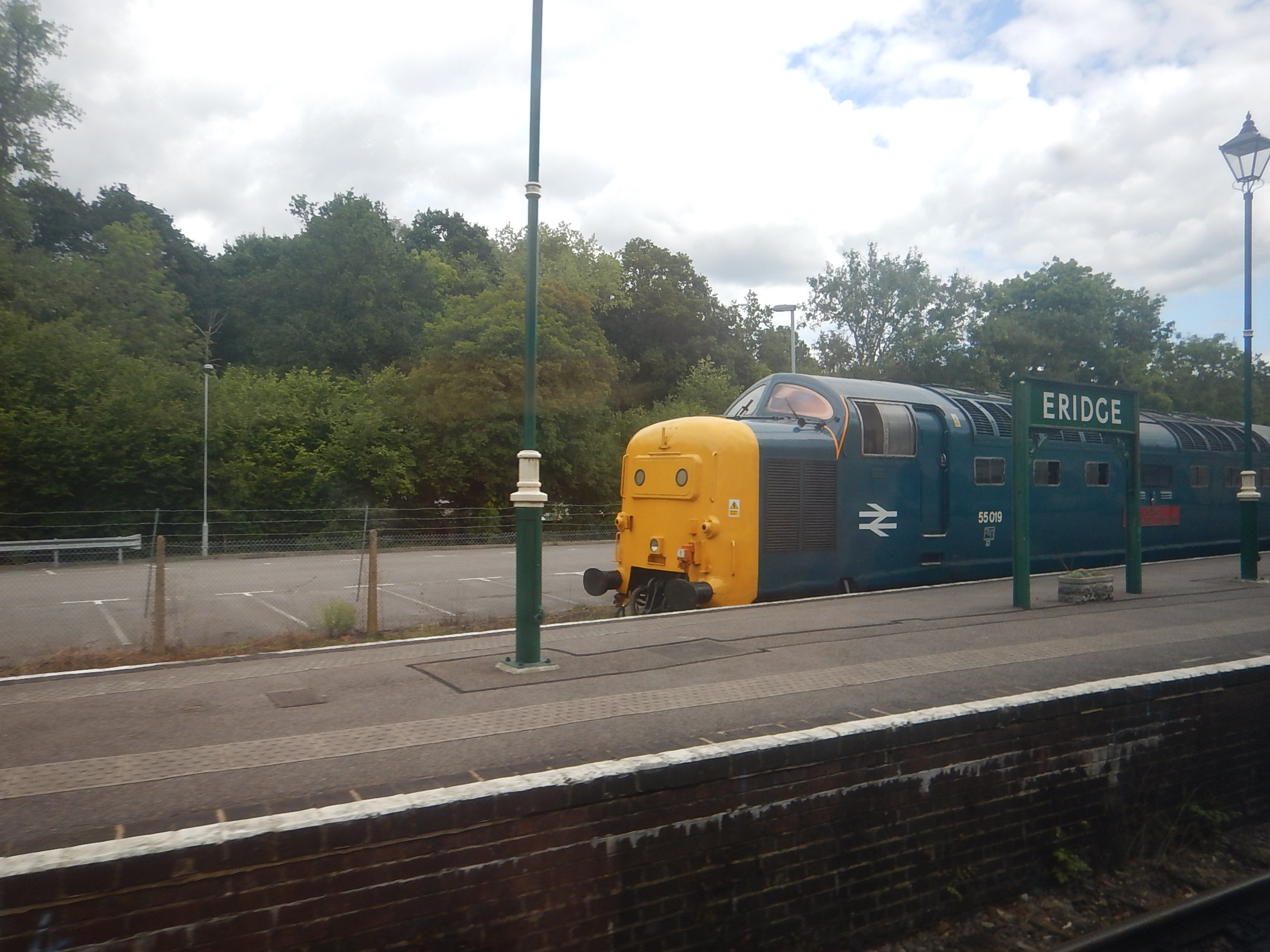
In the 1970s Cleethorpes had a twice daily return service to London King’s Cross, typically hauled by a Class 55 Deltic.
That must have been an impressive sight.
And this was National Express East Coast’s plan.
In August 2007, after National Express East Coast was awarded the InterCity East Coast franchise, it proposed to start services between Lincoln and London King’s Cross from December 2010 with one morning service and one evening service extending from Lincoln to Cleethorpes giving Cleethorpes a link to London and calling at Grimsby Town and Market Rasen. These services were to be operated using the Class 180s but was never introduced. These services were scrapped when East Coast took over the franchise.
It came to nothing, but LNER have been running up to five trains per day (tpd) between London King’s Cross and Lincoln.
I will split the route into legs.
- London King’s Cross and Newark North Gate- Electrified – 120 miles
- Newark North Gate and Lincoln Central – Not Electrified – 16,5 miles
- Lincoln Central and Market Rasen – Not Electrified – 15 miles
- Market Rasen and Habrough – Not Electrified – 21 miles
- Habrough and Grimsby Town – Not Electrified – 8 miles
- Grimsby Town and Cleethorpes – Not Electrified – 3.25 miles
Note that a round trip between Newark North Gate and Lincoln Central is thirty-three miles.
This means it would be possible for one of LNER’s Class 800 trains, that had been fitted with a battery pack and converted into one of Hitachi’s Regional Battery trains, would be able to run a London King’s Cross and Lincoln Central service without using a drop of diesel or needing a charge at Lincoln Central station.
Would it be possible to extend this service to Grimsby Town on battery power?
I suggested earlier that between Cleethorpes and Habrough should be electrified.
As Newark North Gate and Habrough stations are 52.5 miles apart, it would be rather tight for a battery electric train to cover the whole route without an extra charge somewhere.
Possible solutions could be.
- Fit a bigger battery in the trains.
- Extend the electrification at Newark North Gate station.
- Extend the electrification at Habrough station.
I;m sure that there is a solution, that is easy to install.
Conclusion
If between Habrough and Cleethorpes station were to be electrified, these services could be run by battery electric trains.
- Cleethorpes and Manchester Piccadilly
- Cleethorpes and Barton-on-Humber
- Cleethorpes and London King’s Cross
Note.
- The Manchester and London services would be run by Hitachi Regional Battery Trains converted from Class 800 and Class 802 trains.
- The Barton service could be run by a Vivarail Class 230 train or similar.
The first two services would be hourly, with the London service perhaps 1 or 2 tpd.
Cleethorpes would be well and truly on the rail network.
LNER’s Cheaper Advanced Tickets Can Be Bought Just Before You Travel
Yesterday, I had a ticket on the 15:47 train, back from Doncaster to London Kings Cross. I had bought it on-line a few days ago for £23.50.
But, I was unable to complete what I wanted to do, so found myself at Doncaster station, with three hours to wait for my train.
Usually, I buy open returns, but LNER have stopped that because of the covids!
So rather than wait, I decided to buy another ticket.
A new Off Peak Single with my Railcard would have been £60, but I found the machine could sell me an Advance Single Ticket for £31.
So I got home in time for the cricket. My ticket also got me two seats, including a window.
LNER seem to be getting their act together.
Approaching Kings Cross – 16th September 2020
I took these pictures yesterday, as my train approached Kings Cross station from Doncaster.

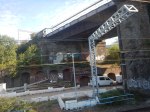
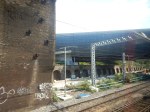
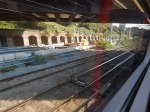
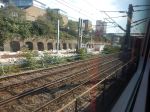
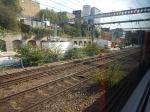
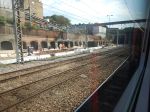
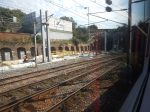


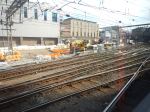

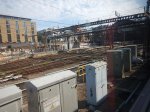

They seem to be making progress on adding two extra tracks into the station, which will be squeezed in on the Eastern side, and through an unused tunnel.
This is a Network Rail video, which explains the project.

Trackside Tim Overview of KX. Aug 19
The Capacity Increase At Kings Cross Station
Theoretically, increasing the number of tracks from four to six could increase the number of trains serving Kings Cross by fifty percent.
This Google Map shows Kings Cross station.
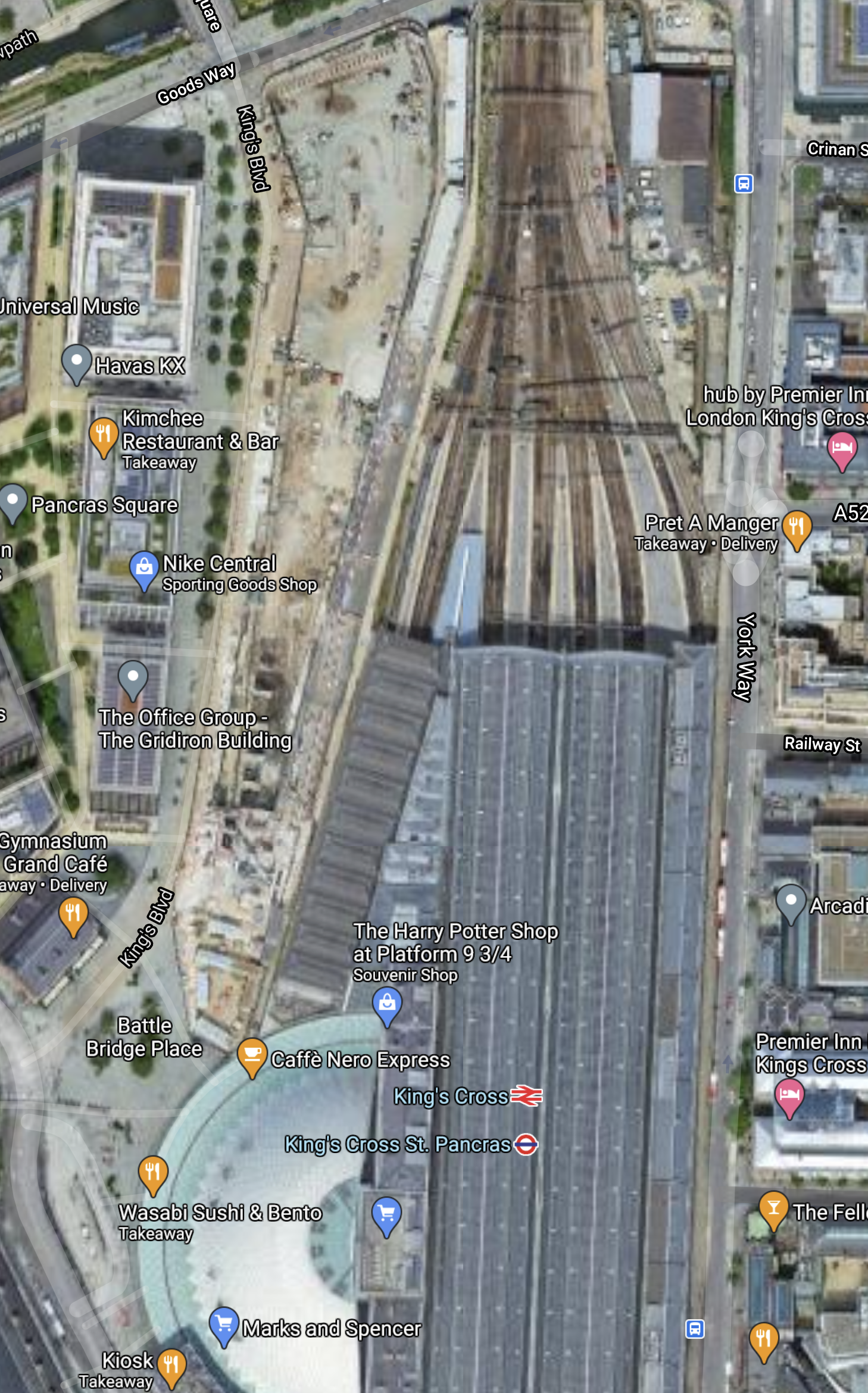
Note.
- Kings Cross station has twelve platforms, which are numbered 0-11, with 0 on the Eastern side.
- Platform 10 is due to be removed in the works.
This second Google Map shows the station throat to a large scale.
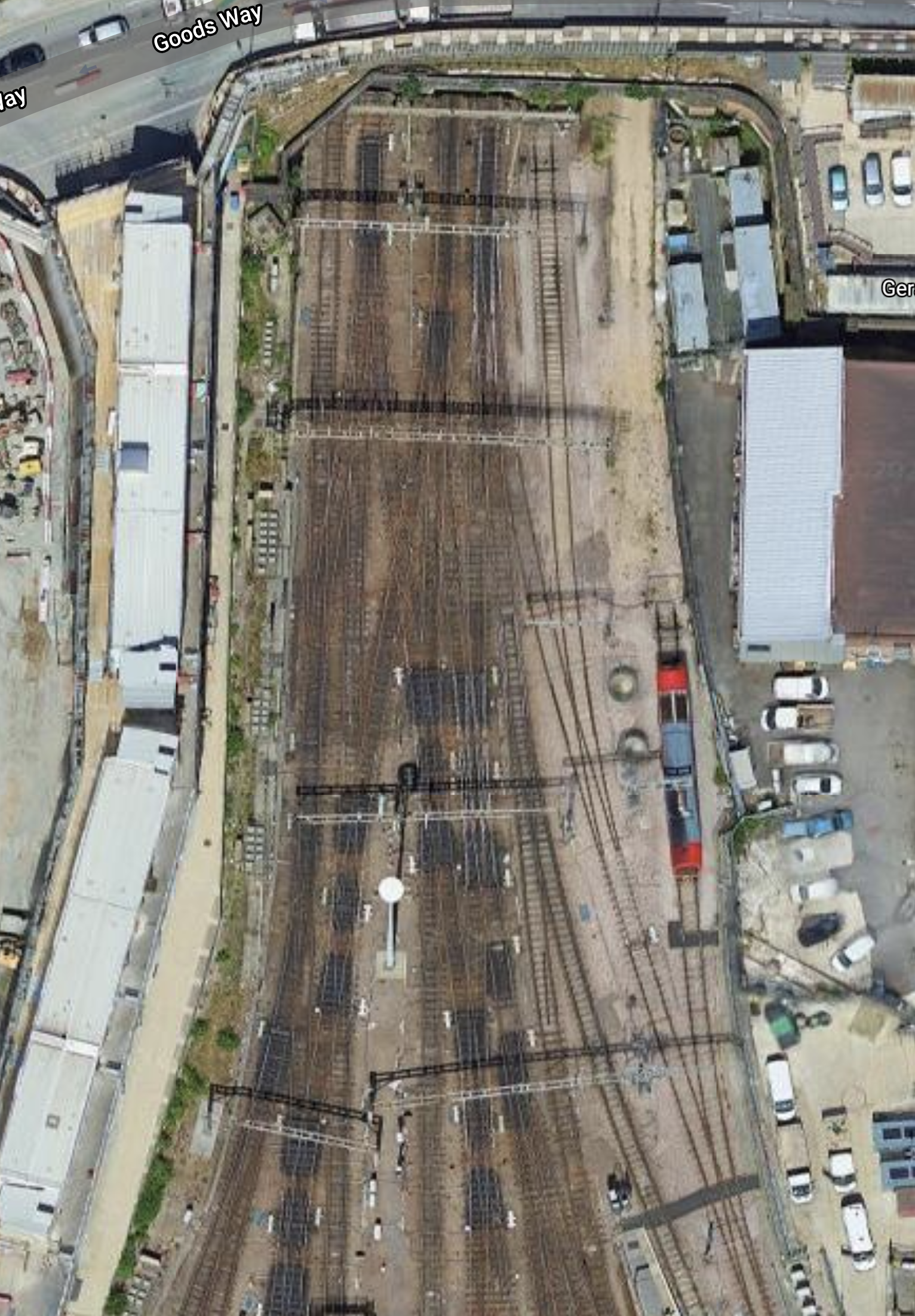
Note.
- The pairs of tracks leading to the current two tunnels can be clearly seen.
- Note how the track from Platform 0 comes right across to go through, what will be the middle tunnel.
- I would assume that six tracks going into eleven platforms would produce a less constricted layout.
Hopefully, when the new layout is complete, everything will be much easier.
I shall repeat this map, when the works are finished.
!40 mph Electric Trains At Kings Cross Station
This picture shows LNER’s old and new 140 mph electric trains at Kings Cross station.
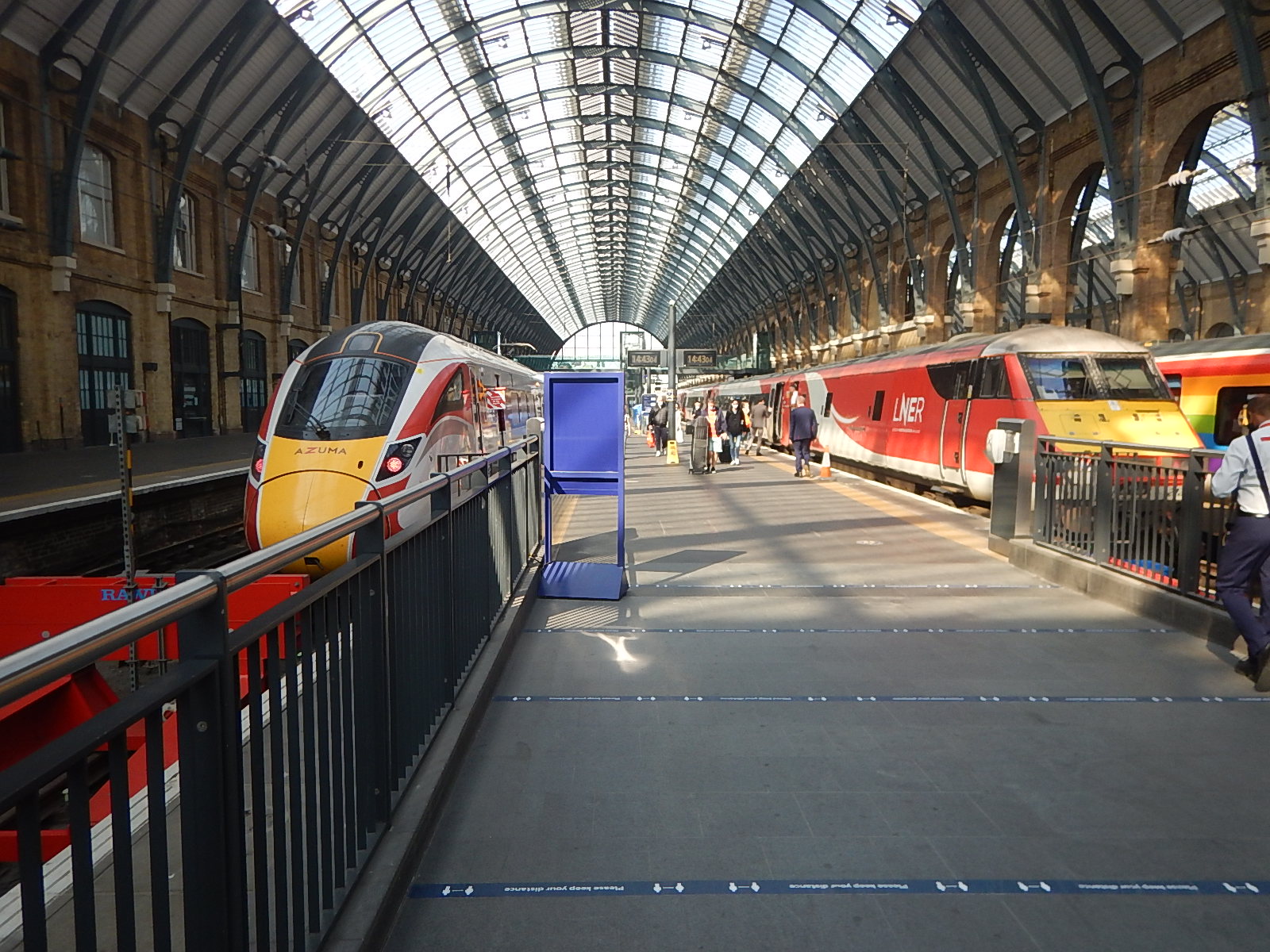
On the left is a nine-car Class 801 train.
- Introduced into service in 2019
- 234 metres long
- Capacity – 510 Standard and 101 First
- One diesel engine for emergency power.
On the right is an InterCity 225.
- Introduced into service in 1988-1991.
- Nine Mark 4 coaches
- 245 metres long
- Capacity 406 Standard and 129 First
- No emergency power
- As I wrote in Overhauls for LNER’s Remaining Class 91s And Mk 4s, the InterCity 225s are being updated to offer electric services between London Kings Cross and Bradford, Leeds, Skipton and York.
Both trains are designed for 140 mph and will be able to attain this speed, when in-cab digital signalling is available.
It looks like LNER will have the following full-size electric fleet.
- Thirty Class 801 trains
- Seven InterCity 225 trains and spare coaches, driving van trailers and locomotives.
Both trains will be able to work any route with full electrification.
Changes In The Future To LNER Services
I predict that the following will happen.
140 mph Running Between Woolmer Green And Doncaster
This will happen and the following trains will take advantage.
- LNER’s Class 800 and Class 801 trains
- Hull Train’s Class 802 trains
- East Coast Trains’s Class 803 trains
The odd ones out will be Grand Central’s Class 180 trains, which are diesel and only capable of 125 mph.
How long will the other train operating companies accept slow trains on the 140 mph railway?
Digital In-Cab Signalling And 140 mph Running Will Speed Up Services
In Thoughts On Digital Signalling On The East Coast Main Line, I said that following train times would be possible., in addition to a London Kings Cross and Leeds time of two hours.
- London Kings Cross and Bradford Forster Square – two hours and thirty minutes
- London Kings Cross and Harrogate – two hours and thirty minutes
- London Kings Cross and Huddersfield – two hours and twenty minutes
- London Kings Cross and Hull – two hours and thirty minutes
- London Kings Cross and Middlesbrough – two hours and thirty minutes
- London Kings Cross and Scarborough – two hours and thirty minutes
- London Kings Cross and Skipton – two hours and thirty minutes
- London Kings Cross and York – two hours
Note.
- All timings would be possible with Hitachi Class 80x trains.
- Timings on Fully-electrified routes would be possible with InterCity 225 trains.
It appears that Grand Central will be stuck in the slow lane.
Grand Central Will Acquire Hitachi Trains Or Give Up
Grand Central‘s destinations of Bradford Interchange and Sunderland can’t be reached by all-electric trains, so will either have to follow Hull Trains and purchase Hitachi bi-mode trains or give up their routes.
The Diesel Engines In The Class 801 Trains Will Be Replaced By Batteries
East Coast Trains’ Class 803 trains have a slightly different powertrain to LNER’s Class 801 trains, which is explained like this in Wikipedia.
Unlike the Class 801, another non-bi-mode AT300 variant which despite being designed only for electrified routes carries a diesel engine per unit for emergency use, the new units will not be fitted with any, and so would not be able to propel themselves in the event of a power failure. They will however be fitted with batteries to enable the train’s on-board services to be maintained, in case the primary electrical supplies would face a failure.
I wouldn’t be surprised to see a similar battery system fitted to the Class 801 trains.
The Diesel Engines In Hull Trains Class 802 Trains Will Be Replaced By Batteries
In Hull Issues New Plea For Electrification, I showed how Hitachi’s Class 802 trains with batteries instead of diesel engines could work long-distance services to and from Hull.
This will happen, as electric trains to London, would be a dream for a marketing man or woman.
Will The InterCity 225 Trains Lose Some First Class Seats?
This may happen, so that the seating layout in both trains is almost identical.
I’m certain, that it could be arranged, that seat numbers in both trains could have a similar position.
This would mean that if an InterCity 225 train replaced a Class 801 train, there wouldn’t need to be a seat reallocation.
Could InterCity 225 Trains Be Fitted With Emergency Batteries?
If LNER thought they were needed, I’m sure that this would be possible and Hyperdrive Innovation would oblige!
Conclusion
British Rail last hurrah, is giving Hitachi’s latest trains, a run for their money!
GTR And Porterbrook Unveil £55 million Fleet Modernisation
The title of this article, is the same as that of this article on RailNews.
This is the introductory paragraph.
Trains built just five years ago are among those set to be upgraded at Selhurst Depot as part of a £55 million fleet modernisation programme announced by Govia Thameslink Railway and leasing company Porterbrook.
The updates to Class 377 and Class 387 trains, include.
- On-board performance monitoring and fault diagnosis
- Passenger information screens
- USB/power points
- LED lighting
- Passenger-counting technology
- Forward-facing CCTV cameras
I wonder, if the forward-facing cameras will be setup, so that passengers can log in to the video. It would surely, be a way of keeping kids of all ages amused.
Trains are getting more and more like computers on wheels.
Vital Energi To Build Waste Heat From Power Plant Centre
The title of this post, is the same as that of this article on the Construction Enquirer.
This is the introductory paragraph.
Waste heat from the nearby £680m North London Waste Authority (NLWA) Energy Recovery Facility will be used to heat homes and businesses in the London Borough of Enfield.
Some of the homes, will be on the 82-hectare Meridian Water development.
We will see more schemes like this.
 The Anonymous Widower