I Keep Getting Offers Like This
This is an offer, I received from Nationwide.
Make things happen in 2025. You could borrow £7,500 – £25,000 over 1 to 5 years with a rate of 5.9% APR Representative.
Note.
- I have banked with them for probably twenty-five years.
- I got this after, I had successfully logged in.
- I don’t really need the money.
I have also received unsolicited offers from other well-known banks.
In Is Internet Security Sometimes Over Secure?, I described how eBay seemed to have stopped me from using my credit cards on-line.
Marks & Spencer cleared that bother up for me and the offers started after they did.
But at least, since the trouble with eBay, I’ve not lost anything to scammers, although eBay might have.
Is it just a coincidence, that the offers started after Marks & Spencer cleared up my credit rating or does it always happen, when your credit rating improves?
It could also be that the banks have masses of money to lend and no-one is borrowing anything.
Support For Edinburgh Tram-Train Scheme
The title of this post, is the title of a third-of-a-page article in the June 2025 Edition of Modern Railways.
This is the first paragraph.
Final-Year civil engineering undergraduates at Heriot-Watt University’s Edinburgh campus have received warm support for a study in which they recommend reopening the city’s 7.5 mile South Suburban Railway, used for freight and diversions since 1962, using tram-trains.
It looks like they would start in the West at say Edinburgh Gateway or the Airport and would then turn South at Murrayfield to join the South Suburban Railway at Gorgie.
This OpenRailwayMap shows the tracks to the South of Murrayfield stadium.
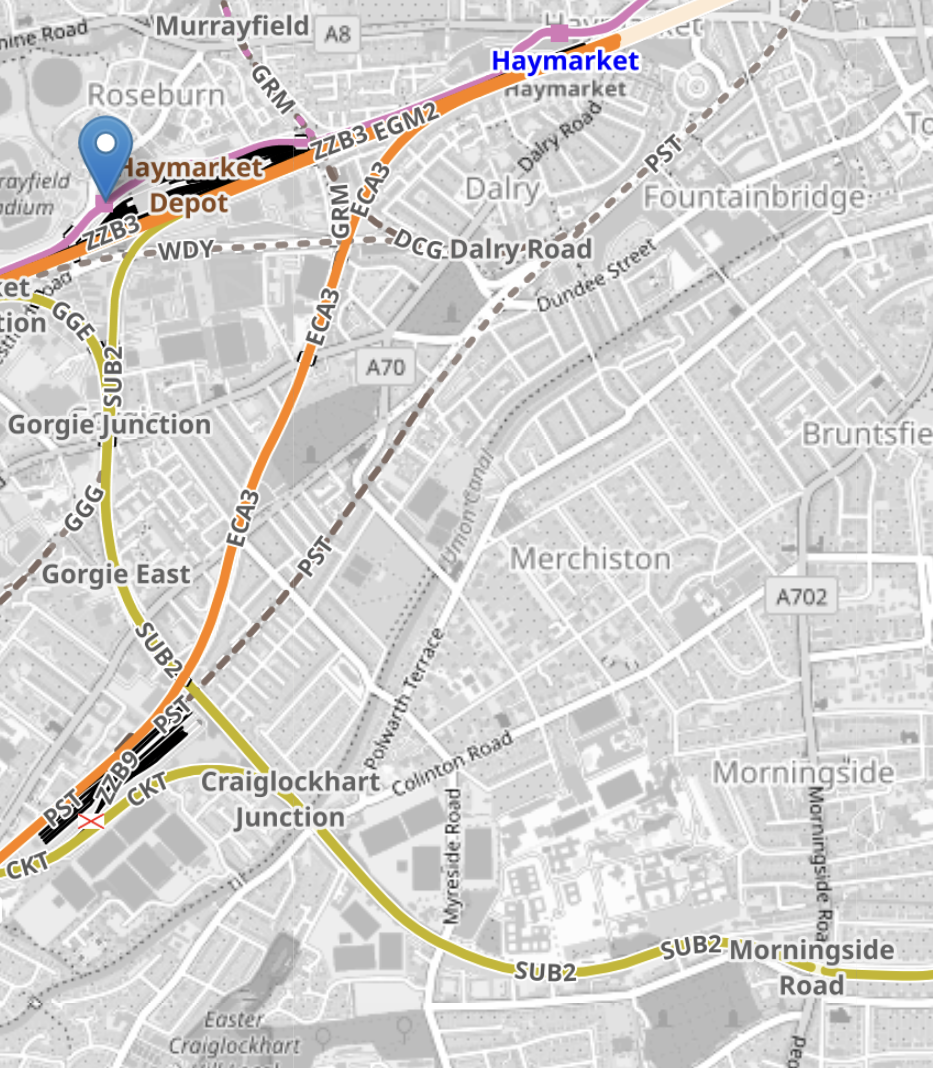
Note.
- The more Westerly-oriented orange tracks lead to Glasgow.
- The orange tracks running South-Westerly are the tracks to Carstairs.
- The yellow tracks are the South Suburban Railway.
- Tram-trains could then go all the way to Brunstane on the Borders Railway.
- The blue arrow indicates the tram-stop for Murrayfield.
- I would assume that the connection to the South Suburban Railway, is to the East of this stop.
- Gorgie East, Craiglockhart and Morningside Road were stations on the South Suburban Railway.
This map shows where the South Suburban and Borders Railways meet in a large triangular junction.
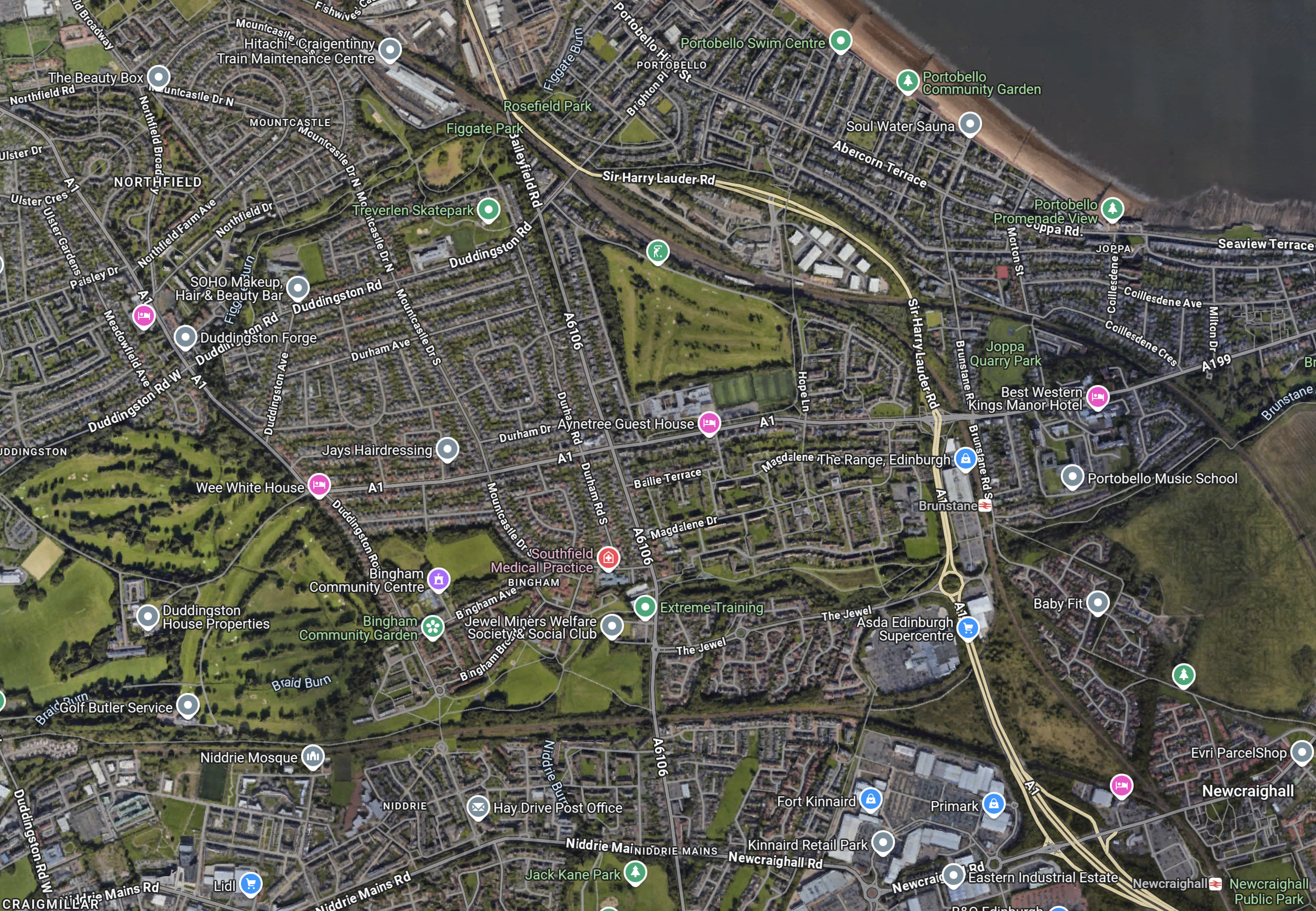
Note.
- Newcraighall station on the Borders Railway is in the South-East corner of the map.
- Brunstane station is to its North-West almost halfway up the map.
- The two stations are the North and South points of the triangular junction, where the South Suburban and Borders Railways meet.
- The South Suburban can be seen going West towards Gorgie and Murrayfield.
- Edinburgh’s beach at Portobello is in the North-East corner of the map.
- Between Murrayfield and Brunstane, there would be an appropriate number of tram stops and a tram-train every fifteen minutes.
Optionally, the route can be extended to Leith on a mothballed freight line.
This OpenRailwayMap shows the railways and tramways of Edinburgh between Brunstane, Edinburgh Waverley and Leith.
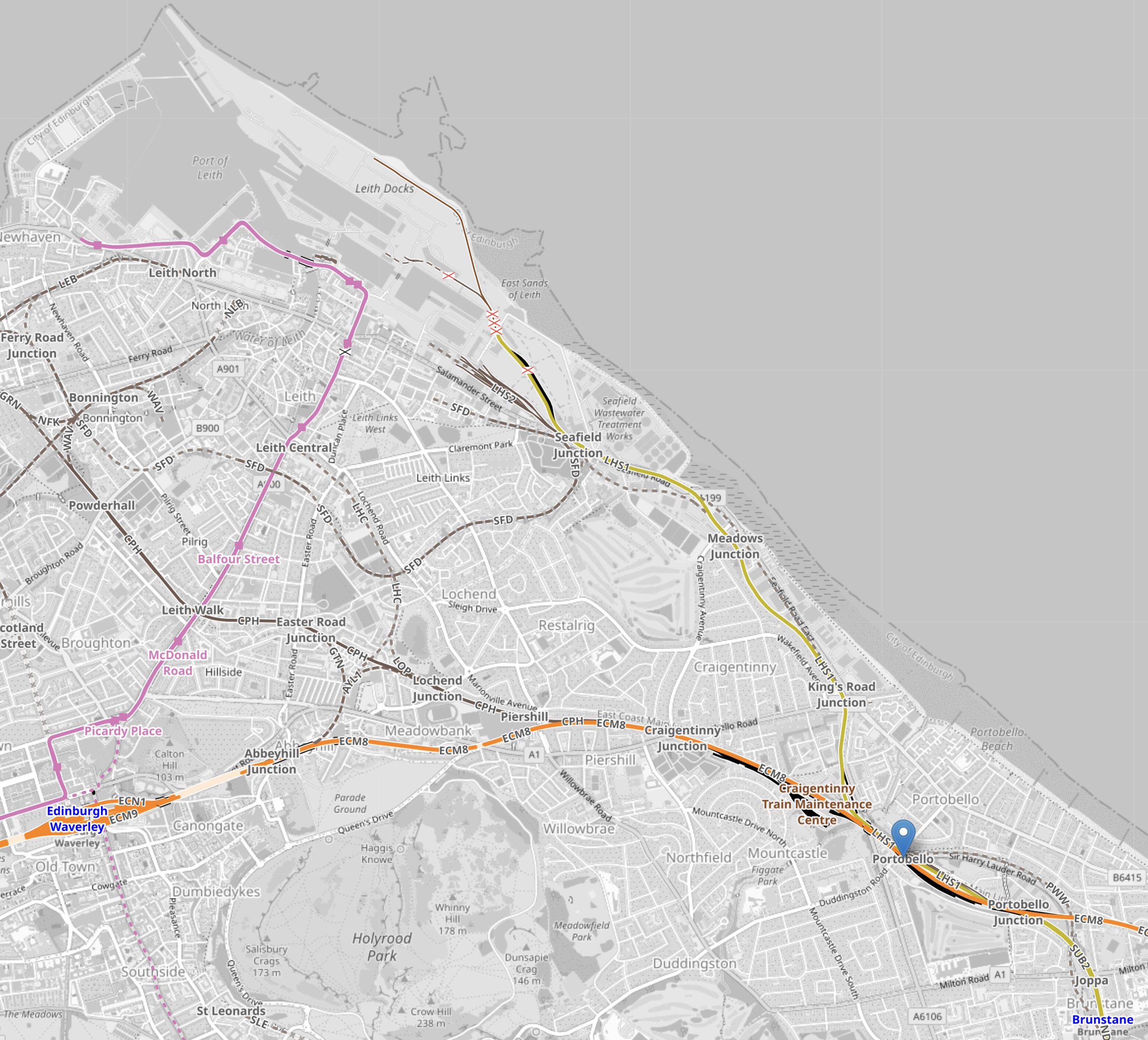
Note.
- The orange track running across the bottom of the map is the East Coast Main Line into Edinburgh Waverley station, which is clearly marked.
- The pink track is the Edinburgh tram to Newhaven.
- Brunstane station is in the South-East corner of the map.
- The site of the former Portobello station is marked by the blue arrow.
- The yellow track from Portolbello up the coast is a mothballed freight line to Leith Docks.
The proposal suggests that the tram-train route finishes at Leith Docks. One of the reasons, is that this part of Edinburgh, is not well served by public transport.
I have some extra thoughts.
Changing Between Borders Railway and the Tram-Train At Brunstane Station
Brunstane station, is a two-track station, with only one platform, so there may need to be track modifications.
Do Edinburgh’s Urbos Trams Have A Tram-Train Variant?
They do!
Do Edinburgh’s Urbos Trams Have A Battery Variant?
Battery tram-trains charged at either end of the route will be needed.
A battery-electric Urbos 3 tram, can be seen running through the City of Birmingham in England.
Conclusion
The proposal looks feasible to me. But the devil will be in the detail.
Leven Station – 15th May 2025
I was only at Leven station for a few minutes, but I was able to take these pictures.

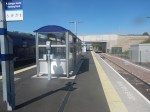

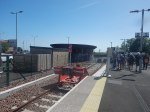




Note.
- There are two platforms, one each side of a wide island.
- The platforms are 205 metres long.
- As four-car Class 385 trains are 93.3 metres long, each platform will be able to take a pair of four-car Class 385 trains.
- Will the station platforms be used to stable four trains overnight.
- The car park has 134 spaces.
- On approach to Leven station, there appears to be a crossover, which allows trains to use either platform.
From the Wikipedia entry for Leven station, it appears a second hourly service starts on the 18th May 2025, with services alternating between going via Kirkcaldy and Cowdenbeath.
It also appears that last night (17th May 2025) two trains spent the night in Platform 1 at Leven station.
In The Lack Of Information At Edinburgh Waverley Cost Me £55.10, I explain, why the chaos at Waverley station didn’t give me enough time to do more on Thursday.
Would A Train Manufacturer Save CrossCountry’s Iconic Aberdeen And Penzance Route?
The article in The Times about the cancelling of CrossCountry’s iconic Aberdeen and Penzance route was entitled After 104 Years UK’s Longest Train Route Is Cancelled For Ever, I gave my post the same name and both received a number of nostalgic comments, from those, who had ridden the route or wished they had.
The Characteristics Of The Line
This article on the BBC is entitled We Had To Be On Last Run Of UK’s Longest Train Route.
This is said in the BBC article.
The connection – first established back in 1921 – is 775 miles (1,247km) long.
But electrification is rather thin on the ground.
Between Leeds and Edinburgh stations is electrified and I suspect that some of the route through Birmingham New Street and Bristol Parkway stations are also electrified, so perhaps, a battery-electric train could get a top-up on the way.
But as Leeds and Edinburgh is around 220 miles, there’s about 550 miles of the route or 70 % without electrification.
Battery Power, Hydrogen Power Or Both?
If diesel is ruled out on environmental grounds, it means that only battery or hydrogen power could be used for the route.
Despite some of the progress made by battery-electric trains in the last few years, I feel that unless the route has a large number of charging stations, then battery-electric trains will not be a practical solution.
This is a paragraph from The Times article.
Rail bosses said one of the reasons for ending the train was the difficulty keeping such a long journey on time. The fact that most customers made only short journeys along the route was also a consideration.
And this is another.
As an “express” service it was severely challenged, partly because of the long waits at a number of stations along the way, including 14 minutes at both Edinburgh Waverley and Bristol Temple Meads, and seven minutes at Birmingham New Street and Exeter St Davids.
Stopping regularly to charge the batteries, is going to make timekeeping more difficult and will probably end up with irritable passengers, after all the waiting.
So I suspect, hydrogen would be the ideal power for such a long service over a route with such sparse electrification.
But the trains, would be fitted with regenerative breaking to battery, so that kinetic energy is conserved as much as possible in the station stops.
I believe, that the trains should effectively be tri-mode or hydrogen-hybrid trains, but then many drivers praise the frugality of their hybrid cars.
Would Efficient Hydrogen-Hybrid Trains Attract More Passengers?
Consider.
- All the battery and hydrogen trains and buses, with one exception, that I have ridden on, have been mouse-quiet.
- The exception was a German hydrogen train, that had a very noisy mechanical transmission.
- I also would expect that the trains would be capable of keeping up a cruising speed of 100 mph or perhaps even 125 mph.
- This would enable them to handle the current timetable, which is written for 125 mph Class 222 diesel trains.
An efficient, unobtrusive, reliable and speedy service would surely attract passengers.
What’s In It For The Manufacturer?
Consider.
- There are not many 775 mile routes in the UK.
- But, there are many long rail around the world, that need decarbonising or even creating.
- Some countries, like China, India and France are creating more electrified high speed long-distance lines.
- Others countries, like Australia and the United States are planning and building high speed long-distance lines.
Perhaps, what is needed is a drop-in solution to decarbonise and/or create new high speed long-distance railways.
Could Aberdeen and Penzance be an ideal test bed to trial and demonstrate, your drop-in hydrogen solution?
I am reminded of a story, told to me, by a guy, who was selling an expensive air traffic control radar to an Arab state.
The initial presentations were done in the company’s offices in London.
The only working radar was installed at Prestwick Airport and had been working successfully for a couple of years, so the Arabs would be taken on a visit.
As they were very important clients, the salesman was told, that he was entitled to borrow the chairman’s executive jet for the trip.
The flight to Scotland was uneventful, but as they left the plane, the pilot said to the salesman. “There’s no finer view, than the Scottish Highlands at this time of year, I could fix it, that I gave them the view of a lifetime on the way home.”
After thinking about it for a few seconds, the salesman asked the pilot to fix it.
When they returned to the plane after a successful demonstration, the pilot said. “It’s on if you want it?”
The tale had a very happy ending, in that the Arabs bought an Air Traffic Control radar.
To return to the hydrogen trains; What better route is there to show off the capabilities of your high speed hydrogen-hybrid trains?
- There is the spectacular scenery of the North of Scotland, The Pennines and Cornwall.
- The Firth of Forth is crossed on the Forth Rail Bridge.
- There is running on the wires between Edinburgh and Leeds.
- There is the spectacular views of Durham and York from the train.
- There will be several hours of running on hydrogen.
- The Saltash Bridge is crossed.
What better route is there to sell trains?
Could CrossCountry Customer Service Be Improved?
I’ve never done a long journey on CrossCountry.
But surely, if the trains were designed for the route and the manufacturer was showing them off, the trains could have a top-of-the-range specification and high-quality service?
If you’re going to be stuck on a train for over a dozen hours the service must be good.
Conclusion
Get everything right and the train service would be an unquestionable asset to the UK and extremely good for the manufacturer.
South Korea Aims To Lead The Global Market With Hydrogen Train
The title of this post, is the same as that of this article on Railly News.
These are the first two introductory paragraphs.
South Korea is taking an ambitious step with a vision of becoming a major player in the rapidly growing global hydrogen rail market. To 26,4 billion dollars The country that wants to gain a competitive advantage in this market that is expected to reach A self-developed Hydrogen Train by 2028 announced plans to introduce.
This strategic project is the national railway operator of South Korea korail will be managed by Korail, Building a two-car hydrogen train prototype by 2027 and creating the necessary legal and operational infrastructure for the dissemination of this technology. $23 million will make an investment. South Korean officials also clearly state that they aim to set international standards in the field of hydrogen-based mobility with this project.
I’ve thought for some time, that the Koreans have been serious about hydrogen-powered transport, as Hyundai keeps popping up with hydrogen transport and other ideas.
British company; Centrica owns a big share with Hyundai, Kia and others of a British start-up company from Hull, called HiiROC.
This is the HiiROC web site.
HiiROC can take any hydocarbon gas and split it into green hydrogen and carbon black.
Green hydrogen is obviously useful and the carbon black can be used for making tyres for vehicles, anodes for lithium-ion batteries and in agriculture for soil improvement.
Waste off-gas from a chemical plant can be split into green hydrogen and carbon black.
Biomethane from a sewage plant can be split into hydrogen and carbon black. Could a sewage plant on an estate be used to create biomethane for cooking and feeding to the HiiROC plant? Yes!
Could green hydrogen produced on the estate be used to drive vehicles like cars, vans and ride-on-mowers. Yes! If the manufacturer of the vehicle allows it!
How convenient would it be to have Hydrogen-at-Home?
The Korean investment in HiiROC by Hyundai and Kia clearly fits with the philosophy expressed in the second paragraph of the article of creating the hydrogen infrastructure.
I believe that at some point in the future, you will be able to buy a HiiROC device, that gives you as much hydrogen as you need to power your car, truck, bus, tram or train. The Koreans have a track record of turning ideas like this into reality.
After 104 Years UK’s Longest Train Route Is Cancelled For Ever
The title of this post, is the same as that of this article on The Times.
These three paragraphs describe the last journey.
With a muted fanfare the UK’s longest train rolled out of Aberdeen on Friday morning for its final sojourn down to Penzance, ending a service that connected both ends of the country for more than 100 years.
The 8.20am CrossCountry train took 13 hours and 20 minutes, with stops at 35 stations along the way, to cover the 774-mile route. Passengers spent more than two hours of the journey in the stations.
The service, which was launched in 1921, headed south through York, Bristol, Taunton and Truro on its way past some of the country’s finest landscapes, and arrived in Penzance at 9.31pm.
Looking at a ticket site and it appears that by using two trains from Aberdeen to King’s Cross and Paddington to Penzance you can be a few minutes faster, if you know your Underground.
This route will get quicker.
- As the East Coast Main Line rolls out its new digital signalling, this should speed up trains, by allowing some running at 140 mph instead of the current 125 mph.
- LNER will also be bringing their new tri-mode (electric/battery/diesel) trains into service, which could give some speed improvements on the diesel section North of the Forth Bridge in terms of speed and ride noise, especially as ScotRail will be partially electrifying part of this section.
- GWR should also be upgrading some of their fleet to tri-mode, which should improve speed and ride noise on the sections, where the route is not electrified.
- CrossCountry could compete, by buying new trains, but it would be a big financial risk, as the London route should get quicker, as track improvements and increased use of digital signalling speed up services from London to Aberdeen and Penzance.
CrossCountry ‘s owner; Arriva isn’t standing still, but have applied for extra Grand Central open access services on the East Coast Main Line to Scunthorpe and Cleethorpes and a new service from Newcastle to Brighton via Birmingham, which will partly fill the gap caused by the loss of the Aberdeen and Penzance service, by linking with GWR at Reading and LNER at Newcastle.
Cameron Bridge Station – 15th May 2025
I took these pictures yesterday at the new Cameron Bridge station yesterday on the Levenmouth Rail Link.
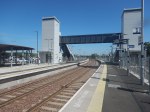
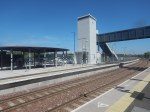
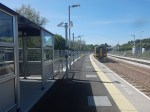
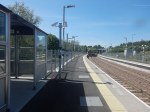
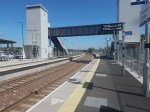




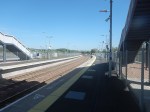

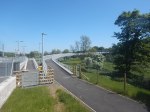
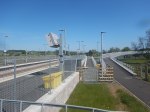

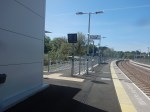


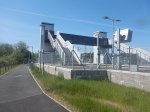
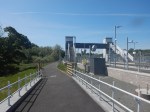






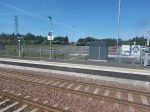



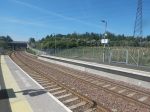

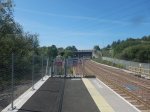



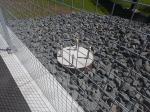

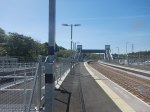


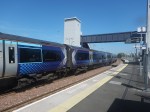

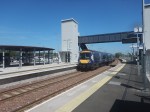
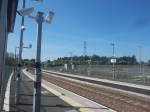
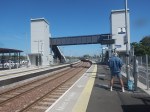
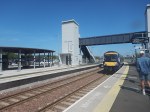
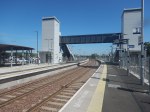

Note.
- The station has a car-park on the coming-home-from Edinburgh platform.
- There is a bridge over the River Leven, that appears to lead to new housing.
- The step-free bridge appears to be used by local residents to cross the railway.
- There appears to be a walking route for the nearby factory, which distills Scotland’s national spirit.
But as the pictures show the station has some unusual features for a small station with one train per hour (tph).
Parking
This extract from the Internet describes the parking.
A car park is available for customers with 125 spaces, including Electric Vehicle (EV) charging and blue badge spaces, as well as a drop off/pick up area and motorcycle parking.
They certainly seem to be expecting lots of commuters to Edinburgh, which is 34.5 miles away over the river.
Long Platforms
As the pictures with the three-car Class 170 train show the platforms are long.
I estimate that the platforms could take a pair of four-car Class 385 trains and almost take a nine-car Class 800 or 802 train.
Is this wishful thinking or prudent future-proofing as extending platforms can be a much more difficult exercise, than building them in the first place.
Perhaps, plans include a lot of housing, a major educational establishment, a sports stadium or some large factories to add to the distillery and long trains will be needed to serve the station.
Electrification Foundations
What surprised me, is that the station has been fitted out with the foundations for electrification gantries. There are five pairs all with four strong bolts to support the gantries over the track. This gallery shows some of the foundations.
But what also surprised me was that at no other place on the route between Edinburgh and Leven, were any electrification works visible, except where the electrification is completed between Edinburgh and Edinburgh Gateway.
I estimate that the distance between Cameron Bridge and Edinburgh Gateway is about thirty-seven miles as the train travels, which should be in range of one of ScotRail’s Hitachi Class 385 trains, that had been fitted with batteries.
- The trains would charge their batteries on the run between Edinburgh Waverley and Edinburgh Gateway stations.
- The trains would run between Edinburgh Gateway and Cameron Bridge stations on battery power. The eight intermediate stations would not have to suffer diesel trains.
- The trains would put up the pantograph at Cameron Bridge station and charge the batteries on a short length of overhead wires that will be erected there on both platforms.
- The train would run to Leven station on battery power, where it would reverse, as it does now and then return to Cameron Bridge station.
- At Cameron Bridge station, it could even pick up more charge if needed.
Note.
- The only new electrification needed would be to electrify both lines in Cameron Bridge station.
- Supposedly, Hitachi do a nice line in short lengths of electrification and all the electrical gubbins that support them.
- Because of the large distillery, Cameron Bridge is not short of electricity, with a large grid connection visible at the Edinburgh end of the station.
- No electrification will be needed over the Forth Rail Bridge, to the delight of the Heritage Taliban.
Whoever gets the contract to supply the battery-electric trains and the partial electrification, will be supplying trains that will cross one of most famous railway bridges in the world.
I also predict, that this short rail link between Edinburgh Waverley and Leven will become a tourist attraction and bring prosperity to the area.
Electrifying The Fife Circle
This OpenRailwayMap shows the whole Fife Circle Line.
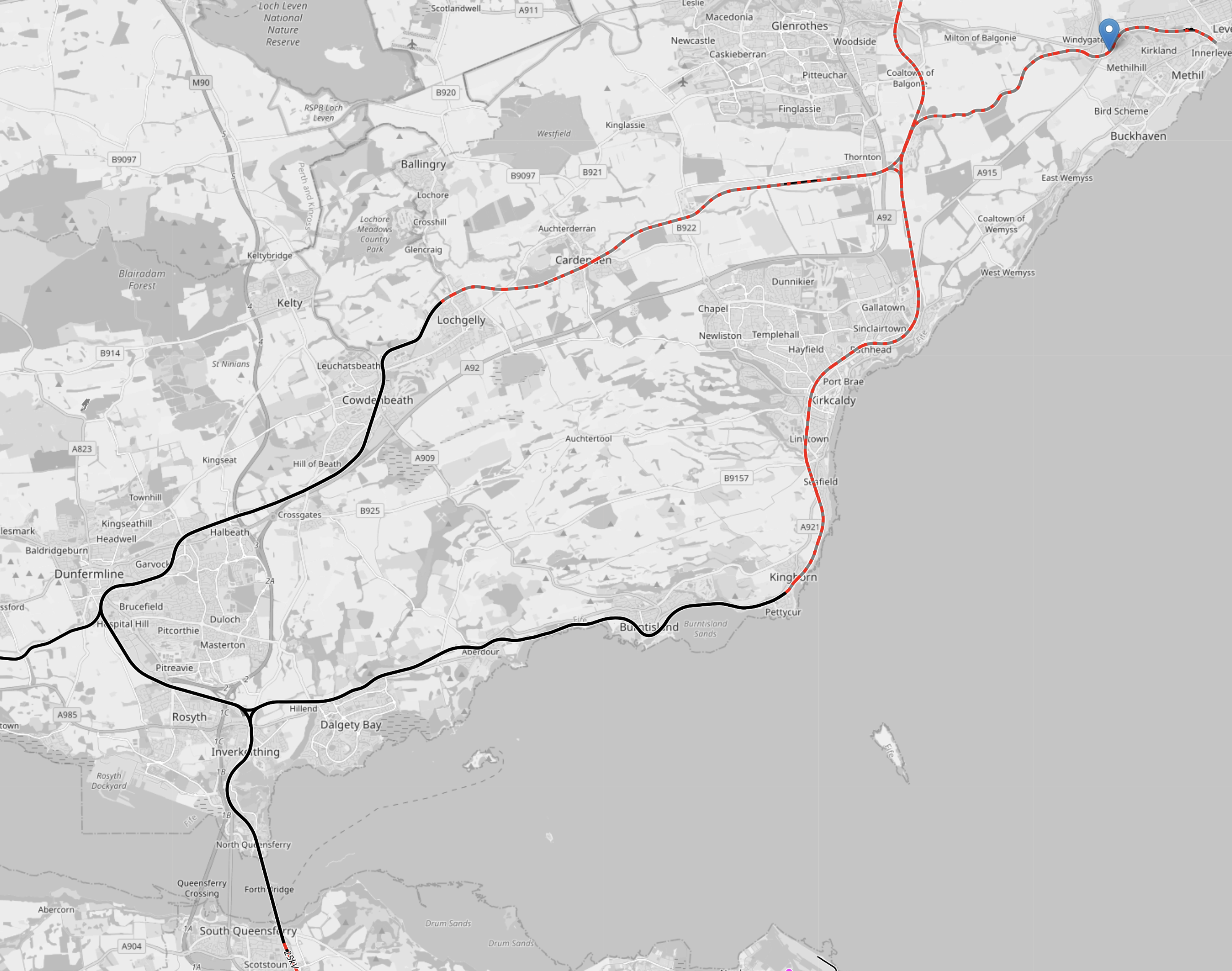
Note.
- Lines shown in red are electrifield, whilst those shown in black are not and lines shown in dotted red-and-black are to be electrified.
- Cameron Bridge is marked by the blue arrow, with Leven to its East on the coast.
- The Forth Rail Bridge over the Forth of Forth is at the bottom of the map.
- To the North of the bridge, the line splits and connects to the large circular railway, which is the Fife Circle Line.
- Some trains after crossing the Forth Rail Bridge,come up the East coast via Kirkcaldy to terminate at Leven or Glenrothes with Thornton.
- Other trains from Edinburgh take the Western side of the Fife Circle via Rosyth and Cowdenbeath to Glenrothes with Thornton.
This second Open RailwayMap shows the Fife Circle Line between Cameron Bridge and Glenrothes with Thornton.
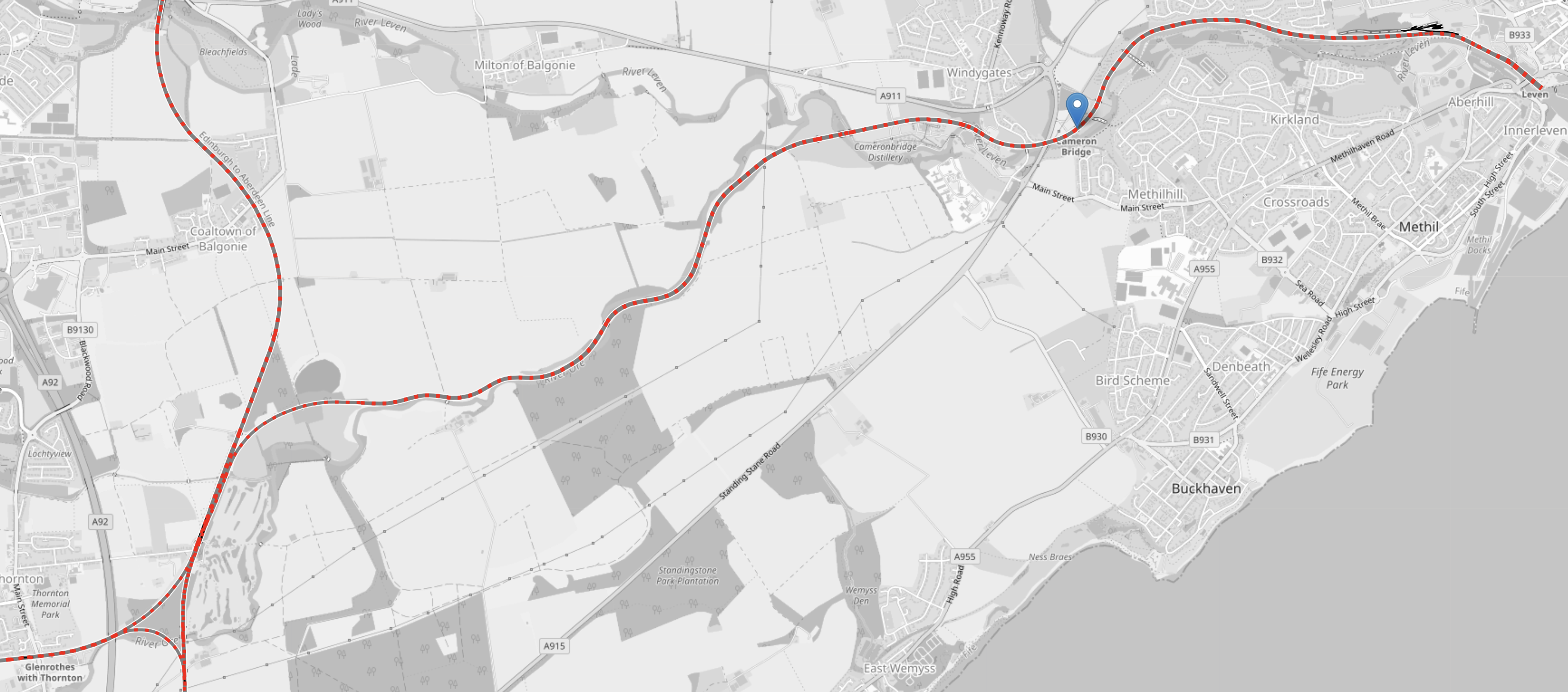
Note.
- As before, lines shown in red are electrifield, whilst those shown in black are not and lines shown in dotted red-and-black are to be electrified.
- Cameron Bridge is marked by the blue arrow, with Leven to its East on the coast.
- Glenrothes with Thornton station is in the South-Western corner of the map.
- It might even be possible for all trains to terminate on the Levenmouth Rail Link as Leven station has two platforms.
- If that is the case, the four tph would make full use of the two long platforms at Leven and Cameron Bridge stations, with the only electrification on the Fife Circle Line at Cameron Bridge station.
This is partial electrification with none of the complexity of full electrication, but with all the power it needs from the electrical connection of a large distillery.
The Wikipedia entry for the Fife Circle Line says this about the electrification.
The £55 million first phase, to electrify 65 miles (104 km) of Fife Circle track, between Haymarket and Dalmeny, for use by battery electric multiple units, was begun by Scottish Powerlines in June 2022 and is due to be completed by December 2024, although this project has been delayed and is expected to completed by December 2025. Further phases will electrify the lines between Kinghorn, Thornton, Ladybank and Lochgelly. This will allow the Fife Circle services to be operated by battery electric multiple units whilst minimising capital expenditure on infrastructure, in particular avoiding the major expense of electrifying the Forth Bridge. Complete electrification would be possible at some future date. The partial electrification was due to be completed by December 2025 but there has been some slippage in these target dates.
This OpenRailwayMap shows Kinghorn, Thornton, Ladybank and Lochgelly.
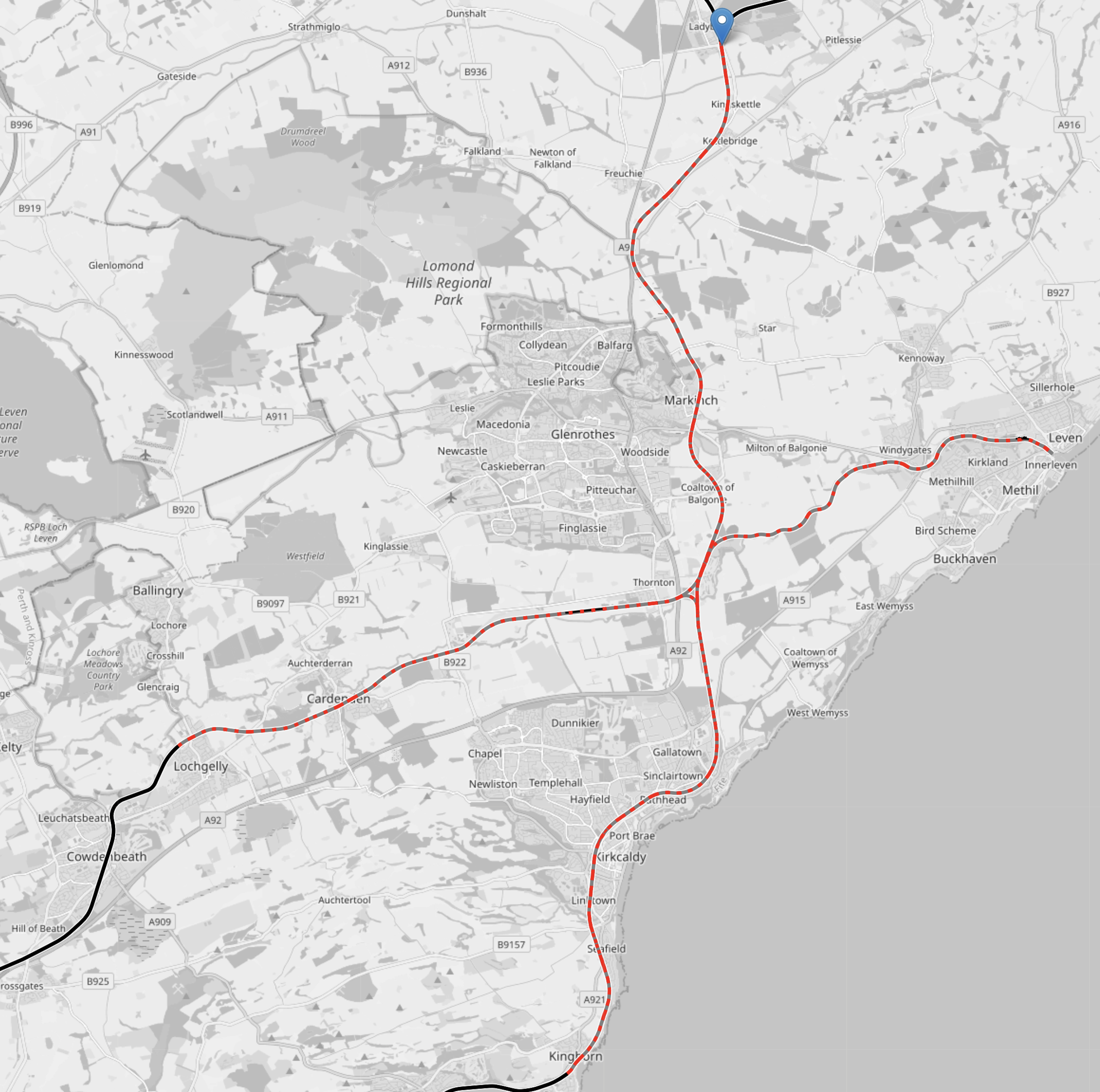
Note.
- Lines shown in red are electrifield, whilst those shown in black are not and lines shown in dotted red-and-black are to be electrified.
- Ladybank is at the top of the map indicated by a blue arrow.
- Kinghorn is at the bottom of the map on the coast.
- Ladybank and Kinghorn are connected by a section of the Aberdeen and Edinburgh Line.
- Glenrothes and Thornton are to the West of this line.
- The Levenmouth Rail Link runs to the East.
- Lochgelly and Cowdenbeath are on the West side of the map.
From what I saw yesterday, I wouldn’t be surprised if the amount of electrification to be performed has been cut back and more reliance is to be placed on on-board batteries.
Class 385 Battery-Electric Trains
The Wikipedia entry for Class 385 trains, says this about battery-electric versions.
During early 2019, Hitachi held a series of discussions with the Scottish Government on the development of a variant of the Class 385, a battery electric multiple unit (BEMU) that would be capable of running on unelectrified sections of line along a route. The installation of batteries was reportedly described as being a relatively straightforward alteration to make; an underfloor battery unit, dependent upon size, would be able to power a trainset over distances of 20 to 60 miles (30 to 100 km). The proposal drew upon Hitachi’s existing experience with battery trains operated in Japan, and had been motivated by a recommendation from the rail decarbonisation task force which advocated that such measures be implemented.
A range on batteries of sixty miles would cover the less than forty miles between Edinburgh Gateway and Ladybank.
I suspect that a range of sixty miles would bridge the gap between Edinburgh Gateway and Perth or Dundee.
Does this mean, that I think it could?
If Hitachi’s testing of their battery-electric Class 802 trains have shown phenomenal distances, then this would fit with the distances shown by Stadler’s Class 777 trains in New Merseyrail Train Runs 135km On Battery.
This leads me to believe that battery-equipped ScotRail Class 385 trains and LNER Class 800 trains are able to electrify the North of Scotland, with a few strategic charging stations like the one at Cameron Bridge station.
Could High Speed Two Serve Chester And North Wales?
This diagram shows High Speed Two services, as they were originally envisaged before Phase 2 was discontinued.
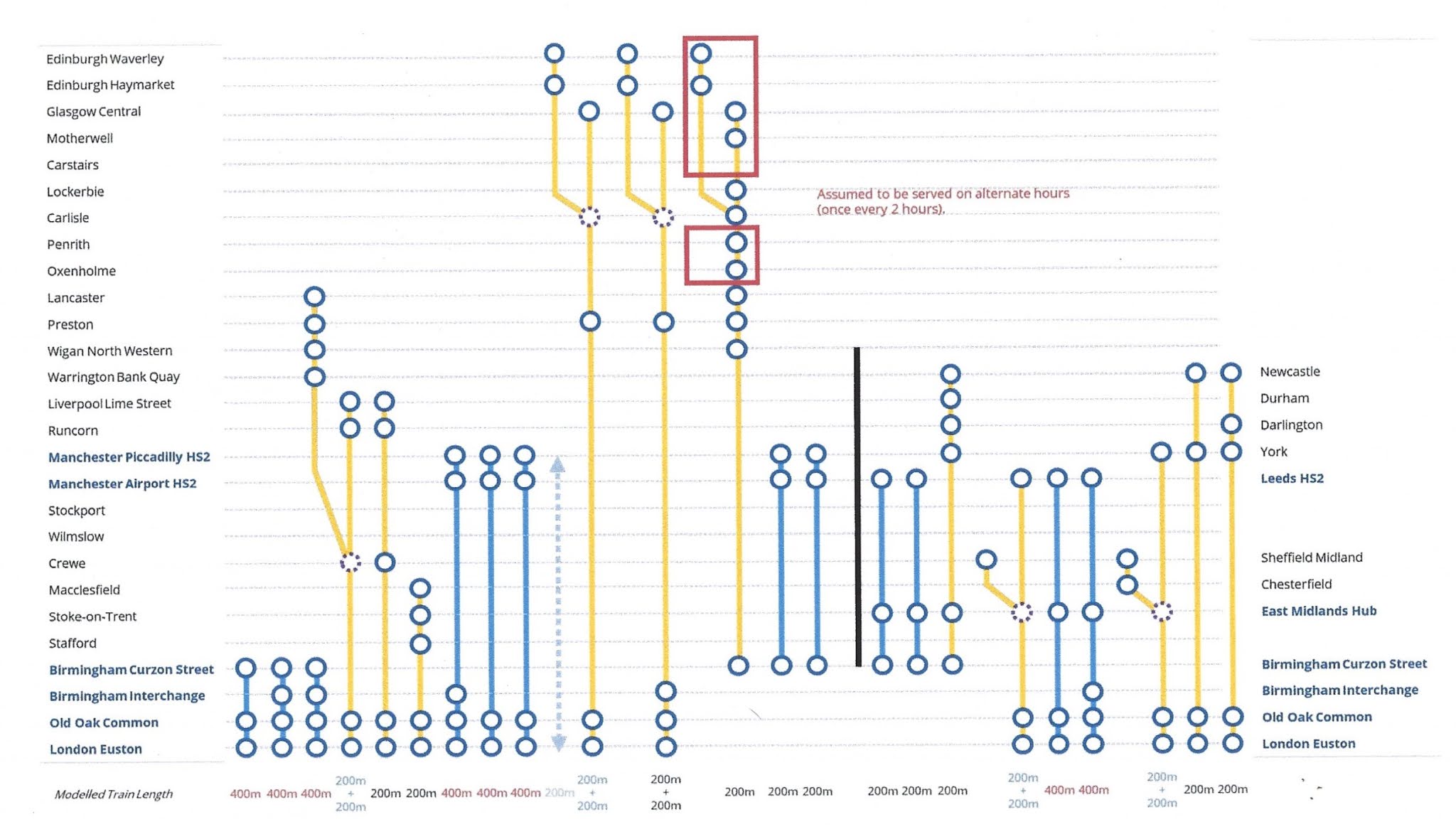
Note.
- Trains to the left of the vertical black line are Phase 1 and those to the right are Phase 2.
- Full-Size trains are shown in blue.
- Classic-Compatible trains are shown in yellow.
- Blue circles are shown, where trains stop.
- The dotted circles are where trains split and join.
- In the red boxes routes alternate every hour.
Click on the diagram to enlarge it.
If I look at the trains counting from the left of the diagram, I see the following.
- Train 4 is a pair of Classic-Compatible trains, that split and join at Crewe, with one train going to Lancaster and the other to Liverpool Lime Street.
- Train 5 is a single Classic-Compatible train going to Liverpool Lime Street.
This gives Liverpool Lime Street two trains per hour (tph) and Lancaster one tph
Could train 5 be a a pair of Classic-Compatible trains, that split and join at Crewe, with one train going to Holyhead via Chester and the other to Liverpool Lime Street?
Consider.
- Yesterday, a pair of Class 805 trains, ran between Euston and Holyhead. Each Class 805 train is 130 metres long, so a pair of Class 805 trains is sixty metres longer than a High Speed Two Classic-Compatible train.
- I am certain, that a single High Speed Two Classic-Compatible train will fit the platforms between Crewe and Holyhead.
- Crewe and Holyhead is 105.5 miles and the route is not electrified.
- Crewe and Holyhead is double-track all the way except for the Britannia Bridge over the Menai Strait.
- With the exception of perhaps 2 to 3 miles, half the route between Crewe and Holyhead has a line speed of 90 mph. with the other half being 75 mph.
- Given the countryside and the number of important historic sites, electrification might be difficult, as the heritage Taliban will say no!
- It was promised by the last government that Crewe and Holyhead would be electrified, but I will assume it won’t be!
- Hitachi, who are part of the consortium building the High Speed Two Classic-Compatible trains have developed battery-electric high speed train technology, which is likely to be applied to the Current Class 805 trains, that work the route.
- Hitachi’s battery-electric high speed train technology can propel the trains at up to 125 mph, provided the track allows it.
I feel that Crewe and Holyhead can be developed into one of the most iconic high speed railways in the world, by using battery-electric high-speed trains. Tourists would come from all over the world, to experience mouse-quiet battery-electric trains.
High Speed Two should go for it!
These are some thoughts.
It Would Be A Green Route To Ireland
Consider.
The fastest direct Avanti service to Holyhead is scheduled to take three hours and forty-two minutes, with one hour and 46 minutes between Euston and Crewe, and one hour and fifty-seven minutes between Crewe and Holyhead.
- High Speed Two will knock thirty-four minutes off the time between Euston and Crewe, when the core route between Euston and Crewe is complete, which will reduce the time to three hours eight minutes, with with one hour and 12 minutes between Euston and Crewe, and one hour and fifty-seven minutes between Crewe and Holyhead.
- The Crewe and Holyhead section of the route would still take one hours and fifty-seven minutes, which is an average speed of just 54 mph, along the North Wales Coast.
- An overall time of three hours between Euston and Holyhead, would require an average speed along the North Wales coast, which would be an average speed of just 62 mph.
- The operating speed is an average of around 80 mph between Crewe and Holyhead, and would run the section of the route in 79 minutes, which would mean a Euston and Holyhead time of two hours and 31 minutes.
- A 100 mph average between Crewe and Holyhead, would run the section of the route in 63 minutes, which would mean a Euston and Holyhead time of of two hours and 15 minutes.
I believe that with track improvements, a more efficient stopping pattern and using Hitachi’s battery technology, that battery-electric High Speed Two Classic-Compatible trains could run between Euston and Holyhead in under two hours.
A fast ferry would complete the route between Holyhead and Dun Laoghaire.
Could More Than One Train Per Hour Be Sent To Chester And North Wales?
Consider.
- Because of the cancellation of Phase 2 of High Speed 2, there are spare paths on High Speed Two between London and the West Midlands.
- If the core section of High Speed Two is extended Northwards to Crewe, as advocated by Dyan Perry of the High Speed Rail Group, that I wrote about in The Future Of HS2 Could Lie In Its Original Vision, this would create extra paths to Crewe.
- If the West Midlands and Crewe section of the High Speed Two route has the same capacity as London Euston and the West Midlands it could handle seventeen tph.
- At present it looks like with the cancellation of Phase 2, the West Midlands and Crewe section will handle just ten tph.
, So there will be seven spare paths between Euston and Crewe!
In fact it will be better than that, as each train could be a pair of Classic-Compatible trains, that split and joined to serve two destinations.
Could A North Wales Service Call At Hawarden Airport?
Hawarden Airport is where Airbus build wings for their aircraft in the UK.This Google Map shows Hawarden Airport.
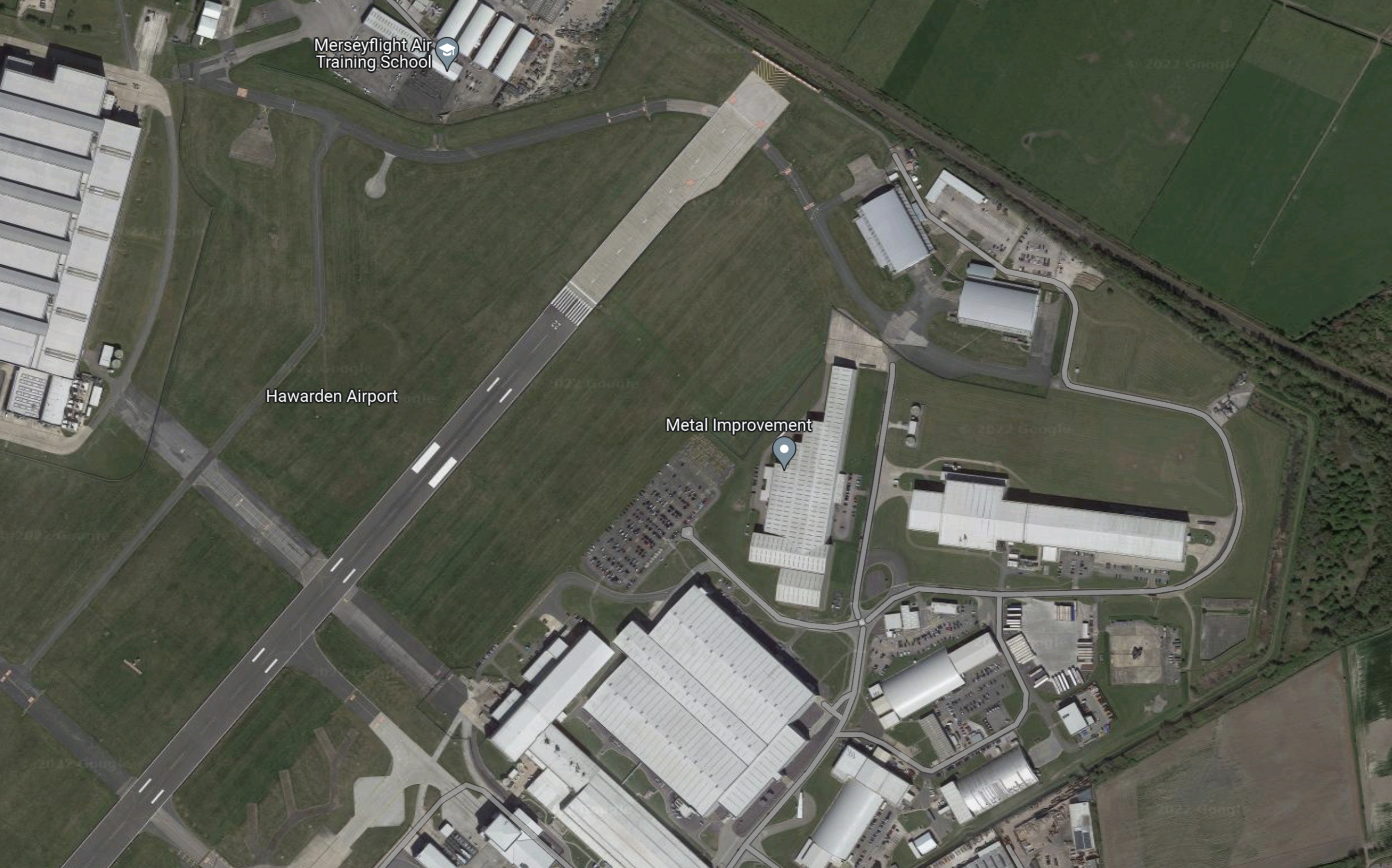
Note.
- The large runway.
- The various factory buildings.
- The North Wales Coast Line between Chester and Holyhead, runs along the North side of the Airport.
I doubt if Airbus wanted a station, it would be difficult to arrange.
Conclusion
Because of the vacant paths, it would appear that extra services to North Wales and North West England can be fitted in.
The Lack Of Information At Edinburgh Waverley Cost Me £55.10
The ongoing works at Edinburgh Waverley ruined my day. I had intended to come up to the city to take some photographs for this blog and see an old friend, who like me is widowed.
I also wanted to take a train to Leven to see the new stations.
I have a very unusual skin and on some days I can’t use ticket machines, so I need to use a human in a ticket office.
Today was one of those days and to complicate matters, I couldn’t find the ticket office.
I also wasted more time finding platform 17 for Leven.
Going back to London, where I live, my friend advised me to take the escalators from Princes Street to get into the station, which I have used many times before.
But they were shut and I missed the 16:13 Lumo to London by about a minute.
To get home, I had to buy another ticket on LNER for £55.10.
If there had been more information, perhaps in leaflets or from real people around the station, I would have had a much better day.
Exceptionally Low River Levels Raise Fears Over Water Supplies
The title of this post is the same as that of this article on the BBC.
This is the sub-heading.
Many of the UK’s rivers have hit exceptionally low levels and that could worsen in the next three months, according to the Centre for Ecology & Hydrology (CEH), raising questions over supplies to households, farmers and businesses.
These three introductory paragraphs add more details.
The warning comes after the driest spring in England since 1961, with northern regions experiencing the driest start to the year in nearly a century.
Almost all of the UK is expected to have below normal or low river levels in May, apart from the south-west of England.
The Environment Agency has said that the UK is at medium risk of drought and warned households of the risk of water restrictions.
In the 1970s, I was involved in a marginal way, in the planning of the water supply network in the UK, by the then Water Resources Board. My software called SPEED was used to solve the hundreds of differential equations involved.
Since the 1970s, I have felt, that as water supply in the UK has been fairly good, that the engineers, planners and mathematicians of the Water Resources Board didn’t do a bad job.
I don’t think, I can remember a period as long as this without rain.
I am drinking heavily to keep hydrated and I’m already today on my second bottle of Adnams Ghost Ship 0.5 % Beer.
But it just seems to go straight out through my skin, which I talked about in My Strange Skin.
I am Jewish in my father’s male line and Huguenot in my mother’s, so I have lots of ancestors, who lived in poor living conditions. So did Darwinian selection produce my leaky skin, that also heals itself quickly, in the harsh living conditions.
But on the other hand does it make me dehydrated all the time? And also create lots of red spots all over my body?
It’s not something new, as I can remember feeling this this as a child and helping my mother to count all the spots.
I hope that I will be fine, when we get some rain.
 The Anonymous Widower