Two Thirds Of Sofia Wind Turbines Installed
The title of this post, is the same as that of this article on offshoreWIND.biz.
This is the sub-heading.
Seventy wind turbines have been installed at RWE’s Sofia offshore wind farm in the UK, according to a Notice to Mariners recently issued by the project team.
These two paragraphs give more details of the installation process.
The first of the project’s 100 Siemens Gamesa SG 14-222 DD wind turbines was installed in March 2025, and the work reached the halfway mark in September last year. The vessel deployed for the work is Cadeler’s Wind Peak, which is carrying components for six turbines per trip, operating from the port of Hull.
IWS service operation vessel (SOV) IWS Seawalker is supporting the wind turbine installation work.
Note.
- Sofia is being installed by German Company ; RWE.
- Sofa will use 14 MW Siemens Gamesa wind turbines, some of which have recyclable blades.
- The installation process is being carried out nearly 200 kilometers out to sea on the Dogger Bank.
The power will be connected to the grid at Lackenby substation, which is near the Wilton chemical works, which can certainly you the electricity.
Does Wilton Chemical Works Have A Power Station?
I asked GoogleAI, the question in the title of this section and received this reply.
Yes, the Wilton International industrial site (formerly associated with ICI chemical works) has multiple power stations and significant on-site energy generation, operated primarily by Sembcorp Utilities UK. The site features a biomass power station (Wilton 10), a further biomass unit (Wilton 11), and an energy-from-waste plant, supplying electricity and steam to chemical and industrial businesses on-site.
Note.
- Wilton 10 opened as a biomass power station in 2002.
- Wilton 11 opened as a biomass power station in 2016.
I seem to remember, that one of these power stations was there on my visits to Wilton for ICI in the 1970s.
Key details regarding power generation at Wilton:
Biomass & Waste-to-Energy:
The site transitioned from coal-fired units to renewable biomass and waste-to-energy, utilizing wood and other byproducts for power and heat generation.
Sembcorp Utilities:
Sembcorp operates the site’s energy infrastructure, which includes five different generation assets and a private wire network.
Capacity: The site hosts significant generation capacity, including a 52MW biomass unit and a 35MW unit.
Future Projects: The site is involved in developments for net-zero emissions, including the Whitetail Clean Energy project, which is planned as the UK’s first Net Zero emissions power plant with Carbon Capture and Storage (CCS).
The site serves as a “plug and play” industrial location offering on-site, cost-effective energy.
Conclusion
This would appear to be a sensible small power system providing 1400 GW of wind power, backed up if needed be by the two biomass units, which total 87 MW.
Note, that ICI were storing gases under the site for many years, so I suspect, that Carbon Capture and Storage, might work well at this location.
I can see other places, where a wind farm, is combined with energy from waste for backup.
Are Wind Farms Being Backed Up By Energy From Waste Units In The UK?
I asked GoogleAI, the question in the title of this section and received this reply.
Yes, but only in a limited, complementary capacity, rather than as a direct, large-scale substitute for wind power.
Energy from Waste (EfW) units—commonly known as incinerators—are increasing in the UK, but their role in the grid is different from how we “back up” wind.
Here is a breakdown of how it works:
1. The Role of EfW (Baseload, not Backup)
Baseload Generation: EfW plants run 24/7 to burn waste. They provide a steady, consistent, predictable “baseload” of electricity (about 2–3% of UK supply).
Intermittency: Because they run constantly, they cannot ramp up and down quickly when the wind stops blowing. Therefore, they are not a “flexible” backup in the same way gas power plants are.
Partial Renewable: Around 50% of the energy produced by EfW is considered renewable (organic waste), helping the UK hit green targets.
2. What Actually Backs Up Wind?
When wind farms stop producing power during low-wind periods (often called “dunkelflaute”), the UK relies on other sources:
Natural Gas Plants: These are the primary, flexible backup that can ramp up instantly to fill gaps in renewable production.
Interconnectors: Imported electricity from other countries (e.g., Norway, France).
Battery Storage: Growing, but still small-scale compared to total demand.
3. How EfW Helps the Grid
EfW does assist the grid by providing system inertia and consistent, low-carbon, on-demand energy, reducing the need for more fossil fuels to be burnt at certain times. They are particularly useful for providing power when the grid is congested, but they do not specifically act as a “spare tire” for wind farms.
4. Future Trends
The government is looking to attach Carbon Capture and Storage (CCS) to EfW units, which would make them a low-carbon, dependable, and sustainable part of the energy mix by the 2030s.
In summary: EfW plays a part in supporting a greener grid, but it is not a direct substitute for the flexibility required to back up intermittent wind power.
5. Hydrogen Power
This is a section, that artificial intelligence has unsurprisingly left out, as no country has yet built the hydrogen storage and the power stations to generate the electricity, when it is needed.
But Note.
- SSE are building a big hydrogen store in Yorkshire at Aldbrough.
- Centrica are converting the Rough gas storage to a hydrogen store.
- SSE are building a 910 MW hydrogen-powered power station at Keadby.
- SSE are building a 1200 MW hydrogen-powered power station at Ferrybridge.
I suspect if you were building a chemical plant and Wilton fitted your budget, you would take a look.
Backing Up The Wind With The Keadby Power Stations
I went to Cleethorpes from Doncaster by train yesterday. You pass the Keadby site, where there are two large gas–fired power stations of 734 MW and 710 MW. A third one ; Keadby 3 of 910 MW complete with carbon capture and storage should join them by 2027.
So that will be nearly 2.5 GW of reliable electricity.
I find it interesting that one of our first gas-fired power stations with carbon capture will be in Lincolnshire, which is famous for growing plants of all shapes, types and sizes. So will we be seeing lots of greenhouses on the flat lands I saw yesterday, growing plants in an atmosphere they like, so that we can generate our carbon dioxide and eat it.
The next power station at Keadby is called the Keadby Next Generation power station, which is intended to be complete by 2030. It is a bit of a puzzle in that it will run on up to 1800 MW of hydrogen and only produce up to 910 MW of electricity.
Note.
- The hydrogen will come from SSE’s hydrogen store at Aldbrough and Centrica’s store at Rough.
- Surely, the amount of hydrogen and electricity should balance.
When I worked in ICI’s hydrogen plant in the 1960s, ICI had no use for the hydrogen, so they sent it to their power station, blended it with coal gas and used it to make steam for other processes.
Could Keadby Next Generation power station be providing zero-carbon steam for the chemical and other processes on Humberside?
Adding the 910 MW of electricity to Keadby’s gas-fired total of 2.5 GW gives 3.4 GW of electricity from Keadby to back up the wind farms.
3.4 GW at Keadby is what I call backup!
It also should be noted, that one of the reasons for building the Mersey Tidal Barrage is to provide backup for all the wind farms in Liverpool Bay.
Conclusion
I believe that SSE could be supplying zero-carbon steam in addition to electricity from the Keadby Hydrogen power station.
Energy In – Hydrogen And Carbon Dioxide Out
This article was inspired by this article in the Sunday Times, which is entitled ‘It’s A Slog’: Life Inside Britain’s Last Coal Power Station.
The article is about Ratcliffe-on-Soar power station, which is next to East Midlands Parkway station.
This is the first paragraph of the station’s Wikipedia entry.
Ratcliffe-on-Soar Power Station is a coal-fired power station owned and operated by Uniper at Ratcliffe-on-Soar in Nottinghamshire, England. Commissioned in 1968 by the Central Electricity Generating Board, the station has a capacity of 2,000 MW. It is the last remaining operational coal-fired power station in the UK, and is scheduled to close in September 2024.
I took these pictures of the power station in 2019.
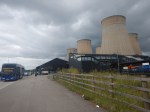
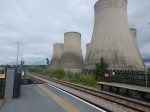



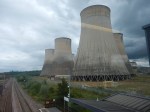


Ratcliffe-on-Soar is the last of a number of large coal-fired power stations, that were built in the area, mainly along the River Trent.
- Rugeley – 600 MW – 1961
- Drakelow – 1630 MW – 1964
- Willington – 800 MW – 1962
- Castle Donington – 600 MW – 1958
- Ratcliffe-on-Soar – 2000 MW – 1968
- High Marnham – 1000 MW – 1959
- Cottam – 2000 MW – 1968
- West Burton – 2000 MW – 1968
Note.
- The date is the commissioning date.
- That is 10,630 MW of electricity.
- There are also a few large gas-fired power stations along the river, that are still operating.
- Both coal and gas-fired stations use the water from the River Trent for cooling.
At the mouth of the river, there is the Keadby cluster of gas-fired power stations.
- Keadby 1 – 734 MW – 1996
- Keadby 2 – 849 MW – 2023
- Keadby 3 – 910 MW – 2027
- Keadby Hydrogen – 900 MW – 2030
Note.
- The date is the commissioning date.
- That is 3,393 MW of electricity.
- Keadby 2 is the most efficient CCGT in the world.
- Keadby 3 will be fitted with carbon capture.
- Keadby 2 has been designed to be retrofitted with carbon capture.
- Keadby Hydrogen will be fuelled by zero-carbon hydrogen.
As the years progress, I can see the Keadby cluster of power stations becoming a large zero-carbon power station to back-up wind farms in the North Sea.
- Hydrogen power stations will emit no carbon dioxide.
- Carbon dioxide from all gas-fired stations will be captured.
- Some carbon dioxide will be sold on, to companies who can use it, in industries like construction, agriculture and chemical manufacture.
- The remaining carbon dioxide will be stored in depleted gas fields.
As technology improves, more carbon dioxide will be used rather than stored.
Other Power Sources In The Humberside Area
In the next few sub-sections, I will list the other major power sources in the Humberside area.
Drax Power Station
Drax power station is a shadow of its former self, when it was one of the power stations fed by the newly discovered Selby coalfield.
These days it is a 2,595 MW biomass-fired power station.
Eastern Green Link 2
Eastern Green Link 2 will be a 2 GW interconnector between Peterhead in Scotland and Drax.
It is shown in this map.

Note.
- Most of the route is underwater.
- It is funded by National Grid.
- Contracts have been signed, as I talk about in Contracts Signed For Eastern Green Link 2 Cable And Converter Stations.
- It is scheduled to be completed by 2029.
This interconnector will bring up to 2 GW of Scottish wind-generated electricity to Drax and Humberside.
Drax has the substations and other electrical gubbins to distribute the electricity efficiently to where it is needed.
2 GW could also reduce the amount of biomass used at Drax.
In the long term, if the concept of the four Eastern Green Links is successful, I could see another Eastern Green Link to Drax to replace imported biomass at Drax.
I also, don’t see why a smaller Drax can’t be run on locally-sourced biomass.
Solar Farms And Batteries Along The River Trent
As the coal-fired power stations along the River Trent are demolished, solar farm developers have moved in to develop large solar farms.
Salt End Power Station And Chemical Works
These two paragraphs from the Wikipedia entry for Salt End describes the hamlet and its power station and chemical works.
Salt End or Saltend is a hamlet in the East Riding of Yorkshire, England, in an area known as Holderness. It is situated on the north bank of the Humber Estuary just outside the Hull eastern boundary on the A1033 road. It forms part of the civil parish of Preston.
Salt End is dominated by a chemical park owned by PX group, and a gas-fired power station owned by Triton Power. Chemicals produced at Salt End include acetic acid, acetic anhydride, ammonia, bio-butanol, bio-ethanol, ethyl acetate (ETAC) and ethylene-vinyl alcohol copolymer (EVOH) with animal feed also being produced on site.
I wonder, if running the complex on hydrogen would give cost and marketing advantages.
Aldbrough Hydrogen Storage Facility
This page on the SSE Thermal web site is entitled Plans For World-Leading Hydrogen Storage Facility At Aldbrough.
This is the most significant paragraph of the page, that is definitely a must-read.
With an initial expected capacity of at least 320GWh, Aldbrough Hydrogen Storage would be significantly larger than any hydrogen storage facility in operation in the world today. The Aldbrough site is ideally located to store the low-carbon hydrogen set to be produced and used in the Humber region.
This is a hydrogen storage facility for a much wider area than Humberside.
Rough Gas Storage Facility
This is the first paragraph of the Wikipedia entry for the Rough Gas Storage Facility.
Rough is a natural gas storage facility under the North Sea off the east coast of England. It is capable of storing 100 billion cubic feet of gas, nearly double the storage capacities in operation in Great Britain in 2021.
In Wood To Optimise Hydrogen Storage For Centrica’s Rough Field, I describe Centrica’s plans to convert the Rough gas storage into a massive hydrogen storage.
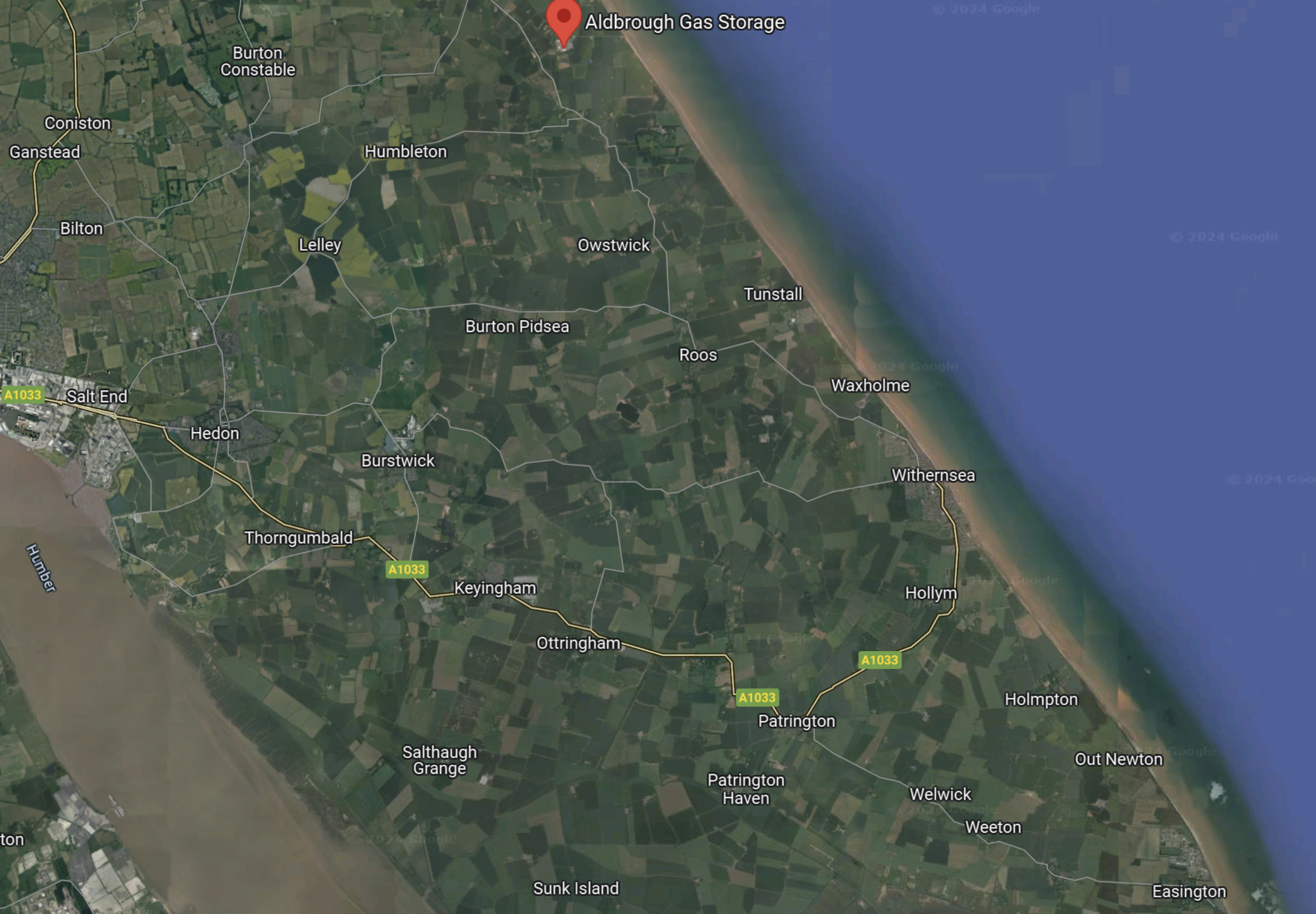
The Location Of Aldbrough Gas Storage, Rough Gas Storage, Salt End And Easington Gas Terminal
This Google Map shows between Salt End and the coast.
Note.
- The river crossing the South-West corner of the map is the Humber.
- Salt End with its power station and chemical works is on the North Bank of the Humber, where the river leaves the map.
- Aldbrough Gas Storage is marked by the red arrow at the top of the map.
- Easington Gas Terminal is in the South-East corner of the map.
- According to Wikipedia, gas flows into and out of the Rough Gas Storage are managed from Easington.
Looking at the map, I feel that the following should be possible.
- The two gas storage sites could be run together.
- Salt End power station and the related chemical works could run on hydrogen.
- Salt End will always have a reliable source of hydrogen.
- This hydrogen could be green if required.
All the chemical works at Salt End, could be run on a zero-carbon basis. Would this mean premium product prices? Just like organic does?
Enter The Germans
The Germans have a huge decarbonisation problem, with all their coal-fired power stations and other industry.
Three massive projects will convert much of the country and industry to hydrogen.
- H2ercules, which is a project of OGE and RWE, will create a hydrogen network to bring hydrogen, to where it is needed.
- In Uniper To Make Wilhelmshaven German Hub For Green Hydrogen; Green Ammonia Import Terminal, I describe how Uniper are going to build a hydrogen import terminal at Wilhelmshaven.
- AquaVentus is an RWE project that will use 10.3 GW of offshore wind power in German territorial waters to create a million tonnes per year of green hydrogen.
These would appear to be three of Europe’s largest hydrogen projects, that few have ever heard of.
AquaVentus And The UK
This video shows the structure of AquaVentus.
I clipped this map from the video.

Note.
- The thick white line running North-West/South-East is the spine of AquaVentus, that delivers hydrogen to Germany.
- There is a link to Denmark.
- There appears to be an undeveloped link to Norway.
- There appears to be an undeveloped link to Peterhead in Scotland.
- There appears to be a link to just North of the Humber in England.
- Just North of the Humber are the two massive gas storage sites of Aldbrough owned by SSE and Brough owned by Centrica.
- There appear to be small ships sailing up and down the East Coast of the UK. Are these small coastal tankers, that are distributing the hydrogen to where it is needed?
In the last century, the oil industry, built a substantial oil and gas network in the North Sea.
It appears now the Germans are leading the building of a substantial hydrogen network in the North Sea.
These are my thoughts about development of the AquaVentus network.
Hydrogen Production And AquaVentus
This RWE graphic shows the layout of the wind farms feeding AquaVentus.
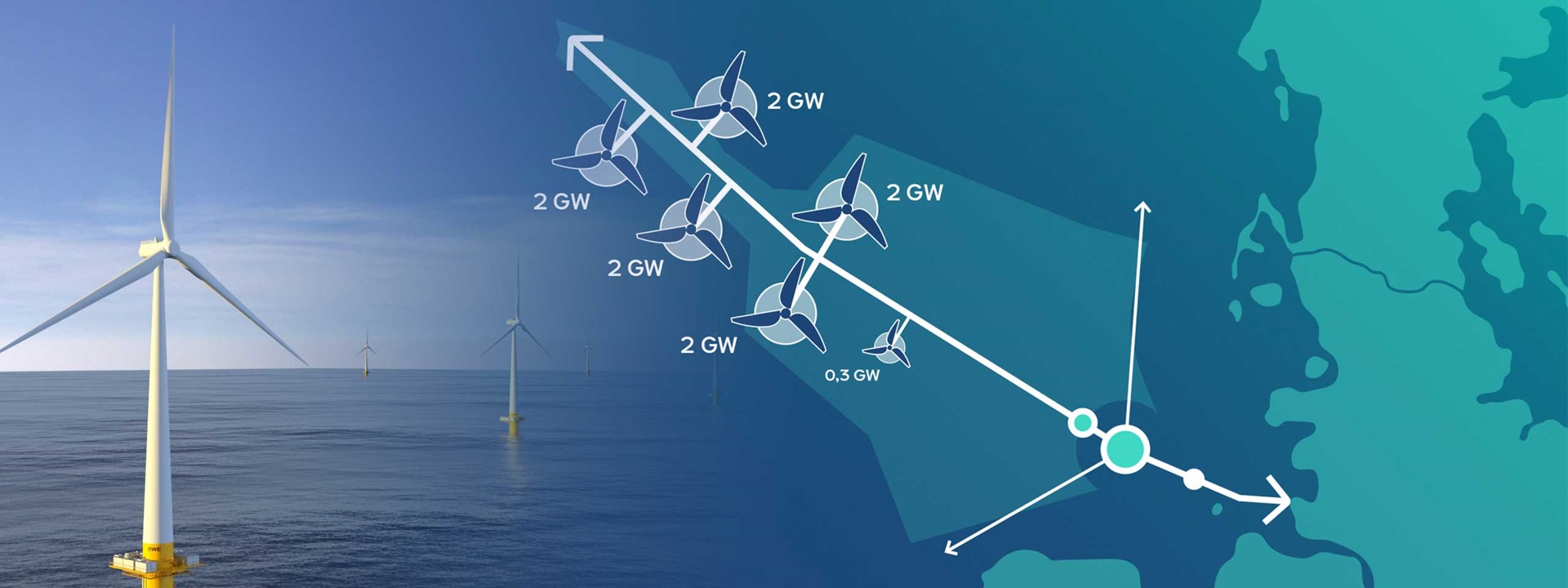
Note.
- There is a total of 10.3 GW.
- Is one of the 2 GW web sites on the UK-side of AquaVentus, the 3 GW Dogger Bank South wind farm, which is being developed by RWE?
- Is the 0.3 GW wind farm, RWE’s Norfolk wind farm cluster, which is also being developed by RWE?
Connecting wind farms using hydrogen pipelines to Europe, must surely mitigate the pylon opposition problem from Nimbys in the East of England.
As the AquaVentus spine pipeline could eventually connect to Peterhead, there will be other opportunities to add more hydrogen to AquaVentus.
Hydrogen Storage And AquaVentus
For AquaVentus to work efficiently and supply a large continuous flow of hydrogen to all users, there would need to be storage built into the system.
As AquaVentus is around 200 kilometres in length and natural gas pipelines can be up to 150 centimetres in diameter, don’t underestimate how much hydrogen can be stored in the pipeline system itself.
This page on the Uniper web site is entitled Green Wilhelmshaven: To New Horizons.
This is a sentence on the page.
Access to local hydrogen underground storage at the Etzel salt cavern site.
An Internet search gives the information, that Etzel gas storage could be developed to hold 1 TWh of hydrogen.
That would be enough hydrogen to supply 10 GW for a hundred hours.
Note that the UK branch of AquaVentus reaches the UK, just to the South of the massive hydrogen storage facilities at Aldbrough and Rough.
It would appear that both Germany and the UK are connected to AquaVentus through substantial storage.
I am certain, that all country connections to AquaVentus will have substantial storage at the country’s hydrogen terminal.
AquaDuctus
This would appear to be the first part of the AquaVentus network and has its own web site.
The web site is entitled Nucleus Of A Offshore Hydrogen Backbone.
These are the first two paragraphs.
The project partners are focusing on a scalable, demand-driven infrastructure: By 2030, AquaDuctus will connect the first large hydrogen wind farm site, SEN-1, with a generation capacity of approximately one gigawatt. SEN-1 is located in the German EEZ in the northwest of Helgoland. The pipeline will transport at a length of approx. 200 km green hydrogen produced from offshore wind to the German mainland and from there to European consumers via the onshore hydrogen infrastructure.
In the next project stage, AquaDuctus will be extended to the remote areas of the German exclusive economic zone towards the tip of the so-called duck’s bill. By that, additional future hydrogen wind farm sites will be connected. Along its way AquaDuctus will provide interconnection points with the opportunity for linking of adjacent national offshore hydrogen infrastructures originating from Denmark, Norway, the Netherlands, Belgium and United Kingdom which opens the door for Europe-wide offshore hydrogen transport by pipeline.
There is also an interactive map, that gives more details.
This paragraph explains, why the Germans have chosen to bring the energy ashore using hydrogen, rather than traditional cables.
Recent studies show that offshore hydrogen production and transport via pipelines is faster, cheaper, and more environmentally friendly than onshore electrolysis with a corresponding connection of offshore wind turbines via power cables. The German federal government has also recognized this advantage and has clearly expressed its intention to promote offshore hydrogen production in the North Sea.
I suspect, that some UK offshore wind farms will use the same techniques.
Hydrogen Production For The UK
Electrolysers will probably be built along the East Coast between Peterhead and Humberside and these will feed hydrogen into the network.
- Some electrolysers will be offshore and others onshore.
- Turning off windfarms will become a thing of the past, as all surplus electricity will be used to make hydrogen for the UK or export to Europe.
- Until needed the hydrogen will be stored in Albrough and Rough.
Backup for wind farms, will be provided using hydrogen-fired power stations like Keadby Hydrogen power station.
Financial Implications
I reported on Rishi Sunak’s Manifesto Speech, which he made on June 11th. This is an extract
This document on the Policy Mogul web site is entitled Rishi Sunak – Conservative Party Manifesto Speech – Jun 11.
These are three paragraphs from the speech.
We don’t just need military and border security. As Putin’s invasion of Ukraine has shown, we need energy security too. It is only by having reliable, home-grown sources of energy that we can deny dictators the ability to send our bills soaring. So, in our approach to energy policy we will put security and your family finances ahead of unaffordable eco zealotry.
Unlike Labour we don’t believe that we will achieve that energy security via a state-controlled energy company that doesn’t in fact produce any energy. That will only increase costs, and as Penny said on Friday there’s only one thing that GB in Starmer and Miliband’s GB Energy stands for, and that’s giant bills.
Our clear plan is to achieve energy security through new gas-powered stations, trebling our offshore wind capacity and by having new fleets of small modular reactors. These will make the UK a net exporter of electricity, giving us greater energy independence and security from the aggressive actions of dictators . Now let me just reiterate that, with our plan, we will produce enough electricity to both meet our domestic needs and export to our neighbours. Look at that. A clear, Conservative plan not only generating security, but also prosperity for our country.
I can’t remember any reports about an energy security policy, which he outlined in the last paragraph of my extract from his speech.
He also said we would have sufficient electricity to export to our neighbours. As I said earlier some of this energy will be in the form of hydrogen, which has been created by offshore electrolysers.
If we are exporting electricity and hydrogen to Europe, this is likely to have three effects.
- An improvement in Europe’s energy security.
- H2ercules will improve and decarbonise German industry, using UK hydrogen.
- The finances of UK plc will improve.
It looks like there would be winners all round.
Rishi Sunak had the cards and he played them very badly.
It is now up to Keir Starmer, Great British Energy and Jürgen Maier to play those cards to link the energy systems of the UK and Germany to ensure security and prosperity for Europe.
Welcoming GB Energy And Its Mission To Make Britain A Clean Energy Superpower
The title of this post, is the same as that of this press release from SSE.
This is the sub-heading.
Making Britain a clean energy superpower by 2030 is one of the new government’s five missions. The UK Government and Crown Estate have announced plans to join forces to create a new publicly owned energy firm. GB Energy will invest in homegrown, clean energy.
These are the first two paragraphs of SSE’s response to the announcement.
We welcome the focus of GB Energy on earlier stage technologies, such as carbon capture and storage (CCS), where the Government can de-risk projects and help accelerate the clean energy transition.
In areas such as offshore wind, where industry is already delivering mission-critical infrastructure, the biggest impact will be on delivering policies that speed up the build out of these essential projects.
It looks like SSE, see Great British Energy as a positive development.
enfinium Announces Proposal For £200m Investment In Carbon Capture Project In North Wales
The title of this post is the same as that of this press release from enfinium.
This is the sub-heading.
The project could be capable of capturing up to 235,000 tonnes of CO2 every year, accelerating efforts to achieve net zero.
The first two paragraphs outline the project.
Today, enfinium, a leading UK energy from waste operator, announces it is progressing plans to invest around £200 million in carbon capture and storage (CCS) technology at the Parc Adfer energy from waste facility in Deeside, North Wales, providing vital carbon removals and boosting the green economy.
The project could capture up to 235,000 tonnes of carbon dioxide (CO2) every year. As over half of the waste processed at the facility is organic, installing CCS would enable the plant to take more CO2 out of the atmosphere than it produces. The Welsh Government’s Carbon Budget makes clear that Wales needs carbon removal solutions to mitigate other polluting parts of the economy to achieve a Net Zero economy.
The press release also says this about Paec Adfer.
Opened in 2019 in partnership with the five local authorities that make up the North Wales Residual Waste Treatment Partnership (NWRWTP), Parc Adfer currently diverts up to 232,000 tonnes of unrecyclable waste from climate damaging landfill. As recognised by the National Infrastructure Commission, emissions from energy from waste plants are lower per tonne of waste compared to landfill.
With CCS installed, Parc Adfer will support the Welsh Government’s ambition to have 100% zero carbon power by 2035 and support over 1,000 jobs in the green economy during the construction phase.
This Google Map shows the location of Parc Adfer, with respect to Liverpool and the River Dee.
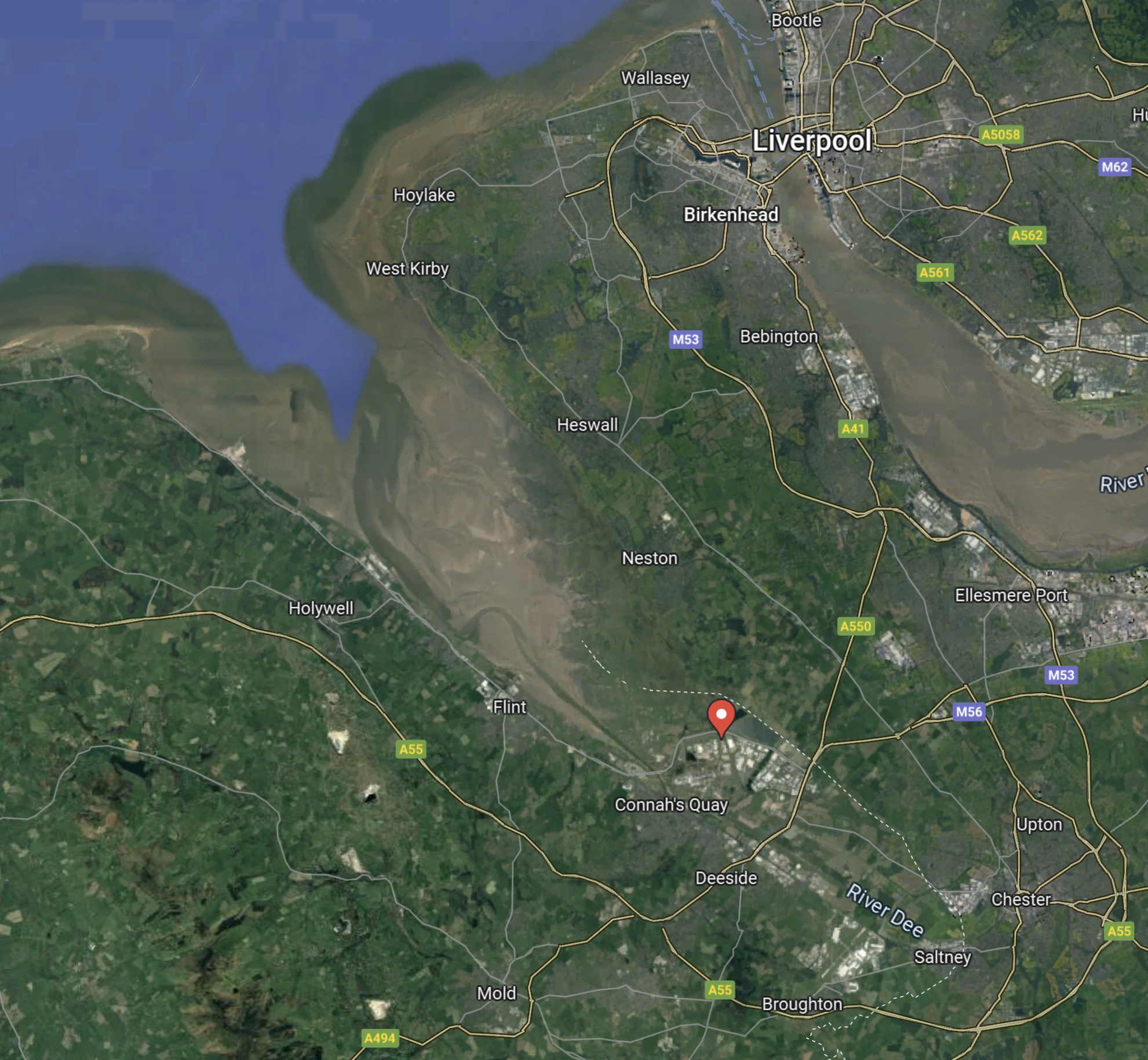
Note.
- Liverpool is in the North-East corner of the map.
- Chester is in the South-East corner of the map.
- The Dee Estuary is in the North-West corner of the map.
- The red arrow indicates the location of Parc Adfer.
This second Google Map shows the location of Parc Adfer in Deeside Industrial Park, which is just over the England-Wales border.
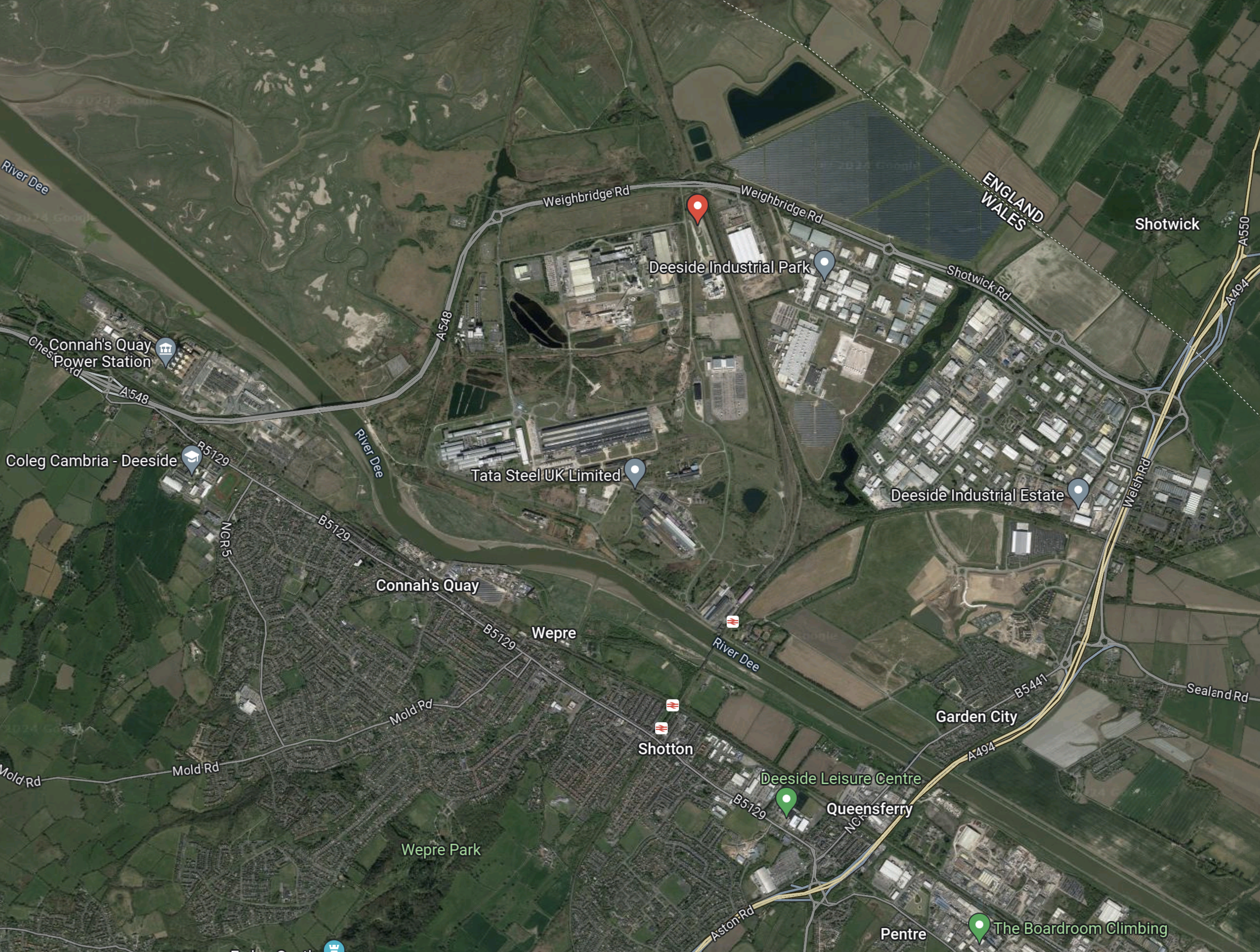
As before, the red arrow indicates the location of Parc Adfer.
This third Google Map shows the detailed area of Parc Adfer.
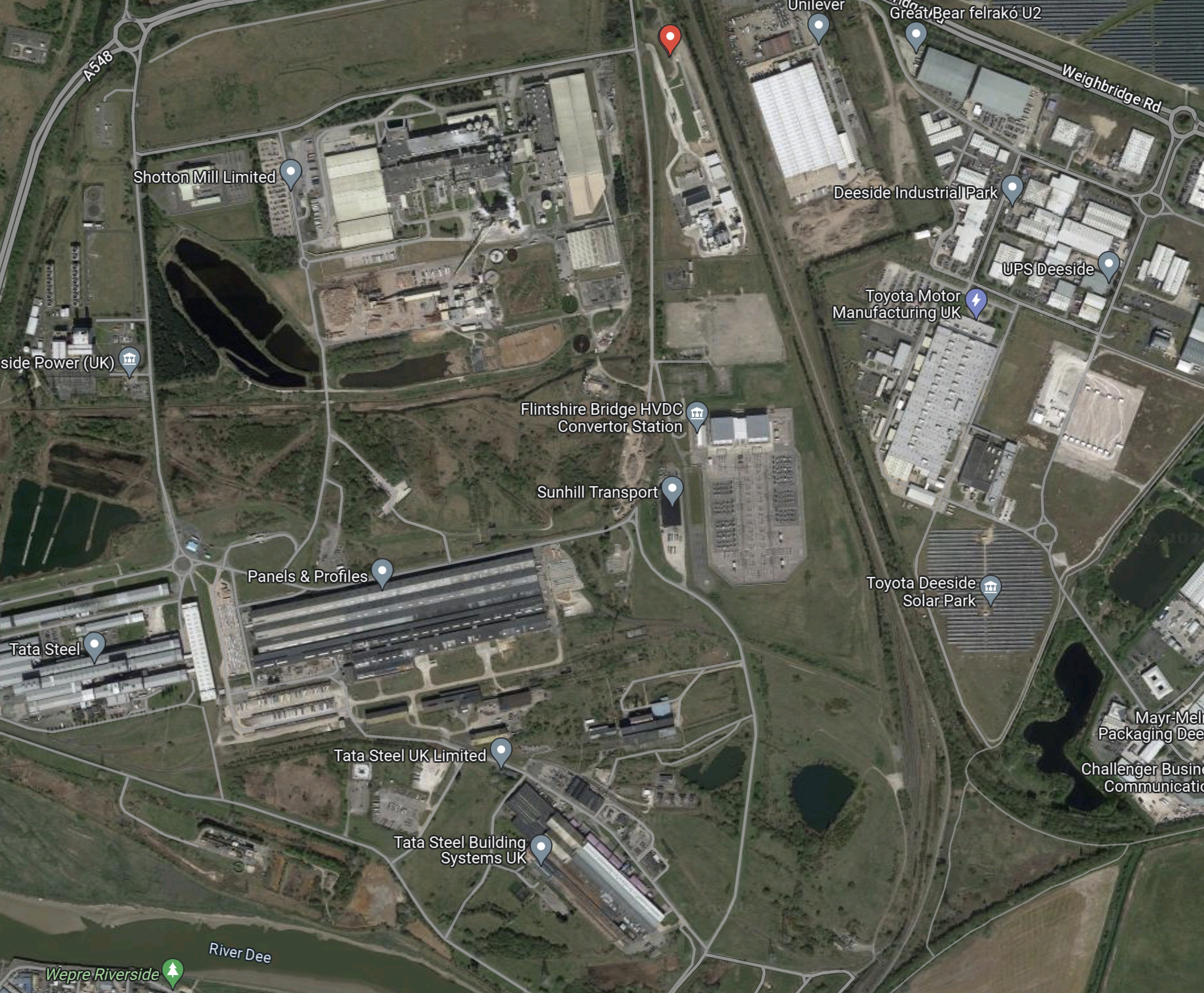
Note.
- The red arrow indicates the location of Parc Adfer.
- The Borderlands Line between Liverpool and Wrexham runs alongside the site.
- Around Parc Adfer are assorted steel works and the Flintshire Bridge HVDC Convertor Station for the Western HVDC Link to Hunterston in Scotland.
- On the other side of the tracks are Amazon, Great Bear Distribution, Toyota, Unilever and the Toyota Deeside Solar Park.
These are my thoughts.
Parc Adfer Has Excellent Electrical Connections
In addition to the 2.25 GW Western HVDC Link to Hunterston, there are following power sources in the area.
- The wind farms of Liverpool Bay.
- The 1.4 GW Connah’s Quay power station.
- The 498 MW Deeside power station.
From the enfinium web site, it looks like Parc Adfer will generate 21 MW of zero-carbon energy from waste.
Will Parc Adfer Have A Rail Connection?
According to the enfinium web site, Parc Adfer will process waste from Flintshire County Council, Denbighshire County Council, Conwy County Borough Council, Gwynedd Council and the Isle of Anglesey County Council.
I have arranged these councils in order from East to West and all are served by the North Wales Coast Line.
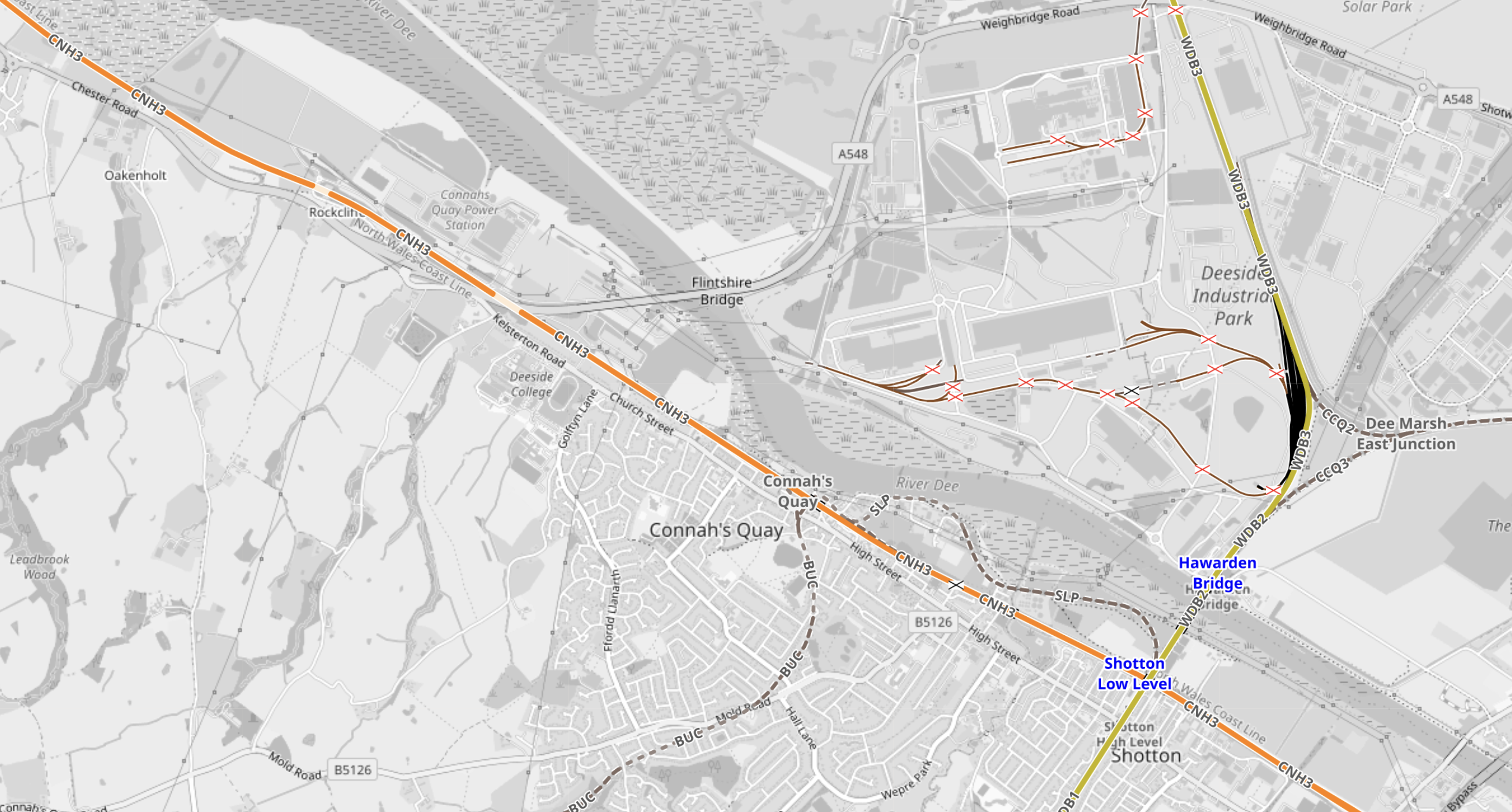
This OpenRailMap shows the rail connection between Parc Adfer and the North Wales Coast Line.
Note.
- The Borderlands Line is shown in yellow and runs between Liverpool and Wrexham.
- The Borderlands Line runs past Parc Adfer just off the North of the map.
- The North Wales Coast Line is shown in orange and runs between North Wales and Chester.
- There are two stations at Shotton; High and Low Levels, which allow a passenger connection.
Unfortunately, there is no rail connection for trains which would allow freight services between Parc Adfer and North Wales.
A section called Future, in the Wikipedia entry for Shotton station, says this about upgrading the station.
In March 2015 Network Rail published the draft version of their Welsh Route Study. It contained a proposal to build a new interchange station that would replace the existing High and Low Level stations, allowing for greater connectivity between the North Wales Coast Main Line and the Borderlands Line. The document recommended a transport planning study to establish the cost, feasibility and benefits of the proposed scheme.
It appears to be likely, that no rail route will be created to allow freight services between Parc Adfer and North Wales.
Deeside Parkway Railway Station
It does appear that a parkway station at Deeside Parkway is a possibility.
This is the opening paragraph of the Wikipedia entry for Deeside Parkway station.
Deeside Parkway is a proposed railway station situated between Neston and Hawarden Bridge on the Borderlands Line. The station is intended to serve the Deeside area of Flintshire, North Wales, particularly the Deeside Industrial Park.
The station is proposed to be park of the North Wales Metro, which is described in this Wikipedia entry.
UK Energy Grid Needs £60bn Upgrade To Hit Green Target, Plan Says
The title of this post, is the same as that of this article on the BBC.
This is the sub-heading.
The UK’s electricity network needs almost a further £60bn of upgrades to hit government decarbonisation targets by 2035, according to a new plan.
These five paragraphs explain the plan.
About 4,000 miles of undersea cables and 1,000 miles of onshore power lines are needed, said the National Grid’s Electricity Systems Operator (ESO).
The investment would add between £20 to £30 a year to customer bills, it said.
The government said the ESO’s plans were preliminary and yet to pass a “robust planning process”.
The plans were written up by the ESO, the organisation which runs the electricity network and would run the updated system it is calling for too. It is currently owned by National Grid but will transfer into government ownership later this year.
Its latest £58bn estimate is for work needed between 2030 and 2035 and comes on top of a previous £54bn estimate for work taking place between now and 2030.
These are my thoughts.
The Amount Of Undersea Cable
Edinburgh and London are roughly 400 miles apart as the train runs, so it looks like there could be the equivalent of ten underwater cables between the North of Scotland and England.
In Contracts Signed For Eastern Green Link 2 Cable And Converter Stations, I talked about the proposed 2 GW link between Peterhead in Scotland and Drax in England, which will be a double cable. So there’s the first two of these long cables.
It looks to me, that National Grid are proposing to use underwater cables wherever they can, so they avoid large expensive planning rows stirred up by Nimbies.
Monitoring The Undersea Cables
Last week Ofgem gave National Grid a £400,000 grant to develop new innovative technologies, which I wrote about in £400k For National Grid Innovation Projects As Part Of Ofgem Fund To Help Shape Britain’s Net Zero Transition.
One of the project is called HIRE – Hybrid-Network Improvement & Reliability Enhancement and will be used to check all these cables are performing as they should.
My electrical engineering experience tells me, that there must be some cunning way, that will detect that something is happening to the cable. The involvement of a technology company called Monitra in the project is a bit of a giveaway.
How Much Will It Cost Me?
Currently, UK consumers pay about £30 per year to have electricity delivered, so this will rise to between £50 and £60 per year.
That is just over a pound a week. I would pay about the same for a resident’s parking permit outside my house for an electric car and probably three times more for a petrol or diesel car.
Do We Have Enough Cable?
Two undersea cable factories are under development in Scotland and I suspect the 4,000 miles of undersea cables will be delivered on schedule and covered in saltires.
What About T-Pylons?
The latest onshore electricity transmission line between Hinckley Point C and Bristol, doesn’t use traditional pylons.
It uses T-pylons like these to connect the 3.26 GW nuclear power station.
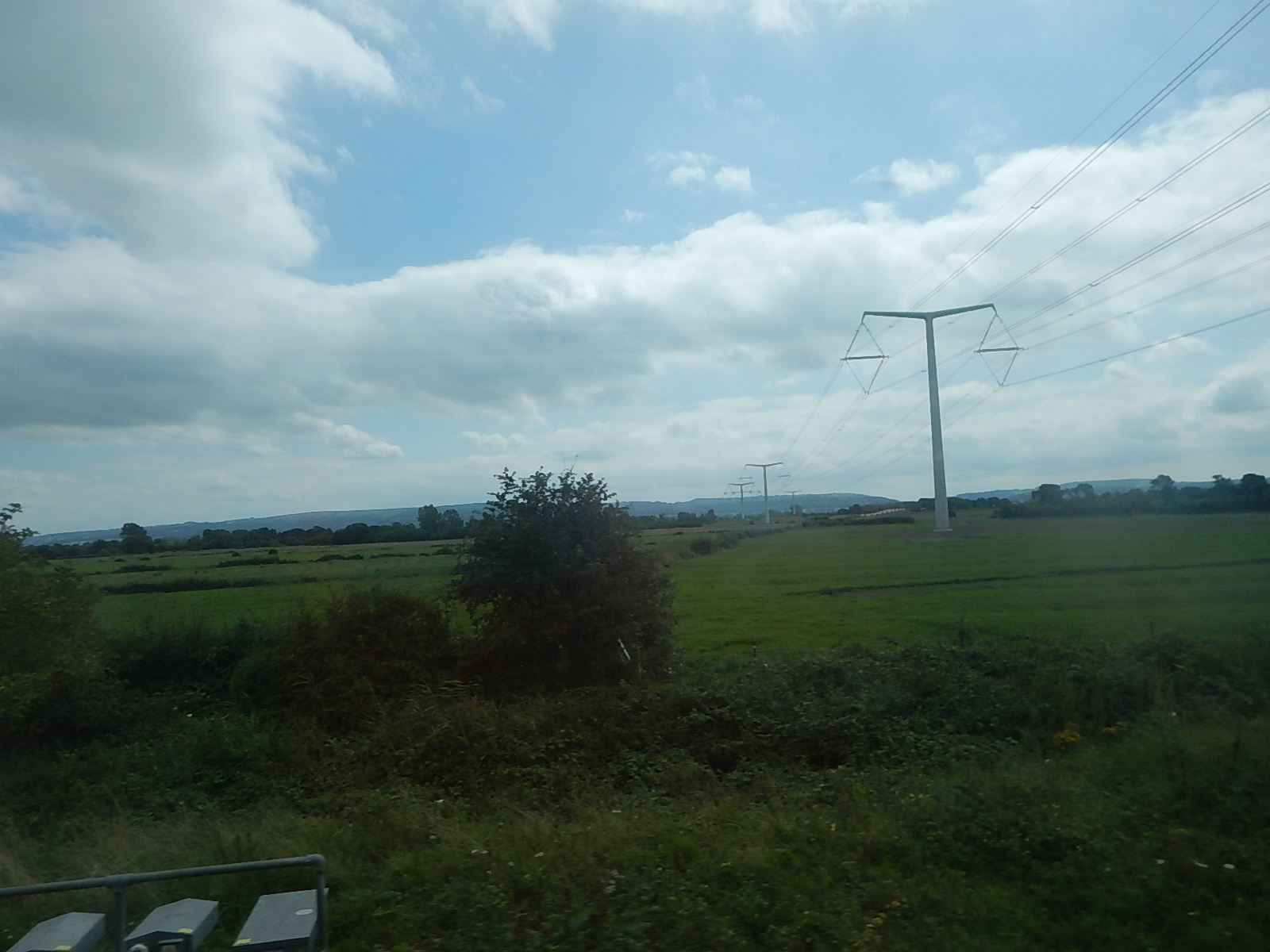
Note that they are shorter, designed to be less intrusive, have a smaller footprint and are made from only ten parts.
I suspect they will cost less to install and maintain.
There is more on T-pylons in National Grid Energise World’s First T-Pylons.
I wouldn’t be surprised that some of the oldest traditional pylons will be replaced by T-pylons.
I am surprised that T-pylons are not mentioned in the BBC article.
I like T-pylons. How do you feel about them?
Eastern Green Link 2
This press release from National Grid, describes Eastern Green Link 2 like this.
Eastern Green Link 2 (EGL2) is a 525kV, 2GW high voltage direct current (HVDC) subsea transmission cable from Peterhead in Scotland to Drax in England delivered as a joint venture by National Grid and SSEN Transmission.
This map from National Grid, shows the route of the Eastern Green Link 2.
The Northern landfall is at Sandford Bay and the Southern landfall is at Wilsthorpe Beach.
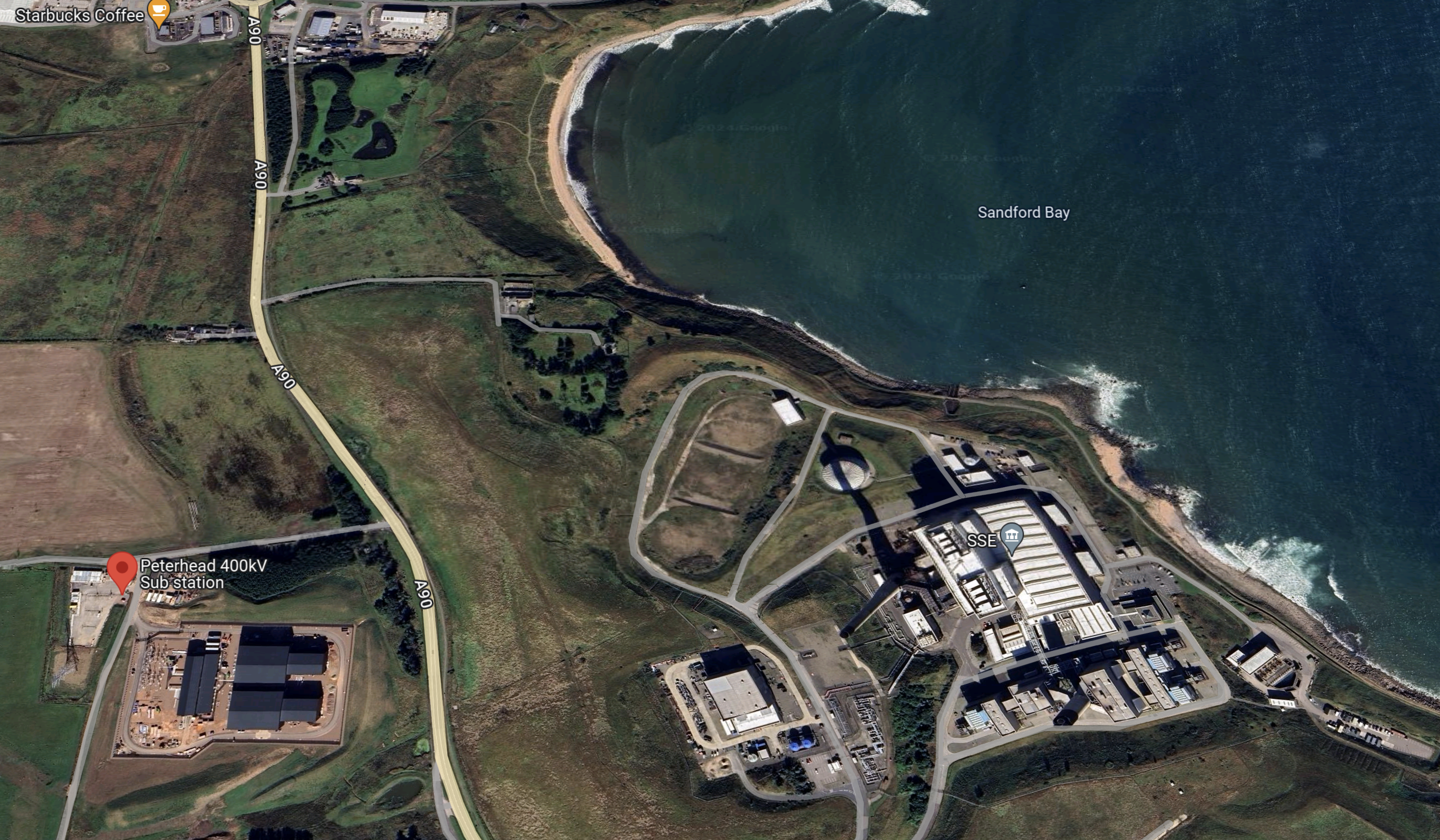
This Google Map shows Sandford Bay and Peterhead power station.
Note.
- Sandford Bay occupies the North-East corner of the map.
- The red arrow indicates the main 400kV sub-station at Peterhead.
- The 2177 MW gas-fired Peterhead power station is to the East of the sub-station marked as SSE.
This second Google Map shows the onshore route of the cable from Wilsthorpe to Drax.

Note.
- Flamborough Head is in the North-East corner of the map.
- Wilsthorpe Beach is at Bridlington a couple of miles South of Flamborough Head.
- The red arrow indicates Drax Power station.
- An onshore underground cable will be installed from landfall in Wilsthorpe to a new onshore converter station built in Drax.
The EGL2 HVDC cable connection from Scotland to England consists of 436km of submarine cable and 69km of onshore cable.
Both converter stations will be on existing power station sites and the major onshore works will be the underground cable between Wilsthorpe and Drax.
Where Does Drax Go From Here?
Currently, Drax power station is a 2595 MW biomass-fired power station.
There are now other large power sources that could replace some or all of the output of Drax power station.
- 2GW of Scottish wind power coming to Drax on Eastern Green Link 2.
- 6 GW of offshore wind is being developed at the Hornsea wind farms.
- 8 GW of offshore wind is being developed at the Dogger Bank wind farms.
- 2.5 GW from the three gas-fired power stations at Keadby, two of which are likely to be fitted with carbon capture.
- 1.8 GW from the proposed hydrogen-fired Keadby Hydrogen power station.
Given the bad feelings many have about Drax burning biomass, with 20.3 GW of electricity, you might think that shutting down Drax would be a simple solution.
But, according to Drax’s Wikipedia entry, it has a unique property.
Despite this intent for baseload operation, it was designed with a reasonable ability for load-following, being able to ramp up or down by 5% of full power per minute within the range of 50–100% of full power.
So Drax could be very useful in balancing the grid, by ramping up and down to fill the gap between production and need.
In addition, there is good biomass. This is from the Wikipedia entry.
A 100,000 tonne pa capacity straw pelletization facility was constructed at Capitol Park, Goole in 2008.
Drax are also promoting BECCS or Bioenergy carbon-capture and storage.
There is a Wikipedia entry for Bioenergy With Carbon Capture And Storage, of which this is the first couple of sentences.
Bioenergy with carbon capture and storage (BECCS) is the process of extracting bioenergy from biomass and capturing and storing the carbon, thereby removing it from the atmosphere. BECCS can theoretically be a “negative emissions technology” (NET).
I do feel that carbon capture and storage is a bit like sweeping the dust under the carpet, when you sweep the floor around it.
But carbon capture and use could be another matter.
This Google Map shows the Drax site.

Note how it is surrounded by agricultural land.
Could the power station be the source of pure carbon dioxide to be fed in greenhouses to flowers, herbs, salad vegetables, tomatoes and other plants?
I suspect there’s productive life left in Drax power station yet!
LionLink
LionLink, that is being developed by National Grid is a new type of interconnector, called a multi-purpose interconnector, that will connect Suffolk and The Netherlands via any convenient wind farms on the way. This means that the electricity generated can go where it is needed most.
I wrote about LionLink in World’s Largest-Of-Its-Kind Power Line To Deliver Clean Power To 1.8m UK Homes And Boost Energy Security.
Other Multi-Purpose Interconnectors
I can see other multi-purpose interconnectors like LionLink being built around the UK.
- There could be one across the Dogger Bank to link out 8 GW of Dogger Bank wind farms with those of the Dutch, Danes and Germans on their section of the bank.
- NorthConnect could be built between Scotland and Norway via some of the wind farms being developed to the North-East of Scotland.
- Could wind farms to the North of Ireland use a multi-purpose interconnector between Scotland and Northern Ireland.
- I can also see one or possibly two, being built across the Celtic Sea to link Devon, South Wales and Southern Ireland via the wind farms being developed in the area.
- Will we also see a Channel multi-purpose interconnector to transfer electricity along the South Coast of England?
Some of these multi-purpose interconnectors could be key to creating a revenue stream, by exporting electricity, to countries in Europe, that have a pressing need for it.
Conclusion
National Grid’s excellent plan will lead to the end of the practice of shutting down wind turbines. The spare electricity will be exported to Europe, which will surely create a good cash-flow for the UK. This in turn will encourage developers to create more wind farms in the seas around the UK’s coasts.
Energy / Sullom Voe Terminal To Be Connected To The Grid By The End Of Next Year
The title of this post, is the same as that of this article on Shetland News.
This is the sub-heading.
POWER supply to the Sullom Voe Terminal is set to be provided by two 43-kilometre underground power lines from the Gremista substation by the end of next year.
These four paragraphs outline some of EnQuest’s plans.
The on-site gas-fired power station, operated by Equans, is due to be switched off in the fourth quarter of 2025 as it no longer meets stringent carbon emission standards.
EnQuest, the operator of the terminal, gave an update on its plans for the 1,000-acre site during a Shetland suppliers forum held at Mareel on Wednesday morning.
The company was keen to present itself as one that is seeking collaborative working with the local businesses and the community as Sullom Voe transitions from an oil terminal to a green energy hub.
The company is in the middle of a “right-sizing” project that involves some significant decommissioning of equipment no longer needed to make space for long-term aspiration such as carbon capture and storage, green hydrogen production and offshore electrification.
Note.
- Two underground cables will be coming from Gremista to Sullom Voe.
- Up to seven wind turbines could fit on the site to produce power needed for green hydrogen production.
- Shetland is set to be connected to the UK national grid later this year thanks to a new 600MW HVDC subsea transmission link which will run to Caithness.
- The Sullom Voe power station, once switched off, could be “repurposed” to continue producing energy using clean fuels.
- EnQuest are certainly doing a comprehensive job on the transition.
- It looks to be a well-thought out plan to convert existing oil and gas infrastructure to a modern green asset.
This Google map shows Gremista to Sullom Voe.

Note.
- Sullum Voe is at the top of the map.
- Gremista is marked by the red arrow.
- It looks like the cable could take mainly a straight North-South route.
This second Google map shows Sullum Voe

Note.
- The Sullum Voe terminal is at the top of the map.
- Sullum Voe is a 1,000-acre site.
- In the South-West corner is the closed Scatsta airport.
This third Google map shows Lerwick.
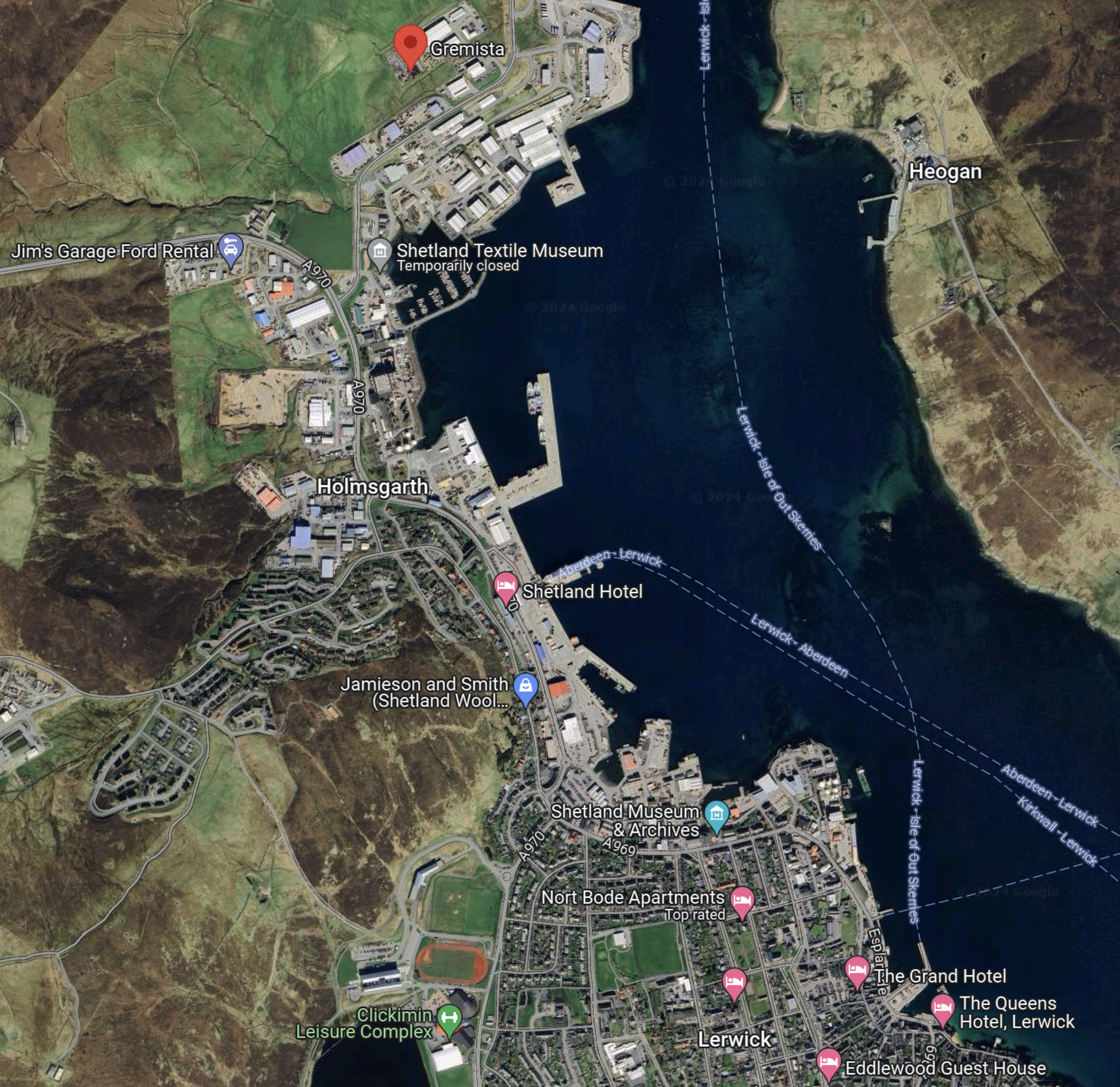
Gremista is marked by the red arrow.
I do have some thoughts.
Scatsta Airport
Consider.
- It takes takes over three hours on a bus between Lerwick and Sullum Voe
- Scatsta Airport only closed in 2020.
Is there an opportunity for an air taxi between Lerwick and Scatsta?
SSE Thermal Acquires 50% Stake In H2NorthEast Hydrogen Project
The title of this post is the same as that of this press release from SSE Thermal.
These are the first three introductory paragraphs.
SSE Thermal has become joint owner of a blue hydrogen project in Teesside which is set to play a major role in supporting a reliable decarbonised power system by 2035 and accelerating industrial decarbonisation.
The partnership with Kellas Midstream will see the companies jointly develop H2NorthEast, a hydrogen production facility with carbon capture and storage that could help to kickstart a hydrogen economy in the Tees Valley. The agreement is for an initial consideration of <£10m to Kellas Midstream with further contingent consideration due should the project reach a financial investment decision.
In its first phase, H2NorthEast could deliver up to 355MW of blue hydrogen production capacity from 2028 with plans to scale up to more than 1GW. Offtakers would include heavy industry and power generation, either through blending into existing assets or in new hydrogen-fired plants.
Note.
- Production of 355 MW of hydrogen could start in 2028.
- Several existing processes have been converted from gas-firing to hydrogen-firing or a blend of natural gas and hydrogen firing. See Lime Kiln Fuelled By Hydrogen Shown To Be Viable.
- Teesside has quite a few industries, like steel and chemicals that theoretically could be converted to hydrogen or a hydrogen blend.
I have some thoughts.
Carbon Capture And Storage
This paragraph in the press release talks about the carbon capture and storage.
With an anticipated minimum carbon capture rate of 97%, H2NorthEast meets both UK and EU low-carbon standards. Specifically, the hydrogen produced via H2NorthEast would be fully compliant with both the UK’s Low Carbon Hydrogen Standard and is expected to be aligned with the EU Taxonomy for sustainable activities.
If the plant can achieve a carbon capture rate of 97 %, that is very good and it appears to meet the required standards.
- I also feel, that if it is of a high purity, then that could be a bonus, as it could be used in food manufacturing and other processes, where high purity is needed.
- I feel SSE should endeavour to use as much of the carbon dioxide, as it can to produce valuable by-products, which could include cement substitutes, building blocks, plasterboard and animal feed.
- Carbon dioxide can also be fed to soft fruit, salad vegetables, tomatoes, flowers and other plants in giant greenhouses or vertical farms.
- Polyester yarn can also be made from carbon dioxide.
It is my belief that this list of products will grow in the next ten years and carbon dioxide of a high purity will become an important chemical feedstock.
Replacement of Blue Hydrogen With Green
If SSE Renewables were to build an electrolyser near to H2NorthEast, they could use that to replace the blue hydrogen.
- From an offtaker’s point of view green and blue hydrogen would be identical.
- It’s just that the green hydrogen doesn’t produce any carbon dioxide.
- I can see the complex being run to produce enough carbon dioxide to supply the users that need it and producing blue and/or green hydrogen accordingly.
Hopefully, the more uses that can be found for the carbon dioxide, the less of it will need to use long-term storage.
Expanding The Plant
As blue and green hydrogen plants create an identical product, the decision of whether to add an extra blue hydrogen or green hydrogen plant can be taken solely on financial grounds.
Conclusion
This looks like it could be a very sensible decision by SSE.
UK Offshore Wind And CCS Colocation Projects Kick Off
The title of this post, is the same as that of this article on offshoreWIND.biz.
This is the sub-heading.
The Offshore Wind and Carbon Capture and Storage (CCS) Colocation Forum (the Forum), set up to provide strategic coordination of colocation research and activity on the nation’s seabed, has commissioned two research projects.
These first two paragraphs, which set objectives and possible methods for the two projects.
The projects are designed to inform the best approach to test and demonstrate the colocation of offshore wind and CCS activities in the future.
The research projects – Project Colocate and Project Anemone – build on the Forum’s Spatial Characterisation Report, which identified areas of potential overlap for offshore wind and CCS on the seabed, and NSTA’s Seismic Imaging Report, which explored various options for monitoring carbon storage and offshore wind sites to help resolve possible colocation issues.
These are the two projects.
Project Colocate, which is described in the article like this.
Delivered by the University of Aberdeen with funding from the Crown Estate and Crown Estate Scotland, Project Colocate will investigate the viability of areas on the seabed for colocation of CCS and offshore wind, with bespoke monitoring plans for each area.
Researchers from the University of Aberdeen will focus their investigations on the East Irish Sea and Central North Sea, both of which have been identified as having significant potential for future colocation of CCS and offshore wind, according to the Crown Estate.
Project Anenome, which is described in the article like this.
The complementary Project Anemone will explore mutually beneficial opportunities arising from the colocation of these developing industries.
The project aims to identify and map the routes to realising these opportunities to create practical guidance for how offshore wind and CCS technologies can operate alongside each other – from construction to decommissioning.
It does appear to be a lot of sensible thinking and words, although neither project appears to yet have a website.
This paragraph is a nice tailpiece to the article.
To achieve the UK’s net zero targets, the UK Government is targeting the delivery of 50 GW of offshore wind energy and the capture of 20-30 million tonnes of CO2 per year by 2030.
I’ve mentioned 50 GW of offshore wind before, but 20-30 million tonnes is a lot of CO2.
Flotation Energy, Vårgrønn Seal Exclusivity Agreements For 1.9 GW Scottish Floaters
The title of this post, is the same as that of this article on offshoreWIND.biz.
This is the sub-heading.
Vårgrønn, a joint venture between Plenitude (Eni) and HitecVision, and Flotation Energy have signed exclusivity agreements for two floating offshore wind developments under Crown Estate Scotland’s Innovation and Targeted Oil and Gas (INTOG) leasing round.
These two paragraphs give more details.
Once completed, the floating offshore wind farms, with up to a total of 1.9 GW capacity, will provide renewable electricity to oil and gas platforms, aiming to reduce carbon emissions from the assets they supply.
In addition, Green Volt and Cenos projects will also provide electricity to the UK grid.
Note.
I can’t see a loser with these wind farms.
- The wind farms provide zero-carbon electricity to oil and gas platforms.
- These platforms cut their emissions, by not using fossil fuels to generate the electricity they need for their operation.
- Some platforms use gas to generate the electricity, so this gas can be delivered to the shore for the UK gas network.
- Any spare electricity will be available for using in the UK electricity grid.
- Crown Estate Scotland will be paid for the lease for the wind farm.
There will be no carbon emissions from the platforms, but there will be extra onshore emissions from any gas that is currently used to power the platforms, if it is burnt onshore in power stations and industrial processes, or used for heating.
But increasingly gas in the UK will be used in applications, where the carbon emissions can be captured for use or storage.
It will be very interesting to see how as offshore operations are decarbonised our total carbon emissions change.
 The Anonymous Widower