New Chiltern Railways Trains Set To Unlock 10,000 More Seats A Day
The title of this post is the same as that of this press release from Chiltern Railways.
This picture from Chiltern Railways shows the train at Marylebone.
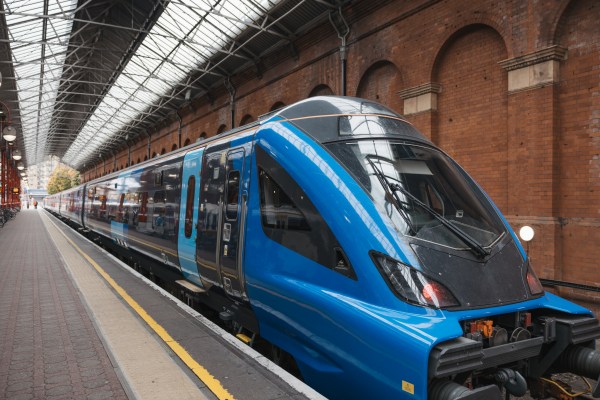
These three paragraphs are from the press release and add more details.
Chiltern Railways today (Tuesday 14 October) showcased for the first time its newest (Mark 5A) trains, set to add 10,000 more seats for customers each weekday from December 2026.
The trains, to be introduced between London to West Midlands from early 2026, will enable Chiltern to deliver more capacity across each of its West Midlands, Aylesbury, and Oxford routes as part of the operator’s efforts to deliver better journeys for customers.
The newest fleet will consist of 13 modern trains set to transform customer journeys during 2026. The trains will replace Chiltern’s oldest carriages, which are nearly 50 years old, with state-of-the-art equivalents, and provide a significant improvement to the on-board experience.
Today, I also received an update from Modern Railways, which was entitled Chiltern Railways Mk 5As To Enter Traffic Early Next Year, and included this delivery schedule.
From December 2026 there will be ten Mk 5A sets in traffic each day, with one ‘hot spare’ and one undergoing maintenance. That leaves one extra set which, CR has suggested, could eventually be pressed into traffic.
I have a few thoughts.
How Do The Trains Compare Physically?
These are basic figures for the two different types of train sets.
- The current Mark 3 are five-car sets of 23 metres coaches, that weigh about 36 tonnes. The driving van trailer is 18.83 metres and 43.7 tonnes
- The future Mark 5A are four-car sets of 22.2 metres coaches, that weigh about 43 tonnes. The driving trailer is 22.37 metres and 43 tonnes.
Lengths and weights of various sets will be as follows.
- Mark 3 – five-car and driving van trailer – 133.83 metres and 223.7 tonnes.
- Mark 5A – four-car and driving trailer – 111.17 metres and 215 tonnes
- Mark 5A – five-car and driving trailer – 155.57 metres and 258 tonnes
Note.
- Chiltern Railways and TransPennine Express use the same Class 68 locomotives.
- The five-car Mark 3 and the four-car Mark 5A sets are quite similar in length and weight
- This could mean that both sets would perform similarly with the same locomotives on the same route.
- I wouldn’t be surprised that the new Platform 4 at Birmingham |Snow Hill station will be able to handle all configurations.
I almost feel that when CAF designed the Mark 5A sets for TransPennine Express, they also had Chiltern in mind as another possible sale.
How Many Trains Would Be Needed To Run Between London Marylebone And Birmingham?
Consider.
- Trains currently run half-hourly on the route between 06:00 to 23:30, which is up to 36 services per day.
- When Platform 4 is operational at Birmingham Snow Hill station, all services could probably stop at both Birmingham Moor Street and Birmingham Snow Hill stations.
- A round trip between London Marylebone and Birmingham Snow Hill stations currently takes about five hours.
I’m fairly certain that to run a half-hourly core service would need ten trains.
Could Chiltern Develop Another Network On The Other Side Of Birmingham?
Consider.
- Trains could run twice an hour from 06:00 to 23:30, which is up to 36 services per day.
- When Platform 4 is operational at Birmingham Snow Hill station, all services could probably stop at both Birmingham Moor Street and Birmingham Snow Hill stations.
- Chiltern Railways already run several services a day to Stourbridge Junction.
- Chiltern Railways have run services to Kidderminster station in the past.
- Wrexham & Shropshire used to run locomotive-hauled Mark 3 four-car sets with driving van trailers, as far as Wrexham via Shrewsbury.
It looks to me, that with the right rolling stock configurations, Chiltern’s network can be developed on the other side of Birmingham.
- Destinations could include Stourbridge Junction, Kidderminster, Shrewsbury, Wolverhampton, Chirk, Ruabon and Wrexham General.
- Some services would need longer trains.
Obviously services would only be run if they were viable.
Would It Help Growth In A Town Or Area, If It Had A Rail Connection To London And/Or The Nearest Major City?
I know Lincoln is on the other side of the country, but I asked Google AI if Lincoln’s rail link to London has brought growth to the city and received this answer.
Yes, Lincoln’s rail link to London has brought significant growth by improving tourism, business travel, and student mobility, and is expected to spur further economic benefits through faster journey times and increased services. The direct link has made Lincoln more accessible for visitors and is a key part of the city’s long-term strategy for economic growth and development.
That was fairly definite.
How would that apply to an extended Chiltern Main Line.
- Politicians are always saying growth is important.
- An extended Chiltern Main Line servicewould improve connections of a lot of places to London and Birmingham.
- Shrewsbury is the easiest connection for West Wales.
- Surely a rail connection to a major city, might tempt someone to open a branch or a new factory.
Would a rail service make people feel more included?
Midlands Rail Hub Looks To The Future With Preferred Alliance Partners
The title of this post, is the same as that of this press release from Network Rail.
The press release has a spectacular picture, which I’m showing here.
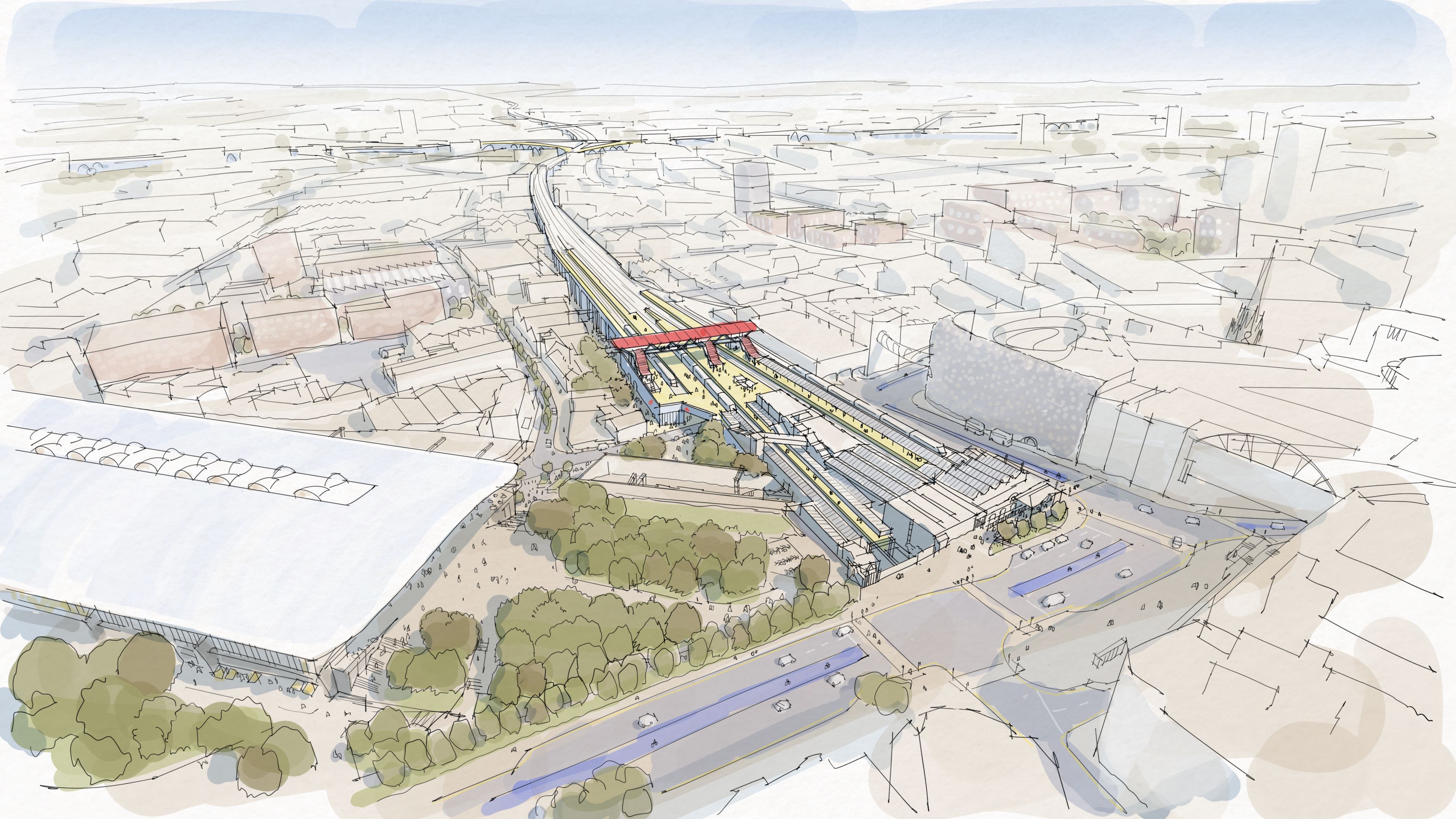
Note.
- High Speed Two’s Curzon Street station is on the left.
- Birmingham Moor Street station is in the centre.
- There appears to be parkland between the two stations.
- Is that the West Midlands Metro running across in front of Moor Street station?
This OpenRailwayMap shows the railway lines in the area.
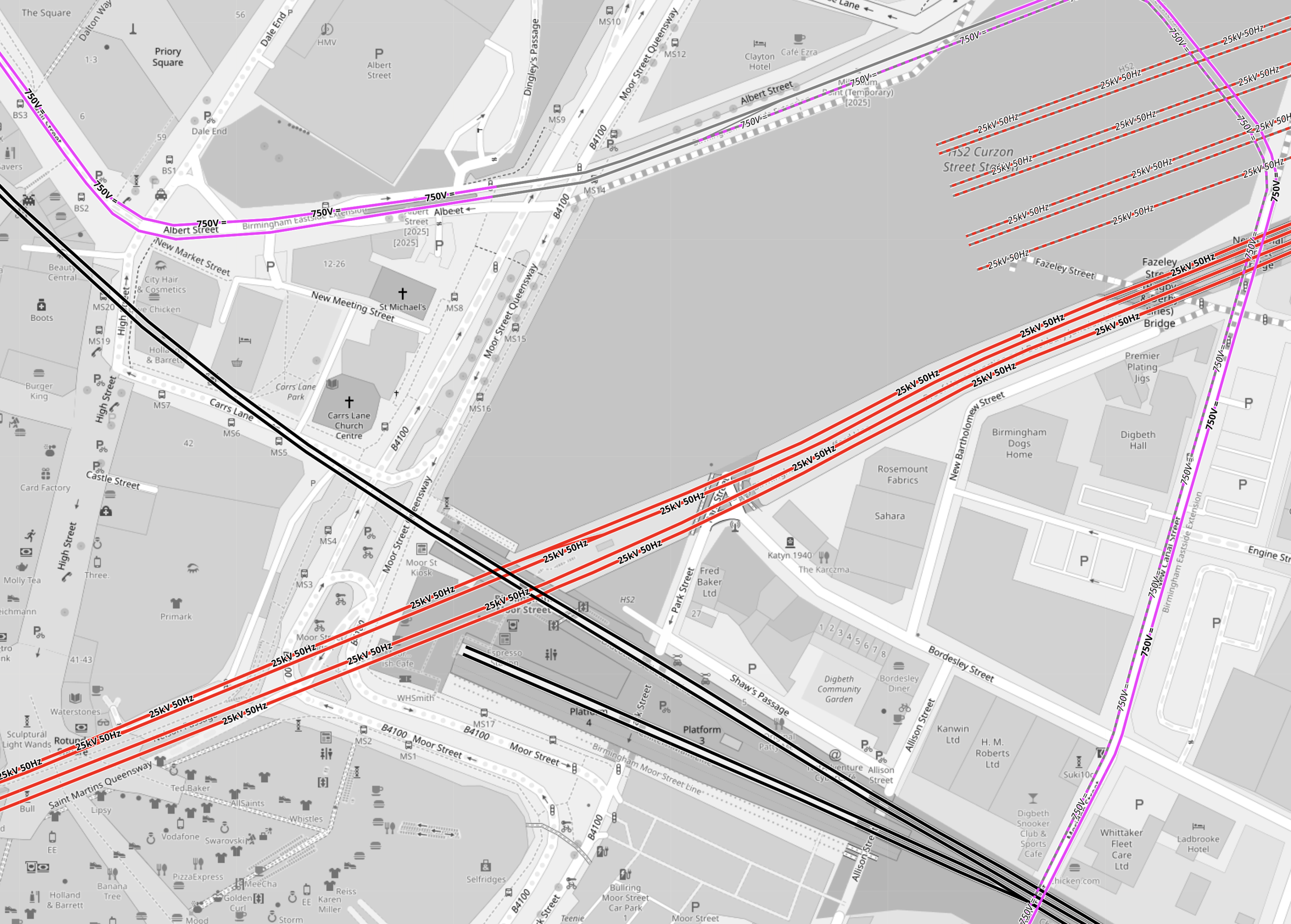
Note.
- Electrified tracks are shown in red.
- Tracks without electrification are shown in black.
- West Midlands Metro tracks are shown in mauve.
- The red tracks going diagonally across the map are the four electrified tracks going into Birmingham New Street station.
- Birmingham New Street station is off the map to the West.
- To the North of the tracks going into Birmingham New Street station, there are the seven platforms of High Speed Two’s Curzon Street station.
- The four platforms without electrification are shown South of the tracks into Birmingham New Street station.
- Two platforms at Birmingham Moor Street station are through platforms, that pass under Birmingham City Centre to Birmingham Snow Hill station.
- The other two platforms at Birmingham Moor Street station are bay platforms.
- The West Midlands Metro appears to take a loop around the stations.
But when you get into the words of the press release, there are a lot of vegetables and very little meat.
- The Midlands Rail Hub could cost around £1.75bn if delivered in full.
- The government’s recent spending review committed to progress the next stage of Midlands Rail Hub.
- Alongside this, planning is underway to begin to deliver two smaller but significant upgrades to benefit passengers as quickly as possible.
- The Alliance partners will be VolkerRail, Laing O’Rourke, AtkinsRéalis, Siemens Mobility, and Network Rail.
These four paragraphs indicate the work, that could be done.
The biggest change will be connecting the Chiltern main line, which runs into Moor Street, with the Camp Hill lines which run towards the South West and East Midlands via two new chords in Bordesley, near Birmingham city centre.
The transformation of the network will include running more train services on key routes through Birmingham and significantly improving connections for the millions of people who use the railway every day.
Work will be prioritised to explore how smaller, but vital, pieces of work which will provide passengers and communities with quicker benefits, including new journey options and more trains can be delivered as soon as possible.
They include reopening platform 4 at Snow Hill station so additional Chiltern Railways services can run directly between Birmingham’s business district and London Marylebone, and redeveloping Kings Norton station and the lines through it so extra Cross City trains can be added and new Midlands Rail Hub-enabled services can call there.
Three projects are specifically mentioned.
- The new chords in Bordesley.
- The reopening of platform 4 at Snow Hill station.
- The redeveloping of Kings Norton station.
I shall now look at each in detail.
The New Chords At Bordesley
This OpenRailwayMap shows the tracks going into and around Birmingham Moor Street station.
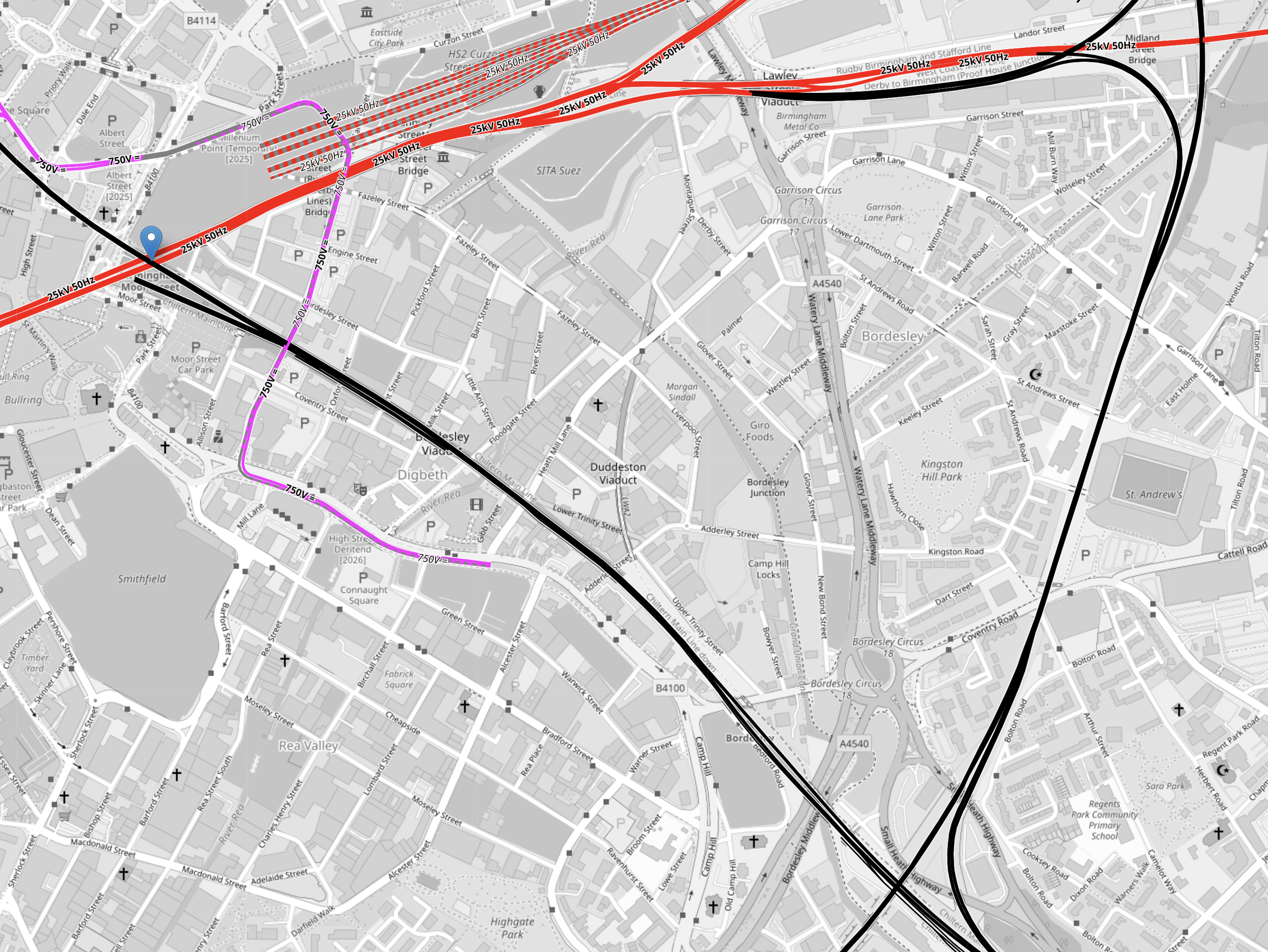
Note.
- Electrified tracks are shown in red.
- Tracks without electrification are shown in black.
- West Midlands Metro tracks are shown in mauve.
- The red tracks going diagonally across the map are the four electrified tracks going into Birmingham New Street station.
- Birmingham New Street station is off the map to the West.
- To the North of the tracks going into Birmingham New Street station, there are the seven platforms of High Speed Two’s Curzon Street station.
- The black track running NW-SE is the Chiltern Main Line between London Marylebone and Birmingham Moor Street stations.
- Birmingham Moor Street station is indicated by the blue arrow in the North-West corner of the map.
- The black track running NE-SW is the Camp Hill Line, that allows services to cross Birmingham.
Two new chords will be built where the Chiltern Main and the Camp Hill Lines cross, to allow services on the Camp Hill Line to call at Birmingham Moor Street station.
Consider.
- The press release described these chords as the biggest change.
- The chords will probably not be fully used, until the new stations are built on the Camp Hill Line.
- There may be need for extra platforms at Birmingham Moor Street station to accommodate any new services.
For these reasons, I suspect that these chords could well be the project that is pushed back to a later date.
The Reopening Of Platform 4 At Snow Hill Station
This OpenRailwayMap shows the track layout at Birmingham Snow Hill station.
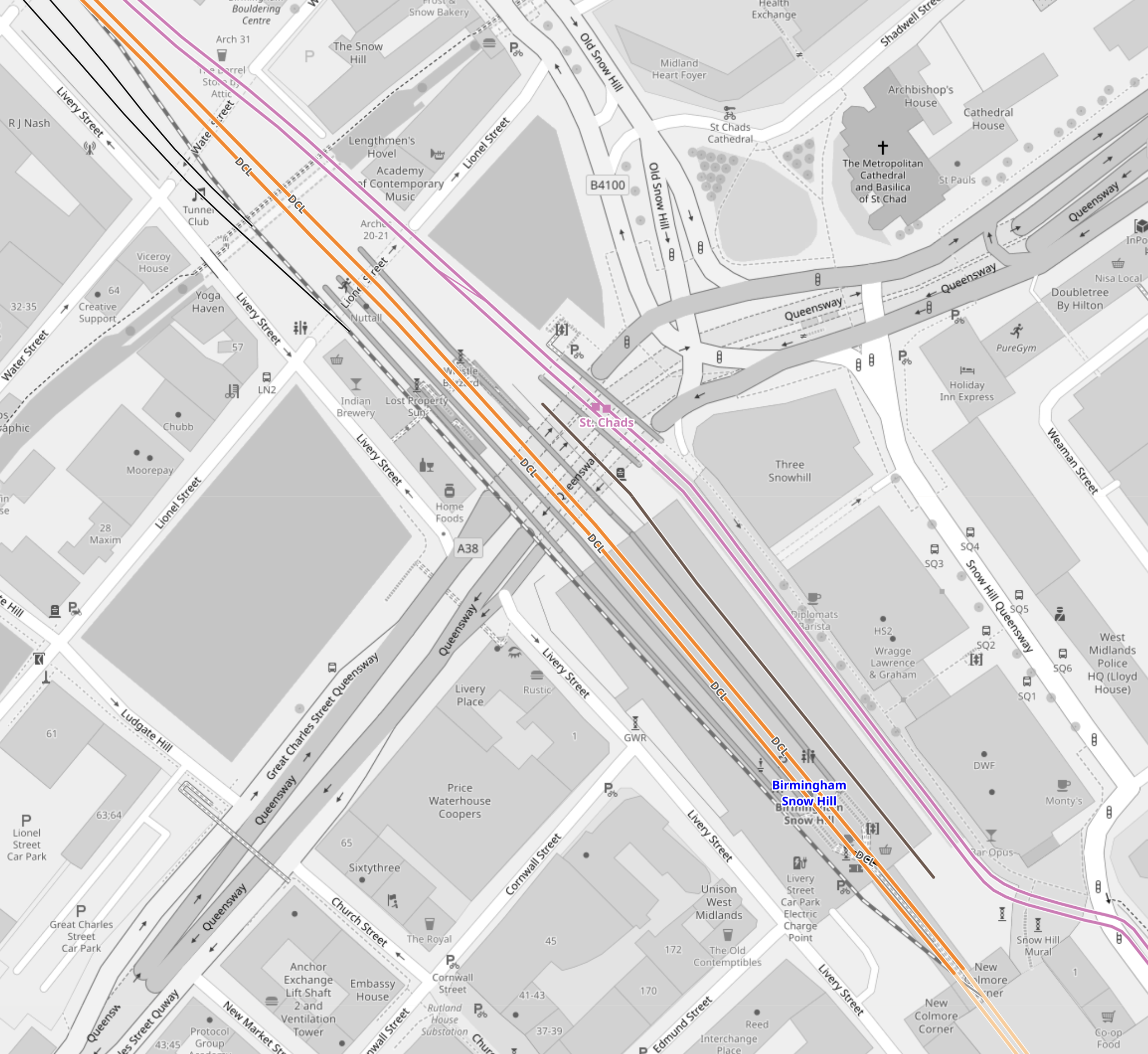
Note.
- The two lilac tracks are the West Midlands Metro.
- The two orange tracks are the two through tracks between Birmingham Moor Street and Stourbridge Junction stations.
- Platform 3 is the Southbound track to Birmingham Moor Street on the right.
- Platform 2 is the Northbound track to Stourbridge Junction on the left
- Platform 1 is a loop on left.
- Platforms 1, 2 and 3 are all bi-directional.
- The closed Platform 4 is on the right and is shown by the black track.
I would expect that this reopening could be fairly straightforward and may also have worthwhile benefits.
- Would an extra platform, allow all Chiltern services to serve both Birmingham Moor Street and Birmingham Show Hill stations?
- Chiltern would probably find it easy to extend services from Birmingham to the North-West of the city.
- In this century, services have run as far as Wrexham from Marylebone.
- If all Chiltern services terminated at Birmingham Show Hill station would this have operational and/or marketing advantages?
- If all Chiltern services terminated at Birmingham Show Hill station would this, make it easier for some passengers to get a train to London and the South?
- If all Chiltern services terminated at Birmingham Show Hill station would this release a platform at Birmingham Moor Street station for other services?
These are a few pictures of Birmingham Snow Hill station.
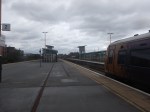

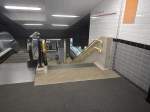
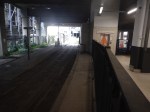
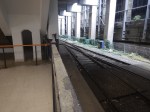

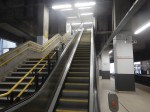

Platform 4 at Birmingham Snow Hill station could be a Build One Platform-Get One Free At Another Station situation!
The Redeveloping Of Kings Norton Station
This will probably be needed for running services on the Camp Hill Line, so why not get some of the work done early, so the rebuilding doesn’t effect existing services?
This OpenRailwayMap shows the Eastern end of Kings Norton station
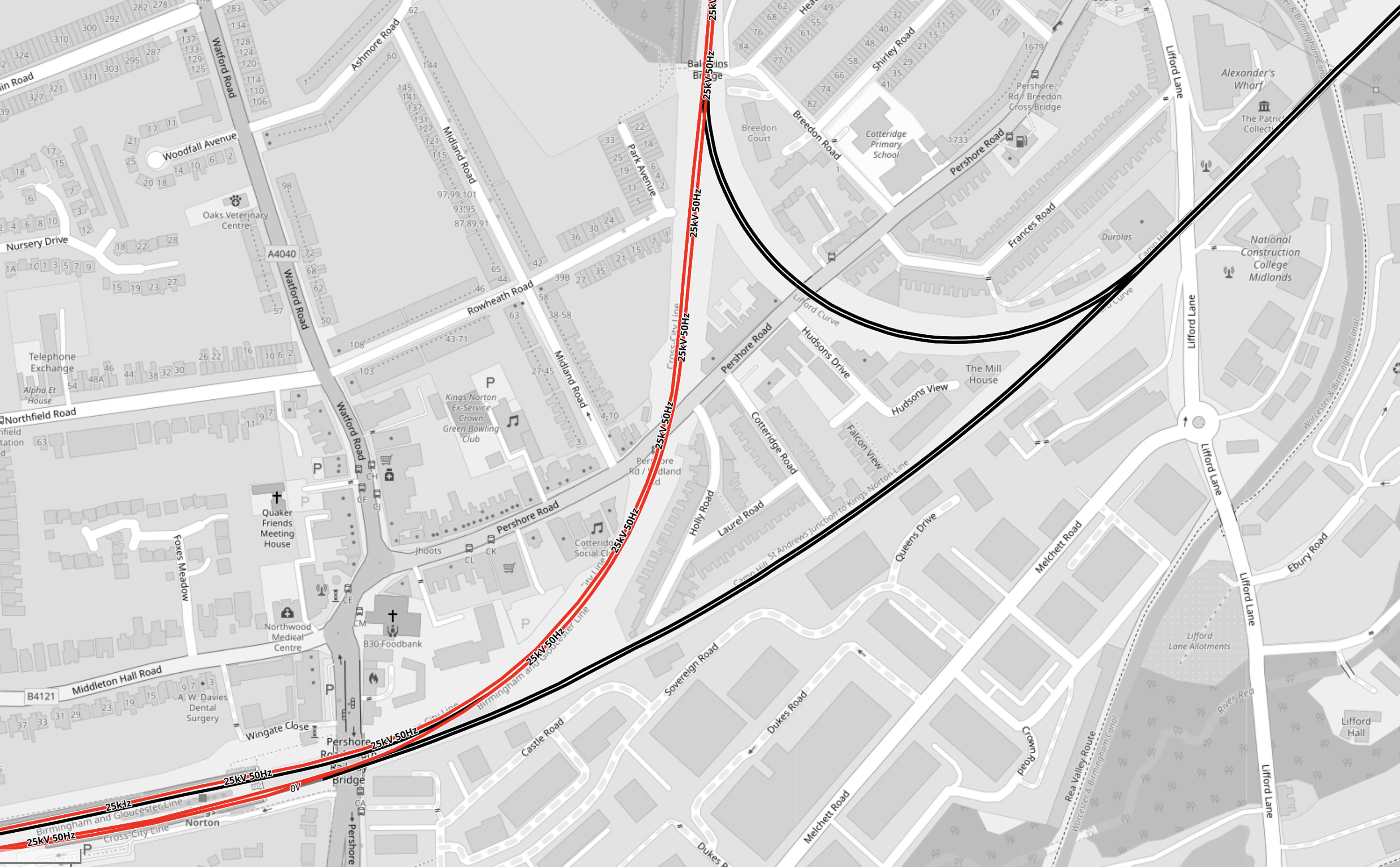
Note.
- Electrified tracks are shown in red.
- Tracks without electrification are shown in black.
- The station has four platforms, but some are unused.
- Two platforms are on an island, with a single platform on either side.
This OpenRailwayMap shows the Western end of Kings Norton station.
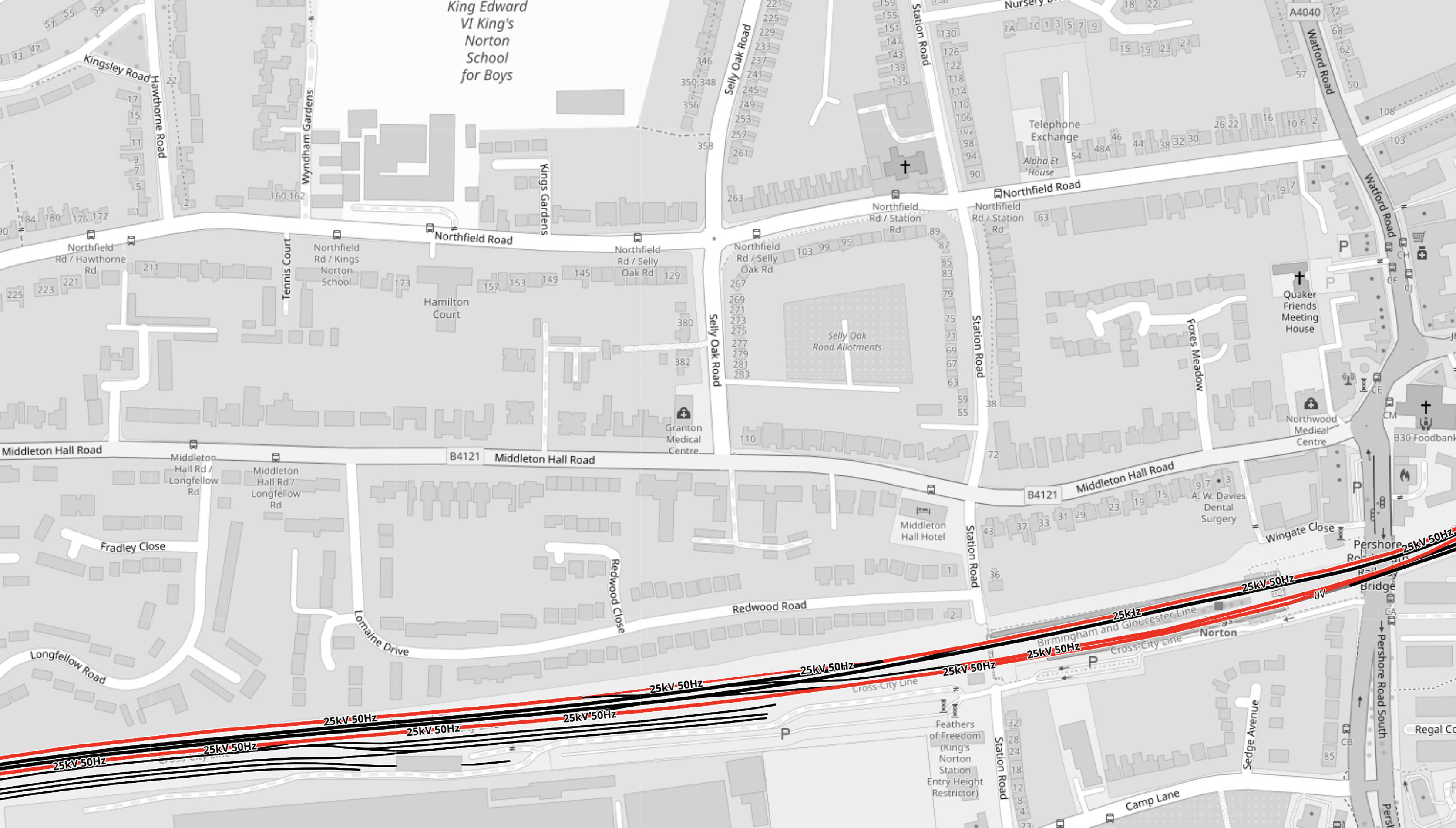
The notes to the previous map apply.
These two paragraphs from the Wikipedia entry for Kings Norton station, describe the station.
With the development of both bus and tram services, the need for such a large facility reduced from the 1930s onwards. The result is that today although all four platforms remain in place, only the outer two are in passenger use, with the middle island platforms now derelict.
Refurbished as part of the Cross-City line in 1978, it retained some of its original features following refurbishment, unlike the other ‘cross city line’ stations. The original station building survived, leased out for commercial purposes, until it was demolished in February 2006 for safety reasons. An extension car park provides a Park and Ride facility.
Disabled-access doesn’t seem to be the best either.
These pictures show the station.
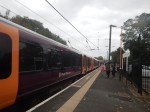
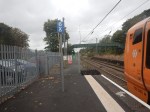
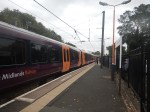
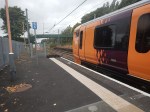
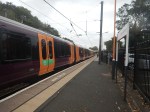
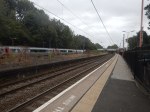
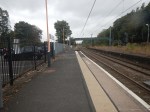
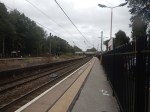
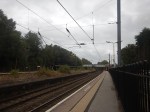
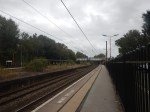
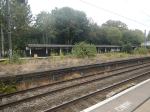
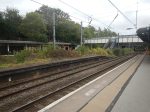
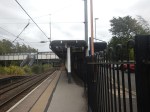
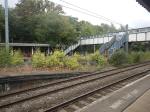
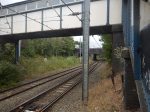
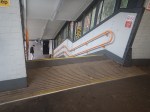
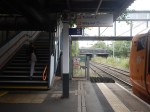
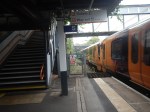
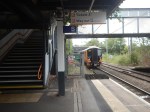
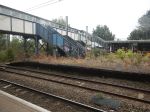
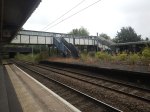
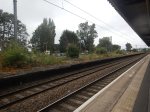
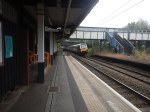
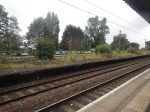
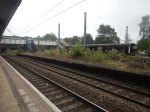
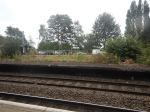
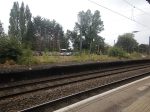
Note.
- As I guessed, there is no disabled-access.
- But there are Braille markings on the handrails down to the platforms.
- Two CrossCountry trains are seen going through the station.
- The local Class 730 trains, lights and information screens appeared to be new.
- Three platforms are electrified, but the fourth is not.
- The electrification structure could probably be used to electrify the fourth platform.
- Only the two outside platforms ; 1 and 4 are in use, with the central island platforms ; 2 and 3 left derelict.
- There is car parking and possibly space for more.
- The two active platforms are 150 metres long and the six-car Class 730 trainstrains appear to be 144 metres long.
- The Class 220 trains, that are run by CrossCountry Trains appear to be 93 metres long.
It was one of the scruffiest stations, that I’ve ever seen.
These are my thoughts on the station.
Handling The Camp Hill Line
Refurbishing Kings Norton Station
I don’t feel, that this will be the most horrendous of jobs, as it is very much a job, where all the rubbish and wild forest is removed and new platforms and a bridge are built.
Plans For Powering Trains And Details Of Our Upcoming Consultation
The title of this post, is the same as that of a news item on the East West Rail web site.
This is the sub heading.
We’re pleased to share plans for how we’ll power trains on East West Rail, as well as information and dates of our public consultation on latest proposals for the project.
These are the first two paragraphs.
As part of our latest proposals, which we’ll be sharing for public consultation from 14 November, we’re providing information on our preference for green traction power in the form of discontinuous electrification with hybrid battery-electric trains, after the Chancellor confirmed government support for the project in yesterday’s budget.
As well as reducing carbon emissions, discontinuous electrification would mean overhead lines would only need to be installed along some sections of the route, which would reduce disruption to existing structures and potentially reduce visual impacts in more sensitive locations on the new railway between Bedford and Cambridge. This option would also cost less than full electrification and would need less land for things such as mast foundations.
There is also a short video, which explains discontinuous electrification.
I feel that to use discontinuous electrification and hybrid battery-electric trains is the way to go on this railway between Oxford and Cambridge.
- It is a zero-carbon solution.
- There is electrification at Reading. Didcot, Bletchley, Milton Keynes, Bedford and Cambridge along the route, so grid connections will be already available.
- Sandy, where East West Rail crosses the East Coast Main Line, is fully electrified and must have a grid connection.
- A small article in the November 2024 Edition of Modern Ralways, says that Hitachi are developing a smaller battery for commuter and suburban trains.
- Didcot to Oxford could be electrified and there is already a grid connection at Didcot.
Discontinuous electrification could be used to extend East West Rail to Norwich, Ipswich and Colchester.
These are my detailed observations and thoughts.
Existing Electrification
This OpenRailwayMap shows the electrification between Oxford and Bedford.
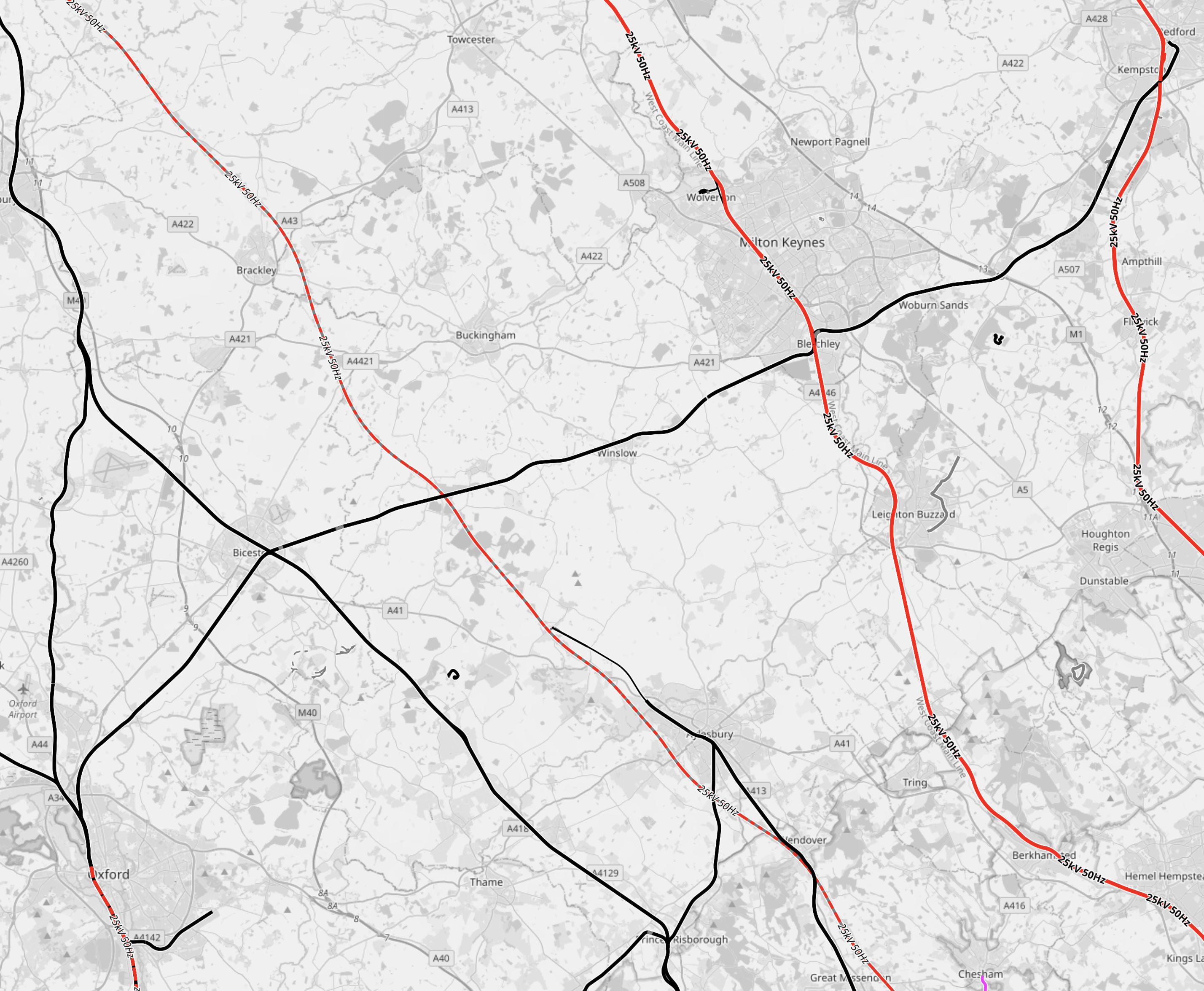
Note.
- Bold red lines are tracks electrified at 25 KVAC.
- Bold black lines are tracks without electrification.
- Oxford is in the South-West corner of the map.
- Bedford is in the North-East corner of the map.
- The bold black line of the Western section of the East West Rail connects the two cities.
- The lines through Oxford are shown as being electrified. The black stub pointing East to the South of Oxford is the Cowley Branch.
The rail lines crossing East West Rail from West to East are as follows.
- Chiltern Main Line – Not Electrified
- High Speed Two – Will Be Electrified
- West Coast Main Line – Electrified
- Midland Main Line – Electrified
I suspect all lines, except for the Chiltern Main Line, will be able to provide a grid connection for East West Rail.
This second OpenRailwayMap shows the electrification between Bedford and Cambridge.
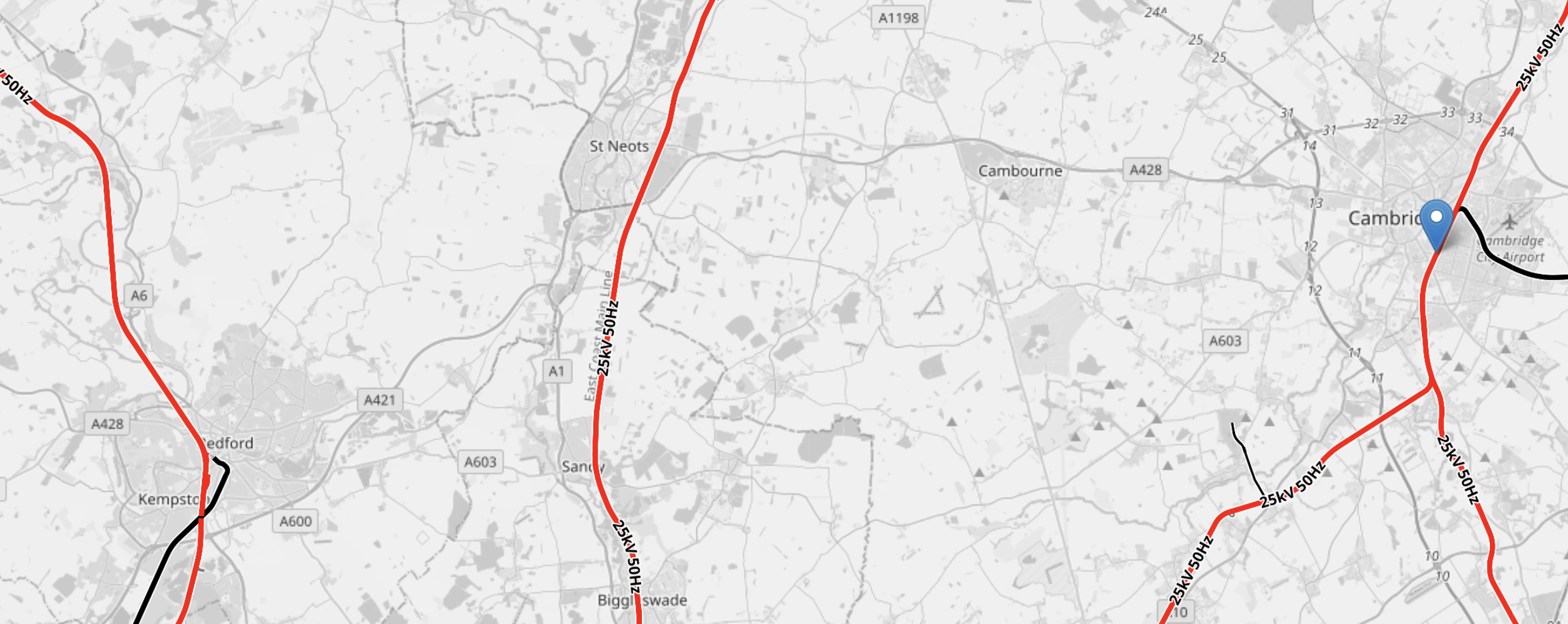
Note.
- Bold red lines are tracks electrified at 25 KVAC.
- Bold black lines are tracks without electrification.
- Bedford is in the South-West corner of the map.
- Cambridge is in the North-East corner of the map.
- The Eastern section of the East West Rail connects the two cities.
- Both maps are to the same scale
The rail lines crossing East West Rail from West to East are as follows.
- Midland Main Line – Electrified
- East Coast Main Line – Electrified
- West Anglia Main Line – Electrified
I suspect all lines will be able to provide a grid connection for East West Rail.
Distances Without Electrification
These sections are not electrified.
- Oxford and Bletchley – 47.2 miles
- Bletchley and Bedford – 16.5 miles
- Bedford and Cambridge – 29.2 miles
- Ely and Norwich – 53.7 miles
- Norwich and Great Yarmouth – 18.4 miles
- Cambridge and Haughley Junction – 41.3 miles
I am assuming that the East West Rail could extend past Cambridge on these two routes.
- Ely, Thetford, Norwich and Great Yarmouth.
- Newmarket, Bury St. Edmunds, Stowmarket, Ipswich, Manningtree and Colchester.
All sections have electrification at both ends, if Didcot Junction and Oxford is electrified, as is expected to happen.
Train Battery Range Needed
The route layout, I have proposed means that if you go for the battery-electric train with the longest battery range you can afford and it can’t handle Ely and Norwich, the existing electrification can be extended to bridge the gap.
Application Of Discontinuous Electrification To Greater Anglia And Chiltern Railways
If discontinuous electrification can be applied to East West Rail, it can surely be applied to Greater Anglia and Chiltern Railways, given the fact that the route networks of all three companies overlap and share tracks.
Greater Anglia already have a fleet of Class 755 trains, which are designed to be converted to battery-electric operation.
With batteries fitted, I believe that these trains could handle most of the current routes they do now.
The other routes would be handled with selective lengths of overhead electrification in terminal stations to charge the trains before return.
Electrification Between Oxford And Bicester Village Stations
Oxford station has two North-facing bay platforms, that are used by Chiltern and other services terminating at the station from the North.
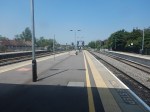
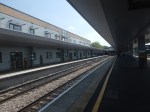
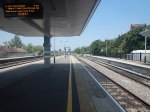
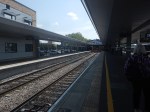
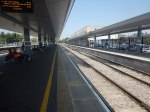
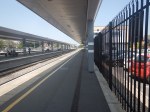
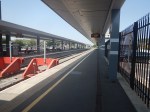
Note.
- Chiltern Railways already run two trains per hour (tph) between these platforms and Marylebone.
- I would assume the platforms will be used by East West Rail services, that terminate at Oxford station.
- If discontinuous electrification is to be used, then these two platforms could be electrified to charge trains before they return.
- East West Rail have not published their proposed services yet, but it could be one tph to both Milton Keynes Central and Bedford stations.
I can see Chiltern buying battery-electric trains to run services between Marylebone and Oxford, and some other routes.
Marylebone and Oxford is 66.7 miles, which is probably two far for even Stadler’s remarkable battery-electric trains, but if say between Oxford and Bicester Village station were to be electrified, would it make it possible to run battery-electric trains between Marylebone and Oxford with charging at both end of the route.
In Chiltern Sets Out New Fleet Ambitions, I talk about Chiltern’s possible new fleet, as proposed by their MD in September 2023.
Chiltern Railways Seeks Fleet Proposals
The title of this post, is the same as that of this article on Rail Business UK.
These are the first two paragraphs.
Chiltern Railways has invited proposals from established rolling stock owners for the lease and maintenance of between 25 and 70 existing vehicles to operate inter-city and regional services on the Chiltern Main Line between London Marylebone and Birmingham.
The operator is seeking either ‘self-powered’ multiple units or locomotive-hauled coaches, which can operate at 160 km/h in fixed formations of five or six passenger vehicles.
It does appear that only existing vehicles will be allowed.
These are my thoughts.
A Very Tight Timescale
The Rail Business UK article, says this about entry into service.
Requests to participate are required by February 2. Driver training is planned for 2024, and entry to passenger service for early 2025.
This requirement probably means that new trains are not allowed, as I doubt any manufacturer could deliver them by early 2025.
Although, I could envisage a proposal, where a couple of trains are delivered early for driver training and the other trains are delivered, as soon as they are refurbished or perhaps even built.
100 mph Trains With At Least Five Cars
The second paragraph from the Rail Business UK article is very definite about speed and the length of trains.
The operator is seeking either ‘self-powered’ multiple units or locomotive-hauled coaches, which can operate at 160 km/h in fixed formations of five or six passenger vehicles.
It does appear, that this paragraph, rules out multiple units, with less than five coaches. Unless it counts a two-car Class 175 train and a three-car Class 175 train working together as a five-car fixed formation. They would though be 100 mph trains.
Noise Restrictions
This noise restriction must be met according to the Rail Business UK article.
The trains must also offer a reduction in ambient noise compared to Chiltern’s existing MkIII coaches hauled by a Class 68 diesel locomotive.
This could be a difficult condition to meet for some trains and probably rules out diesel locomotives.
What Fuels Can Be Used?
This is the only restriction in the Rail Business UK article.
Any diesel-powered trains should be compatible with use of alternative fuels, such as HVO, from the service introduction date.
Chiltern have experience of this fuel.
‘Self-Powered’ Multiple Units Or Locomotive-Hauled Coaches
i am tending towards the former for the following reasons.
- I was told by someone, that between London and Norwich, ‘self-powered’ multiple units are faster than locomotive-hauled coaches.
- Without the locomotive and the driving van trailer, you may get more passengers in a shorter train. This might avoid some platform lengthening.
- The Chiltern route to Birmingham has around a dozen stops and the lighter ‘self-powered’ multiple units may save time.
- Battery-electric ‘self-powered’ multiple units can be very quiet.
- Chiltern have had complaints about noise from diesel locomotives.
The last two points probably clinch it.
The Operating Speed Of The Chiltern Main Line
I have followed the Chiltern Main Line on OpenRailwayMap and virtually all of it is faster than 75 mph, with several sections of 90-100 mph running.
Hence the need for 100 mph trains!
What Distances Are Involved
The route can be split into sections.
- London Marylebone and High Wycombe – 28.1 miles
- High Wycombe and Banbury – 41 miles
- Banbury and Warwick – 21.8 miles
- Warwick and Birmingham Moor Street – 20.8 miles
Note.
- The total distance is 111.7 miles.
- High Wycombe and Warwick are 62.8 miles apart.
No sections are too challenging.
Could A Battery-Electric Train Handle The Route?
In The Data Sheet For Hitachi Battery Electric Trains, these were my conclusions for the performance.
- The battery pack has a capacity of 750 kWh.
- A five-car train needs three battery-packs to travel 100 miles.
- A nine-car train needs five battery-packs to travel 100 miles.
- The maximum range of a five-car train with three batteries is 117 miles.
- The maximum range of a nine-car train with five batteries is 121 miles.
It would appear that a five-car train with three batteries could handle the route, but there would need to be some form of charging at both ends of the route. This might not be too easy to arrange, as all three terminal stations are not the most spacious.
Could A Tri-Mode Train Handle The Route?
LNER have taken the tri-mode route with their new trains, which I wrote about in First Tri-Mode Long Distance Trains For The East Coast Main Line.
These trains could be a possibility, especially if they used battery power in stations where there have been complaints of noise.
I suspect CAF’s tri-mode trains could also be run on HVO, as it is likely they’ll have Rolls-Royce mtu engines, which can use the fuel.
As Hitachi’s Class 802 trains also use Rolls-Royce mtu engines and Hitachi are developing a tri-mode version, these trains are also a possibility.
Although tri-mode trains are a possibility, I doubt that delivery would be easy by the beginning of 2025.
Unless, the Government has tipped off CAF and/or Hitachi and they are already building some trains that can be completed as tri-modes.
After all, CrossCountry, Grand Central, South Western Railway and TransPennine may need tri-mode trains for their routes.
What About Hydrogen?
I don’t think, there is a hydrogen train, that would be suitable and could start driver training this year.
So, unless someone like Stadler says they have a train, hydrogen looks to be a non-starter.
An Unusual Solution
As I said on the previous section about hydrogen, the time-scale is tight and this probably cuts out totally new trains.
But we may have an unusual solution, that surprised everyone.
Consider.
- I have stated that I believe that a five-car Class 802 train with three battery packs has a range of 117 miles.
- The range would be enough to go between London Marylebone and Birmingham.
- So why not put in short lengths of overhead electrification at High Wycombe, Banbury and Warwick, where the train can have a quick splash and dash?
I am certain, that a unusual strategy like this can be made to work.
Conclusion
I suspect we’ll see an innovative solution, that gives ISquared what they want.
High Speed Two Works Between Denham And West Ruislip Stations – 5th August 2022
I took these pictures as my Chiltern Train returned from Birmingham Moor Street station tonight.





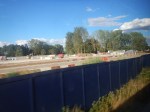
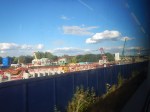

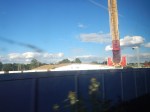
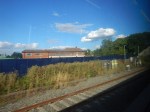
Note that the pictures were taken looking to the North of the Chiltern Main Line.
Track Monitoring System To Be Tested On Chiltern Line
The title of this post, is the same as that of this article on Railway Gazette.
This is the first paragraph.
Network Rail is to undertake in-service trials with DB Systemtechnik’s CTM2·0 continuous track monitoring system on a Chiltern Railways MkIII driving van trailer operating in passenger service between London Marylebone and Birmingham.
This seems to me to be a good idea.
- The German system appears to be comprehensive and has been in service for seven years.
- There is a lot of space in the back of a driving van trailer.
- It probably can do much of the work of the New Measurement Train, but more often.
It could surely be applied to other routes.
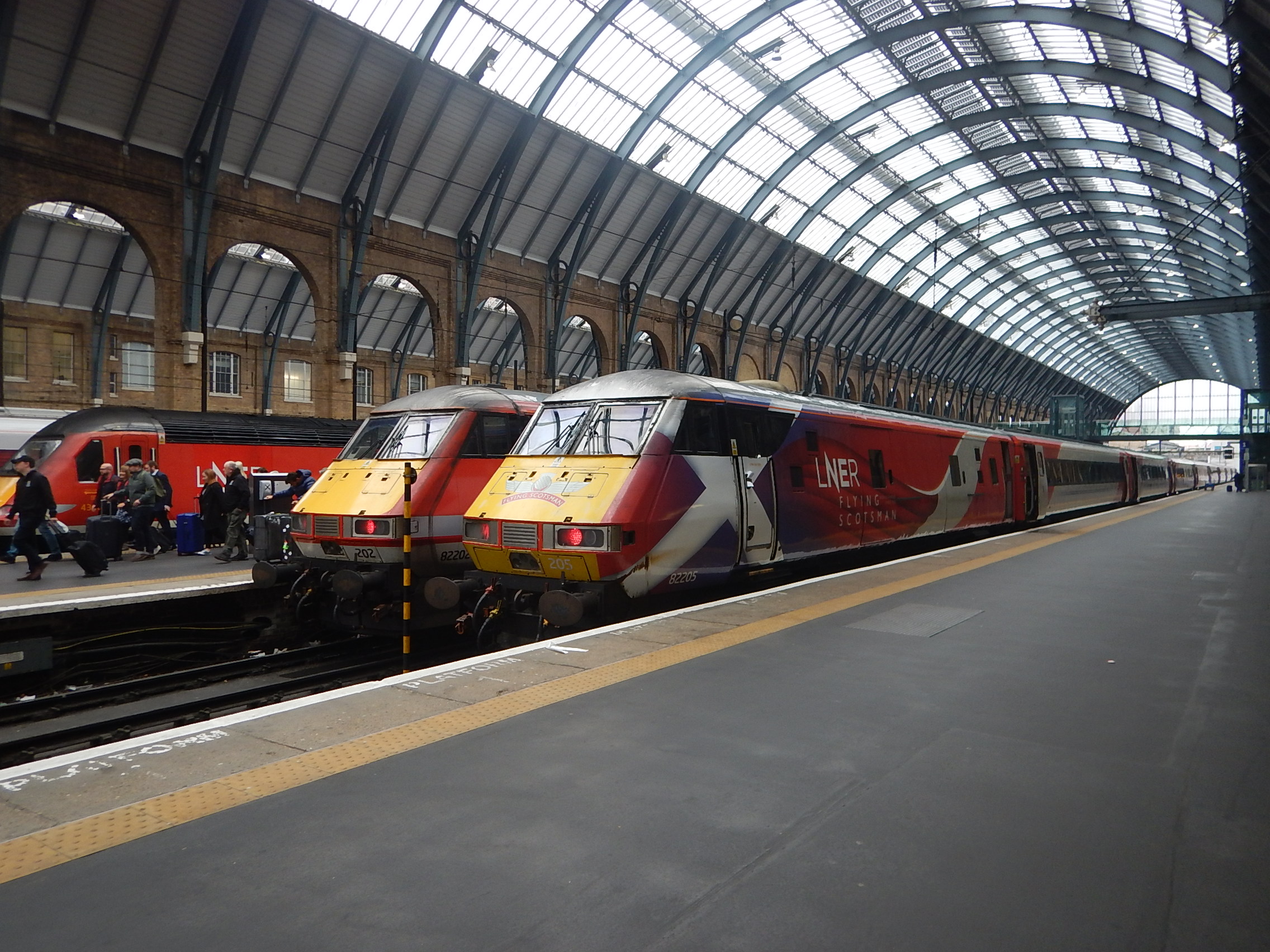
The picture shows the driving van trailers on the London-ends of a pair of InterCity 225s at King’s Cross.
Some Open Access Operators are also looking at the possibility of running short InterCity 225 sets.
It would also be possible to create extra Measurement Trains, by coupling an instrumented driving van trailer to an appropriate locomotive and a couple of coaches.
As a Control Engineer, who has analysed a lot of data in his working life, it could improve rail safety by testing rail lines more often.
Would A Mutant Many-Parent Child Help To Solve London’s Transport Problems?
London needs to increase the capacity of its public transport system, as the City continues to get larger and larger.
Current Major Projects
There are only three major rail projects ongoing in London at the present time.
The Bank Station Upgrade
The Bank Station Upgrade appears to be progressing well, albeit perhaps it’s a bit late due to the pandemic.
It is a complex project and from what I have heard and observed, it has been well designed and planned.
The Barking Riverside Extension
As with the Bank Station Upgrade the Overground extension to the new Barking Riverside station, appears to be going reasonably well.
But compared to that project, it is a relatively simple project, built mainly in the open air, with no tunneling.
Crossrail
Crossrail is in trouble, after what many believe was a very good tunnelling phase of the project.
But then tunnels under London usually seem to go well. I can remember the Victoria Line tunnelling and many other under London since the 1960s and all of these tunnels seem to have been dug without trouble. As I write, there don’t seem to be any tunneling problems with the Thames Tideway Tunnel.
Crossrail now has been reduced to a series of station builds and rebuilds, some of which are as large as the Bank Station Upgrade, with other ongoing projects like the testing of trains and systems.
So why are some of these stations running late in their delivery?
If you walk along the route of Crossrail in the City of London and through Clerkenwell and the West End, it is one massive building side as developers raise massive clusters of new developments around and above the Crossrail stations.
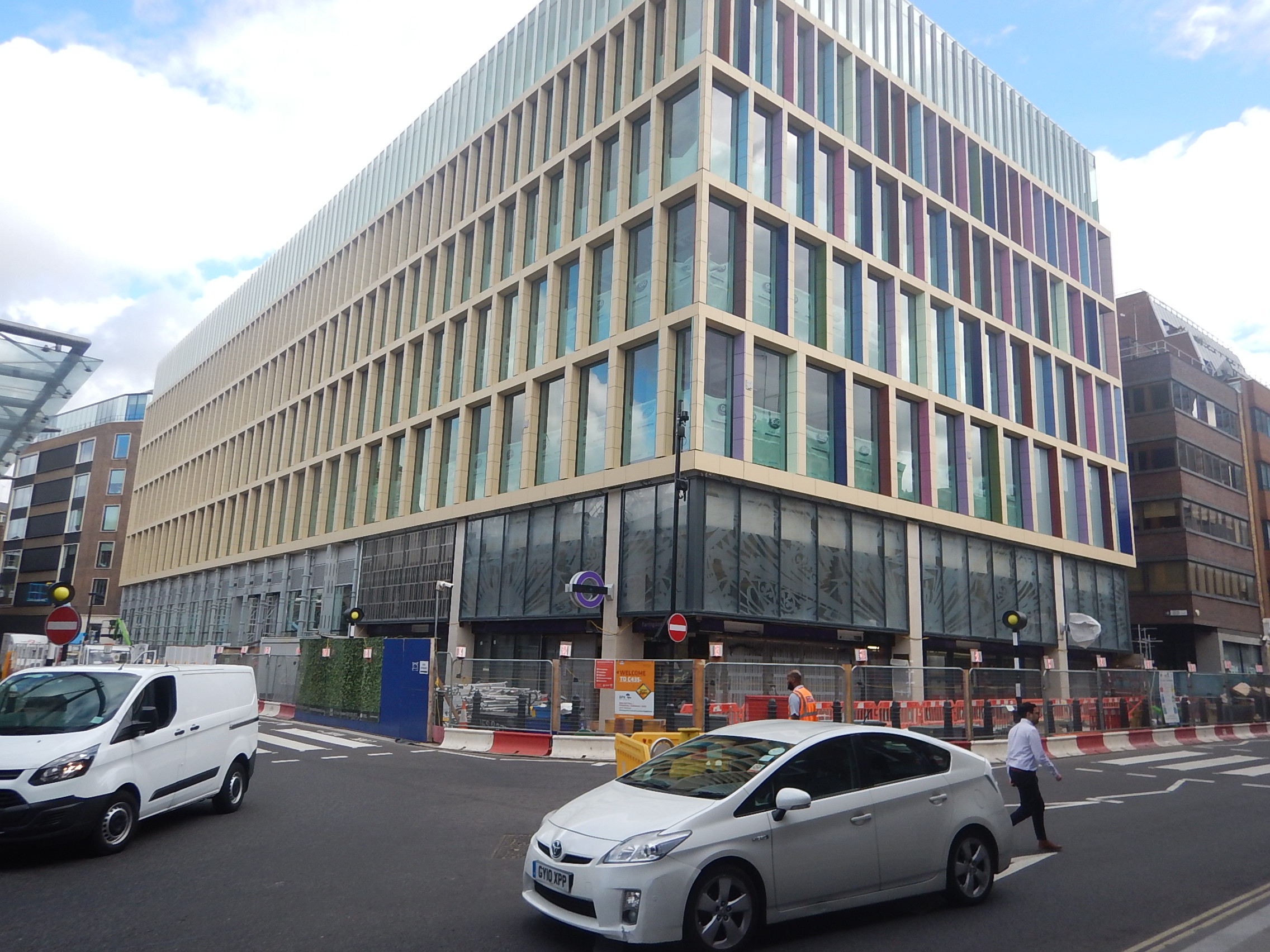
The picture shows Farrington station’s Eastern entrance, with a new development on top.
This one wasn’t a big one, but it went up in record time.
These buildings are often funded by Sovereign Wealth Funds, who want their buildings finished ASAP and as they have bottomless pockets, they are prepared to pay more to get the builders and tradesmen they need.
And where did they get the workers from? Other projects, including Crossrail.
This problem happened in Aberdeen at the height of the oil boom in the last century.
I also think that Brexit worsened the problem, as workers from mainland EU moved to large projects closer to home, like Stuttgart 21 and the new Berlin Brandenburg airport, that were both very much in trouble and could have been offering premium salaries as well!
The solution would have been to phase developments so that the limited pool of workers was not exhausted.
But that probably wouldn’t have suited the developers and politicians for all sorts of reasons.
- An uncompleted building doesn’t bring in money and jobs.
- Early completion must improve chances of letting the building.
- Delaying the building would probably have meant fewer holidays for politicians in exotic locations.
Hopefully, a comprehensive enquiry into the lateness of Crossrail will provide answers.
High Speed Two
High Speed Two is to my mind a London local project. But only in a secondary way!
- Rebuilding Euston station will improve Underground connections and interchange at Euston and Euston Square stations.
- It is claimed by High Speed Two, that the rebuilt Euston station will create 16000 jobs and 2200 homes.
- High Speed Two will enable massive development at Old Oak Common, with tens of thousands of homes and jobs.
- Old Oak Common station will be a very important rail hub in North-West London.
With seventeen trains per hour (tph) between Euston and Old Oak Common will High Speed Two attract local traffic?
- I suspect High Speed Two between Manchester Airport and Manchester Piccadilly and between Birmingham Interchange and Birmingham Curzon Street will also attract local traffic.
- I’ve used TGVs between Nice and Antibes.
- Tourists might visit, just like they did and still do at the Olympic Park.
- Many Londoners will join High Speed Two at Old Oak Common.
Some wag will suggest putting it on the Tube Map. But is it such a stupid idea?
Where Does London Need More Rail Services?
Having lived in London on and off for over seventy years, I feel the worst areas for rail links are probably.
- North West London
- South East London
- South Central London between Wimbledon and Croydon.
- South West London
Note.
- Over the years, there is no doubt that East and North London have improved considerably, with the development of the East London, North London and Gospel Oak to Barking Lines.
- Thameslink has been improved in North London and now it is being supported with improvements to the Northern City Line. Both routes now have new Siemens trains, which give a whole new dimension to using ironing-boards as seats.
- Crossrail will produce major improvements in West, East and South East London.
- Building of a new Penge Interchange station, which I wrote about in Penge Interchange could improve routes to and from South East London.
- Hopefully the work in recent years at Waterloo will improve suburban services out of Waterloo. In An Analysis Of Waterloo Suburban Services Proposed To Move To Crossrail 2, I showed that four tph could be run to Chessington South, Epsom, Hampton Court and Shepperton stations.
It looks like North West and South Central London are missing out.
How Can Services Be Improved In North West London?
There are radial routes from the centre of London to the suburbs.
Starting from the North and going to the West, there are the following lines.
- The High Barnet branch of the Northern Line
- The Mill Hill East branch of the Northern Line
- The Midland Main Line to St. Albans, Luton, Bedford and the East Midlands.
- The Edgware branch of the Northern Line
- The Jubilee Line to Stanmore
- The West Coast Main Line to Watford, Milton Keynes, the West Midlands, the North West of England and West Scotland.
- The Bakerloo Line to Harrow & Wealdstone.
- The Watford DC Line of the London Overground
- The Amersham, Chesham and Watford branches of the Metropolitan Line
- The Chiltern Route to Aylesbury.
- The Chiltern Main Line to High Wycombe, Banbury, Bicester, Birmingham and Oxford.
- The West Ruislip branch of the Central Line.
- The Uxbridge branch of the Metropolitan and Piccadilly Lines
When I used to live at Cockfosters as a child, to visit my many cousins in North West London, there was no alternative but to use a bus and take well over an hour each way.
There are now some circular rail routes in London but nothing in the North West of the capital.
The Dudding Hill Line And The West London Orbital Railway
But there is the little-used freight route called Dudding Hill Line.
- It runs between Cricklewood on the Midland Main Line and Acton Central on the North London Line.
- It is four miles of double-track railway.
This YouTube video shows a cab ride from Acton to Cricklewood.
Plans exist to turn it into the West London Orbital Railway, which will run two services.
- West Hampstead and Hounslow via Cricklewood, Neasden, Harlesden, Old Oak Common Lane, Acton Central, South Acton, Lionel Road, Brentford, Syon Lane and Isleworth
- Hendon and Kew Bridge via Brent Cross West, Neasden, Harlesden, Old Oak Common Lane, Acton Central, South Acton
Note.
- The proposed frequency of both services is four tph.
- There would be some stations to be built, but the track exists.
- There would be no new tunnels.
- The route is technically feasible.
- The route would connect West London to High Speed Two.
- There would be little disruption whilst it was built.
- The services could be run by dual-voltage battery-electric trains charged on the electrification at both ends of the route.
- The scheme represents a high value for money, with a benefit-cost ratio (BCR) of 2.2.
On the other hand, the scheme has two serious problems, as far as the current London Mayor is concerned.
- Transport for London has no money, partly because of London’s Fare Freeze.
- The project is not in South London.
This important and value-for-money project will not be built, whilst Sadiq Khan is still Mayor of London.
Harlesden Interchange
I believe that if we get the interchanges right on the West London Orbital Railway correct we can do things like.
- Increase the benefit cost ratio.
- Link the route to South London to make the Mayor a bit happier about the North London Scheme.
This Google Map shows Harlesden station.
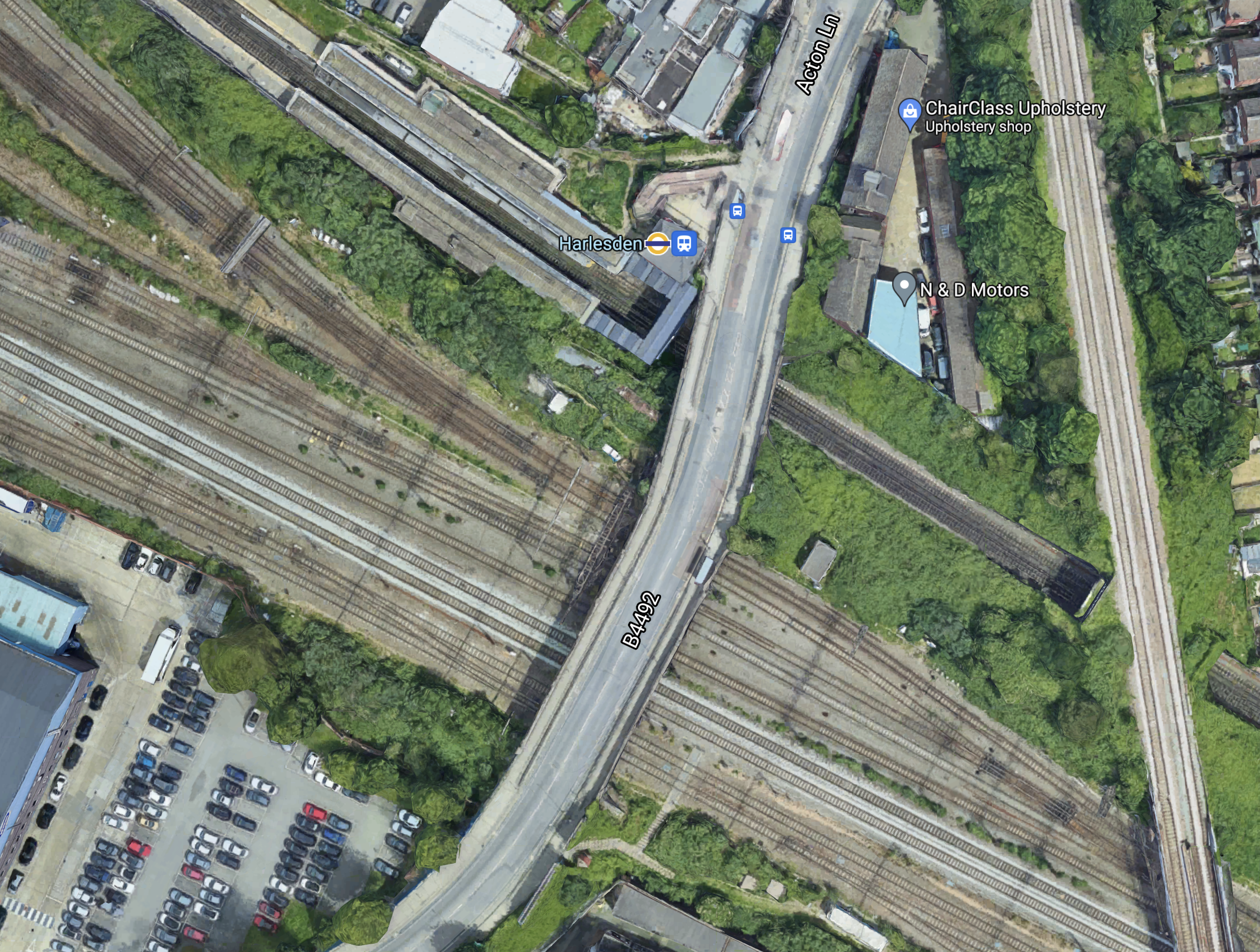
Note.
- The Bakerloo Line/Watford DC Line running North-West/South-East through Harlesden station.
- The West Coast Main Line in the Southern section of the map.
- The Dudding Hill Line running North-South across the map.
Platforms will be built on the Dudding Hill Line to connect that would probably be new or extended platforms in the current Harlesden station to enable interchange between the West London Orbital and the Watford DC Lines.
I also think there is a possibility that platforms could be added to the slow tracks of the West Coast Main Line, so that suburban services into London Euston can also connect to the West London Orbital Line.
It would also enable a connection between Southern’s Clapham Junction and Milton Keynes service and the West London Orbital Railway.
Looking at this from various angles, I think that an architect good at designing three-dimensional structures could develop a quality Harlesden Interchange station.
Neasden Interchange
Like Harlesden, Neasden is another possibility for a comprehensive interchange.
This Google Map shows Neasden station.
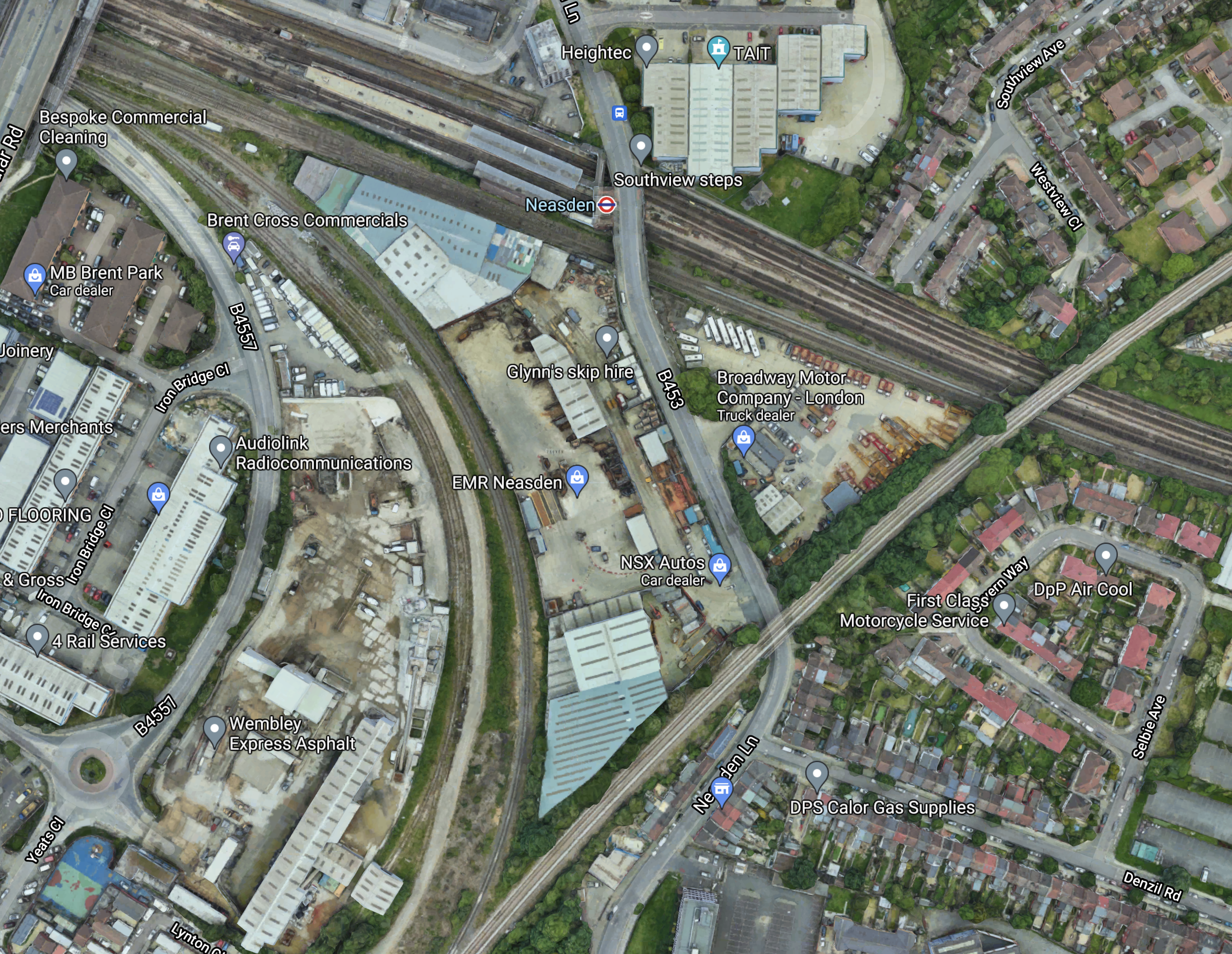
Note.
- There are a lot of lines going through Neasden station.
- The Dudding Hill Line goes across the South-East corner of the map.
- There is plenty of space in the area.
This map from cartometro.com shows the lines in the area.
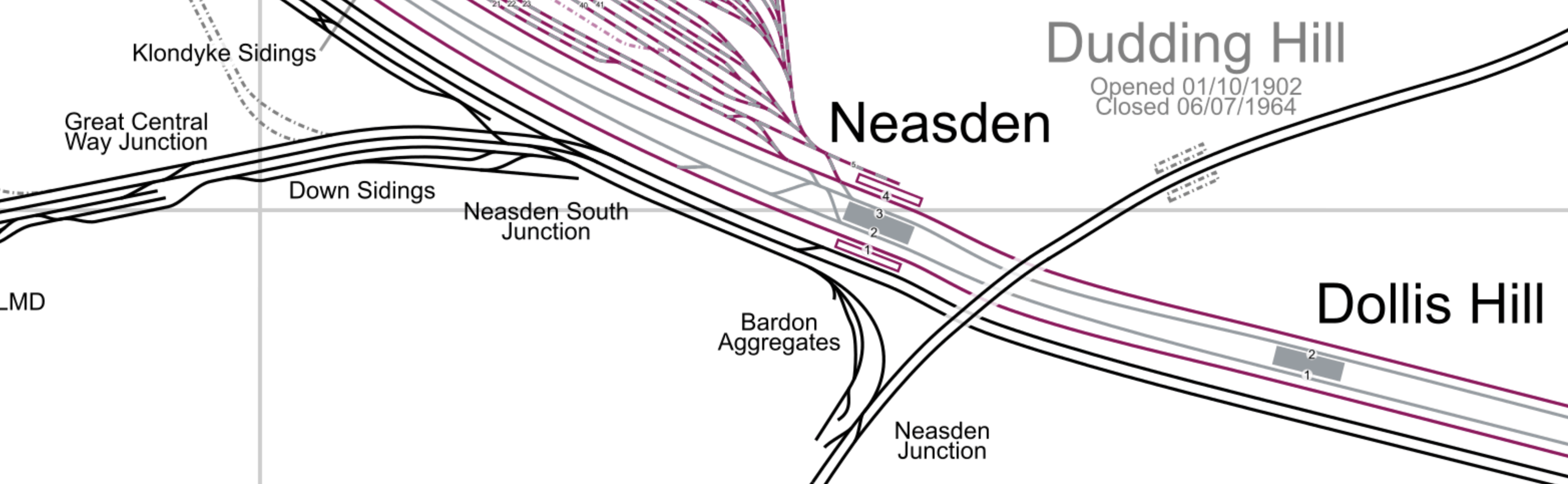
Note.
- The Dudding Hill Line is indicated by the former Dudding Hill station.
- The red tracks are Metropolitan Line tracks.
- The silver tracks are Jubilee Line tracks.
- The Southerly pair of lines through Neasden and Dollis Hill stations are Chiltern’s lines into Marylebone.
- The Chiltern tracks divide to the West of Neasden station, with the Aylesbury line following the other tracks and the Chiltern Main Line diverging to the West.
- London’s largest Underground Depot at Neasden, lies to the North-West in an area of London noted for few merits with the North Circular Road passing through.
I wonder, if the station and the depot offers a unique opportunity to offer large scale additions to London’s housing stock over the top of a rebuilt station and depot.
This Google Map shows the wider area.
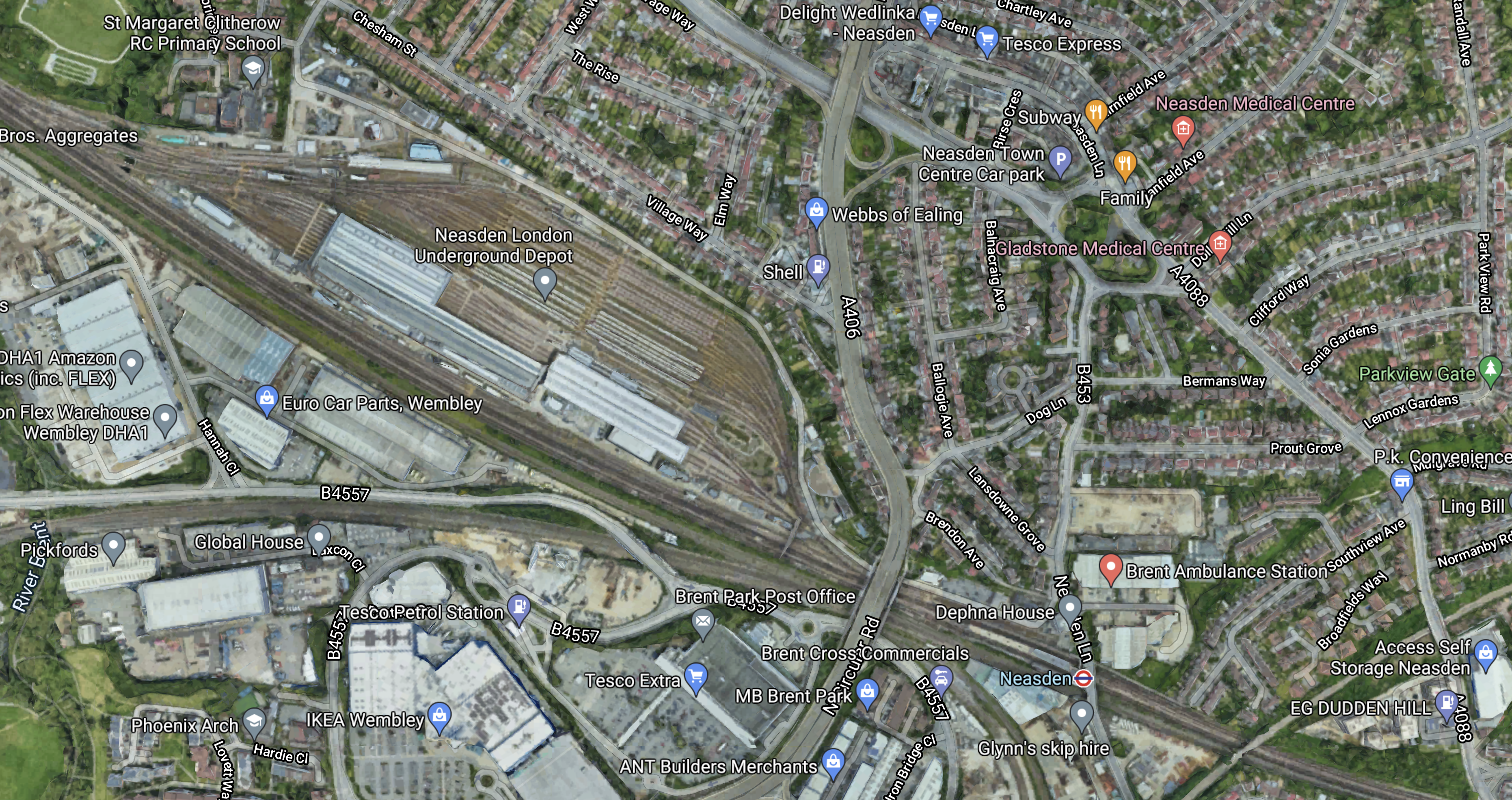
Note.
- Much of the depot appears to be open-air stabling for trains.
- The North Circular Road passes North-South between the depot and Neasden station.
- The Dudding Hill Line cuts across the South-East corner of the map.
- This corner of the map is labelled as Dudden Hill.
- According to Wikipedia, Dudding Hill is considered a more genteel spelling of Dudden Hill and could be as old as 1544.
It looks as if it would be relatively easy to develop over the top of the depot to create housing, industrial or commercial properties.
But why stop there and cover both the North Circular Road and the six tracks through Neasden station?
Neasden station could be rebuilt into a station with platforms on the following lines.
- Metropolitan Line
- Jubilee Line
- Chiltern Lines
- Dudding Hill Lines
Note.
- I estimate that Chiltern has a train about every six minutes, so some could stop.
- There might be space for a bay platform for Chiltern.
Neasden could be a major housing and transport hub.
- There could be large amounts of parking.
- Road access would be good.
- It would have good rail connections.
- It could have a bus interchange.
- London needs housing.
It might even be an alternative to Chiltern’s plan for a West Hampstead Interchange.
The Mayor of London, Transport for London and the Borough of Brent need to be bold!
Improvements To Chiltern’s Routes
Chiltern Railways have some plans that could improve services in North West London.
Using The Acton-Northolt Line
Wikipedia says this about using the Acton-Northolt Line to access new platforms at Old Oak Common station.
Upgrading the Acton–Northolt line (formerly the “New North Main Line”) to new platforms at Old Oak Common. This upgrade will also extend to London Paddington to increase capacity on the Chiltern Main Line as there is no room to expand the station at Marylebone.
This scheme has merit.
- The platforms would be connected to the Chiltern Main Line along the route of a partly-disused railway.
- The route could be double-tracked.
- There must be space for at least two new platforms.
- The new platforms could easily handle four tph.
- There may be a case for some new stations.
The scheme could add valuable extra capacity for Chiltern.
A Chiltern Metro
Wikipedia says this about a proposed metro service between Marylebone and West Ruislip stations.
- The Metro would have a frequency of four tph.
- It would call at Wembley Stadium, Sudbury & Harrow Road, Sudbury Hill Harrow, Northolt Park and South Ruislip.
- The service would require a reversing facility at West Ruislip.
- There would need to be passing loops at Sudbury Hill Harrow, and Wembley Stadium.
Given that the Chiltern Metro was first proposed over a decade ago, perhaps the concept could be increased in scope.
- Housing and other developments along the route may suggest that a station further out like High Wycombe might be a better terminal.
- ERTMS in-cab digital signalling is likely to be installed at some time, which would decrease headways between trains and allow more services.
- Electrification is likely in some form before 2040 and this will improve train performance.
- If Neasden station were to be rebuilt, as a comprehensive transport and residential development, I believe that this Metro service should also call at Neasden, as it would complement the West London Orbital Railway.
I believe that a review of the Chiltern Metro may mean, that an improved version is worth building.
Improvements To The Milton Keynes And Clapham Junction Service
I feel that this service could be key in improving services between North London and South London via the West London Line and High Speed Two’s station at Old Oak Common.
Currently, this service is as follows.
- It runs between Milton Keynes and Clapham Junction stations.
- It has a frequency of one tph.
- It calls at Bletchley, Leighton Buzzard, Tring, Berkhamsted, Hemel Hempstead, Watford Junction, Harrow & Wealdstone, Wembley Central, Shepherd’s Bush, Kensington (Olympia), West Brompton and Imperial Wharf stations.
- The service used to extend to South Croydon via Wandsworth Common, Balham, Streatham Common, Norbury, Thornton Heath, Selhurst and East Croydon.
- It uses Class 377 trains.
- It shares parts of the route with the London Overground.
I also think it has various issues and questions with respect to the future.
- The Class 377 trains are only 100 mph units, whereas the outer suburban trains on the West Coast Main Line are 110 mph Class 350 trains, which will soon be replaced by 110 mph Class 730 trains. Do the slower trains cause timetabling problems?
- Is one tph enough?
- The route doesn’t serve High Speed Two at Old Oak Common station.
- Is the service run by the right operator?
- What is the ideal Southern terminal?
These are my thoughts on the various issues.
The Service As A North-South Link
A friend, who lives in South London has told me, that if you go to an event at Wembley stadium the route is busy.
On the other hand, I’ve used it at midday on a Tuesday and found the trains empty.
But developed properly it could connect the following.
- Milton Keynes Central
- Bletchley for the East West Rail Link
- Watford for the West Coast Main Line to the North
- Wembley Central for Wembley Stadium and other entertainments
- Willesden Junction for the North London Line
- Hythe Road for High Speed Two, Crossrail and the Great Western Railway
- Shepherd’s Bush for the shopping.
- Clapham Junction for most of South London and the South of England
It would be a very useful cross-London route to complement Thameslink and the East London Line.
The Frequency
The current Milton Keynes and Clapham Junction has a frequency of one tph.
This may be enough for some parts of the route, as other services also provide services.
But many would argue, that perhaps South of Watford Junction, the service needs to be increased to connect the area to Old Oak Common and Clapham Junction.
I feel that High Speed Two, Crossrail and the Great Western Railway give so much connectivity, that between Clapham Junction and Willesden Junction needs a frequency of at least eight tph.
As the North London Line and the Watford DC Line are working at a frequency of four tph, this could indicate that a four tph direct service Watford Junction and Clapham Junction be ideal. Perhaps, it could continue North to Milton Keynes with a frequency of two tph.
The Trains
I am absolutely certain, that the full service needs to be operated by dual voltage trains, that are capable of running at 110 mph.
The Class 350/1 trains of West Midlands Trains would probably be ideal for the full service.
- They are dual voltage trains.
- They are 110 mph trains.
- They have a long distance interior.
They are being replaced with new Class 730 trains, so would be available.
If some services were running only as far North as Watford Junction, these could be either Class 378 or Class 710 trains of the London Overground.
The Connection To The West London Line And High Speed Two
This map from Wikipedia by Cnbrb shows the latest iteration of the lines at Old Oak Common station.
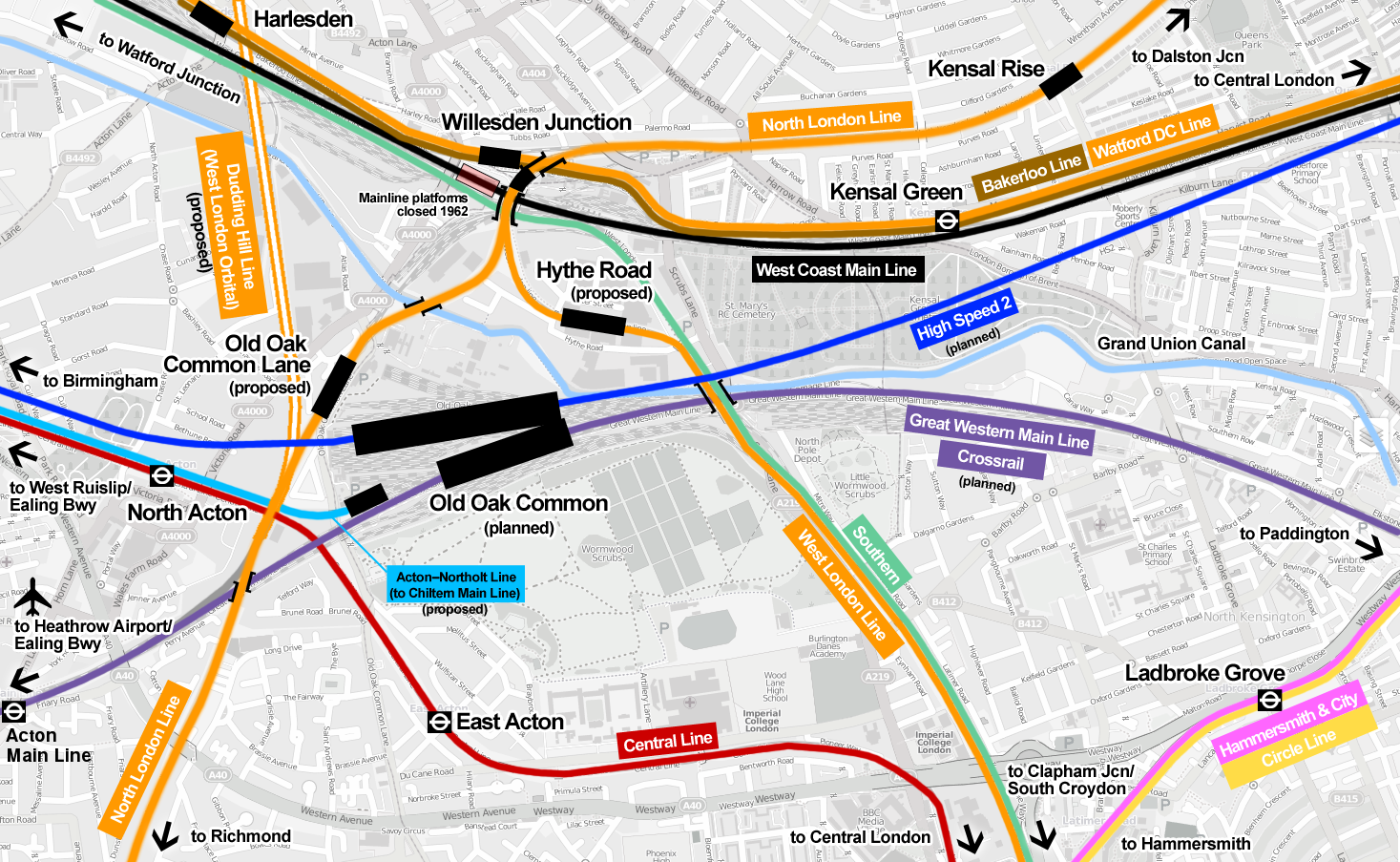
Note.
- The green route is taken by the Milton Keynes and Clapham Junction trains.
- The bright blue is High Speed Two.
- The purple is Crossrail.
- The orange is the Overground
- Hythe Road station is proposed for the West London Line to connect to Old Oak Common station for High Speed Two.
- Hythe Road station will have a bay platform to turn trains from the South.
- Old Oak Common Lane station is proposed for the North London Line to connect to Old Oak Common station for High Speed Two.
But where is the connection between the Milton Keynes and Clapham Junction service and Old Oak Common station for High Speed Two?
- Access from the South is not a problem as the Overground can be used to Hythe Road station.
- Extra services from the South can be run to and from the bay platform at Hythe Road station.
- Access from the East is not a problem as the Overground can be used to Hythe Road station.
- How do passengers go between say Wembley Central and Heathrow?
In addition for access from the West is the Overground can be used to Old Oak Common Lane station.
But as things stand at the moment the Milton Keynes and Clapham Junction service bypasses Hythe Road station and the only ways to go from Milton Keynes to Old Oak Common station for either High Speed Two, Crossrail or the Great Western is to do one of the following.
- Change to the Watford DC Line at Watford Junction, Harrow & Wealdstone or Wembley Central and then change to the Overground at Willesden Junction for either Old Oak Common Lane or Hythe Road station.
- Continue South to Shepherd’s Bush station, cross over to the other platform and then come back to Hythe Road station.
- Go via Euston station. OK for High Speed Two, but not for Crossrail or the Great Western.
They cannot be serious!
I hope that there is a cunning plan to enable the Milton Keynes and Clapham Junction service to connect.
Whilst on the subject of connections at Old Oak Common, where is the promised connection of Crossrail to the West Coast Main Line?
Were all these connections just kicked into the long grass and quietly forgotten, as they were deemed too difficult and/or expensive?
I think serious questions need to be asked about the design of Crossrail and High Speed Two at Old Oak Common.
Why weren’t Crossrail and High Speed Two designed to connect directly to the London Overground at Willesden Junction station perhaps by the use of a North South people mover serving the following lines?
- Bakerloo, Watford DC, West Coast Main and West London Orbital Lines at a rebuilt Harlesden station.
- London Overground at the high-level Willesden Junction station.
- High Speed Two
- Crossrail and the Great Western Railway
- The new Chiltern platforms.
- Central Line at East Acton station.
Note.
- Hythe Road and Old Oak Common stations would not be needed.
- The Milton Keynes and Clapham Junction service would call additionally at the rebuilt Harlesden station.
The current design of Old Oak Common stinks like a horse designed by a committee!
The Northern Terminal
I suggested earlier that some trains use Watford Junction and others use Milton Keynes Central.
Both stations have the capacity and the connectivity.
The Southern Terminal
In the last ten years, South Croydon, East Croydon and Clapham Junction have been used as the Southern terminal.
Thameslink seems to have chosen its various terminals to satisfaction of the travelling public, so perhaps the same method or personnel should be used.
The Operator
The Gibb Report said that this service should be transferred to the London Overground and I wrote about this proposal in Gibb Report – East Croydon – Milton Keynes Route Should Be Transferred To London Overground.
This is one suggestion, but I do wonder, if it should be transferred to West Midlands Trains and run in conjunction with their West Coast Main Line services.
- The service needs 110 mph trains.
- Timetabling and operation should be easier.
- London Overground trains don’t have a long-distance interior.
On the other hand, trains running between Watford Junction and Clapham Junction would probably be better if they were London Overground trains.
Conclusion
I believe that by using the current network and some modern trains and signalling, the passenger services to the West of the capital can be substantially improved.
Could Battery-Electric Hitachi Trains Work Chiltern Railways’s Services?
Before I answer this question, I will lay out a few specifications and the current status.
Hitachi’s Proposed Battery Electric Train
Based on information in an article in Issue 898 of Rail Magazine, which is entitled Sparking A Revolution, the specification of Hitachi’s proposed battery-electric train is given as follows.
- Based on Class 800-802/804 trains or Class 385 trains.
- Range of 55-65 miles.
- Operating speed of 90-100 mph
- Recharge in ten minutes when static.
- A battery life of 8-10 years.
- Battery-only power for stations and urban areas.
For this post, I will assume that the train is four or five cars long.
Chiltern Railways’ Main Line Services
These are Chiltern Railways services that run on the Chiltern Main Line.
London Marylebone And Gerrards Cross
- The service runs at a frequency of one train per hour (tph)
- Intermediate stations are Wembley Stadium, Sudbury & Harrow Road, Sudbury Hill Harrow, Northolt Park, West Ruislip, Denham and Denham Golf Club
The service is nineteen miles long and takes thirty minutes.
It should be possible to run this service with trains charged at one end of the route.
London Marylebone And High Wycombe
- The service runs at a frequency of one tph
- Intermediate stations are Wembley Stadium, South Ruislip, Gerrards Cross and Beaconsfield
- Some services terminate in a bay platform 1 at High Wycombe station.
The service is twenty-eight miles long and takes forty-two minutes.
It should be possible to run this service with trains charged at one end of the route.
London Marylebone And Aylesbury Via High Wycombe
- The service runs at a frequency of one tph
- Intermediate stations are Gerrards Cross, Seer Green and Jordans, Beaconsfield, High Wycombe, Saunderton, Princes Risborough, Monks Risborough and Little Kimble
- This service usually terminates in Platform 1 at Aylesbury station.
The service is 43.5 miles long and takes sixty-six minutes.
It should be possible to run this service with trains charged at both ends of the route.
London Marylebone And Banbury (And Stratford-upon-Avon)
- The service runs at a frequency of one tph
- Intermediate stations for the Banbury service are Denham Golf Club, Gerrards Cross, Beaconsfield, High Wycombe, Princes Risborough, Haddenham & Thame Parkway, Bicester North and Kings Sutton.
- Intermediate stations for the Stratford-upon-Avon service are Denham Golf Club, Gerrards Cross, Beaconsfield, High Wycombe, Princes Risborough, Haddenham & Thame Parkway, Bicester North and Kings Sutton, Banbury, Leamington Spa, Warwick, Hatton, Claverdon, Bearley, Wilmcote and Stratford-upon-Avon Parkway.
The Banbury service is 69 miles long and takes one hour and forty-five minutes.
The Stratford-upon-Avon service is 104 miles long and takes two hours and twenty-two minutes.
Running these two services will need a bit of ingenuity.
Leamington Spa And Birmingham Moor Street
- The service runs at a frequency of one train per two hours (tp2h)
- Intermediate stations for the service are Warwick, Hatton, Lapworth, Dorridge and Solihull.
The service is 23 miles long and takes forty-one minutes.
It should be possible to run this service with trains charged at one end of the route.
London Marylebone And Birmingham Moor Street
- The service runs at a frequency of one tph
- Intermediate stations for the service are High Wycombe, Banbury, Leamington Spa, Warwick Parkway and Solihull.
The service is 112 miles long and takes one hour and forty-four minutes.
It should be possible to run this service with trains charged at both ends of the route and also fully charged somewhere in the middle.
Distances from London Marylebone of the various stations are.
- High Wycombe – 28 miles
- Bicester North – 55 miles
- Banbury – 69 miles
- Leamington Spa – 89 miles
- Warwick – 91 miles
- Warwick Parkway – 92 miles
- Solihull – 105 miles
Consider.
- It looks like a fully-charged train from London Marylebone could reach Bicester North, but not Banbury, with a 55-65 mile battery range.
- Travelling South, Bicester North could be reached with a fully-charged train from Birmingham Moor Street.
But it would appear to be too marginal to run a reliable service.
London Marylebone And Birmingham Snow Hill
- The service runs at a frequency of one tph
- Intermediate stations for the service are Bicester North, Banbury, Leamington Spa, Warwick, Warwick Parkway, Dorridge, Solihull and Birmingham Moor Street
The service is 112 miles long and takes two hours and a minute.
It should be possible to run this service with trains charged at both ends of the route and also fully charged somewhere in the middle.
London Marylebone And Kidderminster
Some services between London Marylebone and Birmingham Snow Hill are extended to Kidderminster.
The distance between Kidderminster and Birmingham Snow Hill is twenty miles and the service takes forty-two minutes.
London Marylebone And Oxford
- The service runs at a frequency of two tph
- Intermediate stations for the service are High Wycombe, Haddenham & Thame Parkway, Bicester Village, Islip and, Oxford Parkway.
- The service runs into dedicated platforms at Oxford station.
The service is 67 miles long and takes one hour and nine minutes.
It should be possible to run this service with trains charged at both ends of the route and some supplementary charging somewhere in the middle.
Chiltern’s Aylesbury Line Services
These are Chiltern Railway‘s services that run on the London And Aylesbury Line (Amersham Line).
London Marylebone And Aylesbury (And Aylesbury Vale Parkway) via Amersham
- The service runs at a frequency of two tph
- Intermediate stations are Harrow-on-the-Hill, Rickmansworth, Chorleywood, Chalfont & Latimer, Amersham, Great Missenden, Wendover and Stoke Mandeville.
- It appears that there is sufficient time at Aylesbury Vale Parkway in the turnround to charge the train using a Fast Charge system.
The Aylesbury service is 39 miles long and takes one hour.
The Aylesbury Vale Parkway service is 41 miles long and takes one hour and twelve minutes.
It should be possible to run both services with trains charged at both ends of the route.
Chiltern Railways’ Future Train Needs
Chiltern Railways will need to add to or replace some or all of their fleet in the near future for various reasons.
Decarbonisation
Chiltern are probably the passenger train operating company, with the lowest proportion of zero-carbon trains. It scores zero for zero-carbon!
Government policy of an extinction date of 2040 was first mentioned by Jo Johnson, when he was Rail Minister in February 2018.
As new trains generally last between thirty and forty years and take about five years to design and deliver, trains ordered tomorrow, will probably still be running in 2055, which is fifteen years after Jo Johnson’s diesel extinction date.
I feel that, all trains we order now, should be one of the following.
- All-electric
- Battery-electric
- Hydrogen-electric
- Diesel electric trains, that can be converted to zero-carbon, by the replacement of the diesel power, with an appropriate zero-carbon source.
Hitachi seem to be designing an AT-300 diesel-electric train for Avanti West Coast, where the diesel engines can be replaced with batteries, according to an article in the January 2020 Edition of Modern Railways.
Pollution And Noise In And Around Marylebone Station
This Google Map shows the area around Marylebone station.
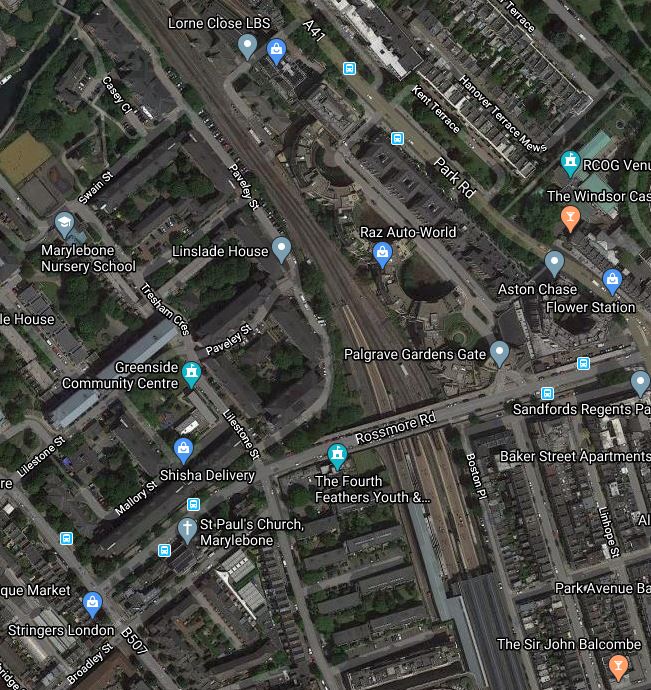
Cinsider.
- Marylebone station is in the South-East corner of the map.
- The station is surrounded by some of the most expensive real estate in London.
- A lot of Chiltern’s trains do not meet the latest regulations for diesel trains.
- Blackfriars, Cannon Street, Charing Cross, Euston, Fenchurch Street, Kings Cross, Liverpool Street, London Bridge, Paddington, St. Pancras, Victoria and Waterloo stations are diesel-free or have plans to do so.
Will the residents, the Greater London Council and the Government do something about improving Chiltern’s pollution and noise?
New trains would be a necessary part of the solution.
New And Extended Services
Consider.
- Chiltern plan to extend the Aylesbury Parkway service to Milton Keynes in connection with East West Rail. This service would appear to be planned to run via High Wycombe and Princes Risborough.
- There has also been proposals for a new Chiltern terminus at Old Oak Common in West London to connect to Crossrail, High Speed Two and the London Overground.
- Chiltern could run a service between Oxford and Birmingham Moor Street.
- With the demise of the Croxley Rail Link around Watford, Chiltern could be part of a revived solution.
- In Issue 899 of Rail Magazine in an article entitled Calls For Major Enhancement To Oxford And Didcot Route, it states that there will be three tph between Oxford and Marylebone, two of which will start from a new station at Cowley.
Chiltern certainly have been an expansionist railway in the past.
I wouldn’t be surprised to see Chiltern ordering new trains.
As I said earlier, I suspect they wouldn’t want to order some new short-life diesel trains.
125 mph Running
Consider.
- The West Coast Main Line has an operating speed of 125 mph.
- East West Rail is being built for an operating speed of 125 mph.
- Some parts of the Chiltern Main Line could be electrified and upgraded to 125 mph operation.
For these reasons, some of Chiltern’s new fleet must be capable of modification, so it can run at 125 mph, where it is possible.
100 mph Trains
Around half of Chiltern’s fleet are 100 mph trains, but the other half, made up of Class 165 trains only have a 75 mph operating speed.
Running a fleet, where all trains have a similar performance, must give operational and capacity improvements.
Increasing Capacity
Chiltern’s Main Line service to Birmingham is run using six Mark 3 carriages between a Class 68 locomotive and a driving van trailer.
These trains are 177.3 metres long and hold 444 passengers.
These trains are equivalent in length to a seven-car Hitachi Class AT-300 train, which I estimate would hold just over 500 passengers.
Changing some trains for a more modern design, could increase the passenger capacity, but without increasing the train length.
Aventi West Coast And High Speed Two
Chiltern’s services to Birmingham will come under increasing pressure from Avanti West Coast‘s revamped all-electric fleet, which within ten years should be augmented by High Speed Two.
It will be difficult selling the joys of comfortable diesel trains against the environmental benefits of all-electric zero-carbon faster trains.
Great Western Railway And Possible Electrification To Oxford
Chiltern’s services to Oxford will also come under increasing pressure from Great Western Railway’s services to Oxford.
- When Crossrail opens, Paddington will be a much better terminal than Marylebone.
- Crossrail will offer lots of new connections from Reading.
- Great Western Railway could run their own battery-electric trains to Oxford.
- Great Western Railway will be faster between London and Oxford at 38 minutes to Chiltern’s 65 minutes.
Will new trains be needed on the route to retain passengers?
Will Chiltern Have Two Separate Fleets?
Currently, Chiltern Railways have what is effectively two separate fleets.
- A Chiltern Main Line fleet comprised of five sets of six Mark 3 coaches, a Class 68 locomotive and a driving van trailer.
- A secondary fleet of thirty-four assorted diesel multiple units of various ages and lengths, which do everything else.
But would this be their fleet, if they went for a full renewal to fully-decarbonise?
Would they acquire more Main Line sets to work the services to Birmingham, Kidderminster and perhaps some other Midlands destinations?
Do the Oxford services require more capacity for both Oxford and Bicester Village and would more Main Line sets be a solution?
What destinations will be served and what trains will be needed to work services from new destinations like Milton Keynes and Old Oak Common?
I can see Chiltern acquiring two fleets of battery-electric trains.
- Chiltern Main Line trains based on Hitachi AT-300 trains with between five and seven cars.
- Suburban trains for shorter journeys, based on Hitachi Class 385 trains with perhaps four cars.
Both would be fairly similar under the skin.
Conclusion On Chiltern Railways’ Future Trains
I am very much drawn to the conclusion, that Chiltern will have to introduce a new fleet of zero-carbon trains.
Electrification would be a possibility, but have we got enough resources to carry out the work, at the same time as High Speed Two is being built?
Hydrogen might be a possibility, but it would probably lead to a loss of capacity on the trains.
Battery-electric trains might not be a solution, but I suspect they could be the best way to increase Chiltern’s fleet and decarbonise at the same time.
- Hitachi’s basic train design is used by several train operating companies and appears to be well received, by Train operating companies, staff and passengers.
- Hitachi appear to be well-advanced with a battery-electric version.
- Hitachi seem to have sold the concept of battery-electric AT-300 trains to Avanti West Coast to replace their diesel-electric Class 221 trains.
The sale of trains to Avanti West Coast appears to be very significant, in that Hitachi will be delivering a diesel-electric fleet, that will then be converted to battery-electric.
I like this approach.
- Routes can be converted gradually and the trains fully tested as diesel-electric.
- Electrification and/or charging stations can be added, to the rail network.
- As routes are ready, the trains can be converted to battery-electric.
It would appear to be a low-risk approach, that could ensure conversion of the fleet does not involve too much disruption to passengers.
Possible Electrification That Might Help Chiltern Railways
These lines are or could be electrified in the near future.
Amersham Line Between Harrow-on-the-Hill and Amersham Stations
The only electrified line on the Chiltern Railways network is the section of the Amersham Line between Harrow-on-the-Hill and Amersham stations.
- It is electrified using London Underground’s system.
- It is fourteen miles long and trains take twenty-two minutes.
- London Marylebone and Harrow-on-the-Hill is a distance of only nine miles
- Aylesbury and Amersham is a distance of only fifteen miles.
Could this be of use in powering Children Railways’ trains?
The maths certainly look promising, as if nothing else it means the maximum range of one of Hitachi’s proposed battery-electric trains is fourteen miles further, which may enable Chiltern’s proposed service between London Marylebone and Milton Keynes to reach the 25 KVAC electrification at Bletchley.
But if the new trains were to use the London Underground electrification, they would have to be dual-voltage units.
As Hitachi have already built dual-voltage Class 395 trains for the UK, I don’t think, that this will be a problem.
Dorridge/Whitlock’s End And Worcestershire via Birmingham Snow Hill
In the February 2020 Edition of Modern Railways, there is a feature, which is entitled West Midlands Builds For The Future.
This is said about electrification on the Snow Hill Lines.
Remodelling Leamington is just one of the aspirations WMRE has for upgrading the Great Western’s Southern approach to Birmingham, which serves a number of affluent suburbs, with growing passenger numbers. “Electrification of the Snow Hill Lines commuter network is something which we are keen to explore.’ says Mr. Rackliff.
As well as reducing global carbon emissions, yhis would also help reduce air pollution in central Birmingham and local population centres. ‘From a local perspective, we’d initially want to see electrification of the core network between Dorridge/Whitlock’s End and Worcestershire via Birmingham Snow Hill as a minimum, but from a national perspective it would make sense to electrify the Chiltern Main Line all the way to Marylebone.’
Note the following distances from Dorridge.
- Leamington Spa – 13 miles
- Banbury – 33 miles
- Bicester North – 47 miles
- High Wycombe – 74 miles
It looks as if, electrification of the Snow Hill Lines would allow trains to travel from Bicester or Banbury to Birmingham Moor Street, Birmingham Snow Hill or Kidderminster.
Reading And Nuneaton via Didcot, Oxford, Banbury, Leamington Spa And Coventry
This route, which is used by CrossCountry services and freight trains, has been mentioned in the past, as a route that may be electrified.
Note the following distances from Didcot.
- Oxford – 10 miles
- Ayhno Junction – 27 miles
- Banbury 32 miles
- Leamington Spa – 52 miles
- Coventry – 62 miles
- Nuneaton – 72 miles
Electrifying this route would link together the following lines.
- Trent Valley Line through Nuneaton
- West Coast Main Line through Coventry
- Chiltern Main Line through Banbury and Leamington Spa.
- Great Western Main Line through Didcot.
Note that Aynho Junction is only 36 miles from High Wycombe and 64 miles from London Marylebone.
Fast Charging At Terminal Stations
Chiltern Railways use the following terminal stations.
- Aylesbury station, where a bay platform is used.
- Aylesbury Parkway station
- Banbury station, where a bay platform is used.
- Birmingham Moor Street station, where all bay platforms are used.
- Birmingham Show Hill station
- High Wycombe station, where a bay platform is used.
- Kidderminster station
- London Marylebone station, where all platforms are used.
- Oxford station, where two North-facing bay platforms are used.
- Stratford-upon-Avon station
I suspect that something like Viviarail’s Fast-Charge system, based on well-proven third-rail technology could be used.
- This system uses a bank of batteries to transfer power to the train’s batteries.
- The transfer is performed using modified high-quality third-rail electrification technology.
- Battery-to-battery transfer is fast, due to the low-impedance of batteries.
- The system will be able to connect automatically, without driver action.
- The third-rail is only switched on, when a train is present.
- The battery bank will be trickle-charged from any convenient power source.
Could the battery bank be installed under the track in the platform to save space?
If Network Rail and Chiltern Railways would prefer a solution based on 25 KVAC technology, I’m sure that Furrer + Frey or another electrification company have a solution.
Installing charging in a platform at a station, would obviously close the platform for a couple of months, but even converting all six platforms at Marylebone station wouldn’t be an impossible task.
Possible Electrification Between London Marylebone And Harrow-on-the-Hill
Consider.
- All trains to Aylesbury have to travel between London Marylebone and Harrow-on-the-Hill stations, which is nine miles of track without electrification. It takes about twelve minutes.
- Trains via High Wycombe use this section of track as far as Neasden South Junction, which is give miles and typically takes seven minutes.
- Leaving Marylebone, these trains are accelerating, so will need more power.
This map from carto.metro.free.fr shows the lines around Neasden.
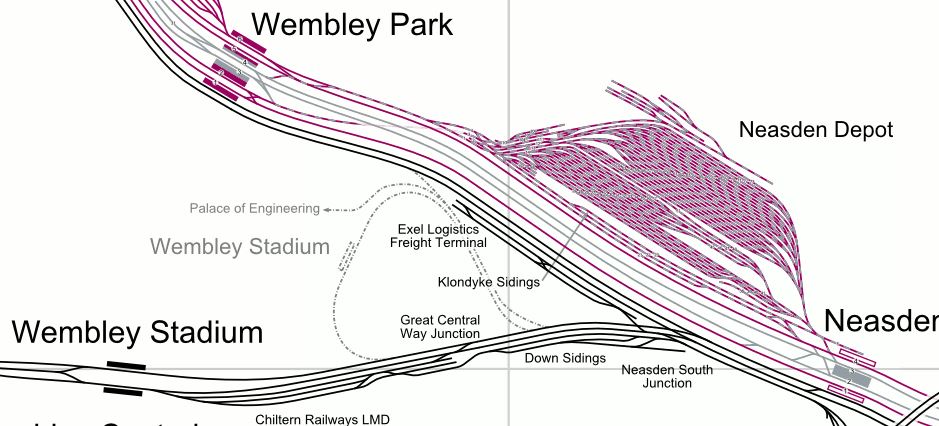
Note.
- The Chiltern Railways tracks are shown in black.
- Two tracks continue to the North-West to Harrow-on-the-Hill and Aylesbury.
- Two tracks continue to the West to Wembley Stdium station and High Wycombe.
- Two tracks continue South-East into Marylebone station, running non-stop.
- The Jubilee Line tracks in the middle are shown in silver,
- The Metropolitan Line tracks are shown in mauve.
These pictures were taken of the two Chiltern tracks from a Jubilee Line train running between West Hampstead and Wembley Park stations.
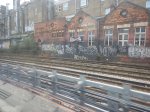
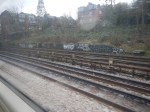
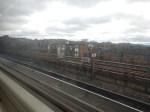
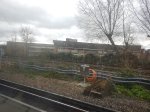
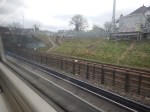
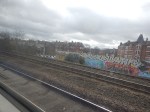
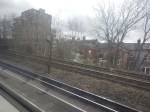
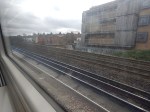
Note, that the tracks have no electrification and there is plenty of space.
I feel that to accelerate the trains out of Marylebone and make sure that the batteries are fully charged, that these tracks should be electrified.
There is space on this section for 25 KVAC overhead, but would it be better to use an electrified rail system?
- As you approach Marylebone there are several tunnels, which might make installation of overhead wires difficult and disruptive.
- There are London Underground tracks and their third and fourth rail electrification everywhere.
- Between Harrow-on-the Hill and Amersham stations, Chiltern and Metropolitan Line trains share the same track, which is electrified to London Underground standards and used for traction power by the Metropolitan Line trains.
- Trains connect and disconnect to third-rail electrification, without any complication and have been doing it for over a hundred years.
On the other hand, there are arguments against third-rail systems like safety and electrical inefficiency.
Running Chiltern’s Routes Using A Battery-Electric Train
I will now take each route in order and look at how battery-electric trains could run the route.
London Marylebone And Oxford
Consider.
- This route is 67 miles.
- An out and back trip is 134 miles.
- The route is probably too long for the proposed Hitachi battery-electric train, without some intermediate charging.
- Trains currently wait in the bay platforms at Oxford for up to thirty minutes, which is more than enough time to fully-charge the train for return to Marylebone.
When I outlined this route, I said this.
It should be possible to run this service with trains charged at both ends of the route and some supplementary charging somewhere in the middle.
I’m discussing this route first, as it has the complication of needing some form of intermediate charging.
The obvious place for some intermediate charging would be High Wycombe station.
- It is 28 miles from Marylebone
- It is 38 miles from Oxford
- Trains seem to stop for a couple of minutes at High Wycombe.
As trains would only need to pick up a half-charge at the station, would it be possible for a train passing through High Wycombe to be able to use a Fast-Charge system, to give the battery a boost?
As a Control and Electrical Engineer by training, I think that this is more than possible.
It leads me to believe that with Fast Charging systems at Marylebone, Oxford and High Wycombe, Hitachi’s proposed battery-electric trains can run a reliable service between Marylebone and Oxford.
London Marylebone And Gerrards Cross
Consider.
- This route is just nineteen miles.
- An out and back trip is thirty-eight miles.
- Trains appear to use a reversing siding to change tracks to return to London. They wait in the siding for up to thirty minutes, which is more than enough time to fully-charge the train for return to Marylebone.
I am fairly sure, that this route could be run by trains charged at Marylebone station only.
However, if charging is needed at Gerrards Cross, there is plenty of time, for this to be performed in the reversing siding.
It might even be reversed with all charging taking place at Gerrards Cross, so that fast turnrounds can be performed in Marylebone station.
London Marylebone And High Wycombe
Consider.
- This route is just twenty-eight miles.
- An out and back trip is fifty-six miles.
- Trains wait in the bay platform for up to thirty minutes, which is more than enough time to fully-charge the train for return to Marylebone.
Everything said for the Gerrards Cross service would apply to the High Wycombe service.
London Marylebone And Banbury
Consider.
- This route is 69 miles.
- An out and back trip is 138 miles.
- The route is probably too long for the proposed Hitachi battery-electric train, without some intermediate charging.
- Trains wait in platform 4 at Banbury for around thirty minutes, which is more than enough time to fully-charge the train for return to Marylebone.
- Trains call at High Wycombe station.
As with the Marylebone and Oxford route, this route will need some intermediate charging and as with the Oxford service, High Wycombe is the obvious choice,
High Wycombe is only 41 miles from Banbury, which is well within range of Hitachi’s proposed battery-electric train.
London Marylebone And Stratford-upon-Avon
Consider.
- This route is 104 miles.
- An out and back trip is 208 miles.
- The distance between Stratford-upon-Avon and Banbury is 35 miles.
- The route is probably too long for the proposed Hitachi battery-electric train, without some intermediate charging.
- Trains wait in Platform 1 at Stratford-upon-Avon for over thirty minutes, which is more than enough time to fully-charge the train for return to Marylebone.
- Trains call at Banbury station, where they wait for several minutes.
- Trains call at High Wycombe station.
As with the Marylebone and Oxford and Marylebone and Banbury routes, this route will need some intermediate charging and as with the Oxford and Banbury services, High Wycombe is the obvious choice,
But this route could also use the Fast Charging system at Banbury.
London Marylebone And Birmingham Moor Street
Consider.
- This route is 112 miles.
- An out and back trip is 224 miles.
- The distance between Birmingham Moor Street and Banbury is 43 miles.
- The route is probably too long for the proposed Hitachi battery-electric train, without some intermediate charging.
- Trains wait in the bay platform at Birmingham Moor Street for thirteen minutes, which is more than enough time to fully-charge the train for return to Marylebone.
- Trains call at Banbury and High Wycombe stations.
As with the Marylebone and Stratford-upon-Avon route, this route will need some intermediate charging and as with the Stratford-upon-Avon service, High Wycombe and Banbury are the obvious choice,
London Marylebone And Birmingham Snow Hill
Consider.
- This route is 112 miles.
- An out and back trip is 224 miles.
- The distance between Birmingham Snow Hill and Banbury is 43 miles.
- The route is probably too long for the proposed Hitachi battery-electric train, without some intermediate charging.
- Trains wait in the bay platform at Birmingham Snow Hill for ten minutes, which is more than enough time to fully-charge the train for return to Marylebone.
- Trains call at Banbury and High Wycombe stations.
As with the Marylebone and Stratford-upon-Avon route, this route will need some intermediate charging and as with the Stratford-upon-Avon service, High Wycombe and Banbury are the obvious choice,
London Marylebone And Kidderminster
Consider.
- This route is 132 miles.
- An out and back trip is 264 miles.
- The distance between Kidderminster and Banbury is 63 miles.
- The route is probably too long for the proposed Hitachi battery-electric train, without some intermediate charging.
- Trains call at Banbury and High Wycombe stations.
As with the Marylebone and Stratford-upon-Avon and Birmingham routes, this route will need some intermediate charging and as with the Stratford-upon-Avon and Birmingham services, High Wycombe and Banbury are the obvious choice,
London Marylebone And Aylesbury Via High Wycombe
Consider.
- The route is 43.5 miles
- An out and back trip is 87 miles.
- The route is probably short enough for the proposed Hitachi battery-electric train, to run the route without intermediate charging.
- This service usually terminates in Platform 1 at Aylesbury station, where trains wait for up to thirteen minutes, which is more than enough time to fully-charge the train for return to Marylebone.
- The train will also be fully-charged at Marylebone.
It looks that this route could be easily handled with charging at both ends of the route, but if there has been a charging error, the train can obviously make a pit-stop at High Wycombe to give the battery a top-up.
London Marylebone And Aylesbury Via Amersham
Consider.
- The route is 39 miles
- An out and back trip is 78 miles.
- The route is probably short enough for the proposed Hitachi battery-electric train, to run the route without intermediate charging.
- This service usually terminates in Platform 3 at Aylesbury station, where trains wait for up to twenty minutes, which is more than enough time to fully-charge the train for return to Marylebone.
- The train will also be fully-charged at Marylebone.
It looks that this route could be easily handled with charging at both ends of the route, but if there has been a charging error, the train can obviously make a pit-stop at High Wycombe to give the battery a top-up.
London Marylebone And Aylesbury Vale Parkway Via Amersham
Consider.
- The route is 41 miles
- An out and back trip is 82 miles.
- The route is probably short enough for the proposed Hitachi battery-electric train, to run the route without intermediate charging.
- This service usually terminates in Platform 1 at Aylesbury Vale Parkway station, where trains wait for up to nine minutes, which is more than enough time to fully-charge the train for return to Marylebone.
- The train will also be fully-charged at Marylebone.
It looks that this route could be easily handled with charging at both ends of the route, but if there has been a charging error, the train can obviously make a pit-stop at Aylesbury to give the battery a top-up.
Leamington Spa And Birmingham Moor Street
Consider.
- The route is 23 miles
- An out and back trip is 46 miles.
- This service usually terminates in a bay platform at Birmingham Moor Street station, where trains wait for up to twenty minutes, which is more than enough time to fully-charge the train for return to Leamington Spa.
I am fairly sure, that this route could be run by trains charged at Bitmingham Moor Street station only.
New And Extended Services
These services are planned or have been mentioned as possibilities.
London Marylebone And Milton Keynes Via High Wycombe, Princes Risborough, Aylesbury And Aylesbury Vale Parkway
This is the new service that Chiltern will start running in the next few years.
Consider.
- I estimate the distance between Aylesbury Vale Parkway and Bletchley, where 25 KVAC overhead electrification starts is 18 miles, with Milton Keynes a further three miles.
- The distance between Marylebone and Bletchley via High Wycombe would be 63.5 miles.
- The route is probably short enough for the proposed Hitachi battery-electric train, to run the route without intermediate charging.
- Charging would normally be in Milton Keynes and Marylebone, with a certain amount of charging from the 25 KVAC between Bletchley and Milton Keynes.
It looks that this route could be handled with charging at both ends of the route, but if there has been a charging error, the train can obviously make a pit-stop at High Wycombe or Aylesbury to give the battery a top-up.
Birmingham Moor Street And Oxford
Consider.
- Birmingham Moor Street station could have more South-facing bay platforms.
- Birmingham Moor Street station is only a short walk from the new High Speed Two station at Birmingham Curzon Street.
- Oxford station has two North-facing bay platforms.
- Oxford station and Aynho Junction is only twenty miles and well within battery range, if High Wycombe and Banbury is electrified.
- Banbury and Oxford currently takes 23 minutes.
- Banbury and Birmingham Moor Street currently takes 44 minutes
It looks like a Birmingham Moor Street and Oxford service would take one hour and seven minutes.
London Marylebone And The Cowley Branch
This proposed service is probably about four to five miles further on from Oxford station.
There may be problems with how the track is laid out, but with a charging station at the end of the branch, I doubt that distance would be a problem.
Croxley Rail Link Proposal
I said this earlier.
With the demise of the Croxley Rail Link around Watford, Chiltern could be part of a revived solution.
The original plan died a long time ago, but could there be a simpler Chiltern-based solution?
- Rebuild the railway between Croxley and Watford High Street stations.
- Build new stations at Watford Vicarage Road and Cassiobridge.
- A single track link would be more affordable could certainly handle two tph and possibly four.
- Chiltern would run a two tph service between Watford Junction and Aylesbury stations.
- The service would call at Watford High Street, Watford Vicarage Road, Cassiobridge, Croxley, Rickmansworth, Chorleywood, Chalfont & Latimer, Amersham, Great Missenden, Wendover and Stoke Mandeville.
I’m sure a more comprehensive scheme than the original one can be devised.
Important Stations
These are some of the more important stations and a few notes.
Aylesbury
As Chiltern develops the network in the next few years, these services could run to and/or through Aylesbury station.
- One tph – London Marylebone and Aylesbury via High Wycombe
- One tph – London Marylebone and Aylesbury via Amersham
- One tph – London Marylebone and Aylesbury Vale Parkway via Amersham
- One tph – London Marylebone and Milton Keynes via High Wycombe and Aylesbury Vale Parkway (new service)
I could also see a two tph service between Watford Junction and Aylesbury via Amersham.
Summing all this up means that two tph go via High Wycombe and four tph go via Amersham.
This Google Map shows Aylesbury station.
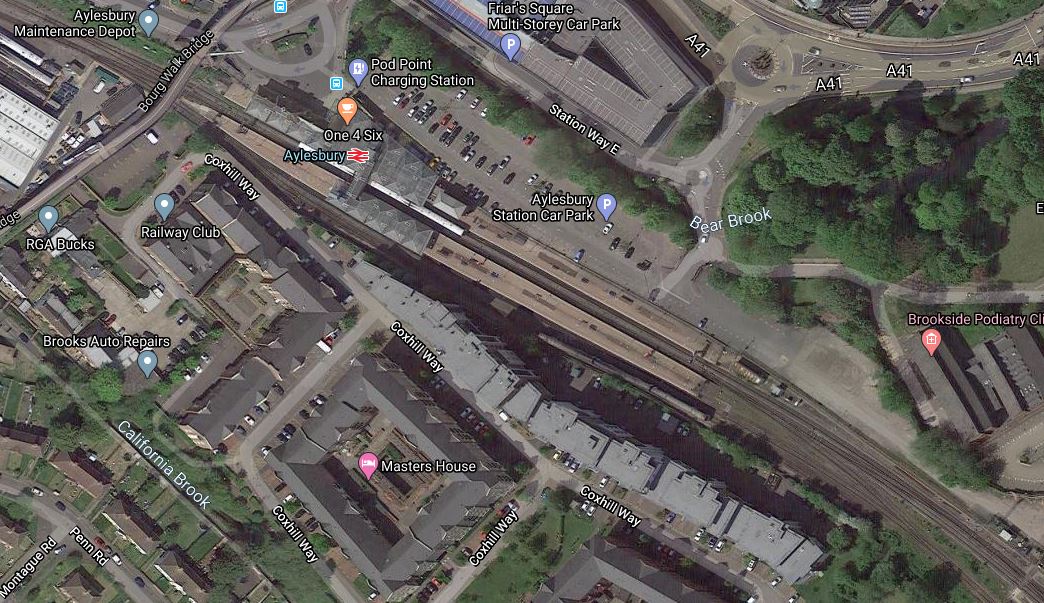
Note.
- Platforms are numbered 1 to 3 from South to North.
- Trains going South via High Wycombe call in Platforms 1 or 2.
- Trains going South via Amersham call in Platforms 2 and 3
- Trains going North call in Platforms 2 and 3.
These pictures show the station.

It is a spacious station, with step-free access and I feel that it could handle more services.
Banbury
I am sure that Banbury station, will be an important charging point for Chiltern’s battery-electric trains going North of Banbury.
This Google Map shows the layout of the recently-refurbished Banbury station.
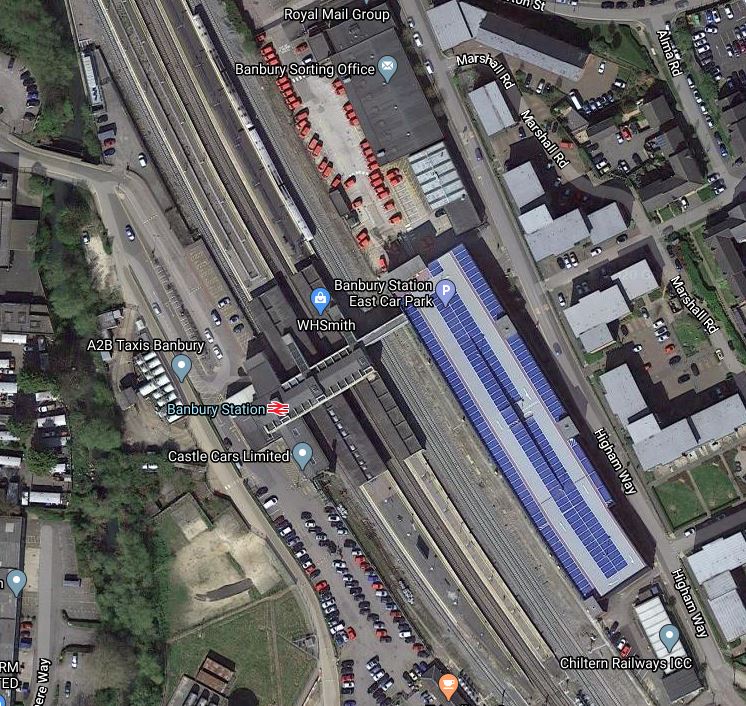
Note.
- Platforms are numbered 1 to 4 from West to East.
- Trains going North call in Platforms 1 or 2.
- Trains going South call in Platforms 3 or 4.
- The Marylebone and London service usually turns back in Platform 4 after waiting there for over half-an-hour.
- Northbound Stratford-upon-Avon services generally use Platform 1, but most others generally use Playform 2.
- Southbound Stratford-upon-Avon services generally use Platform 4, but most others generally use Playform 3.
It looks to me, that Banbury station could handle the charging of trains as they pass through, as all of Chiltern’s services that serve destinations to the North of Banbury, stop at the station.
Hitachi are saying, that one of their proposed battery-electric trains needs ten minutes to be fully-charged.
So there may need to be some adjustment to the time-table to lengthen the stops at Banbury, to give ten minutes of charging time.
Alternatively, a few miles of electrification could be centred on Banbury, perhaps between Aynho Junction and Leamington Spa, which is a distance of twenty-six miles, which takes one of Chiltern’s trains around twenty-three minutes.
This would surely give enough time to fully-charge the batteries, but would also benefit CrossCountry, if they should go the battery-electric route.
I have followed the route between Aynho Junction and Leamington Spa in my helicopter and it would appear to be a fairly straight and uncomplicated route. I would say, it is about as difficult to electrify, as the Midland Main Line between Bedford and Kettering/Corby, which appears to have been one of Hetwork Rail’s better electrification projects, which should be delivered on time and has been installed without too much disruption to trains and passengers.
High Wycombe
It looks to me, that High Wycombe station will be an important charging point for Chiltern’s battery-electric trains going North to Oxford and Banbury.
Unlike Banbury, High Wycombe has not seen many changes over the years.
This Google Map shows High Wycombe station.
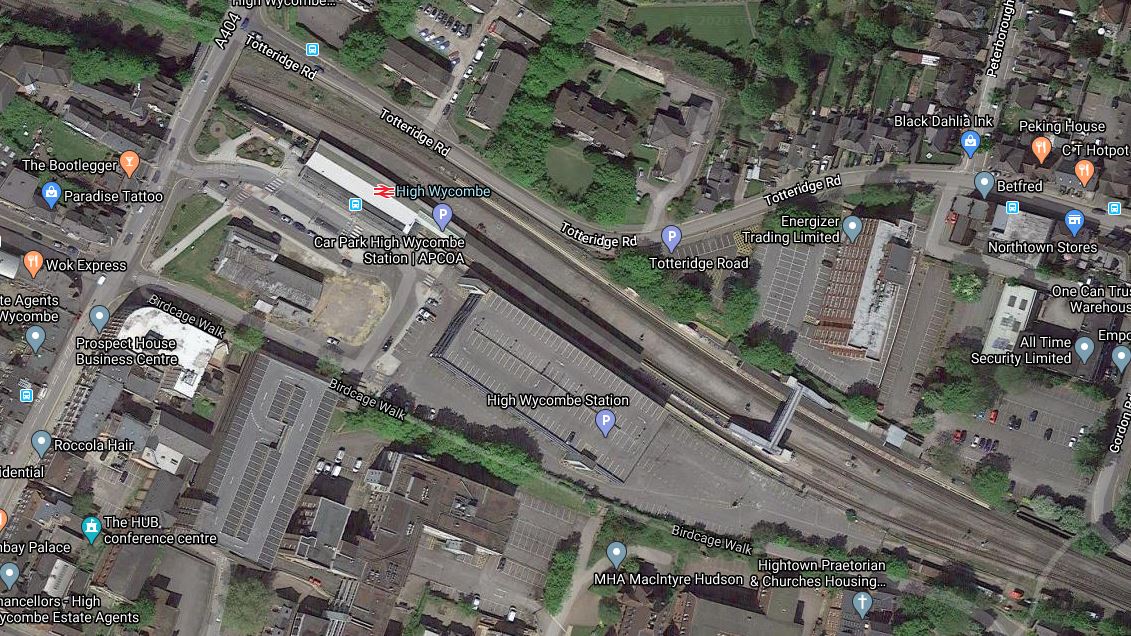
Note.
- Platforms are numbered 1 to 3 from South to North.
- Platform 1 is a bay platform that faces London.
- Platform 2 is the Westbound platform.
- Platform 3 is the Eastbound platform.
- High Wycombe has five tph in both directions, with an upgrade to six tph possible, after two tph run to the Cowley Branch.
The frequency of the trains through High Wycombe station could probably be handled by a Fast Charging system, but it would be tight to fit all current five services into an hour. It would appear to preclude any extra services going through High Wycombe, as there just isn’t enough time in an hour.
For this reason, I think that High Wycombe station needs full electrification, so that all passing trains can top up their batteries.
This gives the interesting possibility, that a train leaving High Wycombe for London with a full battery, would probably have enough charge in the battery to travel the 28 miles to London Marylebone and return. The train could always have a top-up at Marylebone.
So how far would the electrfication, through High Wycombe run?
Given that for operational reasons, it is probably best that pantographs are raised and lowered in stations, it is probably best if the various routes were electrified to the next station.
- The Chiltern Main Line route would be electrified as far as Banbury station, where all trains stop. The distance would be 41 miles.
- The Oxford route would be electrified as far as Bicester Village station, where all trains stop. The distance would be less than two miles from the Chiltern Main Line
- The Aylesbury route would be electrified as far as Princes Risborough station, where all trains stop. This would be included in the Chiltern Main Line electrification.
It looks to me, that just 43 miles of double-track electrification would enable Hitachi’s proposed battery-electric trains to reach all parts of the Chiltern network.
Distances of the various destinations from the electrification are as follows.
- Birmingham Moor Street – 43 miles
- Birmingham Snow Hill – 43 miles
- Kidderminster – 63 miles
- Marylebone – 28 miles
- Milton Keynes – 27 miles
- Oxford – 38 miles
- Oxford – Cowley – 43 miles
- Stratford-upon-Avon 35 miles
Only Kidderminster could be tricky, but not if the Snow Hill Lines are electrified through Birmingham.
Electrification of the Chiltern Main Line between High Wycombe and Banbury with a number of Fast Charging systems in selected stations, would be my preferred option of enabling Hitachi’s proposed battery-electric trains to work the Chiltern network.
These pictures show High Wycombe station.

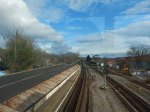

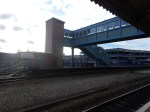
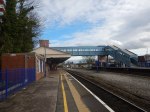
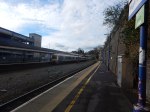
It does appear that the bridge at the Western end of the station my need to be modified, so that overhead wires can be threaded underneath.
Conclusion
Quite unexpectedly, I am pleasantly surprised.
Chiltern Railways’ current network can be run by Hitachi’s proposed battery-electric AT-300 trains.
- Fast charging systems will be needed at Aylesbury, Aylesbury Vale Parkway, Banbury, Birmingham Moor Street, Birmingham Snow Hill, Gerrards Cross, High Wycombe, Kidderminster, Marylebone, Milton Keynes and Oxford.
- Banbury and High Wycombe will need to be able to top-up trains as they pass through.
- No large scale electrification will be needed. Although any new electrification will be greatly accepted!
As I indicated earlier, I would electrify the core part of the Chiltern Main Line route between High Wycombe and Banbury.
It would probably be a good idea to electrify a few miles at the Southern end of the line, where it runs into Marylebone station.
- Marylebone and Harrow-on-the-Hill.
- Marylebone and West Ruislip
- Old Oak Common and West Ruislip.
I would use third-rail electrification to be compatible with London Underground and because of the automatic connection and disconnection.
But most surprisingly, there are already generous turnround times at most terminal stations, which give enough time to charge the trains.
It’s almost, as if Chiltern are preparing for battery-electric trains.
 The Anonymous Widower