New Mobile Rail Charging Facility For Long Marston
The title of this post, is the same as that of this article from Rail Technology Magazine.
This is the sub-heading.
Porterbrook has signed a £1.7 million deal with Siemens Mobility to purchase an innovative Rail Charging Converter (RCC) for its Long Marston Rail Innovation Centre. The cutting-edge technology will make battery charging and 25kV power supply possible in areas of the UK railway where overhead line equipment is not currently available.
This first paragraph describes the system.
The RCC is a modular and containerised system that uses power electronics to provide a fully compliant, standard connection between the modern three-wire electricity grid and the single-wire railway. It essentially reduces the electrification infrastructure needed by being able to plug into existing power cables and deliver the ideal power supply for trains.
These two paragraphs describe how the RCC was designed and funded, and how it will be used in the future.
The original development of the RCC was supported by the Department for Transport through Innovate UK’s First of a Kind programme. The team will install the novel charging solution at Long Marston, enabling the charging of trains with batteries, fed from existing standard local power supply cables.
Compatible with all overhead line equipment powered trains, the small, low-cost design of the RCC enables the removal of diesel passenger train operation on routes without continuous electrification.
I suspect we’ll see other manufacturers like Hitachi ABB Power Grids and Furrer+Frey launch similar products.
This page gives full details of the award to Siemens Mobility.
Project Title: 25kV Battery Train Charging Station Demonstration
Lead Organisation: Siemens Mobility Ltd.
Project Grant: £59,910
Public Description:
The UK rail industry is committed to decarbonisation, including the removal of diesel trains by 2040.
Replacing diesel trains with electric, hydrogen or battery bi-mode rolling stock provides faster, smoother and more reliable journeys, as well as eliminating local pollution and greatly reducing carbon dioxide.
To enable clean, green electric bi-mode operation without continuous electrification requires enhancement of the power supply to existing electrification and novel charging facilities to support bi-mode trains.
No small, low-cost solution is currently available for charging facilities that are compatible with standard UK trains and locally available power supplies and space.
Siemens Mobility, working with ROSCO, TOCs and Network Rail, will deliver a novel AC charging solution enabling simple installation of small, low-cost rapid charging facilities fed from existing standard local power supply cables.
Compatible with all OLE-powered trains, the novel design enables the removal of diesel passenger train operation on non-electrified routes across the UK, while minimising land requirements and modifications required to existing station structures.
£59,910 seems to be good value for the helping with the design of a universal charging system for 25 KVAC battery-electric trains in the UK.
I have a few thoughts.
Will The Rail Charging Converter (RCC) Charge Third Rail Trains?
As new third-rail systems are effectively systems non grata, I suspect that third-rail trains will be charged by fitting a pantograph and the appropriate electrical gubbins.
Most modern third-rail electrical multiple units have a roof that is ready for a pantograph and can be converted into dual-voltage trains.
What Trains Will Be Able To Be Charged Using An RCC?
I suspect it will be any train with a battery, a pantograph and the appropriate electrical gubbins.
Battery-electric trains that could have a pantograph include.
- Alstom Electrostar and Aventra
- CAF Civity
- Hitachi Class 385 train
- Hitachi Class 800 train
- Siemens Desiro and Mireo
- Stadler Class 777 train
- Stadler Flirt and Akku
- Vivarail Class 230 train
I suspect it could charge all trains in the UK, where batteries have been proposed to be added.
What Is Meant By Mobile?
I suspect transportable and temporary would be a better description.
This gallery show Felixstowe station and a Class 755 train, which can be fitted with batteries.
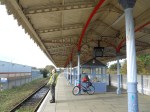
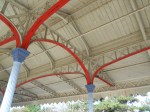
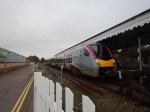

Suppose that testing was to be done at Felixstowe of a battery-electric Class 755 train.
- The containerised electrical system would be placed somewhere convenient.
- A short length of overhead wire would be erected in the platform.
- The system would then be connected together and to the electrical supply.
- After testing, it could be used to charge a train.
It would be very convenient for operation of the railway, if it could be installed and taken out overnight.
Conclusion
It looks a well-designed system.
First Tri-Mode Long Distance Trains For The East Coast Main Line
The title of this post, is the same as that of this press release from LNER.
This is the sub-heading.
London North Eastern Railway (LNER) is pleased to confirm that CAF has been named as the successful bidder to deliver a fleet of 10 new tri-mode trains for LNER. Porterbrook has been chosen as the financier of the new fleet. The trains will be able to operate in electric, battery or diesel mode.
These are the first two paragraphs.
Benefits of tri-mode trains range from a reduction in emissions, particulates, noise and vibration pollution, lower maintenance and operating costs and upgradeable technology, with an expected increase in range and performance as technology develops further. Battery power reduces the need to use diesel traction in areas where overhead powerlines are not available.
Complementing the modern Azuma fleet of 65 trains, the new ten-coach trains will help LNER achieve its vision of becoming the most loved, progressive and trusted train operator in the UK, delivering an exceptional service for the customers and communities served along its 956-mile network.
I have a few thoughts.
Will The Trains Have Rolls-Royce mtu Diesel Engines?
Consider.
- CAF’s Class 195, 196 and 197 Civity trains for the UK all have Rolls-Royce mtu diesel engines.
- Porterbrook are headquartered in Derby.
- Rolls-Royce are headquartered in Derby.
- In Rolls-Royce And Porterbrook Agreement Will Drive Rail Decarbonisation, I talked about how the two companies were planning to decarbonise trains using techniques like mtu Hybrid PowerPacks and hydrogen fuel cells.
I would think it very likely that the new trains will have Rolls-Royce mtu engines.
Will The Trains Have Rolls-Royce mtu Hybrid PowerPacks?
It was in 2018, that I first wrote about mtu Hybrid PowerPacks in Rolls-Royce And Porterbrook Launch First Hybrid Rail Project In The UK With MTU Hybrid PowerPacks.
- Examples of these power packs are now running in Germany, Ireland and the UK.
- The mtu Hybrid PowerPack how has its own web site.
- There is also this YouTube video.
- If CAF use off-the-shelf mtu Hybrid PowerPacks in their Civity trains, there is one big massive plus – They don’t have to develop the complicated control software to get a combination of diesel engines and batteries to perform as immaculately as Busby Berkeley’s dancers or a Brigade of Guards.
- The mtu Hybrid PowerPacks also have a big plus for operators – The batteries don’t need separate charging infrastructure.
- In Rolls-Royce Releases mtu Rail Engines For Sustainable Fuels, I talk about how mtu engines can run on sustainable fuels, such as biodiesel or HVO.
I think it is extremely likely that CAF’s new trains for LNER will be powered by mtu Hybrid PowerPacks.
Class 800 And Class 397 Trains Compared
The Class 800 train is LNER’s workhorse to Scotland from London.
The Class 397 train used by TransPennine Express, is a 125 mph Civity train.
Differences include.
- The Class 800 train can run at 140 mph, where the signalling allows, but is the Class 397 train only capable of 125 mph?
- The Class 397 train accelerate at 0.92 m/s², whereas the Class 800 train can only manage 0.7 m/s².
- The Hitachi train has 14 % more seats, 36 First and 290 Standard as opposed to 22 First and 264 Standard in five-car trains.
I will add to this list.
Will The New Trains Be Capable Of 140 mph Running?
As the East Coast Main Line is being fully digitally signalled to allow 140 mph running of the numerous Hitachi expresses on the route, I wouldn’t be surprised to see, that the new CAF trains will be capable of 140 mph.
In this article on Modern Railways, which is entitled LNER Orders CAF Tri-mode Sets, this is said.
The new fleet will be equipped with CAF Signalling’s European Rail Traffic Management System digital signalling. This will align with the East Coast Digital Programme, which aims to introduce European Train Control System (ETCS) on the southern stretch of the East Coast main line from King’s Cross to Stoke Tunnel by 2029.
Later in the article this is said.
LNER has retained 12 ‘91s’ hauling eight rakes of Mk 4s, and the rollout of ETCS is another reason the operator has sought to order the replacement fleet. LNER’s passenger numbers have rebounded more quickly than other operators post-Covid, which has helped make the case for confirming the order.
This does seem sensible.
What Will Be The Range Of The CAF Trains Without Electrification?
The longest LNER route without electrification is the Northern section of the Inverness service between Inverness and Dunblane, which is 146.1 miles. There are also eight stops and some hills.
In Edinburgh to Inverness in the Cab of an HST, there’s a video of the route.
I’m sure that even, if they don’t normally run the new trains to Inverness, being able to do so, could be useful at some point.
It should be noted that the Guinness World Record for battery-electric trains is 139 miles, which is held by a Stadler Akku.
I am left with the conclusion that London and Inverness needs a tri-mode train or lots of electrification. Did this rule out Hitachi?
The Number Of Trains Ordered
The Modern Railways article says this about the number of trains.
The contract includes an eight-year maintenance services agreement with an option to extend; CAF says the order value, including maintenance, exceeds €500 million. When the tender was published the intention was to include an option for five additional sets; LNER confirmed to Modern Railways there is an option to purchase additional sets on top of the base order of 10.
Can we assume this means that other trains will be ordered, if the trains are a success?
Can These New CAF Trains Be Made Net Zero?
This is a paragraph, in the LNER press release.
This new fleet of trains will keep LNER on track to reduce its emissions by 67 per cent by 2035 and be net zero by 2045. LNER has already reduced carbon emissions by 50 per cent compared with 2018/19. Per mile, LNER trains produce 15 times less carbon emissions than a domestic flight.
As the new CAF trains will probably have a service life of at least forty years, there must be some way, that these new trains can be made net zero.
Consider.
- I am absolutely certain, that the new CAF trains will have Rolls-Royce mtu diesel engines.
- LNER’s existing Class 800 and 801 trains have Rolls-Royce mtu diesel engines.
Rolls-Royce mtu according to some of Rolls-Royce’s press releases appear to be developing net zero solutions based on hydrogen or net zero fuels.
This press release from Rolls-Royce is entitled Rolls-Royce Successfully Tests mtu Engines With Pure Hydrogen, suggests that Rolls-Royce mtu are working on a solution.
Routes They Will Serve
The Modern Railways article says this about the routes to be served.
Modern Railways understands the new fleet will be maintained at Neville Hill depot in Leeds and, like the ‘225’ sets, will be used predominantly on services between London and Yorkshire, although unlike the ‘225s’ the tri-modes, with their self-power capability, will be able to serve destinations away from the electrified network such as Harrogate and Hull.
Note.
- This surprised me, as I’d always expected the Yorkshire routes will be served by Hitachi battery-electric trains.
- But it does look that both Harrogate and Hull stations, have long enough platforms to hold a ten-car train.
- With their tri-mode technology, it also looks like the CAF trains won’t be needed to be charged before returning to London.
The last point would enable them to try out new routes.
These are distances from the electrification of the East Coast Main Line of the destinations that LNER served, where there is not full electrification.
- Aberdeen via Ladybank – 91.4 miles
- Carlisle via Skipton – 86.8 miles
- Cleethorpes via Newark and Lincoln – 63.9 miles
- Harrogate via Leeds – 18.3 miles
- Huddersfield via Leeds – 17.2 miles
- Hull via Temple Hirst junction – 36.1 miles
- Inverness via Dunblane – 146.1 miles
- Lincoln via Newark – 16.7 miles
- Middlesbrough via Northallerton – 22.2 miles
- Scarborough via York – 42.1 miles
- Sunderland via Northallerton – 47.4 miles
Note.
- The first place after the ‘via’ is where the electrification ends.
- Carlisle could be a possibility during High Speed Two upgrading of the West Coast Main Line or for an enthusiasts’ special or tourist train.
- Cleethorpes is a possible new service for LNER. I wrote about this in LNER To Serve Cleethorpes.
- Scarborough must be a possible new service for LNER.
- All stations can take ten-car trains, with the possible exception of Middlesbrough, which is currently being upgraded.
- Huddersfield and Leeds is being electrified under the TransPennine Upgrade.
This would appear to show that LNER need enough bi-mode or tri-mode trains to run services to Aberdeen, Cleethorpes, Harrogate, Hull, Inverness, Lincoln, Middlesbrough and Sunderland.
But.
- It would appear that the initial batch of trains, will not be serving the North of Scotland.
- Aberdeen and Inverness could be served, when there is enough electrification at the Southern end.
I am also fairly sure, that no significant infrastructure is required.
Do Hitachi Have A Problem?
I am starting to wonder, if Hitachi are having trouble with the designing and building of their battery packs.
- It’s not like Hitachi to allow someone to run off with a €500 million contract from under their nose.
- Are they short of capacity to build the trains at Newton Aycliffe?
But then they’re probably up to their elbows in work on the High Speed Two Classic-Compatible trains.
Are There Any Other Routes, Where The New CAF Trains Could Be Employed?
The trains would certainly be suitable for these routes.
- Chiltern – InterCity services.
- CrossCountry Trains – Fleet replacement
- Grand Central Trains – Fleet replacement
- Grand Union Trains – For Carmarthen and Stirling open access services.
- Great Western Railway – Replacing Castles in the South West.
- ScotRail – Replacing Inter7City trains.
- South Western Railway – Basingstoke and Exeter St. Davids and other routes.
Note.
- CAF could sell a lot of trains.
- I estimate that fleet replacement for Grand Central Trans would cost around €350 million
- The specification would vary according to the route.
Could CAF have got the LNER order, because they have the capacity in the Newport factory?
Conclusion
It looks like CAF have done a good job in designing the trains.
I’m also fairly sure that CAF are using Rolls-Royce mtu PowerPacks.
Northern Trains Plans Framework Contract For 450 Multiple-Units
The title of this post, is the same as that of this article on Railway Gazette.
This is the first paragraph.
Northern Trains has invited expressions of interest in a framework contract covering the supply of up to 450 multiple-units to replace ‘significant quantities of its ageing fleet’.
These are other details.
- Firm orders would be placed in phases.
- The initial order would be for ‘multi-mode’ multiple-units.
- Battery-electric or electric-only trains would be included in subsequent orders.
- Trains would have a minimum design life of 35 years from acceptance.
- The ability for the multi-mode units to be converted to electric or battery-electric power as part of an ‘in-life decarbonisation’ programme.
These four paragraphs outline the framework agreement between Northern Trains, the train manufacturer and the owners, who will finance the trains.
The framework agreement would run for eight years, with Northern able to order rolling stock in multiple phases.
Each phase would include a train manufacturing and supply agreement and a technical support and spares supply agreement.
The supplier would provide tools and spare parts, and there would be options for the supply of mock-ups and a cab simulator. Northern is to run a separate procurement for an owning party which would purchase each fleet and lease it to the operator.
The owner would be party to each manufacturing and supply agreement, and there may be different owning parties for each order phase.
This is a well-thought out proposal, that would be worth around a billion pounds to the train manufacturer.
It would probably be based around a family of trains like Alstom’s Aventra, CAF’s Civity or Stadler’s FLIRT.
For a series of orders of such a value, I think we will see some excellent proposals.
The deal will transform rail travel in the North.
I have some thoughts.
Which Trains Will Be Replaced?
Northern Trains fleet includes these ageing trains.
- Class 150/0 diesel trains – 6 x three-car – 18 cars
- Class 150/1 diesel trains – 46 x two-car – 92 cars
- Class 150/2 diesel trains – 26 x two-car – 52 cars
- Class 155 diesel trains – 7 x two-car – 14 cars
- Class 156 diesel trains – 65 x two-car – 130 cars
- Class 158/0 diesel trains – 45 x two-car – 90 cars
- Class 158/9 diesel trains – 8 x three-car – 24 cars
- Class 319 electric trains – 12 x four-car – 48 cars
- Class 323 electric trains – 34 x three-car – 102 cars
- Class 333 electric trains – 16 x four-car – 64 cars
- Class 769 bi-mode trains – 8 x four-car – 32 cars
Note.
- These total to 273 trains and 661 cars.
- If the 16 Class 170 trains, which are of three-cars, were also to be replaced. that would bring the total trains to be replaced to 289 trains and 709 cars.
I would expect the difference between 273-289 current trains and 450 trains in the article, is explained by new services and increased services on certain routes.
Which Trains Could Be Retained?
Northern Trains fleet includes these new trains.
- Class 195 diesel trains – 25 x two-cars – 50 cars
- Class 195 diesel trains – 33 x three-cars – 99 cars
- Class 331 electric trains – 31 x three-cars – 93 cars
- Class 331 electric trains – 12 x four-cars – 48 cars
Note.
- These trains were all built by CAF in the last five years.
- These total to 101 trains and 290 cars.
But if they have an expected life of 35 years, the diesels will have to be converted to zero-carbon trains.
Will The CAF Trains Be Retained?
Consider.
- If all the ageing trains and those not built by CAF were to be replaced then that would be 289 trains and 709 cars.
- If the nearly-new CAF trains were also to be replaced that would be 390 trains and 999 cars.
- Add in a few more trains for expanded services and you’re got the figure of 450 trains given in this article.
- If the CAF trains were to be replaced, then Northern Trains would have an homogenous fleet of new trains from one manufacturer, with all the advantages in operation and maintenance.
On the other hand, I haven’t read any bad criticism of these CAF trains, so I will assume that there is no pressing reason to replace them.
And of course Northern Trains could have an homogenous fleet of new CAF trains.
This is said in the article.
The supplier would provide tools and spare parts, and there would be options for the supply of mock-ups and a cab simulator.
As this is specifically mentioned, do Northern lack a simulator for driver training?
What About The Manchester Bee Network And Other Local Networks?
Will these networks want to take control of their local trains?
If there is an homogenous fleet of new trains from one manufacturer, then surely, it would be easier to give control of some routes to the local transport interests.
Training and driver rostering could be retained in what was left of Northern Trains.
Tram-Trains
Tram trains would be an added complication, but as the South Wales Metro is showing, tram-trains are an interesting way of expanding a network.
Cambridgeshire Company’s Self-Charging Trains Project Wins Government Funds
The title of this post, is the same as that of this article on the BBC.
These four paragraphs outline what the company is developing and how they received government funding.
Echion Technologies, based in Sawston near Cambridge, is creating train batteries that can charge from overheard wires, the Department for Transport said.
The trains would be able to use the batteries on unelectrified track.
The project was among the winners of the government’s First of a Kind competition.
The competition aims to award funding to projects that could transform the future of transport.
I have a few thoughts.
The Description In The First Of A Kind 2022 Winners Document
In this document, this is said.
Project No: 10039100
Project title: UBER – Ultra-high power Battery for low Emission Rail
Lead organisation: ECHION TECHNOLOGIES LTD
Project grant: £59,917
Public description: Project UBER (Ultra-high power Battery for low Emission Rail), aims to demonstrate for the first time, Echion’s XNO(tm) battery chemistry as the preferred battery technology for certain classes of battery electric trains. It targets Theme 1 of this competition.
Specifically, UBER aims to demonstrate the suitability of XNO(tm) for passenger trains that can be powered by the AC overhead electrification and charge a battery from the overhead wire (or another form of ‘standard’ trackside power — e.g. 3rd rail), to then run in battery-only mode on unelectrified section of a route. An example of such a train is the Revolution Very Light Rail (Revolution VLR) developed by Transport Design International (TDI), who is a partner in UBER.
Applying The Echion Technologies Batteries To Electric Trains
Consider.
- The BBC article is accompanied by a picture of a Class 717 train, which like the Class 700 train is dual voltage.
- Southeastern have thirty similar Class 707 trains, which are third-rail, although according to Wikipedia, were tested as dual-voltage trains.
- Most modern trains, like these Desiro City units made by Siemens, have a mix of motored and trailer cars, with one or more pantograph cars between the two driver cars.
- Because power is needed in all cars, there will be an electrical bus from one end of the train to distribute power.
- All trains in the family appear to have at least one trailer car, which will also be connected to the electrical bus.
With a family of trains like the Desiro City, Alstom’s Aventra, CAF’s Civity, Hitachi’s AT-200 or AT-300 or Stadler’s FLIRTs, train manufacturers assemble various cars, interiors and electrical gubbins together, to get the train performance and capability.
I would expect that the battery would be placed, where there is space and the most likely place is under the trailer car.
In some ways, it would work like the battery in a laptop computer, where operation is as follows.
- If there is external power, the computer runs on that power and the battery is also charged, if it is not fully-charged.
- If there is no external power, the computer runs on battery power, until the battery goes flat.
With a battery-electric train, operation is similar, with an important addition.
- If there is external power, the train runs on that power and the battery is also charged, if it is not fully-charged.
- If there is no external power, the train runs on battery power, until the battery goes flat.
- Desiro City and many other electric trains have regenerative braking and under braking, the electricity generated is is stored in the battery, if it is not fully-charged.
It could be considered by some, that regenerative braking is self-charging. But unfortunately, regenerative braking doesn’t recover all energy during braking. But it can be up to 70-80 % efficient.
Connecting The Echion Technologies Battery To The Train
The battery will have to be connected to the electrical bus, that runs the full length of the train.
As a Control Engineer, I suspect there will be a sophisticated control system, that will switch the battery between various modes and control the pantograph and third-rail shoes.
Perhaps, Echion Technologies have developed an all-purpose controller that could fit all trains?
UK’s First 100mph Battery-Diesel Hybrid Train Enters Passenger Service
The title of this post, is the same as that of this article on ITV.
These are the first three paragraphs.
The UK’s first 100mph battery-diesel hybrid train is entering passenger service to cut carbon emissions and boost air quality.
It was developed by adding a powerful battery to a 20-year-old diesel train to reduce fuel consumption and CO2 emissions by 25%, according to owner Porterbrook.
The firm added that the two-carriage train, named HybridFLEX, also provides a 75% decrease in noise and a 70% decrease in nitrogen oxide.
The battery-diesel hybrid transmission is from MTU, who are a Rolls-Royce company and they go further with this press release which is entitled World Premiere: MTU Hybrid PowerPack From Rolls-Royce Enters Passenger Service.
This is the first paragraph.
Rolls-Royce, Porterbrook and Chiltern Railways are making rail history together with a climate-friendly world premiere: A hybrid diesel-battery-electric train that reduces CO2 emissions by up to 25% entered passenger service in the UK today for the first time. The so-called HybridFLEX train is powered by two mtu Hybrid PowerPacks and is operated by Chiltern Railways on the route between London Marylebone and Aylesbury. Together with the leasing company Porterbrook and Chiltern Railways, Rolls-Royce has converted a Class 168 DMU into the HybridFLEX train. The partners are proving that existing rail vehicles can be used in a climate-friendly way without the need to install complex and expensive new infrastructure. It is the world’s first regular passenger operation with mtu Hybrid PowerPacks, of which 13 have already been ordered.
This is significant for the railways of the UK.
The train that has been converted is a Class 168 train, which itself had been converted from a Class 170 train, when it transferred to Chiltern Railways in 2016.
I think this means that all Bombardier Turbostars in Classes 168, 170, 171 and 172 can probably be fitted with MTU Hybrid PowerPacks.
That is the following numbers of trains and cars.
- Class 168 – 28 trains – 86 cars
- Class 170 – 139 trains – 372 cars
- Class 171 – 20 trains – 56 cars
- Class 172 – 39 trains – 93 cars
Note.
- This totals to 226 trains and 607 cars.
- As each car has an engine, this will be an order of 607 PowerPacks, if all trains were to be converted.
This could certainly help to meet the Government’s aim of getting rid of all diesel only trains by 2040.
Can The CAF Civities Be Converted?
There are three Classes of CAF Civity diesel multiple units; 195, 196 and 197, all of which have Rolls-Royce MTU engines.
Could these be converted to hybrid operation by the swapping of the current diesel engines for MTU Hybrid PowerPacks?
I would suspect they could, as the CAF Civity trains might have been designed after MTU disclosed plans of the MTU Hybrid PowerPack to train builders prior to its announcement in September 2018.
Conclusion
MTU Hybrid PowerPacks could go a long way to eliminating diesel-only trains on UK railways. They could even run the diesels on Hydrotreated Vegetable Oil (HVO) to lower their carbon-footprint further.
CAF Selected For Major Battery Train Order
The title of this post, is the same as that of this article on Railway Gazette International.
This is the first paragraph.
CAF has been named as preferred bidder for what it says is the largest order to date for battery trains. This covers the supply and maintenance of more than 60 electric multiple-units which will be able to operate on non-electrified sections of the Niederrhein-Münsterland network.
On reading the rest of the article, it sounds like the trains are to a high standard, with all the features one could expect.
As in Bolton-Wigan £78m Rail Electrification Project Announced, I predicted that CAF could sell a number of battery-electric trains to Northern in the UK, it looks like CAF could be building a substantial number of battery-electric trains.
There could even be the possibility of some of the German trains being assembled in the CAF factory in Newport, as the logistics might be easier.
What A Waste Of Space!
This picture shows two two-car Class 170 trains working together as a four-car unit.
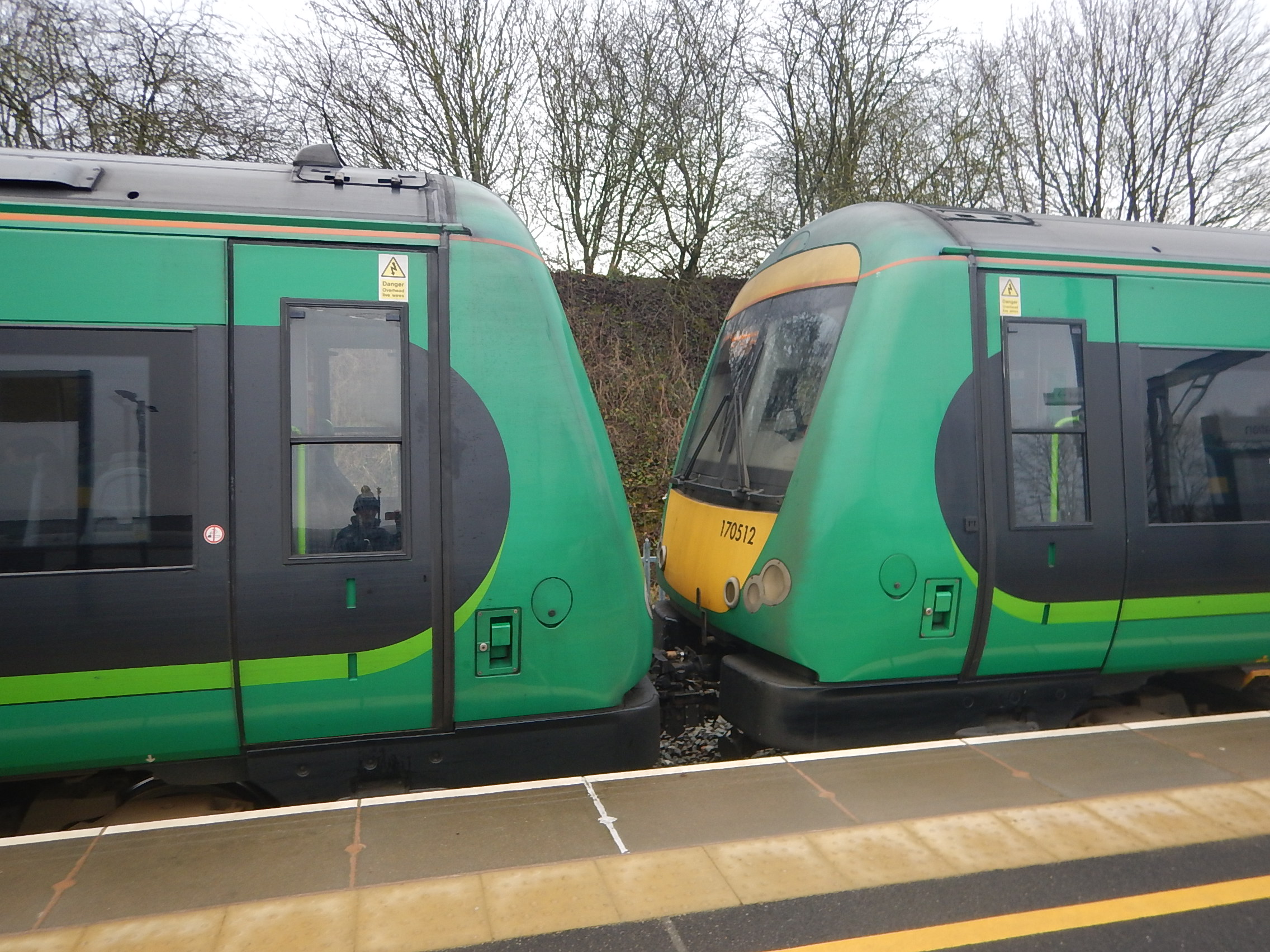
Look at how much space is wasted in the length of this train, by the two middle cabs!
If these Class 170 trains were to be replaced with a four-car train, this would surely increase the capacity of the train, as there would be more space to put seats!
It should be noted that West Midlands Trains have ordered some four-car CAF Civity trains.
Bombardier and CAF To Make 413 Carriages For New West Midlands Franchise
The title of this post is the same as this article on Global Rail News.
This is said.
Future operator West Midlands Trains has made a £680 million order with Bombardier and CAF for 413 carriages.
Bombardier will manufacture 36 three-car and 45 five-car Aventra trains at its Derby site, while CAF will produce 12 two-car and 14 four-car Civity trains. In total, 107 new trains will be delivered.
The electric three-car Aventras will operate on metro services, the electric five-car units for outer suburban and long distance, while CAF’s DMUs will run on dedicated services to the towns and cities around Birmingham.
These are my thoughts on the various parts of the order.
The Three-Car Aventras
The thirty-six three-car Aventras will probably replace the twenty-six Class 323 trains, which lack wi-fi and other passenger-friendly features.
It should also be noted that the Aventra has a slightly unusual and innovative electrical layout.
This article in Global Rail News from 2011, which is entitled Bombardier’s AVENTRA – A new era in train performance, gives some details of the Aventra’s electrical systems. This is said.
AVENTRA can run on both 25kV AC and 750V DC power – the high-efficiency transformers being another area where a heavier component was chosen because, in the long term, it’s cheaper to run. Pairs of cars will run off a common power bus with a converter on one car powering both. The other car can be fitted with power storage devices such as super-capacitors or Lithium-ion batteries if required.
This was published six years ago, so I suspect Bombardier have refined the concept, which is probably more to do with spreading weight around the train for better dynamics than anything else!
Obviously for West Midlands Trains, there is no need for 750 VDC, but will there still be a pair of power cars?
So it looks like there may be a reorganisation of the electrical system in the trains.
A few other points.
- I am surprised that some of the trains aren’t six-cars, as every other set of new trains seem to be single and double lengths.
- According to Wikipedia, the trains will have end gangways.
- The trains are air-conditioned and have free wi-fi and power sockets.
Hopefully, the full specification and Tops-number will be disclosed soon.
Are Batteries An Inherent Part Of The Operation Of Three Car Aventras?
Suppose each car in the train was a self-contained power car.
- Each car could also have a 75 kWh battery, which is the size of one on a New Routemaster hybrid bus.
- Regenerative braking would be efficient as it would use the battery in the same car.
- Batteries can be topped up using the 25 KVAC overhead wires.
- Passenger services like power-points would be powered from the battery.
If we assume that each car needs 5 kW to do a mile, this would give the train a range away from the wires of 15 miles.
Would it be possible for trains to run on the Camp Hill Line and the proposed Camp Hill Chords into Birmingham Moor Street station solely using battery power?
I think it is possible and after the battery-powered trams on the Midland Metro, it’s another case of emphasising the B in Birmingham.
The Five-Car Aventras
These will probably be vaguely similar to the other two five-car Aventras; Class 701 and Class 720.
Differences highlighted in the various articles and Wikipedia include.
- According to Wikipedia, the trains will have end gangways.
- The trains will be 110 mph units.
Both are firsts for Aventras.
I don’t think it will be long before a train operator buys an Aventra capable of 125 mph.
The CAF Civity Trains
The CAF Civity are a mixture of two-car and four-car units and will be used to replace some older diesel multiple units and augment some of the more modern Class 170 and Class 172 trains.
Class 230 Trains
West Midlands Trains have also ordered three Class 230 trains for the Marston Vale Line.
The route has the following characteristics.
- It is roughly twenty-four miles long.
- Trains take just over forty minutes for the journey between Bletchley and Bedford stations.
- There are plans to extend the service to Milton Keynes Central station.
- It is a diesel island in a sea of electrified lines.
Wikipedia says this about the Infrastructure.
Apart from a short length of single track at both ends, the line is double track, and is not electrified (barring short lengths at either end). It has a loading gauge of W8 and a line speed of 60 miles per hour (97 km/h). The line’s signalling centre is at Ridgmont.
I would suspect that two trains are needed to provide an hourly service, so buying three trains gives a spare, that might augment the services at busy times.
The flexibility of the Class 230 trains will give a choice of operating modes.
- Using 25 KVAC overhead electrification at the ends.
- Using onboard diesel power.
- Using batteries charged at the ends of the route.
I suspect that the most efficient will be a mix of all three.
The trains are also designed for remote servicing, so they could be based in a siding at Bedford, Bletchley or Wolverton and supported by a well-designed service vehicle and a fuel bowser.
Conclusions
West Midlands Trains seem to have gone for a sensible Horses-for-Courses solution.
I have a feeling that their concept for the Marston Vale Line will be used elsewhere.
Does Northern See Wigan As A Class 769 Train Hub?
The Wikipedia entry for Northern, shows under their entry for eight Class 769 trains, that the routes they will cover include.
- Liverpool to Wigan
- Manchester to Wigan North Western via Bolton.
Wigan is a proud and friendly town and I wrote about it in Wigan On The Up.
The West Coast Main Line through Wigan North Western station is electrified and Northern run half-hourly electric services to Liverpool using Class 319 trains.
But the other station; Wigan Wallgate is not wired and is definitely Pacer territory.
Liverpool to Wigan
As Liverpool Lime Street to Wigan North Western is fully electrified, I would be very surprised if Northern would run a bi-mode Class 769 train on this route, except as a stand-in for a failed Class 319 train.
Routes to places North of Wigan North Western, like Blackpool, Lancaster and Preston will be fully-electrified, so these routes can be served by the Class 319 trains.
Northern could be thinking of running a service between Liverpool Lime Street and Blackburn/Burnley for which a Class 769 train would be ideal.
But I think more likely, is that they are thinking of using Class 769 trains on the Kirkby Branch Line, which currently links Kirkby and Wigan Wallgate stations.
Consider.
- There is talk of running this branch as a shuttle.
- Wigan Wallgate station already has a suitable bay platform for a shuttle.
- The route is double-track except between Kirkby and Rainford stations.
- Kirkby to Wigan Wallgate takes a convenient twenty-four minutes.
- Merseyrail have a long term ambition to built a new Headbolt Lane station, as an interchange between their Northern Line and services to Wigan and Manchester.
- Merseyrail want to serve Skelmersdale.
Could this route be the reason for the reported Battery EMUs For Merseyrail?
- The Class 769 trains are used between Kirkby and Wigan Wallgate stations as a shuttle.
- Two trains would be able to provide a two trains per hour (tph) service, without any new infrastructure.
- Merseyrail ascertain that their new Stadler trains can travel between Kirkby and Wigan Wallgate and back on battery power.
- Merseyrail determine if a fast charging station is needed in the bay platform at Wigan Wallgate for their Stadler trains.
If the Class 769 trains show the passenger traffic is there and the Stadler trains can handle the route on batteries, could we see some or all of the Merseyrail Northern Line services extended to Wigan Wallgate?
Because the Stadler trains will be fast modern trains designed to execute stops quickly, I suspect that even on the single track section of line between Kirkby and Rainford stations, they could run at the frequency of four tph, that is currently run all day between Kirkby and Liverpool Central stations.
- This would mean that the the current four tph to Kirkby would become four tph to Wigan Wallgate.
- The service would be run by brand-new Stadler trains.
- The track at Kirkby would have to be relaid to allow trains to run straight through.
- The signalling would probably need updating.
- Means to charge the trains at Wigan Wallgate might need to be provided.
- A new single-platform station could be built at Headbolt Lane.
- The four stations between Kirkby and Wigan Wallgate would get four tph in both directions.
It would give The Train To Wigan Pier a whole new meaning.
Once they had done their good works in proving the route, the Class 769 trains would be posted elsewhere to do more missionary work.
Manchester to Wigan North Western via Bolton
This is the other route mentioned in Wikipedia.
Consider.
- Bolton to Manchester will be electrified, by the end of the year.
- The route passes through Ince, Hindley, Westhoughton and Lostock.
Class 769 trains travelling this route, would open a second electrified route between Manchester and Preston via Wigan.
Manchester to Southport
Why was this route not mentioned?
- Manchester to Southport is a route run mainly by Pacers to a frequency of two tph.
- Some trains go via Bolton and some via Atherton.
- The route via Bolton will be partly electrified by the end of the year.
- The route via Atherton is not electrified.
I suspect that under current plans of just eight Class 769 trains, there aren’t enough to use them on this busy route.
Ideally, this route should be run with two tph going on each of the routes to Manchester from Wigan Wallgate.
The Future
Northern have ordered both diesel and electric Civity multiple units from CAF.
In Auckland Mulls Battery-Electric Train Order, I looked at how CAF had proposed battery-electric Civity trains for Auckland.
I’m sure CAF wouldn’t mind varying the order.
Auckland Mulls Battery-Electric Train Order
The title of this post is the title of this article on the International Railway Journal.
This is the first paragraph.
Auckland Council is expected to decide next week whether to proceed with an order for 17 battery-electric multiple units, which would replace DMUs on services on suburban services to Pukekohe.
The trains are being offered by CAF and are designed to work the Southern Line between Britomart Transport Centre in Auckland and Pukekohe.
The route is in two sections.
- From Britomart to Papakura is electrified at 25 KVAC.
- From Papakura to Pukekohe is run by a diesel shuttle.
The diesel shuttle runs over a distance of 18.38 km.
The plan would appear to be for the new trains to run as follows.
- To Papakura using the current electrification, charging the battery as they travelled.
- At Papakura they would switch to battery power for the shuttle to Pukekohe.
- On return to Papakura, they would switch back to the electrification and return to Auckland.
This would be a distance of 36.76 km. or just under twenty-three miles.
Conclusion
I think that this proposal is very significant.
CAF have put their money where their mouth is in this proposal, as if the trains couldn’t fulfil the requirements, it would be Spanish omelettes all over the place.
From the picture in the article on the International Railway Journal, it would appear that the offered trains are a version of the Civity train, which is being supplied to Northern as Class 331 trains.
A 23 mile battery range would be handy, as it could probably handle the Windermere Branch from Oxenholme.
 The Anonymous Widower