Could Anglia Railways’ London Crosslink Be Recreated As Part Of The London Overground?
This is the first paragraph of the Wikipedia entry for the original London Crosslink.
London Crosslink was a passenger train service operated by Anglia Railways between Norwich and Basingstoke, using the North London Line to bypass central London. Class 170 Turbostar diesel multiple units were used, and the service operated between 22 May 2000 and 28 September 2002, supported by funding from the Strategic Rail Authority through its Rail Passenger Partnership fund.
Note.
- The service called at Diss, Stowmarket, Ipswich, Colchester, Whitham, Chelmsford, Ingatestone, Romford, Stratford, Highbury & Islington, Camden Road, Willesden Junction, West Hampstead Thameslink, Brentford, Feltham, Staines, Woking, and Farnborough (Main)
- It ran six times on Monday to Friday and five times on Sunday.
- Feltham and Woking stations have a coach link to Heathrow.
- Journeys took around 3 hours and 44 minutes.
Over the years, attractions and other rail lines and stations served by the route have changed. improved and been added.
- In 2006, the Arsenal’s Emirates Stadium opened within walking distance of Highbury & Islington station.
- In 2012, the Olympic Stadium opened at Stratford and is now used by West Ham United.
- In 2020, Brentford Stadium opened within walking distance of Brentford station.
- There are long-term plans for a station at Brentford stadium.
- In 2022, Romford and Stratford stations were connected to the Elizabeth Line.
- In 2025, Beaulieu Park station was added to the Greater Anglia Main Line.
- In 2026, both ends of the route came under the control of Great British Railways.
At some point in the future, Old Oak Common Lane station will open to link the route to High Speed Two, the Great Western Main Line and the Elizabeth Line.
In Can The Signalling Of The London Overground Be Improved?, I looked in detail at the signalling of the London Overground and if it could handle more trains.
My conclusion was that on the East and North London Lines, another three trains per hour (tph) could probably be accommodated, which over an average day was probably around sixty trains.
As a restored London Crosslink would need just six paths per day, I would suspect the service could be restored, if it were thought to be a good idea.
I certainly feel that capacity would not be a problem.
These are a few other thoughts.
Will There Be Political Problems?
Providing the London Mayor approves, I can’s see any problem with Labour and I can’t see other parties objecting if passengers like it.
Would It Be Sensible To Use Lumo Branding And Trains?
Consider.
- Lumo is trusted branding.
- A five-car Lumo Class 803 train is 132 metres long and a pair of four-car London Overground Class 710 trains is 166 metres long, so I suspect platform length problems will be minimal.
- I doubt there will be problems on the Greater Anglia network.
- Stratford and Norwich is mainly a 100 mph network.
- Not all parts of the route have 25 KVAC overhead electrification, but batteries can be fitted to the Class 803 trains, that will cover any gaps.
- My calculations show that the modern trains will be twenty-two minutes quicker, than Anglia Railways Class 170 diesel trains.
- At one point Anglia Railways was owned by First Group, so FirstGroup may have knowledge of the problems of the route.
I believe it would be sensible to use Lumo branding and trains.
Could The Route Be Extended?
Consider.
- It could probably be extended to Winchester, Southampton and Bournemouth in the South.
- If offshore hydrogen takes off at Great Yarmouth, it might be worth extending with a reverse to Yarmouth in the North.
- Yarmouth has had a direct service from London in the past.
The service could also develop days out by the sea.
Scotland To Get New Intercity Fleet
The title of this post is the same as that of this press release from Transport Scotland.
These eight paragraphs make up the body of the press release.
The Scottish Government announced today that procurement will begin to replace the trains in its Intercity fleet.
The procurement will seek a replacement for the High Speed Train (HST) fleet of 25 trains which operates on its InterCity routes between Glasgow, Edinburgh, Aberdeen, and Inverness.
Cabinet Secretary for Transport, Fiona Hyslop said:
“Resilient, reliable ScotRail services are key to encouraging more people to choose to travel by train for work, leisure and learning.
“Over 4 million passengers travelled on InterCity trains between our key cities in the last year – we want to encourage even more people to do so. This procurement will enable us to replace the current Intercity fleet with trains which provide improved facilities and accessibility.
“Any replacement fleet is expected to be more energy efficient and therefore will significantly reduce emissions, reduce operating costs and be more in line with current passenger expectations, including for accessibility. The procurement process ensures Scottish suppliers will be able to offer to provide their services to potential bidders.
“This latest milestone in our rolling programme of decarbonisation will ensure the reliability of our Intercity routes for the long-term, making Scotland’s railway a more attractive and greener travel choice.”
Further details on this announcement will be shared when the contract is awarded in 2025. It is also expected that the refreshed Decarbonisation Action Plan will be published in Spring 2025, and this will detail updated targets for replacing ScotRail’s existing diesel fleets.
It is a press release full of good intentions, but very few facts.
Is this what Scots get from their political party?
I have a few questions.
Will The Trains Be Built In The UK?
This must surely give some advantages, but will it get the best trains at the best price?
What Will Be The Number And Capacity Of The Trains?
Transport Scotland could go for a like for like number and capacity replacement.
- But there have been capacity problems in Scotland, which have meant using diesel Class 153 trains as baggage cars.
- They might also want to add extra services.
- Will they replace the train lost at Stonehaven?
They could add a few options.
Other Companies May Need Similar Trains
Consider.
- GWR will need to replace their similar Castles.
- CrossCountry will need new trains.
- Grand Central will need new trains.
- South Western Railway may need new trains for services between Cardiff and Devon.
- Transport for Wales may need new trains.
Hull Trains and Lumo have recently ordered a selection of new Hitachi Class 802 and 803 trains, which I wrote about in Fourteen New Trains To Drive First Rail Open Access Growth.
I can see an argument for buying more Hitachi Class 80x trains, as it will surely save Great British Railways costs in the long time.
Should The New Trains Be A Forever Solution?
When British Rail electrified to Brighton, Crewe, Edinburgh, Glasgow, Leeds, Liverpool, Manchester, Newcastle, Norwich, Portsmouth, Southampton, Weymouth and many other places from London, they saw it as a mode of traction, that would be used forever.
As the trains wore out or got outdated, they would be replaced with trains, which at least could run using the same mode of traction.
Generally, on electrified routes, when British Rail’s electric trains have been replaced, they have been replaced by more modern new electric trains.
The one major exception was on the East Coast Main Line where some InterCity 225 trains were replaced with Hitachi Class 800 and Class 802 diesel bi-mode trains.
But as the Class 800 and Class 802 diesel bi-mode trains were also replacing InterCity125 trains, they were a pragmatic replacement.
The Hitachi trains can be considered a Forever Solution, as bi-mode trains will always be able to work some routes that will never get electrified.
But Hitachi are developing the successor to their diesel bi-mode train, which is the tri-mode train, capable of running on electrification, diesel or battery power.
- Diesel power-packs can be swapped for battery packs.
- The battery packs have the same weight and power as a diesel power-pack.
- Existing diesel bi-mode trains can be converted to tri-mode or battery-electric bi-mode trains.
- A range of over forty miles on a single battery pack has been demonstrated.
Could Hitachi tri-mode trains be The replacements for the Inter7City trains?
Will Some Trains Have A Battery Electric Capability?
I very much believe so, as some routes in Scotland could be decarbonised by battery-electric trains.
What Top Speed Would The Trains Have?
Most of the routes in Scotland, where new modern quality rolling stock is needed, has a top speed of less than 100 mph, but in places the top speed is 125 mph.
I suspect, if trains can run at 125 mph in the places, where it is allowed, could probably save a few minutes on journey times.
Take the Borders Railway.
- The electrification runs out at Brunstane. Batteries would be charged between Edinburgh and Brunstane using the existing electrification.
- To go from Brunstane to Tweedbank and return to Brunstane is 63 miles.
- To work the Borders Railway would need a battery range of 63 miles.
I suspect every route in Scotland could have an electrification strategy for use with battery-electric trains. Some of which would have short lengths of extra electrification.
What Lengths Would The Trains Be?
In my example I used the Borders Railway.
A typical service is run by a three-car Class 170 train or two such trains running as a pair.
Perhaps, a single four- or five-car train could work the service all day and still provide enough capacity?
Conclusion
I believe, that Scotrail services could be electrified line-by-line.
Some lines would need more or longer trains and an update to the electrification.
Do Rolls-Royce mtu Have A Plan To Decarbonise Their Diesel Engines For Rail Applications?
Data Sheets For Rolls-Royce mtu Diesel Engines For Trains
These are data sheets for various Rolls-Royce mtu diesel engines that can be used in rail applications.
Rolls-Royce Releases mtu Rail Engines For Sustainable Fuels
The title of this section, is the same as that of this press release from Rolls-Royce.
These four bullet points, act as sub-headings.
- mtu Series 1300, 1500 and 1800 engines already released; Series 1600 and 4000 to follow shortly
- Up to 90% CO2 savings by operating existing engines with Hydrotreated Vegetable Oil (HVO/renewable diesel)
- Locally emission-free operation possible in combination with mtu Hybrid PowerPack
- Field tests with DB Cargo and RDC Autozug Sylt
This is the first paragraph.
Rolls-Royce is taking a significant step towards even more climate-friendly rail transport with the release of mtu rail engines for use with sustainable fuels. With synthetic diesel fuels of the EN15940 standard, CO2 emissions can be reduced by up to 100 percent compared to fossil diesel. Hydrotreated Vegetable Oil (HVO or renewable diesel), which is already commercially available today, reduces CO2 emissions by up to 90 percent. If the fuels are produced with the help of renewable energy and green hydrogen – through what is termed a Power-to-X process – existing rail vehicles can be operated in a completely CO2-neutral manner. The mtu Series 1800 engines which are used in mtu PowerPacks, as well as Series 1300 and 1500 for locomotives and multi-purpose vehicles, are already approved for use with synthetic fuels such as HVO. Series 1600 and versions of Series 4000 engines will follow in the near future. The release of engines for climate-friendly fuels requires a series of tests and trials and Rolls-Royce has found strong partners for this activity. DB Cargo and RDC Autozug Sylt have already tested or are currently testing mtu Series 4000 engines with HVO in their locomotives.
How Does That Fit With The UK’s Population Of Rolls-Royce mtu Diesel Engines?
These classes of train have Rolls-Royce mtu engines.
- Class 43 power cars – 6V 4000 R41R
- Class 168 train – 6R 183 TD 13H
- Class 170 train – 6R 183 TD 13H
- Class 172 train – 12V 1800 R83
- Class 195 train – 12V 1800 R85L
- Class 196 train – 12V 1600 R85L
- Class 197 train – 12V 1600 R85L
- Class 800 train – 12V 1600 R80L
- Class 801 train – 12V 1600 R80L
- Class 802 train – 12V 1600 R80L
- Class 805 train – 12V 1600 R80L
- Class 810 train – 12V 1600 R80L
Note.
- Class 168 and 170 trains seem to be powered by older model Rolls Royce mtu engines.
- Class 180, 220,221 and 222 trains are powered by Cummins engines.
- I can’t find what engines power Class 805 and 810 trains, but it is reasonable to assume they have the same engines as the other Hitachi trains.
- As CAF are building LNER’s new tri-mode trains, I suspect these trains will also have Rolls Royce mtu engines.
It would appear that all the Rolls-Royce mtu rolling stock in the UK, with the possible exception of the Class 168 and 170 trains will be able to run on sustainable fuels.
Rolls Royce mtu And Hydrogen
This press release from Rolls-Royce is entitled Rolls-Royce Successfully Tests mtu Engines With Pure Hydrogen.
This is the first paragraph.
Rolls-Royce today announces that it has conducted successful tests of a 12-cylinder gas variant of the mtu Series 4000 L64 engine running on 100% hydrogen fuel. The tests, carried out by the Power Systems business unit, showed very good characteristics in terms of efficiency, performance, emissions and combustion. These tests mark another important step towards the commercial introduction of hydrogen solutions to meet the demand of customers for more sustainable energy.
Engines of mtu’s 4000 family are used in Class 43 power cars, so surely these developments could lead to hydrogen-powered freight locomotives.
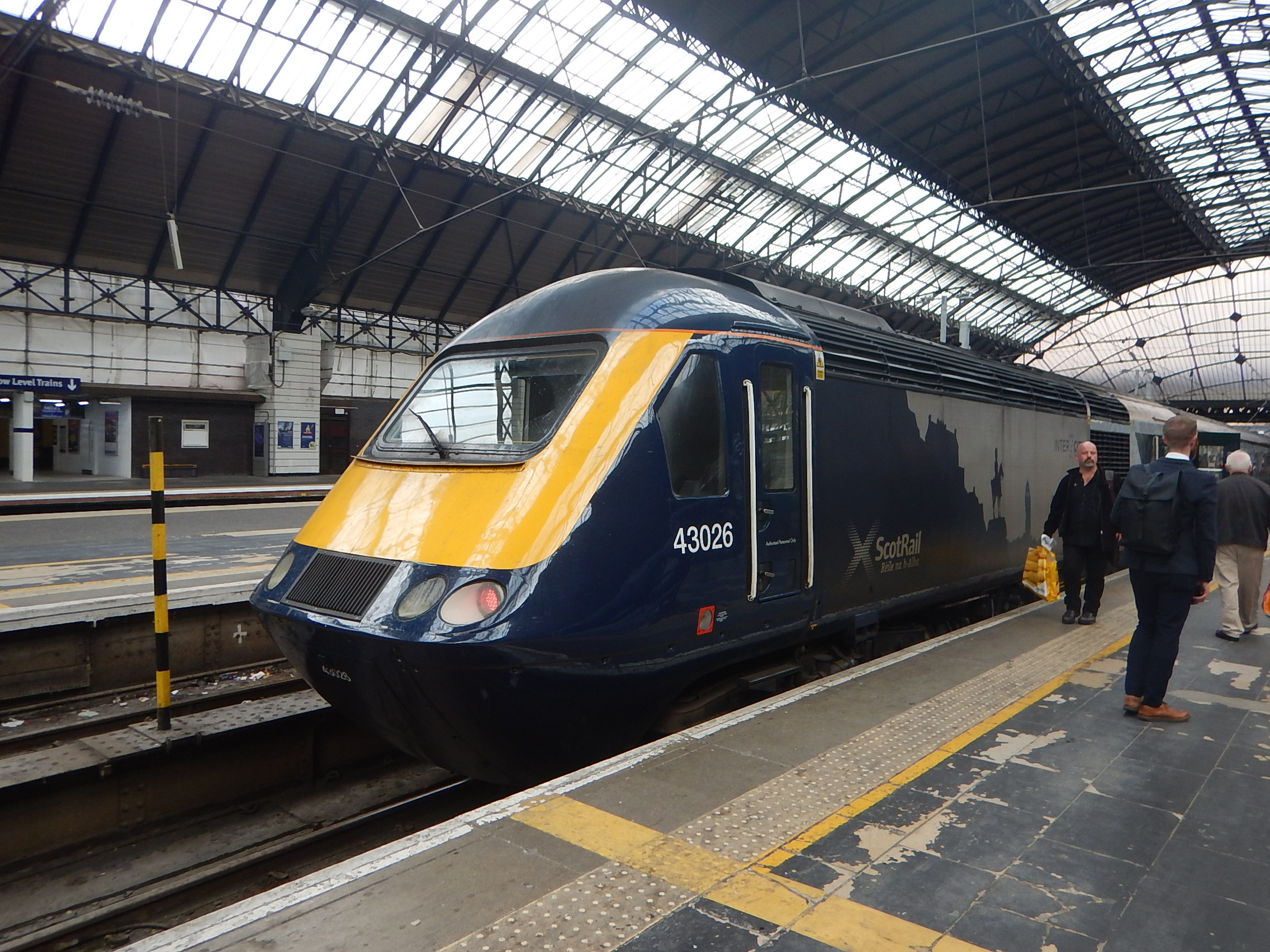
The picture shows a Class 43 power car at Glasgow Queen Street station.
Could Rolls-Royce mtu hydrogen power keep these iconic trains running for a few more years?
In ‘Spirit of Innovation’ Stakes Claim To Be The World’s Fastest All-Electric Vehicle, I look at Rolls-Royce’s Spirit of Innovation, which set the record for an electric vehicle at 555.9 km/hour.
As the InterCity125 already holds the record for the fastest diesel train, perhaps Rolls-Royce will attempt to set a record for the fastest hydrogen-powered train?
Decarbarbonising The CAF Class 195, 196 And 197 Trains
If Rolls-Royce mtu develop a hydrogen version of the 1800 diesel engine, then this could be used to fully decarbonise the CAF trains.
The operators may consider it’s not worth it and continue with using sustainable fuels.
But the possibility is surely there.
There must also be the possibility of developing a fuel cell replacement for the 1800 diesel, that can be slotted into the train.
Decarbarbonising The Hitachi Class 80x Trains
Hitachi are developing battery packs and the data sheet can be downloaded from this page on the Hitachi web site.
Decarbarbonising The CAF Tri-Mode Trains
I feel that as CAF usually use Rolls-Royce mtu engines, I suspect these trains will be designed, so they can be converted to hydrogen.
Conclusion
Rolls-Royce mtu appear to be on a path to decarbonise all their diesel engines.
Interview: Rethinking ‘Unusual And Special’ CrossCountry
The title of this post, is the same as that of this article on Railway Gazette.
This is the sub-heading.
CrossCountry’s National Rail Contract came into force on October 15, giving the business some medium-term certainty and Managing Director Tom Joyner a chance to reflect with Rail Business UK on its evolving role as a truly national train operator.
These are thoughts based on what is said in the article.
Unusual And Special
This paragraph is Tom Joyner’s explanation of what he meant.
‘CrossCountry is unusual and special. The fact that we’re a long-distance operator that connects so many places means we can be there for something different’, believes Managing Director Tom Joyner as he reflects on the operator’s short and medium-term future following the award on September 20 of its National Rail Contract.
I have found CrossCountry useful in the past to efficiently visit some towns and cities in the past, when Ipswich Town are playing away.
Arriva UK’s Contract To Run CrossCountry
This paragraph details the operating contract.
Under the NRC, incumbent Arriva UK Trains will continue to run the non-London inter-city passenger business as it has since November 2007. Commencing on October 15, the contract has a guaranteed core term of four years and an option for this to be extended to eight. The government will take the revenue risk, as it has done since the pandemic, with Arriva receiving a fixed fee to operate the business, with limited bonuses on offer if certain performance targets are met.
As a resident of London, I rarely use CrossCountry. But my only obvious improvement would be that CrossCountry ran trains with a smaller carbon footprint.
Post Pandemic Purpose
This paragraph details their post-pandemic purpose.
‘CrossCountry hasn’t benefitted from re-franchising in the last 10 years and this has presented challenges, particularly from a rolling stock perspective. We’ve been working closely with DfT to agree the post-pandemic purpose and vision for CrossCountry and how these fit into our railway network’, Joyner reports.
Most rail operators in the UK are London-centric or regional. Perhaps CrossCountry should become more ‘Unusual And Special’ to serve the important places, that other rail operators cannot reach.
One place would be the National Memorial Arboretum, which I wrote about in New Station Proposed For National Arboretum.
There must be lots of other places.
It could surely be the transport network for those who wanted to roam the UK on a holiday.
Could it be at the heart of levelling up the regions of the UK?
Fleet Under Pressure
This paragraph describes the current fleet and its condition.
Perhaps most reassuring for regular users of CrossCountry is news that the NRC will allow the operator to deliver some improvements to its train fleet, the backbone of which are the Class 220 and 221 DEMUs Arriva inherited from Virgin Trains in 2007. Other than some minor cosmetic work, these have not been refurbished since they were introduced in 2001. These 200 km/h Voyager trainsets are augmented by a fleet of Class 170 Turbostar DMUs for 160 km/h operation on regional routes to Cardiff and Stansted Airport; CrossCountry withdrew its last ex-British Rail IC125 High Speed Trains on September 18.
I do think, that some way must be found to reduce the operators large carbon footprint.
Are Battery Trains The Answer?
This paragraph gives Tom Joyner’s view on battery trains.
He is equally sceptical about the prospects for alternative traction technology to replace diesel. ‘I keep hearing views from industry colleagues who say, “electrification isn’t the answer, battery is the answer”. But you can’t get a battery that’s got the range that we need, even on the regional services currently worked by Class 170s.’
Birmingham New Street and Leicester is only 39.8 miles, so this route for a Class 170 train, might be possible for battery-electric trains, when there is electrification or charging at Leicester.
Perhaps the plan would be to run battery-electric trains between Birmingham and Leicester and see how the passengers react and how this will change the economics of the other Class 170 services?
A Lot More Food For Thought
There are some more sections in the article, that are worth a read.
- Sustainability Challenge
- Service Offering
- Commuters’ ‘Coventry Conundrum’
- Doing Something Different
This paragraph towards the end of the article makes the levelling up case, that CrossCountry can fulfil.
He suggests that the operator may not need as structured a timetable, and that its operating model could involve serving more destinations rather than the current largely fixed hourly axes crossing in Birmingham. ‘We serve regional Britain and when we talk about levelling up, the railway company best placed to level up in terms of connecting the whole of Britain is us’, he insists. This ethos is reflected in the daily Cardiff – Edinburgh service, with Joyner noting that this will not be a repeating service through the day.
Read the whole article.
I wish Tom Joyner the best of luck!
Between Lincoln And Cleethorpes – 28th June 2023
I arrived at Lincoln at 1200 and had expected, there would be a train to Grimsby and Cleethorpes in a few minutes.
Wrong!
I had to wait until 13:32 for a train to Grimsby, where I changed for Cleethorpes.
The 43.9 miles between Lincoln and Grimsby Town took 53 minutes.
The 3.3 miles between Grimsby Town and Cleethorpes took just ten minutes.
Note.
The Grimsby Town and Lincoln train only stops at Market Rasen, Barnetby and Habrough.
The Cleethorpes-bound change at Grimsby Town station includes a climb over a bridge without lifts.
The Lincoln-bound change is at least a walk-though to an adjacent platform.
There is a friendly cafe on the Cleethorpes-bound platform.
I took these pictures on the trip to Cleethorpes.

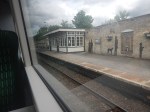
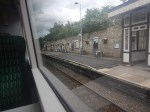
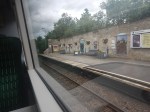



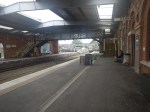
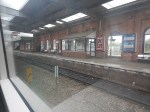
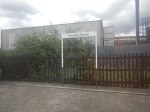
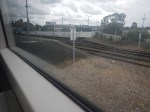
And these were taken on the way back.
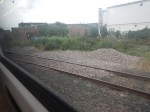
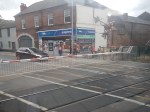


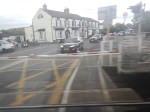

Note.
- There are around forty level crossings on the route.
- The three stations that will be used by LNER; Market Rasen, Barnetby and Grimsby Town, all appear to be in reasonable condition.
- Market Rasen has Harrington Humps.
- Barnetby station has zone markers and an amazing step-free bridge.
- The maximum speed of the line appears to be 75 mph.
The track appeared to be in good condition and the Class 170 train was rolling along at a good speed.
These are my thoughts on improving the route.
More Trains Between Lincoln And Cleethorpes
Speaking to an East Midlands Railway conductor, it was obvious she felt more trains were needed between Lincoln and Cleethorpes.
As Skegness gets an hourly train from Nottingham, I would feel, that it is not unreasonable that Cleethorpes had an hourly train from Lincoln and perhaps one train per two hours (tp2h) from Leicester, Loughborough and Nottingham.
The Leicester, Loughborough and Nottingham service is already at 1 tp2h level with a change at Grimsby Town.
The Lack Of Phone Charging On East Midlands Railways
I arrived at Lincoln station yesterday, after my trip from London, with a full battery on my phone, as LNER trains have charging points. But by the time I left Cleethorpes station to come home, my phone was dead, as I suspect the latest version of a news app, I use is a battery drainer.
There were also no charging points on TransPennine’s Class 185 trains or East Midlands Railways Class 170 trains.
Only, when I boarded a British Rail-era Class 158 train to get to Peterborough, was I able to recharge my phone.
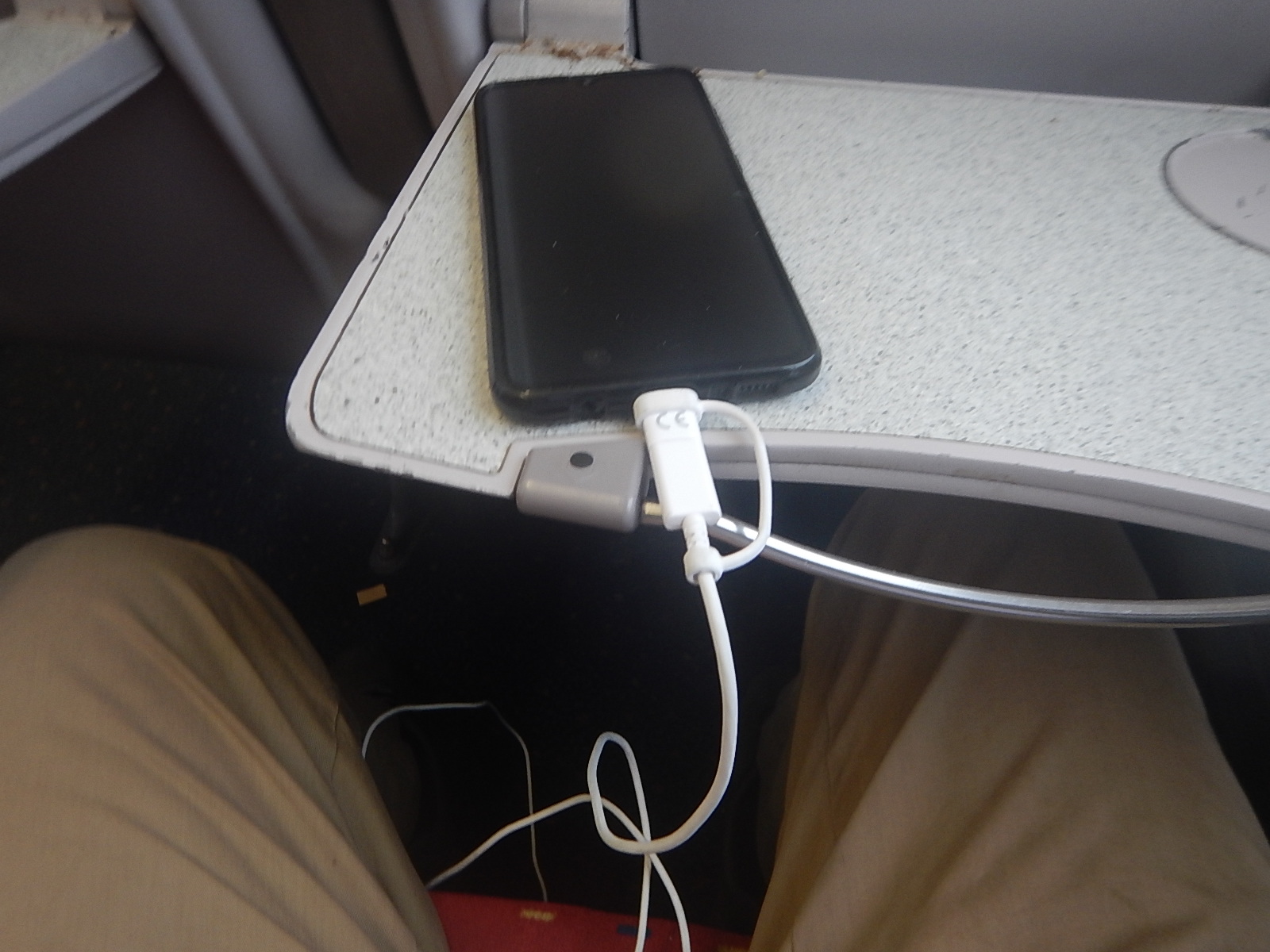
There is surely a need for phone chargers on every train.
Skegness Station To Benefit From A £3.3m Improvement Package
The title of this post, is the same as that of this article on Rail Technology Magazine.
I took these pictures of Skegness station, on a visit to the town in July last year, which I wrote about in A Trip To Skegness.
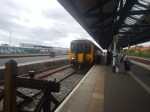





I feel that Skegness station would welcome some improvement.
The Rail Technology Magazine article says this about the project.
Upon completion of the project, customers will be able to utilise a number of enhanced facilities, including an improved accessible toilet with changing spaces, two new start-up offices, a community café and retail provisions. Upgrades will continue through improved access into the station for pedestrians and vehicles, offering integration with the surrounding community.
Work is hoped to start this year.
A Modern Zero-Carbon Train Service
If £3.3 million is going to be spent on Skegness station, would it not be a good idea to have better trains serving the station.
In A Trip To Skegness, I talked about updating the hourly Nottingham and Skegness service using Class 170 trains with Rolls-Royce MTU Hybrid PowerPacks.
I wonder if this route could be improved by fitting the Class 170 trains with Rolls-Royce MTU Hybrid PowerPacks?
- The hybrid technology would have a lower fuel consumption and allow electric operation in stations.
- The prototype hybrid is already working on Chiltern Railways in a Class 168 train.
- The Class 168 train is an earlier version of the Class 170 train and they are members of the Turbostar family.
- Rolls-Royce are developing versions of these hybrid transmissions, that will work with sustainable fuels.
- As we have a total of 207 Turbostar trainsets, these could be a convenient way of cutting carbon emissions on long rural lines.
- As Rolls-Royce MTU are also developing the technology, so their diesel engines can run on hydrogen, it is not outrageous to believe that they could be on a route to complete decarbonisation of this type of train.
I believe that we could see hydrogen-hybrid Class 170 trains, with a Rolls-Royce badge on the side.
But would it be possible to go the whole way using one of Stadler’s battery-electric trains?
Consider the service between Nottingham and Skegness.
- It is hourly.
- The route is run by 100 mph Class 170 trains.
- Nottingham and Grantham are 22.7 miles apart.
- Grantham and Skegness are 58.2 miles apart.
- Trains take four minutes to reverse at Grantham.
- Trains wait 20 minutes before returning at the two end stations.
- Trains reverse at Nottingham in a bay platform, which is numbered 2.
- Grantham is electrified.
- Nottingham station will be electrified in the next few years.
- Skegness station is next to the bus station in the middle of the town, so hopefully the electricity supply is robust enough to charge buses and trains.
Stadler make a train called an Akku.
- It is a member of the FLIRT family.
- It is a 100 mph train.
- I wrote Stadler FLIRT Akku Battery Train Demonstrates 185km Range, which means it could run between Nottingham and Skegness without intermediate charging.
This leads me to the conclusion that with charging systems at Nottingham and Skegness and taking a four-minute top-up at Grantham if needed, a FLIRT Akku could handle this route with ease.
Conclusion
Skegness is a town that needs leveling-up. A refurbished station and 100 mph electric trains to Grantham and London would be a good start.
A Trip To Skegness
Last Thursday, I took a trip to Skegness to get out of the heat.
I took these pictures on the way.












These are my observations and thoughts.
Changing At Grantham
A few minutes after getting off the LNER Azuma, the East Midlands Railway Class 156 train arrived at the opposite face of the wide platform.
Unlike some changes you get on trains in the UK, it was all rather painless and unhurried.
The change coming home was a bit slower, but there is a bar on the London platform, that serves a good selection of good beers.
Grantham To Skegness
The journey to Skegness took around an hour and a half and I arrived at 13:51.
Skegness Station
Skegness station is not the grandest, but it does have six platforms, which is probably a lot for just an hourly service from Nottingham and Grantham.
Skegness
I didn’t stay long, as it was surprisingly too cold and I hadn’t brought a coat.
Skegness To Grantham
The return trip was better, as the train was a more modern Class 170 train.
Surely, when East Midland Railways get their full quota of Class 170 trains, then the Poacher Line between Nottingham and Skegness will be one of the routes, where they will be used.
I also suspect that with 100 mph trains always running the service, as opposed to the Class 156 trains, which are only 75 mph units, there could be speed improvements on the line.
- Grantham and Skegness is 58 miles.
- There are a large number of level crossings.
An hour service between Grantham and Skegness could be possible and might generate more passengers.
Rolls-Royce MTU Hybrid PowerPacks
I wonder if this route could be improved by fitting the Class 170 trains with Rolls-Royce MTU Hybrid PowerPacks?
- The hybrid technology would have a lower fuel consumption and allow electric operation in stations.
- The prototype hybrid is already working on Chiltern Railways in a Class 168 train.
- The Class 168 train is an earlier version of the Class 170 train and they are members of the Turbostar family.
- Rolls-Royce are developing versions of these hybrid transmissions, that will work with sustainable fuels.
- As we have a total of 207 Turbostar trainsets, these could be a convenient way of cutting carbon emissions on long rural lines.
- As Rolls-Royce MTU are also developing the technology, so their diesel engines can run on hydrogen, it is not outrageous to believe that they could be on a route to complete decarbonisation of this type of train.
I believe that we could see hydrogen-hybrid Class 170 trains, with a Rolls-Royce badge on the side.
The Massive Greenhouse
I found that this was owned by Fountain Plants.
Is Lincolnshire going to grow the UK’s greens? Or at least give them a good start in life?
More greenhouses like this will enable the UK to create our carbon dioxide and eat it!
UK’s First 100mph Battery-Diesel Hybrid Train Enters Passenger Service
The title of this post, is the same as that of this article on ITV.
These are the first three paragraphs.
The UK’s first 100mph battery-diesel hybrid train is entering passenger service to cut carbon emissions and boost air quality.
It was developed by adding a powerful battery to a 20-year-old diesel train to reduce fuel consumption and CO2 emissions by 25%, according to owner Porterbrook.
The firm added that the two-carriage train, named HybridFLEX, also provides a 75% decrease in noise and a 70% decrease in nitrogen oxide.
The battery-diesel hybrid transmission is from MTU, who are a Rolls-Royce company and they go further with this press release which is entitled World Premiere: MTU Hybrid PowerPack From Rolls-Royce Enters Passenger Service.
This is the first paragraph.
Rolls-Royce, Porterbrook and Chiltern Railways are making rail history together with a climate-friendly world premiere: A hybrid diesel-battery-electric train that reduces CO2 emissions by up to 25% entered passenger service in the UK today for the first time. The so-called HybridFLEX train is powered by two mtu Hybrid PowerPacks and is operated by Chiltern Railways on the route between London Marylebone and Aylesbury. Together with the leasing company Porterbrook and Chiltern Railways, Rolls-Royce has converted a Class 168 DMU into the HybridFLEX train. The partners are proving that existing rail vehicles can be used in a climate-friendly way without the need to install complex and expensive new infrastructure. It is the world’s first regular passenger operation with mtu Hybrid PowerPacks, of which 13 have already been ordered.
This is significant for the railways of the UK.
The train that has been converted is a Class 168 train, which itself had been converted from a Class 170 train, when it transferred to Chiltern Railways in 2016.
I think this means that all Bombardier Turbostars in Classes 168, 170, 171 and 172 can probably be fitted with MTU Hybrid PowerPacks.
That is the following numbers of trains and cars.
- Class 168 – 28 trains – 86 cars
- Class 170 – 139 trains – 372 cars
- Class 171 – 20 trains – 56 cars
- Class 172 – 39 trains – 93 cars
Note.
- This totals to 226 trains and 607 cars.
- As each car has an engine, this will be an order of 607 PowerPacks, if all trains were to be converted.
This could certainly help to meet the Government’s aim of getting rid of all diesel only trains by 2040.
Can The CAF Civities Be Converted?
There are three Classes of CAF Civity diesel multiple units; 195, 196 and 197, all of which have Rolls-Royce MTU engines.
Could these be converted to hybrid operation by the swapping of the current diesel engines for MTU Hybrid PowerPacks?
I would suspect they could, as the CAF Civity trains might have been designed after MTU disclosed plans of the MTU Hybrid PowerPack to train builders prior to its announcement in September 2018.
Conclusion
MTU Hybrid PowerPacks could go a long way to eliminating diesel-only trains on UK railways. They could even run the diesels on Hydrotreated Vegetable Oil (HVO) to lower their carbon-footprint further.
Storm Arwen: Image Shows Severe Damage To Train Following Red Weather Warning
The title of this post, is the same as that of this article on the Scotsman.
It shows a dramatic picture of a Class 170 train, that was hit by a tree, that was blown onto the line.
The incident happened on the Borders Railway and luckily no-one was hurt.
 The Anonymous Widower