My First Ride In A Class 397 Train – 15th November 2023
I took these pictures during my first ride in a Class 397 train, between Wigan North Western and Liverpool Lime Street stations.
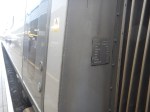
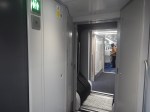
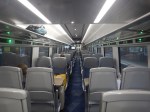
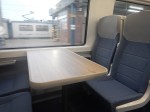
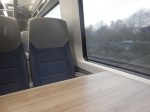
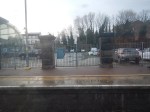
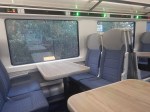
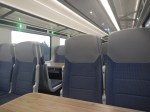
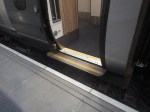
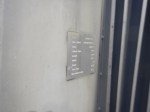
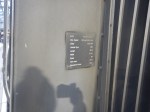
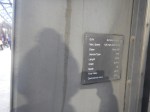
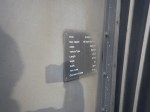
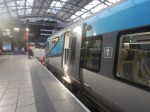
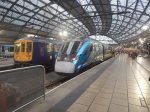
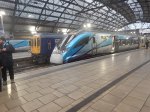
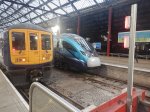
Note.
- Reading the plates, the total weight of the train is 188.4 tonnes.
- There are 268 seats.
- The ride wasn’t bad at all.
- Seats were comfortable.
Build quality was about the same as a Hitachi train.
Adding Alderley Edge And Manchester Piccadilly To The Bee Network
This article on the Railway Gazette has a list of the lines, that will be transferred between Northern Rail and the Bee Network.
Included in the list is this line.
Alderley Edge And Manchester Piccadilly
I think this route would be the following.
- The Southern terminus would be Alderley Edge.
- The Northern terminus would be Manchester Piccadilly.
- Intermediate stations would be Wilmslow, Handforth, Cheadle Hulme, Stockport, Heaton Chapel and Levenshulme.
- The route is fully electrified with 25 KVAC overhead.
- Most of the route has a range of operating speeds. up to 110 mph.
- The distance is 13.6 miles
- Trains take 29 minutes
- Trains are often three-car Class 331 trains.
The route is the same as the current Northern Trains service.
This is my thought.
Trains
As the route is fully-electrified, electric trains are needed.
Any 110 mph trains would probably be ideal, to keep out of the way of the expresses.
Reopening Of Abandoned Merseyside Railway Under Consideration
The title of this post, is the same as that of this article on New Civil Engineer.
This is the sub-heading.
St Helens Borough Council is investigating the possibility of reopening part of the abandoned St Helens and Runcorn Gap railway in Merseyside.
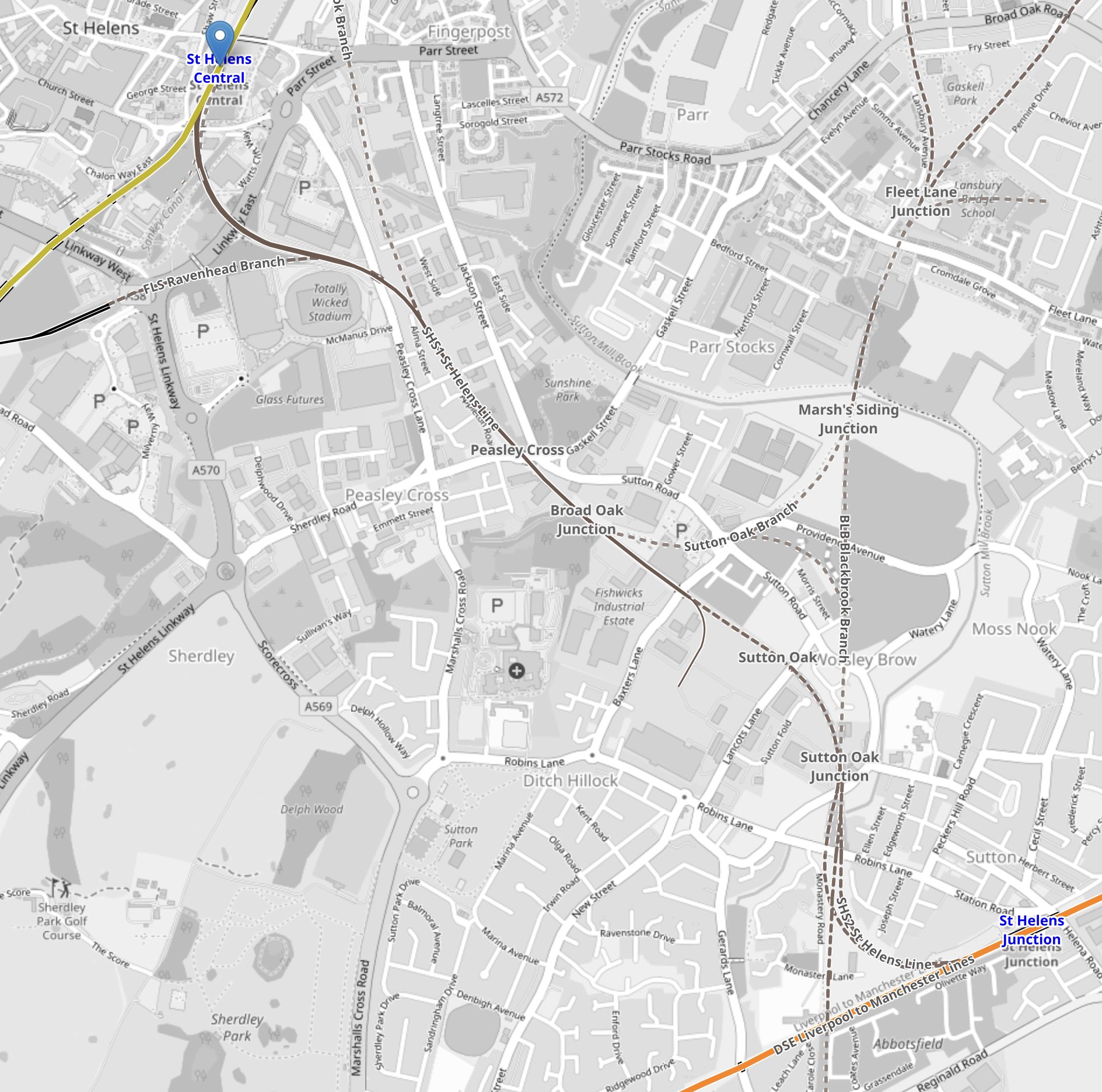
This map from OpenRailwayMap shows the section of railway that will be reopened.
Note.
- The line runs between St. Helens Central and St. Helens Junction stations.
- St. Helens Central is in the North-West corner of the map and is marked by a blue arrow.
- St. Helens Junction station is in the South-East corner of the map.
- Both stations have two tracks and two platforms.
- St. Helens Central appears to have full disabled access,
- Both stations are electrified.
- It appears, that the route is still viable, but the track is not intact.
I have a few thoughts.
St. Helens Junction Station
This Google Map shows St. Helens Junction station.

Note.
- There are two platforms.
- Platform 1 is the Northern platform and trains go East.
- Platform 2 is the Southern platform and trains go to Liverpool Lime Street.
- There appears to be a footbridge at the Eastern end.
- Trains from the new route from St. Helens Central station would approach from and leave to the South-West.
- In a typical hour, between five and eight trains per hour (tph) go through the station in both directions on the main line.
I feel that a bay platform would need to be built at the station to handle the proposed service at St. Helens Junction station. But it would be able to handle four tph.
St. Helens Central Station
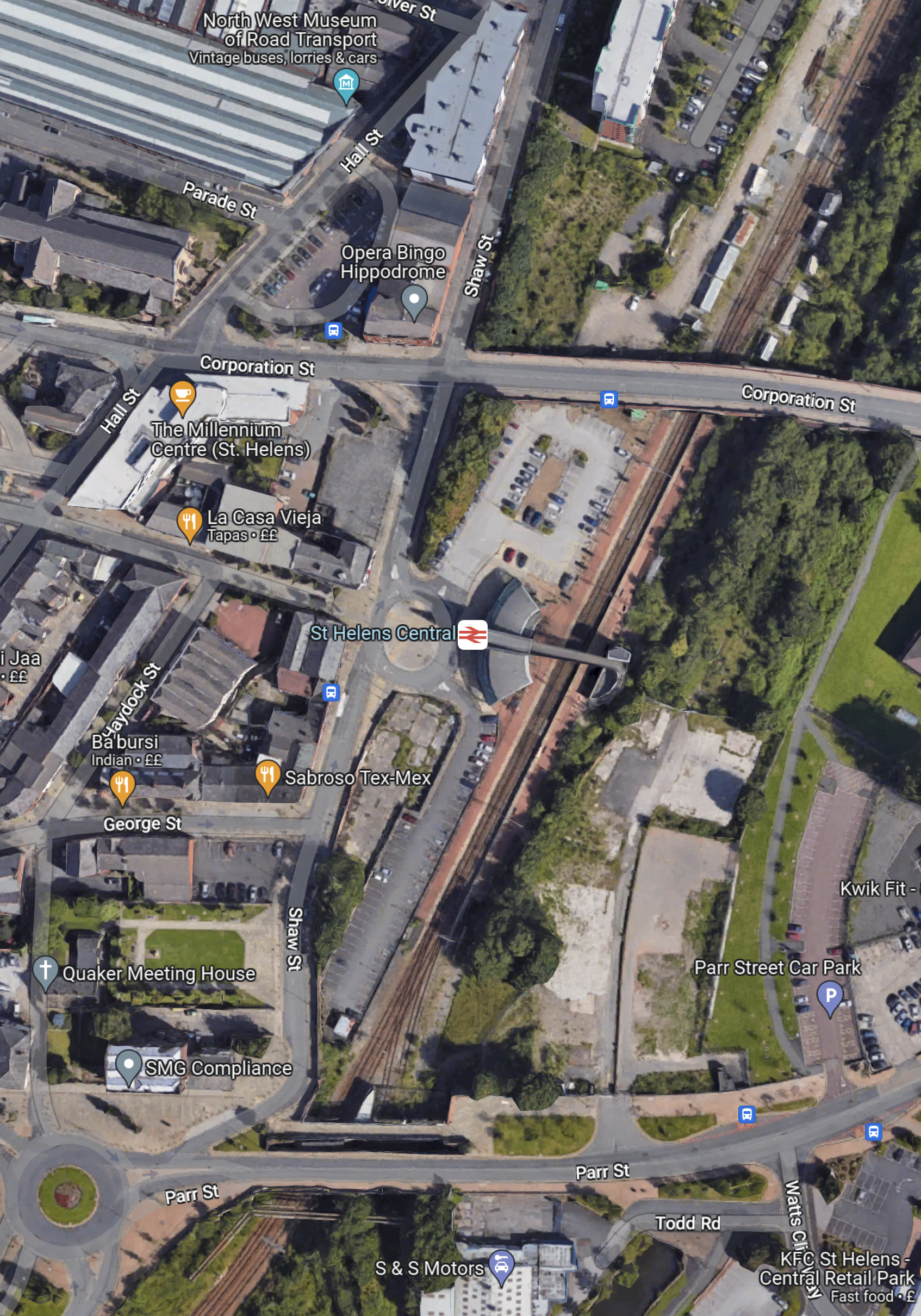
This Google Map shows St. Helens Central station.
Note.
- There are two platforms.
- Platform 1 is the Western platform and trains go to Wigan North Western.
- Platform 2 is the Eastern platform and trains go to Liverpool Lime Street.
- There appears to be a footbridge in the middle, with lifts.
- Trains from the new route from St. Helens Junction station would approach from and leave to the South-West.
- In a typical hour, between two and three tph go through the station in both directions on the main line.
It may be possible to run two tph on the route to St. Helens Junction station, by using the Southern end of Platform 2.
It would probably be able to handle two tph, by fitting in between the current services.
If a new bay platform were to be built at St. Helens Central four tph would be possible.
What Would Be The Frequency Of The Service?
Consider.
- As I said earlier, because of the current frequency of trains through St. Helens Junction station, I feel a dedicated bay platform will be needed at that station, which would probably handle four tph.
- Without building a dedicated bay platform, I doubt that St. Helens Central station could have more than two tph.
- Two tph on the new route, would fit well with the services through St. Helens Central station.
I believe that providing it gave sufficient capacity for the route, that two tph will be the frequency, as it only needs one bay platform at St. Helens Junction station to be built.
What Length Of Train Will Be Used?
As a bay platform will have to be built at St. Helens Junction station, this will probably determine the length of train.
I would build the bay platform to accept a three or four car train, as lengthening platforms is always a pain.
Looking at the map of St. Helens Junction station, I suspect that a four-car platform may be the longest possible.
What Type Of Train Should Be Used?
If you look at all the Beeching Reversal schemes, there isn’t one like this, where two electrified lines are connected by a short length of new railway, which in this case is only 3.5 km, according to the New Civil Engineer article.
Consider.
- A round trip is only 7 kilometres.
- I suspect each trip between the two stations will take no more than ten minutes.
- If the frequency is two tph, there will be plenty of time to turn a train at each end.
- All new routes opened on UK railways from now on, should have carbon-free traction.
For these reasons, I suspect that the route could be run by a battery-electric train, which is charged at one end.
Putting up a short length of overhead electrification in the new bay platform at St. Helens Junction, as the station is already electrified, would not be the most challenging of tasks.
Alternatively, the train could be charged, whilst it is waiting to return in St. Helens Central, using the existing overhead electrification.
Will There Be Any Intermediate Stations Between St. Helens Central And St. Helens Junction?
On the first map the station sites of two former stations are shown; Peasley Cross and Sutton Oak.
According to the Wikipedia entry for Sutton Oak station, there was quite an intensive service a hundred years ago.
Why shouldn’t they be rebuilt? Especially, if there are plans for housing or regeneration in the area.
Will Between St. Helens Central And St. Helens Junction Be Single Track?
This would still enable two tph, if the trains did a quick turn-round in the bay platform at St. Helens Junction.
But it would mean.
- Lower cost infrastructure.
- Simple tram-style intermediate stations.
- One train on line operation for safety.
I feel that it is highly likely the new route will be single-track.
Carr Mill Station
This map shows Merseyrail’s future plans.

Note the proposed new station at Carr Mill, which is North-East of St. Helens Central on the Liverpool and Wigan Line.
The Wikipedia entry for Carr Mill station, says this about a proposed new station.
Proposals to construct a new station to serve the expanding population have been suggested by Merseytravel but funding has yet to arrive. A new proposal to open a station was raised by Metro Mayor of the Liverpool City Region Steve Rotheram as part of his re-election plans in January 2020.
It should be noted, that a new Carr Mill station could be on the East Lancashire Road, so it might be a good place to create a Park-and-Ride station for Liverpool and St. Helens.
Perhaps if a bay platform were to be incorporated into the new Carr Mill station, it might be better to run a service between Carr Mill and St. Helens Junction.
- There would be two tph.
- Intermediate stops would be St. Helens Central, Peasley Cross and Sutton Oak.
- I estimate the distance would be about four miles of which 1.8 miles would be electrified.
- The trains would be charged on the electrified line between Carr Mill and St. Helens Central stations.
There would be no need to electrify the bay platform at St. Helens Junction
Should The Service Go All The Way To Wigan?
It must surely be a possibility to run the service between Wigan North Western and St. Helens Junction.
- There would be two tph.
- Intermediate stops would be Carr Mill, Bryn, Garswood, St. Helens Central, Peasley Cross and Sutton Oak.
- I estimate the distance would be about eleven miles of which nine miles would be electrified.
- The trains would be charged on the electrified line between Wigan North Western and St. Helens Central stations.
This would create an excellent connection to Wigan North Western for all the long distance trains to Scotland and the South.
Should The New Route Be Electrified?
Consider.
- St. Helens and Wigan North Western is a fully-electrified route.
- It is only 2.2 miles, which would probably be single track railway.
- As there is electrification at both ends of the new route, there would be no problem arranging power.
- It would remove the need for battery-electric trains.
I suspect that this is one that accountants will decide, as both battery-electric and electrification will work equally well!
What Trains Would Be Used?
If the route is electrified, any electric train of a suitable length could be used. I would argue, that the same class of train, as is used through the two St. Helens stations, should be used for operational and passenger convenience.
To maintain the operational and passenger convenience, if battery-electric trains are used, then Northern’s Class 331 trains and Merseyrail’s Class 777 trains come or will come in both electric and battery-electric versions.
Conclusion
This looks like a very sensible scheme.
Could Class 777 Trains Create A Metro Centred On Preston?
Preston station is a major station on the West Coast Main Line, that will be served by High Speed Two.
- Electric long distance services to and from Birmingham, Carlisle, Liverpool, London Euston, Manchester, Edinburgh and Glasgow serve the station.
- Electric and diesel local services fan out from the station to Barrow-in-Furness, Blackburn, Blackpool, Burnley, Colne, Liverpool, Manchester and Ormskirk.
- Other local services could be developed.
Could the local services be turned into a zero-carbon Metro centred on Preston station, that would possibly use a version of Merseyrail’s Class 777 trains?
The Routes
These routes could be part of the Metro.
Preston And Barrow-in-Furness
Consider.
- This route is 55.8 miles long.
- The service calls at Lancaster, Carnforth, Silverdale, Arnside, Grange-over-Sands, Kents Bank, Cark, Ulverston, Dalton and Roose
- The route is electrified between Preston and Carnforth.
- 28.1 miles of the route are without electrification.
Northern use Class 195 diesel trains on this route.
Preston And Blackpool North
Consider.
- This route is 17.5 miles long.
- The service calls at Kirkham & Wesham, Poulton-le-Fylde and Layton
- The route is fully-electrified.
Northern use Class 195, 319 and 331 trains on this route.
Preston And Blackpool South
Consider.
- This route is 19.9 miles long.
- The service calls at Salwick, Kirkham & Wesham, Moss Side, Lytham, Ansdell & Fairhaven, St Annes-on-the-Sea, Squires Gate and Blackpool Pleasure Beach
- The route is electrified between Preston and Kirkham & Wesham
- 12.1 miles of the route are without electrification.
Northern use diesel trains on this route.
Preston And Colne
Consider.
- This route is 29.1 miles long.
- The service calls at Lostock Hall, Bamber Bridge, Pleasington, Cherry Tree, Mill Hill, Blackburn, Rishton, Church & Oswaldtwistle, Accrington, Huncoat, Hapton, Rose Grove, Burnley Barracks, Burnley Central, Brierfield and Nelson.
- Colne is 165 metres above sea level.
- The route is not electrified.
Northern use diesel trains on this route.
This route could also be extended to Skipton in Yorkshire, which is something that was promised by Government a few years ago.
The extension to Skipton could be another 15 miles.
Preston And Fleetwood
Consider.
- This route is 20.9 miles long.
- The service could call at Salwick, Kirkham & Wesham and Poulton-le-Fylde
- The route is electrified between Preston and Poulton-le-Fylde
- This route would need to be reinstated.
6.6 miles of the route are without electrification.
Preston And Liverpool Lime Street via St. Helens
Consider.
- This route is 35.2 miles long.
- The service calls at Huyton, St Helens Central, Wigan North Western, Euxton Balshaw Lane and Leyland
- The route is fully-electrified.
Northern use Class 319 and 331 trains on this route.
Preston And Manchester Airport
Consider.
- This route is 35.2 miles long.
- The service calls at Heald Green, Manchester Piccadilly, Manchester Oxford Road, Deansgate, Salford Crescent, Bolton, Lostock, Horwich Parkway, Blackrod, Adlington (1tph), Chorley, Buckshaw Parkway and Leyland
- The route is fully-electrified.
Northern use Class 195 and 331 trains on this route.
Preston And Ormskirk
Consider.
- This route is 15.3 miles long.
- The service calls at Burscough Junction, Rufford and Croston.
- The route is not electrified.
Merseyrail have their eyes on this route.
Preston And Windermere
Consider.
- This route is 50.3 miles long.
- The service calls at Lancaster, Carnforth, Oxenholme Lake District, Kendal, Burneside and Staveley
- The route is electrified between Preston and Oxenholme Lake District.
- 10.2 miles of the route are without electrification.
Northern use Class 195 diesel trains on this route.
Class 777 Trains
Consider.
- According to Stadler’s specification for the Class 777 IPEMU, the battery-equipped Class 777 trains have a range of 55 km or 34.2 miles.
- But, according to New Merseyrail Train Runs 135km On Battery, these trains have done 135 km or 83.9 miles.
- As there is no third-rail electrification at Preston, but lots of 25 KVAC overhead electrification, the version of the Class 777 train for 25 KVAC overhead will need to be used.
- There is no way that any third-rail electrification can be installed.
One comment to my post; The Stadler Data Sheet For A Class 777 IPEMU, suggests that batteries can’t be used with the 25 KVAC variant of the Class 777 due to lack of space.
I will use a starting point for the Class 777 IPEMU, that can access 25 KVAC has a range of 40 miles, which is just under half of the demonstrated maximum range of the current trains.
Class 331 Trains With Batteries
CAF have proposed a battery-electric version of their Class 331 train.
The closely-related Class 195 diesel trains and Class 331 trains already work some of the routes through Preston.
In Thoughts On CAF’s Battery-Electric Class 331 Trains, I estimated the range of these trains and reckoned that they would be between 35 and 70 miles.
The South Wales Valley Lines Solution
In The Greening Of The Valleys, I describe how the South Wales Metro will use a mix of trains.
- Stadler Citylink tram-trains for local routes.
- Stadler FLIRTs for routes on the main lines.
So could a Metro centred on Preston be based on the same principle?
I’ll look at each line in order.
Preston And Barrow-in-Furness
Consider.
- This route is 55.8 miles long.
- 28.1 miles of the route are without electrification.
- Northern use Class 195 diesel trains on this route.
A Class 331 with a battery range of sixty miles could work this route, charging the batteries between Preston and Carnforth.
Preston And Blackpool North
Any train that could use 25 KVAC electrification could use this route.
Preston And Blackpool South
Consider.
- This route is 19.9 miles long.
- 12.1 miles of the route are without electrification.
- Northern use diesel trains on this route.
A Class 777 with a battery range of 24.2 miles could work this route, charging the batteries between Preston and Kirkham & Wesham.
Preston And Colne
Consider.
- This route is 29.1 miles long.
- Colne is 165 metres above sea level.
- The route is not electrified.
- Northern use diesel trains on this route.
A Class 777 with a battery range of 30 miles could work this route, charging the batteries at Preston and Colne.
It might be prudent to electrify the single track line between Gannow Junction and Colne, so that trains have enough power to climb the hill to Colne and reach Colne with a full battery.
The extension to Skipton would require a range of 30 miles or just fifteen miles, if the 25 KVAC at Skipton was used to recharge the trains.
Preston And Fleetwood
Consider.
- This route is 20.9 miles long.
- 6.6 miles of the route are without electrification.
A Class 777 with a battery range of 13.2 miles could work this route, charging the batteries between Preston and Poulton-le-Fylde.
Preston And Liverpool Lime Street via St. Helens
Any train that could use 25 KVAC electrification could use this route.
Preston And Manchester Airport
Any train that could use 25 KVAC electrification could use this route.
Preston And Ormskirk
Consider.
- This route is 15.3 miles long.
- The route is not electrified.
A Class 777 with a battery range of 30.6 miles could work this route.
Trains would charge on their home network.
Preston And Windermere
Consider.
- This route is 50.3 miles long.
- 10.2 miles of the route are without electrification.
- Northern use Class 195 diesel trains on this route.
A Class 331 with a battery range of 20.4 miles could work this route, charging the batteries between Preston and Oxenholme Lake District.
Electrification Between Preston and Skipton Via Colne
Earlier when discussing the service to Colne and Slopton, I said this.
It might be prudent to electrify the single track line between Gannow Junction and Colne.
But surely, as this would mean, that virtually the whole route between The West Coast Main Line at Preston and the East Coast Main Line would be electrified, it would be sensible to electrify between Preston and Gannow Junction.
If this electrification were to be made continuous, this would mean the following.
- There would be a fully-electrified line between Blackpool and Leeds, which could be worked by Class 331 trains.
- There could be a valuable diversion route to help, whilst the main transPennine routes were upgraded.
- Class 777 trains with batteries would only be needed on the Blackpool South and Fleetwood routes from Preston.
The battery range needed would be just 24.2 miles to handle the longer Blackpool South route.
What Will Happen To Northern’s Class 195 Trains?
Northern’s Class 195 trains could be a problem in the future.
- They are diesel multiple units.
- There are twenty-five two-car trains and thirty-three three-car trains.
- All cars have a Rolls-Royce MTU 6H1800R85L diesel engine, that drives the train through a ZF EcoLife 6-speed transmission.
- They are 100 mph trains, which is adequate for the routes they serve.
- According to Wikipedia, the trains are designed for a lifespan of thirty-five years, which takes the trains past the date, when it is intended that all trains should be zero-carbon.
It looks to me, that a plan will be needed to decarbonise these trains, as they are probably too new and costly to scrap.
These are possibilities to upgrade them to zero-carbon.
Rebuild as Class 331 Electric Trains
The design of the Class 195 trains is based on the same platform as that of the Class 331 trains.
I would expect that it could be possible to rebuild the Class 195 trains as Class 331 trains.
But it would be an expensive and disruptive process and would require a lot of electrification.
Some battery-electric versions could be created to cut the need for electrification.
Run The Trains On Net-Zero Hydrogenated Vegetable Oil Or Other Fuels
In Powered By HVO, I wrote about research going on into the use of Hydrogenated Vegetable Oil or HVO.
There is also ongoing research into other net-zero fuels that can be used in a diesel engine.
The process used by Velocys to create sustainable aviation fuel can also be used to produce diesel from various sources like disposable nappies, household waste and scrap wood.
Run The Trains On A Dual Fuel Basis With Hydrogen
In Grand Central DMU To Be Used For Dual-Fuel Trial, I talk about how Grand Central in collaboration with a company called G-volution are running experiments with dual-fuelling a Class 180 train. G-volution state that they could dual fuel with hydrogen using their technology.
The Class 180 trains have Cummins engines, but I suspect G-volution’s technology or something similar could be applied to the Rolls-Royce MTU engines in the Class 195 trains.
This could be a very promising route.
Convert The Diesel Engines To Run On Hydrogen
Cummins and JCB have developed internal combustion engines, that can run on hydrogen. I would be very surprised if Rolls-Royce MTU are not developing this technology.
Conclusion
There are options to convert the Class 195 trains into low or zero-carbon trains.
.
Thoughts On CAF’s Battery-Electric Class 331 Trains
I first wrote about CAF’s battery-electric trains in Northern’s Battery Plans, where I describe how CAF and Northern are planning to convert a number of three-car Class 331 trains into four-car battery-electric trains.
- The fourth car would contain batteries.
- Batteries would also be added to the PTS (pantograph) car.
I suspect that the battery range could be arranged so that all Northern’s routes suitable for battery-electric operation could be handled.
These are my thoughts.
How Much Would The Conversion Cost?
I will first make rough estimate of what the extra car would cost.
Northern placed a £500 million order for the following trains.
- 31 x three-car Class 331 trains
- 12 x four-car Class 331 trains
- 25 x two-car Class 195 trains
- 33 x three-car Class 195 trains
This is a total of 290 trains.
So on a rough estimate, each car will cost around £1.72 million.
As batteries would also be added to the pantograph car, the cost of updating a three-car train to a four-car battery-electric train would probably be around two million.
Why Are CAF Proposing A Four-Car Train With Two Battery Cars?
When I first read about CAF’s and Northern’s plans, I wondered, why CAF were also putting batteries in the pantograph car, as surely, with their extensive experience with battery-powered trains, CAF could fit enough batteries into one battery-car for a reasonable range, as Bombardier did seven years ago.
Having done all the calculations around Wigan and Bolton in Bolton-Wigan £78m Rail Electrification Project Announced, I suspect that CAF and Northern want a trans-Pennine range, so they can compete with TransPennine Express.
Two cars with batteries is probably needed for that.
Could The Three-Car Trains Be Converted To Three-Car Battery-Electric Trains?
But there is a collateral benefit of putting batteries in the pantograph car.
I suspect that in a four-car Class 331 trains have a trans-Pennine range, which between Manchester Victoria and Leeds stations is 50.2 miles and between Carlisle and Newcastle stations is 61.5 miles. So let’s say that the four-car Class 331 train with two battery packs has a range of 70 miles.
So what would be the range of a three-car train with one battery pack.
One battery pack would only take a four-car train 35 miles, so a single battery pack would contain 140 car-miles of electricity.
If a single-battery were to be fitted to the pantograph car of a three-car train, 140 car-miles would give a range of 46.7 miles.
My conclusion about the Bolton and Wigan electrification in Bolton-Wigan £78m Rail Electrification Project Announced, was as follows.
This electrification of just 6.5 miles of double-track between Lostock junction and Wigan Wallgate station seems to be one of the smaller electrification projects.
But on closer examination, when linked to a fleet of battery-electric trains with a range of perhaps forty miles, the electrification enables battery-electric trains to run these services.
- Southport And Alderley Edge
- Southport And Stalybridge
- Kirkby And Manchester Victoria
With a charging station in Blackburn station, then the Wigan Wallgate And Blackburn service can be added.
All these four services could be run by three-car battery-electric Class 331 trains. And if the services are to be run by six-car trains, a pair can be coupled up.
What Would Be The Range Of A Four-Car Battery-Electric Train With Only One Battery?
If I’m right that a four-car battery-electric Class with two batteries has a range of seventy miles across the Pennines, then a train with one battery should be able to manage 35 miles.
Conclusion
It sounds like the Spanish might have come up with a cunning plan, that might be able to convert both three- and four-car Class 331 trains to battery-electric operation.
By adding a battery to the pantograph car, this enables a four-car battery-electric train with a trans-Pennine range.
Summing up the various options gives the following ranges.
- Three-car battery-electric train with one battery pack – 46.7 miles
- Four-car battery-electric train with one battery pack – 35 miles
- Four-car battery-electric train with two battery packs – 70 miles
I’m impressed.
Will Hitachi ABB Power Grids Technology Be Used At Headbolt Lane Station?
Today, I was sent a link to the North Cheshire Rail User Group’s Newsletter for Spring 2021.
Current Progress on Merseyrail’s Class 777 Trains
This is said in the newsletter about the progress of the new Class 777 trains.
At a recent meeting of the Liverpool City Region rail user groups hosted by Liam Robinson, Chair of
Merseytravel, a short presentation was given detailing progress in bringing the new Class 777 Stadler fleet into
operation. NCRUG has been keeping a keen watch on the introduction of this new fleet; later model Class 777’s
have the ability to leave the 3rd rail and operate under battery power for 20 miles or more with a full load thus
permitting expansion of the Merseyrail network beyond its current limits.Particularly of interest in our patch is the Ellesmere Port to Helsby line, although at one point in the meeting I
did raise the concept of ultimately having a complete Merseyrail service circling the Mersey Estuary on a metro
styled basis Ambitious certainly, but unrealistic as a long-term goal? There would be considerable work required
at Liverpool south Parkway to connect the Merseyrail line to the network, however the terrain is suitably flat and
the trains will be capable. This obvious evolution of the network did seem to take the meeting by surprise.Unfortunately the much anticipated introduction of the Class 777’s has been delayed for a number of factors,
not least of all the pandemic but border issues and storage also play a part. Trails are taking place on the Kirby
and Ormskirk lines, and full introduction might not be until as late as next year. The Liverpool City Region has a
clearly defined set of (deliverable) objectives for development of the rail network and the expansion has been
prioritised with a line to Skelmersdale being top of the list and the first step of that being a new station at Headbolt
Lane, Kirby – plans are already well developed for this. It is expected to be this line where proof of concept trails
will be conducted for the battery powered 777’s, although Merseyrail does have authorisation to use Ellesmere
Port–Helsby on account of the low traffic movements on that line! Network expansion is being considered to
Widnes via Hunts Cross and possibly as far as Warrington, but when the question of Ellesmere Port–Helsby
was raised, the route, although under consideration, was not high on the priority list. I suspect it will be at least
several years away and I’m sure the delayed introduction of the type will not only come as a disappointment for
NCRUG but also the Community Rail Partnership and CWaC Council, who have funded a basic feasibility study
into possible demand. Therefore we are left with the Northern Trains service for the foreseeable future – 3 return
trains daily on the current schedule.
After reading this extract, I am puzzled. The original priority was to use the battery capabilities of the new Class 777 trains to extend the Ellesmere Port service to Helsby.
- Ellesmere Port and Helsby stations are 5.2 miles apart.
- Ellesmere Port has a two trains per hour (tph) service to Birkenhead and Liverpool.
- Ellesmere Port and Helsby stations are linked by a three trains per day (tpd) service.
Helsby station has comprehensive connections to Chester, Leeds, Liverpool, Manchester and Warrington Bank Quay station.
Two tph between Ellesmere Port and Helsby stations would certainly improve train services in the area and probably explains the disappointment shown by the writer of the newsletter.
So why have Merseyrail switched the emphasis to battery trains to Headbolt Lane and Skelmersdale from Ellesmere Port and Helsby?
Headbolt Lane Station
Headbolt Lane station is a station of an unusual design, which I wrote about in Headbolt Lane Station Fly-Through.
- Two platforms appear to face West towards Liverpool.
- One platform appears to face East towards Wigan and Manchester.
- The platforms meet head-on and a walkway runs between them to allow passengers to access all platforms.
- There appears to be provision for a fourth platform to serve Skelmersdale. which is to the East of Headbolt Lane.
I think the design means that access to all platforms is level, passengers can enter from both sides of the railway and the station doesn’t need an expensive bridge.
Between Kirkby And Headbolt Lane Stations
Headbolt Lane and Kirkby stations are a couple of miles apart at most. So were Merseyrail hoping to extend the third-rail electrification to Headbolt Lane station, but the Office of Rail and Road has more or less said that no more third-rail electrification is allowed. See ORR’s Policy On Third Rail DC Electrification Systems.
So are Merseyrail having to use battery power between Kirkby and Headbolt Lane stations?
If they are then they have the trains.
As according to the extract from the Cheshire Rail User Group’s Newsletter, the Class 777 trains have a range of twenty miles on battery power, then this should be no problem.
The Skelmersdale Shuttle
The design of Headbolt Lane station does mean that there will be no through running between Liverpool and Skelmersdale.
So it looks to me, that to allow full step-free access to all platforms, the Skelmersdale service will be a battery-electric shuttle train.
- It could also be the only train on a single-track between Headbolt Lane and Skelmersdale, which would simplify signalling and operation.
- Two tph could be possible with a single train.
- The train would be charged in either termini using an appropriate charging system.
How many other simple branch lines could be run that way or built new?
Headbolt Lane And Manchester Victoria Via Wigan Wallgate
Consider.
- The distance between Headbolt Lane and Manchester Victoria stations is just under thirty miles, which is well within range of the average battery-electric trains currently under development.
- As the current Kirkby and Manchester Victoria stations is run by Northern Trains and they are likely to be acquiring some Class 331 trains with a battery capability, these will surely be an ideal train.
- The train would be charged in the East-facing platform at Headbolt Lane station using an appropriate charging system.
Headbolt Lane station would be a diesel-free station. As incidentally, so would Kirkby and Skelmersdale stations.
Charging Trains At Headbolt Lane Station
It would appear that both East-facing platforms at Headbolt Lane station will need to charge these trains.
- A Class 777 train with a third-rail capability and the ability in the future to access overhead electrification.
- A Class 331 train with no third-rail capability and the ability to access overhead electrification.
Class 777 trains from Liverpool would hopefully have enough power in their batteries to return to Kirkby.
It would appear that a short length of 25 KVAC overhead electrification in both platforms would be ideal for charging trains to and from Manchester and Skelmersdale.
If one of Hitachi ABB Power Grids’s containerised overhead electrification power systems could handle both platforms, it would surely be ideal.
A crossover to allow Manchester and Skelmersdale trains to use either East-facing platform, might be desirable, as it could improve reliability.
Conclusion
It looks like Hitachi ABB Power Grids can provide a sensible solution to handling battery-electric trains at Headbolt Lane station. Or for that matter at any station, where battery-electric trains interface with the UK rail network.
Headbolt Lane Station Fly-Through
I had to show this Merseytravel YouTube video, as I feel the new Headbolt Lane station uses some interesting ideas.
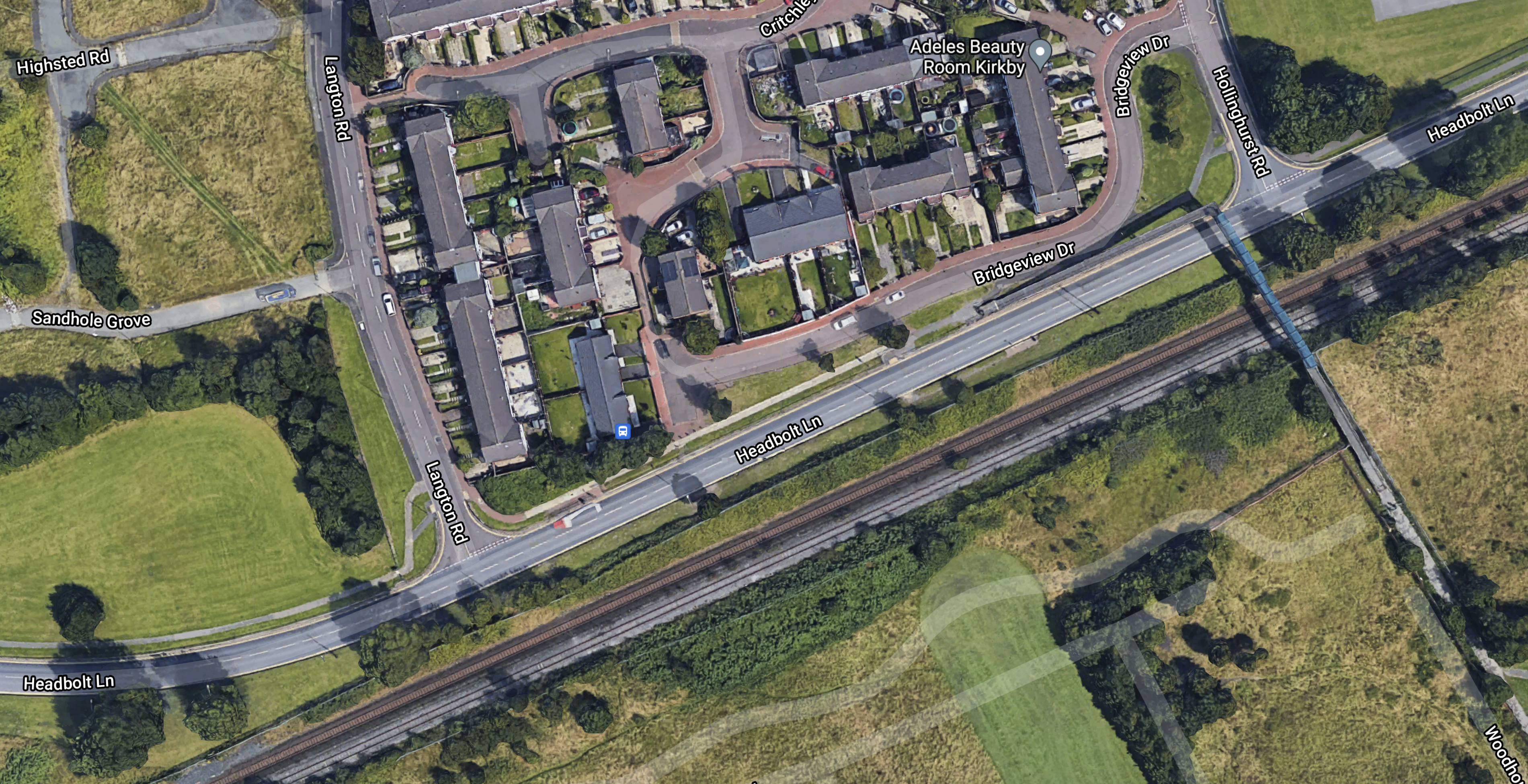
This Google Map shows Headbolt Lane and the railway.
Note.
- The footbridge over the railway. I took the pictures from and around this bridge in Merseyrail To Skelmersdale – Headbolt Lane Station.
- The footbridge can’t be seen in the YouTube video.
Liverpool is to the West and Wigan is to the East.
These are my thoughts.
Is The Station North Or South Of The Railway?
As it is called Headbolt Lane, the station must have good access from that road, otherwise travellers will get rather confused.
So until proven otherwise, I will assume that the station must be to the North of the railway.
Which Way Is Liverpool In the Video?
If the station is North of the railway, then in the first part of the video, the visualisation approaches the station from the North and Liverpool is to the right and Wigan is to the left.
If that is right, then the yellow bus always points towards Liverpool.
How Many Platforms?
Wikipedia says that Headbolt Lane station will have three platforms.
From the video there will be two platforms for trains to and from Liverpool, although the current layout at Kirkby station makes do with just one platform.
There would also appear to be a single platform for trains to and from Wigan, Bolton and Manchester.
But there is a second Eastern track shown in the video, which possibly indicates provision has been made for a second platform for services in that direction.
Wot No Bridge?
It would appear that there is no bridge over or subway under the railway.
But it does appear that the platform layout shown allows passengers to walk between the ends of the tracks on the level to the platform or platforms on the side of the station away from the station building.
Will There Be A Second Entrance To The Station On The Other Side Of The Tracks?
The layout would allow this and it could be useful for those passengers living or working on that side of the railway.
Is The Platform Layout Unique?
I have travelled widely looked at railway stations all over the world.
But I can’t remember seeing a layout like this.
The layout does have advantages.
- An expensive bridge with lifts will not be needed.
- There is nothing mechanical or electrical to go wrong.
- Extra platforms can be added if required.
- It can also be used as a simple step-free way to cross the railway.
I suspect that the layout could be used in other places.
Train Frequencies To Liverpool
The current service between Kirkby station and Liverpool is four trains per hour (tph), which is handled on a single platform.
One platform at Headbolt Lane would surely be sufficient, but a second platform must surely allow extra services and provide more resilience in case of train failure.
Train Frequencies To Wigan, Bolton And Manchester
The current service between Kirkby station and Manchester is one tph, which is handled on a single platform.
One platform at Headbolt Lane would surely be sufficient and could easily handle two tph.
Are two platforms provided for Liverpool services, so that extra services could be run in the Peak or to provide more resilience, should a train fail in the station.
A Service To Skelmersdale
Consider.
- Skelmersdale is about five miles North of the line between Headbolt Lane and Wigan.
- One of Merseyrail’s current Class 507 trains covers the 5.5 miles between Kirkby and Sandhills station in twelve minutes.
- The proposed layout of Headbolt Lane station does not allow direct services between Liverpool and Skelmersdale.
These distances and timing would mean the following.
- A single shuttle train between Headbolt Lane and Skelmersdale could run a two tph service.
- A pair of shuttle trains between Headbolt Lane and Skelmersdale could run a four tph service.
Passengers would need to change trains at Headbolt Lane station.
This may seem less passenger-friendly than a direct service, but it could be the most affordable option.
And it could always be improved with modifications at Headbolt Lane station.
Is There A Role For Battery-Electric Trains?
Consider.
- For Health and Safety reasons, it is very unlikely that any new third-rail track will be laid in the UK.
- The distance between the current Kirkby station and the new Headbolt Lane station is about 1.5 miles.
- The distance between Headbolt Lane and Skelmersdale stations is less than eight miles.
- I suspect Headbolt Lane and Skelmersdale stations would both have good power supplies.
- Merseyrail’s new Class 777 trains have a battery capability.
Would this allow the following?
- Liverpool and Headbolt Lane services to use battery power between Kirkby and Headbolt Lane station. All charging would be done between Liverpool and Kirkby.
- The shuttle train between Headbolt Lane and Skelmersdale would work on battery power, with batteries charged at both ends of the route.
There is also the possibility, that the Headbolt Lane and Manchester Victoria service could be run using battery-electric Class 331 trains.
- Headbolt Lane and Manchester Victoria will be a 28.5 mile service with a couple of miles of electrification at the Manchester end.
- I estimate that the battery-electric Class 331 trains will have sufficient range to handle this route with charging at Headbolt Lane station.
- Currently, trains from Manchester Victoria take over ten minutes to turnround at Kirkby station.
- Provision for a charger could be built into Headbolt Lane station.
It would be a simple way to electrify the Kirkby and Manchester Victoria service.
In addition, battery-electric Class 331 trains are likely to have longer battery range than the Class 777 trains.
So might it be better if the Headbolt Lane and Skelmersdale shuttle was worked by battery-electric Class 331 trains.
If the two East-facing platforms at Headbolt Lane station were to be fitted with charging facilities, this would give an increased level of reliability.
Could Northern’s Manchester Victoria Service Terminate At Skelmersdale?
If both services were to be run by Northern’s battery-electric Class 331 trains, this could be a possibility.
- A reverse would be needed at Headbolt Lane station.
- I estimate that 2tph on the route would fit together well.
- Trains would be charged at Skelmersdale station.
- Chargers might not be needed at Headbolt Lane station.
In addition, a two tph service would fit in well with four or six tph to Liverpool.
Conclusion
It’s almost as if Headbolt Lane station could consist of three elements.
- The station facilities, bus interchange and car parking.
- A two-platform station for Merseyrail services to Liverpool
- A two-platform station with charging facilities for Northern services to Blackburn, Bolton, Manchester Victoria, Skelmersdale and Wigan.
All services from Headbolt Lane station will be run by battery-electric reains.
Costs have been saved by the following.
- Not having a bridge over the tracks.
- Maintaining the separation between Northern and Merseyrail services.
- Not electrifying between Kirkby and Headbolt Lane stations.
- Not electrifying the Skelmersdale Branch.
The whole station appears to have been designed on a single level.
Battery-Electric Class 331 Trains On The Radar
In the June 2021 Edition of Modern Railways, there is an article which is entitled Northern Looks To The Future.
This is a paragraph.
Also on the radar is the creation of hybrid Class 331 EMUs fitted with batteries. A proposal has been developed by CAF and owner Eversholt Rail to augment three-car ‘331s’ with a fourth vehicle containing batteries, which would see batteries also fitted to the existing centre car. The Manchester to Windermere route has been touted as a possible location for deployment, with trains switching to battery power on the non-electrified branch from Oxenholme, although the line’s user group still favours electrification of the branch.
I have a few thoughts.
Electrification at Oxenholme
In Surprising Electrification At Oxenholme, I detailed the electrification at Oxenholme station in May 2018.
Consider.
- Platform 3 used by the Windermere trains is fully electrified.
- The crossover South of the station used by trains going between the Windermere Branch Line and the West Coast Main Line is fully electrified.
- The electrification continues for perhaps a hundred metres along the Windermere branch.
I am fairly certain, that this electrification has been designed so that a bi-mode or battery-electric train can perform a reliable power changeover in Platform 3 at Oxenholme station.
What Will Be The Range Of A Four-Car Battery-Electric Class 331 Train?
This is very much a case of how long is a piece of string.
At least we know from the extract above that the train is designed to do a return trip between Oxenholme and Windermere stations, which is a distance of 20.4 miles and a six minute turnround.
We should also note that Hitachi are claiming a range of 56 miles for their Regional Battery Train, which is described in this Hitachi infographic.

As the Class 331 with batteries will compete with the Hitachi Reional Battery Train, I would suspect that the range on easy level ground would be at least fifty miles at a speed of over 80 mph, if not 100 mph.
A Selection Of Possible Routes
These are a selection of other Northern routes where the battery-electric Class 331 trains might be used.
Manchester Airport and Barrow-in-Furness
Consider.
- This is a sibling route to the Manchester Airport and Windermere route and currently has eleven services to Windermere’s four.
- This is a 103.7 mile route.
- All but 28.1 miles is electrified.
Battery-electric Class 331 trains with a charge at Barrow-in-Furness should be able to handle this route.
Lancaster and Barrow-in-Furness
Consider.
- This is a 34.8 mile route
- All but 28.1 miles is electrified.
- Lancaster is a fully electrified station.
Battery-electric Class 331 trains with a charge at Barrow-in-Furness should be able to handle this route.
Carlisle and Barrow-in-Furness
This is the 85.7 mile route of the Cumbrian Coast Line of which none is electrified.
Consider.
- Carnforth is a fully-electrified station.
- Barrow-in-Furness station could be electrified.
- It is a fairly level route along the coast.
- I suspect that electricity supplies are available at Barrow-in-Furness, Sellafield, Whitehaven and Workington to power electrification.
- Carlisle is a fully-electrified station.
- Barrow-in-Furness and Sellafield are only 35 miles apart.
- CAF have produced trams for Birmingham and Seville, that work with discontinuous electrification.
- There are parts of the route, where there would be those, who would object to the erection of electrification gantries.
I feel it would be possible to electrify the Cumbrian Coast Line using battery-electric Class 331 trains, with a range of at least fifty miles and some short sections of new electrification.
Surely, a battery-electric train along the Cumbrian Coast by the Lake District would be the ideal train for the area
Lancaster and Morecambe
Consider.
- This is a 4 mile route.
- None is electrified.
- Heysham is another four miles past Morecambe.
- Lancaster is a fully-electrified station.
This route might have been built for battery-electric trains.
This route might be possible with no extra infrastructure.
York and Blackpool North
Consider.
- This is a 105.5 mile route.
- In a few years about 62 miles will be without electrification.
- It goes through the picturesque Calder Valley.
As with the Cumbrian Coast Line, I believe that this service could be run using battery-electric Class 331 trains, with a range of at least fifty miles and some short sections of new electrification.
Preston and Colne
Consider.
- This is a 29 mile route.
- None is electrified.
- It is steeply uphill to Colne.
Battery-electric Class 331 trains with a charge at Colne should be able to handle this route.
Alternatively, they could use Newton’s friend to return down the hill.
This route might be possible with no extra infrastructure.
As with York and Blackpool North, this route would benefit with electrification between Preston and Blackburn.
Preston and Blackpool South
Consider.
- This is a 20 mile route.
- 7.7 miles is electrified.
Battery-electric Class 331 trains should be able to handle this route.
This route might be possible with no extra infrastructure.
In an ideal world, Preston and Blackburn would be electrified and trains would run between Colne and Blackpool South, as they used to do.
Liverpool Lime Street and Manchester Airport
Consider.
- This is a 45.5 mile route,
- 26.5 miles is not electrified.
- It is fully electrified at both ends.
Battery-electric Class 331 trains should be able to handle this route.
This route might be possible with no extra infrastructure.
Liverpool Lime Street and Manchester Oxford Road
Consider.
- This is a 34.2 mile route.
- 26.5 miles is not electrified.
- It is fully electrified at both ends.
Battery-electric Class 331 trains should be able to handle this route.
This route might be possible with no extra infrastructure.
Southport and Alderley Edge
- This is a 52 mile route,
- 27 miles is not electrified.
- It is fully electrified at the Southern end.
- There is third rail electrification at Southport.
Battery-electric Class 331 trains with a charge at Southport should be able to handle this route.
Could some Class 331 be fitted with third-rail equipment to charge on Merseyrail’s third-rail electrification?
Manchester Piccadilly and Chester
Consider.
- This is a 45 mile route.
- 38 miles is not electrified.
- It is fully electrified at Manchester end.
- There is third rail electrification at Chester.
Battery-electric Class 331 trains with a charge at Chester should be able to handle this route.
Could some Class 331 be fitted with third-rail equipment to charge on Merseyrail’s third-rail electrification?
Manchester Piccadilly and Buxton
Consider.
- This is a 25.5 mile route.
- 17.8 miles is not electrified.
- It is steeply uphill to Buxton.
Battery-electric Class 331 trains with a charge at Buxton should be able to handle this route.
Alternatively, they could use Newton’s friend to return down the hill.
This route might be possible with no extra infrastructure.
Manchester Piccadilly and Rose Hill Marple
Consider.
- This is a 13.3 mile route.
- 8.3 miles is not electrified.
- It is fully electrified at Manchester end.
Battery-electric Class 331 trains should be able to handle this route.
This route might be possible with no extra infrastructure.
Manchester Piccadilly and New Mills Central
Consider.
- This is a 13 mile route.
- Only 2 miles is electrified.
- It is fully electrified at Manchester end.
Battery-electric Class 331 trains should be able to handle this route.
This route might be possible with no extra infrastructure.
Manchester Piccadilly and Sheffield
Consider.
- This is a 42 mile route.
- Only 2 miles is electrified.
- It is fully electrified at Manchester end.
- It is a scenic route.
Battery-electric Class 331 trains with a fifty mile range and a charge at Sheffield should be able to handle this route.
Southport and Stalybridge
- This is a 45 mile route.
- 27 miles is not electrified.
- It will be fully electrified at the Southern end, when electrification between Manchester Victoria and Stalybridge is completed.
- There is third rail electrification at Southport.
Battery-electric Class 331 trains with a charge at Southport should be able to handle this route.
Could some Class 331 be fitted with third-rail equipment to charge on Merseyrail’s third-rail electrification?
Manchester Victoria And Kirkby
- The Kirkby end of this route will change to the new Headbolt Lane station in a couple of years.
- This is a 30 mile route.
- 28 miles is not electrified.
- It is fully electrified at the Southern end.
- There is third rail electrification at Kirkby or Headbolt Lane.
Battery-electric Class 331 trains with a charge at Kirkby or Headbolt Lane should be able to handle this route.
Could some Class 331 be fitted with third-rail equipment to charge on Merseyrail’s third-rail electrification?
I would hope that the new Headbolt Lane station is being designed with battery-electric trains from Manchester in mind!
Rochdale And Clitheroe
Consider.
- This is a 44.7 mile route.
- There is 10.7 miles of electrification between Bolton and Manchester Victoria.
- The Clitheroe end of the route has 23.7 miles of line without electrification.
- The Rochdale end of the route has 10.4 miles of line without electrification.
- It is steeply uphill to Clitheroe.
Battery-electric Class 331 trains should be able to handle the Rochdale end, but could struggle with the climb to Clitheroe.
But it appears that all services needing to climb the hills to Colne and Clitheroe now stop in Platform 2, which is different to Wikipedia, which says that services to Clitheroe stop in Platform 1.
- With charging in platform 2 and a fifty-mile range battery-electric Class 331 trains could reach Clitheroe (9.8 miles), Colne (17 miles), and possibly Leeds (50 miles).
- With charging in platform 4 and a fifty-mile range battery-electric Class 331 trains could reach Bolton (14 miles) and Preston (12 miles)
- Would a fully-charged train leaving Blackburn be able to go via Todmorden and reach the electrification at Manchester Victoria, which is a distance of 39.4 miles?
Note.
If necessary a few well-planned extra miles of electrification would ensure reliable battery-electric services in East Lancashire centred on Blackburn.
The closely-related Blackburn and Rochdale and Blackburn and Wigan Wallgate services would fit in well with an electrified Blackburn station, that could fully charge trains.
I certainly believe that electrifying Preston and Blackburn could give extra benefits.
- Battery-electric trains between Blackpool and Liverpool in the West and Colne, Hebden Bridge, Bradford, Leeds and York in the East.
- Direct electric services from Euston to Blackburn and Burnley.
- Fast freight paths across the Pennines.
In addition, it would probably allow battery-electric trains to run to Leeds via a reinstated Skipton and Colne link.
Wigan And Leeds
Consider.
- The route can terminate at either Wigan North Western or Wigan Wallgate station.
- This is a 68.2 mile route using Wigan North Western.
- Wigan North Western is a fully-electrified station.
- The 16 miles between Wigan North Western and Salford Crescent stations is not electrified.
- The 5 miles between Salford Crescent and Manchester Victoria stations is electrified.
- The 37.2 miles between Manchester Victoria and Mirfield stations is not electrified.
- The 12.2 miles between Mirfield and Leeds will be electrified in the next few years.
- Leeds is a fully-electrified station.
Battery-electric Class 331 trains with a fifty mile range should be able to handle this route.
Chester And Leeds
Consider.
- This is a 89.7 mile route.
- There is third rail electrification at Chester.
- The 18.1 miles between Chester and Warrington Bank Quay stations is not electrified.
- The 21.8 miles between Warrington Bank Quay and Manchester Victoria stations is electrified.
- The 40.3 miles between Manchester Victoria and Bradford Interchange stations is not electrified.
- The 9.4 miles between Bradford Interchange and Leeds stations is not electrified.
- Leeds is a fully-electrified station.
- There seems to be generous turnround times at Chester and Leeds.
It looks to me that the trains are going to need a full battery charge at Bradford Interchange or perhaps Leeds and Bradford Interchange needs to be fully electrified.
I also feel that it would help if the electrification through Manchester Victoria were to be extended towards Rochdale.
But I don’t think it will be impossible for battery-electric Class 331 trains to work the route between Leeds and Chester with some new electrification and/or charging at Bradford Interchange.
Manchester Victoria And Leeds
Consider.
- This is a shortened version of the Chester and Leeds route.
- This is a 49.8 mile route.
- Manchester Victoria is a fully-electrified station.
- The 40.3 miles between Manchester Victoria and Bradford Interchange stations is not electrified.
- The 9.4 miles between Bradford Interchange and Leeds stations is not electrified.
- Leeds is a fully-electrified station.
My comments would be similar to the Chester and Leeds route.
Leeds And York Via Harrogate And Knaresborough
Consider.
- This is a 38.8 mile route.
- Leeds is a fully-electrified station.
- The Harrogate Line is not electrified.
- York is a fully-electrified station.
Battery-electric Class 331 trains with a fifty mile range should be able to handle this route.
There are two other services on the Harrogate Line.
- Leeds and Harrogate – 18.3 miles
- Leeds and Knaresborough – 22.1 miles
I have a feeling that a fleet of battery-electric trains could electrify all services on the Harrogate Line with no extra infrastructure.
Summing Up The Possible Routes
I have assumed that the proposed battery-electric Class 331 train has a range of around fifty miles, which is not unlike that for the Hitachi Regional Battery Train.
It would appear that many of Northern’s routes can be run by a train with this range including some that are around a hundred miles.
There are also routes like the Harrogate Line, which would accept a battery-electric Class 331 train tomorrow, if it were available.
Will A Mix Of Four-Car Electric And Battery-Electric Trains Be Better Than A Mix Of Four-Car And Three-Car Electric Trains?
If the technology is right, I suspect that a four-car battery-electric Class 331 train will be able to substitute for one without batteries on a route that doesn’t need battery power.
This must surely have advantages when trains are in maintenance or otherwise unavailable, as nothing annoys passengers more than an overcrowded train.
Conclusion
The Modern Railways article also says this.
More widely, Northern has previously stated ambitions to acquire more trains, and work was underway last year to identify what this requirement might be.
From my simple analysis on some of their routes, I would look to acquire some four-car battery-electric Class 331 trains, once they have been oroven to work.
WYCA To Discuss Latest Plans For £24.2m White Rose Rail Station
The title of this post, is the same as that of this article on Rail Technology Magazine.
I briefly commented on this proposed station in Is There Going To Be Full Electrification Between Leeds And Huddersfield?, where I said this.
White Rose Station
There are plans to build a new White Rose station in the next couple of years at the White Rose Centre..
This would be between Morley and Cottingley stations.
This station will surely increase the passenger numbers on the Huddersfield Line.
This Google Map shows the White Rose Centre.
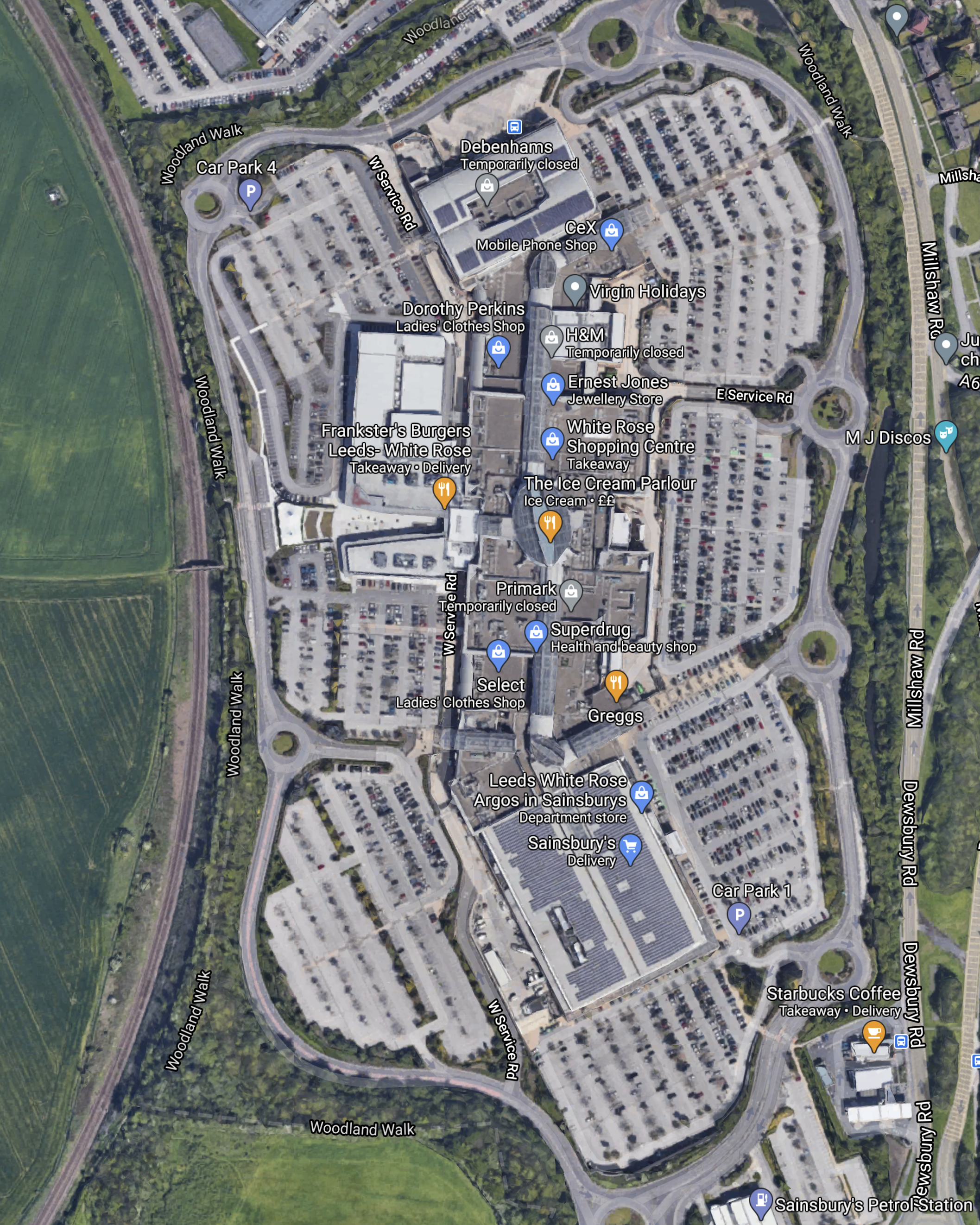
The Huddersfield Line runs North-South alongside the Centre and there must be plenty of space for a new White Rose station.
From Wikipedia and other sources, the following seems to be on the agenda for the station.
- Two platforms.
- Ability to take six-car trains, with a possibility to extend to eight-cars.
- Two trains per hour (tph) in both directions.
- Up to 340,000 passengers per year.
These are my thoughts.
Will White Rose Station Be Electrified?
The Rail Technology Magazine article has a visualisation of the new White Road station and very swish it looks too!
But it doesn’t show any electrification through the station.
This document on the Network Rail web site is entitled Overhead Line Electrification – Huddersfield to Westtown (Dewsbury).
This is the first paragraph.
We’re proposing to electrify the railway between Huddersfield and Westtown (Dewsbury) – and right through to Leeds.
This will enable train operators to use electric – or bi-mode (hybrid) trains – along this section of the route.
I am pretty certain, this paragraph can be interpreted, as saying that Leeds and Huddersfield will be connected by a fully-electrified railway.
This Google Map shows the current Ravensthorpe station, where the line to and from Wakefield joins the Huddersfield and Leeds Line.
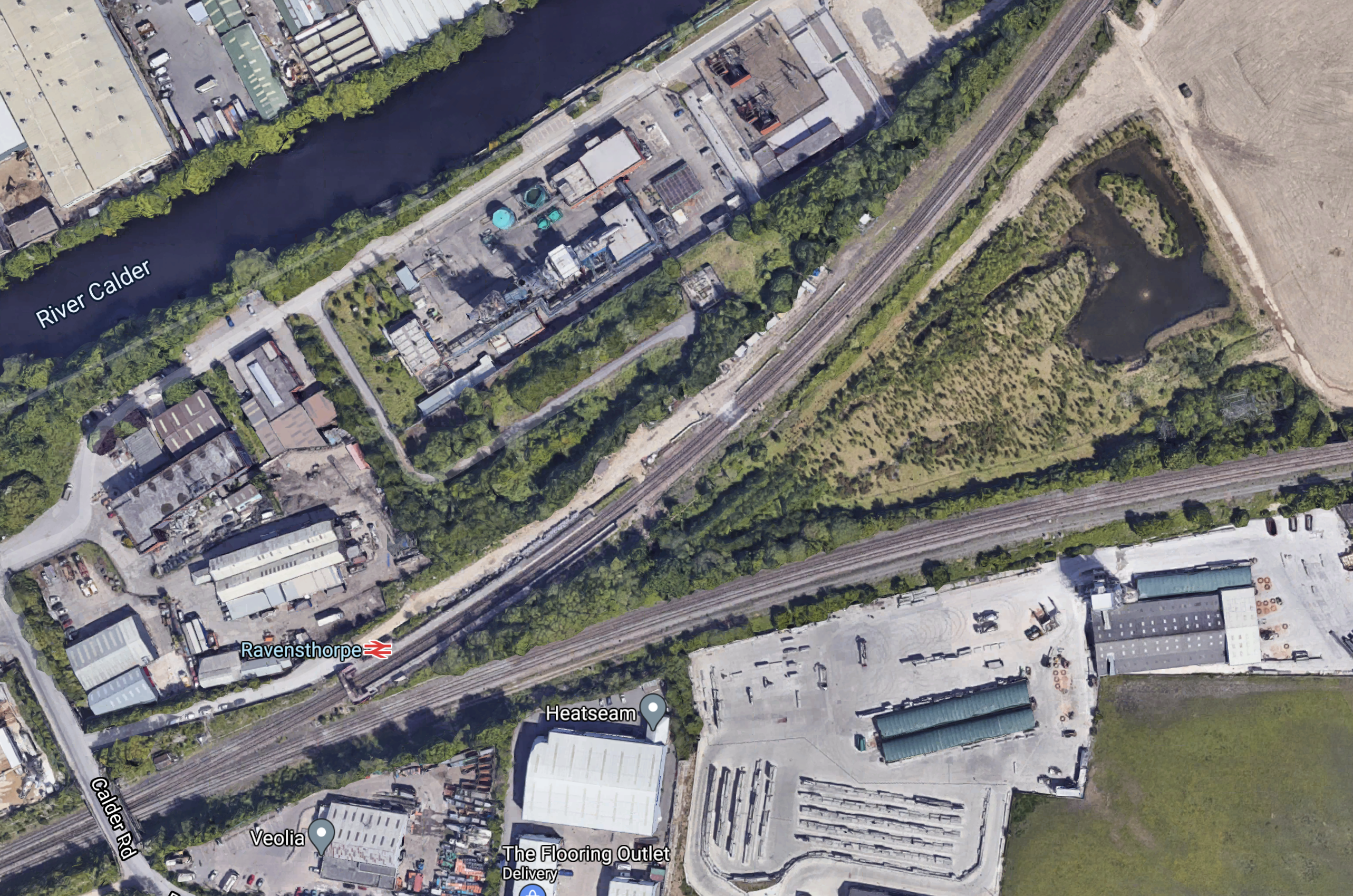
This document on the Network Rail web site is entitled Scheme Proposals – Huddersfield to Westtown (Dewsbury).
It indicates that the triangle of land between the two lines will be used for a sub-station to provide power for the electrification.
It says this.
We propose to build an electricity substation within the Ravensthorpe and Westtown area, to provide power for the electrification of the railway (known as traction power). To facilitate this work, a temporary construction compound which will provide essential welfare facilities for staff will be established in an area of land occupying the current landfill site to the east of Ravensthorpe Station. Access to the facilities will be made via Forge Lane or the existing Thornhill Power Station access road. In addition, Northern Powergrid will be undertaking extensive works to their overhead network within the Ravensthorpe area.
This looks like a convenient place to build a sub-station.
- Northern Powergrid would be able to combine one of their projects, with one for Network Rail.
- It looks like the location of the sub-station gives both good road and rail access.
It would also be ideal to provide power to the line to Wakefield Kirkgate station, which is only ten miles away.
Services At White Rose Station
Currently, the following services would appear to go through the site of White Rose station.
- Northern Trains – Wigan Wallgate and Leeds
- TransPennine Express – Huddersfield and Leeds
- TransPennine Express – Liverpool Lime Street and Edinburgh
- TransPennine Express – Liverpool Lime Street and Scarborough
- TransPennine Express – Manchester Airport and Newcastle
- TransPennine Express – Manchester Airport and Redcar Central
- TransPennine Express – Manchester Piccadilly and Hull
Note.
- All services are one tph.
- The first two services are stopping services, that stop at the two stations, that will be either side of White Rose station; Cottingley and Morley.
- Dewsbury station, which will be three stations away, has a service of three tph.
There may also be an LNER service between London and Huddersfield via Leeds, which might go through White Rose station.
When sources like Wikipedia, say the station will get two tph, they are probably basing this on the two stopping services.
Does White Rose Station Need A Direct Manchester Airport Service?
I think if the station becomes important, it will certainly need a direct service to Manchester Airport.
If one of TransPennine’s Manchester Airport services stopped at White Rose station it would give a direct fast hourly service to Manchester Airport.
- It would take about eighty minutes on current timings.
- In addition the service would call at Manchester Piccadilly, Leeds and York.
In my view it would be a very useful service.
Does White Rose Station Need A Direct London Service?
The reasoning for Manchester Airport, would probably apply to London.
Consider.
- Leeds currently has a two tph LNER service to London.
- I believe that LNER’s Leeds and London service could be uprated to three tph.
- Huddersfield should be getting a daily service or perhaps better to London.
- White Rose station is only planned to have a two tph service to Leeds.
I think there is scope to improve the service between White Rose and London.
- Stopping services between Leeds and Huddersfield should connect conveniently with the London trains at Leeds.
- If a third tph between Leeds and Huddersfield stopped at White Rose, that might help.
- Perhaps, some or all services between Huddersfield and London, should stop at White Rose.
It would all depend on the needs of passengers, once the station opened.
White Rose Station And Elland Road Stadium
This Google Map shows the distance between the White Rose Centre and Elland Road stadium.

Note.
- Elland Road stadium is in the North-East of the map
- The White Rose Shopping Centre is towards the South of the map.
- The Huddersfield Line runs down the Western side of the White Rose shopping centre.
- Cottingley station in North-West corner of the map is the nearest station to Elland Road stadium.
- I estimate it is about a mile-and-a-half walk, which is typical for many football grounds.
Would it be sensible on match days to run longer trains to White Rose station?
I also feel, that thought be given to the walking route between White Rose Station and Elland Road Stadium.
Would it also be better, if the new station was towards the North of the shopping centre?
Platform Length At White Rose Station
Platform length at White Rose station is stated that it will initially take six-car trains, with a possibility to extend to eight-cars.
Consider the lengths of trains likely to call at White Rose station.
- Three-car Class 185 trains are 71.3 metres.
- Three-car Class 195 trains are 71.4 metres.
- Three-car Class 331 trains are 71.4 metres.
- Four-car Class 331 trains are 94.5 metres.
- Five-car Class 802 trains are 130 metres.
- A Class 68 locomotive and five Mark 5 coaches are 131 metres
To handle pairs of three-car Class 185, Class 195 and Class 331 trains, it looks like 150 metre long platforms will be needed.
But to handle pairs of four-car Class 195 and Class 331 trains, it looks like 200 metre long platforms will be needed.
I suspect that because of the proximity of Elland Road and there is a lot of shopping in the build up to Christmas, that a thorough analysis of platform length should be done, before White Rose station is built.
Will A Cross-Leeds Service Serve White Rose Station?
If you look at Birmingham, Cardiff, Glasgow, Liverpool, London, Manchester and Newcastle, suburban lines fan out all around the city.
If you look at Leeds, you find the following routes.
- Bradford – West – Electrified
- Harrogate -North – No Electrification
- Dewsbury and Huddersfield – South-West – Electrification planned
- Ilkley – North – Electrified
- Skipton – North-West – Electrified
- Wakefield – South-East – Electrified
- York and Selby – North-East and East – No Electrification
It appears to me, that the suburban routes are better on the Western side of the City, with more electrification in operation or planned.
The planned electrification between Leeds and Huddersfield via White Rose station can only make matters more uneven.
The Rail Technology Magazine article also says this.
The Investment Committee will also consider plans for a new £31.9m parkway rail station at Thorpe Park on the Leeds to York section of the Transpennine route.
Wikipedia says that proposed Thorpe Park station, will be built on the Selby Line to the East of Leeds, in the Thorpe Park are of the city. Wikipedia also says this about the operation of the station.
It would be served by trains from the west of Leeds which would normally terminate at Leeds station; by continuing eastwards to this station, it is hoped that extra capacity for through trains would be created at Leeds. The station would also form the first phase of electrifying the railway line to the east of Leeds. As a parkway station (an early name was East Leeds Parkway), the intention would be to allow for a park-and-ride service and the plans include parking for 500 cars.
This Google Map shows the area where the station could be built.

Note.
- The Selby Line curving across the Northern side of the map.
- Cross Gates station is the next station to the West.
- Going East on the Selby Line, you pass through Garforth, East Garforth and Micklefield stations before the line divides for York to the North and Selby and Hull to the East.
- The M1 Motorway passing to the East of Leeds.
Other features of the proposed station and the area include.
- Wikipedia says that the station will have two island platforms and the ability to handle inter-city trains.
- The route through the station would be electrified.
- High Speed Two could be routed to go close to the station.
Currently, the following services would appear to go through the site of Thorpe Park station.
- CrossCountry – Plymouth and Edinburgh/Glasgow
- LNER – Leeds and Edinburgh
- Northern Trains – Blackpool North and York
- Northern Trains – Halifax and Hull
- Northern Trains – Leeds and York
- TransPennine Express – Liverpool Lime Street and Edinburgh
- TransPennine Express – Liverpool Lime Street and Scarborough
- TransPennine Express – Manchester Airport and Newcastle
- TransPennine Express – Manchester Airport and Redcar Central
- TransPennine Express – Manchester Piccadilly and Hull
Note.
- Most of these trains are one tph.
- I believe that LNER, when they get extra paths on the East Coast Main Line, could run a London, Leeds and Edinburgh service to increase frequency to the two Northern destinations to three tph.
- All the TransPennine Express services will pass through White Rose, Leeds and Thorpe Park stations.
I can see a high-capacity Leeds Crossrail service emerging.
These could be some example frequencies.
- Leeds and York – 6 tph
- Leeds and Thorpe Park – 10 tph
- Leeds and Hull – 2 tph
- Leeds and Huddersfield – 6 tph
- Leeds and Manchester Victoria/Piccadilly – 6 tph
- Leeds and Manchester Airport – 2 tph
- Leeds and White Rose – 4 tph
A four-track electrified route could be developed through Leeds station.
Are Two Platforms Enough At White Rose Station?
Superficially White Rose and Thorpe Park stations seem aimed at similar purposes in different parts of Leeds.
But White Rose station will only have two platforms and it appears that Thorpe Park could have four.
So does White Rose station need more platforms?
Conclusion
White Rose and Thorpe Park stations could be the start of something very big in Leeds.
 The Anonymous Widower