Should Improvement Needed For High Speed Two On The East And West Coast Main Lines Be Given High Priority?
High Speed Two will bring major improvements in times between London and the North of England and Scotland, with these figures claimed by this page on the High Speed Two web site.
- London Euston and Carlisle – 2 hours and 23 minutes saving 54 minutes
- London Euston and Darlington – 1 hours and 50 minutes saving 32 minutes
- London Euston and Durham – 2 hours and 16 minutes saving 37 minutes
- London Euston and Edinburgh – 3 hours and 48 minutes saving 31 minutes
- London Euston and Glasgow – 3 hours and 40 minutes saving 49 minutes
- London Euston and Lockerbie – 2 hours and 55 minutes saving 43 minutes
- London Euston and Newcastle – 2 hours and 17 minutes saving 32 minutes
Substantial savings would seem to be possible.
The Recent Record Run On The West Coast Main Line
A few weeks ago, Avanti West Coast ran a Class 390 train between London Euston and Glasgow in three hours and 53 minutes and 1 second. They were trying to beat the record set by the \APT-P in 1984 of three hours and 52 minutes and 40 seconds.
In Lessons From The Record Run in the August 2021 Edition of Modern Railways, Roger Ford makes a big hint in a section called Hint.
Roger starts with this paragraph.
In the virtual race with APT-P, the Pendolino was seven minutes ahead approaching the border, but this was not sufficient to overcome APT-P’s advantage of being able to run faster over lines which, unlike the southern end of the WCML, have not enjoyed the increased speeds further south, such as at Stafford and Crewe.
He then talks of a levelling-up of the infrastructure being needed on the Northern section of the West Coast Main Line.
Roger finishes the section with this paragraph.
Thus, the final message of the run is that if HS2 is to realise its full potential, planning for the West Coast Route Modernisation (North) needs to start now, both for journey time reductions and reliability.
The High Speed Two time between Preston and Glasgow of two hours and 26 minutes, given by their journey time calculator is in line with current timings.
I am drawn to the following conclusions about services between Preston and Glasgow.
- I suspect the similar times could be expected, as the trains will have to cope with other trains on the route.
- Most of High Speed Two’s savings must be on the new track to the South of Wigan.
It would appear that any savings made between Preston and Scotland will benefit both classic and high speed services.
I certainly agree with Roger’s hint to start planning the upgrade of the Northern section of the West Coast Main Line.
This would surely enable upgrade of the route to start sooner and places at the North of the route would benefit from faster journey times to the South before High Speed Two is complete.
Reducing The Journey Times On The West Coast Main Line
If you look at the average speed between Preston and Glasgow of a typical train, it is just 84.3 mph.
Various average speeds give the following times between Preston and Glasgow.
- 90 mph – two hours and 8 minutes
- 100 mph – one hour and 55 minutes
- 110 mph – one hour and 45 minutes
It would appear there is scope for reductions in journey times to be made.
I have flown my virtual helicopter along the Scottish part of the route and it doesn’t look to be too terrifying.
- There are tight speed limits at Preston and Carlisle
- The railway is not hemmed in by development until close to Glasgow.
- Most of the modern bridges, where the M74 crosses the railway appear to have space for an extra track.
- Connection of the Borders Railway to the West Coast Main Line could give scope for improvement between Gretna junction and Carlisle.
- The depot at Annandale, that I wrote about in High Speed Two To Build Stabling Facility In Scotland, may give scope for a shorter, straighter and faster route between Grena Green and Kirkpatrick-Fleming, that could run closer to the M74.
- North of Lockerbie, there may be scope to put extra tracks between the railway and the M74.
- The Carstairs area could be ripe for improvement.
I would feel that digital signalling and some well-applied engineering could cut a sensible amount of time from Preston and Glasgow timings.
- I can certainly say, that the route is not a desert, where possible improvements will be difficult to find.
- I also don’t feel there are any obvious improvements, that will be controversial.
There is also the M74, which could be invaluable for camouflaging the railway.
Reducing The Journey Times On The East Coast Main Line
Much of the work to speed up the Northern section of the East Coast Main Line is laid out in Northern Powerhouse Rail – Significant Upgrades Of The East Coast Main Line From Leeds To Newcastle (Via York And Darlington) And Restoration Of The Leamside Line, a post I wrote to explain what Northern Powerhouse Rail feel is urgently needed.
Mentioned in the other post are following projects.
- Full Digital Signalling
- Phase 2 Of The East Coast Main Line Power Supply Upgrade
- York to Church Fenton Improvement Scheme
- Darlington Station Remodelling
- The North Throat Of York Station Including Skelton Bridge Junction
- Use Of The Leamside Line
As with the West Coast Main Line, the improvements would benefit both classic and High Speed services.
Conclusion
Improvements to both the East and West Coast Main Lines will help both classic and High Speed services between London and the North of England and Scotland.
I think that planning and design should be started as soon as possible.
Construction should start as early as possible, so that the benefits of faster trains are felt at the earliest date possible.
London To Glasgow Train Journey Record Bid Fails By Just 21 Seconds
The title of this post, is the same as that of this article on ITV.com.
These are the first three paragraphs.
An attempt to break the 36-year-old record for the fastest train journey between London and Glasgow has failed.
Avanti West Coast’s Royal Scot train arrived at Glasgow Central 21 seconds behind the record of three hours, 52 minutes and 40 seconds set by British Rail in December 1984, according to rail expert Mark Smith, who was onboard.
Mr Smith, founder of Seat61.com, wrote on Twitter that a temporary speed limit on the track in Carstairs, South Lanarkshire, “cost us 90 seconds”.
It appears to be a valiant attempt that failed by a small margin.
I have a few thoughts.
The Trains
The British Rail 1984 record was set by an Advanced Passenger Train (APT) and today’s run was by a nine-car Class 390 train.
- The design speed of the APT was 155 mph and that of a Class 390 train is 140 mph.
- Service speed of both trains was and is 125 mph.
- Record speed of the APT was 162 mph and that of a Class 390 train is 145 mph.
- Both trains employ similar tilt technology to go faster.
At a brief look the performance of these two trains is very similar.
The InterCity 225
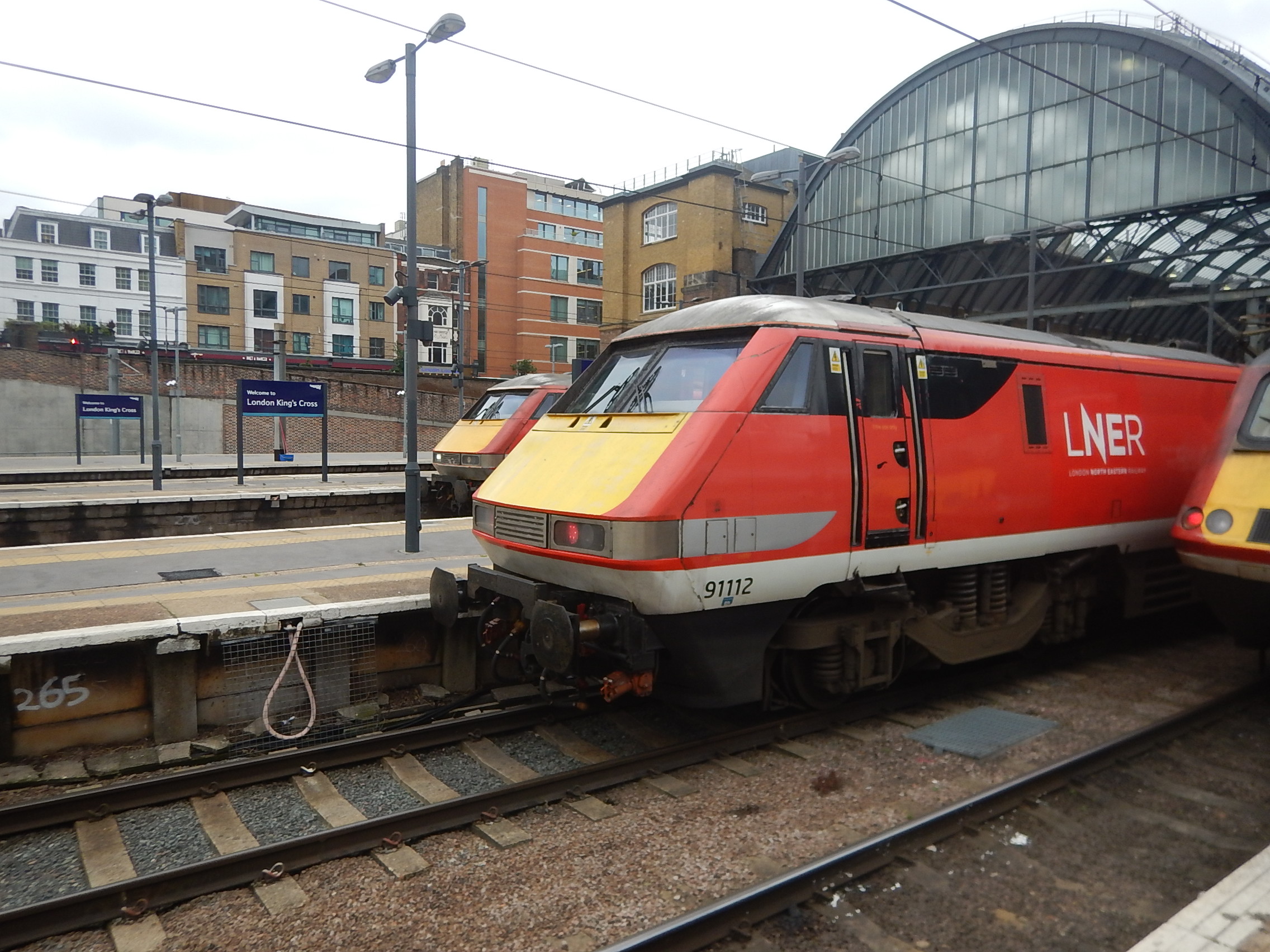
The InterCity 225 train is the ringer in this race to the North.
- The design speed is 140 mph.
- The service speed is 125 mph
- The record speed of an InterCity 225 is 161.7 mph.
- The train doesn’t use tilting technology.
- The train was built after the APT around 1990.
- The train holds the record between London Kings Cross and Edinburgh at thirty seconds under three-and-a-half hours.
- To rub things in, one of these trains, even holds the London Euston and Manchester Piccadilly record.
But there can’t be much wrong with the InterCity 225 trains as a few are being brought back into service, whilst LNER are waiting for ten new bi-mode trains to be delivered.
Hitachi Class 80x Trains

The various variants of Class 800 trains run to Edinburgh and I’m sure they will run to Glasgow.
- The design speed is 140 mph.
- The service speed is 125 mph
If an InterCity 225 can go between Edinburgh and London in around three-and-a-half hours, I can’t see why these trains can’t.
Especially, as Hitachi seem to be able to produce versions like the Class 803 and Class 807 trains, which appear to be lighter and more efficient, as they don’t have any diesel engines.
A Small Margin
I said earlier that it was only a small margin between the times of the APT and the Class 390 train. But why was the InterCity 225 able to run between Kings Cross and Edinburgh at thirty seconds under three-and-a-half hours?
This section in the Wikipedia entry for the Class 91 locomotive is entitled Speed Record. This is the first paragraph.
A Class 91, 91010 (now 91110), holds the British locomotive speed record at 161.7 mph (260.2 km/h), set on 17 September 1989, just south of Little Bytham on a test run down Stoke Bank with the DVT leading. Although Class 370s, Class 373s and Class 374s have run faster, all are EMUs which means that the Electra is officially the fastest locomotive in Britain. Another loco (91031, now 91131), hauling five Mk4s and a DVT on a test run, ran between London King’s Cross and Edinburgh Waverley in 3 hours, 29 minutes and 30 seconds on 26 September 1991. This is still the current record. The set covered the route in an average speed of 112.5 mph (181.1 km/h) and reached the full 140 mph (225 km/h) several times during the run.
It looks from the last sentence of this extract, that the record run of the InterCity 225 train ran up to 140 mph in places, whereas the record run of the APT and today’s run by a Class 390 train were limited to 125 mph.
The Signalling
In the Wikipedia entry for the InterCity 225 train, the following is said.
Thus, except on High Speed 1, which is equipped with cab signalling, British signalling does not allow any train, including the InterCity 225, to exceed 125 mph (201 km/h) in regular service, due to the impracticality of correctly observing lineside signals at high speed.
Note.
- I have regularly flown my Cessna 340 safely at altitude, with a ground speed of around two hundred miles per hour.
- High Speed One has an operating speed of 186 mph.
- Grant Schapps, who is Secretary of State for Transport has a pilot’s licence. So he would understand flight instruments and avionics.
So why hasn’t a system been developed in the thirty years since trains capable of running at 140 mph started running in the UK, to allow them to do it?
It is a ridiculous situation.
We are installing full digital ERTMS in-cab signalling on the East Coast Main Line, but surely a system based on aviation technology could be developed until ERTMS is ready. Or we could install the same system as on High Speed One.
After all, all we need is a system, to make sure the drivers don’t misread the signals.
But then the EU says that all member nations must use ERTMS signalling.
Didn’t we just leave the EU?
Conclusion
By developing our own in-cab digital signalling we could run trains between London and Scotland in around three-and-a-half hours.
The Japanese could even have an off-the-shelf system!
ERTMS sounds like a closed shop to give work to big European companies, who have lobbied the European Commission.
Hitachi Class 800 Train Or Pendelino?
I have had several day trips on hot days on Hitachi Class 800 trains or similar since the pandemic started to places like Bristol, Cardiff, Doncaster, Grantham, Hull and Westbury.
I’ve done a couple of trips in Pendelinos or Class 390 trains to Birmingham and Liverpool.
In addition, I’ve taken a couple of trips on other trains to Corby, Ipswich, Sheffield and Southampton.
It must have been sometime in 2018, when I took one of the first Pendelinos to Blackpool after that station was first electrified.
It was a journey on which I first noticed being unwell on a Pendelino. I travelled in First and remember complaining to the steward and said that some taff didn’t like the trains after their recent air-conditioning upgrade.
Perhaps, Virgin Trains chose a system that would be cheaper to run and it is not on a par with the quality systems used by Bombardier and Hitachi?
I have been testing the atmosphere in trains like a Class 345, 378 or 800 and the temperature is usually 25-26 °C and a humidity around 40-60 %. I haven’t tested a Pendolino yet!
I must say, I’ve never ended up in hospital after a trip out of London, except after a recent trip on a Pendelino to Birmingham, that I wrote about in A Mysterious Attack On My Body.
In that post, I also said this about the Pendelinos.
I had travelled between Euston and Wolverhampton on my least favourite trains – Alstom’s Class 390 trains.
-
- The seats don’t align well with the windows.
- The trains are cramped because of all the tilting mechanism.
These trains must a nightmare for anybody taller than my 1.70 metres or heavier than my sixty-two kilos.
But the biggest problem of these Pendolino trains is that Alstom updated the air-conditioning a few years ago for Virgin a few years ago and I find the air inside too dry.
So in future, I won’t be travelling on a Pendelino, unless I travel in First!
I also can’t wait until Avanti West Coast get new Hitachi Class 807 trains on the Euston and Liverpool route!
London Euston Cat-Astrophe Averted For Train-Surfing Puss
The title of this post, is the same as that of this article on the BBC.
Except for the headline, the BBC resisted the urge to use more feline puns in the story.
High Speed Two And Scotland
In this post, I will only look at services and capacity.
I will leave the economics to others with the appropriate data.
Current Anglo-Scottish Services
Currently, these services run between England and Edinburgh Waverley and Glasgow Central stations.
- 1 train per hour (tph) – Avanti West Coast – London Euston and Glasgow Central via Warrington Bank Quay, Wigan North Western, Preston, Lancaster, Carlisle.
- 1 train per two hours (tp2h) – Avanti West Coast – London Euston and Glasgow Central via Milton Keynes Central, Coventry, Birmingham International, Birmingham New Street, Sandwell and Dudley, Wolverhampton, Crewe, Warrington Bank Quay, Wigan North Western, Preston, Lancaster, Carlisle.
- 1 tp2h – CrossCountry – South-West England and Edinburgh Waverley via Bristol Temple Meads, Birmingham New Street, Derby, Chesterfield, Sheffield, Wakefield Westgate, Leeds, York and Newcastle.
- 1 tp2h – CrossCountry – South-West England and Glasgow Central via Bristol Temple Meads, Birmingham New Street, Derby, Chesterfield, Sheffield, Wakefield Westgate, Leeds, York, Newcastle and Edinburgh Waverley.
- 1 tph – LNER – London Kings Cross and Edinburgh Waverley via York, Darlington, Newcastle and Berwick-upon-Tweed
- 1 tph – LNER – London Kings Cross and Edinburgh Waverley via Peterborough, Newark North Gate, Doncaster, York, Northallerton, Darlington, Durham and Newcastle
- 1 tph – TransPennine Express – Liverpool Lime Street and Edinburgh Waverley via Newton-le-Willows, Manchester Victoria, Huddersfield, Leeds, York, Darlington, Durham, Newcastle and Morpeth
- 1 tp2h – TransPennine Express – Manchester Airport and Edinburgh Waverley via Manchester Piccadilly, Manchester Oxford Road, Bolton, Preston, Lancaster and Carlisle.
- 3 trains per day (tpd) – TransPennine Express – Liverpool Lime Street and Glasgow Central via St. Helen’s Central, Wigan North Western, Preston, Lancaster and Carlisle.
- 1 tp2h – TransPennine Express – Manchester Airport and Glasgow Central via Manchester Piccadilly, Manchester Oxford Road, Bolton, Preston, Lancaster and Carlisle.
Note.
- I’ve not included service extensions to Aberdeen and Inverness.
- I’ve cut out a few smaller stations
- Some services call at both Edinburgh and Glasgow.
- Because of signalling and track improvements it is likely that London Kings Cross and Edinburgh timings will come down to four hours.
The services can be roughly summarised as follows.
- Birmingham and Edinburgh – 0.5 tph
- Birmingham and Glasgow – 1 tph
- London and Edinburgh – 2 tph
- London and Glasgow – 1.5 tph
- Leeds and Edinburgh – 1.5 tph
- Leeds and Glasgow – 0.5 tph
- Liverpool and Edinburgh – 1 tph
- Liverpool and Glasgow – 3 tpd
- Manchester and Edinburgh – 1.5 tph
- Manchester and Glasgow – 0.5 tph
- Manchester Airport and Edinburgh – 0.5 tph
- Manchester Airport and Glasgow – 0.5 tph
Note.
- I have ignored the five tpd London Kings Cross and Edinburgh service, that starts next year, which will be run by East Coast Trains.
- 0.5 tph is equivalent to one tp2h.
It looks a fairly well-balanced and comprehensive service.
High Speed Two Anglo-Scottish Services
According to a table in the June 2020 Edition of Modern Railways, these High Speed Two services will run between England and Edinburgh Waverley and Glasgow Central.
- 1 tph – London Euston and Edinburgh Waverley via Old Oak Common, Preston, Carlisle and Edinburgh Haymarket
- 1 tph – London Euston and Edinburgh Waverley via Old Oak Common, Birmingham Interchange, Preston, Carlisle and Edinburgh Haymarket
- 1 tph – London Euston and Glasgow Central via Old Oak Common, Preston and Carlisle
- 1 tph – London Euston and Glasgow Central via Old Oak Common, Birmingham Interchange, Preston and Carlisle
- 1 tp2h – Birmingham Curzon Street and Edinburgh Waverley via Warrington Bank Quay, Wigan North Western, Preston, Lancaster, Oxenholme or Penrith, Carlisle and Edinburgh Haymarket.
- 1 tp2h – Birmingham Curzon Street and Glasgow Central via Warrington Bank Quay, Wigan North Western, Preston, Lancaster, Oxenholme or Penrith, Carlisle, Lockerbie and Motherwell.
Note.
- All trains will be High Speed Two’s 200 metre long Classic-Compatible trains.
- The four one tph services will run as two pairs of trains and split and join at Carlisle.
The services can be roughly summarised as follows.
- Birmingham and Edinburgh – 1.5 tph
- Birmingham and Glasgow – 1.5 tph
- London and Edinburgh – 2 tph
- London and Glasgow – 2 tph
Note.
- Passengers between Liverpool or Manchester and Scotland will have to change at Preston.
- There is no connection between the Eastern Leg of High Speed Two and Edinburgh.
- London and Edinburgh Waverley will take three hours and forty minutes, which saves twenty minutes on the likely four hours on the East Coast Main Line.
- London and Glasgow Central will take three hours and forty minutes, which saves fifty minutes on the current time.
High Speed Two certainly provides good services between London, Birmingham and Scotland, but it leaves out travelling between the cities of the North and North of the Border.
High Speed Two Classic-Conventional Trains
In Thoughts On Class 807 Trains And High Speed Two’s Classic-Compatible Trains, I discussed a design of Classic-Compatible High Speed Two train based on the recently-ordered Class 807 trains for Avanti West Coast.
Except for the required speeds, the specifications of the trains are similar and this was my conclusion.
I wouldn’t be surprised that Hitachi’s offering for more trains on the West Coast Main Line and the Classic-Compatible trains for High Speed Two are very similar to the Class 807 trains.
-
- The Classic-Compatible trains for High Speed Two could be eight-car trains with twenty-five metre cars.
- The replacements for the eleven-car Class 390 trains could be nine-car trains with twenty-six metre cars.
Both would be based on the Class 807 train.
A common design would surely ease operation of the combined West Coast Partnership.
TransPennine Express Between Liverpool Lime Street And Edinburgh
Will this TransPennine Express service still be the primary connection between the North of England and Edinburgh?
- It has a frequency of one tph.
- It takes about four hours and fifty minutes.
- It connects Liverpool, Manchester, Huddersfield, Leeds, York, Darlington, Durham and Newcastle to the Scottish capital.
- According to Real Time Trains, it runs as far as York on diesel and then using the electrification.
Current plans envisage Northern Powerhouse Rail will create an electrified route across the Pennines.
This report on the Transport for the North web site, is entitled At A Glance – Northern Powerhouse Rail.
It gives these times and frequencies for the various legs of the route.
- Liverpool and Manchester via Manchester Airport – 26 minutes – 6 tph
- Manchester and Leeds – 25 minutes – 6 tph
- Leeds and Newcastle – 58 minutes – 4 tph
- Newcastle and Edinburgh – 90 minutes
This totals to three hours and nineteen minutes.
Note.
- The Newcastle and Edinburgh time is that currently achievable today by Class 801 trains.
- Liverpool and Manchester city centres have a six tph high speed service via Manchester Airport.
- Manchester and Edinburgh will be under three hours.
- Leeds and Edinburgh will be under two-and-a-half hours.
- The Manchester and Manchester Airport leg could be shared with High Speed Two.
Most of this will be achievable with the current TransPennine Express Class 802 trains, which are capable of 140 mph.
In addition, I think that it is likely that the East Coast Main Line will be upgraded between York and Newcastle for High Speed Two.
Liverpool Lime Street and Edinburgh will unlikely be to High Speed Two standards, but it could match the standards of the East Coast Main Line.
Improvements To The East Coast Main Line Between Newcastle and Edinburgh
Consider
- There have been reports that the power supply on the route is not very robust and Class 800 and Class 802 trains have to use diesel power.
- The route is fairly straight and could probably be partially-upgraded for 140 mph running with appropriate signalling.
- The route carries about five tph in both directions. Modern digital signalling could probably double this frequency.
- The Scottish Government has suggested adding new stations at East Linton and Reston.
- Edinburgh and Newcastle are 124.5 miles apart and trains typically take ninety minutes.
In addition, High Speed Two might like to extend some or all of their three Newcastle services to Edinburgh.
- 1 tph – Birmingham Curzon Street and Newcastle via East Midlands Hub, York, Darlington and Durham
- 1 tph – London Euston and Newcastle via Old Oak Common and York
- 1 tph – London Euston and Newcastle via Old Oak Common, York and Darlington.
High Speed Two will run between London Euston and Newcastle in two hours and seventeen minutes.
I think it could be possible, that an upgraded Newcastle and Edinburgh route could be covered in seventy minutes by either one of High Speed Two’s Classic Compatible trains or a Class 80x train.
This could mean these timings.
- Under four hours for classic services between London Kings Cross and Edinburgh.
- Around three hours for classic services between Liverpool and Edinburgh.
- Under three-and-a-half hours for High Speed Two services between London Euston and Edinburgh.
This shows the importance of improving the East Coast Main Line to the North of Newcastle.
Improvements To The West Coast Main Line Between Carlisle and Glasgow/Edinburgh
If the frequency and speed of trains on the East Coast Main Line can be increased, what can be done on the West Coast Main Line?
Consider.
- High Speed Two are showing Carlisle and Glasgow Central as a one hour and nineteen minute journey. Avanti West Coast do the journey in one hour and eleven minutes.
- High Speed Two are showing Carlisle and Edinburgh as a one hour and eleven minute journey. Avanti West Coast do the journey in one hour and fifteen minutes.
- Could the route be fully upgraded for 140 mph running with appropriate signalling?
- In a typical hour, there are two Avanti West Coast trains and one TransPennine Express passing along all or part of the West Coast Main Line North of Carlisle.
- The route carries a total of about four tph in both directions. Modern digital signalling could probably increase this frequency.
- Hitachi and Avanti West Coast seem to be saying that their new Class 807 trains have similar performance to the Class 390 trains, but without using tilting technology.
There doesn’t appear to be the scope for such dramatic improvement in the West, as in the East, but I can still see a succession of 140 mph trains running between Carlisle and Glasgow or Edinburgh in no more than an hour and eleven minutes.
These passenger services could be running North of Carlisle, when High Speed Two is fully open.
- 2 tph – High Speed Two – London Euston and Edinburgh – High Speed Two Classic-Compatible train
- 2 tph – High Speed Two – London Euston and Glasgow Central – High Speed Two Classic-Compatible train
- 0.5 tph – High Speed Two – Birmingham Curzon Street and Edinburgh – High Speed Two Classic-Compatible train
- 0.5 tph – High Speed Two – Birmingham Curzon Street and Glasgow Central – High Speed Two Classic-Compatible train
- 0.5 tph – TransPennine Express – Manchester Airport and Edinburgh – Class 397 train
- 0.5 tph – TransPennine Express – Manchester Airport and Glasgow Central – Class 397 train
- 3 tpd – TransPennine Express – Liverpool and Glasgow Central – Class 397 train
Note.
- I am assuming that Avanti West Coast’s services will be replaced by the High Speed Two services.
- As the TransPennine Express services share a path, it would appear that six tph will be running between Carlisle and Edinburgh or Glasgow.
There would appear to be space for more trains on the West Coast Main Line, to the North of Carlisle.
A Few Random Thoughts
These are a few random thoughts and ideas.
Avanti West Coast And High Speed Two Classic-Compatible Trains
Avanti West Coast will have these fleets of high-speed trains.
- 11-car Class 390 electric trains, which are 265.3 metres long
- 9-car Class 390 electric trains, which are 217.5 metres long.
- 7-car Class 807 electric trains, which will be 182 metres long
- 5-car Class 805 bi-mode trains, which will be 130 metres long
- High Speed Two Classic-Compatible trains, which will be 200 metres long
- Full-size High Speed Two trains, which will be 400 metres long.
It would appear that there could be some fleet simplification.
All Passenger Trains Between Newcastle Or Carlisle and Glasgow Central Or Edinburgh Should Be Capable Of Operating At 140 mph
Both the East and West Coast Main Lines between Carlisle and Newcastle in England and Edinburgh and Glasgow in Scotland are not far off being capable of running trains at 140 mph. Modern digital in-cab signalling and some track works will be needed.
Once 140 mph running is achieved, then all trains will need to be capable of making use of the speed, to maximise the capacity of the routes.
Freight Trains Between Newcastle Or Carlisle and Glasgow Central Or Edinburgh Should Be Capable Of Operating As Fast As Possible
Freight trains will need to be hauled by electric locomotives, at as high a speed as possible, to avoid slowing the express passenger trains.
More well-positioned freight loops may be needed.
Will TransPennine’s Manchester And Scotland Service Transfer To High Speed Two?
I think, that this is highly likely.
- The service would be run by High Speed Two Classic-Compatible trains.
- Depending on track layout, the Liverpool and Scotland service on the West Coast Main Line could be upgraded to the High Speed Two Classic-Compatible trains or discontinued.
This would mean, that all passenger trains on the West Coast Main Line North of Lancaster would be High Speed Two Classic-Compatible trains.
- 2 tph – High Speed Two – London Euston and Edinburgh – High Speed Two Classic-Compatible train
- 2 tph – High Speed Two – London Euston and Glasgow Central – High Speed Two Classic-Compatible train
- 0.5 tph – High Speed Two – Birmingham Curzon Street and Edinburgh – High Speed Two Classic-Compatible train
- 0.5 tph – High Speed Two – Birmingham Curzon Street and Glasgow Central – High Speed Two Classic-Compatible train
- 0.5 tph – High Speed Two – Manchester Airport and Edinburgh – High Speed Two Classic-Compatible train
- 0.5 tph – High Speed Two – Manchester Airport and Glasgow Central – High Speed Two Classic-Compatible train
- 3 tpd – High Speed Two – Liverpool and Glasgow Central – High Speed Two Classic-Compatible train
This must mean that if the operating speed on the West Coast Main Line were to be increased, all passenger services could take advantage, which would surely improve timings.
What About CrossCountry?
CrossCountry run a single hourly service between Plymouth and Edinburgh.
- The route goes via Bristol Temple Meads, Birmingham New Street, Derby, Chesterfield, Sheffield, Wakefield Westgate, Leeds, York, Newcastle.
- Some services are extended to Glasgow Central and Aberdeen.
Currently, this service is run by a diesel train, which surely will need to be replaced with a zero-carbon train.
Consider.
- Scotland is keen to electrify or allow electric trains to run between Edinburgh and Aberdeen.
- High Speed Two will provide an electrified route between Birmingham and York via East Midlands Hub for Derby, Chesterfield, Sheffield and Leeds.
- The likes of Hitachi and Adrian Shooter of Vivarail are very bullish about battery electric trains.
- Great Western Railway, Hitachi and Network Rail have probably hired Baldrick for a cunning plan to run battery electric trains between Bristol and Penzance.
Could it be possible for Hitachi or another manufacturer to design a High Speed Two Classic-Compatible train, with a battery capability?
A train with this specification, could be ideal for the Plymouth and Edinburgh service.
It might also be useful for these CrossCountry services.
- Southampton and Newcastle
- Bournemouth and Manchester Piccadilly
- Exeter St. Davids/Bristol and Manchester Piccadilly
- Cardiff Central and Nottingham
- Birmingham and Nottingham
- Birmingham and Stansted Airport
Note.
- All could run on High Speed Two fpr part of the route.
- Birmingham and Nottingham has already been proposed for running using High Speed Two Classic-Compatible train, by Midlands Engine Rail, as I wrote about in Classic-Compatible High Speed Two Trains At East Midlands Hub Station.
- I proposed a Birmingham and Cambridge service using High Speed Two Classic-Compatible trains in A Trip To Grantham Station – 4th November 2020.
High Speed Two could have a big positive effect on CrossCountry services.
Future Anglo-Scottish Services After High Speed Two Opens Fully
It is possible, that when High Speed Two fully opens, these services will run between England and Edinburgh Waverley and Glasgow Central stations.
- 1 tp2h – CrossCountry – South-West England and Edinburgh Waverley via Bristol Temple Meads, Birmingham New Street, Derby, Chesterfield, Sheffield, Wakefield Westgate, Leeds, York and Newcastle.
- 1 tp2h – CrossCountry – South-West England and Glasgow Central via Bristol Temple Meads, Birmingham New Street, Derby, Chesterfield, Sheffield, Wakefield Westgate, Leeds, York, Newcastle and Edinburgh Waverley.
- 1 tph – LNER – London Kings Cross and Edinburgh Waverley via York, Darlington, Newcastle and Berwick-upon-Tweed
- 1 tph – LNER – London Kings Cross and Edinburgh Waverley via Peterborough, Newark North Gate, Doncaster, York, Northallerton, Darlington, Durham and Newcastle
- 1 tph – High Speed Two – London Euston and Edinburgh Waverley via Old Oak Common, Preston, Carlisle and Edinburgh Haymarket
- 1 tph – High Speed Two – London Euston and Edinburgh Waverley via Old Oak Common, Birmingham Interchange, Preston, Carlisle and Edinburgh Haymarket
- 1 tph – High Speed Two – London Euston and Glasgow Central via Old Oak Common, Preston and Carlisle
- 1 tph – High Speed Two – London Euston and Glasgow Central via Old Oak Common, Birmingham Interchange, Preston and Carlisle
- 1 tp2h – High Speed Two – Birmingham Curzon Street and Edinburgh Waverley via Warrington Bank Quay, Wigan North Western, Preston, Lancaster, Oxenholme or Penrith, Carlisle and Edinburgh Haymarket.
- 1 tp2h – High Speed Two – Birmingham Curzon Street and Glasgow Central via Warrington Bank Quay, Wigan North Western, Preston, Lancaster, Oxenholme or Penrith, Carlisle, Lockerbie and Motherwell.
- 1 tph – TransPennine Express – Liverpool Lime Street and Edinburgh Waverley via Newton-le-Willows, Manchester Victoria, Huddersfield, Leeds, York, Darlington, Durham, Newcastle and Morpeth
- 1 tp2h – High Speed Two – Manchester Airport and Edinburgh Waverley via Manchester Piccadilly, Manchester Oxford Road, Bolton, Preston, Lancaster and Carlisle.
- 3 trains per day (tpd) – High Speed Two – Liverpool Lime Street and Glasgow Central via St. Helen’s Central, Wigan North Western, Preston, Lancaster and Carlisle.
- 1 tp2h – High Speed Two – Manchester Airport and Glasgow Central via Manchester Piccadilly, Manchester Oxford Road, Bolton, Preston, Lancaster and Carlisle.
Note.
- I have assumed that the Liverpool/Manchester services to Scotland via the West Coast Main Line have transferred to High Speed Two.
- All trains would be run by High Speed Two Classic-Compatible trains.
The services can be roughly summarised as follows.
- Birmingham and Edinburgh – 1.5 tph (0.5 tph)
- Birmingham and Glasgow – 1.5 tph (1 tph)
- London and Edinburgh – 4 tph (2 tph)
- London and Glasgow – 2 tph (1.5 tph)
- Leeds and Edinburgh – 1.5 tph (1.5 tph)
- Leeds and Glasgow – 0.5 tph (0.5 tph)
- Liverpool and Edinburgh – 1 tph (1 tph)
- Liverpool and Glasgow – 3 tpd (3 tpd)
- Manchester and Edinburgh – 1.5 tph (1.5 tph)
- Manchester and Glasgow – 0.5 tph (0.5 tph)
- Manchester Airport and Edinburgh – 0.5 tph (0.5 tph)
- Manchester Airport and Glasgow – 0.5 tph (0.5 tph)
Note.
- My estimates for the number of trains in the future, are probably best described as minimum figures.
- The figures in brackets are the current frequencies.
- Currently, there are eleven express trains between England and Scotland and after High Speed Two is fully open there could be at least fifteen express trains.
I have a few final thoughts.
Capacity Between England And Scotland
Capacity of the current and future Anglo-Scottish trains is as follows.
- High Speed Two Classic-Compatible train – 500-600
- Eleven-car Class 390 train – 589
- Nine-car Class 800 train – 611
It appears that the all the longer trains have roughly the same capacity.
As there are now eleven Anglo-Scottish long trains and these will be increased to fifteen, that indicates an minimum 36 % increase in capacity.
Will High Speed Two And Northern Powerhouse Rail Share A Route Across The Pennines?
Northern Powerhouse Rail have talked about extending High Speed Two services from Manchester to Huddersfield, Leeds, Hull, York and Newcastle.
I wrote about this in Changes Signalled For HS2 Route In North.
I like this plan for the following reasons.
It gives more places like Huddersfield and Hull access to High Speed Two.
It increases frequencies across the North.
But most importantly, as infrastructure is shared, it saves a lot of money.
It also opens up possibilities for services.
- The Liverpool and Edinburgh service could be run on the High Speed Two route across the Pennines and up the East Coast Main Line.
- London and Manchester services could be extends to Leeds, York, Newcastle and Scotland.
If Northern Powerhouse Rail were to be cleared for High Speed Two’s Full-Size trains, it opens up the possibility of running them further North.
Conclusion
High Speed Two will increase Anglo-Scottish capacity by more than a third.
High Speed Two To Build Stabling Facility In Scotland
High Speed Two has announced the intention to build a stabling facility for trains at Annandale in Dumfries and Galloway.
This document on the Government web site is entitled HS2 Phase 2b Western Leg Design Refinement Consultation.
Details of the Annandale Depot, start on Page 43.
This is the introductory paragraph.
Phase 2b will provide an increased number of services to Scotland and North West England compared to Phase 2a or Phase One of HS2, with two 400m trains running from Euston each hour and splitting at Carlisle into two 200m trains to serve Glasgow and Edinburgh. HS2 trains will also serve Scotland from Birmingham. New HS2 trains serving Scotland and the north west of England will need overnight stabling and light maintenance in this area, near to where trains finish and start service. It would not be operationally efficient for these trains to run empty to the next closest HS2 depot north of Crewe, approximately 150 miles away.
Note the services are as laid out in the June 2020 Edition of Modern Railways, which was obviously the thinking at the time on High Speed Two.
If you ignore the splitting and joining and assume that they are two separate trains, the Anglo-Scottish services on High Speed Two are as follows.
- One train per hour (tph) – London Euston and Edinburgh Waverley via Old Oak Common, Preston, Carlisle and Edinburgh Haymarket.
- One tph – London Euston and Edinburgh Waverley via Old Oak Common, Birmingham Interchange, Preston, Carlisle and Edinburgh Haymarket.
- One tph – London Euston and Glasgow Central via Old Oak Common, Preston and Carlisle.
- One tph – London Euston and Glasgow Central via Old Oak Common, Birmingham Interchange, Preston and Carlisle.
- One train per two hours (tp2h) – Birmingham Curzon Street and Edinburgh Waverley via Wigan North Western, Preston, Lancaster, Oxenholme, Penrith, Carlisle. Lockerbie and Edinburgh Haymarket
- One tp2h – Birmingham Curzon Street and Glasgow Central via Wigan North Western, Preston, Lancaster, Oxenholme, Penrith, Carlisle. Lockerbie and Motherwell
Note.
- Oxenholme and Penrith might not be served by both Birmingham trains.
- All services would be run by High Speed Two’s Classic-Compatible trains.
- The two Birmingham services effectively provide a one tph service between Birmingham and Scotland.
- All services will be single 200 metre long trains to the North of Carlisle, as pairs will split and join at Carlisle station.
- There would appear to be a fairly consistent five tph between Carlisle and Carstairs, where the Glasgow and Edinburgh routes divide.
- Edinburgh Waverley and Glasgow Central will both have three tph to and from Carlisle and Preston.
These were factors in the choice of location of the depot, stated in the report.
- Be close to the existing railway.
- Be a relatively large, flat site.
- Preferably a brownfield rather than greenfield site.
- Located as close as feasible to where HS2 services will terminate or begin to minimise empty train movements.
- Be accessible to the workforce and local transport network.
- Be suitable for 24-hour working.
- Have enough space to accommodate equipment for light maintenance activities.
- Have enough space to accommodate the expected number of trains.
The site is also close to the M74.
A few of my thoughts.
The Location Of The Proposed Depot
This Google Map shows the area mentioned in the report.
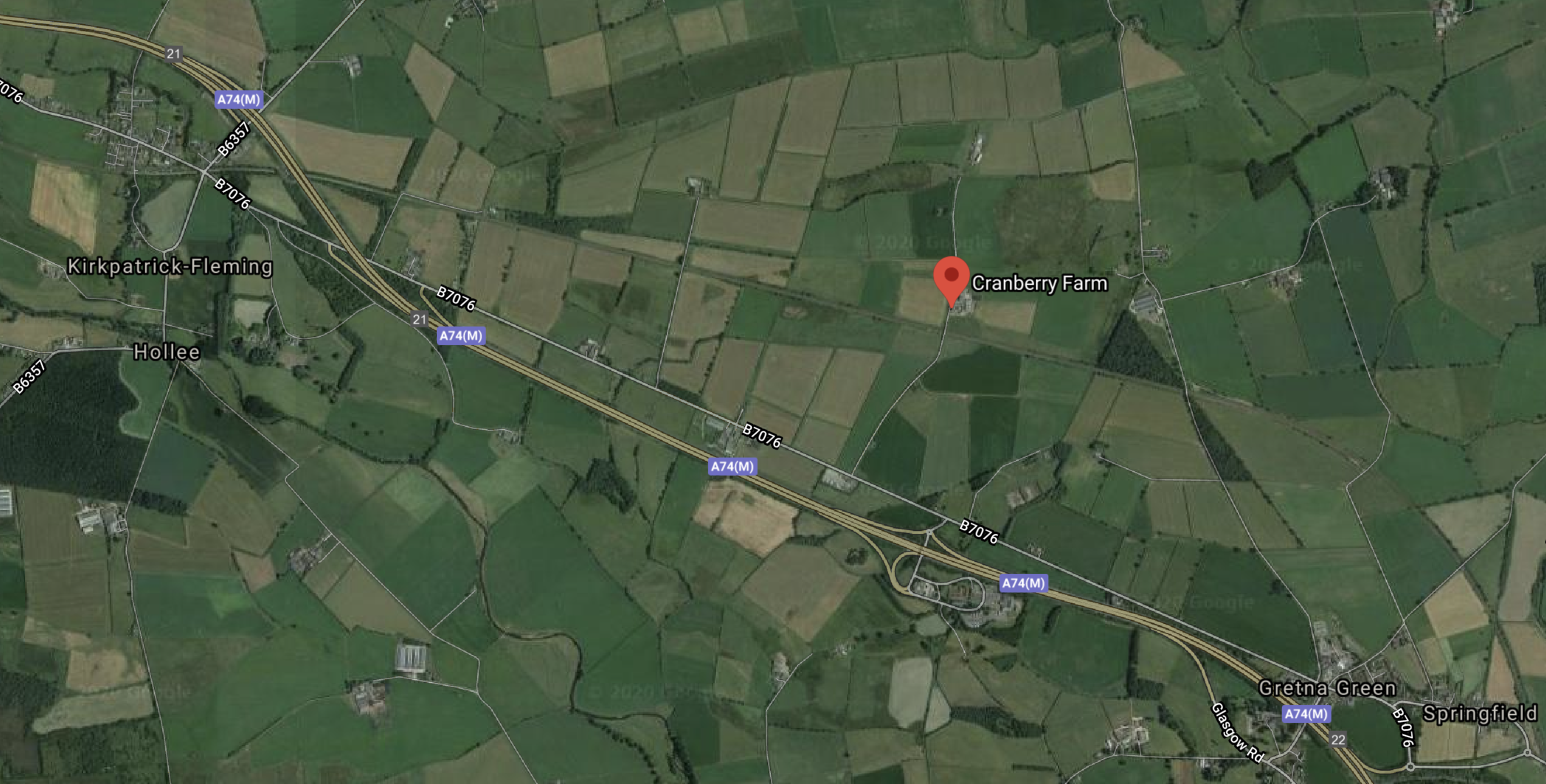
Note.
- The red arrow indicates Cranberry Farm, which will be just to the North of the site.
- The West Coast Main Line passing just South of Cranberry Farm, going across the map.
- The B 7076 and M74 will be to the South of the site.
It looks to meet many of the factors, I stated earlier. But it does appear to be a greenfield, rather than a brownfield site.
Distances And Times From The Depot
These are distances to places, where services will or might start.
- Carlisle – 9 miles – 6 minutes
- Edinburgh – 93 miles – 68 minutes
- Glasgow – 94 miles – 59 minutes
I have used distances from Gretna Green Junction, which is just to the South of the proposed depot.
Will The Depot Be Only For Classic-Compatible Trains?
Consider.
- All services North of Wigan North Western will be run by High Speed Two’s Classic-Compatible trains.
- A simpler depot would surely be possible if it only handled High Speed Two’s Classic-Compatible trains.
- With the possible exception of the occasional demonstration or test run High Speed Two;s full-size fleet will never be seen North of the Border.
The only thing this depot might have to do with the full-size fleet is turn-back a test train, which would only need a 400 metre long siding. A siding this length would probably be needed to turn a pair of High Speed Two’s Classic-Compatible trains.
Could The Depot Serve A Possible Irish Extension?
I believe that eventually High Speed Two will be extended across Southern Scotland and a bridge will connect it to Northern Ireland
In A Glimpse Of 2035, I gave a fictionalised version of the first journey from London Euston to Dublin, by high speed train.
I have just calculated the length of a high speed rail link between the proposed Annandale . Depot and a Belfast Parkway station. It is around 120 miles and the route would probably branch off between Lockerbie and Annandale Depot.
I feel that Annandale Depot could serve trains for Belfast, but there would probably need to be another depot in Dublin.
Extra HS2 Services To Scotland
Currently, TransPennine Express run services Between Liverpool and Manchester in England and Edinburgh and Glasgow in Scotland.
I can see High Speed Two replacing these services with a similar service to the one they are planning for Birmingham.
The current service is as follows,
- One tp2h – Manchester Airport and Edinburgh Waverley via Manchester Piccadilly, Preston, Lancaster, Carlisle and Haymarket
- One tp2h – Manchester Airport and Glasgow Central via Manchester Piccadilly, Preston, Lancaster, Carlisle and Motherwell
- Four trains per day (tpd) – Liverpool Lime Street and Glasgow Central via Wigan North Western, Preston, Lancaster, Carlisle and Motherwell
Note.
- They call at smaller stations like Wigan North Western, Lancaster, Oxenholme, Penrith and Lockerbie as appropriate, to even up the service.
- These services probably share one path between Preston and Carstairs.
- The Liverpool services are diverted Manchester services.
Could they be replaced by High Speed Two services?
The Manchester services could become.
- One tp2h – Manchester Piccadilly and Edinburgh Waverley via Manchester Airport, Preston, Lancaster, Carlisle and Haymarket
- One tp2h – Manchester Piccadilly and Glasgow Central via Manchester Airport, Preston, Lancaster, Carlisle and Motherwell.
Blackpool, Liverpool and other parts of the North West may be better served with high speed commuter services linking them to Preston.
Serving Scotland’s Seven Cities
Scotland has seven cities that are connected by Inter7City trains.
- Aberdeen – Not Electrified
- Dundee – Not Electrified
- Edinburgh – Will be served by High Speed Two
- Glasgow – Will be served by High Speed Two
- Inverness – Not Electrified
- Perth – Not Electrified
- Stirling – Fully Electrified
Can we forget about serving Aberdeen, Dundee, Inverness and Perth until they are fully electrified?
But Stirling must be a possibility.
There is a fully electrified route via Motherwell, Whifflet, Greenfaulds and Larbert
I estimate, that coming up from London will take four hours and five minutes, as against the current time of five hours and eighteen minutes.
Increasing Capacity On The West Coast Main Line In Scotland
Over the years, there have been several plans to run more and faster trains between England and Glasgow on the West Coast Main Line.
So would a High Speed Two service go to Stirling?
At present the maximum operating speed on the route is 125 mph. Trains like Avanti West Coast’s Class 390 trains and Hitachi’s AT-300 trains, could run at 140 mph, if digital in-cab signalling were rolled out on the route.
It is absolutely essential before High Speed Two trains run to Scotland, that the West Coast Main Line is digitally signalled.
In addition to faster running, trains can be closer together, so more trains can be run in an hour.
There are also other things, that could be done to help.
- Ensure, that all the many freight trains on the route are electrically-hauled and capable of operating at 100 mph or more.
- Make sure that local trains sharing the routes into Glasgow and Edinburgh are fast enough to keep out of the way of the expresses.
- Selectively, add extra tracks, so that fast trains can overtake slow ones.
- Ideally, a line like the West Coast Main Line, needs to be quadruple track all the way.
There also must be scope for flighting.
Consider.
- Class 390 trains take about 30 minutes between Edinburgh Waverley and Carstairs South Junction
- Class 390 trains take about 30 minutes between Glasgow Central and Carstairs South Junction
- Carstairs South Junction is where the two routes join.
Suppose two High Speed Two trains were to leave Edinburgh and Glasgow at similar times and run South from Carstairs South Junction, a safe distance apart.
- The lead train would be travelling at 140 mph perhaps three to five minutes in front of the second train.
- In-cab digital signalling would enforce the safe distance.
When the trains arrived in Carlisle, they would take a couple of minutes to join up physically for the high speed dash to London.
This Google Map shows Carstairs station and the splitting of the Glasgow and Edinburgh routes.
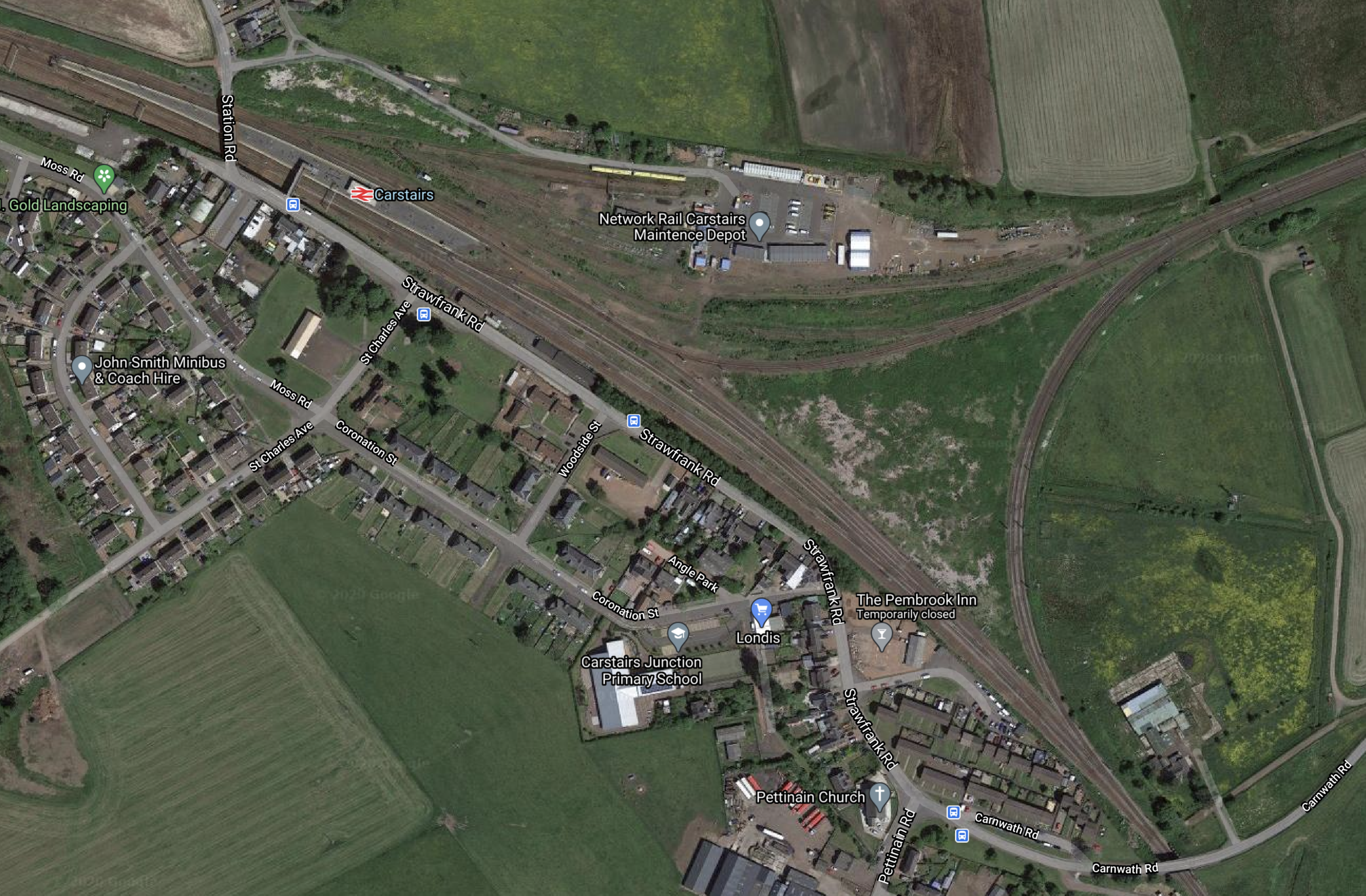
Note.
- The tracks going North-West to Glasgow.
- The tracks going North-East to Edinburgh.
- The tracks going South-East to Glasgow
- All tracks in the picture are electrified.
There might be a need for a passing loop to increase the efficiency of this junction.
It’s not just high speed passenger trains, that can use this technique, but it can be applied to trains with the same performance. So freight trains could form a convoy!
Flighting can decrease the number of train paths needed for a particular number of services and as digital in-cab signalling extends its reach across the UK, we’ll see more applications of the technique.
Effectively, by pathing the two London and Edinburgh/Glasgow trains and adding in one Birmingham and Manchester service, High Speed Two services would only need four paths between Carlisle and Carstairs.
But there would be.
- Four tph between Preston/Carlisle and Scotland. So capacity would be good.
- Three tph Between Carlisle and Edinburgh.
- Three tph Between Carlisle and Glasgow.
As Birmingham Curzon Street, Manchester Piccadilly and Manchester Airport all can handle a pair of High Speed Two’s Classic-Compatible trains, it might be possible in the future to serve both Edinburgh and Glasgow with the Birmingham and Manchester services, splitting the trains at Carlisle. This would mean.
- Four tph between Preston/Carlisle and Scotland.
- Four tph Between Preston/Carlisle and Edinburgh.
- Four tph Between Preston/Carlisle and Glasgow.
That looks strange mathematics, but that’s what you get when a train can serve two places by splitting.
What About The Glasgow And South Western Line?
The Glasgow And South Western Line, runs between Glasgow and Carlisle via Dumfries.
Consider.
- It is not electrified
- It can be used as a diversion, when the West Coast Main Line is blocked.
- It has always puzzled me, why this line wasn’t electrified, when the West Coast Main Line was electrified in the 1970s.
- High Speed Two’s need for more paths and higher speeds on the West Coast Main Line, may chase some of the freight on that route on to the Glasgow and South Western, as an alternative.
Perhaps, a small part of the High Speed Two budget could be used to electrify the route.
It certainly could be used to take some freight traffic from the West Coast Main Line and to ease diversions, if High Speed Two needed to close the West Coast Main Line for improvements to track, electrification or signalling.
It is also a line, where alternative methods of powering the trains could be used.
- It has electrification at both ends and with some electrification in the middle, battery electric passenger trains might be able to use the route.
- The City of Glasgow is majoring on hydrogen and the route, which is 115 miles long, could be ideal for a hydrogen train.
On the other hand full electrification could enable the electric services to be run at times, when the West Coast Main Line was blocked.
It is certainly a route, that could benefit from improvement.
Extension Of The Borders Railway To Carlisle
It is looking increasingly likely that the Borders Railway will be extended to Carlisle.
This report from the High Speed Rail Group is entitled Cross-Border High-Speed Rail And The Borders Railway Project.
The first paragraph is firm about why the Edinburgh and Glasgow services should split and join at Carlisle.
It has taken a while for HS2 service plans to focus on Carlisle as the right place to divide and join Glasgow/Edinburgh high-speed train portions. Earlier plans used Carstairs – and left Carlisle with no HS2 London service.
I also think it will be considerably more affordable and less disruptive to extend Carlisle’s already long platforms, than to build a massive new station at Carstairs capable of handling 400 metre long trains.
This paragraph puts its case for extending the Borders Railway to Carlisle.
To get best use out of the enhanced services that will then be possible, and to fully utilise the additional line capacity along the West Coast Main Line, onward rail connectivity is crucial. That’s why we flagged the compatibility with the Borders Railways re-opening from Tweedbank via Hawick to Carlisle in our report. With Carlisle-London journey times reduced to a little over 2 hours, and the Borders Railway fully re-instated, journey times from the Borders towns could be dramatically shortened – to London as well as to other major cities in England. Inward travel for tourists to the Borders region would be dramatically enhanced too.
They also add that a Borders Railway could be an useful diversion route, during the increasing number of problems on UK rail networks caused by the weather.
I believe that the Borders Railway should be extended to Carlisle and it should also be electrified.
- It would be a useful diversion route.
- It could handle some freight trains.
- It might be useful to move empty stock between Edinburgh and Annandale Depot, as the Borders Railway joins the West Coast Main Line not far from the depot.
We mustn’t underestimate how many passengers to and from the Borders will use the Borders Railway to catch High Speed Two at Carlisle.
Conclusion
Moving the depot to Annandale, may look to some like a way of giving the Scots a higher profile in High Speed Two.
But I do think it gives options to make a High Speed Network easier to run North of the border.
- High Speed Two have total control of their depot.
- It is well placed for Carlisle, Edinburgh and Glasgow.
It is also extremely well placed for the rail network of South Scotland.
It’s A Privilege To Work Here!
I was speaking to a young station assistant at Liverpool Lime Street station, who I suspect could have been a trainee or an apprentice, when he came out with the title of this post.
These pictures show the platforms at the station, since the recent remodelling.


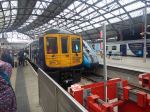
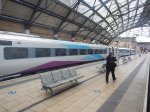

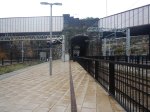
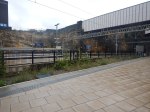

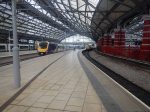
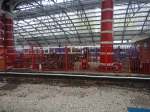
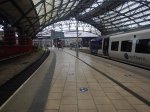

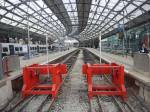
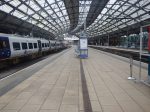

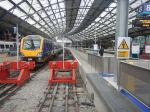

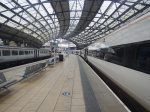

Note.
- The platforms are wide and can take an eleven-car Class 390 train.
- TransPennine Express’s five-car Class 802 trains are easily handled in the shorter platforms of the Western train shed.
- I suspect Avanti West Coast’s new Class 807 trains, which are fifty-two metres longer than the Class 802 trains, could fit into the Western train shed, if needed.
It is certainly a station with a large capacity and I believe, with a few tweaks the station will be able to handle High Speed Two and Northern Powerhouse Rail.
Train Lengths Into Liverpool Lime Street
These are the lengths of the various trains that will be terminating at the station.
- Class 350 train – eight cars – 160 metres
- Class 350 train – twelve cars – 240 metres
- Class 390 train – nine cars – 217.5 metres
- Class 390 train – eleven cars – 265.3 metres
- Class 730 train – five cars – 120 metres
- Class 730 train – ten cars – 240 metres
- Class 802 train – five cars – 130 metres
- Class 802 train – ten cars – 260 metres
- Class 807 train – seven cars – 182 metres
- High Speed Two Classic-Compatible train – 200 metres
That looks like future-proofing to me!
An Almost Absence Of Red
I have looked at arrivals into Liverpool Lime Street over the last couple of days on Real Time Trains and nearly all trains seemed to be on time.
So has all the work to improve the track and signalling on the approaches to the station, over the last couple of years, resulted in better time keeping?
Certainly, train and passenger flows seemed to be smooth.
Conclusion
Wikipedia says this about Liverpool Lime Street station.
Opened in August 1836, it is the oldest still-operating grand terminus mainline station in the world.
I’ve used Lime Street station for nearly sixty years and finally, it is the station, the city needs and deserves.
I’ve been to grand termini all over the world and Lime Street may be the oldest, but now it is one of the best.
Should High Speed Two’s Macclesfield And London Service Call At Birmingham Interchange?
Connecting Manchester City Centre to the High Speed Two network will be a major undertaking.
- It looks increasingly likely that High Speed Two and Northern Powerhouse Rail will have a shared line running from the main High Speed Two route through Crewe to Manchester Piccadilly via Manchester Airport.
- Between Manchester Airport and Manchester Piccadilly will be in a high speed tunnel.
- Northern Powerhouse Rail will connect Liverpool Lime Street and Warrington to Manchester Airport and Manchester Piccadilly.
- There will be a major problem keeping train services running between Manchester and Birmingham, London and the South.
But just at Project Rio kept Manchester connected during the rebuilding of the West Coast Main Line in the early years of this century, I believe that a similar creditable alternative route may be starting to evolve.
Avanti’s Additional Class 807 Trains Will Be Delivered
These trains will allow additional services and release some Class 390 trains to reinforce other services.
Avanti West Coast’s Future West Coast Main Line Service
The small fleet of Class 807 trains are needed to provide extra services on the West Coast Main Line.
- But if these trains are successful, will more be used as replacements for the nearly twenty-years-old Class 390 trains?
- Will they also be given more traction power to double as the classic-compatible trains for High Speed Two.
- Other operators might also like to purchase a high capacity 200 metre long high speed train, which would share routes used by High Speed Two.
In Thoughts On Class 807 Trains And High Speed Two’s Classic-Compatible Trains, I discuss the design of extra trains for High Speed Two and the West Coast Main Line.
Surely, though having similar trains handling both roles on the West Coast Main Line and High Speed Two, would be an advantage to Avanti West Coast?
London And Manchester Services
Currently, there are these services between London Euston and Manchester Piccadilly stations.
- Via Milton Keynes Central, Stoke-on-Trent and Stockport
- Via Stoke-on-Trent, Macclesfield and Stockport
- Via Stafford, Crewe, Wilmslow and Stockport
All services have a frequency of one train per hour (tph)
High Speed Two plans to run these services between the South and the Manchester area.
- 1 tph – 200 metres – London Euston and Wigan North Western via Old Oak Common, Crewe and Warrington Bank Quay
- 1 tph – 200 metres – London Euston and Macclesfield via Old Oak Common, Stafford and Stoke.
- 1 tph – 400 metres – London Euston and Manchester Piccadilly via Old Oak Common, Birmingham Interchange and Manchester Airport
- 2 tph – 400 metres – London Euston and Manchester Piccadilly via Old Oak Common and Manchester Airport
- 2 tph – 200 metres – Birmingham Curzon Street and Manchester Piccadilly via Manchester Airport
- 1 tph – 200 metres – Birmingham Curzon Street and Wigan North |Western
Note.
- I have included Wigan North Western, as it has good connections to North Manchester.
- Services can’t go via Manchester Airport until the tunnel is completed.
- The 400 metre services will need to use dedicated High Speed Two tracks, so will need to use the tunnel via Manchester Airport.
Wigan and Macclesfield stations will not be requiring major rebuilding, during the construction of High Speed Two. That should mean the stations will not need to be closed for long periods.
- Macclesfield station could probably handle up to three tph from the South.
- Wigan North Western station could probably handle two tph from the South.
- Work in the Manchester Piccadilly area, may well close the station at times.
I suspect Macclesfield and Wigan North Western could be very useful alternative stations for travelling to and from the South.
Manchester And Birmingham Via Macclesfield
I can see that there could be difficulties for some passengers, if they found themselves at Macclesfield wanting to go to the Birmingham area.
A solution would be for the Macclesfield and London service to stop at Birmingham Interchange, which will be extremely well-connected.
Birmingham Interchange
This map from High Speed Two, shows Birmingham Interchange and Birmingham International stations.
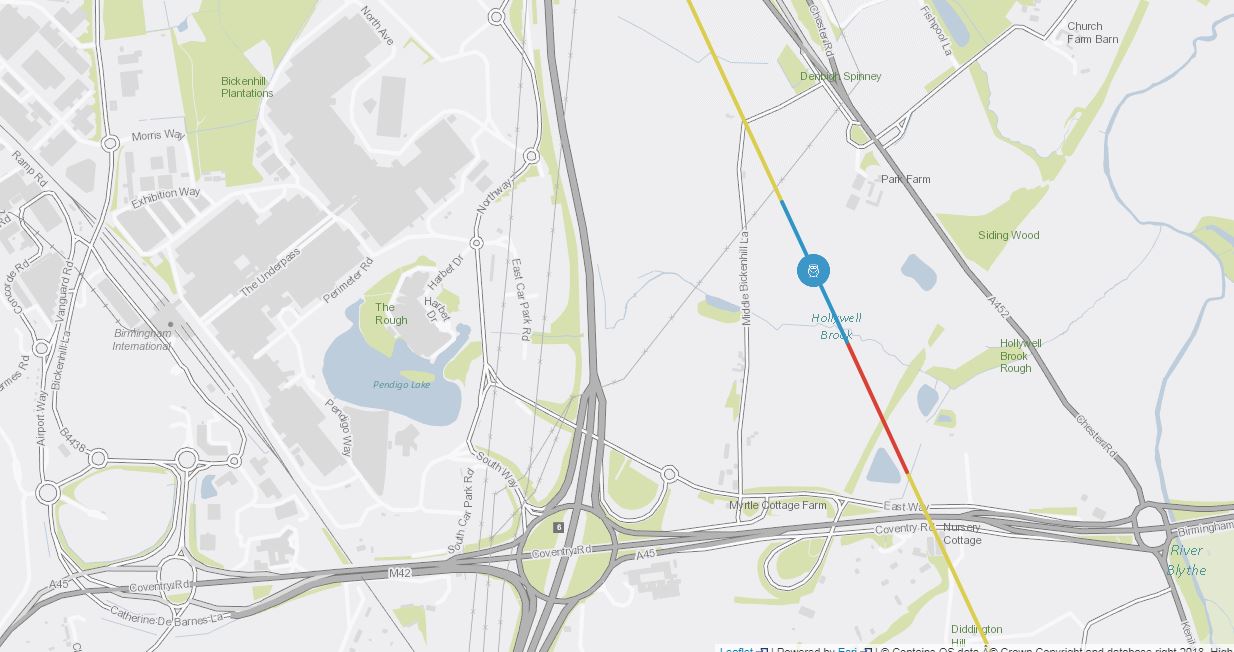
Note.
- Birmingham Interchange station is marked by the blue dot.
- Birmingham International station is to the West of the M42.
The two stations will be connected by an automatic people mover.
Destinations and their frequencies available from Birmingham Interchange, when High Speed Two is complete will include.
- 2 tph – Birmingham Curzon Street
- 1 tph – Carlisle
- 1 tph – East Midlands Hub
- 1 tph – Edinburgh Haymarket
- 1 tph – Edinburgh Waverley
- 1 tph – Glasgow Central
- 1 tph – Leeds
- 5 tph – London Euston
- 1 tph – Manchester Airport
- 1 tph – Manchester Piccadilly
- 5 tph – Old Oak Common
- 1 tph – Preston
It looks like if you miss your train to many important cities at Birmingham Interchange, it will be an hour to wait for the next train.
Destinations and their frequencies available from Birmingham International are currently.
- 8 tph – Birmingham New Street
- 1 tph – Bournemouth
- 1 tph – Crewe
- 0.5 tph to Edinburgh Waverley
- 0.5 tph to Glasgow Central
- 7 tph – London Euston
- 1 tph – Macclesfield
- 1 tph – Manchester Piccadilly
- 1 tph – Reading
- 1 tph – Shrewsbury
- 1 tph – Southampton
- 1 tph – Stafford
- 1 tph – Stoke-on-Trent
- 2 tph – Wolverhampton
Note that 0.5 tph is one train per two hours.
These two lists can be combined.
- 10 tph – Birmingham Curzon Street/New Street
- 1 tph – Bournemouth
- 2 tph – Carlisle
- 1 tph – Crewe
- 1 tph – East Midlands Hub
- 1.5 tph – Edinburgh Haymarket
- 1.5 tph – Edinburgh Waverley
- 1.5 tph – Glasgow Central
- 1 tph – Leeds
- 12 tph – London Euston
- 1 tph – Macclesfield
- 1 tph – Manchester Airport
- 2 tph – Manchester Piccadilly
- 5 tph – Old Oak Common
- 1 tph – Preston
- 1 tph – Reading
- 1 tph – Shrewsbury
- 1 tph – Southampton
- 1 tph – Stafford
- 1 tph – Stoke-on-Trent
- 2 tph – Wolverhampton
This list is surely missing Bristol, Cardiff, Liverpool, Sheffield and Newcastle.
Conclusion
We should not underestimate the importance of Macclesfield and Wigan North Western stations in getting to and from Manchester during the building of High Speed Two.
Thoughts On Class 807 Trains And High Speed Two’s Classic-Compatible Trains
Avanti West Coast’s New Class 807 Trains
Avanti West Coast have ordered a small fleet of Class 807 trains.
This article on Railnews, gives this short description.
There will be more seats, because a seven-car train will have 453 and five-car sets will have 301. First said the seven-car version will have about the same number of seats as a nine-car Pendolino, because each IET vehicle is longer, at 26m.
Adding standard details of other Hitachi trains in the family, the following seems to be known.
- They are seven-car trains.
- The cars are the standard twenty-six metres, so a seven-car train will be 182 metres.
- Ten trains have been ordered.
- I suspect that like all the other trains in the family, they will be 125 mph trains, that are capable of 140 mph, when the signalling and track allows.
- They are pencilled in for services between London Euston and Birmingham New Street, Blackpool North and Liverpool Lime Street stations
- They will not have batteries or diesel engines for emergency or hotel power. Could this mean, that the trains have been designed for high performance, by removing excess weight?
- The trains don’t have a tilting capability. Does this save weight and increase acceleration?
- The trains have 453 seats, as opposed to the nine-car Class 390 trains, which have 469 seats.
Could these trains be designed, to be able to better the Class 390 train schedules on the West Coast Main Line?
- They have no tilting capability.
- They can only work on electric power, like the Class 390 trains.
- They could have very fast acceleration, due to the weight loss.
- They only reduce capacity by 3.5 %, when compared to a nine-car Class 390 train.
In Will Avanti West Coast’s New Trains Be Able To Achieve London Euston and Liverpool Lime Street In Two Hours?, this was my conclusion.
I believe the following will be possible.
-
- A two hour service between London Euston and Liverpool Lime Street will be possible with Avanti West Coast’s new Class 807 trains.
- The current Class 390 trains could go a bit faster.
- I estimate that a Class 807 train could save as much as two-and-a-half-minutes at each stop.
- Blackpool North and London times will be comfortably under three hours.
- Coventry and London times will be comfortably under an hour.
The performance of these Class 807 trains will improve the West Coast Main Line.
What will London in two hours, do for Liverpool?
Class 807 Trains With Different Car Lengths
It is possible to create a table showing car length, train length and capacity for Class 807 trains
- 26 metres – 182 metres – 453 seats
- 26.5 metres – 185.5 metres – 462 seats
- 27 metres – 189 metres – 470 seats
- 27.5 metres – 192.5 metres – 479 seats
- 28 metres – 196 metres – 488 seats
- 28.5 metres – 199.5 metres – 497 seats
It seems that by lengthening all cars by half a metre, just adds nine seats.
Does this point to the fact, that twenty-six metres was a carefully-chosen optimal car length?
Class 807 Trains With Different Numbers Of Cars
A similar table can also be created for different numbers of twenty-six metre cars.
- 7 cars – 182 metres – 453 seats
- 8 cars – 208 metres – 518 seats
- 9 cars – 234 metres – 582 seats
- 10 cars – 260 metres – 647 seats
Note that as an eleven-car Class 390 train is 265.3 metres, a ten-car Class 807 train will fit all platforms, currently used by eleven-car Class 390 trains.
Replacement Of Eleven-Car Class 390 Trains With Class 807 Trains
The eleven-car Class 390 trains are 265.3 metres long and seat 589 passengers.
Looking at the two tables, nine-car Class 807 trains would be almost direct replacements for an eleven-car Class 390 trains.
- The performance of the Class 807 trains would be as good if not better.
- The passenger capacity of both trains would be similar, with just seven seats less in the new trains.
- The Class 807 trains would also be shorter and could fit any platform currently served by an eleven-car Class 390 train.
It should also be noted, that the Class 807 trains would have to run as singles, as platforms on the West Coast Main Line can’t handle a four hundred metre train.
I believe it is highly likely that the classic-compatible trains for High Speed Two and the trains that replace the Class 390 trains will be the same and based on the Class 807 trains, that are now being assembled at Hitachi’s factory at Newton Aycliffe.
Could A Class 807 Train Be Stretched To Become A High Speed Two Classic-Compatible Train?
The Classic-Compatible trains are described in this section in Wikipedia, by this sentence.
The classic-compatible trains, capable of high speed but built to a British loading gauge, permitting them to leave the high speed track to join conventional routes such as the West Coast Main Line, Midland Main Line and East Coast Main Line. Such trains would allow running of HS2 services to the north of England and Scotland, although these non-tilting trains would run slower than existing tilting trains on conventional track. HS2 Ltd has stated that, because these trains must be specifically designed for the British network and cannot be bought “off-the-shelf”, these conventional trains were expected to be around 50% more expensive, costing around £40 million per train rather than £27 million for the captive stock.
The trains will have the same characteristics as the full-size trains.
- Maximum speed of 225 mph.
- Cruising speed of 205 mph on High Speed Two.
- Length of 200 metres.
- Ability to work in pairs.
- A passenger capacity around 500-600 passengers.
A seven-car Class 807 train with twenty-six metre long cars would appear to be a partial match and tick all the boxes, except for the following.
- The train’s maximum and cruising speeds are well below what is needed.
- The train is only 182 metres long.
- The train has a passenger capacity of 453.
Would a train with eight twenty-five metre long cars be a better fit?
- The train length would be 200 metres.
- I doubt twenty-five metre cars would cause a problem!
- I estimate the passenger capacity would be 498 seats.
The trains or members of the same family have already shown.
- They can run on the East Coast, Great Western, Midland and West Coast Main Lines.
- They can run on High Speed One.
- They can split and join automatically.
- When needed they can run on local lines.
If I was Avanti West Coast’s train-Czar, I would be seriously interested in a Classic-Compatible High Speed Two train, that was very similar to one, that I already had in service. Provided, of course it did what it promised in the specification.
In Wikipedia, the car lengths for Class 800, Class 801, Class 802, Class 805 and Class 810 trains are all given and have been reported in the media.
But the car lengths of the Class 803 and Class 807 trains are not given. Is it just an omission or is it deliberate?
Both these trains are designed for demanding routes.
- The Class 803 trains are designed for London and Edinburgh in four hours.
- I believe that the Class 807 trains are designed for London and Liverpool in two hours.
To get these demanding times, have Hitachi changed the car lengths?
- Trains with shorter cars might accelerate better.
- A redesigned interior might get more passengers in the shorter length.
I shall await the launch of both these lightweight speedsters with interest!
Conclusion
I wouldn’t be surprised that Hitachi’s offering for more trains on the West Coast Main Line and the Classic-Compatible trains for High Speed Two are very similar to the Class 807 trains.
- The classic-compatible trains for High Speed Two could be eight-car trains with twenty-five metre cars.
- The replacements for the eleven-car Class 390 trains could be nine-car trains with twenty-six metre cars.
Both would be based on the Class 807 train.
 The Anonymous Widower