Watford Junction Station’s Barrier Seats
I quite like these seats at Watford Junction station.
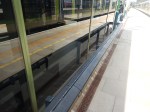
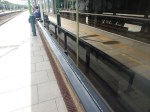
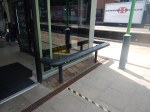

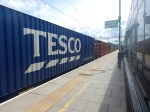
They would appear to give a nice perch to sit, whilst waiting for the train and also act as a crush barrier for the glass shelter behind.
They also give me something to hold, when a train goes through.
The train shown in the picture was a Tesco train between Tilbury and Daventry.
It went through the station at probably over 60 mph.
It had the usual smelly and polluting Class 66 on the front.
It took four hours 45 minutes for the journey, which included the Gospel Oak and Barking Line through London.
I did note earlier that the train seemed to be using modern wagons.
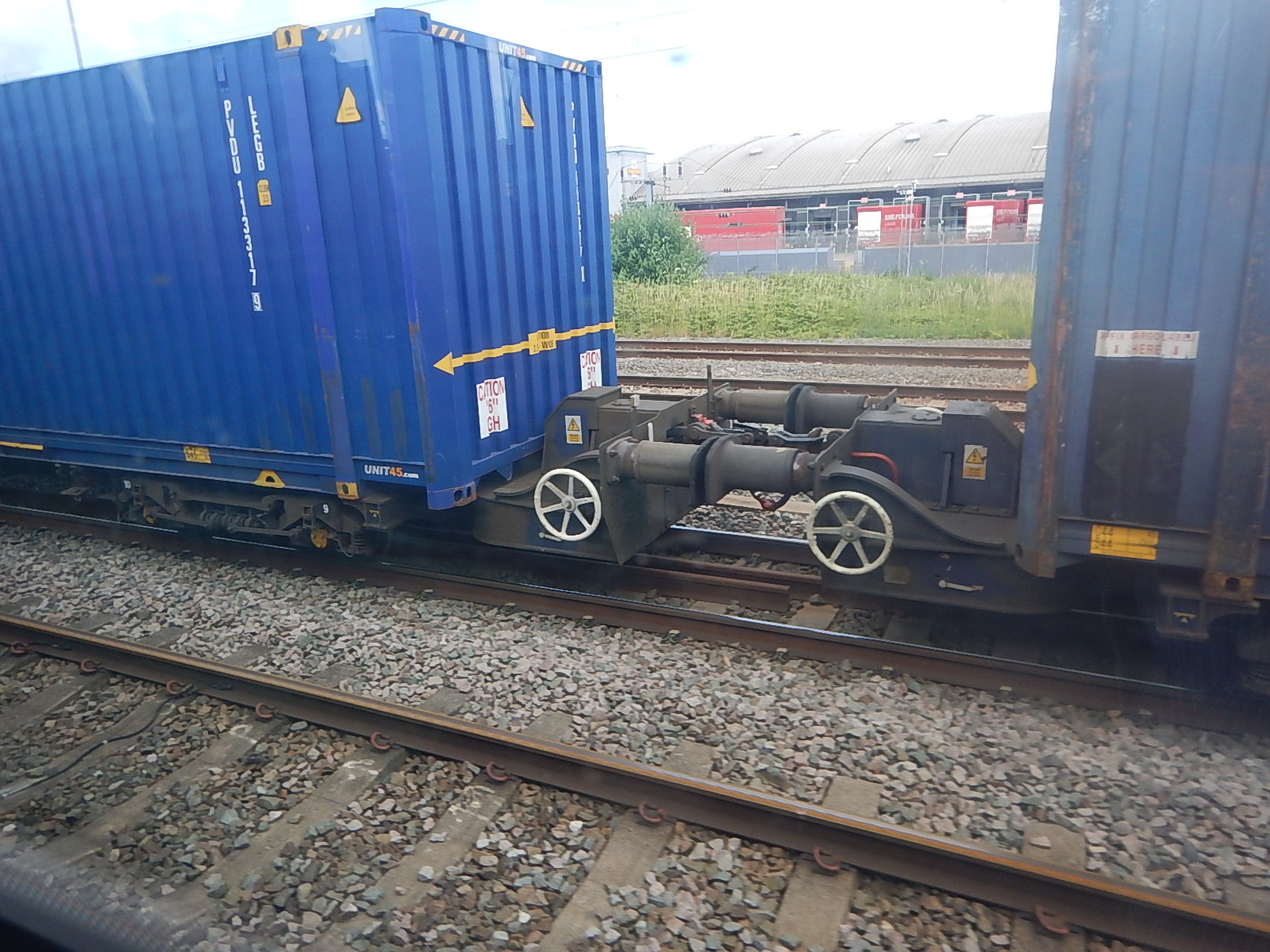
Are these wagons faster than those you generally see on UK railways?
Surely too, this is the type of train, that could be hauled by an electric locomotive with a Last-Mile capability, like a Class 88 Locomotive.
I would have thought, that Tesco could benefit, by using electric haulage, especially if the locomotive was appropriately liveried.
Freightliner Secures Government Funding For Dual-Fuel Project
The title of this post, is the same as that of this press release from Freightliner.
This is the first two paragraphs.
Freightliner, a subsidiary of Genesee & Wyoming Inc. (G&W), in partnership with a consortium of specialist suppliers, has been successful in securing government funding to develop a dual-fuel solution for the Class 66 locomotive.
The technology is one of the 30 winners of the latest round of the First of a Kind (FOAK) competition announced today by the Transport Secretary. Already the safest and greenest mode of ground-freight transportation, the competition has been aimed at making the railways even cleaner, greener and more passenger friendly.
These are my thoughts.
A Big Opportunity
Freightliner have a total of 113 Class 66 locomotives, out of a UK total of well over 400.
If the project succeeds, this could cut a large amount of carbon emissions from UK rail freight.
Who Are The Partners?
The press release gives these project partners.
The key project partners are Freightliner, which operates over 113 Class-66s in the UK, and Clean Air Power, providers of innovative clean air solutions for freight. The project is also supported by Network Rail, Tarmac, Rail Safety Standards Board (RSSB), Flogas, Carrickarory and the University of Birmingham.
It is a comprehensive group of partners, which probably covers all aspects.
- From their web site, Clean Air Power would appear to have the expertise for the project, with back-up from the University of Birmingham, who seem to be involved in several high-profile rail projects.
- The early involvement of standards must be a good thing.
- Flogas are a gas company
- Carrickarory would appear to be consultants specialising in rail.
Getting the team right is important in having a successful project.
What Are The Objectives Of The Project?
The press release gives these project objectives.
The project will investigate the ability to substitute diesel with both hydrogen and biogas on the Class-66 locomotive which hauls over 80% of freight on the UK rail network and, in doing so, reduce carbon emissions on one of the industry’s most challenging two-stroke locomotives.
This will be achieved by retrofitting the Class 66 with Clean Air Power’s precision injection technology, creating a Class 66 that can run on a combination of diesel, biogas and hydrogen.
Sounds a good set of reduced carbon objectives!
Would The Technology Be Applicable To Other Operators And Locomotives?
The press release says this.
This sustainable solution will support a programme to decarbonise freight operating companies’ diesel fleets in a cost-efficient manner that does not require significant short-term investment and facilitates operational learning in support of a longer-term fleet replacement programme, potentially using 100% hydrogen fuel.
Does this mean that the eventual Class 66 replacement will be a locomotive, that runs exclusively on hydrogen?
I suspect it does!
How very sensible!
Conclusion
This could be a big step in the battle to decarbonise.
Nunhead Junction Improvement
London has a rail capacity problem, for both freight and passenger trains.
This report from Network Rail is entitled The London Rail Freight Strategy (LRFS).
One of the secondary recommendations of the report is to improve Nunhead junction.
The report explains it like this.
Rail freight stakeholders have consistently highlighted Nunhead as a priority location for improving the flow of freight around the London orbital routes. The junction to the immediate east of the station is a flat crossing where two lines of route and multiple passenger and freight services groups converge into the South London Line, creating a pinch point for capacity.
Freight train drivers, when consulted for input into this strategy, flagged the route eastbound from Peckham Rye through Nunhead and towards Lewisham as a challenging section on which to keep heavier trains moving. This is primarily a consequence of the relatively slow permissible speed of 25mph over Nunhead Junction when routed towards Lewisham,
which follows a steadily rising gradient from Peckham Rye.The option proposed by this strategy is for changes to the track alignment in order to increase the speed of the turnout towards Lewisham, as far as can be achieved without affecting the speed of the main route towards Catford. This option would primarily benefit the performance of eastbound freight flowing from the South London Line towards the North Kent lines, one of the key rail freight corridors in the South East, enabling freight trains to run at faster and more consistent speeds towards Lewisham.
This would most likely increase right time presentation at the critical flat junction at Lewisham, as well as assisting the flow of passenger and freight trains to the Catford Loop by ensuring preceding Lewisham-bound traffic can clear Nunhead Junction as quickly as possible.
Addressing the existing constraints to freight traffic through Nunhead, which by their nature most affect the heavier bulk traffic that characterises the North Kent corridor, would also support industry aspirations to maximise the payloads that trains can haul.
This map from cartometro.com shows the route between Nunhead and Lewisham stations.

And this Google Map shows Nunhead station and the junction.
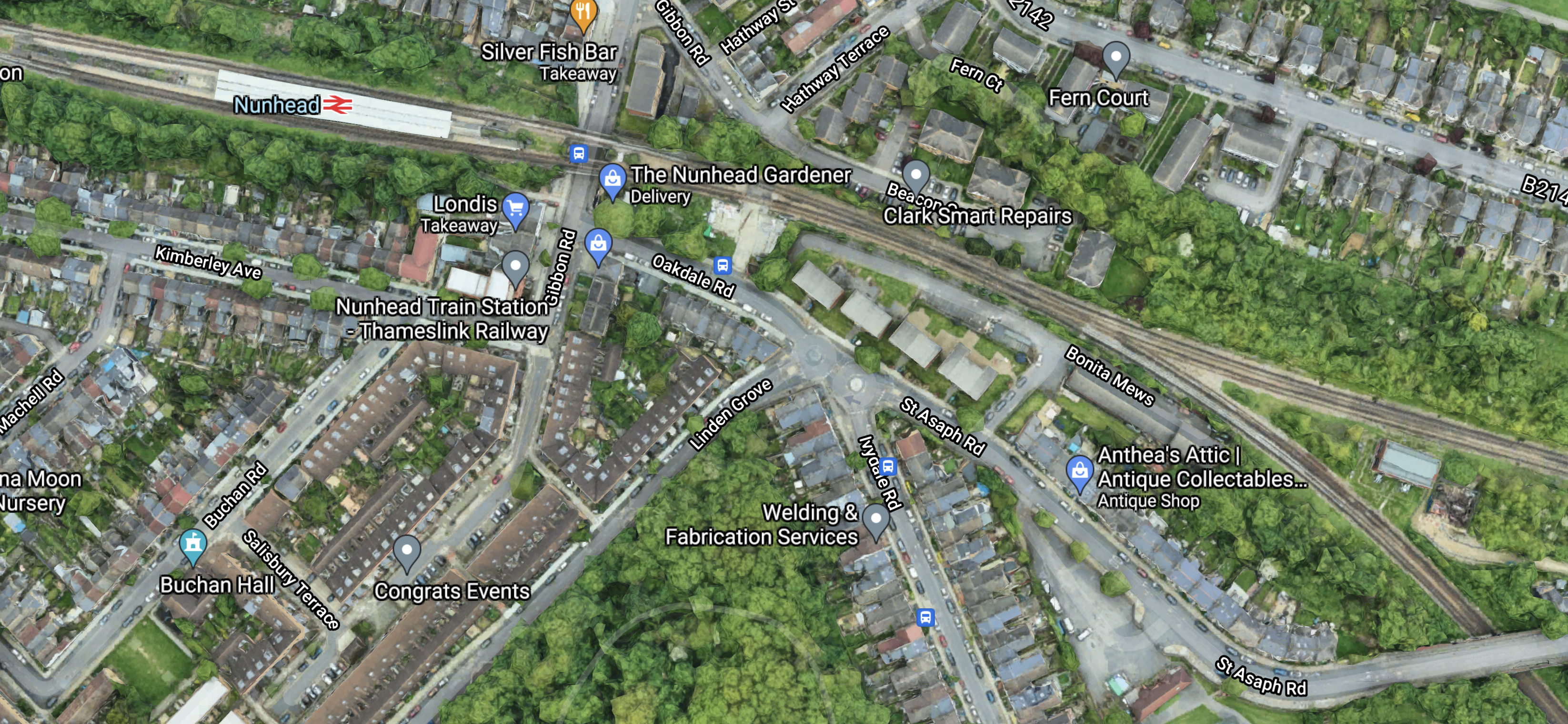
Note.
- Nunhead junction is towards the right of the map.
- The lines going to the East go to Lewisham.
- The lines going to the South East go to Crofton Park and Catford.
- I have counted the freight trains through Nunhead junction on real time trains and there can be as main as six trains per hour (tph), through the junction at times, using both Lewisham and Crofton Park routes.
But there would also appear to be plenty of space around the junction to realign the tracks.
As many trains need to go East from Lewisham and there are two flat junctions on the route; Nunhead and Lewisham, anything that improves keeping to schedule is to be welcomed.
The Use Of Electric Haulage
All routes through Nunhead junction have 750 VDC third-rail electrification, but I suspect all freight trains through the junction are diesel hauled.
Real time trains also shows that many of the trains through Nunhead junction also use the West London Line through Shepherd’s Bush.
In Decarbonisation Of London’s Freight Routes, I proposed a dual-voltage battery-electric locomotive to handle freight trains.
Perhaps more capable battery-electric freight locomotives with their better acceleration, are part of the solution at Nunhead junction.
Conclusion
This appears to be a well-thought out solution to one of the problems for freight trains in London.
I also believe that dual-voltage battery-electric locomotives could be part of the solution at Nunhead junction and would also help in many other places on the UK rail network.
Related Posts
These are related posts about the London Rail Freight Strategy (LRFS).
Decarbonisation Of London’s Freight Routes
East Coast Main Line South Bi-Directional Capability
Gauge Improvements Across London
Headway Reductions On The Gospel Oak To Barking, North London and West London Lines
Heavy Axle Weight Restrictions
Kensal Green Junction Improvement
Longhedge Junction Speed Increases
Moving The West London Line AC/DC Switchover To Kensington Olympia
Moving The West London Line AC/DC Switchover To Shepherd’s Bush
Stratford Regulating Point Extension
A Very Long Freight Train At Camden Road Station
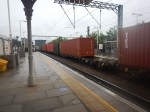
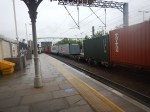
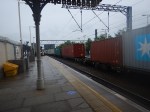
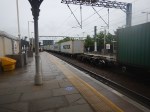
I took these pictures as a very long freight train passed through Camden Road station.
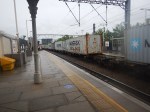
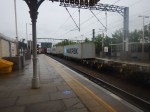
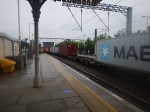
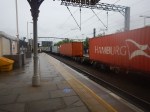
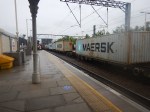
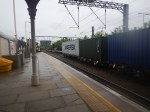
Note.
- I estimate the train had 45 positions for containers.
- Fourteen or fifteen were not filled.
- I suspect the train started in Wentloog in South Wales and was going to the Port of Felixstowe.
- That route is fully electrified from Wentloog to Ipswich.
- The journey took over eight hours.
This could be a route, where an innovative Class 93 locomotive could be able to handle the freight train all the way across England and half of Wales.
- Most of the way, the locomotive would be using the electrification.
- The short distance at Wentloog and the fifteen miles at Felixstowe would be handled by the onboard diesel engine and the substantial battery.
These will be world-class zero-carbon freight trains, just by changing the motive power.
A Class 66 Locomotive At Stratford
I’ve needed a generic photograph of a Class 66 locomotive for some time and one obliged at Stratford.

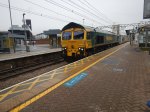
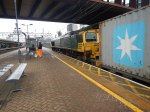
The sooner these are replaced with a modern more environmentally-friendly locomotive the better.
Trimode Class 93 Locomotives Ordered By Rail Operations (UK)
The title of this post, is the same as that of this article on Railway Gazette.
This is the introductory paragraph.
Stadler and Rail Operations (UK) Ltd have signed a framework agreement for the supply of 30 Class 93 trimode locomotives, with an initial batch of 10 scheduled for delivery in early 2023.
Note that the order may have been a long time coming, but it is now for thirty locomotives. In this article on Rail Magazine from December 2018, which is entitled Rail Operations Fuels its Ambitions With Tri-Mode Class 93s, only ten locomotives were to be ordered.
A Few More Details
This article on Rail Engineer, which is entitled, Re-Engineering Rail Freight, gives a few more details about the operation of the Class 93 locomotives.
It says this about operation in electric mode.
In electric mode, the batteries are charged when braking or from the transformer. As the batteries use the space occupied by the braking resistors in the Class 88, when the batteries are fully charged, the locomotive has only its friction brake.
This about operation in diesel-hybrid mode.
In diesel/battery hybrid mode, the batteries are charged both as the train brakes and by the diesel engine when it is not operating under full load. When the train accelerates, the batteries give it the extra power needed to get up to speed. This is a significant benefit as accelerating a freight train of over 1,000 tonnes up to its operating speed can take several minutes.
This is said about the batteries and their effect on performance.
It has two Lithium Titanate Oxide liquid-cooled battery packs, which have a rapid charge and discharge rate. These each have a 40kWh capacity with a peak power of 200kW. Thus, whilst the train is accelerating, the Class 93 will have a peak power of 1,300kW for up to ten minutes, which is almost twice that of a Class 88 in diesel mode.
The batteries would appear to be quite small when you consider, that Vivarail are talking about 424 KWh in one of their Class 230 trains.
This is said about performance.
As a result, the 86-tonne Class 93 is capable of hauling 1,500 tonnes on non-electrified routes and 2,500 tonnes on electrified routes. With a route availability (RA) of seven, it can be used on most of the rail network.
It may not be the largest of locomotives, but it could have a very high performance.
I have a few thoughts.
Regenerative Braking Performance
The Rail Engineer article says this about the Class 93 locomotive.
- The train has a total of 80 kWh of battery storage to store braking energy.
- The locomotive weighs 86 tonnes
- It can haul 1,500 tonnes on non-electrified lines.
Using a train weight of 1586 tonnes and Omni’s Kinetic Energy Calculator, gives a kinetic energy of 8 kWh at 42.6 mph.
Does this mean that the locomotive is designed to trundle around the countryside at around forty mph?
These are timings from Real Time Trains.
- Haughley Junction and Ely – 40 miles – 60 minutes – 40 mph
- Werrington Junction and Doncaster – 86 miles – 130 minutes – 40 mph
- Werrington Junction and Nuneaton – 67 miles – 123 minutes – 32.7 mph
- Southampton and Oxford – 74 miles – 120 minutes – 37 mph
There will be savings compared to the current diesel timings, with a Class 93 locomotive.
- Either side of these sections, the locomotive can use electric power to cut pollution, noise and carbon emissions.
- Stops and starts on sections without electrification will save diesel and cut carbon emissions.
- The train will be faster on electrified sections.
I also feel that with its smaller diesel engine, it will be able to maintain similar timings to current trains hauled by Class 66, Class 68 and Class 70 locomotives.
It can haul 2,500 tonnes on non-electrified lines.
Assuming a train weight of 2586 tonnes, the train energy at various speeds is as follows.
- 40 mph – 114 kWh
- 60 mph – 258 kWh
- 80 mph – 459 kWh
- 100 mph – 718 kWh
- 110 mph – 868 kWh
Am I right to assume that once the batteries are full, the regenerative braking energy can be returned through the catenary to power other trains?
Operation With 750 VDC Third Rail Electrification
Will some locomotives be fitted with third-rail shoes to work into and out of Southampton?
They would not need to use diesel between and Basingstoke.
Access To Ports And Rail Freight Terminals
I recently wrote Rail Access To The Port Of Felixstowe.
Looking in detail at Felixstowe and how trains will serve the port, this was my conclusion.
I very much feel, that the specification of the Class 93 locomotive with its trimode capability is ideal for working to and from ports and freight terminals.
Looking at the specification, I am certain, that these locomotives can haul a heavy freight train out of Felixstowe on diesel, with help from the batteries.
- The distance without electrification is around fifteen miles.
- It takes around thirty minutes.
- It is fairly flat Suffolk countryside with the possible exception of the climb over Spring Road Viaduct.
The batteries would need to be charged and surely in Felixstowe’s case the best way would be to electrify the two single track access routes between Trimley station and the Port.
- On leaving, the trains would pass Trimley with full batteries.
- They could also be at line speed after accelerating using the two miles or so of electrification.
- They could also enter the Port with full batteries, after charging the batteries on the short length of electrification.
The batteries may be large and powerful enough, to enable diesel free operations in the Port.
Does this partially explain the increase in the order for Class 93 locomotives? There’s not really been a genuine Last-Mile locomotive in the UK before.
Enabling Carbon-Free Ports And Rail Freight Terminals
Regularly, I read reports of ports wanting to do carbon-free.
- Port vehicles and cranes can go electric or hydrogen, as appropriate.
- Tugs, work and pilot boats can go hydrogen and developments are under way like one I wrote about in Scotland To Trial World’s First Hydrogen-Powered Ferry In Orkney.
Class 93 locomotives can help the process, by not using their diesel engines in ports and rail freight terminals.
It might just need a short length of electrification between the port or terminal and the main line, to make sure batteries are fully-charged.
But not at London Gateway!
This Google Map shows the couple of kilometres of track without electrification, that connects London Gateway to the electrified route through East Tilbury station.
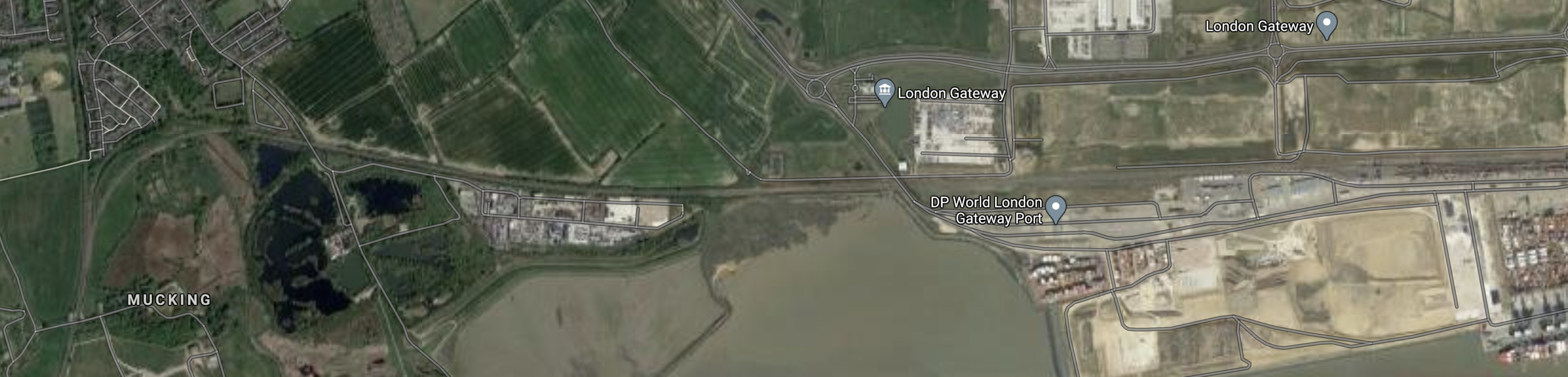
London Gateway would appear to be ready for low or possibly zero-carbon access, using Class 93 locomotives.
High Speed Freight Trains
Consider.
- These Class 93 locomotives will have an operating speed of 110 mph, when running on electrified lines.
- Currently, many multimode freight trains run at speeds of under 90 mph, as Class 66 locomotives don’t have the power to go faster and the wagons carrying the containers have a lower speed limit.
So with new or refurbished wagons capable of travelling at 110 mph, there will be speed improvements in some containerised freight.
As an example of what happens on the UK rail network, at the present time, I have found a freight train that goes between Felixstowe and Coatbridge near Glasgow,
- The route is via Ipswich, London, The North London Line and the West Coast Main Line.
- It can weigh 1600 tonnes.
- The distance is 483 miles.
- The service takes around 16 hours.
- With the exception of between Felixstowe and Ipswich, the route is fully electrified.
I estimate that if this service could run at up to 100 mph on the Great Eastern Main Line and up to 110 mph on the West Coast Main Line, that several hours could be saved.
Electrification Gap Bridging
As I indicated earlier, I believe these Class 93 locomotives will be able to haul a freight train out of Felixstowe to the electrified Great Eastern Main Line.
In Thoughts On A Battery/Electric Replacement For A Class 66 Locomotive, I gave a list of typical gaps in the electrification in the UK.
- Didcot and Birmingham – Around two-and-a-half hours
- Didcot and Coventry – Just under two hours
- Felixstowe and Ipswich – Around an hour
- Haughley Junction and Peterborough – Around two hours
- Southampton and Reading – Around one-and-a-half hours
- Werrington Junction and Doncaster via Lincoln – Around two hours
- Werrington Junction and Nuneaton – Just under two hours
How many of these gaps could be bridged by a Class 93 locomotive working in a diesel hybrid mode?
Stadler have not confirmed the size of the battery, but have said that it can provide 400 kW of power, which gives a maximum of 1.3 MW, when the batteries are working as afterburners for the diesel engine!
If the article in Rail Engineer is correct, I feel there is a high chance, that a Class 93 locomotive can bridge these gaps, with a load of 1500 tonnes in tow.
It is worth looking at current timings between Haughley Junction and Ely, when hauled by a Class 66 locomotive.
- The distance is around 40 mph
- The time taken is around an hour.
- A Class 66 locomotive would put 2.2 MW at the rail.
This locomotive could need up to 2.2 MWh to bridge the gap.
But I don’t believe that a forty mile gap will be impossible for a Class 93 locomotive.
- Stadler will have all the performance data of the bi-mode Class 88 locomotive to draw on.
- The Class 93 locomotive has regenerative braking to help charge the batteries at any stops.
- Several of the large electrification gaps on the UK rail network are in the flat lands of East Anglia and Lincolnshire.
- Modern control systems would be able to eke out the power of the batteries.
I wouldn’t be surprised to find that Stadler have had an objective to design a locomotive that can perform like a Class 66 locomotive for two hours.
Conclusion
If Stadler get the specification, performance and reliability of this locomotive right, they will sell a lot of locomotives for operations like these! And not just in the UK!
Rail Access To The Port Of Felixstowe
This Google Map shows the Port of Felixstowe.
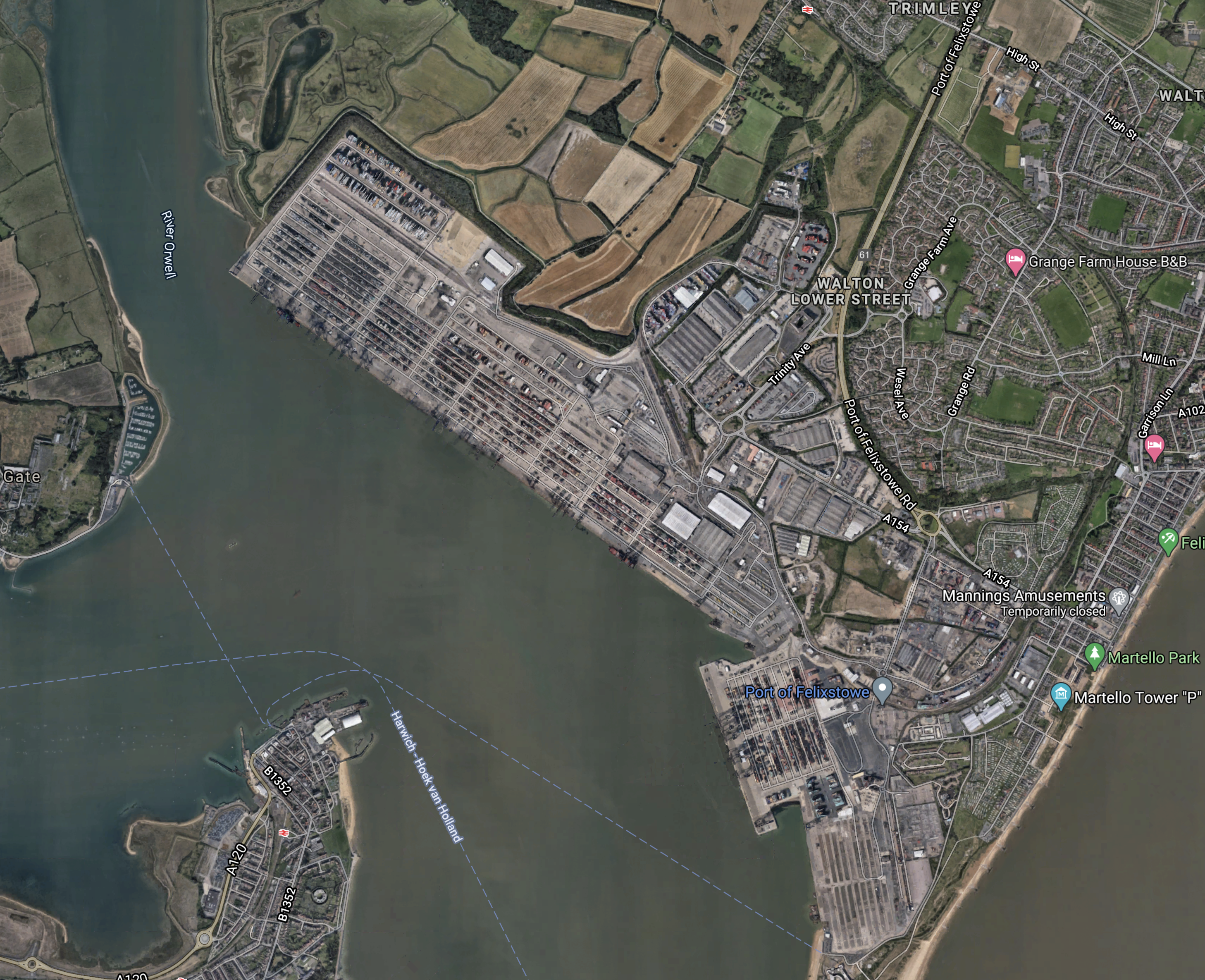
Note.
- Trimley station is at the top edge of the map.
- One rail line curves down from Trimley to the Southern side of the Port.
- Another rail line connects Trimley to the Northern side of the Port.
- A few miles of the route between Trimley and Ipswich, has recently been double-tracked and improved.
I will now describe the important parts of the rail network to and from the Port.
Trimley Station
This Google Map shows Trimley station.
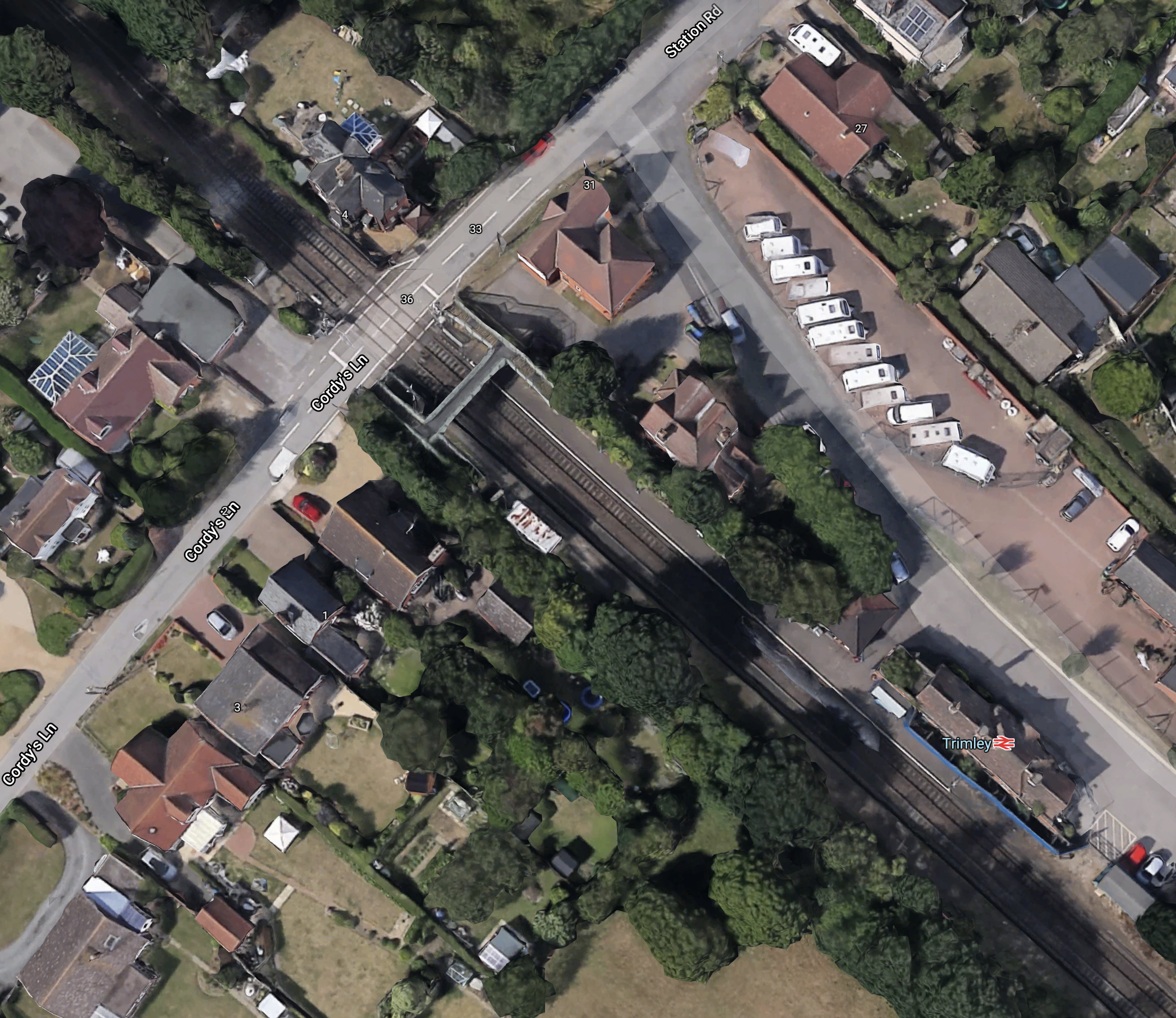
Note.
- Trimley station has two platforms. although only the Northern one, which is numbered 1 is in use.
- There are two tracks through the station.
- There is a footbridge over the tracks.
- Most people cross the lines on the level crossing.
The track through Trimley station has been improved and the improved is described in the Wikipedia entry for the Felixstowe Branch Line, where this is said.
In October 2017 final approval was given for a £60.4m project which includes doubling between Trimley station and Grimston Lane foot crossing. Work started on 7 April 2018 and was predicted to end in Autumn 2019.[29] However, the work was completed by May 2019 and saw changes to the infrastructure at Trimley station where trains from the Felixstowe direction could now access the disused platform road and the establishment of a double track as far as a new junction called Gun Lane Junction just over a mile west of Trimley station. Both lines can be worked bi-directionally and with the increase in freight traffic that resulted from the additional capacity a number of level crossings were either abolished or upgraded to improve safety.
This Google Map shows the section of line, that has now been dualed.
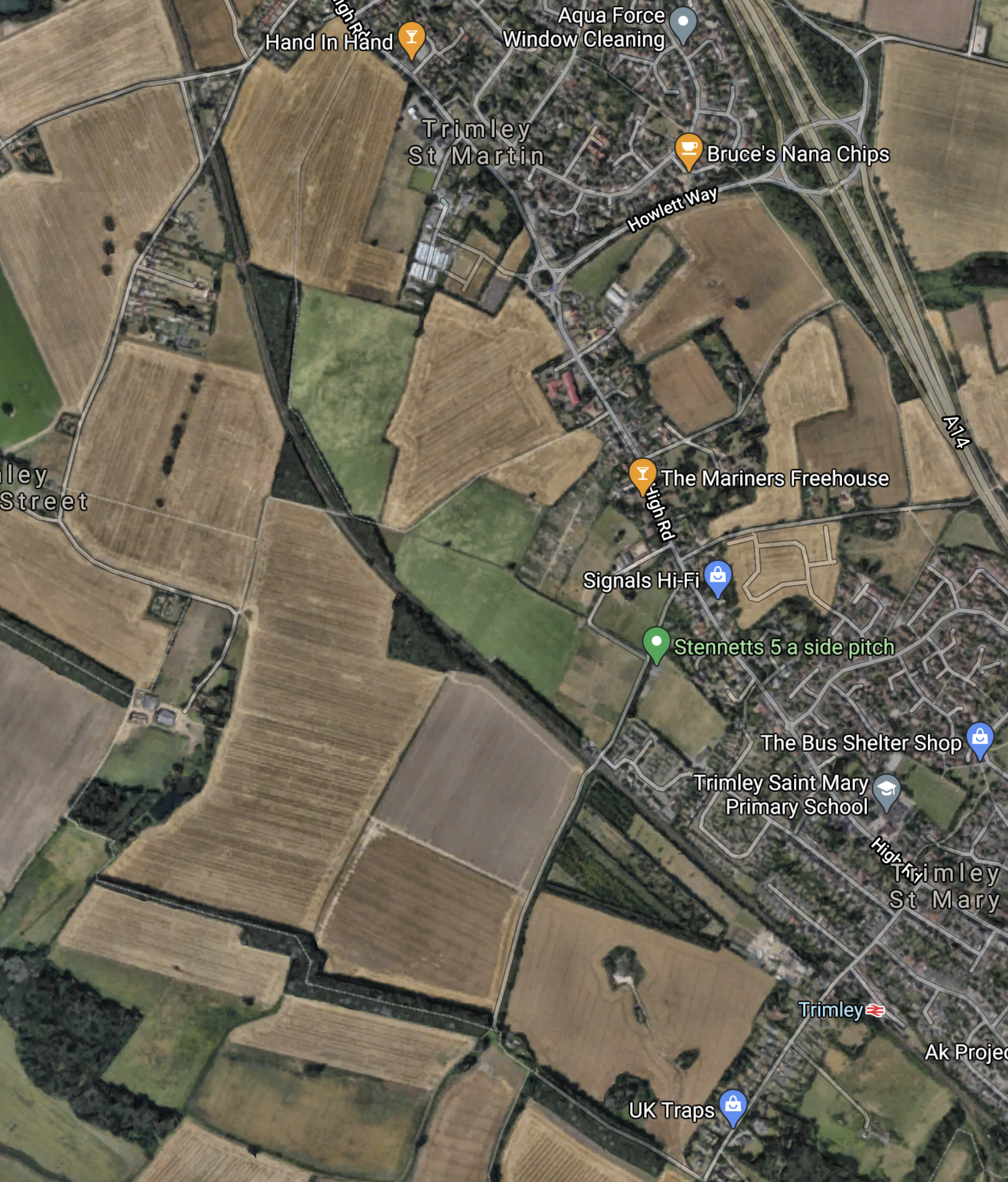
Note.
- Grimston Lane is the triangle of roads in the North-West corner of the map.
- Trimley station is in the South-East corner of the map.
This Google Map shows the track layout East of Trimley station.
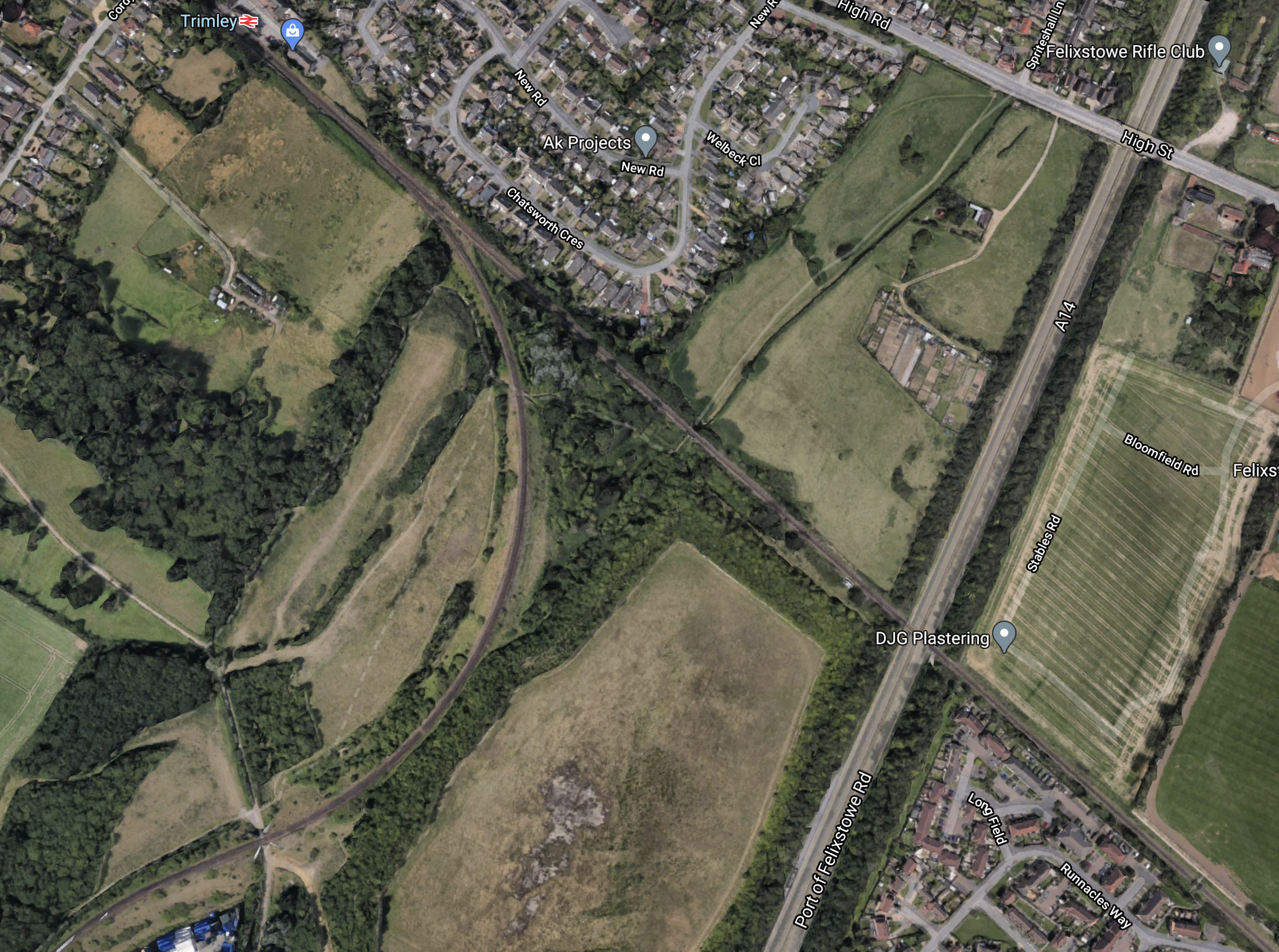
Note.
- Trimley station is at the top of the map.
- There is a junction to the South-East of Trimley station.
- The Northern track goes straight on to Felixstowe station and the Southern Terminal at the Port of Felixstowe.
- The Southern track curves South to the North Terminal at the Port of Felixstowe.
- Both branches are single track.
It would appear that all trains going to and from the South Terminal at the Port, take the Northern track through Trimley station and those going to and from the North Terminal at the Port, take the Southern track.
Southern Access To The Port
This Google Map shows how the trains go between Trimley station and the Southern entry to the Port.
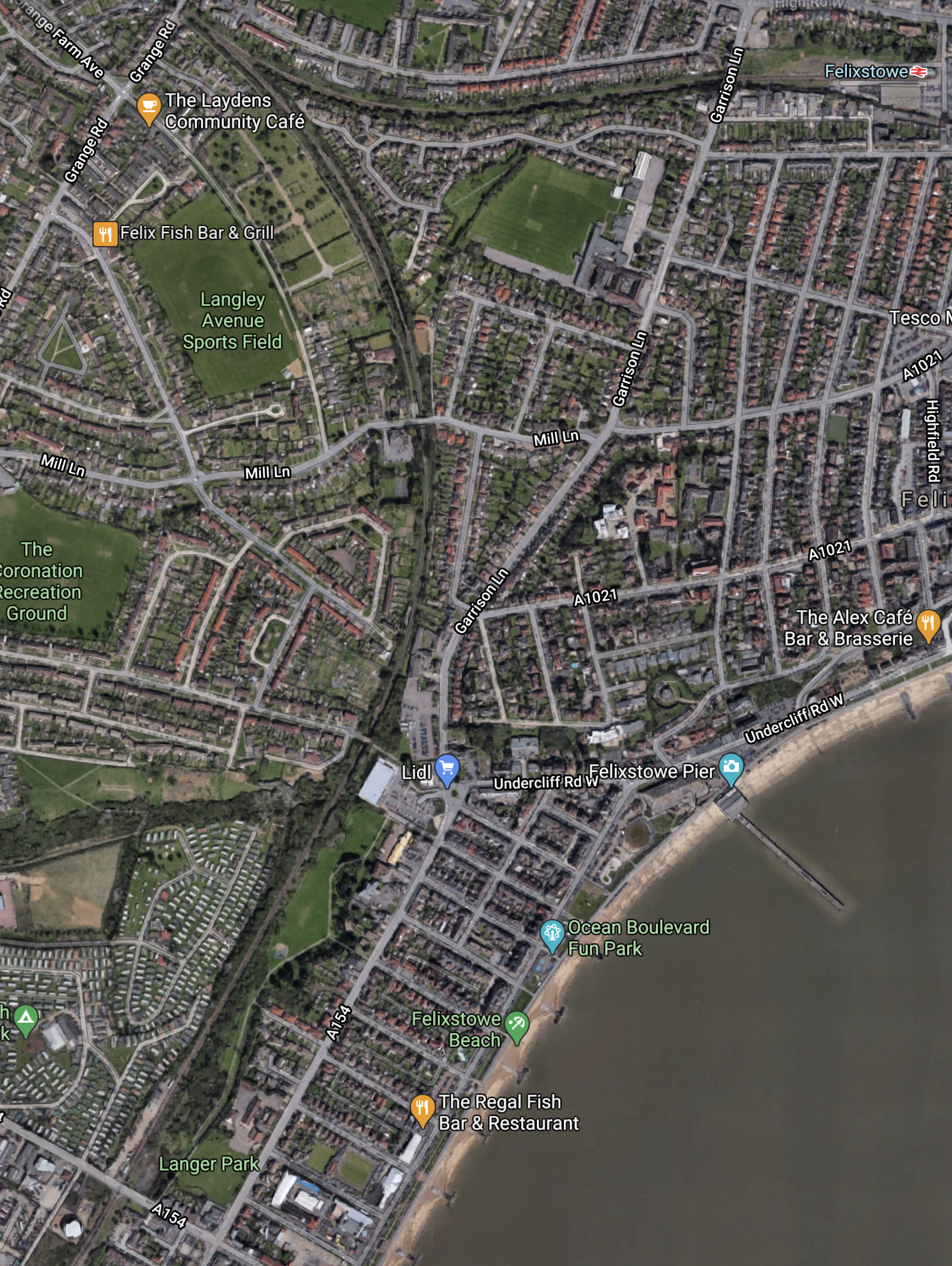
Note.
- Felixstowe station is in the North-East corner of the map.
- The single track from Trimley station splits into two in the North West corner of the map.
- One branch allows an hourly service between Ipswich and Felixstowe stations.
- The second branch goes South to the Port.
- The junction used to be a full triangular junction to allow trains to go between the two Felixstowe stations.
Do the residents of some houses in Felixstowe, get plagued by noise, pollution, smell and the diesel smoke of Class 66 locomotives going to and from the Southern access to the Port?
Felixstowe Beach Station
There used to be a Felixstowe Beach station on the railway to the Port.
This Google Map shows the location.
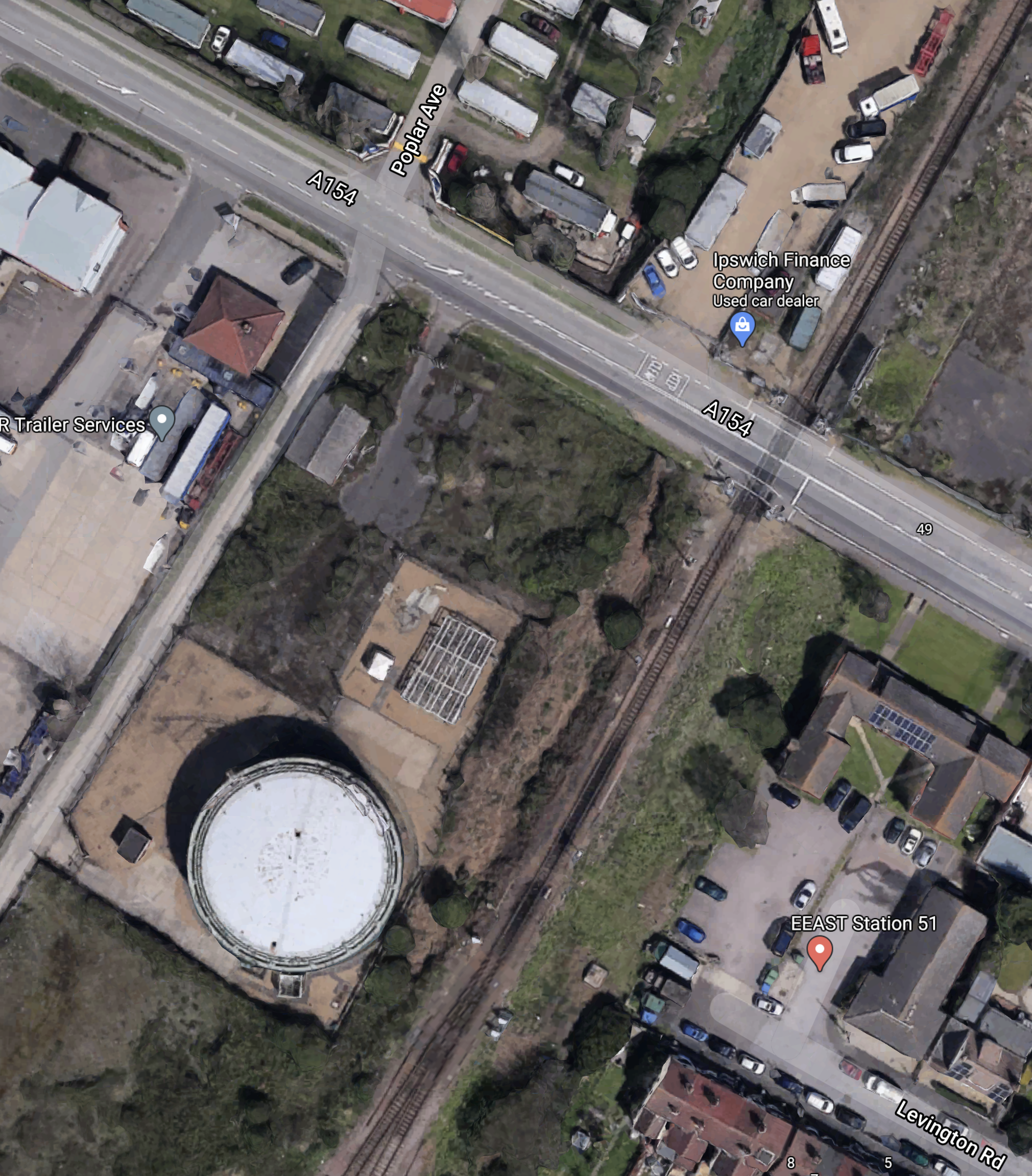
The station was to the North-East of the level crossing.
These pictures show the area as it was a year or so ago.
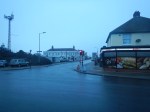
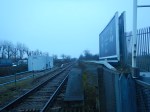
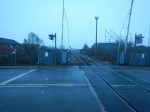
Is there a need for a new Felixstowe Beach station to allow workers and visitors to the Port to avoid the crowded roads?
Future Passenger Services Between Ipswich and Felixstowe
The passenger service between Ipswich and Felixstowe has for many years been a bine of contention between the Port of Felixstowe and passenger train operators.
The Port would like to see the passenger service discontinued, so that they could run more freight trains.
However, to increase both freight and passenger capacity, the East-West Rail consortium has proposed running a tram-train between Felixstowe and Ipswich.
- It would run through the streets of Ipswich to the forecourt of Ipswich station.
- It would serve important points in Ipswich, like the Hospital, Town Centre and Portman Road.
- It would have a frequency of four trains per hour (tph).
I wrote about the proposal in Could There Be A Tram-Train Between Ipswich And Felixstowe?
The Southern area of Felixstowe, along the beach is run down and needs improvement.
So why not run the tram-train all the way along the sea-front to Landguard Point?
This Google Map shows Landguard Point.
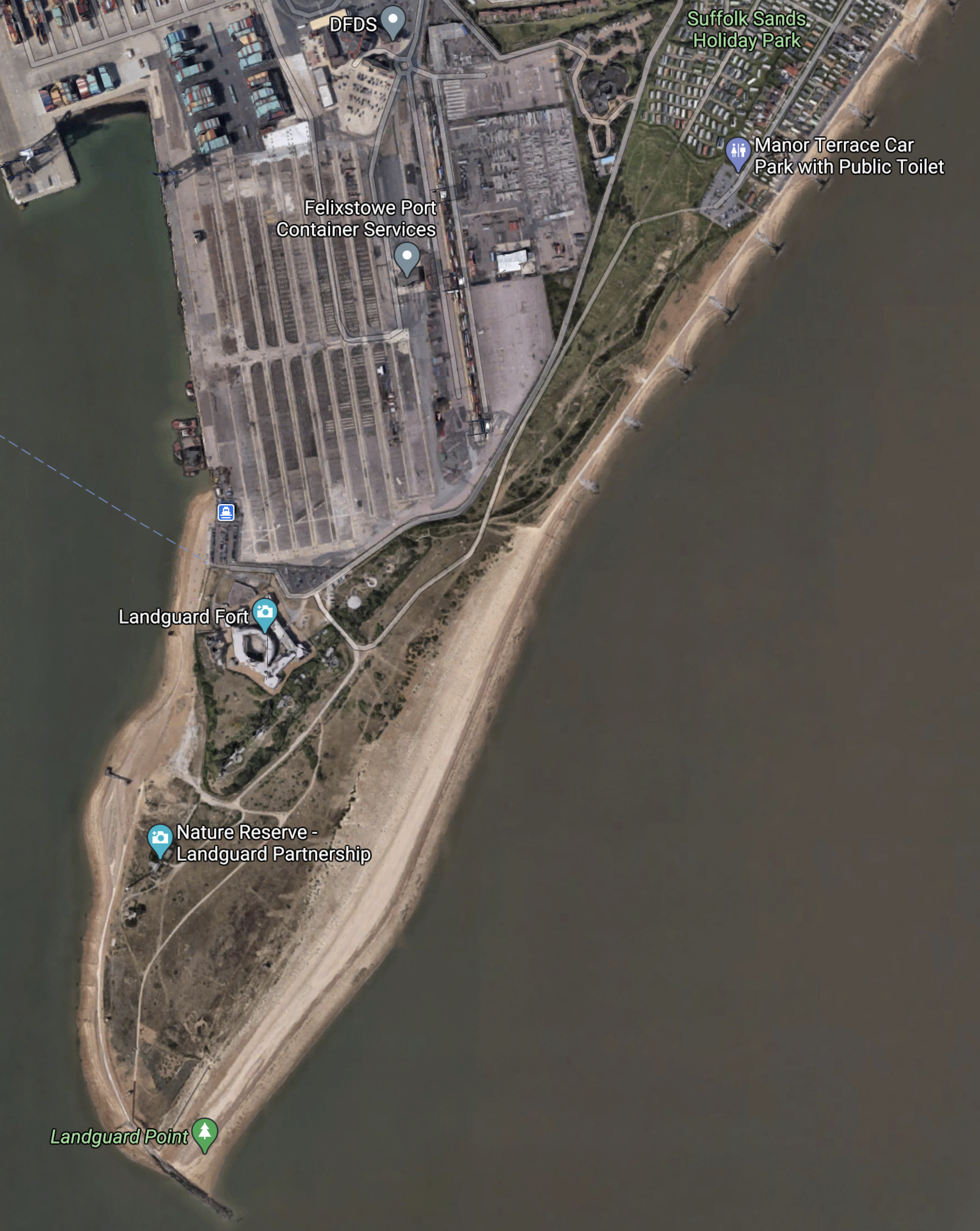
A tram-train going to Landguard Point would do the following.
- Provide a direct passenger rail service between the Port and Ipswich.
- Provide access to the Harwich ferry.
- Improve the economic prospects of the Southern part of Felixstowe.
- Bring visitors to the beach without using their cars.
But the main thing it would do is create decent access to the historic Landguard Fort.




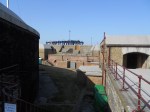



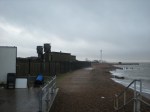

Landguard Fort was the site of the last invasion of the UK, when the Dutch were repelled on the 2nd of July 1667, at the Battle of Landguard Fort.
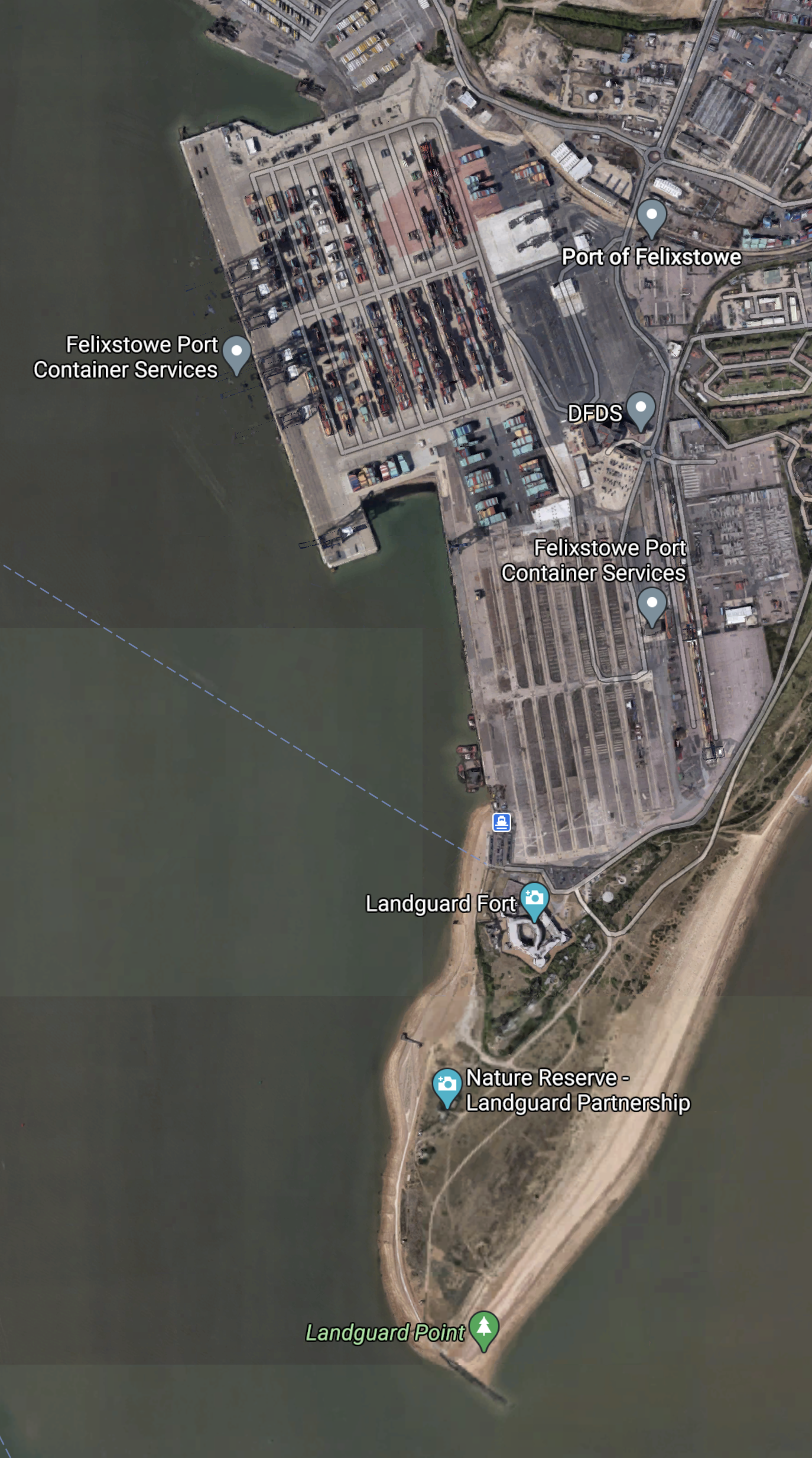
The Southern Terminal At The Port Of Felixstowe
This Google Map shows the Southern terminal of the Port.
This second Google Map shows where the rail line enters the Southern terminal.
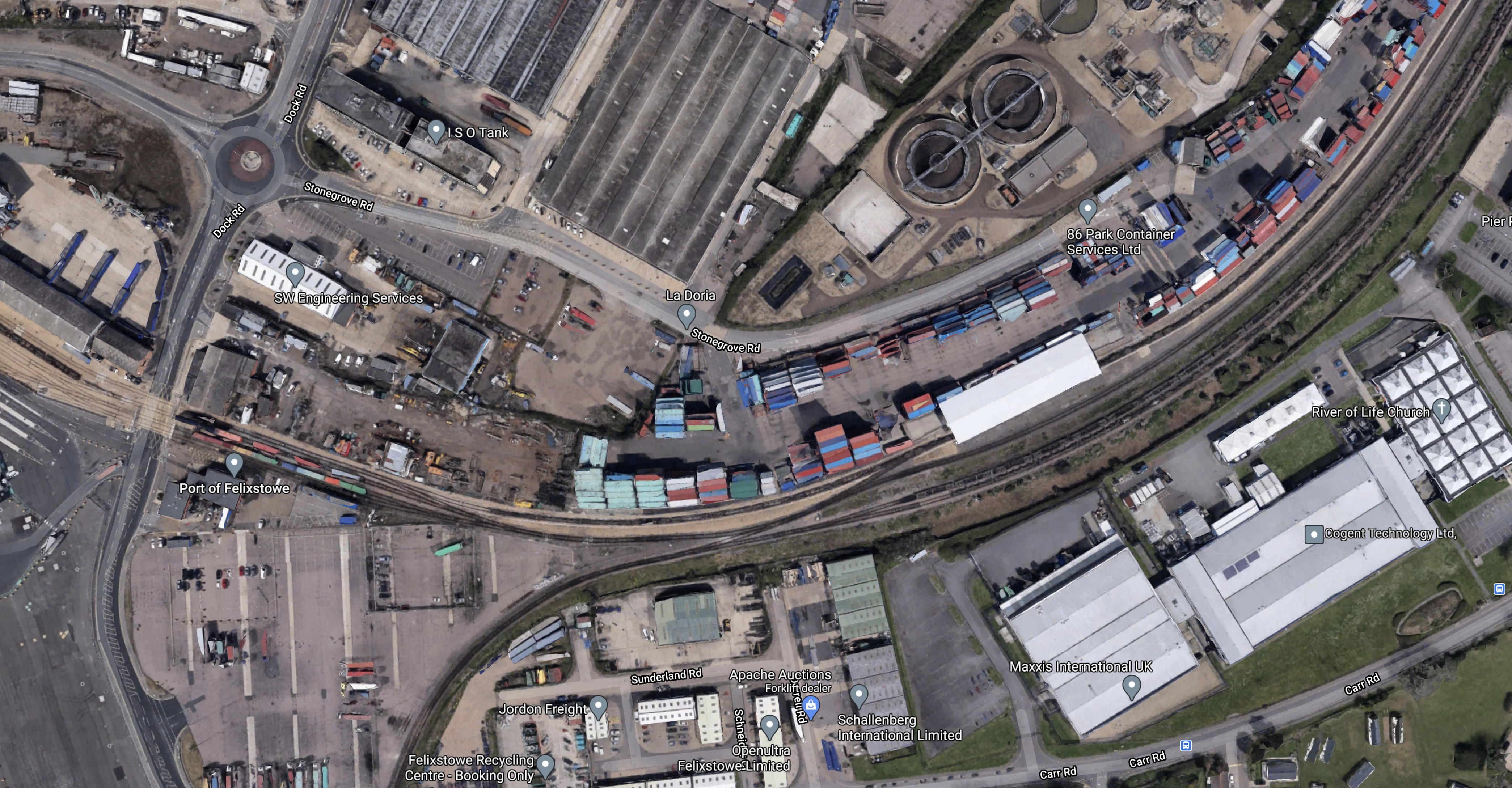
Note how the rail link enters in the North-East corner of the and curves towards the quays before it splits into two.
One branch goes straight on, past some sidings and gives a connection to the Trinity Terminal.
The second branch turns South to several sidings.
This Google Map shows these sidings.
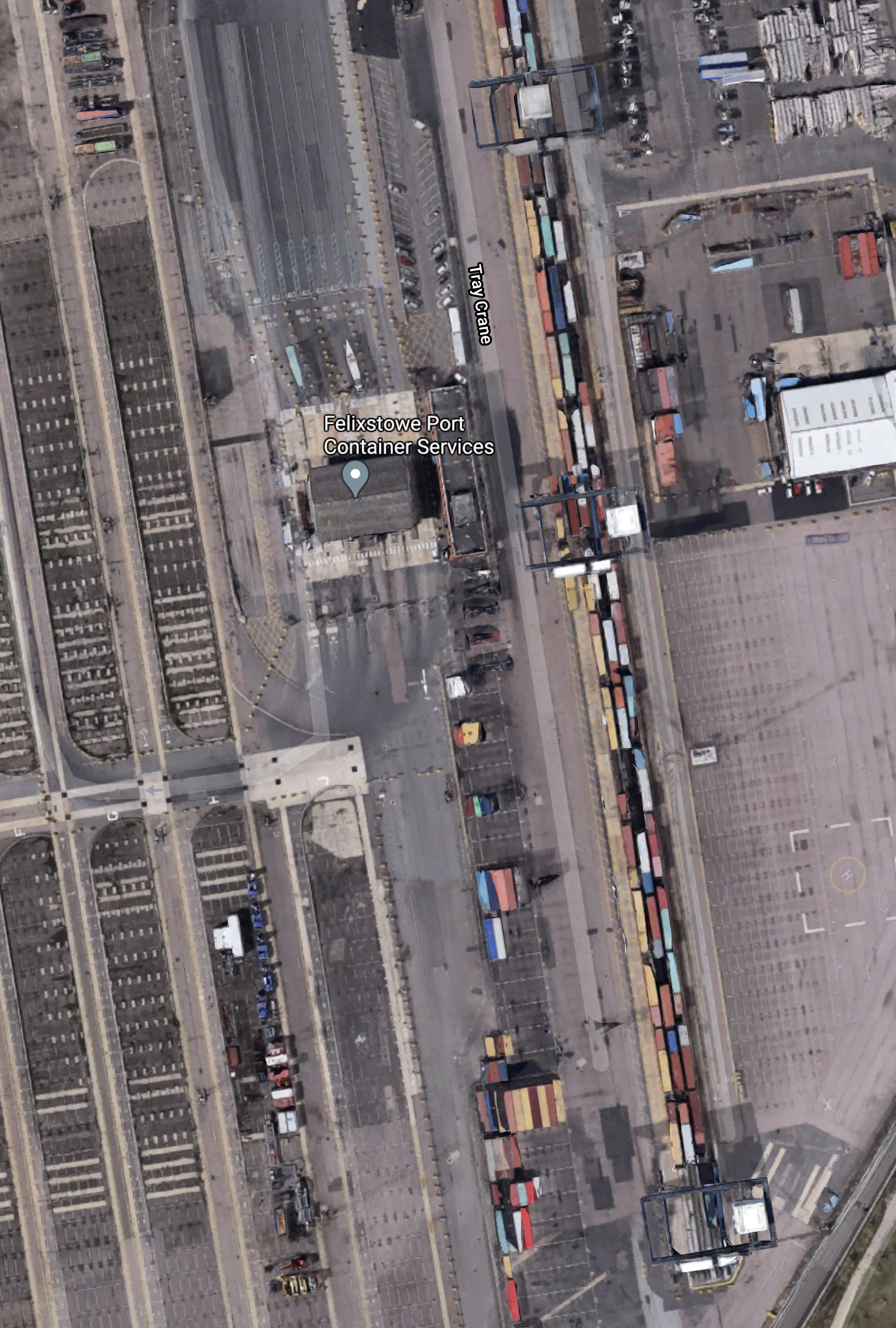
Note that the sidings are towards the right of the image and run North-South.
Northern Access To The Port
This Google Map shows the route taken by the rail access to the Trinity Terminal.
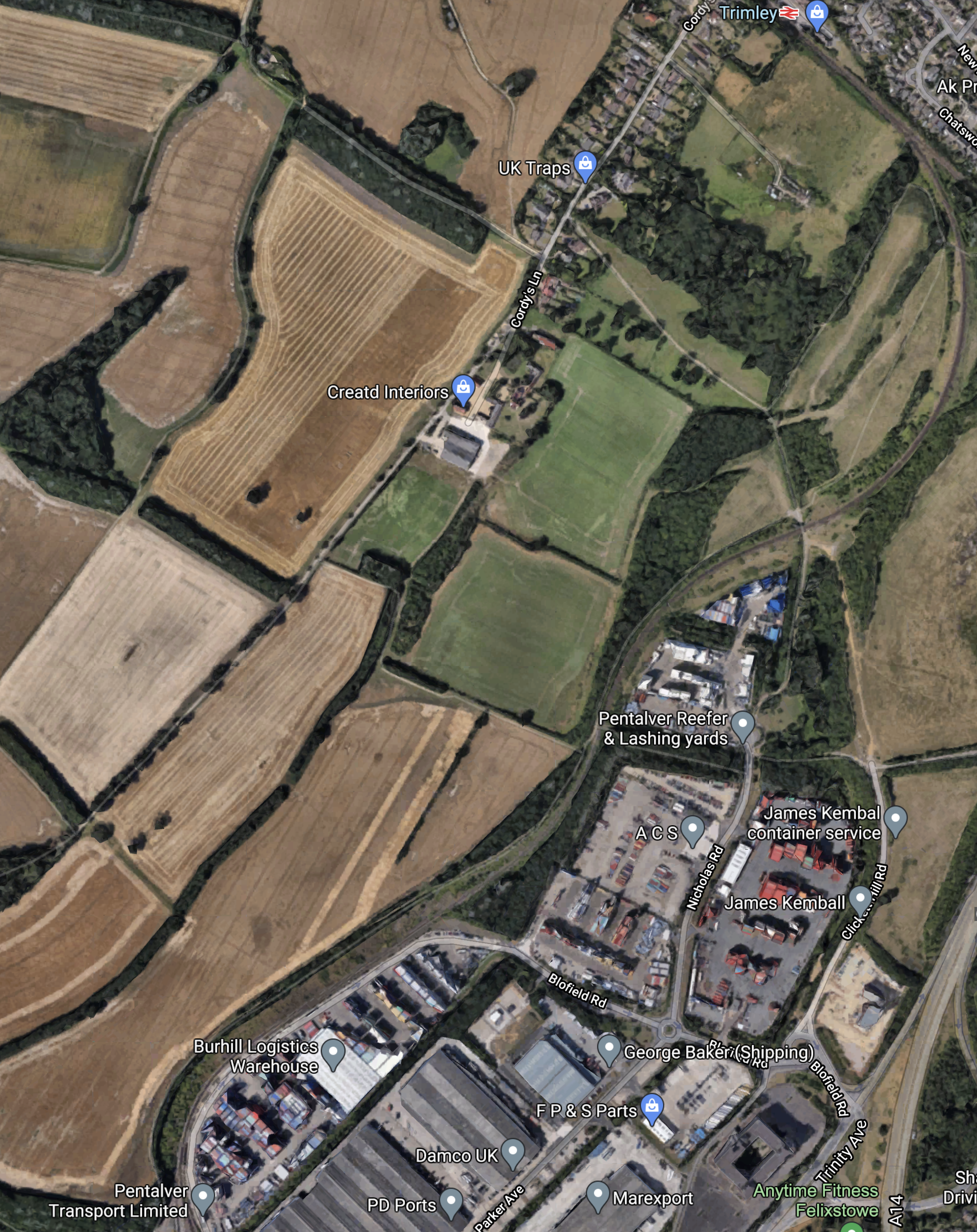
Note.
- The route branches off South just to the East of Trimley station.
- It curves its way South to the South-West corner of the map, where it enters the Port.
- It is single track.
This second Google Map shows where it enters the Port.
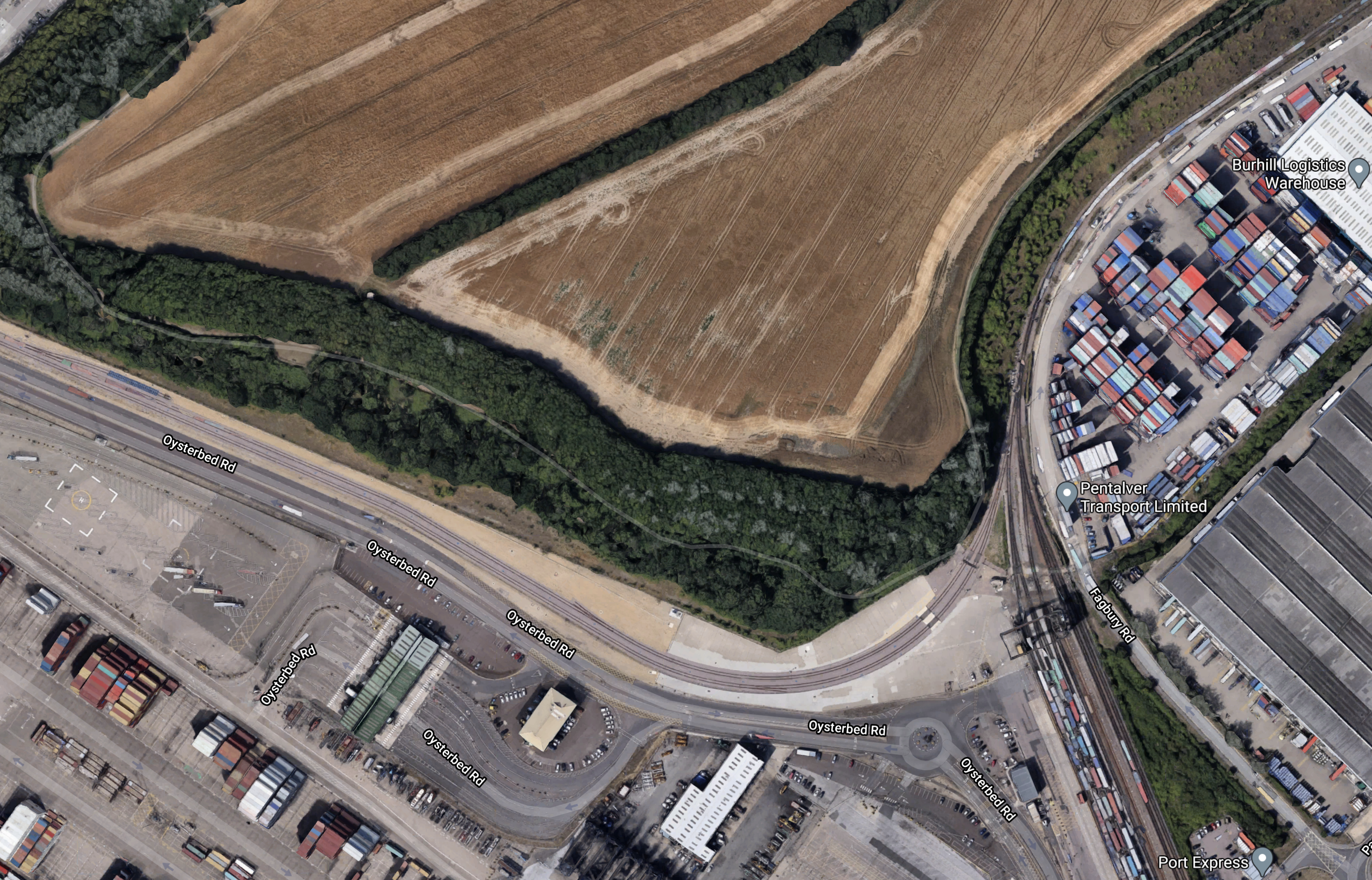
Note.
- The track enters from the North-West corner of the map.
- It then splits into two branches.
- One branch goes West to the Trinity Terminal.
- The second branch goes South into a set of sidings.
It looks to be a well-designed access, to the Felixstowe Branch Line at Trimley station.
The Trinity Terminal At The Port Of Felixstowe
This Google Map shows the Trinity terminal.
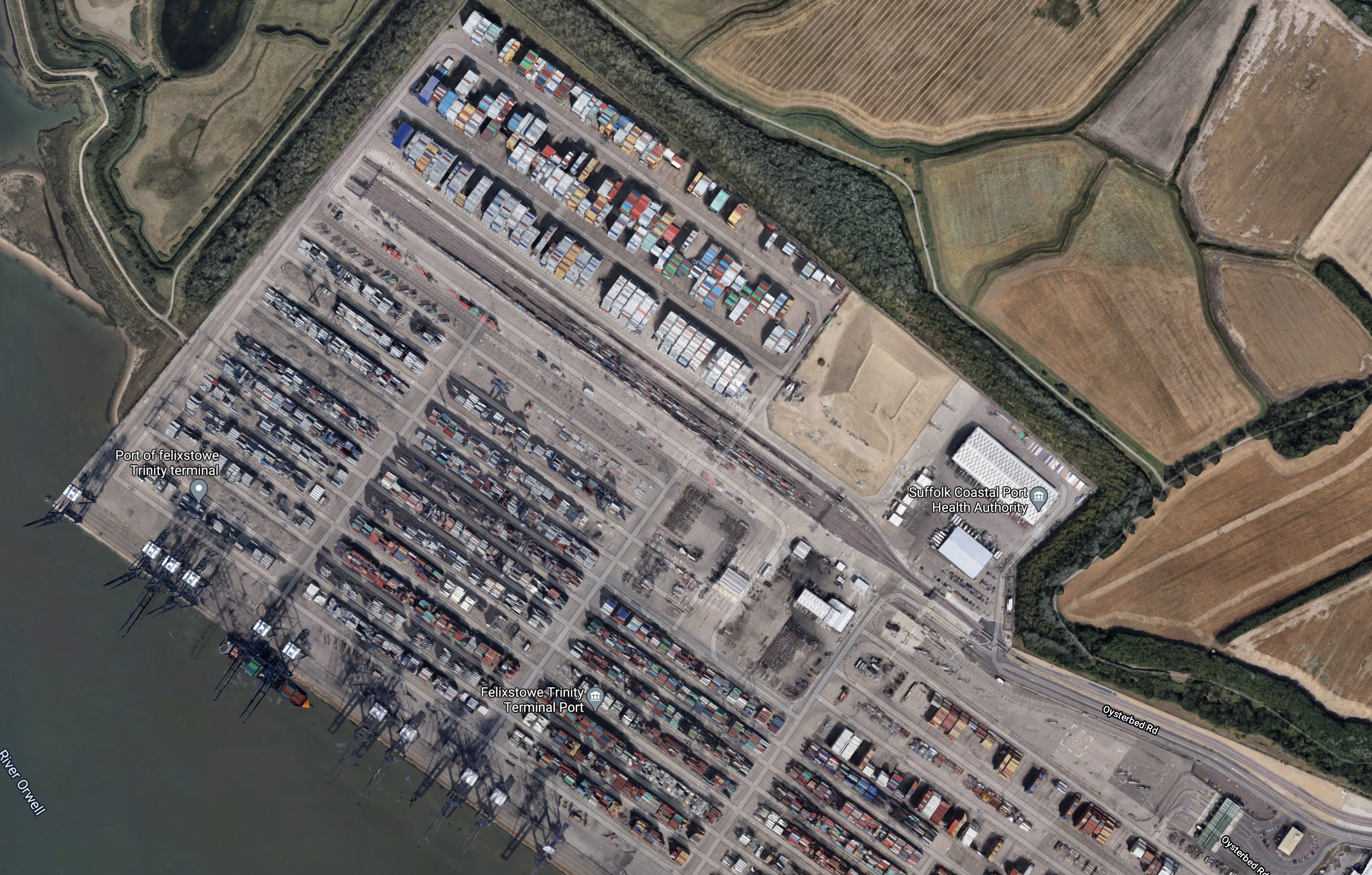
Note the rail sidings and the link to the East, which links to the previous map.
This Google Map shows the rail sidings in detail.
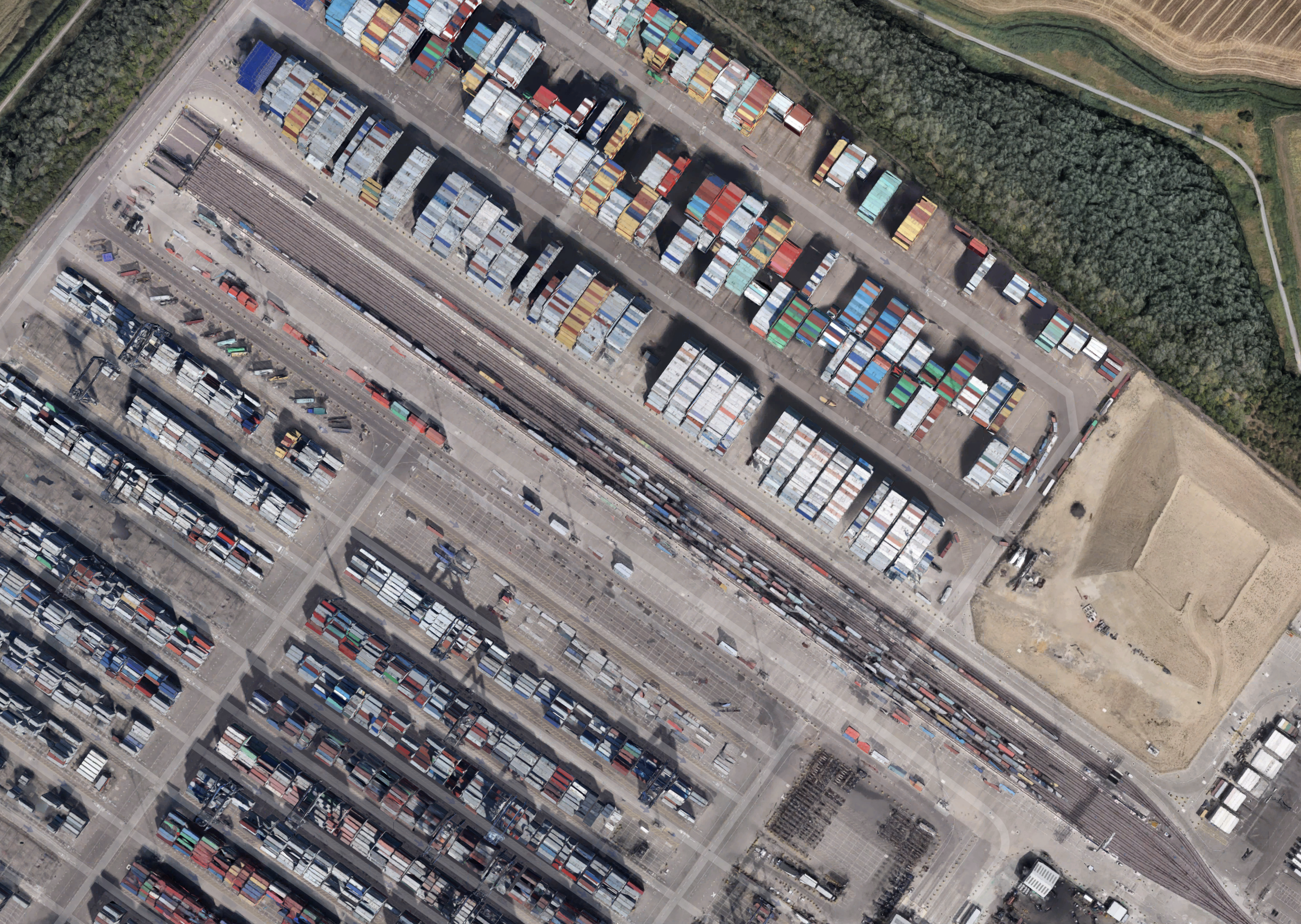
I hope the pictures give a clear impression of the size of the port, which in the next few years will probably need more trains to the rest of the country.
There is also a yard that appears to be connected to both the North and South train entrances to the Port.
This yard is shown in this Google Map.
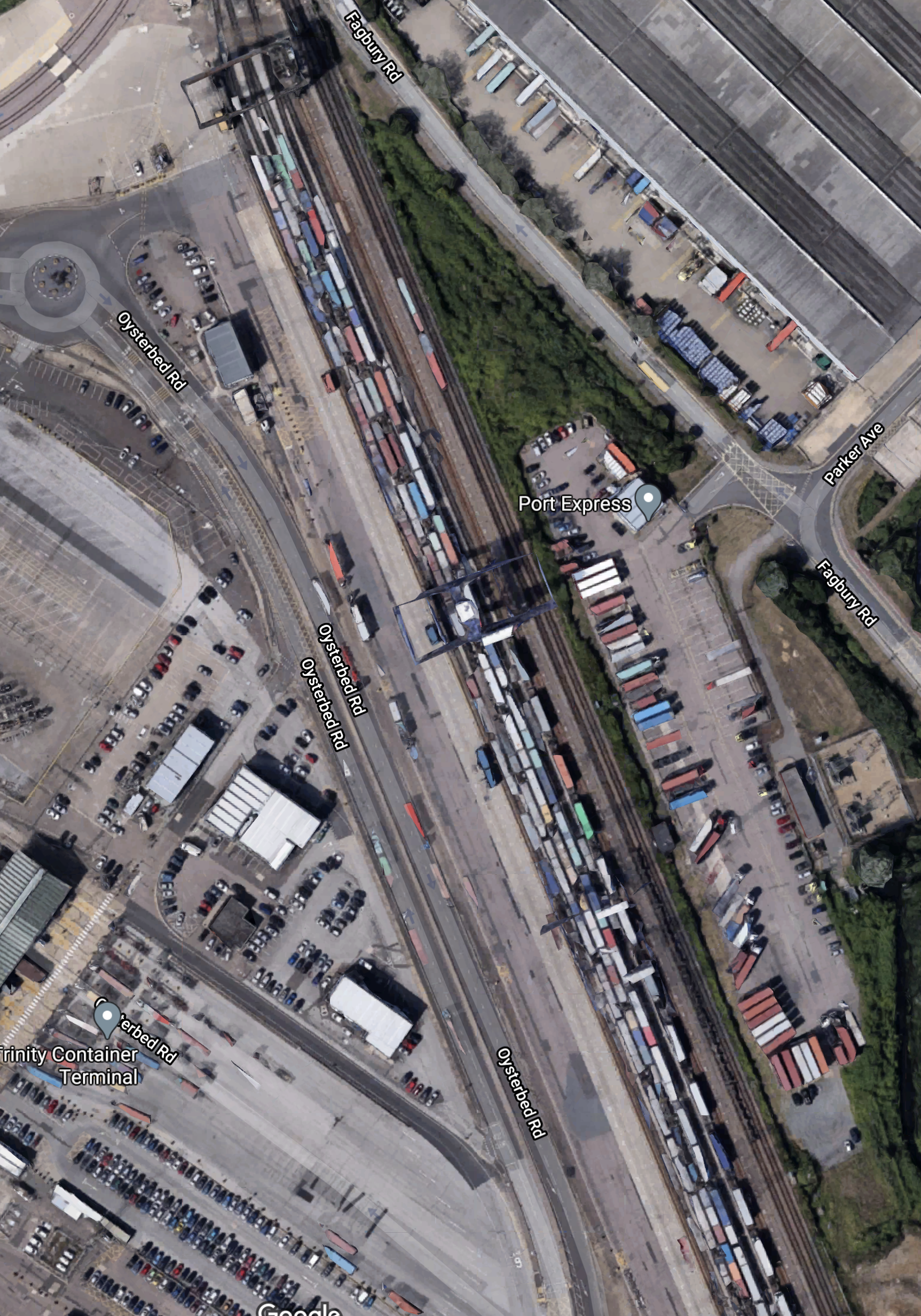
Note, the cranes to lift containers on and off.
Electrification In The Port
Note that there is no electrification in the Port or on the access links from Trimley station.
I once spent half-an-hour with a fellow Ipswich supporter before an away match. He turned out to be a crane driver at the Port of Felixstowe and we got to talking about why the trains weren’t electrified.
He told me that accidents to happen and that you you don’t want high voltage wires about, when you’re swinging containers on and off trains.
Especially, when the trains are close together, as they are in the previous image.
Class 73 Locomotives And The Port Of Felixstowe
The first Class 73 locomotives have now been ordered by Rail Operations Group (UK), and I wrote about the order in Trimode Class 93 Locomotives Ordered By Rail Operations (UK).
What surprised me about the order was that it was for thirty locomotives, whereas only ten were talked about two years ago. I know, that Rail Operations (UK) have received a big capital injection, as was reported in this article on Rail Advent, which is entitled Rail Operations Group Acquired By STAR Capital Partnership. but they must have ambitious plans for thirty locomotives.
Could it be that the specification of these locomotives is geared to operating out of ports like Felixstowe?
Consider.
- A locomotive probably needs a self-powdered capability to take a heavy train in or out of the Port of Felixstowe.
- Would a Class 73 locomotive have sufficient range and power to take the average train out of the port using bi-mode diesel and battery power until it arrived at the electrification of the Great Eastern Main Line?
- How would these locomotives handle a gap like Haughley Junction and Ely?
- A Class 73 locomotive could probably handle these container trains at 100 mph to and from London on the Great Eastern Main Line, which would keep them out of the way of Greater Anglia’s express trains.
- What speed would these locomotives be able to achieve under electric power on the West Coast and East Coast Main Lines?
- The two single-track access links between Trimley station and the Port could be electrified to charge the batteries both ways and to accelerate the train fast out of the Port.
I also feel that other ports would benefit.
Conclusion
I very much feel, that the specification of the Class 93 locomotive with its trimode capability is ideal for working to and from ports and freight terminals.
Distributed Propulsion ‘Maybe The Only Means’ For Small Electric Flight Progress
The title of this post, is the same as that of this article on the Institute of Mechanical Engineers web site.
If you want to fly again, then this article offers pointers to how you might do it.
The E-Fan X Airliner
It gives this latest information on the E-Fa X airliner being tested by Rolls-Royce and Airbus.
Amid the strain of the Covid-19 pandemic, Rolls-Royce and Airbus cancelled flight tests of their E-Fan X airliner, a promising project that could have provided vital data on issues such as thrust management and electric systems at altitude.
Does that mean cancelled or scrapped?
2.5 MW From A Beer Keg-Sized Generator
This paragraph could be important.
“Among the many great achievements from E-Fan X has been the generator – about the same size as a beer keg – but producing a staggering 2.5MW,” said Vittadini’s Rolls-Royce counterpart Paul Stein. “That’s enough power to supply 2,500 homes and fully represents the pioneering spirit on this project.”
This picture shows a Class 66 locomotive.
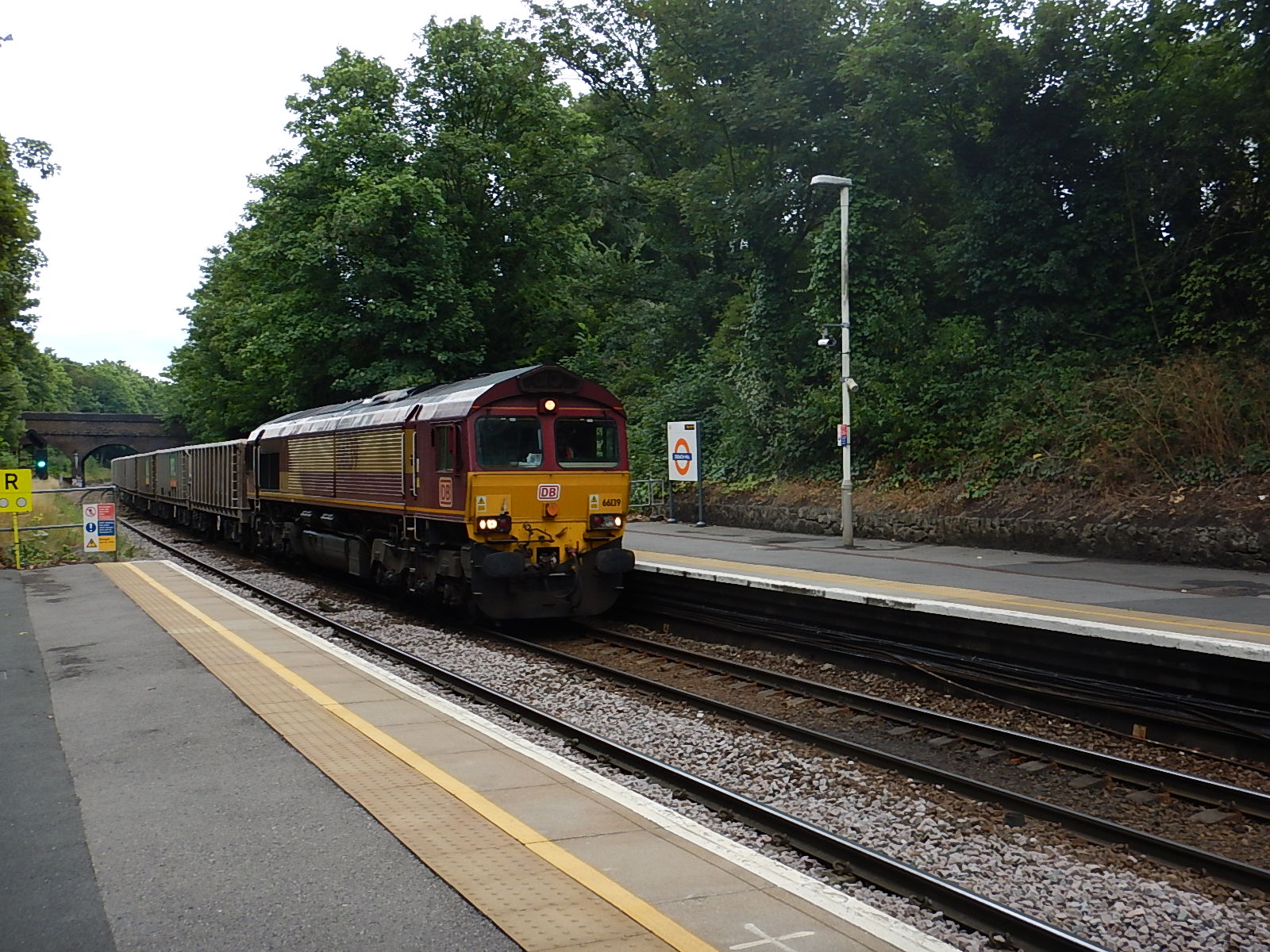
The locomotive has a 2,460 kW diesel engine and an electric transmission.
I just wonder, if Rolls Royce’s high-powered small generator could replace the large, noisy and smelly diesel engines in these locomotives.
- It will be a lot lighter in weight.
- Could some of the saved weight be used for a battery?
- It could run on aviation biofuel, rather than diesel.
- I wrote about aviation biofuel in Grant Shapps Announcement On Friday.
If the technology worked there are 455 of the noisy locomotives.
Snowballing Improvements
The article has a section with this title and it talks about how electric power may lead to other advantages.
Conclusion
Electric aircraft are more promising, than many think!
’88’ Makes Sizewell Debut
The title of this post, is the same as that of a news snippet in the June 2020 Edition of Modern Railways.
There is a picture of the electro-diesel Class 88 locomotive moving a nuclear flask from Sizewell on the closed Aldeburgh branch line to Crewe.
Note that is about 27-28 miles from the electrification at Ipswich East Suffolk Junction and the siding close to the power station, where flasks are loaded.
This is a classic use of an electric locomotive, that has a Last Mile-capability using an on-board diesel engine.
Many ports in the UK, like these examples are a few miles from the electrified network.
- Felixstowe – 16 miles
- Liverpool – 5 miles
- London Gateway – 4 miles
- Southampton – 2 miles
How many trains could be hauled to and from these and other ports using a Class 88 locomotive or their similar, but more powerful sibling; the Class 93 locomotive?
Conclusion
I suspect there are a number of routes that could be handled by electro-diesel locomotives.
I would like to see a serious analysis of all duties performed by diesel locomotives, like for example; Classes 66, 67, 68 and 70 locomotives, to see how many could be performed by suitably-sized electro-diesel locomotives.
If there is a gap in the market, then a rolling stock leasing company, should fill it!
Just like Beacon Rail Leasing and Clayton Equipment appear to have done with a diesel shunter, which I wrote about in UK Diesel-Battery Hybrid Locomotive Lease Fleet Ordered.
As Beacon Rail Leasing seem to be heavily involved in the leasing of electro-diesel locomotives, perhaps, they’re working on it?
Thirsty High-Rollers … Mining’s Heavy Haulers Prime Candidates For Hydrogen Conversion
The title of this post, is the same as that of this article on ecogeneration.
You understand, what the author means about mining’s heavy haulers, when you open the article.
This paragraph describes their carbon emissions.
One large scale dump truck, depending on the haul road it is using, will use between 100 and 140 litres of diesel per 100km. These vehicles operate all day every day except for maintenance down time. That’s between 260kg and 360kg of CO2 per 100km per truck.
Large open pit mines have tens of these vehicles operating continuously, so the numbers build up very quickly.
The author then goes on to say why, that converting these vehicles to green hydrogen makes a lot of sense.
The dump trucks are already diesel/electric, which means that the diesel generator can be replaced with a hydrogen fuel cell and a battery.
Mining giant; Anglo-American will be introducing a prototype hydrogen-powered dump truck at a platinum mine in South Africa this year.
These paragraphs describe the transmission.
The vehicle, which is called a fuel cell electric vehicle (FCEV) haul truck, will be powered by a hydrogen fuel cell module paired with Williams Advanced Engineering’s scalable high-power modular lithium-ion battery system. Williams provides batteries for FIA’s E-Formula motorsport.
This arrangement will replace the existing vehicle’s diesel engine, delivering in excess of 1MWh of energy storage. The battery system will be capable of recovering energy through regenerative braking as the haul truck travels downhill.
Note that the truck has more energy storage than is proposed for a four-car battery-electric train, like the Class 756 train, which has only 600 kWh.
The author finishes with this concluding paragraph.
With the major mining companies focusing on making significant strides in decarbonisation by 2030 expect there to be more announcements such as this focusing this “low hanging fruit” for the mining industry’s to materially reduce its carbon foot print.
Reading this, I can’t help feeling that replacement of a Class 66 locomotive with a zero-carbon hydrogen-battery-electric hybrid unit could be possible.
 The Anonymous Widower