Thoughts On The Actual Battery Size In Class 756 Trains And Class 398 Tram-Trains
A Freedom of Information Request was sent to Transport for Wales, which said.
Please confirm the battery capacity and maximum distance possible under battery power for the Tram/Train, 3 & 4 Car Flirts.
The reply was as follows.
The batteries on the new fleets will have the following capacities: –
- Class 756 (3-car) Flirt – 480 kWh
- Class 756 (4-car) Flirt – 600 kWh
- Class 398 tram-trains – 128 kWh
I will now have thoughts on both vehicles separately.
Class 756 Trains
In More On Tri-Mode Stadler Flirts, I speculated about the capacity of the batteries in the tri-mode Stadler Flirts, which are now called Class 756 trains, I said this.
I wonder how much energy storage you get for the weight of a V8 diesel, as used on a bi-mode Flirt?
The V8 16 litre diesel engines are made by Deutz and from their web site, it looks like they weigh about 1.3 tonnes.
How much energy could a 1.3 tonne battery store?
The best traction batteries can probably store 0.1 kWh per kilogram. Assuming that the usable battery weight is 1.2 tonnes, then each battery module could store 120 kWh or 360 kWh if there are three of them.
I also quoted this from the July 2018 Edition of Modern Railways.
The units will be able to run for 40 miles between charging, thanks to their three large batteries.
Since I wrote More On Tri-Mode Stadler Flirts in June 2018, a lot more information on the bi-mode Stadler Class 755 Flirt has become available and they have entered service with Greater Anglia.
Four-car trains weigh around 114 tonnes, with three-car trains around a hundred. I can also calculate kinetic energies.
How Good Was My Battery Size Estimate?
These are my estimate and the actual values for the three batteries in Class 756 trains
- My estimate for Class 756 (3- & 4-car) – 120 kWh
- Class 756 (3-car) Flirt – 160 kWh
- Class 756 (4-car) Flirt – 200 kWh
So have Stadler’s battery manufacturer learned how to squeeze more kWh into the same weight of battery?
In Sparking A Revolution, I talked about Hitachi’s bullish plans for battery-powered trains, in a section called Costs and Power.
In that section, I used Hitachi’s quoted figures, that predicted a five tonne battery could hold a massive 15 MWh in fifteen years time.
If Stadler can get the same energy density in a battery as Hitachi, then their battery trains will have long enough ranges for many applications.
Class 398 Tram-Trains
In Sheffield Region Transport Plan 2019 – Tram-Trains Between Sheffield And Doncaster-Sheffield Airport, I showed this map of the route the trams would take.
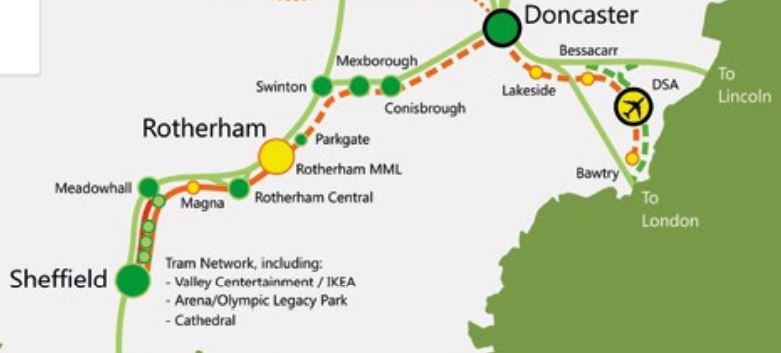
I also said this about the tram-trains.
The distance between Rotherham Parkgate and Doncaster is under twelve miles and has full electrification at both ends.
The Class 399 tram-trains being built with a battery capability for the South Wales Metro to be delivered in 2023, should be able to reach Doncaster.
But there are probably other good reasons to fully electrify between Doncaster and Sheffield, via Meadowhall, Rotherham Central and Rotherham Parkgate.
The major work would probably be to update Rotherham Parkgate to a through station with two platforms and a step-free footbridge.
Currently, trains take twenty-three minutes between Rotherham Central and Doncaster. This is a time, that the tram-trains would probably match.
If you adopt the normal energy consumption of between three and five kWh per vehicle mile on the section without electrification between Rotherham Parkgate and Doncaster, you get a battery size of between 108 and 180 kWh.
It looks to me, that on a quick look, a 128 kWh battery could provide a useful range for one of Stadler’s Class 398/399 tram-trains.
Class 398 Tram-Trains Between Cardiff Bay and Cardiff Queen Street Stations
The distance between these two stations is six chains over a mile,
Adding the extra bit to the flourish might make a round trip between Cardiff Queen Street and The Flourish stations perhaps four miles.
Applying the normal energy consumption of between three and five kWh per vehicle mile on the section without electrification between Cardiff Queen Street and The Flourish, would need a battery size of between 36 and 60 kWh.
Conclusion
The battery sizes seem to fit the routes well.
I Design A Hydrogen Aventra
This article on Rail News is entitled Alstom Moves Ahead With Bombardier Takeover.
This is a paragraph in the report, which is dated the eighteenth of last month.
n a statement issued last night, Alstom said it had ‘signed a Memorandum of Understanding with Bombardier Inc. and Caisse de dépôt et placement du Québec in view of the acquisition of Bombardier Transportation. Post-transaction, Alstom will have a backlog of around €75bn and revenues around €15.5bn. The price for the acquisition of 100 per cent of Bombardier Transportation shares will be €5.8bn to €6.2bn, which will be paid via a mix of cash and new Alstom shares.’
That sounds pretty definite to me.
In the UK, Alstom will take over a company with the following projects.
- A large order book for building Aventras in the Litchurch Lane factory at Derby.
- Several support projects for existing train fleets.
- A joint design project with Hitachi to bid for the trains for High Speed Two. Alstom are also bidding for High Speed Two, as are CAF, Siemens and Talgo.
- Design and build the cars for the Cairo monorail.
- Bombardier have been offering train operating companies a bi-mode Aventra.
There are also rumours, that Bombardier are in the running for a large order for Southeastern.
What are Bombardier’s strengths in the UK?
- The Aventra is without doubt an excellent train, but with some software teething troubles.
- The company has the ability to turn out finished trains at a formidable rate.
- The company can make the carriage bodies in a high-tech plant.
- Could the bodies be built in a larger size?
- Or even a smaller size for a country like Australia, New Zealand, Nigeria or South Africa that uses a narrow gauge?
- The company has the ability to design complete trains to the UK’s smaller standards.
- The company can make trains in both European-sizes in Europe and UK-sizes in Derby.
- The company builds bogies for other train manufacturing companies.
On the other hand, Bombardier has the following weaknesses.
- It doesn’t make any diesel-powered trains, although it has successfully trialled battery-powered trains.
- It has dismissed hydrogen-powered trains.
- But above all the finances of the parent company are a basket case.
It appears to me that Alstom might bring much needed technology and finance to Bombardier UK. In return, they will acquire a modern design, that can be used in the UK and other countries, that use a smaller loading gauge.
Obviously, if the takeover goes through, more information should be forthcoming in the near to mid future.
The Future For Hydrogen Trains In The UK
I would suspect, that Alstom have designed a train in the Class 321 Breeze, that fits their view of what will work well in the UK train market.
- It is a sixty metre long train, for a couple, where most platforms are at least eighty metres long.
- It has a capacity similar to that of a modern two-car diesel multiple unit.
- The Renatus version of the Class 321 train has a modern and reliable AC-based traction package. Or that’s what a Greater Anglia driver told me!
- Eversholt Rail Group have already devised a good interior.
- I said I was impressed with the interior of the train in A Class 321 Renatus.
- The train can operate at 100 mph on a suitably electrified line, when running using the electrification.
- Adding an extra trailer car or two could be a simple way of increasing capacity.
I should say, that I think it will be a quieter train, than the Coradia iLint, which has a rather noisy mechanical transmission.
I feel that a Class 321 Breeze train could be a good seller to routes that will not be electrified, either because of difficulty, expence or politics.
With a 100 mph operating speed on electrification and perhaps 90 mph on hydrogen power, it may have enough performance to work a lot of routes fast, profitably and reliably.
I think, that the Alston Class 321 Breeze will prove whether there is a market for hydrogen-powered trains in the UK.
I would think, that use of these trains could be a big application.
Replacement Of Two-And Three-Car Diesel Multiple Units
There are a lot of these still in service in the UK, which include.
- 3 x three-car Class 150 trains
- 134 x two-car Class 150 trains
- 114 x two-car Class 156 trains
- 15 x three-car Class 158 trains
- 155 x two-car Class 158 trains
- 30 x three-car Class 159 trains
All of these are currently running services all over Great Britain and I have ignored those trains run by Chiltern Railways as they will logically be replaced by a dedicated batch of new trains, with possible full- or part-electrification of the route. Or they could be custom-designed hydrogen trains.
As there are only 105 Class 321 trains that can be converted, some other trains will be needed.
I suppose classes of trains like Class 365 trains and others can be converted, but there must come a point, when it will be better to build new hydrogen trains from scratch.
Components For Hydrogen Trains
This article on Rail Business is entitled Breeze Hydrogen Multiple-Unit Order Expected Soon.
It says this about the design of the Alstom Breeze train.
The converted HMUs would have three roof-mounted banks of fuel cells on each of the two driving vehicles, producing around 50% more power than the iLint. Two passenger seating bays and one door vestibule behind each cab would be replaced by storage tanks. The fuel cells would feed underfloor battery packs which would also store regenerated braking energy. The current DC traction package on the centre car would be replaced by new AC drives and a sophisticated energy management system. Despite the loss of some seating space, each set of three 20 m vehicles would provide slightly more capacity than a two-car DMU with 23 m cars which it would typically replace.
The following components will be needed for hydrogen trains.
One Or More Hydrogen Tanks
This picture shows the proposed design of the Alstom Class 321 Breeze.
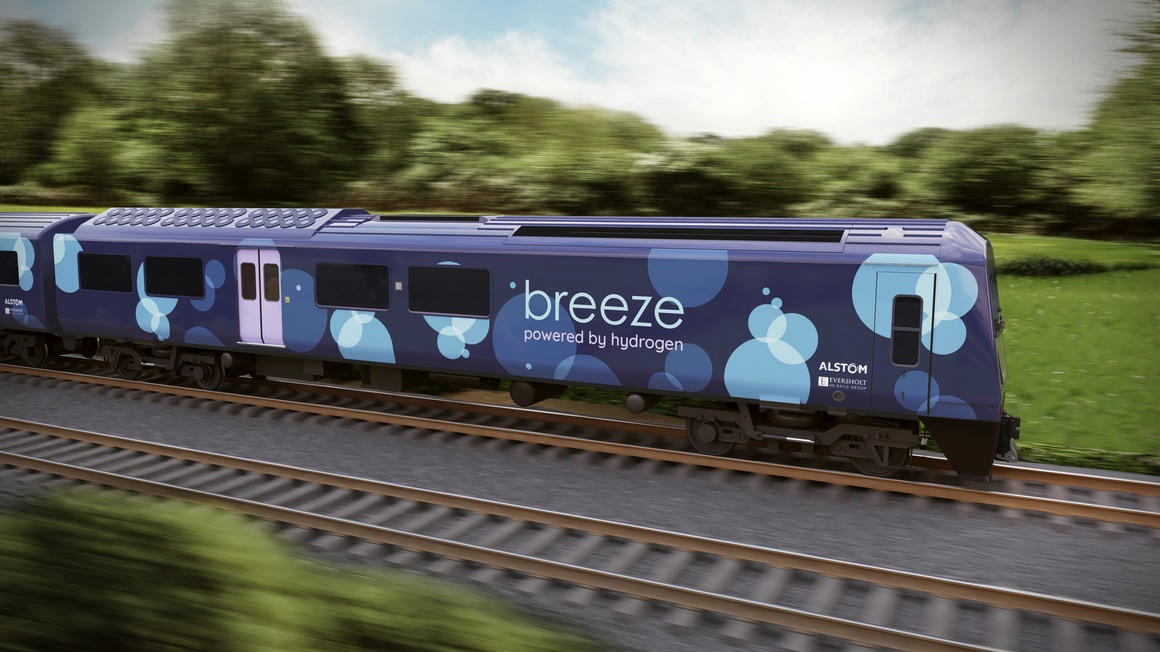
Note how half the side of the front car of the train is blocked in because it is full of the hydrogen tank. As this Driver Car is twenty metres long, each hydrogen tank must be almost seven metres long. If it was one larger tank, then it could be longer and perhaps up to fourteen metres long.
Batteries
As the Rail Business article said, that the batteries are underfloor, I wouldn’t be surprised to see all cars having a battery pack.
I favour this layout, as if cars all are motored, it must cut the length of cabling and reduce electrical losses.
Effectively, it creates a train with the following.
- Faster acceleration
- Smooth, fast deceleration.
- Efficient braking
- Low energy losses.
It should also add up to a train with good weight distribution and high efficiency.
Hydrogen Fuel Cells
In the Class 321 Breeze, Alstom are quoted as having three banks of fuel cell on the roof of each driver car.
This would distribute the power derived from hydrogen to both ends of the train
Hydrogen For Hydrogen Trains
Alstom’s Coradia iLint trains do not have a custom-design of hydrogen system, but over the last few years green hydrogen systems have started to be supplied by companies including ITM Power from Rotherham. Recently, they have supplied the hydrogen system for the hydrogen-powered Van Hool Exqui-City tram-buses in Pau in France. A similar system could be used to refuel a fleet of Breeze trains.
It looks like we have a limited number of hydrogen-powered trains and their fuel could be made available, but not enough to replace all of the UK’s small diesel trains, if we rely on Class 321 Breeze trains.
So there will be a need to build some more.
My Design Of Hydrogen Train
I would start with the Aventra design.
- It is very much Plug-and-Play, where different types of cars can be connected together.
- Cars can be any convenient length.
- Some Aventras, like the Class 345 trains for Crossrail are even two half-trains.
- There are various styles of interior.
- The Aventra appears to be a very efficient train, with good aerodynamics and a very modern traction system with regenerative braking.
- Driver, pantograph, trailer and motor cars and third-rail equipment are available.
- Battery cars have probably been designed.
- For good performance, Aventras tend to have a high proportion of motored cars.
- Aventras have been designed, so that power components can be distributed around the train, so that as much space as possible is available for passengers.
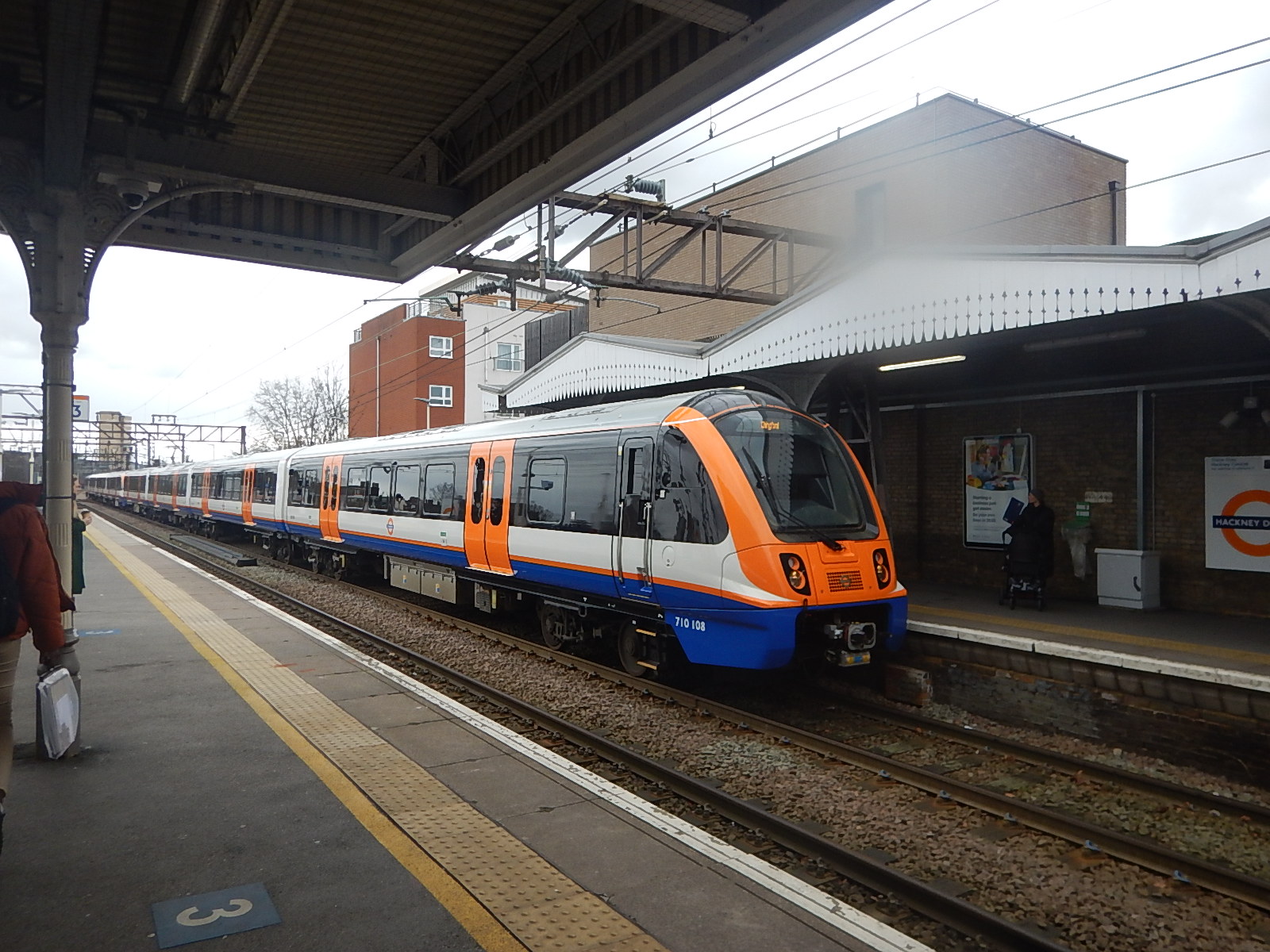
This picture shows a four-car Class 710 train, which is an Aventra.
In the next sub-sections I will fill out the design.
Train Layout
Perhaps, a hydrogen-powered train could be five cars and consist of these cars.
- Driver Motor Car
- Trailer or Motor Car
- Hydrogen Tank Car
- Trailer or Motor Car
- Driver Motor Car
Equipment would be arranged as followed.
- I would put the hydrogen tank in the middle car. Stadler have been very successful in putting a power car in the middle and it could be the ideal car for some of the important equipment.
- As I said earlier, I would put batteries under all cars.
- Regenerative braking and electrification would be used to charge the batteries.
- I think, I would put the hydrogen fuel cells in Alstom’s position on the rear part of the roof of the driver cars.
- There would also be a need to add a pantograph, so that could go on any convenient car!
- I do wonder, if the middle-car could be developed into a mini-locomotive with a walkway through, like the PowerCar in a Stadler Class 755 train.
There’s certainly a lot of possibilities on how to layout the various components.
Passenger Capacity
The five-car hydrogen-powered Aventra, I have detailed is effectively a four-car Aventra like a Class 710 train, with a fifth hydrogen tank car in the middle.
So the passenger capacity will be the same as a four-car Aventra.
The Class 710 trains have longitudinal seating, as these pictures of the interior show.
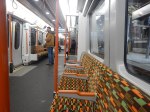
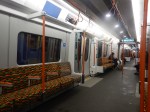
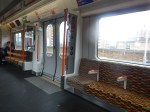
They have a capacity of 189 sitting and 489 standing passengers or a total capacity of 678.
Greater Anglia’s Class 720 trains have transverse seating and a five-car train holds 540 sitting and 145 standing passengers.
Multiplying by 0.8 to adjust for the hydrogen car and the capacity would be 432 sitting and116 standing passengers or a total capacity of 548.
Seats in various UK four-car electric multiple units are as follows.
- Class 319 – 319
- Class 321 – 309
- Class 375 – 236
- Class 379 – 209
- Class 380 – 265
- Class 385 – 273
- Class 450 – 264
It would appear that a five-car hydrogen-powered Aventra, with one car taken up by a hydrogen tank and other electrical equipment can carry a more than adequate number of passengers.
Extra Passenger Capacity
Suppose to eliminate diesel on a route, a five-car Class 802 train were to be replaced with a six-car hydrogen-powered Aventra, which contained five passenger cars
- The capacity of the Class 802 train is 326 seats, which still compares well with the five-car hydrogen-powered Aventra.
- The extra car would increase the passenger capacity.
As Aventras are of a Plug-and-Play design, extra cars would be added as needed.
Maximum Length
Aventras tend to have lots of powered axles, as this improves accelerations and braking, so I suspect that trains with four or five cars on either side of the hydrogen car would be possible.
Nine-car trains could be ideal for replacing trains like Class 800 bi-mode trains to reduce the number of diesel trains. The Class 800 trains would then be converted to Class 801 electric trains or a new battery/electric version.
A Walkway Through The Hydrogen Car
These pictures show the walkway through the PowerCar in a Stadler Class 755 train.
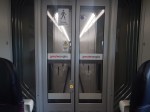
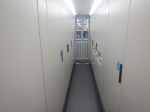
I’m sure that an elegant design of walkway can be created.
In-Cab Digital Signalling
It goes without saying, that the train would be capable of being fitted with in-cab digital signalling.
Performance On Electrification
Bombardier have stated that they have a design for a 125 mph bi-mode Aventra. They might even have designed the trains to achieve 140 mph running on routes with full in-cab digital signalling.
These electrified lines are likely to be able to support 140 mph running with full in-cab digital signalling.
- East Coast Main Line
- Great Western Main Line
- Midland Main Line
- West Coast Main Line
As these hydrogen-powered Aventras may need to run on these high speed electrified lines, I would design the trains so that they could achieve the design speed of these lines, when using the electrification.
This would enable the trains to keep out of the way of the numerous 140 mph electric expresses.
Performance On Batteries And Hydrogen
Hydrogen-powered trains are essentially battery-electric trains, which have the ability to top up the batteries using hydrogen power.
I would suspect that a well-designed hydrogen/battery/electric train should have the same maximum speed on all modes of power, subject to the capabilities of the track and having sufficient power in the batteries to accelerate as required.
The Complete Package
As Hydrogen filling stations from companies like ITM Power and others, that can refuel hydrogen-powered trains are a reality, I’m certain, that it would be possible to create a package solution for a railway company that needed the complete solution.
Different Gauges
If you take a country like Malawi, Malawi Railways looks to need improvement.
They have a three-foot six-inch gauge railway, so could a package of narrower hydrogen-powered Aventras and a solar-powered hydrogen-generator be put together to improve Malawi’s railways?
In When Do Mark 2 Coaches Accept The Inevitable?, I discuss how British Rail Mark 2 coaches were converted from UK loading gauge to one that would work with New Zealand’s 1067 mm. gauge.
So I suspect that a design related to trains built for the UK could be modified for running on the narrow gauge lines of Africa, Australia and New Zealand.
Conclusion
I think it would be possible to design a hydrogen/battery/electric train based on an Aventra with the following characteristics.
- Up to eleven cars
- A hydrogen car with a hydrogen tank in the middle of the train.
- Ability to use 25 KVAC overhead or 750 VDC third-rail electrification.
- In-cab digital signalling
- 140 mph running where the route allows.
- Regenerative braking to batteries.
- Sufficient range on hydrogen power.
- Sophisticated computer control, that swaps mode automatically.
The train would be possible to run the following routes, if configured appropriately.
- Kings Cross and Aberdeen
- Kings Cross and Inverness
- Kings Cross and Cleethorpes via Lincoln and Grimsby
- Kings Cross and Redcar via Middlesbrough
- Kings Cross and Norwich via Cambridge
- Paddington and Penzance
- Paddington and Swansea
- Waterloo and Exeter via Basingstoke
Some routes might need a section of fill-in electrification, but most routes should be possible with a hydrogen fill-up at both ends.
Cambridge To Ipswich In A Class 755 Train
Because of the usual buses on the Great Eastern Main Line, to get to the football at Ipswich, I went via Cambridge and had a drink with a friend in the City.
The journey is timetabled to take seventy five minutes with seven or eight intermediate stops.
These were my observations.
- We arrived in Ipswich a couple of minutes late.
- At times the train was travelling at 75 mph.
- The operating speed is given in Wikipedia as 40-75 mph.
- Some stops were executed from brakes on to brakes off in around thirty seconds.
- I wasn’t sure, but the pantograph may go up and down at Stowmarket, depending if the train is going East or West.
- Cambridge to Stowmarket averaged 43 mph, whereas Stowmarket to Ipswich averaged 48 mph, which would seem to indicate use of the electrification.
I suspect that there isn’t much room to speed up the service, especially as the current 75 minutes gives a convenient turnround with a round trip of three hours.
Which means three trains are needed for the hourly service.
Surprise
What surprised me was the timing of the station stops.
As I said, some were around thirty seconds, with the longest at Stowmarket, where I assume the train picked up the electrification.
It certainly shows how modern trains can do station stops fast.
Old And New At Ipswich
I took these pictures at Ipswich, yesterday.



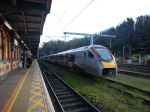


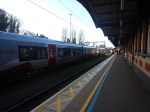
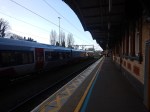


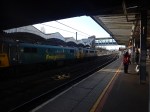
There seemed to be a lot of old Class 86 locomotives and new Class 755 trains around.
Mule Trains Between Liverpool And Norwich
I have done two trips to Liverpool in the last week.
On Saturday, I saw this collection of one-car Class 153 trains with a two-car Class 156 train thrown in.
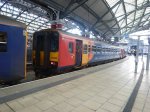

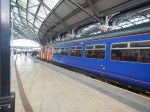
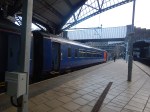
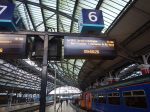
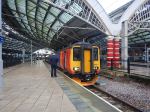


They were forming one of East Midlands Railway‘s Liverpool and Norwich services.
And then yesterday, I had to travel between Liverpool and Sheffield and this was the collection of trains that took me.
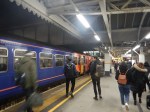
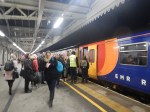


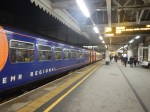
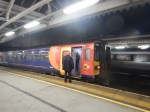
So what was it like?
It started badly, with the driver announcing that because of the late arrival due to an undisclosed problem with the incoming train, that we would be leaving ten minutes after the planned departure time of 1551. He also indicated that our late departure meant that we would be stuck behind one of Northern’s services.
In the end, despite the gloomy faces of passengers we left twelve minutes late at 1603.
It was a bit like one of those classic films, where an ancient train escapes in the nick of time, with a lot of important and assorted passengers.
The asthmatic Cummins diesels under the train could be heard straining.
- But the driver was at the top of his game and the train was running smoothly towards Manchester at close to 75 mph, which is the maximum speed of a Class 153 train.
- At Manchester Piccadilly, the driver had pulled back two minutes.
- There were obviously, no problems on the Dove Valley Line and the driver pulled back another minute before Sheffield, to arrive nine minutes late.
Looking at Real Time Trains, the train ran well until March (The place, not the month!), but there was some form of delay there and sadly it was thirty-four minutes late into Norwich.
The Train Was Clean
I should say there was nothing wrong with the train except for its design and age. It was also as clean as you can get one of these trains. The toilet, that I used was better than many I’ve used on trains and worked as it should.
Customer Service
East Midlands Railway had loaded a trolley and a steward and in the two hours I was on the train, he came through twice. The only problem for me, that he had no card machine, but I did find a fiver in my briefcase.
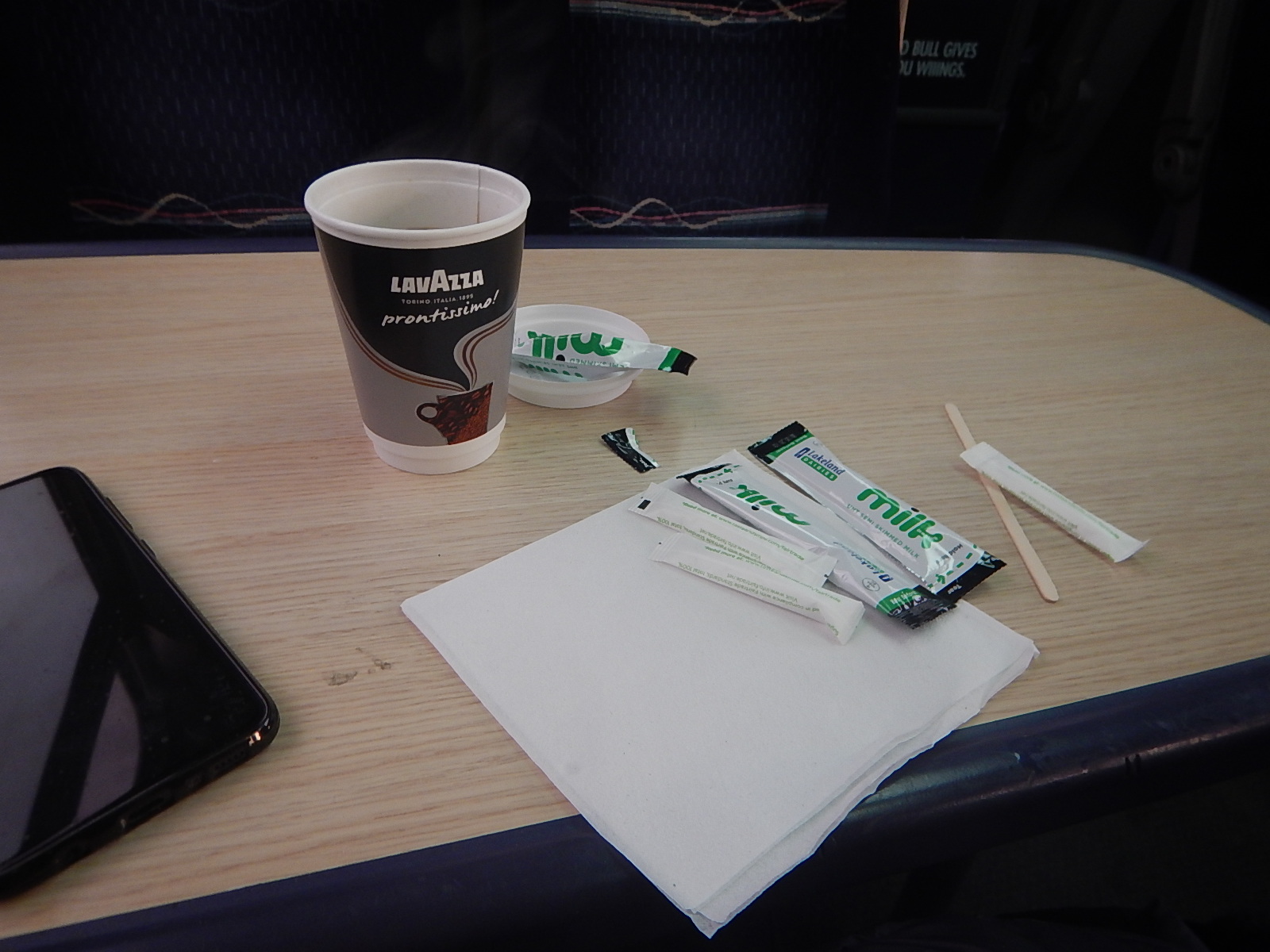
At least it was very drinkable. Even, if I hate those plastic tubs of milk, as they are difficult to open with one good hand.
Where Did Two Cars Go?
I had been fairly certain, that we had started with six cars, but we only arrived in Sheffield with four Class 153 trains.
I suspect that the trouble that delayed the train, concerned two cars and these were left on the naughty step or the end of Platform 6 in Liverpool Lime Street station.
Being Fair To East Midlands Railway
This service used to be run by a four-car formation of two-car Class 158 trains, but these have been causing trouble lately and they will be replaced by Class 170 trains cascaded from other operators.
But because of late arrivals of new trains the much better Class 170 trains haven’t arrived yet.
The driver, steward and other staff did a good job and I feel that the steward enjoyed it. No-one was abusive and stories were just exchanged, as we climbed across the Pennines in what by Sheffield was a very crowded train.
Class 153 trains may have been built as a stop-gap for short branch lines, but you couldn’t fault their performance.
Unless of course, one caused the delay at March, by expiring in a cloud of blue smoke.
Other Observations
These are other observations.
Scheduled Journey Times
On my journey the scheduled times were
- Liverpool and Manchester Oxford Road – forty-seven minutes.
- Liverpool and Sheffield – one hour and forty-eight minutes.
- Liverpool and Nottingham – two hour and forty minutes.
- Liverpool and Norwich – Five hours and twenty-seven minutes
The train considering the configuration, nearly achieved them.
It’s probably the motoring equivalent of doing the journey in a Morris Minor!
The Nine Stops Were Executed Perfectly
There were nine stops on my journey and eight took less than a minute, with Sheffield taking four, as the driver and crew changed.
A modern train like a Class 755 train, with fast acceleration and level boarding could probably save up to three minutes a time on each stop.
The Route Is A Genuine 75 mph Railway In Good Condition
I was checking the speed of the train on parts of the route and the driver had his motley crew at a steady 75 mph for long periods.
- The train was riding well, indicating to me, that both trains and track were in reasonably good condition.
- Note that 75 mph is the maximum speed of a Class 153 train.
- The train recovered three minutes on the late departure from Liverpool.
I can see a faster train and improvements to the route, some of which are underway, could reduce the journey time by a few minutes.
Could Merseyrail’s New Class 777 Trains Work To The Bay Platform At Oxford Road?
Merseyrail’s new Class 777 trains will have the following performance.
- A possible range of perhaps 40-50 miles on battery power.
- An operating speed of 75 mph.
- An acceleration rate of 1.1 m/sec², which is faster than a Class 153 or Class 170 train.
- Fast stops due to regenerative braking, fast acceleration and level boarding.
As Liverpool Lime Street to Oxford Road is thirty four miles of which nine is electrified, I suspect that these new trains could extend Merseyrail’s Northern Line service from Hunts Cross to Manchester Oxford Road.
- Two trains per hour (tph), but I’m sure four tph would transform the area.
- I doubt any track modifications would be needed.
But would Liverpool and Manchester be able to sort out the local politics?
The Future Of The Liverpool And Norwich Service
This service will probably be spilt into two services.
- Liverpool Lime Street and Derby, which could be run by TransPennine Express or Northern Trains.
- Derby and Norwich, which would be run by East Midlands Railway.
As to the trains to be used, consider the following.
The Liverpool and Derby leg would probably need six trains, with the same number needed for Derby and Norwich, or twelve in total.
Currently, eleven or twelve is needed for the longer service.
Sections of the route like through Manchester and between Grantham and Peterborough are electrified.
There are even sections of route, where 125 mph running is possible.
Run reliably to an hourly frequency, I think that this service could attract passengers, especially, as it would serve Derby and extra stops like Ilkeston and Warrington West could be added.
This leads to the following trains being possibilities.
Class 802 trains – 125 mph bi-mode train of which TransPennine Express have 19 trains.
Class 185 trains – 100 mph diesel train of which TransPennine Express have 51 trains.
Class 810 trains – 125 mph bi-mode train of which East Midlands Railway have ordered 33 trains.
Class 755 trains – 100 mph diesel train of which Greater Anglia have 38 trains, which are based at Norwich.
Alstom Breeze hydrogen trains could be ideal for Liverpool and Derby.
Note.
- Greater Anglia and East Midlands Railway are both subsidiaries of Abellio.
- Developments of Class 755 trains could include battery and hydrogen versions.
- I suspect that 125 mph trains may be required for both legs, to maximise capacity on the East Coast Main Line and Midland Main Line.
The trains will certainly get better.
Use Of A Bi-Mode Class 755 Train On The Sudbury Branch Line
I took these pictures today on a visit to the Sudbury Branch Line in Suffolk.
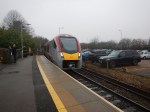
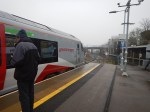
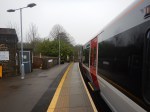
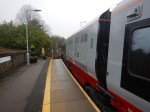
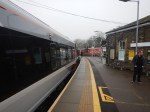
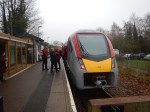

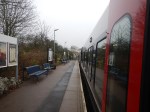
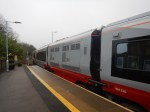
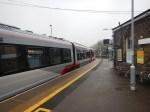
The two stations shown are Marks Tey, where the branch joins the Great Eastern Main Line and Sudbury, which is the Western terminus of the branch.
Both stations have short platforms.
To simplify this description, I will identify the four cars of the Class 755 train as follows.
- Driver East Car – Driver car with passengers on the Marks Tey end of the train.
- Passenger Car – The passenger car, which also has the bike space and the Universal Access Toilet.
- PowerPack – The smaller car that powers the train.
- Driver West Car – Driver car with passengers on the Sudbury end of the train.
This Google Map shows Marks Tey station.
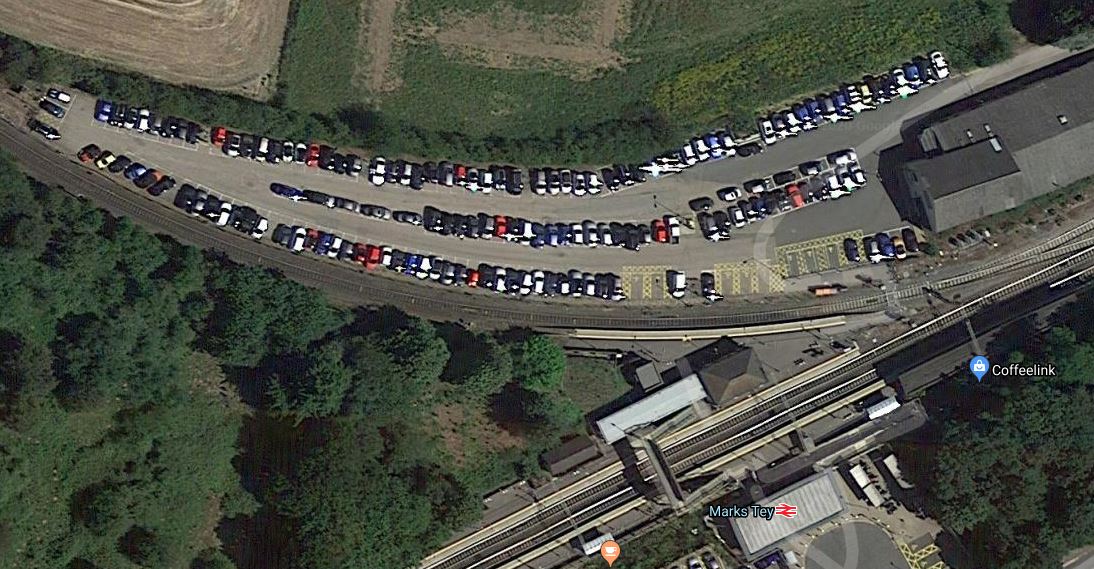
The short and gently curving, Sudbury Branch Line platform is on the North side of the station.
To make it easy for passengers to get in and out of the train, Greater Anglia seem to have devised a cunning plan.
- The Class 755 trains run with the end with the Driver East and Passenger Cars are towards Marks Tey and Colchester stations.
- The driver stops the train in the station, so that the two passenger cars, are in the same place as a two-car diesel multiple unit, like a Class 156 train, would be.
- The two pairs of wide double doors and the level step-free access, encourage passengers to enter the train.
- Interestingly, the PowerPack Car of the train is at the narrowest part of the platform and is this deliberate to encourage passengers to enter through the doors facing them on the platform.
- The Driver West Car doesn’t come into the platform.
- At busy times, when the Driver West Car will need to be used, passengers will walk through the PowerPack Car.
- Bicycles can be wheeled between the platform and the space in the Passenger Car.
The method of operation has avoided any expensive lengthening of the short and curvy platform.
This second Google Map shows Sudbury station.

At least the single platform is straight.
A similar procedure is used at Sudbury station to that at Marks Tey.
- The driver stops the train in the station, so that the Driver West and Passenger Cars either side of the PowerPack Car are in the station.
- Passengers have two sets of doors and level access to get into and out of the train.
- Bicycles can be wheeled between the platform and the space in the Passenger Car.
- There is no direct access to the Driver West Car at the Marks Tey end of the train, but passengers can walk through the train.
Lengthening of the platform is not necessary.
Important Routes With Few Passengers
Suppose you have a route that at certain times of the day needs a three-car train, but at other times two-cars or even only one car.
I can think of the case of a large industrial site like a nuclear facility or power station, that has lots of passengers, when people are going to and from work and students are going to and from school and college, but at other times of the day, passenger numbers are low.
The conductor indicated to me, that the design of the train allows the doors on the PowerPack to be locked, thus restricting movement.
This could save operating costs if thought out properly.
Wheelchair Passengers To And From Sudbury
The conductor indicated that this was a problem for some directions.
- London to Sudbury is just a walk or push between platforms.
- Sudbury to Ipswich and Norwich is just a walk or push between platforms.
- Sudbury to London is take a train to Colchester from Marks Tey and use the lifts to change direction for London.
- Ipswich and Norwich to Sudbury is take a train to Witham and use the lifts to change direction for Marks Tey.
The local MP is Pritti Patel and she has been pushing hard for a step-free bridge with lifts, which would solve the problem.
Sudbury And Colchester Town
Greater Anglia have proposed that the Sudbury service be extended to Colchester Town station.
There may be problems running on the busy Great Eastern Main Line between Marks Tey and Colchester, but at least there appears to be a freight loop just to the North of Marks Tey, on the London-bound track.
Some things would help.
- Redesign of the junction to allow a faster turnout.
- The extra power of the Class 755 trains.
- Electrification of Platform 3 at Marks Tey station.
- Full digital in-cab signalling on the Great Eastern Main Line.
It might even be worthwhile putting in a simple flyover for Sudbury-bound trains.
Could Battery Power Be Used On The Sudbury Branch Line?
Class 755 trains have been designed, so that diesel engines in the ~PowerPack Car can be replaced with batteries, which can be charged from electrification.
If and when a suitable battery module is developed, then it could just be slotted in.
Some form of charging would be needed and the proposal to change the service into s Sudbury and Colchester Town service, would allow the trains to be charged on the main line.
The German Solution
I can’t help feeling that the Germans or the Welsh would use a different solution.
In Could There Be A Tram-Train Between Ipswich And Felixstowe?, I discuss the East-West Rail Link’s idea of running tram-trains between Ipswich and Felixstowe.
- It would have a frequency of four trains per hour.
- It would probably start in the forecourt of Ipswich station.
- It could either go to Felixstowe station or perhaps through the High Street and down to the Sea Front.
- It would go via Portman Road, Ipswich Town Centre, Ipswich Hospital, before joining the Felixstowe Branch Line to the East of the town.
The reason for this proposal, is to get more freight trains into the Port of Felixstowe.
Now look at this Google Map of North Colchester.
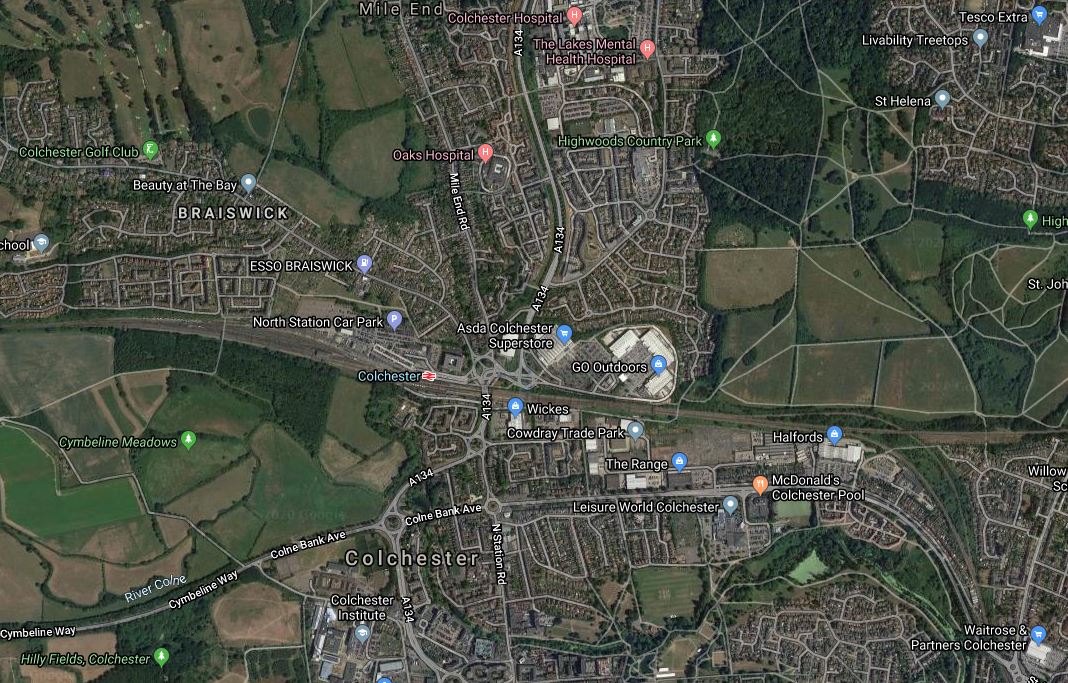
Note.
- Colchester station in the middle of the map on the Great Eastern Main Line, which runs East-West.
- A junction to the East of the station, where the lines from Colchester Town, Clacton and Walton join the Great Eastern Main Line.
- Colchester Hospital at the top of the map.
Without doubt,, the Germans would create a tram-train network based on Colchester station.
- Sudbury and Marks Tey could be served in the West, by perhaps building a third track alongside the Great Eastern Main Line
- Marks Tey and Sudbury would be on battery power.
- Colchester Hospital and perhaps the football ground and a Park-and-Ride could be served in the North, by adding tracks to the junction East of Colchester.
- Colchester Town could be served in the South, using the existing tracks.
The network would certainly connect a lot of important places to the main station.
- It would improve access to Colchester Hospital.
- It would solve the step-free problem at Marks Tey.
- It could open up much needed new housing developments.
With 100 mph tram-trains or trains able to work as trams, it could reach places using the various routes in the area, like Clacton, Harwich and Walton.
Stadler have already designed 100 mph diesel trains, that work in Zwickau in Germany, alongside and share tracks with the city’s trams.
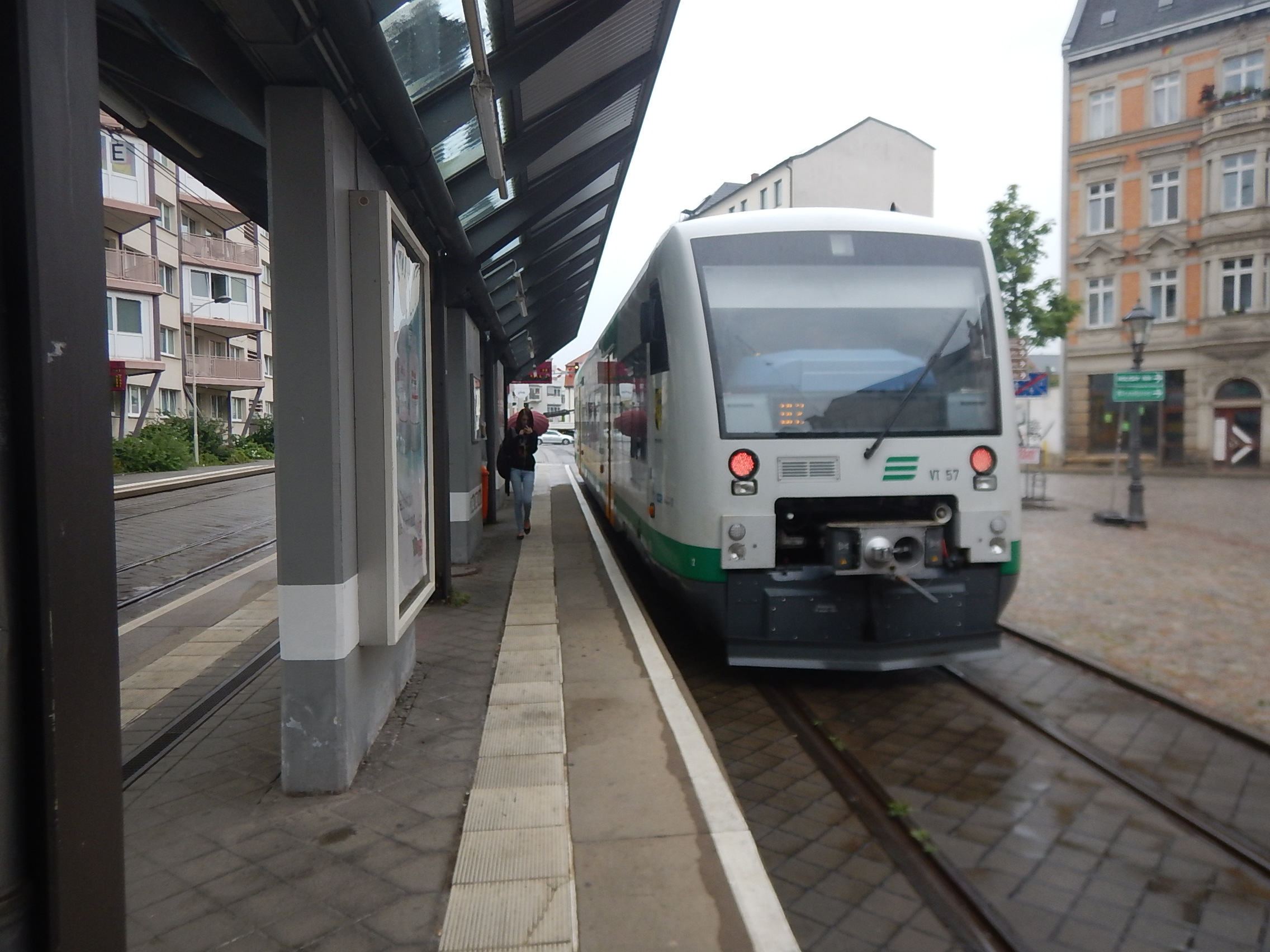
It seems that if you have a specification, Stadler will make it.
Conclusion
Greater Anglia are going to have fun with these trains.
Their level access is liked by passengers.
The short car length, allows the trains to call in curvy platforms.
No News On Hydrogen Trains For The Midland Main Line
In April 2019, I wrote Hydrogen Trains To Be Trialled On The Midland Main Line, which was based on an article on Railway Gazette that is entitled Bimode And Hydrogen Trains As Abellio Wins Next East Midlands Franchise.
I said this in my post.
Abellio will be taking over the franchise in August this year and although bi-mode trains were certain to be introduced in a couple of years, the trialling of hydrogen-powered trains is a surprise to me and possibly others.
This is all that is said in the article.
Abellio will also trial hydrogen fuel cell trains on the Midland Main Line.
It also says, that the new fleet will not be announced until the orders are finalised.
Nothing has been heard since about the hydrogen train trial for the Midland Main Line.
But there have been several related developments, that might have implications for the trial.
East Midlands Railway Has Ordered Hitachi Class 810 Trains For EMR InterCity Services
Class 810 trains are Hitachi’s latest offering, that are tailored for the Midland Main Line.
The trains will have a few differences to the current Class 800,/801/802 trains.
But will they be suitable for conversion to hydrogen power?
Consider.
- The Hitachi trains have a comprehensivecomputer system, that looks at the train and sees what power sources are available and controls the train accordingly.
- Trains have already been ordered in five, seven and nine-car lengths. I have read up to twelve-car trains are possible in normal operation. See Do Class 800/801/802 Trains Use Batteries For Regenerative Braking?
- Hydrogen train designs, with a useful range of several hundred miles between refuelling, seem to need a hydrogen tank, that takes up at least half of a twenty metre long carriage.
- The Hitachi train design has pantographs on the driver cars and can support diesel generator units in the intermediate cars, as it does in current trains.
- The Japanese are researching hydrogen trains.
- The five-car Class 802 trains have 2,100 kW of installed generator power.
I think that Hitachi’s engineers can build another carriage, with the following characteristics.
- It could be based on a Motor Standard car.
- The passenger seats and interior would be removed or redesigned in a shorter space.
- Powered bogies would be as required.
- It would contain a hydrogen tank to give sufficient range.
- Appropriately-sized batteries and fuel-cells would be inside or under the vehicle.
- Regenerative braking would help to recharge the batteries.
- There would probably be no diesel generator unit.
There would need to be a walkway through the car. Stadler have shown this works in the Class 755 train.
A Hydrogen Power car like this would convert a five-car bi-mode diesel-electric train into a six-car hydrogen-electric hybrid train. Or they might just replace one Motor Standard car with the Hydrogen Power Car to create a five-car hydrogen-electric hybrid train, if the longer train would cause problems in the short platforms at St. Pancras.
- The computer system would need to recognise the Hydrogen Power Car and control it accordingly. It would probably be very Plug-and-Play.
- The weight of the train could probably be reduced by removing all diesel generator units.
- The passenger experience would be better without diesel power.
- The range away from the wires would probably be several hundred miles.
The drivers and other staff would probably not need massive retraining.
What Do I Mean By Appropriately-Sized Batteries And Fuel Cells?
I can’t be sure,, but I suspect the following rules and estimates hold.
- The batteries must be large enough to more than hold the kinetic energy of a full five-car train, running at the full speed of 140 mph.
- I estimate that the kinetic energy of the train,will be around 200 kWh, so with a contingency, perhaps battery capacity of between 400-500 kWh would be needed.
- Currently, a 500 kWh battery would weigh five tonnes, which is of a similar weight to one of the diesel generator units, that are no longer needed.
- In How Much Power Is Needed To Run A Train At 125 mph?, I estimated that the all-electric Class 801 train, needs 3.42 kWh per vehicle mile to maintain 125 mph. This means that travelling at 125 mph for an hour would consume around 2,000 kWh or an output of 2,000 kW from the fuel cell for the hour.
- Note that 1 kg of hydrogen contains 33.33 kWh of usable energy, so the hydrogen to power the train for an hour at 125 mph, will weigh around sixty kilograms.
From my past experience in doing chemical reaction calculations in pressure vessels, I think it makes the concept feasible. After all, it’s not that different to Alstom’s Breeze.
I would assume, that the train manufacturers can do a full calculation, to a much more accurate level.
Applying The Concept To Other Hitachi Trains
Once proven, the concept could be applied to a large number of Hitachi bi-mode trains. I suspect too, that it could be applied to all other Hitachi A-train designs, that are in service or on order, all over the world.
In the UK, this includes Class 385, Class 395 and Class 80x trains.
Bombardier Have Said That They’re Not Interested In Hydrogen Power
But Electrostars and Aventras have the same Plug-and-Play characteristic as the Hitachi train.
I wouldn’t be surprised to find that Bombardier have a Hydrogen Power Car design for an Aventra. All that it needs is an order.
They could also probably convert a five-car Class 377 train to effectively a four-car train, with a Hydrogen Power Car in the middle. This would be ideal for the Uckfield Branch and the Marshlink Lines. I suspect it could be done to meet the timescale imposed by the transfer of the Class 171 trains to East Midlands Railway.
There must be an optimal point, where converting an electric multiple unit, is more affordable to convert to hydrogen, than to add just batteries.
But then everybody has been dithering about the Uckfield and Marshlink trains, since I started this blog!
Stadler Have Shown That a Gangway Through A Power Car Is Acceptable To Passengers In The UK
Stadler’s Class 755 trains seem to be operating without any complaints about the gangway between the two halves of the train.
Stadler Have Two Orders For Hydrogen-Powered Trains
These posts describe them.
- Zillertalbahn Orders Stadler Hydrogen-Powered Trains
- MSU Research Leads To North America’s First Commercial Hydrogen-Powered Train
Stadler also have a substantial order for a fleet of battery Flirt Akku in Schleswig Holstein and they are heavily involved in providing the rolling stock for Merseyrail and the South Wales Metro, where battery-powered trains are part of the solution.
It looks to me, that Stadler have got the technology to satisfy the battery and hydrogen train market.
The Driver’s View Of Stadler
It’s happened to me twice now; in the Netherlands and in the UK.
- Both drivers have talked about hydrogen and Stadler’s trains with the engine in the middle.
- They like the concept of the engine.
- The English driver couldn’t wait to get his hands on the train, when he finished his conversion.
- Both brought up the subject of hydrogen first, which made me think, that Stadler are telling drivers about it.
Or does driving a hydrogen-powered vehicle as your day job, score Greta points in the pub or club after work?
Could The Hydrogen Train On The Midland Main Line Be A Stadler?
Greater Anglia and East Midlands Railway are both controlled by Abellio or Dutch Railways.
In The Dutch Plan For Hydrogen, I laid out what the Dutch are doing to create a hydrogen-based economy in the North of the country.
Stadler are going to provide hydrogen-powered for the plan.
In addition.
- Greater Anglia have bought a lot of Class 755 trains.
- A lot of Lincolnshire and Norfolk is similar to the North of the Netherlands; flat and windy.
- One of these trains with a hydrogen PowerPack, could be an ideal train for demonstrating hydrogen on rural routes like Peterborough and Doncaster via Lincoln.
But the promise was on the Midland Main Line?
Conclusion
Hydrogen trains seem to be taking off!
Even if there’s been no news about the trial on the Midland Main Line.
Northern Welcome New Link Between East And West Yorkshire
The title of this post is the same as that of this article on Rail Technology News.
This is the introductory paragraph.
Rail Operator, Northern Railway, is celebrating the improved links between East and West Yorkshire today (Dec 19) following the introduction of a new service on the network, providing a direct service between Halifax and Hull.
The tone may be a bit self-congratulatory by Northern, but it is to me a very necessary service.
- The trains run hourly.
- Looking at today’s early morning Saturday service, it appears to have doubled the frequency to and from Leeds.
- Families and friends are more spread out these days..
- Events like football matches and concerts bring in supporters and attendees from a lot further, than when the rail services were carved in stone.
I shall be very interested to see the figures for ridership on this new service..
The Suffolk Experience
Over the last few years, Suffolk’s cross-county service between Ipswich and Cambridge has gone from an hourly single-car Class 153 train through two and three-car Class 170 trains to the proposed four-car Class 755 trains.
Greater Anglia may be having trouble introducing the Class 755 train, but the proposed capacity increase is there. They are also proposing to double the frequency on the Eastern section of the route.
Nationwide
Hopefully, we’ll see more improvements in services on routes like these all over the country. Certainly, Northern and Greater Anglia have been increased threir train fleets to provide more services.
I would also like to see a nationwide capacity standard for routes like these between cities and large towns.
Greater Anglia’s New Stansted Service To And From Norwich
Stansted Airport railway station now has the following rail services.
- Four trains per hour (tph) Stansted Express services to and from Liverpool Street station.
- One tph to and from Cambridge.
- One tph to and from Birmongham New Street
- One tph to and from Norwich, which started on December 15th, 2019.
This morning I wen to the station to use the new service to Cambridge.


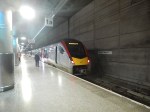
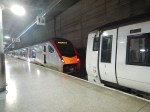
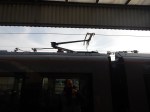
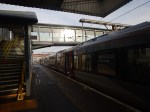

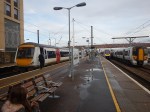
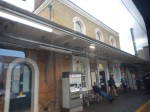
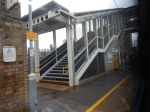
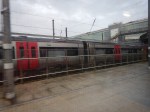
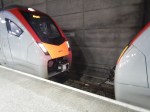

Note.
- Platform 1 at Stansted Airport, is used to handle two trains.
- The Class 755 trains appeared to be using overhead 25 KVAC.
- The Cambridge-Ipswich and Norwich-Stansted services appear to offer interchange possibilities at Cambridge could be developed in the future.
- It appeared that a new Class 755 train had failed and was parked in Platform 1a at Stansted.
The service certainly seemed to be attracting more than a handle of passengers.
These are a few extra thoughts.
Whittlesford Parkway Station
Whittlesford Parkway station has a Holiday Inn hotel and a large car park, as this Google Map shows.
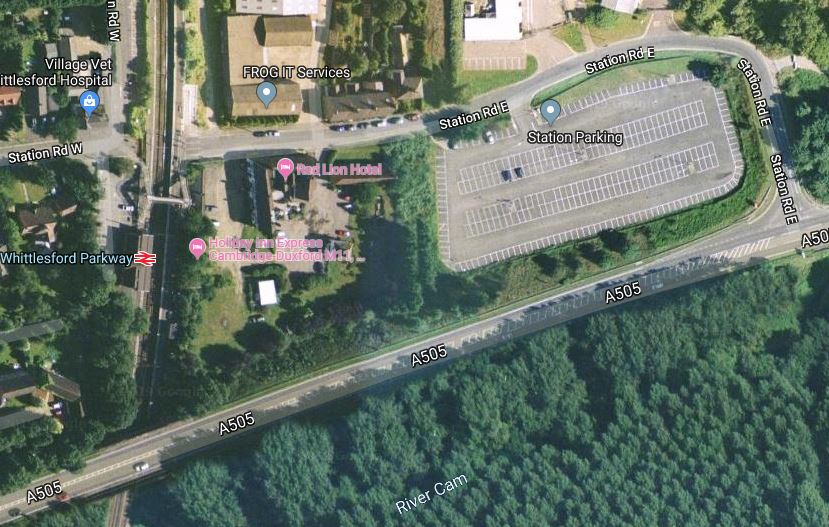
When I lived in the area, I used to use it as a station for travelling to and from London.
Consider.
- Whittlesford Parkway to Stansted Airport takes twenty-six minutes by train.
- There are two tph to and from Stansted Airport.
- Given the station’s convenient position on the road network and the good train service to Stansted Airport, I suspect some Airport users will use the station as an alternative place to park.
- It will certainly make a sensible drop off point for Stansted passengers and workers.
In my view, the only improvement needed, is a step-free bridge.
Audley End Station
Audley |End station is another station that is served by trains going between Stansted Airport and Cambridge and Norwich.
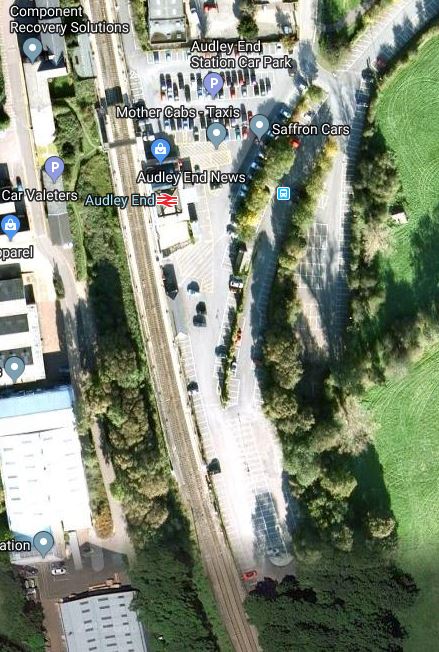
As the map shows, car parking is not as extensive.
Commuting From Audley End And Whittlesford Parkway To Norwich
C, my late wife was a barrister, who regularly drove to Norwich for a day in Court.
If there had been a train service between Whittlesford and Norwich, she might have used it.
But it does appear, that early morning services start from Cambridge.
Early And Late Trains Between Norwich and Stansted Airport
It appears to me, that that the timetable between Norwich and Stansted Airport may not start ealy enough and perhaps run late enough, given the hours that flights arrive and depart at the Airport.
Conclusion
This is going to be a worthwhile service, but I don’t think it is fully developed yet.
Is The Walkway Through The PowerPack On A Class 755 Train Too Narrow?
These pictures show the walkway through the PowerPack on a Class 755 train.
For comparison here’s the walkway between cars on a Class 802 train.
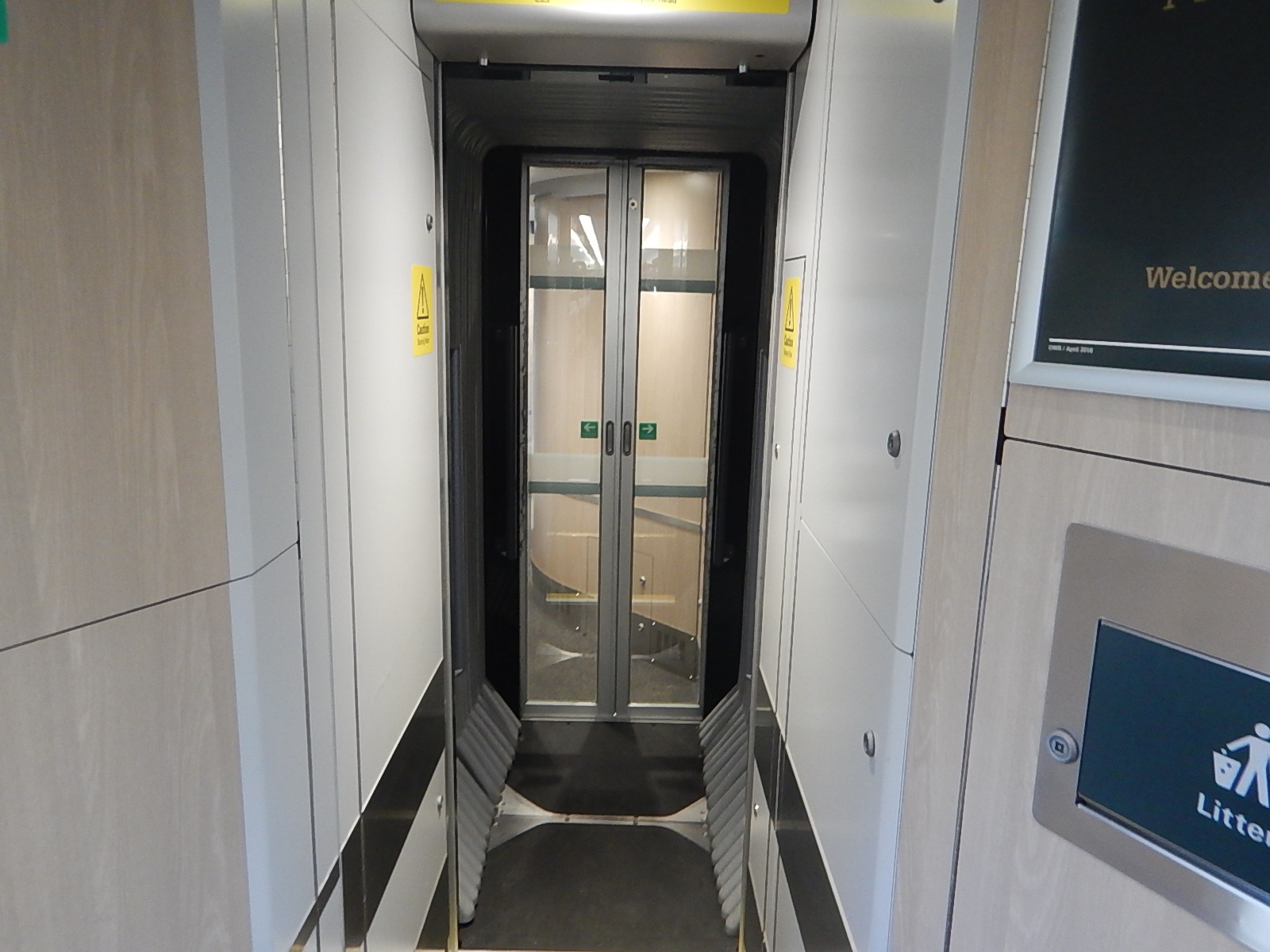
Certainly, this passage takes a trolley.
There is no need at present for a trolley on a Class 755 train, but surely the Lowestoft and London service could have one.
 The Anonymous Widower