The Seat Of Aurora
The title of this post, is the same as that of an article in the August 2021 Edition of Modern Railway.
The article has this sub-title.
East Midlands Railway has finalised the new seats for its new trains, and they’re completely useless – as ironing boards.
Note.
- East Midlands Railway‘s new trains are Class 810 trains, which are Hitachi AT300 express trains, as used by several operators.
- Some passengers and industry commentators have criticised the seats in these trains as like ironing boards.
- Abellio Greater Anglia, who are a sister company to East Midlands Railway, also choose the seats for their new trains with care. I wrote No ‘Ironing Board seats’ For Greater Anglia’s New Trains, about their seat choice.
Ian Walmsley, who wrote the article for Modern Railways says this about the Seat of Aurora.
My verdict is that it is a good seat, and that is in absolute terms – not just saying it is better than an 800, which it would have to be really.
For myself, the proof of the seating will be in the sitting.
Electrification Between Clay Cross North Junction And Sheffield Station
Long term readers of this blog, will have noticed that I make regular references to this proposed electrification, that is part of High Speed Two’s proposals to connect Sheffield to the new high speed railway.
So I thought I would bring all my thoughts together in this post.
Connecting Sheffield To High Speed Two
Sheffield is to be accessed from a branch off the Main High Speed Two route to Leeds.
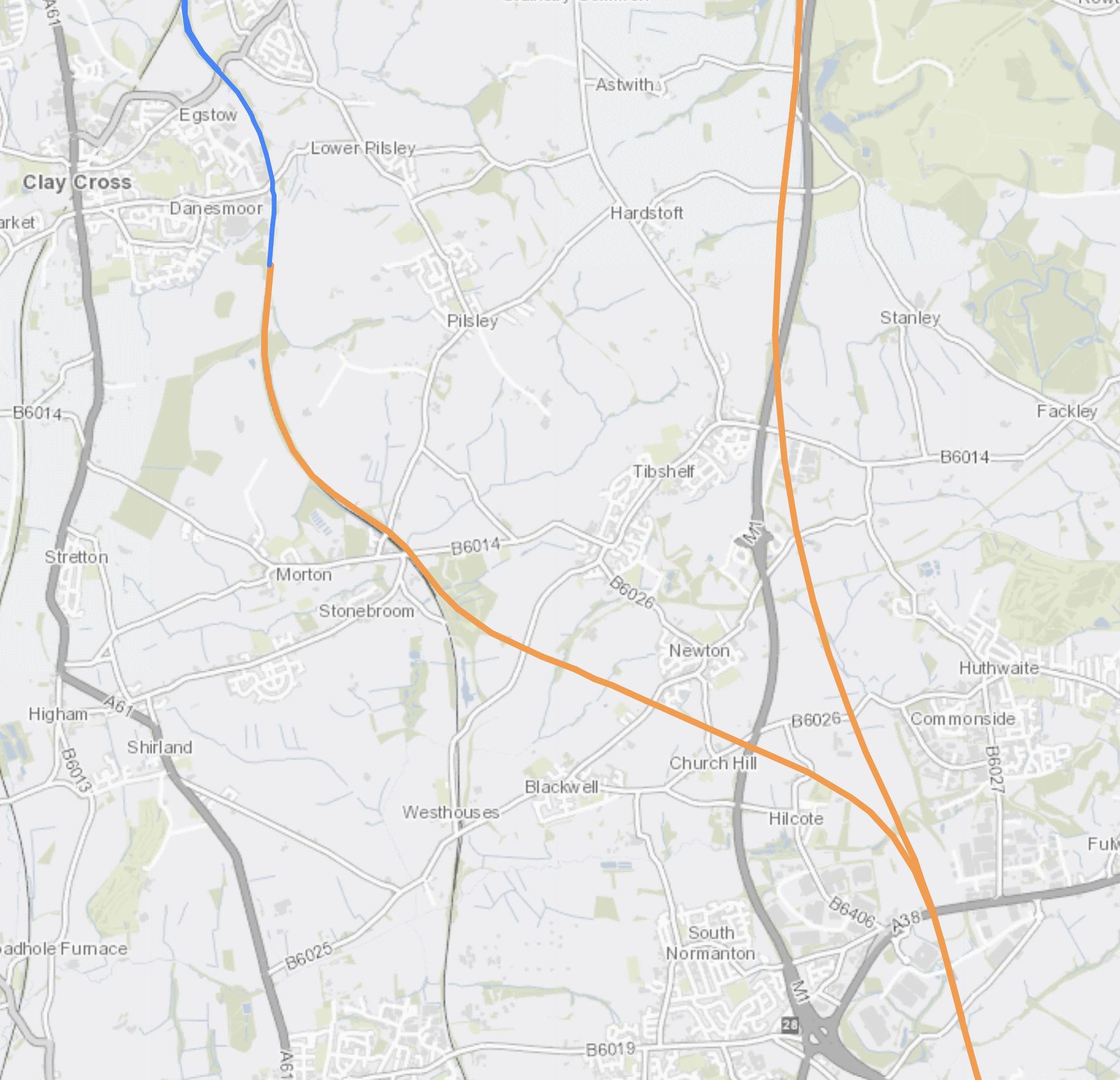
This map clipped from High Speed Two’s interactive map, shows the route of the Sheffield Branch, from where it branches North West from the main Eastern Leg of High Speed Two.
Note.
- Orange indicates new High Speed Two track.
- Blue indicates track that High Speed Two will share with other services.
- The orange route goes North to Leeds, along the M1
- The blue route goes North to Chesterfield and Sheffield, after skirting to the East of Clay Cross.
- The orange route goes South to East Midlands Hub station.
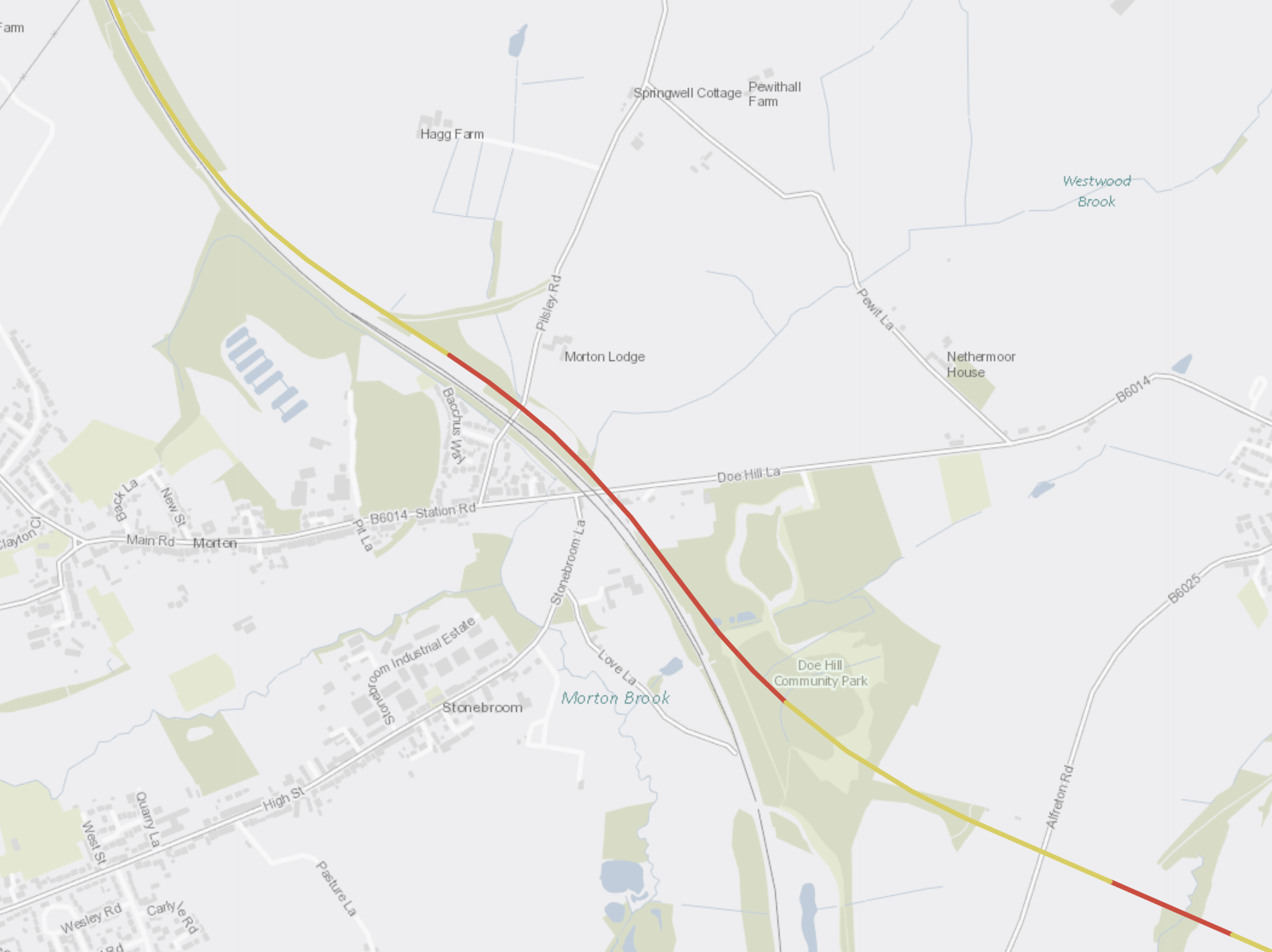
This second map, shows where the Erewash Valley Line joins the Sheffield Branch near the village of Stonebroom.
Note.
- Red is an embankment.
- Yellow is a cutting.
- The Sheffield Branch goes North-West to Clay Cross, Chesterfield and Sheffield
- The Sheffield Branch goes South-East to East Midlands Hub station.
- The Sheffield Branch goes through Doe Hill Country Park.
- The Sheffield Branch runs alongside the existing Erewash Valley Line, which goes South to Langley Mill, Ilkeston and the Derby-Nottingham area.
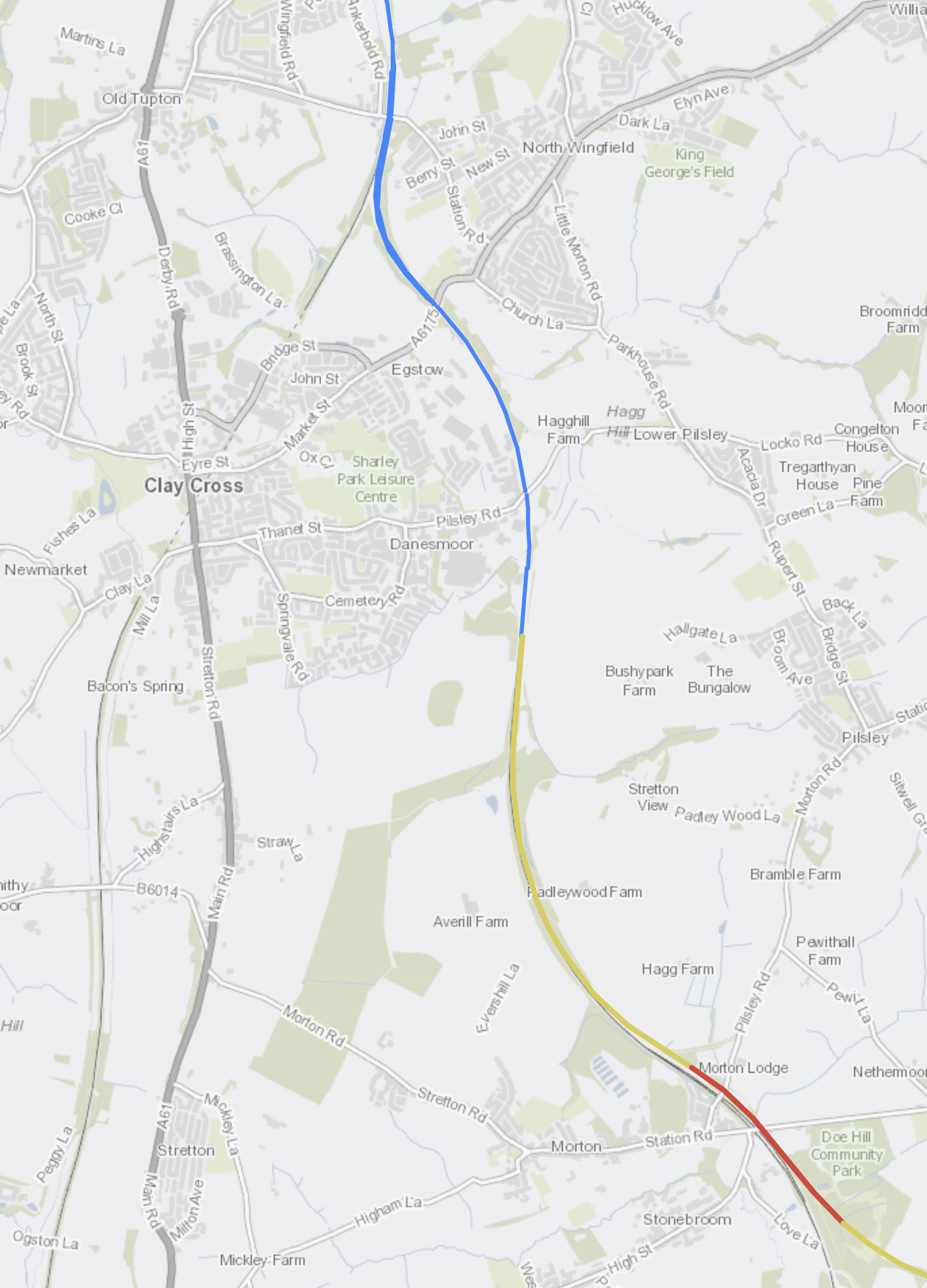
The Sheffield Branch and the Erewash Valley Line appear to share a route, which continues round Clay Cross and is shown in this third map.
Note
- Doe Hill Country Park is in the South-East corner of the map.
- The dark line running North-South is the A61.
- Running to the West of the A61 is the Midland Main Line, which currently joins the Erewash Valley Line at Clay Cross North junction.
High Speed Two and the Midland Main Line will share a route and/or tracks from Clay Cross North junction to Sheffield.
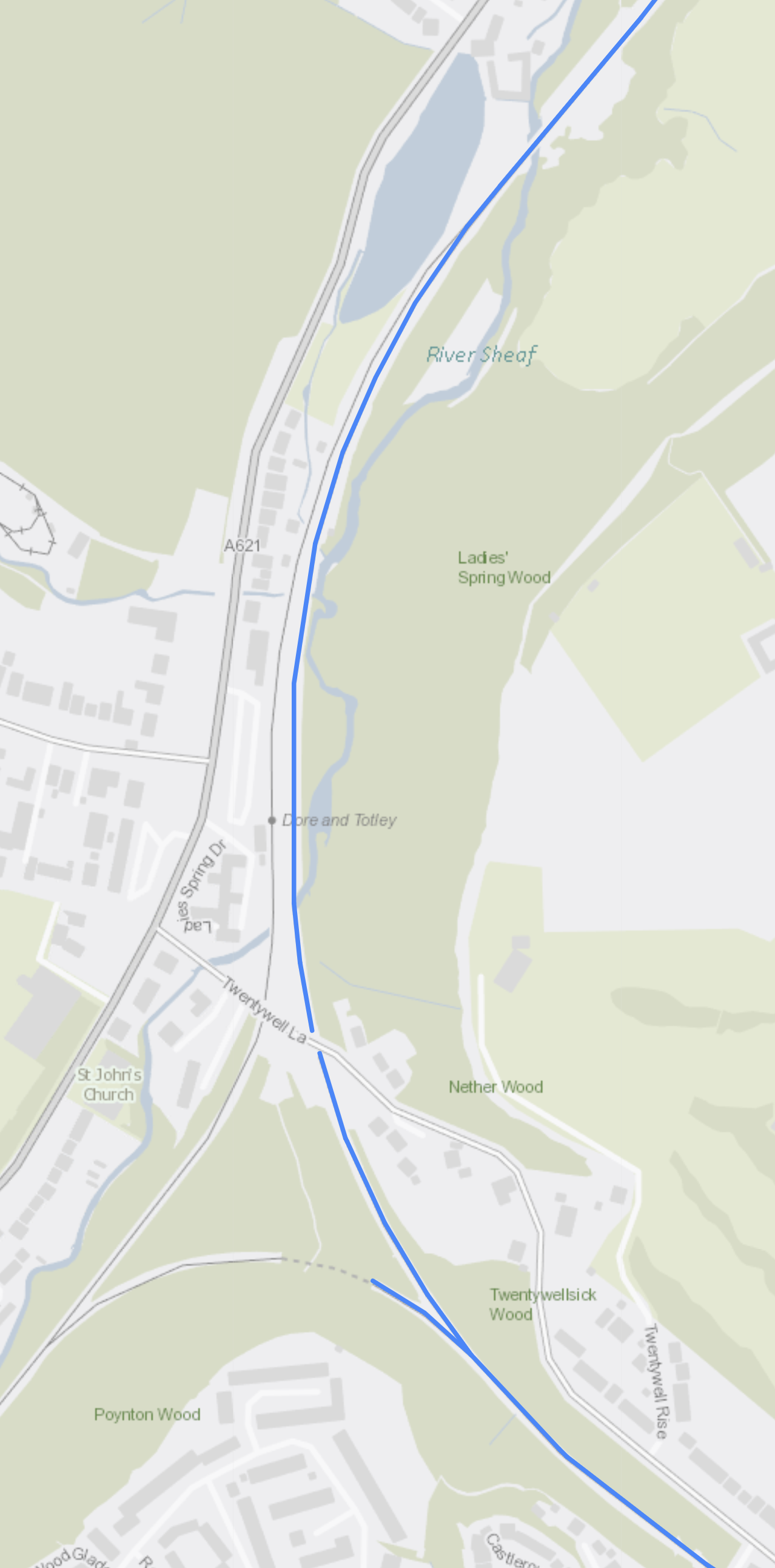
This fourth map, shows where the combined route joins the Hope Valley Line to Manchester to the South West of Sheffield.
Note.
- Sheffield is to the North East.
- Chesterfield is to the South East,
- Totley junction is a large triangular junction, that connects to the Hope Valley Line.
These are some timings for various sections of the route.
- Clay Cross North Junction and Chesterfield (current) – 4 minutes
- Clay Cross North Junction and Sheffield (current) – 17 minutes
- Chesterfield and Sheffield (current) – 13 minutes
- Chesterfield and Sheffield (High Speed Two) – 13 minutes
- East Midlands Hub and Chesterfield (High Speed Two) – 16 minutes
- East Midlands Hub and Sheffield (High Speed Two) – 27 minutes
As Class Cross North Junction and Sheffield are 15.5 miles, this means the section is run at an average speed of 53 mph.
Can I draw any conclusions from the maps and timings?
- There would appear to be similar current and High Speed Two timings between Chesterfield and Sheffield.
- The various junctions appear to be built for speed.
The Midland Main Line will be electrified between Clay Cross North Junction and Sheffield, so that High Speed Two trains can use the route.
What will be the characteristics of the tracks between Clay Cross North Junction and Sheffield?
- Will it be just two tracks as it mainly is now or will it be a multi-track railway to separate the freight trains from the high speed trains?
- Will it have a high enough maximum speed, so that East Midland Railway’s new Class 810 trains can go at their maximum speed of 140 mph?
- Will it be capable of handling a frequency of 18 tph, which is the maximum frequency of High Speed Two?
Surely, it will be built to a full High Speed Two standard to future-proof the line.
Current Passenger Services Between Clay Cross North Junction And Sheffield Station
These trains use all or part of the route between Cross North Junction And Sheffield stations.
- CrossCountry – Plymouth and Edinburgh via Derby, Chesterfield, Sheffield and Leeds – 1 tph
- East Midlands Railway – London St. Pancras and Sheffield via Derby and Chesterfield – 2 tph
- East Midlands Railway – Liverpool Lime Street and Norwich via Stockport, The Hope Valley Line, Sheffield and Chesterfield – 1 tph
- Northern Trains – Manchester Piccadilly and Sheffield via the Hope Valley Line – 1 tph
- Northern Trains – Leeds and Nottingham via Meadowhall, Sheffield and Chesterfield – 1 tph
- TransPennine Express – Manchester Airport and Cleethorpes via Stockport, the Hope Valley Line and Sheffield – 1 tph
Note.
- tph is trains per hour.
- High Speed Two is currently planning to run two tph to Sheffield, which will run between Cross North junction and Sheffield stations.
- The services on the Hope Valley Line run on electrified tracks at the Manchester end.
These services can be aggregated to show the number of trains on each section of track.
- Hope Valley Line between Manchester and Totley junction – 3 tph
- Totley junction and Sheffield station – 7 tph
- Totley junction and Clay Cross North junction via Chesterfield – 4 tph
Adding in the High Speed Two services gives these numbers.
- Hope Valley Line between Manchester and Totley junction – 3 tph
- Totley junction and Sheffield station – 9 tph
- Totley junction and Clay Cross North junction via Chesterfield – 6 tph
This report on the Transport for the North web site, is entitled At A Glance – Northern Powerhouse Rail. It states that Transport for the North’s aspirations for Manchester and Sheffield are four tph with a journey time of forty minutes.
Adding in the extra train gives these numbers.
- Hope Valley Line between Manchester and Totley junction – 4 tph
- Totley junction and Sheffield station – 10 tph
- Totley junction and Clay Cross North junction via Chesterfield – 6 tph
This level of services can be accommodated on a twin-track railway designed to the right high speed standards.
Freight Services Between Clay Cross North Junction And Sheffield Station
The route is used by freight trains, with up to two tph on each of the three routes from Totley junction.
And these are likely to increase.
Tracks Between Clay Cross North Junction And Sheffield Station
I am absolutely certain, that two tracks between Clay Cross North junction And Sheffield station will not be enough, even if they are built to High Speed Two standards to allow at least 140 mph running under digital signalling.
Battery Electric Trains
The only battery-electric train with a partly-revealed specification is Hitachi’s Regional Battery Train, which is described in this Hitachi infographic.

Note.
- The train is a 100 mph unit.
- Ninety kilometres is fifty-six miles.
I would expect that battery-electric trains from other manufacturers like Alstom, CAF and Siemens would have similar performance on battery power.
In Thoughts On CAF’s Battery-Electric Class 331 Trains, I concluded CAF’s approach could give the following ranges.
- Three-car battery-electric train with one battery pack – 46.7 miles
- Four-car battery-electric train with one battery pack – 35 miles
- Four-car battery-electric train with two battery packs – 70 miles
I was impressed.
These are my thoughts on battery-electric trains on the routes from an electrified Sheffield.
Adwick
Sheffield and Adwick is 22.7 miles without electrification
I am sure that battery-electric trains can handle this route.
If the battery range is sufficient, there may not need to be charging at Adwick.
Bridlington
Sheffield and Bridlington is 90.5 miles without electrification, except for a short section through Doncaster, where trains could top up batteries.
I am sure that battery-electric trains can handle this route.
But there would need to be a charging system at Hull, where the trains reverse.
An alternative would be to electrify Hull and Brough, which is just 10.4 miles and takes about twelve minutes.
Derby Via The Midland Main Line
Clay Cross North junction and Derby is 20.9 miles without electrification.
I am sure that battery-electric trains can handle this route.
Gainsborough Central
Sheffield and Gainsborough Central is 33.6 miles without electrification
I am sure that battery-electric trains can handle this route.
But there will need to be a charging system at Gainsborough Central.
Huddersfield Via The Penistone Line
This is a distance of 36.4 miles with electrification at both ends, after the electrification between Huddersfield and Westtown is completed.
I am sure that battery-electric trains can handle this route.
Hull
Sheffield and Hull is 59.4 miles without electrification, except for a short section through Doncaster, where trains could top up batteries.
I am sure that battery-electric trains can handle this route.
But there will probably need to be a charging system at Hull.
An alternative would be to electrify Hull and Brough, which is just 10.4 miles and takes about twelve minutes.
Leeds Via The Hallam Or Wakefield Lines
This is a distance of 40-45 miles with electrification at both ends.
I am sure that battery-electric trains can handle this route.
Lincoln
Sheffield and Lincoln Central is 48.5 miles without electrification
I am sure that battery-electric trains can handle this route.
But there will probably need to be a charging system at Lincoln Central.
Manchester Via The Hope Valley Line
This is a distance of forty-two miles with electrification at both ends.
I am sure that battery-electric trains can handle this route.
Nottingham
Clay Cross North junction and Nottingham is 25.1 miles without electrification
I am sure that battery-electric trains can handle this route.
But there may need to be a charging system at Nottingham.
York
This is a distance of 46.4 miles with electrification at both ends.
I am sure that battery-electric trains can handle this route.
Is London St. Pancras And Sheffield Within Range Of Battery-Electric Trains?
In the previous section, I showed that it would be possible to easily reach Derby, as Clay Cross North junction and Derby is 20.9 miles without electrification.
- Current plans include electrifying the Midland Main Line as far North as Market Harborough.
- Market Harborough is 82.8 miles from London St. Pancras
- Derby is 128.3 miles from London St. Pancras
So what would be the best way to cover the 45.5 miles in the middle?
One of the best ways would surely be to electrify between Derby and East Midlands Parkway stations.
- Derby and East Midlands Parkway stations are just 10.2 miles apart.
- Current services take around twelve-fourteen minutes to travel between the two stations, so it would be more than enough time to charge a battery-electric train.
- Power for the electrification should not be a problem, as Radcliffe-on-Soar power station is by East Midlands Parkway station. Although the coal-fired power station will soon be closed, it must have a high class connection to the electricity grid.
- The East Midlands Hub station of High Speed Two will be built at Toton between Derby and Nottingham and will have connections to the Midland Main Line.
- An electrified spur could connect to Nottingham station.
I have flown my virtual helicopter along the route and found the following.
- Three overbridges that are not modern and built for large containers and electrification.
- Two level crossings.
- One short tunnel.
- Two intermediate stations.
- Perhaps half-a-dozen modern footbridges designed to clear electrification.
I’ve certainly seen routes that would be much more challenging to electrify.
I wonder if gauge clearance has already been performed on this key section of the Midland Main Line.
If this section were to be electrified, the sections of the Midland Main Line between London St. Pancras and Sheffield would be as follows.
- London St. Pancras and Market Harborough – Electrified – 82.8 miles
- Market Harborough and East Midlands Parkway – Not Electrified – 35.3 miles
- East Midlands Parkway and Derby – Electrified – 10.2 miles
- Derby and Clay Cross North junction – Not Electrified – 20.9 miles
- Clay Cross North junction and Sheffield – Electrified – 15.5 miles
Note.
- The World Heritage Site of the Derwent Valley Mills is not electrified, which could ease the planning.
- Leicester station with its low bridge, which could be difficult to electrify, has not been electrified.
- Under thirty miles of electrification will allow battery-electric trains to run between London St. Pancras and Sheffield, provided they had a range on batteries of around forty miles.
Probably, the best way to electrify between East Midlands Parkway and Derby might be to develop a joint project with High Speed Two, that combines all the power and other early works for East Midlands Hub station, with the electrification between the two stations.
Will The Class 810 Trains Be Converted To Battery-Electric Operation?
Hitachi’s Class 8xx trains tend to be different, when it comes to power. These figures relate to five-car trains.
- Class 800 train – 3 x 560 kW diesel engines
- Class 801 train – 1 x 560 kW diesel engine
- Class 802 train – 3 x 700 kW diesel engines
- Class 803 train – All electric – No diesel and an emergency battery
- Class 805 train – 3 x 700 kW diesel engines (?)
- Class 807 train – All electric – No diesel or emergency battery
- Class 810 train – 4 x 700 kW diesel engines (?)
Note.
- These figures relate to five-car trains.
- Class 807 train are seven-car trains.
- Where there is a question mark (?), the power has not been disclosed.
- Hitachi use two sizes of diesel engine; 560 kW and 700 kW.
It was generally thought with the Class 810 train to be used on the Midland Main Line, will be fitted with four engines to be able to run at 125 mph on diesel.
But are they 560 kW or 700 kW engines?
- A Class 802 train has an operating speed of 110 mph on diesel, with 2100 kW of installed power.
- To increase speed, the power will probably be related to something like the square of the speed.
So crudely the power required for 125 mph would be 2100*125*125/110/110, which works out at 2712 kW.
Could this explain why four engines are fitted? And why they are 700 kW versions?
Interestingly, I suspect, Hitachi’s five-car trains have two more or less identical driver cars, except for the passenger interiors, for the efficiency of manufacturing and servicing.
So does that mean, that a fifth engine could be fitted if required?
There probably wouldn’t be a need for five diesel engines, but as I also believe that the Hyperdrive Innovation battery packs for these trains are plug-compatible with the diesel engines, does that mean that Hitachi’s trains can be fitted with five batteries?
Suppose you wanted to run a Class 810 train at 125 mph to clear an electrification gap of forty miles would mean the following.
- It would take 0.32 hours or 19.2 minutes to cross the gap.
- In that time 2800 kW of diesel engines would generate 896 kWh.
- So to do the same on batteries would need a total battery capacity of 896 kWh.
- If all diesel engines were replaced, each battery would need to be 224 kWh
A battery of this size is not impractical and probably weighs less than the at least four tonnes of the diesel engine it replaces.
Conclusions
Electrification between Clay Cross North Junction and Sheffield station is an important project that enables the following.
- A high proportion of diesel services to and from Sheffield to be converted to battery-electric power.
- With electrification between Derby and East Midlands Parkway, it enables 125 mph battery-electric trains to run between London St. Pancras and Sheffield.
- It prepares Sheffield for High Speed Two.
It should be carried out as soon as possible.
Department Of Transport Claims London and Sheffield Times Could Be Cut By Thirty Minutes
In this article on the BBC, which is entitled Government Announce £401m Boost For Rail Services, this is said.
The funding announcement coincided with the completion of the first phase of the £1.5bn Midland Main Line Upgrade, which has supported the launch of East Midlands Railway’s (EMR) first electric services on the route between Corby in Northamptonshire and London St Pancras.
The project will see journey times between Sheffield and London cut by up to 30 minutes, the DfT said.
So how feasible is the claim of a thirty minute cut in London and Sheffield timings?
On Monday, the 07:30 train from London to Sheffield, covered the 164.7 miles in two hours and twelve minutes at an average speed of 74.9 mph.
If that train had done the trip in one hour and forty-two minutes, that would have been an average speed of 96.9 mph.
By the time, the new Class 810 trains arrive in a couple of years, they will be able to use the new electrification to Market Harborough, when on Monday the 82.8 miles without a stop, was covered in an hour, at an average speed of 82.8 mph.
These new trains are 125 mph electric trains under the wires and they will have two separate fast lines on which to run.
Example time savings at various average speeds to Market Harborough are as follows.
- 100 mph – 10 minutes saving.
- 110 mph – 14.8 minutes saving.
- 125 mph – 20.3 minutes saving
- 130 mph – 21.8 minutes saving
- 140 mph – 24.6 minutes saving
Note.
- The faster the average, the greater the time saving.
- Faster than 125 mph would only be possible with full in-cab digital signalling, which is currently being installed on the East Coast Main Line.
- I have been to Leicester in an InterCity 125, which was running at 125 mph most of the way.
But it does look like the new Class 810 trains will be able to save around twenty minutes to Sheffield, by making full use of the electrification between London and Market Harborough.
They would need to save just ten minutes between Market Harborough and Sheffield.
The Monday Train covered the 81.9 miles between Market Harborough and Sheffield in one hour and twelve minutes, which is an average speed of 68.3 mph.
To obtain the saving of ten minutes, it would need to do the journey in one hour and two minutes, which would be an average speed of 79.3 mph.
Given that the new Class 810 trains are designed to cruise at 125 mph on diesel, I don’t think this is an impossible objective.
What Will Be The Ultimate Time Between London and Sheffield On The Midland Main Line?
I believe that the following two sections of the Midland Main Line can be easily electrified.
- Between Leicester and Derby without the problem of the bridge at the South end of Leicester station, which would be so disruptive.
- Clay Cross North Junction and Sheffield which will be electrified for High Speed Two. I doubt Derby and Clay Cross Junction will be electrified as it’s a World Heritage Site.
On my Monday train, the following are times North of Leicester.
- Leicester and Derby is 29.3 miles, which is covered in 32 minutes at an average speed of 55 mph, which includes five stops. Raise this to 110 mph and the journey time is just 16 minutes or a saving of 16 minutes.
- Derby and Clay Cross North Junction is 21.8 miles, which is covered in 13 minutes at an average speed of 100 mph. By averaging 120 mph, there would be a saving of 2.1 minutes.
- Cross North Junction and Sheffield is 15.5 miles, which is covered in 16 minutes at an average speed of 58.2 mph.
Note.
- Savings would come between Leicester and Derby because of 125 mph linespeed and faster stops because of electrification.
- I believe that Hitachi battery-electric trains could sustain 125 mph on battery alone between Derby and Clay Cross North Junction, if they entered the section without electrification at full speed with full batteries. Now that is what I call a battery-electric train!
- There must be a minute or two to be saved on an electrified section into Sheffield with the stop at Chesterfield.
Add up all the savings and I feel that an hour and a half is possible between London and Sheffield.
And what time is High Speed Two claiming? One hour and twenty-seven minutes!
Could A Battery-Electric Train Cruise At 125 mph?
This may seem a silly idea, but then trains don’t care where they get their electricity from.
On the 21.8 miles between Derby and Clay Cross North, a sizeable proportion of energy will be used to accelerate the train up to the linespeed for the electrified section.
When the train enters the section without electrification, it will have two sources of energy.
- The electricity in the full batteries.
- The kinetic energy in the train at the required speed.
As the train runs through the section air and rolling resistance will tend to slow the train and electricity from the battery will be used to maintain speed.
In How Much Power Is Needed To Run A Train At 125 mph?. I estimated that for a Class 801 train to maintain 125 mph needs 3.42 kWh per vehicle mile.
A simple sum of 21.8 * 5 * 3.42 gives an energy need of 372.8 kWh to run between Derby and Clay Cross North Junction.
I’m sure than Hitachi can fit a 400 kWh battery in a five-car Class 810 train.
Would a slightly larger battery and in-cab signalling allow battery-electric trains to run at 140 mph? If the track allowed it, I don’t see why not!
Conclusion
I believe the Department of Transport’s statement of saving thirty minutes between London and Sheffield is feasible.
But so is a time of an hour-and-a half, which will give High Speed Two a run for its money!
A Trip To Corby
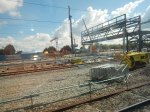
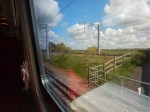
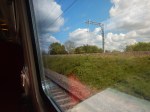
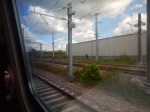
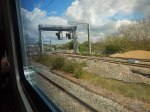
I took these pictures on a trip to Corby this morning.


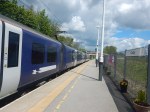
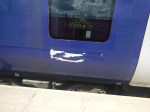
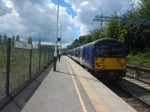
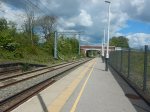
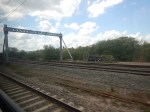

These are my thoughts.
Trains To And From Corby
I got a Class 222 train to Corby and an eight-car Class 360 train back.
Brent Cross West Station
There was a lot of constructruction activity at the new Brent Cross West station.
Luton Airport Parkway Station
The extensions to Luton Airport Parkway station look to be comprehensive, with several escalators.
The Luton DART connection to Luton Airport appears to be under test, so should open in 2022.
But will there be any air passengers to use it?
I last used it in 2008, when I went to see England play in Belarus.
Electrification North Of Bedford
The electrification North of Bedford station is obviously complete on the slow lines, but on the fast lines, as the pictures show, the gantries are all erected, but there are still wires to be installed.
But as the Class 810 trains won’t be in service until 2023, there’s still a bit of time.
The gantries certainly look sturdy, as this picture shows.
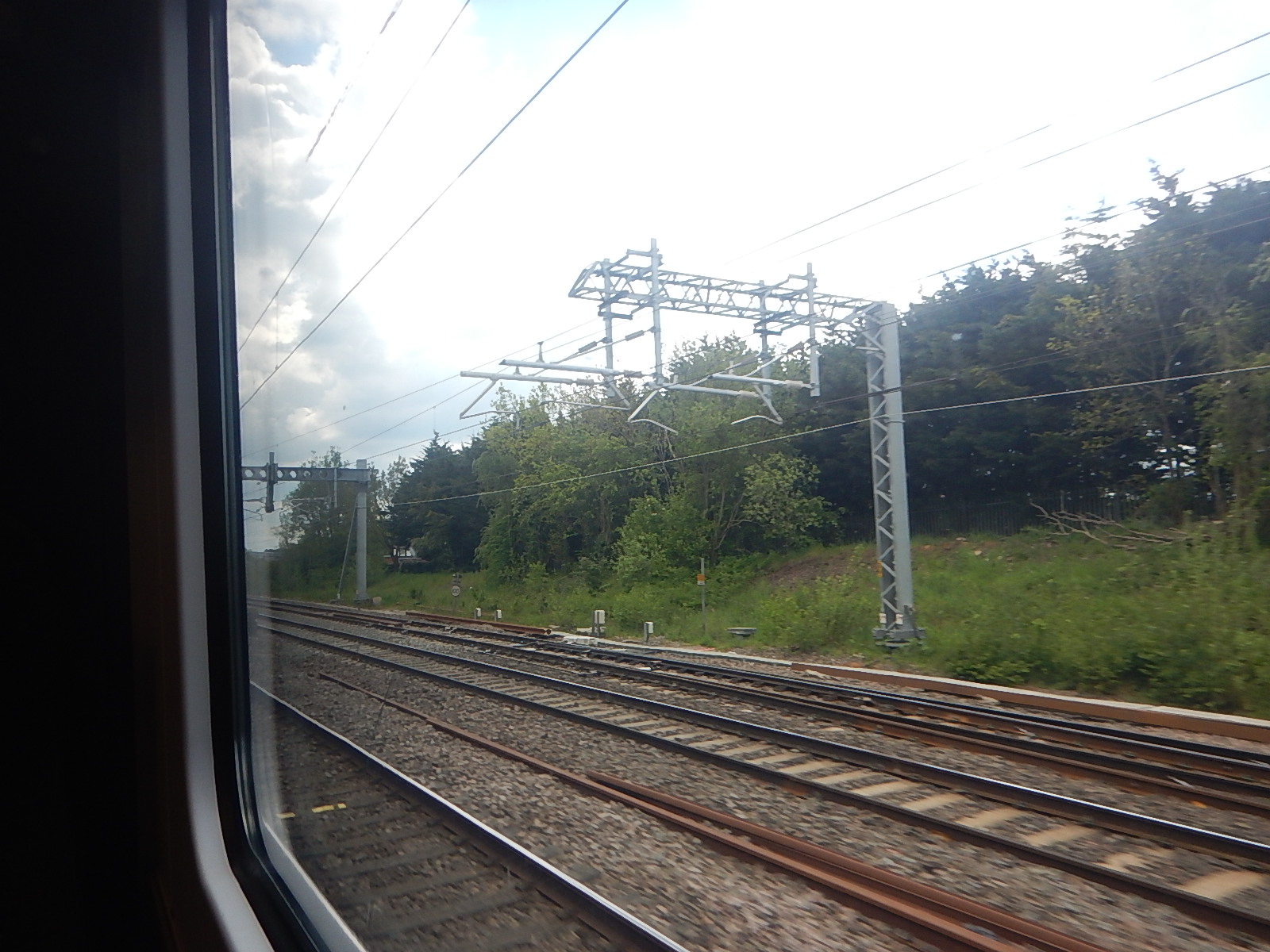
They’re certainly built for 125 mph, but as the Class 810 trains will be capable of 140 mph with full digital in-cab signalling, I would hope that the electrification has been installed to that standard. Or at least to a standard, that can be easily upgraded!
Corby Station
Corby station has been finished to a single-platform station, which is able to accept a twelve-car Class 360 train.
This should be adequate for the current half-hourly service, as a single platform can handle a least four trains per hour (tph) and several around the country regularly do.
Both tracks through the station are electrified and I suspect with a second platform bridge, both could be used by electric trains to create a two-platform station.
But there would appear to be no need at the moment.
Even, if it were to be decided to extend one tph to Oakham and Melton Mowbray stations, this could probably be accommodated on the single-platform.
Network Rail seem to have already installed a crossover South of Corby station, so that trains can use the single platform.
Serving Oakham And Melton Mowbray
I discussed this extension in detail in Abellio’s Plans For London And Melton Mowbray Via Corby And Oakham.
In the related post, I said this.
This page on the Department for Transport web site is an interactive map of the Abellio’s promises for East Midlands Railway.
These are mentioned for services to Oakham and Melton Mowbray.
-
- After electrification of the Corby route there will continue to be direct service each way between London and Oakham and Melton Mowbray once each weekday, via Corby.
- This will be operated with brand new 125mph trains when these are introduced from April 2022.
This seems to be a very acceptable minimum position.
When my Class 222 train arrived in Corby at 1154, it waited a couple of minutes then took off to the North.
I then took the next train to London, which was an eight-car Class 360 train which formed the 1211 service back to St. Pancras.
Meanwhile the Class 222 train, that I’d arrived on did a reverse in the Corby North Run Around Loop finally arriving back in Corby at 1345. The train had taken one hour and forty-nine minutes to return to Corby.
It might be just coincidence, but are East Midlands Railway doing timing tests to see if services can be extended to Oakham And Melton Mowbray?
It should be noted that service times North of Corby are as follows.
- Corby and Oakham – 19 mins – 14.3 miles
- Corby and Melton Mowbray – 31 mins – 25.7 miles
- Melton Mowbray and Leicester – 17 mins – 12.8 miles (estimate) – CrossCountry service
My logic goes like this.
- It looks to me that it would not be unreasonable that a Class 222 train could run between Corby and Leicester in forty-eight minutes.
- Double that and you get one hour and thirty eight minutes, for a journey from Corby to Leicester and back.
- Subtract that time from the one hour and forty-nine minutes that my train took to reverse and there is eleven minutes for a turnback at Leicester station.
- Eleven minutes would certainly be long enough to tidy a train and for the crew to change ends.
I also believe that the 35.8 miles would be possible for a Class 810 train fitted with one or more battery power-packs instead of a similar number of the four diesel engines.
So are East Midlands Railway doing tests to find the most efficient way to serve Oakham And Melton Mowbray?
On The Corby Branch
I travelled North on a Class 222 diesel train and South on an electric Class 360 train.
On the Corby branch, I was monitoring the train speed on an app on my phone and both trains travelled at around 90 mph for most of the way.
There were sections at up to 100 mph and the track was generally smooth.
I was left with the impression, that trains might be able to go faster on the branch.
Average speeds for the 2.5 miles of the branch were as follows according to these timings from realtimetrains.
- Class 222 train – Arriving – 5.25 mins – 28.6 mph
- Class 222 train – Leaving – 5 mins – 30 mph
- Class 360 train – Arriving – 7.5 mins – 20 mph
- Class 360 train – Leaving – 5 mins – 30 mph
It doesn’t appear that there are much difference in the timings, although it might be said, that the electric approach is more cautious.
The Class 360 Trains
The Class 360 trains have not been refurbished yet although as my pictures show, some have been given a new livery.
In Are Class 360 Trains Suitable For St. Pancras And Corby?, I said this about the train refurbishment.
This page on the Department for Transport web site is an interactive map of the Abellio’s promises for East Midlands Railway.
These features are mentioned for Midland Main Line services to Corby.
-
- Increased capacity
- Twelve-car trains in the Peak.
- More reliable service
- Improved comfort
- Passenger information system
- Free on-board Wi-Fi
- At-seat power sockets
- USB points
- Air conditioning
- Tables at all seats
- Increased luggage space
- On-board cycle storage
What more could passengers want?
It certainly hasn’t happened in full.
I did ask a steward, when the new interiors will be installed and he said they were running late because of the pandemic.
Performance Of The Class 360 Trains
I used my app to follow the speed of the Class 360 train, that brought me back to London.
- The train hit a maximum speed of about 105 mph.
- The train arrived in London a minute late.
I feel that as the drivers get used to their new charges, they will match the timetable.
Conclusion
I have a feeling that in a couple of years, these trains will fulfil Abellio’s promises.
Could Trains From The North Connect To High Speed One At St. Pancras?
I was casually flying my virtual helicopter over the throat of St. Pancras International station, when I took a few pictures.
This Google Map shows the Northern ends of the platforms and the tracks leading in.
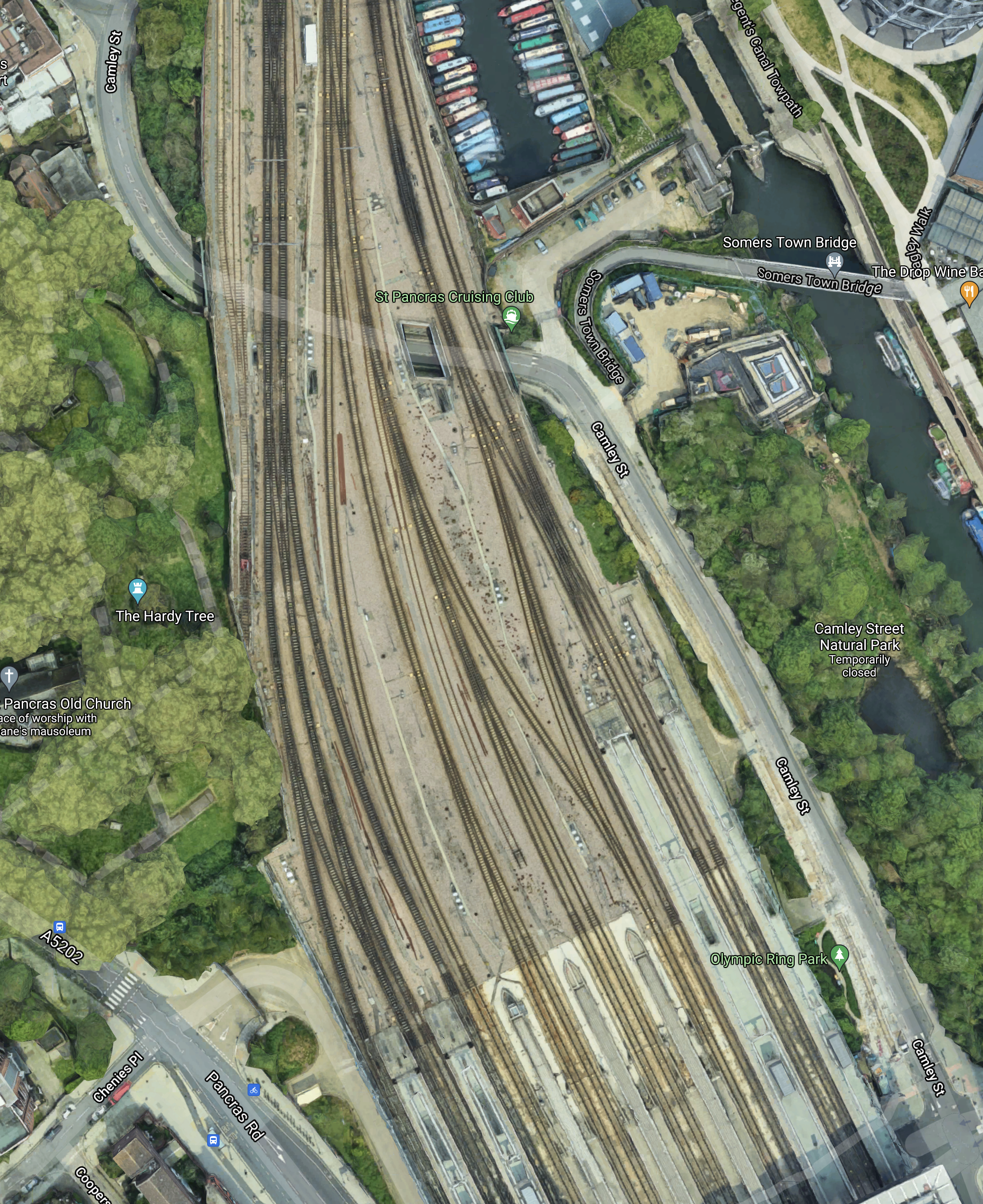
Note.
- Platforms 1-4 to the West with darker tracks handle the East Midlands Railway services.
- Platforms 5-10 in the centre with lighter tracks formed of three shorter islands handle the Eurostar services.
- Platforms 11-13 to the East with longer platforms handle the Southeastern HighSpeed services.
This Google Map shows the East Midlands Railway platforms.
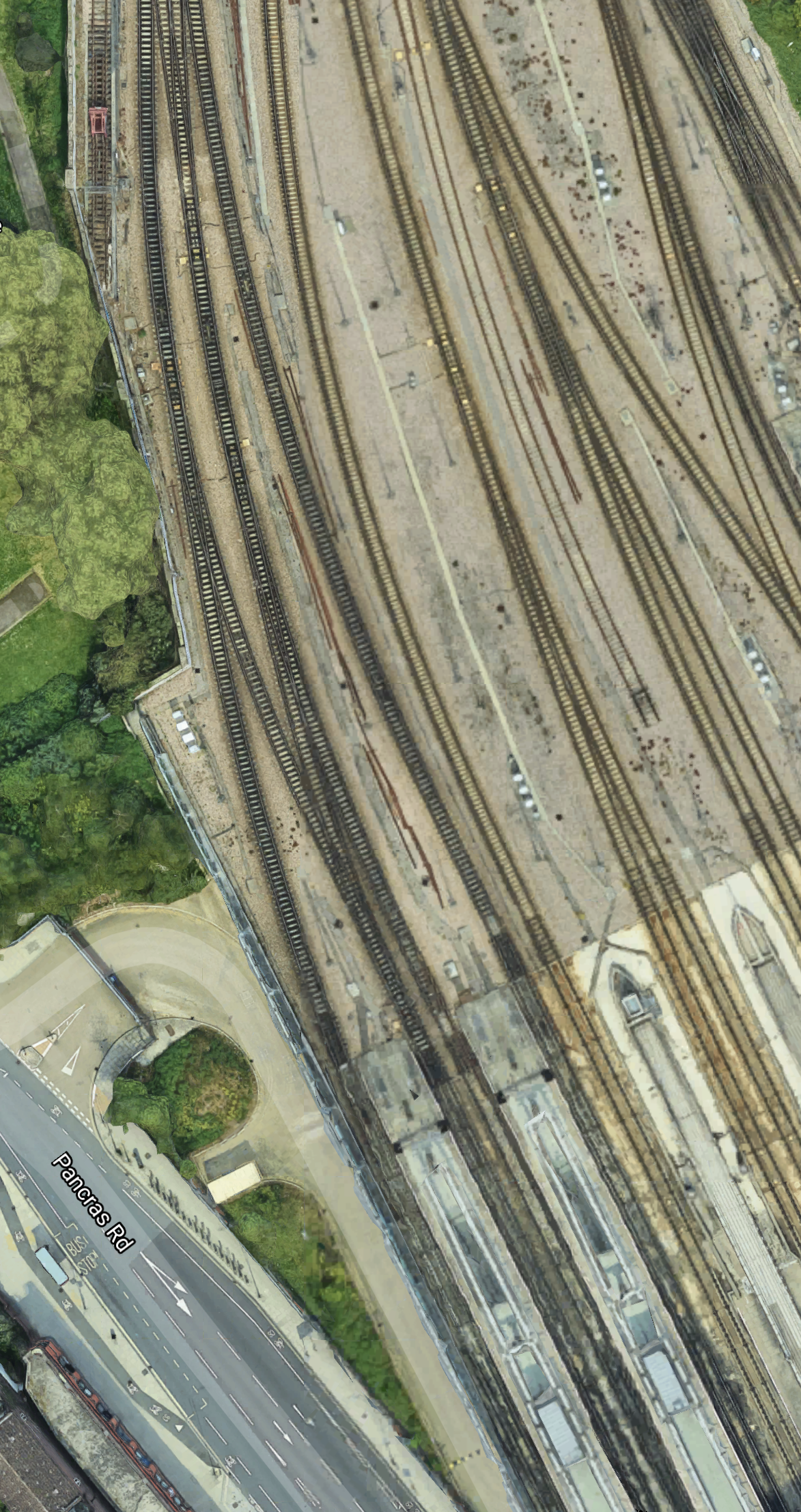
Note.
- There are two island platforms; 1-2 and 3-4.
- The four platforms are served by two tracks, that connect to the fast lines of the Midland Main Line.
- The platforms will be able to handle a pair of Class 810 trains, which will be 240 metres long.
- Will the two trains per hour (tph) using Class 360 trains between London and Corby always use the same platform at St. Prancras station?
This Google Map shows the Eurostar platforms.
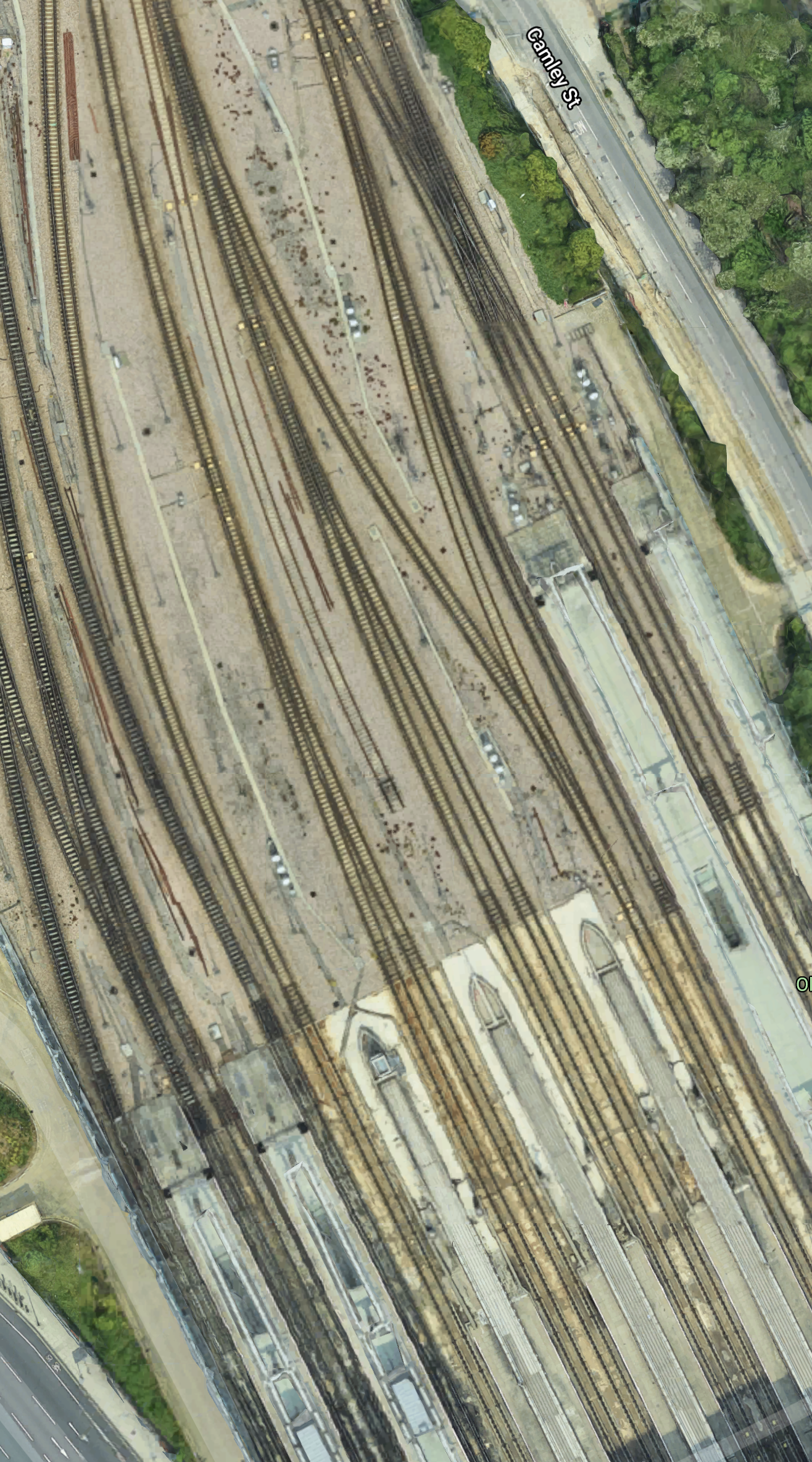
Note.
There are three island platforms; 5-6, 7-8 and 9-10.
The two island platforms in the West are for East Midlands Railway services.
The two longer island platforms in the East are for Southeastern HighSpeed services.
The six platforms connect to two fast lines, that are shared with the Southeastern services.
This Google Map shows the lines proceeding to the North.
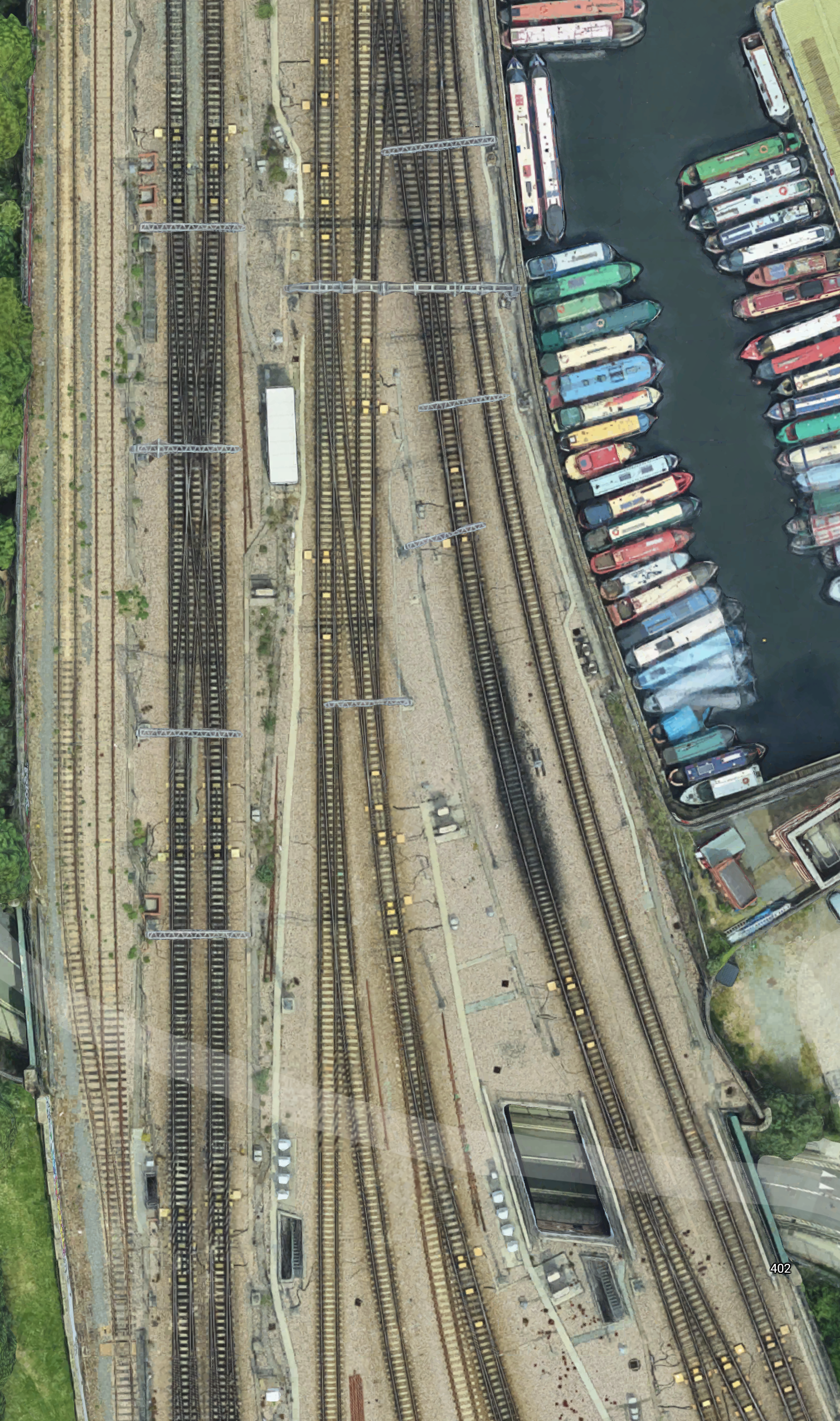
Note.
- There are four sets of tracks.
- The two light-coloured tracks on the left are for Thameslink or sidings.
- The next two dark-coloured tracks are the two tracks of the Midland Main Line.
- The next set of tracks are those connecting to the six Eurostar platforms.
- The two tracks on the right are those connecting to the Southeastern Highspeed platforms.
- There are crossovers between the Eurostar and Southeastern Highspeed tracks to allow efficient operation of the trains going to and from the twin tracks of High Speed One.
This Google Map shows where the Midland Main Line and High Speed One divide.
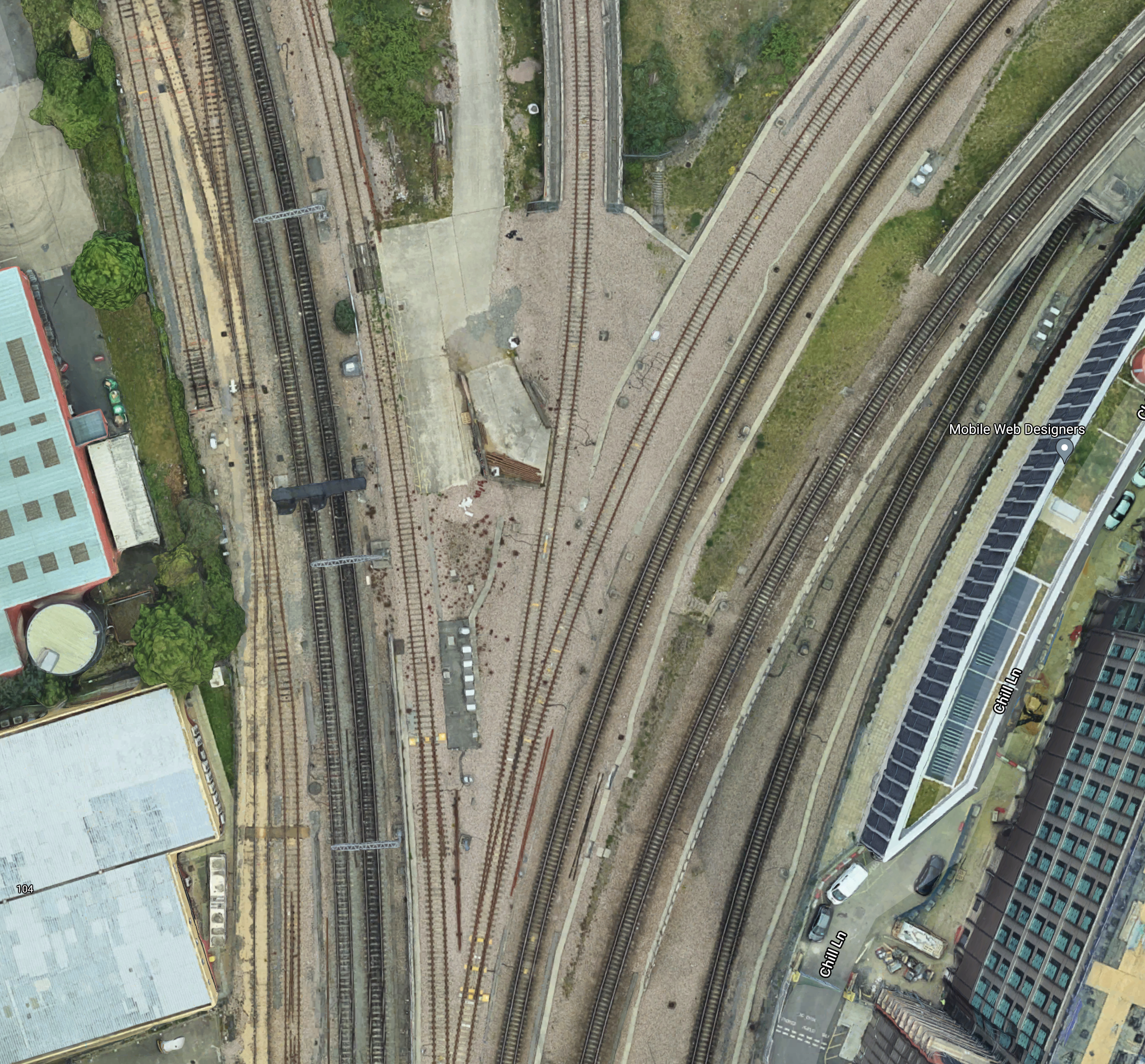
Note.
The two dark-coloured tracks of the Midland Main Line running North.
There appear to be four tracks running North East towards High Speed One.
Between the two sets of tracks two further tracks lead to the North.
The track closest to the Midland Main Line joins to the slow lines of the Midland Main Line.
The other one connects to the North London Line.
This Google Map shows the connecting lines to the High Speed One tunnel.
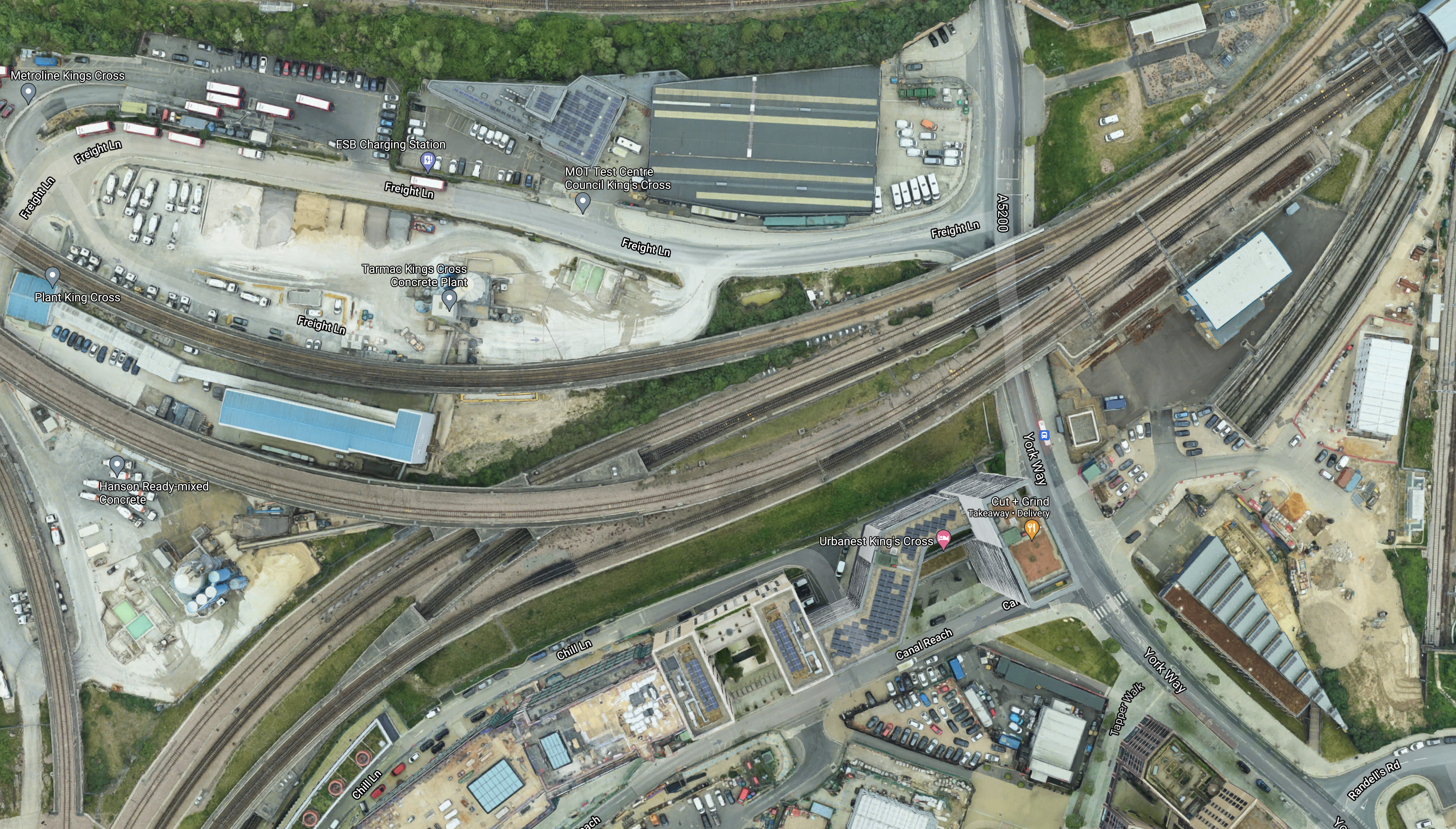
Note the tunnel portal is in the North-East corner of the map.
- It looks to me that the following connections are possible.
- St. Pancras station Eurostar platforms and Midland Main Line.
- St. Pancras station Eurostar platforms and North London Line to the West.
- High Speed One and North London Line to the West.
These connections are in addition to those connections needed to run scheduled services.
They would enable trains to take the following routes.
- St. Pancras station Eurostar platforms and Midland Main Line.
- St. Pancras station Eurostar platforms and the West Coast Main Line via North London Line
- High Speed One and the West Coast Main Line via North London Line
- St. Pancras station Eurostar platforms and the Great Western Main Line via North London Line
- High Speed One and the Great Western Main Line via North London Line
I suspect most of the times, that these routes are used it is for engineering purposes or behaps dragging a failed train out of St. Pancras.
But the track layout would seem to allow the following.
Direct electric freight and passenger services between High Speed One and Birmingham, Cardiff, Glasgow, Liverpool and Manchester.
Direct electric passenger services between High Speed One and Sheffield and Leeds, with a reverse at St. Pancras, after the Midland Main Line were to be fully electrified.
Was this by design for Eurostar or was it just what Network Rail ended up with?
A Modern Regional Eurostar Service
These are my thoughts on a modern Regional Eurostar service.
Rolling Stock
High Speed Two is coming and this year, the company will order some of the rolling stock.
There will be fifty-four trains
The trains will be Classic-Compatible for running on the West Coast Main Line.
They will be 200 metres long and be able to run in pairs.
They will be able to operate at 225 mph.
The operating speed of High Speed One is 186 mph.
I can see no reason why trains of this type, couldn’t run between St. Pancras and many destinations in Europe.
North Of England And The Continent
Could this be the service pattern?
- One train could start in the North West and another in the North East.
- Both trains would proceed to St. Pancras picking up passengers en route.
- At St. Pancras the two trains would join together.
- The driver could then position themselves in the front cab and take High Speed One, through the Channel Tunnel.
The train could even split at Calais to serve two different Continental destinations.
Going North, the spitting and joining would be reversed.
What Infrastructure Would Be Needed?
I suspect the following will be needed.
- The West Coast Main Line and the Midland Main Line would need in-cab digital ERTMS signalling.
- Full electrification of the Midland Main Line would probably be necessary, as I don’t think the tunnel allows diesel trains to pass through.
- Some platform lengthening might be needed.
It would not be an expensive scheme.
What Timings Would Be Possible?
Using current timings you get the following times.
- Leeds and Paris – Five hours
- Leeds and Brussels – Four hours forty minutes
- Manchester and Paris – Five hours
- Manchester and Brussels – For hours forty minutes
- Newcastle and Paris – Six hours
- Newcastle and Brussels – Five hours thirty minutes
Note, that the times are best estimates and include a long stop of several minutes at St. Pancras.
Could Sleeper Service Be Run?
I don’t see why not!
Conclusion
It looks like it may be possible to run regional services to Europe, where pairs of train split and join at St. Pancras.
St
Work Has Started At Brent Cross West Station
I was alerted to the fact that work had started at Brent Cross West station by this article on Rail Advent.
The article didn’t say much, except that work had started, track had been moved to allow construction of the £40 million station and the station should open next year.
So I went and had a look.
I took these pictures from a Thameslink train going North through the station site.
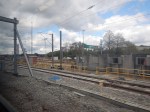
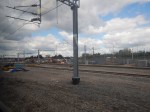
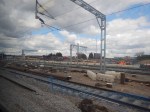

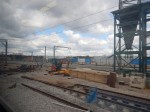
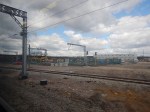
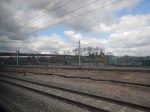
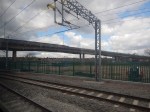
I was sitting on the right-hand side of the train and looking to the East.
I then changed trains at Mill Hill Broadway station and took a few more pictures going South.
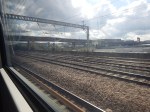

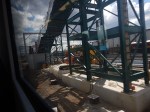
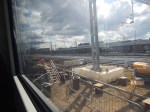

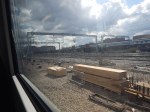


Again, I was sitting on the right-hand side of the train, but this time looking West.
This Google Map shows the area.
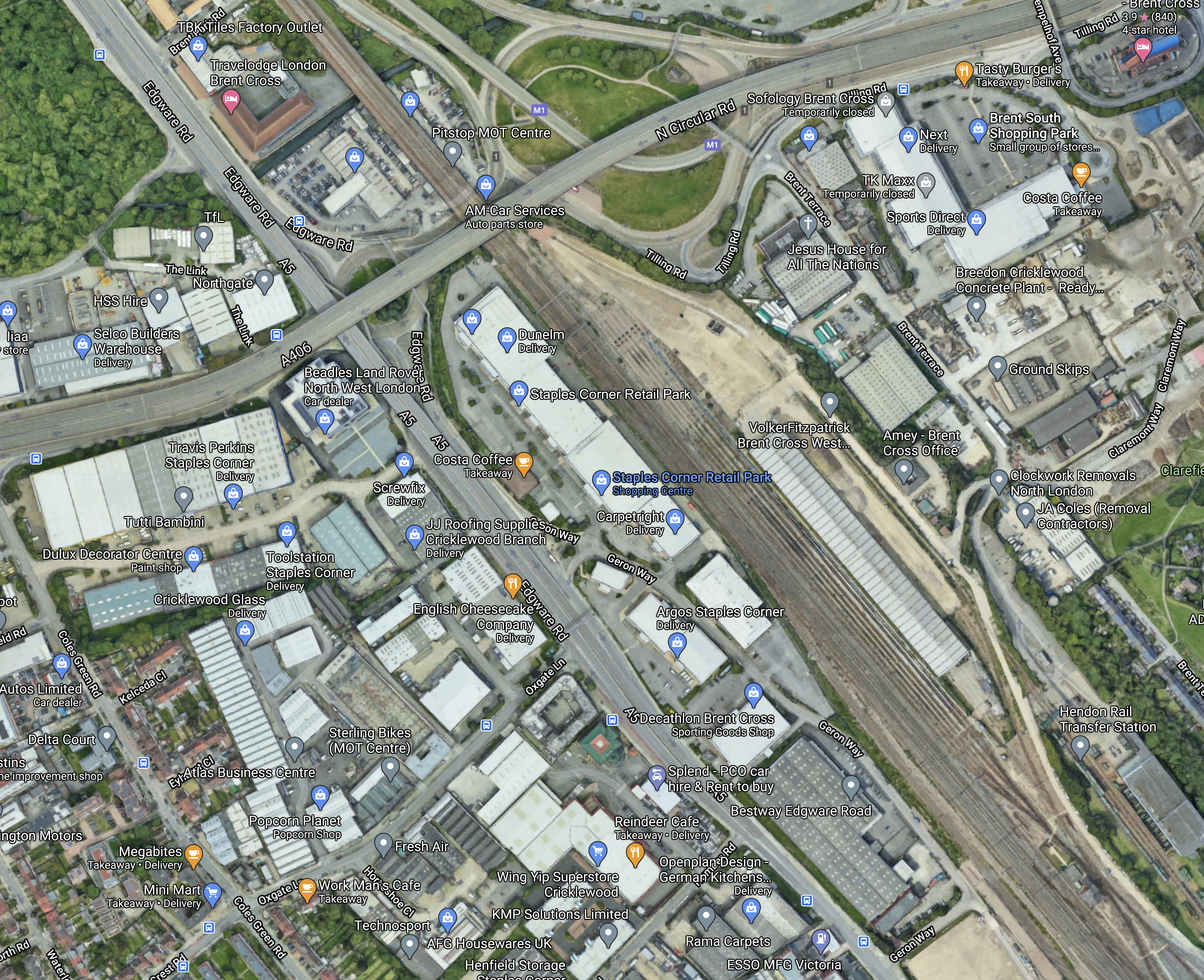
Note.
- The map was probably created a few months ago.
- There is still a shed from the Cricklewood TMD still standing, which I didn’t see.
- The Brent Cross Flyover can be clearly seen in the images and the map.
Work underway includes.
- Creation of the new track layout.
- Building of two wide platforms either side of the tracks i was on.
- The width of the platforms may indicate island platforms.
- Building a temporary footbridge, so workers can cross the tracks.
- There appear to be a support installed for the station footbridge.
One impression, I got today, is that it is a large site and this may enable the building of a relatively simple station.
Thoughts On The Class 360 Trains On The London St. Pancras And Corby Route
In May the Class 360 electric trains will be introduced by East Midlands Railway on the service between St. Pancras and Corby stations.
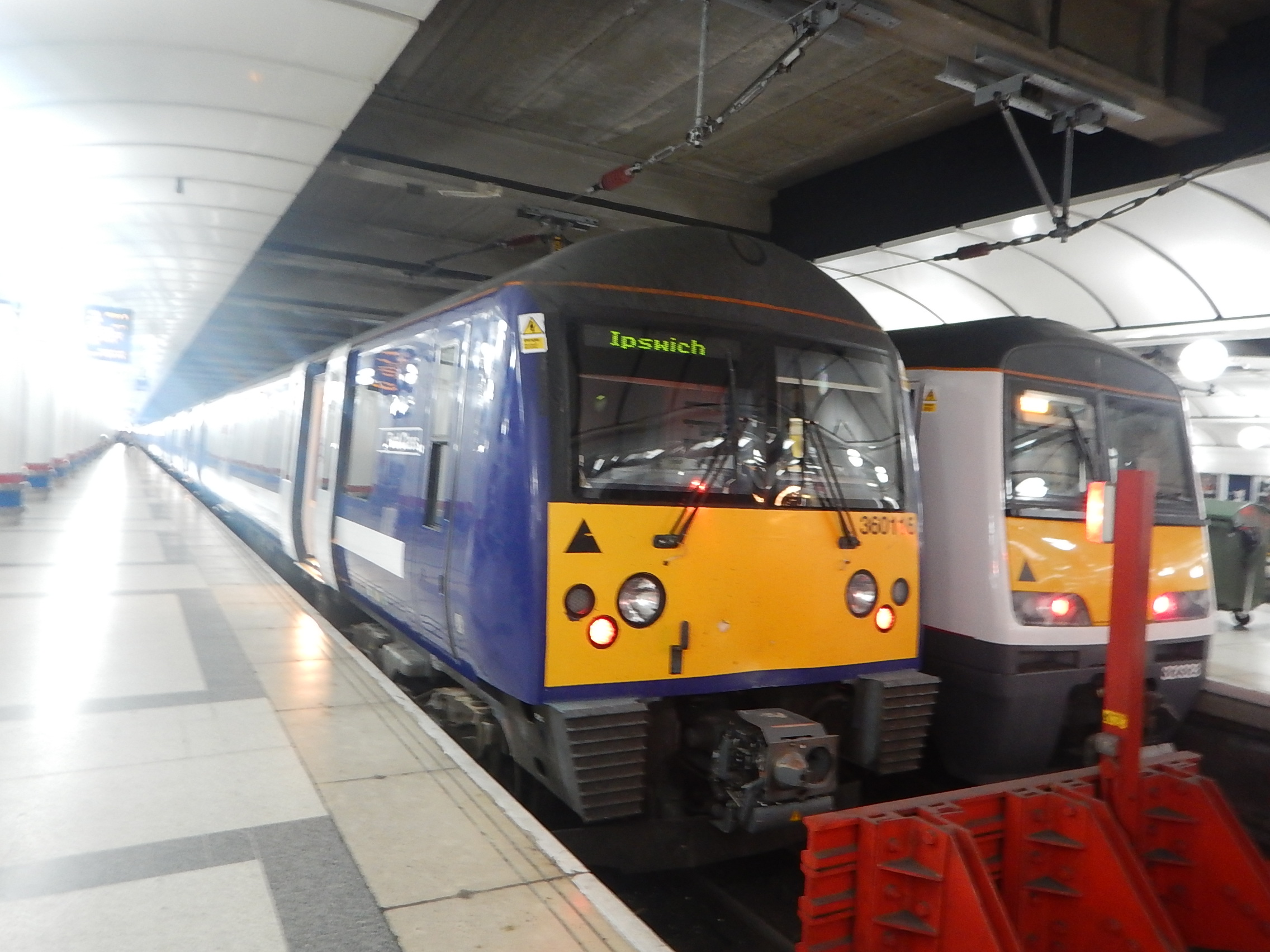
The Class 360 train is on the left.
The following data has come from Real Time Trains.
- St. Pancras and Corby are 79.3 miles apart.
- The current service stops at Kettering, Wellingborough, Bedford and Luton.
- The new electric service stops at Kettering, Wellingborough, Bedford and Luton and Luton Airport Parkway.
- Current services take between 67 and 73 minutes
- The new electric services take between 71 minutes
- Services leave St. Pancras at XX:15 and XX:45
- Services leave Corby at XX:11 and XX:40
- Turnround at St. Pancras appears to be about 23-25 minutes
- Turnround at Corby appears to be about 12-16 minutes.
- St. Albans and St. Pancras takes 14 minutes.
Note.
- The Class 222 train has a top speed of 125 mph and a maximum acceleration: of 0.80 ms-2
- The Class 360 train has a top speed of 110 mph and a maximum acceleration: of 0.98 ms-2
Looks like a case of swings and roundabouts to me!
I can deduce the following.
Average Speed
Consider.
- Assuming a trip time of seventy minutes for the Class 222 train, gives an average speed of 68 mph including stops.
- Assuming a trip time of seventy-one minutes for the Class 360 train, gives an average speed of 62 mph including stops.
These speeds don’t seem to be too difficult to achieve. Especially, as the Midland Main Line is a series of straight line between a number of stations., which are ideal for a quick dash in between.
It’s A Three Hour Round Trip
Add up the two 71 minute trips and the turnaround times and it looks to be a comfortable three hour round trip.
So for a two trains per hour (tph) service, you will need six formations of Class 360 trains.
As it looks like each formation will be twelve cars long, that will mean that eighteen of the current twenty-one trains will be needed.
The three spare trains will be very useful, whilst the trains are refurbished with new liveries and interiors.
Route Capacity
This picture shows a five-car Class 222 train at Corby station.
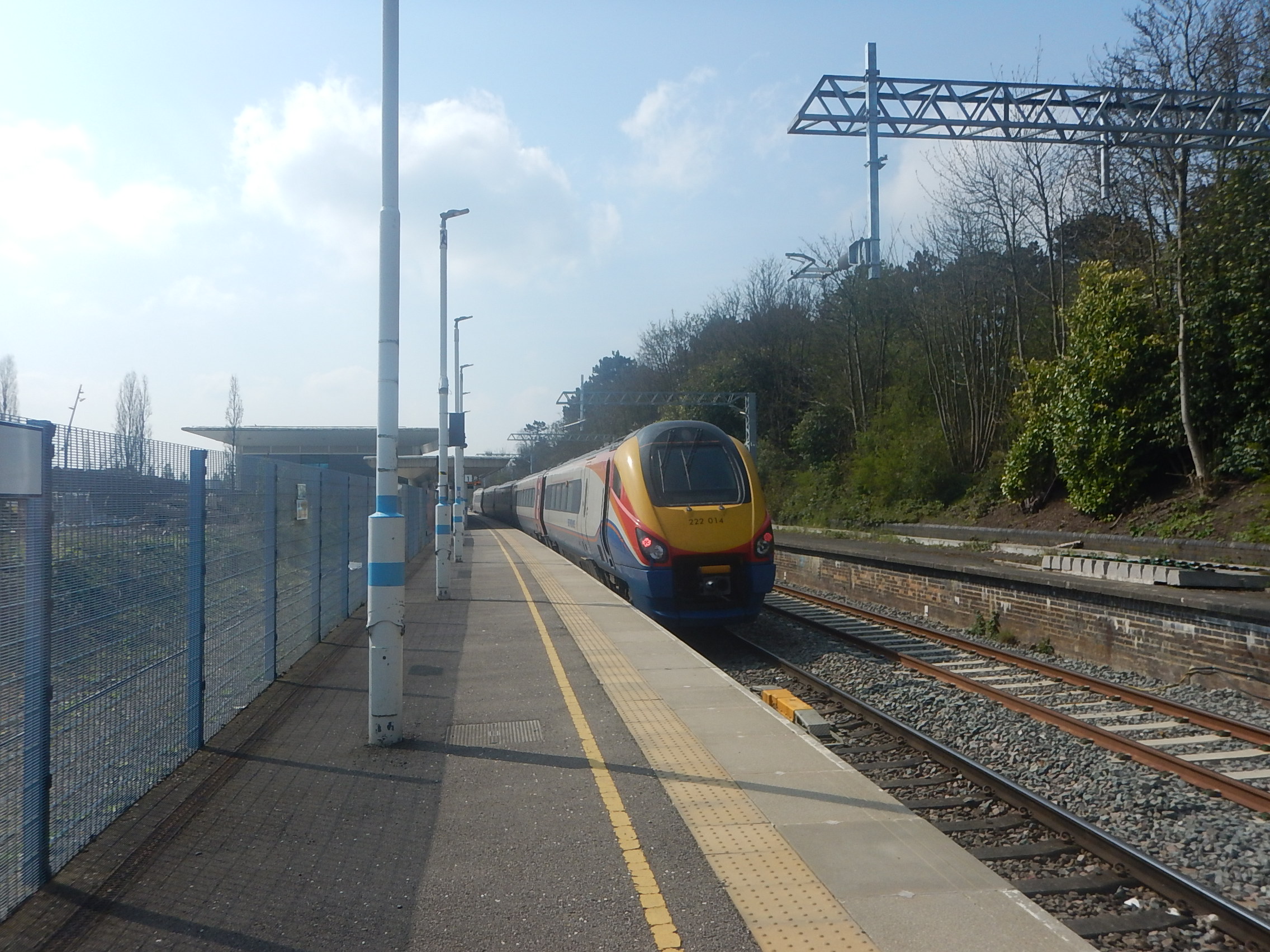
Consider.
- The current five-car Class 222 trains have a capacity of 50 First Class and 192 Standard Class seats
- Four-car Class 222 trains have a capacity of 33 First Class and 132 Standard Class seats.
- A four-car Class 360 train has a capacity of 16 First Class and 264 Standard Class seats.
I can do a simple calculation.
- The current one tph service, if run by a five-car Class 222 trains would have an hourly capacity of 50 First Class and 192 Standard Class seats.
- The planned two tph service if run by twelve-car 360 trains has an hourly capacity of 96 First Class and 1584 Standard Class seats.
First Class capacity on the route has doubled and Standard Class accommodation has gone up by a massive 8.25 times.
The latter figure will probably be reduced as some of the seats are to be removed for a more spacious interior with tables.
Serving Luton Airport
It looks like these trains will enable a quick journey to Luton Airport.
- The St. Pancras and Corby train will take 22 minutes between St. Pancras and Luton Airport Parkway stations.
- There will be the Luton DART connecting Luton Airport Parkway to the Airport from 2022.
- I suspect Luton Airport will be aiming for a thirty minute journey between St. Pancras and the Airport.
- The fast service will have a frequency of two tph.
It will not compare badly with rail times from London to Gatwick of 35 minutes and to Stansted of 50 minutes.
Services To Oakham And Melton Mowbray
Consider.
- Oakham and Melton Mowbray stations are on the route between Corby station and the Midland Main Line North of Leicester.
- Oakham and Melton Mowbray stations have a one train per day (tpd) in both directions to London via Corby.
- In Beeching Reversal – Increased Services To Nottingham And Leicester, via Syston And Loughborough From Melton Mowbray. I wrote about how the local MP wants better services at Melton Mowbray.
- Oakham is 11.5 miles from Corby.
- Melton Mowbray is 25.8 miles from Corby.
- Leicester is just over forty miles from Corby and could be covered in under an hour.
- A pair of Class 810 trains are the same length as a trio of Class 360 trains, so both trains would fit all platforms.
I think that there are a lot of possibilities for services through Corby.
- Class 810 trains could use Corby as a diversion, when the Midland Main Line is closed for engineering works.
- Class 810 trains could run a service between St. Pancras and Leicester via Corby, Oakham and Melton Mowbray.
- If the Class 360 trains could be fitted with batteries, they should be able to provide a service from St. Pancras to Melton Mowbray and perhaps Leicester.
It could even provide an alternative route to London, if Leicester station has to be substantially rebuilt for electrification..
Conclusion
This not the longest of electric services, but I can see it carrying a lot of passengers.
It will also give a boost to Luton Airport.
Thoughts On Faster Trains On Thameslink
The Class 700 trains used by Thameslink only have an operating speed of 100 mph.
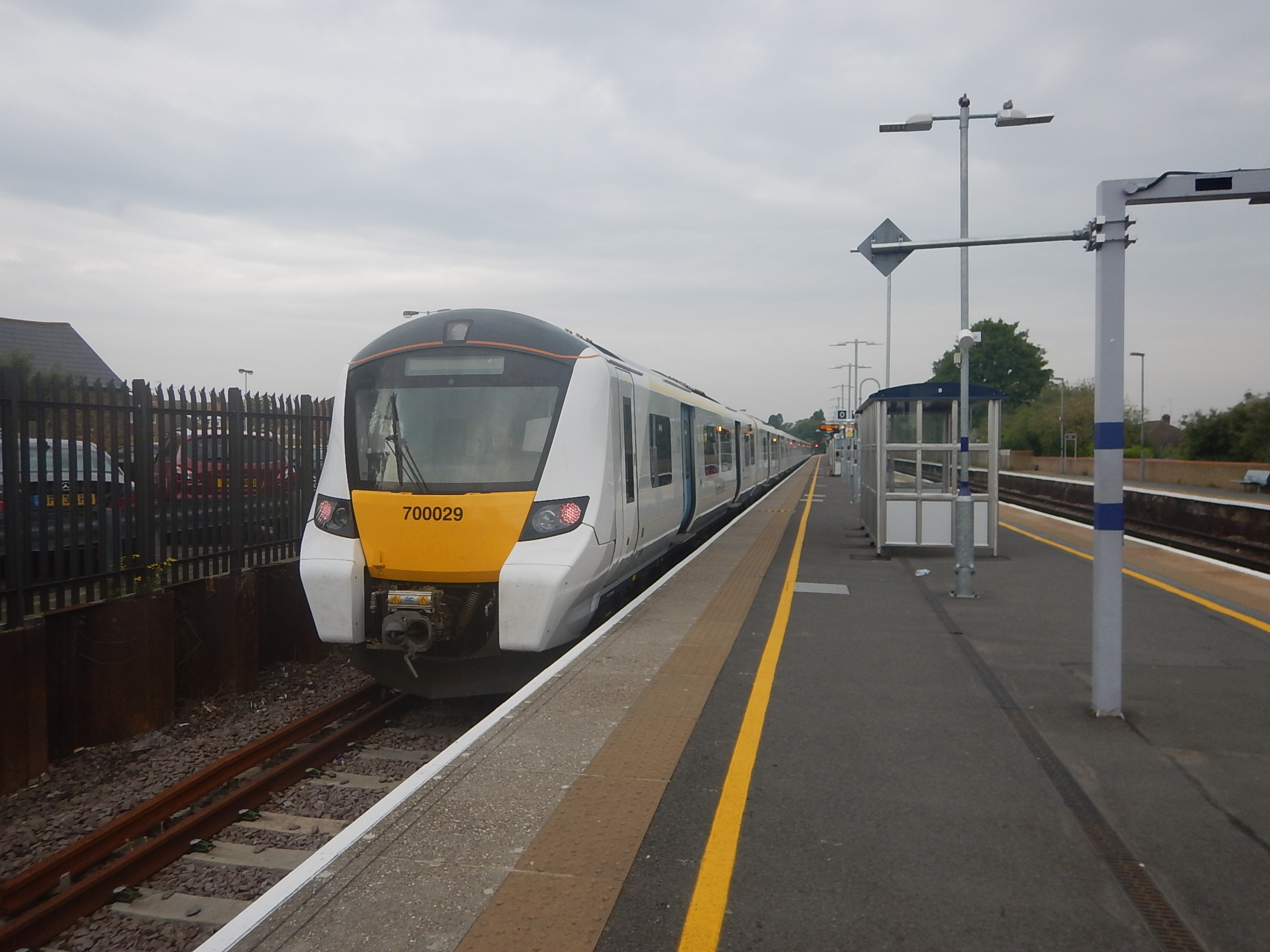
I do wonder, if that is a fast enough operating speed for all Thameslink routes.
Sharing The Midland Main Line With 125 mph Trains
A couple of years ago, I travelled back into St. Pancras with a group of East Midlands drivers in a Class 222 train.
They told me several things about the route including that the bridge at the South of Leicester station would be difficult to electrify, as it was low and the track couldn’t be lowered as one of Leicester’s main sewers was under the tracks at the bridge. Perhaps, this is one place, where discontinuous electrification could be used on the Midland Main Line.
They also told me, that sometimes the Thameslink trains were a nuisance, as because of their 100 mph operating speed, the 125 mph Class 222 trains had to slow to 100 mph.
Upgrading Of The Midland Main Line South Of Bedford
The electrification of the Midland Main Line South of Bedford is being updated, so that it is suitable for 125 mph running.
An Analysis Of Services On The Midland Main Line South Of Bedford
The current Class 222 trains are capable of 125 mph and will be replaced by Class 810 trains capable of the same speed on both diesel and electricity.
Currently, a Class 222 train is capable of doing the following on a typical non-stop run between St. Pancras and Leicester.
- Covering the 30 miles between St. Albans and Bedford in 17 minutes at an average speed of 106 mph.
- Covering the 50.3 miles between Bedford and Leicester in 30 minutes at an average speed of 100.6 mph.
- Maintaining 125 mph for long stretches of the route, once the trains is North of London commuter traffic at St. Albans
I can estimate the timings on the 79.2 miles between Leicester and St. Albans, by assuming the train runs at a constant speed.
- 100 mph – 47.5 minutes
- 110 mph – 43.2 minutes
- 125 mph – 38 minutes
- 140 mph – 34 minutes
Note.
- I have done the calculation for 140 mph, as that is the maximum operating speed of the Class 810 train with full in-cab digital signalling.
- Trains have been running at 125 mph for a couple of decades on the Midland Main Line.
- To get a St. Pancras and Leicester time add another 14 minutes, which is the current time between St. Pancras and St. Albans of a Class 222 train.
- Some Off Peak trains are timed at 62-63 minutes between St. Pancras and Leicester.
- A time of under an hour between St. Pancras and Leicester might be possible and the Marketing Department would like it.
- As Thameslink trains between Bedford and St. Albans stop regularly, they are on the slow lines of the four-track railway, to the North of St. Albans.
- South of St. Albans, Thameslink trains often run on the fast lines.
I can expect that East Midlands Railway will want to be running their new Class 810 trains as far as far South as they can at 125 mph, to speed up their services. When the signalling allows it, they’ll want to run at 140 mph.
So they won’t want to see Thameslink’s slow trains on the fast lines.
- But if you look at the Thameslink trains that do run on the fast lines between St. Albans and St. Pancras, they appear to be the four trains per hour (tph) that run to and from Bedford.
- Of these trains, two tph terminate at Brighton and two tph terminate at Gatwick Airport.
- The average speed of a Class 222 train between St. Albans and St. Pancras assuming 14 minutes for the 19.7 miles is 84.4 mph.
So it looks to me that a 100 mph Thameslink train could be able to get away without slowing the East Midland Railway expresses.
But then that is not surprising, as for many years, the Class 222 trains worked happily with 100 mph Class 319 trains.
Is There Scope For Extra And Faster Services Into St. Pancras?
I have only done a simple calculation, but I do wonder if there is scope for the following.
- Increasing the frequency of trains for both Thameslink and East Midlands Railway.
- Saving a few minutes on East Midlands Railway services.
Consider.
- The new Class 810 electric trains will probably have better acceleration and deceleration than the current Class 222 diesel trains, when working using electric power.
- East Midlands Railway is introducing Class 360 trains that were built as 100 mph trains by Siemens, who are now upgrading them to 110 mph trains.
- Can Siemens do the same for the Class 700 trains and create a sub-fleet capable of 110 mph running?
- All trains will be running under full in-cab digital signalling with a large degree of automatic train control.
I feel that if the Class 700 trains had the extra speed, they would make the planning of services South of St. Albans easier and allow the Class 810 trains to both run faster and provide more services.
Sharing The East Coast Main Line With 125 mph Trains
The following Thameslink services run up the East Coast Main Line past Stevenage.
- Cambridge And Brighton – Two tph – Stops at Royston, Ashwell and Morden (1 tph), Baldock, Letchworth Garden City, Hitchin, Stevenage, Finsbury Park, London St Pancras International, Farringdon, City Thameslink, London Blackfriars, London Bridge, East Croydon, Gatwick Airport, Three Bridges, Balcombe, Haywards Heath and Burgess Hill
- Cambridge and Kings Cross – Two tph – Stops at Foxton, Shepreth, Meldreth, Royston, Ashwell and Morden, Baldock, Letchworth Garden City, Hitchin, Stevenage, Knebworth, Welwyn North, Welwyn Garden City, Hatfield, Potters Bar and Finsbury Park
- Peterborough and Horsham – Two tph – Stops at Huntingdon, St Neots, Sandy, Biggleswade, Arlesey, Hitchin, Stevenage, Finsbury Park, London St Pancras International, Farringdon, City Thameslink, London Blackfriars, London Bridge, East Croydon, Coulsdon South, Merstham, Redhill, Horley, Gatwick Airport, Three Bridges, Crawley, Ifield, Faygate (limited) and Littlehaven
Note.
- Services are generally run by Class 700 trains, although lately the Kings Cross service seems to use Class 387 trains, which have a maximum speed of 110 mph and a more comfortable interior with tables.
- It is intended that the Cambridge and Kings Cross service will be extended to Maidstone East by 2021.
In addition there are two Cambridge Express and Fen Line services.
- Kings Cross and Ely – One tph – Stops at Cambridge and Cambridge North.
- Kings Cross and King’s Lynn – One tph – Stops at Cambridge, Cambridge North, Waterbeach, Ely, Littleport, Downham Market and Watlington
Note.
- These services are generally run by Class 387 trains.
- Cambridge and King’s Cross is timetabled at around fifty minutes.
Adding all of this together means that slower services on the East Coast Main Line are comprised of the following in both directions.
- Three tph – 110 mph – Class 387 trains
- Four tph – 100 mph – Class 700 trains
These seven trains will have to be fitted in with the 125 mph trains running services on the East Coast Main Line, for LNER, Grand Central, Hull Trains and East Coast Trains.
There are also the following problems.
- All trains must navigate the double-track section of the East Coast Main Line over the Digswell Viaduct and through Welwyn North station.
- The King’s Cross and Cambridge service stops in Welwyn North station.
- Full in-cab digital signalling is being installed on the East Coast Main Line, which could increase the speed of the expresses through the double-track section.
Could the introduction of the Class 387 trains on the Cambridge and King’s Cross service have been made, as it easier to fit in all the services if this one is run by a 110 mph train?
However, the full in-cab digital signalling with a degree of automatic train control could be the solution to this bottleneck on the East Coast Main Line.
- Trains could be controlled automatically and with great precision between perhaps Hatfield and Stevenage.
- Some expresses might be slowed to create gaps for the Cambridge and Peterborough services.
- The Hertford Loop Line is also getting full in-cab digital signalling, so will some services be sent that way?
In Call For ETCS On King’s Lynn Route, I talked about a proposal to improve services on the Fen Line. This was my first three paragraphs.
The title of this post, is the same as that on an article in Edition 849 of Rail Magazine.
The article is based on this document on the Fen Line Users Aoociation web site, which is entitled Joint Response To Draft East Coast Main Line Route Study.
In addition to ETCS, which could improve capacity on the East Coast Main Line, they would also like to see journey time reductions using trains capable of running at 125 mph or faster on the King’s Lynn to Kings Cross route.
My scheduling experience tells me that a better solution will be found, if all resources are similar.
Hence the proposal to run 125 mph trains between King’s Cross and King’s Lynn and probably Ely as well, could be a very good and logical idea.
If the Class 700 trains were increased in speed to 110 mph, the trains through the double-track section of the East Coast Main Line would be.
- One tph – 110 mph – Class 387 trains
- Four tph – 110 mph – Class 700 trains
- Two tph – 125 mph – New trains
Note.
- This would probably be an easier mix of trains to digest with the high speed services, through the double-track section.
- I like the idea of extending the Ely service to Norwich to give Thetford, Attleborough and Wymondham an improved service to London, Cambridge and Norwich.
The new trains would probably be a version of Hitachi’s Regional Battery Train.
- It would need to be capable of 125 mph on the East Coast Main Line.
- If the Ely service were to be extended to Norwich, this section would be on battery power.
There are certainly a lot of possibilities.
But as with on the Midland Main Line, it looks like for efficient operation, the operating speed of the Class 700 trains on the route needs to be increased to at least 110 mph.
Could Faster Class 700 trains Improve Services To Brighton?
These are the Thameslink services that serve Bedford, Cambridge and Peterborough, that I believe could be run more efficiently with trains capable of at running at speeds of at least 110 mph.
- Bedford and Brighton – Two tph
- Bedford and Gatwick Airport – Two tph
- Cambridge and Brighton – Two tph
- Cambridge and Maidstone East – Two tph
- Peterborough and Horsham – Two tph
Note.
- I have assumed that the Cambridge and King’s Cross service has been extended to Maidstone East as planned.
- Eight tph serve Gatwick Airport.
- Four tph serve Brighton.
The Gatwick Express services have a frequency of two tph between London Victoria and Brighton calling at Gatwick Airport is already run by 110 mph Class 387 trains.
It would appear that if the Bedford, Cambridge and Peterborough were run by uprated 110 mph Class 700 trains, then this would mean that more 110 mph trains would be running to Gatwick and Brighton and this must surely improve the service to the South Coast.
But it’s not quite as simple as that, as the Cambridge and Maidstone East services will be run by eight-car trains and all the other services by twelve-car trains.
Conclusion
There would appear to be advantages in uprating some or possibly all of the Class 700 trains, so that they can run at 110 mph, as it will increase capacity on the Brighton Main Line, East Coast Main Line and Midland Main Line.
Will Hitachi Announce A High Speed Metro Train?
As the UK high speed rail network increases, we are seeing more services and proposed services, where local services are sharing tracks, where trains will be running at 125 mph or even more.
London Kings Cross And Cambridge/Kings Lynn
This Great Northern service is run by Class 387 trains.
- Services run between London Kings Cross and King’s Lynn or Cambridge
- The Class 387 trains have a maximum operating speed of 110 mph.
- The route is fully electrified.
- The trains generally use the fast lines on the East Coast Main Line, South of Hitchin.
- Most trains on the fast lines on the East Coast Main Line are travelling at 125 mph.
When in the future full digital in-cab ERTMS signalling is implemented on the East Coast Main Line, speeds of up to 140 mph should be possible in some sections between London Kings Cross and Hitchin.
The Digswell Viaduct Problem
I also believe that digital signalling may be able to provide a solution to the twin-track bottleneck over the Digswell Viaduct.
Consider.
- Airliners have been flown automatically and safely from airport to airport for perhaps four decades.
- The Victoria Line in London, has been running automatically and safely at over twenty trains per hour (tph) for five decades. It is now running at over 30 tph.
- I worked with engineers developing a high-frequency sequence control system for a complicated chemical plant in 1970.
We also can’t deny that computers are getting better and more capable.
For these reasons, I believe there could be an ERTMS-based solution to the problem of the Digswell Viaduct, which could be something like this.
- All trains running on the two track section over the Digswell Viaduct and through Welwyn North station would be under computer control between Welwyn Garden City and Knebworth stations.
- Fast trains would be slowed as appropriate to create spaces to allow the slow trains to pass through the section.
- The train drivers would be monitoring the computer control, just as they do on the Victoria Line.
Much more complicated automated systems have been created in various applications.
The nearest rail application in the UK, is probably the application of digital signalling to London Underground’s Circle, District, Hammersmith & City and Metropolitan Lines.
This is known at the Four Lines Modernisation and it will be completed by 2023 and increase capacity by up to twenty-seven percent.
I don’t think it unreasonable to see the following maximum numbers of services running over the Digswell Viaduct by 2030 in both directions in every hour.
- Sixteen fast trains
- Four slow trains
That is one train every three minutes.
Currently, it appears to be about ten fast and two slow.
As someone, who doesn’t like to be on a platform, when a fast train goes through, I believe that some form of advanced safety measures should be installed at Welwyn North station.
It would appear that trains between London Kings Cross and King’s Lynn need to have this specification.
- Ability to run at 125 mph on the East Coast Main Line
- Ability to run at 140 mph on the East Coast Main Line, under control of full digital in-cab ERTMS signalling.
This speed increase could reduce the journey time between London Kings Cross and Cambridge to just over half-an-hour with London Kings Cross and King’s Lynn under ninety minutes.
The only new infrastructure needed would be improvements to the Fen Line to King’s Lynn to allow two tph, which I think is needed.
Speed improvements between Hitchin and Cambridge could also benefit timings.
London Kings Cross And Cambridge/Norwich
I believe there is a need for a high speed service between London Kings Cross and Norwich via Cambridge.
- The Class 755 trains, that are capable of 100 mph take 82 minutes, between Cambridge and Norwich.
- The electrification gap between Ely and Norwich is 54 miles.
- Norwich station and South of Ely is fully electrified.
- Greater Anglia’s Norwich and Cambridge service has been very successful.
With the growth of Cambridge and its incessant need for more space, housing and workers, a high speed train between London Kings Cross and Norwich via Cambridge could tick a lot of boxes.
- If hourly, it would double the frequency between Cambridge and Norwich until East-West Rail is completed.
- All stations between Ely and Norwich get a direct London service.
- Cambridge would have better links for commuting to the city.
- Norwich would provide the quality premises, that Cambridge is finding hard to develop.
- London Kings Cross and Cambridge would be just over half an hour apart.
- If the current London Kings Cross and Ely service were to be extended to Norwich, no extra paths on the East Coast Main Line would be needed.
- Trains could even split and join at Cambridge or Ely to give all stations a two tph service to London Kings Cross.
- No new infrastructure would be required.
The Cambridge Cruiser would become the Cambridge High Speed Cruiser.
London Paddington And Bedwyn
This Great Western Railway service is run by Class 802 trains.
- Services run between London Paddington and Bedwyn.
- Services use the Great Western Main Line at speeds of up to 125 mph.
- In the future if full digital in-cab ERTMS signalling is implemented, speeds of up to 140 mph could be possible on some sections between London Paddington and Reading.
- The 13.3 miles between Newbury and Bedwyn is not electrified.
As the service would need to be able to run both ways between Newbury and Bedwyn, a capability to run upwards of perhaps thirty miles without electrification is needed. Currently, diesel power is used, but battery power would be better.
London Paddington And Oxford
This Great Western Railway service is run by Class 802 trains.
- Services run between London Paddington and Oxford.
- Services use the Great Western Main Line at speeds of up to 125 mph.
- In the future if full digital in-cab ERTMS signalling is implemented, speeds of up to 140 mph could be possible on some sections between London Paddington and Didcot Parkway.
- The 10.3 miles between Didcot Parkway and Oxford is not electrified.
As the service would need to be able to run both ways between Didcot Parkway and Oxford, a capability to run upwards of perhaps thirty miles without electrification is needed. Currently, diesel power is used, but battery power would be better.
Local And Regional Trains On Existing 125 mph Lines
In The UK, in addition to High Speed One and High Speed Two, we have the following lines, where speeds of 125 mph are possible.
- East Coast Main Line
- Great Western Main Line
- Midland Main Line
- West Coast Main Line
Note.
- Long stretches of these routes allow speeds of up to 125 mph.
- Full digital in-cab ERTMS signalling is being installed on the East Coast Main Line to allow running up to 140 mph.
- Some of these routes have four tracks, with pairs of slow and fast lines, but there are sections with only two tracks.
It is likely, that by the end of the decade large sections of these four 125 mph lines will have been upgraded, to allow faster running.
If you have Hitachi and other trains thundering along at 140 mph, you don’t want dawdlers, at 100 mph or less, on the same tracks.
These are a few examples of slow trains, that use two-track sections of 125 nph lines.
- East Midlands Railway – 1 tph – Leicester and Lincoln – Uses Midland Main Line
- East Midlands Railway – 1 tph – Liverpool and Norwich – Uses Midland Main Line
- East Midlands Railway – 2 tph – St. Pancras and Corby – Uses Midland Main Line
- Great Western Railway – 1 tph – Cardiff and Portsmouth Harbour – Uses Great Western Main Line
- Great Western Railway – 1 tph – Cardiff and Taunton – Uses Great Western Main Line
- Northern – 1 tph – Manchester Airport and Cumbria – Uses West Coast Main Line
- Northern – 1 tph – Newcastle and Morpeth – Uses East Coast Main Line
- West Midlands Trains – Some services use West Coast Main Line.
Conflicts can probably be avoided by judicious train planning in some cases, but in some cases trains capable of 125 mph will be needed.
Southeastern Highspeed Services
Class 395 trains have been running Southeastern Highspeed local services since 2009.
- Services run between London St. Pancras and Kent.
- Services use Speed One at speeds of up to 140 mph.
- These services are planned to be extended to Hastings and possibly Eastbourne.
The extension would need the ability to run on the Marshlink Line, which is an electrification gap of 25.4 miles, between Ashford and Ore.
Thameslink
Thameslink is a tricky problem.
These services run on the double-track section of the East Coast Main Line over the Digswell Viaduct.
- 2 tph – Cambridge and Brighton – Fast train stopping at Hitchin, Stevenage and Finsbury Park.
- 2 tph – Cambridge and Kings Cross – Slow train stopping at Hitchin, Stevenage, Knebworth, Welwyn North, Welwyn Garden City, Hatfield, Potters Bar and Finsbury Park
- 2 tph – Peterborough and Horsham – Fast train stopping at Hitchin, Stevenage and Finsbury Park.
Note.
- These services are run by Class 700 trains, that are only capable of 100 mph.
- The fast services take the fast lines South of the Digswell Viaduct.
- South of Finsbury Park, both fast services cross over to access the Canal Tunnel for St, Pancras station.
- I am fairly certain, that I have been on InterCity 125 trains running in excess of 100 mph in places between Finsbury Park and Stevenage.
It would appear that the slow Thameslink trains are slowing express services South of Stevenage.
As I indicated earlier, I think it is likely that the Kings Cross and King’s Lynn services will use 125 mph trains for various reasons, like London and Cambridge in under half an hour.
But if 125 mph trains are better for King’s Lynn services, then they would surely improve Thameslink and increase capacity between London and Stevenage.
Looking at average speeds and timings on the 25 miles between Stevenage and Finsbury Park gives the following.
- 100 mph – 15 minutes
- 110 mph – 14 minutes
- 125 mph – 12 minutes
- 140 mph – 11 minutes
The figures don’t appear to indicate large savings, but when you take into account that the four tph running the Thameslink services to Peterborough and Cambridge stop at Finsbury Park and Stevenage and have to get up to speed, I feel that the 100 mph Class 700 trains are a hindrance to more and faster trains on the Southern section of the East Coast Main Line.
It should be noted, that faster trains on these Thameslink services would probably have better acceleration and and would be able to execute faster stops at stations.
There is a similar less serious problem on the Midland Main Line branch of Thameslink, in that some Thameslink services use the fast lines.
A couple of years ago, I had a very interesting chat with a group of East Midlands Railway drivers. They felt that the 100 mph Thameslink and the 125 mph Class 222 trains were not a good mix.
The Midland Main Line services are also becoming more complicated, with the new EMR Electric services between St. Pancras and Corby, which will be run by 110 mph Class 360 trains.
Hitachi’s Three Trains With Batteries
Hitachi have so far announced three battery-electric trains. Two are based on battery packs being developed and built by Hyperdrive Innovation.
Hyperdrive Innovation
Looking at the Hyperdrive Innovation web site, I like what I see.
Hyperdrive Innovation provided the battery packs for JCB’s first electric excavator.
Note that JCB give a five-year warranty on the Hyperdrive batteries.
Hyperdrive have also been involved in the design of battery packs for aircraft push-back tractors.
The battery capacity for one of these is given as 172 kWh and it is able to supply 34 kW.
I was very surprised that Hitachi didn’t go back to Japan for their batteries, but after reading Hyperdrive’s web site about the JCB and Textron applications, there would appear to be good reasons to use Hyperdrive.
- Hyperdrive have experience of large lithium ion batteries.
- Hyperdrive have a design, develop and manufacture model.
- They seem to able to develop solutions quickly and successfully.
- Battery packs for the UK and Europe are made in Sunderland.
- Hyperdrive are co-operating with Nissan, Warwick Manufacturing Group and Newcastle University.
- They appear from the web site to be experts in the field of battery management, which is important in prolonging battery life.
- Hyperdrive have a Taiwanese partner, who manufactures their battery packs for Taiwan and China.
- I have done calculations based on the datasheet for their batteries and Hyperdrive’s energy density is up with the best
I suspect, that Hitachi also like the idea of a local supplier, as it could be helpful in the negotiation of innovative applications. Face-to-face discussions are easier, when you’re only thirty miles apart.
Hitachi Regional Battery Train
The first train to be announced was the Hitachi Regional Battery Train, which is described in this Hitachi infographic.
Note.
- It is only a 100 mph train.
- The batteries are to be designed and manufactured by Hyperdrive Innovation.
- It has a range of 56 miles on battery power.
- Any of Hitachi’s A Train family like Class 800, 802 or 385 train can be converted to a Regional Battery Train.
No orders have been announced yet.
But it would surely be very suitable for routes like.
- London Paddington And Bedwyn
- London Paddington And Oxford
It would also be very suitable for extensions to electrified suburban routes like.
- London Bridge and Uckfield
- London Waterloo and Salisbury
- Manchester Airport and Windermere.
- Newcastle and Carlisle
It would also be a very sound choice to extend electrified routes in Scotland, which are currently run by Class 385 trains.
Hitachi InterCity Tri-Mode Battery Train
The second train to be announced was the Hitachi InterCity Tri-Mode Battery Train, which is described in this Hitachi infographic.

Note.
- Only one engine is replaced by a battery.
- The batteries are to be designed and manufactured by Hyperdrive Innovation.
- Typically a five-car Class 800 or 802 train has three diesel engines and a nine-car train has five.
- These trains would obviously be capable of 125 mph on electrified main lines and 140 mph on lines fully equipped with digital in-cab ERTMS signalling.
Nothing is said about battery range away from electrification.
Routes currently run from London with a section without electrification at the other end include.
- London Kings Cross And Harrogate – 18.3 miles
- London Kings Cross And Hull – 36 miles
- London Kings Cross And Lincoln – 16.5 miles
- London Paddington And Bedwyn – 13.3 miles
- London Paddington And Oxford – 10.3 miles
In the March 2021 Edition of Modern Railways, LNER are quoted as having aspirations to extend the Lincoln service to Cleethorpes.
- With all energy developments in North Lincolnshire, this is probably a good idea.
- Services could also call at Market Rasen and Grimsby.
- Two trains per day, would probably be a minimum frequency.
But the trains would need to be able to run around 64 miles each way without electrification. Very large batteries and/or charging at Cleethorpes will be needed.
Class 803 Trains For East Coast Trains
East Coast Trains have ordered a fleet of five Class 803 trains.
- These trains appear to be built for speed and fast acceleration.
- They have no diesel engines, which must save weight and servicing costs.
- But they will be fitted with batteries for emergency power to maintain onboard train services in the event of overhead line failure.
- They are planned to enter service in October 2021.
Given that Hyperdrive Innovation are developing traction batteries for the other two Hitachi battery trains, I would not be the least bit surprised if Hyperdrive were designing and building the batteries for the Class 803 trains.
- Hyperdrive batteries are modular, so for a smaller battery you would use less modules.
- If all coaches are wired for a diesel engine, then they can accept any power module like a battery or hydrogen pack, without expensive redesign.
- I suspect too, that the battery packs for the Class 803 trains could be tested on an LNER Class 801 train.
LNER might also decide to replace the diesel engines on their Class 801 trains with an emergency battery pack, if it were more energy efficient and had a lighter weight.
Thoughts On The Design Of The Hyperdrive innovation Battery Packs
Consider.
- Hitachi trains have a sophisticated computer system, which on start-up can determine the configuration of the train or whether it is more than one train running as a longer formation or even being hauled by a locomotive.
- To convert a bi-mode Class 800 train to an all-electric Class 801 the diesel engines are removed. I suspect that the computer is also adjusted, but train formation may well be totally automatic and independent of the driver.
- Hyperdrive Innovation’s battery seem to be based on a modular system, where typical modules have a capacity of 5 kWh, weighs 32 Kg and has a volume of 0.022 cu metres.
- The wet mass of an MTU 16V 1600 R80L diesel engine commonly fitted to AT-300 trains of different types is 6750 Kg or nearly seven tonnes.
- The diesel engine has a physical size of 1.5 x 1.25 x 0.845 metres, which is a volume of 1.6 cubic metres.
- In How Much Power Is Needed To Run A Train At 125 mph?, I calculated that a five-car Class 801 electric train, needed 3.42 kWh per vehicle-mile to maintain 125 mph.
- It is likely, than any design of battery pack, will handle the regenerative braking.
To my mind, the ideal solution would be a plug compatible battery pack, that the train’s computer thought was a diesel engine.
But then I have form in the area of plug-compatible electronics.
At the age of sixteen, for a vacation job, I worked in the Electronics Laboratory at Enfield Rolling Mills.
It was the early sixties and one of their tasks was at the time replacing electronic valve-based automation systems with new transistor-based systems.
The new equipment had to be compatible to that which it replaced, but as some were installed in dozens of places around the works, they had to be able to be plug-compatible, so that they could be quickly changed. Occasionally, the new ones suffered infant-mortality and the old equipment could just be plugged back in, if there wasn’t a spare of the new equipment.
So will Hyperdrive Innovation’s battery-packs have the same characteristics as the diesel engines that they replace?
- Same instantaneous and continuous power output.
- Both would fit the same mountings under the train.
- Same control and electrical power connections.
- Compatibility with the trains control computer.
I think they will as it will give several advantages.
- The changeover between diesel engine and battery pack could be designed as a simple overnight operation.
- Operators can mix-and-match the number of diesel engines and battery-packs to a given route.
- As the lithium-ion cells making up the battery pack improve, battery capacity and performance can be increased.
- If the computer, is well-programmed, it could reduce diesel usage and carbon-emissions.
- Driver conversion from a standard train to one equipped with batteries, would surely be simplified.
As with the diesel engines, all battery packs could be substantially the same across all of Hitachi’s Class 80x trains.
What Size Of Battery Would Be Possible?
If Hyperdrive are producing a battery pack with the same volume as the diesel engine it replaced, I estimate that the battery would have a capacity defined by.
5 * 1.6 / 0.022 = 364 kWh
In an article in the October 2017 Edition of Modern Railways, which is entitled Celling England By The Pound, Ian Walmsley says this in relation to trains running on the Uckfield Branch, which is not very challenging.
A modern EMU needs between 3 and 5 kWh per vehicle mile for this sort of service.
As a figure of 3.42 kWh per vehicle-mile to maintain 125 mph, applies to a Class 801 train, I suspect that a figure of 3 kWh or less could apply to a five-car Class 800 train trundling at around 80-100 mph to Bedwyn, Cleethorpes or Oxford.
- A one-battery five-car train would have a range of 24.3 miles
- A two-battery five-car train would have a range of 48.6 miles
- A three-battery five-car train would have a range of 72.9 miles
Note.
- Reducing the consumption to 2.5 kWh per vehicle-mile would give a range of 87.3 miles.
- Reducing the consumption to 2 kWh per vehicle-mile would give a range of 109.2 miles.
- Hitachi will be working to reduce the electricity consumption of the trains.
- There will also be losses at each station stop, as regenerative braking is not 100 % efficient.
But it does appear to me, that distances of the order of 60-70 miles would be possible on a lot of routes.
Bedwyn, Harrogate, Lincoln and Oxford may be possible without charging before the return trip.
Cleethorpes and Hull would need a battery charge before return.
A Specification For A High Speed Metro Train
I have called the proposed train a High Speed Metro Train, as it would run at up to 140 mph on an existing high speed line and then run a full or limited stopping service to the final destination.
These are a few thoughts.
Electrification
In some cases like London Kings Cross and King’s Lynn, the route is already electrified and batteries would only be needed for the following.
- Handling regenerative braking.
- Emergency power in case of overhead line failure.
- Train movements in depots.
But if the overhead wires on a branch line. are in need of replacement, why not remove them and use battery power? It might be the most affordable and least disruptive option to update the power supply on a route.
The trains would have to be able to run on both types of electrification in the UK.
- 25 KVAC overhead.
- 750 VDC third rail.
This dual-voltage capability would enable the extension of Southeastern Highspeed services.
Operating Speed
The trains must obviously be capable of running at the maximum operating speed on the routes they travel.
- 125 mph on high speed lines, where this speed is possible.
- 140 mph on high speed lines equipped with full digital in-cab ERTMS signalling, where this speed is possible.
The performance on battery power must be matched with the routes.
Hitachi have said, that their Regional Battery trains can run at up to 100 mph, which would probably be sufficient for most secondary routes in the UK and in line with modern diesel and electric multiple units.
Full Digital In-cab ERTMS Signalling
This will be essential and is already fitted to some of Hitachi’s trains.
Regenerative Braking To Batteries
Hitachi’s battery electric trains will probably use regenerative braking to the batteries, as it is much more energy efficient.
It also means that when stopping at a station perhaps as much as 70-80% of the train’s kinetic energy can be captured in the batteries and used to accelerate the train.
In Kinetic Energy Of A Five-Car Class 801 Train, I showed that at 125 mph the energy of a full five-car train is just over 100 kWh, so batteries would not need to be unduly large.
Acceleration
This graph from Eversholt Rail, shows the acceleration and deceleration of a five-car Class 802 electric train.
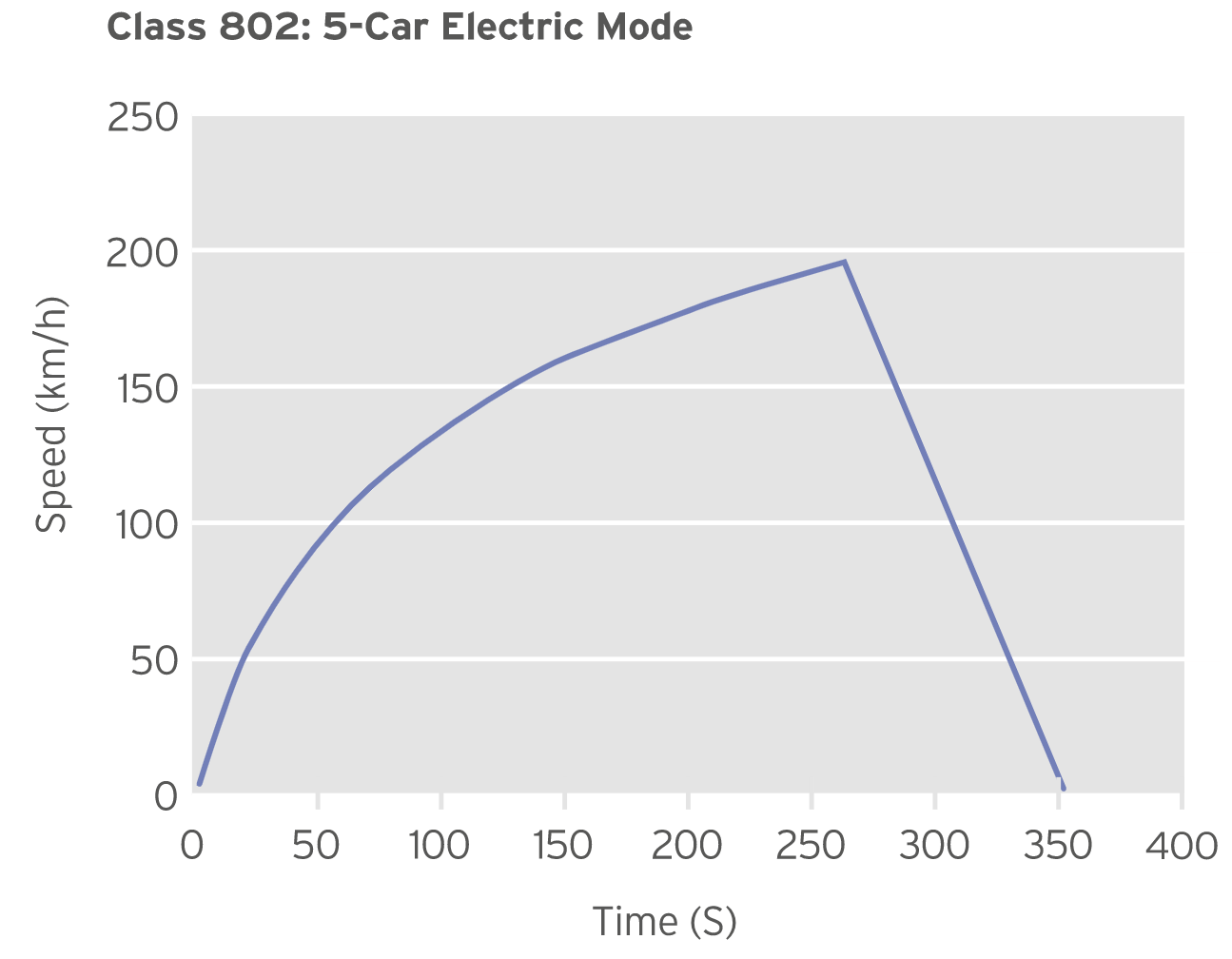
As batteries are just a different source of electric power, I would think, that with respect to acceleration and deceleration, that the performance of a battery-electric version will be similar.
Although, it will only achieve 160 kph instead of the 200 kph of the electric train.
I estimate from this graph, that a battery-electric train would take around 220 seconds from starting to decelerate for a station to being back at 160 kph. If the train was stopped for around eighty seconds, a station stop would add five minutes to the journey time.
London Kings Cross And Cleethorpes
As an example consider a service between London Kings Cross and Cleethorpes.
- The section without electrification between Newark and Cleethorpes is 64 miles.
- There appear to be ambitions to increase the operating speed to 90 mph.
- Local trains seem to travel at around 45 mph including stops.
- A fast service between London Kings Cross and Cleethorpes would probably stop at Lincoln Central, Market Rasen and Grimsby Town.
- In addition, local services stop at Collingham, Hykeham, Barnetby and Habrough.
- London Kings Cross and Newark takes one hour and twenty minutes.
- London Kings Cross and Cleethorpes takes three hours and fifteen minutes with a change at Doncaster.
I can now calculate a time between Kings Cross and Cleethorpes.
- If a battery-electric train can average 70 mph between Newark and Cleethorpes, it would take 55 minutes.
- Add five minutes for each of the three stops at Lincoln Central, Market Rasen and Grimsby Town
- Add in the eighty minutes between London Kings Cross and Newark and that would be two-and-a-half hours.
That would be very marketing friendly and a very good start.
Note.
- An average speed of 80 mph would save seven minutes.
- An average speed of 90 mph would save twelve minutes.
- I suspect that the current bi-modes would be slower by a few minutes as their acceleration is not as potent of that of an electric train.
I have a feeling London Kings Cross and Cleethorpes via Lincoln Central, Market Rasen and Grimsby Town, could be a very important service for LNER.
Interiors
I can see a new lightweight and more energy efficient interior being developed for these trains.
In addition some of the routes, where they could be used are popular with cyclists and the current Hitachi trains are not the best for bicycles.
Battery Charging
Range On Batteries
I have left this to last, as it depends on so many factors, including the route and the quality of the driving or the Automatic Train Control
Earlier, I estimated that a five-car train with all three diesel engines replaced by batteries, when trundling around Lincolnshire, Oxfordshire or Wiltshire could have range of up to 100 miles.
That sort of distance would be very useful and would include.
- Ely and Norwich
- Newark and Cleethorpes
- Salisbury and Exeter
It might even allow a round trip between the East Coast Main Line and Hull.
The Ultimate Battery Train
This press release from Hitachi is entitled Hitachi And Eversholt Rail To Develop GWR Intercity Battery Hybrid Train – Offering Fuel Savings Of More Than 20%.
This is a paragraph.
The projected improvements in battery technology – particularly in power output and charge – create opportunities to replace incrementally more diesel engines on long distance trains. With the ambition to create a fully electric-battery intercity train – that can travel the full journey between London and Penzance – by the late 2040s, in line with the UK’s 2050 net zero emissions target.
Consider.
- Three batteries would on my calculations give a hundred mile range.
- Would a train with no diesel engines mean that fuel tanks, radiators and other gubbins could be removed and more or large batteries could be added.
- Could smaller batteries be added to the two driving cars?
- By 2030, let alone 2040, battery energy density will have increased.
I suspect that one way or another these trains could have a range on battery power of between 130 and 140 miles.
This would certainly be handy in Scotland for the two routes to the North.
- Haymarket and Aberdeen, which is 130 miles without electrification.
- Stirling and Inverness, which is 111 miles without electrification, if the current wires are extended from Stirling to Perth, which is being considered by the Scottish Government.
The various sections of the London Paddington to Penzance route are as follows.
- Paddington and Newbury – 53 miles – electrified
- Newbury and Taunton – 90 miles – not electrified
- Taunton and Exeter – 31 miles – not electrified
- Exeter and Plymouth – 52 miles – not electrified
- Plymouth and Penzance – 79 miles – not electrified
The total length of the section without electrification between Penzance and Newbury is a distance of 252 miles.
This means that the train will need a battery charge en route.
I think there are three possibilities.
- Trains can take up to seven minutes for a stop at Plymouth. As London and Plymouth trains will need to recharge at Plymouth before returning to London, Plymouth station could be fitted with comprehensive recharge facilities for all trains passing through. Perhaps the ideal solution would be to electrify all lines and platforms at Plymouth.
- Between Taunton and Exeter, the rail line runs alongside the M5 motorway. This would surely be an ideal section to electrify, as it would enable battery electric trains to run between Exeter and both Newbury and Bristol.
- As some trains terminate at Exeter, there would probably need to be charging facilities there.
I believe that the date of the late 2040s is being overly pessimistic.
I suspect that by 2040 we’ll be seeing trains between London and Aberdeen, Inverness and Penzance doing the trips without a drop of diesel.
But Hitachi are making a promise of London and Penzance by zero-carbon trains, by the late-2040s, because they know they can keep it.
And Passengers and the Government won’t mind the trains being early!
Conclusion
This could be a very useful train to add to Hitachi’s product line.
Luton DART Fly Through
This video does what it says in the title.
It certainly looks like the DART will greatly improve the experience of getting to Luton Airport.
 The Anonymous Widower