Abellio’s Plans For Nottingham And Crewe Via Derby
This page on the Department for Transport web site is an interactive map of the Abellio’s promises for East Midlands Railway.
These are mentioned for services between Nottingham and Crewe via Derby.. This is an extension of the current service which is two separate services, that need a change at Derby.
Crewe-Derby Services Will Operate With Increased Capacity Compared To Today
Consider.
- Currently, the service between Derby and Crewe takes 43 minutes with another 30 minutes for Derby And Nottingham.
- It is run by a Sprinter with one or two cars.
- The service is hourly.
- I suspect that a well-driven train will be able to do a round trip from Nottingham to Crewe and back in under three hours.
This would mean that three trains are needed to provide the hourly service.
But put four- or five-car Class 222 trains on the route and this would mean.
- Much greater capacity.
- Faster journeys.
- More comfort and facilities.
If a train could do the round trip in under two hours, then just two trains would be needed for the hourly service.
Most Services Will Be Extended To And From Nottingham
I assumed this in the previous section and it appears sensible.
, Later Evening Service Is To Be Provided In Both Directions
Trains can never be too late.
Enhanced Sunday Service With A Regular Hourly service Starting Early In The Morning
You can’t fault that!
Increased Community Rail Partnership Funding
Or that one!
Refurbished Modern Trains
As with their plans for Nottingham to Norwich, they use the same words about the trains.
Read Abellio’s Plans For Norwich And Liverpool, to see what I said.
Wikipedia’s View
The Wikipedia entry for the Crewe-Derby Line says this about services on the route.
The line sees a basic hourly service in each direction with trains calling at all stations on the route however Peartree which is served by 2 Derby bound trains and 3 Crewe bound trains per weekday.
The majority of services on the route since December 2008 have been provided by Class 153 “Super Sprinter” Diesel Multiple Units however Class 158 “Express Sprinter” and Class 156 “Super Sprinter” units are occasionally used. Overcrowding remains a major issue on the route, particularly in the morning and evening peak and a weekends. Passengers are occasionally left behind.
A Class 222 train on this line with a 70 mph operating speed, must provide a better service.
Collateral Benefits
I see these as collateral benefits.
Extra Services Between Derby and Nottingham
If you take this plan with Abellio’s Plans For Norwich And Liverpool, they both have added an hourly service between Derby and Nottingham.
Better Connections To High Speed Two
\Will these extra services connect to High Speed Two at the East Midlands Hub station?
Remember that Abellio’s is an eight year franchise and High Speed Two will arrive in the area, at the time of the end of the franchise.
Abellio’s Plans For Norwich And Liverpool
This page on the Department for Transport web site is an interactive map of the Abellio’s promises for East Midlands Railway.
These are mentioned for services between Norwich and Liverpool.
Splitting Of The Service
Early in the new franchise the Liverpool – Nottingham section will transfer to another operator, which will enable the two halves of the service to better meet the needs of customers.
The section remaining with East Midlands Railway will become a Norwich and Derby service via Nottingham.
This has been said for some time by the Department of Transport.
It is also said that limited services will continue to operate via Stamford and Loughborough.
Looking at trains between Nottingham and Norwich., they take these routes.
- Grantham, Peterborough, Ely, Thetford
- East Midlands Parkway, Loughborough, Melton Mowbray, Oakham, Peterborough, Ely, Thetford
The service will be extended from Nottingham to Long Eaton, the future East Midlands Hub and Derby.
Refurbished Modern Trains
It is proposed that the service will be run by refurbished modern trains.
Features include.
- More reliable service
- Improved comfort
- Passenger information system displays
- free on-board Wi-Fi
- at-seat power sockets
- USB points
- Air conditioning
- Tables at all seats
- Increased luggage space.
- No date for introduction is given.
This all sounds fine to me.
The Current Trains On The Route
Before discussing the possible new trains, I will look at the current service, that I have used many times.
Class 158 trains are used,
Normally, a pair of two-car trains run together to make a four-car formation.
- At times, these trains are very overcrowded.
- I don’t think, the trains have a universal access toilet.
- The trains are thirty years old and some detailing is not very good or very last century.
- The air-conditioning may be a bit dodgy.
- Nottingham and Norwich is probably about the maximum comfortable range for passenger on these trainss.
I suspect too, that they have operational problems.
- They are only 90 mph trains and they will share tracks with faster trains.
- As part of this route could be on the East Coast Main Line, scheduling trains would be easier, if the trains were capable of 125 mph.
- On board catering is provided by a trolley. Can it be pushed between the two trains?
Abellio are obviously quite right to promise a better train for both passengers, staff and their bottom line.
An Ideal Train For The Route
An ideal train would have a specification something like this.
- Modern train, built since 2000.
- Five or six cars
- 125 mph operating speed.
- An onboard cafe-bar.
- Universal-access toilet.
It sounds to me, like a Class 222 train with a high-class refurbishment.
Currently, there are these Class 222 trains available to the franchise.
- Four by four-car
- Seventeen by five-cars
- Six by seven-cars.
Many of the Class 222 trains, will be replaced in 2022, when the new bi-mode trains are delivered.
The New Trains For The Route
It does look to me, that East Midlands Trains could do a lot worse, than use refurbished Class 222 trains between Norwich and Derby.
- Their engineers and drivers know the trains well.
- They could be arranged as four or five coaches for the route.
- Tory are 125 mph trains, which must bring journey time savings, especially on the East Coast Main Line.
- Bombardier have proposed, that they could be fitted with batteries to reduce the need to run the engines in stations.
Refurbishing something you know, is probably one of the cheaper options.
How Many Trains Are Needed For An Hourly Service Between Nowich And Derby?
I suspect that running to a well defined timetable that times of around three hours could be achieved between Norwich and Derby.
This would probably mean that a train could go from Norwich to Derby and back in under seven hours.
This would mean that seven trains would be needed for an hourly service running all day.
If the 125 mph trains could use their speed on the East Coast Main Line and perhaps on the Breckland Line, it might be possible to do the round trip in six hours and therefor need a train less.
Would Finding Seven Class 222 Trains Be Possible?
Obviously, once the Midland Main Line routes have been replaced by new bi-mode trains in 2022, there will be a lot of Class 222 trains available and seven trains to run the Norwich and Derby service will not be a problem.
Some other factors will help.
Trains Will Be Released By The London And Corby Electric Service
In December 2020, when the London and Corby service receives electric trains, the current Class 222 trains on this route will become available.
I think that this service currently needs three trains.
More Mark 4 Coach/Class 43 locomotive Sets Could Be Created
In Abellio’s Plans For The Midland Main Line, I described how interim sets could be built by replacing the non-compliant Mark 3 coaches in an InterCity 125, with the compliant Mark 4 coaches from an InterCity 225.
These trains would be used to release some of the Class 222 trains on the Midland Main Line.
Another five Mark 4 Coach/Class 43 Locomotive sets would probably release the same number of Class 222 trains.
Trains Could Be Reorganised With A Better Plan
I have a feeling that by reorganising the Class 222 trains and bringing in more more Mark 4 Coach/Class 43 Locomotive sets, could mean that a better plan on the Midland Main Line could be developed.
As an example, when boarding a train at St. Pancrass, I often notice two trains are in the platform and you have to walk to the far train. This is not efficient and surely slows down the turnround of trains.
Platforms 1 to 4 are reserved for East Midlands services at St. Pancras station.
- Two trains per hour to Derby, Chesterfield and Sheffield
- Two trains per hour to Nottingham
- One train per hour to Corby, which goes to two trains per hour in December 2020.
Surely, it would be easier, if the station was organised as follows.
- Sheffield, Nottingham and Corby trains all have their own platform, with one spare for luck!
- All trains are full length, with First Class at the London end
- One train per platform.
This would make things easier for passengers and reduce turnround times.
No More Two Trains Running Together
I think that the practice of train companies running two or more trains together to increase capacity is a bad idea, unless you have no other way.
Consider two four-car trains running together as an eight-car train.
- You have two driving cabs in the middle, which serve no purpose and just take up space. and add useless weight.
- A buffet car in the train can be available to all passengers.
- The First Class seats could be in two separate places on the train.
- With trains like the Hitachi Class 800 trains, onboard staff can only move between trains in a station.
- Walk-through trains allow passengers to position themselves for a convenient and quick exit.
Anybody who procures trains to run in multiple formations all the time, instead of buying longer trains, is generally incompetent.
A Rough Estimate
I have done a very rough estimate and feel that the Midland Main Line services can be run with the following numbers of trains.
- Sheffield services – Ten trains
- Nottingham services – Eight trains
- Corby services – Six trains
As the Corby services will be run by refurbished twelve-car trains, it looks to me that there is a need for eighteen diesel trains for Sheffield and Nottingham services.
I would go for eighteen Mark 4 Coach/Class 43 locomotive sets, with perhaps a couple of spare sets..
Conclusion
The following services should be run with Mark 4 Coach/Class 43 locomotive sets of an appropriate length.
- London and Nottingham
- London and Sheffield
This would release the Class 222 trains for other services like those between Norwich and Derby.
Abellio’s Plans For London And Melton Mowbray Via Corby And Oakham
This page on the Department for Transport web site is an interactive map of the Abellio’s promises for East Midlands Railway.
These are mentioned for services to Oakham and Melton Mowbray.
- After electrification of the Corby route there will continue to be direct service each way between London and Oakham and Melton Mowbray once each weekday, via Corby.
- This will be operated with brand new 125mph trains when these are introduced from April 2022.
This seems to be a very acceptable minimum position.
In Abellio’s Plans For London And Corby, I suggested that Class 379 trains could be used on the route and that the trains might be fitted with batteries.
- Corby and Melton Mowbray are about twenty-fives apart.
- Batteries and their fast-charging technology has come on at a fast pace since Abellio participated in the Class 379 BEMU Trial in 2015.
Are Abellio thinking about extending some Croby services using battery technology?
The technology is certainly capable, but is there a proven passenger need?
Turning Trains At Melton Mowbray stations
This Google Map shows Melton Mowbray station.
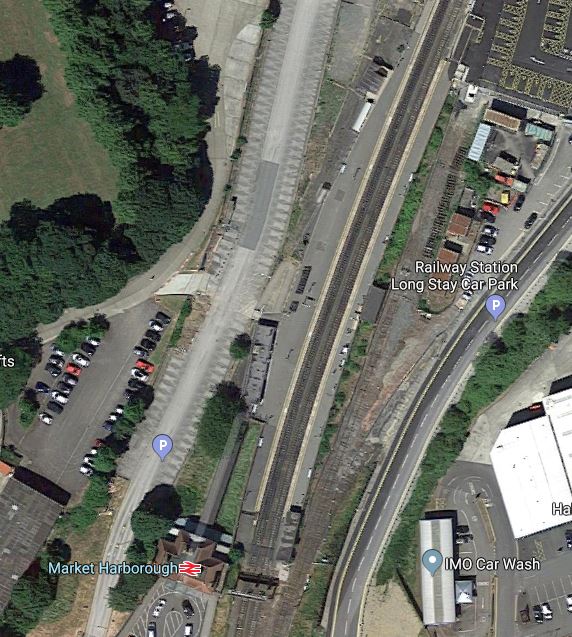
It looks to be a station on a large site with more than adequate car parking and I suspect building a bay platform with charging facilities would not be the most difficult of projects.
Conclusion
As current trains take about thirty minutes between Corby and Melton Mowbray, with a bay platform at the latter station, I think it would be possible to run hourly Class 379 trains with batteries to and from St. Pancras.
Abellio East Midlands Railway’s Plans For London And Corby
This page on the Department for Transport web site is an interactive map of the Abellio’s promises for East Midlands Railway.
These are mentioned for Midland Main Line services to Corby.
Dedicated Corby – St Pancras Express Service Will Be Introduced From December 2020 With 12-car Trains In The Peaks
In 2020, the route between London and Corby will have been improved.
- It will be fully electrified.
- There will be double-track between Kettering and Corby.
- Corby station will have a second platform.
- 125 mph running will be possible in sections of the route between London and Corby.
- Twelve-car trains indicate, that the rolling stock would be modern electric multiple units.
Possible trains include.
- Class 387 trains, which are capable of 110 mph.
- Class 379 trains, which are capable of 100 mph.
- Class 350 trains, which are capable of 110 mph.
- In Issue 877 of Rail Magazine, it is rumoured that Greater Anglia’s Class 360/1 trains will be used, which are capable of 100 mph.
There must also be the possibility, for a train manufacturer to deliver enough new trains to run the London and Corby service.
To run the current hourly service, three trains are needed, so if each train was three four-car electric multiple units, nine trains would be needed.
As these electric trains will need to mix it with the 125 mph trains on the fast lines between St. Pancras and Kettering, 110 mph trains would probably be preferable.
Class 387 trains were originally mooted for this route, but they all seem to have been snapped up by other operators, who may be reluctant to let them go.
On the other hand, as I wrote in When Crossrail Opens To Reading, Will Great Western Railway Have Too Many Class 387 Trains?, Great Western Railway may have a few trains going spare.
The three other possible trains are both used in Abellio-run franchises.
- ,Abellio Greater Anglia are replacing their thirty Class 379 trains with new Stadler Class 745/1 trains in 2019.
- Abellio Greater Anglia are replacing their twenty-one Class 360 trains with new Bombardier Class 720 trains in 2020.
- West Midlands Trains have a large fleet of Class 350 trains.
Greater Anglia’s plans currently give the order of the new Stadler fleet introduction as.
- Four-car Class 755/4 trains
- Twelve-car Class 745/0 trains for London and Norwich services
- Three-car Class 755/3 trains
- Twelve-car Class 745/1 trains for London and Stansted services
All trains are to be introduced by the end of 2020.
The Bombardier Class 720 trains are also planned to be introduced by the same date, starting this Autumn.
Could this mean that it is likely that nine Class 379 or Class 360 trains could be available before the end of 2019?
If Class 379 or Class 360 trains are used to Corby, it would allow a very relaxed train introduction.
There could be at least a year, to turn the trains into perfect trains for a high-capacity London and Corby service.
I think using Class 387 and Class 350 trains wouldn’t be so simple.
As the Class 745/1 trains for London and Stansted could be the last to be delivered, which might delay the release of the Class 379 trains, could this explain the rumours for using the Class 360 trains, between London and Corby.
There is also an interesting possibility.
Suppose, Abellio decided to order 125 mph trains from Stadler identical to the Class 745/0 trains between London and Norwich on the route between London and Corby.
- Stadler probably knows how to upgrade the trains to 125 mph, as there are electric Flirts in Norway with this performance.
- Greater Anglia have invested heavily in driver simulators and training aids for their Stadler trains.
- By the end of 2019, they will be running Class 745/0 trains between London and Norwich.
With different colours and a few route-specific details, the London and Norwich Class 745/0 trains, would surely be more than acceptable for London and Corby.
Stadler would surely be able to build the extra trains before the Stansted trains. This would mean that the unwanted Class 379 trains would have to soldier on to Stansted for a few more months.
125 mph Class 745 trains would be a magnificent upgrade to the London and Corby service.
Corby – London Service Doubled To Two Trains Per Hour All Day
This would mean the need would be eighteen four-car trains. or six twelve-car trains.
There are enough Class 379 and Class 360 trains, but obtaining the originally-planned Class 387 trains could be problematic.
Building the three extra new trains would not be a problem.
Kettering, Luton And Luton Airport Parkway Services Provided With 2 Trains Per Hour for Most Of The Day
Note.
- Luton station is on the latest list of stations to be made step-free by 2024.
- Luton Airport has been agitating for more fast trains to and from London and now gets a half-hourly express.
- Luton Airport Parkway station will have the Luton DART connection to the Airport in 2021.
- Class 379 trains are designed for airport services.
It appears to be a better service for passengers.
Enhanced Sunday Service Throughout The Route With Regular Direct Sunday Services Between London And Corby
No passenger complaints here.
Refurbished Modern Express Trains From December 2020
Features include.
- Increased capacity
- More reliable service
- Improved comfort
- Passenger information system
- Free on-board Wi-Fi
- At-seat power sockets
- USB points
- Air conditioning
- Tables at all seats
- Increased luggage space
- On-board cycle storage
What more could passengers want?
Many of these features are already installed in the Class 379 trains and would be no problem.
- When I rode the BEMU Trial train between Maningtree and Harwich, the information on the Class 379 train was word perfect.
- The trains are reliable and comfortable.
- Wi-fii, power sockets, air-conditioning and increased luggage space are already fitted.
- The trains have lots of tables, but not at every seat.
These are a selection of pictures of the interior of a Class 379 train.
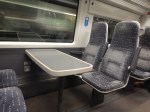
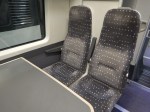
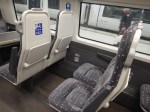
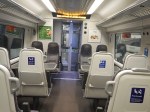
Updating the interior of the trains would not be a major problem.
Class 360 Trains Would Need A Substantial Refurbish
If Class 360 trains were to be used to Corby, they would need a substantial refurbish, but the general feeling is that this would be possible and there is a year to do it.
iNew-Build Class 745 Trains
With a small fleet of new-build Class 745 trains, the customer would get what they want! – Tables, 2+2 seating, wi-fi sockets etc.
The Greater Anglia London and Norwich specification would be a good starting point.
Will The Class 379 Trains Be Fitted With Batteries?
The BEMU Trial in 2015, showed that this was feasible. Abellio was involved in this trial and must have their own views on the technology.
- Depots are safer places.
- Electrification can be simpler.
- Regenerative braking can be handled on the train without using the overhead wires for return currents.
- Batteries increase train efficiencies.
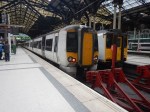
This picture shows, the wires are going up at Corby.
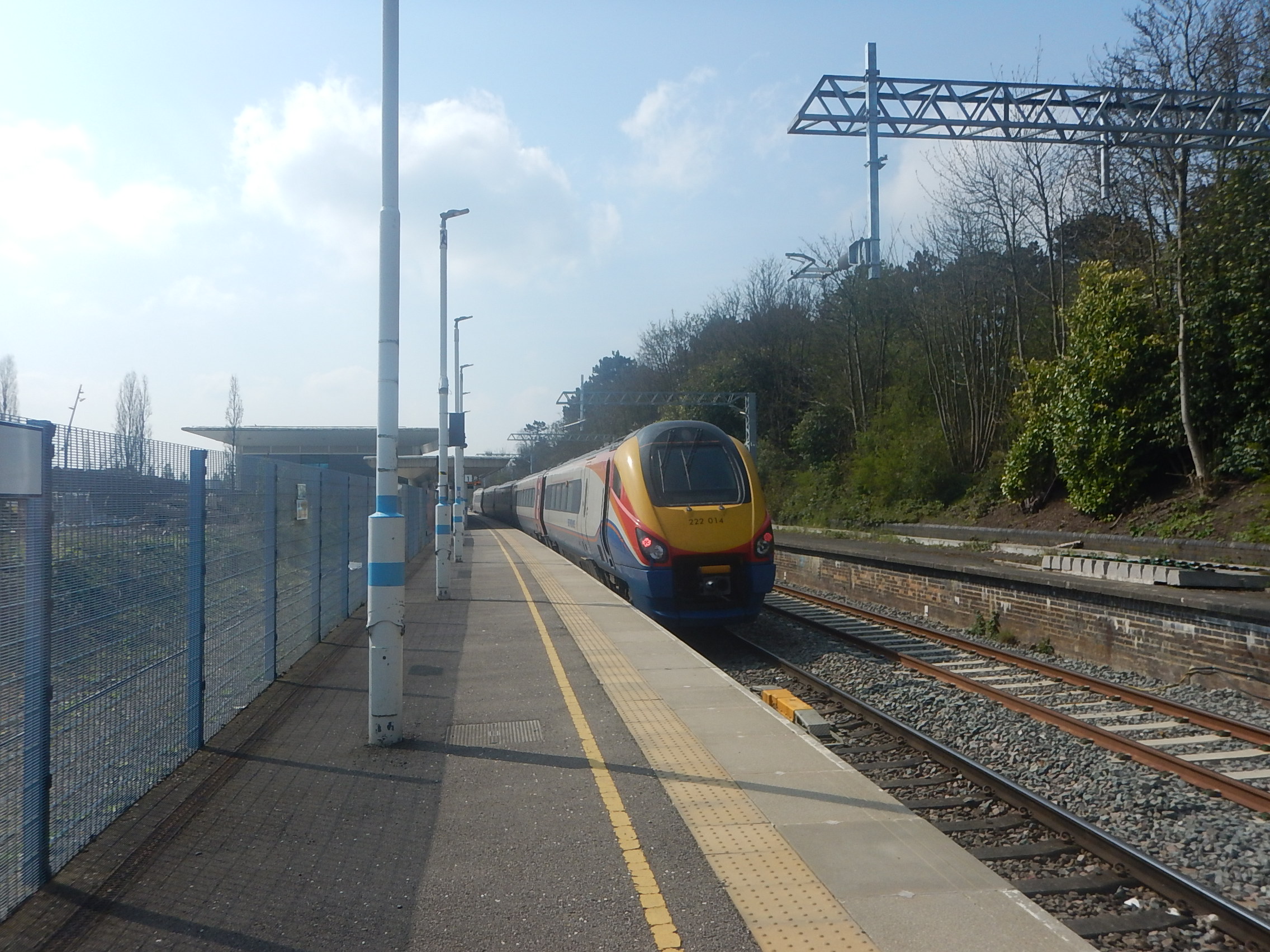
So it doesn’t look like battery power will be used to Corby.
But batteries could still be fitted for efficiency and safety reasons or possibly to power the trains to Oakham and Melton Mowbray.
What About The Rumour Suggesting Class 360 Trains Will Be Used?
These are some pictures of a Class 360 train.

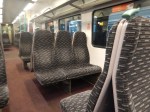

Consider.
- The Class 360 trains have a 2+3 interior with few if any tables.
- If Bombardier deliver the Class 720 trains, later than planned, availability of the Class 360 trains for Corby could be tight.
- Could they be prated to 110 mph trains, if that was felt necessary?
I feel that there would be a lot more work to prepare the trains for Corby and a higher chance, they would be late!
I think except as a stop-gap, it is unliklely that Class 360 trains will be used between London and Corby.
Will The Trains Be Replaced In A Few Years?
Consider.
- The London and Corby route is 79.5 miles long and takes 75 minutes with four stops, which is an average speed of 64 mph.
- At present, services between London and Corby are run using 125 mph Class 222 trains.
- The Class 222 trains have better acceleration than an InterCity 125 and much better acceleration than a Class 360 train.
- The London to Corby route is a less-than-125 mph route.
- Network Rail ia currently improving the electrification between London and Bedford, so that the route between London and Corby will be an electrified 125 mph route.
- None of the trains being considered for the service between London and Corby is faster than 110 mph.
Does all this mean that Corby services might be slower after electrification?
- Will the 125 mph upgrade to the track and electrification ensure the electric trains are faster, even if they are 100 mph trains.
- Well-driven 100-110 mph trains might be as fast.
However, the Derby, Nottingham and Sheffield expresses might be slowed, just as they are by the 100 mph Thameslink trains.
In the article in Issue 877 of Rail Magazine, four manufacturers are suggested for the bi-mode trains that will be used between London and Derby, Nottingham and Sheffield from 2022.
- Bombardier
- Hitachi
- Stadler
- Talgo
Hitachi are the only manufacturer with 125 mph bi-mode trains on the UK Network.
They have a near-identical bi-mode Class 802 train and an all-electric Class 801 train.
- Both are capable of 125 mph running.
- Conversion between the two trains involves changing the number of engines.
- Drivers are probably trained to drive both types of train.
Ideally, on the Midland Main Line, electric trains could run to Corby, with bi-mode trains running to Derby, Nottingham and Sheffield.
So when the 125 mph bi-mode trains are delivered in 2022, would it be sensible to run their 125 mph electric cousins to Corby?
- South of Market Harborough, all East Midlands Railway trains would be 125 mph electric trains, running on 125 mph tracks.
- One tph between London and Corby would need three twelve-car trains.
- Two tph between London and Corby would need six twelve-car trains.
If that is the case, then whatever train is run to Corby from December 2020, is only a stop-gap for a couple of years, where only nine four-car trains would be needed.
Would it be more economic in the long term to place the order for the bi-mode trains, with a manufacturer, who can deliver three all-electric trains by December 2020?
I believe Stadler could do that!
Conclusion
I’m fairly certain, that services between London and Corby could be run by refurbished Class 379 trains.
As there is plenty of time before service introduction, this could be a very relaxed and painless introduction of new trains. Unlike some others recently.
There may even be time to upgrade the top speed of the trains, so they fit in better with East Midlands Railway’s 125 mph expresses.
I wouldn’t be surprised, if East Midlands Railway brought in Class 379 or Class 360 trains as a stop-gap and replaced them with electric versions of the bi-modes in 2022.
But the best solution would be to obtain three twelve-car all-electric versions of the bi-modes by December 2020, to run the initial service.
- Hitachi has a 125 mph electric Class 801 train and a 125 mph bi-mode Class 802 train.
- Stadler has a 125 mph electric version of Greater Anglia’s Class 745 train and I suspect a compatible 125 mph bi-mode train.
- Bombardier are working on a 125 mph bi-mode Aventra and have been quoted as saying Aventras can be stretched to 125 mph.
It will be interesting to see what trains East Midlands Railway chooses.
But I think Stadler Class 745 trains are a distinct possibility.
- Abellio will have experience of running these trains and training drivers and other staff.
- 125 mph trains could be almost identical to those on London and Norwich services.
- Stadler have built 125 mph electric Flirts for Norway.
By juggling production a bit, they could be delivered on time for a December 2020 start of services.
Abellio’s Plans For The Midland Main Line
This page on the Department for Transport web site is an interactive map of the Abellio’s promises for East Midlands Railway.
These are mentioned for Midland Main Line services to Derby, Nottingham and Sheffield.
From May 2020, Modern Diesel Trains Will Begin To Replace Ageing HSTs.
May 2020 is only a year away. Is that enough time to order and build new or refurbish existing diesel trains.
So how will they obtain new trains?
Timetable Changes Will Enable Faster Journey Times From December 2020
These HST-replacement trains must be faster too!
This article on Rail Magazine is entitled Government Seeks Midland Main Line HST Upgrade Update.
It describes how the current eleven HSTs are being updated with retention tanks and accessible toilets, so they can continue to run after this year.
But as the doors won’t be replaced, this means that eleven trains with between six and eight coaches must be found.
One solution mooted is to use Mark 4 Coaches released from LNER, by new Class 801 trains.
In Midland Mark 4, I talk about a possible solution described by Ian Walmsley in the March 2018 Edition of Modern Railways.
- Two Class 43 power cars would be at each end of a rake of Mark 4 coaches.
- The current 2+8 formation may need to be shortened to 2+7 because of the heavier coaches.
- The coaches meet all the regulations.
- There are plenty of power cars available.
I rode in a Mark 4 coach back from Scotland recently and these will be comfortable trains.
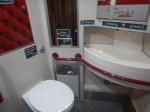
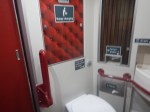
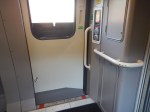
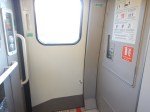
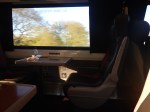
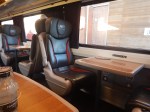
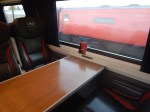
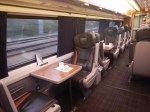
The pictures show First Class, is as good as anything in Europe. The only thing worse, than in Eurostar’s latest Class 374 trains is the space, which is due to our smaller loading gauge.
Not bad for a thirty year old train.
But
- They were designed for a 140 mph maximum speed.
- There are 302 coaches of various types available.
- They meet all current and future accessibility regulations.
- They have push-button automatic doors.
I estimate that a seven-car set of coaches for the Midland Main Line would have a capacity of around 400-420 passengers in two classes.
As there are currently, eleven InterCity 125 trains working the Midland Main Line, I can’t see there being a shortage of carriages.
Earlier And Later Train Service Each Day To East Midlands Parkway Enabling better Airport Connectivity
iIt won’t affect me, but I suspect other travellers will benefit.
Earlier And Later Trains To And From London, With A More Regular Evening Service Between London And Sheffield
I have moaned about this for a long time.
Try going to Derby or Sheffield from London for an evening football match and getting home that day!
Brand-New 125mph trains Will Be Introduced Into Service From April 2022
Fwatures include.
- More reliable service
- Improved comfort
- Passenger information system
- Free on-board Wi-Fi
- At-seat power sockets
- USB points
- Air conditioning
- Tables at all seats
- increased luggage space
- On-board cycle storage
I speculate as to who will build them in Hydrogen Trains To Be Trialled On The Midland Main Line.
Hydrogen Trains To Be Trialled On The Midland Main Line
This article on Railway Gazette is entitled Bimode And Hydrogen Trains As Abellio Wins Next East Midlands Franchise.
Abellio will be taking over the franchise in August this year and although bi-mode trains were certain to be introduced in a couple of years, the trialling of hydrogen-powered trains is a surprise to me and possibly others.
This is all that is said in the article.
Abellio will also trial hydrogen fuel cell trains on the Midland Main Line.
It also says, that the new fleet will not be announced until the orders are finalised.
In this post, I’m assuming that the hydrogen trial will be performed using the main line trains.
Trains for the Midland Main Line will need to have the following properties
- 125 mph on electric power
- 125 mph on diesel power
- Ability to go at up to 140 mph, when idigital n-cab signalling is installed and the track is improved.
- UK gauge
- Ability to run on hydrogen at a future date.
I think there could be three types of train.
- A traditional bi-mode multiple unit, with underfloor engines like the Hitachi Class 800 series, is obviously a possibility.
- An electrical multiple unit, where one driving car is replaced by a bi-mode locomotive with appropriate power.
- Stadler or another manufacturer might opt for a train with a power pack in the middle.
The second option would effectively be a modern InterCity 225.
- South of Kettering, electricity would be used.
- North of Kettering, diesel would be used
- Hydrogen power could replace diesel power at some future date.
- Design could probably make the two cabs and their driving desks identical.
- The locomotive would be interchangeable with a driver car.
Bi-modes would work most services, with electric versions working to Corby at 125 mph.
Which manufacturer has a design for a 125 mph, hydrogen-powered train?
Alstom
Alstom have no 125 mph UK multiple unit and their Class 321 Hydogen train, is certainly not a 125 mph train and probably will still be under development.
Bombardier
In Mathematics Of A Bi-Mode Aventra With Batteries, I compared diesel and hydrogen-power on bi-mode Aventras and felt that hydrogen could be feasible.
In that post, I wrote a section called Diesel Or Hydrogen Power?, where I said this.
Could the better ambience be, because the train doesn’t use noisy and polluting diesel power, but clean hydrogen?
It’s a possibility, especially as Bombardier are Canadian, as are Ballard, who produce hydrogen fuel-cells with output between 100-200 kW.
Ballard’s fuel cells power some of London’s hydrogen buses.
The New Routemaster hybrid bus is powered by a 138 kW Cummins ISBe diesel engine and uses a 75 kWh lithium-ion battery, with the bus being driven by an electric motor.
If you sit in the back of one of these buses, you can sometimes hear the engine stop and start.
In the following calculations, I’m going to assume that the bi-mode |Aventra with batteries has a power source, that can provide up to 200 kW, in a fully-controlled manner
Ballard can do this power output with hydrogen and I’m sure that to do it with a diesel engine and alternator is not the most difficult problem in the world.
So are Bombardier designing the Bi-Mode Aventra With Batteries, so that at a later date it can be changed from diesel to hydrogen power?
All an Aventra needs to run is electricity and the train, the onboard staff and passengers don’t care whether it comes from overhead wires, third-rail, batteries, diesel or hydrogen.
Bombardier also have the technology for my proposed locomotive-based solution, where one driver-car of an Aventra is replaced by what is effectively a locomotive.
If Bombardier have a problem, it is that they have no small diesel train to replace Abellio’s small diesel trains. Could the longer services use the bi-mode Aventras and the shorter ones Aventras with battery power?
CAF
CAF probably have the technology, but there would be a lot of development work to do.
Hitachi
Hitachi have the bi-mode trains in the Class 802 trains, but haven’t as yet disclosed a hydrogen train.
Siemens
They’ve made a few noises, but I can’t see them producing a bi-mode train for 2022.
Stadler
In a few weeks time, I will be having a ride in a Stadler-built Class 755 train, run by Abellio Greater Anglia.
The Class 755 train is a bi-mode 100 mph train, from Stadler’s Flirt family.
Could it be stretched to a 125 mph train?
- Stadler have built 125 mph electric Flirts.
- It is my view, that Stadler have the knowledge to make 125 mph trains work.
- Flirts are available in any reasonable length.
- I’ve read that bi-mode and electric Flirts are very similar for drivers and operators.
These could work the Midland Main Line.
If the mainline version is possible, then Abellio could replace all their smaller diesel trains with appropriate Class 755 trains, just as they will be doing in East Anglia.
Stadler with the launch of the Class 93 locomotive, certainly have the technology for a locomotive-based solution.
East Midlands Railway would be an all-Stadler Flirt fleet.
As to hydrogen, Stadler are supplying hydrogen-powered trains for the Zillertalbahn, as I wrote in Zillertalbahn Orders Stadler Hydrogen-Powered Trains.
Talgo
Talgo could be the joker in the pack. They have the technology to build 125 mph bi-mode trains and are building a factory in Scotland.
My Selection
I think it comes down to a straight choice between Bombardier and Stadler.
It should also be noted, that Abellio has bought large fleets from both manufacturers for their franchises in the UK.
Zero-Carbon Pilots At Six Stations
This promise is stated in the franchise.
Once the electrification reaches Market Harborough in a couple of years, with new bi-mode trains, running on electricity, the following stations will not see any passenger trains, running their diesel engines.
- St. Pancras
- Luton Airport Parkway
- Luton
- Bedford
- Wellingborough
- Kettering
- Corby
- Market Harborough
These are not pilots, as they have been planned to happen, since the go-ahead for the wires to Market Harborough.
Other main line stations include.
- Beeston
- Chesterfield
- Derby
- East Midlands Parkway
- Leicester
- Long Eaaton
- Loughborough
- Nottingham
- Sheffield
Could these stations be ones, where East Midlands Railway will not be emitting any CO2?
For a bi-mode train to be compliant, it must be able to pass through the station using battery power alone.
- As the train decelerates, it charges the onboard batteries, using regernerative braking.
- Battery power is used whilst the train is in the station.
- Battery power is used to take the train out of the station.
Diesel power would only be used well outside of stations.
How would the trains for the secondary routes be emission-friendly?
- For the long Norwich to Derby and Nottingham to Liverpool routes, these would surely be run by shorter versions of the main line trains.
- For Stadler, if secondary routes were to be run using Class 755 trains, the battery option would be added, so that there was no need to run the diesel engines in stations.
- For Bombardier, they may offer battery Aventras or shortened bi-modes for the secondary routes, which could also be emission-free in stations.
- There is also the joker of Porterbrook’s battery-enhaced Class 350 train or BatteryFLEX.
I think that with the right rolling-stock, East Midlands Railway, could be able to avoid running diesel engines in all the stations, where they call.
Why Are Abellio Running A Hydrogen Trial?
This is a question that some might will ask, so I’m adding a few reasons.
A Train Manufacturer Wants To Test A Planned Hydrogen Train
I think that it could be likely, that a train manufacturer wants to trial a hydrogen-powered variant of a high-speed train.
Consider.
- The Midland Main Line is about 160 miles long.
- A lot of the route is quadruple-track.
- It is a 125 mph railway for a proportion of the route.
- It has only a few stops.
- It is reasonably straight with gentle curves.
- Part of the route is electrified.
- It is connected to London at one end.
In my view the Midland Main Line is an ideal test track for bi-mode high speed trains.
A Train Manufacturer Wants To Sell A Fleet Of High Speed Trains
If a train manufacturer said to Abellio, that the fleet of diesel bi-mode trains they are buying could be updated to zero-carbon hydrogen bi-modes in a few years, this could clinch the sale.
Helping with a trial, as Abellio did at Manningtree with Bombardier’s battery Class 379 train in 2015, is probably mutually-beneficial.
The Midland Main Line Will Never Be Fully Electrified
I believe that the Midland Main Line will never be fully-electrified.
- The line North of Derby runs through the Derwent Valley Mills World Heritage Site. Would UNESCO allow electrification?
- I have been told by drivers, that immediately South of Leicester station, there is a section, that would be very difficult to electrify.
- Some secondary routes like Corby to Leicester via Oakham might be left without electrification.
But on the other hand some sections will almost certainly be electrified.
- Around Toton, where High Speed Two crosses the Midland Main Line and the two routes will share East Midlands Hub station.
- Between Clay Cross North Junction and Sheffield, where the route will be shared with the Sheffield Spur of High Speed Two.
- The Erewash Valley Line, if High Speed Two trains use that route to Sheffield.
The Midland Main Line will continue to need bi-mode trains and in 2040, when the Government has said, that diesel will not be used on UK railways,
It is my view, that to run after 2040, there are only two current methods of zero-carbon propulsion; on the sections without overhead electrification battery or hydrogen power.
So we should run trials for both!
Abellio Know About Hydrogen
Abellio is Dutch and after my trip to the Netherlands last week, I wrote The Dutch Plan For Hydrogen, which describes how the Dutch are developing a green hydrogen economy, where the hydrogen is produced by electricity generated from wind power.
So by helping with the trial of hydrogen bi-mode trains on the Midland Main Line, are Abellio increasing their knowledge of the strengths and weaknesses of hydrogen-powered trains.
In Thoughts On Eurostar To North Netherlands And North West Germany, I proposed running bi-mode trains on the partially-electrified route between Amsterdam and Hamburg via Groningen and Bremen, which would be timed to connect to Eurostar’s services between London and Amsterdam. These could use diesel, hydrogen or battery power on the sections without electrification.
If hydrogen or battery power were to be used on the European bi-mode train, It would be possible to go between Sheffield and Hamburg on a zero-carbon basis, if all electric power to the route were to be provided from renewable sources.
Abellio Sees The PR Value In Running Zero-Carbon Trains
In My First Ride In An Alstom Coradia iLint, I talked about running hydrogen-powered trains on a hundred mile lines at 60 mph over the flat German countrside
The Midland Main Line is a real high speed railway, where trains go at up to 125 mph between two major cities, that are one-hundred-and-sixty miles apart.
Powered by hydrogen, this could be one of the world’s great railway journeys.
If hydrogen-power is successful, Abellio’s bottom line would benefit.
Conclusion
This franchise will be a big improvement in terms of carbon emissions.
As I said the choice of trains probably lies between Bombardier and Stadler.
But be prepared for a surprise.
 The Anonymous Widower