Government Response To Crossing Petition ‘Shameful’
The title of this post, is the same as that of this article on the BBC.
This is the sub-heading.
The government has “moved the goalposts” in its response to calls for an underpass to be installed at a busy level crossing, an MP has said.
These three opening paragraphs add more detail.
More than 4,500 people signed a petition calling for any replacement of the level crossing at London Road in Bicester to include access for cars, as well as for cyclists and pedestrians.
In its response, the Department for Transport said vehicular access to any crossing replacement would be “subject to both affordability and feasibility”.
Callum Miller, the MP for the north Oxfordshire market town, said the response – and in particular the suggestion of a footbridge – was “shameful”.
A few weeks ago, I went to see this important level crossing and wrote Bicester Village Station – 28th May 2025.
Darlington Station – 26th June 2025
I visited Darlington station, three times on my trip.
These pictures are in chronological order.
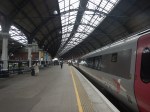
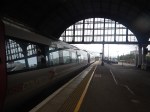


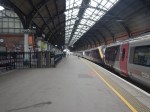





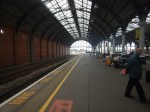

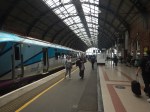



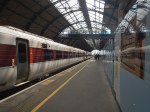



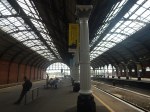













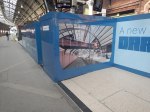

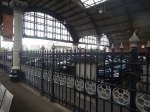


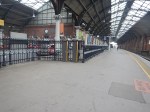
Note.
- The station is being given a major upgrade, so it can handle more trains.
- The station has a large number of top-quality Victorian features.
- The station is Grade II* Listed.
- Inside the enormous train-shed are two long platforms, that handle most of the trains and two South-facing bay platforms.
- Two new platforms, which are numbered 5 & 6, and possibly a double-track avoiding line are being added outside the train-shed on the East side.
- In images with a comment saying Note Platform 5, the new long electrified Platform 5 can be seen.
- Platform 5 appears to be already electrified at its Southern end.
These three OpenRailwayMaps shows the future layout.
The first OpenRailwayMap shows the junction, where the branch to Newton Aycliffe, Shildon and Bishop Auckland connects.
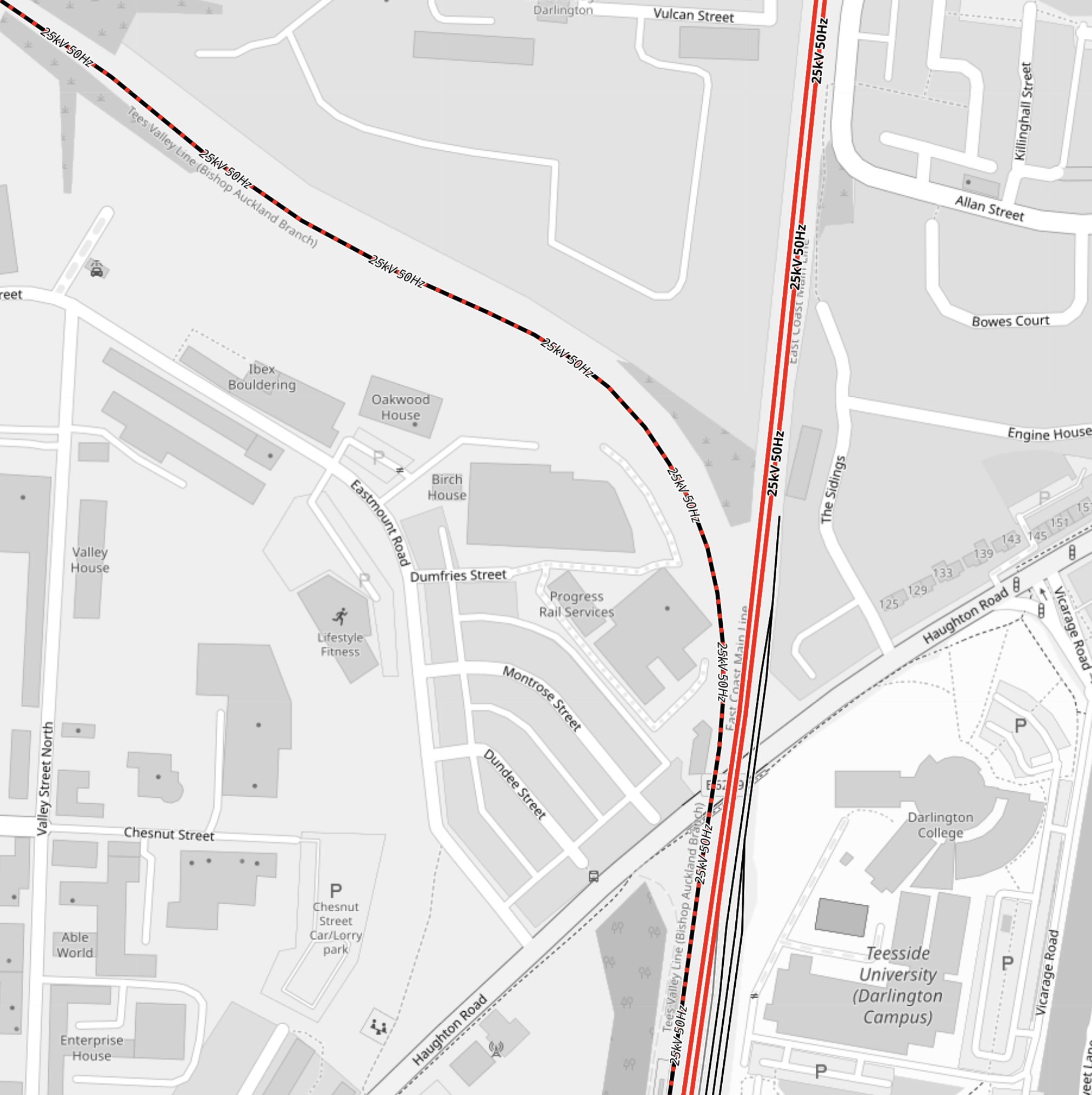
Note.
- The red tracks are electrified and indicate the East Coast Main Line.
- The track curving off to the North-West is the Bishop Auckland Branch.
- The black tracks are not-electrified.
- The Bishop Auckland Branch is shown dotted black and red, as it will be electrified, so that Hitachi can get their new trains to the East Coast Main Line.
- The two tracks of the East Coast Main Line are very straight and the map shows them to have a 125 mph operating speed.
The second OpenRailwayMap, shows the lines immediately to the South of Darlington station.
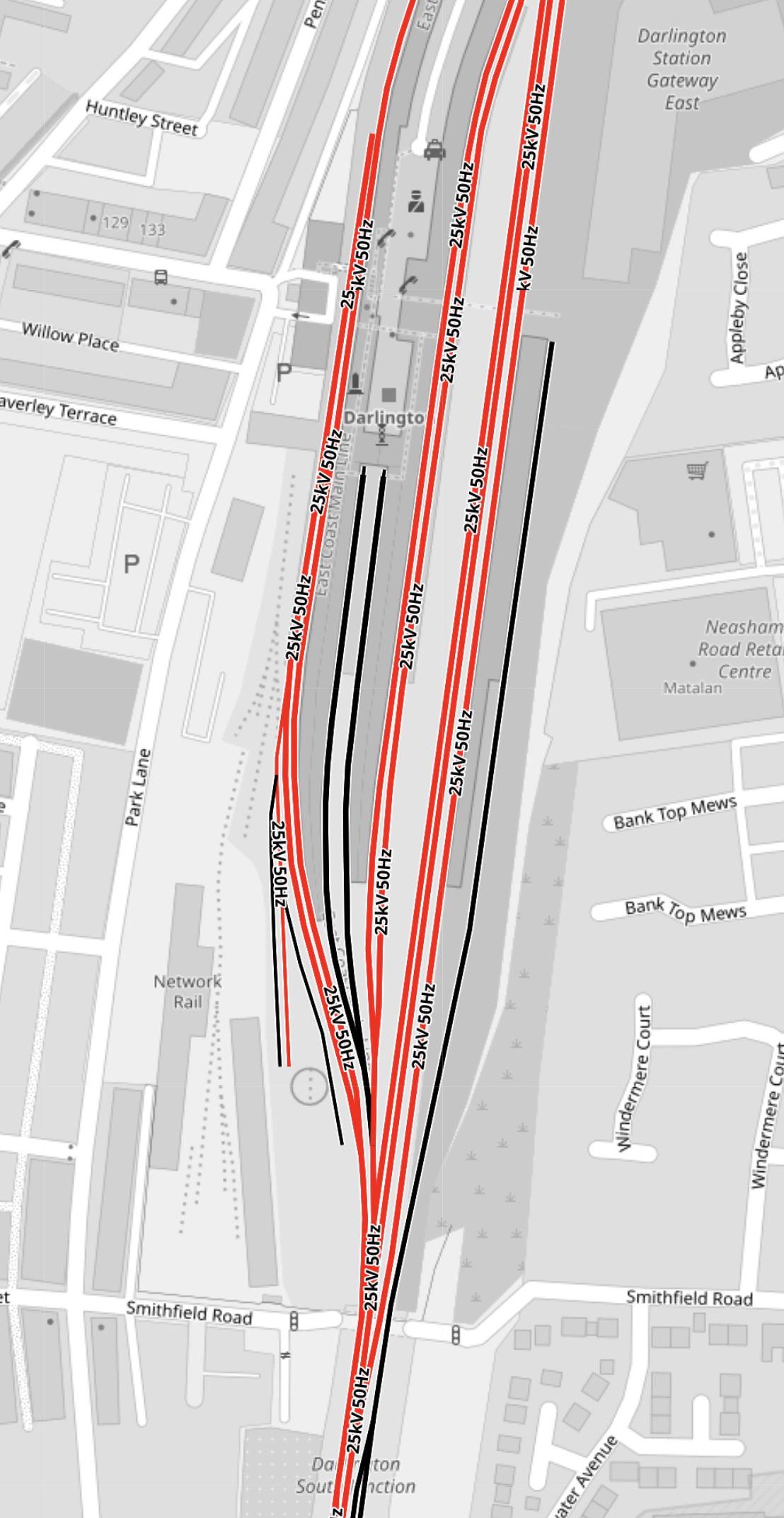
Note.
- The red tracks are electrified.
- The black tracks are not electrified.
- Tracks are number 4, 3, 2 and 1 from the West.
- The Southern ends of Platforms 1 and 4, and Platforms 2 and 3, which are inside the current train-shed appear to be virtually unchanged.
- Platform 1 is electrified and will probably still cater for Southbound trains.
- Platforms 2 and 3 are bay platforms without electrification for trains terminating at Darlington.
- Platform 4 is electrified and will probably still cater for Northbound trains.
- There is an electrified avoiding line to the East of Platform 1.
- The brick wall of the current train shed is in the white space to the East of Platform 1.
- Outside the current train shed are two electrified 125 mph lines, an electrified through platform and a South-facing bay platform without electrification.
- The new electrified platform looks very long. Could it be long enough to handle a pair of High Speed Two Classic-Compatible trains? I suspect though it is long enough to handle the splitting and joining of a pair of five-car Hitachi Class 80x trains.
- The new bay platform looks longer that the current bay platforms 2 & 3. Is it long enough to handle a five-car Hitachi Class 80x train?
- It does appear from the track layout, that the new electrified platform is connected to the East Coast Main Line, the Saltburn branch and stabling sidings to the North of the station.
- The new bay platform appears to be connected to the Saltburn branch.
The two new platforms also appear to be adjacent to an area of the station, which is labelled Darlington Station Gateway East. I would assume, that this proximity will be used to make the station easy for changing trains.
The third OpenRailwayMap shows the section of the station between the two previous maps.
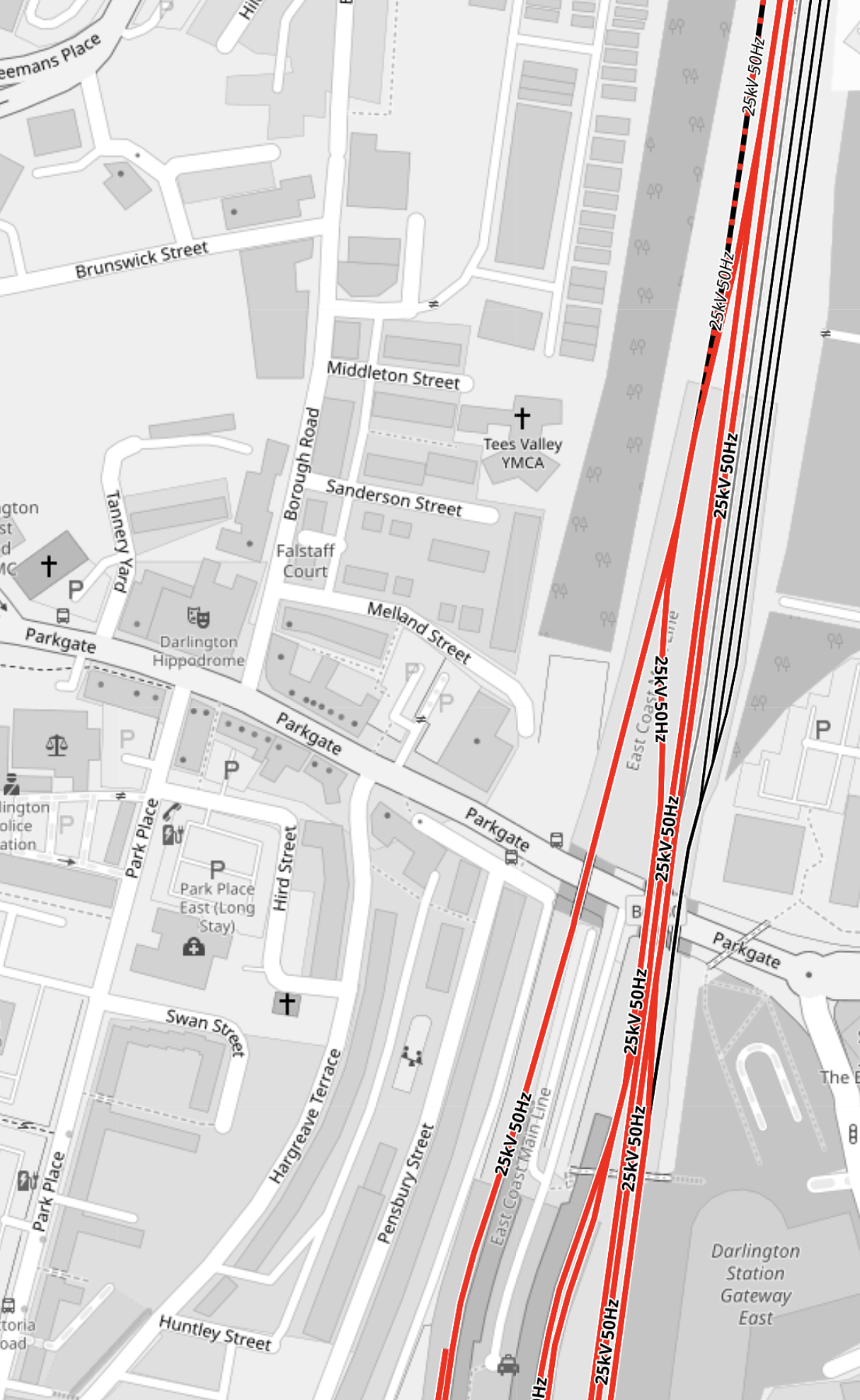
Note.
- The red tracks are electrified.
- The black tracks are not-electrified.
- The Darlington end of the Bishop Auckland Branch is shown dotted black and red, as it will be electrified, so that Hitachi can get their trains to and from the East Coast Main Line.
- Both Platforms 1 and 4 appear to connect to the East Coast Main Line, so high speed services can operate as they do now, by taking a diversion through the current Darlington station.
- To the East of the East Coast Main Line, there appear to be some very useful stabling sidings.
I have some general thoughts about Darlington station.
Will Trains Not Stopping At Darlington Station Use The New 125 mph Lines Through the Station?
It does appear that the two 125 mph lines through the new part of the station are very straight.
- They are shown as 125 mph, but could be faster.
- It should be remembered that according to Wikipedia, British Rail built the Selby Diversion for 160 mph in 1983.
- Between Durham and York stations is 66.2 miles of mainly 125 mph railway.
I believe that cutting out the need for trains to slow to go through Darlington station could save several minutes.
Will Trains Stopping At Darlington Station Use The Current Platforms 1 And 4 As They Do Now?
The track layout would seem to allow this and those changing to another train, would not have to walk a long way.
Can Trains Stopping At Darlington Station Use The New Eastern Platforms?
I have examined the second and third maps in detail and it looks as if the track layout will allow trains on the East Coast Main Line in both directions to stop at the long electrified platform.
The shorter bay platform appears to be only connected to the Tees Valley Line to Middlesbrough and Saltburn.
How Long Are The New Eastern Platforms?
Estimating against the scale on the map, I reckon these are the likely lengths.
- Long electrified platform – 400 metres – Appears to be numbered 5
- Bay platform – 200 metres – Appears to be numbered 6.
These are very useful lengths.
An Aerial View Of The New Platforms
This image from Tees Valley Combined Authority shows the Northern ends of the new platforms and the new footbridge.
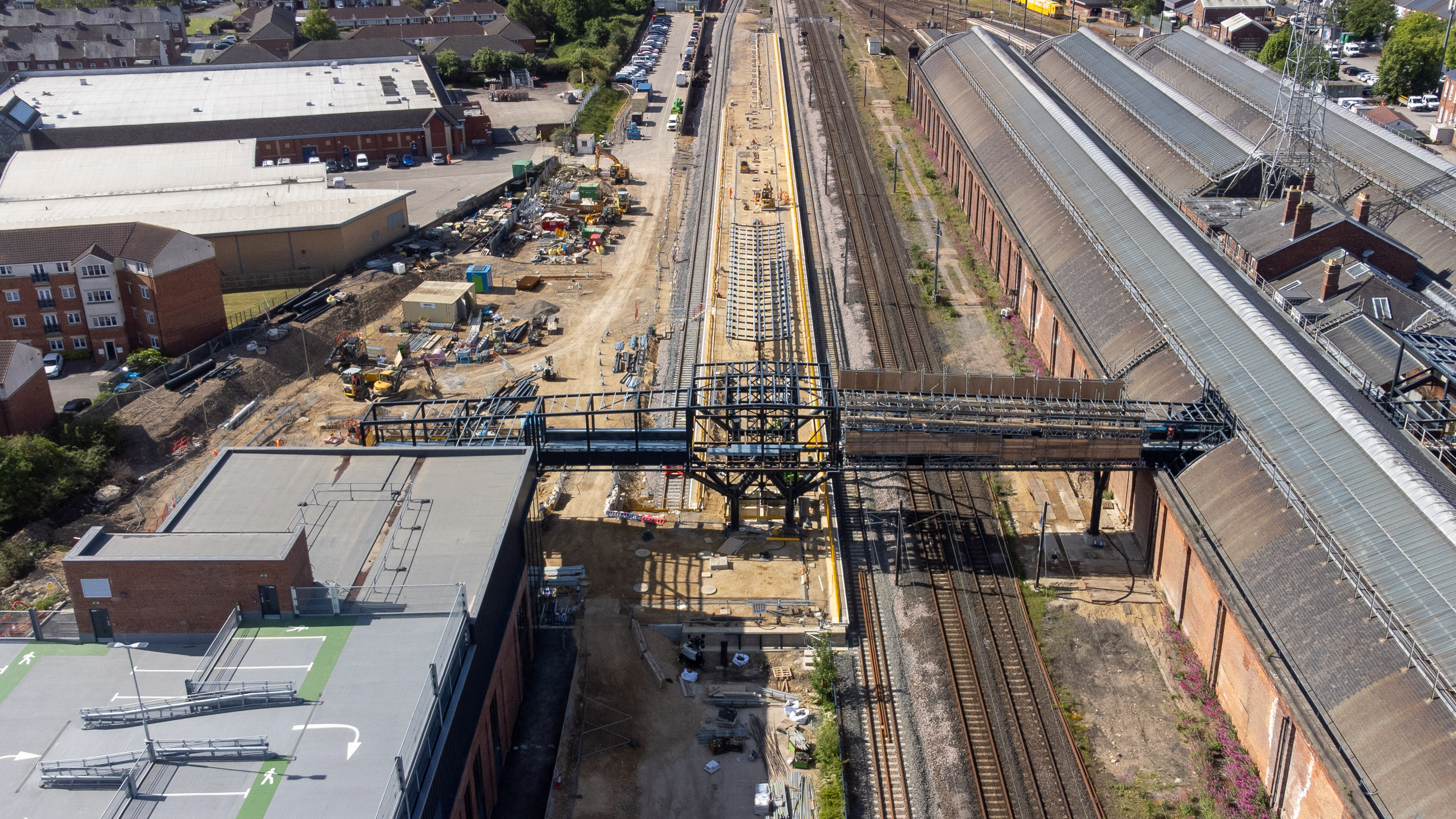
Note.
- The original four-platform Victorian station is on the right, which is the Western side.
- The East wall of the Victorian train shed can be clearly seen.
- The two absolutely straight 125 mph lines, that allow trains to bypass the original station are closest to the wall.
- The long electrified platform, which appears to be numbered 5, also appears to be absolutely straight.
- The unelectrified bay platform, which appears to be numbered 6, is to the left.
- Platforms 5 and 6 would seem to be separated by a wide island platform, which would make interchange easy.
This page on the Network Rail web site, gives more information.
Car Parking At Darlington Station
This image from Tees Valley Combined Authority shows the Northern end of the station.
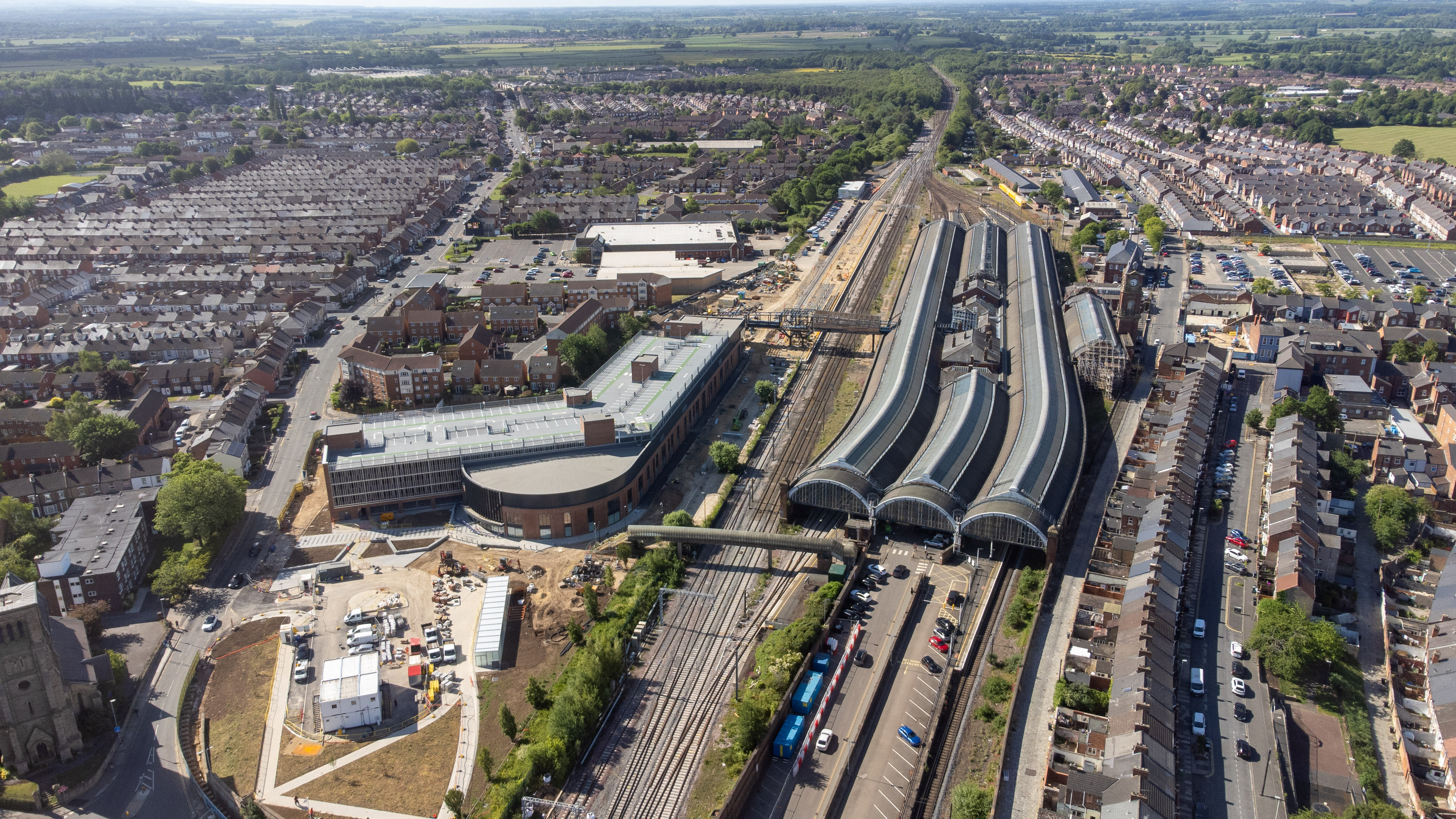
Note.
- The three sections of the Victorian station.
- The two new platforms ; 5 and 6 at the top of the image.
- The two 125 mph lines bypassing the Victorian station.
- There are two new footbridges connecting the Victorian station to the land on the other side of the 125 mph lines.
To the left of the station, there appears to be a massive multi-story car-park.
I asked Google about the new car park at Darlington station and got this reply.
The new multi-story car park at Darlington Station will have a capacity of more than 650 vehicles. This is part of a larger £140 million redevelopment of the station, which also includes new platforms and an eastern concourse. The car park will include accessible parking bays and electric car charging points.
This image from Tees Valley Combined Authority shows the car parking from the South.
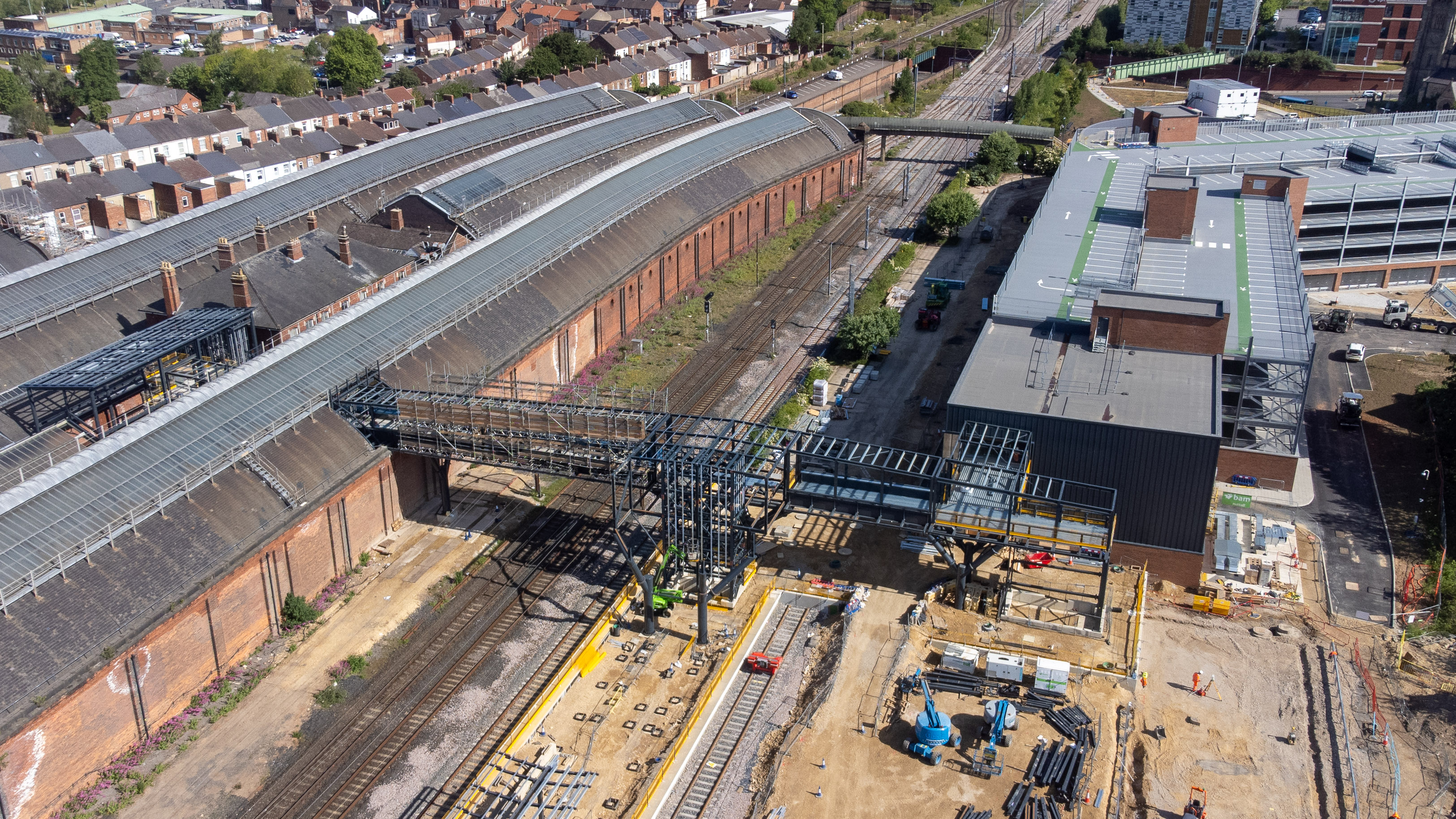
Note.
- The building appears to be a five-story car park.
- There appears to be a very easy connection between the car park and the bridge to the station.
- From the roof layout, there appears to be several lifts.
- It looks like there will be a large area between the platforms and the car park, where travellers can meet and socialise.
- The bay platform 6 already has a pair of red buffer stops.
Railways may have come to Darlington two hundred years ago and it looks like they are getting the car parking at the station ready for at least the next two hundred.
Further Electrification
If as I expect, the UK embraces battery electric technology for local and regional trains, I can see the three South-facing bay-platforms being electrified, so they could charge he battery-electric trains.
This picture shows that bars have been placed across Platforms 2 and 3, that could be used to support the electrification.
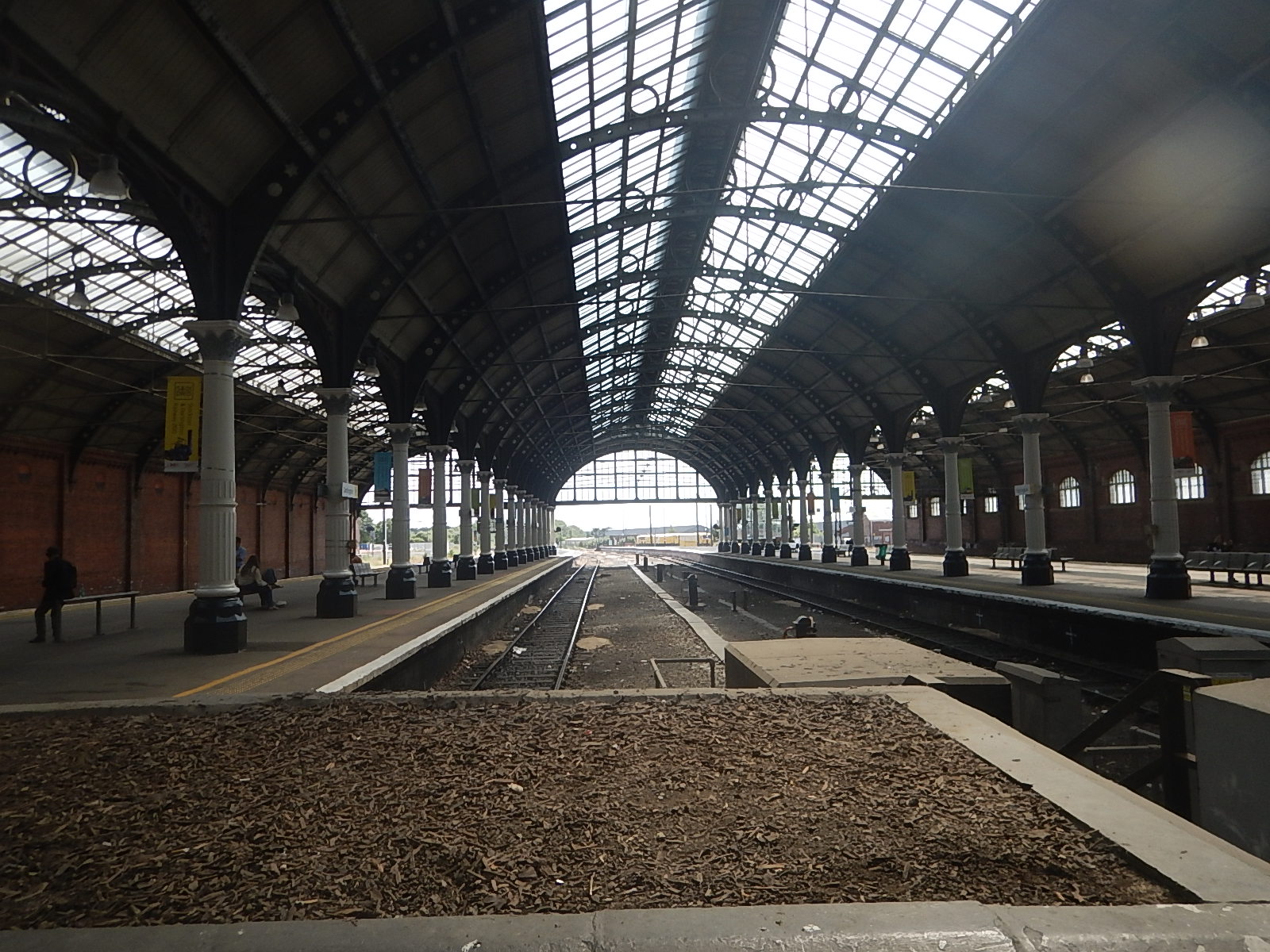
This method has been used in Victorian stations in the UK before. I show some installations and discuss electrifying Victorian stations in Could Hull Station Be Electrified?.
Darlington Station And High Speed Two
This graphic shows the original service pattern for High Speed Two.
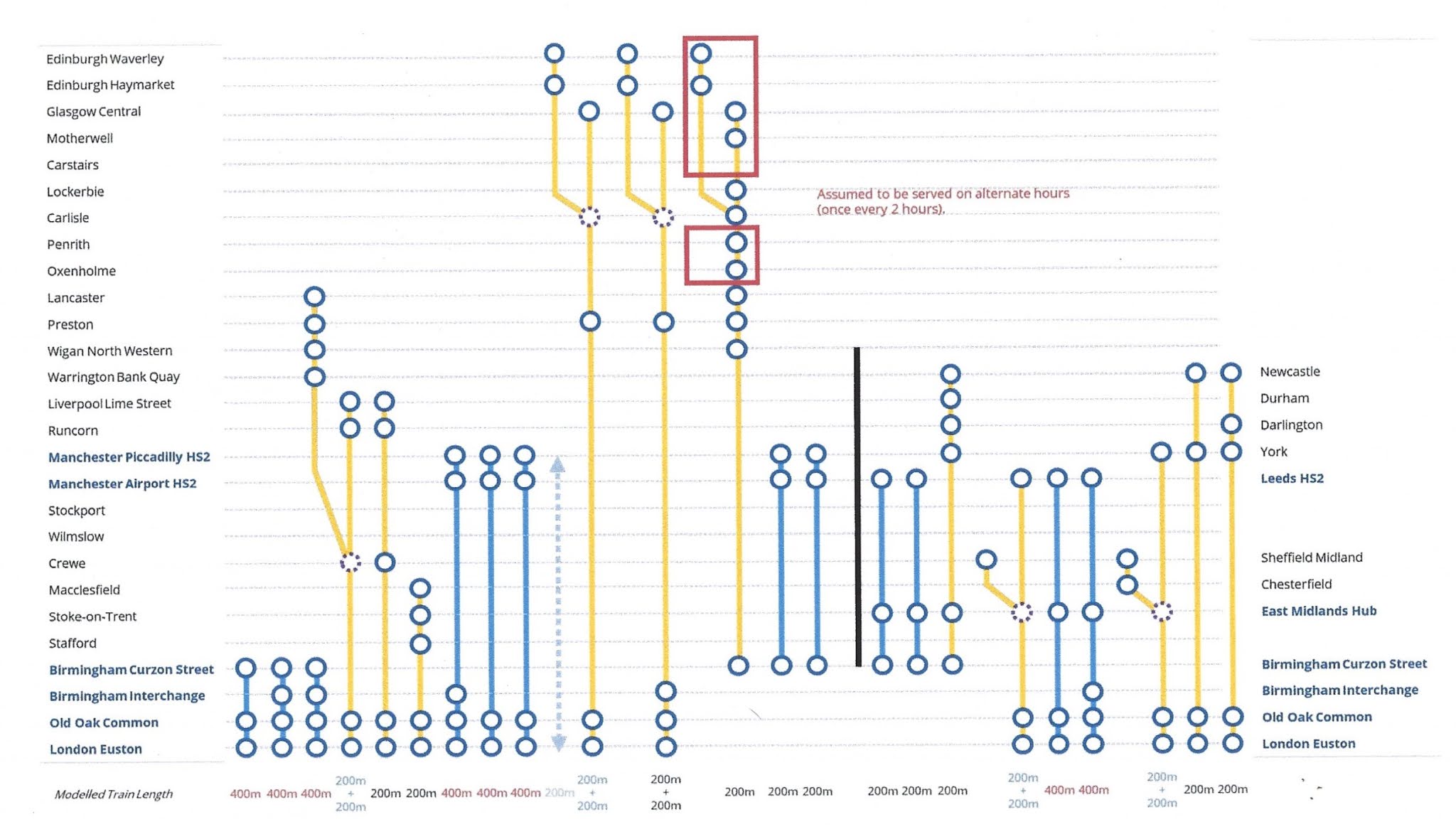
Note.
- There are seventeen paths terminating in the South at Euston station.
- Six of these paths go to Leeds, Newcastle or York.
- As the Eastern leg has been abandoned, that means there will be no High Speed Two trains to Leeds HS2, York, Darlington, Durham and Newcastle via the East Coast Main Line.
Darlington was to be served by these hourly services.
- Train 17 – Birmingham Curzon Street and Newcastle via East Midlands Hub, York, Darlington and Durham.
- Train 23 – London and Newcastle via York and Darlington.
Both trains would have been a single 200 metre long High Speed Two Classic-Compatible train.
Joining And Splitting Trains At Darlington
As Platform 5 looks like it would be a 400 metre long platform, it would look like it would be possible to handle a pair of High Speed Two Classic-Compatible trains.
But these trains will not now be serving Darlington in the near future, as the Eastern leg of High Speed Two has been cancelled.
A pair of nine-car Class 801 trains would be 467.4 metres long and might be able to fit into Platform 5.
But a pair of seven-car trains would certainly fit into a 400 metre Platform 5.
In Do Class 800/801/802 Trains Use Batteries For Regenerative Braking?, I found this snippet in an Hitachi document.
To simplify the rearrangement and management of train configurations, functions are provided for identifying the train (Class 800/801), for automatically determining the cars in the trainset and its total length, and for coupling and uncoupling up to 12 cars in
normal and 24 cars in rescue or emergency mode.
So I suspect with software updates two nine-car trains could run together.
Suppose LNER wanted to attack the airlines on the London and Scottish route.
- Two seven- or nine-car Class 800 or 801 trains would leave Edinburgh working as a pair.
- First stop would be Platform 5 in Darlington.
- The trains would split in Darlington.
- One train would go to King’s Cross stopping at perhaps Doncaster and Peterborough.
- The other train would go to St. Pancras stopping at perhaps Leeds, Sheffield, Nottingham and Bedford.
Note.
- A seven-car Azuma would be under 200 metres long.
- Seven-car trains would fit in St. Pancras.
- LNER have run an Azuma train into St. Pancras.
- The train would interchange with East-West Rail at Bedford.
- Travellers to and from East Anglia would change at Peterborough.
Large areas of England would have a fast route to and from Scotland.
Footage Released Of East West Rail’s First Commercial Freight Train
The title of this post, is the same as that of this news item from Network Rail.
These four paragraphs give detail to the story.
The inaugural journey was part of a dual first, as it also saw the entry into service of Maritime Transport’s Northampton Gateway Terminal.
This Easter Network Rail completed its work there to join the 35-acre freight facility directly to the West Coast Main Line via the Northampton Loop.
The modern junction design allows freight trains to enter and exit the site at speeds of up to 40mph, which is eight times faster than conventional freight connections.
Clearing the railway junction much faster will significantly improve both passenger and freight journeys – as it reduces the impact on other services running on the main line.
This OpenRailwayMap shows the location of Maritime Transport’s Northampton Gateway Terminal.
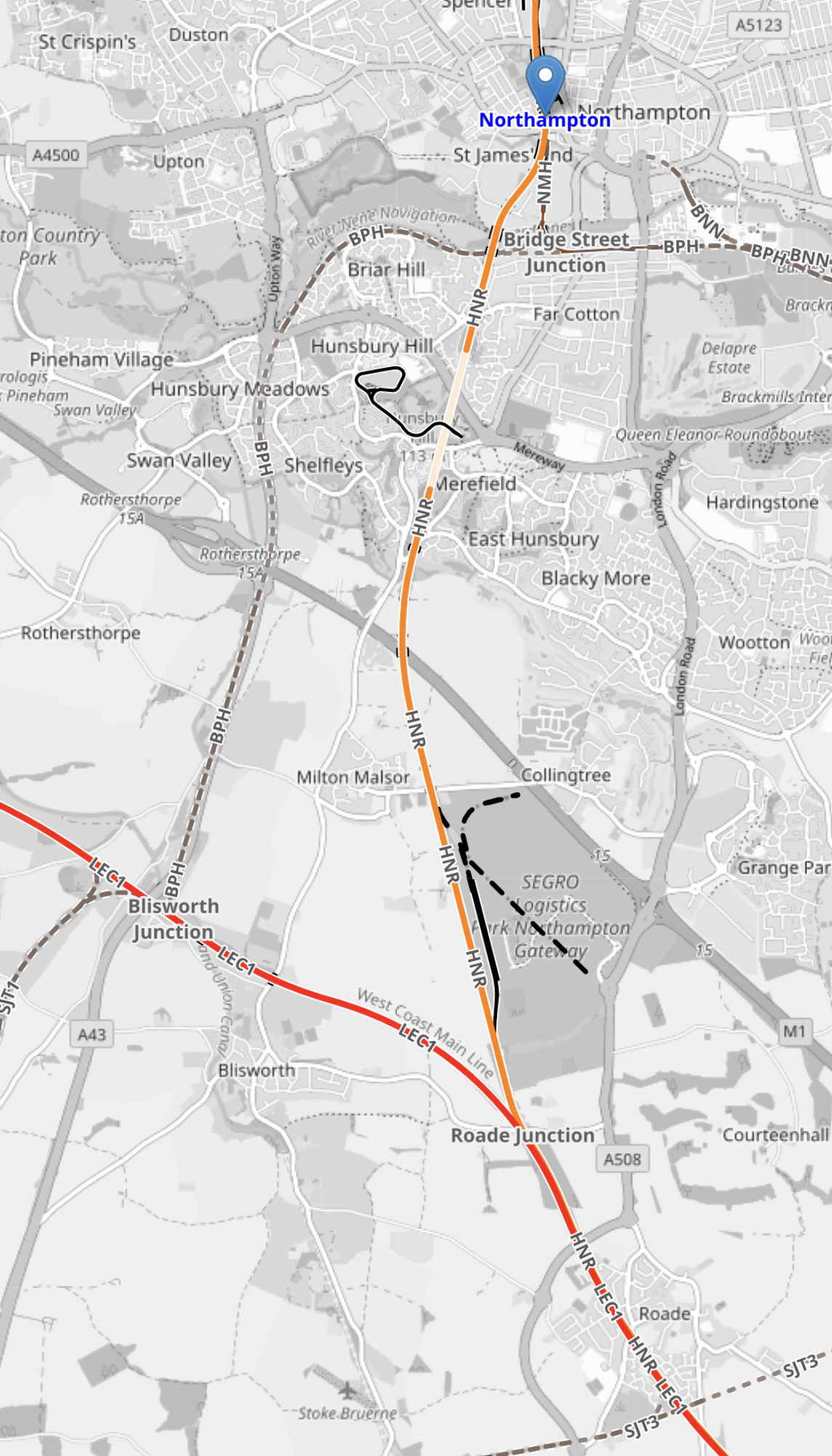
Note.
- The red track running diagonally across the bottom half of the map is the West Coast Main Line.
- The orange track running North-South is the Northampton Loop of the West Coast Main Line.
- The blue arrow indicates Northampton station.
- The grey line running diagonally across the map, vaguely parallel to the West Coast Main Line is the M1 Motorway.
- The SEGRO Logistics Park Northampton Gateway is indicated between the Northampton Loop and the M1 Motorway.
This Google Map shows the layout of the logistics park to a larger scale.
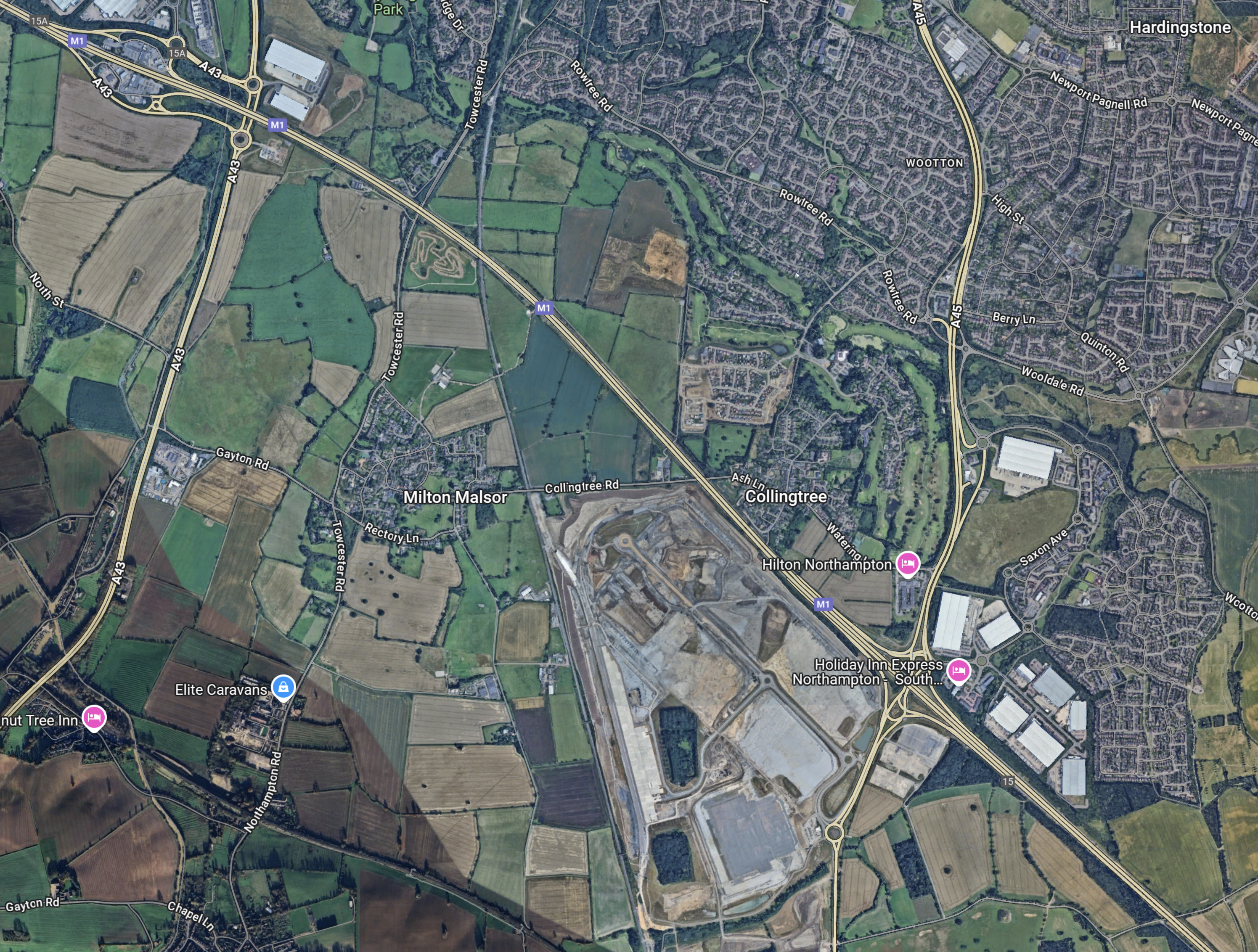
Note.
- The Northampton Loop of the West Coast Main Line running North-South across the map.
- The M1 Motorway running between the North-West and South-East corners of the map.
- Junction 15 is the M1 junction in the South-East corner of the map which connects the logistics park and the A45 to the M1.
- Junction 15A is the M1 junction in the North-West corner of the map which connects the A43 and Northampton services to the M1.
- There is probably space to add more warehouses and other facilities.
The logistics park is well connected to both rail and road.
This second Google Map shows the rail connection to the logistics park in more detail.
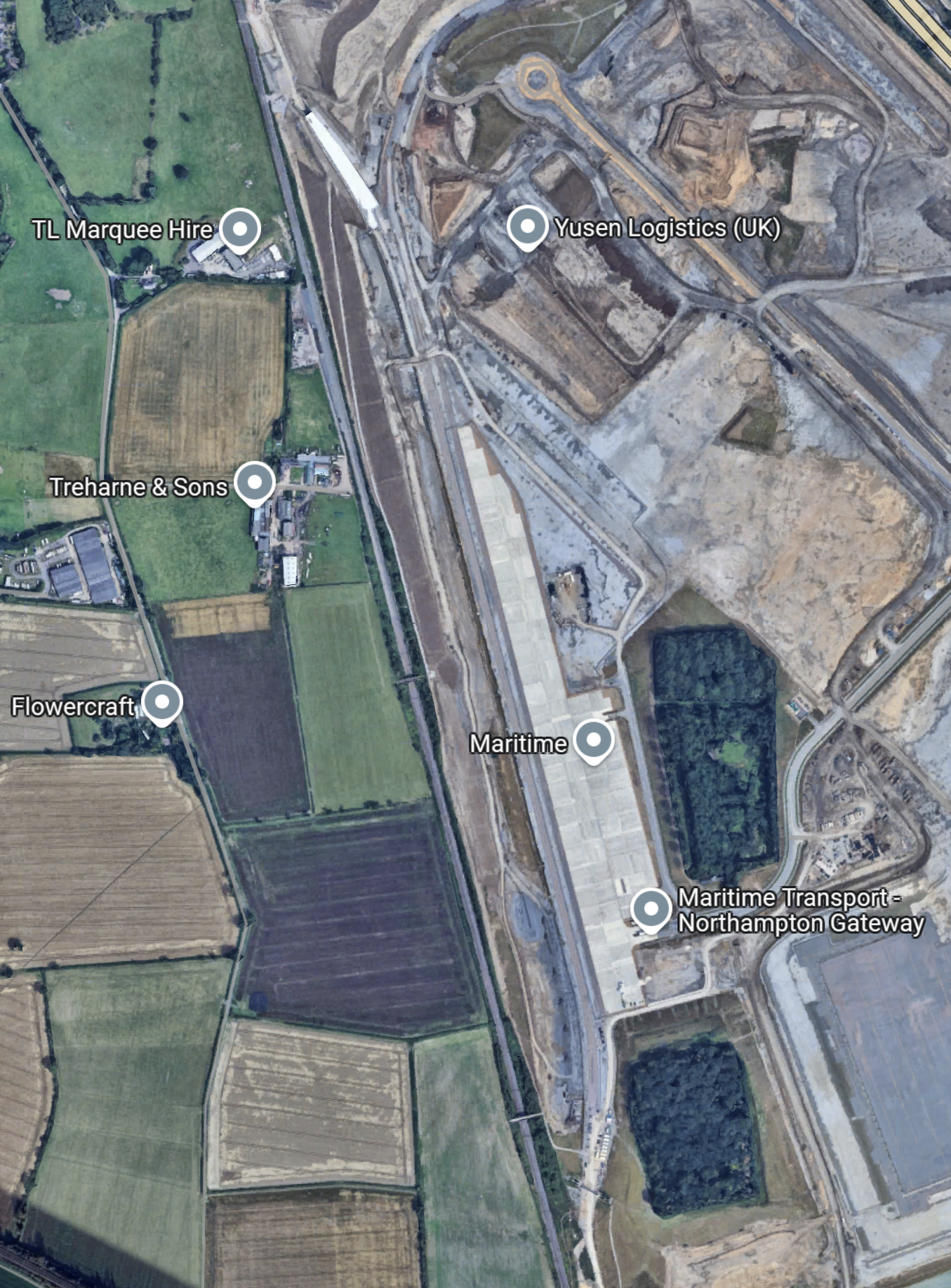
From this map, it appears that Network Rail have met their objective outlined in this paragraph of the news item.
The modern junction design allows freight trains to enter and exit the site at speeds of up to 40mph, which is eight times faster than conventional freight connections.
As only freight trains and slower passenger trains use the Northampton Loop, I would expect that freight trains should be able to enter and leave the logistics park with the minimum of disruption to traffic on the Northampton Loop.
The Route Of Yesterday’s Train
These three paragraphs from the Network Rail news item describe the route.
The first commercial freight train has travelled along the East West Rail line as part of its journey into a new strategic rail freight interchange in Northampton.
Shortly after 13:00 yesterday (Monday 16 June) the service* from Didcot came onto the new infrastructure at Oxford, travelling the 35 miles to Milton Keynes to connect with the West Coast Main Line.
It marked the first time East West Rail infrastructure has been used for commercial freight, after many months of signaller training and train driver learning since the £1.2bn railway was completed in October 2024.
This OpenRailwayMap shows the route from Didcot to Milton Keynes.
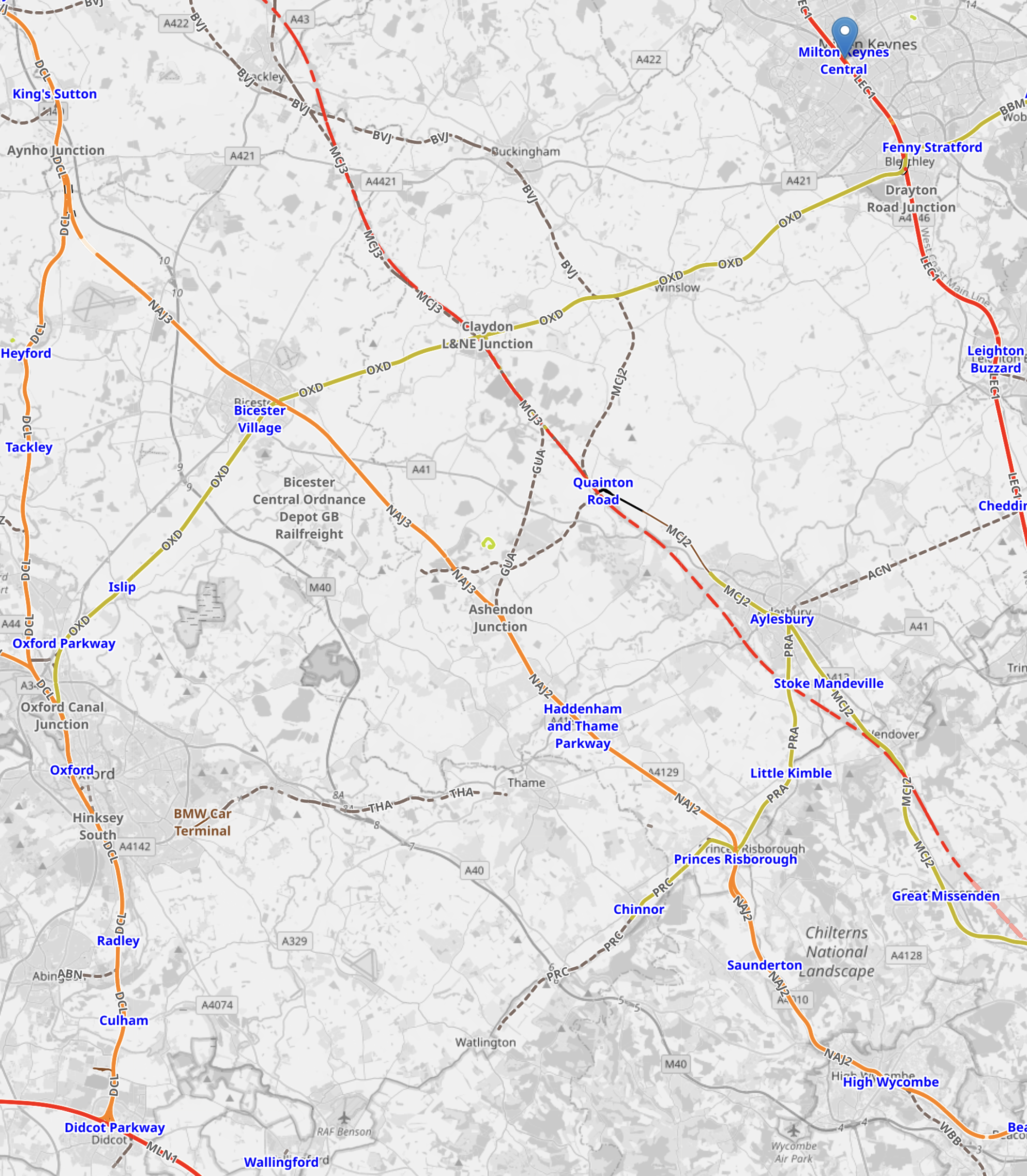
Note.
Didcot Parkway station is in the South-West corner of the map.
Milton Keynes Central is in the North-East corner of the map and marked with a blue error.
The route is via Oxford, Oxford Parkway, Bicester Village, Winslow and Bletchley.
This video shows the train passing Winslow.
Bicester Village Station – 28th May 2025
I went to Bicester Village station today and took these pictures.
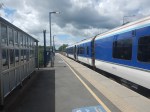
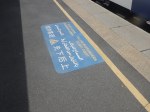
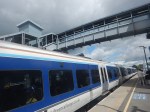

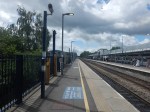
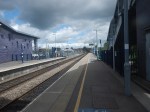

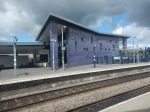
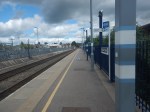
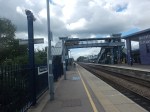

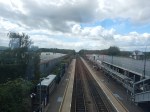
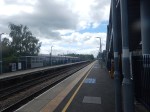
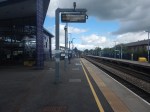
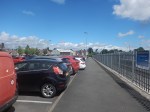
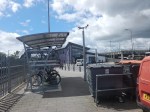
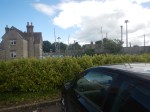
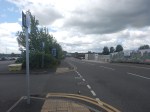

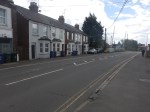

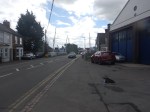
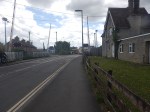
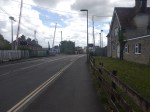
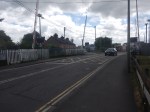
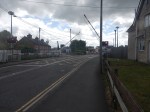
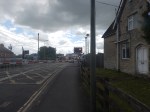
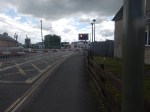
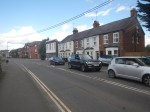
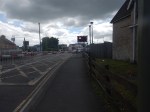
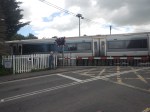
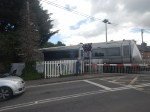


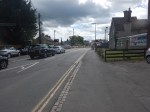

Note.
- The station is fully step-free, with lifts.
- There is a reasonable coffee-shop.
- There is a very large car-park.
There are two trains per hour (tph) in both directions between Marylebone and Oxford stations.
This Google Map shows the station.
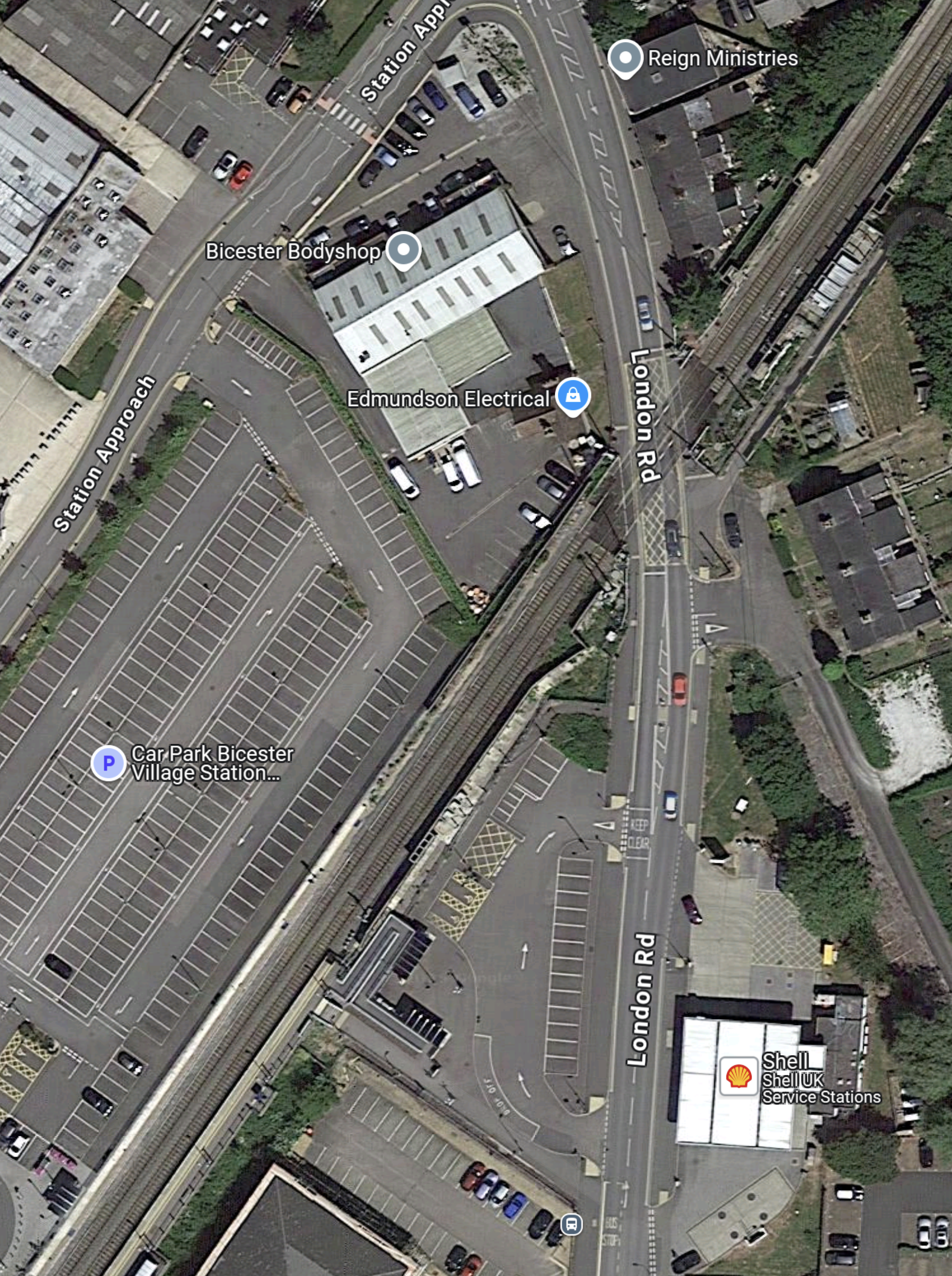
Note.
- London is to the North.
- Oxford is to the South.
- The footbridge dates from October 2021 and is not shown on the map.
- The London Road level crossing is in the North-East corner of the map.
- The London Road level crossing is a problem, as I indicated in Bicester MP Calls On Chancellor To Fund London Road Crossing.
- To take the pictures of the level crossing, I crossed the footbridge to the North-West side of the station and walked through the car park to the station entrance on Station Approach. I then walked past the Bicester Bodyshop and Edmundson Electrical to the level crossing.
- The Shell garage can be clearly seen behind the level crossing.
During my walk of about thirty-five minutes three trains passed over the level crossing.
These are my thoughts.
The Long Platforms
The platforms are long.
- The Oxford-bound platform, which is Platform 1, is 240 metres long.
- The London-bound platform, which is Platform 2, is 230 metres long.
Both platforms will take a pair of five-car Hitachi Express Trains.
It looks to me, that East-West Rail are expecting a large number of passengers.
East-West Rail Plans For Powering Trains
I detailed these in Plans For Powering Trains And Details Of Our Upcoming Consultation.This post was based on an East-West Rail news item with the same title.
Distances include.
- London Marylebone and Oxford – 66.8 miles.
- Bletchley and Oxford – 47.2 miles.
Both distances are within range of five-car Hitachi Express Trains, that have been fitted with batteries.
I also suspect other manufacturers could supply suitable trains.
Thoughts On The London Road Level Crossing
This article on the BBC is entitled Level Crossing Petition Supported By Thousands.
This is the sub-heading.
A petition calling for a fully accessible underpass at a town’s level crossing has received more than 3,000 signatures.
These three paragraphs add more detail.
Launched by MP for Bicester and Woodstock Calum Miller, the petition calls on the government to ensure any replacement of the level crossing at London Road in Bicester includes access for cars, not just cyclists and pedestrians.
It is set to be closed on safety grounds when the East West Rail (EWR) line becomes fully operational, which many fear would cut off crucial access to thousands of residents.
Mr Miller will present the petition, which can only be signed in person, in Parliament on 3 June.
The argument is certainly hotting up.
But I believe, that a bridge that meets everybody’s requirements might be possible to be built.
- Suppose that all trains and locomotives passing through the level crossing had to be self-powered. Passenger trains could be battery-electric and freight locomotives could be either hydrogen or battery powered through the location of the level crossing.
- The track could also be lowered through the crossing.
- These actions would reduce the height of any bridge taking the road over the railway.
It looks to me that on the Northumberland Railway, which has recently opened, they had a similar problem, but they were able to squeeze a bridge into the space, as this 3D Google Map shows.
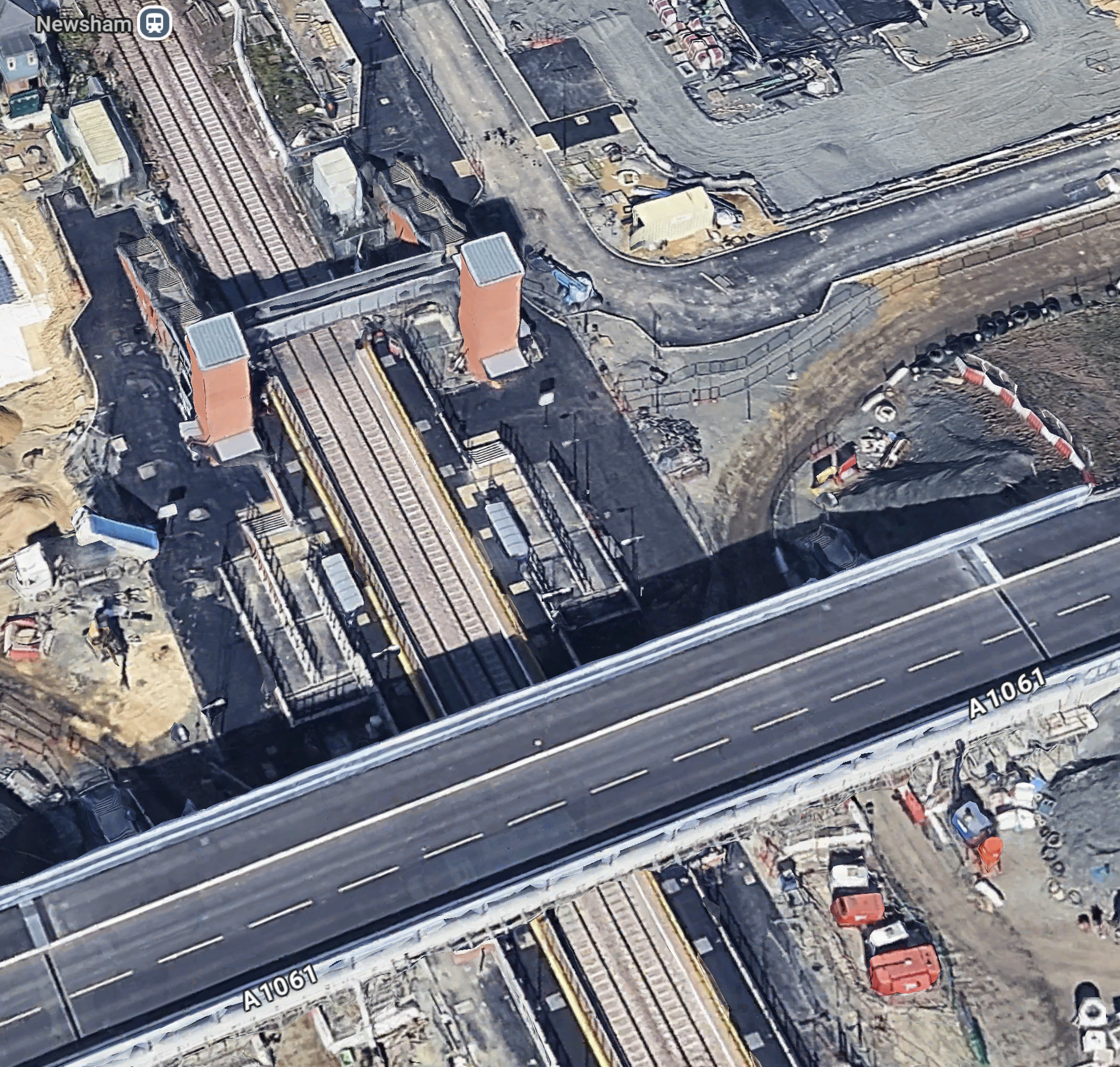
Note.
- The bridge looks like it carries a two-lane road and a pedestrian/cycle way.
- There is no electrification.
- I believe that the Northumberland Line could be run by battery-electric trains.
- The road bridge has been built to accept all traffic using the railway.
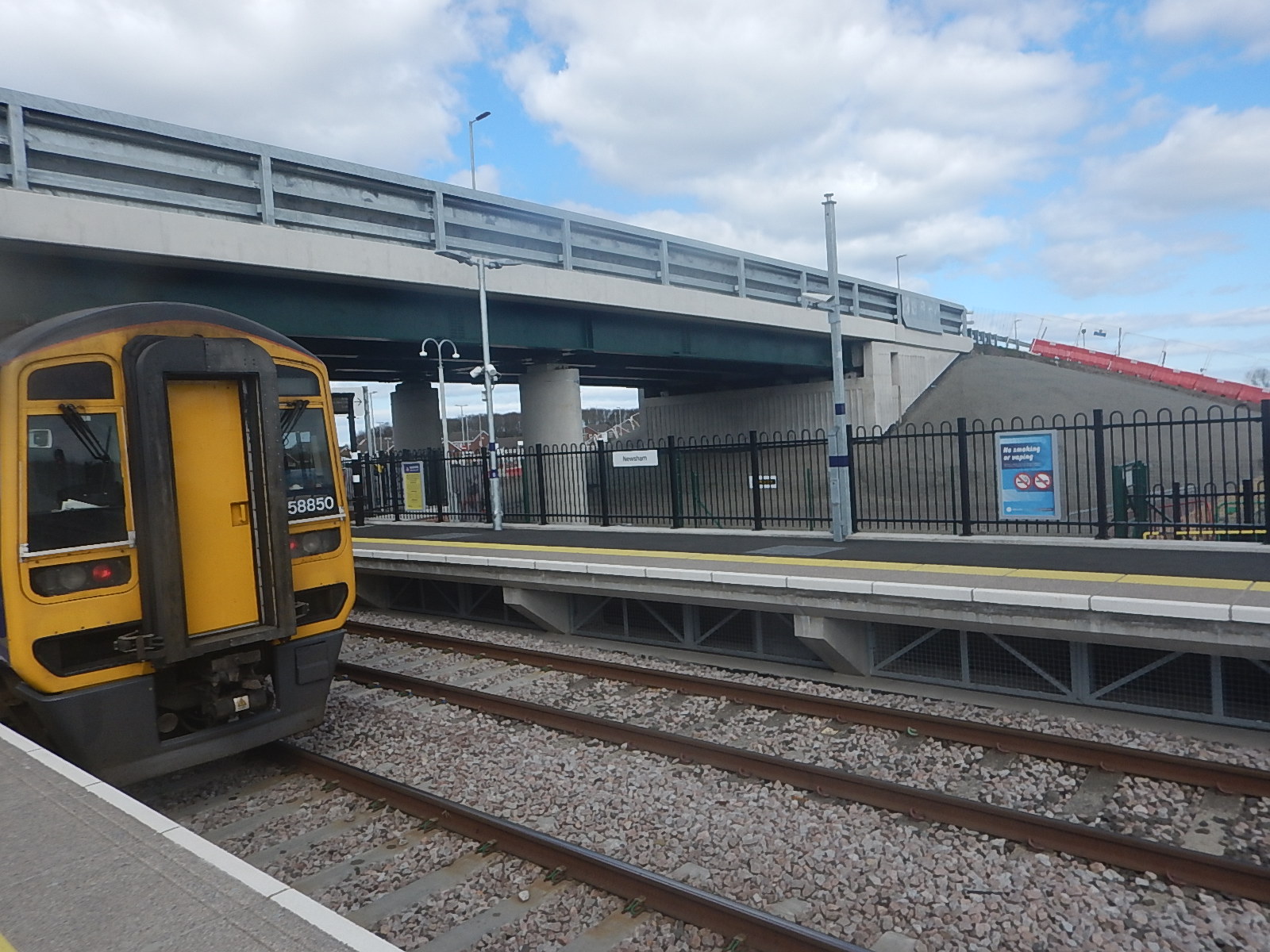
In Newsham Station – 30th March 2025, there are several pictures of the bridge. This one shows the bridge with a train.
In Trains: £34m For Revival Of 50-Year-Old North-East Railway Line, I said this about battery-electric trains for the Northumberland Line.
I’m drawn inextricably to the conclusion, that the trains should be 100 mph battery-electric trains.
Hitachi, who have a factory in the North-East, have announced their Regional Battery Train in July 2020, which is described in this Hitachi infographic.

These trains can be based on Class 385 trains.
- They are 100 mph trains.
- They come in three- and four-cars lengths.
- The three-car trains have 206 seats.
- They can work in pairs.
- They can use 25 KVAC overhead electrification.
- They have a range of 90 kilometres or 56 miles on battery power.
- The batteries would be charged on the ECML between Benton North junction and Newcastle station.
- The battery packs will be designed and manufactured by Hyperdrive Innovation in Sunderland.
- They have big windows for the views.
I’m sure Hitachi and Hyperdrive would like a fleet in service, just up the road from their factories.
Could a similar or even thinner bridge be squeezed in at Bicester Village station to take London Road over the railway?
I think it can, if they use some of the latest 3D modelling.
From Reading To Gatwick Airport Along The North Downs Line
After writing Connecting Reading And The West To Gatwick Airport And Eurostar, I decided to go and look at the reality of the North Downs Line between Reading and Gatwick Airport stations.
I took my usual route to Reading, which is to go to Moorgate and get the Elizabeth Line direct to Reading using my Freedom Pass, after having breakfast in the Leon on Moorgate.
- I then had to leave the station at Reading, so that I could buy my ticket to Gatwick Airport.
- It would be so much easier, if there ere a couple of ticket machines on the bridge or platform at Reading station, so that passengers, who were changing trains could buy tickets quickly and easily.
In the end, I caught the 11:24 train to Gatwick with only a few minutes to spare.
From Reading To Gatwick Airport Along The North Downs Line
Along the North Downs Line, the train was a well-refreshed Great Western Railway Class 165 train.
These are some of the pictures, that I took on the route.







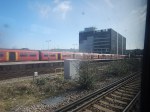
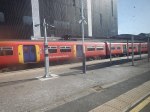




























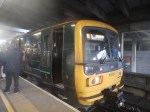
Note.
- The route goes through a lot of typical Surrey heathland.
- I noticed several pubs along the way.
- I suspect that there are some good walks from the stations.
- Reading and Guildford are university cities.
- Sandhurst is home to the Royal Military Academy.
- Farnborough Airport used to be home to the Royal Aircraft Establishment.
- Most of the seats on the train were taken.
I would expect that for a mainly rural route it is fairly busy.
Hitachi’s Intercity Battery Trains
Hitachi have developed an Intercity battery train and it is described on this page on their web site, where this is said about converting the trains to battery-electric operation.
A quick and easy application of battery technology is to install it on existing or future Hitachi intercity trains. Hitachi Rail’s modular design means this can be done without the need to re-engineer or rebuild the train and return them to service as quickly as possible for passengers.
Replacing one diesel engine with just one battery reduces emissions by more than 20% and offers cost savings of 20-30%. Our intercity battery powered trains can cover 70km on non-electrified routes, operating at intercity speeds at the same or increased performance.
That performance is certainly enough for Reading and Ashford via Gatwick, as only 37.7 miles in total, is not electrified.
Does The North Downs Line Mirror The East-West Rail?
Consider.
- The East West Rail will encircle London to the North, between Oxford and Cambridge.
- The North Downs Line encircles London to the South, between Reading and Ashford.
They could be considered two complimentary rail lines.
A Milton Keynes And Ashford International Service
Looking at the track layout on OpenRailwayMap, it would appear that one of Hitachi’s proposed Intercity Battery Trains fitted with dual voltage could pick its way elegantly along the East West Rail and the North Downs Line between Milton Keynes and Ashford International via Oxford, Reading and Gatwick Airport.
An Occasional Sheffield And Ashford International Service
If you could run a service between Milton Keynes and Ashford International, why not extend it to Bedford or even Sheffield in the North?
I believe if you put these Hitachi’s proposed Intercity Battery Trains on a cross-country route, that they will quickly suffer from London Overground Syndrome. This is my definition of the syndrome.
This benign disease, which is probably a modern version of the Victorian railway mania, was first identified in East London in 2011, when it was found that the newly-refurbished East London Line and North London Line were inadequate due to high passenger satisfaction and much increased usage. It has now spread across other parts of the capital, despite various eradication programs.
Put simply, it can probably be summed up as Quality Attracts Passengers.
Serving Heathrow
There have been various plans to get rail access into Heathrow from the West, but none have so far got off the starting blocks.
It is my view, that in the interim period, after my trip last weekend in the superb Wrightbus hydrogen double deck bus from Sutton to Gatwick, that I wrote about in Sutton Station To Gatwick Airport By Hydrogen-Powered Bus, that we should ask Wrightbus, who are designing a hydrogen-powered coach, to design the ultimate coach to connect rail hubs to major airports.
I would then run these coaches every ten minutes between Reading station and Heathrow Airport.
Serving Attractions
I believe that pairing Hitachi’s proposed Intercity Battery Trains with Wrightbus’s hydrogen coach could be a winner for passengers and operators.
As an example, Lumo are hoping to run an open access service between Paddington and Carmarthen, if Heidi the Spoilsport permits. Would it not be sensible, if one of Wrightbus’s hydrogen coaches did the last mile duties to the ferry for Ireland at Fishguard harbour.
A Bespoke Tram-Train For The UK
Trams, tram-trains, trains and anything that runs on rails is generally very expensive.
Does this partly explain, why the UK has relatively few urban tramways and railways?
In Stadler Presents Mock-Up Of Tram-Trains For German And Austrian Operators, I discussed how five German and Austrian operators had got together to create a common tram-train design, that would be suitable for all the operators.
The mayor of one of the cities involved in the joint order, said savings of the order of a million euros per vehicle may have resulted from the common design.
I would also feel that savings in operational costs, design of infrastructure, spares inventory and other costs would also result.
Identical tram-trains would make through running between networks easier.
Where Could Tram-Trains Be Used In The UK?
Consider.
- Currently, tram-trains are running in Sheffield and a battery-electric version of the same Stadler Citylink tram-train will soon be running in Cardiff.
- Cardiff, is developing a Cardiff Crossrail on tram-train principles across the city.
- Sheffield have said that they will be replacing their trams and I believe they could use developments of their excellent Stadler tram-trains.
- Sheffield is likely to extend their tram system and might include tram-trains to Doncaster.
- Cities that have talked about adding tram-trains to their tram networks include Birmingham, Blackpool, Manchester and Nottingham.
- Leeds is developing a metro system, which could be developed using tram-train principles.
- Glasgow has talked about a tram-train to Glasgow Airport for some time.
- The East-West Rail Link is proposing a tram-train link between Ipswich and Felixstowe to allow more freight trains into the Port of Felixstowe.
There could be quite a number of tram-trains being used in the UK, especially if they are used as at Felixstowe, to increase freight capacity into ports.
These are a few of my thoughts.
Battery-Electric Tram-Trains
I would envisage, that a lot of the new tram-trains would operate using batteries. Especially, as battery-electric trains are showing quite long ranges of upwards of thirty miles.
Already trams in Birmingham and trains on Merseyside, are operating using batteries and it avoids the expense of putting up catenary, if enough exists to charge the trams.
Replacement of Diesel Multiple Units By Battery-Electric Tram-Trains
There are some branch lines, where diesel multiple units run off a branch of an electrified main line.These services could be decarbonised by changing the rolling stock.
This OpenRailwayMap shows the St. I’ves Bay Line in Cornwall.
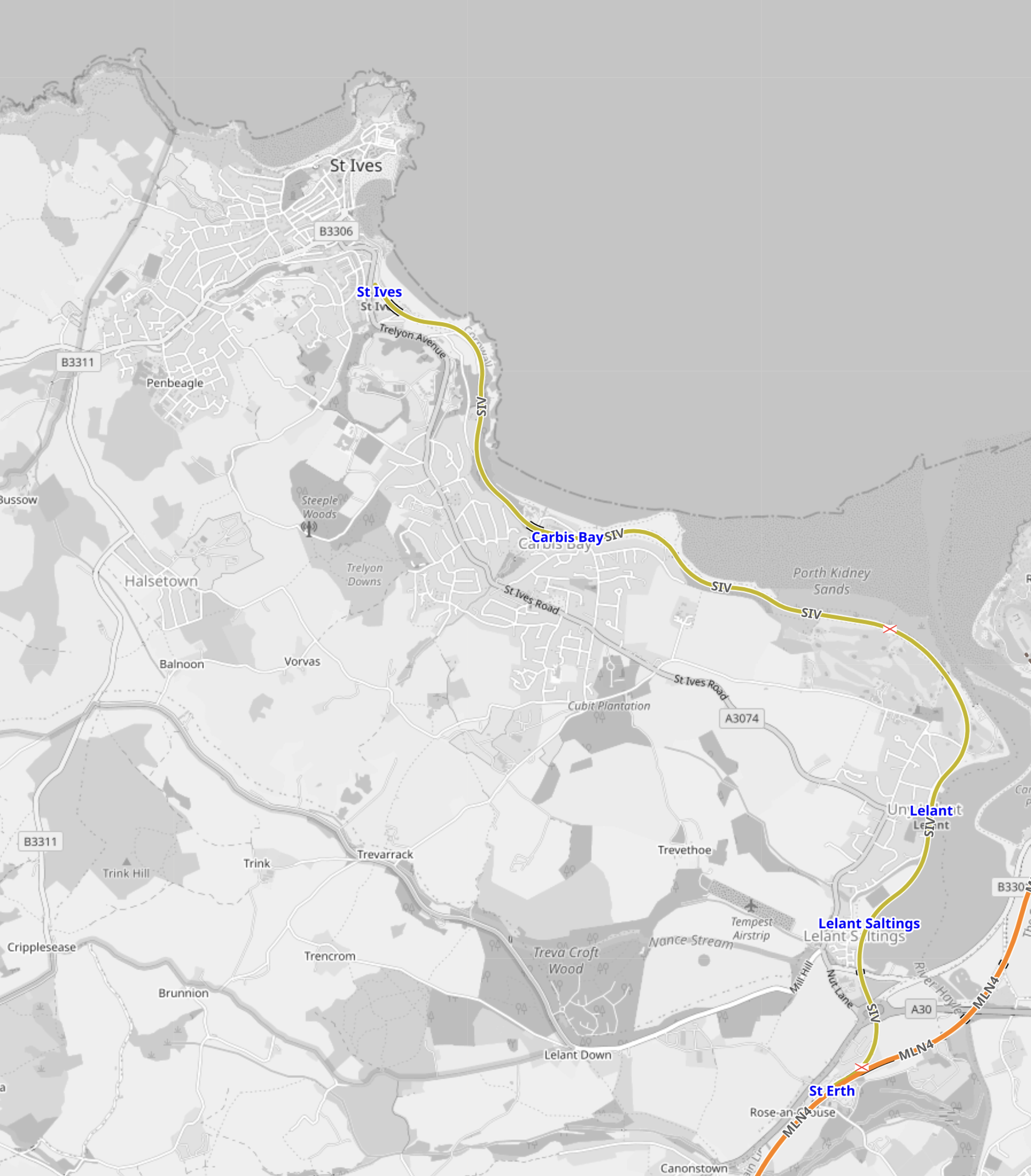
Note.
- The St. Ives Bay Line is shown in yellow.
- The Southern terminal is St. Erth station, where it connects to the Cornish Main Line, which is shown in orange.
- The Northern terminal is St. Ives station, which is towards the top of the map.
- The St. Ives Bay Line is 4.25 miles long.
- No tracks are electrified.
- There are three intermediate stations.
This second OpenRailwayMap shows St. Erth station in more detail.
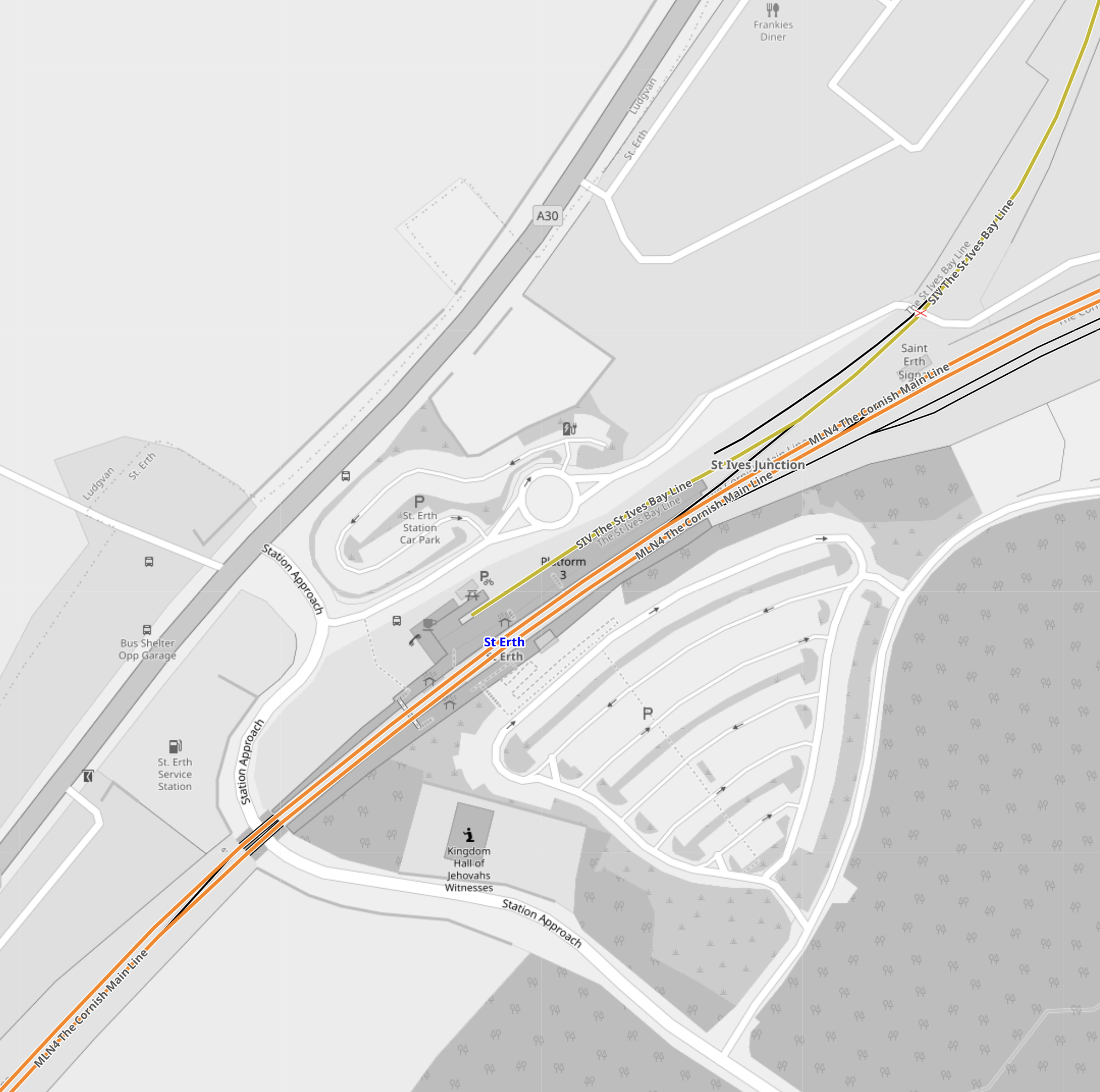
Note.
- The St. Ives Bay Line has its own platform at the side of the station.
- I am fairly certain, that some form of charging could be installed in this platform.
- At the other side of the Cornish Main Line are two sidings, which could be used for cleaning and maintenance.
A neat zero-carbon branch line could easily be created.
New Branch Lines To New Developments
In Sheffield Region Transport Plan 2019 – A New Tram-Train Route To A New Station At Waverley, I gave my view on a tram-train loop from the Sheffield-Lincoln Line to serve the Advanced Manufacturing Centre and new housing at Waverley.
The tram-train would run as a train to the branch line for the development and then run as a battery-electric tram, through the development.
As the Midland Main Line to Sheffield will be electrified, the tram-trains could be charged on the electrification in Sheffield station.
Build Them In Doncaster
Wabtec are closing Doncaster works.
Surely this would be the site to assemble the scores of tram-trains that could be needed in the UK.
Conclusion
Tram-trains could do a lot to improve the railways of the UK.
They would also help to decarbonise the existing system.
Council Opposes Six Track Plan For East West Rail
The title of this post, is the same as that of this article on the BBC.
This is the sub-heading.
Councillors have voted to oppose part of a major railway line being built through their district.
These four paragraphs add detail to the story
Bedford Borough Council wants the East West Rail (EWR) line to be made up of four tracks, rather than six, in the Poets area north of the town.
Thirty-seven homes would need to be demolished in order to accommodate the two additional tracks.
However, in their full-council meeting on Wednesday, members agreed to support other parts of the project, such as the relocation of Stewartby station and the closure of Kempston Hardwick.
An EWR spokesperson said it was committed to working with local communities.
This OpenRailwayMap shows the Midland Main Line and the East-West Rail through Bedford.
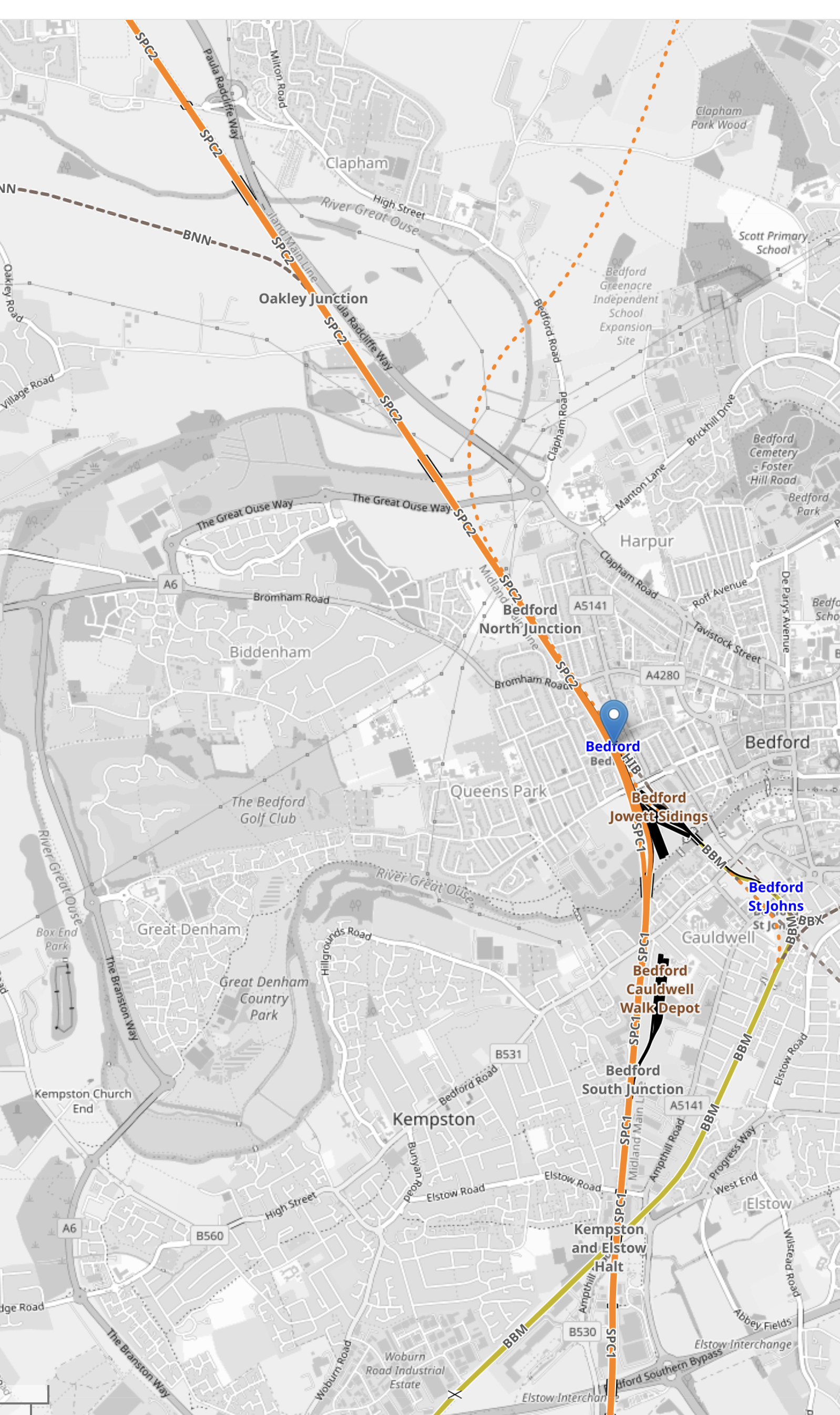
Note.
- The solid orange line running from the North-West corner of the map to its Southern edge is the electrified Midland Main Line.
- The blue arrow on this line indicates Bedford station.
- The blue lettering to the South-East of Bedford station, indicates Bedford St. Johns station.
- The yellow line connecting the two stations is the Eastern end of the Marston Vale Line, which connects Bedford and Bletchley stations.
- The Marston Vale Line will be taken over by the East-West Rail.
- Just North of Bedford station is Bedford North junction.
The East-West Rail branches away from Bedford North junction to the North-East on its way to Cambridge. It is shown as a dotted orange line.
This OpenRailwayMap shows Bedford station to a larger scale.
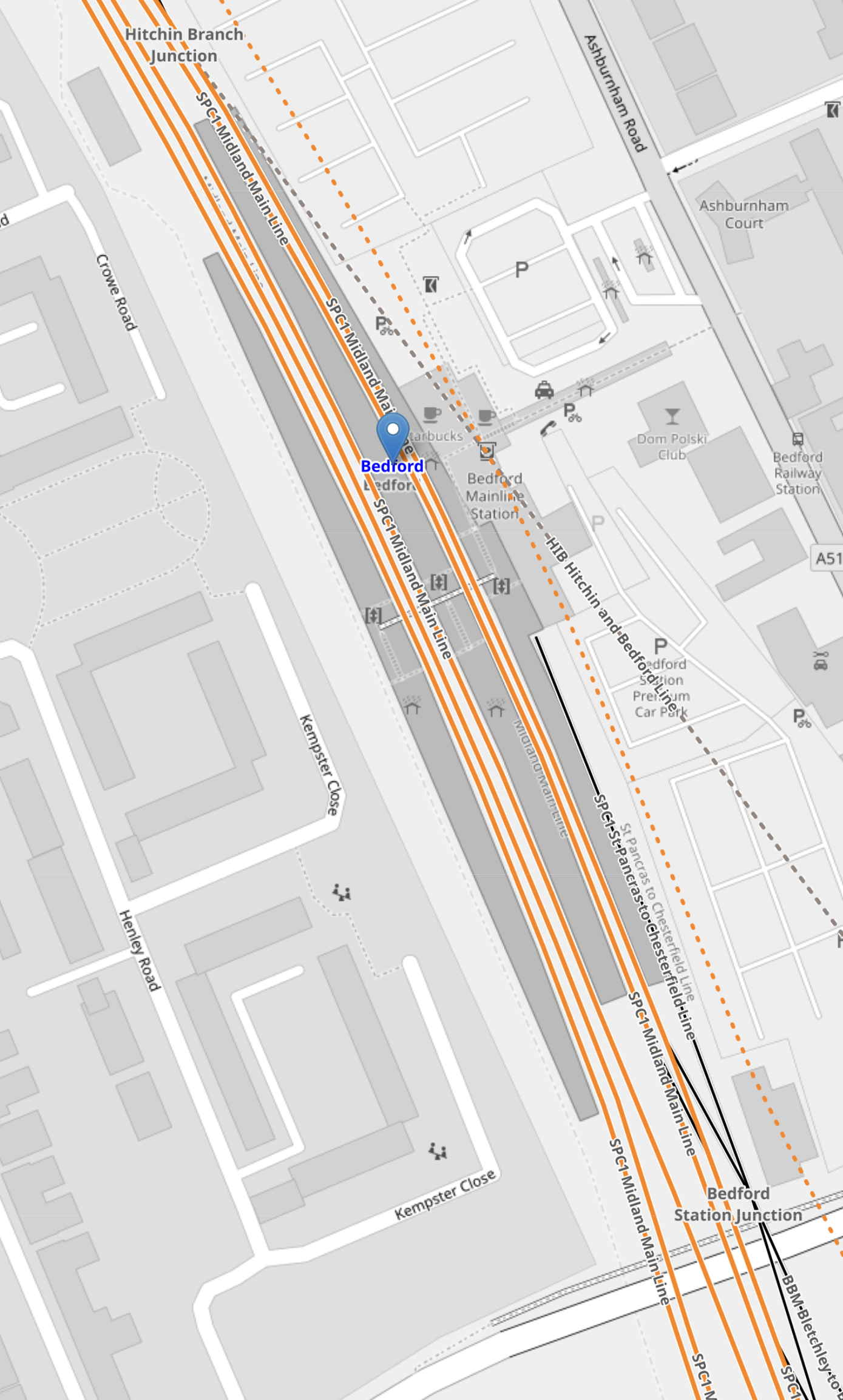
Note,
- The Western pair of orange lines are the current fast lines of the Midland Main Line.
- The Eastern pair of orange lines are the current slow lines of the Midland Main Line.
- To the East the orange dotted line shows indicates a proposed route of the East-West Rail.
- There appear to be crossovers that allow East-West Rail services to use Platforms 1 and 2 through Bedford station.
Between the Midland Main Line and East-West Rail platforms, the current Platform 1A used by the Marston Vale Line can be seen.
This picture show the current Marston Vale Line platform at Bedford station,
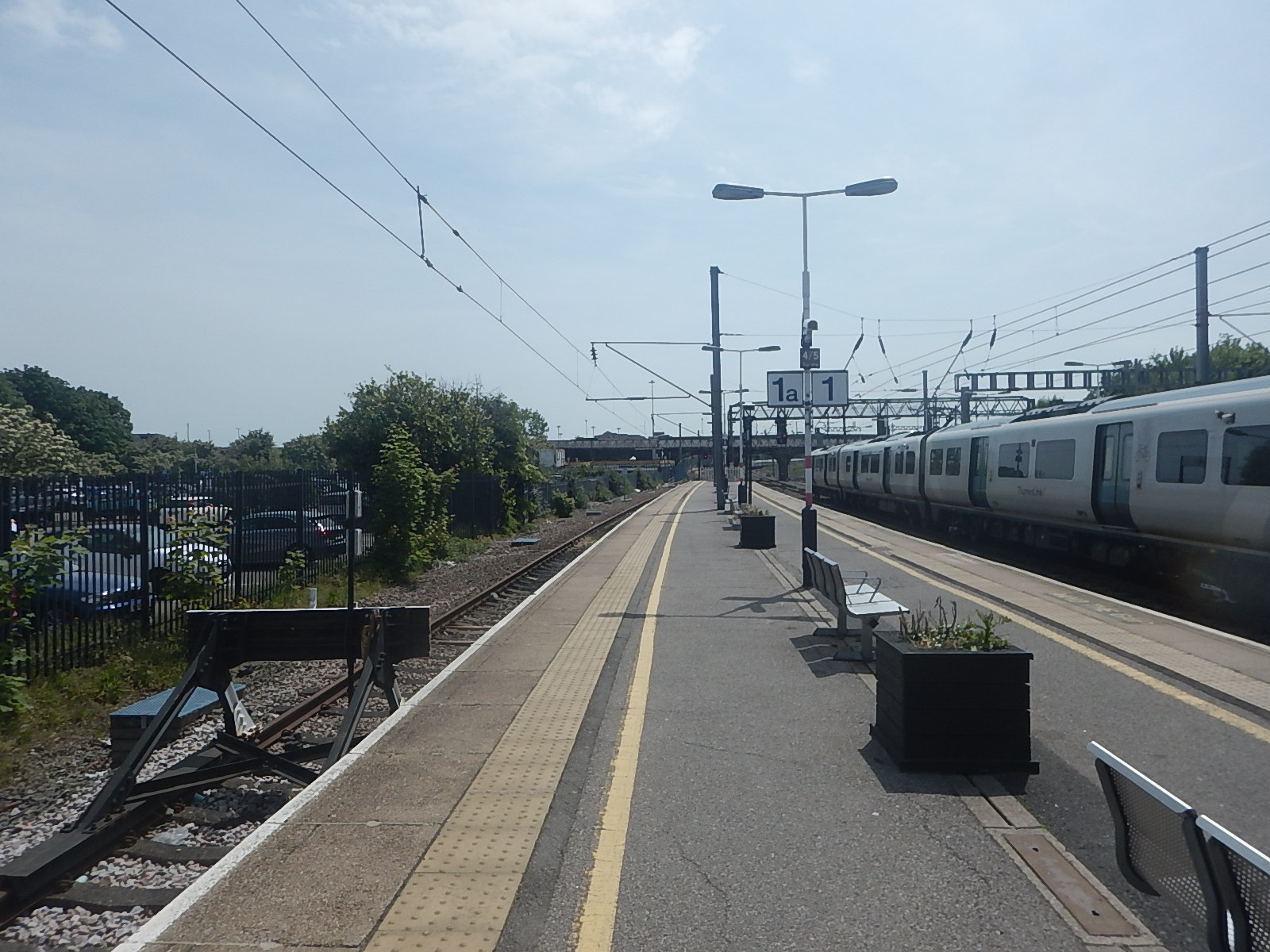
Note.
- The Marston Vale Line platform is on the left.
- It is numbered 1A.
- The platform is electrified, so can it be it used to terminate some Thameslink services.
It could also be used to terminate East-West Rail services from the West and if they were battery-electric trains they could be charged.
Oxford and Bedford is 51 miles or 82 kilometers, which is within range of a modern battery-electric train. Es[ecially, if it did a ‘splash and dash’ at Milton Keynes Central or Bletchley!
This OpenRailwayMap shows the lines to the North of Bedford station.

Note.
- The current four-track Midland Main Line running diagonally across the map.
- The East-West Rail running along on the East side and branching off to Cambridge.
- Crossovers between the Midland Main Line and East-West Rail.
It looks to me, that operation of East-West Rail trains through Bedford station will be as follows.
- Oxford to Cambridge trains will use the crossovers to call in the existing Platform 2 at Bedford station.
- Cambridge to Oxford to will use the crossovers to call in the existing Platform 1 at Bedford station.
- Trains that are not stopping could use the avoiding line along the East side of the station.
- Oxford to Bedford terminating trains, would stop in Platform 1A.
Because there would be a crossover between the Midland Main Line slow lines and the East-West Rail to the South and North of Bedford station, I suspect for operatuional reasons and safety Network Rail want a double track avoiding line.
Plans For Powering Trains And Details Of Our Upcoming Consultation
The title of this post, is the same as that of a news item on the East West Rail web site.
This is the sub heading.
We’re pleased to share plans for how we’ll power trains on East West Rail, as well as information and dates of our public consultation on latest proposals for the project.
These are the first two paragraphs.
As part of our latest proposals, which we’ll be sharing for public consultation from 14 November, we’re providing information on our preference for green traction power in the form of discontinuous electrification with hybrid battery-electric trains, after the Chancellor confirmed government support for the project in yesterday’s budget.
As well as reducing carbon emissions, discontinuous electrification would mean overhead lines would only need to be installed along some sections of the route, which would reduce disruption to existing structures and potentially reduce visual impacts in more sensitive locations on the new railway between Bedford and Cambridge. This option would also cost less than full electrification and would need less land for things such as mast foundations.
There is also a short video, which explains discontinuous electrification.
I feel that to use discontinuous electrification and hybrid battery-electric trains is the way to go on this railway between Oxford and Cambridge.
- It is a zero-carbon solution.
- There is electrification at Reading. Didcot, Bletchley, Milton Keynes, Bedford and Cambridge along the route, so grid connections will be already available.
- Sandy, where East West Rail crosses the East Coast Main Line, is fully electrified and must have a grid connection.
- A small article in the November 2024 Edition of Modern Ralways, says that Hitachi are developing a smaller battery for commuter and suburban trains.
- Didcot to Oxford could be electrified and there is already a grid connection at Didcot.
Discontinuous electrification could be used to extend East West Rail to Norwich, Ipswich and Colchester.
These are my detailed observations and thoughts.
Existing Electrification
This OpenRailwayMap shows the electrification between Oxford and Bedford.
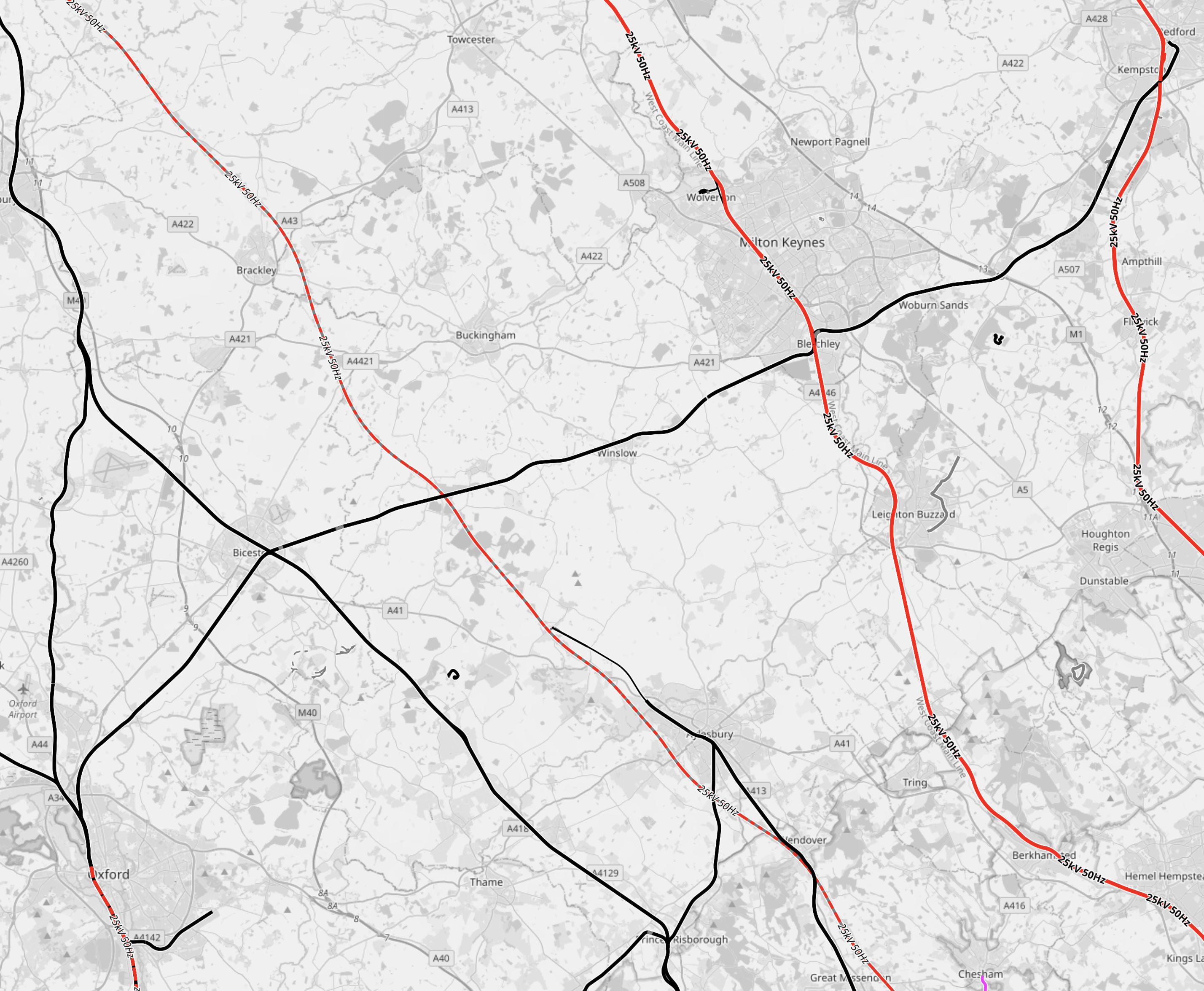
Note.
- Bold red lines are tracks electrified at 25 KVAC.
- Bold black lines are tracks without electrification.
- Oxford is in the South-West corner of the map.
- Bedford is in the North-East corner of the map.
- The bold black line of the Western section of the East West Rail connects the two cities.
- The lines through Oxford are shown as being electrified. The black stub pointing East to the South of Oxford is the Cowley Branch.
The rail lines crossing East West Rail from West to East are as follows.
- Chiltern Main Line – Not Electrified
- High Speed Two – Will Be Electrified
- West Coast Main Line – Electrified
- Midland Main Line – Electrified
I suspect all lines, except for the Chiltern Main Line, will be able to provide a grid connection for East West Rail.
This second OpenRailwayMap shows the electrification between Bedford and Cambridge.
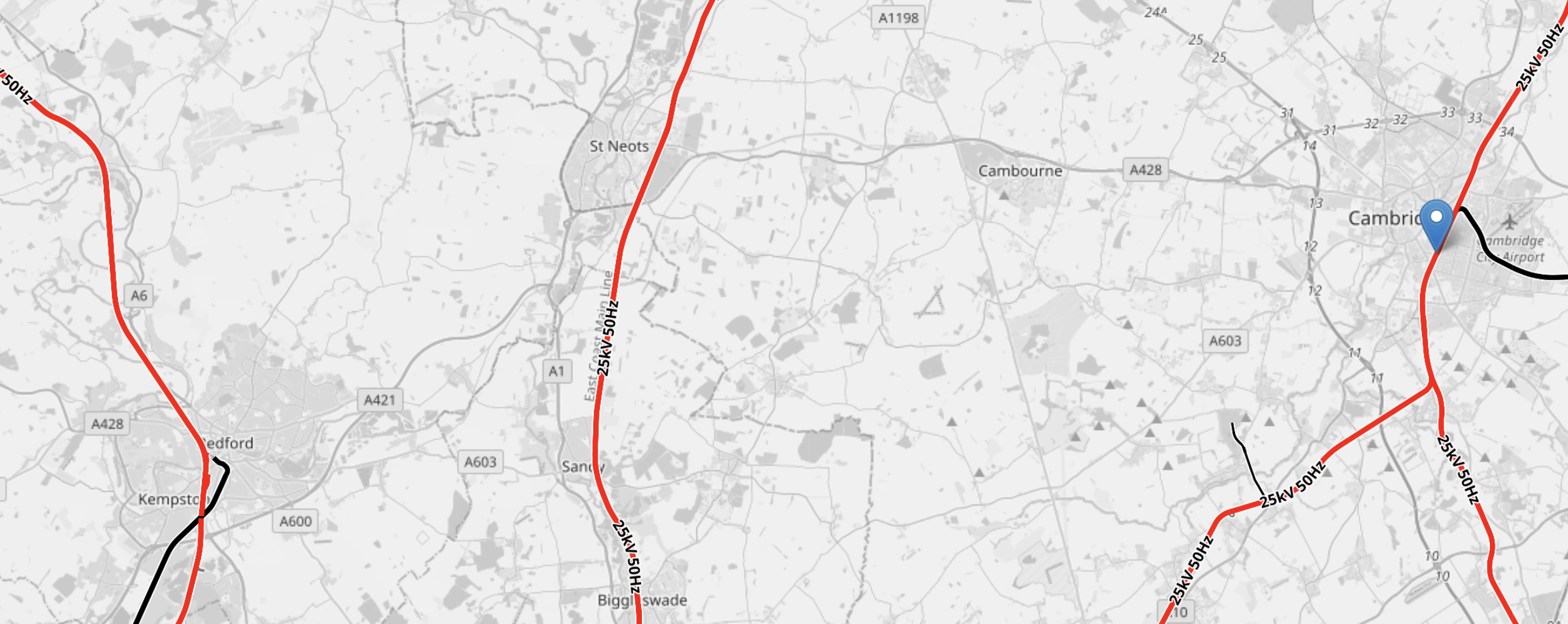
Note.
- Bold red lines are tracks electrified at 25 KVAC.
- Bold black lines are tracks without electrification.
- Bedford is in the South-West corner of the map.
- Cambridge is in the North-East corner of the map.
- The Eastern section of the East West Rail connects the two cities.
- Both maps are to the same scale
The rail lines crossing East West Rail from West to East are as follows.
- Midland Main Line – Electrified
- East Coast Main Line – Electrified
- West Anglia Main Line – Electrified
I suspect all lines will be able to provide a grid connection for East West Rail.
Distances Without Electrification
These sections are not electrified.
- Oxford and Bletchley – 47.2 miles
- Bletchley and Bedford – 16.5 miles
- Bedford and Cambridge – 29.2 miles
- Ely and Norwich – 53.7 miles
- Norwich and Great Yarmouth – 18.4 miles
- Cambridge and Haughley Junction – 41.3 miles
I am assuming that the East West Rail could extend past Cambridge on these two routes.
- Ely, Thetford, Norwich and Great Yarmouth.
- Newmarket, Bury St. Edmunds, Stowmarket, Ipswich, Manningtree and Colchester.
All sections have electrification at both ends, if Didcot Junction and Oxford is electrified, as is expected to happen.
Train Battery Range Needed
The route layout, I have proposed means that if you go for the battery-electric train with the longest battery range you can afford and it can’t handle Ely and Norwich, the existing electrification can be extended to bridge the gap.
Application Of Discontinuous Electrification To Greater Anglia And Chiltern Railways
If discontinuous electrification can be applied to East West Rail, it can surely be applied to Greater Anglia and Chiltern Railways, given the fact that the route networks of all three companies overlap and share tracks.
Greater Anglia already have a fleet of Class 755 trains, which are designed to be converted to battery-electric operation.
With batteries fitted, I believe that these trains could handle most of the current routes they do now.
The other routes would be handled with selective lengths of overhead electrification in terminal stations to charge the trains before return.
Electrification Between Oxford And Bicester Village Stations
Oxford station has two North-facing bay platforms, that are used by Chiltern and other services terminating at the station from the North.
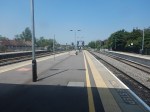
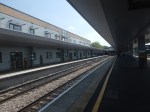
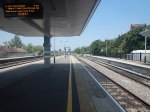
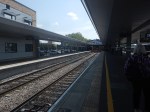
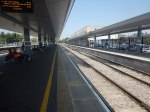



Note.
- Chiltern Railways already run two trains per hour (tph) between these platforms and Marylebone.
- I would assume the platforms will be used by East West Rail services, that terminate at Oxford station.
- If discontinuous electrification is to be used, then these two platforms could be electrified to charge trains before they return.
- East West Rail have not published their proposed services yet, but it could be one tph to both Milton Keynes Central and Bedford stations.
I can see Chiltern buying battery-electric trains to run services between Marylebone and Oxford, and some other routes.
Marylebone and Oxford is 66.7 miles, which is probably two far for even Stadler’s remarkable battery-electric trains, but if say between Oxford and Bicester Village station were to be electrified, would it make it possible to run battery-electric trains between Marylebone and Oxford with charging at both end of the route.
In Chiltern Sets Out New Fleet Ambitions, I talk about Chiltern’s possible new fleet, as proposed by their MD in September 2023.
UK Investment Summit Latest: Starmer Announces £1.1bn Expansion Of Stansted Airport
The title of this post, is the same as that of this article on The Times.
The Times has this sub-heading about Stansted
Analysis: Stansted Deal Prioritises Growth Over Climate
There are four paragraphs of analysis.
Over the weekend, Sir Keir Starmer made clear that his commitments to boost workers’ rights would not get in the way of his desire to bring in cash from the owners of P&O. As ministers now trumpet a deal to upgrade Stansted airport, it seems that growth and jobs also trump concerns about emissions.
Louise Haigh, the transport secretary who prompted the row with DP World by calling P&O a “rogue operator”, praised the Stansted deal as a “clear signal that Britain is open for business”. She argued that Stansted could be upgraded “while also meeting our existing environment obligations”, with the airport promising a new solar farm to generate electricity. But environmentalists will be dismayed by the prospect of more plane journeys and associated emissions.
The deal also raises fresh questions about a third runway at Heathrow after years of dithering under the Conservatives. No 10 has previously said it is “not opposed” to expansion if it can meet tests on emissions, climate change, noise pollution — and growth.
Starmer has said he will not duck decisions because they are “too difficult”. A decision on Heathrow offers a very clear test of that promise.
Is Hydrogen The Reason For The Choice Of Stansted?
I wonder if the choice of Stansted for expansion is down to the likelihood, that East Anglia will be a big centre for the generation of zero-carbon green and pink hydrogen, with gigawatts of offshore wind farms for the green and nuclear at Sizewell for the pink.
Aircraft of the future will surely need hydrogen for flying to their destinations.
Already, the massive construction of Sizewell C is going to be performed using zero-construction methods involving electricity and hydrogen, as far as is possible.
Large construction at Stansted Airport could be done in a similar manner, using perhaps a hydrogen pipeline between Sizewell and Stansted running along the A 14. This would probably be built anyway, so that East Anglia’s large numbers of heavy trucks could be converted to hydrogen.
Already the hydrogen buses to bring workers to the Sizewell C site have been ordered from Wrightbus in Ballymena.
Airbus, are planning to have their hydrogen-powered Boeing 737/A 320-size airliner in service by the mid-2030s. From visualisations released by Airbus, the Zeroe hydrogen Turbofan looks very much like a redesigned version of the current A320 neo, with two hydrogen turbofans (hopefully with RR on the side!) Converting an existing proven airliner, only means that the new parts need to be certified, so this would bring the plane into service quicker.
Airbus’s infographic shows the Zeroe hydrogen Turbofan will seat up to 200 passengers and have a range of 2,000 nautical miles or 3,700 km.

Discover the three zero-emission concept aircraft known as ZEROe in this infographic. These turbofan, turboprop, and blended-wing-body configurations are all hydrogen hybrid aircraft.
A typical A 320 neo will fly 165 passengers up to 3,500 nautical miles or 6.500 km.
A few distances from Stansted include.
- Athens – 2,400 km.
- Berlin – 905 km.
- Cairo – 3514 km.
- Copenhagen 913 km.
- Dublin – 470 km.
- Edinburgh – 509 km.
- Gander 3,800 km
- Geneva – 760 km.
- Glasgow – 540 km.
- Istanbul – 2480 km.
- Madrid – 1300 km.
- Milan – 960 km.
- Munich – 909 km.
- Palma de Mallorca – 1,400 km.
- Reykjavík – 1870 km.
- Rome – 1,442 km.
- Stockholm – 1,400 km.
- Tel-Aviv – 3,564 km.
- Tenerife North – 2944 km.
- Tenerife South – 2999 km.
- Warsaw 1,412 km.
These distances would mean, a lot of current European destinations could be reached, if the plane were filled at both airports, but a surprising number of popular places could be reached by only refuelling at Stansted.
It also appears to me, that with refuelling in Iceland and perhaps a stopover, in that delightful and different country, zero-carbon flights across the Atlantic would be possible.
If a hydrogen-powered aircraft has the 3,700 km. range that Airbus are promising, it will be an aircraft with a lot of possibilities!
Short Flights
- Amsterdam – 541 km.
- Cardiff – 253 km.
- Exeter – 284 km.
- Jersey – 344 km.
- Liverpool – 264 km.
- Newcastle – 373 km.
- Newquay – 399 km.
- Ronaldsway – 408 km.
- Southampton – 151 km.
Some of these flights would be competing with trains.
Flights Around The British Isles
One of the longest flights around the British Isles would be between Stansted and Sumburgh Airport in the Shetland Isles.
But this is only 894 kilometres, so a return trip would be possible.
I also feel that arranging hydrogen refuelling on Shetland will not be a difficult task, as the islands are likely to have copious supplies of green hydrogen.
Flights From Stansted To Europe
Applying a ten percent reserve probably means a safe one-way range of around 1,700 km.
This would mean that.
- Amsterdam – 541 km.
- Berlin – 905 km.
- Copenhagen – 913 km.
- Madrid – 1300 km.
- Milan – 960 km.
- Munich – 909 km.
- Palma de Mallorca – 1,400 km.
- Rome – 1,442 km.
- Stockholm – 1,400 km.
- Warsaw 1,412 km.
Should all be in range. of an out-and-back flight, after fully fuelling the plane at Stansted Airport.
Others like.
- Athens – 2,400 km.
- Bucharest – 2070 km.
- Cairo – 3514 km.
- Istanbul – 2480 km.
- Lisbon – 1630 km.
- Malta – 2107 km.
- Marrakech – 2350. km.
- Sofia – 2010 km.
- Tel-Aviv – 3,564 km.
- Tenerife North – 2944 km.
- Tenerife South – 2999 km.
Could be handled by refuelling at the destination.
Hopping Across The Atlantic
Consider.
- My great aunt Beatrice used to fly the Atlantic in the 1950s, although it was usually a succession of small hops between Heathrow Shannon and Gander Airports. I think she regularly used ships like the Queen Mary and Elizabeth, as she found them less stressful.
- Icelandair offer short stopovers in Reykjavik and I suspect they will offer this with hydrogen-fuelled aircraft.
- British Airways used to offer a London City Airport to New York flight via Shannon using an Airbus A 318.
I would certainly be interested to hop across from Stansted to New York in a hydrogen-powered aircraft, and I suspect others would do it for the environmental brownie points.
Legs could be.
- Stansted and Reykjavík – 1870 km.
- Reykjavík and Gander – 2568 km
- Gander and New York – 1767 km.
A stop could possibly be squeezed in at Boston.
It could be an interesting way to cross the Atlantic.
Hydrogen Production In East Anglia
I said earlier that East Anglia could produce a lot of zero-carbon green and prink hydrogen from wind and nuclear and this would be used for the following.
- Aviation out of Stansted and Southend Airports.
- Shipping out of the Port of Felixstowe, London Gateway and other smaller ports.
- Providing energy for heavy transport in East Anglia.
- Providing energy for Freeport East at Felixstowe and Harwich.
- Refuelling passing shipping.
- Supplying off-grid energy to rural properties and businesses in the East of England, which I wrote about in Developing A Rural Hydrogen Network.
Any spare hydrogen could always be sold to the Germans.
Decarbonisation Of The Railways In East Anglia
Undoubtedly, some hydrogen will be used to decarbonise some parts of East Anglia’s railways.
Many passenger trains are electrified, but some rural and cross-country services still use diesel. However, the Class 745 trains, that were built by Stadler for these services could be converted to hydrogen or battery-electric.
Similarly, locomotives that haul the freight trains out of the ports of East Anglia will be replaced with hydrogen or battery-electric locomotives.
I am fairly certain, that by 2040, all railways in East Anglia will be zero-carbon.
The East-West Rail Link
It is not known yet, whether the current government will continue to build the East West Rail Link, but it could be invaluable in connecting Stansted Airport to the West of England.
Connecting Stansted Airport To The North Of England and Scotland By Rail
If Stansted is developed as a zero-carbon airport, based on the new hydrogen-powered aircraft, travellers between say the North of England and Scotland, will surely want to travel to Stansted in a carbon-free manner.
So would it be sensible to run rail electric services between the North and Stansted?
Conclusion
Stansted could develop into the UK’s zero-carbon airport.
VolkerFitzpatrick To Construct Bletchley High Level Station
The title of this post, is the same as that of this article on Rail Technology Magazine.
Three visualisations and the words confirm a lot of the features of the station.
- Six low-level platforms on the West Coast Main Line and two high-level platforms on the East-West Railway.
- Full step-free access.
- The two new high-level platforms will be numbered 7 and 8 and be connected by an underpass.
- A new entrance on the Eastern side of the station.
From the visualisations, it doesn’t look to be a cheap and nasty design.

