East-West Rail: Aylesbury Spur
This map from East West Rail shows the complete route of the East West Railway between Oxford and Cambridge.

Note the spur to Aylesbury, which is shown dotted, which the legend says means it is a Potential Future Section of the EWR.
The papers in the area have different views.
- This article on Bucks Herald is entitled Aylesbury Spur Excluded From Government’s Latest East West Rail Route Outline.
- This article on Buckinghamshire Live is entitled East West Rail Aylesbury ‘Spur’ Plans Remain On The Table As Route Announced For £5bn Project.
So what do I feel about the Aylesbury Spur?
Train Services
In the Wikipedia entry for the East West Railway, it is stated that there will be an hourly service between Aylesbury and Milton Keynes Central stations, that would call at Aylesbury Vale Parkway, Winslow and Bletchley.
Wikipedia also states that there will be no Marylebone and Milton Keynes or Aylesbury and Manchester Piccadilly services.
I am surprised that a Marylebone and Milton Keynes service is ruled out, for these reasons.
- A Marylebone and Milton Keynes service would give Winslow a direct service to London.
- Aylesbury Vale Parkway has an hourly service from Marylebone, which could be extended to Milton Keynes Central to create the service.
- Aylesbury Vale Parkway and Marylebone have as many as three trains per hour (tph) in the Peak. Does this make timetabling of an hourly Marylebone and Milton Keynes service difficult?
The Wikipedia entry for Aylesbury Vale Parkway, says this about a Marylebone and Aylesbury Vale Parkway service.
It was proposed that, if services are extended to the north, trains between Milton Keynes Central and Marylebone would run via High Wycombe and not Amersham.
This dates from 2012.
But.
- There may be troubles with the timings of a Marylebone and Milton Keynes service between Aylesbury Vale Parkway and Milton Keynes.
- A separate Aylesbury and Milton Keynes service would give a half-hourly service between Aylesbury Vale Parkway and Aylesbury, whereas an extended service only gives the current hourly service.
This Google Map shows Aylesbury Vale Parkway station.

Note.
- The station only has a single bay platform.
- It appears that there is a step-free walk between the car park and the platform.
- There is no bridge or need for one.
- There is a single through line at the station on the opposite side to the car park, which is mainly used by trains going to the landfill at Calvert.
It looks from this map, that if the single platform were widened to an island platform, that both terminating and through trains could call in the station.
Perhaps though the modifications at Aylesbury Vale Parkway are too complicated or expensive?
The ruling out of the Aylesbury and Manchester Piccadilly service is probably easier to understand.
Consider.
- Milton Keynes Central will have a two tph service to Oxford and was planned to have an hourly service from Aylesbury.
- Milton Keynes Central has an hourly Avanti West Coast service to Manchester Piccadilly via Rugby, Stoke-on-Trent, Macclesfield and Stockport.
- Milton Keynes Central has an hourly Avanti West Coast service to Liverpool Lime Street via Crewe and Runcorn.
- Milton Keynes Central has a two-hourly Avanti West Coast service to Edinburgh Waverley via Rugby, Coventry, Birmingham International, Birmingham New Street, Sandwell and Dudley, Wolverhampton, Stafford, Crewe, Warrington Bank Quay, Wigan North Western, Preston, Lancaster, Oxenholme Lake District, Penrith, Carlisle, Haymarket
- Milton Keynes Central has a two-hourly Avanti West Coast service to Preston via Rugby, Coventry, Birmingham International, Birmingham New Street, Sandwell and Dudley, Wolverhampton, Stafford, Crewe, Warrington Bank Quay and Wigan North Western. Five trains per day (tpd) are extended to Glasgow and two tpd are extended to Blackpool North.
Note.
- A train running between Aylesbury and Manchester Piccadilly would probably need to be a 125 mph electric train, which would mean electrifying the East West Railway.
- A change at Milton Keynes Central would give access to trains for nearly all North-West England and Southern Scotland.
But because of all the connectivity at Milton Keynes Central, it surely puts pressure on providing an Aylesbury and Milton Keynes Central service.
The Track
It is possible to follow the track North from Aylesbury Vale Parkway until it joins the East West Railway to the West of Winsford station.
This Google Map shows the junction, just North of the hamlet of Calvert..
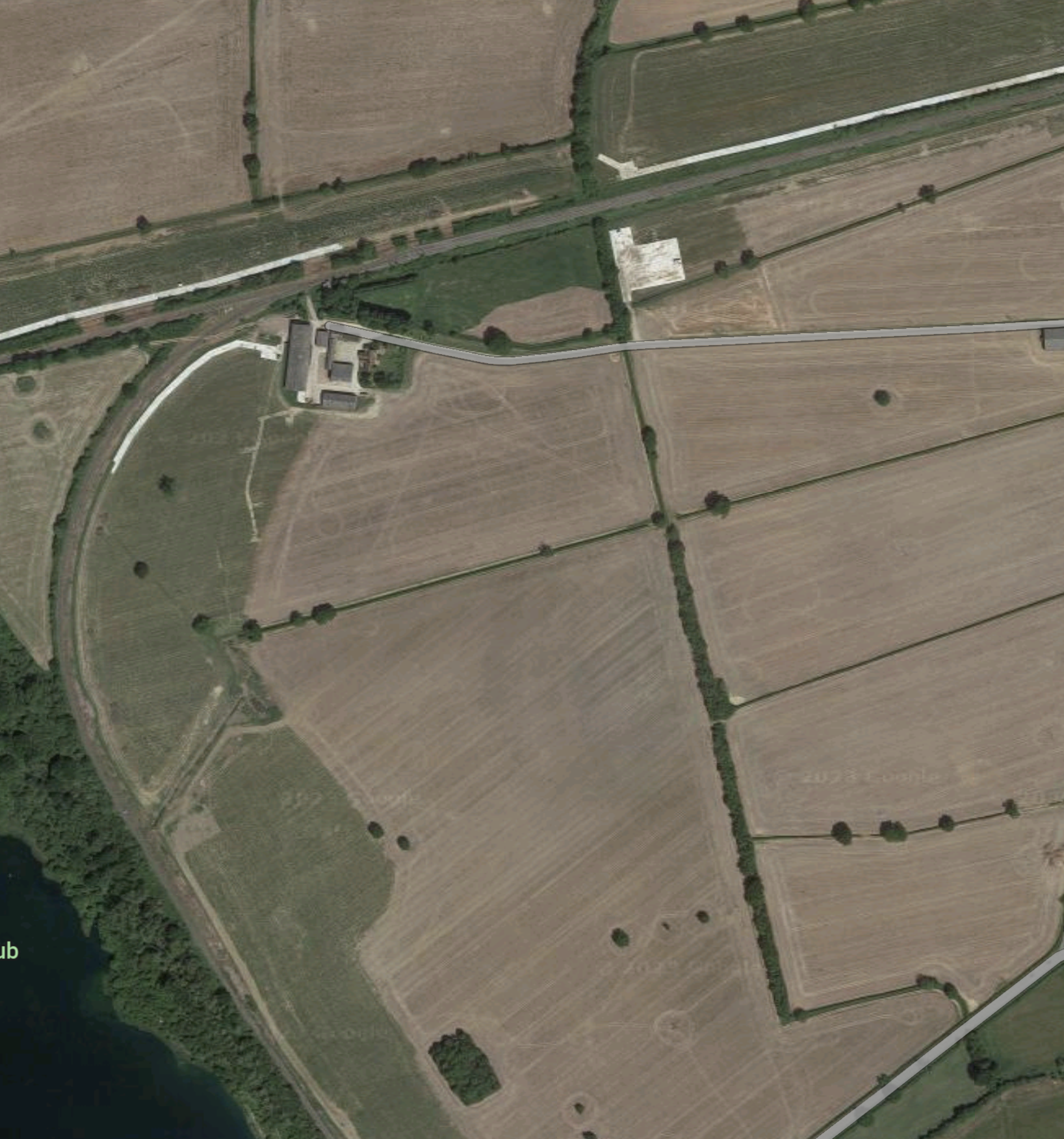
Note.
- The East West Railway going across the top of the map.
- The single track railway to Aylesbury Vale Parkway coming North and then turning East to join the East West Railway.
- The railway from Aylesbury Vale Parkway is still used by trains taking landfill.
The Wikipedia entry for Calvert, says this about the landfill site.
Another of the clay pits is now a landfill site. Waste is collected from Bristol, Bath and London each day and transported using rail via Aylesbury to Calvert. The site has a power station capable of producing 14 MWe of electricity from landfill gas, coming from the decomposition of organic matter to convert it into renewable electricity MW.
Looking at the map and the traffic on Real Time Trains, it would appear that there would be enough capacity for both the freight and an hourly passenger train between Aylesbury and Milton Keynes.
There is also the slight problem, that High Speed Two will be going through the area, as this map shows.
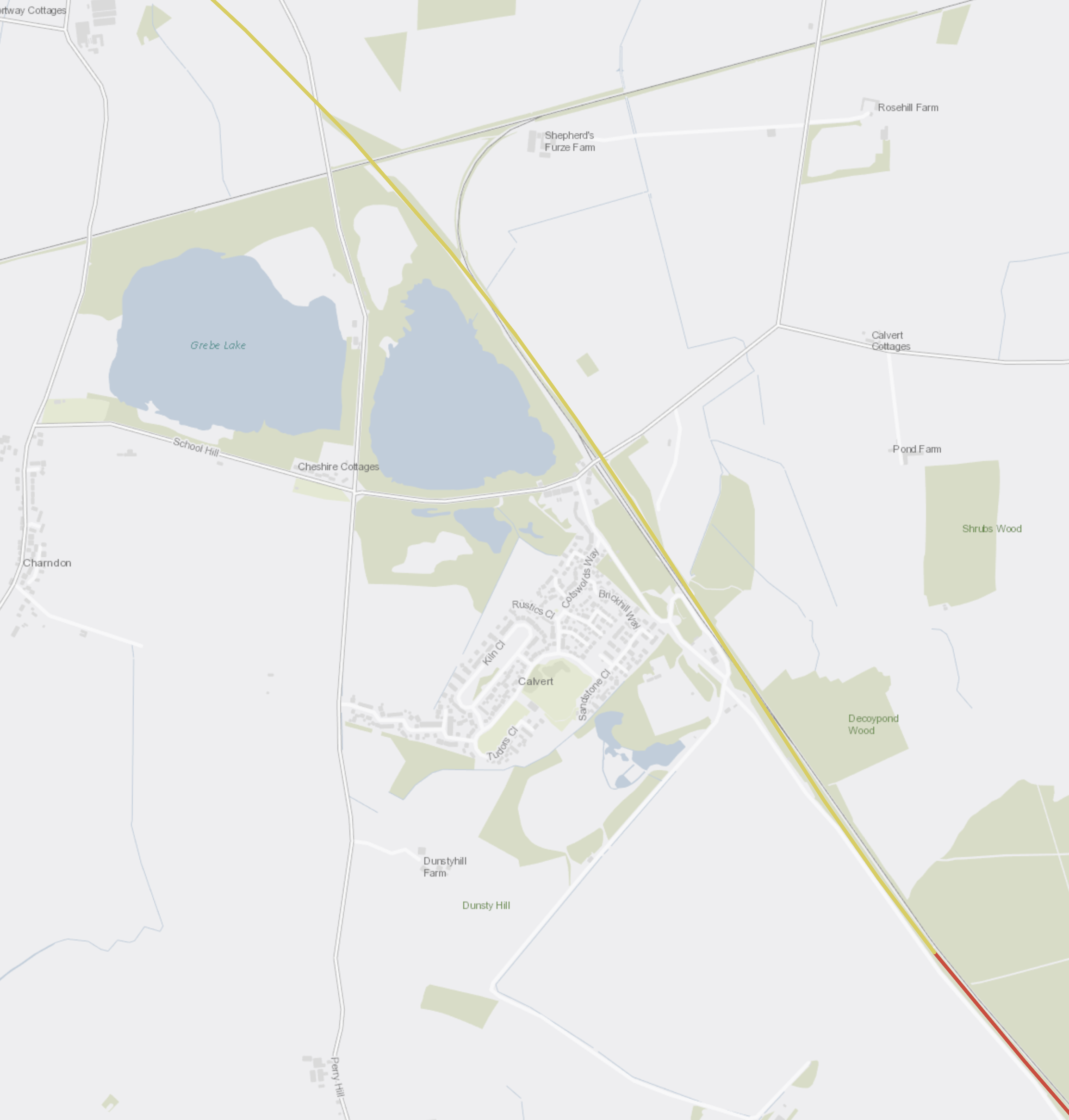
Note.
- High Speed Two is shown in yellow (cutting) and embankment (red).
- High Speed Two appears to run either on the same route or alongside the route to Aylesbury.
- The East West Railway goes across the top of thye map.
- The chord that connects the Aylesbury Spur to the East West Railway can clearly be seen.
- The Aylesbury Spur will run along the same route as High Speed Two.
- Aylesbury Vale Parkway will be just off the South-East corner of the map.
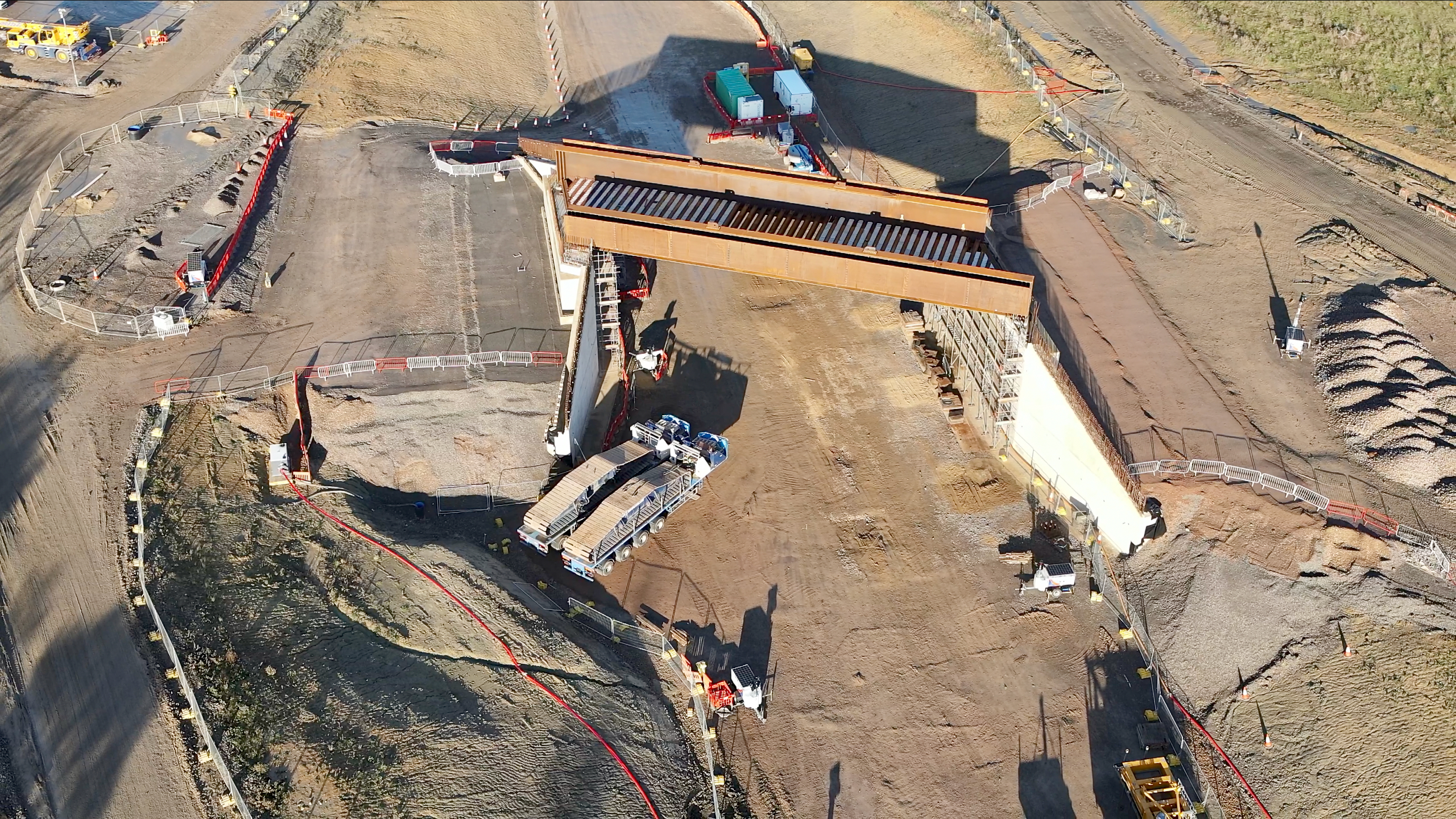
This page on the High Speed Two web site is entitled Boost for Oxford-Cambridge Connections As HS2 Builds Key East West Rail Bridge, describes the installation of a bridge to take the East West Railway goes over High Speed Two.
This picture is from High Speed Two.
As the landfill at Calvert will still need to be filled, I suspect that High Speed Two will leave the route between Aylesbury Vale Parkway and the East West Railway as a fully-serviceable railway, when they tidy up and leave this section of their route.
It looks to me, that once these tasks are complete.
- High Speed Two relay all the tracks between Aylesbury Vale Parkway and the East West Railway.
- The junction between the Aylesbury Spur and the East West Railway is completed.
- Aylesbury Vale Parkway station is updated.
The Aylesbury Spur as needed by the East West Railway to run passenger services between Aylesbury and Milton Keynes Central could be complete.
And all because of High Speed Two and a landfill site.
Conclusion
I am drawn to the conclusion, that the Aylesbury Spur would not be a difficult railway to build and because it links to the important interchange station at Milton Keynes Central, it could be delivered soon after High Speed Two are finished in the area.
It also appears that Avanti West Coast have already aligned their services with the East West Railway.
East-West Rail: Through Bedford
This Google Map shows the route of East West Rail through Bedford.
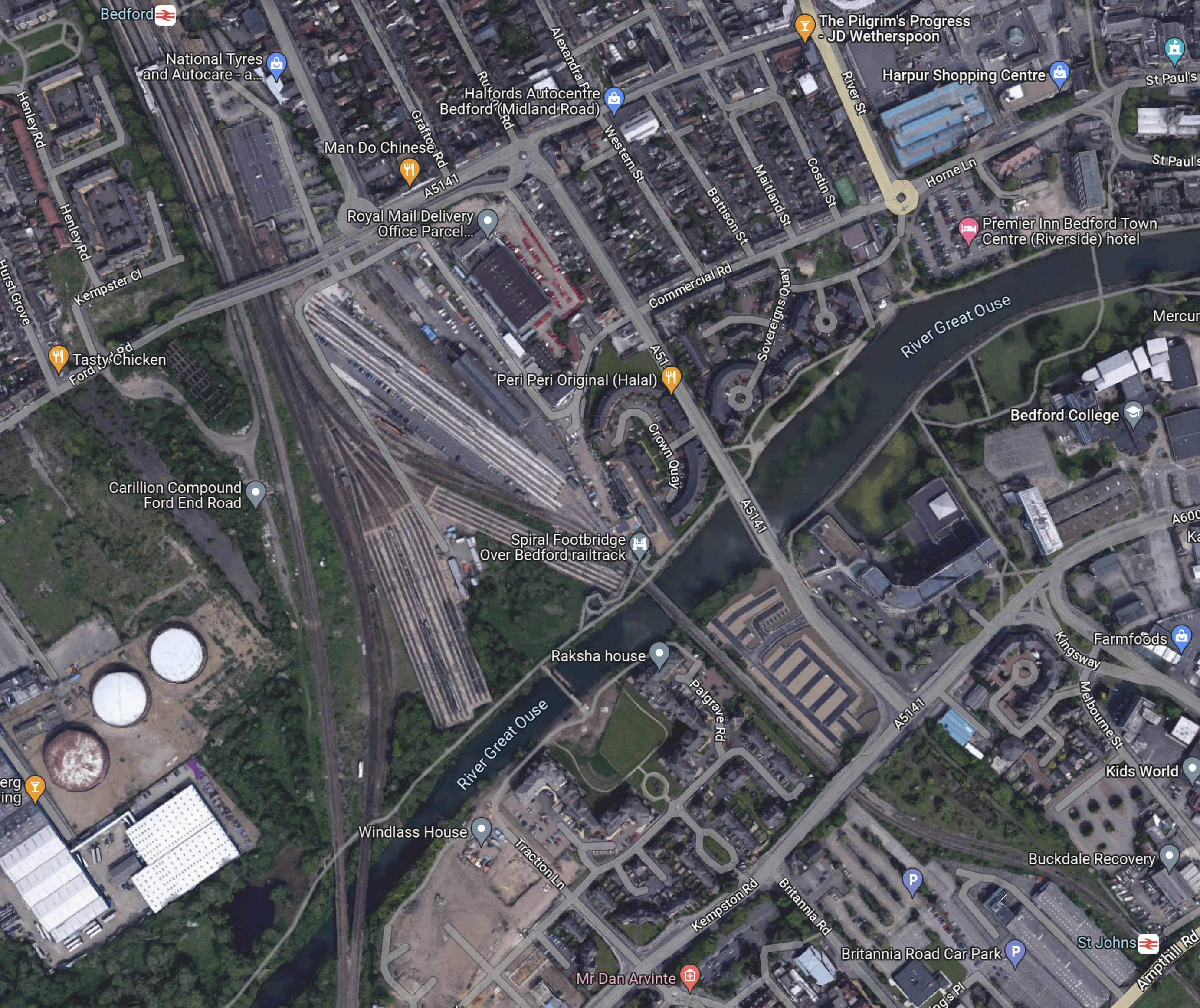
Note.
- Bedford St. Johns station in the South-East corner of the map.
- Bedford station is in the North-West corner of the map.
- Tracks run between the two stations to allow Marston Vale Line trains to terminate in Platform 1A at Bedford station.
- There are a lot of sidings for Thameslink trains South of Bedford station.
- The Great Ouse divides the town into two.
I’ll now explore further.
Bedford St. Johns Station
This Google Map shows Bedford St. Johns station.
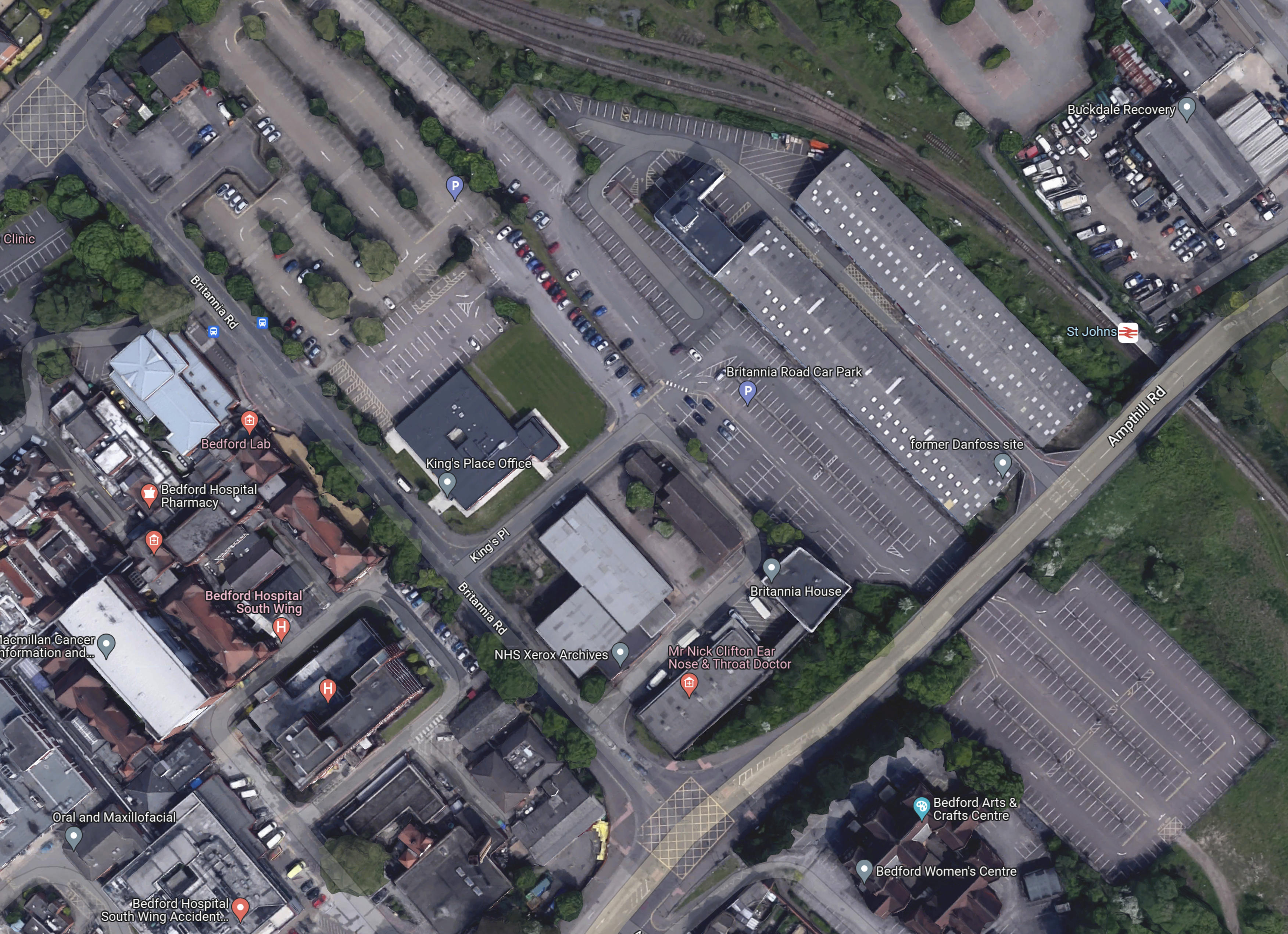
Note.
- Bedford St. Johns station towards the North-East corner of the map.
- The single-track Marston Vale Line passing through the station.
- The track becomes double track to the North of the station.
- Although not shown on the map, the Marston Vale Line becomes double track to the South of the station.
- If it was all double-track, this would surely make operation of the Marston Vale Line easier for two trains per hour (tph).
- In the South-West of the map is Bedford hospital.
The Wikipedia entry for Bedford St. Johns station, says this about the future of the station.
In March 2021, plans were unveiled which, if taken forward, would see Bedford St Johns railway station relocated as the track through the station will be realigned. In May 2023, EWRL announced that it proposes to relocate the station further north (to Kempston Road) to better serve Bedford Hospital.
That sounds sensible, as it would allow either a full two-platform step-free station or a smaller single-sided one-platform station to be built.
Over The Great Ouse
This Google Map shows the railway crossing the Great Ouse.
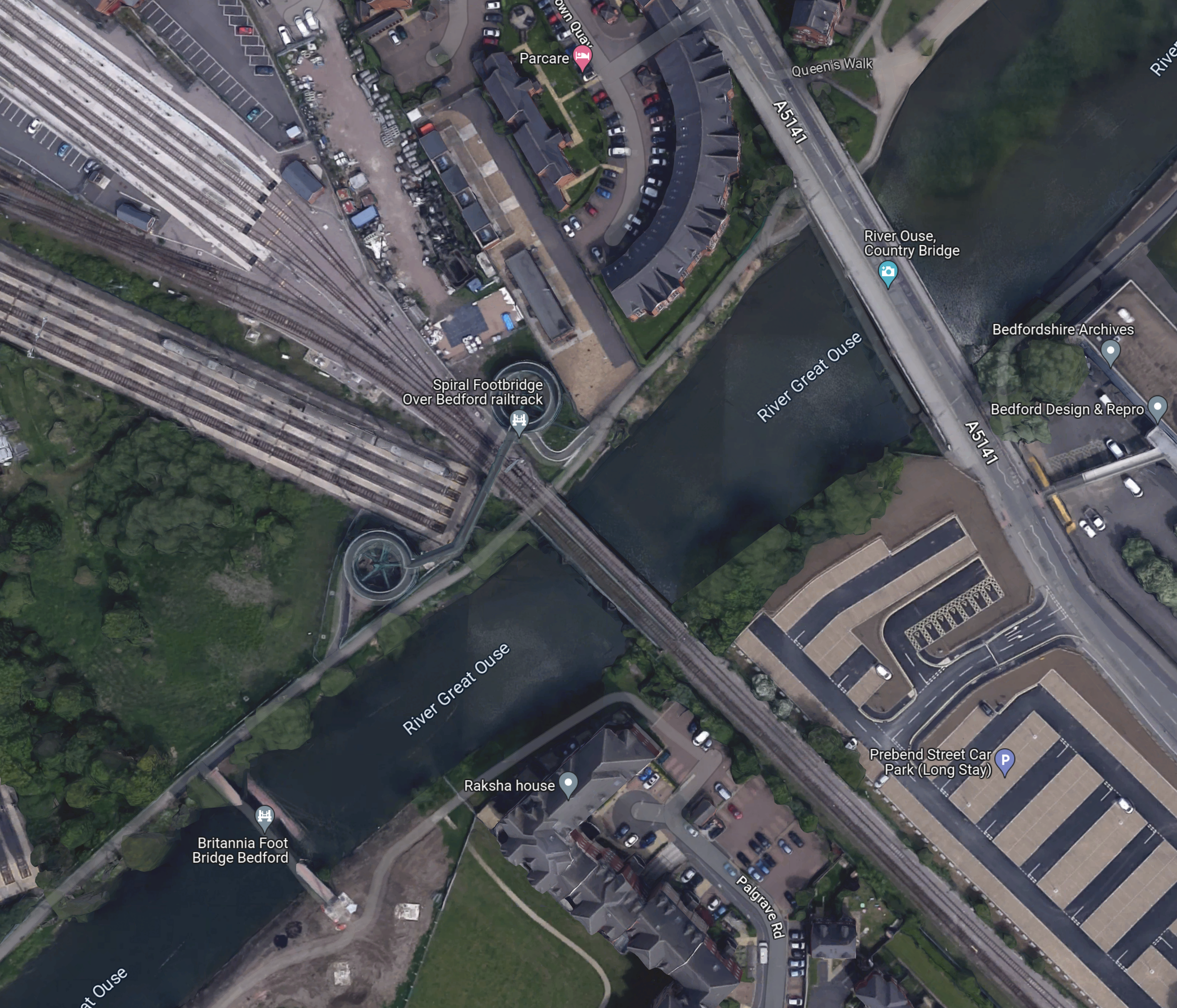
Note.
- The Marston Vale Line runs to the South -West of the long-stay car park in the South-East corner of the map.
- The Western bridge takes the line over the Great Ouse.
- It then runs between the sidings to Bedford station.
This picture, which was taken from the Spiral Footbridge on the North bank of the Ouse, shows the double-track rail bridge.
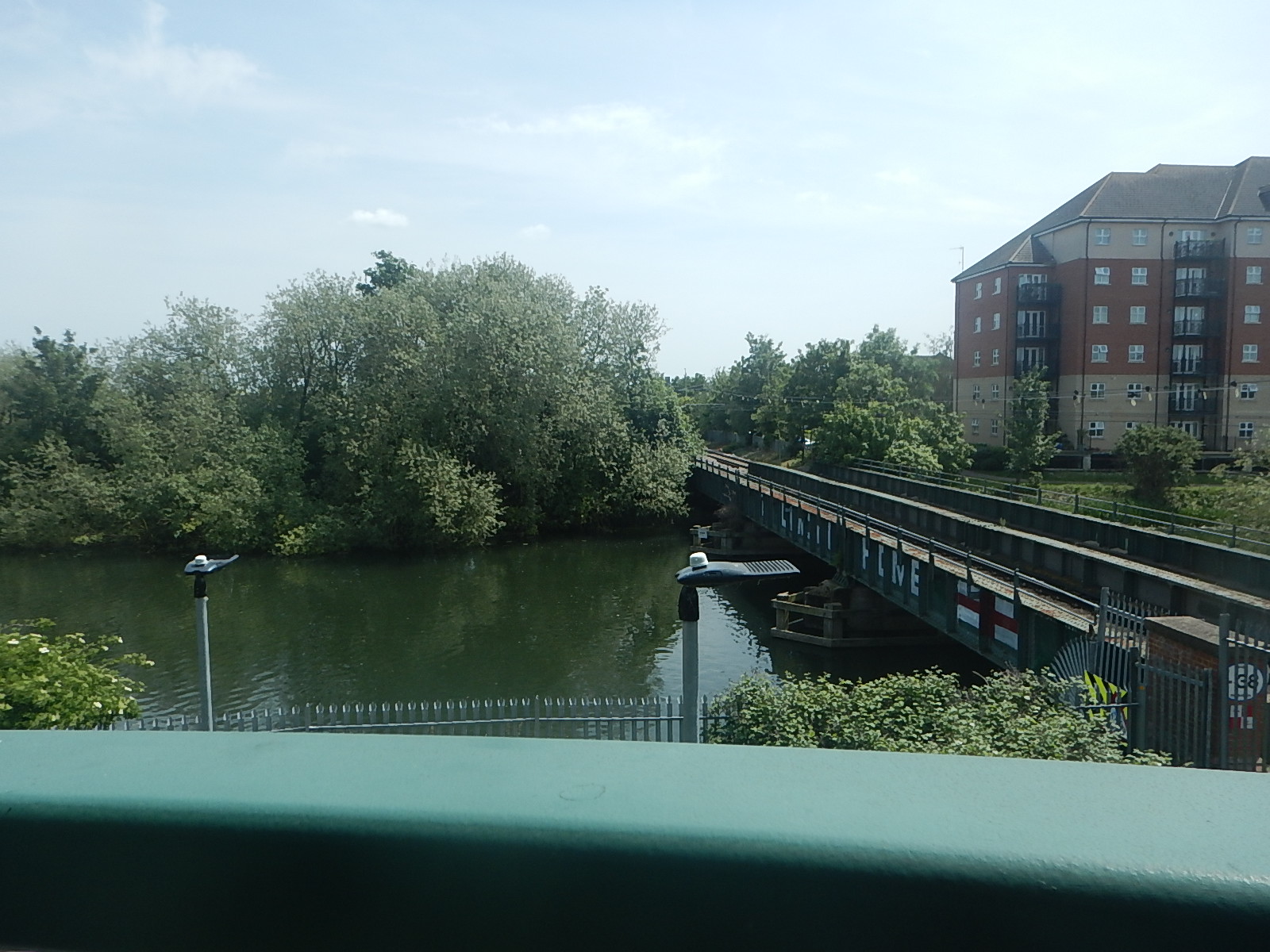
There are two tracks all the way from where the single-track divides to the North of Bedford St. Johns station.
The Southern Approaches To Bedford Station
This Google Map shows the Southern approaches to Bedford station.
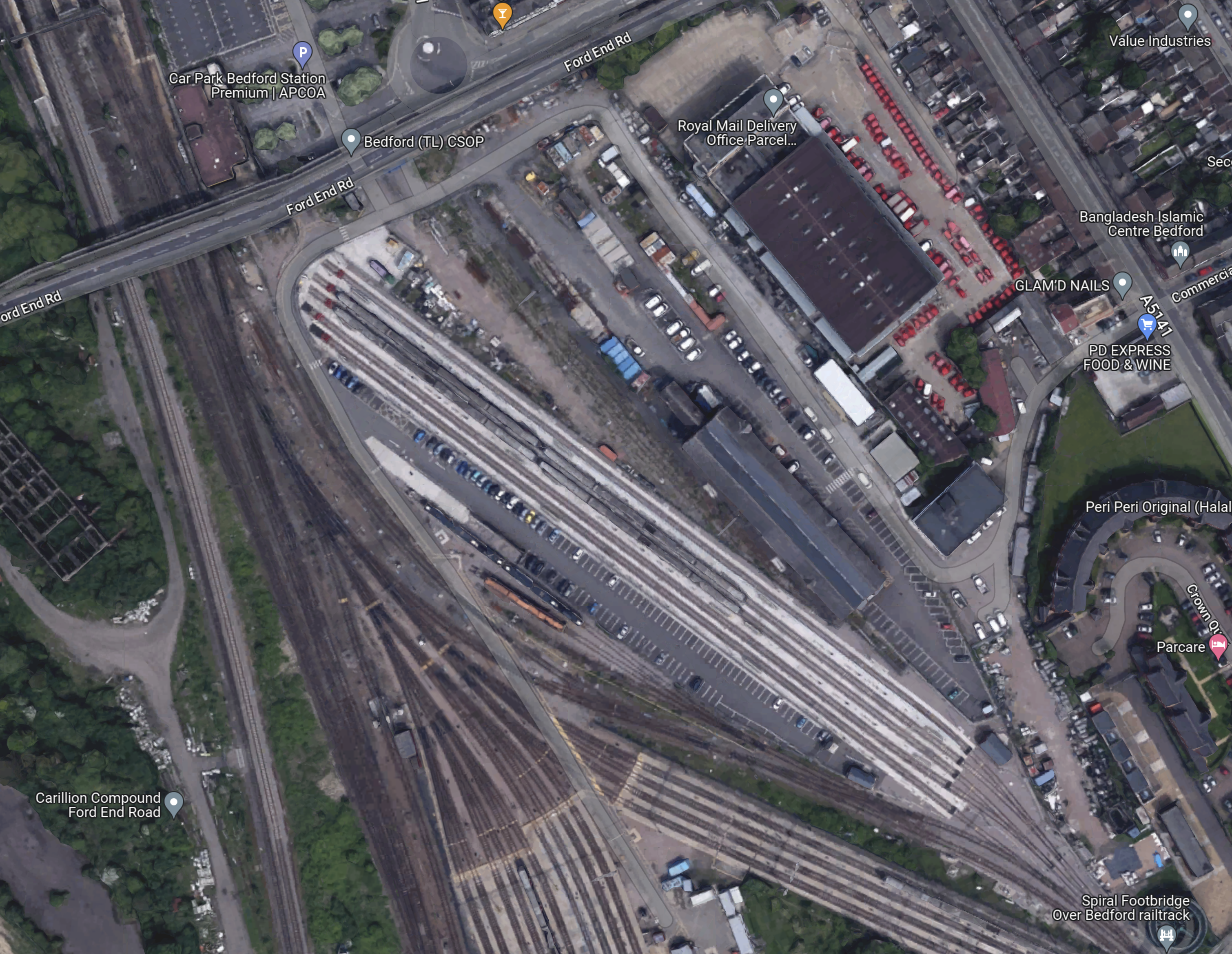
I have looked at the track layout and I’m fairly sure of the following.
- Current Marston Vale trains can go directly into Platform 1A without crossing any other tracks.
- Marston Vale trains can use Platform 1 if required.
- Thameslink trains can terminate in Platforms 1, 2 or 3.
- Southbound Corby trains can call in Platforms 1, 2 or 3.
- If they stop in Platforms 1 or 2, they appear to cross over South of Bedford station to the Midland Main Line.
If 2 tph were running on the Marston Vale Line; one fast and one stopping, a single platform should be able to handle the trains, if it was long enough.
Bedford Station
These pictures show Bedford station.

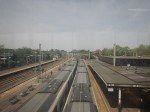
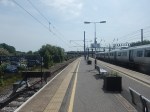
Note.
- The first two pictures were taken from the footbridge.
- The fast line between Platforms 3 and 4, is clearly visible in the second picture.
- Platform 1A is electrified.
This Google Map shows Platform 1A, where Marston Valley Line trains currently terminate.

Note.
- Platforms from the right are 1A and 1, 2 and 3 on the islands, with 4 to the left.
- Judging it against the three cars of the train in Platform 2, I reckon that Platform 1A could be updated to hold a six-car train.
Would a six-car train be long enough?
Initial East West Rail Services To Bedford
According to the Wikipedia entry for the East West Railway, these services will run on the railway between Oxford and Bedford.
- East West Railway – Oxford and Milton Keynes Central via Oxford Parkway, Bicester Village, Winslow and Bletchley – 2 tph
- East West Railway – Oxford and Bedford via Oxford Parkway, Bicester Village, Winslow, Bletchley, Woburn Sands and Ridgmont – 1 tph
- East West Railway – Aylesbury and Milton Keynes Central via Aylesbury Vale Parkway, Winslow and Bletchley – 1 tph
- West Midlands Trains – Bletchley and Bedford via Fenny Stratford, Bow Brickhill, Woburn Sands, Aspley Guise, Ridgmont, Lidlington, Millbrook, Stewartby, Kempston Hardwick and Bedford St Johns – 1 tph
Note.
- tph is trains per hour.
- There a fast train and a stopping train between Bletchley and Bedford.
- It appears that both these trains could terminate in Platform 1A at Bedford station.
I believe this will be possible with the current track layout, as the Marston Vale Line is almost all double-track.
East West Rail Services To Cambridge And Beyond
In this document on the East-West Rail Consortium web site, these services are suggested, for when the East West Rail is complete.
- An hourly train via Norwich terminating at Great Yarmouth.
- An hourly train via Ipswich terminating at Manningtree.
Would this mean three of four passenger tph on the Marston Vale Line?
If Cambridge and Oxford services, were running under digital signalling, I suspect trains could cross between the Thameslink and Marston Vale Lines, so that they could call in the through platforms at Bedford station.
How Would Trains Connect To The East At Bedford Station?
This Google Map shows the Midland Main Line through Bedform.
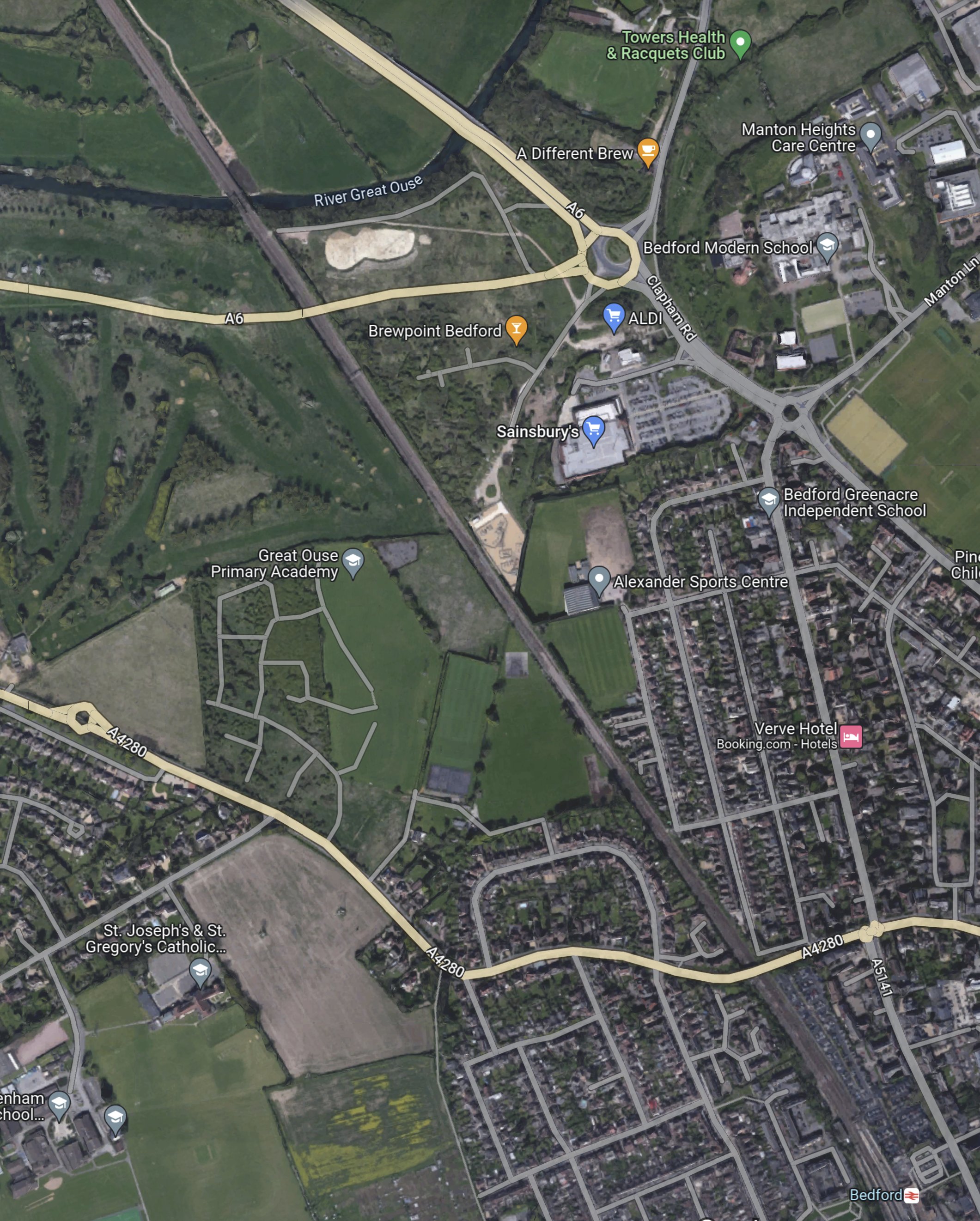
Note.
- Bedford station in the South-East corner of the map.
- The Midland Main Line runs diagonally from Bedford station across the map.
- The A6 seems to take a curious route in the North-West corner of the map, where it connects to a roundabout with an Aldi and a Sainsbury’s
This Google Map shows the countryside to the North-East of the roundabout.
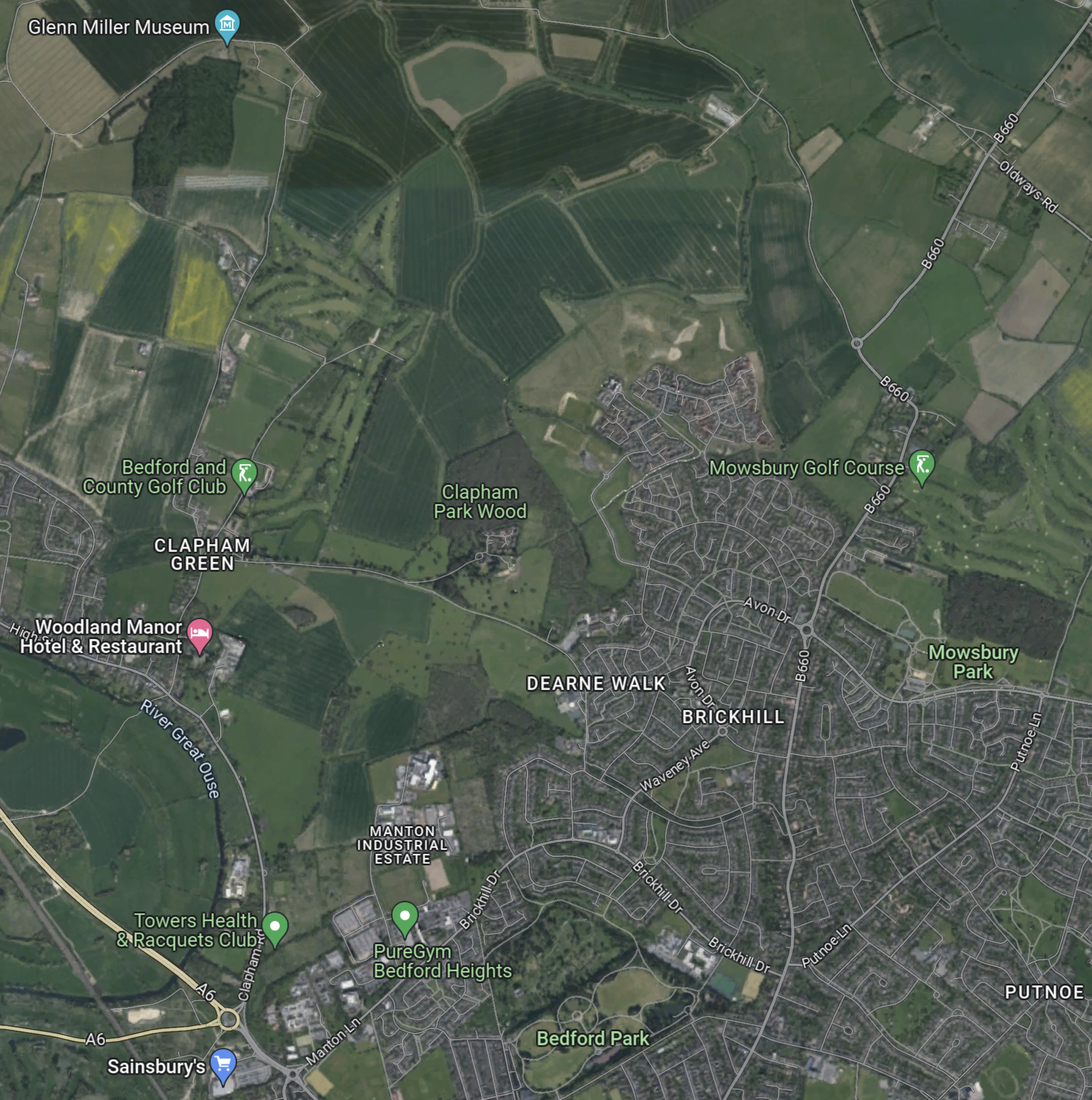
Judging by the colours of the fields to the North-East of the roundabout, I suspect, that a high proportion of the land is in one ownership.
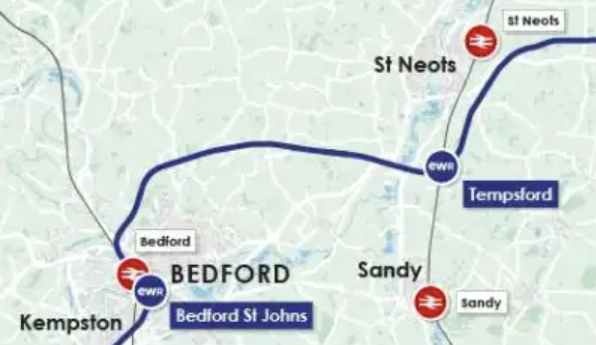
This map clipped from the East West Rail route map, shows the route between Bedford and the East Coast Main Line between St. Neots and Sandy stations.
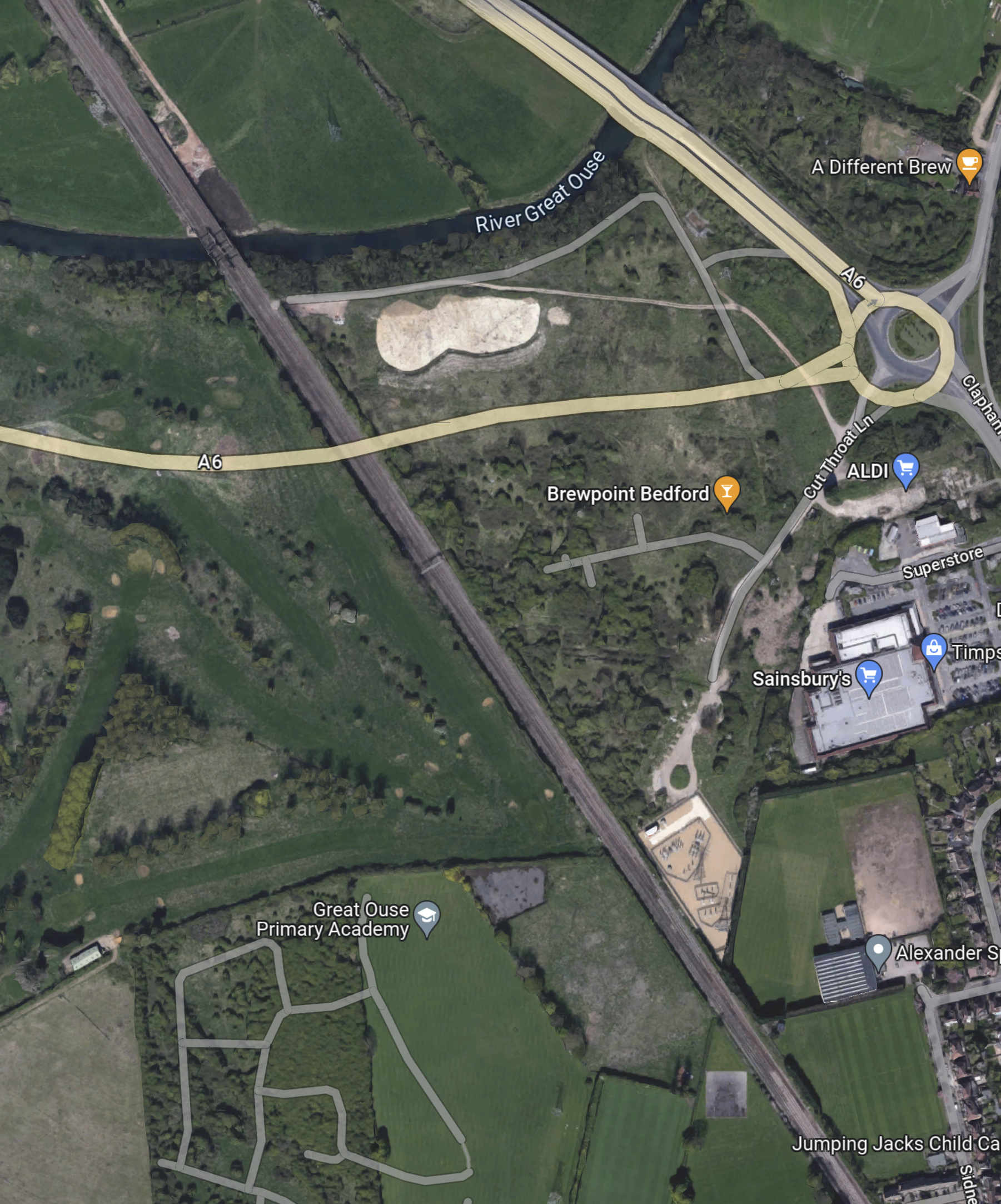
This Google Map shows the area of the junction, that would connect the East West Rail tracks to the slow lines through Bedford station.
Note.
- The four-track Midland Main Line runs diagonally across the map.
- The beige-coloured diamond-shaped area by the railway is an electrical substation.
- There doesn’t appear to be many properties that would need to be demolished.
- There would need to be a viaduct over the A6.
- Once over the A6, the land seems to be in one ownership, which should ease building the railway across.
I feel it would be feasible, possibly with the use of a dive-under or flyover to connect the East West Rail tracks to the slow lines through Bedford station.
East-West Rail: Oxford And Bedford
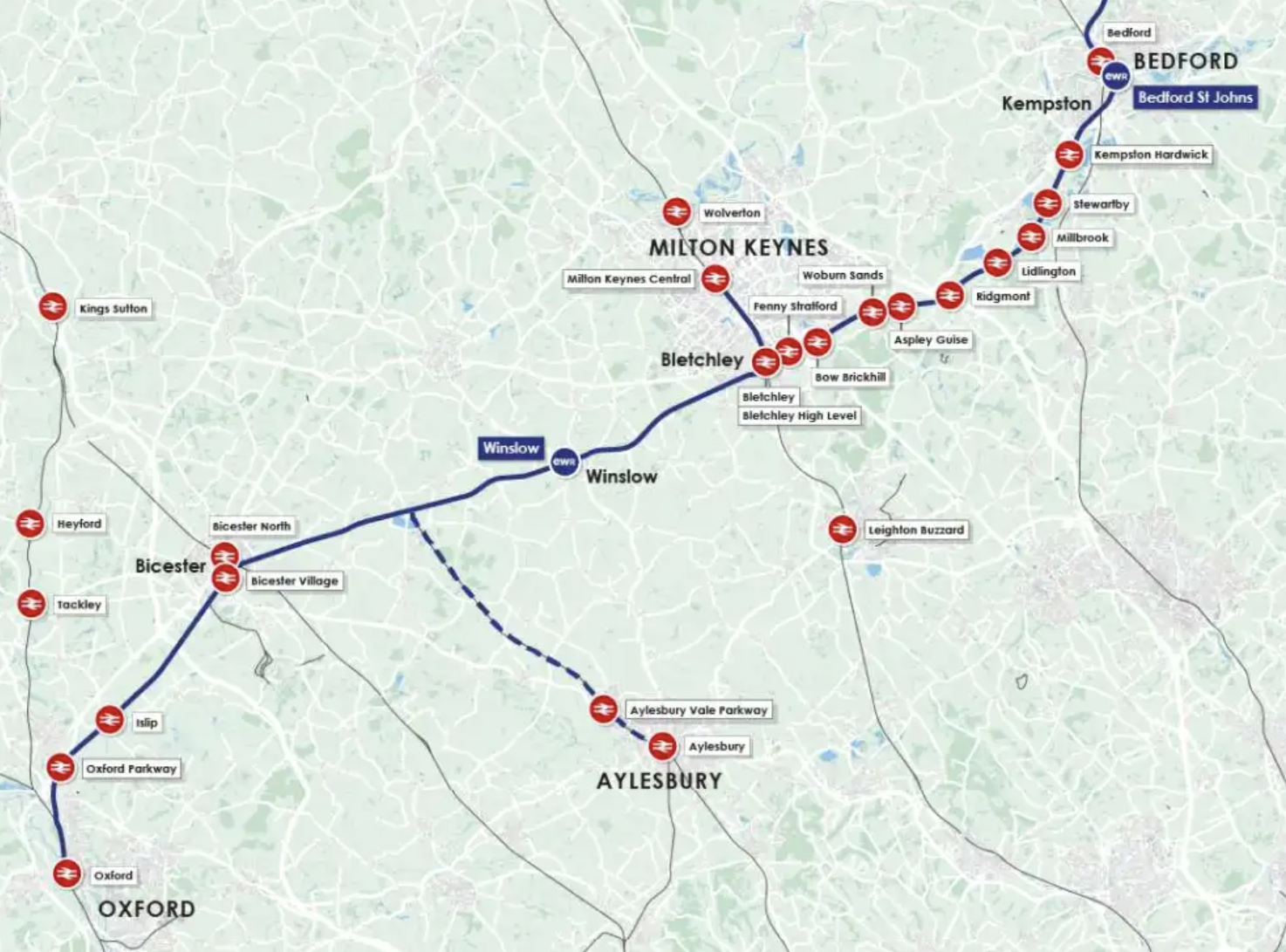
This map from East West Rail shows the route between Oxford and Bedford.
Note.
- The proposed route is shown in blue.
- The possible Southern extension to Aylesbury is shown dotted.
- The route between Bicester and Bletchley is rebuilt track along a former alignment.
- The route between Bletchley and Bedford will surely be rebuilt track along the Marston Vale Line.
- The Bicester and Bedford sections of track will be joined by the Bletchley Flyover, which is well on the way to completion.
This Google Map shows Bletchley station.

Note.
- Bletchley Station has six platforms.
- The double-track Bletchley Flyover runs North-South at the Eastern side of the station.
- There are the beginnings of two platforms on the flyover, which will increase the number of platforms at Bletchley station to eight.
- There is a junction at the Northern end of the flyover, where one pair of tracks go North to Milton Keynes Central and the other takes the Marston Vale Line to Bedford.
The track-layout at Bletchley station allows trains between Oxford and Bedford and Oxford and Milton Keynes Central to call at Bletchley station.
Proposed Passenger Trains Between Oxford and Bedford
According to the Wikipedia entry for the East West Railway, these service will run on the railway between Oxford and Bedford.
- East West Railway – Oxford and Milton Keynes Central via Oxford Parkway, Bicester Village, Winslow and Bletchley – 2 tph
- East West Railway – Oxford and Bedford via Oxford Parkway, Bicester Village, Winslow, Bletchley, Woburn Sands and Ridgmont – 1 tph
- East West Railway – Aylesbury and Milton Keynes Central via Aylesbury Vale Parkway, Winslow and Bletchley – 1 tph
- West Midlands Trains – Bletchley and Bedford via Fenny Stratford, Bow Brickhill, Woburn Sands, Aspley Guise, Ridgmont, Lidlington, Millbrook, Stewartby, Kempston Hardwick and Bedford St Johns – 1 tph
Note.
- tph is trains per hour.
- All larger stations get at least a half-hourly service.
- There are three tph between Oxford and Bletchley via Oxford Parkway, Bicester Village and Winslow.
- There a fast train and a stopping train between Bletchley and Bedford.
- It is still undecided, whether provision will be made for the Aylesbury service.
I think that this service pattern is achievable, with or without the Aylesbury service.
East-West Rail: Route For £5bn Bedford To Cambridge Link Announced
The title of this post, is the same as that of this article on the BBC.
This is the sub-heading.
The preferred route of part of £5bn railway line connecting Oxford and Cambridge has been announced.
The first two paragraphs summarise the route.
The East-West Rail (EWR) project confirmed details of the section between Bedford and Cambridge.
It will include new stations at Tempsford and Cambourne, and enter Cambridge via the south of the city.
This map from East West Rail shows the route.
Note.
- The proposed route is shown in blue.
- The possible Southern extension to Aylesbury is shown dotted.
- The Wikipedia entry for East West Rail has conflicting information, as to when trains can run between Bicester and Bedford.
These related posts describe and discuss various parts and issues of the route.
East-West Rail: Along The Marston Vale Line
East-West Rail: Aylesbury Spur
East-West Rail: Electrification
East-West Rail: Oxford And Bedford
East-West Rail: Through Bedford
East-West Rail: Bedford’s Mayoral Candidates Split On Rail Project
The title of this post, is the same as that of this article on the BBC.
This is the first sentence.
Part of the route of the controversial East-West Rail project will not be decided before we know the winner of Bedford’s mayoral elections.
Unfortunately, the four candidates for Mayor all seem to have different ideas for East-West Railway through the town.
I have a few thoughts and observations.
Thameslink
Thameslink has the following connections to the East West Railway.
- Four tph at Bedford.
- Three tph at Cambridge.
Note.
- tph is trains per hour.
- All Bedford trains terminate at Bedford.
- The half-hourly Luton Airport Express between London St. Pancras and Corby stops at Luton Airport Parkway, Luton, Bedford, Wellingborough and Kettering.
- Cambridge trains may extend to Cambridge North station.
- Cambridge has additional through services between London King’s Cross and Ely and/or King’s Lynn.
Both Bedford and Cambridge will be busy stations.
Extra Tracks At Bedford
Bedford station has four tracks; two which are generally used by Thameslink services and two main lines used by through trains.
- The fast lines must accommodate the following trains.
- East Midlands Railway – 6 tph in both directions. Two tph stop in Bedford station.
- Freight Trains – 2 tph in both directions.
- East West Railway – 2 tph in both directions. All trains will stop in Bedford station.
It strikes me, that the station may need at least one and possibly two extra tracks.
If there are extra tracks, there will need to be some demolition of houses.
Freight Trains
In Roaming Around East Anglia – Newmarket Station, I wrote this about the plans of the East West Rail Consortium in the area.
In this document on the East-West Rail Consortium web site, this is said.
Note that doubling of Warren Hill Tunnel at Newmarket and
redoubling between Coldham Lane Junction and Chippenham Junction is included
in the infrastructure requirements. It is assumed that most freight would operate
via Newmarket, with a new north chord at Coldham Lane Junction, rather than
pursuing further doubling of the route via Soham.
So would it be possible to create a double-track railway through Newmarket station?
In the related post, I came to this conclusion.
Newmarket can benefit from East West Rail, but the two parties must agree objectives that don’t cause problems for the other.
But I do think, that Newmarket will not welcome the building of a double-track railway through the town.
I do wonder, if the East West Rail Consortium plan to run freight trains between Felixstowe and South Wales and the West of England through Bedford and Oxford.
Four freight tph, through Bedford would certainly need extra tracks and the demolition of houses in the centre of Bedford.
Electrification
Two of the candidates for Bedford’s mayor, think that the line needs to be electrified.
As the route is full or partially-electrified at Didcot, Bletchley, Bedford and Cambridge, I believe that battery-electric trains could handle the route.
But then there are no plans to purchase any passenger trains of this type.
Freight trains would still need to be diesel hauled, unless more progress is made fairly quickly in the development of hydrogen-powered freight locomotives.
The Cambridge Effect
Cambridge is one of the most important cities in the world, because of its strength in innovation in high technology industries.
But Cambridge is bursting at the seams and needs more space for laboratories, advanced manufacturing and housing.
A fully-developed double-track and electrified East West Railway would open up Bletchley, Milton Keynes, Bedford, Newmarket, Bury St. Edmunds and Ipswich to act as satellites to help Cambridge build a shared and successful future.
The Felixstowe Effect
If Cambridge will stimulate the growth of passenger traffic, then Felixstowe will promote the growth of East-West freight traffic.
Conclusion
It may not be initially built that way, but probably by 2040, the East West Railway will be a fully-electrified double-track railway between Didcot and Felixstowe.
Extra tracks will also be needed through Bedford. This will mean demolition of houses.
We’re Increasing Capacity At Oxford Station To Accommodate Additional Services From 2024
The title of this post, is the same as that of this news item on the Network Rail web site.
This is the sub-heading.
The rail infrastructure in the Oxford Station area is close to full capacity and currently wouldn’t support the start of East West Rail services from the end of 2024. Through Oxfordshire Connect, the station is being expanded and the wider area upgraded, bringing a range of benefits to passengers and residents alike.
I have a few thoughts,
East West Rail Services
East West Rail is aiming to get these services up and running. for Phase 2 of the project.
- Oxford and Milton Keynes Central via Oxford Parkway, Bicester Village, Winslow and Bletchley – two trains per hour (tph)
- Oxford and Bedford via Oxford Parkway, Bicester Village, Winslow, Bletchley, Woburn Sands and Ridgmont – one tph
- Aylesbury and Milton Keynes Central via Aylesbury Vale Parkway, Winslow and Bletchley – one tph.
I suspect not all services will be delivered by the end of 2024. But extra platforms may be needed at Oxford station to accommodate services on East West Rail.
Direct Services Between Oxford And London
There are two direct services in each hour, between Oxford and London Paddington.
- One service terminates at Oxford and the other service terminates at either Great Malvern, Hereford or Worcester.
- Both services stop at Slough and Reading.
- Both services are run by Class 800 electro-diesel trains.
Distances without electrification are as follows.
- Hereford – 96.9 miles
- Great Malvern – 76.1 miles
- Worcester Shrub Hill – 67.6 miles
- Oxford – 10.5 miles
Hitachi are developing a series of battery-electric Intercity trains, which I described in Hitachi Rail And Angel Trains To Create Intercity Battery Hybrid Train On TransPennine Express.
This Hitachi infographic shows the Hitachi Intercity Battery Hybrid Train.
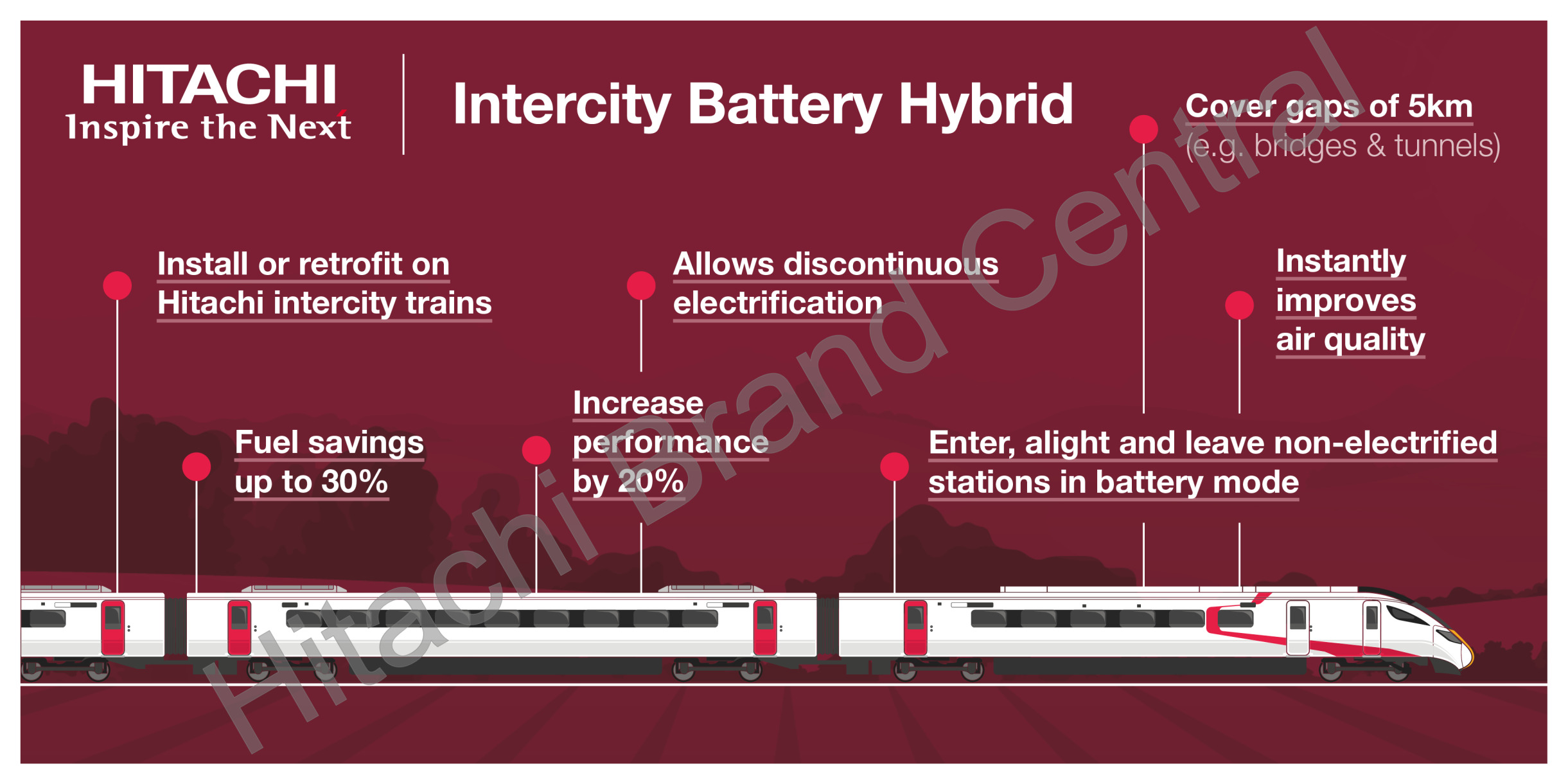
And this Hitachi infographic shows the Hitachi Intercity Battery Hybrid Train.

It looks to me, that one or both of these trains could work some or all of the the four routes to and through Oxford.
A battery train with a range of 21 miles would certainly be able to go between Paddington and Oxford, with battery charging to the East of Didcot.
These trains could be running services by the end of 2024.
Soham Station’s Inaugural Year A Soaring Success
The title of this post, is the same as that of this article on Rail Technology Magazine.
This is the first paragraph.
Soham station has seen healthy and consistent passenger usage over its first year since opening to the public, seeing almost 50,000 journeys starting or finishing there, according to Greater Anglia’s figures.
I took these pictures, when the station opened.
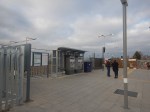
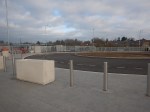
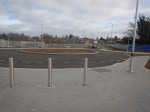
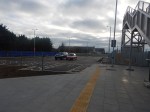
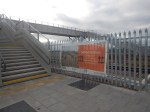
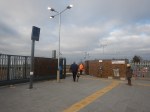
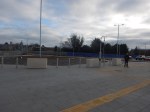
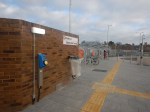
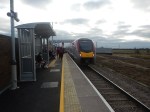
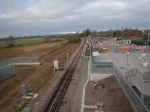
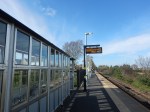
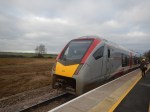
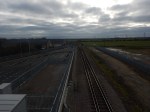
I think Soham station is a good design of a single-platform station.
- It’s a short walk from car park or drop-off point to the platform.
- There is adequate car parking.
- There is a shelter.
The station has also been built, so that it can be expanded.
These are my thoughts.
A Service To Cambridge
Soham station probably needs a train service to Newmarket and Cambridge, as it already has a two-hourly service to Bury St. Edmund’s, Ely and Ipswich and Peterborough.
Wikipedia says this.
There are no current plans for direct services to Cambridge, but the CPCA has expressed support for the idea in a future phase of the project. Mayor James Palmer said “the delivery of Soham station gives us a much stronger case to go to Government and Network Rail and lobby for the reinstating of the Snailwell loop which will provide a direct service between Ely, Soham, Newmarket and Cambridge”
This map from OpenRailwayMap shows the Snailwell Loop.
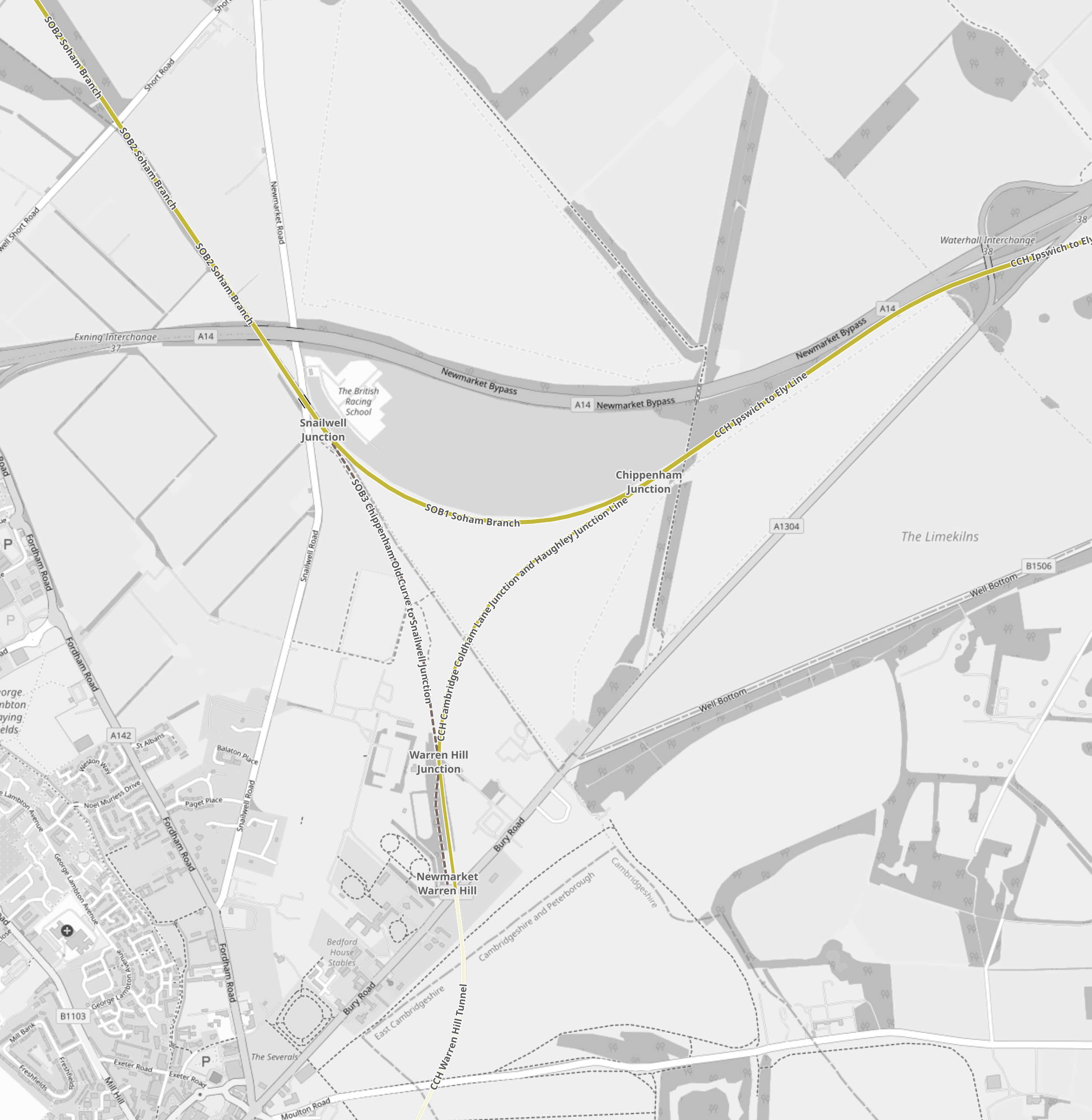
Note.
- The triangular junction in the middle of the map,
- The line from the junction leading East goes to Bury St. Edmunds and Ipswich.
- The line from the junction leading North goes to Soham, Ely and Peterborough.
- The line from the junction leading South goes to Newmarket and Cambridge.
- The Western side of the junction was removed by British Rail.
It would appear that by reinstating the Western side of the junction, a service between Ely and Cambridge via Soham and Newmarket could be run.
There are proposals for new stations in this area and given the need for comprehensive commuter services into Cambridge this Ely and Cambridge service could develop considerably.
The simplest service pattern would be
- Peterborough via Ely, Manea, March and Whittlesea.
- Ely non-stop.
- Ipswich via Bury St. Edmunds and Stowmarket.
- Cambridge via Newmarket and Dullingham.
All trains would be one train per two hours (tp2h).
Snailwell Junction And Cambridge
There could be problems between Snailwell junction and Cambridge, as the line is mainly single-track and it would need to handle the following trains.
Ipswich and Cambridge – 1 train per hour (tph)
Ely and Cambridge – 1 tp2h
Sundry freight trains.
In Roaming Around East Anglia – Newmarket Station, I wrote this about the plans of the East West Rail Consortium in the area.
In this document on the East-West Rail Consortium web site, this is said.
Note that doubling of Warren Hill Tunnel at Newmarket and
redoubling between Coldham Lane Junction and Chippenham Junction is included
in the infrastructure requirements. It is assumed that most freight would operate
via Newmarket, with a new north chord at Coldham Lane Junction, rather than
pursuing further doubling of the route via Soham.
So would it be possible to create a double-track railway through Newmarket station?
In the related post, I came to this conclusion.
Newmarket can benefit from East West Rail, but the two parties must agree objectives that don’t cause problems for the other.
But I do think, that Newmarket will not welcome the building of a double-track railway through the town.
The Proposed A14 Parkway Station
Grand Union Sets Out Stirling Ambitions
The title of this post, is the same as that of an article in the December 2022 Edition of Modern Railways.
This is the first paragraph.
Grand Union Trains has updated its plans to operate services between Stirling and London Euston. It is targeting a 10-year track access agreement with services starting in May 2025.
I have a few thoughts.
The Route
The route between Stirling and Euston is as follows.
- Trains will call at Larbert, Greenfauds, Whifflet, Motherwell, Lockerbie, Carlisle, Preston, Nuneaton and Milton Keynes.
- Station upgrades are proposed for Larbert, Greenfauds, Whifflet and Lockerbie.
- The route is fully-electrified.
- There will be four trains per day in both directions, with a slightly reduced service on Saturday evenings and Sunday mornings.
This sentence from the article sums up the philosophy of Grand Union Trains.
The company says the aim is to link towns which have no or limited long-distance services and to improve connectivity for some station pairs on the West Coast Main Line.
Note.
Currently Larbert, Greenfauds and Whifflet don’t have services running past Stirling or Motherwell.
- Currently, Nuneaton and Milton Keynes have no Scottish services.
- Nuneaton is well connected to Peterborough and the East.
- Milton Keynes will be on the East-West Railway to Oxford and Cambridge.
It looks to be a service that has been well-planned and offers good possibilities for travel.
The Trains
The article says this about the trains.
New bi-mode rolling stock would be used and GUT says discussions with potential suppliers and manufacturers are ongoing.
Why Are Bi-Mode Trains Needed?
I can think of these reasons.
- Grand Union Trains want to run their South Wales services with the same trains.
- They might want to extend Scottish services from Stirling to perhaps Perth or Dundee.
- They want to offer a reliable service, when the electrification is damaged.
Bi-mode trains will certainly offer flexibility and reliability.
How Long Will The Trains Be?
Consider.
- An eleven-car Class 390/1 train is 265.3 metres long.
- A pair if five-car Class 802 trains is 260 metres long.
I suspect a train has a maximum length of 260 metres and these can be run between London Euston and Stirling.
Could it be that station upgrades are needed for Larbert, Greenfauds, Whifflet and Lockerbie, is that these stations have short platforms?
Could the trains and platforms start short and grow with the business?
The Trains Will Have Three Classes
These classes will be offered.
- First Class in compartments
- Standard in a 2+1 arrangement
- Standard Economy in a 2+2 arrangement
You pays your money and you make your choice.
Vanload Freight May Be Carried
Consider.
- There has been a lot of speculation and some serious train conversions, looking at the possibilities of high speed freight.
- Imagine a train of perhaps five passenger cars and one freight car for containerised freight.
- I suggested earlier, that the trains might grow with the business.
- As business develops, extra cars can be added as appropriate.
- If business booms, then it might be best to run separate passenger and freight services.
Modern trains and refurbished older ones, offer a multitude of solutions.
The Finance
The article says this about finance.
Grand Union Trains has linked with European independent investment firm Serena Industrial Partners to support its ambitions for its new Great Western service, and the project is supported by Spanish operator RENFE.
Serena Industrial Partners are Spanish, so does that mean, that the trains could be Spanish too?
Could An Oxford And Cambridge Service Be Run Via The Lizzie Line?
This article on the BBC is entitled East-West Rail: Part Of £5bn Scheme ‘Appears To Be Unachievable’.
These are the first four paragraphs.
A £5bn rail project “appears to be unachievable” in parts, a government report said.
The East-West Rail scheme will create a link from Oxford to Cambridge, with services being introduced in stages.
Stage two, between Oxford and Bedford, and stage three, between Bedford and Cambridge, have “major issues”, the Infrastructure and Projects Authority said.
A spokesman for East-West Rail said the delivery programme was “under review”.
As someone, who used to live near Cambridge, I have seen the transport routes improve in East Anglia, but not the area’s connections to the rest of the country.
The article describes Stage 2 and 3 of the East West Railway like this.
Stage two involves predominantly upgrading existing infrastructure, between Bletchley and Bedford, to allow services between Oxford and Bedford.
Stage three involves building a new line, between Bedford and Cambridge, to extend the railway and facilitate services from Oxford to Cambridge.
So if the Government feel that the major issues and opposition should lead to cancellation of the scheme to the East of Bedford or even Bletchley, what are the problems and alternatives?
Freight
The Port of Felixstowe is the UK’s busiest container port and it handles 48% of Britain’s containerised trade.
Having lived as a teenager in Felixstowe and in Suffolk for probably half my life, there is only one certainty about the port in my mind. It will get bigger and will generate more rail and road traffic in East Anglia.
- The roads have improved greatly, since the 1960s, when I used to cycle between Ipswich and Felixstowe, along a two-lane single carriageway road.
- The renamed A14 has replaced the A45 and now connects the port to the M1 and the M6.
- Tens of long freight trains every day now connect Felixstowe with the rest of the country.
- The East West Railway will be a very useful link between Felixstowe and South Wales and the West of England.
- Global warming will mean the decarbonisation of heavy freight, with more traffic on an electrified railway.
Felixstowe’s connections to the North and Midlands may have improved greatly, but they will need to be improved a lot more.
The Port of Southampton is the UK’s second busiest container port.
- Most freight trains from Southampton go North via Basingstoke, Reading and Oxford.
- A plan some years ago was for an Electric Spine, that would have connected the Port of Southampton to the Northern cities.
- The Electric Spine would have envisaged electrification of the East West Railway to the West of Bedford and electrified connections with the West Coast Main Line and the Midland Main Line.
- The Midland Main Line is now planned to be fully electrified, under the the Integrated Rail Plan for the North and Midlands.
Southampton, like Felixstowe will be in need of improved transport connections.
In an ideal world, an electrified East West Railway, would improve freight connections between the UK’s two busiest container ports and major cities in the UK.
Problems With Freight
Could this be the major problem East of Bletchley, where the residents living along the route, don’t want to see large numbers of freight trains running close by?
In this document on the East-West Rail Consortium web site, this is said.
Note that doubling of Warren Hill Tunnel at Newmarket and
redoubling between Coldham Lane Junction and Chippenham Junction is included
in the infrastructure requirements. It is assumed that most freight would operate
via Newmarket, with a new north chord at Coldham Lane Junction, rather than
pursuing further doubling of the route via Soham.
Will the residents of Newmarket object to a double-track freight railway through the town? Freight trains and horses are not a good mix.
I do wonder, if freight trains hauled by noisy and unfriendly diesel locomotives are one of the reasons a full Oxford and Cambridge railway is losing its appeal and becoming a vote loser for the Government.
Cambridge Has An Accommodation And Commuting Problem
There is a shortage of accommodation in Cambridge for offices, laboratories, workshop and above all workers.
So it looks to the surrounding towns and cities to provide help.
London and Ely have good links, but the city needs better links to Bedford, Bury St. Edmunds, Haverhill, Ipswich, Norwich, Kings Lynn, Peterborough, Soham, Stansted Airport, Stevenage, Sudbury and Thetford.
Cambridge may be the place in the South East with the largest numbers of commuters from London.
Cambridge Needs A Decent Rail Network
In my view Cambridge needs at least the following services in trains per hour (tph)
- Colchester via Haverhill, Sudbury and Marks Tey – 2 tph
- Ipswich via Newmarket, A14 Parkway, Bury St. Edmunds, Stowmarket and Needham Market – 2 tph
- King’s Lynn via Cambridge North, Ely and Downham Market – 2 tph
- Oxford via Bedford, Milton Keynes/Bletchley and Bicester – 2 tph
- London King’s Cross via Cambridge South – 2 tph
- Norwich via Cambridge North, Ely, Thetford, Attleborough and Wymondham – 2 tph
- Peterborough via Cambridge North, Ely and March – 2 tph
- Stansted Airport via Cambridge South and Audley End – 2 tph
- Stevenage via Royston and Hitchin – 2 tph
- Wisbech via Cambridge North, Ely and March – 2 tph
Note.
- Some services already exist.
- Some of these services duplicate each other to give 4 tph or even 6 tph on certain routes.
- Some services could be back-to-back through Cambridge.
- A 14 Parkway station is a new station proposed by the East West Railway. I wrote about it in detail in Soham Station – 14th December 2021.
- Haverhill would be served by a rebuilt Stour Valley Railway.
- Wisbech would be served by restoring the railway to March.
To complete the network there would be a two tph service between Peterborough and Ipswich, which would go via March, Ely, Soham, A 14 Parkway, Bury St. Edmunds, Stowmarket and Needham Market.
Oxford Could Probably Argue that It Needs A Decent Rail Network Like Cambridge
Oxford would argue this and they have a point.
The East West Railway Is The Odd Line Out
Looking at the rail networks at Cambridge and Oxford, it appears, that with the exception of Cotswold services at Oxford and a few CrossCountry services, it appears that the East West Railway is a bit of an odd line out, as everything else is a local service.
The Effects Of Not Building The Bedford And Cambridge Section Of The East-West Railway
What will it mean, if the Bedford and Cambridge Section of The East-West Railway is not built?
- Cambourne will not get the promised station.
- Bedford and Cambridge journeys will be by bus, train via London or private car.
- Commuting into Cambridge from the West will be difficult.
- Milton Keynes and Cambridge journeys will be by bus, train via London or private car.
- Oxford and Cambridge journeys will be by bus, train via London or private car.
- Train journeys between Cambridge and much of the rest of the UK, will need to go via London.
It would appear that by not building the third section of the East West Railway, a lot of potential passengers will be denied a rail service.
Could Services Be Run Using Existing Infrastructure Through London?
The Elizabeth Line will eventually be able to handle a lot more services than it does at present.
Would Extending The Elizabeth Line To Oxford Be A Good Start?
Consider.
- Oxford has two services to London; Chiltern to Marylebone and Great Western Railway (GWR) to Paddington.
- The GWR service to Paddington stops only at Reading and Slough, has a frequency of two tph and takes under an hour.
- The fastest journey between Oxford and Liverpool Street using a fast GWR train and the Elizabeth Line takes one hour and 20 minutes.
- Only 10.6 miles of the route between Oxford and Paddington is without electrification.
- There is also a two tph stopping shuttle train between Oxford and Didcot Parkway stations and a two tph stopping train between Paddington and Didcot Parkway.
I feel that combining the two Didcot Parkway services and moving them to the Elizabeth Line would be an experiment worth trying.
This would give 2 tph direct to the following stations.
- Bond Street for the West End
- Canary Wharf for finance.
- Farringdon for Cambridge, Gatwick and Brighton.
- Hayes & Harlington for Heathrow.
- Liverpool Street for the City of London, Cambridge and Stansted
- Reading for Wales and the West.
Note.
- No-one would have a worse service than currently, but many passengers would avoid a change on their journey.
- Services could terminate at either Abbey Wood or Shenfield stations.
- Services could be an extension of the two tph to Reading or additional services.
- Between Didcot Parkway and Oxford is shown on OpenRailwayMap, as proposed for electrification.
- There may need to be some new platforms at Didcot Parkway station.
- I estimate that between Oxford and Liverpool Street would take one hour and fifty minutes.
It certainly looks, that it would be possible to replace the current GWR service between Oxford and Paddington, with an all-electric Elizabeth Line service.
The direct stopping service between Oxford and Liverpool Street would be thirty minutes slower, than the current fastest train.
The current fastest train between Liverpool Street and Cambridge takes 71 minutes, so with a change at Liverpool Street Oxford and Cambridge would probably be just over three hours.
Google Maps estimate a driving time of two hours between the two University Cities.
Could The Elizabeth Line Be Extended To Cambridge?
There is no train connection between the Elizabeth Line and the West Anglia Main Line at Liverpool Street station, although the walk for passengers is not that long.
In Extending The Elizabeth Line – Connecting West Anglia Main Line Services To The Central Tunnel, I describe how it could be possible to connect the West Anglia Main Line to the Elizabeth Line at Stratford station.
This connection would allow services from Cambridge, Harlow and Stansted to anywhere on the Elizabeth Line to the West of Stratford.
Oxford and Cambridge and Heathrow and Stansted would be distinct possibilities.
Could A High Speed Limited Stop Service Run Between Oxford And Cambridge?
In Extending The Elizabeth Line – High Speed Trains On The Elizabeth Line, I proposed running faster long-distance trains through the Central Tunnel of the Elizabeth Line.
- They would have to be dimensionally identical to the Class 345 trains to fit the platform edge doors.
- They would have a long-distance interiors.
- In the Central Tunnel, they would behave like 345 trains. with Paddington to Stratford taking 19 minutes.
- But on main lines like the Great Western Main Line, they could rattle along at 125 mph.
If the trains could keep up with Class 802 train performance between Oxford and Paddington and enter the Central Tunnel quickly, these times could be possible.
- Oxford and Paddington – 55 minutes
- Paddington and Stratford – 19 minutes
- Stratford and Tottenham Hale – 14 minutes
- Tottenham Hale and Cambridge – 65 minutes
Just over two-and-a-half hours, without a change of train, sounds fine to me.
What About The Trains From Great Malvern?
The fast services between Paddington and Oxford, run twice an hour, with the service formed of one hourly Paddington and Oxford service and another hourly Paddington and Great Malvern service.
- If Oxford gets electrified soon, this will mean that the Oxford and Paddington service would be all-electric.
- But the Great Malvern service would need to be able to handle 65.5 miles of line without electrification each way.
- The speed limits between Oxford and Great Malvern vary between 70 and 100 mph.
I’m certain that Stadler could design and build a train, with the following characteristics.
- Class 345 dimensions.
- 125 mph performance.
- Ninety miles range on battery power.
The trains would be charged between Paddington and Oxford and by a charger at Great Malvern.
Conclusion
Would an Oxford and Cambridge service through Central London be an alternative to the East-West Railway?
Perhaps not an alternative, but an addition?
TransPennine Express Explores Further Fleet And Capacity Expansion Options
The title of this post, is the same as that of this article on Railway Gazette.
This is the first paragraph.
First TransPennine Express is hopeful that it will be able to issue a call for expressions of interest in the provision of additional bi-mode trains before the end of March. This follows ‘a healthy level of interest’ in its existing call for expressions of interest in the supply of bi-mode locomotives to replace the Class 68s which work with its MkVa coaches.
I wrote about the expressions of interest to replace the Class 68 locomotives with new bi-mode locomotives in Suppliers Sought For New Bi-Mode Locomotives For TransPennine Express And Great Western Railway.
This was my conclusion in the related post.
When I saw First Group’s proposals, I thought that they were over ambitious.
But after doing a few simple calculations, I think they can decarbonise some, but not all of the TransPennine Express services and the Night Riviera.
So do First Group want to complete the decarbonisation of TransPennine Express services?
These are my thoughts.
The Train Fleet Specification
The Railway Gazette article makes these points about the new bi-mode trains.
- The trains could be existing or new bi-modes.
- It would be desirable for the trains to have a long-term electric-only option.
- Options for this would include removing the diesel engines or converting the trains to battery-electric operation.
- Hydrogen is not mentioned.
- A fleet size of twenty-five trains is mentioned.
- The possibility of electric-only trains in the future is mentioned..
- Five-cars, with the ability to lengthen to six- or seven-cars.
- 200 km/h operation.
There is nothing unusual in the specification.
Will They Be Existing Or New Trains?
I doubt that there are any existing 200 km/h bi-modes in the UK, that are not wanted by their current operators.
I am very certain they will be new trains.
Could The Trains Be Hitachi Class 802 Trains?
The trains sound very much like Hitachi Class 802 trains, that are in service with TransPennine Express, Great Western Railway and Hull Trains, all of whom are First Group companies.
- Long-term, the diesel engines can be removed or replaced with batteries.
- The battery option is under development and should be on test this year.
- The trains can be lengthened to as long as twelve cars, so six- and seven-car trains would be possible.
Hitachi will obviously show interest in this possible order.
Will These Trains Replace the Class 185 Trains?
Consider.
- TransPennine Express have 51 three-car Class 185 trains.
- This is a total of 153 cars.
- On some routes they work singly and on others they work in pairs.
- A three-car Class 185 train has 167 Standard Class and 15 First Class seats or 60.7 seats per car.
- A pair of Class 185 trains have 334 Standard Class and 30 First Class seats.
- A five-car TransPennine Express Class 802 train has 318 Standard Class and 24 First Class seats or 68.4 seats per car.
- It would appear that a Class 802 train is not that far short of the capacity of a pair of Class 185 trains.
- Some of the TransPennine services are very crowded.
I suspect that twenty-five five-car trains be able to handle the the workload of the Class 185 trains.
If a small amount of extra capacity were needed, some of the new trains could be six-cars.
In this section, I have assumed the new trains will be Class 802 trains, but any train manufacturer pitching for this order would adjust the capacity to the needs of TransPennine Express.
The Railway Gazette article says this.
TPE continues to explore opportunities for new services in the north of England, and the move could also feed into government plans for the removal of older and more costly to operate diesel trains elsewhere on the network, should any rolling stock become surplus to requirements at TPE.
So where could the Class 185 trains be used in the future?
Recently, MTU Hybrid PowerPacks have replaced the transmission on a Class 168 train, which reduces carbon emissions and fuel consumption and makes the train quieter and more passenger-friendly, as it doesn’t use diesel in stations.
The Class 185 trains are only fifteen years old and I suspect that MTU have designed the Hybrid PowerPack, so that it can replace the Cummins engine in trains like these.
The conversion could be done as a rolling program, so that any future operator would start with diesel and go hybrid a train at a time.
There has been speculation, that the trains may end up on the East West Railway and I wrote about this in East West Railway Company To Start Second Phase Of Rolling Stock Procurement.
But the East West Railway may prefer to use zero-carbon trains on a route, where there is electrification in places on the route.
Alternatively, South Western Railway run 10 two-car Class 158 trains and 30 three-car Class 159 trains between London Waterloo and Exeter.
- South Western Railway is another First Group company.
- The Class 185 trains could provide a capacity increase.
- The Class 185 trains are 100 mph trains, whereas the Class 158/159 trains are only capable of 90 mph.
The London Waterloo and Exeter Route could be electrified in the future and I am pretty sure, that the Class 185 trains with a hybrid transmission could be a good stand-in until this happens.
Other Train Manufacturers
I believe that Hitachi are in pole position for this order, just because they are an established supplier to both TransPennine Express and First Group.
But twenty-five five-car trains would be a very worthwhile order, so I suspect that companies like Alstom, CAF, Siemens, Stadler and Talgo will also express interest.
Conclusion
Buying extra bi-mode trains will take TransPennine Express further along the route to full decarbonisation.

