BHP Joins The Party On Electric Rail
The title of this post, is the same as that of this article on Australian Mining.
This is the introductory paragraph.
BHP will add four battery-electric locomotives to its Western Australian rail network, becoming the fourth major miner to improve rail decarbonisation efforts in Australia since mid-December.
These are some details of the locomotives.
- Two are from Progress Rail and two are from Wabtec.
- The locomotives have 14.5 MWh batteries.
- The locomotives will be delivered by 2023.
BHP will also investigate the use of regenerative braking using the topography of the rail route.
With four companies going electric, it does seem that Australian mining, is very much driving the move to battery-electric heavy-haul freight.
Considering, that Wabtec only formally launched the FLXdrive concept in Pittsburgh in September last year, which I wrote about in FLXdrive ‘Electrifies’ Pittsburgh, that would appear to have been good going.
Rio Tinto Orders Wabtec FLXdrive Battery Locomotives To Reduce Emissions
The title of this post, is the same as that of this press release from Wabtec.
This is the introductory paragraph.
Wabtec Corporation (NYSE: WAB) and Rio Tinto announced today an order for four FLXdrive battery-electric locomotives to support sustainable operations of the mining company’s rail network in the Pilbara region of Western Australia. The 100-percent, battery-powered locomotive will help Rio Tinto’s effort to achieve a 50-percent reduction in Scope 1 and 2 carbon emissions by 2030.
Some other points from the press release.
- The locomotives have 7 MWh batteries.
- The first locomotive will be delivered in 2023.
- The FLXdrive is anticipated to reduce the company’s fuel costs and emissions in percentage by double digits per train.
This paragraph describes how the FLXdrive locomotives will be used.
The mining company plans on using the locomotives in multiple applications including as a shunter in the railyard and ultimately in mainline service. In mainline operations, Rio Tinto currently uses three diesel-electric locomotives in a consist to pull trains with 240 cars hauling about 28,000 tons of iron ore. The FLXdrives will transition from the diesel locomotives in mainline service to form a hybrid consist, and recharge during the trip through regenerative braking and at charging stations. Wabtec’s next generation energy-management software system will determine the optimal times to discharge and recharge the batteries along to route ensuring the most fuel-efficient operation of the entire locomotive consist during the trip.
I can see this approach leading to even bigger fuel and emission savings.
Especially, if Wabtec developed a compatible locomotive, that was powered by hydrogen.
This was rumoured in FLXdrive ‘Electrifies’ Pittsburgh, where a partnership between Carnegie-Mellon University (CMU), Genesee & Wyoming and Wabtec to create the Freight Rail Innovation Institute was described.
Conclusion
There certainly seems to be a consensus between some of the world’s largest mining and rail companies about the future of heavy freight trains to support the mining industry.
Is A High Capacity Freight Route Being Created On The Midland Main Line?
In the January 2022 Edition of Modern Railways, there is a section, which is entitled Mixed Fortunes For Freight In IRP, where IRP is short for Integrated Rail Plan For The North And Midlands.
In the section, this is said about freight on the Midland Main Line.
Whilst HS2 does relieve the MML, electrification of the route north from Kettering via Derby to Sheffield is of relatively limited use to freight, which is generally routed via Corby and Toton to Chesterfield and Rotherham. That said, assuming electrification of the passenger route includes the slow lines from Leicester to Trent and through Chesterfield, it does provide a base on which freight electrification can be built.
This would involve wiring Corby to Syston Junction (north of Leicester), Trent Junction to Clay Cross (south of Chesterfield) and Tapton Junction (north of Chesterfield) to Rotherham Masborough and Doncaster.
As with the ECML, this ‘freight’ electrification would provide a diversionary route and thus greater resilience for East Midlands Railway services.
In addition, gauge clearance throughout from Corby as part of this package would also be highly beneficial in creating a direct route from the ‘Golden Triangle of Logistics’ in the East Midlands to the North East and Scotland for consumer goods supply chains, boosting modal shift to rail and decarbonisation.
It does seem to be a cunning plan worthy of Baldrick at his best.
So is it feasible?
Which Routes Do Freight Trains Use Now?
Christmas in a pandemic, is not a particularly good time to look at the routes freight trains take.
But by looking at Real Time Trains, I can say this.
- Many trains take the route via Corby and Syston Junction, rather than the direct route via Market Harborough and Leicester.
- Leicester is quite busy with freight as trains between Felixstowe and places on the West Coast Main Line, go through the station.
- Very few freight trains seem to take the route via Derby and the Derwent Valley Mills.
- Most freight trains between East Midlands Parkway and Chesterfield seem to take the Erewash Valley Line via Toton and Ilkeston.
I don’t think the pattern will change much, if I look at the trains around the end of January.
What Do I Mean By European-Size Freight Trains?
The Wikipedia entry for loading gauge says this about about the route through the Channel Tunnel and up the Midland Main Line.
UIC GC: Channel Tunnel and Channel Tunnel Rail Link to London; with proposals to enable GB+ northwards from London via an upgraded Midland Main Line.
Note.
- . GC is 3.15 metres wide by 4.65 metres high.
- GB+ is 3.15 metres wide by 4.32 metres high.
- GB+ is intended to be a pan-European standard, that allows piggy-back services.
- British gauging is so complicated, it isn’t specified in standard units. It must be a nightmare for rolling stock designers.
I’ll take an easy way out and assume that by European-Size Freight Trains, I mean that the route must be cleared for GB+ gauge.
Could Kettering and Syston Junction Via Corby Be Cleared For European-Size Freight Trains?
According to a Network Rail Map from February 2010, the current clearance is as follows.
- Kettering and Oakham – W7
- Oakham and Syston Junction – W8
Note.
- Oakham and Peterborough is also W8
- The main problem seems to be that between Corby and Oakham, there are five tunnels; Corby, Glaston, Manton, Seaton and Wing.
- There are also a few overbridges and several level crossings, but they don’t look too challenging.
- Between Corby and Oakham, there is the magnificent Welland viaduct, which has eighty-two arches and is Grade II Listed.
- Ideally, freight operators would like to run European gauge piggy-back services, with road trailers travelling on flat wagons, as they do in CargoBeamer services.
It would be a tough call to satisfy my last point, but if it can be done it would allow all Midland Main Line freight trains to take the Corby diversion and this would remove the problems of running European gauge trains through Leicester station.
This Google Map shows a section of the Welland viaduct.
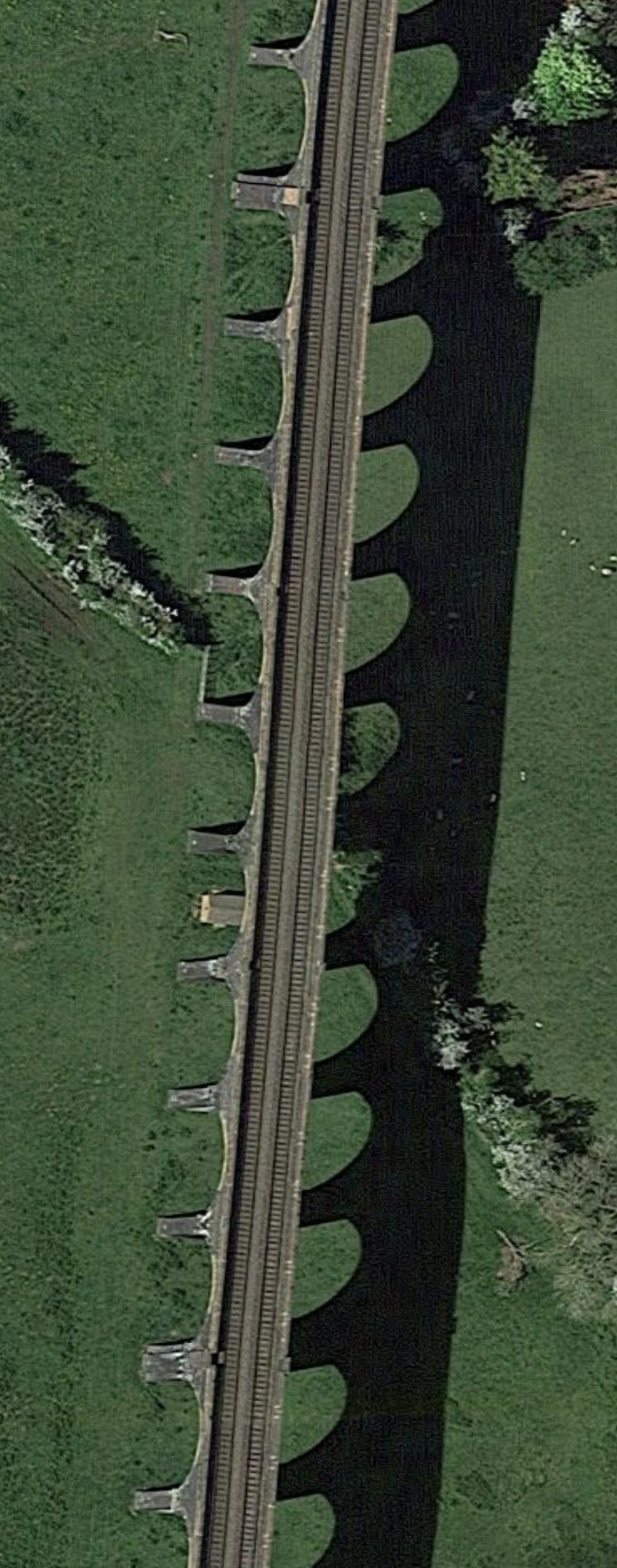
It could be key, as it is fully double-track.
But could it support two heavy freight trains at the same time?
But it would be some sight to see, long European-sized freight trains running over the viaduct.
Could The Midland Main Line Between Syston And Trent Junctions Be Cleared For European-Size Freight Trains?
The route is cleared to W7 or W8 between the two junctions and on inspection with my virtual helicopter, I suspect it wouldn’t be that challenging to upgrade.
It would also be sensible to clear the Castle Donnington Line for European-size freight trains, so that they could reach the East Midlands Gateway freight terminal.
This Google Map shows the location of the East Midlands Gateway.
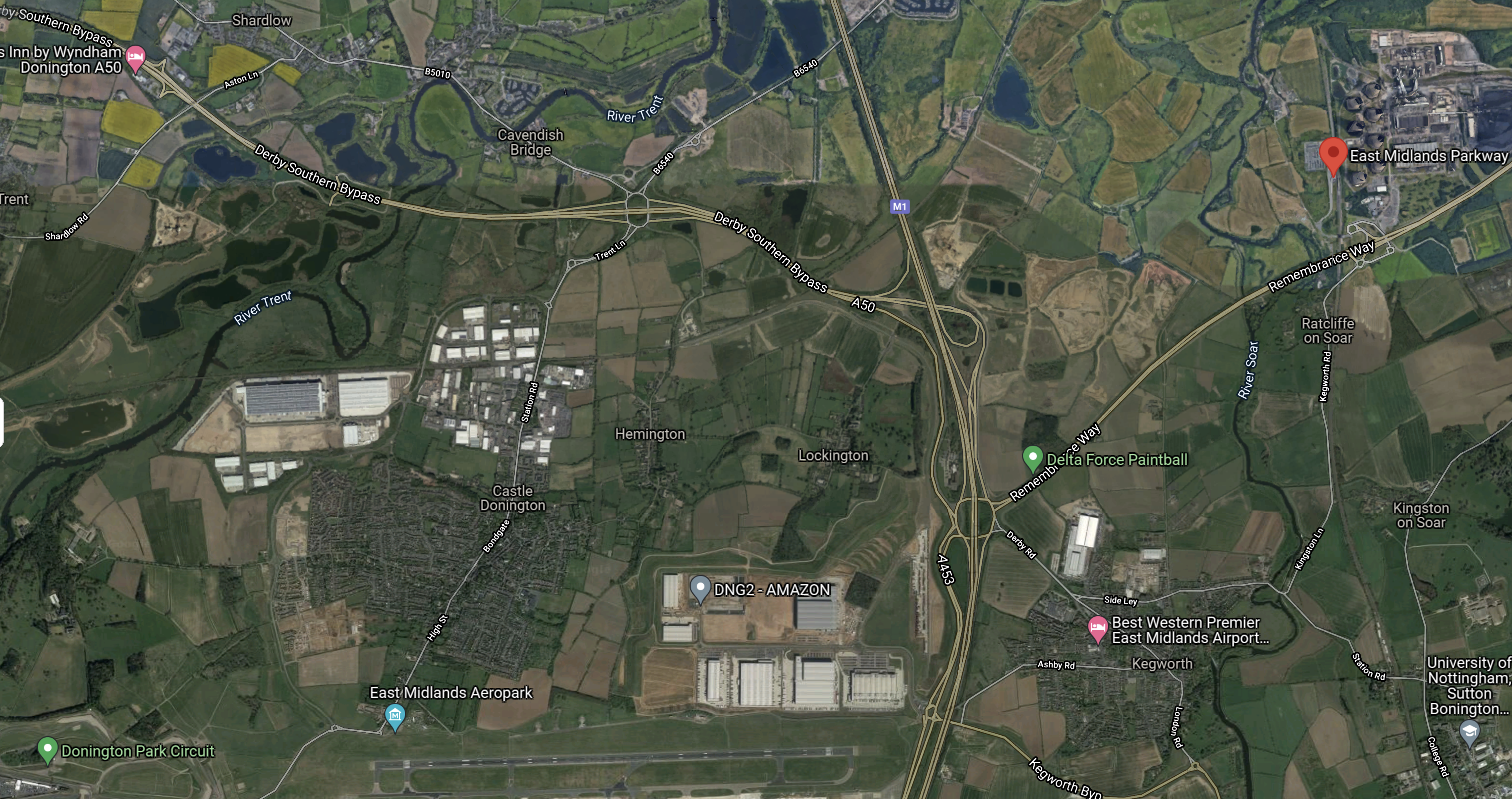
Note.
- East Midlands Parkway station is marked by the red arrow in the North-East corner of the map.
- Castle Donnington circuit is in the South West corner of the map.
- The long East-West runway of East Midlands Airport is clearly visible.
- East Midlands Gateway is to the North of the airport.
This second Google Map shows East Midlands Gateway in more detail.
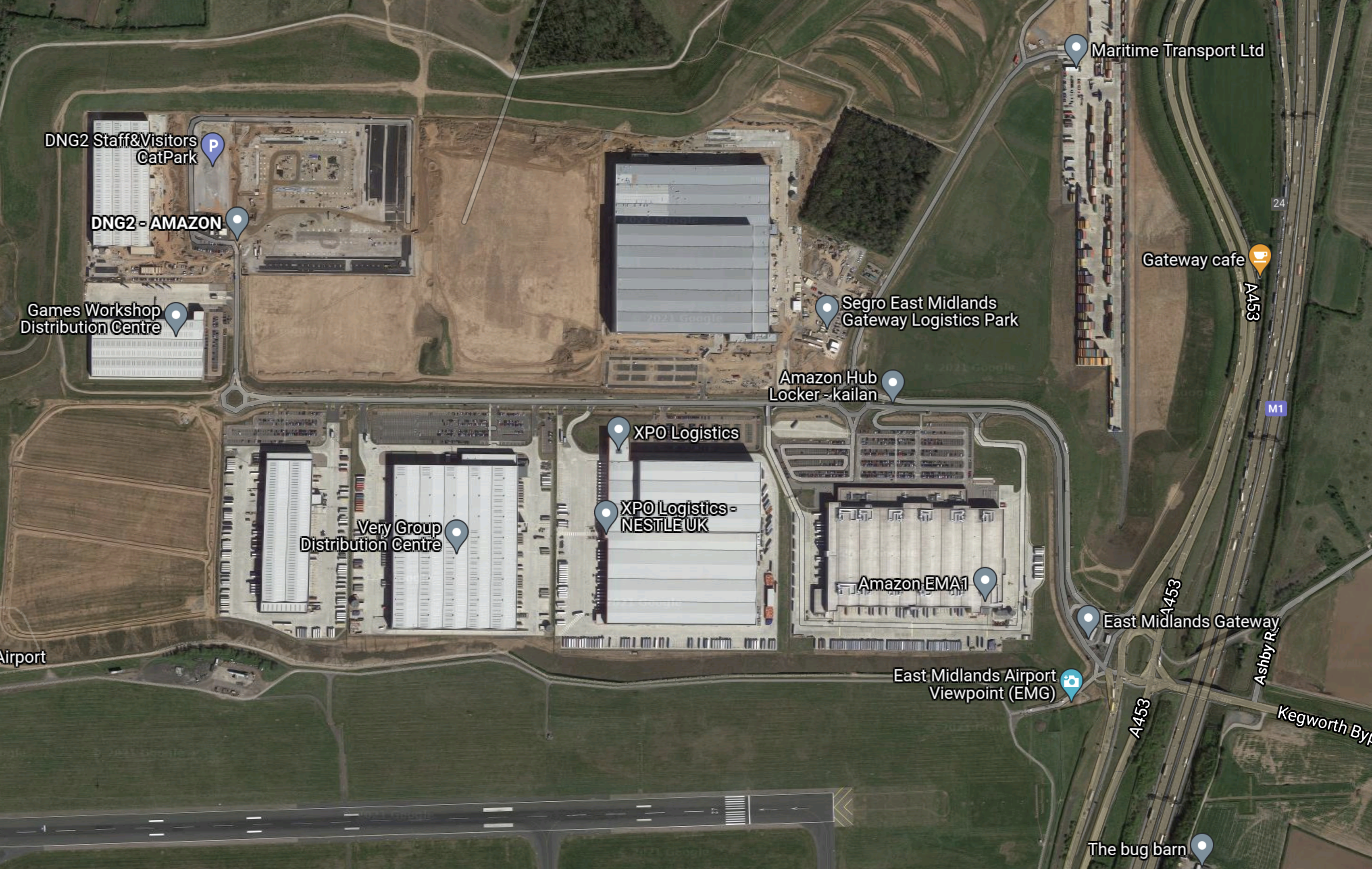
Note.
- In the North-East corner is Maritime Transport’s rail freight terminal.
- The M1 runs North-South at the Eastern edge of the map.
- East Midlands Gateway Logistics Park with two Amazon sheds is in the middle.
- The runway at East Midlands Airport is clearly visible.
The Integrated Rail Plan for the North And Midlands has already announced that High Speed Two will join the Midland Main Line to the South of East Midlands Parkway station to serve Derby, Nottingham and Sheffield.
- This new line will have to go past the airport, either to the North of the Logistics Park or South of the Airport.
- Could there be a station here, both for passengers and the workers at a very busy freight airport and Logistics Park?
- Currently, trains between the rail terminal and London, London Gateway and the Port of Felixstowe have to reverse North of the rail terminal to access the terminal.
- All the rail links between the Midland Main Line and East Midlands Gateway would need to be built to accept European-size freight trains, to ensure maximum flexibility.
It strikes me, that there are a lot of extra features that could be added to the rail network between the Midland Main Line and East Midlands Gateway.
Could The Erewash Valley Line Via Ilkeston Be Cleared For European-Size Freight Trains?
Consider.
- According to a Network Rail Map from February 2010, the Erewash Valley Line is cleared to W8.
- According to Wikipedia, it is the second busiest freight route in the East Midlands.
- Network Rail have spent £250 million on the line in recent years to improve junctions and improve signalling.
- The route doesn’t have a large number of passenger services.
These pictures show Ilkeston station on the Erewash Valley Line.
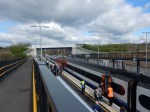
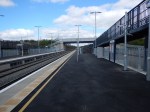

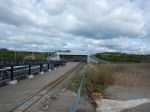
Note.
- The recently rebuilt bridge and the separate avoiding line.
- The Class 158 train under the bridge is 3.81 metres high.
As the European gauge; GB+ is 4.32 metres high, I would feel that Ilkeston station can handle European-size freight trains.
I have flown my virtual helicopter all the way over the Erewash Valley Line from Toton to Clay Cross North junction.
- It looks as if most of the not many bridges are either recent or could be updated to handle the large European-sized freight trains.
- It should also be noted that in many places there is a third track or space for them.
- There are three stations and the Alfreton tunnel.
After this quick look, I feel that the Erewash Valley Line will be able to handle European-size freight trains.
Could Tapton Junction to Rotherham Masborough and Doncaster Be Cleared For European-Size Freight Trains?
This route has very few bridges and I doubt updating wouldn’t cause too many problems.
CargoBeamer
Would it be possible for one of CargoBeamer’s piggy-back trains carrying trailers to run between the Channel Tunnel and the rail terminal at East Midlands Gateway Logistics Park or perhaps another terminal further up the Midland Main Line?
If they could use the Gospel Oak and Barking Line to access the Midland Main Line, I don’t see why not!
Conclusion
It appears that it should be possible to allow European-size freight trains to run between the North of England and the Channel Tunnel.
CargoBeamer Operates Lane Between Kaldenkirchen And Perpignan
The title of this post, is the same as that of this press release from CargoBeamer.
It has this sub-title.
New Route Starting In January 2022
These two paragraphs form the body of the release.
The logistics service provider CargoBeamer is expanding its intermodal network from the beginning of next year. Between Kaldenkirchen in Germany and Perpignan near the French-Spanish border, goods will be transported environmentally friendly by rail from January 10, 2022. The patented CargoBeamer system enables all kinds of semitrailers, containers, P400 trailers, refrigerated and tank trailers, and other types of goods to be transported by train without requiring any additional conversions for forwarders.
At the start in January, initially three trains will run weekly in each direction. From mid-February, the frequency will increase permanently to five round trips per week. CargoBeamer will collaborate with DB Cargo France (formerly Euro Cargo Rail) as its traction partner. The new Franco-German route is the company’s sixth connection overall, with five of the six lines having been added to the network in the past six months.
They certainly seem to be adding routes frequently.
How Do Trailers Get Between Ashford And Calais?
They obviously go through the Channel Tunnel, but what happens on each side of the Channel?
Is the trailer fixed to a tractor unit at the Ashford and Calais terminals and then driven onto the freight shuttle?
This video contains an interview with Nicolas Albrecht from CargoBeamer
Discontinuous Electrification Through Derwent Valley Mills
One big problem area of electrification on the Midland Main Line could be North of Derby, where the railway runs through the World Heritage Site of the Derwent Valley Mills. There might be serious objections to electrification in this area.
But if electrification were to be installed between Leicester and Derby stations, the following would be possible.
- The Midland Main Line would be electrified at East Midlands Hub station.
- Power could be taken from High Speed Two’s supply at East Midland Hub station, even if High Speed Two is not built in full.
- Battery-electric trains could do a return trip to Nottingham from an electrified East Midlands Parkway station, as it’s only sixteen miles in total.
I am sure, that Hitachi’s Class 810 trains could be upgraded to have a of perhaps twenty-five miles on battery power, as this fits with Hitachi’s statements.
North of Derby, there would be electrification on the following sections.
- Derby station and South of the heritage-sensitive section at Belper station.
- Sheffield station and North of the heritage-sensitive section at Duffield station.
Milford Tunnel, which has Grade II Listed portals and is part of the World Heritage Site would not be electrified.
Belper and Duffield stations are 2.6 miles or 4.8 kilometres apart.
I believe it could be arranged that there would be no electrification in the sensitive section, where the Heritage Taliban might object.
The Hitachi Intercity Battery Hybrid Train
Hitachi will start testing their Intercity Battery Hybrid Train next year.
The train is described in this Hitachi infographic.
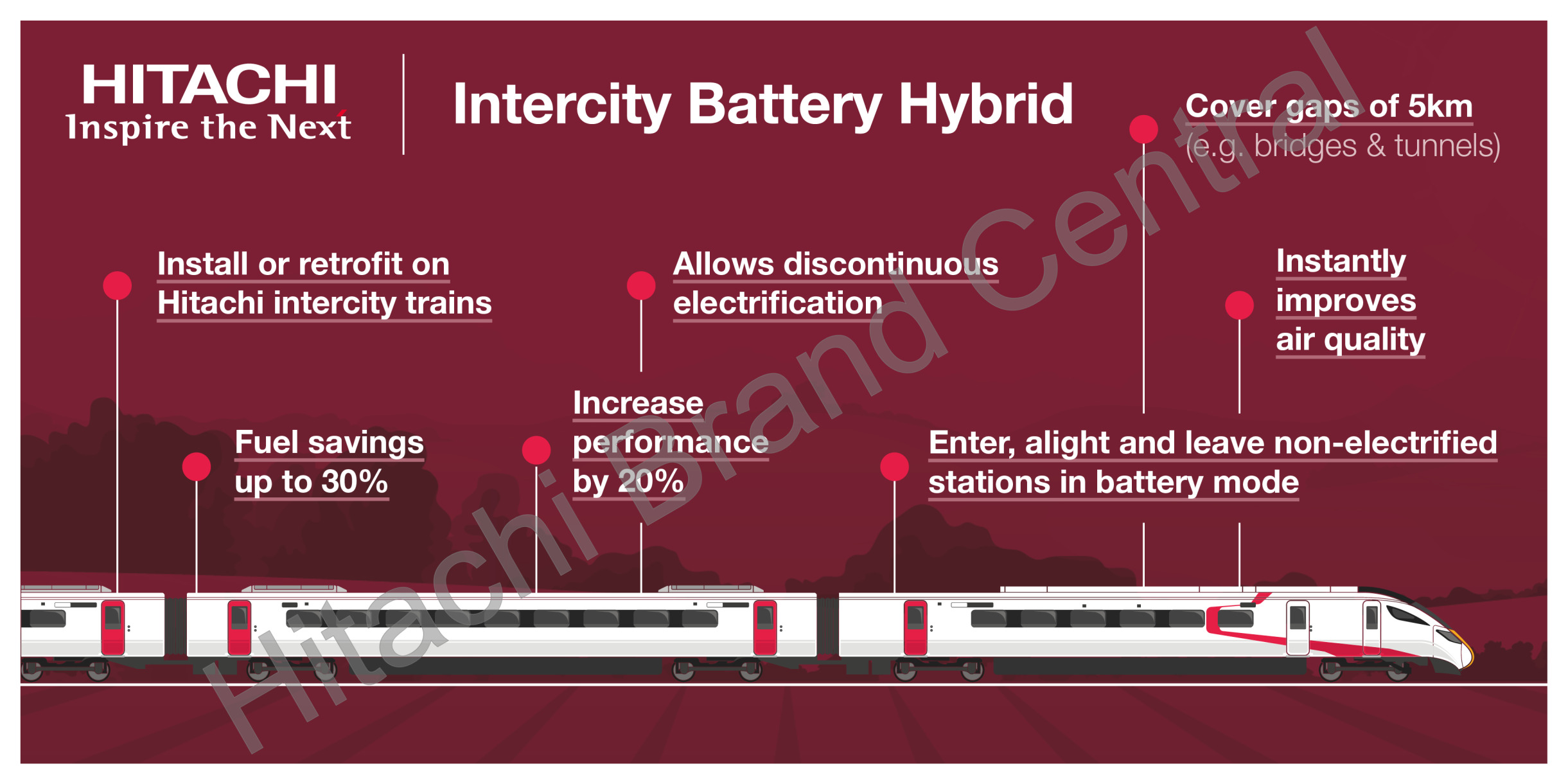
Note that is has a gap-jumping range of 5 km, which would handle the gap between Belper and Duffield stations.
CrossCountry Services Between Derby And Sheffield
CrossCountry operate the following services between Derby and Sheffield through Milford Tunnel and the World Heritage Site.
- Plymouth and Edinburgh Waverley/Glasgow Central
- Southampton/Reading and Newcastle
CrossCountry would need new trains and one of the current Hitachi Class 802 trains could handle this route and use electrification where it exists.
A five kilometre gap will be no big obstacle to designing a battery-electric train for these CrossCountry services.
Freight Trains
In Will Zero-Carbon Freight Trains Be Powered By Battery, Electric Or Hydrogen Locomotives?, I came to this conclusion.
In the title of this post, I asked if freight locomotives of the future would be battery, electric or hydrogen.
I am sure of one thing, which is that all freight locomotives must be able to use electrification and if possible, that means both 25 KVAC overhead and 750 VDC third rail. Electrification will only increase in the future, making it necessary for most if not all locomotives in the future to be able to use it.
I feel there will be both battery-electric and hydrogen-electric locomotives, with the battery-electric locomotives towards the less powerful end.
Hydrogen-electric will certainly dominate at the heavy end.
These locomotives would be able to handle the section of the Midland Main Line through Derwent Valley Mills.
Rail Freight ‘Booming’ Because Of HGV Driver Shortage
The title of this post, is the same as that of this article on Rail News.
These are a few points from the article.
- Tesco currently send 65,000 containers per year by train and are increasing this figure to 90,000.
- Tesco are also planning to run special wine trains.
- Dunelm is reported to have agreed a lease for a new warehouse at the Daventry rail terminal, creating another 70 jobs.
- CB Railfreight is running 400 trains per day.
- GB Railfreight trained seventy drivers in the last year.
- The number of people employed at the Daventry International Rail Freight Terminal, will rise by another 4,000 in January when a new section opens.
One Freight Operations Manager is quoted as saying business is booming. He believes that the truck driver shortage and thought for the environment are driving the growth in rail freight.
Freightliner Continue Trials On New Low Carbon Fuel
The title of this post, is the same as that of this article on Rail Technology Magazine.
This is the first paragraph.
As part of their commitment to carbon reduction Freightliner will conduct operational trials of a new low carbon fuel supplied by Green Biofuels Ltd (GBF).
And this paragraph described the fuel.
GBF are the UK’s leading provider of Hydrogenated Vegetable Oil (HVO) and the new fuel consists of 55% Shell GTL (gas to liquids) Fuel and 45% Gd+ HVO.
It does appear that hydrotreated vegetable oil or HVO, could be becoming an intermediate step on the route to decarbonisation, as I’ve posted about the fuel before in Powered By HVO.
The other promising route to decarbonisation must surely be that of producing fuel from waste, as pioneered by Velocys and others.
But they are only intermediate steps before hydrogen becomes the preferred zero-carbon fuel for rail freight services.
Canadian National Buys Battery Locomotive
The title of this post, is the same as that of this article on Railway Gazette.
This is the first paragraph.
Canadian National’s Bessemer & Lake Erie Railroad has purchased a Wabtec FLXdrive battery-electric freight locomotive, with financial support from the Pennsylvania Department of Environmental Protection’s Marine & Rail Freight Movers grant programme.
The locomotive is intended to work in multiple with diesel locomotives and this cuts fuel consumption, pollution and noise.
I described the locomotive in FLXdrive ‘Electrifies’ Pittsburgh and the more I learn about this locomotive the more I like it.
The locomotive numbered 3000, which appears in all Wabtec pictures is an example an ES44AC from the GE Evolution Series and was converted from a standard locomotive, that was in the test fleet.
Interestingly, Canadian National own several hundred of these locomotives, so they won’t be short of one to convert.
The diesel version would appear to be a 3.3 MW diesel locomotive.
In addition, this page on the Wabtec web site gives some details of the battery-electric locomotive.
- The locomotive is powered by lithium-ion batteries.
- There are around 20,000 battery cells
- The batteries have their own air-conditioning
- There is a sophisticated battery-management system.
- The total battery size is 2.4 MWh
- Power output is 4400 HP or 3.24 MW
- Locomotive will run for 30-40 minutes at full power.
- The locomotive has regenerative braking.
- Operating speed is 75 mph
Note that running at 75 mph for 40 minutes would cover fifty miles.
It does look as if, the diesel-electric and the battery-electric conversion have similar power outputs. Could this be, as the traction system on both locomotives are identical? It’s just that one uses a diesel generator and the other uses batteries.
Although there must be differences in the traction systems, as the battery-electric locomotive has regenerative braking.
The battery-electric locomotive is designed to work in conjunction with one or two diesel locomotives, where a sophisticated computer system decides which engines power the train.
- Wabtec are claiming a thirty percent reduction in fuel and emissions compared to an all-diesel setup.
- Electric power will also be used in depots and sensitive areas.
I do think though, that this is a pragmatic solution to cut the carbon footprint of heavy-freight in North America.
But it could be a half-way solution, as Wabtec have hinted that they are working on hydrogen-powered locomotives.
I also feel it might be possible to convert some of the UK’s Class 66 locomotives into battery-electric locomotives for lighter freight duties or working in a pair with a Class 66 locomotive to reduce fuel consumption and emissions.
I discuss this in Could Class 66 Locomotives Be Converted Into Battery-Electric Locomotives?
Have CN Bought The Prototype?
There is also this article on the Green Car Congress, which is entitled CN Purchases Wabtec’s Battery-Electric Locomotive.
The article seems fairly certain they have.
So perhaps, they want to get on with the job and see what the locomotive can do?
Hydrogen Fuel Cell Locomotives Ready To Take Over Freight Rail Systems
The title of this post, is the same as that of this article on autoevolution.
The article describes how Canadian Pacific are developing hydrogen-powered freight locomotives.
They are converting a couple of locomotives to run on hydrogen and also building two hydrogen plants; one for green hydrogen and one for blue.
It does look that the Canadians are determined to get it right, so are looking at everything they can.
The article is certainly worth reading.
Railfreight Goes Back To Diesel As Electricity Costs Soar
The title of this post, is the same as that of this article on Railnews.
This is the first paragraph.
Some rail freight operators have abandoned electric traction, at least for now, because the price of electricity has been rising sharply. The electricity tariffs include a 40 per cent renewable energy tax, and following the latest rises diesel traction is now cheaper. The drivers’ union ASLEF is calling for the government to intervene, but Freightliner has already taken action.
This quote from the article is from ASLEF General Secretary; Mick Whelan.
Moving freight by rail rather than road is, inherently, a carbon-efficient mode of transport and an environmentally-friendly way of doing business. Electric-hauled freight services reduce emissions by 99 per cent; even moving goods by diesel traction reduces emissions by 76 per cent.
It looks to me, that a reputable and trusted environmental economist could come up with a compromise price and possibly a solution to improve the situation.
Possible solutions could include.
- Use of Biodiesel or Hydrotreated Vegetable Oil
- More energy storage.
Surely, though, the long term solution is hydrogen-powered locomotives. or dual-fuel locomotives, as I wrote about in Freightliner Secures Government Funding For Dual-Fuel Project.
 The Anonymous Widower