Government’s Bias Against Hydrogen Buses Challenged
The title of this post, is the same as that of this article on Fleetpoint.
This is the introductory paragraph.
Industry leaders, campaign groups and academics today challenged the Government’s “deliberate” and “misjudged” bias against hydrogen buses in its pursuit of decarbonising public transport.
I do find this article a bit surprising.
- We have had a couple of trials of hydrogen buses in London and Aberdeen and I can’t remember any serious adverse stories.
- Jo Bamford has rescued Wrightbus and plans to make thousands of hydrogen-powered buses.
- Councils seem keen on hydrogen-powered buses.
- There has been articles praising hydrogen in quality newspapers.
- It’s almost, as if someone in the Department of Transport, is saying No, for an illogical reason.
The government also seems to have given Alstom the nod to develop hydrogen trains.
Or has it?
I wrote Breeze Hydrogen Multiple-Unit Order Expected Soon, almost exactly a year ago and nothing has happened.
The only valid excuse is that the Department for Transport is up to its neck in work for COVID-19!
Surplus Electricity From Wind Farms To Make Hydrogen For Cars And Buses
The title of this post, is the same as that as this article in The Times.
This is the introductory paragraph.
Surplus power from wind farms will be used to run a network of giant electrolysers to make hydrogen for vehicles, under plans drawn up by a green energy company.
The following are points from the article.
- The electrolysers will be installed by Ryze Hydrogen.
- Ryze have submitted plans to build the UK’s largest electrolyser at Herne Bay in Kent.
- It will produce ten tonnes of hydrogen a day.
- The hydrogen will be sent by road to London to power buses.
- More electrolysers could be built in Aberdeen, Northern Ireland, Runcorn, South Wales and other places.
- It looks like the electrolysers will be built by ITM Power in the world’s largest electrolyser factory in Rotherham.
- Keele University is replacing 20% of the natural gas in its gas network with hydrogen to heat buildings. I wrote about this in HyDeploy.
Note.
- The owner of Ryze is Jo Bamford, who also owns Wrightbus. I wrote about his plans in JCB Heir And Wrightbus Owner Jo Bamford: ‘We Can Sell Our Hydrogen Bus Around The World’.
- Jo Bamford also has a plan for Ireland, which I wrote about in Wrightbus Boss Eyes All-Island Green Transport Plan. He could build the Northern Ireland electrolyser conveniently for the border.
- Jo Bamford is the son of Lord Bamford; the chairman of JCB.
- According to Wikipedia, JCB made a £4.9m strategic investment in ITM Power in 2015. The early bird catches the worm?
- ITM Power recently had an order for an 8MW electrolyser, which I wrote about in Funding Award to Supply An 8MW Electrolyser.
It all seems to fit together like a large zero-carbon jigsaw.
I do have some questions.
How Much Electricity Is Needed To Produce Ten Tonnes Of Hydrogen?
I found an answer to this question on this page of the Clean Energy Partnership web site.
To produce hydrogen by electrolysis directly at the filling station, the CEP currently requires about 55 kWh/kg H2 of electricity at an assumed rate of efficiency of > 60 percent.
To produce 1 kg of hydrogen, nine times the amount of water is necessary, i.e. nine litres.
Scaling up means that to produce ten tonnes of hydrogen will require 550 MWh and ninety tonnes of water. For comparison an Olympic swimming pool holds 2,500 tonnes of water, based on the fact that a cubic metre of water weighs a tonne and contains a thousand litres.
Is It Safe To Move Hydrogen In Trucks Around The UK?
I used to work as an instrument engineer in ICI’s hydrogen factory at Runcorn around 1970.
That plant electrolysed brine using the Castner-Kellner process to produce sodium hydroxide, chlorine and hydrogen. The first two products were used as feedstock to make various chemical products and the hydrogen was taken away by Air Products and BOC, in specially-designed trucks.
It can be said, that we have been moving hydrogen safely on the roads of the UK for at least fifty years and probably longer.
As an aside, I think, ICI found the hydrogen a bit of a problem, as in those days it didn’t have that many uses.
Are Ryze Building A Network Of Electrolysers To Serve The Whole Of The UK?
The five electrolysers named in The Times article, are in Ireland, North-West England, Scotland, South-East England and South Wales.
- All electrolysers would be sited near to large offshore wind farms, except for Northern Ireland, where the wind power is onshore.
- All areas of the British Isles would be close to an electrolyser for hydrogen delivery, except the South West and the North East of England and the Midlands.
- The Midlands is to be served by a planned ITM Power electrolyser at Tyldesley.
- The North East of England has a hydrogen supply from INEOS on Teesside.
- The South West of England could probably support another electrolyser. But there is not the same amount of nearby wind power.
Ryze with a little help from their friends, could make sure that every bus depot in the UK has a reliable source of green hydrogen.
The Electrolyser At Herne Bay
This Google Map shows the Herne Bay and the surrounding area on the North Kent coast.
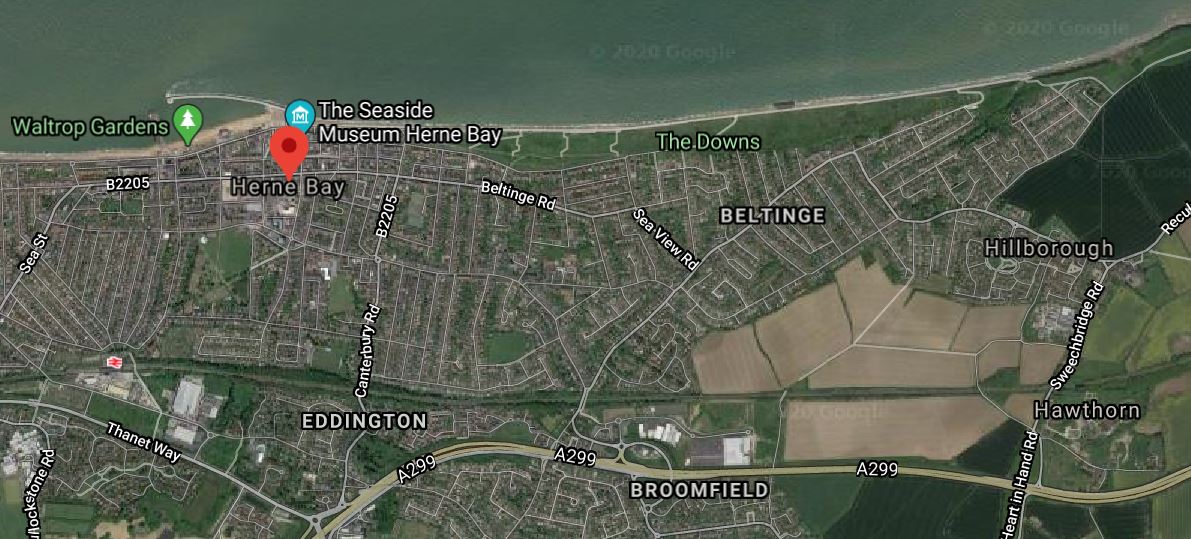
What is not shown is all the wind farms to the North of the town in the Thames Estuary. These include.
- Gunfleet Sands – 172 MW
- Kentish Flats – 139 MW
- London Array – 630 MW
- Thanet – 300 MW
That is a total of 1241 MW, so working for twenty-four hours with a capacity factor of 30% would create almost 9 GWh of electricity.
- A small fraction of this 9 GWh of renewable electricity would provide enough to run the electrolyser at full power.
- The smallest wind farm; Kentish Flats will produce 139 x 24 x 0.3 = 1000 MWh on an average day.
- Just 23 MWh of electricity per hour is needed to create the ten tonnes of hydrogen.
Where are these wind farms connected to the National Grid?
- If just one connection is close to Herne Bay, then co-location must be desirable.
- If there is no connection, only 23 MW would be needed from the National Grid.
Reading the Wikipedia entry for Herne Bay, it appears to be an improving town.
- It has both a fast rail and a High Speed One connection to and from London.
- There is a dual-carriageway road connection to the motorway network.
- The town would probably welcome the jobs, that the development would create.
Herne Bay seems to be a good place to build the first electrolyser.
The Electrolyser At Aberdeen
I don’t know the Aberdeen area well, although the oil industry in the area has been good for my financial well-being.
There must be a good reason for building an electrolyser in the area.
- Aberdeen have experience of hydrogen buses.
- There are some large wind farms; both onshore and offshore close by.
- Is there a convenient site, that once had a coal-fired power station, but still has good electrical connections?
According to the Wikipedia entry for Wind Power In Scotland, the country had 8423 MW of installed wind power in December 2018 and has the aim of using only renewable energy by 2020.
Searching the Internet, I found the Peterhead power station.
The power station is gas-fired.
The power station has changed technology over the years.
There was a plan to fuel the power station with hydrogen produced from methane, where the carbon dioxide would have been captured and stored in the Miller field.
This Google Map shows the power station, to the South of Peterhead.
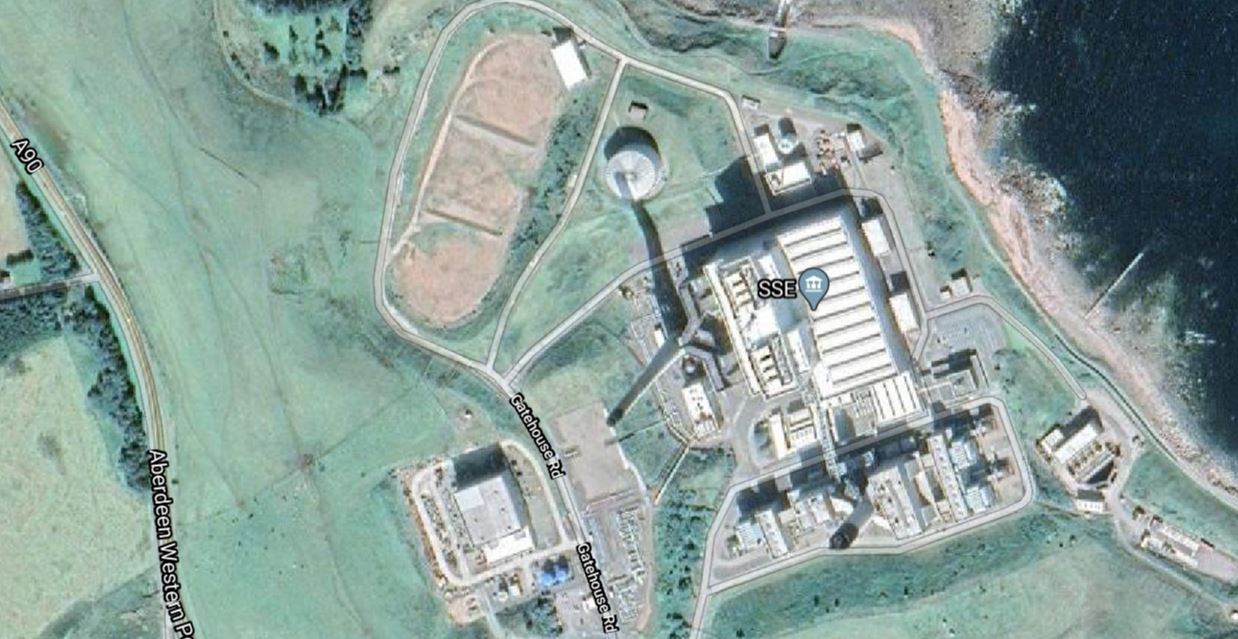
Note, that the power station is close to the A90 road, which forms the Aberdeen Western Peripheral Route, that goes past Aberdeen to the South of Scotland.
Could this power station be the site of the Aberdeen electrolyser?
- It looks to have good road connections.
- It obviously has good electrical connections.
- Peterhead would probably welcome the employment.
As you can see from the map, the power station is owned by SSE plc, who generate about a third of their energy from renewables.
And then there is Hywind Scotland, which is the world’s first commercial floating wind farm.
- This is a 30 MW wind farm.
- It comprises five 6MW floating wind turbines.
- It is situated eighteen miles off Peterhead.
- In the first two years of operation it had a capacity factor of 50 %, according to Wikipedia.
On an average day, Hywind Scotland will generate 360 MWh. This is 65 % of the 550 MWh of energy needed to produce ten tonnes of hydrogen.
Are there undisclosed plans to create a fleet of floating wind turbines, out to sea from Peterhead, which would be ideal for both Scotland’s electricity and hydrogen supplies?
It should also be noted, that in the UK and I suspect other developed countries, if someone needs a large amount of electricity for a commercial purpose, like an aluminium smelter or a steelworks, electricity companies, whether state or privately-owned, have always been keen to oblige.
I suspect that everything could be coming together in Peterhead.
The Electrolyser In Northern Ireland
The Wrightbus factory, owned by Jo Bamford builds its buses at Ballymena.
- Ballymena is 28 miles North of Belfast.
- Dublin is 130 miles to the South.
I can see the mother of all arguments happening, as to whether the electrolyser is North or South of the border.
If you look at the Wikipedia entry entitled Electricity Sector In Ireland, this is the opening paragraph.
The electricity sectors of the Republic of Ireland and Northern Ireland are integrated and supply 2.5 million customers from a combination of coal, peat, natural gas, wind and hydropower.
The grid runs as a synchronous electrical grid and in terms of interconnections has undersea DC-only connection to the UK National Grid, alongside plans in the advanced stage for a higher power, planned Celtic Interconnector to France.
It looks like Jo Bamford will only have to deal with one entity, no matter, which side of the border, the electrolyser is situated.
This would surely make it easier for his All-Ireland Green transport plan, which I wrote about in Wrightbus Boss Eyes All-Island Green Transport Plan.
My feeling is that he’ll get less grief, if the electrolyser was just on the North side of the border with a good road connection to the South. As there is a dual carriage-way road, all the way between Belfast and Dublin, this could probably be arranged.
This Google Map shows where the main dual-carriageway crosses the border.
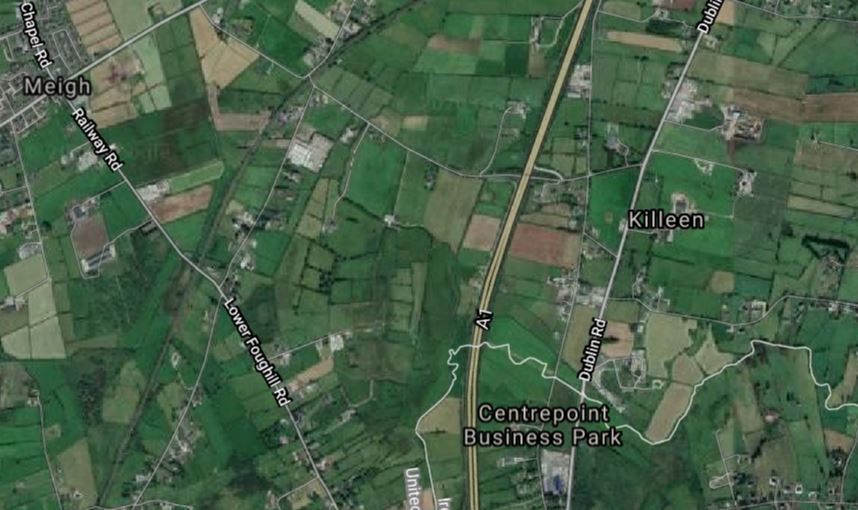
Note.
- The border is shown as a white line to the North of the Centrepoint Business Park.
- The railway line between Dublin and Belfast can be seen to the West of the main cross-border road.
I certainly think, that a solution can be found to fuel all those Irish hydrogen buses, that Jo Bamford has proposed.
The Electrolyser At Runcorn
If Runcorn already has a good source of hydrogen at the former ICI factory, that is now owned by INEOS, why build an electrolyser at Runcorn?
There are several reasons.
- Runcorn is involved in the hydrogen plans for North-West England, that I wrote about in A Hydrogen Mobility Roadmap For North-West England.
- Runcorn can connect into the North West’s proposed hydrogen network.
- Runcorn is close to the zero-carbon wind energy of Liverpool Bay.
- INEOS can pool their zero-carbon hydrogen into that produced by Ryze.
- Will INEOS with all their hydrogen experience in the area, host the electrolyser?
- Runcorn is convenient for the large cities of Liverpool and Manchester.
- Runcorn has good access to the motorway network for the Midland of England and North Wales.
- There must be the possibility of building a rail terminal to deliver hydrogen.
Runcorn would also connect the interests of Jim Ratcliffe and the Bamfords.
The Electrolyser In South Wales
South Wales has an extensive public transport network.
- The South Wales Main Line runs between the Severn Tunnel and Swansea and the West via Newport and Cardiff.
- The Cardiff Valley Lines are being transformed into a modern South Wales Metro, which will make use of electric and battery technology.
- There are a lot of buses, running around in South Wales.
The buses and possibly some of the trains must be candidates for hydrogen power.
Transport for Wales Rail Services have ordered 77 Class 197 diesel trains from CAF, who have a factory at Newport.
Given CAF’s record on innovation and the Welsh Government’s stance on the environment, I wouldn’t be surprised to find out that these trains could be converted to zero-carbon trains. I’m sure Ryze would be pleased to provide green hydrogen for Welsh trains.
I think there are two possible sites for a large electrolyser in South Wales.
The first is the site of the former Aberthaw power stations, which are shown in this Google Map.
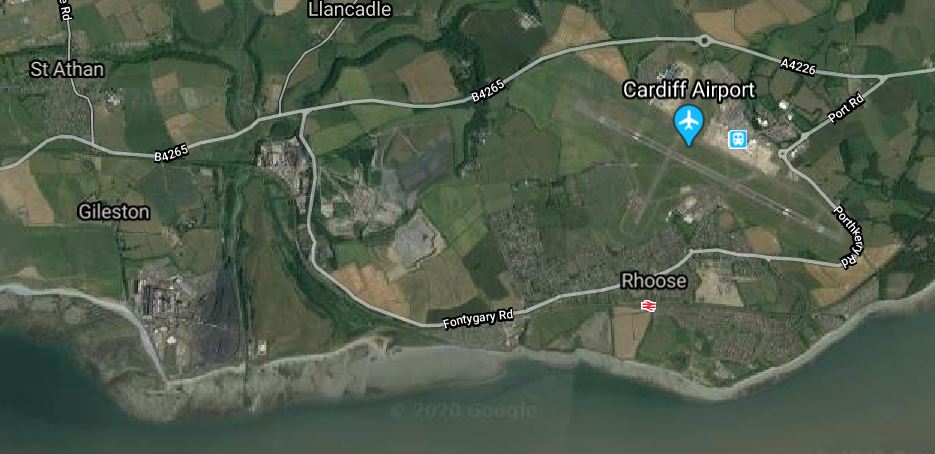
Note.
- Aberthaw power stations were South of Gileston.
- The complex stopped generating power at the end of March this year.
- The site has rail access.
- Road access would need to be improved.
- The power station must have had a good very connection to the National Grid.
- The site is near to Cardiff Airport, who might want to go zero-carbon for all their ground vehicles.
The second possible site, is on the site of the former Llanwern steel works, which is shown in this Google Map.
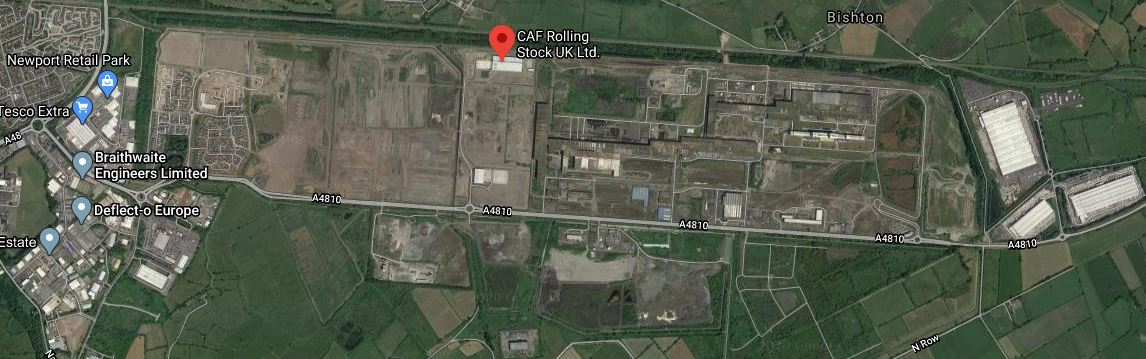
Note.
- It is a very large site, which probably has a very good connection to the National Grid.
- The CAF rolling stock factory is marked by a red arrow.
- CAF could start building and/or selling hydrogen-powered trains in the UK, at some date in the future.
- The site has rail and road access.
- The site is fifteen miles to the East of Cardiff.
- The site is thirty miles to the West of Bristol.
If it was my decision, I’d put the electrolyser on the Llanwern site.
Will The Electrolysers Need A Battery To Cover On Days Without Wind?
I can envisage a system, where several trailer-tankers are filled at once in a continuous process. Once filled, they would be disconnected and replaced by an empty one. It would act like a automatic bottling plant for beer, but with much bigger bottles.
The filled trailer-tankers would be energy stores, whilst they awaited being taken to the customers.
What Infrastructure Will Be Needed At Bus Depots?
The infrastructure is minimal and would be a tank and the means of filling the buses.
I also wonder, if trucks with a proven design of hydrogen trailer-tanker were to be used, these could be filled up at the electrolyser and the trailer-tankers would then be taken to the bus depots, where they would be plugged into the hydrogen delivery system for the buses.
- Each delivery would be a drop-off and connection of a full trailer-tanker of hydrogen and a return with the empty trailer-tanker to the electrolyser.
- The trailer-tankers could be fitted with a hydrogen vehicle-filling connection, so that bus operators could trial a small fleet of hydrogen buses or other vehicles, without putting in any infrastructure, other than safe parking for the trailer-tankers. But then most bus depots have lots of secure parking for large buses.
- This would surely be faster and more efficient, as the delivery driver wouldn’t have to wait, whilst the hydrogen is transferred.
- Deliveries could be arranged during the night.
I would also use a fleet of quiet, emission-free zero-carbon hydrogen-powered trucks. Do what I say and do what I do!
Why Not Generate The Hydrogen At The Depot?
At Pau, ITM Power have installed a hydrogen generator for the hydrogen-powered buses.
So why not do this all over the UK?
- A large bus depot could need a very large amount of electricity in a congested part of a city, where the electricity supply may be dodgy.
- It could also be safer, as venting the oxygen produced as a by-product of electrolysis, in an uncontrolled environment can be dangerous. But generated in a large electrolyser, it could be captured and used for another purpose or safely vented to the atmosphere. This section in Wikipedia, gives a brief outline of the applications of oxygen.
- I truck-based delivery system, is ideal for trials of hydrogen-powered buses, taxis, delivery vans, trucks and local authority vehicles, as no infrastructure is needed.
I suspect that, it might be more affordable and convenient to use centralised production of the hydrogen.
Conclusion
Jo Bamford has developed a well-thought out plan.
A Hydrogen Mobility Roadmap For North-West England
In the last few days, the North West Hydrogen Alliance has published a document entitled A Hydrogen Mobility Roadmap.
Some information from a well-written and very informative document.
Vehicle Types Covered In The Roadmap
A composite picture at the start of the document shows the following hydrogen-powered vehicles.
- A double-deck bus.
- A heavy goods vehicle.
- A passenger car.
- A passenger train.
Other vehicles, which exist or are under development, could have been added.
- A refuse truck.
- A high capacity fork lift or dump truck.
- A freight locomotive.
- The availability of hydrogen fuel in an area, must encourage the use of hydrogen-powered vehicles.
Comparison Of Electric And Hydrogen
The document gives a comparison between electric and hydrogen power.
Speed Of Refuelling
- Electric – The current long duration of battery recharges rules out many forms of transport
- Hydrogen – Hydrogen refuelling speed is largely similar to current petrol and diesel fuelling
Distance On Single Charge/Tank
- Electric – At the present time, cars will travel 150-250 miles per charge, but current battery weight means they are unsuitable for HGVs
- Hydrogen – Vehicles can travel 500+ miles on a single tank of hydrogen, which can be scaled up to suit vehicle size
Availability Of Fuel
- Electric – Growing network of charge points, but this is creating problems for power networks
- Hydrogen – Only 12 refuelling stations in the UK
Availability Of Vehicles
- Electric – Various cars to choose from, buses and trains readily available, with HGVs and ships in development
- Hydrogen – Cars, buses and trains largely available. HGVs and ships in development
Note.
- The speed of refuelling and the range for hydrogen.
- The need for more hydrogen refuelling stations.
- Both battery and hydrogen ships are in development.
I think their points are fair.
Road, Rail And Marine
The document discusses the various modes of transport and how hydrogen can help, with respect to both carbon-emissions and pollution.
The Alstom Breeze Trains
This picture is a visualisation of the Alston Breeze.
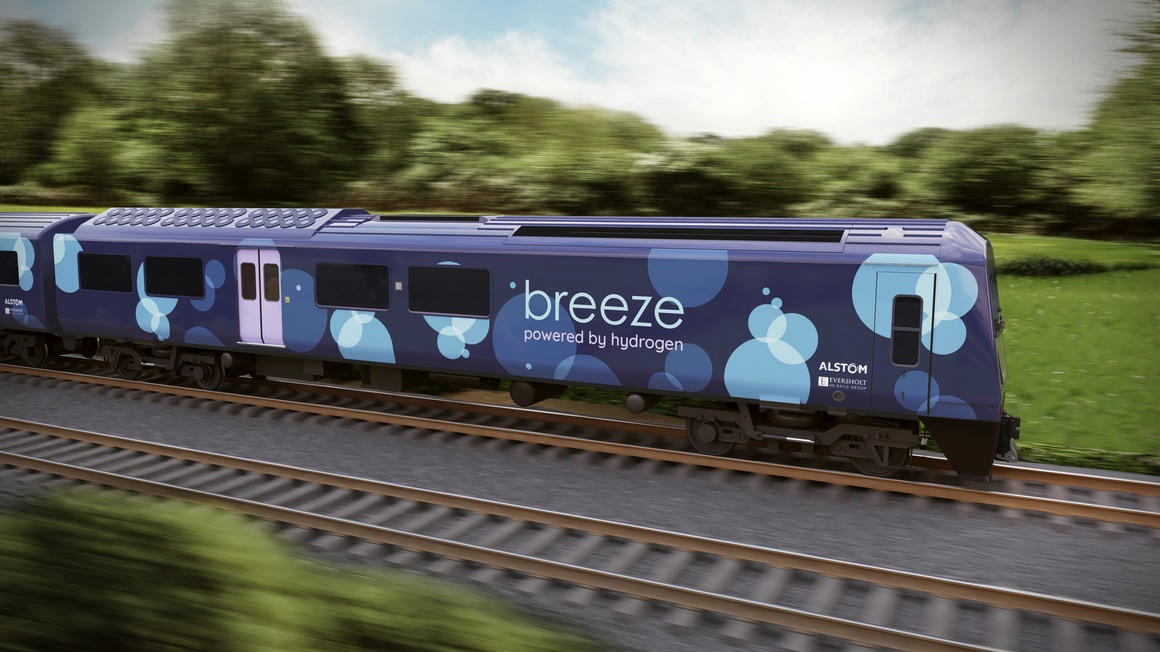
This is said about the Alstom Breeze trains.
Alstom in Widnes is ready to deploy its new Breeze trains and is working with Northern Rail to identify routes that are suitable for conversion to hydrogen.
A map also shows hydrogen train symbols on the Liverpool and Manchester Line, that goes via Widnes and Warrington and conveniently passes the Alstom factory at Widnes.
I wonder, if we’ll see an acceleration of this project?
Consider.
- Northern Rail is now directly controlled by the Government.
- Some Class 321 trains for conversion, will surely be available this summer.
- The updating of the trains, except for the hydrogen system has been developed in the Renatus project.
- Alstom have the experience of the successful hydrogen-powered Alstom Coradia iLint from Germany.
- Supplying the Alstom factory with hydrogen, shouldn’t be too difficult.
- I doubt any extra infrastructure is needed to run the trains.
- Alstom have sold two or three fleets of iLints on the back of a successful introduction into service of two prototype trains.
I don’t think, Alstom and all the various partners and stakeholders would object if the project were to be accelerated.
What’s Already Happening In The North West?
These hydrogen-powered projects are mentioned.
- Twenty double-deck buses for Liverpool City Centre.
- Alstom Breeze trains.
- storengy refuse trucks for Cheshire.
- ULEMCo are converting trucks and ferries.
- Port of Liverpool air quality.
It does seem to be that if you give an area a hydrogen network, possible users will find ways to use it to their advantage.
Rising To The Challenge
This section answers these questions.
Where Will The Hydrogen Come From?
Initially from INEOS at Runcorn, where I used to work around 1970 and BOC at St. Helens.
How Will It Be Transported?
Mainly by innovative use of new and existing pipelines.
How Do We Get To Critical Mass?
It looks like they’ll start slowly with hydrogen from Runcorn and St. Helens and build from there.
I would add a further question.
Will They Be Adding Hydrogen Filling Stations To The Network?
The North West needs them!
Hydrogen Storage
This is said about storing hydrogen.
Geologically, Cheshire is one of the few places in the UK where major underground gas storage in salt caverns has been delivered, paving the way for potential hydrogen storage, which is already done at scale elsewhere.
When I worked at ICI, I was given a tour of one of salt caverns. One is rumoured to be large enough to enable a full-size replica of Salisbury cathedral to be built inside.
Research
This is said about research.
Esteemed universities, and a wealth of innovative research companies, mean the region can deliver new hydrogen technologies. With academia working side-by-side with industry, the North West’s institutions can equip the next generation of skilled workers to support the hydrogen economy.
As a graduatev of one of those esteemed universities, how can I disagree?
Carbon Capture And Storage
This is said about carbon capture and storage.
Offshore reservoirs in the East Irish Sea can store carbon dioxide (CO2) produced from hydrogen production. Carbon Capture Utilisation and Storage (CCUS) is essential technology to help the UK in its fight against climate change. CCUS can capture up to 95% of the CO2 emissions associated with producing hydrogen from natural gas.
Whether you want to produce hydrogen this way is another matter. But the oil refineries and chemical plants along the Mersey are surely prime candidates for CCUS.
An Alliance
Not for nothing is the project called the North West Hydrogen Alliance!
Sixteen partners are mentioned at the end of the document.
Wrightbus Boss Eyes All-Island Green Transport Plan
The title of this post, is the same as that of this article on the Irish Independent.
This is the introductory paragraph.
THE new owner of manufacturer Wrightbus says 12,000 buses on the island of Ireland as well as trains could be replaced with hydrogen engines to usher in a new era of environmentally friendly transport.
These points are made in the article.
- Jo Bamford, who is the owner of Wrightbus, plans to decarbonise all buses and trains on the island.
- A hydrogen infrastructure would need to be setup.
- The Enterprise train between Belfast and Dublin would be run by hydrogen.
- Jo Bamford has yet to talk to the Irish Government.
- Wrightbus is seeking a £500m subsidy from the UK Government to built 3,000 hydrogen-powered buses by 2024.
- This would bring 1,500 jobs to Ballymena.
- The ydrogen-powered buses, will be the same price as diesel.
- New Whightbus hydrogen buses will be on the streets of London and Aberdeen later this year.
This is one of the last paragraphs of the article.
He (Jo Bamford) said that the impact of the Covid-19 lockdown on the environment, with a clearer sky and cleaner air resulting from the fall in traffic, could be an inspiration for greener transport.
It may be an ambitious plan, but then you would expect ambition to be flowing in large quantifies in the veins of someone from the family, that gave us JCB.
Will Hydrogen Double-Deck Buses Become Commonplace?
There are now three different designs of hydrogen-powered double-deck bus in design, if not production.
- AlexanderDennis – See New Facility To Power Liverpool’s Buses With Hydrogen
- Optare – See New Hydrogen Double-Decker Bus Launched
- Wrightbus
There is also the hydrogen-powered version of the Van Hool ExquiCity tram-bus, that I wrote about in Ballard-Powered Fuel-Cell Tram-Buses From Van Hool Now In Revenue Service In France.
There are some big players making large investments in hydrogen-powered buses. I suspect at least three and possibly all four will succeed.
Designing A Hydrogen-Powered Vehicle
Two hydrogen-powered vehicle designs have impressed me this week.
- The Optare design, where the battery of an electric bus was replaced by a hydrogen power system.
- The mining dump-truck, that I wrote about in Thirsty High-Rollers … Mining’s Heavy Haulers Prime Candidates For Hydrogen Conversion.
Both designs use the existing electric transmission and seem to have been relatively straightforward for experienced engineers who are working in the field.
I wouldn’t be surprised to see other suitable vehicles redesigned for hydrogen power.
New Hydrogen Double-Decker Bus Launched
The title of this post is the same as that of this article on Air Quality News.
This is the introductory paragraph.
Arcola Energy and Optare Group have announced the launch of a hydrogen fuel cell double-decker bus.
A few points from the article about the Metrodecker H2 hydrogen bus.
It is based on the design of an electric version of the existing Metrodecker.
- It will be built in the UK.
- It will carry 90 passengers.
- It will have a range of between 200 and 250 miles.
- It is planned to enter service in 2021.
It looks like we now have three double-deck hydrogen bus projects in the UK, with one each from AlexanderDennis, Optare and Wrightbus.
The Range
The range of the bus between 200 and 250 miles, which depends on specification and capacity, deserves a comment.
This range is of the same order as that of a Tesla Model S with a 75 kWh battery.
Aberdeen Could Have 200 Hydrogen Buses By 2024, According To Industry Leader
The title of this post, is the same as that of this article on the Aberdeen Press and Journal.
This is the introductory paragraph.
Aberdeen could accommodate up to 200 hydrogen buses by 2024, according to an industry leader who wants to roll out thousands across the country.
These are some other points from the article.
- Aberdeen has ten single-decker hydrogen buses.
- Fifteen double-decker buses should be delivered from Wrightbus, this year.
- The article also has a video of Aberdeen’s hydrogen-powered road sweeper.
Aberdeen certainly seems to be embracing hydrogen.
Daimler, Volvo Trucks Team Up On Hydrogen Fuel Cells For Heavy Trucks
The title of this post is the same as that of this article on Forbes.
This is the introductory paragraph.
Daimler and Volvo Trucks plan to collaborate on development and sales of fuel-cells for heavy-duty trucks, as the costs of new technology and uncertainty related to the coronavirus pandemic are pushing large manufacturers to pool resources.
It also appears, that they are open to other companies to join the over billion euro joint-venture.
To my mind, this deal is a massive endorsement of hydrogen, as the fuel of the future for heavy trucks and buses.
A Bus For The Twenty-First Century
What puzzles me, is why bus drivers in London, seem to be suffering more from COVID-19 infection, than drivers elsewhere!
In London, all buses have two or three doors and contactless ticketing, whereas in many parts of the UK, there is often only one door and no contactless ticketing.
This must mean, that there is generally less interaction between the driver and passengers in the capital. So logic would say, that outside of London, there should be more passing of infections between everybody on the bus.
An Observation In Manchester
Ten years ago, I observed behaviour on a single-door Manchester bus going to Oldham, with a union rep for bus drivers, who by chance happened to be sitting beside me.
The scrum as passengers entered and left the bus by the same door was horrific and the rep told me, that the local riff-raff were always trying to nick the driver’s money.
He told me, that a London system based on contactless ticketing was union policy and would cut attacks on staff, which he said had virtually stopped in London.
A Bus For The Twenty-First Century
The government has said that millions will be available for new zero-carbon buses, powered by hydrogen. I doubt that batteries will be able to provide enough power for many years.
It is my belief that given the new circumstances, that the bus should also have the following features.
- It should be as infection-unfriendly as possible, as COVID-19 won’t be the last deadly infection.
- Contactless ticketing by credit card or pass.
- Full CCTV to identify non-payers or those with stolen cards.
- Two doors with one in the middle for entry and one at the back for exit.
- It would be possible on some routes for both doors to be used for entry and exit.
- Wheelchairs would enter and leave by the middle door, where the ramp would be fitted.
I would put the stairs to the top deck on the left hand side of the bus, with the foot of the stairs leading directly into the lobby by the middle door.
The Van Hool ExquiCity
The Van Hool ExquiCity is an alternative solution, that is already running in Belfast, where it is named Glider.
It is probably best described as a double-ended articulated bus, that runs on rubber tyres, that thinks it’s a tram.
This press release from Ballard is entitled Ballard-Powered Fuel Cell Tram-Buses From Van Hool Now in Revenue Service in France, describes the latest hydrogen-powered version of the Exquicity, which is now in service in Pau in France.
- Each bus appears to be powered by a 100 kW hydrogen fuel cell.
- The buses are over eighteen metres long.
- Twenty-four metre double-articulated tram-buses are available.
- The buses seat 125 passengers
- The buses have a range of 300 kilometres between refuelling.
I like the concept, as it brings all the advantages of a tram at a lower cost.
Here’s a video.
It certainly seems a quiet bus.
I desperately need to get to Pau to see these vehicles.
Conclusion
We could design a new bus for the twenty-first century, that tackles the problems facing the bus industry.
- Climate change and global warming.
- Control of deadly infections like COVID-19.
- Efficient, fast ticketing.
- Attacks on staff.
- Petty crime.
- Access to public transport for the disabled, the elderly and those with reduced mobility.
We certainly have the skills to design and manufacture a suitable bus.
Tees Valley Wins £1.3million Project To Bring Hydrogen Vehicles To The Region
The title of this post, is the same as that as this article on the Tees Valley Combined Authority web site.
This is the introductory paragraph.
Hydrogen vehicles and refuelling stations will soon be coming to Tees Valley after it was today (February 5) announced that a £1.3million bid to Government had been successful.
The next two paragraphs give more detail.
Tees Valley Mayor Ben Houchen welcomed the result of a Government competition that will see two refuelling stations built in Middlesbrough and Redcar, plus a fleet of cars which use hydrogen technology for long-range travel (300+ miles) and fast refuelling capability.
The new refuelling stations could allow cars, buses, bin lorries and even trains to be powered by the super fuel.
This later paragraph details the expected economic benefits.
Figures from a draft report commissioned by the Combined Authority and produced by KPMG suggest that exploiting the opportunities of the hydrogen economy could add up to £7billion to the region’s economy by 2050, with the creation of as many as 1,000 jobs.
These figures seem to say hydrogen is good for the economy and jobs.
Batteries Come Of Age In Railway Construction
The title of this post is the same as that of this article on Rail Engineer.
It is very much a must-read article on the subject of constructing and repairing railways in a zero-carbon manner.
These are some extra comments of mine!
Smaller And Lighter First
This is a paragraph from the article.
Smaller and lighter equipment is getting the treatment first – the batteries and motors can be smaller. Volvo Construction Equipment has already supplied its first electric compact loader, to a customer in Germany.
Volvo seems to be busy creating electric loaders.
Size Appears To Be No Limit
This extract shows how a large dump truck can go electric.
If a 25-tonne excavator is not big enough, how about a Komatsu HD605-7 off-highway truck, which weighs 51 tonnes unladen and has a payload of 63 tonnes? Kuhn Switzerland, working with Lithium Storage and the Swiss Federal Office of Energy (SFOE), has converted this 111-tonne gross vehicle weight monster into an electric vehicle.
Out came the 23-litre, 778hp (578kW) diesel engine and in went a synchronous electric motor rated at 789hp (588kW) electric motors. An additional 120kW motor is fitted just to power the hydraulic systems. The battery was a challenge – the four large packs have a combined rating of 700kWh and weigh 4.5 tonnes.
Do you get much bigger than 111 tonne, nearly 600 kW and a 700 kWh battery pack?
Regenerative Braking
The article also says that in some applications, vehicles go up and down a route and can charge the batteries using regenerative braking on the downhill run. In one application batteries only need charging every three days.
Rail Application Of Off-Road Equipment
The article says this.
While an eDumper may be too large to use on the railway, it does show what can now be done. Between JCB’s mini-excavator and eMining’s dump truck, there is room to battery-power almost any item used on the railway today.
I would suspect that there are a lot of companies, including giants like Caterpillar, JCB, Komatsu. Volvo and others working to produce electric versions of their successful products.
What About The Workers
The article says this.
These new machines are only the tip of the ‘electric’ iceberg. As pressure mounts to cut carbon emissions and to protect workers from harmful fumes, there will be more to come.
Health and safety will lead to a big push towards electric, as electric vehicles are pollution, carbon and fume-free, with a substantial noise reduction.
Hydrogen Will Have A Part To Play
This statement is from the Wikipedia entry for ITM Power.
In March 2015 JCB made a strategic investment of £4.9M in ITM Power.
Why would a construction equipment company invest in a company, that makes equipment that generates hydrogen to power vehicles?
- It is known, that the Bamford heir has purchased Wrightbus and intend to make hydrogen-powered buses for the world.
- JCB have built their own diesel engines, so are they building their own hydrogen engine?
- JCB make tractors and I believe a hydrogen-powered tractor may be more than a niche market.
- Is it possible to build a hydrogen-powered JCB?
Buy any of these products and you get a gas station in the price.
To deliver hydrogen, all you need to do is connect it to the water and electricity mains and switch on.
If you’re using it to power rail or site construction equipment, the gas station could be on wheels, so it can be moved from site to site.
Conclusion
This is the writer’s conclusion.
It seems that ‘battery is the new diesel’. It will be fascinating to see how this sector develops over the next few years.
I don’t disagree, but would add, that I feel that JCB are the elephant in this room!
 The Anonymous Widower