New Baltic Sea Interconnector On Horizon As Lithuania, Latvia, and Germany Plan Cross-Border Link
The title of this post, is the same as that of this article on offshoreWIND.biz.
This is the sub-heading.
Lithuania, Latvia, and Germany are planning a joint offshore interconnector that would enable electricity trading between the Baltic countries and Germany and allow for the integration of up to 2 GW of offshore wind capacity in Lithuania and Latvia
These first two paragraphs add more detail to the article.
The energy ministers of the three countries signed a joint declaration of intent on 18 February, paving the way for the development of the Baltic-German PowerLink interconnector, which would, in addition to electricity trading and offshore wind capacity integration, also enable the expansion of onshore renewable energy capacity.
The Lithuanian, Latvian, and German transmission system operators (TSOs) – Litgrid, Augstsprieguma tīkls and 50Hertz – agreed to assess the feasibility of the hybrid electricity interconnection.
As Germany, has the following connections under development in the West.
- AquaVentus to Aberdeen, Humberside, Denmark, Norway and The Netherlands.
- NeuConnect to the Isle of Grain In England.
- GriffinLink, which is an offshore link to England.
The Germans seem to be putting themselves at the centre of an energy distribution system, that has the capability to stabilise European and UK electricity for thousands of years. Especially, if the network grows to include more countries.
This paragraph says this about the Baltic-German PowerLink project.
The Baltic-German PowerLink project concept developed by Litgrid, Augstsprieguma tīkls, and 50Hertz includes a 2 GW, approximately 600 kilometres long hybrid offshore connection, with the connection point in the Baltic States planned to be on the border between Lithuania and Latvia. The exact location is to be determined after technical studies.
Note.
- The interconnectors may be long, but they are not longer than anything built successfully before in European waters.
- The UK and the Island of Ireland are well-linked.
- There would appear to be no need for challenging projects like the Morocco-UK Power Project
I suspect that Germany will get the energy it needs and the British Isles will get a nice little earner.
If Europe is generating large amounts of wind and solar energy with its variable output it will need lots of energy storage.
What Countries Have The Terrain For Pumped Storage Hydro In Europe?
I asked Google AI and received this answer.
Key countries with ideal, high-elevation terrain and significant existing or planned capacity include:
Alpine Region (The Heart of European Pumped Storage):
Switzerland: Extremely high capacity due to steep, mountainous landscapes and significant water sources, hosting the world’s oldest working pumped storage plant.
Austria: Heavily mountainous, it is a major player in PSH expansion and modernization.
France: Home to one of Europe’s largest, the Grand Maison hydroelectric power station.
Italy: Holds high capacity with numerous planned projects.
Germany: Strong existing infrastructure.
Southern Europe:
Spain: Features some of Europe’s largest plants (e.g., La Muela/Cortes-La Muela).
Portugal: Significant recent investment in large-scale projects like the Tâmega complex.
Other Potential Areas:
Norway: High potential due to its mountainous, water-rich terrain.
United Kingdom: High project volume currently under construction.
Balkans & Central Europe:
Countries like Bulgaria, Romania, and the Czech Republic have suitable terrain for further development.
These countries benefit from significant hydraulic head (steep drop) and natural or artificial reservoir potential, making them ideal for storing energy for peak consumption hours.
Note.
- As expected, the Alpine region is Top of the League.
- The UK is holding its own despite its small mountains.
- There is a lot of potential to be developed.
But then Electric Mountain in Snowdonia is certainly at the top table of pumped storage systems despite being built in the 1980s.
What Countries Have The Terrain For Hydrogen Storage In Europe?
I asked Google AI and received this answer.
Key European countries with suitable geological terrain—specifically salt caverns and depleted gas fields—for large-scale, underground hydrogen storage include Germany, the Netherlands, Denmark, the United Kingdom, and France. Other significant regions for storage potential include Spain, Hungary, and Austria, which are developing porous storage facilities.
Key Regions & Terrain Types:
Salt Caverns (North-Western Europe): Germany, the Netherlands, Denmark, France, and the UK have substantial salt deposits suitable for creating caverns, identified as cost-efficient for large-scale storage.
Depleted Gas Fields (Porous Rock): The Netherlands, Germany, and parts of Central/Southern Europe (Spain, Hungary) have significant capacity in existing porous storage, particularly in the North Sea region.
Specific Projects: Germany (Uniper’s Krummhörn project), Netherlands (HyStock), and France (HYPSTER at Etrez) are active, with Spain and Denmark emerging as major hydrogen hubs.
Capacity Potential: The Netherlands, for instance, holds massive potential (35-60 TWh) due to its offshore and onshore depleted fields.
Salt cavern projects, which offer high-deliverability storage, are heavily concentrated in the North-Western European industrial corridor.
I was lucky enough have a tour of ICI’s salt mine in Cheshire, when I worked there in the 1960s and I remember these facts from those days.
- There was enough salt in the ground under Cheshire to last several thousand years.
- Most salt was extracted from boreholes, for making chlorine using electrolysis and the Castner-Kellner process.
- Hydrogen was a by-product and much of it was mixed with coal gas to raise steam for the works.
The same technique used to make boreholes to extract the salt, is used to hollow caverns in the salt to store gases like hydrogen.
Once, when they were digging salt out of the salt mine at Winsford, a worker broke into an unmarked borehole and ICI nearly lost the mine because of the water rushing in.
Two stories stand out from the rescue of the mine.
- There was a need for dry clothes for all the workers, so ICI took a truck to Marks & Spencer in Northwich and emptied it of anything they might need. I was told the story enriched with plagues of locusts.
- A Ford Transit was found to have travelled a few thousand miles underground in axle deep salt slurry. Rather, than scrap it and buy another, it was offered back to Ford, who were delighted to swap it for a new one. I heard that Ford said, that the accelerated corrosion research would have taken many years, if done on the roads.
Always think out of the box.
Development Consent Decision On 3 GW Dogger Bank South Project Postponed
The title of this post, is the same as that of this article on offshoreWIND.biz.
This is the sub-heading.
The UK Secretary of State for Energy Security and Net Zero has set a new deadline for the decision on the Development Consent Order (DCO) for Dogger Bank South, a 3 GW offshore wind project developed by RWE, which the company owns in partnership with Masdar.
These two paragraphs add more detail to the project.
The statutory deadline for the decision on the project was 10 January 2026. This has now been moved to 30 April.
According to a statement from the Minister for Energy Consumers, Martin McCluskey, the extension will allow time to request further information that was not provided for consideration during the examination period and to give all interested parties the opportunity to review and comment on such information.
I clipped this map from the Dogger Bank South web site.
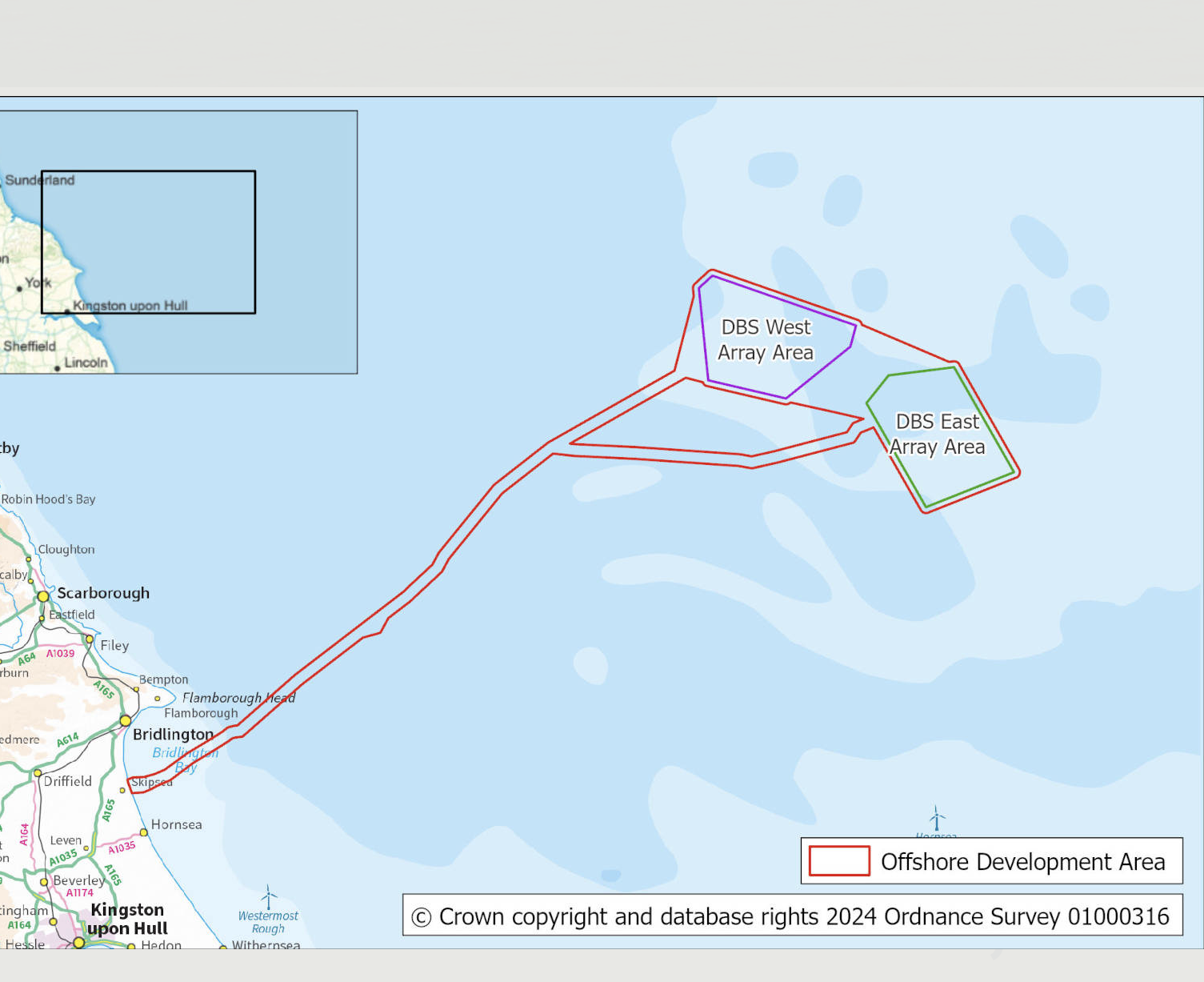
Note.
- Bridlington, Kingston-Upon-Hull and Scarborough can be picked out on the coast of East Yorkshire.
- The two wind farms and the route of the cables to the shore can be clearly seen.
I just wonder, whether the nature of the project is changing.
Consider.
- Three GW is a lot of power to move across Yorkshire to where it can be connected to the grid.
- In Consultation On Offshore Wind Reform: Hydrogen Sector Calls For Hybrid Connection Concepts And Warns Of Compensation Risks, German companies involved in the AquaVentus project are calling for more hydrogen to be produced offshore and piped to the shore.
- Could hydrogen produced in the Dogger Bank Wind farms be piped to the Northern end of the AquaVentus pipeline on the German sector of the Dogger Bank?
- A pipeline or cable could still bring energy to Yorkshire.
- The hydrogen could go to the hydrogen stores at Aldbrough and Rough.
- SSE and Centrica could play hydrogen-bankers to the Germans, as Germany is short of hydrogen storage.
- East Yorkshire is building two hydrogen power stations at Keadby and Ferrybridge.
- Support for the Dogger Bank South wind farms will probably be from RWE’S Grimsby hub.
Is this the Anglo-German co-operation, I talked about in UK And Germany Boost Offshore Renewables Ties at work?
I can see benefits for this arrangement for the UK.
- Hydrogen production is offshore.
- A lot of the onshore employment is in the UK.
- There will be a hydrogen pipeline between Germany and the vast hydrogen storage of Humberside via the German Dogger Bank and Dogger Bank South wind farms.
- Will there be a hydrogen pipeline between the North of Scotland and Humberside via the AquaVentus pipeline?
- There will also be a substantial cash flow to the UK Treasury because of all the hydrogen production in UK waters.
RWE may also be able to use a standard hydrogen production platform in German and UK waters.
This is the sort of plan, that the money men will like.
RWE, Masdar Move Forward With 3 GW Dogger Bank South Offshore Wind Farms
The title of this post, is the same as that of this article on offshoreWIND.biz.
This is the sub-heading.
The UK’s Planning Inspectorate has concluded its six-month Nationally Significant Infrastructure Project (NSIP) examination period for the Dogger Bank South (DBS) offshore wind farms, being developed by RWE and Abu Dhabi’s Masdar.
These two introductory paragraphs add more details.
Since the start of the examination this January, the Planning Inspectorate has assessed the environmental, socio-economic, and technical attributes of the DBS projects against the UK’s standards for sustainable infrastructure development.
The Inspectorate plans to prepare and submit a detailed report with recommendations to the Secretary of State for Energy Security and Net Zero within the next three months, and a consent decision is expected within the next six months.
The development of this wind farm moves on.
- The lease with the Crown Estate was signed in Jan 2023.
- In November 2023, Masdar took a 49 % stake as I reported in RWE Partners With Masdar For 3 GW Dogger Bank South Offshore Wind Projects.
But there is no completion date anywhere for the whole project, that I can find with Google.
If you type RWE offshore electrolysis into Google AI, you get this answer.
RWE is actively involved in several hydrogen projects utilizing offshore wind power for electrolysis, particularly in the Netherlands and Germany. These projects aim to produce green hydrogen, which is then used in various applications like industrial processes, transportation, and potentially for export. RWE is a major player in offshore wind and is leveraging this experience to advance hydrogen production.
Note.
- RWE are one of the largest, if not the largest electricity generator in the UK.
- In RWE Opens ‘Grimsby Hub’ For Offshore Wind Operations And Maintenance, I stated that RWE are developing almost 12 GW of offshore wind power around our shores.
So just as RWE are utilizing offshore wind power for electrolysis, particularly in the Netherlands and Germany, could they be also be planning to do the same in UK waters with the Dogger Bank South wind farm?
The hydrogen would be brought ashore in a pipeline.
There would be no need for any 3 GW overhead power lines marching across East Yorkshire and around the town of Beverley.
Two large hydrogen stores are being developed at Aldbrough and Rough in East Yorkshire.
H2ercules And AquaVentus
These are two massive German projects, that will end the country’s reliance on Russian gas and coal.
- H2ercules is a series of pipelines that will distribute the hydrogen in Southern Germany.
- AquaVentus will build a network of pipelines to bring 10.3 GW of green hydrogen from the North Sea to the German mainland for H2ercules to distribute.
Germany is embracing hydrogen in a big way.
- I introduce AquaVentus in AquaVentus, which I suggest you read.
- AquaVentus is being developed by RWE.
- AquaVentus connects to a German hydrogen network called H2ercules to actually distribute the hydrogen.
This video shows the structure of AquaVentus.
I clipped this map from the video.

Note.
- The thick white line running North-West/South-East is the spine of AquaVentus, that will deliver hydrogen to Germany.
- There is a link to Esbjerg in Denmark, that is marked DK.
- There appears to be an undeveloped link to Norway, which goes North,
- There appears to be an undeveloped link to Peterhead in Scotland, that is marked UK.
- There appears to be a link to just North of the Humber in England, that is marked UK.
- Just North of the Humber are the two massive gas storage sites of Aldbrough owned by SSE and Rough owned by Centrica.
- Aldbrough and Rough gas storage sites are being converted into two of the largest hydrogen storage sites in the world!
- There appear to be small ships sailing up and down the East Coast of the UK. Are these small coastal tankers, that are distributing the hydrogen to where it is needed?
When it is completed, AquaVentus will be a very comprehensive hydrogen network.
I believe that offshore electrolysers could be built in the area of the Hornsea 4, Dogger Bank South and other wind farms and the hydrogen generated would be taken by AquaVentus to either Germany or the UK.
- Both countries get the hydrogen they need.
- Excess hydrogen would be stored in Aldbrough and Rough.
- British Steel at Scunthorpe gets decarbonised.
- A 1.8 GW hydrogen-fired powerstation at Keadby gets the hydrogen it needs to backup the wind farms.
Germany and the UK get security in the supply of hydrogen.
Underground Hydrogen Storage Pilot Gets Funding Boost
The title of this post is the same as that of this article on Energy Live News.
This is the sub-heading.
New hydrogen storage tech could boost grid resilience and emissions cuts
These first three paragraphs add some details.
National Gas and Gravitricity have secured £500,000 from Ofgem to develop a new type of underground hydrogen storage.
The H2FlexiStore system, designed by Edinburgh-based energy storage firm Gravitricity, aims to store up to 100 tonnes of green hydrogen in lined geological shafts.
The technology, which could see a demonstrator built in 2026, is intended to offer a flexible, resilient solution to future hydrogen network needs.
The article also has an excellent graphic.
Note that it takes 55.2 MWh of electricity to generate a tonne of hydrogen, so a hundred tonnes of hydrogen would store 5.52 GWh of electricity as hydrogen.
Vallourec’s Delphy Hydrogen Storage Solution
Hydrogen can be a nuisance to store.
I have just found a YouTube video of a system called Delphy from French company Vallourec.
Delphy seems a neat solution, where hydrogen is stored vertically in a 100 metre hole, that can hold a 100 tonnes of hydrogen.
You can watch this video.
I think this would be an ideal hydrogen storage solution for a bus or coach company or a truck operator.
Cold Snap Leaves Britain With Less Than A Week’s Worth Of Gas
The title of this post, are the same as that of this article on The Times.
This is the sub-heading.
The closure of Russian pipelines through Ukraine and recent weather conditions have left gas stores ‘concerningly low’
These are the first two paragraphs.
Britain has less than a week of gas supplies in storage, the country’s largest supplier has warned after plunging temperatures and high demand.
Centrica, the owner of British Gas, said the UK’s gas storage was “concerningly low” after coming under pressure this winter.
The two largest gas storage facilities in this country are both in the Humberside area.
- Aldbrough is in salt caverns North of Hull and is owned by SSE.
- Rough is under the North Sea and is owned by Centrica
Both are being converted to store hydrogen.
Some might thing that is a bit stupid if we’re short of storage, but we need the hydrogen storage for four reasons.
- To store hydrogen created by electrolysers on Humberside, which will enable heavy gas users in the area to decarbonise.
- The hydrogen will also be burnt in a 1 GW hydrogen-fired power station at Keadby to back up the wind turbines, with zero-carbon electricity.
- The hydrogen will also be sold to the Germans to replace Putin’s blood-stained gas. It will be sent to Germany in a pipeline called AquaVentus, which will also deliver Scottish hydrogen across the North Sea. Hopefully, the Germans will pay a good price for the hydrogen.
- The hydrogen will be used for transport.
The mistake the Government is making is not to develop smaller gas fields, so that domestic gas users can continue to use natural gas, until the technology to replace it with zero-carbon sources is fully developed.
Funding Awarded For Study On Hydrogen Storage Potential In The East Midlands
The title of this post, is the same as that of this article on the British Geological Survey.
This is the sub-heading.
A new study has been awarded funding to explore the underground hydrogen storage potential in the East Midlands.
These are the first three paragraphs.
East Midlands Storage (EMstor), a consortium led by Cadent and partnered with BGS, Star Energy Group, Net Zero Strategy and the University of Edinburgh, has been awarded discovery funding by Ofgem’s Strategic Innovation Fund to undertake a new study to evaluate geological storage potential in the East Midlands.
The EMstor study is the first of its kind in the region. It will undertake a feasibility assessment of the East Midlands’ geology to evaluate its potential to host storage technologies, allowing expansion of Cadent’s proposed 100 per cent hydrogen pipeline.
The East Midlands has numerous depleted oil reservoirs, which may have potential to store hydrogen. The study will characterise the potential geological reservoir to establish if it is suitable for hydrogen storage at scale in the local area.
The oilfields of the East Midlands Oil Province have their own Wikipedia entry, which gives full details of the dozens of small oil fields in the area.
- It may not be the world’s largest oil resource, but it certainly helped us during the Second World War.
- Experienced Texan oil-men were even imported, to help boost production.
- It used to be possible to spot the occasional lonely nodding donkey, as you passed through the area.
Surely, if some of the oilfields can be converted to hydrogen stores, this would be very useful.
Energy In – Hydrogen And Carbon Dioxide Out
This article was inspired by this article in the Sunday Times, which is entitled ‘It’s A Slog’: Life Inside Britain’s Last Coal Power Station.
The article is about Ratcliffe-on-Soar power station, which is next to East Midlands Parkway station.
This is the first paragraph of the station’s Wikipedia entry.
Ratcliffe-on-Soar Power Station is a coal-fired power station owned and operated by Uniper at Ratcliffe-on-Soar in Nottinghamshire, England. Commissioned in 1968 by the Central Electricity Generating Board, the station has a capacity of 2,000 MW. It is the last remaining operational coal-fired power station in the UK, and is scheduled to close in September 2024.
I took these pictures of the power station in 2019.





Ratcliffe-on-Soar is the last of a number of large coal-fired power stations, that were built in the area, mainly along the River Trent.
- Rugeley – 600 MW – 1961
- Drakelow – 1630 MW – 1964
- Willington – 800 MW – 1962
- Castle Donington – 600 MW – 1958
- Ratcliffe-on-Soar – 2000 MW – 1968
- High Marnham – 1000 MW – 1959
- Cottam – 2000 MW – 1968
- West Burton – 2000 MW – 1968
Note.
- The date is the commissioning date.
- That is 10,630 MW of electricity.
- There are also a few large gas-fired power stations along the river, that are still operating.
- Both coal and gas-fired stations use the water from the River Trent for cooling.
At the mouth of the river, there is the Keadby cluster of gas-fired power stations.
- Keadby 1 – 734 MW – 1996
- Keadby 2 – 849 MW – 2023
- Keadby 3 – 910 MW – 2027
- Keadby Hydrogen – 900 MW – 2030
Note.
- The date is the commissioning date.
- That is 3,393 MW of electricity.
- Keadby 2 is the most efficient CCGT in the world.
- Keadby 3 will be fitted with carbon capture.
- Keadby 2 has been designed to be retrofitted with carbon capture.
- Keadby Hydrogen will be fuelled by zero-carbon hydrogen.
As the years progress, I can see the Keadby cluster of power stations becoming a large zero-carbon power station to back-up wind farms in the North Sea.
- Hydrogen power stations will emit no carbon dioxide.
- Carbon dioxide from all gas-fired stations will be captured.
- Some carbon dioxide will be sold on, to companies who can use it, in industries like construction, agriculture and chemical manufacture.
- The remaining carbon dioxide will be stored in depleted gas fields.
As technology improves, more carbon dioxide will be used rather than stored.
Other Power Sources In The Humberside Area
In the next few sub-sections, I will list the other major power sources in the Humberside area.
Drax Power Station
Drax power station is a shadow of its former self, when it was one of the power stations fed by the newly discovered Selby coalfield.
These days it is a 2,595 MW biomass-fired power station.
Eastern Green Link 2
Eastern Green Link 2 will be a 2 GW interconnector between Peterhead in Scotland and Drax.
It is shown in this map.

Note.
- Most of the route is underwater.
- It is funded by National Grid.
- Contracts have been signed, as I talk about in Contracts Signed For Eastern Green Link 2 Cable And Converter Stations.
- It is scheduled to be completed by 2029.
This interconnector will bring up to 2 GW of Scottish wind-generated electricity to Drax and Humberside.
Drax has the substations and other electrical gubbins to distribute the electricity efficiently to where it is needed.
2 GW could also reduce the amount of biomass used at Drax.
In the long term, if the concept of the four Eastern Green Links is successful, I could see another Eastern Green Link to Drax to replace imported biomass at Drax.
I also, don’t see why a smaller Drax can’t be run on locally-sourced biomass.
Solar Farms And Batteries Along The River Trent
As the coal-fired power stations along the River Trent are demolished, solar farm developers have moved in to develop large solar farms.
Salt End Power Station And Chemical Works
These two paragraphs from the Wikipedia entry for Salt End describes the hamlet and its power station and chemical works.
Salt End or Saltend is a hamlet in the East Riding of Yorkshire, England, in an area known as Holderness. It is situated on the north bank of the Humber Estuary just outside the Hull eastern boundary on the A1033 road. It forms part of the civil parish of Preston.
Salt End is dominated by a chemical park owned by PX group, and a gas-fired power station owned by Triton Power. Chemicals produced at Salt End include acetic acid, acetic anhydride, ammonia, bio-butanol, bio-ethanol, ethyl acetate (ETAC) and ethylene-vinyl alcohol copolymer (EVOH) with animal feed also being produced on site.
I wonder, if running the complex on hydrogen would give cost and marketing advantages.
Aldbrough Hydrogen Storage Facility
This page on the SSE Thermal web site is entitled Plans For World-Leading Hydrogen Storage Facility At Aldbrough.
This is the most significant paragraph of the page, that is definitely a must-read.
With an initial expected capacity of at least 320GWh, Aldbrough Hydrogen Storage would be significantly larger than any hydrogen storage facility in operation in the world today. The Aldbrough site is ideally located to store the low-carbon hydrogen set to be produced and used in the Humber region.
This is a hydrogen storage facility for a much wider area than Humberside.
Rough Gas Storage Facility
This is the first paragraph of the Wikipedia entry for the Rough Gas Storage Facility.
Rough is a natural gas storage facility under the North Sea off the east coast of England. It is capable of storing 100 billion cubic feet of gas, nearly double the storage capacities in operation in Great Britain in 2021.
In Wood To Optimise Hydrogen Storage For Centrica’s Rough Field, I describe Centrica’s plans to convert the Rough gas storage into a massive hydrogen storage.
The Location Of Aldbrough Gas Storage, Rough Gas Storage, Salt End And Easington Gas Terminal
This Google Map shows between Salt End and the coast.
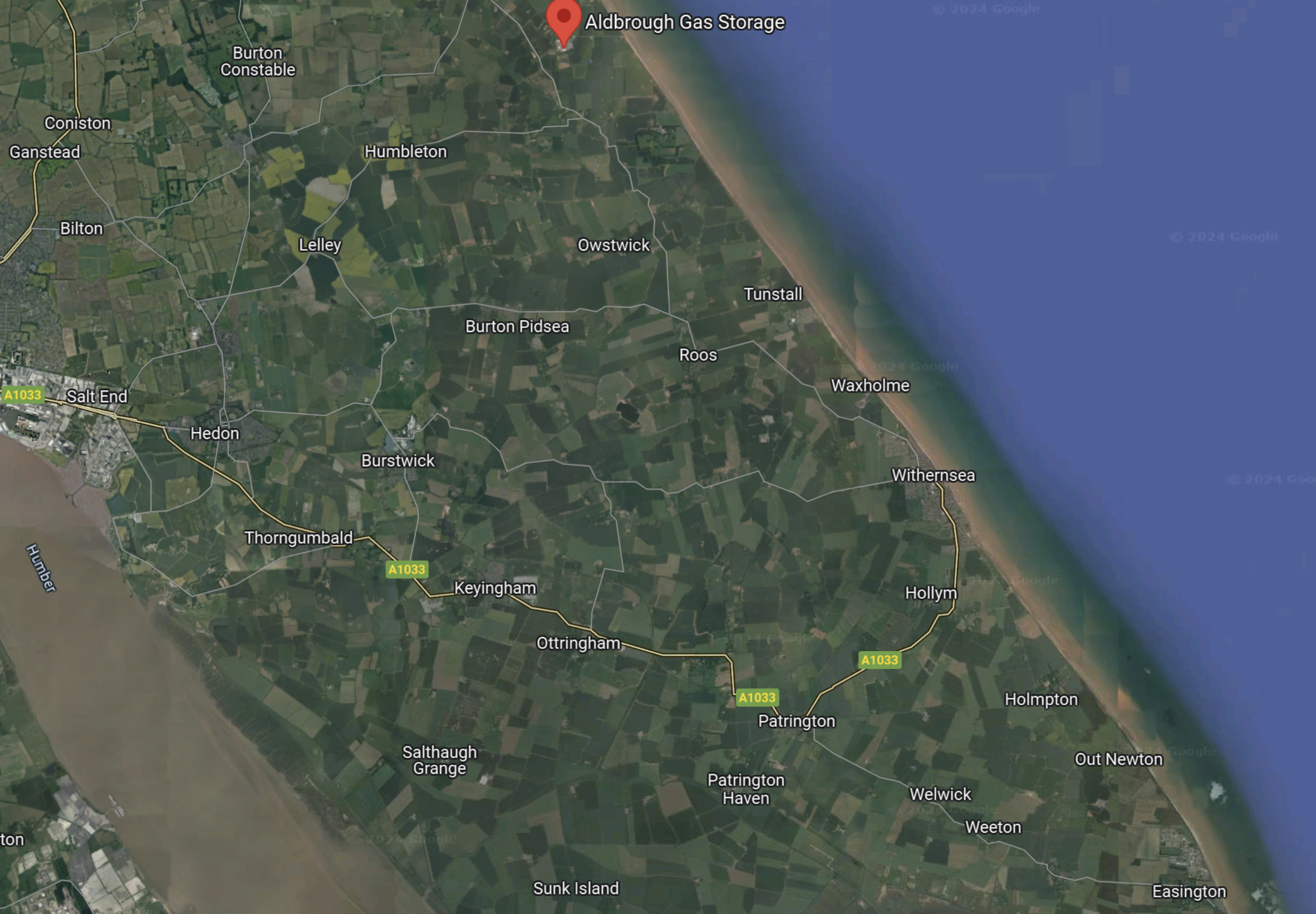
Note.
- The river crossing the South-West corner of the map is the Humber.
- Salt End with its power station and chemical works is on the North Bank of the Humber, where the river leaves the map.
- Aldbrough Gas Storage is marked by the red arrow at the top of the map.
- Easington Gas Terminal is in the South-East corner of the map.
- According to Wikipedia, gas flows into and out of the Rough Gas Storage are managed from Easington.
Looking at the map, I feel that the following should be possible.
- The two gas storage sites could be run together.
- Salt End power station and the related chemical works could run on hydrogen.
- Salt End will always have a reliable source of hydrogen.
- This hydrogen could be green if required.
All the chemical works at Salt End, could be run on a zero-carbon basis. Would this mean premium product prices? Just like organic does?
Enter The Germans
The Germans have a huge decarbonisation problem, with all their coal-fired power stations and other industry.
Three massive projects will convert much of the country and industry to hydrogen.
- H2ercules, which is a project of OGE and RWE, will create a hydrogen network to bring hydrogen, to where it is needed.
- In Uniper To Make Wilhelmshaven German Hub For Green Hydrogen; Green Ammonia Import Terminal, I describe how Uniper are going to build a hydrogen import terminal at Wilhelmshaven.
- AquaVentus is an RWE project that will use 10.3 GW of offshore wind power in German territorial waters to create a million tonnes per year of green hydrogen.
These would appear to be three of Europe’s largest hydrogen projects, that few have ever heard of.
AquaVentus And The UK
This video shows the structure of AquaVentus.
I clipped this map from the video.
Note.
- The thick white line running North-West/South-East is the spine of AquaVentus, that delivers hydrogen to Germany.
- There is a link to Denmark.
- There appears to be an undeveloped link to Norway.
- There appears to be an undeveloped link to Peterhead in Scotland.
- There appears to be a link to just North of the Humber in England.
- Just North of the Humber are the two massive gas storage sites of Aldbrough owned by SSE and Brough owned by Centrica.
- There appear to be small ships sailing up and down the East Coast of the UK. Are these small coastal tankers, that are distributing the hydrogen to where it is needed?
In the last century, the oil industry, built a substantial oil and gas network in the North Sea.
It appears now the Germans are leading the building of a substantial hydrogen network in the North Sea.
These are my thoughts about development of the AquaVentus network.
Hydrogen Production And AquaVentus
This RWE graphic shows the layout of the wind farms feeding AquaVentus.
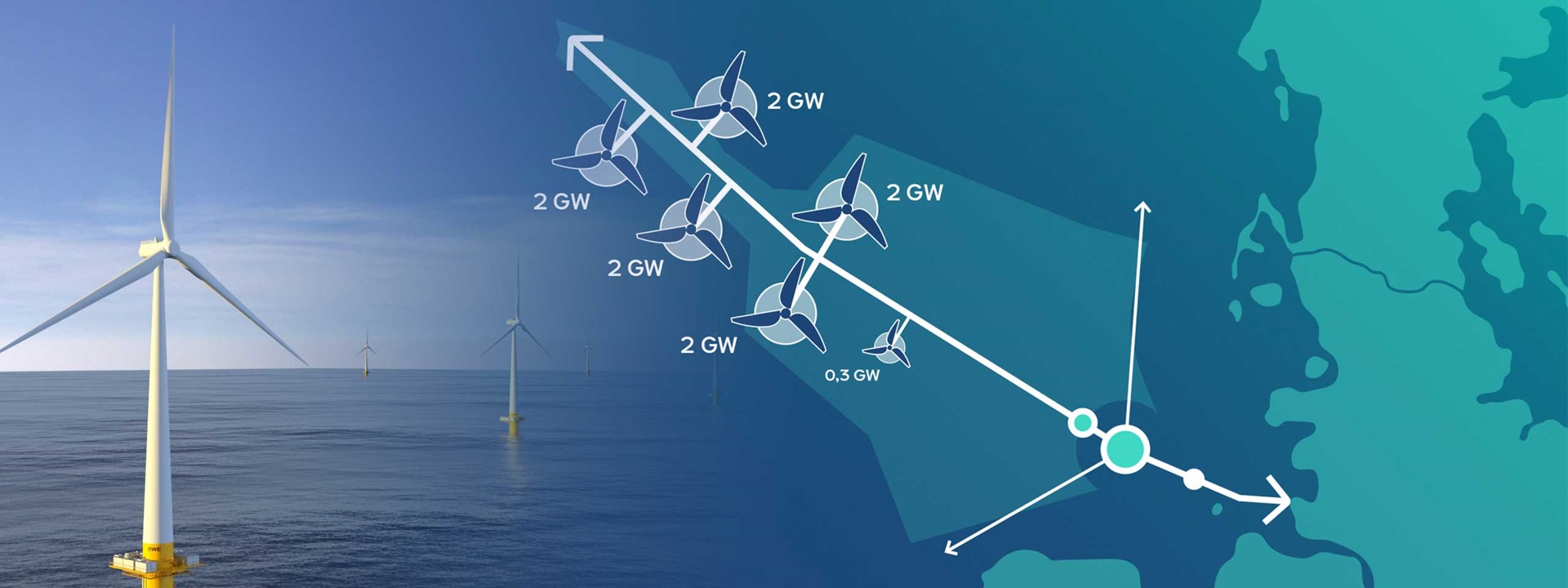
Note.
- There is a total of 10.3 GW.
- Is one of the 2 GW web sites on the UK-side of AquaVentus, the 3 GW Dogger Bank South wind farm, which is being developed by RWE?
- Is the 0.3 GW wind farm, RWE’s Norfolk wind farm cluster, which is also being developed by RWE?
Connecting wind farms using hydrogen pipelines to Europe, must surely mitigate the pylon opposition problem from Nimbys in the East of England.
As the AquaVentus spine pipeline could eventually connect to Peterhead, there will be other opportunities to add more hydrogen to AquaVentus.
Hydrogen Storage And AquaVentus
For AquaVentus to work efficiently and supply a large continuous flow of hydrogen to all users, there would need to be storage built into the system.
As AquaVentus is around 200 kilometres in length and natural gas pipelines can be up to 150 centimetres in diameter, don’t underestimate how much hydrogen can be stored in the pipeline system itself.
This page on the Uniper web site is entitled Green Wilhelmshaven: To New Horizons.
This is a sentence on the page.
Access to local hydrogen underground storage at the Etzel salt cavern site.
An Internet search gives the information, that Etzel gas storage could be developed to hold 1 TWh of hydrogen.
That would be enough hydrogen to supply 10 GW for a hundred hours.
Note that the UK branch of AquaVentus reaches the UK, just to the South of the massive hydrogen storage facilities at Aldbrough and Rough.
It would appear that both Germany and the UK are connected to AquaVentus through substantial storage.
I am certain, that all country connections to AquaVentus will have substantial storage at the country’s hydrogen terminal.
AquaDuctus
This would appear to be the first part of the AquaVentus network and has its own web site.
The web site is entitled Nucleus Of A Offshore Hydrogen Backbone.
These are the first two paragraphs.
The project partners are focusing on a scalable, demand-driven infrastructure: By 2030, AquaDuctus will connect the first large hydrogen wind farm site, SEN-1, with a generation capacity of approximately one gigawatt. SEN-1 is located in the German EEZ in the northwest of Helgoland. The pipeline will transport at a length of approx. 200 km green hydrogen produced from offshore wind to the German mainland and from there to European consumers via the onshore hydrogen infrastructure.
In the next project stage, AquaDuctus will be extended to the remote areas of the German exclusive economic zone towards the tip of the so-called duck’s bill. By that, additional future hydrogen wind farm sites will be connected. Along its way AquaDuctus will provide interconnection points with the opportunity for linking of adjacent national offshore hydrogen infrastructures originating from Denmark, Norway, the Netherlands, Belgium and United Kingdom which opens the door for Europe-wide offshore hydrogen transport by pipeline.
There is also an interactive map, that gives more details.
This paragraph explains, why the Germans have chosen to bring the energy ashore using hydrogen, rather than traditional cables.
Recent studies show that offshore hydrogen production and transport via pipelines is faster, cheaper, and more environmentally friendly than onshore electrolysis with a corresponding connection of offshore wind turbines via power cables. The German federal government has also recognized this advantage and has clearly expressed its intention to promote offshore hydrogen production in the North Sea.
I suspect, that some UK offshore wind farms will use the same techniques.
Hydrogen Production For The UK
Electrolysers will probably be built along the East Coast between Peterhead and Humberside and these will feed hydrogen into the network.
- Some electrolysers will be offshore and others onshore.
- Turning off windfarms will become a thing of the past, as all surplus electricity will be used to make hydrogen for the UK or export to Europe.
- Until needed the hydrogen will be stored in Albrough and Rough.
Backup for wind farms, will be provided using hydrogen-fired power stations like Keadby Hydrogen power station.
Financial Implications
I reported on Rishi Sunak’s Manifesto Speech, which he made on June 11th. This is an extract
This document on the Policy Mogul web site is entitled Rishi Sunak – Conservative Party Manifesto Speech – Jun 11.
These are three paragraphs from the speech.
We don’t just need military and border security. As Putin’s invasion of Ukraine has shown, we need energy security too. It is only by having reliable, home-grown sources of energy that we can deny dictators the ability to send our bills soaring. So, in our approach to energy policy we will put security and your family finances ahead of unaffordable eco zealotry.
Unlike Labour we don’t believe that we will achieve that energy security via a state-controlled energy company that doesn’t in fact produce any energy. That will only increase costs, and as Penny said on Friday there’s only one thing that GB in Starmer and Miliband’s GB Energy stands for, and that’s giant bills.
Our clear plan is to achieve energy security through new gas-powered stations, trebling our offshore wind capacity and by having new fleets of small modular reactors. These will make the UK a net exporter of electricity, giving us greater energy independence and security from the aggressive actions of dictators . Now let me just reiterate that, with our plan, we will produce enough electricity to both meet our domestic needs and export to our neighbours. Look at that. A clear, Conservative plan not only generating security, but also prosperity for our country.
I can’t remember any reports about an energy security policy, which he outlined in the last paragraph of my extract from his speech.
He also said we would have sufficient electricity to export to our neighbours. As I said earlier some of this energy will be in the form of hydrogen, which has been created by offshore electrolysers.
If we are exporting electricity and hydrogen to Europe, this is likely to have three effects.
- An improvement in Europe’s energy security.
- H2ercules will improve and decarbonise German industry, using UK hydrogen.
- The finances of UK plc will improve.
It looks like there would be winners all round.
Rishi Sunak had the cards and he played them very badly.
It is now up to Keir Starmer, Great British Energy and Jürgen Maier to play those cards to link the energy systems of the UK and Germany to ensure security and prosperity for Europe.
Jurgen Maier To Chair Great British Energy
This article in The Times is entitled Pylons Are The Price Of Lower Bills, Keir Starmer Tells Rural Britain.
These are two paragraphs from the article.
Starmer confirmed that Jürgen Maier, the former UK chief executive of the Siemens conglomerate, would chair the energy company.
Maier has advised Labour on rail and transport since December. He was openly critical of the party’s decision to drop a pledge to spend £28 billion a year on green investment, saying the figure was an “absolute minimum” and that scrapping the promise was “not good for climate change or for the growth of our economy”.
Note.
- His Wikipedia entry is impressive.
- He has dual Austrian and British citizenship.
- He went to school in Leeds and is a graduate of Nottingham Trent University.
- He rose to be Chief Executive of Siemens UK and retired in 2019 at 55.
- I have heard him several times on the radio and he seems to talk a lot of sense.
In my view he could be an excellent choice as Chair of Great British Energy.
I also have some further thoughts.
Jürgen Maier And Peter Hendy
Jürgen Maier and Peter Hendy, who is Starmer’s Rail Minister, have remarkably similar backgrounds and I wouldn’t be surprised if they know each other well, through dealings around Siemens’ contract for Transport for London’s new trains for the Piccadilly Line.
When last, were two technological heavyweights, so close to the heart of a UK government?
RWE
German energy company; RWE are the UK’s largest power generator.
- RWE have five gas-fired power stations with a total output of 6.56 GW.
- RWE have two onshore wind farms in operation with a total output of 67 MW.
- RWE have four offshore wind farms in operation with a total output of 1.88 GW.
- RWE have eight offshore wind farms under development with a total output of 9.90 GW.
- RWE also has other electrical gubbins, like an electrolyser in South Wales.
Would Jürgen Maier be an ideal person, to persuade RWE to keep investing in the UK?
When he was with Siemens, he certainly invested heavily in the UK.
The German Problem
Germany’s problem is how they generate electricity.
Sources are as follows for Germany and the UK.
- Coal – 26 % – 1 %
- Natural Gas – 10.5 % – 32 %
- Wind – 32 % – 29.4 %
- Solar 12.2 % – 4.9 %
- Biomass – 9.7 % – 12.3 %
- Nuclear – 1.5 % – 14.2 %
- Hydro – 4.5 % – 1.8 %
- Oil – 0.7 % – 0 %
- Other – 2.9 % – 0 %
- Storage – 0 % – 1 %
- Imports – 0 % – 10.7 %
Note.
- Figures are for 2023.
- Germany is the first percentage.
- UK is the second percentage.
- Germany has pledged to end coal-fired electricity production by 2030.
- Both countries seem to generate similar amounts of electricity from wind, biomass and hydro.
To replace the coal and make up for lack of nuclear, Germany needs to find a new power source.
The German Solution
The Germans are going for hydrogen in a big way.
The title of this page of the RWE web site is Welcome To The Age Of Hydrogen.
The page starts with this paragraph.
RWE is actively involved in the development of innovative hydrogen projects. The H2 molecule is considered to be an important future building block of a successful energy transition. RWE is a partner in over 30 H2 projects and is working on solutions for decarbonising the industry with associations and corporations like Shell, BASF and OGE. Hydrogen projects are comprehensively supported in the separate Hydrogen department of the subsidiary RWE Generation.
I also suggest, that you read this page on the RWE web site called AquaVentus.
The page starts with this RWE graphic.
It appears that 10.3 GW of hydrogen will be created by wind farms and piped to North-West Germany.
These two paragraphs outline the AquaVentus initiative .
Hydrogen is considered the great hope of decarbonisation in all sectors that cannot be electrified, e.g. industrial manufacturing, aviation and shipping. Massive investments in the expansion of renewable energy are needed to enable carbon-neutral hydrogen production. After all, wind, solar and hydroelectric power form the basis of climate-friendly hydrogen.
In its quest for climate-friendly hydrogen production, the AquaVentus initiative has set its sights on one renewable energy generation technology: offshore wind. The initiative aims to use electricity from offshore wind farms to operate electrolysers also installed at sea on an industrial scale. Plans envisage setting up electrolysis units in the North Sea with a total capacity of 10 gigawatts, enough to produce 1 million metric tons of green hydrogen.
The page also gives these numbers.
- Total Capacity – 10 GW
- Tonnes Of Green Hydrogen – 1 million
- Members – 100 +
The web site says this about commissioning.
Commissioning is currently scheduled for early/mid 2030s.
The Germans can’t be accused of lacking ambition.
AquaVentus And The UK
This video shows the structure of AquaVentus.
I clipped this map from the video.
Note.
- There is a link to Denmark.
- There appears to be a undeveloped link to Norway.
- There appears to be a link to Peterhead in Scotland.
- There appears to be a link to just North of the Humber in England.
- Just North of the Humber are the two massive gas storage sites of Aldbrough owned by SSE and Brough owned by Centrica.
- There appear to be small ships sailing up and down the East Coast of the UK. Are these small coastal tankers distributing the hydrogen to where it is needed?
In the last century, the oil industry, built a substantial oil and gas network in the North Sea. It appears now the Germans are leading the building of a substantial hydrogen network.
AquaVentus And Aldbrough And Rough Gas Storage
Consider.
- In The Massive Hydrogen Project, That Appears To Be Under The Radar, I describe the Aldbrough Gas Storage.
- In Wood To Optimise Hydrogen Storage For Centrica’s Rough Field, I describe Centrica’s plans to turn Rough Gas Storage into the world’s largest hydrogen store.
- There is a small amount of hydrogen storage at Wilhelmshaven.
It looks like the East Riding Hydrogen Bank, will be playing a large part in ensuring the continuity and reliability of AquaVentus.
Dogger Bank South And AquaVentus
This Google Map shows the North Sea South of Sunderland and the Danish/German border.
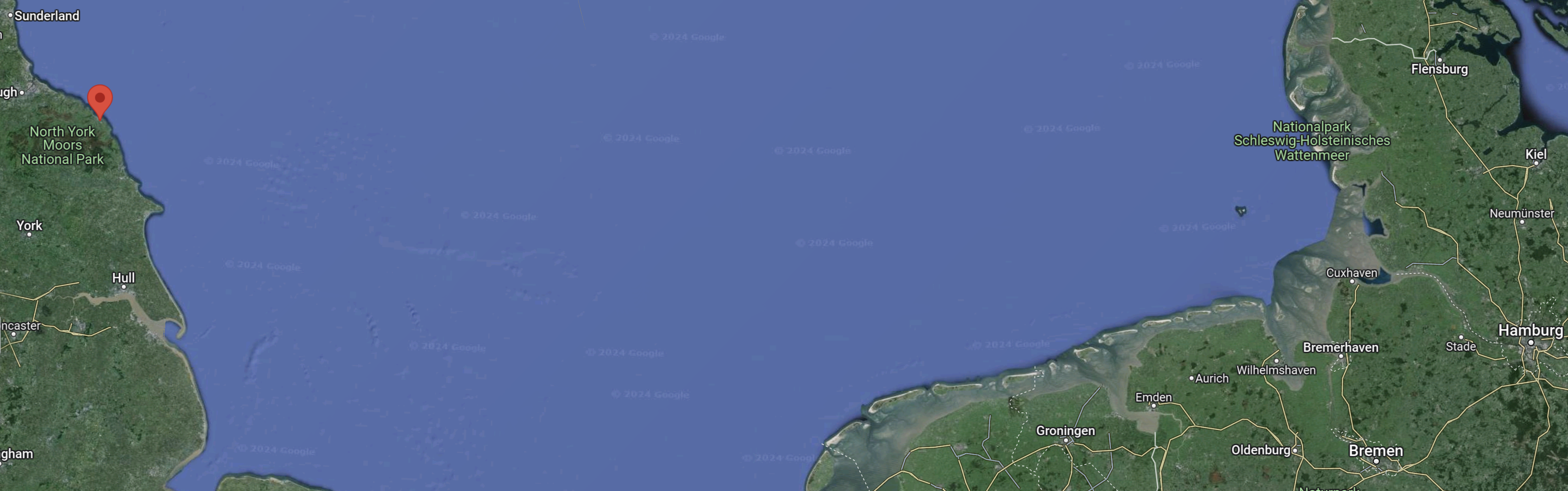
Note.
- Sunderland is in the top-left hand corner of the map.
- A white line in the top-right corner of the map is the Danish/German border.
- Hamburg and Bremen are in the bottom-right hand corner of the map.
If you lay the AquaVentus map over this map, I believe that RWE’s Dogger Bank South wind farm could be one of the three 2 GW wind farms on the South-Western side of the AquaVentus main pipeline.
- Two GW would be converted to hydrogen and fed into the AquaVentus main pipeline.
- Two GW of hydrogen will be a nice little earner for UK plc.
- One GW of electricity would be sent to the UK.
But this is only one of many possibilities.
Conclusion
Could Jürgen Maier, be the man to develop British links to AquaVentus for the benefit of both the UK and Germany?
- The UK’s wind farms could provide a lot of hydrogen for AquaVentus.
- Aldbrough And Rough Gas Storage are conveniently places to add the hydrogen storage, that AquaVentus needs.
- AquaVentus can certainly be expanded to Norway, and possibly Orkney and Shetland.
He certainly has a lot of relevant experience.
 The Anonymous Widower