Energy In – Hydrogen And Carbon Dioxide Out
This article was inspired by this article in the Sunday Times, which is entitled ‘It’s A Slog’: Life Inside Britain’s Last Coal Power Station.
The article is about Ratcliffe-on-Soar power station, which is next to East Midlands Parkway station.
This is the first paragraph of the station’s Wikipedia entry.
Ratcliffe-on-Soar Power Station is a coal-fired power station owned and operated by Uniper at Ratcliffe-on-Soar in Nottinghamshire, England. Commissioned in 1968 by the Central Electricity Generating Board, the station has a capacity of 2,000 MW. It is the last remaining operational coal-fired power station in the UK, and is scheduled to close in September 2024.
I took these pictures of the power station in 2019.
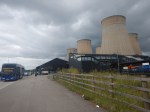
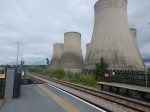
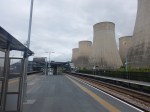
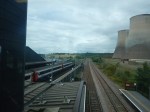
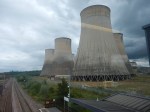
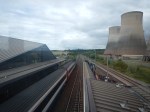
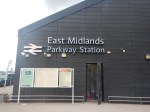
Ratcliffe-on-Soar is the last of a number of large coal-fired power stations, that were built in the area, mainly along the River Trent.
- Rugeley – 600 MW – 1961
- Drakelow – 1630 MW – 1964
- Willington – 800 MW – 1962
- Castle Donington – 600 MW – 1958
- Ratcliffe-on-Soar – 2000 MW – 1968
- High Marnham – 1000 MW – 1959
- Cottam – 2000 MW – 1968
- West Burton – 2000 MW – 1968
Note.
- The date is the commissioning date.
- That is 10,630 MW of electricity.
- There are also a few large gas-fired power stations along the river, that are still operating.
- Both coal and gas-fired stations use the water from the River Trent for cooling.
At the mouth of the river, there is the Keadby cluster of gas-fired power stations.
- Keadby 1 – 734 MW – 1996
- Keadby 2 – 849 MW – 2023
- Keadby 3 – 910 MW – 2027
- Keadby Hydrogen – 900 MW – 2030
Note.
- The date is the commissioning date.
- That is 3,393 MW of electricity.
- Keadby 2 is the most efficient CCGT in the world.
- Keadby 3 will be fitted with carbon capture.
- Keadby 2 has been designed to be retrofitted with carbon capture.
- Keadby Hydrogen will be fuelled by zero-carbon hydrogen.
As the years progress, I can see the Keadby cluster of power stations becoming a large zero-carbon power station to back-up wind farms in the North Sea.
- Hydrogen power stations will emit no carbon dioxide.
- Carbon dioxide from all gas-fired stations will be captured.
- Some carbon dioxide will be sold on, to companies who can use it, in industries like construction, agriculture and chemical manufacture.
- The remaining carbon dioxide will be stored in depleted gas fields.
As technology improves, more carbon dioxide will be used rather than stored.
Other Power Sources In The Humberside Area
In the next few sub-sections, I will list the other major power sources in the Humberside area.
Drax Power Station
Drax power station is a shadow of its former self, when it was one of the power stations fed by the newly discovered Selby coalfield.
These days it is a 2,595 MW biomass-fired power station.
Eastern Green Link 2
Eastern Green Link 2 will be a 2 GW interconnector between Peterhead in Scotland and Drax.
It is shown in this map.

Note.
- Most of the route is underwater.
- It is funded by National Grid.
- Contracts have been signed, as I talk about in Contracts Signed For Eastern Green Link 2 Cable And Converter Stations.
- It is scheduled to be completed by 2029.
This interconnector will bring up to 2 GW of Scottish wind-generated electricity to Drax and Humberside.
Drax has the substations and other electrical gubbins to distribute the electricity efficiently to where it is needed.
2 GW could also reduce the amount of biomass used at Drax.
In the long term, if the concept of the four Eastern Green Links is successful, I could see another Eastern Green Link to Drax to replace imported biomass at Drax.
I also, don’t see why a smaller Drax can’t be run on locally-sourced biomass.
Solar Farms And Batteries Along The River Trent
As the coal-fired power stations along the River Trent are demolished, solar farm developers have moved in to develop large solar farms.
Salt End Power Station And Chemical Works
These two paragraphs from the Wikipedia entry for Salt End describes the hamlet and its power station and chemical works.
Salt End or Saltend is a hamlet in the East Riding of Yorkshire, England, in an area known as Holderness. It is situated on the north bank of the Humber Estuary just outside the Hull eastern boundary on the A1033 road. It forms part of the civil parish of Preston.
Salt End is dominated by a chemical park owned by PX group, and a gas-fired power station owned by Triton Power. Chemicals produced at Salt End include acetic acid, acetic anhydride, ammonia, bio-butanol, bio-ethanol, ethyl acetate (ETAC) and ethylene-vinyl alcohol copolymer (EVOH) with animal feed also being produced on site.
I wonder, if running the complex on hydrogen would give cost and marketing advantages.
Aldbrough Hydrogen Storage Facility
This page on the SSE Thermal web site is entitled Plans For World-Leading Hydrogen Storage Facility At Aldbrough.
This is the most significant paragraph of the page, that is definitely a must-read.
With an initial expected capacity of at least 320GWh, Aldbrough Hydrogen Storage would be significantly larger than any hydrogen storage facility in operation in the world today. The Aldbrough site is ideally located to store the low-carbon hydrogen set to be produced and used in the Humber region.
This is a hydrogen storage facility for a much wider area than Humberside.
Rough Gas Storage Facility
This is the first paragraph of the Wikipedia entry for the Rough Gas Storage Facility.
Rough is a natural gas storage facility under the North Sea off the east coast of England. It is capable of storing 100 billion cubic feet of gas, nearly double the storage capacities in operation in Great Britain in 2021.
In Wood To Optimise Hydrogen Storage For Centrica’s Rough Field, I describe Centrica’s plans to convert the Rough gas storage into a massive hydrogen storage.
The Location Of Aldbrough Gas Storage, Rough Gas Storage, Salt End And Easington Gas Terminal
This Google Map shows between Salt End and the coast.
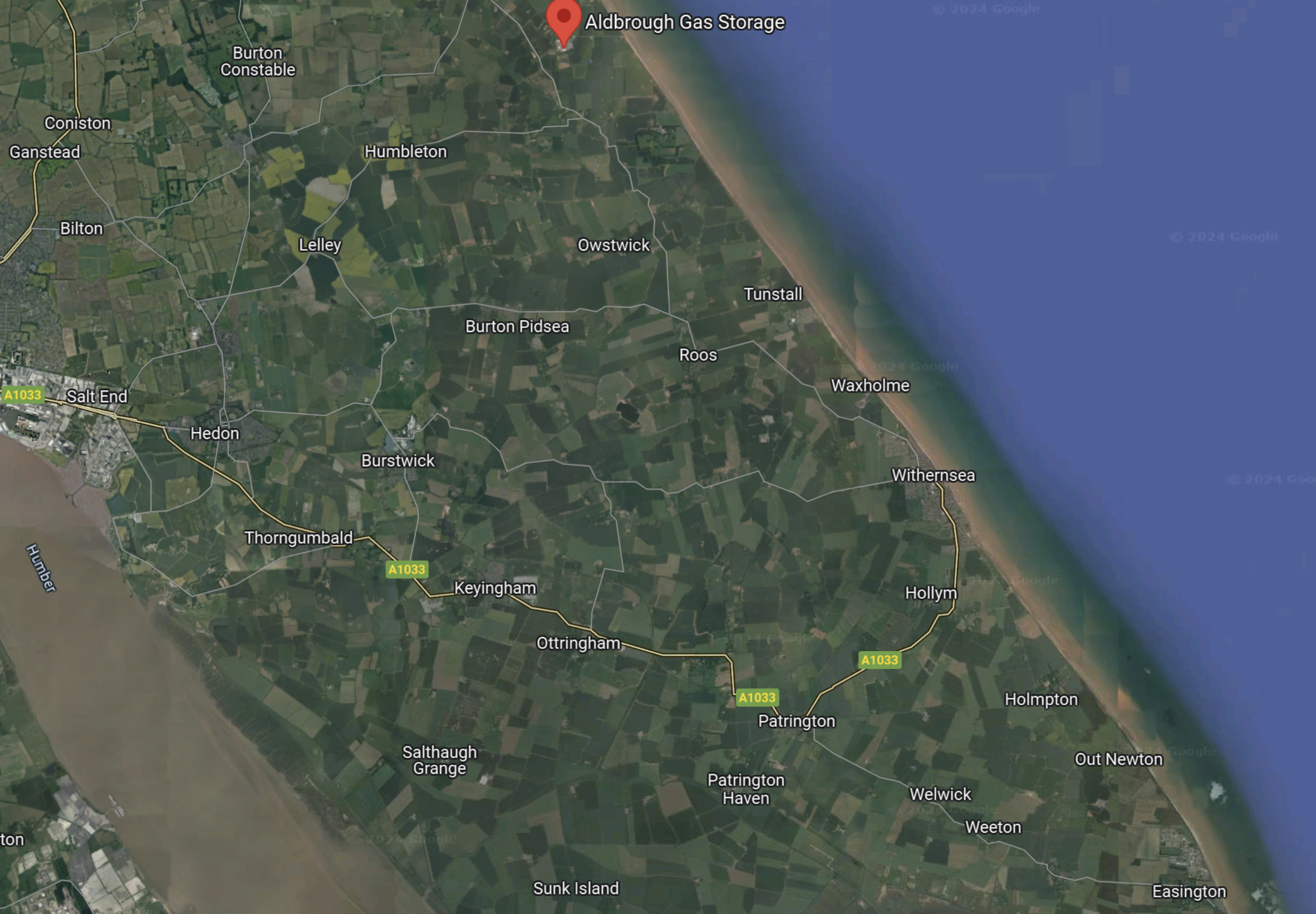
Note.
- The river crossing the South-West corner of the map is the Humber.
- Salt End with its power station and chemical works is on the North Bank of the Humber, where the river leaves the map.
- Aldbrough Gas Storage is marked by the red arrow at the top of the map.
- Easington Gas Terminal is in the South-East corner of the map.
- According to Wikipedia, gas flows into and out of the Rough Gas Storage are managed from Easington.
Looking at the map, I feel that the following should be possible.
- The two gas storage sites could be run together.
- Salt End power station and the related chemical works could run on hydrogen.
- Salt End will always have a reliable source of hydrogen.
- This hydrogen could be green if required.
All the chemical works at Salt End, could be run on a zero-carbon basis. Would this mean premium product prices? Just like organic does?
Enter The Germans
The Germans have a huge decarbonisation problem, with all their coal-fired power stations and other industry.
Three massive projects will convert much of the country and industry to hydrogen.
- H2ercules, which is a project of OGE and RWE, will create a hydrogen network to bring hydrogen, to where it is needed.
- In Uniper To Make Wilhelmshaven German Hub For Green Hydrogen; Green Ammonia Import Terminal, I describe how Uniper are going to build a hydrogen import terminal at Wilhelmshaven.
- AquaVentus is an RWE project that will use 10.3 GW of offshore wind power in German territorial waters to create a million tonnes per year of green hydrogen.
These would appear to be three of Europe’s largest hydrogen projects, that few have ever heard of.
AquaVentus And The UK
This video shows the structure of AquaVentus.
I clipped this map from the video.

Note.
- The thick white line running North-West/South-East is the spine of AquaVentus, that delivers hydrogen to Germany.
- There is a link to Denmark.
- There appears to be an undeveloped link to Norway.
- There appears to be an undeveloped link to Peterhead in Scotland.
- There appears to be a link to just North of the Humber in England.
- Just North of the Humber are the two massive gas storage sites of Aldbrough owned by SSE and Brough owned by Centrica.
- There appear to be small ships sailing up and down the East Coast of the UK. Are these small coastal tankers, that are distributing the hydrogen to where it is needed?
In the last century, the oil industry, built a substantial oil and gas network in the North Sea.
It appears now the Germans are leading the building of a substantial hydrogen network in the North Sea.
These are my thoughts about development of the AquaVentus network.
Hydrogen Production And AquaVentus
This RWE graphic shows the layout of the wind farms feeding AquaVentus.
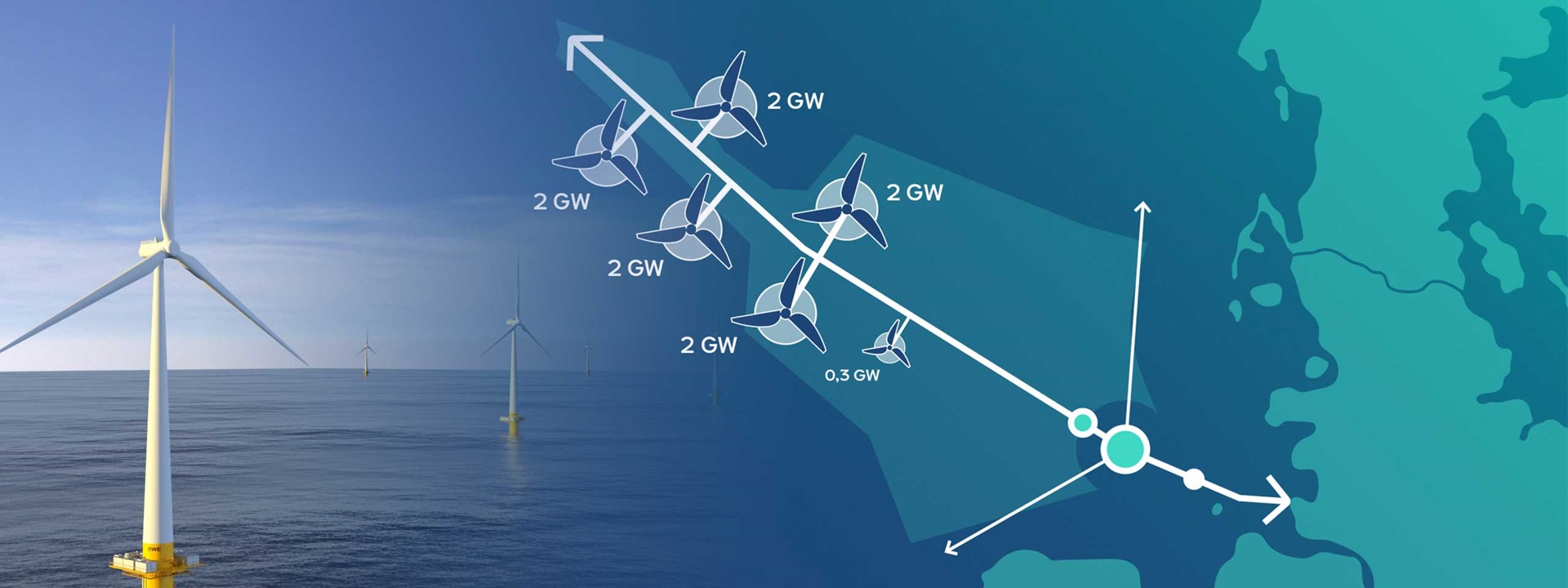
Note.
- There is a total of 10.3 GW.
- Is one of the 2 GW web sites on the UK-side of AquaVentus, the 3 GW Dogger Bank South wind farm, which is being developed by RWE?
- Is the 0.3 GW wind farm, RWE’s Norfolk wind farm cluster, which is also being developed by RWE?
Connecting wind farms using hydrogen pipelines to Europe, must surely mitigate the pylon opposition problem from Nimbys in the East of England.
As the AquaVentus spine pipeline could eventually connect to Peterhead, there will be other opportunities to add more hydrogen to AquaVentus.
Hydrogen Storage And AquaVentus
For AquaVentus to work efficiently and supply a large continuous flow of hydrogen to all users, there would need to be storage built into the system.
As AquaVentus is around 200 kilometres in length and natural gas pipelines can be up to 150 centimetres in diameter, don’t underestimate how much hydrogen can be stored in the pipeline system itself.
This page on the Uniper web site is entitled Green Wilhelmshaven: To New Horizons.
This is a sentence on the page.
Access to local hydrogen underground storage at the Etzel salt cavern site.
An Internet search gives the information, that Etzel gas storage could be developed to hold 1 TWh of hydrogen.
That would be enough hydrogen to supply 10 GW for a hundred hours.
Note that the UK branch of AquaVentus reaches the UK, just to the South of the massive hydrogen storage facilities at Aldbrough and Rough.
It would appear that both Germany and the UK are connected to AquaVentus through substantial storage.
I am certain, that all country connections to AquaVentus will have substantial storage at the country’s hydrogen terminal.
AquaDuctus
This would appear to be the first part of the AquaVentus network and has its own web site.
The web site is entitled Nucleus Of A Offshore Hydrogen Backbone.
These are the first two paragraphs.
The project partners are focusing on a scalable, demand-driven infrastructure: By 2030, AquaDuctus will connect the first large hydrogen wind farm site, SEN-1, with a generation capacity of approximately one gigawatt. SEN-1 is located in the German EEZ in the northwest of Helgoland. The pipeline will transport at a length of approx. 200 km green hydrogen produced from offshore wind to the German mainland and from there to European consumers via the onshore hydrogen infrastructure.
In the next project stage, AquaDuctus will be extended to the remote areas of the German exclusive economic zone towards the tip of the so-called duck’s bill. By that, additional future hydrogen wind farm sites will be connected. Along its way AquaDuctus will provide interconnection points with the opportunity for linking of adjacent national offshore hydrogen infrastructures originating from Denmark, Norway, the Netherlands, Belgium and United Kingdom which opens the door for Europe-wide offshore hydrogen transport by pipeline.
There is also an interactive map, that gives more details.
This paragraph explains, why the Germans have chosen to bring the energy ashore using hydrogen, rather than traditional cables.
Recent studies show that offshore hydrogen production and transport via pipelines is faster, cheaper, and more environmentally friendly than onshore electrolysis with a corresponding connection of offshore wind turbines via power cables. The German federal government has also recognized this advantage and has clearly expressed its intention to promote offshore hydrogen production in the North Sea.
I suspect, that some UK offshore wind farms will use the same techniques.
Hydrogen Production For The UK
Electrolysers will probably be built along the East Coast between Peterhead and Humberside and these will feed hydrogen into the network.
- Some electrolysers will be offshore and others onshore.
- Turning off windfarms will become a thing of the past, as all surplus electricity will be used to make hydrogen for the UK or export to Europe.
- Until needed the hydrogen will be stored in Albrough and Rough.
Backup for wind farms, will be provided using hydrogen-fired power stations like Keadby Hydrogen power station.
Financial Implications
I reported on Rishi Sunak’s Manifesto Speech, which he made on June 11th. This is an extract
This document on the Policy Mogul web site is entitled Rishi Sunak – Conservative Party Manifesto Speech – Jun 11.
These are three paragraphs from the speech.
We don’t just need military and border security. As Putin’s invasion of Ukraine has shown, we need energy security too. It is only by having reliable, home-grown sources of energy that we can deny dictators the ability to send our bills soaring. So, in our approach to energy policy we will put security and your family finances ahead of unaffordable eco zealotry.
Unlike Labour we don’t believe that we will achieve that energy security via a state-controlled energy company that doesn’t in fact produce any energy. That will only increase costs, and as Penny said on Friday there’s only one thing that GB in Starmer and Miliband’s GB Energy stands for, and that’s giant bills.
Our clear plan is to achieve energy security through new gas-powered stations, trebling our offshore wind capacity and by having new fleets of small modular reactors. These will make the UK a net exporter of electricity, giving us greater energy independence and security from the aggressive actions of dictators . Now let me just reiterate that, with our plan, we will produce enough electricity to both meet our domestic needs and export to our neighbours. Look at that. A clear, Conservative plan not only generating security, but also prosperity for our country.
I can’t remember any reports about an energy security policy, which he outlined in the last paragraph of my extract from his speech.
He also said we would have sufficient electricity to export to our neighbours. As I said earlier some of this energy will be in the form of hydrogen, which has been created by offshore electrolysers.
If we are exporting electricity and hydrogen to Europe, this is likely to have three effects.
- An improvement in Europe’s energy security.
- H2ercules will improve and decarbonise German industry, using UK hydrogen.
- The finances of UK plc will improve.
It looks like there would be winners all round.
Rishi Sunak had the cards and he played them very badly.
It is now up to Keir Starmer, Great British Energy and Jürgen Maier to play those cards to link the energy systems of the UK and Germany to ensure security and prosperity for Europe.
Coeliac Journey Through Covid-19 – Thoughts On Leicestershire
Thoughts On Leicestershire
In High Risk Of Coeliac Disease In Punjabis. Epidemiological Study In The South Asian And European Populations Of Leicestershire, I wrote a section entitled Cases Of Covid-19 In Leicestershire, where I said this.
This article on the Leicester Mercury is entitled 11 Areas Of Leicestershire Have Among Worst Infection Rates in the UK.
In Coeliac Disease: Can We Avert The Impending Epidemic In India?, I started like this.
The title of this post, is the same as that of this article on the Indian Journal Of Research Medicine.
With the high levels of COVID-19 in Leicester and an Indian population who make up 28.3 % of the population of the city, I was searching the internet to see if there was any connection between those of Indian heritage and coeliac disease.
I know you should not try to prove a theory. But as a coeliac, I’m very interested to see how the millions of diagnosed coeliacs on a gluten-free diet like me, are faring in this pandemic.
I then talk about some extracts from the Indian research.
In a section entitled, which is entitled All Wheats Are Not Equal, I say this.
The other dimension to this problem is that not all wheat is alike when it comes to inducing celiac disease. The ancient or diploid wheats (e.g. Triticum monococcum) are poorly antigenic, while the modern hexaploid wheats e.g. Triticum aestivum) have highly antigenic glutens, more capable of inducing celiac disease in India, for centuries, grew diploid and later tetraploid wheat which is less antigenic, while hexaploid wheat used in making bread is recently introduced. Thus a change back to older varieties of wheat may have public health consequences.
So did all these factors come together to create the high levels of Covid-19 in Leicestershire?
Conclusion
I am getting bored with saying this. More research needs to be done!
High Risk Of Coeliac Disease In Punjabis. Epidemiological Study In The South Asian And European Populations Of Leicestershire
The title of this post, is the same as that of this peer-reviewed paper on PubMed.gov.
This is the abstract of the paper.
The purpose of this study was to measure the incidence of coeliac disease in different ethnic communities and investigate the hypothesis that the incidence is decreasing in most European countries and the role incomplete retrieval of data may play. In a retrospective study of histologically confirmed cases of coeliac disease between 1975 and 1989 in the City of Leicester, 106 patients with coeliac disease were identified. Of these 86 were European and 20 Asian. The overall incidence of coeliac disease in Europeans was 2.5/10(5)/year (95% CI 2-3.2), in Gujaratis 0.9/10(5)/year (95% CI 0.4-1.8), and in Punjabis 6.9 (95% CI 3.2-12.3). These differences were independent of religious belief. The relative risk to Punjabis compared with Europeans is 2.9 (95% CI 1.5-5.3; chi 2 = 12.5, p < 0.01) and to Gujaratis 8.1 (95% CI 3-22.4; chi 2 = 25; p < 0.001). Gujaratis were at 0.4 risk of Europeans (90% CI 0.2-0.8; chi 2 = 6.7; p < 0.01). The incidence in the urban populations of Leicester was 6/10(5)/year (95% CI 1.3-1.9) which was significantly lower than the 3.2/10(5)/year (95% CI 2.7-3.8; chi 2 = 5.6; p < 0.001) in surrounding rural areas. This study shows that the incidence of coeliac disease in Punjabis (Sikhs, Hindus and Muslims) is 8 times higher than in Gujaratis (Hindus and Muslims) and 4 times higher than in Europeans in Leicester.
I find the last sentence in particular very significant.
I’m no medic, but I think it is reasonable to assume, that in a particular community for every diagnosed coeliac, there will be several undiagnosed coeliacs out there.
In this overview of coeliac disease on the NHS web site, this is said about the incidence of coeliac disease.
Coeliac disease is a condition that affects at least 1 in every 100 people in the UK.
But some experts think this may be underestimated because milder cases may go undiagnosed or be misdiagnosed as other digestive conditions, such as irritable bowel syndrome (IBS).
Reported cases of coeliac disease are around 3 times higher in women than men.
The one-in-100 figure is often used in web pages in European countries or Australia, Canada and the United States, so I’ll go along with that.
So does that mean that Punjabis living in Leicester, have a one-in-twenty-five likelihood of being coeliac?
Whether you have been diagnosed though, is a matter of pure luck.
I had been having gut problems for years and then one Autumn, I didn’t see my GP, but a very elderly locum, who as I had recently had my fiftieth birthday, gave me a present of my first blood test.
It turned out my B12 levels were very low and after several months of B12 injections, which made little difference to my B12, my GP decided to send me to a consultant at Addenbrooke’s Hospital in Cambridge.
My appointment was on a Monday morning and consultant took about ten minutes to ask a few questions, after which he said they would take a few bloods.
On the Wednesday morning, I received a letter that said, that I was probably suffering from coeliac disease and this would be confirmed by endoscopy.
Was I diagnosed solely by analysis of my blood? This was in 1997, which is after the date of the Leicester study.
Two endoscopies without sedative or anaesthetic were performed and I was confirmed as coeliac.
The first was performed by Dr. Richard Hardwick and the second by Dr. Rebecca Fitzgerald.
Both doctors feature in this story on the Cambridge University Hospitals web site, which is entitled Familial Gastric Cancer – Case Study.
My problems have been minor compared to the two sisters in the story.
My luck had been good and I recommend that everyone who feels they could be coeliac should get themselves tested.
Cases Of Covid-19 In Leicestershire
This article on the Leicester Mercury is entitled 11 Areas Of Leicestershire Have Among Worst Infection Rates in the UK.
In Coeliac Disease: Can We Avert The Impending Epidemic In India?, I started like this.
The title of this post, is the same as that of this article on the Indian Journal Of Research Medicine.
With the high levels of COVID-19 in Leicester and an Indian population who make up 28.3 % of the population of the city, I was searching the internet to see if there was any connection between those of Indian heritage and coeliac disease.
I know you should not try to prove a theory. But as a coeliac, I’m very interested to see how the millions of diagnosed coeliacs on a gluten-free diet like me, are faring in this pandemic.
I then talk about some extracts from the Indian research.
In a section entitled, which is entitled All Wheats Are Not Equal, I say this.
The other dimension to this problem is that not all wheat is alike when it comes to inducing celiac disease. The ancient or diploid wheats (e.g. Triticum monococcum) are poorly antigenic, while the modern hexaploid wheats e.g. Triticum aestivum) have highly antigenic glutens, more capable of inducing celiac disease in India, for centuries, grew diploid and later tetraploid wheat which is less antigenic, while hexaploid wheat used in making bread is recently introduced. Thus a change back to older varieties of wheat may have public health consequences.
So did all these factors come together to create the high levels of Covid-19 in Leicestershire?
Conclusion
I am getting bored with saying this. More research needs to be done!
East Midlands Commuter Programme
The East Midlands Commuter Programme has been launched.
It has its own web site, with this mission statement.
Working Towards A Sustainable/Healthy/Prosperous East Midlands By Investing In Rail
And this more expansive statement.
East Midlands Commuter Programme is a scheme to introduce a high-frequency and high-quality rail service across the East Midlands with as little new infrastructure as possible, as well as lobbying for the extension of NET trams into Derby, East Midlands Airport and more.
So what is the flesh on the bones?
Four Stages
These are.
- Stage One – Building the Core
- Stage Two – Trams and Stations
- Stage Three – A Vital Stage For Heavy Rail
- Stage Four – Achieving Twenty trams per hour Through Toton
It looks to me, that there is the start of good things there, but full information is not on the web site yet.
Every plan put forward must be capable of being built.
I shall not comment further until the plan has been completed, published and handed to the Government.
Liverpool’s Vision For Rail was published by the region in July 2021 and it is a complete and well-thought out plan.
In October 2021, I was able to write Chancellor To Fund £710m Merseyrail Expansion.
Work has already started on the first extension to Headbolt Lane station.
At a very much smaller level, look what happened in Devon with the Dartmoor Line, where a small scheme was delivered quickly.
We now also have two further smaller well-planned schemes underway; the Northumberland Line and the Levenmouth Rail Link in Scotland.
Conclusion
I would suspect, that if the East Midlands can write a plan that is complete, fully-costed and deliverable, then they will get the same result as the Liverpool City Region.
Plans For £100m Coventry To Nottingham Rail Link Announced
The title of this post, is the same as that of this article on the BBC.
This is the first two paragraphs.
A £100m scheme to reconnect three Midlands cities by rail could be running by 2025, subject to funding, according to a regional transport group.
Midlands Connect said it had completed a strategic business case for a direct link between Coventry, Leicester and Nottingham.
The article also says this about the route.
The group said there was a “strong case” for the project and it had narrowed it down to two – one which called at the Warwickshire town of Nuneaton and one which ran direct between the three cities.
In A Potential Leicester To Coventry Rail Link, which I wrote in February 2019, I talked about this link and came to the conclusion it was feasible.
But things have moved on in those two years and these are my updated thoughts.
Via Nuneaton Or Direct
This Google Map shows the rail layout to the South of Nuneaton station.
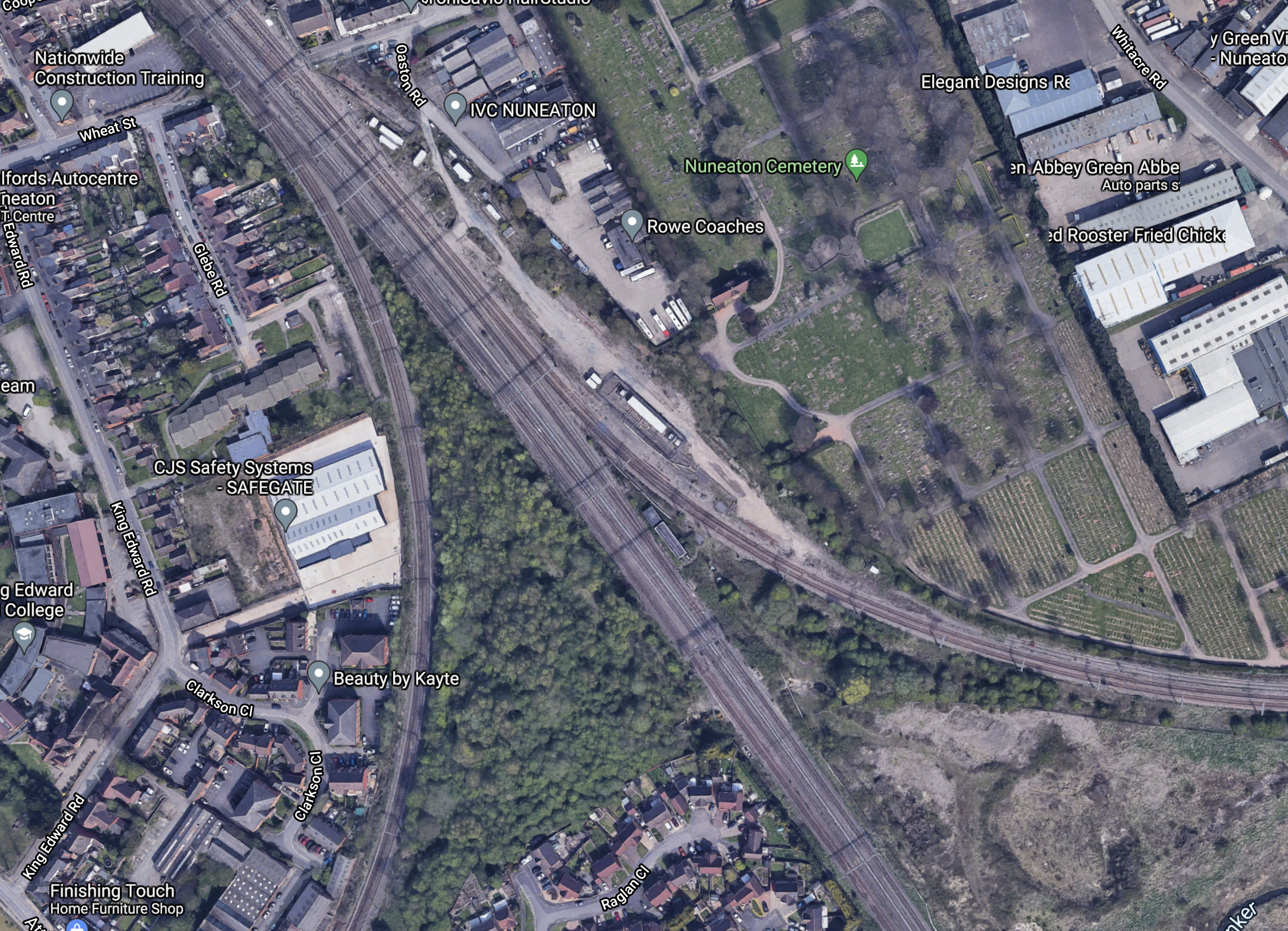
Note.
- The multi-track electrified railway running North-West and South-East is the Trent Valley section of the West Coast Main Line.
- Branching off to the South-West is the Coventry and Nuneaton Line.
- Branching off to the South-East is the line to Leicester.
Nuneaton station is off the map to the North on the West Coast Main Line.
Unfortunately, services to Coventry and Leamington Spa call in Platform 1 on the Western side of the station and services between Leicester and Birmingham call in platforms 6 and 7 on the Eastern side.
This probably rules out a clever solution, where perhaps an island platform, has Birmingham and Leicester services on one side and Coventry and Leicester services on the other.
This Google Map shows Nuneaton station.
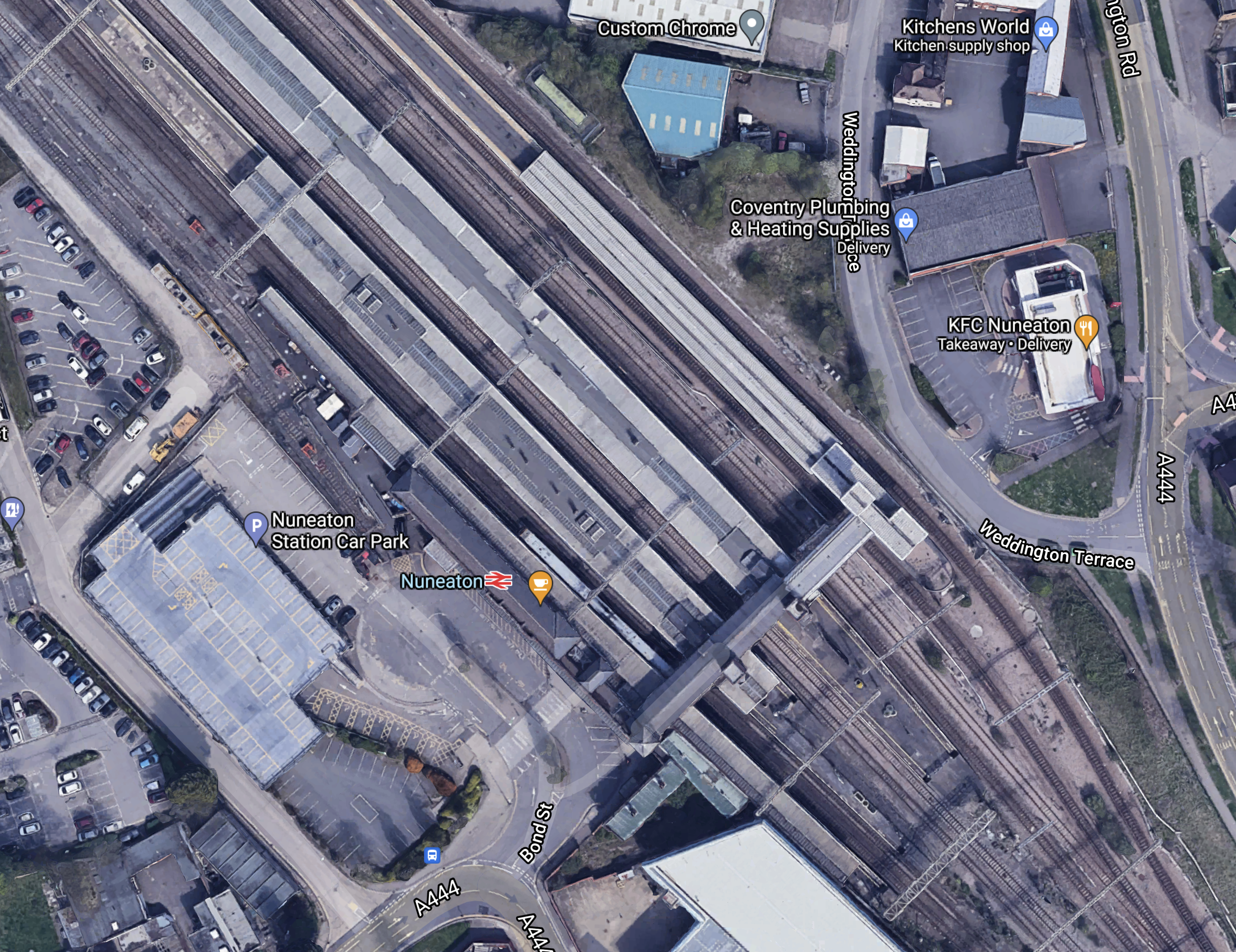
Note.
- Platform 6 and 7 form the island platform on the North-East side of the station.
- Birmingham trains call in Platform 6.
- Leicester trains call in Platform 7.
The track layout for Platforms 6 and 7 appears comprehensive with crossovers allowing both platforms to be used for services to both cities.
This Google Map shows the crowded track layout to the South of the station.
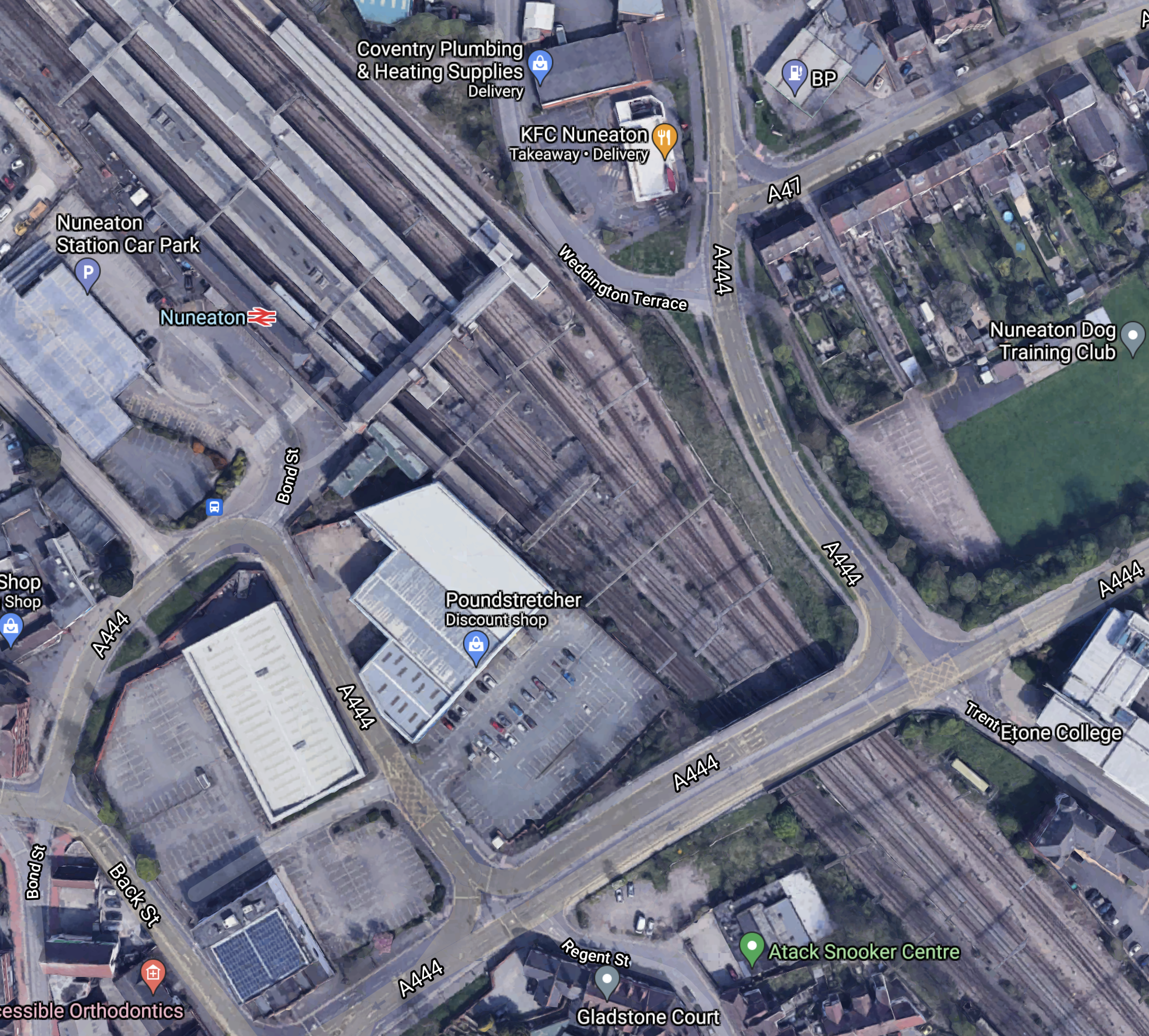
The only possibility would appear to be a single track dive-under that connected Platform 6 and/or 7 to the Coventry and Nuneaton Line on the other side of the West Coast Main Line.
I feel that costs would rule it out.
I suspect that a direct solution cutting out Nuneaton might be possible.
This Google Map shows the three routes diverging to the South of Nuneaton station.
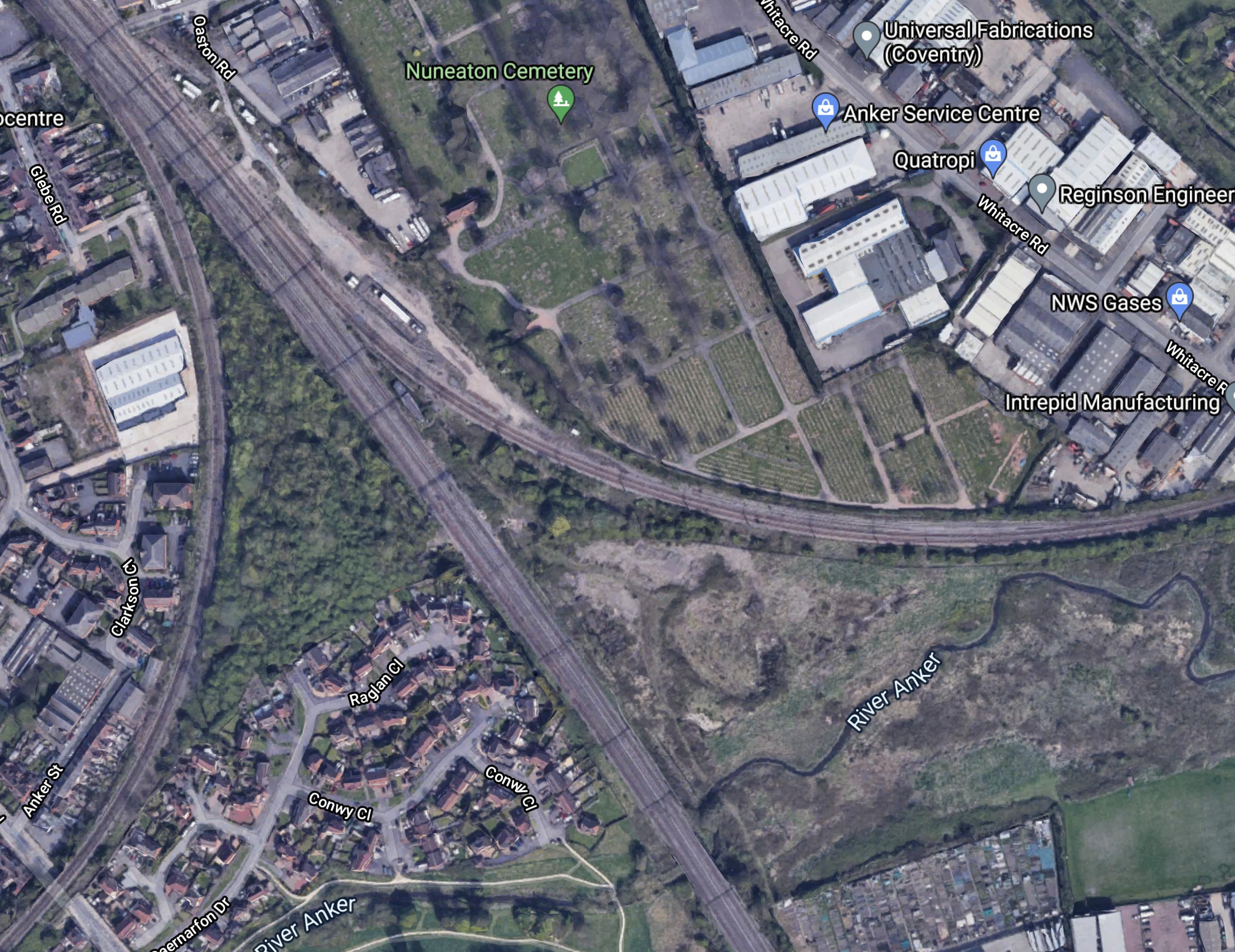
It might be possible to connect the Coventry and Leicester Lines, but the curve might be too tight.
The alternative could be to build a dive-under that would connect Platform 1 to the Leicester Line.
- It would appear that it could be the easiest and most affordable option.
- Trains would reverse in Nuneaton station.
It is certainly a tricky problem, but I do believe there is a simple cost-effective solution in there somewhere.
Nuneaton Parkway Station
This page on Coventry Live gives some information about the proposed Nuneaton Parkway station.
There is also a proposed station, to be called Nuneaton Parkway, situated off the A5 between Hinckley and Nuneaton.
This Google Map shows the area where the A5 crosses the Birmingham-Peterborough Line, that runs between Hinckley and Nuneaton..
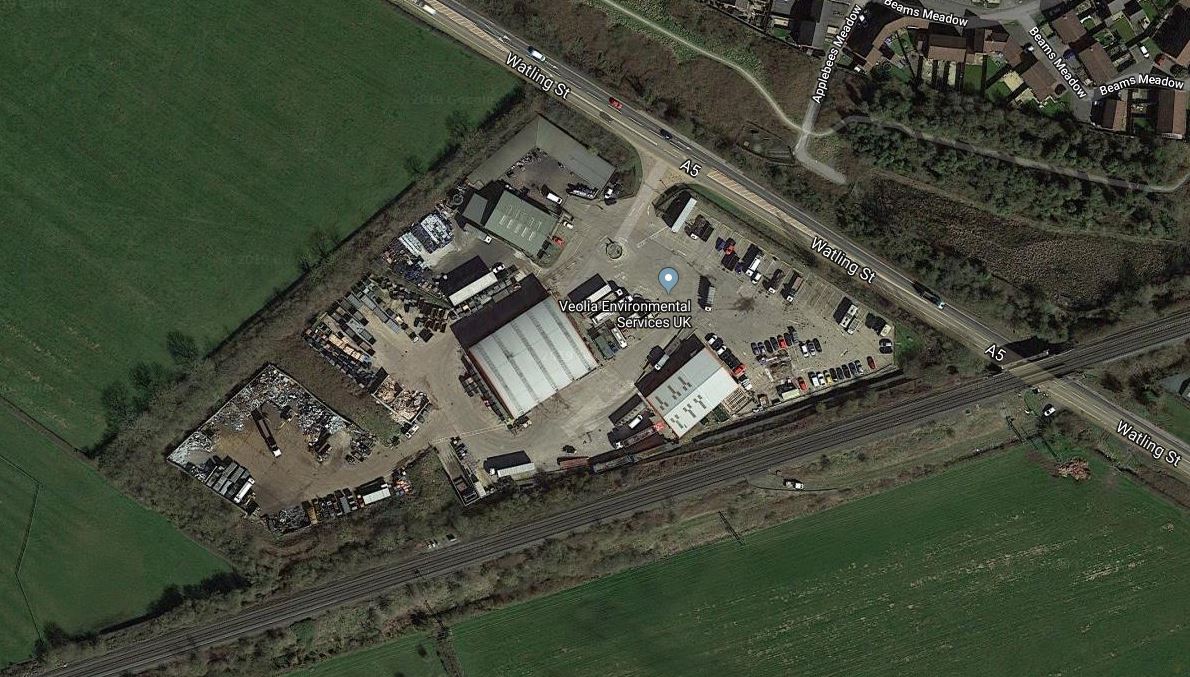
This must surely be one of the best sites to build a new Parkway station in the UK.
- The triangular site is a waste transfer station operated by Veolia Environmental Services UK.
- It has a direct connection to the A5, which could be easily improved, with perhaps a roundabout.
- Doing a crude estimate from the Google Map, I calculate that the site is about sixteen hectares, which is surely a good size for a Parkway station.
- There’s even quite a lot of new housing within walking and cycling distance.
It would also appear that the station could be built on this site without major disruption to either road or rail traffic.
The Stations And Timing
This document on the Midlands Connect web site, gives their aims for the service.
- Coventry and Leicester – 38 minutes from 54 minutes with one change.
- Coventry and Loughborough – 50 minutes from 88 minutes with otwo changes.
- Coventry and East Midlands Parkway – 56 minutes from 104 minutes with otwo changes.
- Coventry and Nottingham – 70 minutes from 108 minutes with otwo changes.
The service would have a frequency of two trains per hour (tph).
If the train did the same station stops as the current services between Coventry and Leicester, it could stop at all or a selection of the following intermediate stations.
- South Wigston
- Narborough
- Hinckley
- Nuneaton
- Bermuda Park
- Bedworth
- Coventry Arena
The total time would appear to be around fifty minutes, with 28 minutes for Leicester to Nuneaton and 22 minutes from Nuneaton to Coventry. Although the BBC article says that Coventry and Leicester would drop from the current 54 minutes to 38 minutes.
Currently services between Leicester and Birmingham New Street stations are run by CrossCountry.
- One tph – Birmingham New Street and Cambridge or Stansted Airport
- One tph – Birmingham New Street and Leicester
Note that not all intermediate stations receive a two tph service.
Would a two tph service between Leicester and Coventry enable all the stations on the route to have a two tph service?
The Current Leicester And Nottingham Service
Currently the following services run between Leicester and Nottingham.
- 1 tph – EMR InterCity – Direct
- 1 tph – EMR InterCity – Via Loughborough, East Midlands Parkway and Beeston
- 1 tph – EMR Regional – Via Syston, Sileby, Barrow-upon-Soar, Loughborough, East Midlands Parkway, Attenborough and Beeston
Note.
- Timings vary between 23 and 49 minutes.
- Four tph between Leicester and Nottingham would be a Turn-Up-and-Go service that would attract passengers.
- The BBC article is indicating a Coventry and Nottingham time of 70 minutes, which would indicate a Leicester and Nottingham time of 32 minutes, which would appear to be in-line with the EMR Intercity service that stops at Loughborough, East Midlands Parkway and Beeston.
It looks to me that a fourth semi-fast service between Leicester and Nottingham would not be a bad idea.
But Midlands Connect are proposing two extra tph between Coventry and Nottingham.
A Coventry And Nottingham Service
Consider.
- An two tph service would fit in well and give a Turn-Up-and-Go service between Leicester and Nottingham.
- The Coventry and Nottingham time of 70 minutes indicates that the train would need to be to EMR InterCity standard.
- If there is an allowance of twenty minutes at either end of the route, this would indicate a round trip of three hours.
This standard of service would need an operational fleet of six five-car Class 810 trains or similar for a frequency of two tph.
I very much feel that there should be electrification of the Midland Main Line between Leicester and either East Midlands Parkway or Derby.
This would mean that the Coventry and Nottingham route would break down as follows.
- Coventry and Nuneaton – 19,2 miles – No electrification
- Nuneaton and Leicester – 18.8 miles – No electrification
- Leicester and East Midlands Parkway – 19.1 miles – Possible electrification
- East Midlands Parkway and Nottingham – 8.4 miles – No electrification
Note that electrification is already available at Coventry and Nuneaton.
The Coventry and Nottingham route would appear to be possible with battery-electric trains, after the route between Leicester and East Midlands Parkway is electrified.
An Improved Birmingham And Cambridge Service
If Nottingham and Coventry needs a fast two tph service stopping at the major towns and cities in between, surely Birmingham and Cambridge need a similar service.
- It could call at Nuneaton, Leicester, Melton Mowbray, Oakham, Stamford, Peterborough, Ely and Cambridge North.
- Some services could be extended to Stansted Airport.
- It would have a frequency of two tph.
The Birmingham and Cambridge route would break down as follows.
- Birmingham and Nuneaton – 21 miles – No electrification
- Nuneaton and Leicester – 18.8 miles – No electrification
- Leicester and Peterborough – 40 miles – No electrification
- Peterborough and Ely – 30.5 miles – No electrification
- Ely and Cambridge – 14.7 miles – Electrified.
Note that electrification is already available at Birmingham, Nuneaton and Peterborough.
The Birmingham and Cambridge route would appear to be possible with battery-electric trains, if Leicester station were to be electrified.
Midland Connect’s Proposed Leeds and Bedford Service
I wrote about this service in Classic-Compatible High Speed Two Trains At East Midlands Hub Station.
It would run between Leeds and Bedford stations.
It would use the Midland Main Line between Bedford and East Midlands Hub stations.
It would use High Speed Two between East Midlands Hub and Leeds stations.
It would stop at Wellingborough, Kettering, Market Harborough, Leicester, Loughborough and East Midlands Hub stations.
- The service frequency could be hourly, but two trains per hour (tph) would be better.
- Leicester and Leeds would take 46 minutes.
Obviously, it wouldn’t run until the Eastern Leg of High Speed Two opens, but it could open up the possibility of Coventry and Leeds in under ninety minutes.
Driving takes over two hours via the M1.
Conclusion
This looks to be a very feasible and fast service.
It also illustrates how extending the electrification on the Midland Main Line can enable battery-electric trains to provide connecting services.
Enough electrification at Leicester and a few miles North of the station to fully charge passing trains would probably be all that is needed.
Coeliac Disease: Can We Avert The Impending Epidemic In India?
The title of this post, is the same as that of this peer-reviewed paper on the Indian Journal Of Research Medicine.
With the high levels of COVID-19 in Leicester and people with an Indian heritage making up 28.3 % of the population of the city, I was searching the internet to see if there was any connection between those of Indian heritage and coeliac disease.
I know you should not try to prove a theory. But as a coeliac, I’m very interested to see how the millions of diagnosed coeliacs on a gluten-free diet like me, are faring in this pandemic.
These are some extracts from the paper.
Prevalence Of Coeliac Disease In Northern India
Coeliac disease was recognized in northern India, primarily in children, since the 1960s. A community-based study in Ludhiana that involved a step-wise approach to case detection and diagnosis estimated that celiac disease prevalence in this city was at least 1 in 310 individuals. Hospital-based studies examining a general paediatric patient population suggest a prevalence of 1 per cent.
One per cent is a high figure.
Diet And Coeliac Disease
The other variable is that cereal consumption patterns are very different between north and south India, although there has been a recent change in these patterns particularly in urban areas. In south India, rice is the primary cereal consumed in the diet. In the Indian sub-continent, wheat consumption is high in Pakistan and in the States of north India, which also constitute the coeliac belt of India.
It’s fascinating how two parts of the same country can be so different.
Introducing Babies To Gluten
The time of first exposure to wheat influences the development of celiac disease. In countries such as Finland, Estonia, and Denmark, characterized by low gluten consumption in infancy, celiac disease prevalence is much lower than in Sweden where gluten consumption is high in infancy. A natural experiment occurred in Sweden about two decades ago when national recommendations were made to introduce wheat into the diet after cessation of breast feeding at six months. This change was coupled with increased wheat gluten consumption through infant feeds. Together these measures resulted in a two-fold increase in incidence of celiac disease in Sweden, which was attributed to introduction of wheat into the diet after cessation of breast feeding. In 1996 this recommendation was changed to introduce gluten in gradually increasing amounts while the infant was still being breast fed. This led to a dramatic decrease in celiac disease incidence.
We used a Baby Mouli with our three and they all got what we ate, through a sieve.
All Wheats Are Not Equal
The other dimension to this problem is that not all wheat is alike when it comes to inducing celiac disease. The ancient or diploid wheats (e.g. Triticum monococcum) are poorly antigenic, while the modern hexaploid wheats e.g. Triticum aestivum) have highly antigenic glutens, more capable of inducing celiac disease in India, for centuries, grew diploid and later tetraploid wheat which is less antigenic, while hexaploid wheat used in making bread is recently introduced. Thus a change back to older varieties of wheat may have public health consequences.
I’ve read somewhere before that high-gluten wheats could have been the reason that bubonic plague came back.
Public Health Recommendations
Public health authorities may well want to examine both these avenues, i.e. infant feeding recommendations and wheat varieties cultivated in the country, for opportunities to avert the epidemic of celiac disease which is impending in our country.
I’ll agree with that! And the recommendations should be carried forward in the UK.
Conclusion
I have found this medical paper fascinating.
I can’t resist looking up the rates of confirmed cases of COVID-19 in the countries mentioned.
- Denmark 12751 – 6.80 million – 187.5
- Estonia – 1947 – 1.32 million – 147.3
- Finland – 7190 – 5.52 million – 130.2
- Sweden – 65137 – 10.3 million – 632.4
- United Kingdom – 311965 – 66.5 million – 469.1
- United States – 2593169 – 326.7 million – 793
Note.
- The first figure is the number of lab confirmed cases from Wikipedia
- The second figure is the population.
- The third figure is the rate of lab-confirmed cases per 100.000 of the population
I have left India out as their number of tests seems extremely low.
Note how the three countries, that have fed their children on a low-gluten diet are top of the table, with the lowest rates of lab-confirmed cases.
I have said it before and I’ll say it until I’m blue in the face. Undiagnosed coeliac disease may have something to do with this pandemic and someone should investigate it properly.
Thoughts On The Outbreak In Leicester
I have heard reports that those found positive in Leicester live in a poor area and they tend to be younger.
Could it be that in their new country, they were introduced to gluten too early, because it’s easier to give gluten than proper food? Especially, where some roads in this country, are lined with scores of fast food shops selling gluten-rich junk food.
What do I know? I’m just an engineer and a coeliac who has a good nose for problems!
But please someone! Research the connection between undiagnosed coeliac disease and COVID-19!
My son; George was an undiagnosed coeliac with a gluten-rich and smokey lifestyle. He died at just 37 from pancreatic cancer.
Did he have a poor immune system, which meant he couldn’t fight the cancer? One expert on cancer from Liverpool University said, “Yes!”
Could High Speed Two Have A Station At Ashby-de-la-Zouch?
This morning, I was listening to Andrew Bridgen, who is the Member of Parliament for North West Leicestershire, giving the reasons for a strong opposition to High Speed Two.
- High Speed Two will reduce the number of services between Leicester and London.
- His constituency does not have a rail station.
- His constituency would do better for the Ivanhoe Line to get a passenger service.
- His constituents are badly affected by the building of the line.
- His constituents will need to drive North to East Midlands Hub station to use High Speed Two.
Some points are valid, although I think no rail company would reduce the number of services between Leicester and London.
The Future Of Services Between Leicester And London
East Midlands Railway currently run four trains per hour (tph) between Leicester and London, with the fastest trains taking five minutes over the hour.
New 125 mph bi-mode Class 810 trains, will be running all main line services on the Midland Main Line from 2023, using electric power between London and Market Harborough.
It is also planned to increase the line speed between London and Market Harborough to 140 mph, so the trains can really use their design speed, by updating the electrification, signalling and track.
From these published plans, I would feel that East Midlands Railway are intending that all Leicester and London services are within the hour.
Reinstatement Of Services On The Ivanhoe Line
This has been promised off-and-on for some time and I wrote about it in Silent Hydrogen Trains On The Cards For New Line Linking Burton And Leicester, after one of my alerts picked up “hydrogen trains”.
The Association Of Train Operating Companies Plan For The Ivanhoe Line
This is taken from the Wikipedia entry for the Ivanhoe Line.
In 2009 the Association of Train Operating Companies published a £49 million proposal (Connecting Communities: Expanding Access to the Rail Network) to restore passenger services to the line that would include reopening stations at Kirby Muxloe, Bagworth and Ellistown, Coalville Town, Ashby de la Zouch, Moira, and Gresley (for Swadlincote). There is also some support in the Leicester area for the line to have new stations to serve Leicester City F.C.’s stadium and the suburb of Braunstone.
Wikipedia also says, it could be developed as a no-frills line.
Given the government’s enthusiasm for reopening lines closed by Beeching, I suspect that this line will be reopened to passenger traffic in the next few years.
Ashby-de-la-Zouch Station
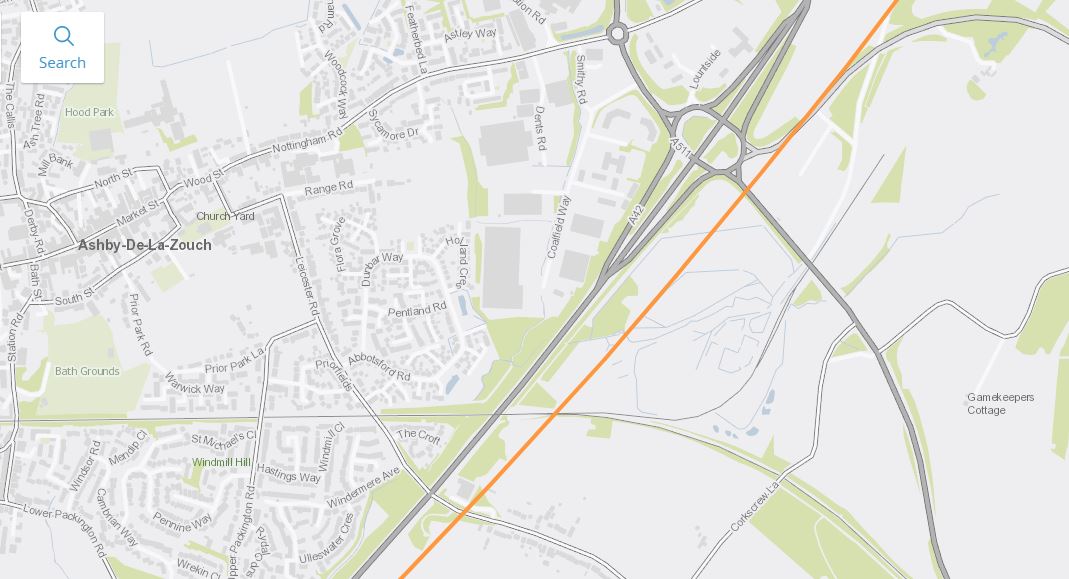
This section of the route map for High Speed Two, shows where the Ivanhoe Line crosses it, just by a major road junction outside Ashby-de-la-Zouch.
Note.
- High Speed Two is shown in orange.
- The Ivanhoe Line runs West-East from the West edge of the map and after crossing the A42 and High Speed Two it curves South-East.
Where the two lines cross would it be sensible to build a simple interchange station?
- Andrew Bridgen’s constituency has a electorate of over 72,000.
- The station would be well-connected to the road network via the the M42, A42 and A51.
- There would appear to be plenty of space for parking.
- It would ease the problems of going by train between Leicester and Birmingham.
- A bridge will have to be built at the location of the station to carry High Speed Two over the Ivanhoe Line, so why not design the bridge with simple platforms?
- As High Speed Two’s trains will be designed with fast acceleration and deceleration, the stops would be very quick
- Passengers would only be allowed on the High Speed Two platforms, when trains are in the station.
Perhaps given its location it could be called the Heart of England Parkway station?
The Station Site
This Google Map shows the station site.
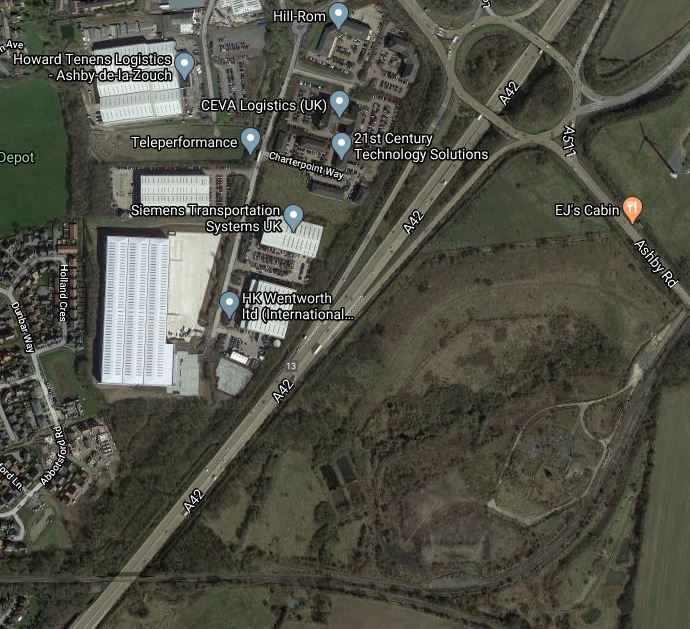
Note.
- The Ivanhoe Line is at the bottom of the map.
- There is a spur from the line into the space.
- High Speed Two will run almost North-South parallel to the A42.
It looks like an abandoned open-cast coal-mine or quarry. Does anybody else know better?
Conclusion
There has already been speculation for the building of a similar station, which I wrote about in Should High Speed Two Have A Station At Calvert?, so perhaps it’s not a totally crazy idea,
Perhaps, there are other places, where High Speed Two crosses other main lines, where parkway stations could be built?
Ipswich Town’s title win in 1962 is a bigger underdog tale than Leicester City winning the Premier League
Who said that?
Ray Crawford, who scored thirty-three goals in Ipswich’s title win in 1962, did in this article in the East Anglian Daily Times. Crawford says this.
Town had been in Division Three South when England’s future World Cup-winning manager Sir Alf Ramsey took charge in 1955. There was promotion in ‘57, they were Division Two title winners in ‘61 and top-flight champions the following year. Five players were there throughout the journey.
“Leicester’s is an unbelievable story because it’s come in an era which, sadly, is dominated by money,” said Crawford. “I still think ours was a bigger achievement then theirs though.
“We were a bunch of nobodies who had never been in the top division. Everyone wrote us off. They said we didn’t have enough experience, they said we were lucky to win the Second Division and they said we were favourites to go straight back down. We didn’t have a single international until I was capped (just twice) towards the end of that season.
Ipswich declined after Sir Alf left for England. Under him, Ipswich had played a unique system suited to the players, which is what Sir Alf did to win the World Cup with England. You could argue, that Ranieri has got Leicester to play in a style that suits his players strengths and no other club has really found the answer yet!
I do wonder if Ramsey and Ranieri, who were both defenders, learned their management skills watching from the back, as the forwards wasted chances galore.
As an aside, hoe much would Chelsea or Manchester City pay for a striker, who scored thirty-three goals in a season?
Leicester Via Oakham And Melton Mowbray
I went to Leicester by taking a train to Peterborough and then took the Cross Country route via Oakham and Melton Mowbray stations.






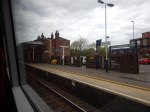
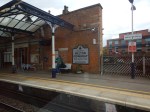
Note the hot chocolate, which was one of the best I’d had in some time, except for another one on a train a couple of weeks ago.
I went by this route for three reasons.
- I wanted to have a look at the two stations of Oakham and Melton Mowbray, and although nothing special, they both look to be well-maintained provincial stations.
- I wanted to see whether the things I said in The Kettering To Oakham Line were valid.
- I also wondered if you could get a peek of the Welland Viaduct, before the two routes join South of Oakham. I didn’t!
I think that East Midlands Trains will have fun in this area, as electrification of the Midland Main Line starts to be finished.
The St. Pancras Problem
St. Pancras station must be a very inefficient station for East Midlands Trains.
- It has only four platforms, whereas they probably need a couple more.
- These platforms can take ten car trains, like 2+8 HSTs or two five-car Class 222 trains.
- Passenger access to the platforms is chronically bad and usually involves a lot more walking than say at Liverpool Street, Kings Cross or Paddington, where you exit from one end of the train onto a wide concourse.
- Double use of platforms must also be a nightmare for the company and its staff.
- New electric trains will increase the number of passengers wanting to travel.
I wonder how many passengers take trains that stop at Bedford and use Thameslink to go to London. Or perhaps drive to places like Grantham, Newark or Nuneaton and use alternative services.
One way to increase the efficiency of St. Pancras would be to run only full-length trains into the station.
But this would increase the problems of passenger flow, in one of my least favourite stations.
Two bullets will have to be bitten.
- The two escalators linking down from the East Midlands Trains station at St. Pancras, will have to be augmented to at least three and possibly four.
- Lifts must be provided so that passengers with heavy bags can descend to the main concourse and Thameslink, without walking fifty metres in the wrong direction.
To be fair, the station was designed before the trtemendous increase in passengers seen in the last few years.
But the architects knew that Thameslink was getting seventy percent larger and made no provision for proper links between the four sets of rail lines serving the station.
The Ten-Car Train Effects
If East Midlands Trains was only running full length, which will probably be ten-car trains into St. Pancras, it would mean they would have to be acceptable all over their network.
The trains could be two five-cars running as a pair and these could join and divide appropriately to open up new services.
For instance, a train to Nottingham could divide with one section going to Mansfield and the other to Lincoln.
Derby, Nottingham and Sheffield wouldn’t be a problem, but would Corby be able to fill a ten-car train, when as I found on A Trip To Corby, during the day they have difficulties filling a five-car one.
Onward From Corby
The solution is that trains from Corby should go on to Oakham and Melton Mowbray.
The area is seeing a lot of new housebuilding and would probably welcome a direct service to London.
The trains could either go North at Syston Junction to East Midlands Parkway and Sheffield or loop back South to Leicester.
I suspect that East Midlands Trains have their plan to expand their market and that the expansion of Corby station into a full two-platform through station is part of that plan.
Conclusion
Everything is seeing improvement in the East Midlands.
Leicester City Centre
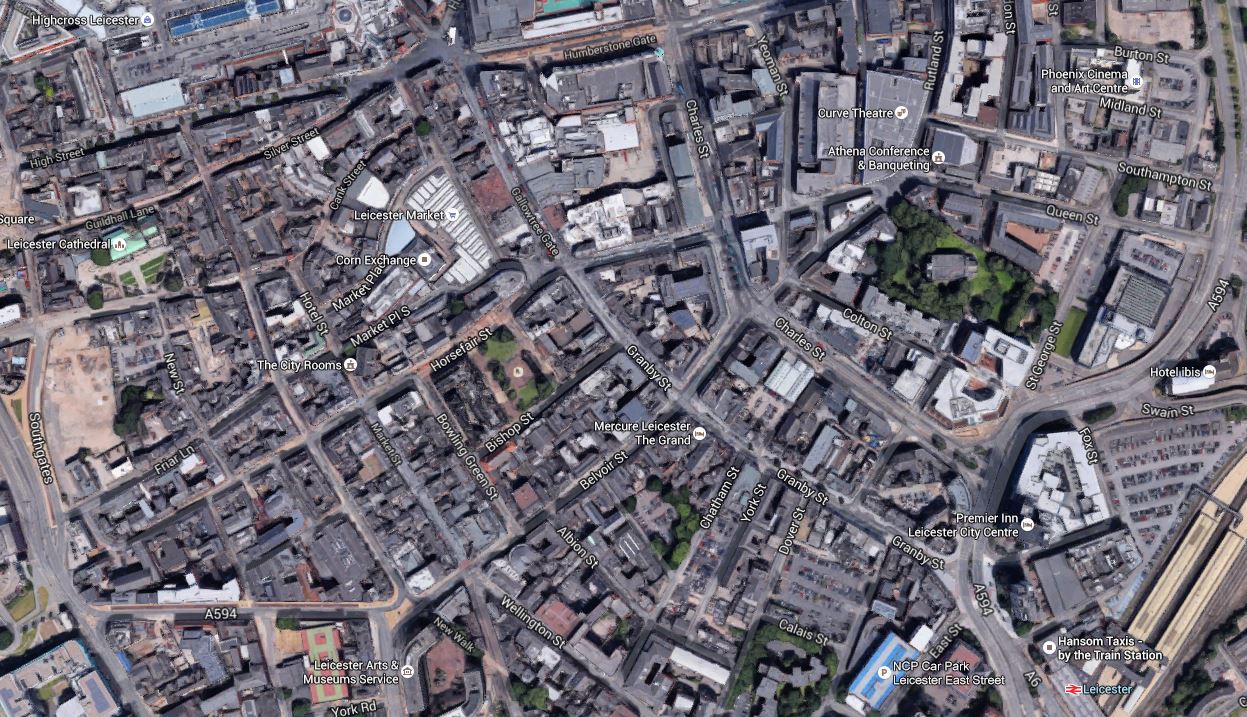
This Google Map shows the relationship between Leicester station and the City Centre.
Leicester Station And The City Centre
The station is in the South-East corner and the big High Cross Shopping Centre and the cathedral are in the North-West corner.
Leicester City’s stadium is off the map to the South-West.
I could just about walk it to the Shopping Centre from the station, but it was at the limit of my range with the faciitis in my right foot.
I took these pictures as I walked between the station and the centre.
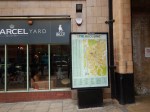
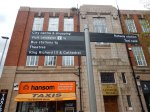


















If there was a city, that needs a people mover of some sort between the two locations, it is Leicester.
All European cities would run a tram and with the latest technological developments, the tram would now be battery powered as in Seville and soon to be seen in Birmingham. On such a short distance, it doesn’t even have to have rails, but could be a rubber-tyred, double-ended articulated bus. I once saw a concept like this is in a Wrightbus presentation.
I made one big mistake on my visit to Leicester.
I was intending to go to the cathedral and have some lunch, which I did in Carluccio’s in the High Cross Shopping Centre.
As I was hungry, I had the lunch first and found that the shopping centre has been designed, so you have to go back through it to get anywhere.
As I didn’t want to buy anything except lunch, that would have been a pointless exercise.
So after wasting twenty minutes walking in the wrong way, I was running too late to visit the cathedral.
So on your visit to Leicester visit the cathedral first and if you’re in a hurry and want something to eat afterwards, don’t go in the shopping centre.
A properly-designed people mover going from the station to the pedestriansed central are and on to the cathedral would not only solve my problem, but it would surely attract a lot more visitors to the city to visit the cathedral and Kind Richard.
The one thing that a people-mover in Leicester, doesn’t have to be, is a fully-fledged tram with overhead wires. That is so nineteenth century for short routes in city centres.
Get it right in Leicester and I can think of several other towns and cities, that could use such a system.
 The Anonymous Widower