Electric Freight: A Solution To The WCML Capacity Conundrum
The title of this post is the same as that of this article on Rail Engineer.
These two paragraphs introduce the article.
Network Rail considers the West Coast Main Line (WCML) to be the busiest mixed traffic railway in Europe. It carries 125mph passenger trains from London to the West Midlands, North West, and Scotland and is used by 90% of intermodal UK rail freight which has a maximum speed of 75mph. Traffic on the line has been steadily increasing. In 1994 there were seven daily passenger trains from Glasgow to London. Now there are 26.
In 2006 Network Rail commissioned an in-depth study to find the best way of providing additional capacity as, with increasing traffic, the WCML between London and the North West was forecast to be full by 2020. The study found that the provision of a new high-speed line was the best solution and was the basis for the development of the HS2 project. The 2006 study correctly forecast that the WCML will by now be at full capacity south of Crewe, yet following the curtailment of HS2 two years ago there are no proposals to address the capacity issue between Rugby and Crewe that was identified 20 years ago.
David Shirres, puts forward a solution that involves electric freight locomotives and faster freight wagons.
I can add some knowledge of what British Rail were doing in the 1970s to solve the problem of freight on the West Coast Main Line all those years ago.
This picture shows a PACE 231R.
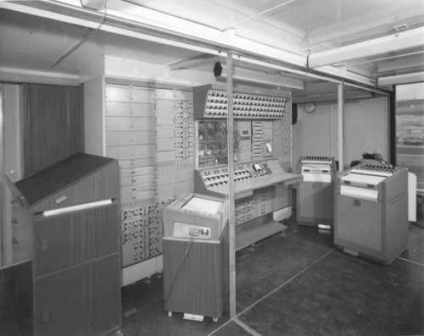
In the early 1970s, I was lucky enough to work with one of these amazing machines. They were probably one of the most powerful analogue computers ever built, that could solve a hundred simultaneous differential equations at once using thermionic valve circuitry. Their most famous application was at NASA, where two of these machines formed the analogue half of the moon-landing simulator.
There were a handful of these powerful beasts in the UK at ICI Plastics, where I worked, British Motor Corporation, Cambridge University and British Rail Research at Derby.
At the time, British Rail were trying to run freight trains faster and the four-wheel freight wagons of the time were derailing with an unwanted regularity. So the problem was given to British Rail Research and the problem was put on the PACE 231R. The problem was solved and the lessons learned were applied to the Mark 3 Coach and the InterCity 125.
After privatisation, the research went to the National Railway Museum and out of curiosity a few years ago, I tried to look at it, but was told it was commercially sensitive to Bombardier. It is my belief, that if this research were to be continued at one of our best universities, that faster freight bogies could be developed, that would help to create the extra freight paths needed on the WCML.
New Chiltern Railways Trains Set To Unlock 10,000 More Seats A Day
The title of this post is the same as that of this press release from Chiltern Railways.
This picture from Chiltern Railways shows the train at Marylebone.
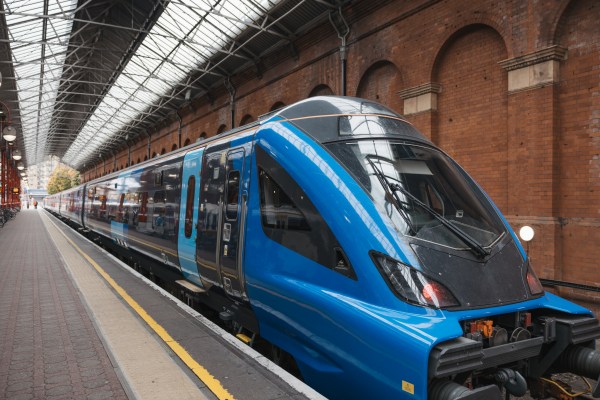
These three paragraphs are from the press release and add more details.
Chiltern Railways today (Tuesday 14 October) showcased for the first time its newest (Mark 5A) trains, set to add 10,000 more seats for customers each weekday from December 2026.
The trains, to be introduced between London to West Midlands from early 2026, will enable Chiltern to deliver more capacity across each of its West Midlands, Aylesbury, and Oxford routes as part of the operator’s efforts to deliver better journeys for customers.
The newest fleet will consist of 13 modern trains set to transform customer journeys during 2026. The trains will replace Chiltern’s oldest carriages, which are nearly 50 years old, with state-of-the-art equivalents, and provide a significant improvement to the on-board experience.
Today, I also received an update from Modern Railways, which was entitled Chiltern Railways Mk 5As To Enter Traffic Early Next Year, and included this delivery schedule.
From December 2026 there will be ten Mk 5A sets in traffic each day, with one ‘hot spare’ and one undergoing maintenance. That leaves one extra set which, CR has suggested, could eventually be pressed into traffic.
I have a few thoughts.
How Do The Trains Compare Physically?
These are basic figures for the two different types of train sets.
- The current Mark 3 are five-car sets of 23 metres coaches, that weigh about 36 tonnes. The driving van trailer is 18.83 metres and 43.7 tonnes
- The future Mark 5A are four-car sets of 22.2 metres coaches, that weigh about 43 tonnes. The driving trailer is 22.37 metres and 43 tonnes.
Lengths and weights of various sets will be as follows.
- Mark 3 – five-car and driving van trailer – 133.83 metres and 223.7 tonnes.
- Mark 5A – four-car and driving trailer – 111.17 metres and 215 tonnes
- Mark 5A – five-car and driving trailer – 155.57 metres and 258 tonnes
Note.
- Chiltern Railways and TransPennine Express use the same Class 68 locomotives.
- The five-car Mark 3 and the four-car Mark 5A sets are quite similar in length and weight
- This could mean that both sets would perform similarly with the same locomotives on the same route.
- I wouldn’t be surprised that the new Platform 4 at Birmingham |Snow Hill station will be able to handle all configurations.
I almost feel that when CAF designed the Mark 5A sets for TransPennine Express, they also had Chiltern in mind as another possible sale.
How Many Trains Would Be Needed To Run Between London Marylebone And Birmingham?
Consider.
- Trains currently run half-hourly on the route between 06:00 to 23:30, which is up to 36 services per day.
- When Platform 4 is operational at Birmingham Snow Hill station, all services could probably stop at both Birmingham Moor Street and Birmingham Snow Hill stations.
- A round trip between London Marylebone and Birmingham Snow Hill stations currently takes about five hours.
I’m fairly certain that to run a half-hourly core service would need ten trains.
Could Chiltern Develop Another Network On The Other Side Of Birmingham?
Consider.
- Trains could run twice an hour from 06:00 to 23:30, which is up to 36 services per day.
- When Platform 4 is operational at Birmingham Snow Hill station, all services could probably stop at both Birmingham Moor Street and Birmingham Snow Hill stations.
- Chiltern Railways already run several services a day to Stourbridge Junction.
- Chiltern Railways have run services to Kidderminster station in the past.
- Wrexham & Shropshire used to run locomotive-hauled Mark 3 four-car sets with driving van trailers, as far as Wrexham via Shrewsbury.
It looks to me, that with the right rolling stock configurations, Chiltern’s network can be developed on the other side of Birmingham.
- Destinations could include Stourbridge Junction, Kidderminster, Shrewsbury, Wolverhampton, Chirk, Ruabon and Wrexham General.
- Some services would need longer trains.
Obviously services would only be run if they were viable.
Would It Help Growth In A Town Or Area, If It Had A Rail Connection To London And/Or The Nearest Major City?
I know Lincoln is on the other side of the country, but I asked Google AI if Lincoln’s rail link to London has brought growth to the city and received this answer.
Yes, Lincoln’s rail link to London has brought significant growth by improving tourism, business travel, and student mobility, and is expected to spur further economic benefits through faster journey times and increased services. The direct link has made Lincoln more accessible for visitors and is a key part of the city’s long-term strategy for economic growth and development.
That was fairly definite.
How would that apply to an extended Chiltern Main Line.
- Politicians are always saying growth is important.
- An extended Chiltern Main Line servicewould improve connections of a lot of places to London and Birmingham.
- Shrewsbury is the easiest connection for West Wales.
- Surely a rail connection to a major city, might tempt someone to open a branch or a new factory.
Would a rail service make people feel more included?
Chiltern Railways Seeks Proposals For Low-Emission Multiple-Unit Fleet
The title of this post, is the same as that of this article on Railway Gazette.
These are the first three paragraphs.
Chiltern Railways is seeking proposals for the supply of between 20 and 70 new or converted ‘low-emission’ multiple units.
The operator has called for ‘established’ rolling stock manufacturers, owners and modifiers to propose vehicles which would provide a ’meaningful’ reduction in the emissions and external noise compared to its existing diesel multiple-units, particularly in urban areas.
The envisaged five-year framework agreement has an estimated value of up to £400m, including supply and maintenance of the fleet, refuelling infrastructure and any depot modifications.
I have my thoughts.
Chiltern’s Rolling Stock
Chiltern Railways have two different types of rolling stock; diesel multiple units and rakes of coaches haled by diesel locomotives.
Chiltern’s Diesel Multiple Units
Chiltern has these diesel multiple units.
- Class 165 diesel trains – 28 x two-cars – 56 cars
- Class 165 diesel trains – 11 x three-cars – 33 cars
- Class 168 diesel trains – 9 x two-cars – 18 cars
- Class 168 diesel trains – 9 x three-cars – 27 cars
- Class 168 diesel trains – 10 x four-cars – 40 cars
Note.
- The trains were built between 1990 and 2004.
- The Class 165 trains are 75 mph units, whereas the Class 168 trains are 100 mph units.
- These total to 67 trains and 174 cars.
- This is an average train length of 2.6 cars.
Could a fleet of three-car low-emission 100 mph trains fit Chiltern’s requirements?
- They could work in pairs for six-car units for Birmingham Moor Street and Oxford.
- There may be a need for some four-car units.
But how will they be powered?
- Pure diesel will surely give out too many emissions!
- Would an mtu Hybrid PowerPack lower emissions enough?
- Could hydrogen-power be used, either with fuel-cells or a hydrogen internal combustion engine?
In Alstom And Eversholt Rail Sign An Agreement For The UK’s First Ever Brand-New Hydrogen Train Fleet, I wrote about Alstom’s proposed Hydrogen Aventra.
A version of these trains could be ideal, if Children could source the fuel economically.
Chiltern’s Diesel-Hauled Rakes Of Coaches
Chiltern have four rakes of Mark 3 coaches hauled by Class 68 locomotives.
These could be replaced by pairs of three-car low-emission’ multiple units.
Conclusion
A fleet of seventy three-car ‘low-emission’ multiple units, powered by hydrogen could be an innovative solution to the trains to run Chiltern’s services.
Wales’ Inaugural Hybrid Train Service Launches On The Borderlands Line
The title of this post, is the same as that of this article on Rail Technology Magazine.
These are the first two paragraphs.
Today marks a historic day for the Welsh rail sector, seeing the introduction of the first battery-hybrid trains used in regular passenger service on the Borderlands Line between Wrexham and Bidston, as announced by Transport for Wales (TfW).
The inaugural service for the Class 230 trains left Wrexham Central at 07:31, following months of testing and crew training.
Unfortunately, it didn’t go very well, as some trains were late and there were several rail replacement buses and cancellations.
I’m afraid, Vivarail’s ambitious project is starting to look like a heroic failure.
Could Stadler Rescue The Borderlands Line?
Perhaps the solution for the Borderlands Line, which is only 27.5 miles each way, is to ask Stadler for an estimate to extend Merseyrail’s Class 777 trains to Wrexham Central station.
- Trains would use battery power between Bidston and Wrexham.
- Passengers would not need to change trains to go between Liverpool and Wrexham.
- Trains would go round the rail loop under Liverpool, where they would charge their batteries.
- There may need to be some form of charging in Wrexham.
I’m sure the good people Merseyside and North Wales wouldn’t object, but the politicians in Cardiff might!
The UK-Wide Need For Self-Powered Trains
Consider.
- The UK needs a substantial number of two-, three- and four-car self-powered trains.
- A proportion of these trains will run on partially-electrified routes.
- 100 mph trains would be preferable.
- Some routes would need trains capable of using third-rail electrification.
They are also needed urgently.
Will Mark 3’s Save The Day?
Consider.
- The only Mark 3 electric multiple units still running or in a state good enough to be converted are the thirty-four three-car Class 320 trains and perhaps fifty four-car Class 321 trains.
- Class 317 and Class 318 trains are probably too old to convert.
- A Class 319 train is a very inferior train from a passengers point of view to the Class 321 Renatus.
As some of these like the thirty Class 321 Renatus have been refurbished and given AC transmissions, it might be a good idea to build a few prototypes and try them out on various routes to assess their quality, reliability and performance.
But this route would only give about eighty three- and four-car trains.
It wouldn’t supply any two-car trains.
Sadly, the twenty-four two-car Class 456 trains, which could have been converted have all been recently scrapped.
Are There Any Other Trains That Can Be Converted?
There are several fleets of modern trains, that might be available.
- Four-car Class 350 trains
- Four-car Class 360 trains
- Four-car Class 379 trains
- Four-car Class 386 trains
There may also be some three- and four-car Bombardier Electrostars.
Again, there is a shortage of two-car trains, except for thirty-nine Class 466 trains.
- They are Networkers.
- They were built in the 1990s.
- They were refurbished ten years ago.
- They are third-rail trains.
- They are not in bad condition.
- Their operating speed is only 75 mph.
But they would probably be a hard train to convert and would only be a stopgap.
Conclusion
I am led to the conclusion, that there is a large gap in the UK rail network for a two-car train with this specification.
- Battery-electric operation.
- 100 mph operation
- Battery range of at least eighty miles.
- Quality interior.
- Ability to run on 25 KVAC overhead and/or 750 VDC third-rail electrification.
- Ability to add a third-car in the middle to create a three-car train.
Effectively, they would be a replacement for the Class 170 diesel trains.
Metro Operator Opts For Better Mobile Signal Instead Of Wi-Fi
The title of this post, is the same as that of this article on Railway Gazette.
This is the first paragraph.
Tyne & Wear Metro operator Nexus has chosen to eliminate mobile phone connectivity ‘not spots’ instead of deploying on-train wi-fi as previously planned.
I agree with this, as it is so much more convenient. Especially, if like me, your eyesight isn’t a hundred percent.
If Greater Anglia were able to offer it on their Mark 3 coaches, the technology must be easy to implement.
Heritage Train Company Launches First Class Service In Competition With Avanti West Coast
The title of this post, is the same as that of this article on Business Live.
These are the two introductory paragraphs.
A heritage train company is launching a charter service between London and the North West to help passengers frustrated by Avanti West Coast’s severe disruption.
Crewe-based Locomotive Services Group will begin operating a first class-only charter service to and from London Euston on Friday.
These are more details of the service.
The train’s air-conditioned carriages are restored British Rail Mark 3 stock with three-abreast seating, tables, power points and large windows.
The service will only operate on Fridays for the next three weeks, and will run at 110mph using electric locomotives.
It will depart from Crewe at 2.29pm, running non-stop to arrive at London Euston at 4.12pm.
The train will set off to return north at 5.27pm, calling at Birmingham International, Birmingham New Street, Wolverhampton, Stafford, Crewe and Wilmslow before arriving at Manchester Piccadilly at 8.45pm.
I have a feeling that the Mark 3 coaches, were acquired from Greater Anglia.
Locomotive Services Group, also owns a couple of main-line registered Class 90 locomotives.
I am seriously, thinking of taking one of their trips.
I can travel in Mark 3 and Mark 4 coaches, all Stadler and Hitachi trains, but if I travel in a Class 390 train, the air-conditioning plays havoc with my body.
Avanti West Coast can’t put Class 807 trains on London Euston and Liverpool Lime Street. too soon for me!
The Quality Of The Ride On The Lizzie Line
This morning I went from Moorgate station to Paddington station on the Lizzie Line.
I was in a virtually empty car and I could gauge a good estimate of ride quality.
In my opinion, the gold standard in the UK for some time has been the British Rail Mark 3 coach.
- But Mark 3 coaches don’t always run on modern slab track, which must give a smoother ride.
- Each track under London also has its own tunnel, so there is no buffeting, when you pass a train going in the opposite direction.
- Acceleration is also very smooth, due to the high proportion of powered axles.
I am getting very close to naming the Class 345 train, as the new gold standard.
On My Way To Birmingham
I made the mistake of not going on Chiltern to avoid a walk in Brum. No seats at all, so I’m doing a Corbyn and sitting on the floor. Pendolinos aren’t as comfortable as Mark 3’s.
A Chiltern Class 68 Locomotive At Marylebone Station
As I was passing through Marylebone station, I took these pictures of a very clean Class 68 locomotive.
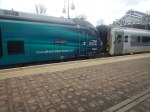

If I’m going to Birmingham, I generally use Chiltern, as often you get to travel in one of these well-restored Mark 3 coaches hauled by a Class 68 locomotive.
With the Mark 3 coach, you get a full size table and a large window to enjoy the countryside.
- The Class 68 locomotives were all built by Stadler in Spain, within the last ten years.
- The UK has a fleet of 34 Class 68 locomotives.
- They are powered by a Caterpillar diesel engine.
- The only problem with the trains is that the Class 68 locomotives are diesel.
But is Caterpillar working on a simple solution?
Search the Internet for “Caterpillar Hydrogen” and you find press releases and other items, like this press release, which is entitled Caterpillar to Expand Hydrogen-Powered Solutions to Customers.
I wouldn’t be surprised to find out, that Stadler and Caterpillar were working on a program to provide a solution to convert Class 68 locomotives to hydrogen.
Union Demands Withdrawal Of All HSTs After Carmont Report
The title of this post, is the same as that of this article on Railnews.
This is the first paragraph.
The TSSA union says it has written to the regulator demanding the immediate withdrawal of all surving HSTs, after new revelations in the Carmont derailment. report.
Manuel Cortes of the TSSA feels that the corrosion problem found in the train that crashed at Carmont, may be present in other trains.
He finishes with this this statement.
Frankly, it’s time to ban the HSTs. They were great in their day, but that day is nearly 50 years ago now and they simply aren’t up to modern safety standards.
I must admit, that I tend to agree with him, on this last point.
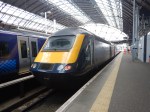
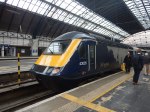
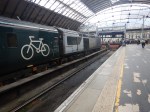

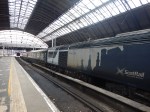
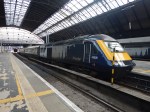





Scotrail have the following fleet of Inter7City trains.
- There are 52 Class 43 power cars and 120 Mark 3 coaches, which are arranged as nine four-car and seventeen five-car trains.
- The trains have sliding passenger doors.
- The trains meet all the regulations for Persons of Reduced Mobility.
- The trains have wi-fi and power points.
- They seem to run at up to 100 mph, as against the 125 mph for InterCity 125‘s in the past.
- The power cars have generally been reengined with modern MTU 16V4000 R41R diesel engines.
But they are now on average over forty years old.
In Battery And Hydrogen Trains For ScotRail ‘Could Make Scotland A Global Leader’ In Zero-Emission Transport, which is based on an article in the Scotsman with the same title, I said this.
Other points from the article.
- Talgo appear to have passed the story to Scotland on Sunday.
- Three routes are mentioned; Borders Railway, Fife Circle and Glasgow-East Kilbride.
- The new trains could help phase out diesel trains by 2035, which is Scottish Government policy.
- The Inter7City trains might be replaced by 2030.
- Talgo hopes to win an order for its factory in Fife.
Talgo’s Managing Director is quoted as saying, they are starting testing of a hydrogen and electric train with a range of 311 miles.
Consider.
- I wrote about this train in Talgo To Begin Fuel Cell Loco Trials.
- Talgo’s hydrogen and electric train would be ideal for Scotland’s railways of which only forty percent are electrified.
- A four or five-car high specification hydrogen and electric train would be ideal for the Inter7City routes, if it were built specifically for the routes.
- The range would cover all of Scotland.
- Hydrogen hubs are being planned all over Scotland.
- Scotland have 26 Inter7City trainsets.
This could be a rather nice order to fund the factory and test all the trains close to the factory.
- There could be as many as fifty trains.
- They would probably have an operating speed of 100 mph on electricity.
- Would the speed on hydrogen be 100 mph or perhaps a bit less?
- They would be able to use 25 KVAC overhead electrification, where it exists.
- They could have a length of three, four or five cars.
I wouldn’t be surprised to see three or four car trains for the suburban trains and four or five car trains for the Inter7City replacements.
 The Anonymous Widower